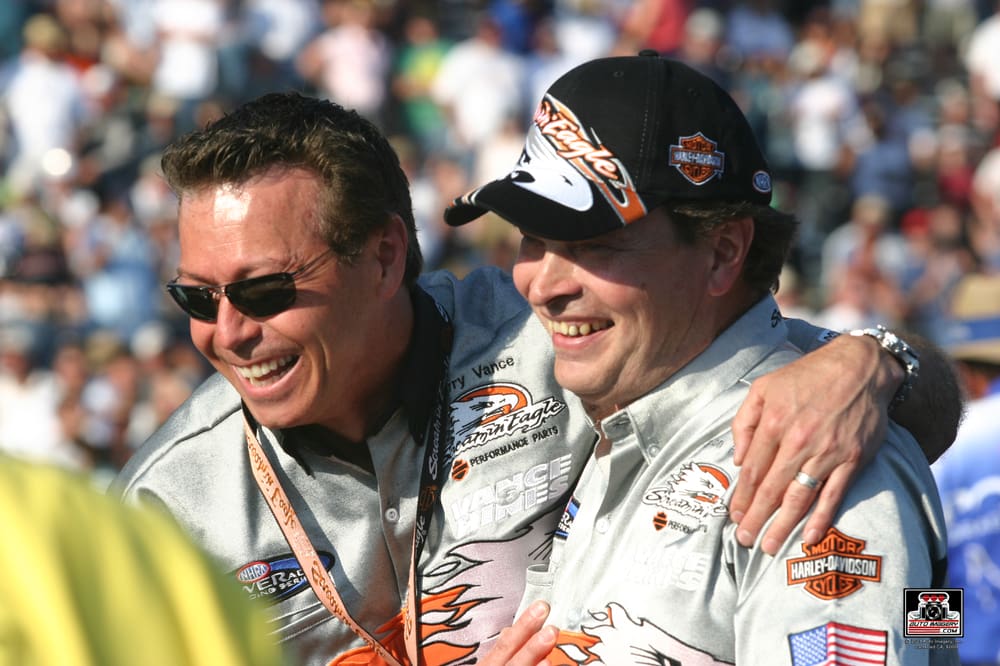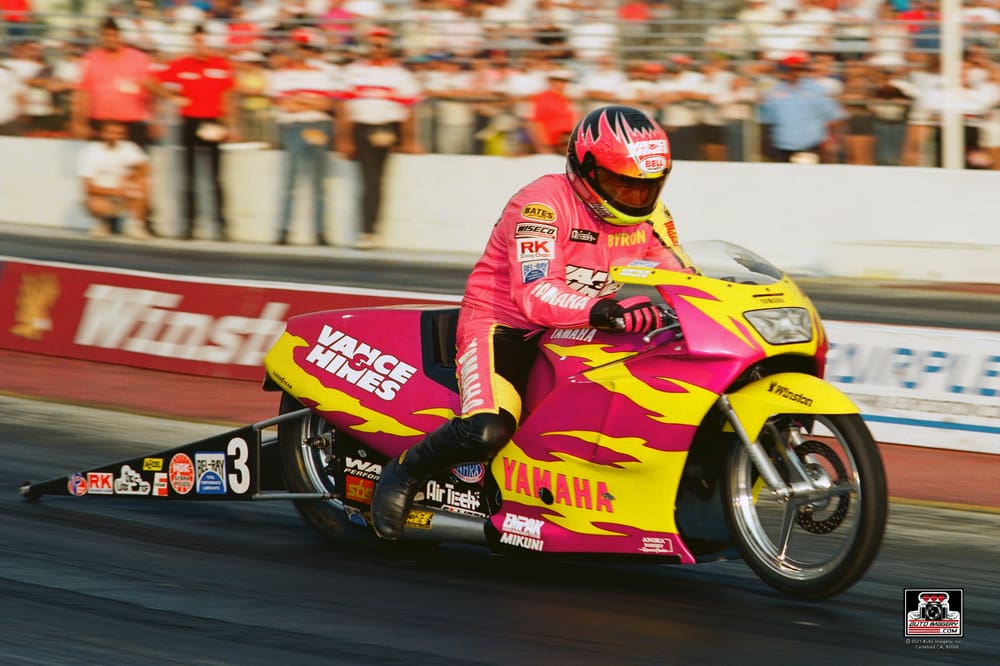
Terry Vance & Byron Hines
Terry Vance began life in Bristol, Virginia but at the age of three, his family mower to Los Angeles, California, the nations hot bed of motorcycle and hot rod activity. His first two-wheel undertaking was a minibike with a engine from a lawn mower. This was followed by a Honda 90 that was replaced with a Honda 350 and in 1970 he became the proud owner of a Honda CB750 Four. As soon as he got his driver’s license, he began racing his Honda at the local dragstrips and posting a steady string of wins.
At this time, Terry was employed at R.C. Engineering (RCE) and its owner, Russ Collins, was so impressed with Terry’s winning streak and style of riding that he approached him with an offer to ride one of RCE’s new bikes. Terry signed his first professional contract in 1972 as an RCE rider. .
Byron Hines made the decision in his teens that he liked owning and working on motorcycles rather than cars mainly because they were more open to work on, and one person can move them around easily. He is basically a self-taught mechanic who thrives on finding new ways to produce more horsepower with greater reliability. His pre-teen years were confined to helping his dad repair the family vehicles and playing around with go carts and soap box derby racers, but motorcycles caught his eye in high school, and he soon owned his first one, a Honda X-6.
Byron had been making improved performance and appearance modifications on his own street bikes from an early age, but everything changed in 1970 when he rode into Russ Collins RC Engineering (RCE) shop for a set of spark plugs. After his first look at Byron’s trick street Honda, Russ offered Byron a job and Byron became his first employee. During his first months at RCE, Byron was taking his own bike to the local drag strip where he was soon able to match the track speed and ET records. With this success under his belt and his wizardry at the shop, after a few months Russ and Byron teamed up with a Honda drag bike and began appearing in the winner’s circle regularly.
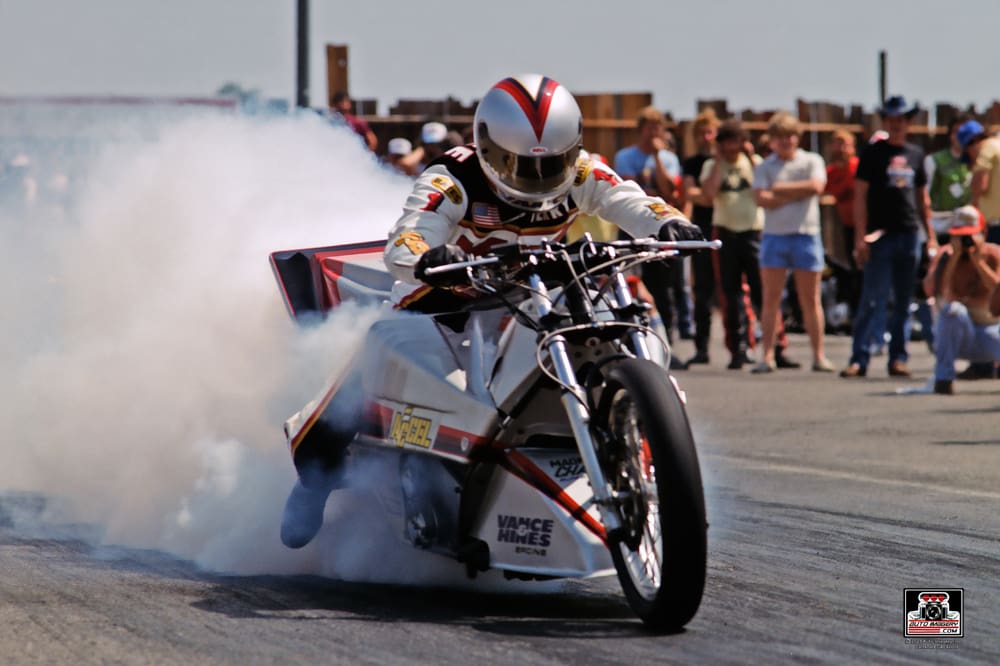
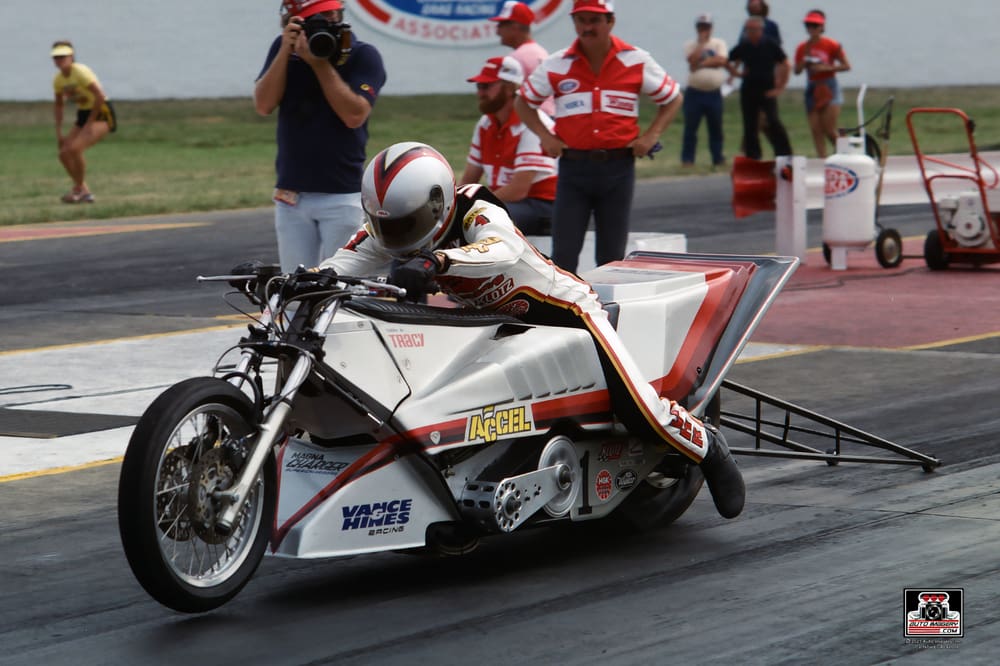
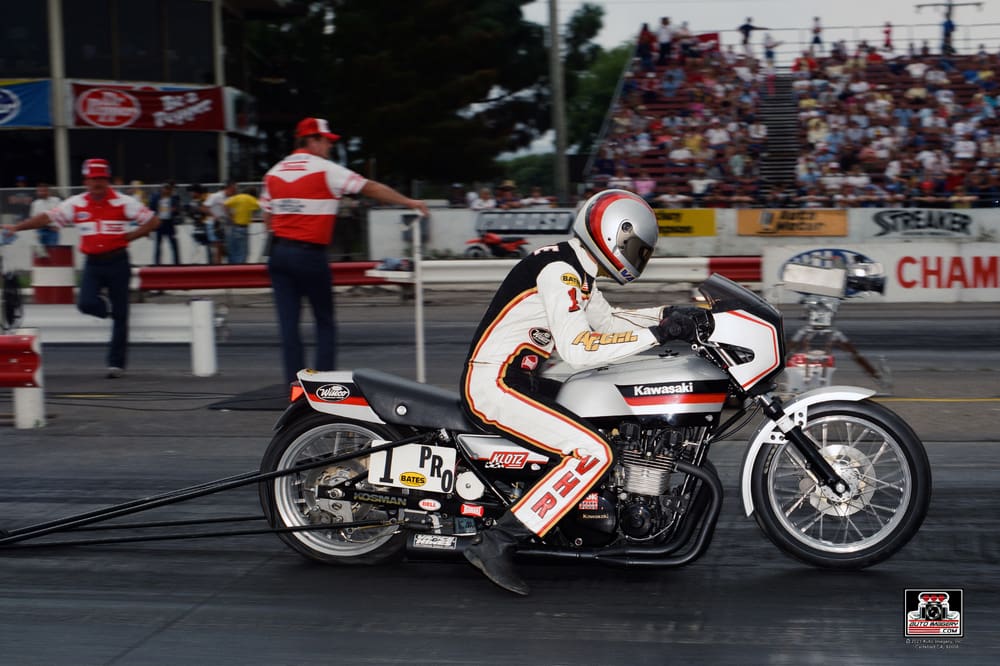
IT was at RCE where Terry and Byron met and became friends. With Byron building and tuning and Terry driving their twin engine T/G Honda, the team decimated the drag bike arena in the 1970’s winning 22 of the 23 AMDRA sanctioned races they entered.
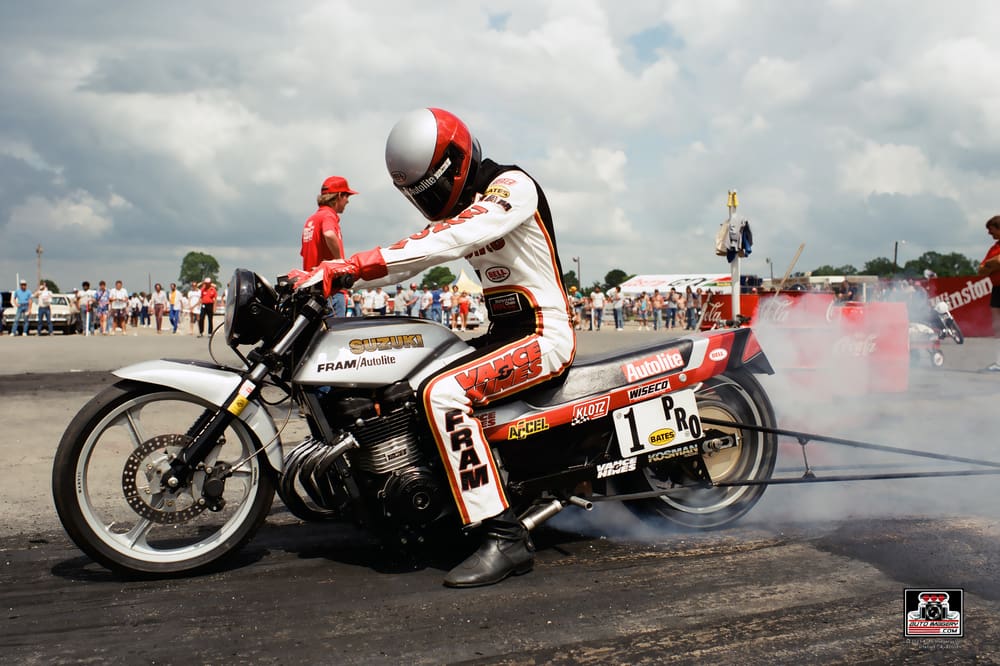
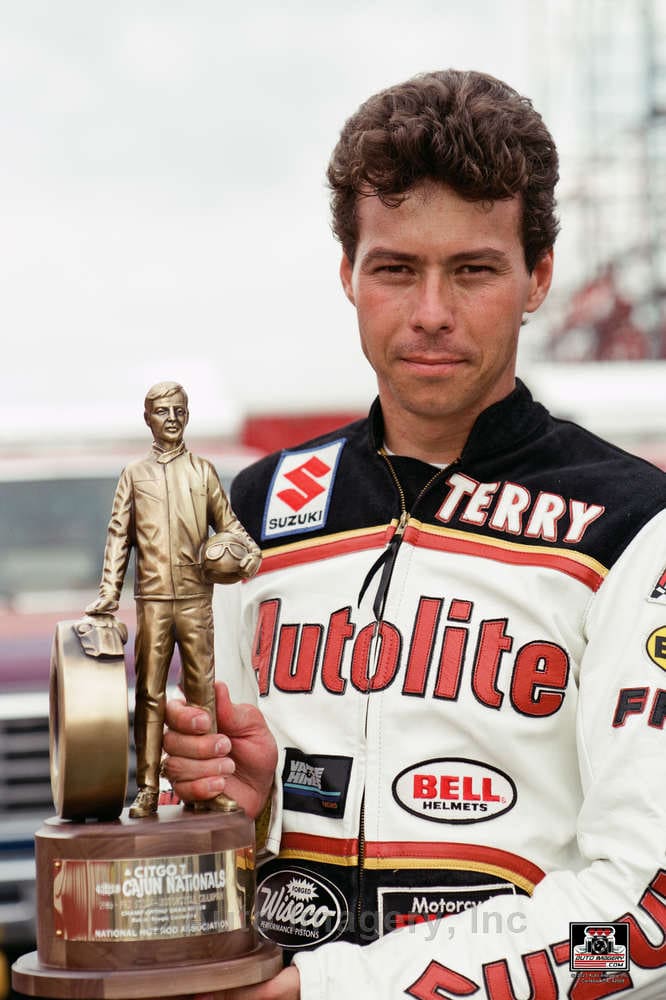
In 1977 Suzuki approached him about racing its new GS 750, an offer he accepted and with Byron Hines doing the tuning, Suzuki dominated the drag racing arena. Suzuki capitalized on this success with numerous print and TV ads and combined with their exposure at the racetracks, the two men became the most recognized figures in motorcycle racing. It was also due in a large part to Suzuki’s involvement and the name recognition of Vance and Hines that NHRA added motorcycle drag racing as part of its national championship series in 1987.
Terry and Byron partnered in a new company in 1980, Vance & Hines Racing, and began producing a line of aftermarket parts that included as its first product, an exotic exhaust system for both street and strip. The pair have also designed, developed and are marketing, a very successful line of aftermarket products.
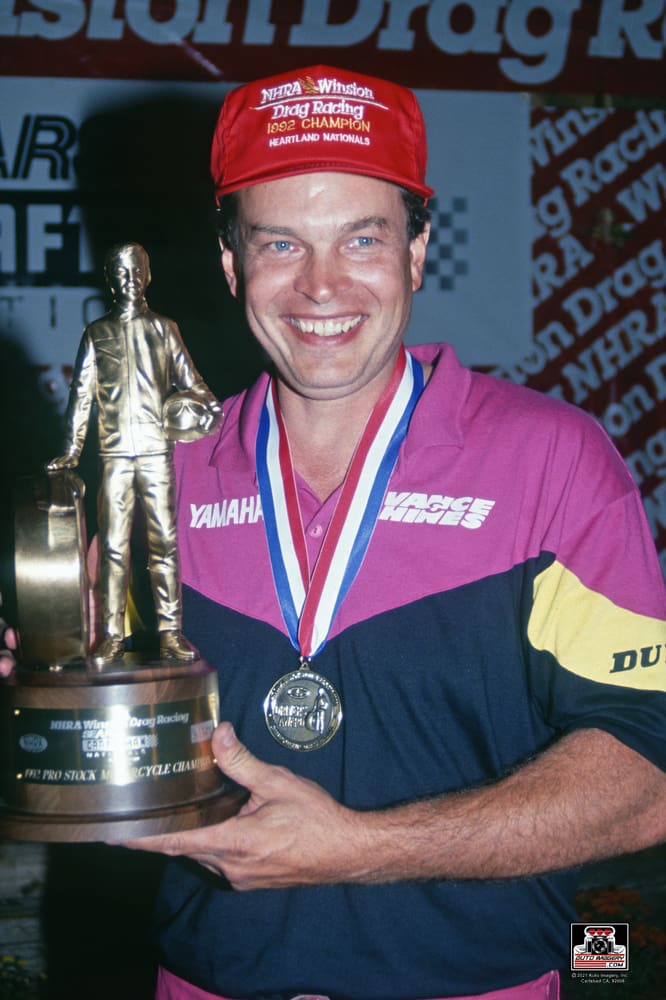
After winning the last five national races in a row, at the end of the 1988 season, Terry retired as an active rider to concentrate on building Vance & Hines Racing. Terry became the winningest motorcycle rider in drag racing and notched championships in both Pro Stock and Top Fuel classes.
Not one to confine his talents to one brand, Byron has successfully built Hondas, Ducati’s, Yamaha’s, Suzuki’s and Harley Davidsons. He has also been successful in road racing as well as drag racing. The main reason for his success in the motorcycle arena is because he is a tireless and dedicated worker and to quote him, “motorcycles represent a more technologically advanced and capable package”. Byron doesn’t confine his engine building talents to just their team either and is responsible for the engines used by other competitive teams.
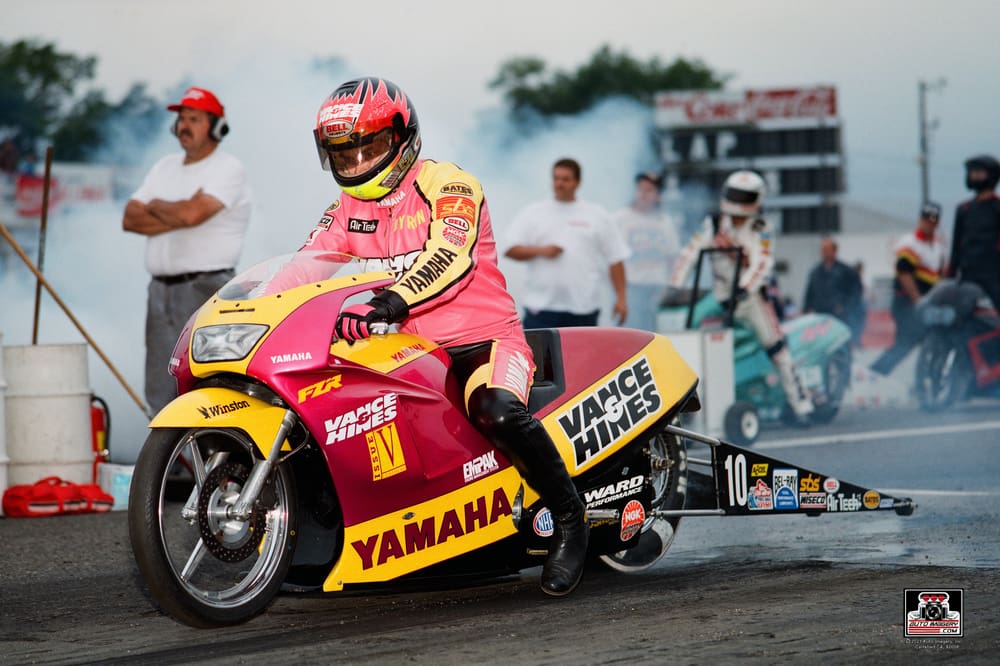
In 1990 Vance & Hines expanded into road racing where it began to sponsor numerous club-level racing events and to offer contingency money for riders running Vance & Hines exhaust systems. The company signed with Yamaha to become its official factory AMA Superbike entry. While its appearance with a full-sized tractor-trailer rig and distinctively painted equipment into the paddock area was impressive, it was their first time out win at the 1990 Daytona 200 that garnered the most attention. The team won the AMA Superbike Championship in 1991 and continued its winning ways at various AMA events and in 1993 it took home its second AMA Daytona 200 trophy.