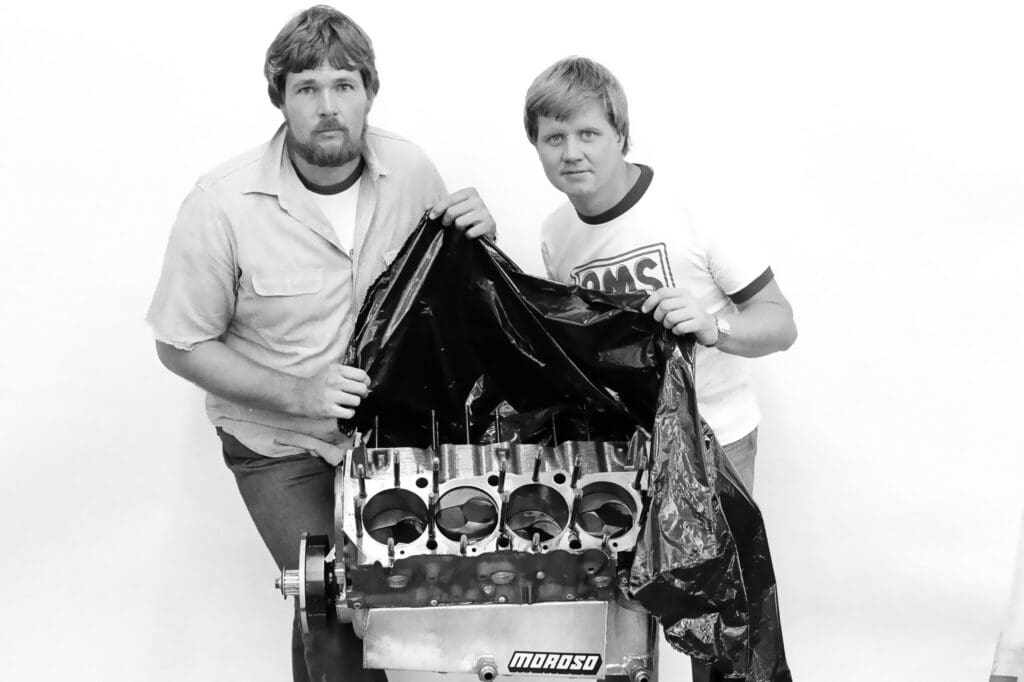
David Reher & Buddy Morrison
David Reher grew up fascinated with cars and how to make them perform better every time they were started. The son of an economics professor from Iowa, David was raised in a disciplined academic environment that inspired him to bring an analytical and meticulous approach to his passion for drag racing. As a teenager, David scoured the pages of Hot Rod and Car Craft magazines to learn about the intricacies of internal combustion. He partnered with a friend to explore the unknown world of drag racing with a hot rod ’57 Chevy.
To say Charles “Buddy” Morrison was a mechanical genius is an understatement. To him all things mechanical were items to be studied, dissected and reassembled in an improved manner.
Then as college students at the University of Texas at Arlington, David Reher met a fellow student named Buddy Morrison. Their mutual interest in drag racing became the foundation of their lifelong friendship and an enduring partnership.
In 1971 the pair founded Reher-Morrison Racing Engines. RMRE’s biggest asset was a Ford Maverick powered by a small-block Chevrolet that quickly became the scourge of local sportsman racers. In 1974, with Lee Shepherd at the controls, the pumpkin orange Reher-Morrison F/Gas Maverick won Modified eliminator at the NHRA Winternationals. A stylish Corvette replaced the Maverick the following season, and the trio won the 1975 NHRA Springnationals competing in the E/Modified Production class.
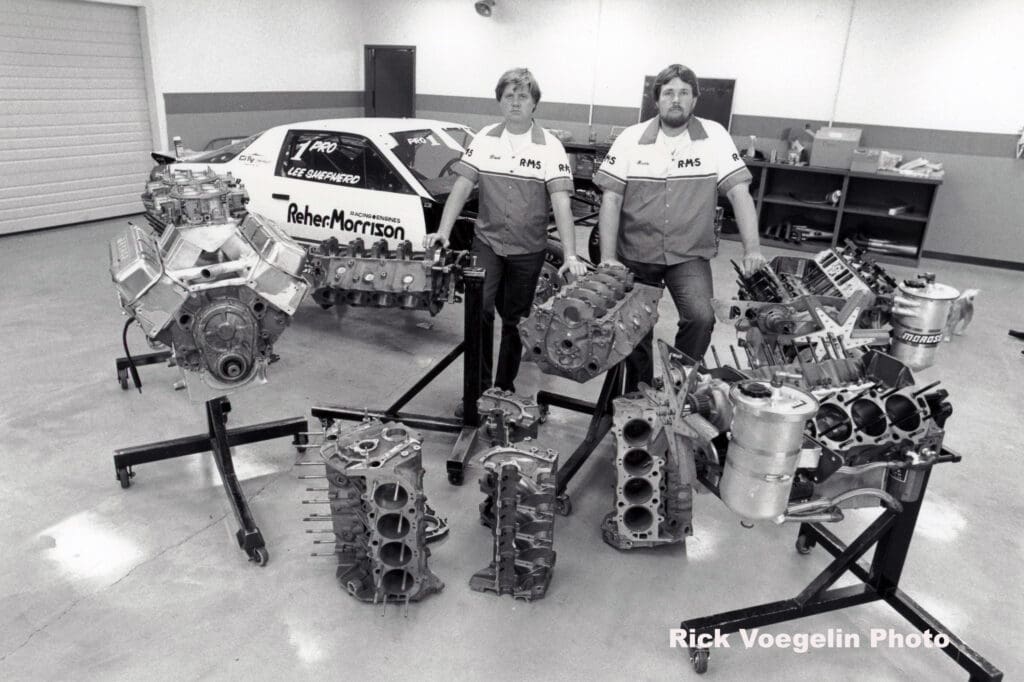
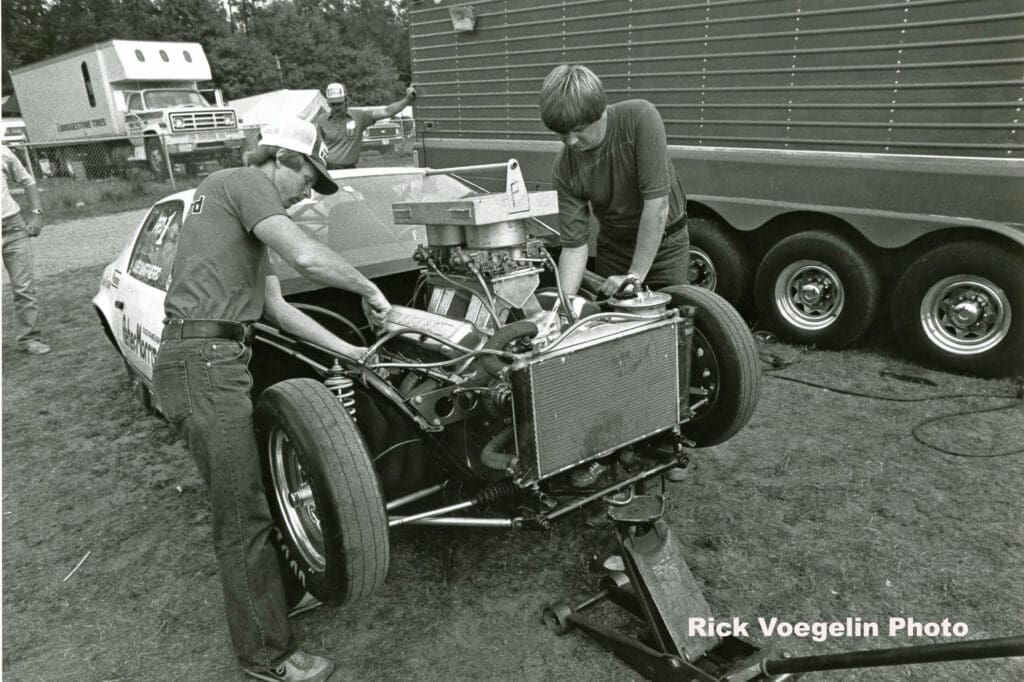
Their success on the racetrack soon translated into enough business to open the doors of a new shop that had the tools needed to do the job right. Here, David, Buddy and Lee were able to modify cylinder heads, precisely machine off-the-shelf pistons, develope superior valvetrains, and coax more horsepower and reliability from every engine.
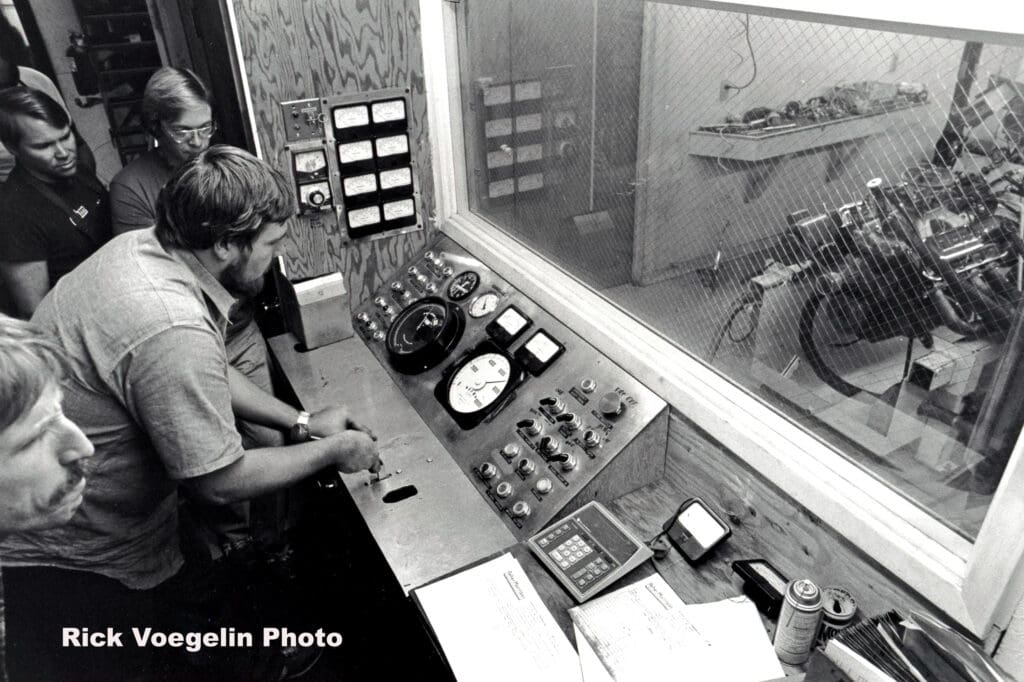
Always an integral part of the business, David was involved when the team built its first flowbench followed shortly by an engine dynamometer and a valvetrain spin fixture. They were way ahead of most of their competitors with these tools and used them to their advantage.
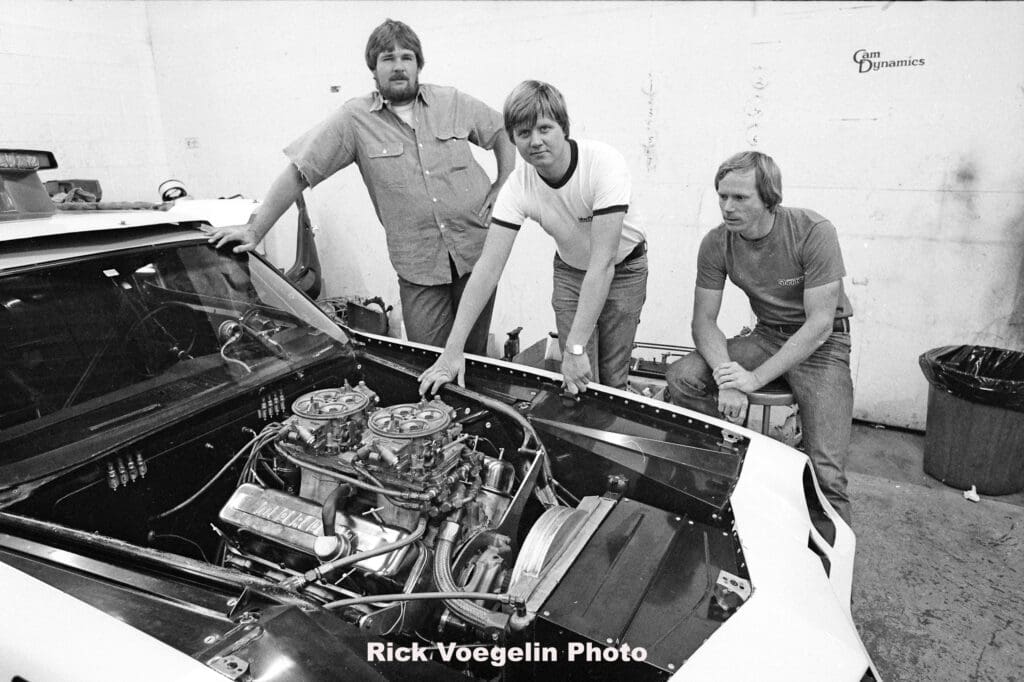
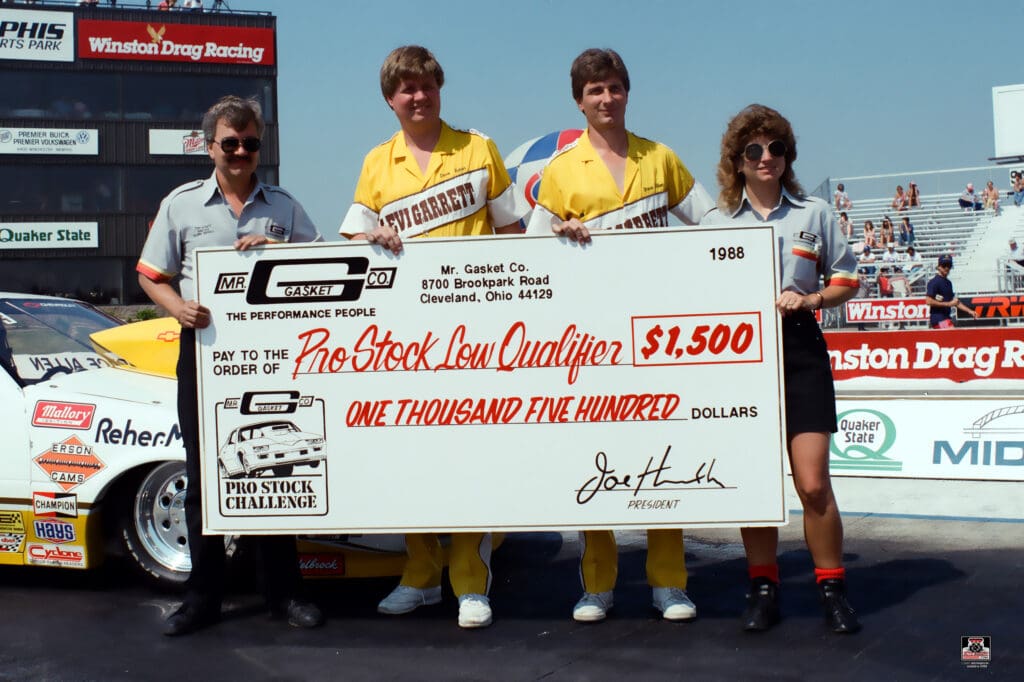
To stay competitive, in 1976 the team fielded its first Pro Stock car, a Monza built by legendary chassis master Don Ness and powered by a small-block Chevrolet. That initial foray into Pro Stock produced only limited success, but 1980 was a turnaround year for the trio. They created an innovative lightweight long-wheelbase Camaro powered by small-block Chevrolet that took advantage of the complex Pro Stock rules of that era. They consequently recorded six wins and three runners-up in ten NHRA national events.
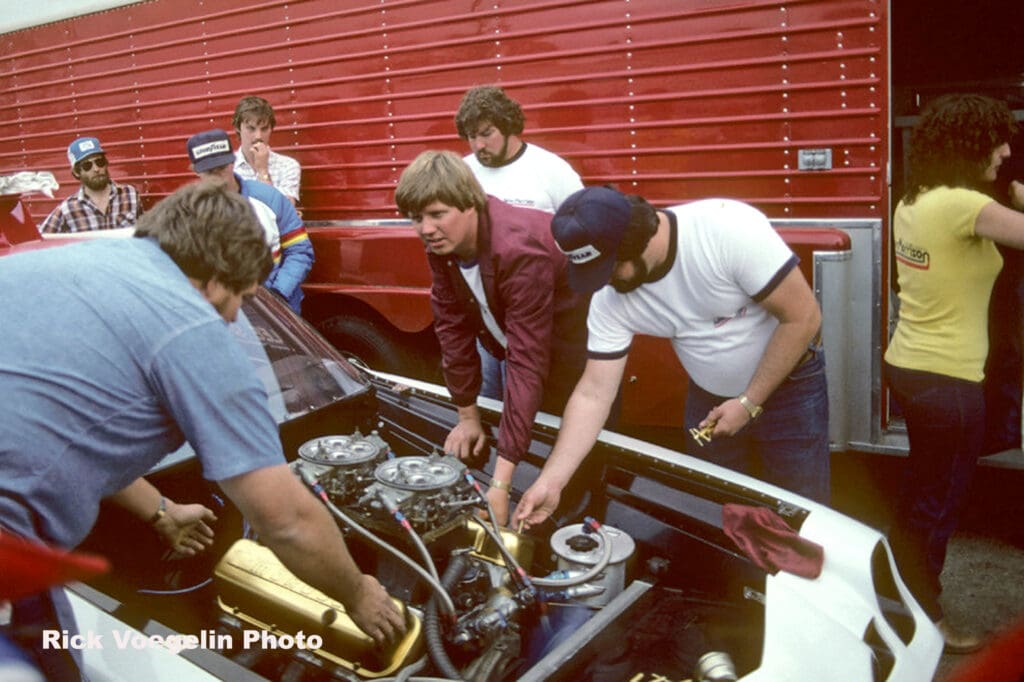
They came roaring back the following year with their next breakthrough: an arsenal of small-displacement big-blocks. Another careful reading of the NHRA regulations had revealed an overlooked combination. By adapting a short-stroke crankshaft from an obsolete 348ci “W” engine to the Mark IV big-block, Reher-Morrison created a new breed of highly efficient 365-cubic-inch “Rat Motors.” The three Texans won six more NHRA national events in 1981, and claimed their first Pro Stock championship.
NHRA introduced new Pro Stock rules in 1982 that mandated that every car run a 500-cubic-inch engine and weigh at least 2,350 pounds. Reher-Morrison’s relentless development of the big-block engines gave the team a jump start on its competition — but it didn’t stop there. They also introduced top-secret cylinder heads that were based on the factory’s solid aluminium head castings — entirely legal under the rules, and unprecedented among Pro Stock engine builders. The lack of water jackets allowed Shepherd to radically modify the heads with enlarged and relocated ports, install bigger valves, roll the heads by welding and angle cutting the decks, and then machine precisely located water passages to cool the castings.
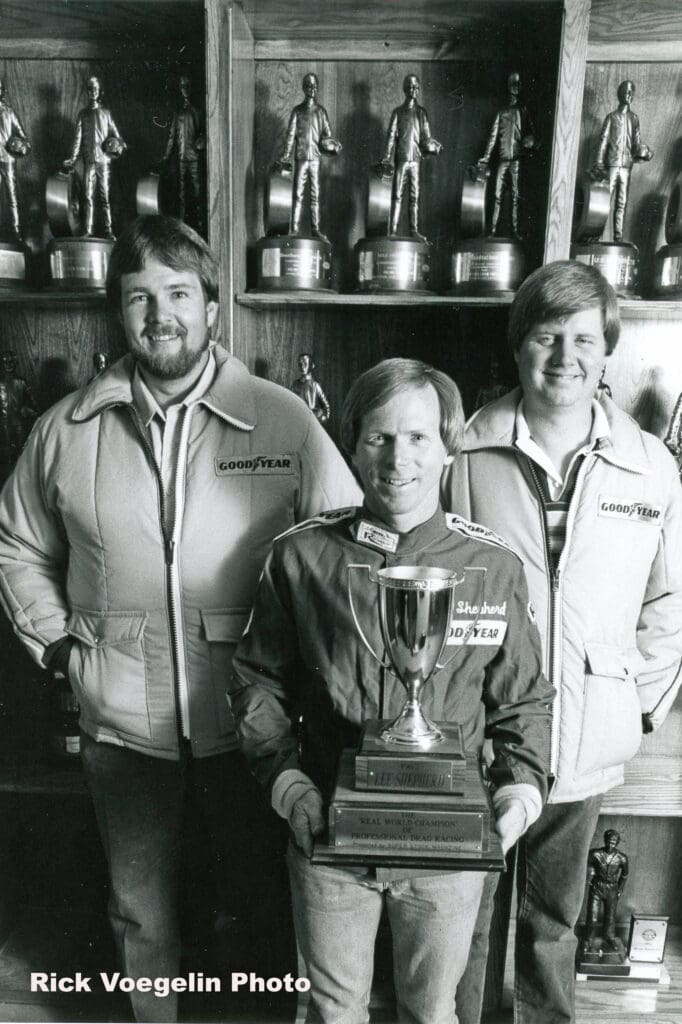
The early 1980s were a Golden Age for Reher-Morrison & Shepherd. From 1980 through 1984 the Texas trio reached the finals in 44 of 56 NHRA national events and won 26 of them. They also began competing in the IHRA Mountain Motor events and between 1983 and 1984 posted a 48-6 win record. In 1983, Shepherd became the first driver to win both the NHRA and IHRA Pro Stock championships – a feat he repeated the following year.
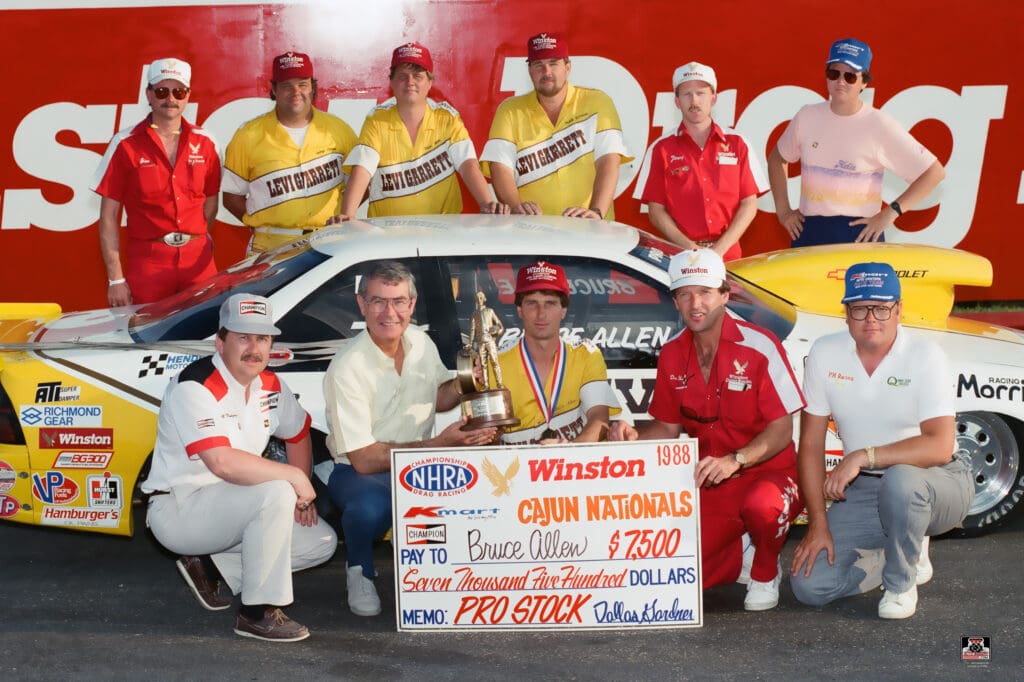
Then in 1985 Lee Shepherd was tragically killed in a testing accident, and Bruce Allen stepped in as his replacement. The team continued its winning ways as Allen scored the team’s third consecutive IHRA championship. He subsequently added 16 more NHRA national event victories to the Reher-Morrison record. Allen finished third in the NHRA standings three consecutive seasons (1985-87) and was runner-up in the 1989 championship.
Allen walked away from driving after a harrowing high-speed crash at the Texas Motorplex in 2005. Before the accident, Bruce and David had agreed that the expense and effort required to compete in Pro Stock had escalated to the point that they were going to leave the category at the end of the season. In 1985 they had begun to develope a line of Super Series engines and components specifically for sportsman racers competing in heads-up Super-type eliminators and fast brackets. Continuing that work to support sportsman competition, RMRE also expanded its product line to include immensely powerful nitrous-assisted Pro Modified engines that rewrote records for elapsed times and top speeds.
Buddy lost his fight with cancer in 1998 but will always be remembered as the “Gentle Giant” who never gave up on a project.
Today, David is still at the helm of the Reher-Morrison Racing Engines facility and still turning out first-class products from internal parts to complete engines. Reher-Morrison’s expertise now extends far beyond drag racing to short-track oval engines, sprint cars, tractor pullers, and land speed record setters. Away from the shop, David can be found piloting his Cessna airplane, pursuing his longtime interest in boating with his family, accompanying his grandson to amusement parks, and walking his dog daily at a nearby park.
Over the years, the Reher-Morrison Engines team notched numerous honors among them:
Car Craft All Star Team Pro Stock Engine Builders of the Year five times (1982 – 1986)
Car Craft All Star Team Persons of the Year 1980