International Hall of Fame Inductees
International Drag Racing Hall of Fame
Honoring the drivers, builders, innovators and promoters who made drag racing what it is today.
- 327Inductees
- 36Classes
- 1991First class
Class of 2026
7 inductees-
2026
Pat Garlits Memorial Award
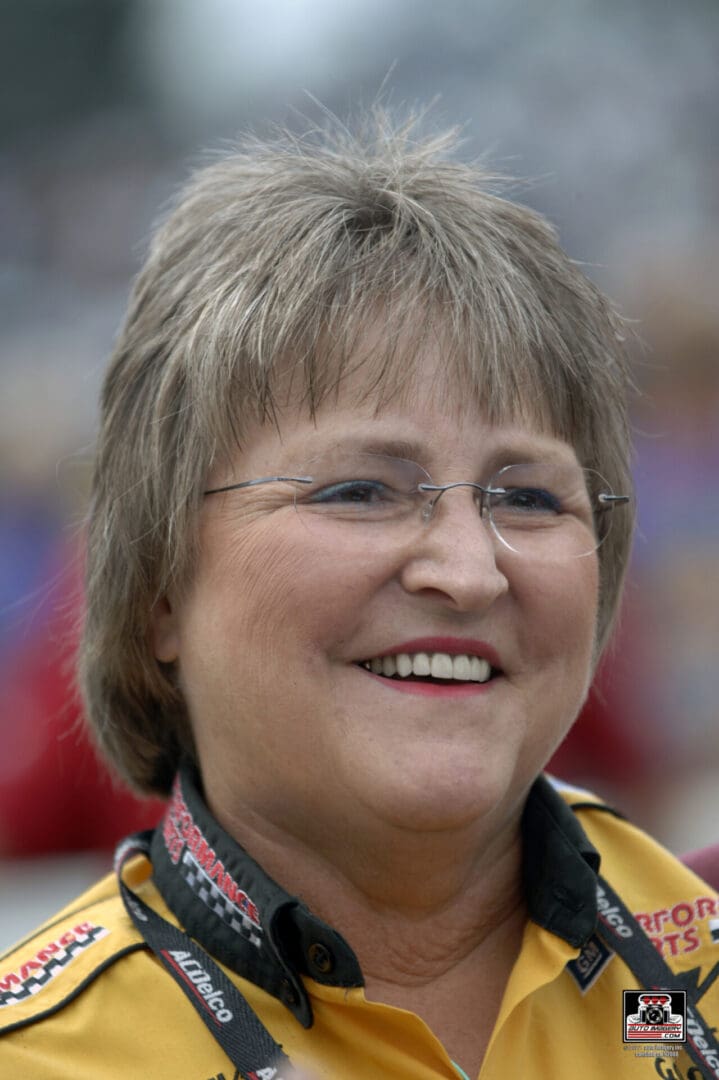 Arlene Johnson
Through six NHRA and two IHRA championships, 97 national event wins, and an abundance of performance milestones, Arlene Johnson has been by…
Read bio
Arlene Johnson
Through six NHRA and two IHRA championships, 97 national event wins, and an abundance of performance milestones, Arlene Johnson has been by…
Read bio
 Class of 2026 · Pat Garlits Memorial Award
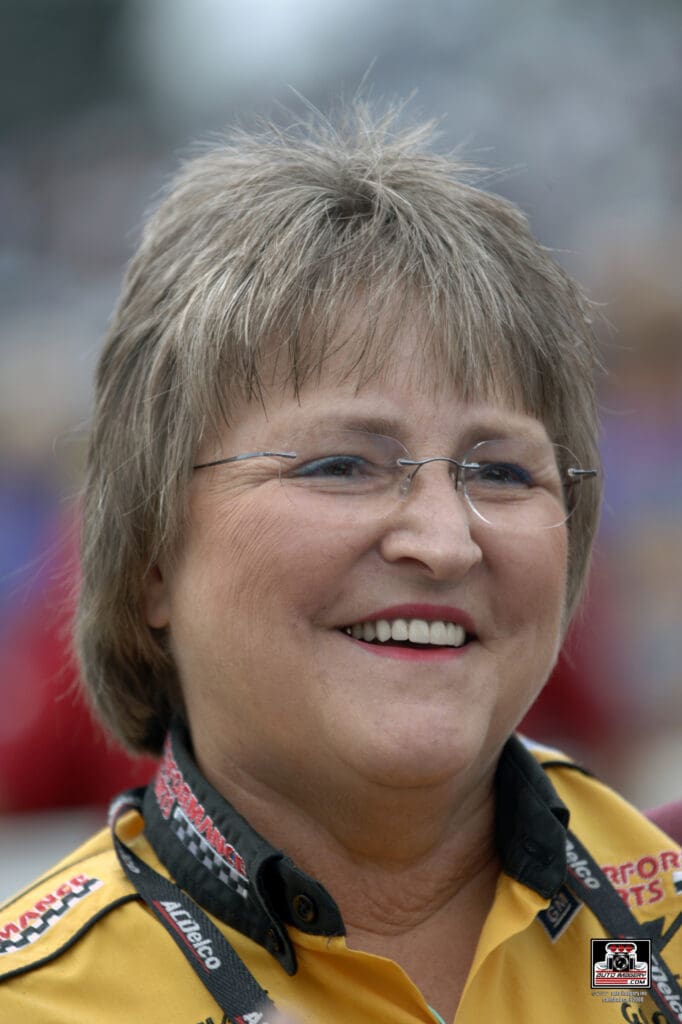
Arlene Johnson
Through six NHRA and two IHRA championships, 97 national event wins, and an abundance of performance milestones, Arlene Johnson has been by husband Warren Johnson’s side. They met in Minnesota in 1960 at the age of 17 and were married a year later, and over the next decade they began to build a life that revolved around all things automotive.
Warren and Arlene first ventured to a racetrack together in 1962, and in the early 1970s, W.J. fatefully dipped his toe into a new class: NHRA Pro Stock. Soon, they were all in, and by 1976, racing was their full-time gig. It wasn’t a difficult transition for Arlene, who grew up helping her father work on cars, washing parts and whatever else needed to be done.
Arlene was W.J.’s first crew member, and at home, while he was deep into research and development in the shop, Arlene was running every aspect of the office and keeping everyone fed and paid. When their son, Kurt, was small she was active at the racetrack changing tires, charging batteries, managing the fuel, changing jets in the carburetors, packing the parachutes, and tackling whatever else she could to make sure that Warren could focus on what he did best.
Through good times and bad, Arlene showed fortitude, strength, and support. No task was beneath her; she rode in the truck with the crew for thousands of miles, and when they were able to get a motorhome, she drove it on her own for thousands of miles more, bringing homebase with her as she bolstered the career of a driver destined to become legendary.
With Arlene by his side, usually taking video of his runs so that he could scrutinize them later, Warren Johnson became the most winning Pro Stock driver in the history of the class when he passed Bob Glidden’s record with an 86th victory in 2002. He claimed 11 more wins over the years, the 97th coming at St. Louis in 2010, and held onto the lead until the Dallas race in 2021, when former protégé Greg Anderson broke through with 98.
Arlene was an integral part of every one of W.J.’s milestone, and in addition to Warren’s championships, she was an important factor in son Kurt’s career as he earned 42 wins and finished No. 2 in the nation multiple times.
Through her extensive collection of scrapbooks, notes, and photos she took over the years, Arlene was a major contributor to the Warren Johnson biography released by CarTech Books in 2021. She is wife to W.J., mom to Kurt, mother-in-law to Kathy, and grandmother to Conner, Erin, and Jarrett.
-
2026
 Steve Boggs
 was a born gearhead, He and his brother Ron began tinkering with mechanical equipment, including the family tractor, as soon…
Read bio · 8 photos
Steve Boggs
Steve Boggs was a born gearhead, He and his brother Ron began tinkering with mechanical equipment, including the family tractor, as soon…
Read bio · 8 photos
 Class of 2026
Steve Boggs
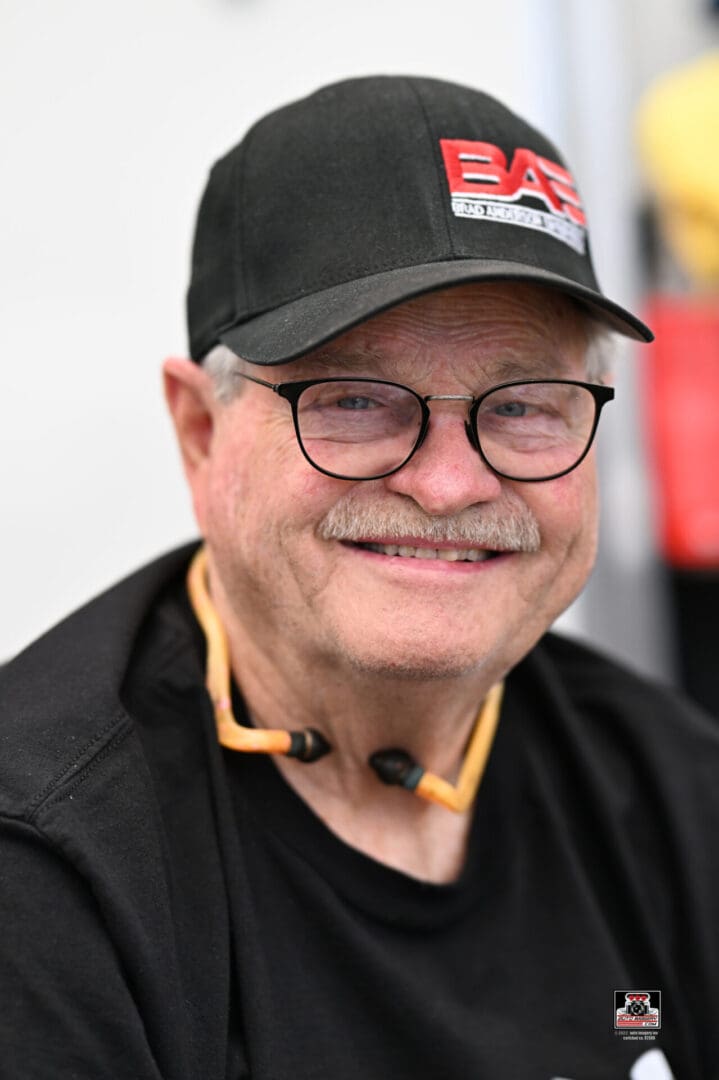
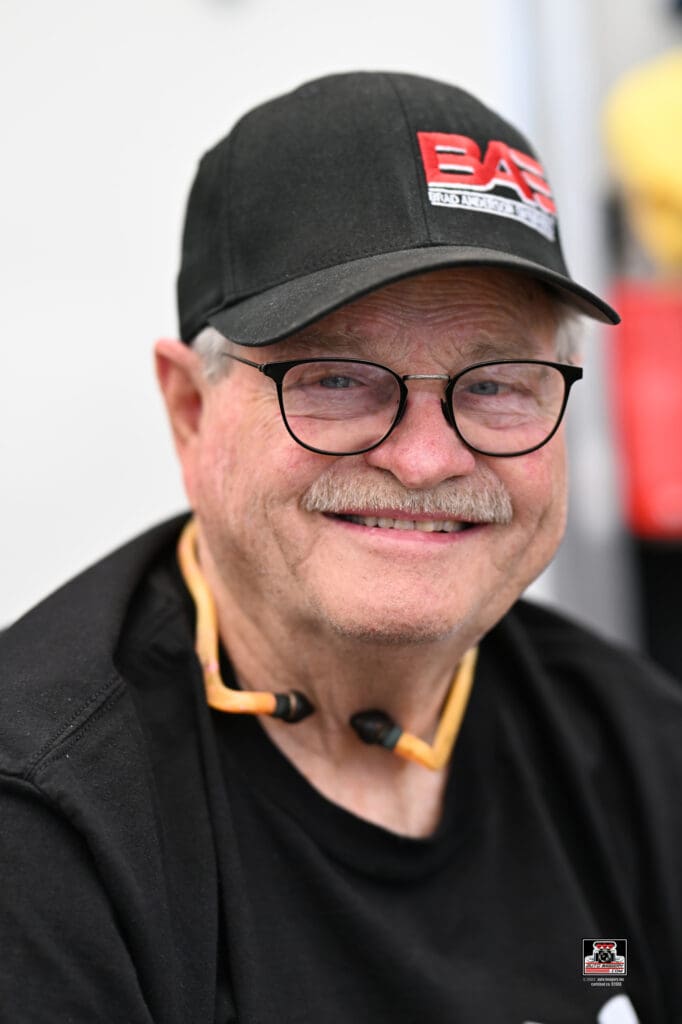
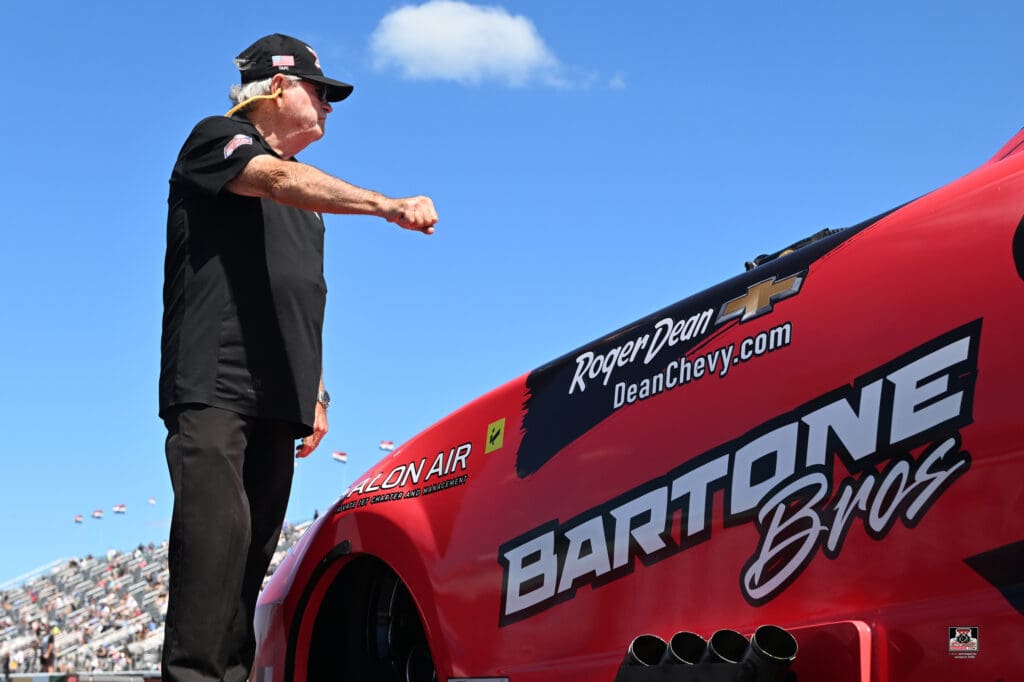
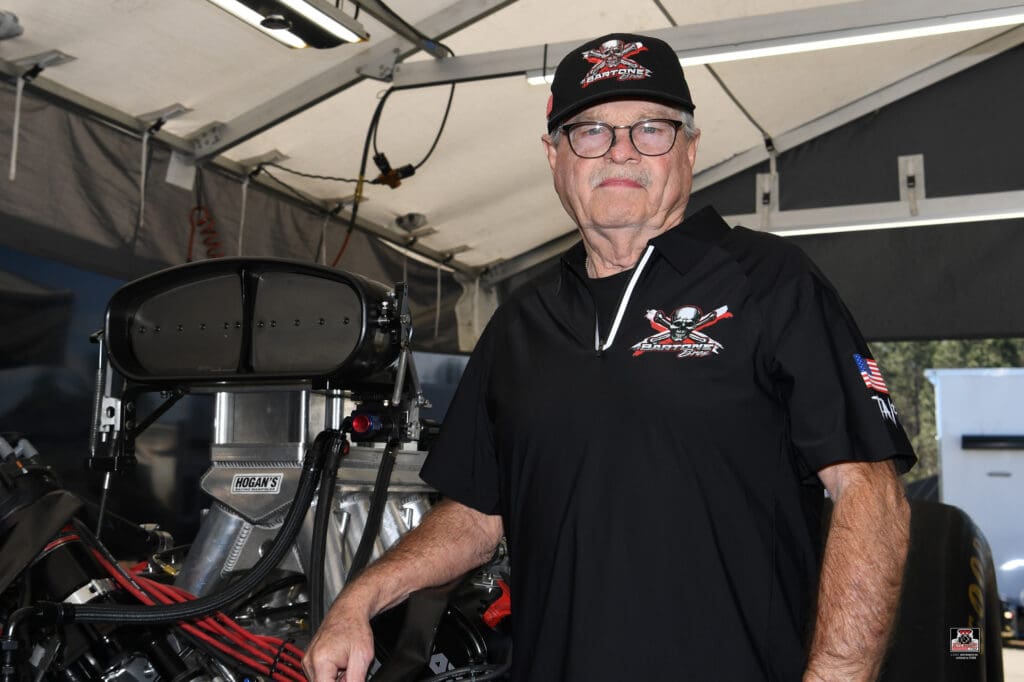
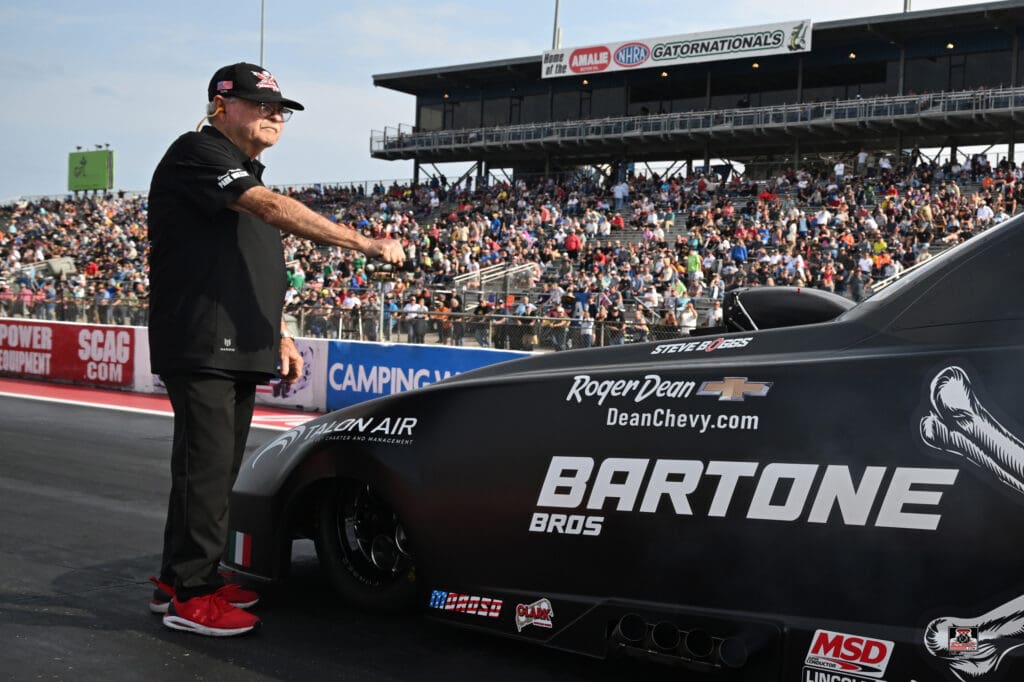
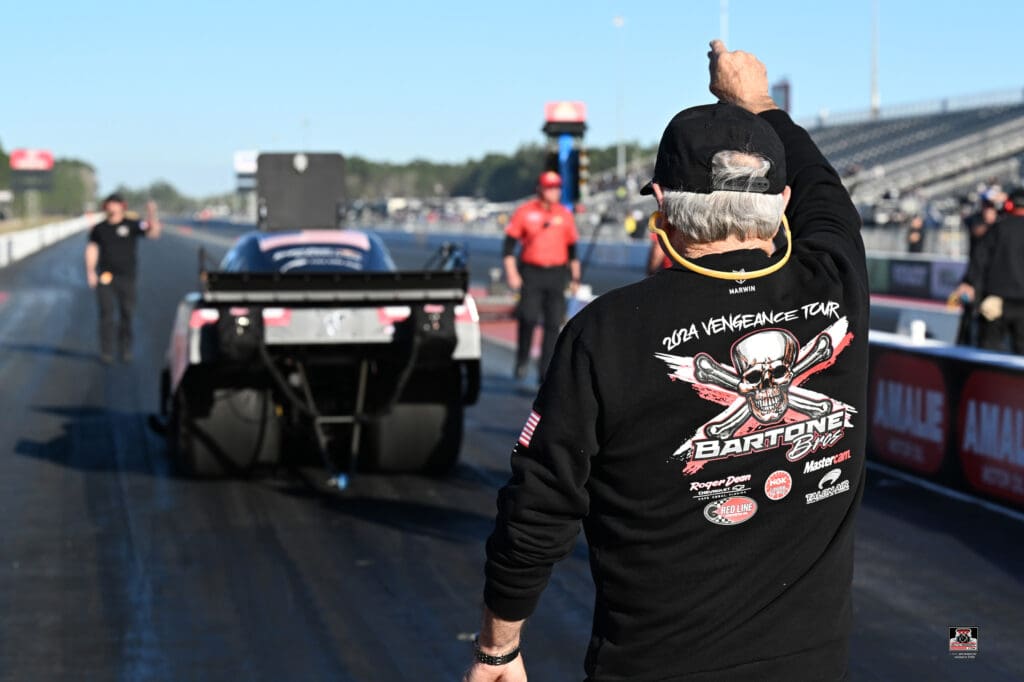
Steve Boggs was a born gearhead, He and his brother Ron began tinkering with mechanical equipment, including the family tractor, as soon as they were big enough to do so. The pair raced together as the Boggs Brothers until the end of the 1977 season. They notched their first national event win that year and Ron made the decision to stop racing. Steve continued in the sport, and before long became a recognized and sought after crew chief and engine person. Over the years Steve has always had the support of his wife of forty-four years, Cheryl and sons, Stevie and Scott, five grandchildren, three great grandchildren and stepson, Todd.
The first car Steve officially owned was a 1958 Oldsmobile but that was replaced with a 1958 Corvette that soon found its way to the racetrack. By 1965 the need to go quicker and faster nudged Steve into building and racing an injected, big block Chevrolet powered A/Altered Roadster. That car carried him to the class winner circle at the NHRA US Nationals in 1967. Always looking better and more dependable performance, in 1969 Steve fielded a supercharged, big block Chevrolet powered AA/Gas Roadster and finished the year by winning the AA/FA trophy at the NHRA US nationals.
In 1971 he stepped up to a blown hemi powered AMX, BB/Gas Funny car competing mostly at NHRA tracks and in 1973, with a new Vega body on board, he was also able to post an impressive performance streak at the UDRA events as well.
Steve’s notoriety as a Crew Chief really stepped up when he assumed the position for Tony Bartone’s TAFC Funny Car in 1992. The team ended the 1996 season winning the NHRA World TAFC Funny Car title. That year also marked the beginning of a relationship for the pair of over 34 years with the team posting an impressive career of 42 NHRA National Events, and at one point winning 33 consecutive rounds.
Not limited to tuning just alcohol cars, in 1993 he took on the job of tuning Joe Penland’s TAFC Funny car at the same time. He continued in this paired position until the end of 1995 when Penland’s car won the NHRA class World Championship and Penland retired from racing. Bartone and Steve posted their first NHRA TAFC World Championship win in 1996.
In 2001 Tony took over the driving chores of Jerry Toliver’s Fuel Funny Car and from 2004 to 2008 he drove for Jim Dunn’s team. During this period, Steve assumed the tuning chores for John Fink, Morgan Lucas and for Mitch Meyers’s A/Fuel Dragster, with which they were able to win the NHRA class World Championship in 2004. Bartone retired from driving in 2013 and began competing with a new team, Bartone Bros. Racing in the NHRA Hot Rod Heritage Championship circuit and Steve was right there as the team manager and engine tuner. This team has won the class championship three times, 2013, 2014 and 2015 and is still its most consistent winner.
In 2013, Steve and Bertone also aired up with Rick Jackson on his TAFC car and shared the winner spotlight with thirteen national event wins. Bertone formed a new AA/A Funny Car team in 2014, with Boggs as the Crew Chief/Tuner. The team put Sean Bellemeur in the driver’s seat in 2018 and to date has posted forty-nine national class wins, three mid-west national event wins and five NHRA World Championships and its second season with a perfect score of seven national event wins and three regional wins.
Don’t go looking for Steve Boggs during the new racing season because he will be located at the racetrack as usual and as usual overseeing the tune up of the Bertone Alcohol Funny Car.
Photo gallery · 8
-
-
2026
 Bob Frey
 in some ways is a typical car nut but is different in others. As a teenager he loved being around…
Read bio · 9 photos
Bob Frey
Bob Frey in some ways is a typical car nut but is different in others. As a teenager he loved being around…
Read bio · 9 photos
 Class of 2026
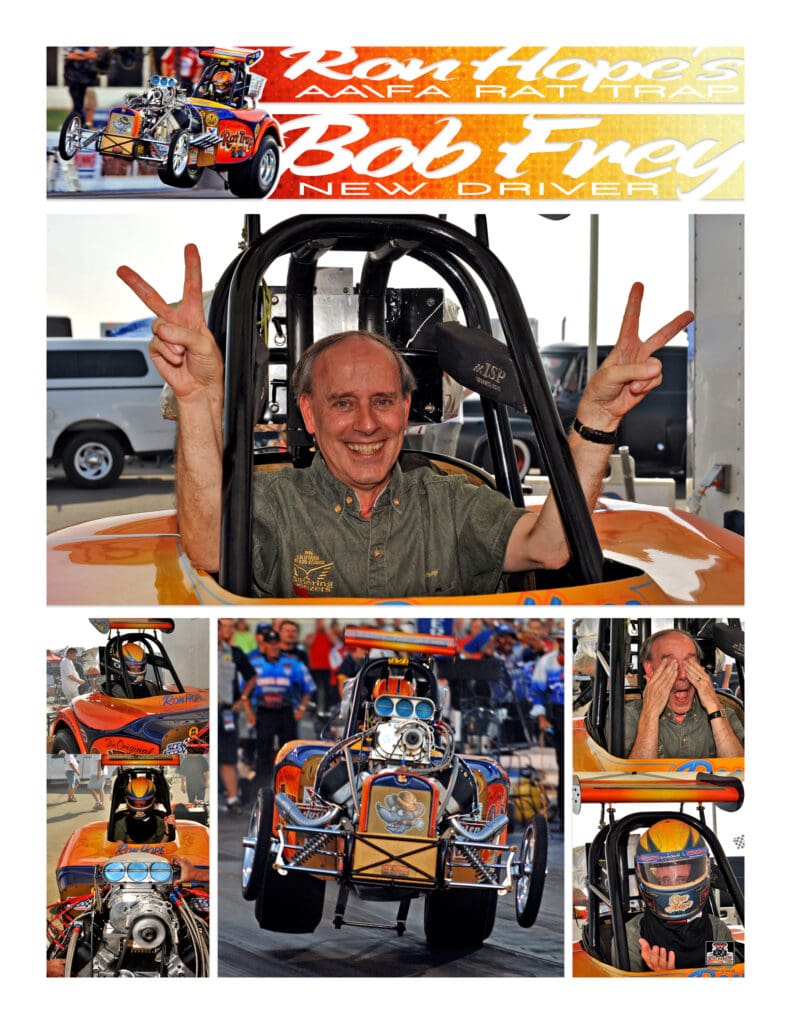
Bob Frey
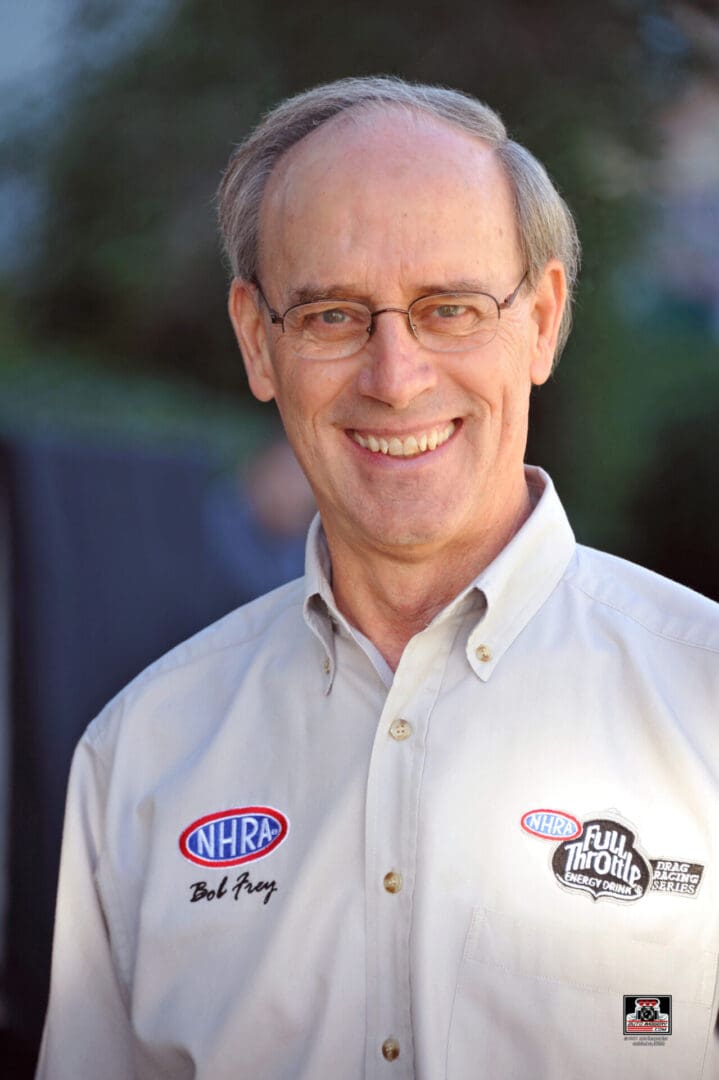
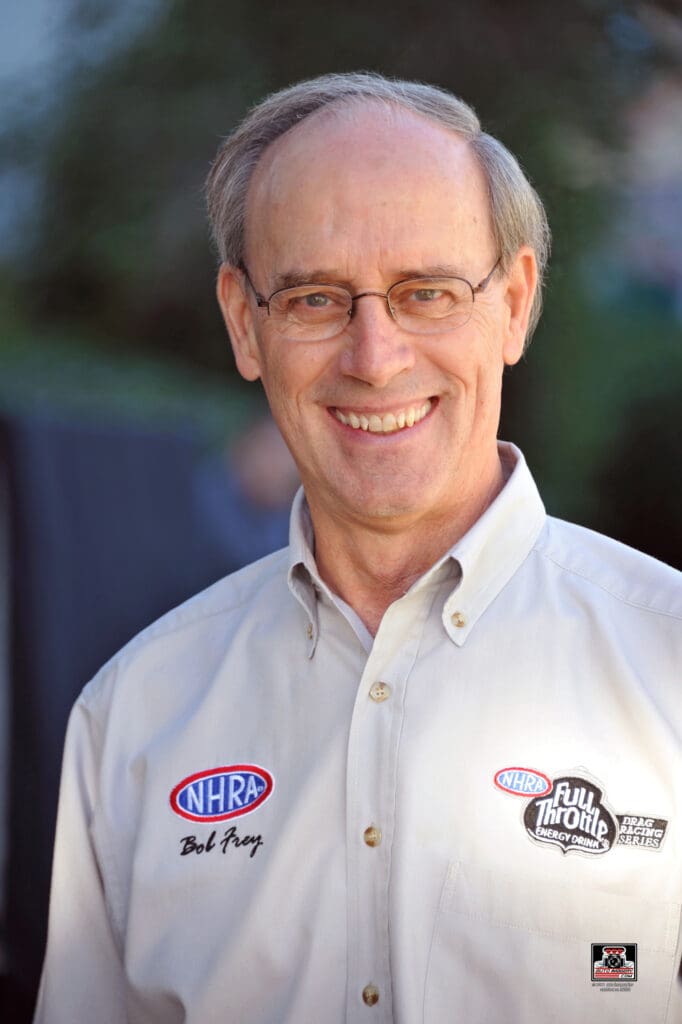
Bob Frey in some ways is a typical car nut but is different in others. As a teenager he loved being around cars and being part of the culture. His first car was a 1961 Ford followed by a ’72 Dodge Dart. Bob tested the Ford at the local track one time but quickly changed directions.
Instead of participating as a racer, other than that one time, Bob learned he was good at announcing the local races and that he really enjoyed it. Bob served in the United States Air Force from 1965 to 1969 and began announcing the races at Strato Rods Drag Strip while stationed at McGuire Air Force Base. In 1966 he branched out and worked as an announcer at Atco Dragway in New Jersey. In 1967 he was able to begin announcing local NHRA divisional events.
In 1971 Bob moved over to the IHRA camp and became its official announcer through 1981. He continued announcing various events over the next few years and in 1985 he accepted the position as NHRA’s National Event Announcer where he stayed until 2012.
In addition to announcing NHRA and IHRA events, Bob is one of the very few people who ever announced for NASCAR drag racing events.
His career has not been limited to track announcer by any measure. Bob was co-host for TNN’s NHRA Today show from 1991 through 1999 and Host for TNN’s live NHRA national event races from 1997 through 1999. He has co-hosted special event coverage by ESPN, served as a Columnist for National Dragster, 1994 through 2012 and served as Special Contributor for DragRaceCentral.com.
Bob is also one of the most widely recognized drag racing historians today. His expertise in this arena is often put to use by various organizations. He is also currently working as statistician and statistical provider for NHRA on Fox TV shows. Also, not to be overlooked is Bob’s duties as special event announcer for such events as NHRA’s Hot Rod Reunion and the International Drag Racing Hall of Fame annual events.
His list of honors is also very impressive.
Drag Racing Association of Women (DRAW) Person of the Year 1997
Car Craft Magazine Special Award Winner for Contributions to Drag Racing 2001
Maple Grove Raceway Hall of Fame 2009
Only non-driver to ever receive the NHRA Championship ring 2012
NHRA Northeast Division Hall of Fame 2013
Grand Marshall for the New England Hot Rod Reunion 2014
NHRA Lifetime Achievement Award 2014
Atco Raceway Hall of Fame 2017
Eastern Motorsports Press Association Hall of Fame 2020
Founders Award from the International Drag Racing Hall of Fame 2023
Photo gallery · 9
-
-
2026
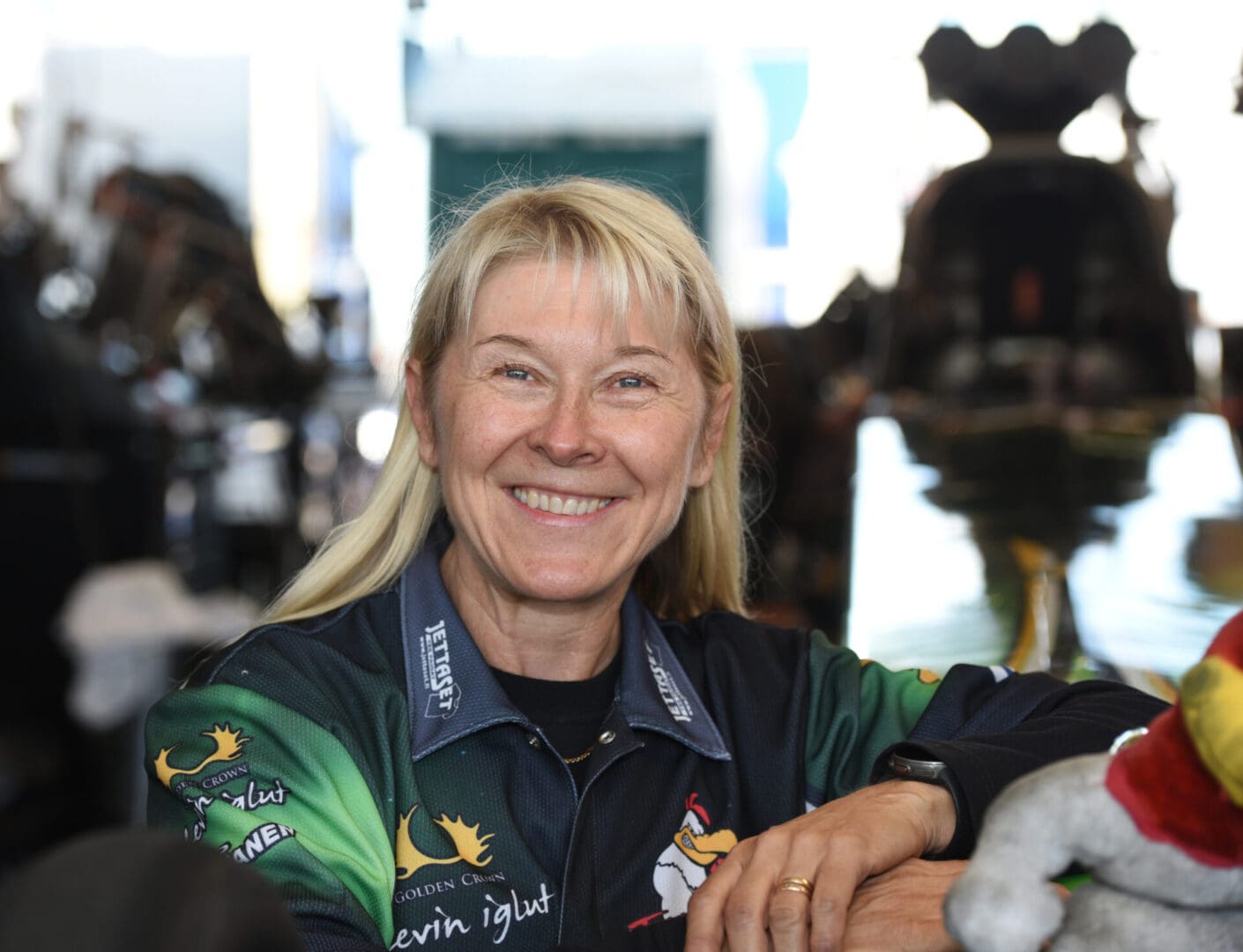 Anita Makela
A native of Finland, Anita got her first exposure to drag racing during a trip to Ohio, USA at the age of…
Read bio · 8 photos
Anita Makela
A native of Finland, Anita got her first exposure to drag racing during a trip to Ohio, USA at the age of…
Read bio · 8 photos
 Class of 2026
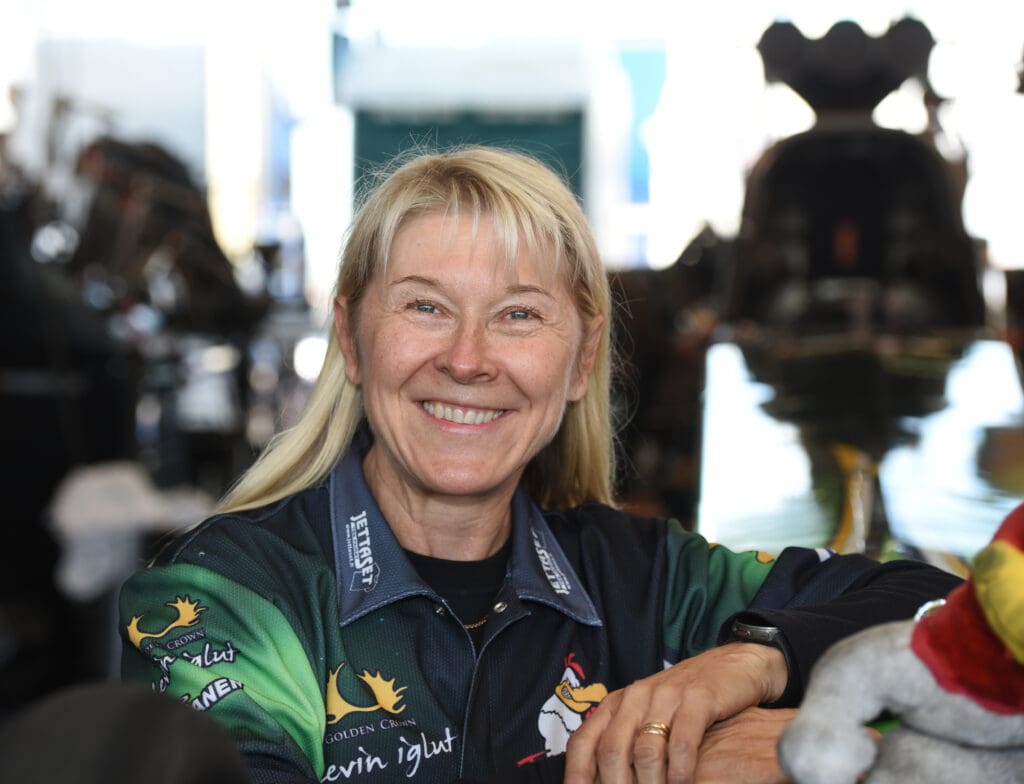
Anita Makela
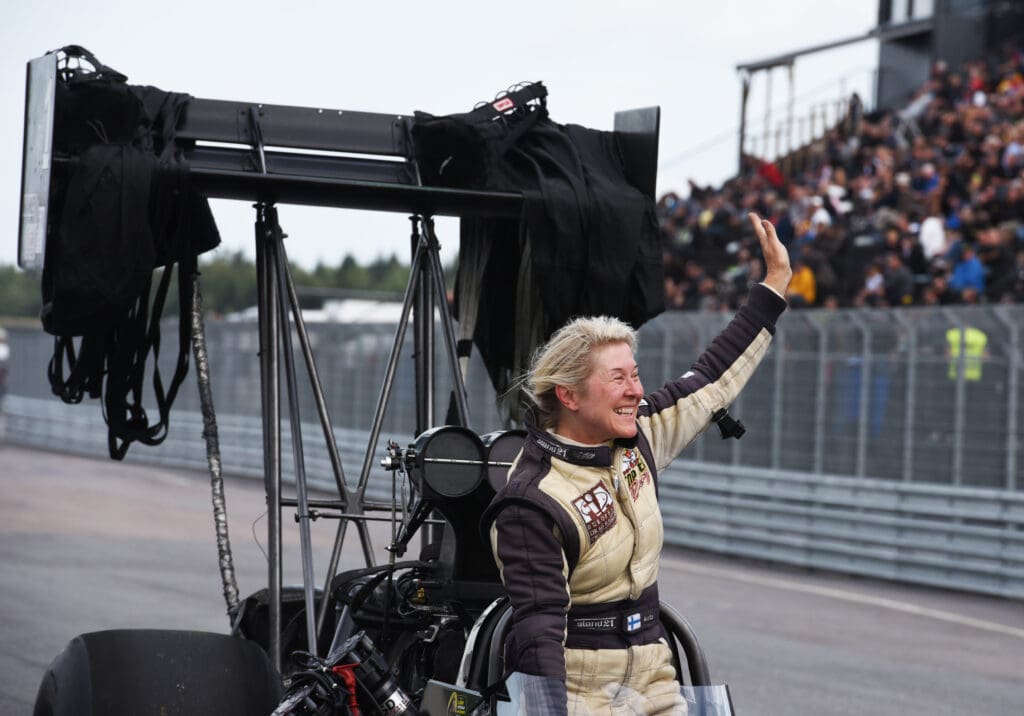
A native of Finland, Anita got her first exposure to drag racing during a trip to Ohio, USA at the age of 16. She was so enamored with what she saw that upon her return to Finland she purchased a Pontiac Trans Am and began both cruising and street racing.
Anita’s true drag racing career began in 1987 when she purchased a gas-powered Competition Dragster. She teamed with Simo Patoharju as her engine guru and notched wins at both Motopark in Finland and Santa Pod in England. However, her final run at Santa Pod ended badly when the chutes failed to deploy and the car was totaled. She had a new Competition Dragster built over the winter and won the Finnish Championship in both 1988 and 1989.
In 1990 Anita made the switch from Competition Dragster class to Pro Comp in the seat of a Top Alcohol Dragster and in both 1994 and 1996 she notched the European Championship in this class. Along the way she also managed to record the fastest speed and quickest Elapsed Time for the class in Europe.
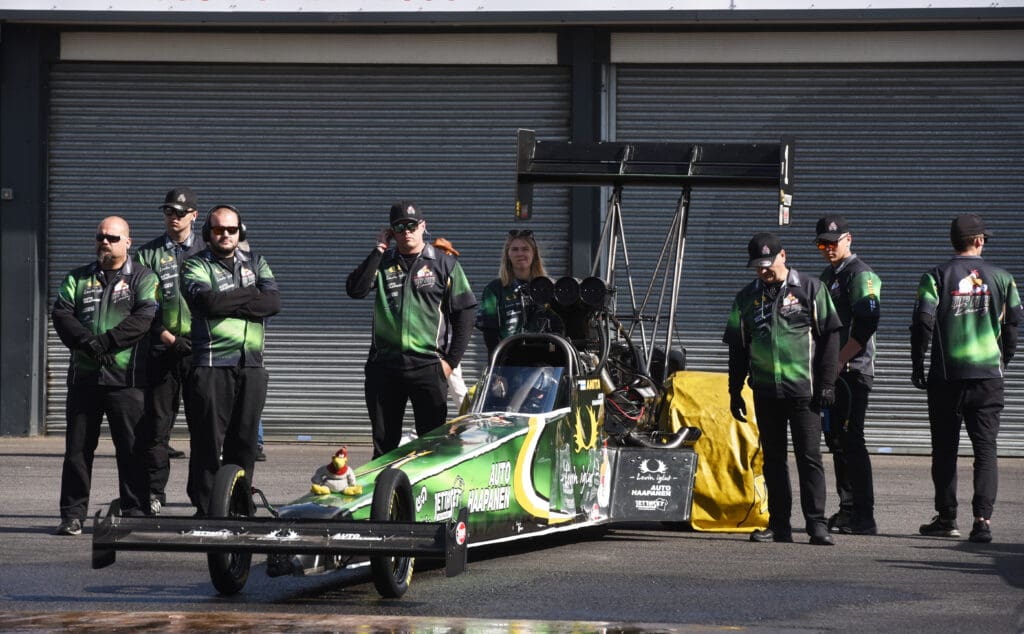
1996 was a major change year when she and Top Fuel racer, Tommi Haapanen were married and Anita took her first ride in a Top Fuel dragster. In 1997 Anita obtained her TF license, took over the controls of Peter Lantz’s Top Fuel dragster and placed third in the 1998 FIA European Top Fuel Championship. In 2000 she won the FIA European Top Fuel Championship title and became the first racer to win this title in two categories.
After a four year hiatus to concentrate on raising a family and expanding the family business, Anita replaced Tommi as the driver of the family-owned TF and from 2009 to 2015 she finished in the fop five of the FIA European Top Fuel Championship six times, posting four race wins and the European ET and speed records along the way.
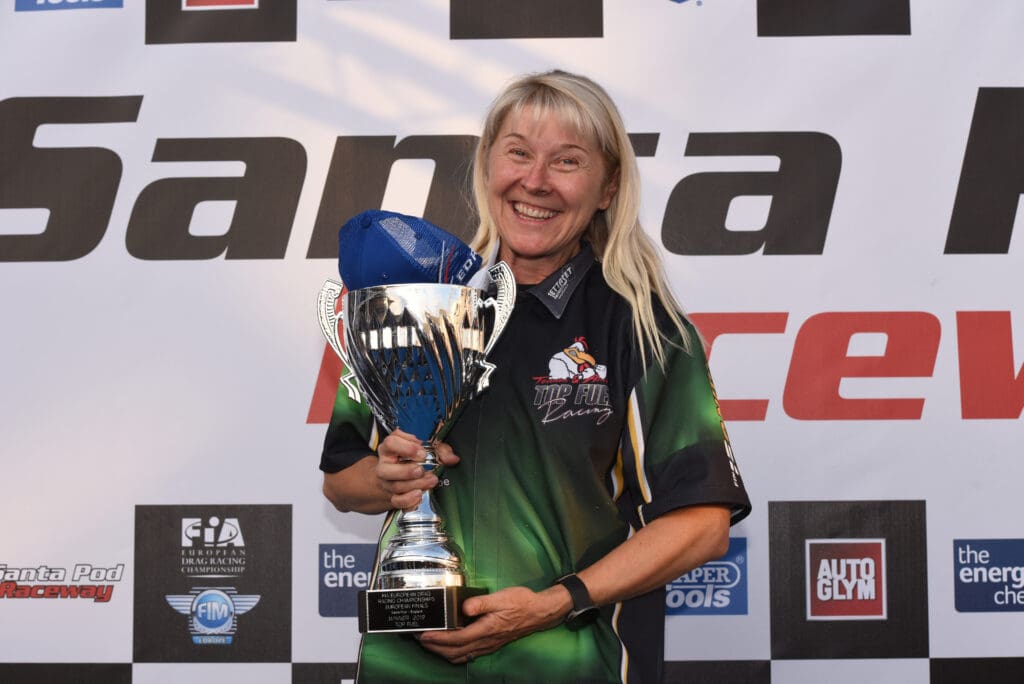
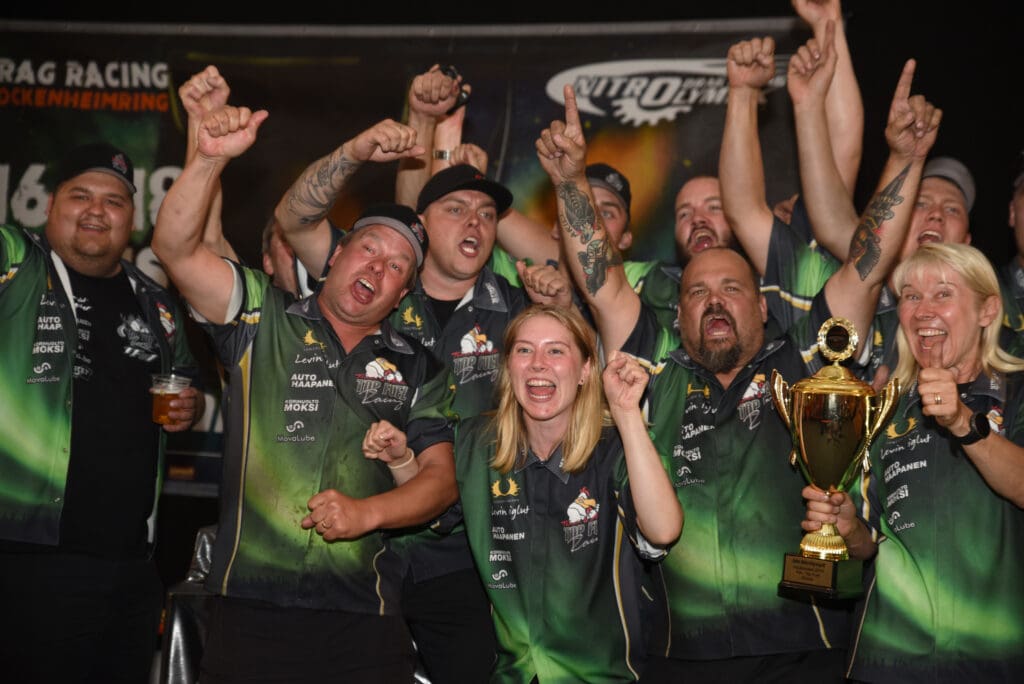
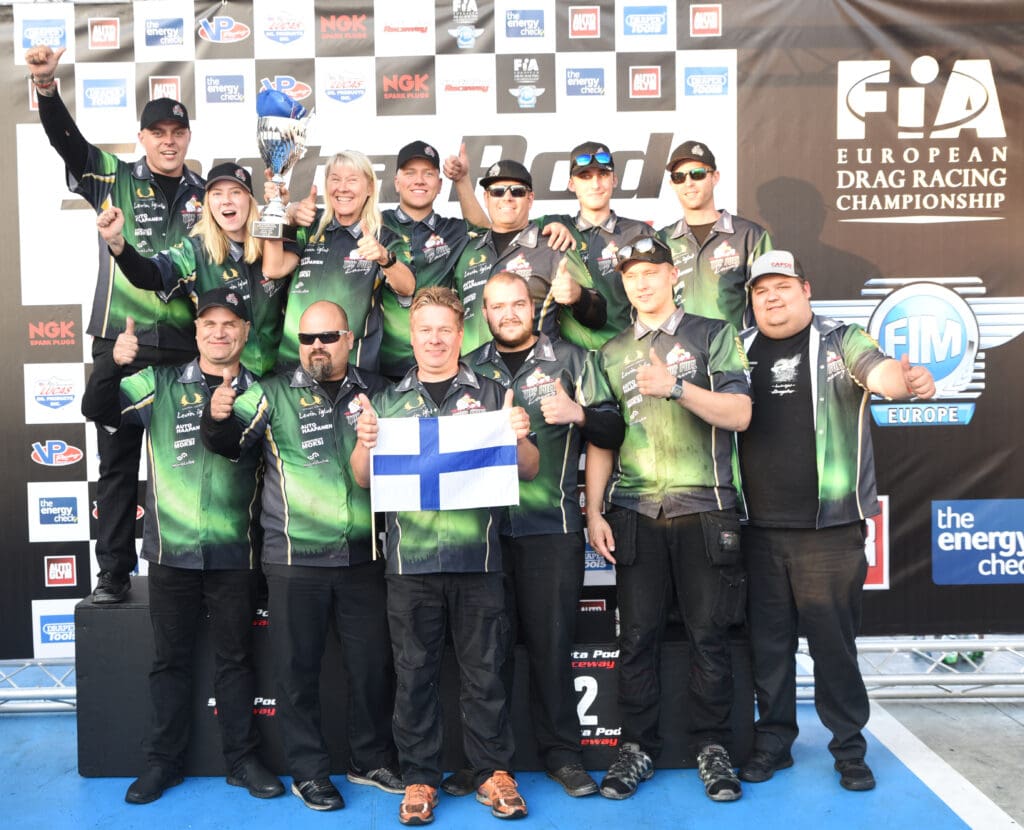
With the tuning advice of the Lagana brothers, in 2016 Anita won two races and claimed her second FIA European Top Fuel Championship title and repeated her Championship form again in 2918. Anita’s best year ever was 2019 during which she won four of the six FIA Championship races and claimed her fourth FIA European Top Furl Championship title.
The 2020 covid pandemic changed her plans for defending the FIA Championship title but she and Tommi still attend select races and compete in exhibition races. A quick recap of Anita’s career shows she won a FIA record number of fifteen Top Fuel races and is still leading the all-time cumulative points total for Top Fuel drivers in the history of the FIA European Championship.
Anita was inducted into the British Drag Racing Hall of Fame in 2019 and remains a fan favorite wherever she goes.
Photo gallery · 8
-
-
2026
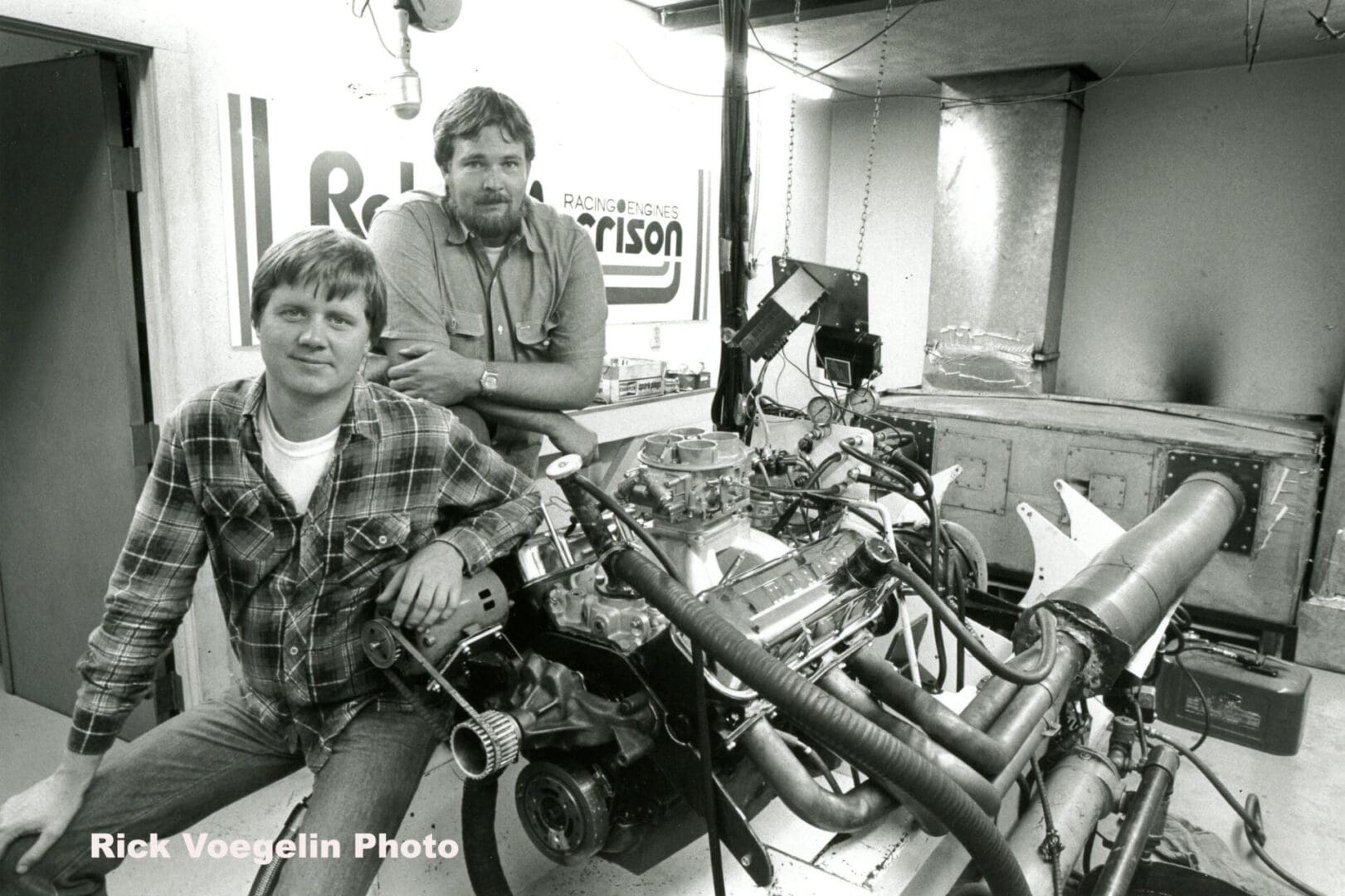 David Reher & Buddy Morrison
David Reher grew up fascinated with cars and how to make them perform better every time they were started. The son of…
Read bio · 10 photos
David Reher & Buddy Morrison
David Reher grew up fascinated with cars and how to make them perform better every time they were started. The son of…
Read bio · 10 photos
 Class of 2026
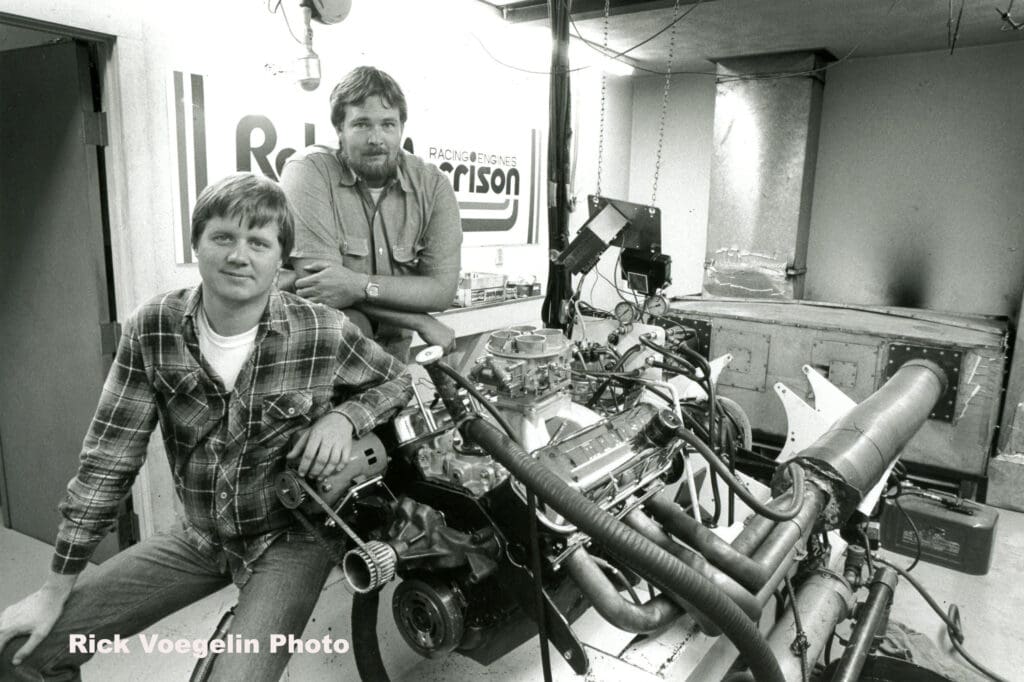
David Reher & Buddy Morrison
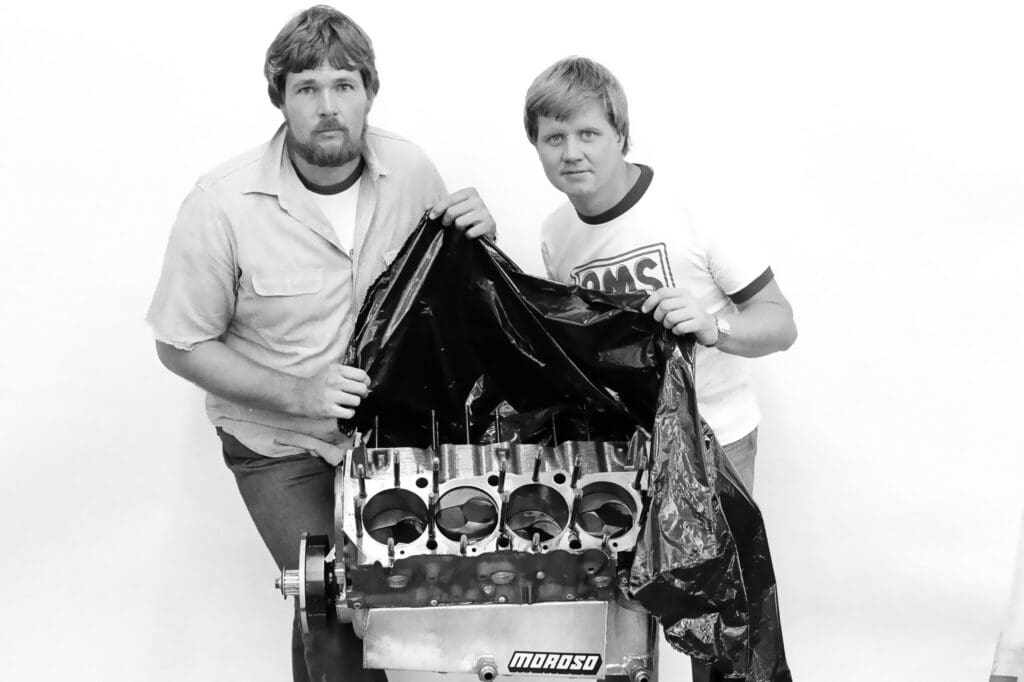
David Reher grew up fascinated with cars and how to make them perform better every time they were started. The son of an economics professor from Iowa, David was raised in a disciplined academic environment that inspired him to bring an analytical and meticulous approach to his passion for drag racing. As a teenager, David scoured the pages of Hot Rod and Car Craft magazines to learn about the intricacies of internal combustion. He partnered with a friend to explore the unknown world of drag racing with a hot rod '57 Chevy.
To say Charles “Buddy” Morrison was a mechanical genius is an understatement. To him all things mechanical were items to be studied, dissected and reassembled in an improved manner.
Then as college students at the University of Texas at Arlington, David Reher met a fellow student named Buddy Morrison. Their mutual interest in drag racing became the foundation of their lifelong friendship and an enduring partnership.
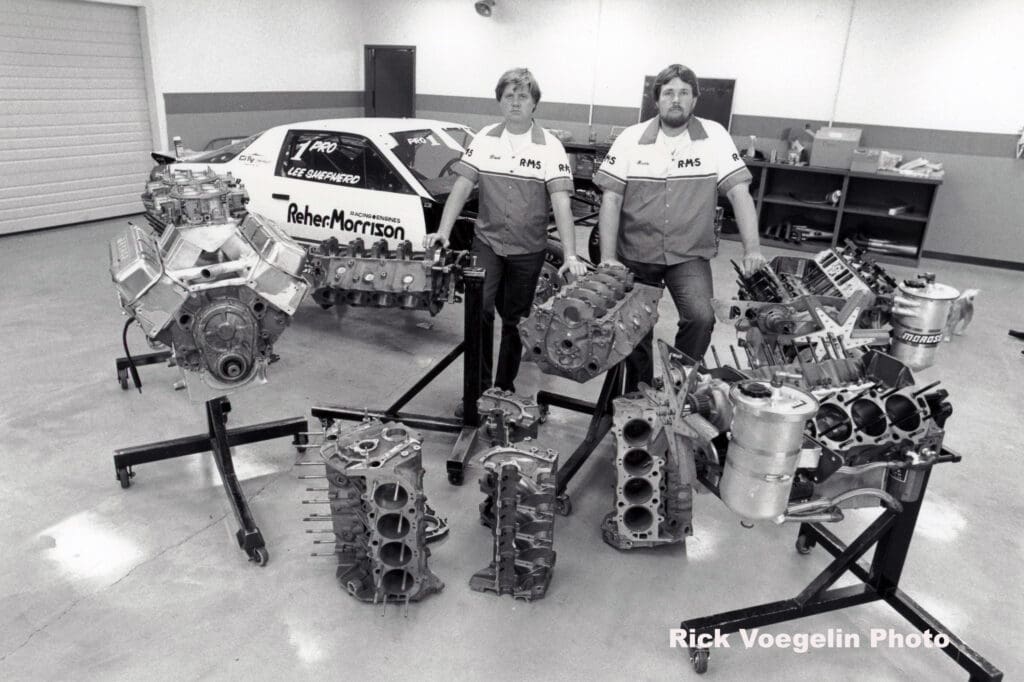
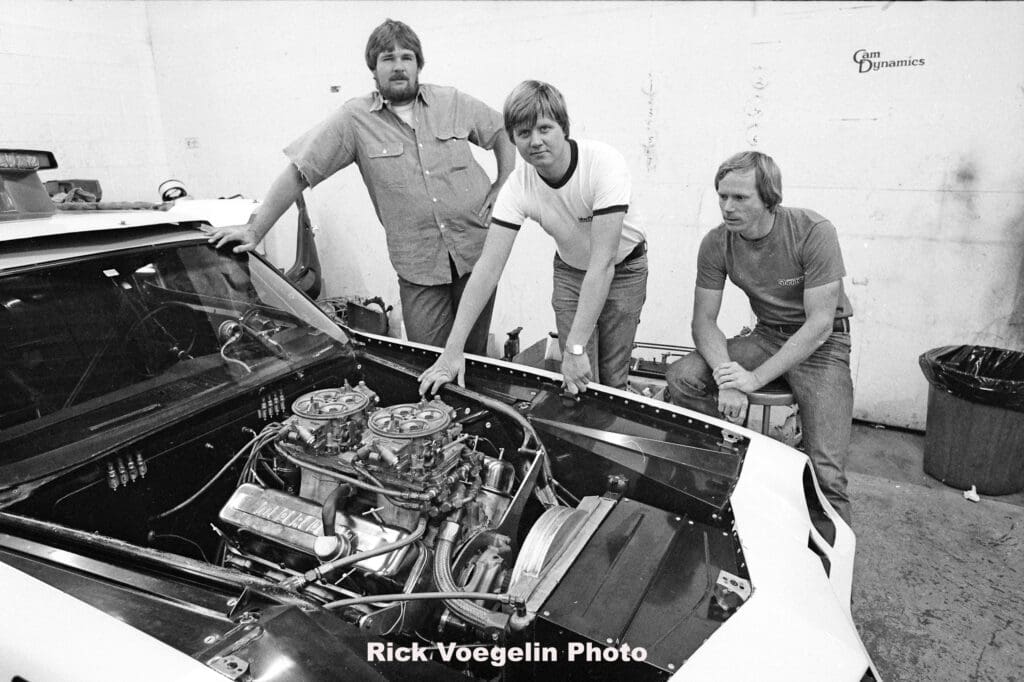
In 1971 the pair founded Reher-Morrison Racing Engines. RMRE's biggest asset was a Ford Maverick powered by a small-block Chevrolet that quickly became the scourge of local sportsman racers. In 1974, with Lee Shepherd at the controls, the pumpkin orange Reher-Morrison F/Gas Maverick won Modified eliminator at the NHRA Winternationals. A stylish Corvette replaced the Maverick the following season, and the trio won the 1975 NHRA Springnationals competing in the E/Modified Production class.
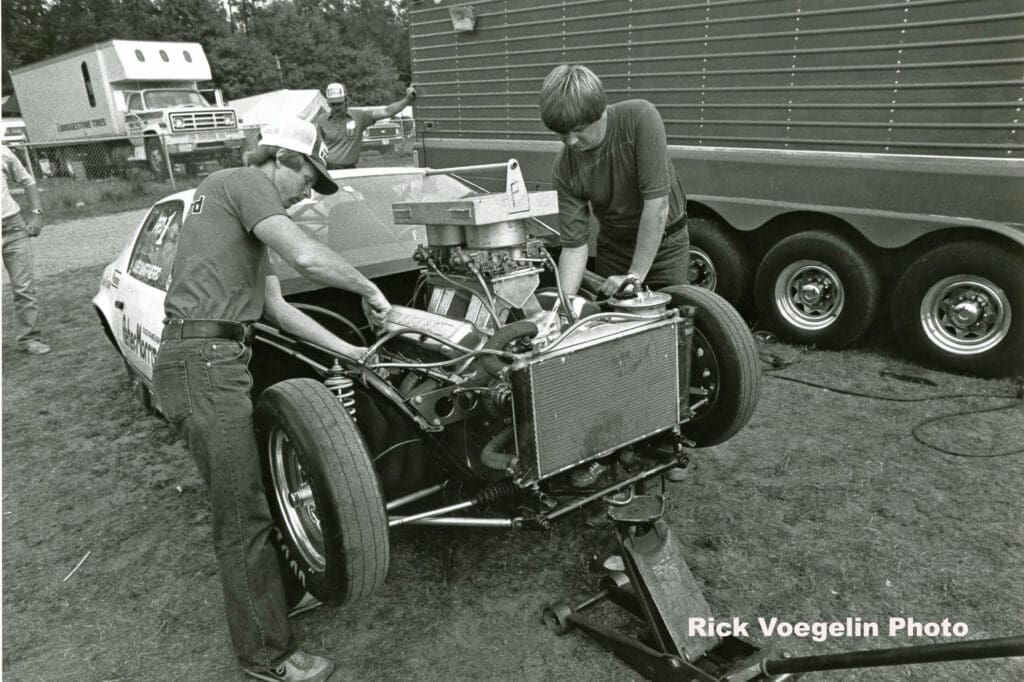
Their success on the racetrack soon translated into enough business to open the doors of a new shop that had the tools needed to do the job right. Here, David, Buddy and Lee were able to modify cylinder heads, precisely machine off-the-shelf pistons, develope superior valvetrains, and coax more horsepower and reliability from every engine.
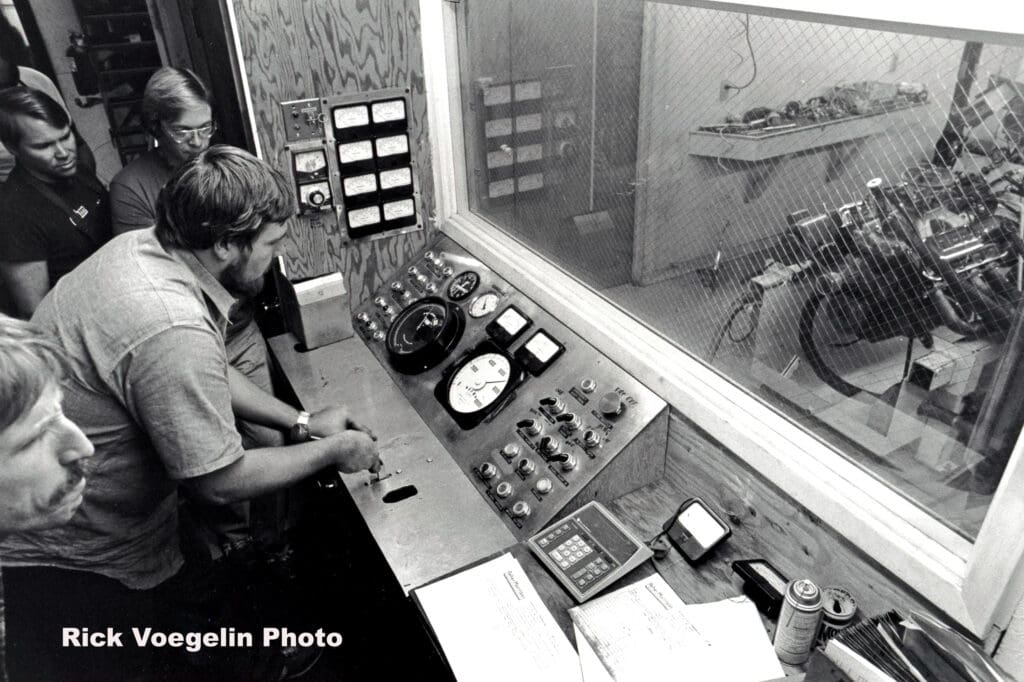
Always an integral part of the business, David was involved when the team built its first flowbench followed shortly by an engine dynamometer and a valvetrain spin fixture. They were way ahead of most of their competitors with these tools and used them to their advantage.
To stay competitive, in 1976 the team fielded its first Pro Stock car, a Monza built by legendary chassis master Don Ness and powered by a small-block Chevrolet. That initial foray into Pro Stock produced only limited success, but 1980 was a turnaround year for the trio. They created an innovative lightweight long-wheelbase Camaro powered by small-block Chevrolet that took advantage of the complex Pro Stock rules of that era. They consequently recorded six wins and three runners-up in ten NHRA national events.
They came roaring back the following year with their next breakthrough: an arsenal of small-displacement big-blocks. Another careful reading of the NHRA regulations had revealed an overlooked combination. By adapting a short-stroke crankshaft from an obsolete 348ci "W" engine to the Mark IV big-block, Reher-Morrison created a new breed of highly efficient 365-cubic-inch "Rat Motors." The three Texans won six more NHRA national events in 1981, and claimed their first Pro Stock championship.
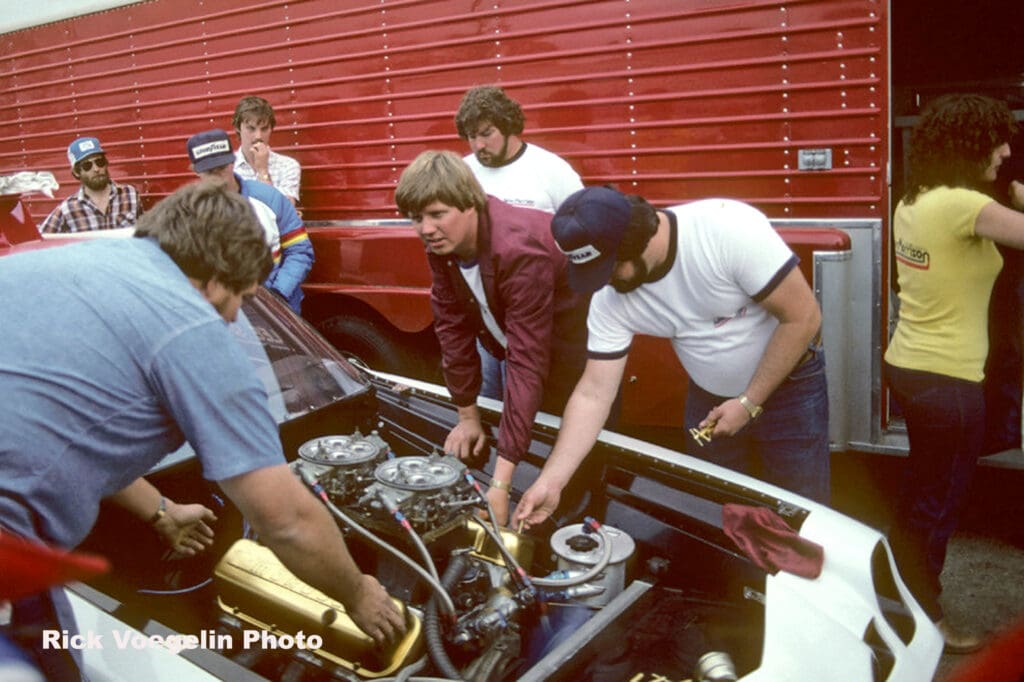
NHRA introduced new Pro Stock rules in 1982 that mandated that every car run a 500-cubic-inch engine and weigh at least 2,350 pounds. Reher-Morrison's relentless development of the big-block engines gave the team a jump start on its competition -- but it didn't stop there. They also introduced top-secret cylinder heads that were based on the factory's solid aluminium head castings -- entirely legal under the rules, and unprecedented among Pro Stock engine builders. The lack of water jackets allowed Shepherd to radically modify the heads with enlarged and relocated ports, install bigger valves, roll the heads by welding and angle cutting the decks, and then machine precisely located water passages to cool the castings.
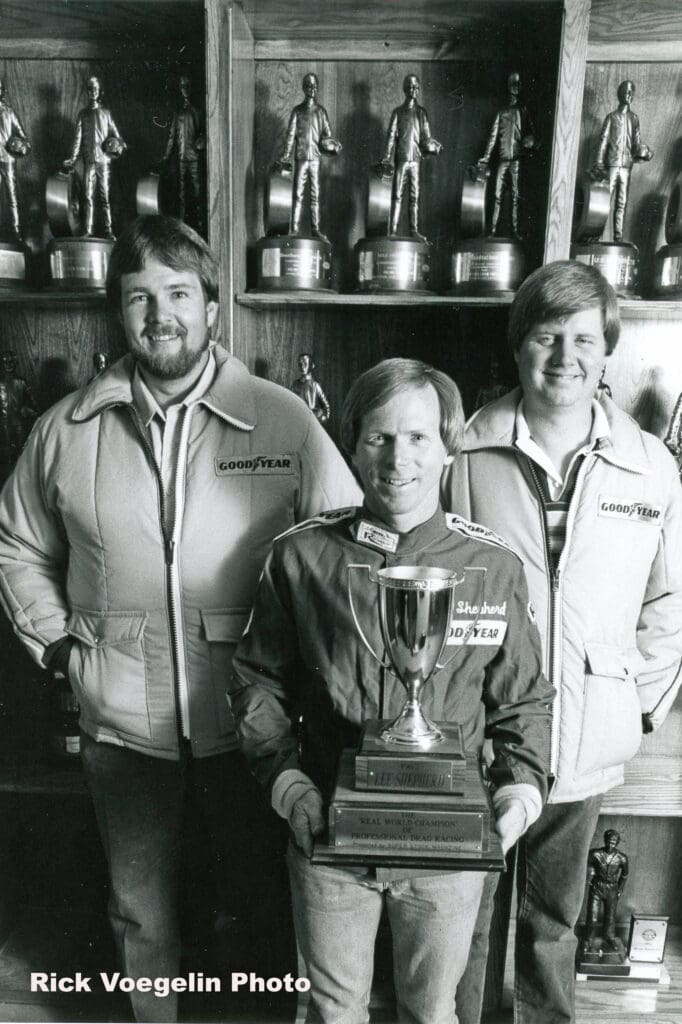
The early 1980s were a Golden Age for Reher-Morrison & Shepherd. From 1980 through 1984 the Texas trio reached the finals in 44 of 56 NHRA national events and won 26 of them. They also began competing in the IHRA Mountain Motor events and between 1983 and 1984 posted a 48-6 win record. In 1983, Shepherd became the first driver to win both the NHRA and IHRA Pro Stock championships – a feat he repeated the following year.
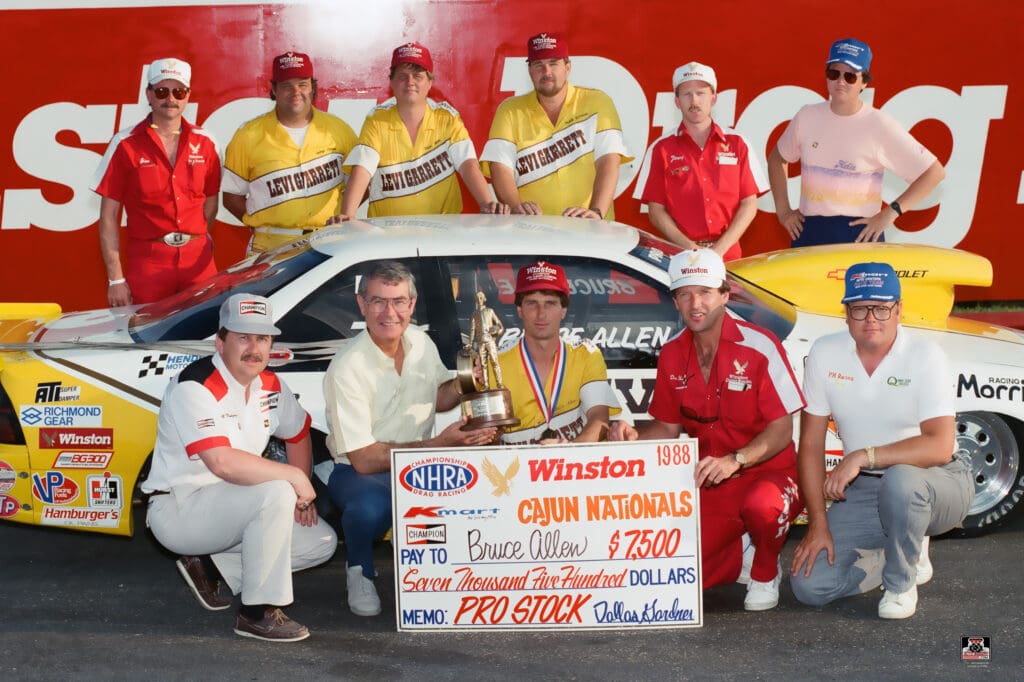
Then in 1985 Lee Shepherd was tragically killed in a testing accident, and Bruce Allen stepped in as his replacement. The team continued its winning ways as Allen scored the team's third consecutive IHRA championship. He subsequently added 16 more NHRA national event victories to the Reher-Morrison record. Allen finished third in the NHRA standings three consecutive seasons (1985-87) and was runner-up in the 1989 championship.
Allen walked away from driving after a harrowing high-speed crash at the Texas Motorplex in 2005. Before the accident, Bruce and David had agreed that the expense and effort required to compete in Pro Stock had escalated to the point that they were going to leave the category at the end of the season. In 1985 they had begun to develope a line of Super Series engines and components specifically for sportsman racers competing in heads-up Super-type eliminators and fast brackets. Continuing that work to support sportsman competition, RMRE also expanded its product line to include immensely powerful nitrous-assisted Pro Modified engines that rewrote records for elapsed times and top speeds.
Buddy lost his fight with cancer in 1998 but will always be remembered as the “Gentle Giant” who never gave up on a project.
Today, David is still at the helm of the Reher-Morrison Racing Engines facility and still turning out first-class products from internal parts to complete engines. Reher-Morrison's expertise now extends far beyond drag racing to short-track oval engines, sprint cars, tractor pullers, and land speed record setters. Away from the shop, David can be found piloting his Cessna airplane, pursuing his longtime interest in boating with his family, accompanying his grandson to amusement parks, and walking his dog daily at a nearby park.
Over the years, the Reher-Morrison Engines team notched numerous honors among them:
Car Craft All Star Team Pro Stock Engine Builders of the Year five times (1982 – 1986)
Car Craft All Star Team Persons of the Year 1980
Photo gallery · 10
-
-
2026
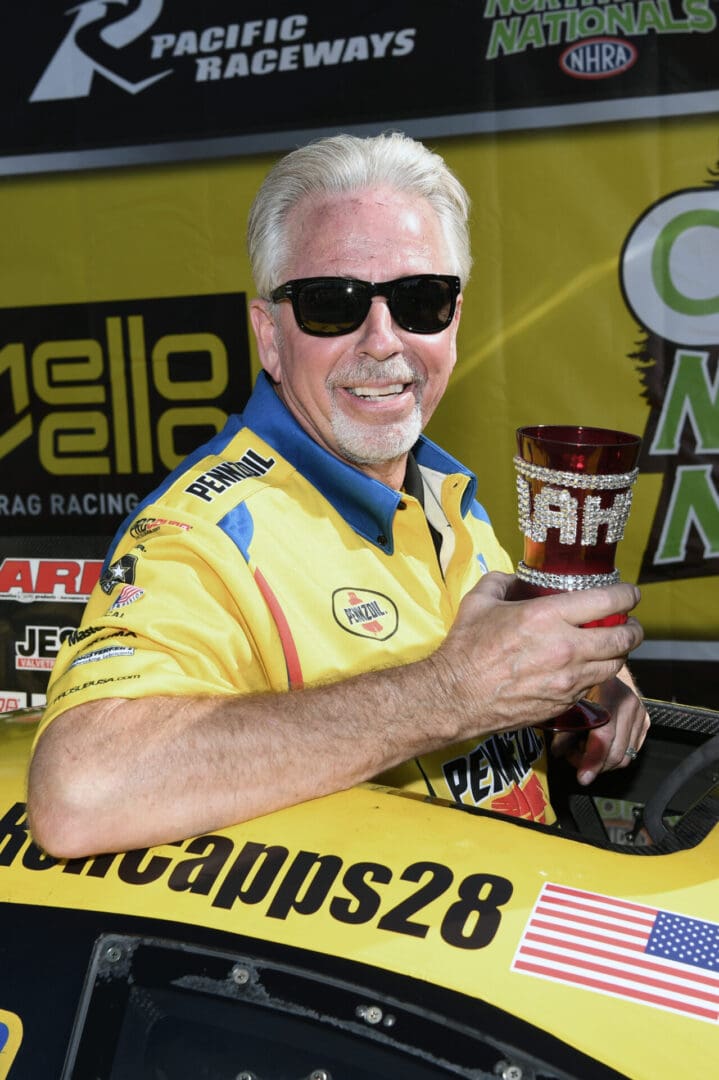 Rahn Tobler
 grew up not far from Lions Drag Strip and was a fan there but after moving to Texas when he…
Read bio · 13 photos
Rahn Tobler
Rahn Tobler grew up not far from Lions Drag Strip and was a fan there but after moving to Texas when he…
Read bio · 13 photos
 Class of 2026
Rahn Tobler
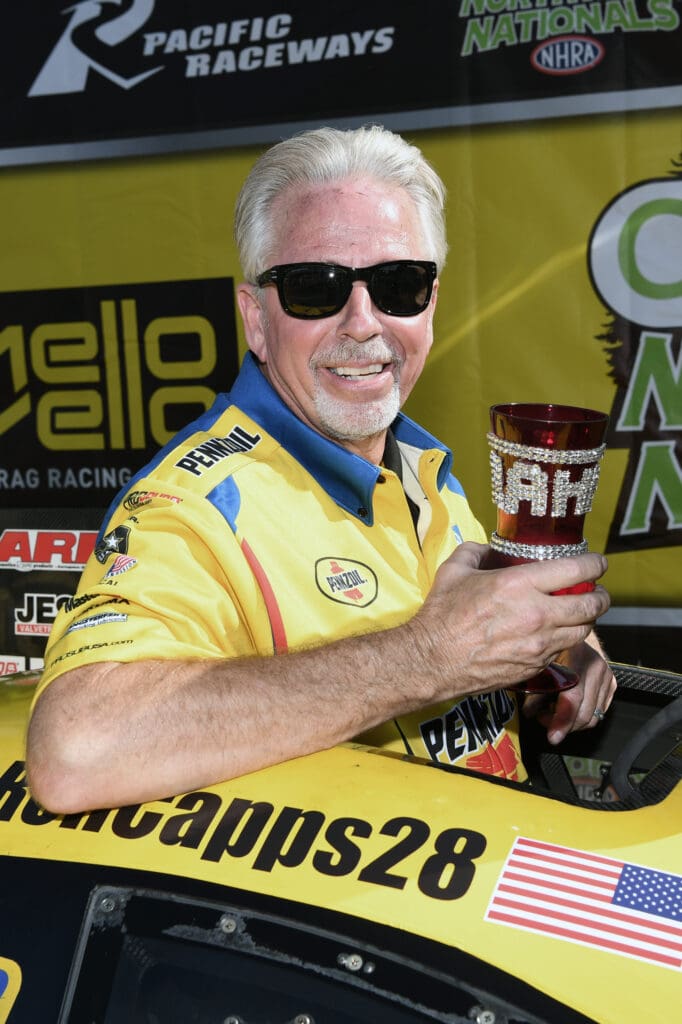
Rahn Tobler grew up not far from Lions Drag Strip and was a fan there but after moving to Texas when he was 15, he became involved in it. His first real exposure came during his daily trip from home to his job in a grocery store. A pair of racers, Steve Stephens and Dick Venables Sr., had a Top Fuel Dragster they worked on in the evenings and often left the door to their shop open and Rahn would stop and admire the car. After about a month they invited him to come in and shortly after that invited him to go to the races with them. The race was the 1971 NHRA World Finals in Amarillo, TX and it was Rahn’s first opportunity to actually work on a race car. The pair also ran a AA/F Funny Car and Rahn worked as a crew member on both cars from 1972 through 1975.
In 1975, Rahn got his AA/F Dragster license in the Stephens and Venables AA/F Dragster with the intention of competing as a driver but signed on as a full-time crew member with Marvin Graham for the 1976 season. At the end of the 1976 season, Rahn left Graham’s team and took the Stephens and Venables dragster to Florida for a three race program. While in Florida, Connie Kalitta approached him to become a crew member on Shirley Muldowney’s car which Rahn accepted. In 1977, with Connie as the crew chief and Rahn a full-time crew member, Shirley won the NHRA World Championship.
Connie and Shirley parted ways in early 1978 and Shirley offered Rahn the crew chief job which he took. 1978 and 1979 were learning years for Rahn as a crew chief but the team turned things around in 1980 and won four NHRA national races and Shirley’s second NHRA World Championship.
In 1981, the team began competing in non NHRA sanctioned races and in 1981 won the AHRA World Championship. The team followed its successful 1981 in 1982 by winning four NHRA National Races and in 1982 won its third NHRA World Championship title. During the following seven years, the team expanded its racing events to include NHRA, AHRA and IHRA events.
With no major sponsorship signed on, from 1990 through 2003, Shirley and Rahn raced strictly as a business venture, competing mainly in match races. However, they did win three additional IHRA National Races during that time. With Shirley’s retirement, Rahn took over as Crew Chief of Doug Kalitta’s AA/F Dragster and in the following three years they won fourteen NHRA National Races,
Rahn switched from dragsters to AA/Funny Cars in 2007 as Cruz Pedregons Crew Chief and in 2008 the team ended the season with three NHRA National Event wins and the NHRA Funny Car World Championship.
During the following fifteen years, Rahn worked as Crew Chief on Don Schumacher’s Jack Beckman driven Funny Car, Ron Capps Funny Car and John Force’s Austin Prock Top Fuel Car. Rahn’s record as Crew Chief is three NHRA AA/F Dragster Championships, one AHRA AA/F Dragster Championship, two NHRA AA/F Funny Car Championships, thirty-two NHRA Fuel Dragster National Events, forty NHRA Fuel Funny Car National Events, eight AHRA Fuel Dragster National Events and three IHRA Fuel Dragster National Events.
Rahn Tobler has not retired, in 2023 he took on the role of Consultant for two part time teams, TJ Rizzo’s Top Fuel team and Jason Rupert’s Funny Car team.
Photo gallery · 13
-
-
2026
Founders Award
Bob Smith
Robert “Pennzoil Bob” Smith was a true racing fan. He enjoyed every form of racing from drag racing to NASCAR and everything…
Read bio
Class of 2026 · Founders Award
Bob Smith
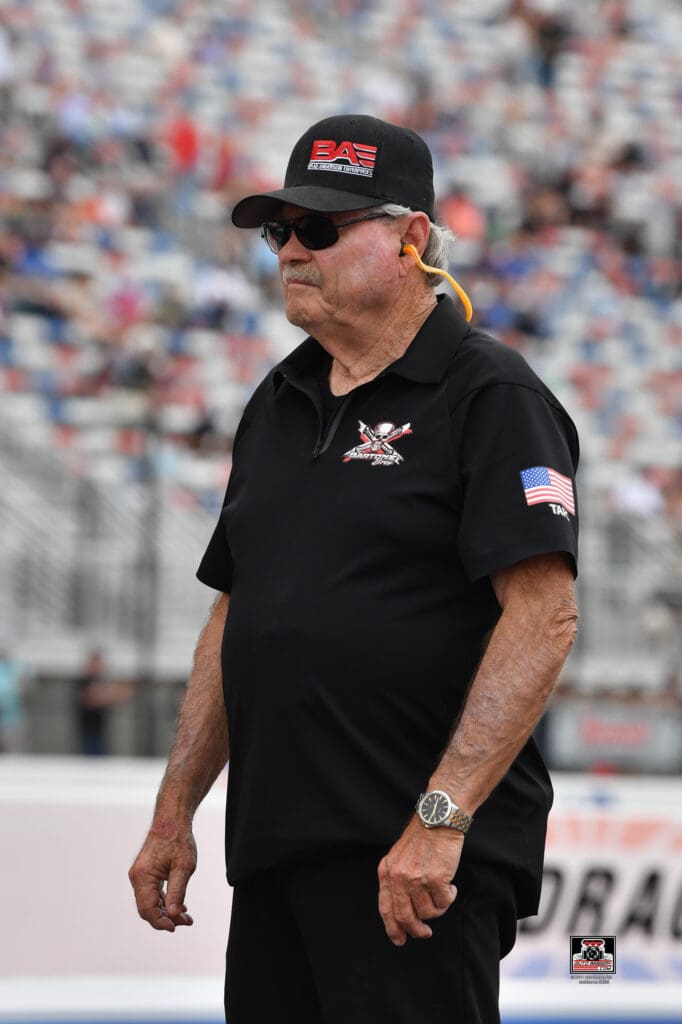
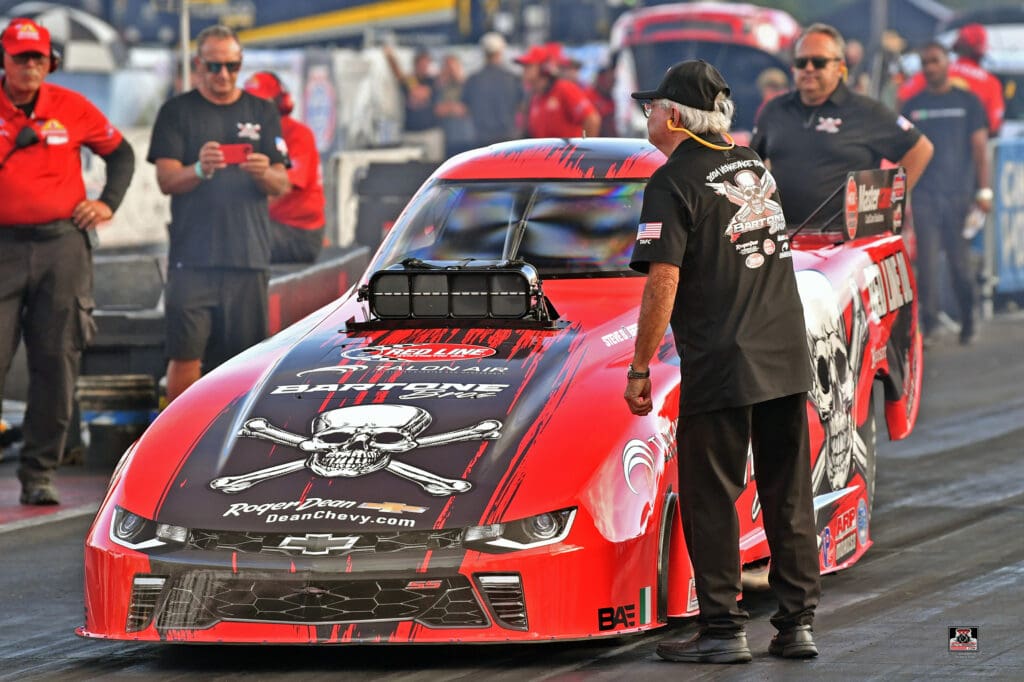
Robert “Pennzoil Bob” Smith was a true racing fan. He enjoyed every form of racing from drag racing to NASCAR and everything between. Bob served as the head of Pennzoil’s High-Performance Division from mid-1960’s through mid-1970’s. Also, he did not confine his interest and/or appearances to just automotive events. wherever there was an event that included aircraft and/or boats Bob would be found making sure the team involved was using the correct oil and other Pennzoil lubricant products.
Class of 2025
9 inductees-
2025
 Charlie Allen
 has been a competitor all his life, starting in his teen years as a street racer to his years as…
Read bio · 31 photos
Class of 2025Presented by Wynn’s
Charlie Allen
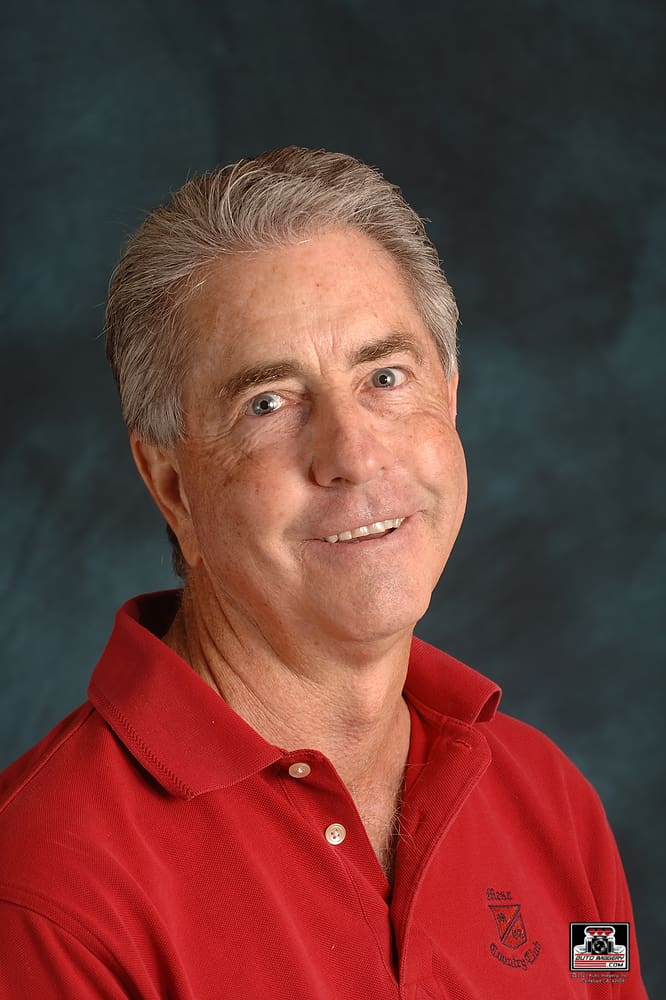
Charlie Allen has been a competitor all his life, starting in his teen years as a street racer to his years as…
Read bio · 31 photos
Class of 2025Presented by Wynn’sCharlie Allen
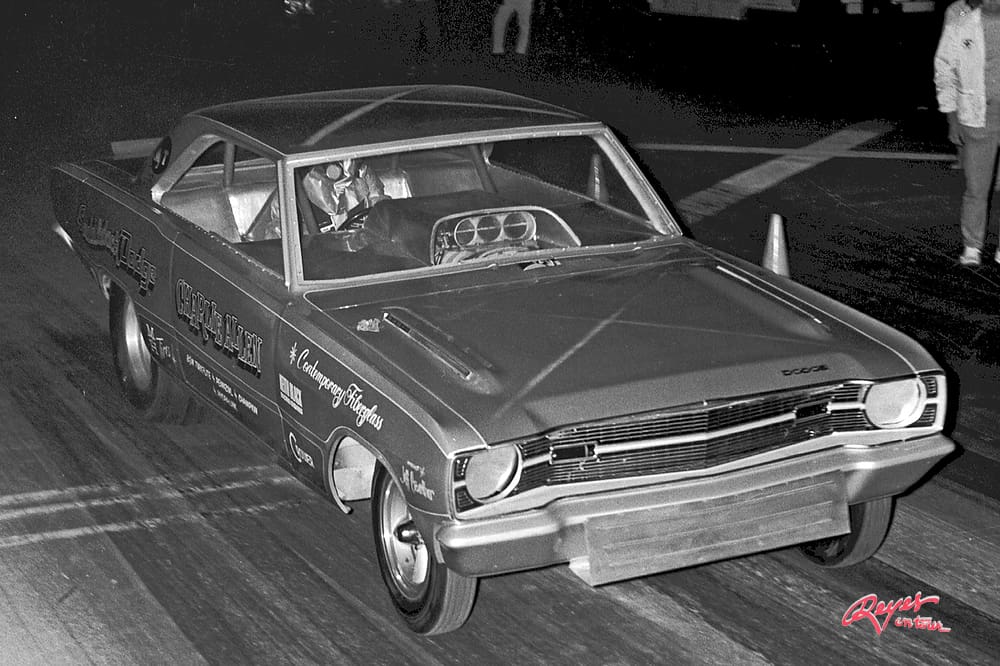
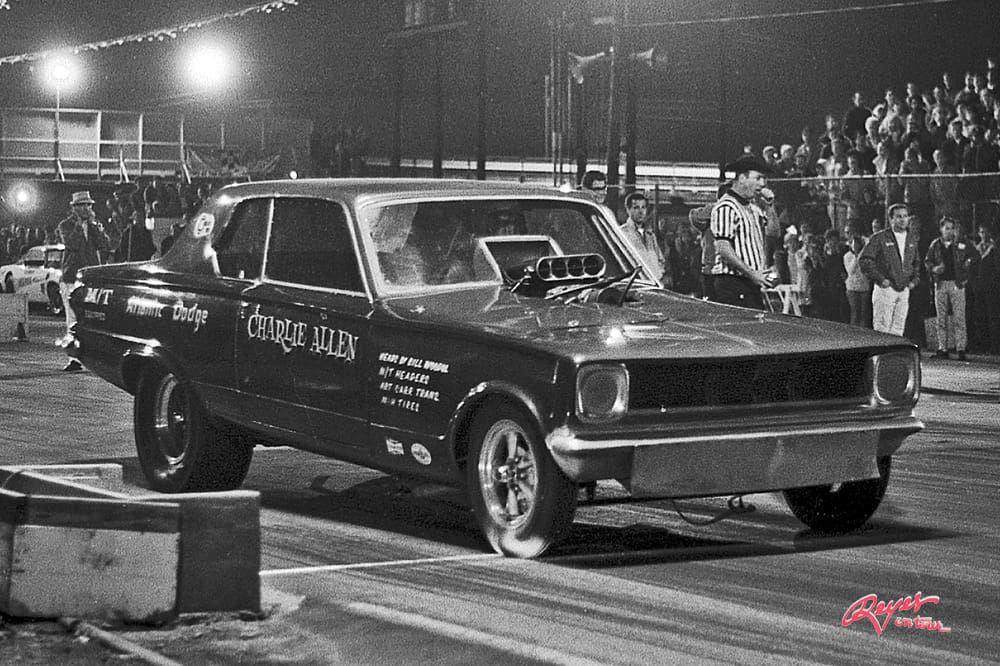
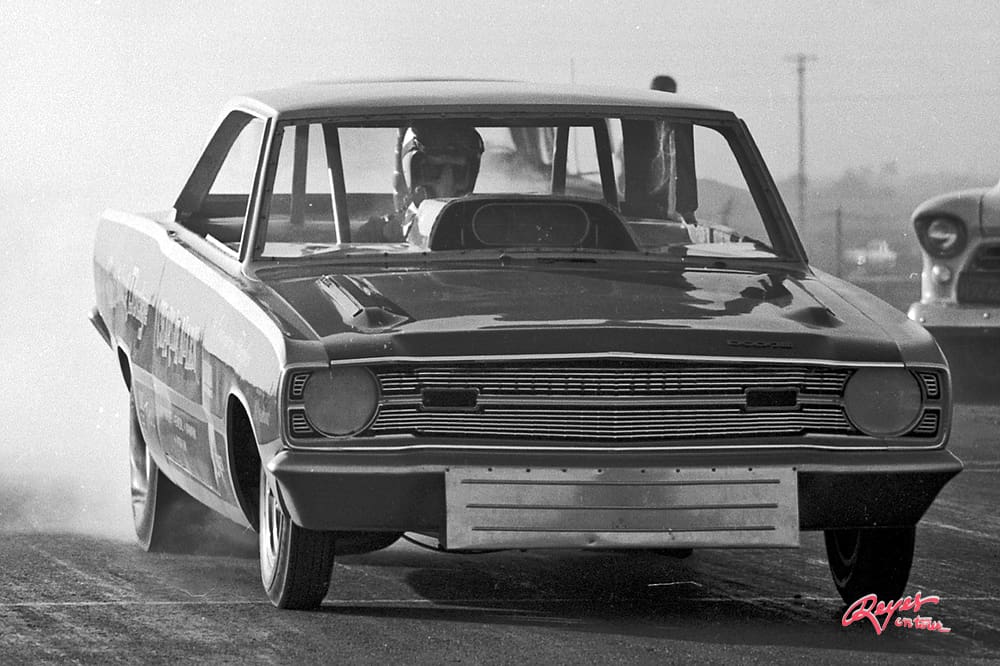
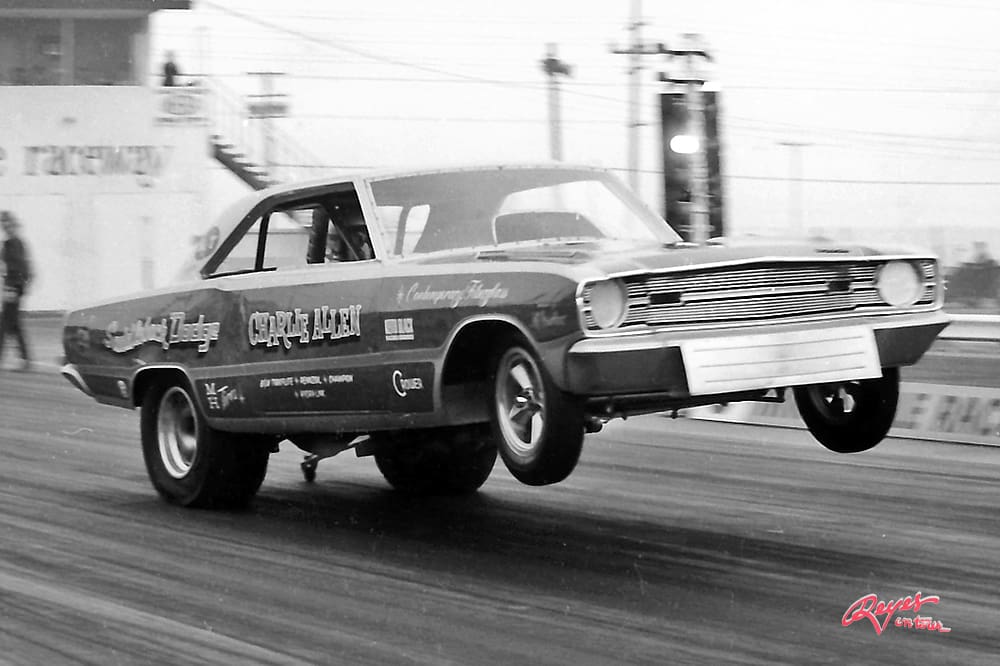
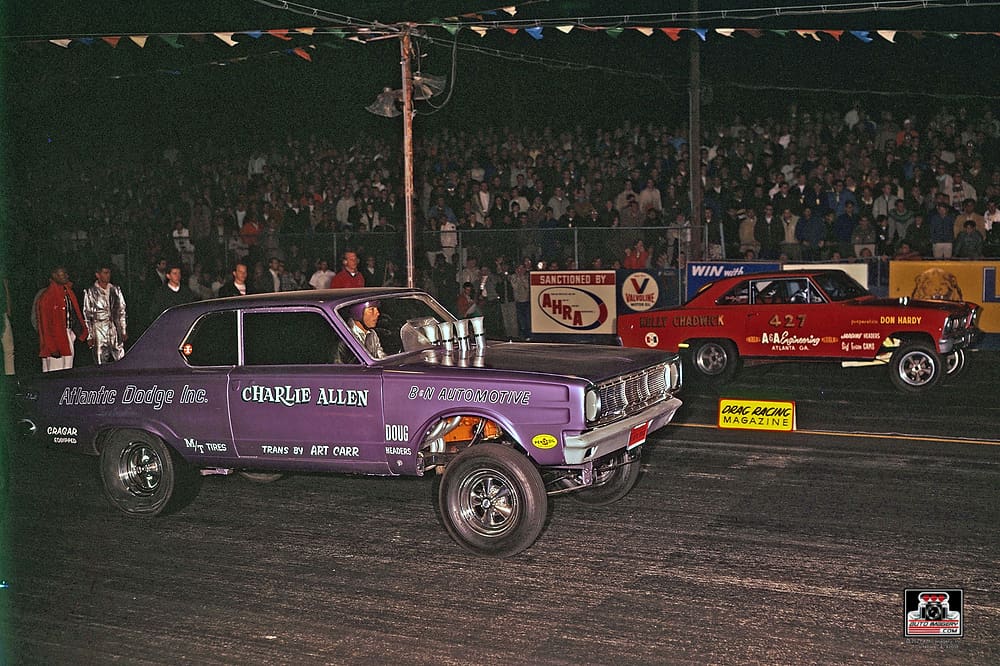
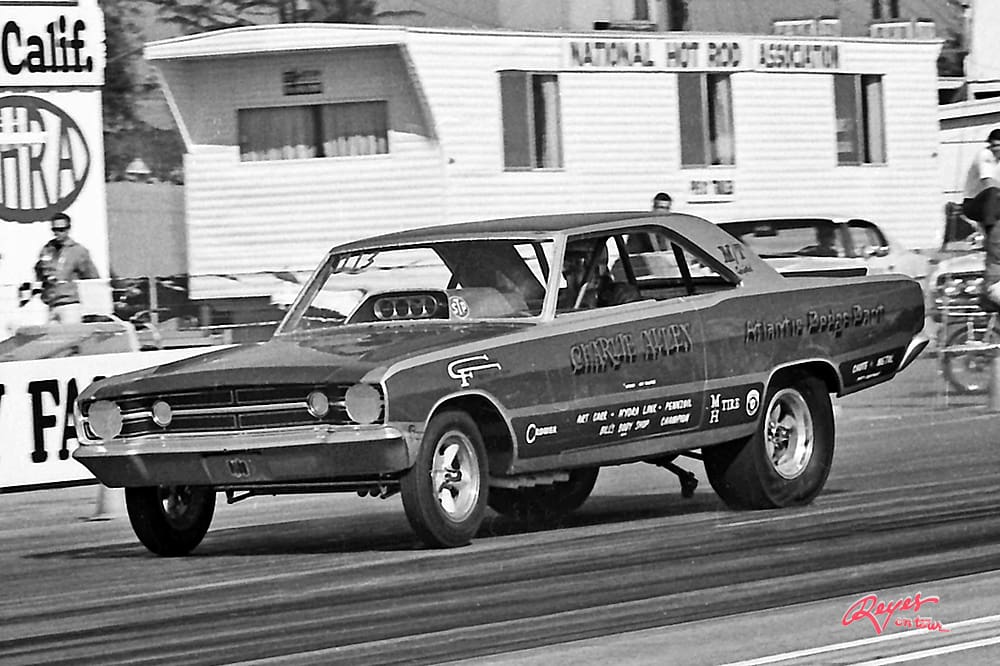
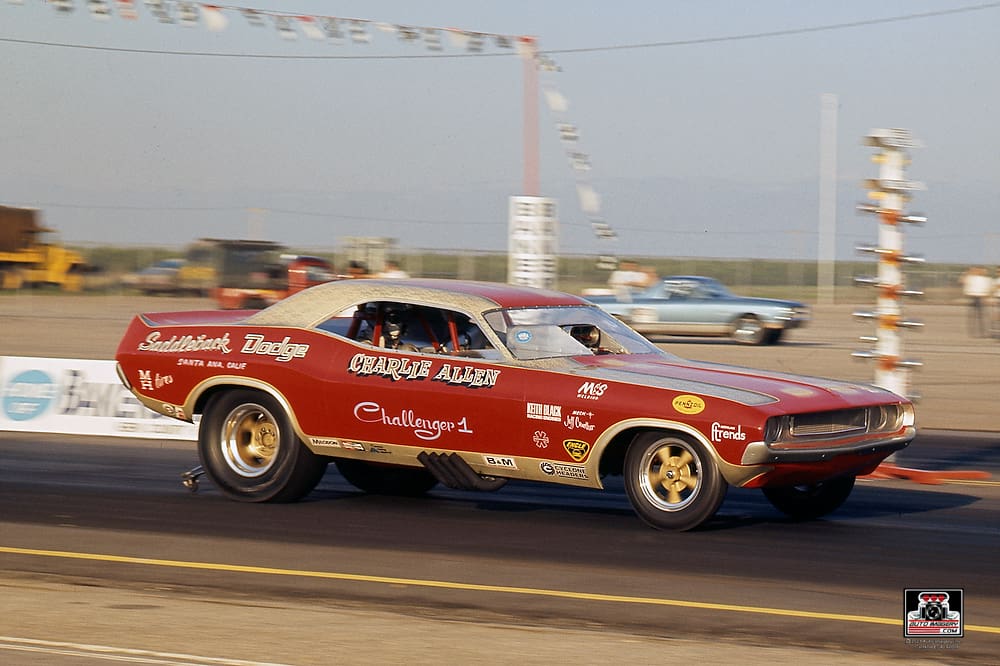
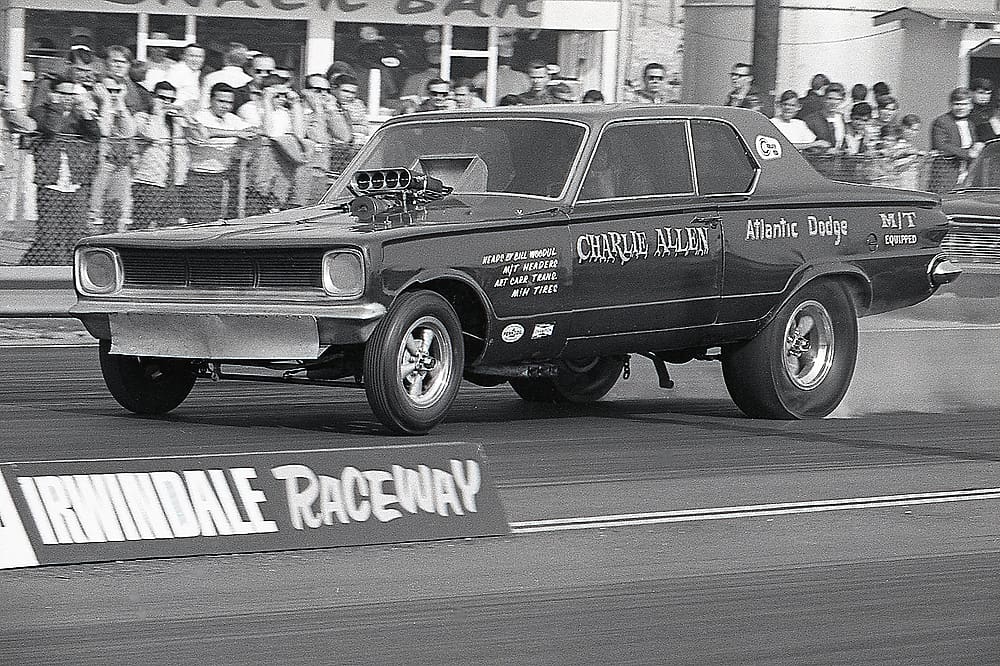
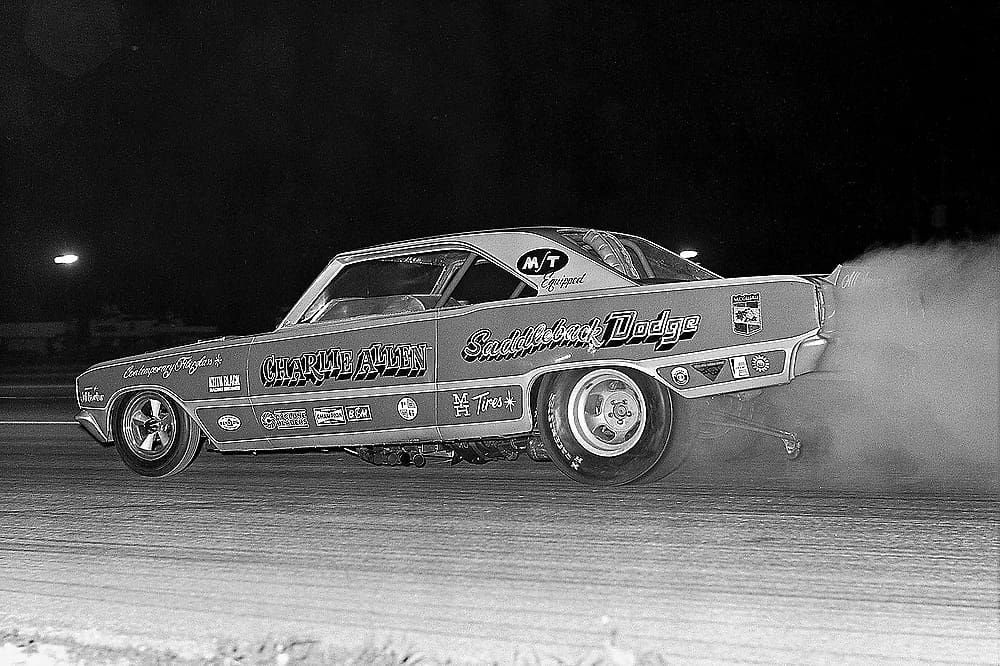
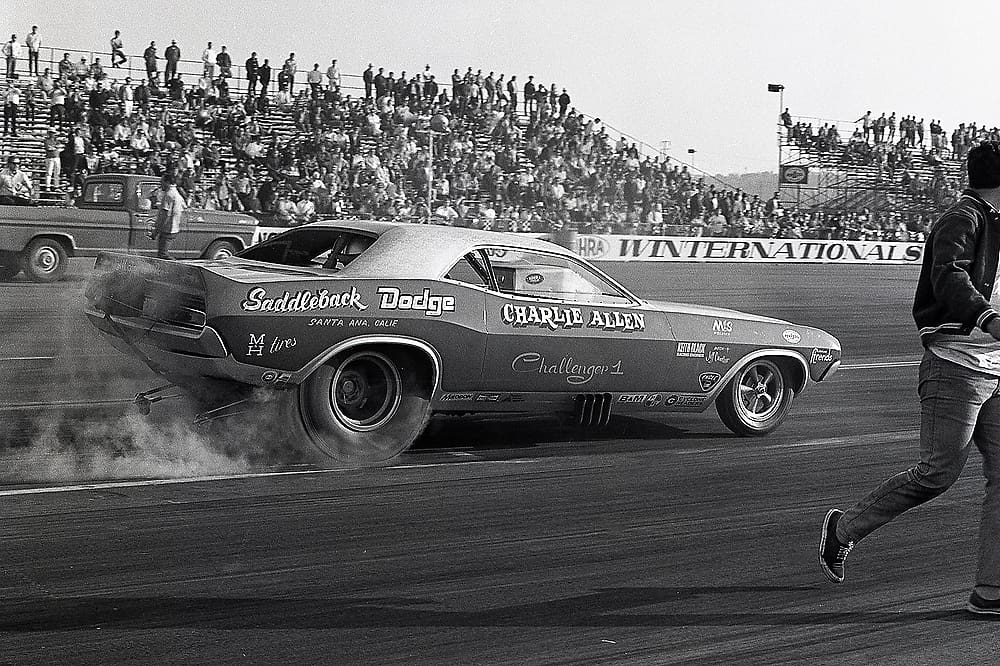
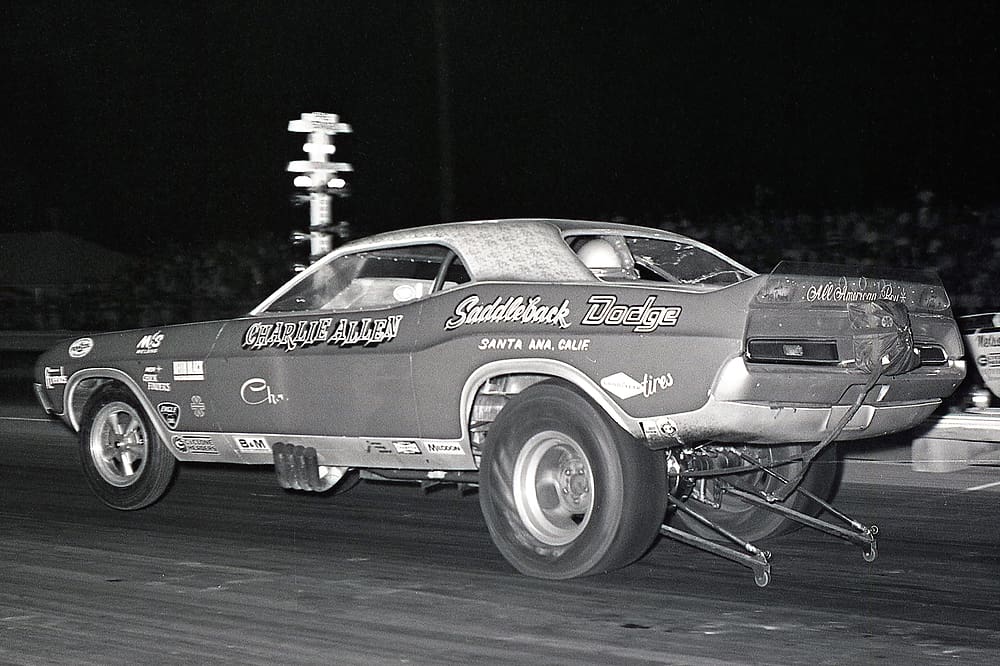
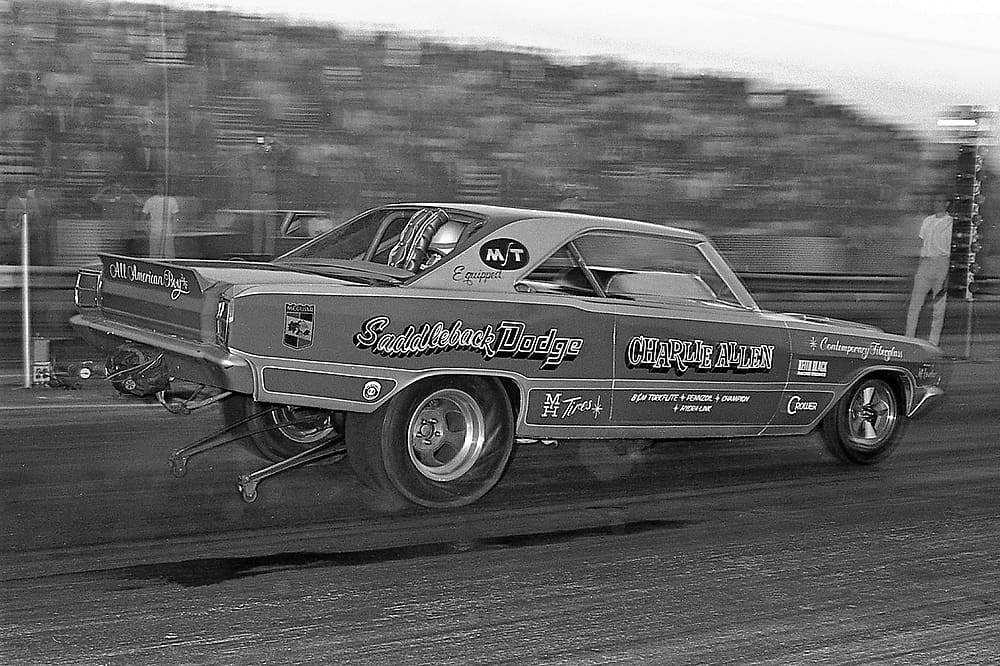
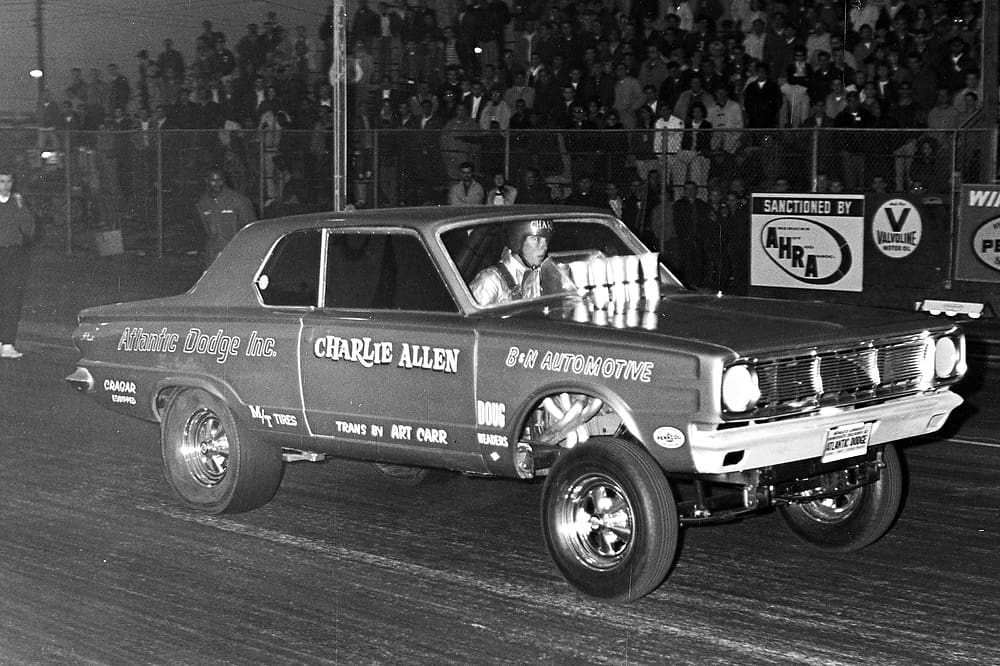
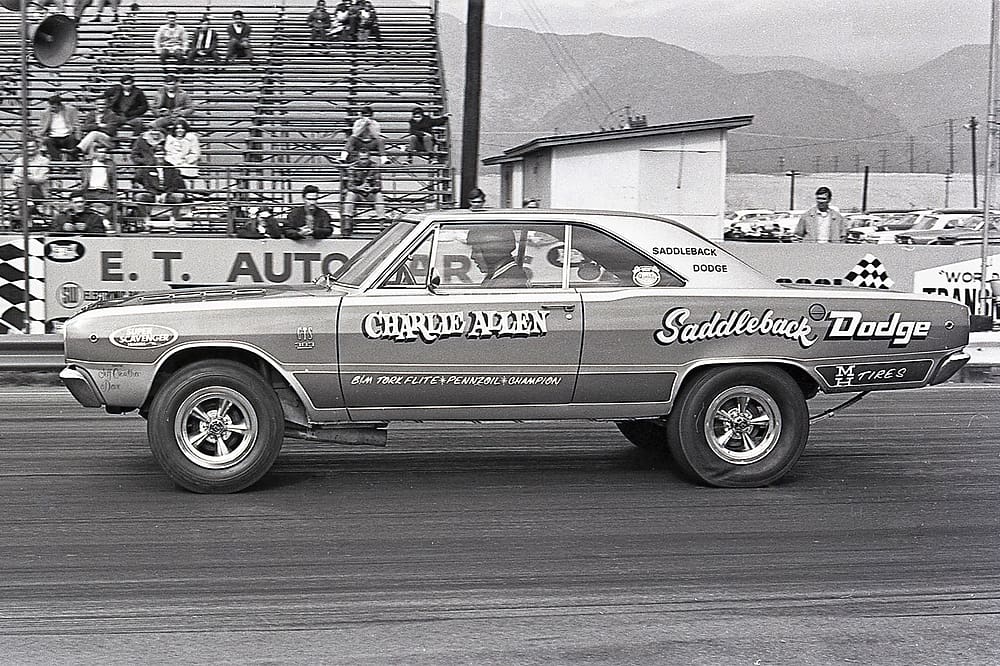
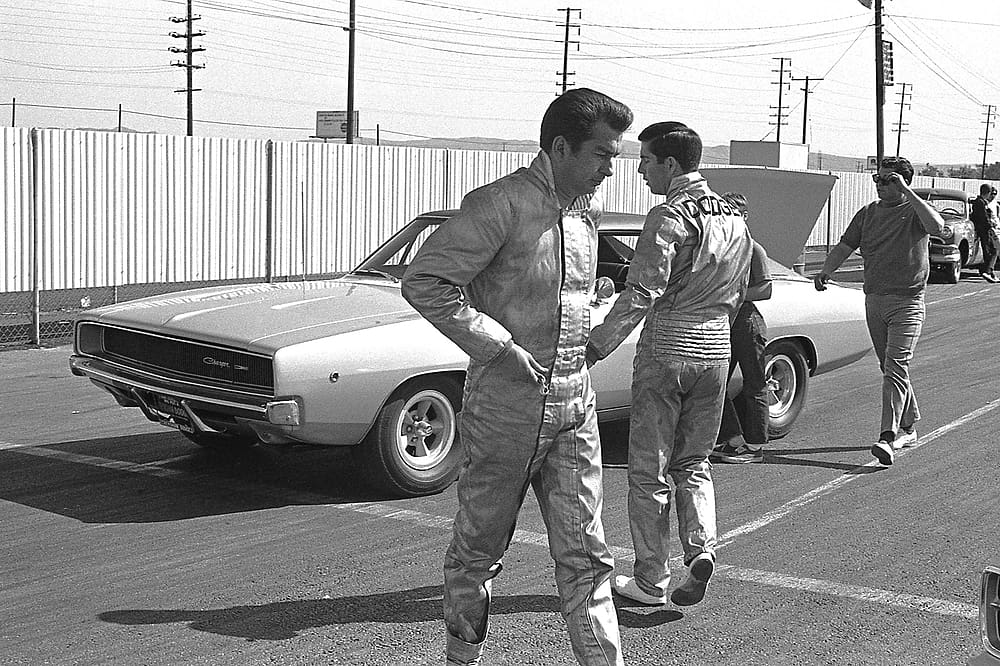
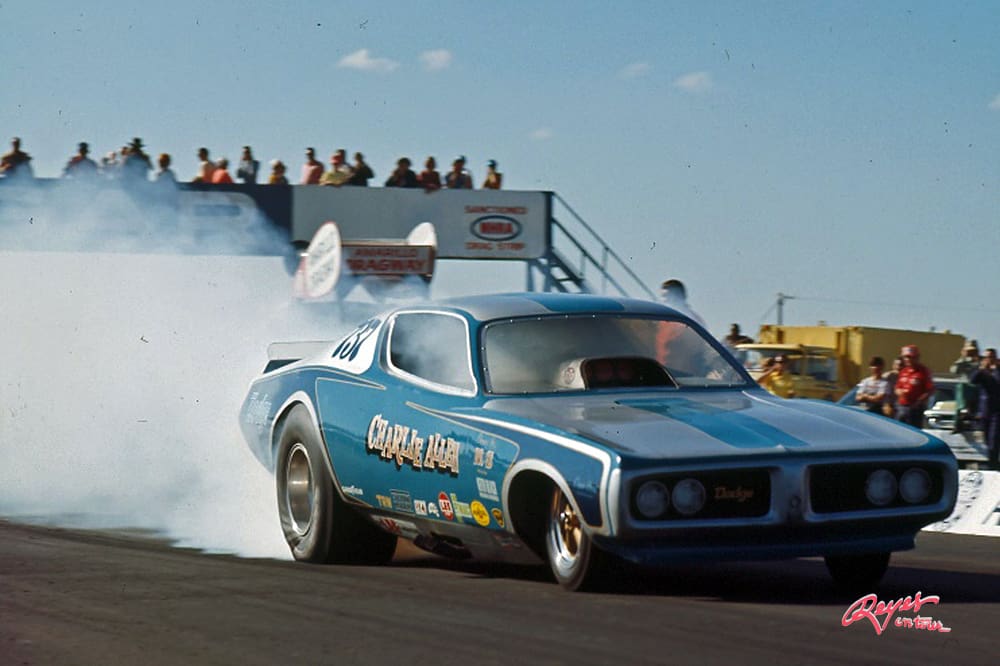
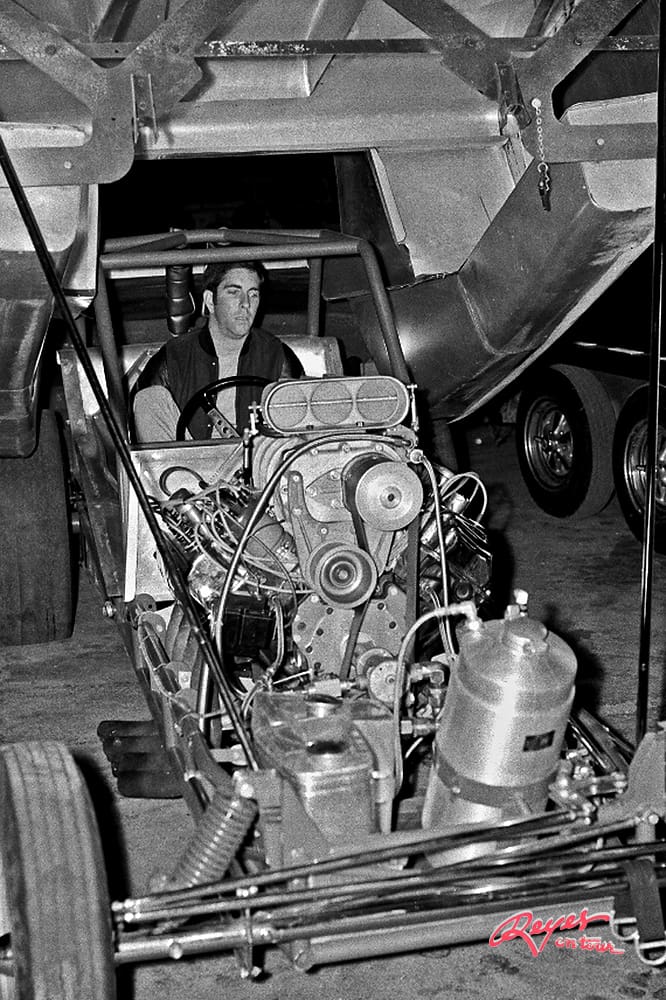
Charlie Allen has been a competitor all his life, starting in his teen years as a street racer to his years as a successful home builder and racetrack owner and promoter. Charlie got his start in organized drag racing in 1963 when he met Bill Golden of Mavrick fame and joined his efforts as a crew member. In 1964 the pair went on tour as match-racers with a pair of Super Stock Dodges. Charlie went on his own in 1965 with a full Dodge Corporation sponsorship, campaigning a 426-Hemi powered Super Stock Dodge. While his racing career was primarily as a match-racer, he did notch a major win at the AHRA Nationals in Phoenix, AZ in 1966. He was one of the first drag racers to have his car shipped out of the U. S. mainland when his and the Chi Town Hustler Dodges were shipped to Hawaii for a featured match race.
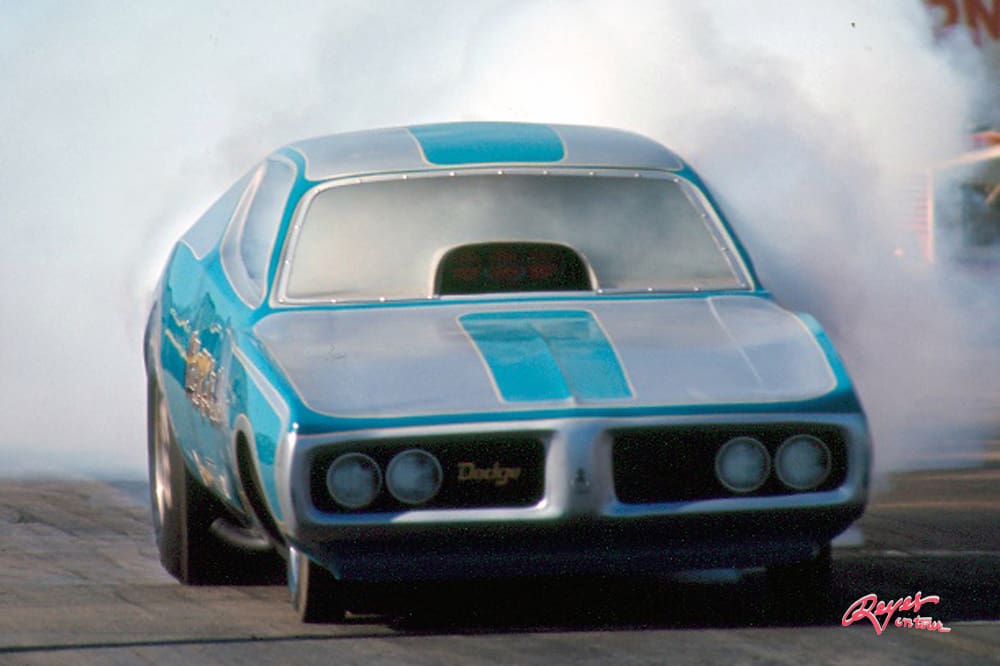
After campaigning a Dodge Charger with a Kieth Black prepared engine and a modified body in 1971, Charlie quit racing and started building custom homes. However, because of his connections at NHRA and knowing so many of the track owners and managers, he learned that Bill Donner, who was operating Orange County International Raceway (OCIR), was looking to retire and in 1979 he managed to purchase the racing rights and assume the lease for the track.
As the manager of OCIR, Charlie opened the door for trend setting special race events, from continuing the super popular 64 Funny Car Show to a special ‘racer introduction night. His special events were introduced at racetracks nationwide with great spectator acceptance. He was also one of the early promotors of the “Wednesday night”, run-what-you-brung events for young enthusiasts. OCIR was among the first and only drag strips to incorporate an onsite, dirt track for motocross motorcycle racing. In 1983 Charlie had to close the doors of OCIR so the owners could develop it into an industrial site.
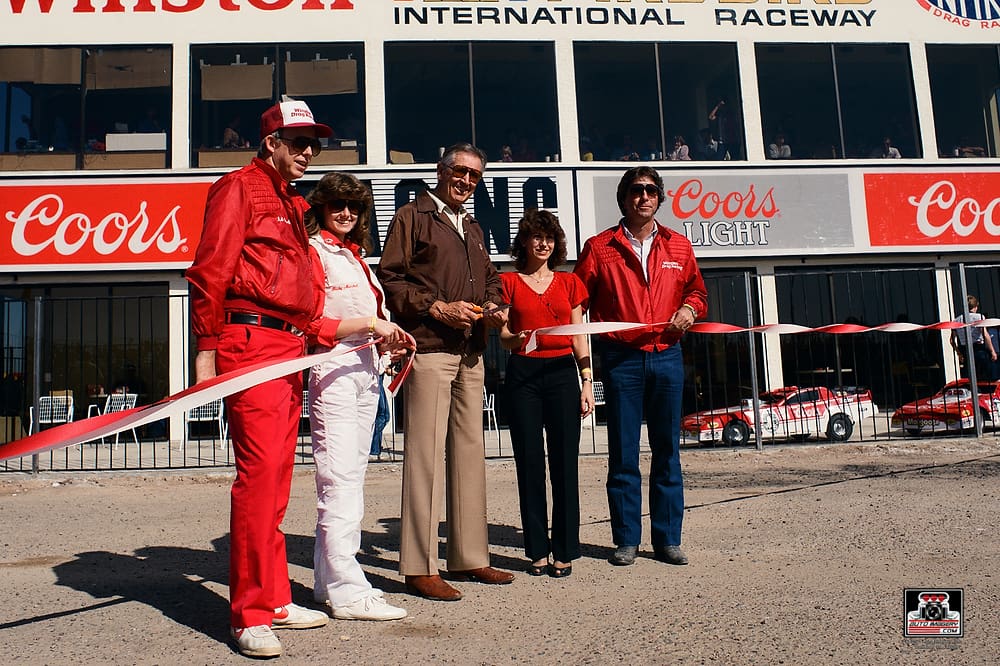
With his love of, and experience in, operating a racetrack, in 1983 he opened the gates at Firebird International Raceway (FIR) in Phoenix, AZ and has continued to bring new, innovative ways for promoting the sport to the table. FIR not only features a first class drag strip, it also has a lake that features boat racing and a road racecourse that is capable of handling CART events. To add to all of this, he has also managed to form a food concessions business that has sites in several arenas across the country.
In addition to being an avid car drag racing fan and promoter; Charlie has invested a lot of time and effort into the world of boat drag racing. In 1983 Charlie formed the International Hot Boat Association and campaigned for better safety regulations for the sport. Among his notable efforts there was the development of the enclosed drivers capsule and better spectator control, a move that undoubtedly has saved lives.
Today Charlie manages to fit in a few rounds of golf, take care of his properties and still maintain his reputation among the racers as a “superb race promoter” specializing in drag racing.
Photo gallery · 31
-
-
2025
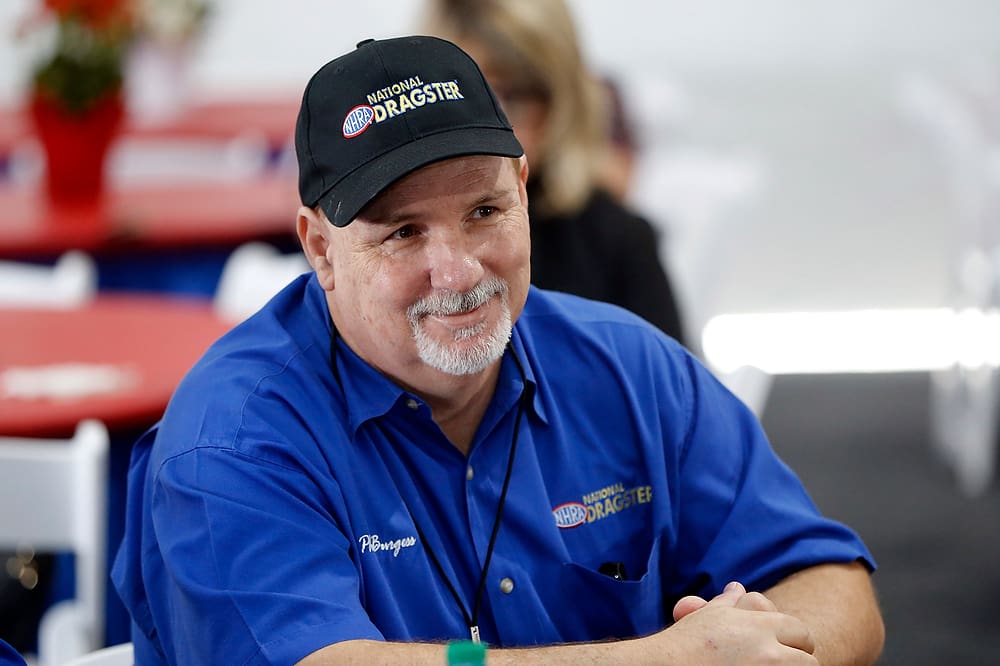
 Phil Burgess
From young fan on the sidelines to a respected figure in the world of drag racing journalism and an avid chronicler of…
Read bio · 11 photos
Phil Burgess
From young fan on the sidelines to a respected figure in the world of drag racing journalism and an avid chronicler of…
Read bio · 11 photos
 Class of 2025Presented by Wynn’s
Phil Burgess
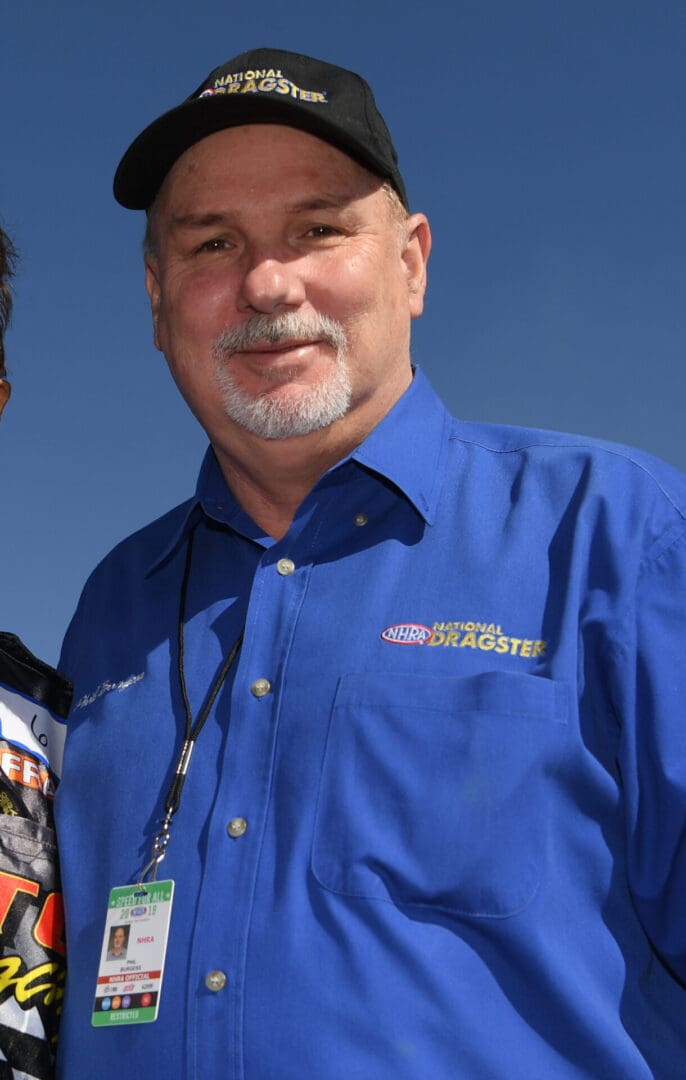
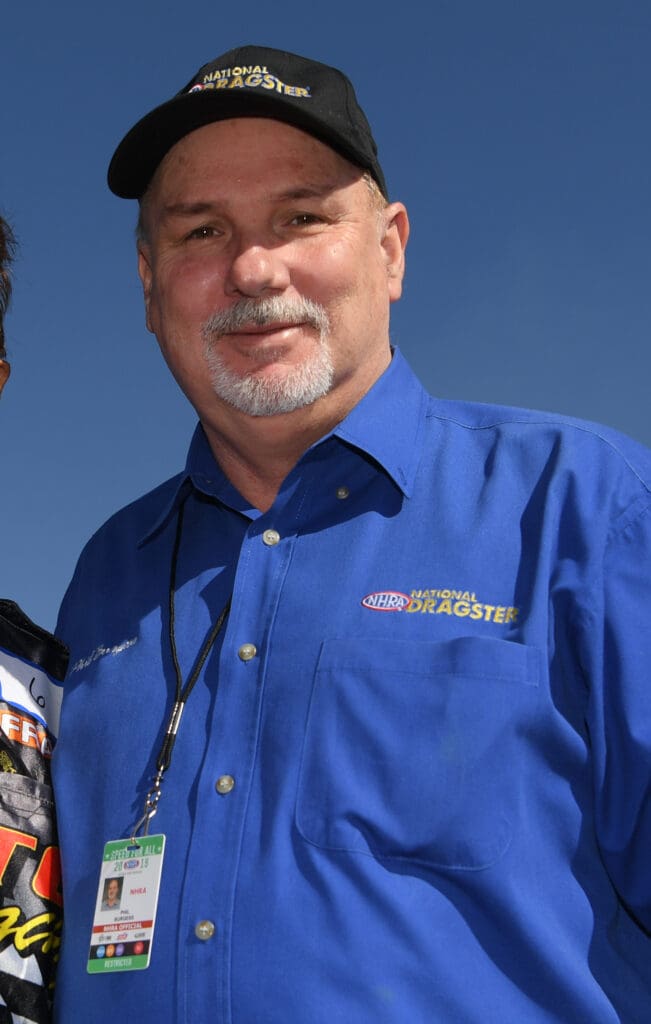
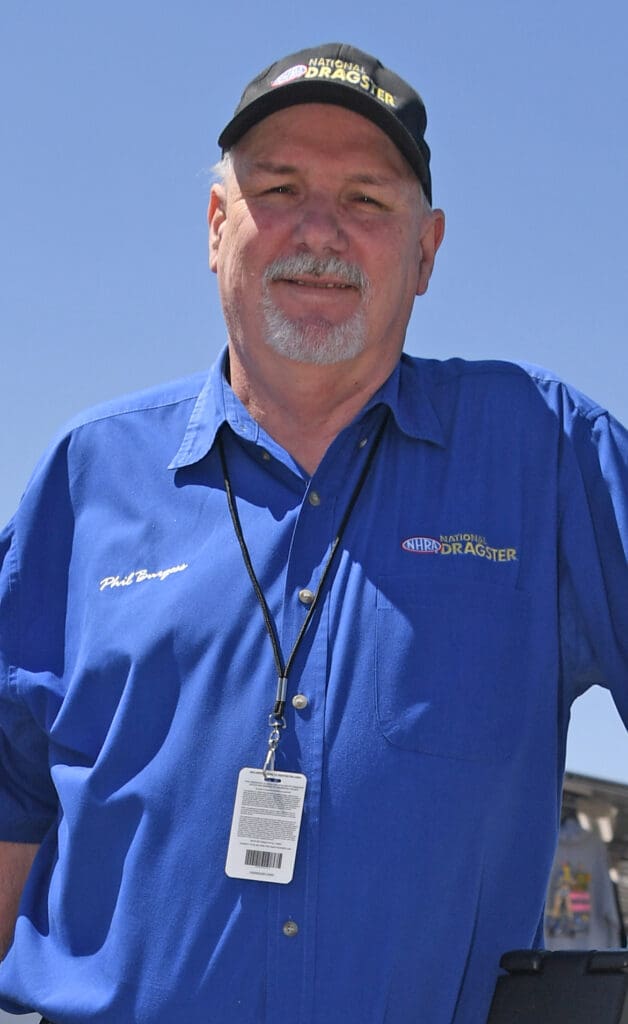
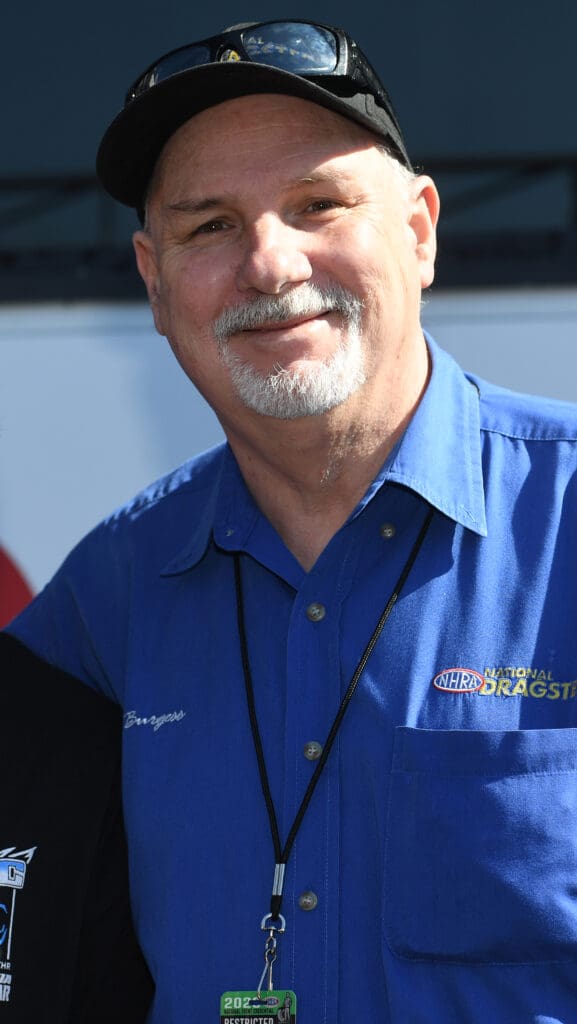
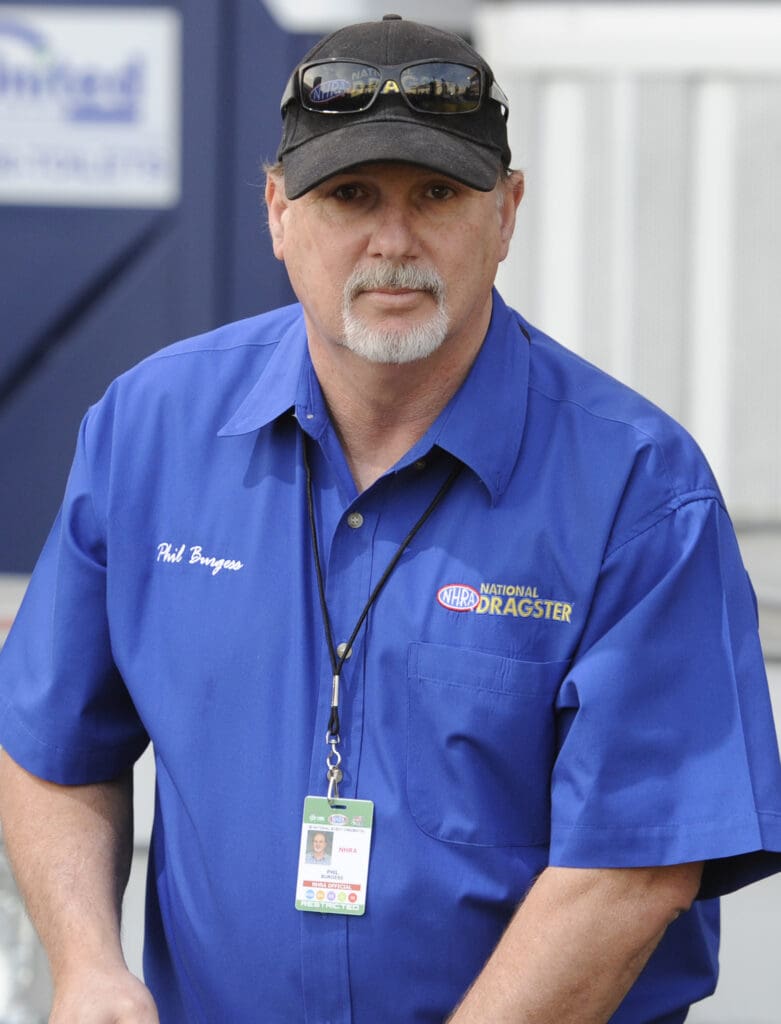
From young fan on the sidelines to a respected figure in the world of drag racing journalism and an avid chronicler of the sport’s history, Phil Burgess’ life has seemingly always been about drag racing.
Burgess's love for drag racing began during his formative years in Southern California, the epicenter of the sport's early growth, surrounded by legendary tracks like Lions Dragstrip, Orange County International Raceway, and Irwindale Raceway. From a young age, he devoured the monthly drag racing magazines and attended his first race at age 11 and fell further in love with the sport.
Beginning in 1982, he was able to marry his passion for the sport with his love of writing when he joined the editorial staff of National Dragster, the official news publication of the NHRA, bringing with him a fresh perspective and a relentless dedication to excellence. Through the encouragement and guidance of several key mentors, his writing quickly earned him recognition among readers and peers for its clarity, depth, and ability to convey the excitement of drag racing.
In 1986, he was named editor of the famed publication and has held that position for nearly 40 years, curating not only the history of the sport but also helping the endearing magazine adjust to the shifting dynamics of time and technology.
In 1995, he helped create and launch NHRA.com, making NHRA the first major auto-racing sanctioning body with a robust presence on the internet, and helped pioneer the online coverage of NHRA Drag Racing through new audio and video innovations. As he does with National Dragster, he still continues to lead and innovate NHRA’s online presence.
His wide range of interests and strengths within the publishing world led to being named NHRA’s editorial director, charged with the creation and leadership of other NHRA publications including souvenir programs and book projects.
Burgess has played a pivotal role in documenting and preserving the legacy of the NHRA while providing fans with his insights into the sport, and his passion for storytelling and keen eye for detail laid the foundation for his future career as a journalist and historian.
Burgess's most enduring legacy may be his role as the NHRA’s unofficial historian. Through his editorials, feature articles, and the popular "Dragster Insider" column on NHRA.com, he has meticulously chronicled the evolution of the NHRA, providing fans with a rich understanding of the sport’s history and its many colorful personalities, striving to capture the stories beyond race results and statistics through the human element of drag racing—the rivalries, triumphs, and challenges faced by the drivers, crews, and families that make up the sport and preserves and explains the legacy of legends of the sport future generations. Through its near 20-year run, the column has allowed him to meet, interview, and befriend many of the legends of the sport about whom he grew up reading and idolizing.
He is also the lead author of an upcoming NHRA history book celebrating NHRA’s upcoming 75th anniversary in 2026.
Beyond his editorial duties, Burgess has been a vocal advocate for drag racing, tirelessly promoting the NHRA and its unique appeal, helping elevate the sport’s profile, bringing it to wider audiences, and fostering greater appreciation among its fans, and giving back to a sport that has given him so much.
Photo gallery · 11
-
-
2025
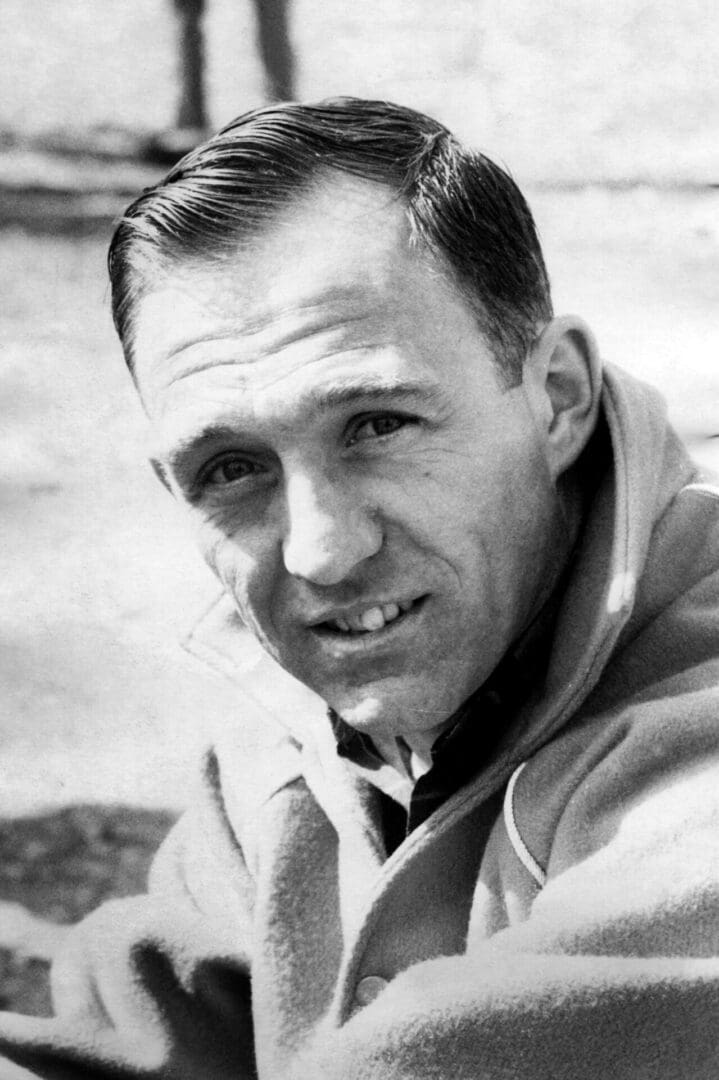 Gary Dryer
Gary Dyer was a typical gearhead. Gary grew up in the Southwest Suburbs of Chicago and began his drag racing career at…
Read bio · 17 photos
Gary Dryer
Gary Dyer was a typical gearhead. Gary grew up in the Southwest Suburbs of Chicago and began his drag racing career at…
Read bio · 17 photos
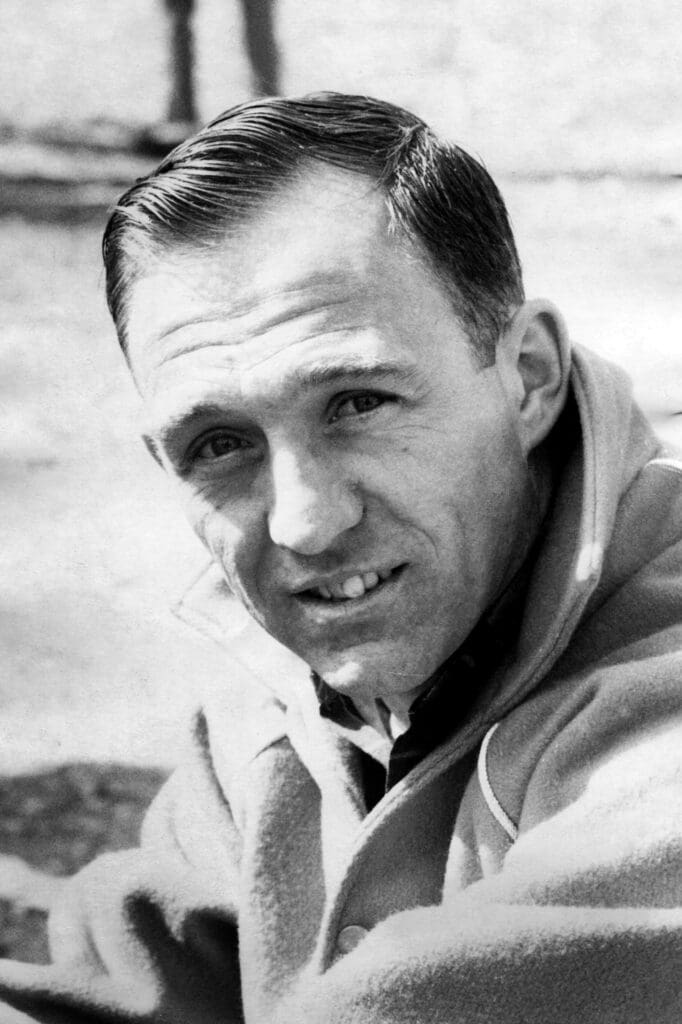 Class of 2025Presented by Wynn’s
Gary Dryer
Gary Dyer was a typical gearhead. Gary grew up in the Southwest Suburbs of Chicago and began his drag racing career at the wheel of an Oldsmobile powered 1933 Ford coupe. Over the next ten years, he followed up in a series of Chevys and Gas Coupes.
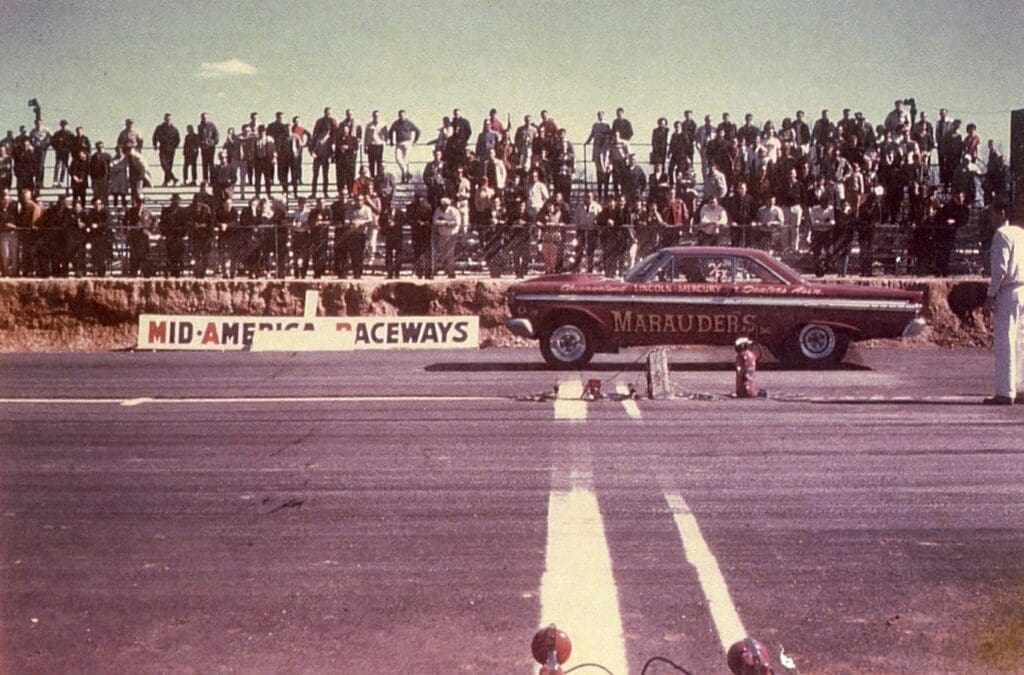
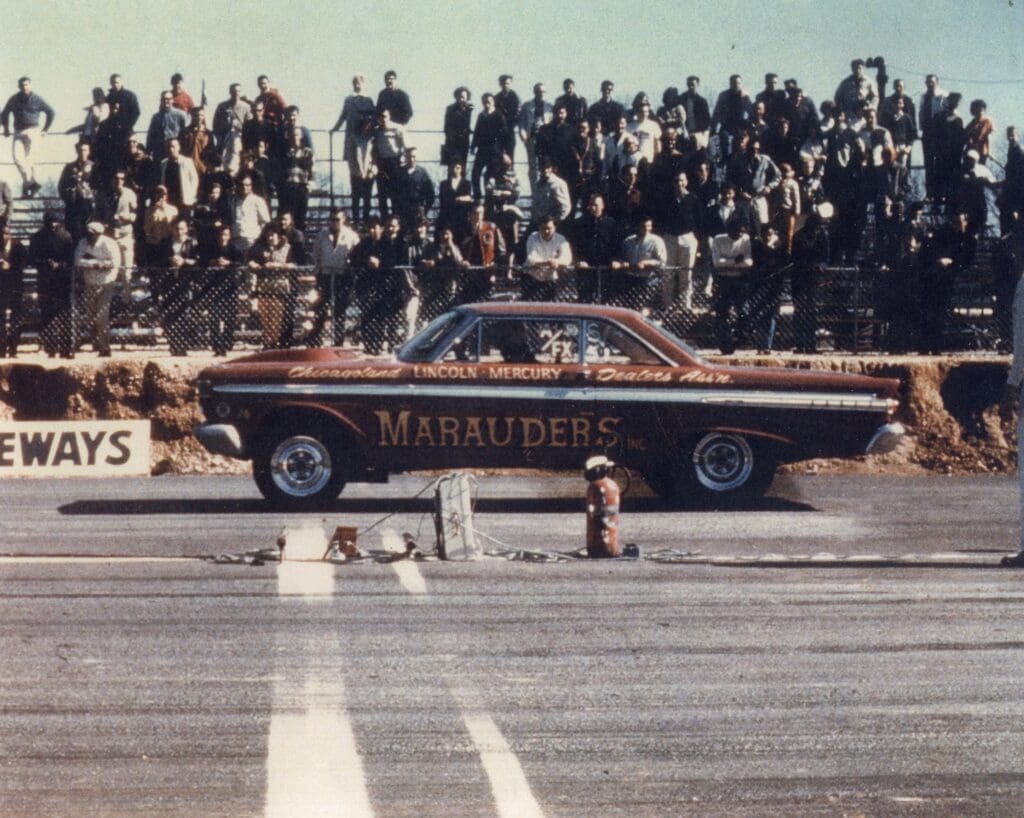
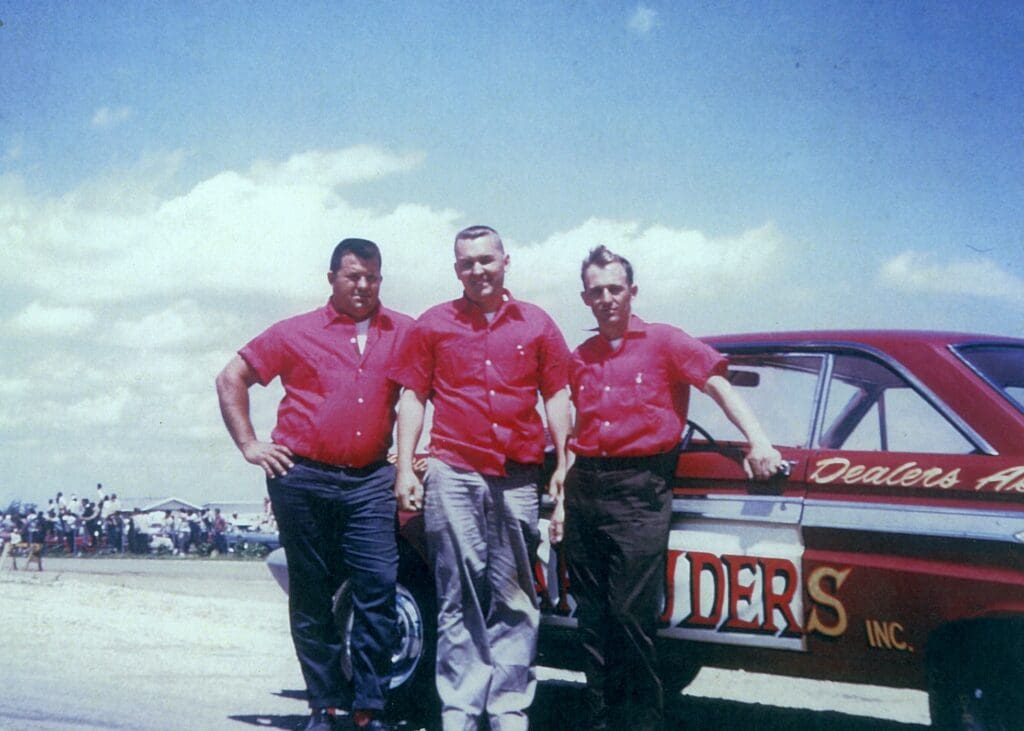
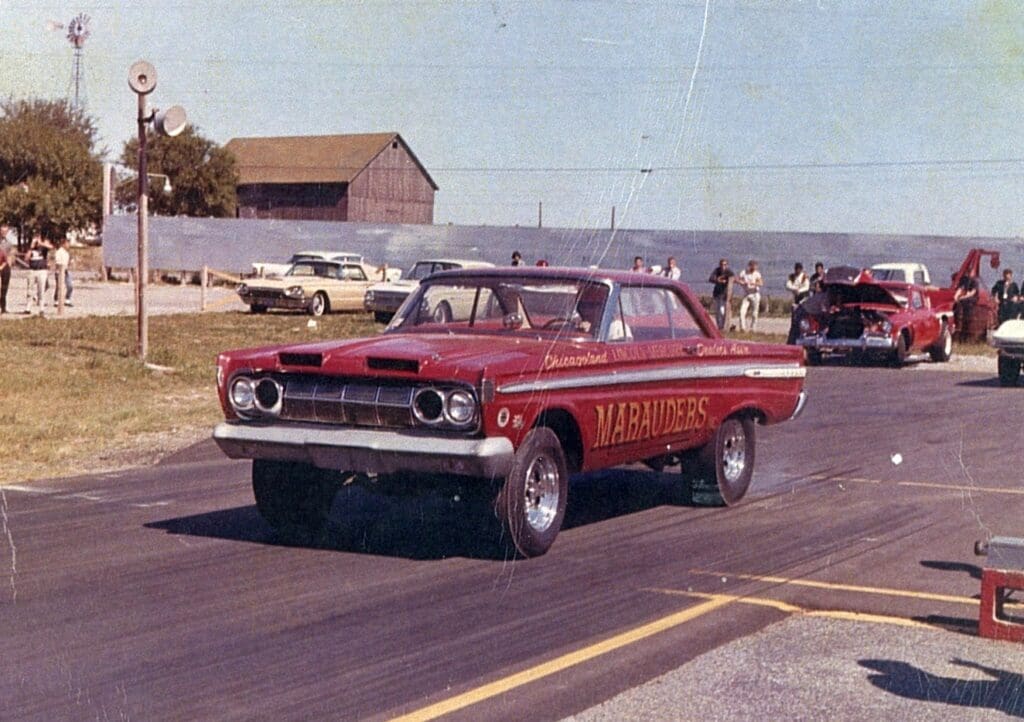
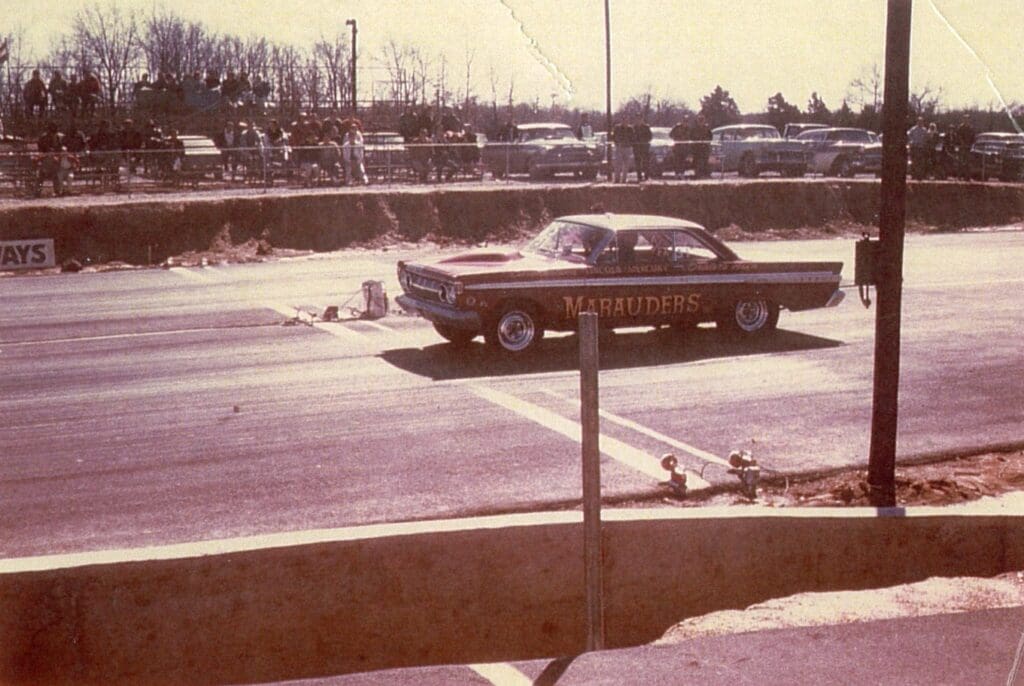
After making a name as a builder and driver locally, Gary’s first major opportunity came in 1963 when a local racer, Ed Rachanski, fielded a Factory 427 Mercury Comet that was backed by the Chicagoland Lincoln Mercury Dealers Association with Gary driving and John Farkonas tuning. In late 1963, he started racing an A/FX Mercury Comet owned by Rachanski with which he set the world record in Super Stock at 130.44 mph and 10.75 E.T
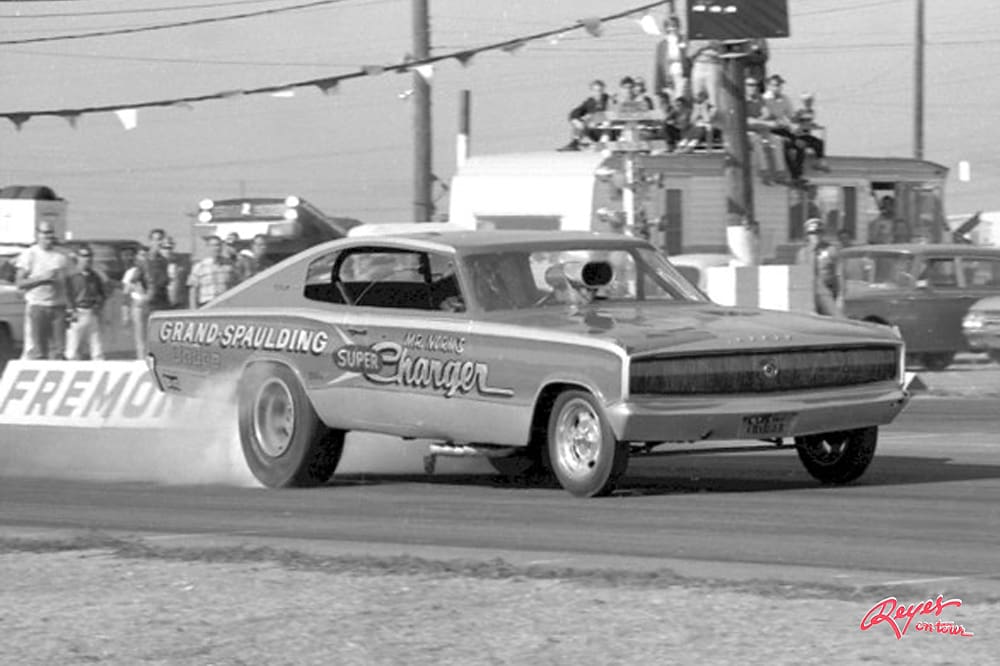
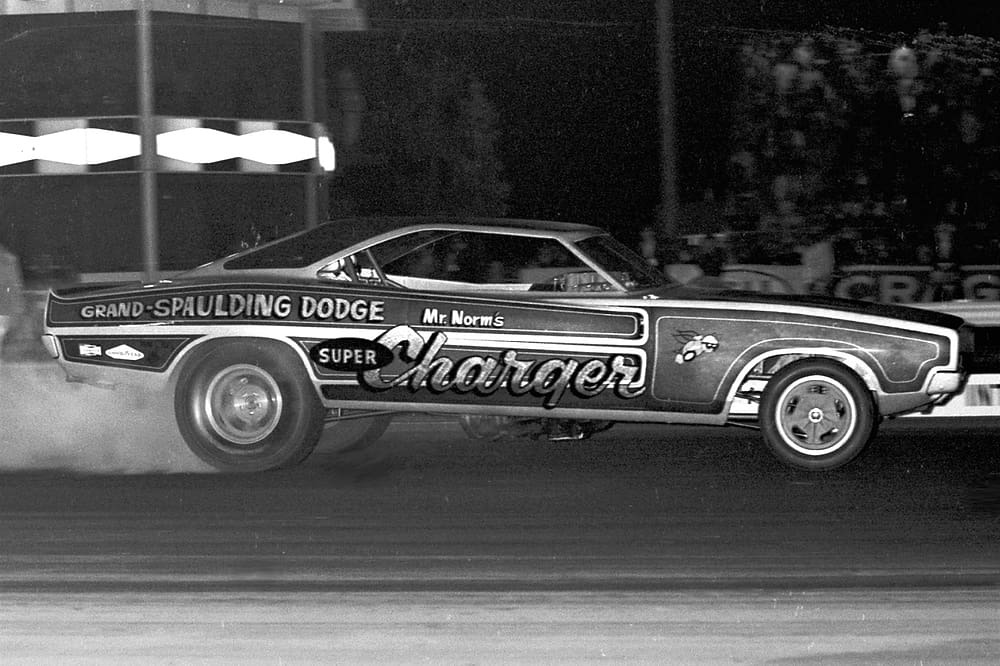
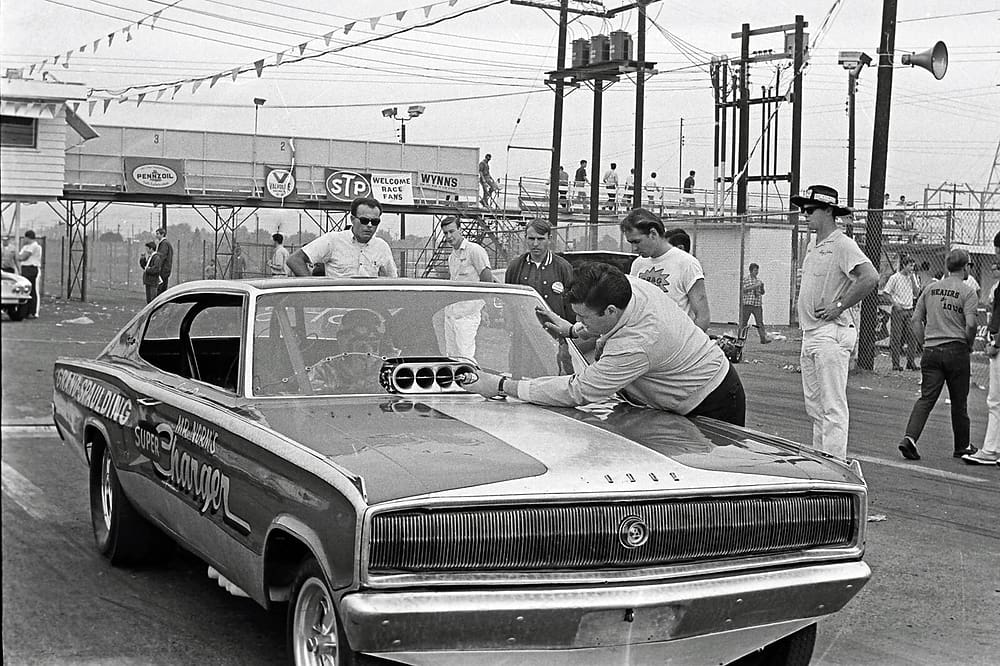
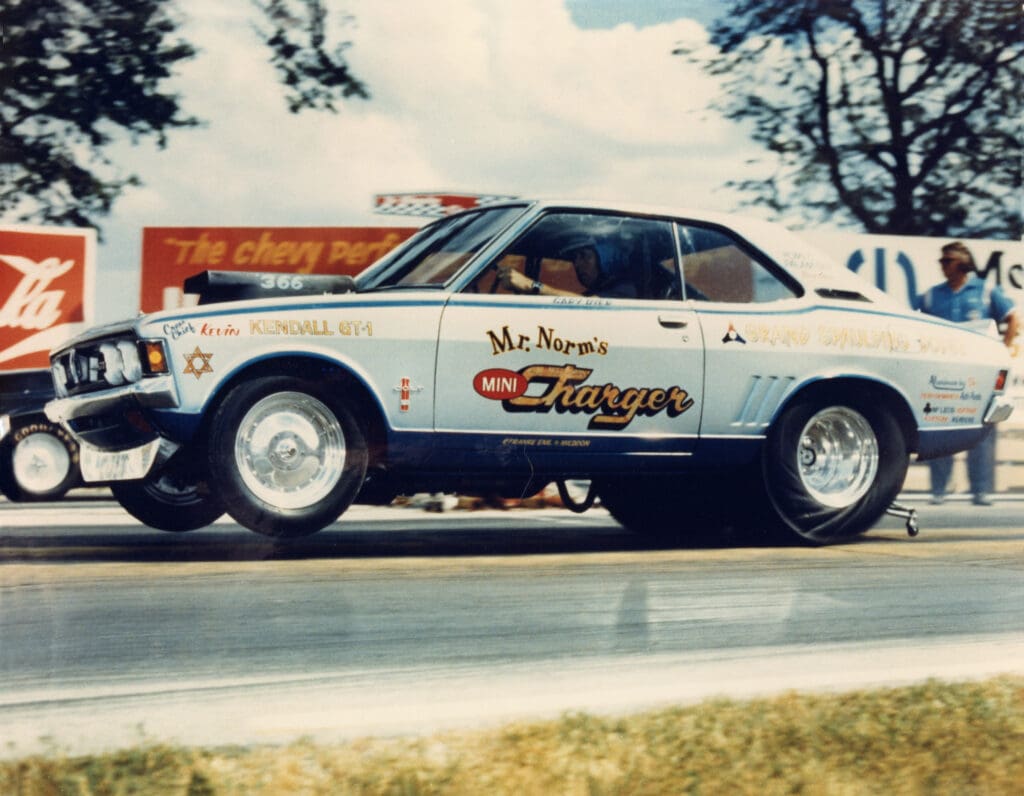
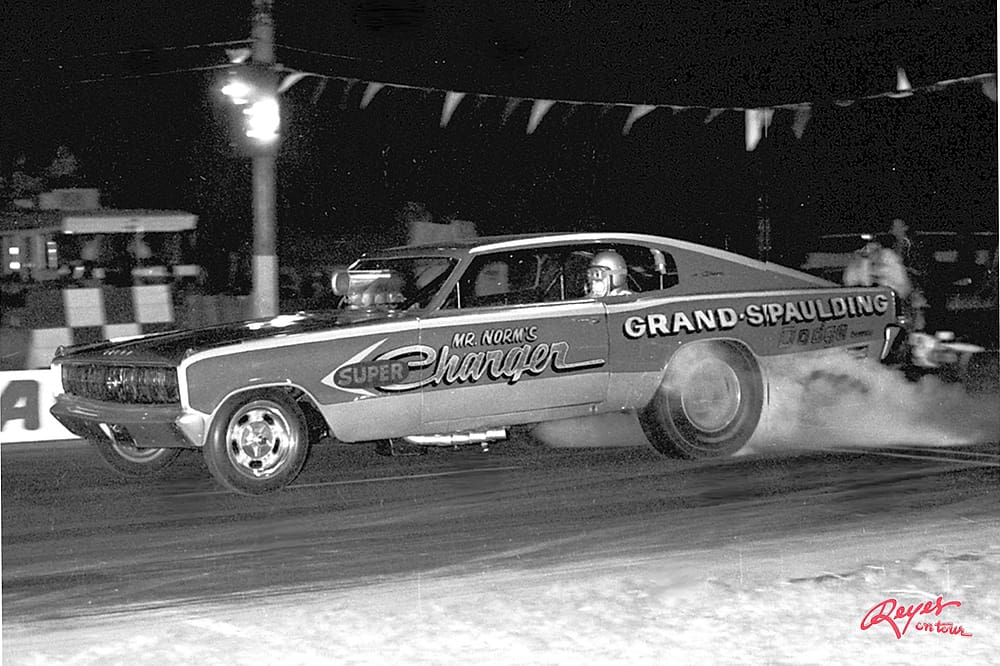
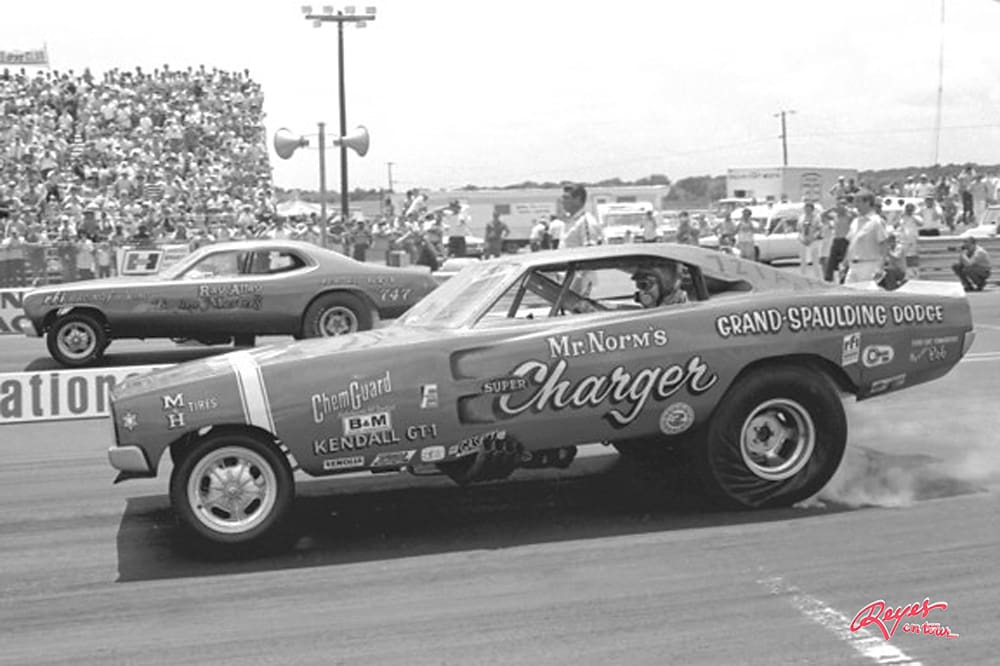
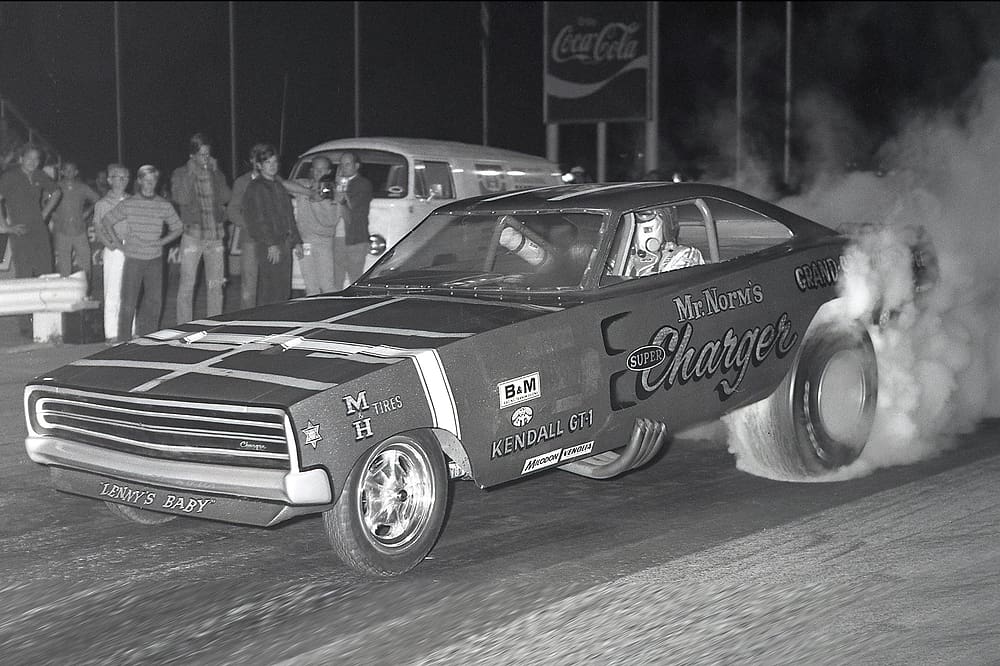
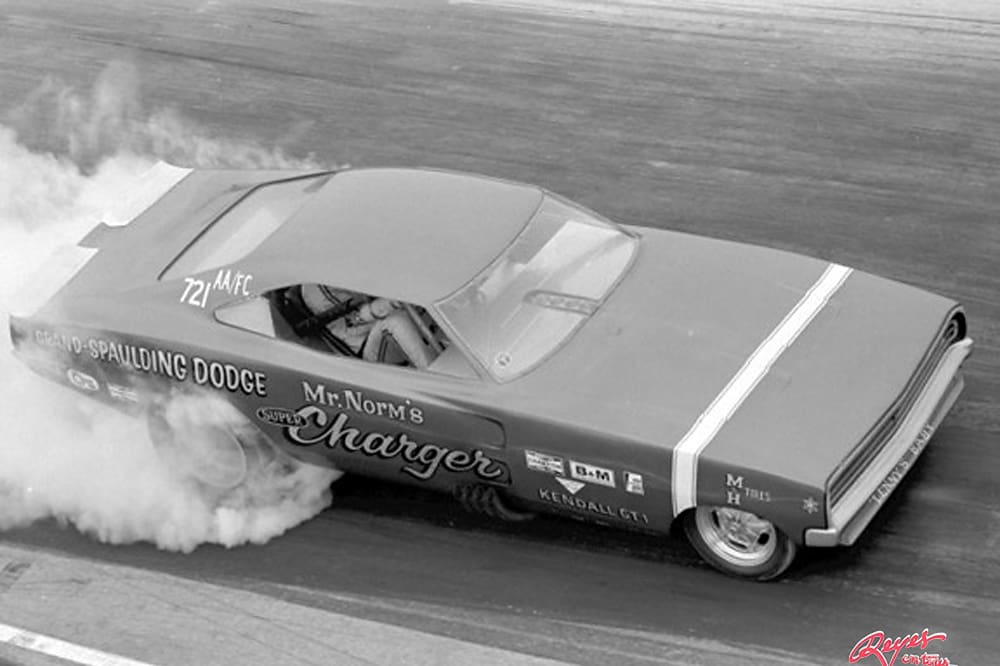
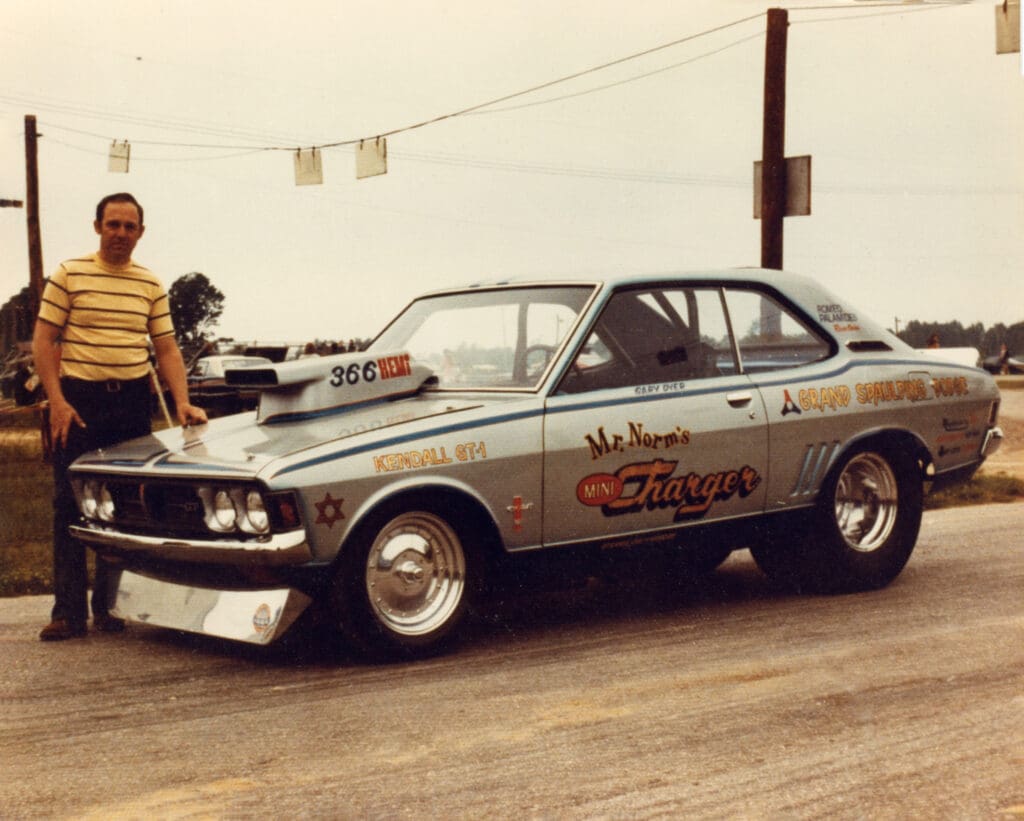
Gary spent most of his racing career partnering and working with Norm Krause (Mr. Norm), co-owner of Grand Spalding Dodge (GSD) in Chicago. In 1964 Gary convinced Mr. Norm to allow him to campaign a S/FX Dodge Coronet powered by a Dyer built supercharged 426 Hemi under the GSD banner in 1965 with Gary as the race team owner and GSD its sponsor. During the 1960’s Gary competed in around 125 match races per year.
His 1965 car was a Factory Lightweight ’65 Dodge Coronet powered by a Dyer built supercharged 426 Hemi engine. At the end of 1965, Gary acquired an altered-wheelbase Dodge Coronet, formerly nicknamed "Color Me Gone", and installed a new supercharged 426 Dodge Hemi engine, and upgraded the chassis, becoming one of the very first true Funny Cars. Later that year, Gary set a new NHRA full bodied car record at Lions Drag Strip of 8.63 seconds E.T. and 163 mph.
While Gary was instrumental in making Funny Car racing an integral part of drag racing, in order to pay his bills, he did most of his racing as a match racer where he posted wins numbering in the hundreds. As a match racer, in 1966 Gary competed in a supercharged Dodge Charger with a R&B tube chassis and in 1968 he fielded another Dodge Charger that was ten inches narrower than a stock model and attached to a
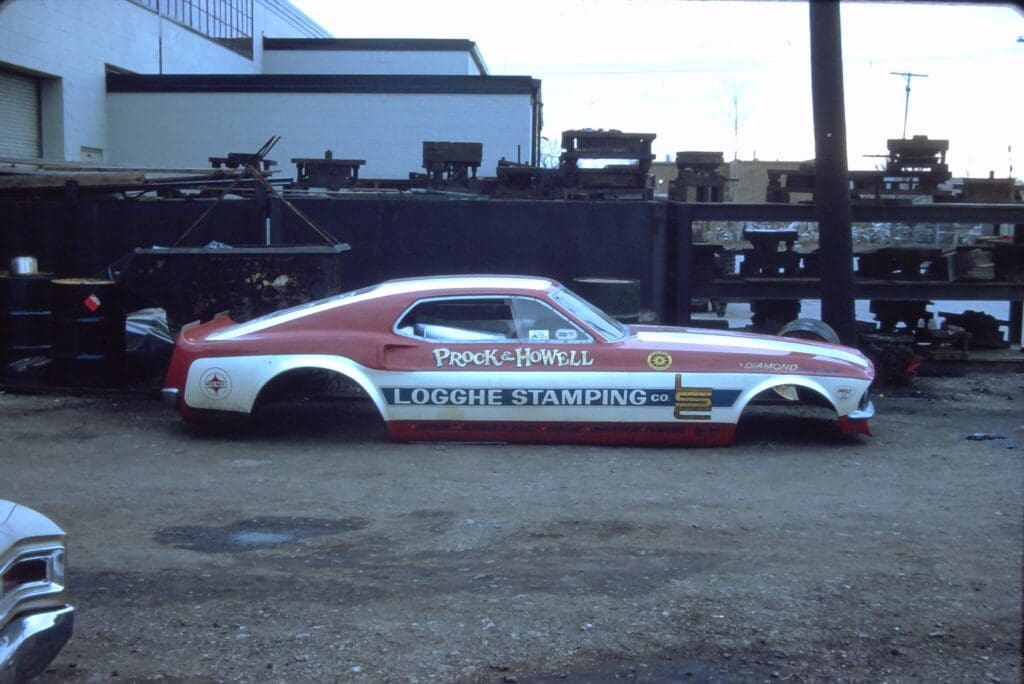
“state of the art” RCS chassis. Early that year, Gary experienced a transmission explosion at Houston Dragway that burned the car to the ground, but he escaped from with minor burn damage to him. Unfortunately, later in the season, in the newly built Logghe Chassis Dodge Charger, Gary had an oil filter break off during a run and the resulting fire left him with eight months of burn treatment.Gary returned to the Funny Car wars in 1969 with a new Dodge Charger body seated on the same Logghe Stamping Company chassis that survived the fire. Still mainly competing as a match racer, he also Competed in the Coca-Cola Funny Car Cavalcade of Stars where he won 11 races and the championship. That same year Gary opened the doors on a new business, Dyer’s Blowers, and began building superchargers for other racers.
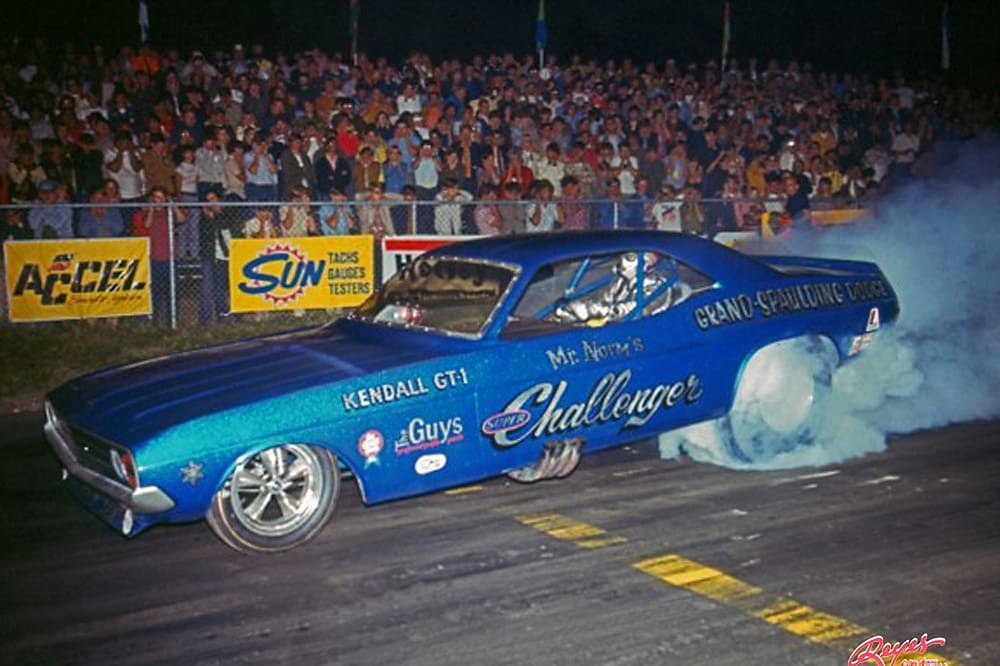
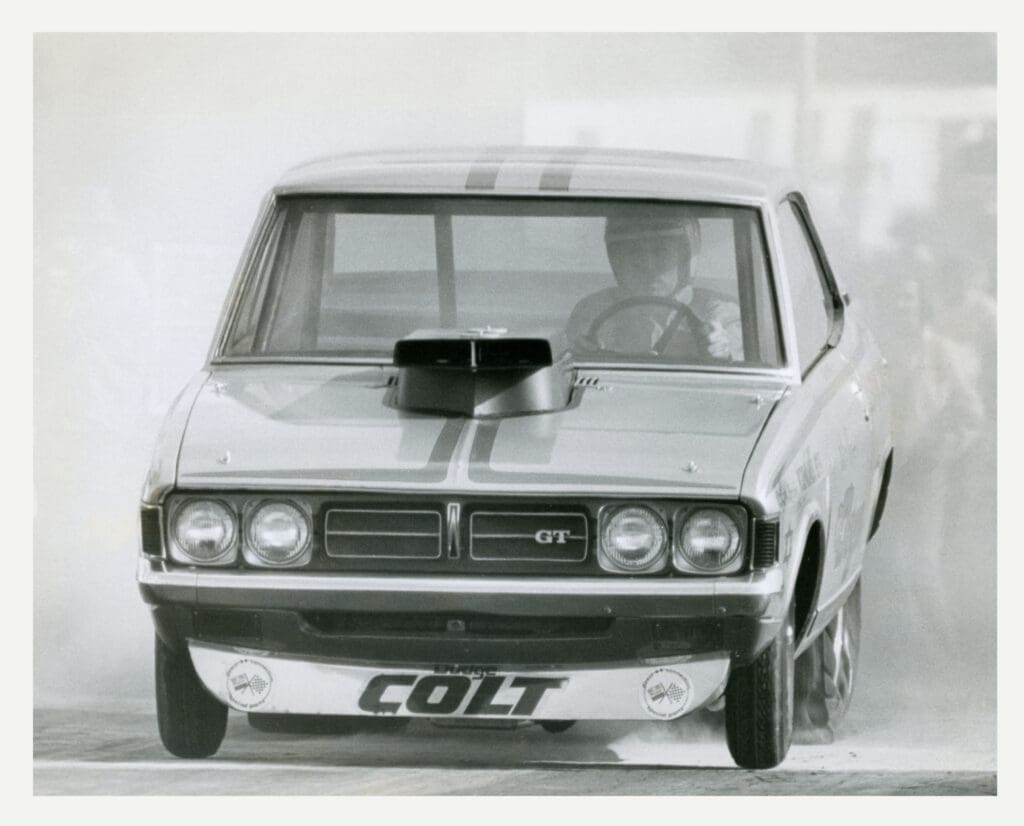
He semi-retired from racing in 1970 to focus on his business but he resumed his racing career in 1971, at the wheel of a new Dodge Challenger. Late in the 1972 season, Gary turned over the driving chore to Kenny Safford and became the team crew chief. He also ran a Hemi Colt Pro Stock in races outside of the NHRA sanction, where such cars were illegal.
Dyer retired from racing for good at the end of 1973 selling the operation to Kenny Safford to prioritize Dyer's Blowers, where he can still be found every day assembling superchargers for his many street customers worldwide.
In 2020, Dyer was inducted into the Biloxi Dragway's Hall of Fame, and Mopar Hall of Fame.
Photo gallery · 17
-
-
2025
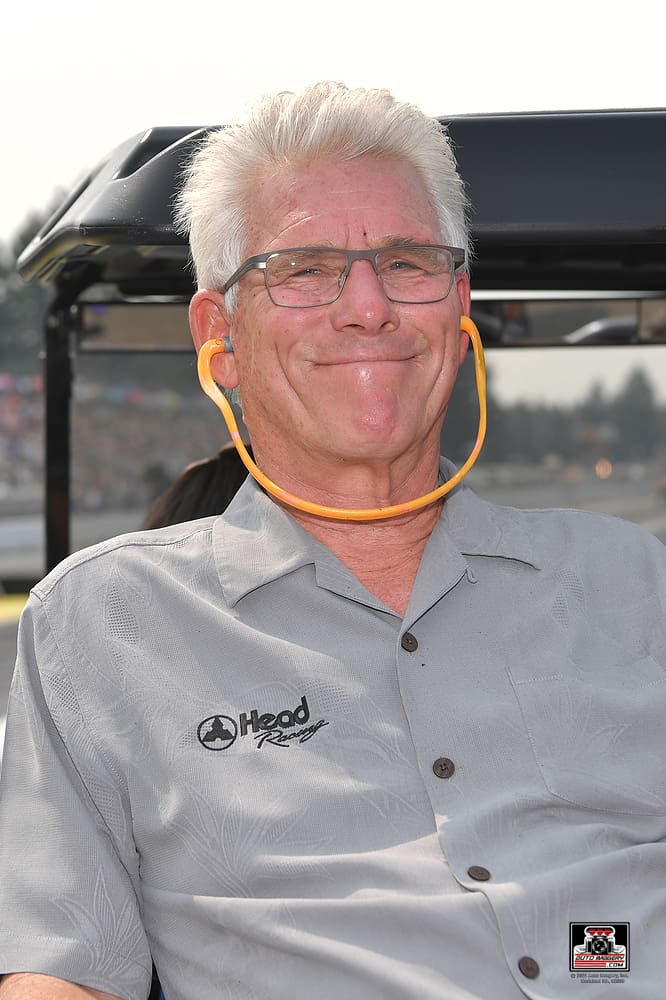 Jim Head
 is not your average racer, he is an accomplished acrobatic pilot, a civil engineer, a successful contractor, a master mechanic…
Read bio · 47 photos
Class of 2025Presented by Wynn’s
Jim Head
Jim Head is not your average racer, he is an accomplished acrobatic pilot, a civil engineer, a successful contractor, a master mechanic…
Read bio · 47 photos
Class of 2025Presented by Wynn’sJim Head
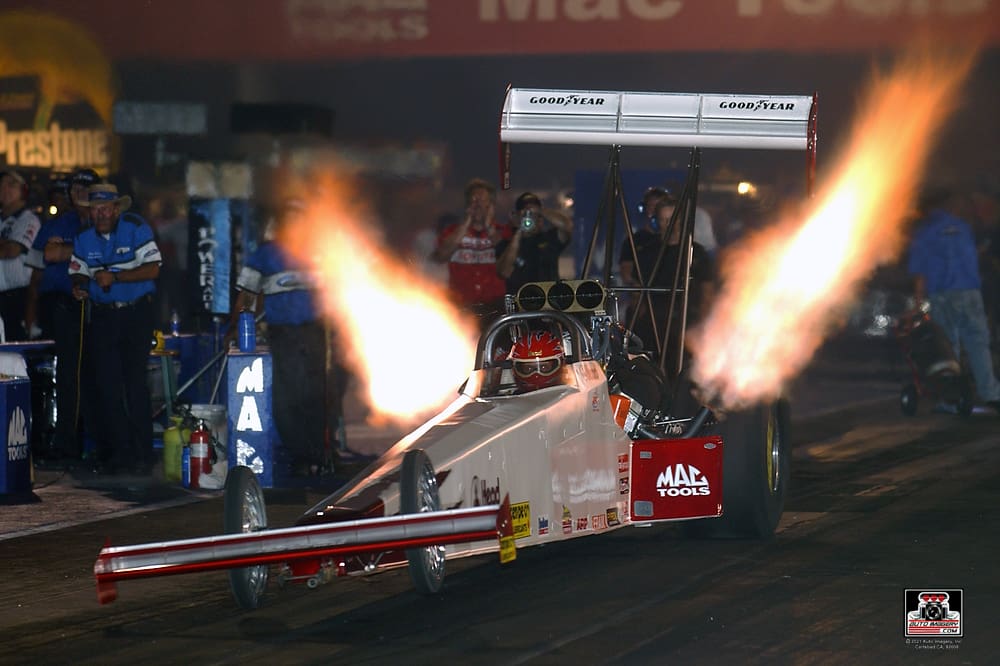
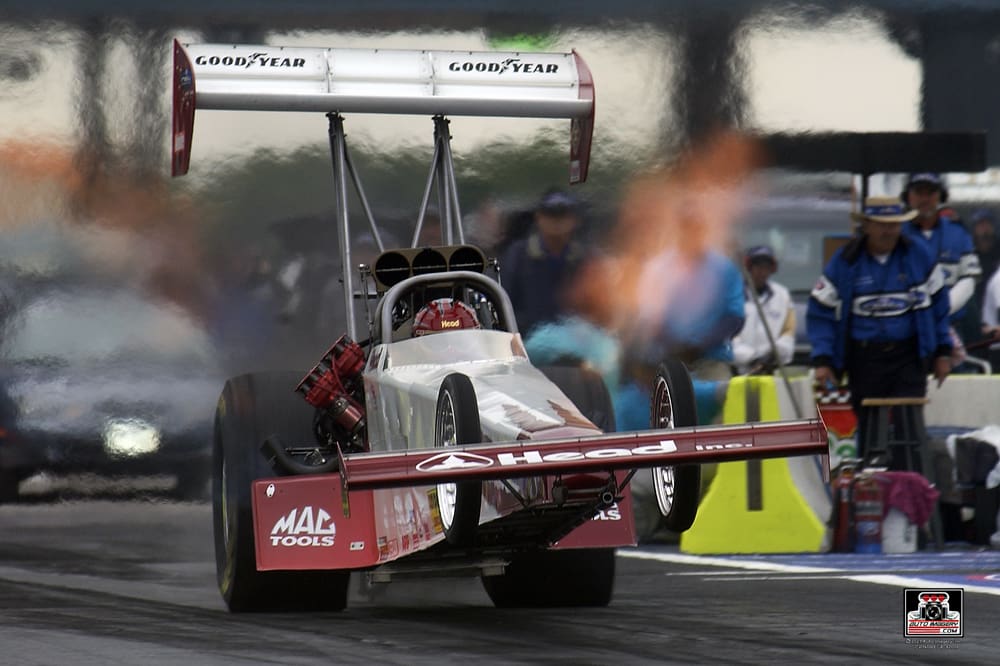
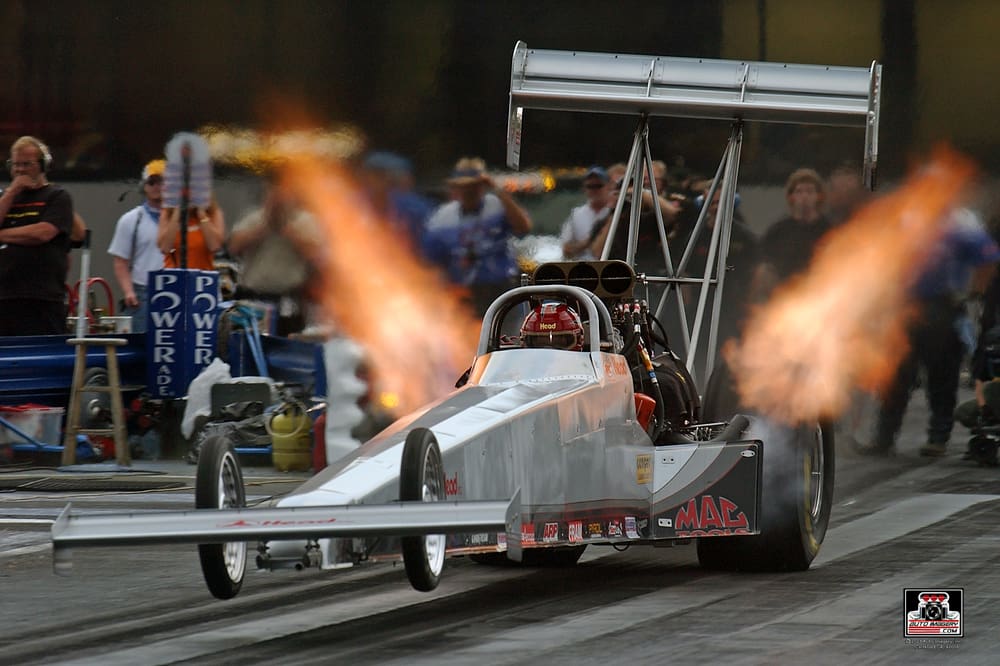
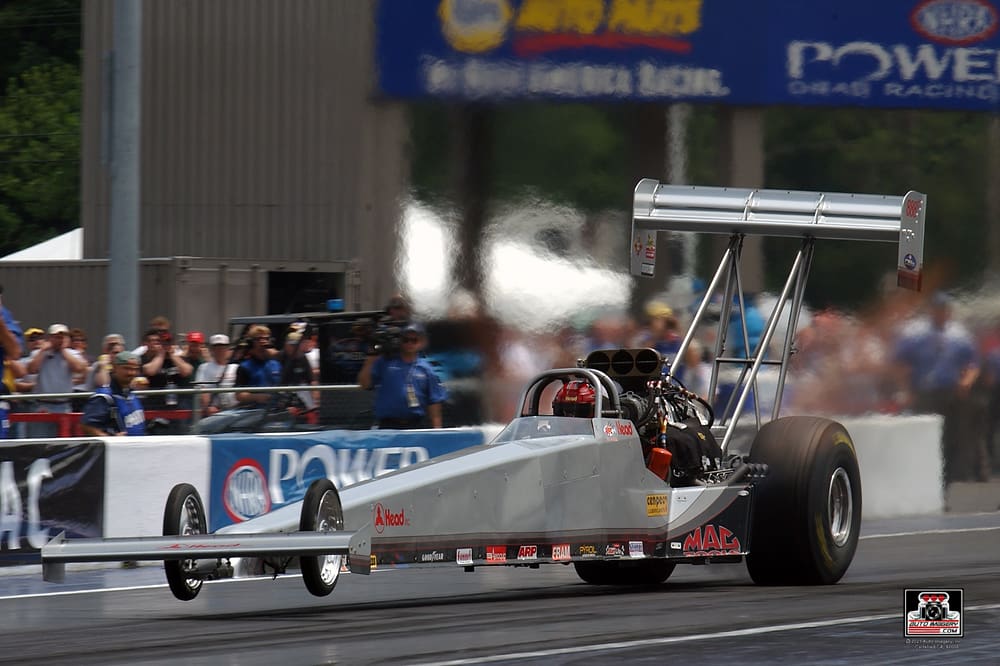
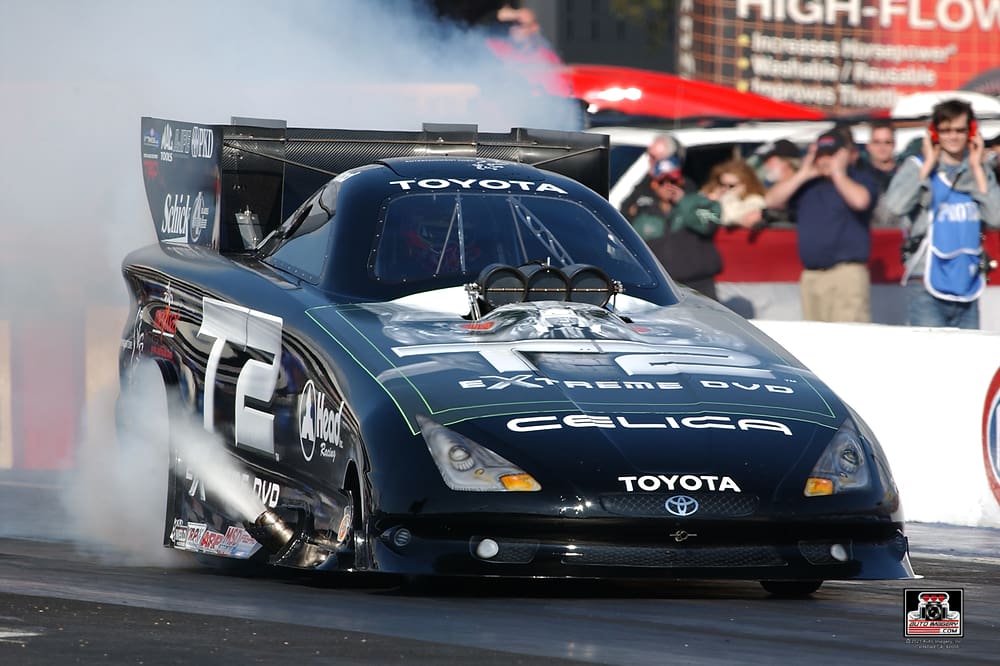
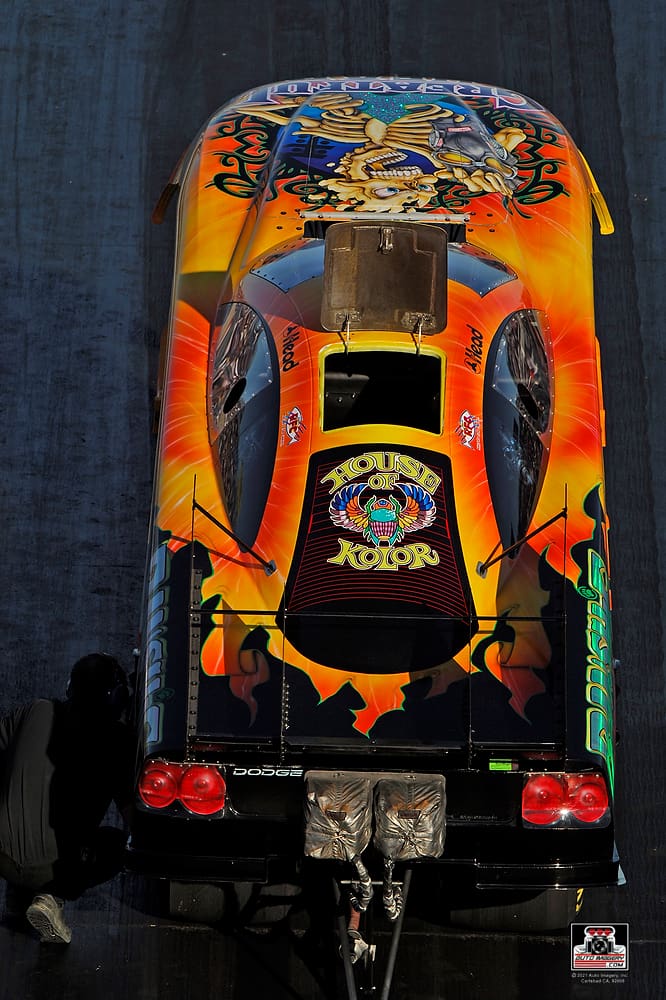
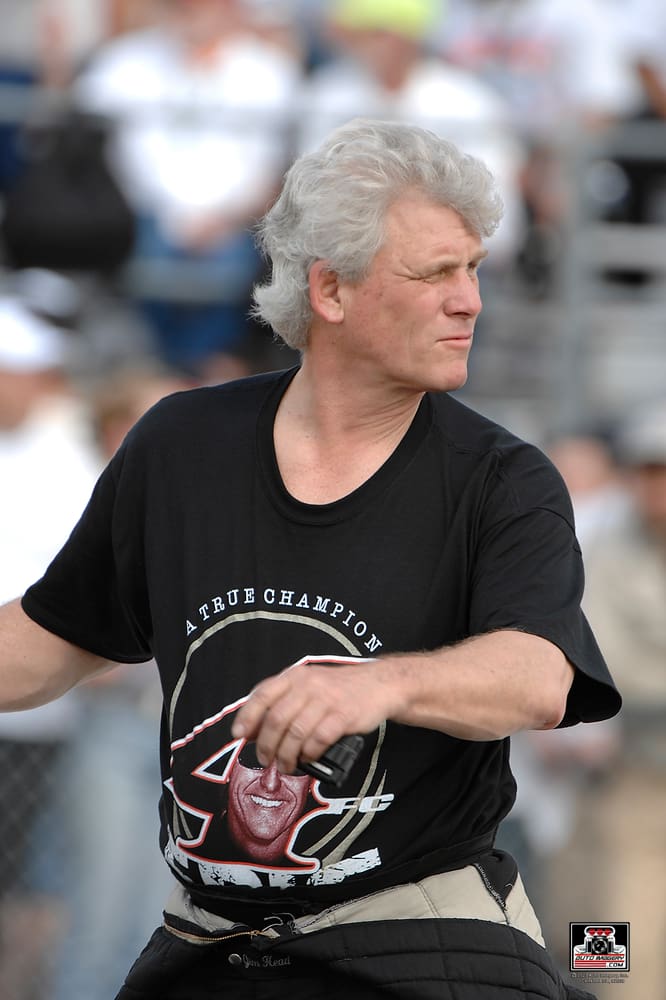
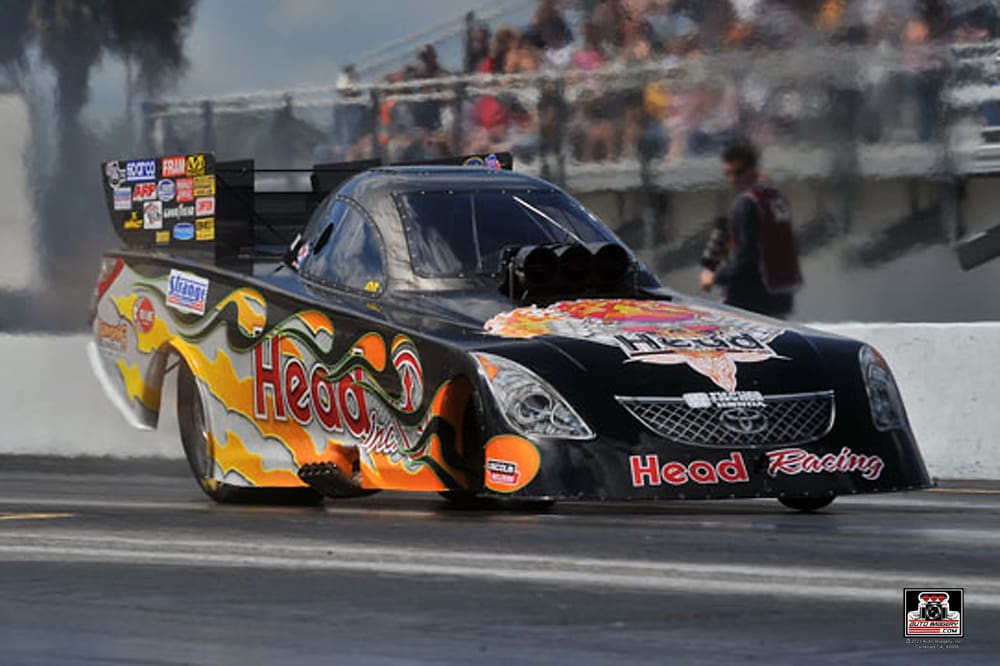
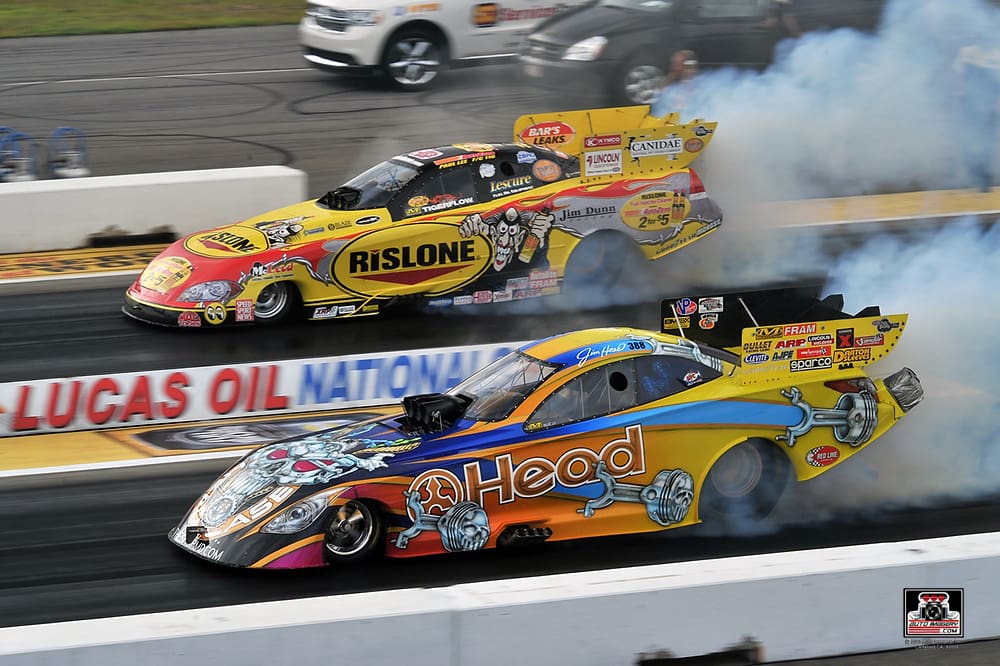
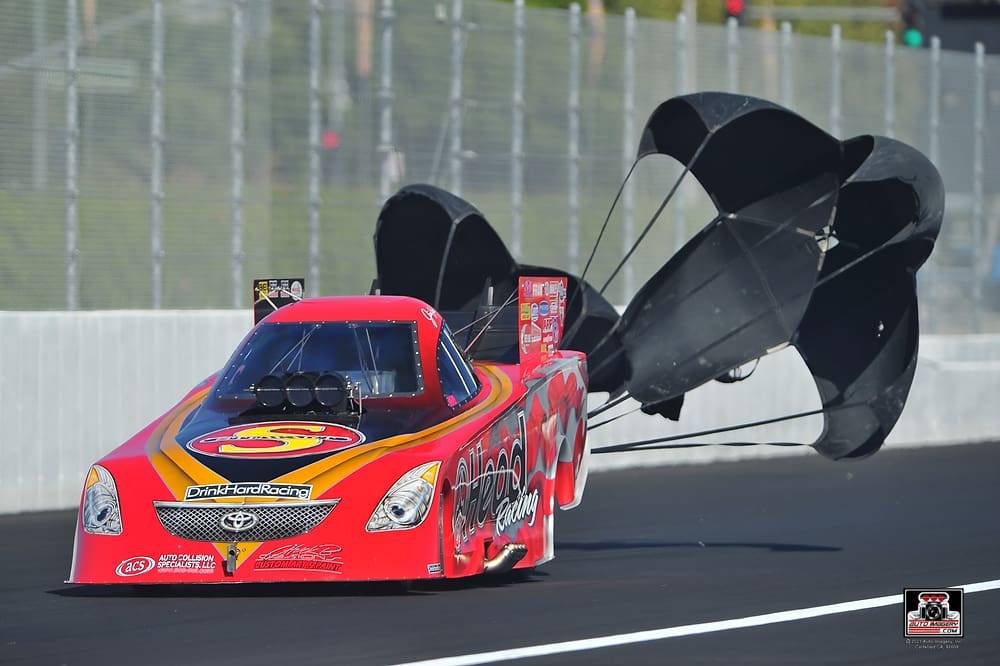
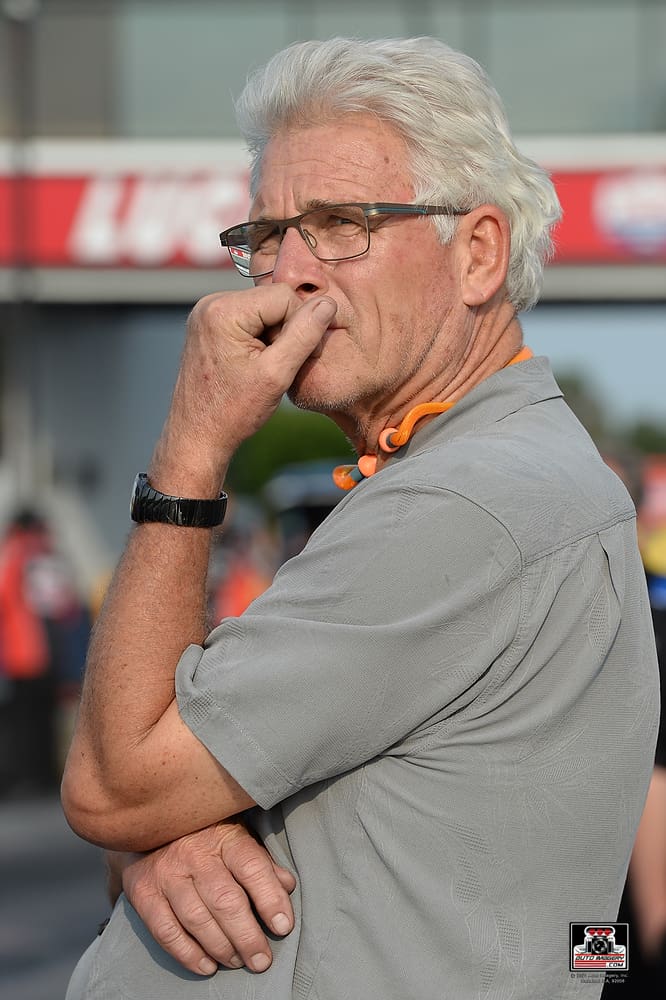
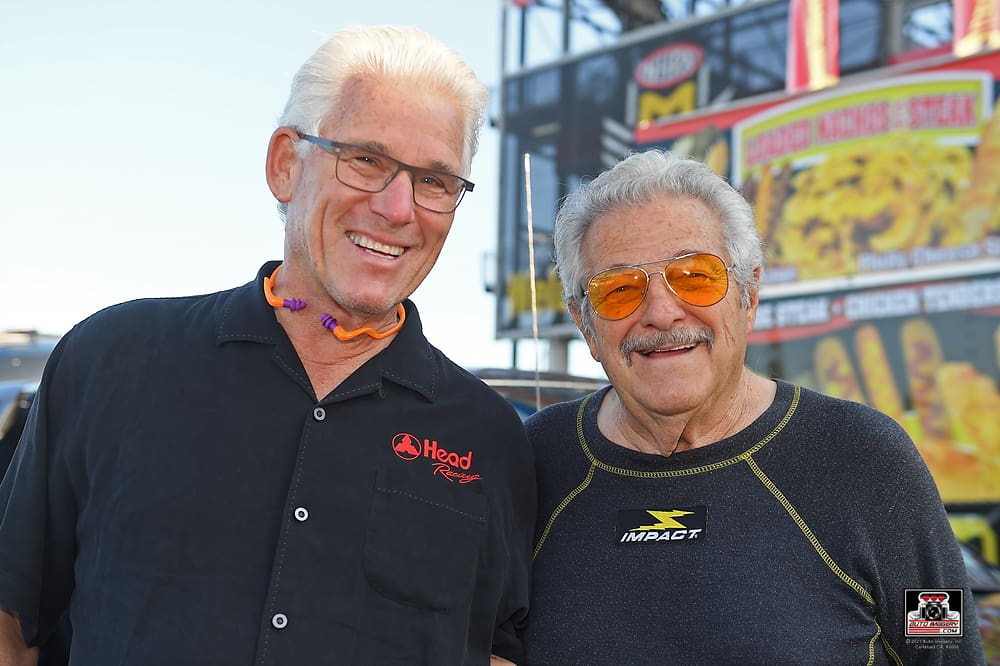
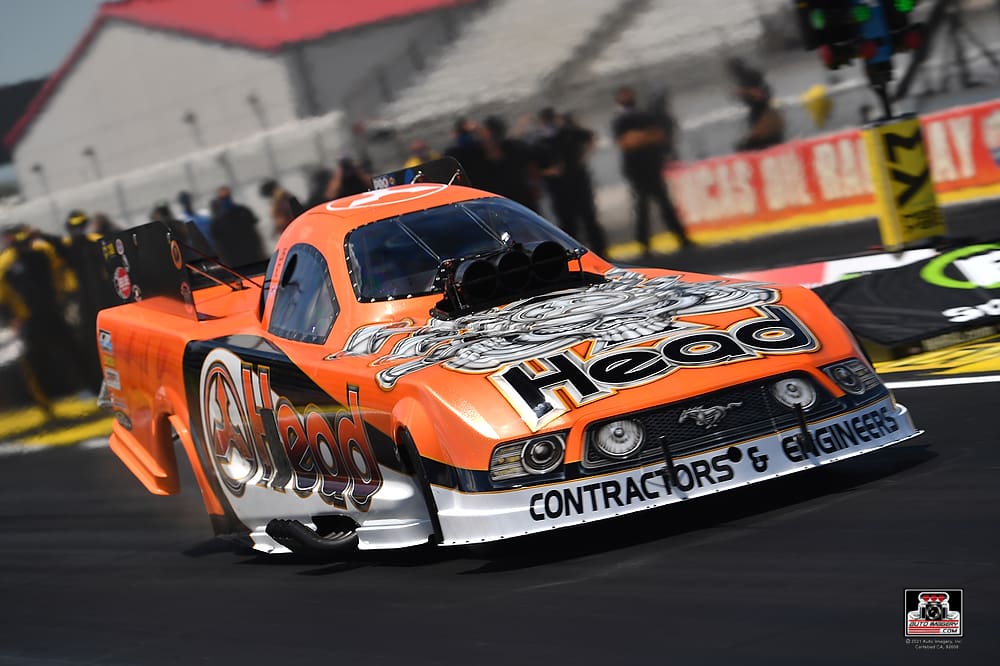
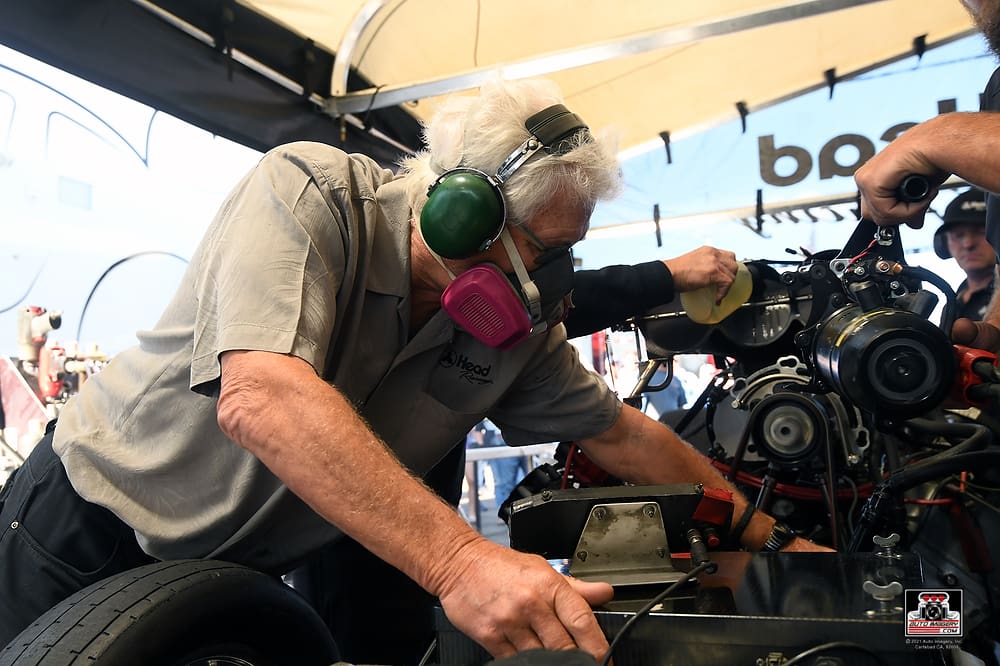
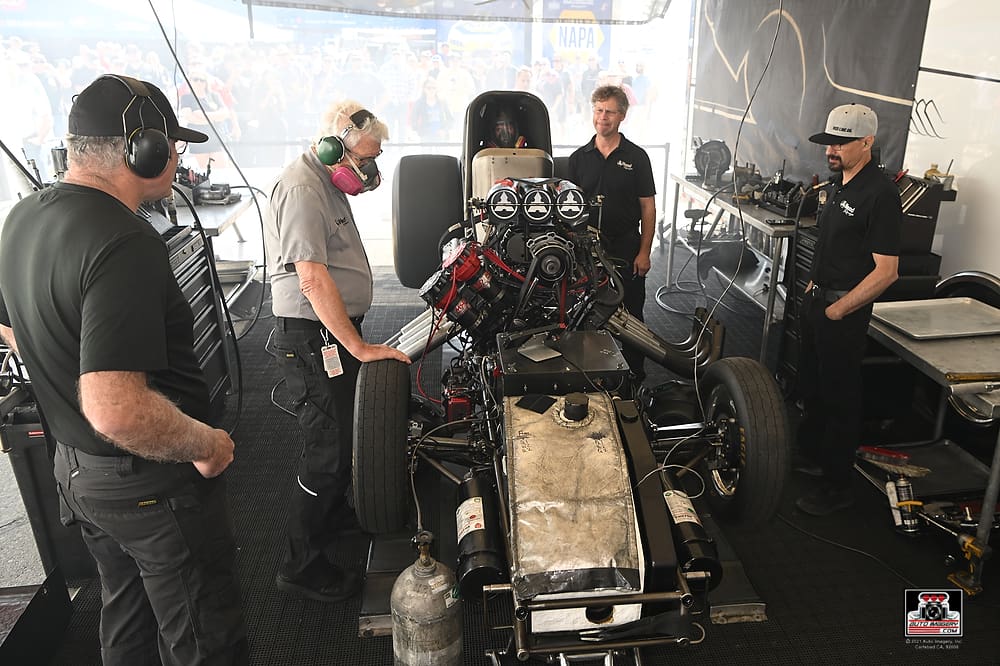
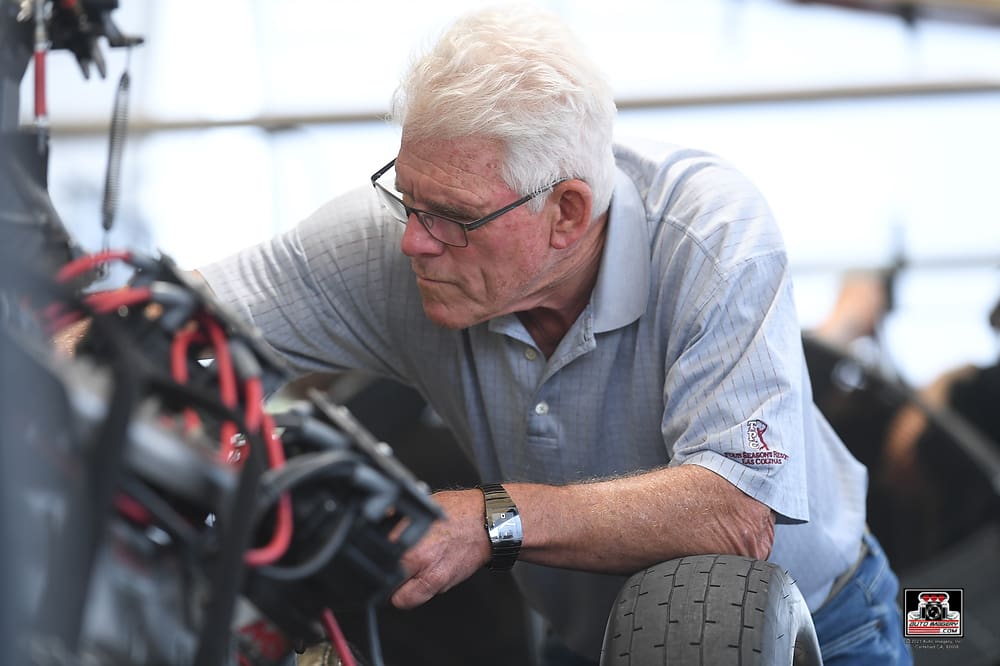
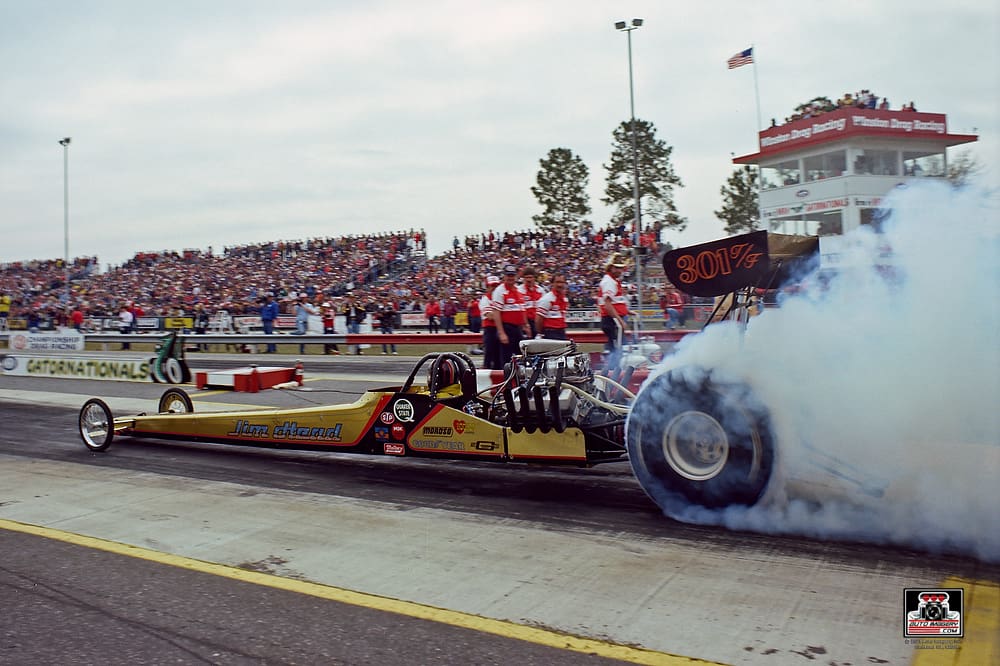
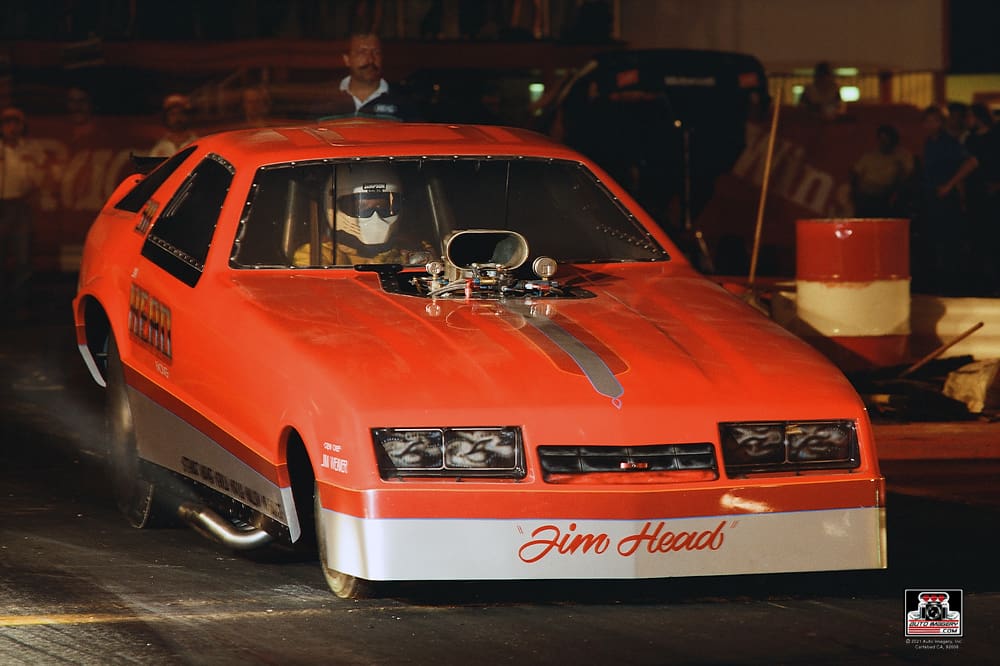
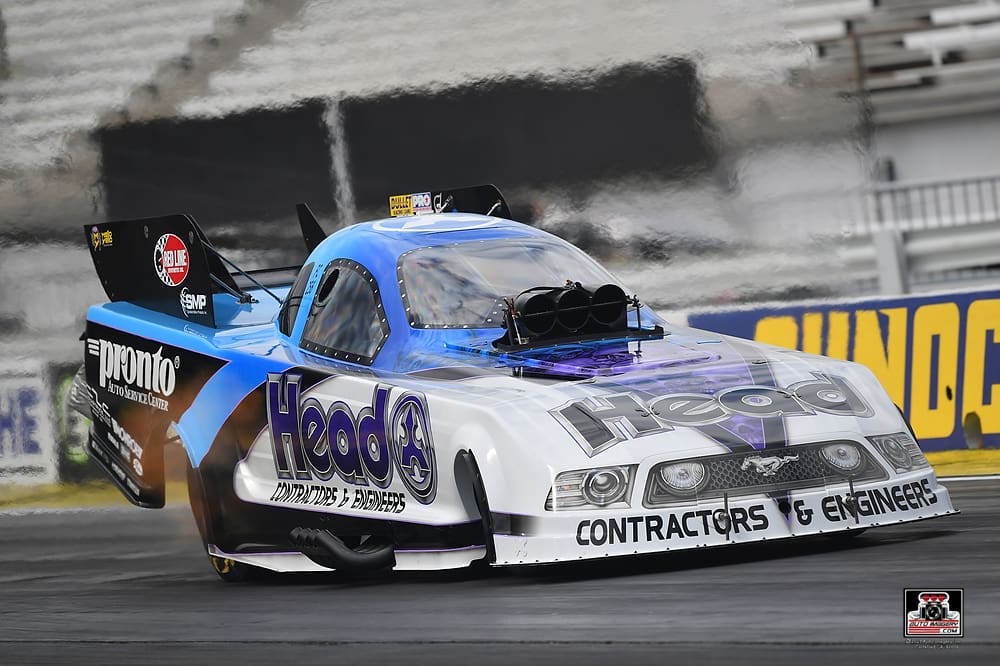
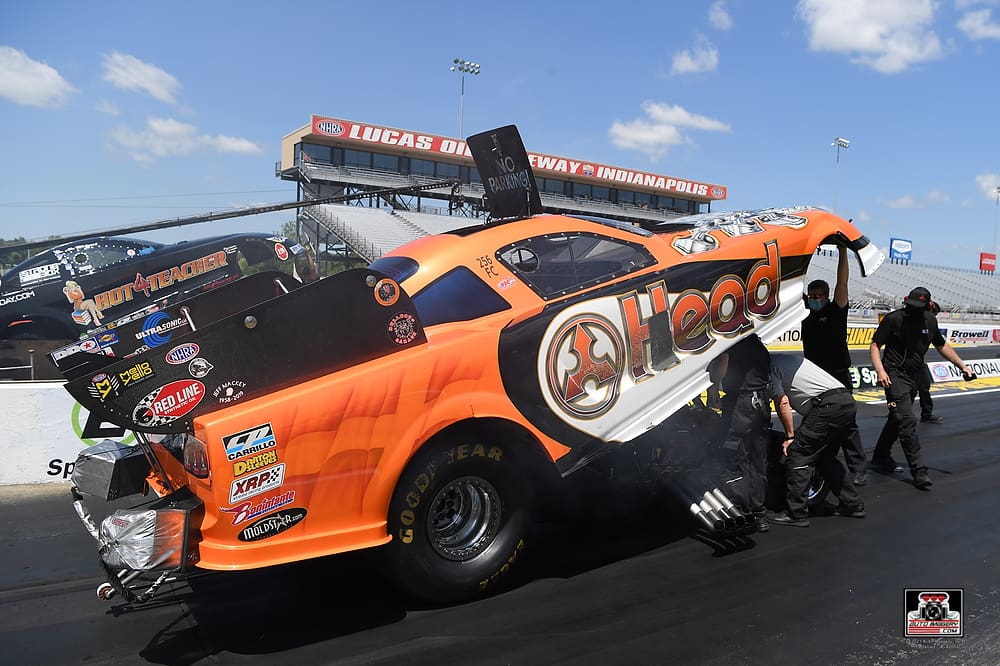
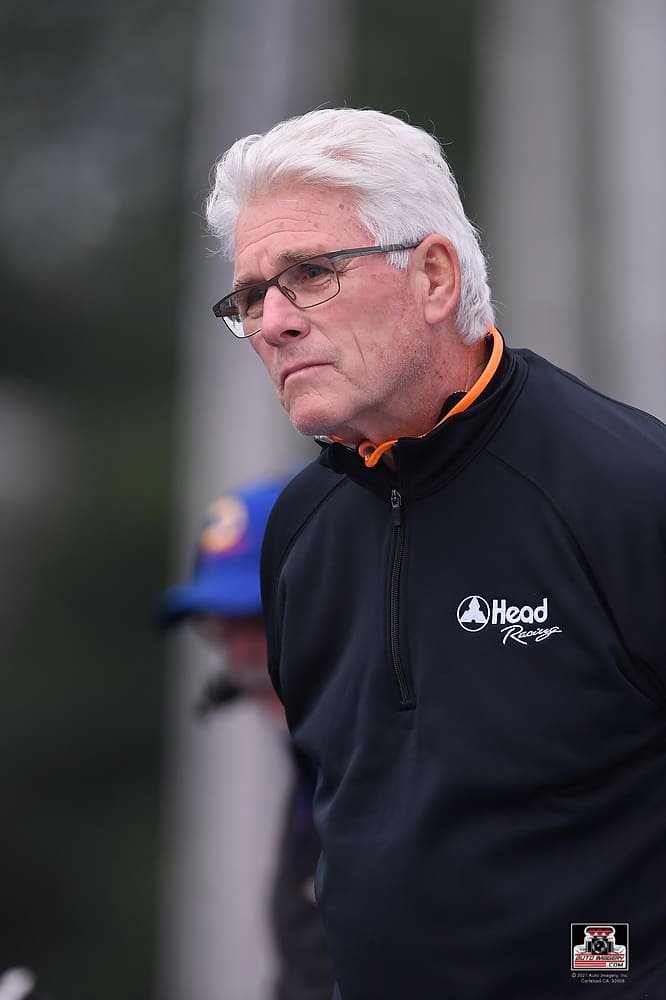
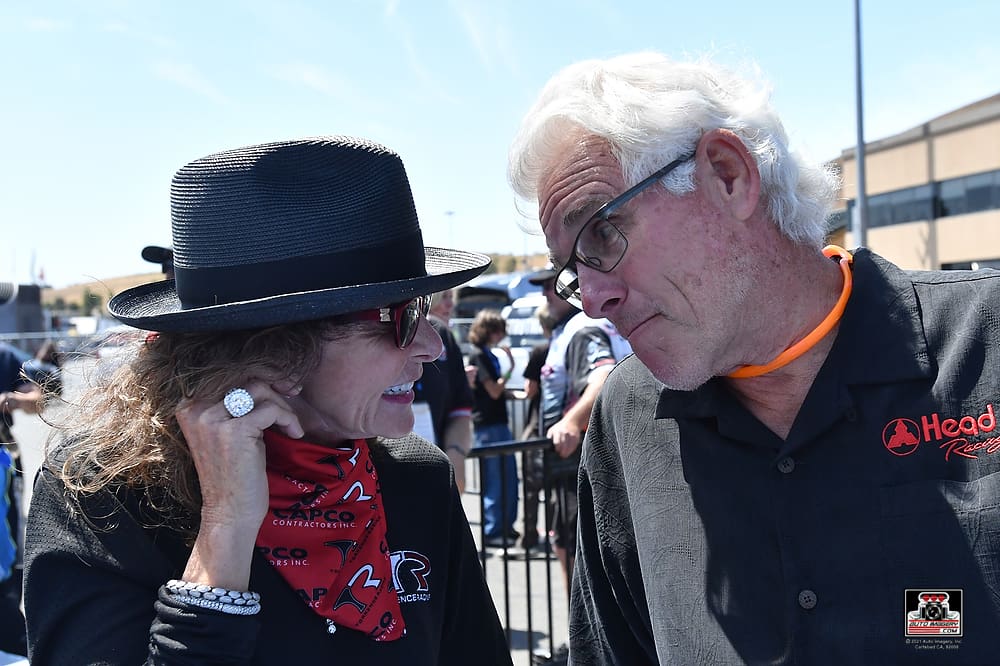
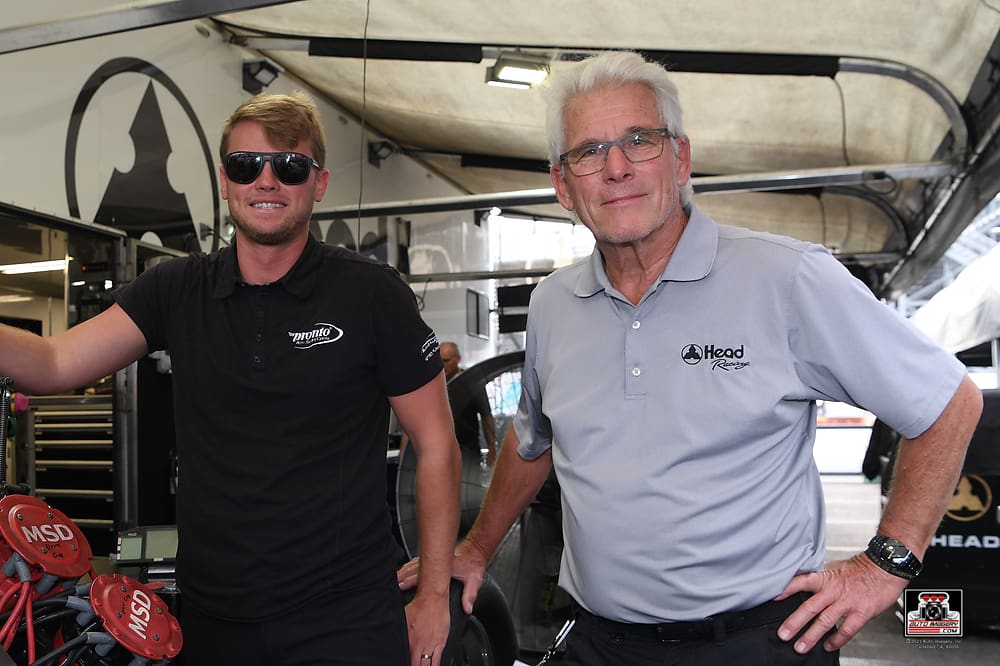
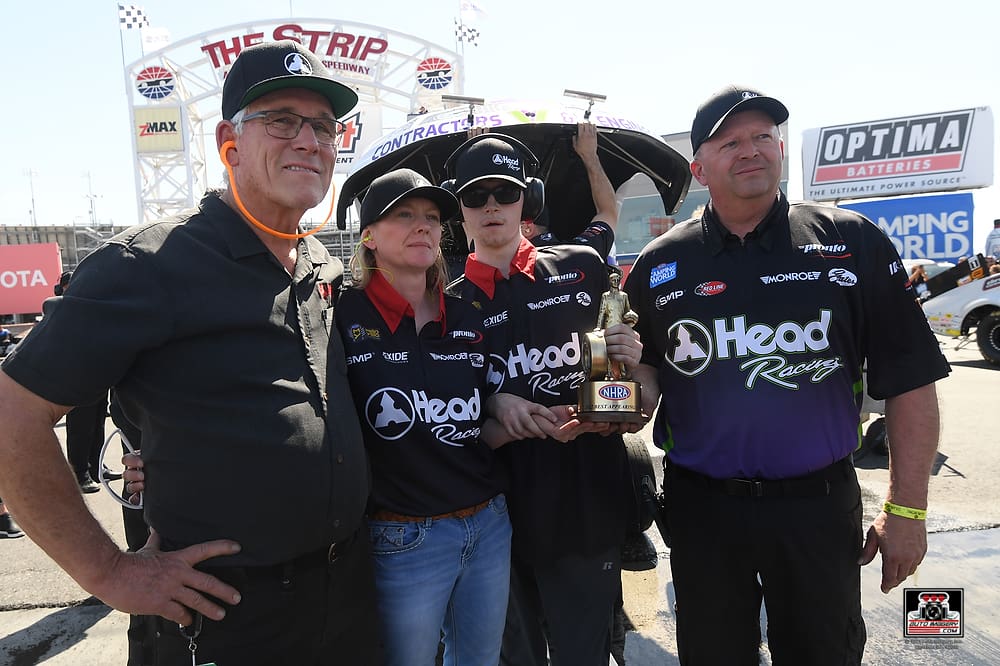
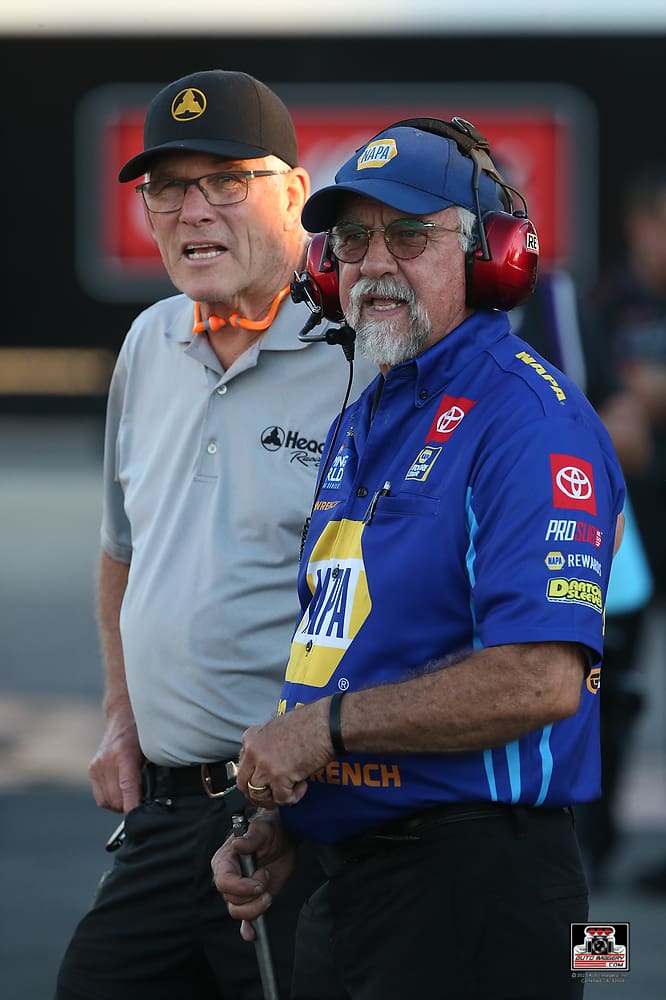
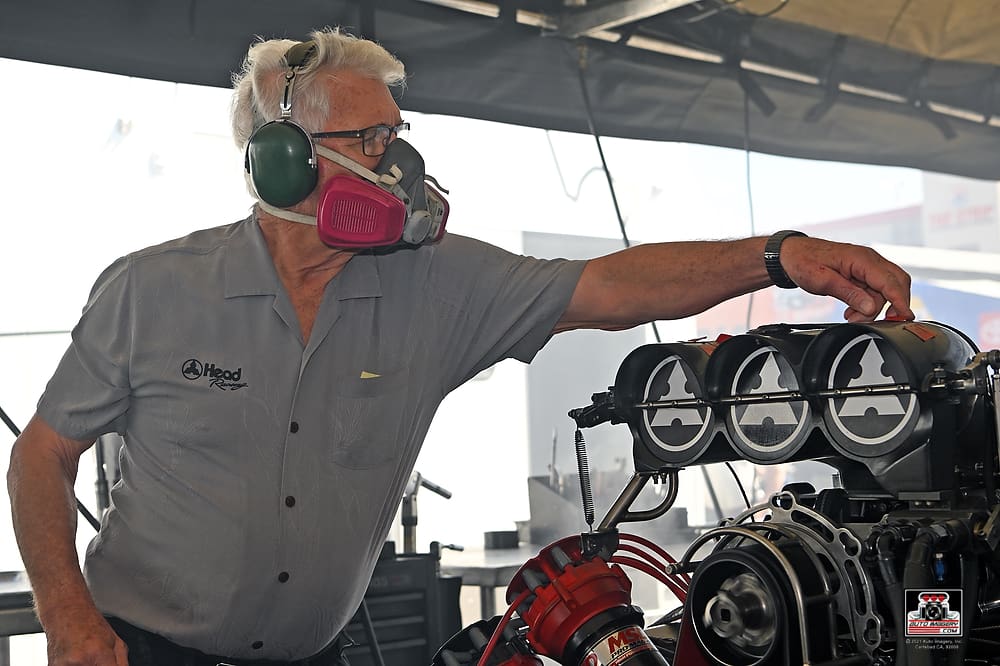
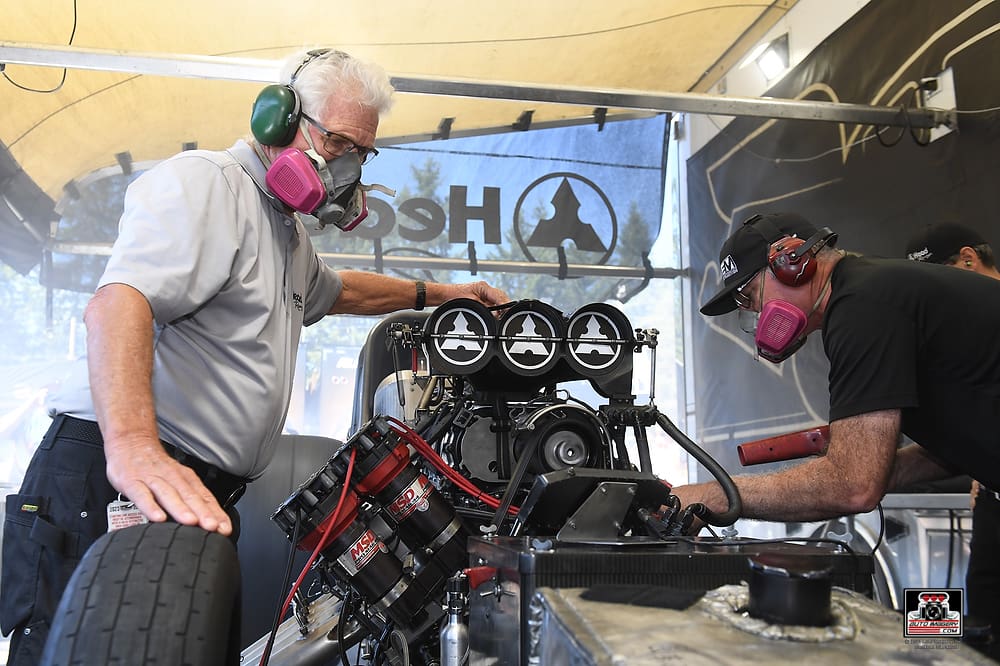
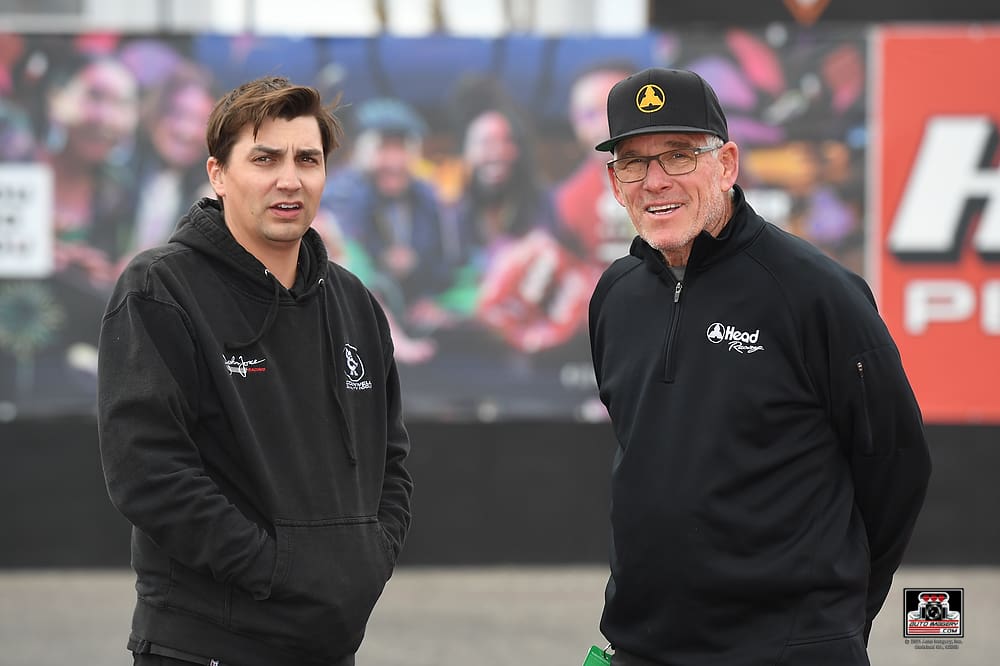
Jim Head is not your average racer, he is an accomplished acrobatic pilot, a civil engineer, a successful contractor, a master mechanic and an award-winning drag racer. Jim became interested in drag racing at the age of 15 and, with no help or experience, he turned a 1956 Chevrolet sedan into a small block powered D/Gas class racer. He was able to test his efforts just one week after turning 16 when he entered it at the local drag strip. His next effort was a small block Chevy powered Austin Bantum coupe that was an improvement over the D/Gasser. Improving with experience, Jim’s next car was a 1956 Corvette that he raced in D/Gas. Jim moved into the open wheel arena with a small block powered 27 T Roadster in 1972 and followed that with a small block dragster in C/ED class. Still building his own engines and rebuilding the chassis for them, in 1979 Jim posted a new NHRA national E. T. record of 7.91 for the class.
1980 found Jim in the seat of a supercharged 426 Chrysler Hemi powered T/AD dragster but that soon changed when he experienced his first run with Nitro in the tank at the NHRA U.S. Nationals in Indianapolis, IN and made it to the semifinals. The desire to go quicker and faster was part of the reason for moving into the nitro burning arena but it was also motivated by the ability to compete in a more “unlimited” class where new ideals could be tested and proven.
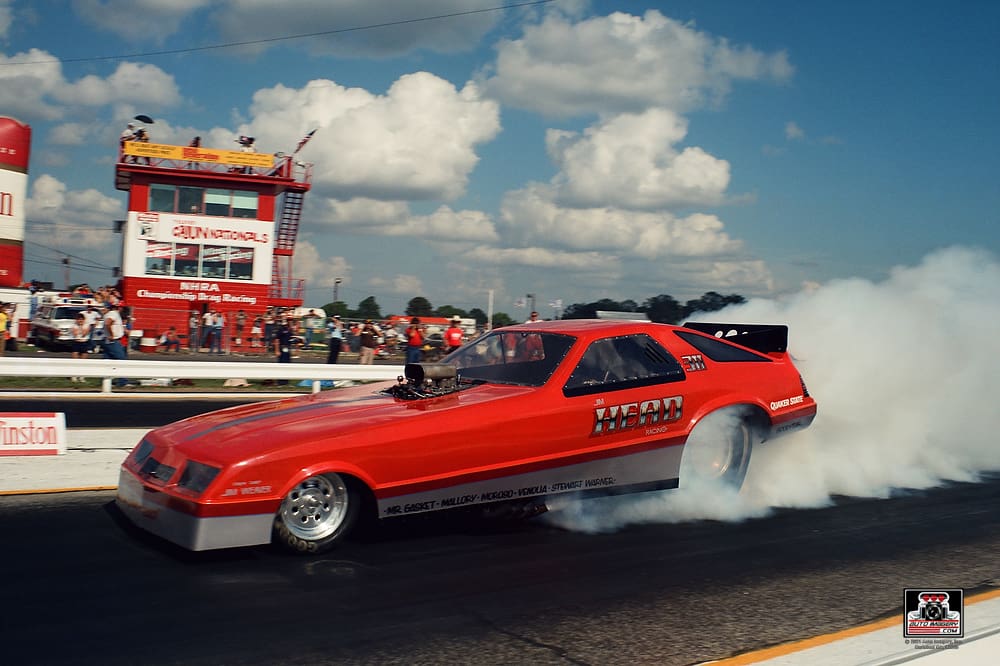
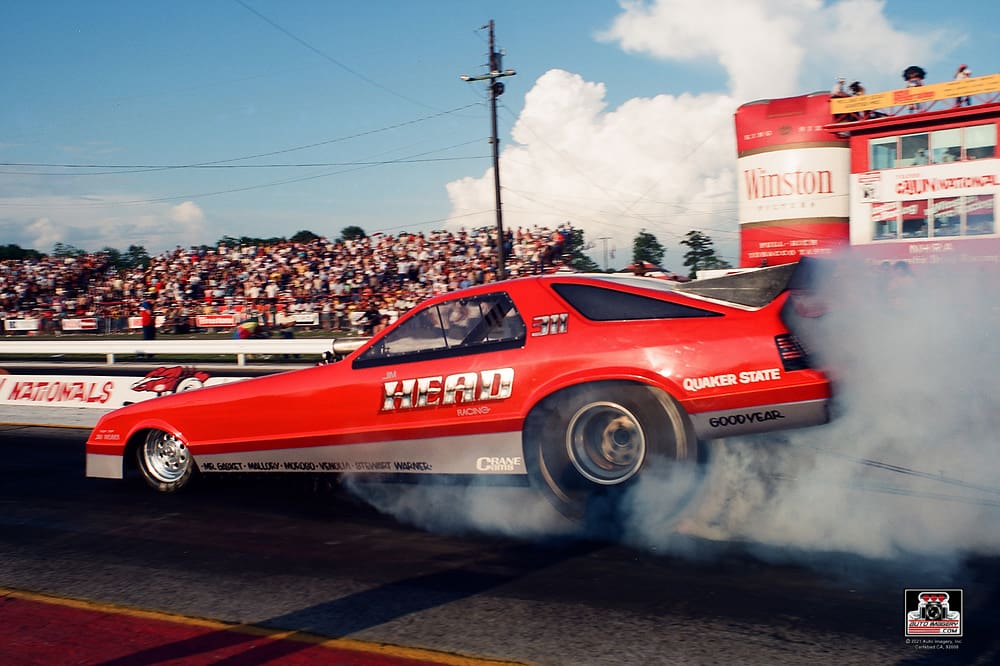
Jim was moderately successful in both the Fuel Dragster and Funny Car arenas, posting wins at the NHRA U.S. Nationals in 1984, the NHRA Cajun Nationals in Baton Rouge, LA in 1985, the NHRA U.S. Nationals in In1997. He has moved back and forth from AA/Fuel Dragster in 1980 to AA/Funny Car in 1984, back to AA/Fuel Dragster in 1989 and back to AA/Funny Car again in 2003 where he continued the driving chore until 2013 when he gave that position to his son Chad.
A true innovator, Jim is credited with being the first person to bring on-board computer technology to the nitro burning cars and the multi-stage clutch that activates automatically, both technological advances that are now standard units in the sport. He has also made modifications to his supercharger and fuel system that are very successful.
As noted earlier, Jim gave up the drivers’ seat in 2013 to concentrate on being the team Crew Chief and grow his construction business. However, he has continued to field competitive cars in the AA/Funny Car field and while he intends to continue to be one of the quickest and fastest teams, he is also committed to improved safety. Jim’s cars are usually a bit heavier than the other team’s cars but that is because he has added additional padding, impact absorbing materials and other structural features to achieve this goal.
A true competitor, Jim may have stepped out of the drivers seat but he will always be a racer, looking for faster speed and quicker E.T.’s. while doing so safer.
Photo gallery · 47
-
-
2025
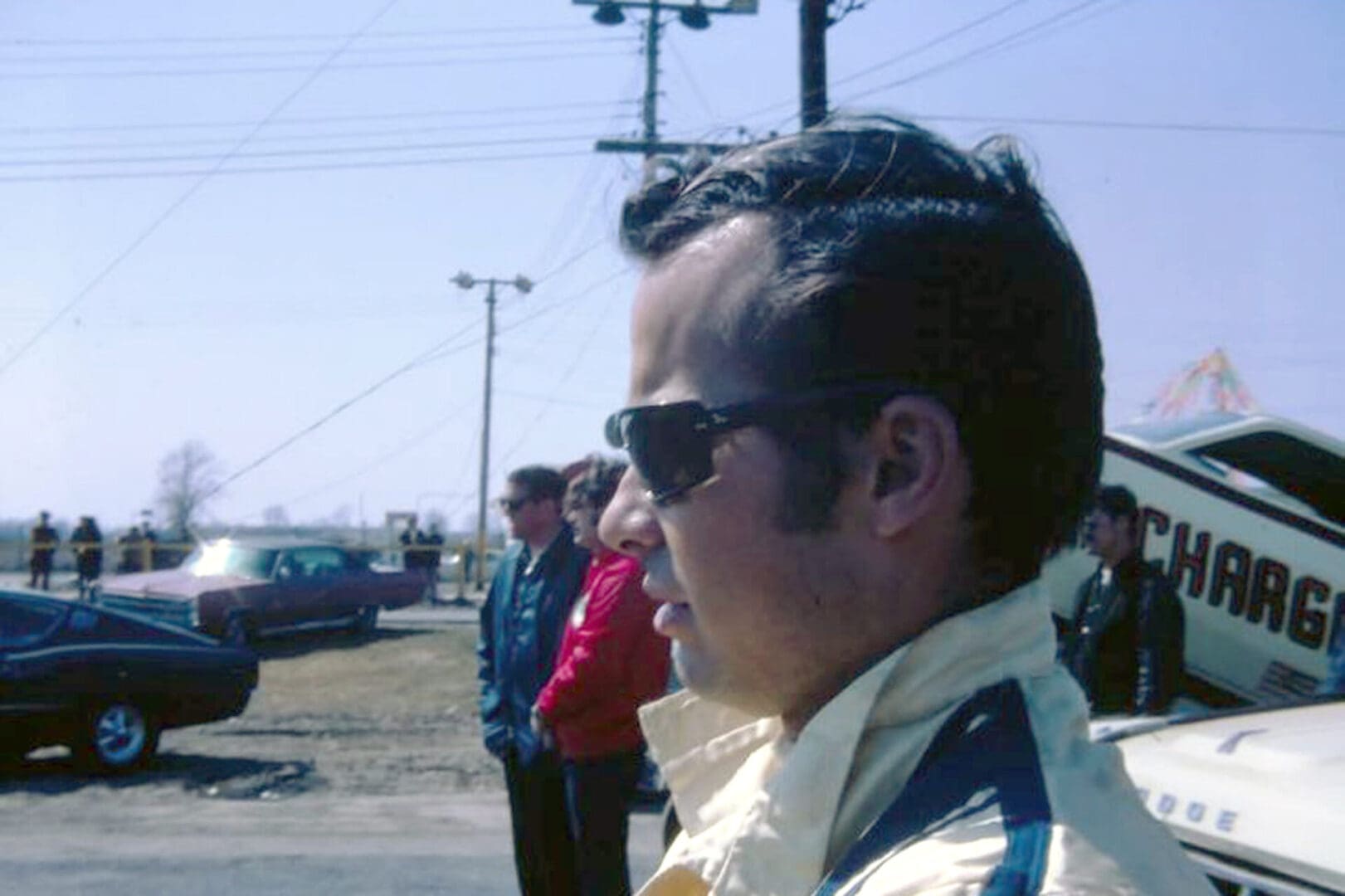 Jay Howell
Pamela (Pam) Hardly is better known as Jungle Pam from her years as Jungle Jim Leiberman’s “back up girl”. Pam is considered…
Read bio · 31 photos
Jay Howell
Pamela (Pam) Hardly is better known as Jungle Pam from her years as Jungle Jim Leiberman’s “back up girl”. Pam is considered…
Read bio · 31 photos
 Class of 2025Presented by Wynn’s
Jay Howell
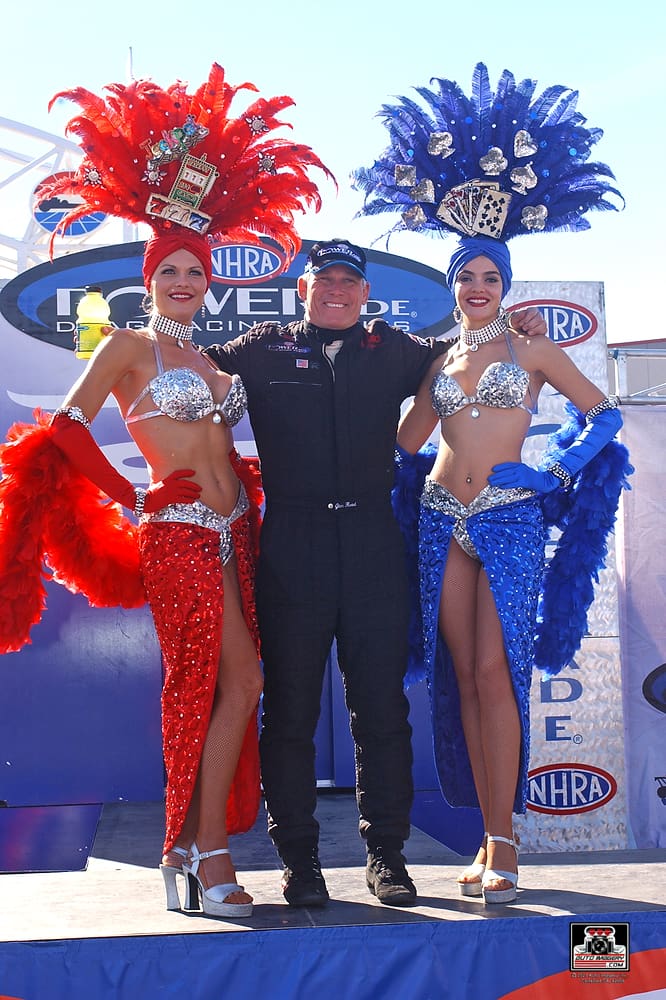
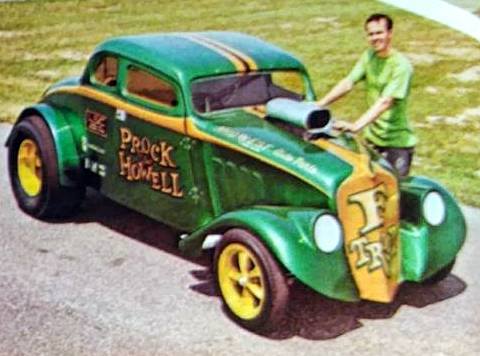
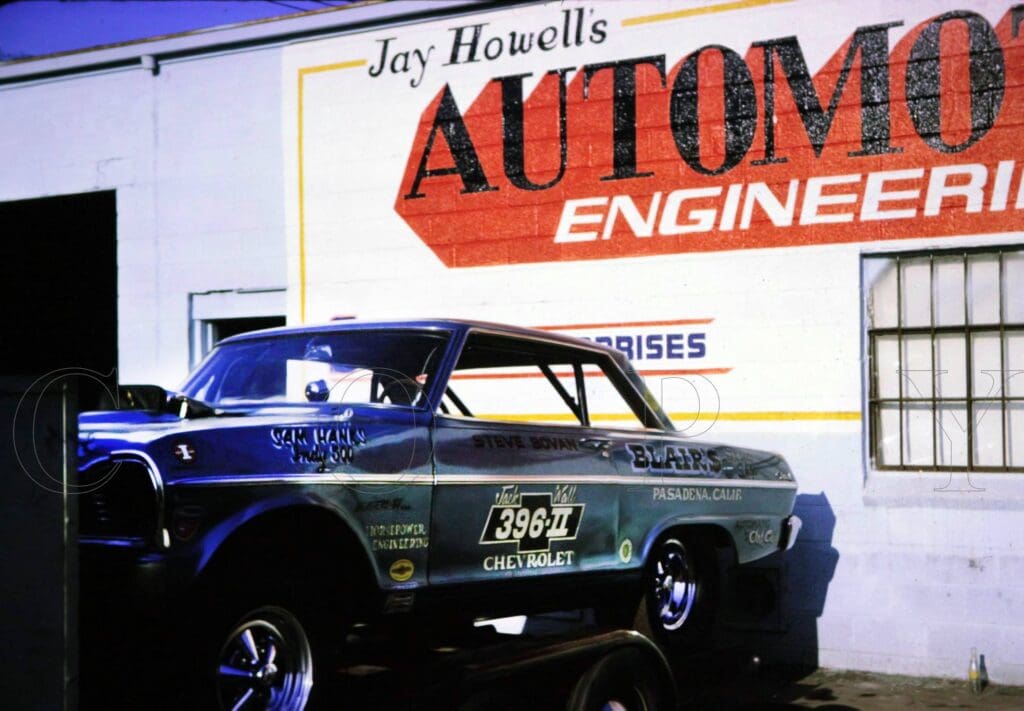
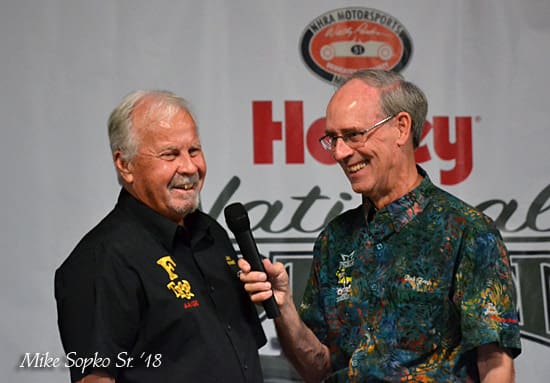
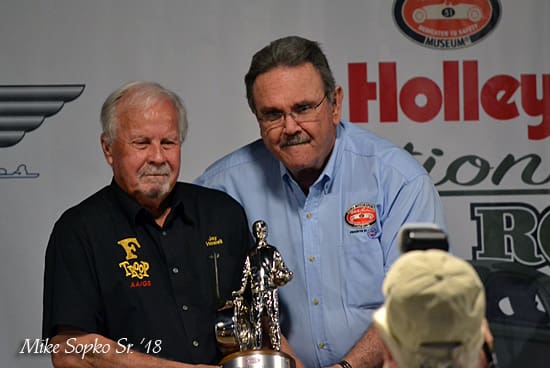
Pamela (Pam) Hardly is better known as Jungle Pam from her years as Jungle Jim Leiberman’s “back up girl”. Pam is considered by most racers and spectators to be the original back up girl and much like Linda Vaughn who set the standards for bringing lasting attention to the sport, she proved that great looking ladies in colorful costumes add greatly to the “on track” show.
When Jim first met Pam, he already had a reputation as a real showman, making fiery burn outs, 100 mph backups and even full-track wheel stands. Jim met Pam when he saw her walking down the sidewalk and stopped to talk to her and ultimately offered her an opportunity to join him on tour. The pair added greatly to Jim’s “showman” title when Pam accepted his offer and became his back up girl. Dressing in her “patented” short-cut off-jeans and braless halter top, Pam was also responsible for presenting the sport with a sexy but wholesome image and generated a lot of interest from new fans that still exists today.
Unlike many of the later “back up girls”, Pam was also part of the crew. She often packed the parachute, added the water and oil after each run and learned quickly how to check for oil and water leaks. Unfortunately, Jim died in a car crash in 1977 and Pam backed away from any active race participation.
Photo gallery · 31
-
-
2025
 Gary Scelzi
Unlike most of his predecessors, Gary Scelzi got his first start in competitive drag racing at the wheel of a small-block, Chevy-powered…
Read bio · 16 photos
Class of 2025Presented by Wynn’s
Gary Scelzi
Unlike most of his predecessors, Gary Scelzi got his first start in competitive drag racing at the wheel of a small-block, Chevy-powered…
Read bio · 16 photos
Class of 2025Presented by Wynn’sGary Scelzi
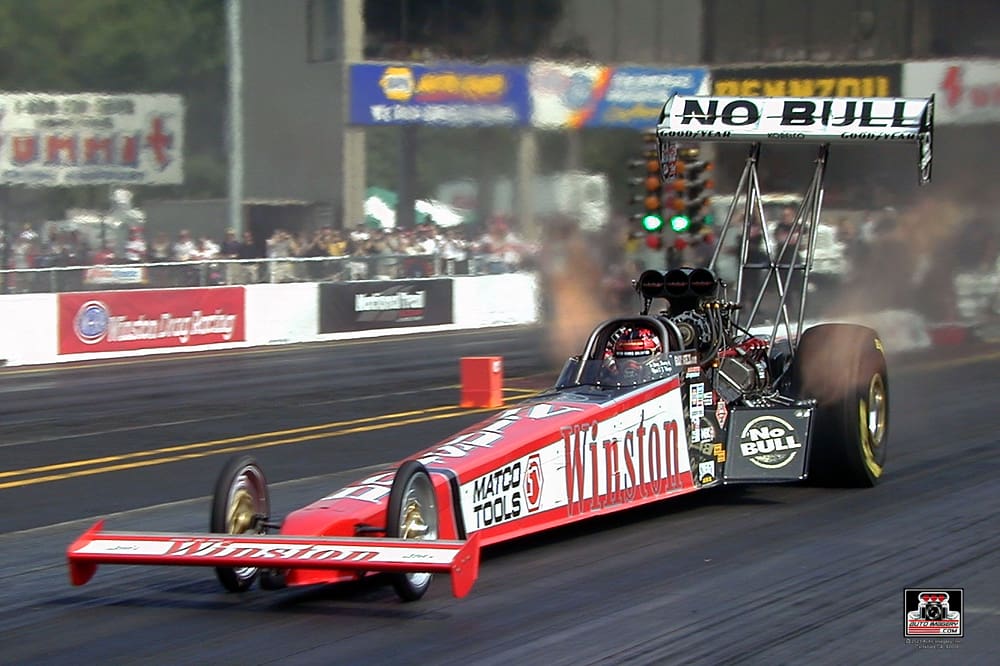
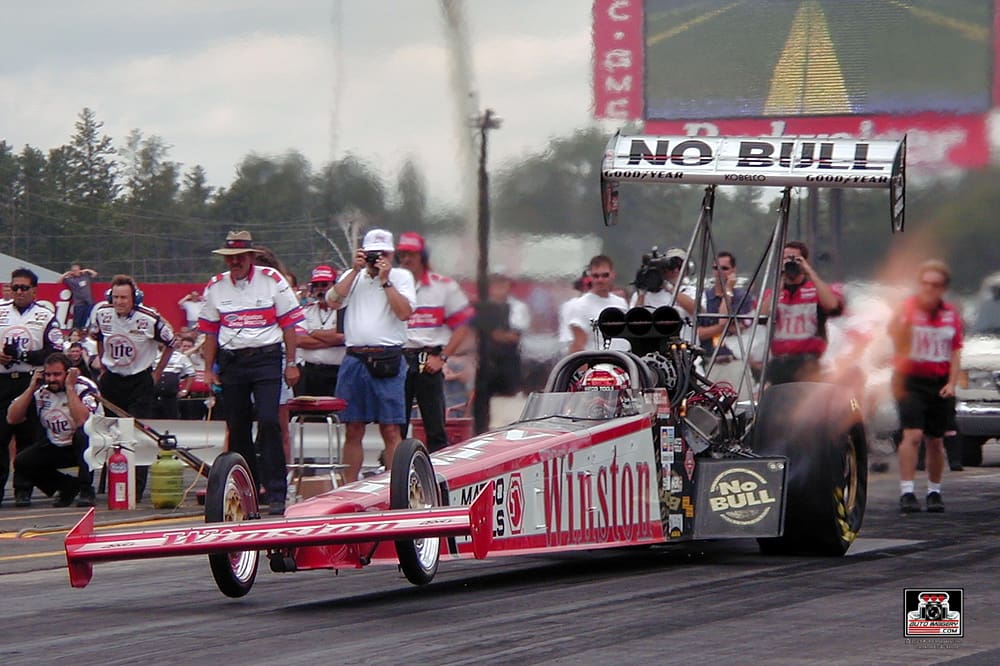
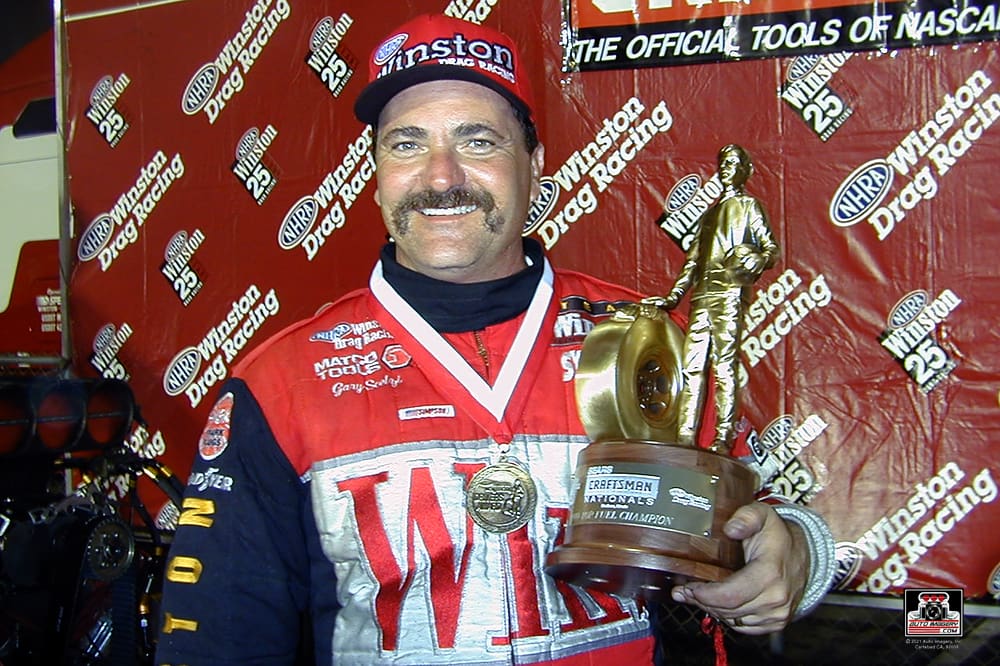
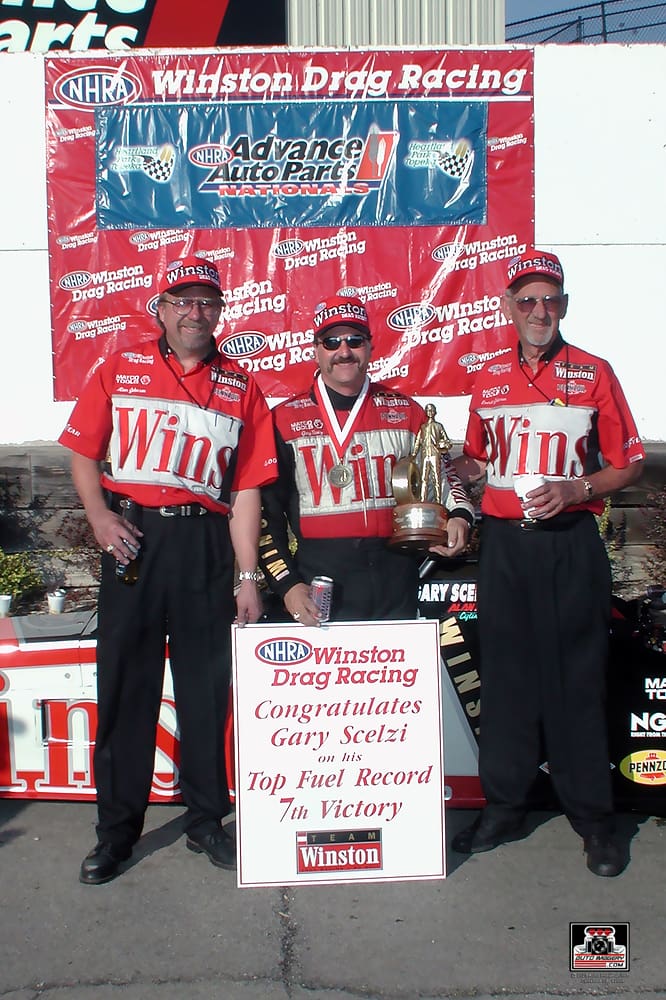
Unlike most of his predecessors, Gary Scelzi got his first start in competitive drag racing at the wheel of a small-block, Chevy-powered sand dragster at the age of 16-years-old. He notched his share of wins in this arena before his world changed in 1996. Following the racing death of Blaine Johnson, Scelzi was selected by Alan Johnson to replace his brother in the family Top Fuel Dragster. Scelzi took advantage of the opportunity as he became the first rookie to win an NHRA title.
Scelzi first came to national prominence in 1985 in a Top Alcohol Dragster when he won the NHRA World Finals. He was victorious twice more in the class before moving to Alcohol Funny Car, where he also collected three NHRA national event wins.
Incredibly, in 1997, Scelzi captured the first two races in the class – the first one the NHRA Winternationals in Pomona, Calif., and the second one the NHRA Atsco Nationals in Phoenix, Ariz. – becoming the first rookie driver in NHRA history to win his first two races as a pro. He went on to earn the NHRA Top Fuel championship and repeated that feat in 1998. Scelzi added a third crown in 2000 when he became the first Top Fuel driver in history to garner nine national event victories in one season. In 2002, Scelzi accepted the driver’s job in Alan Johnson’s second AA/Funny Car.
Scelzi is one of a very few drivers to win in NHRA’s four quickest and fastest supercharged categories – Top Fuel, Funny Car, Top Alcohol Dragster and Top Alcohol Funny Car – with multiple victories in each as well as four championships spread among his nitro-burning career.
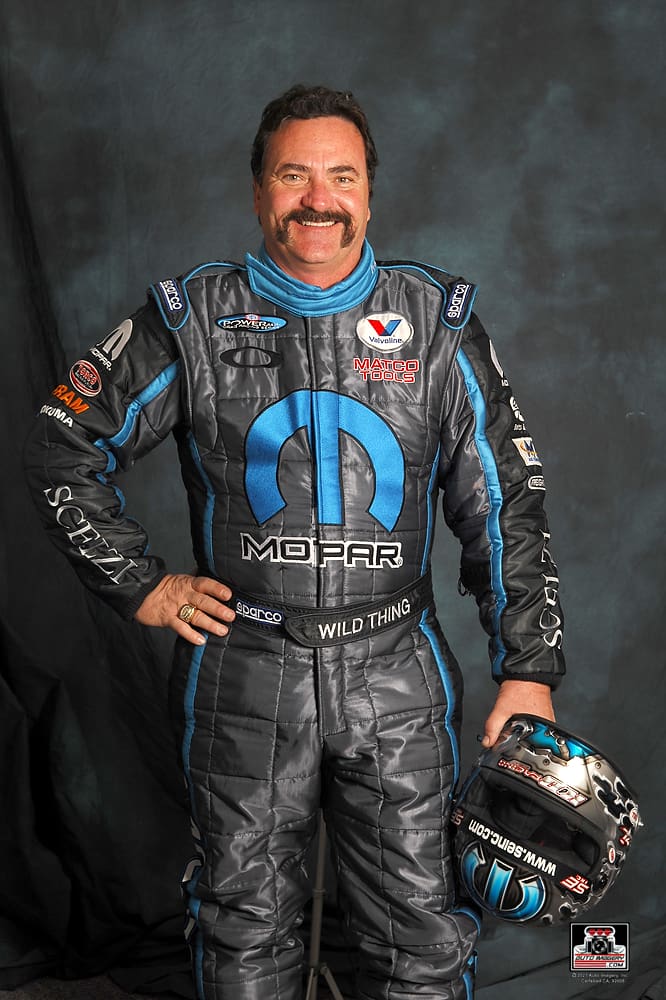
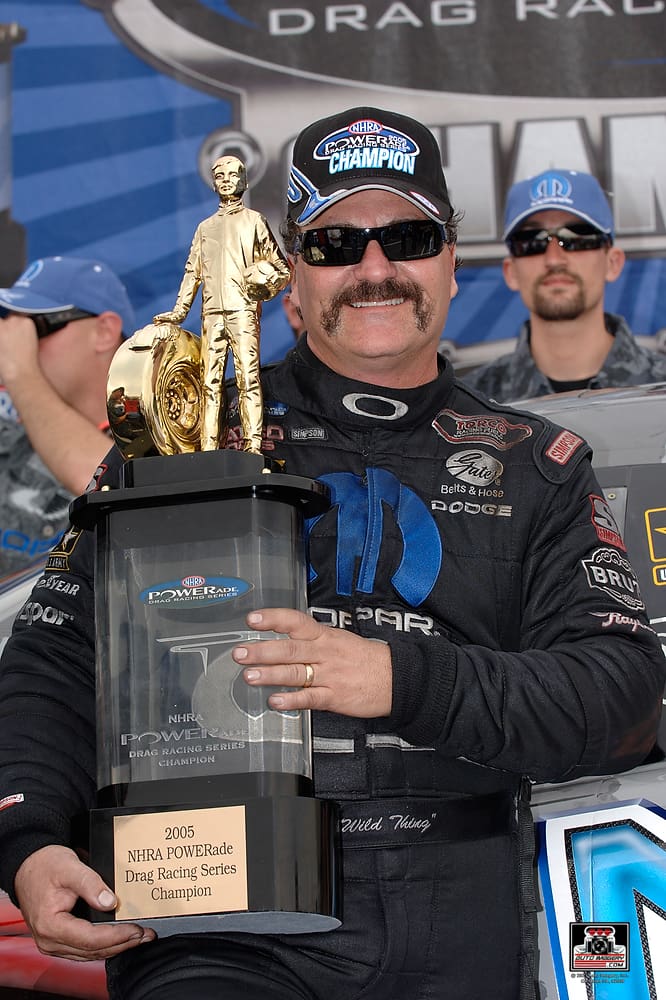
Parting ways with Johnson in 2002, Scelzi joined Don Schumacher Racing for the 2003 season in an Oakley-sponsored Funny Car and in 2004 he became the first Funny Car driver to exceed 330 mph. In 2005, Scelzi won the NHRA Funny Car world championship, ending John Force Racing’s 12-year stranglehold on the championship.
Scelzi is one of the very few drivers to rack up the win record he posted during his 12 seasons in the NHRA elite classes with 25 wins out of 39 finals in Top Fuel and 12 wins out of 20 finals in Funny Car.
Proving he is not one dimensional, while Scelzi was competing on the drag strip he owned and fielded a Ford Focus Midget that that won the legendary Turkey Night Grand Prix at Irwindale, Calif., in 2006 and took home the United States Auto Club Championship that year. For the 2007 season, Scelzi sold his Focus Midget and moved up to a standard midget and assumed the driving chore at the Chili Bowl Nationals.
After the 2008 season, Scelzi retired from driving in Funny Car to focus on the family business, Scelzi Enterprises, and his sons’ own racing careers. He has not abandoned the sport he loves so much and had so much success in, but has become even more vocal in his quest to improve its overall safety.
Photo gallery · 16
-
-
2025
Founders Award
 Paul Sergi
Summit Racing Equipment’s roots can be traced back to a family farm in New Jersey. A young Paul Sergi took a liking…
Read bio
Paul Sergi
Summit Racing Equipment’s roots can be traced back to a family farm in New Jersey. A young Paul Sergi took a liking…
Read bio
 Class of 2025 · Founders AwardPresented by Wynn’s
Paul Sergi
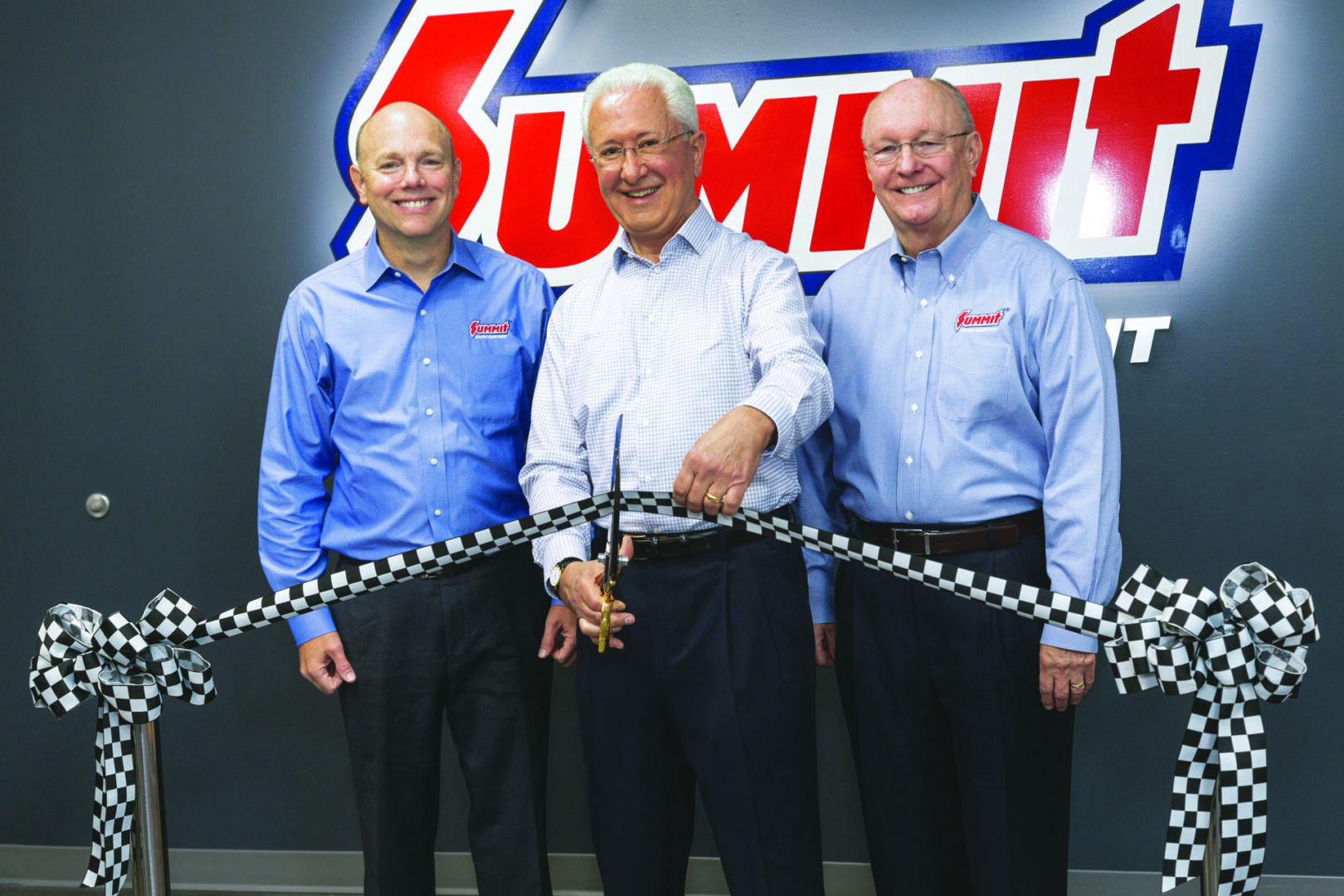
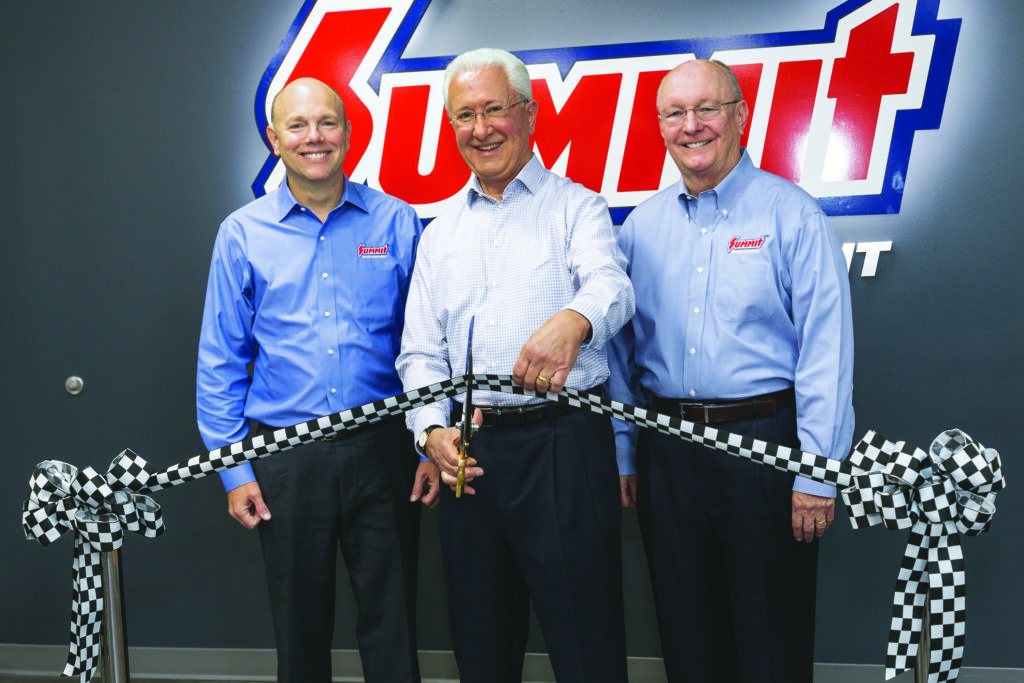
Summit Racing Equipment’s roots can be traced back to a family farm in New Jersey. A young Paul Sergi took a liking to motors and machines, specifically the sounds of the tractors. The farm also taught him many important business philosophies: relying on quality products, reinvesting in the company, and emphasizing the importance of customer service. “When busheling corn, you always throw in two extra ears in case you miscounted,” Paul’s father taught him.
As a young performance enthusiast, Paul fed his interest and curiosity in motors and machines by flipping through the various car magazines at the local drugstore. After college, the engineer and avid drag racer bought a new 1967 Corvette (he still owns it today). When he needed a special tool to adjust the valves on the Vette’s 427 big block, he went to his closest speed shop, which wasn’t close enough to be convenient. Paul wanted better access to the parts he needed, when he needed them, and he wanted them at a good price. He and the owner of the shop struck up a friendship that would eventually serve as the genesis of Summit Racing Equipment. Paul began buying parts for his Corvette at distributor prices. It didn’t take long before his racing buddies wanted to buy parts, too.
The Corvette became a delivery truck, and a spare bedroom became a warehouse. Advertising in the local newspaper followed and the part-time business grew. Soon, Paul had to make a choice-keep his full-time job and give up the business or go all in on his auto parts store.
With his focus fully on building Summit Racing Equipment, Paul placed small ads in national magazines and the business was rolling. The staff grew, and like a true enthusiast, Paul worked in every area of the company-from shipping and receiving to creating magazine ads, and even learning programming so he could build the company’s computer system. The company’s first mail order catalog was created. To help set the business up for growth, Paul hired a highly capable staff in key areas. Marketing was in full force, customer-focused policies like the Handshake Guarantee were introduced, and the company grew…and grew some more. The company’s 24/7 order line went live to serve customers nationally and then SummitRacing.com was launched.
Today, Summit Racing Equipment is the go-to parts source for enthusiasts around the world. With operations in six states and millions of parts in stock, the company has come a long way since 1968. With the guiding principles Paul learned on the family farm at Summit Racing Equipment’s foundation, the company makes it a priority to take care of customers, employees, business partners, and the industry.
You’ll see the Summit Racing Equipment logo at tracks, on race cars, and at a wide variety of events throughout the United States and beyond.
-
2025
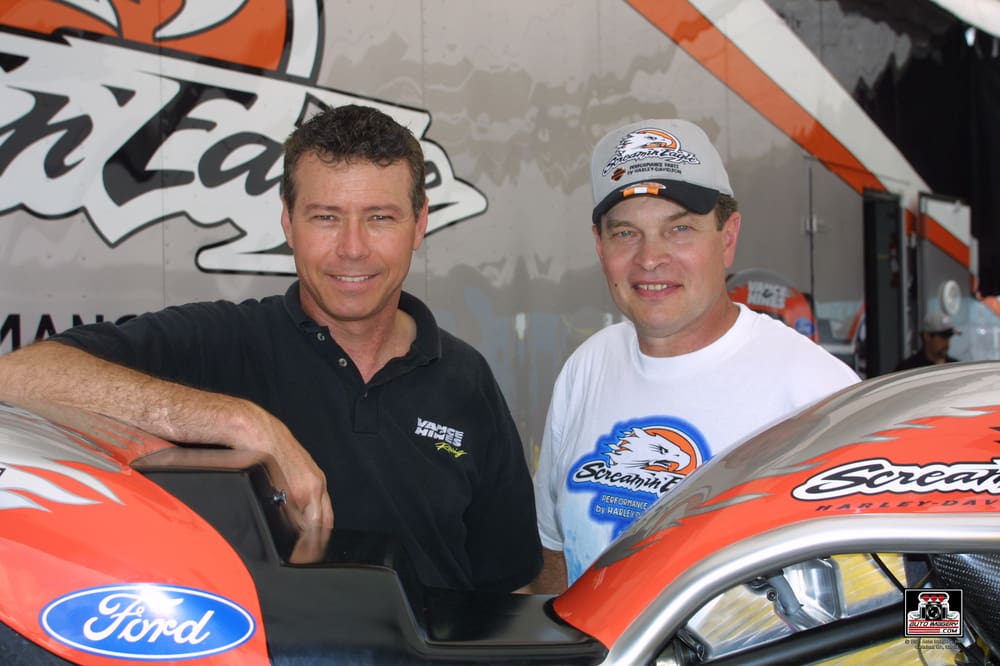 Terry Vance & Byron Hines
Terry Vance began life in Bristol, Virginia but at the age of three, his family mower to Los Angeles, California, the nations…
Read bio · 10 photos
Class of 2025Presented by Wynn’s
Terry Vance & Byron Hines
Terry Vance began life in Bristol, Virginia but at the age of three, his family mower to Los Angeles, California, the nations…
Read bio · 10 photos
Class of 2025Presented by Wynn’sTerry Vance & Byron Hines
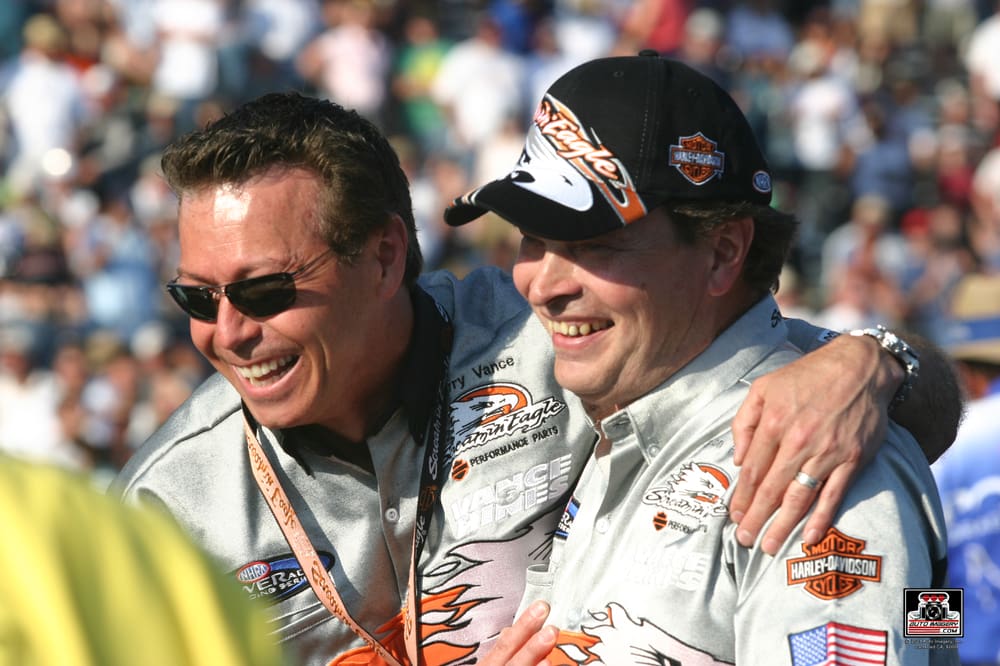
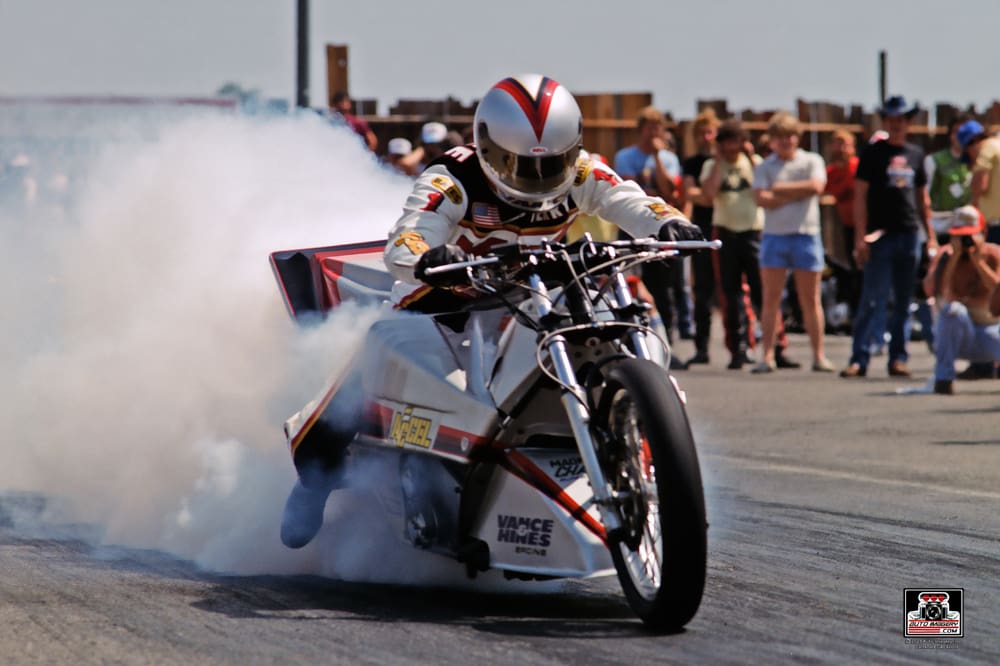
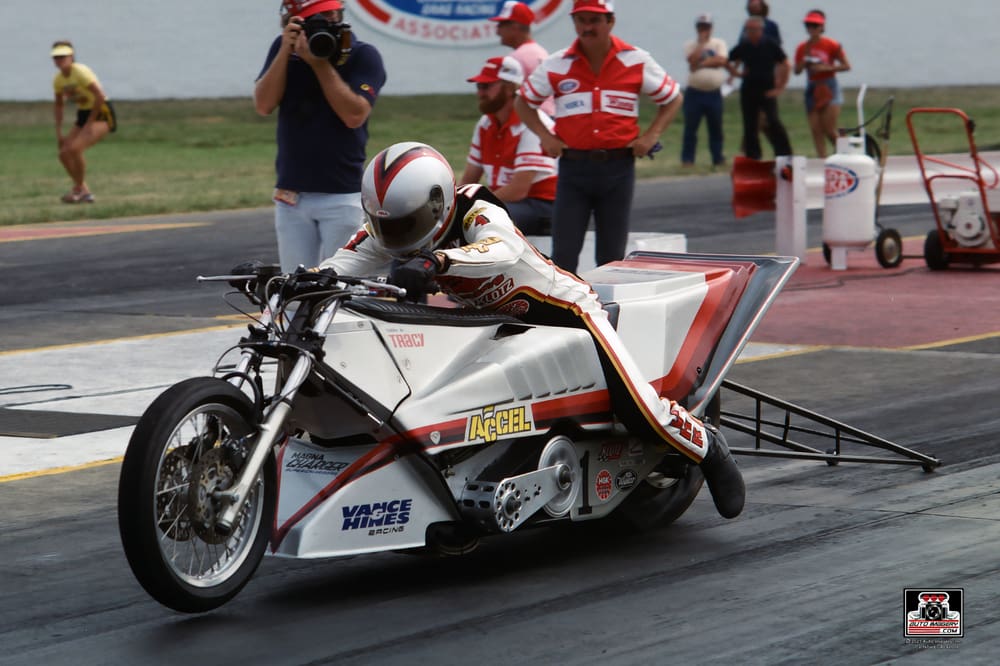
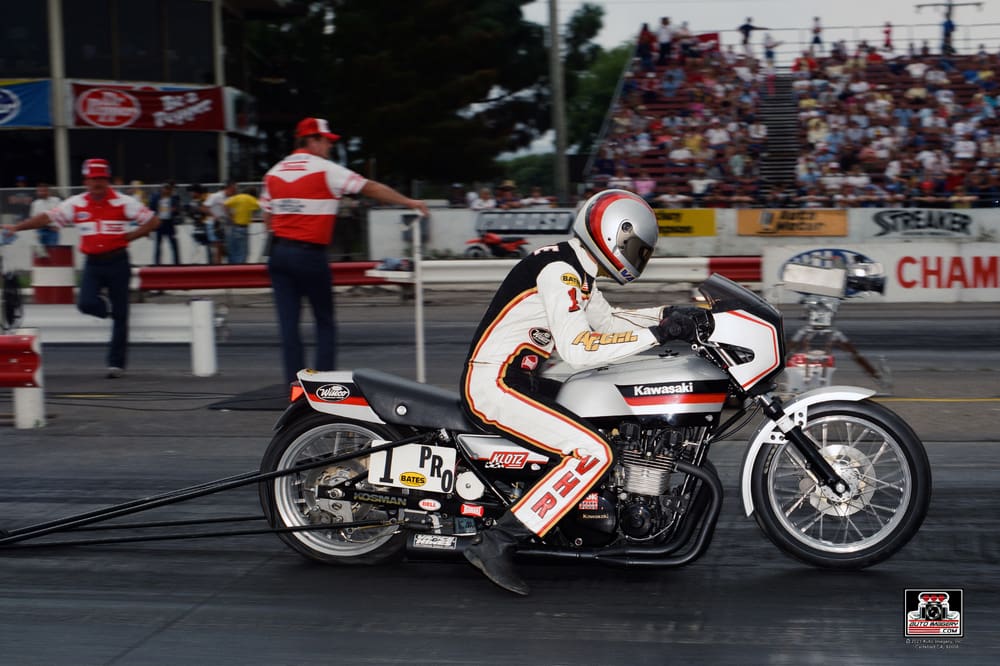
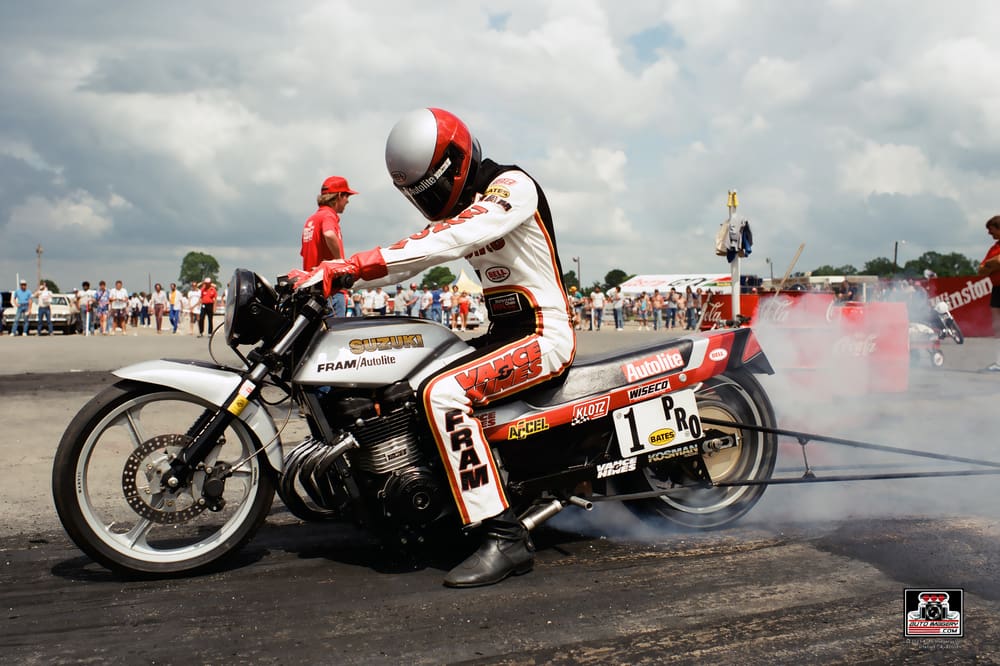
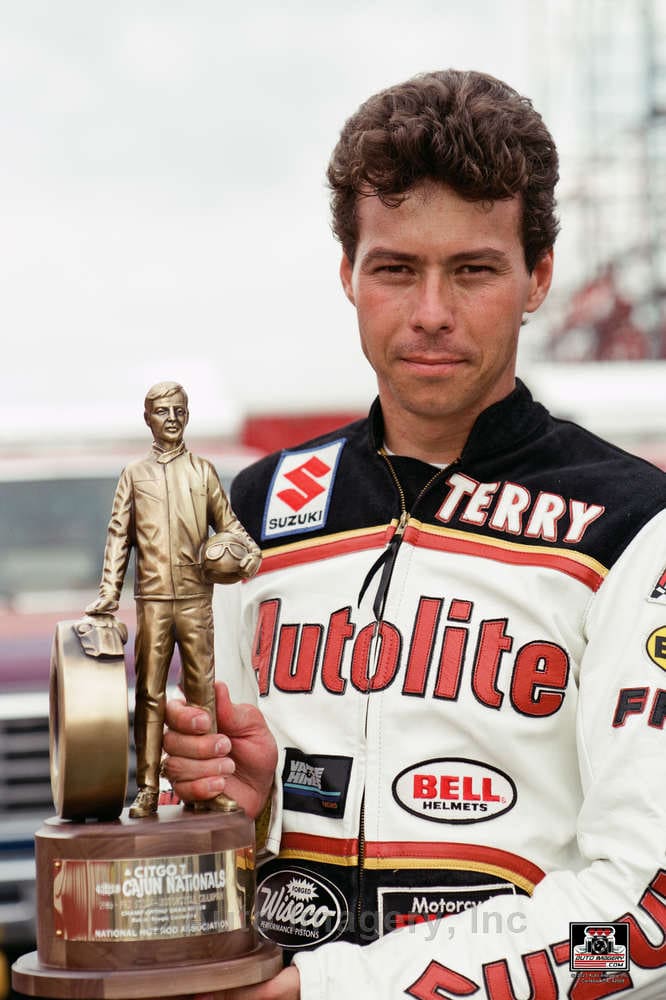
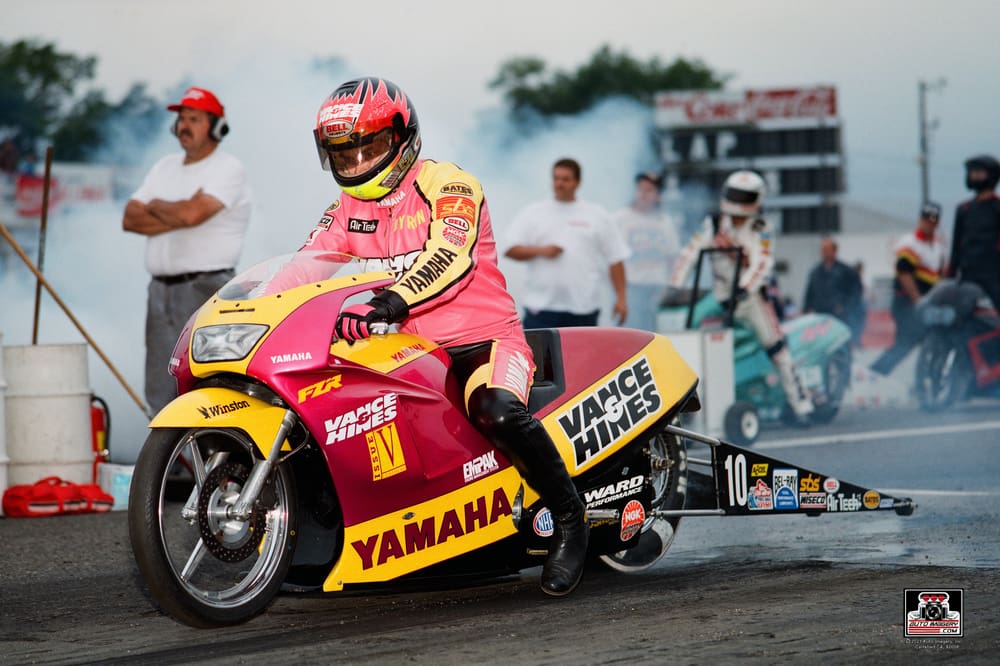
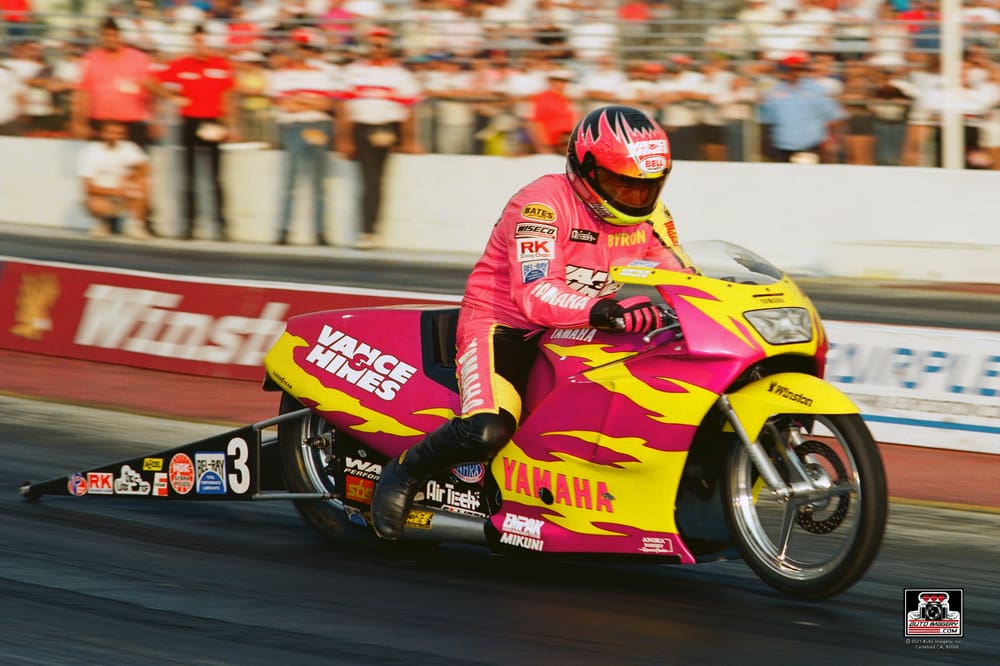
Terry Vance began life in Bristol, Virginia but at the age of three, his family mower to Los Angeles, California, the nations hot bed of motorcycle and hot rod activity. His first two-wheel undertaking was a minibike with a engine from a lawn mower. This was followed by a Honda 90 that was replaced with a Honda 350 and in 1970 he became the proud owner of a Honda CB750 Four. As soon as he got his driver’s license, he began racing his Honda at the local dragstrips and posting a steady string of wins.
At this time, Terry was employed at R.C. Engineering (RCE) and its owner, Russ Collins, was so impressed with Terry’s winning streak and style of riding that he approached him with an offer to ride one of RCE’s new bikes. Terry signed his first professional contract in 1972 as an RCE rider. .
Byron Hines made the decision in his teens that he liked owning and working on motorcycles rather than cars mainly because they were more open to work on, and one person can move them around easily. He is basically a self-taught mechanic who thrives on finding new ways to produce more horsepower with greater reliability. His pre-teen years were confined to helping his dad repair the family vehicles and playing around with go carts and soap box derby racers, but motorcycles caught his eye in high school, and he soon owned his first one, a Honda X-6.
Byron had been making improved performance and appearance modifications on his own street bikes from an early age, but everything changed in 1970 when he rode into Russ Collins RC Engineering (RCE) shop for a set of spark plugs. After his first look at Byron’s trick street Honda, Russ offered Byron a job and Byron became his first employee. During his first months at RCE, Byron was taking his own bike to the local drag strip where he was soon able to match the track speed and ET records. With this success under his belt and his wizardry at the shop, after a few months Russ and Byron teamed up with a Honda drag bike and began appearing in the winner’s circle regularly.
IT was at RCE where Terry and Byron met and became friends. With Byron building and tuning and Terry driving their twin engine T/G Honda, the team decimated the drag bike arena in the 1970’s winning 22 of the 23 AMDRA sanctioned races they entered.
In 1977 Suzuki approached him about racing its new GS 750, an offer he accepted and with Byron Hines doing the tuning, Suzuki dominated the drag racing arena. Suzuki capitalized on this success with numerous print and TV ads and combined with their exposure at the racetracks, the two men became the most recognized figures in motorcycle racing. It was also due in a large part to Suzuki’s involvement and the name recognition of Vance and Hines that NHRA added motorcycle drag racing as part of its national championship series in 1987.
Terry and Byron partnered in a new company in 1980, Vance & Hines Racing, and began producing a line of aftermarket parts that included as its first product, an exotic exhaust system for both street and strip. The pair have also designed, developed and are marketing, a very successful line of aftermarket products.
After winning the last five national races in a row, at the end of the 1988 season, Terry retired as an active rider to concentrate on building Vance & Hines Racing. Terry became the winningest motorcycle rider in drag racing and notched championships in both Pro Stock and Top Fuel classes.
Not one to confine his talents to one brand, Byron has successfully built Hondas, Ducati’s, Yamaha’s, Suzuki’s and Harley Davidsons. He has also been successful in road racing as well as drag racing. The main reason for his success in the motorcycle arena is because he is a tireless and dedicated worker and to quote him, “motorcycles represent a more technologically advanced and capable package”. Byron doesn’t confine his engine building talents to just their team either and is responsible for the engines used by other competitive teams.
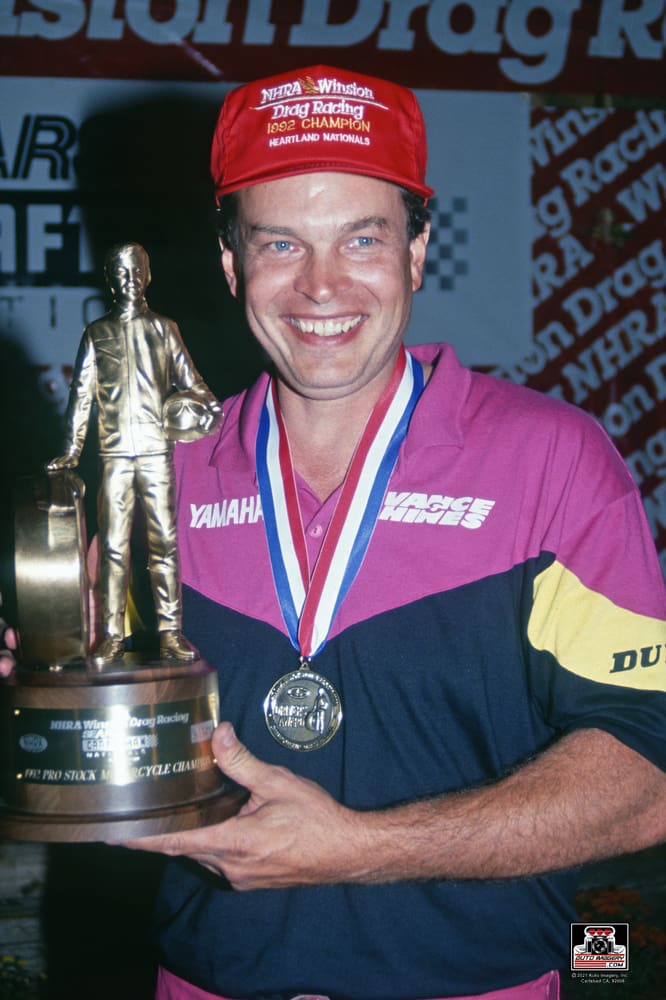
In 1990 Vance & Hines expanded into road racing where it began to sponsor numerous club-level racing events and to offer contingency money for riders running Vance & Hines exhaust systems. The company signed with Yamaha to become its official factory AMA Superbike entry. While its appearance with a full-sized tractor-trailer rig and distinctively painted equipment into the paddock area was impressive, it was their first time out win at the 1990 Daytona 200 that garnered the most attention. The team won the AMA Superbike Championship in 1991 and continued its winning ways at various AMA events and in 1993 it took home its second AMA Daytona 200 trophy.
Photo gallery · 10
-
-
2025
Pat Garlits Memorial Award
 Debbie Bader
 was raised in Norwalk, Ohio; graduating from Norwalk High School in 1974. After graduation she attended Ohio University, initially majoring…
Read bio
Class of 2025 · Pat Garlits Memorial AwardPresented by Wynn’s
Debbie Bader
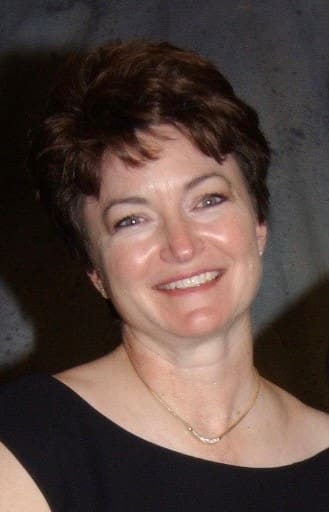
Debbie Bader was raised in Norwalk, Ohio; graduating from Norwalk High School in 1974. After graduation she attended Ohio University, initially majoring…
Read bio
Class of 2025 · Pat Garlits Memorial AwardPresented by Wynn’sDebbie Bader
Debbie Bader was raised in Norwalk, Ohio; graduating from Norwalk High School in 1974. After graduation she attended Ohio University, initially majoring in psychology. One year later, she switched her major to nursing, graduating in 1978 as an RN.
Debbie met Bill in 1977. Bill was her mother’s boss. Owner of the then fledgling Norwalk Dragway, Bill needed more help at the racetrack. Deb’s mother volunteered Debbie saying, “My daughter is home from college. She’s broke. She’ll work anywhere.” After the race that night Bill and Deb went out for a drink, walked and talked for hours, and as the saying goes, the rest is history…they married in March 1986.
Restless by nature and always seeking new challenges, Debbie at first worked part time at the racetrack on weekends and as an RN in ICU/CCU full time. She started in the concession stands, then ran the clocks in the tower. She worked as a corner person at motorcycle motocross and BMX races; in the concession stand, timing tower, gates and the payout window at drag races. After 4 years, Deb could see nursing just wasn’t for her. Too many talents went unutilized. Besides for Deb, the racetrack atmosphere was electric. The stars aligned when Bill’s office assistant decided to quit. So one afternoon, Deb surprised Bill at work…she was his 4:00 job ‘interviewee’. Bill was duly shocked…(maybe even slightly horrified)… but he regrouped and hired her.
Deb’s initial learning curve was purely vertical. With no background in racing or clerical work, it took a few years, but she pushed until she excelled. From various marketing tasks, to accounting, operations, human resources and event planning/execution; projects were met with raw enthusiasm. Deb also worked in sponsor services; helping to write and design proposals while servicing various accounts throughout the season. But there were three areas where Deb especially shone. Her innate creativity and people skills were exceptional, while her logical approach to the world and problem solving proved invaluable.
Deb helped discover new ways to entertain fans and unique modes of presenting talent. She oversaw the design and production of brochures & merchandise, and assisted with the design and decor of various facility upgrades. It was Deb who taught team members, “if it’s above the ground it’s either a decoration, or an eyesore…everything matters.” Deb quickly gained great understanding of what each job required and instinctively knew what position a person would excel in. She interviewed, hired and enjoyed training Norwalk team members, ancillary employees and various local groups. Deb embraced customer service. She hired people ‘persons’ and trained them in outstanding customer service at all points of contact. If a guest was dissatisfied, Deb welcomed the opportunity to speak with that person, seeking to fix it for them as well as the next guy. She dove into guest issues rather than avoiding them, and tended to ‘fight fire’ with logic and laughter.
On race day, she was everywhere; because “a person isn’t truly trained until you evaluate them in action”. Bill orchestrated the race. Deb’s realm was everything outside the racetrack guard walls. At major events Deb checked in with parkers, ticket sellers, ushers, the state highway patrol, facility guards, box office managers, and as Norwalk grew – added campground personnel, and suite/chalet hostesses to her route. As the show began, Deb sat in the stands with fans. She monitored the show, it’s pace, delivery and PA levels. The race crew adjusted accordingly. There she also talked with folks around her, gathering information on their likes, dislikes while digging for their ideas on what could be improved. Her notes were often strikingly revealing. Like Bill, Deb’s work ethic was exceptional. She was always among the first ones in and the last ones out. With energy, detail, vision and her love of learning, Deb gave Bill time. Time to evaluate and alter existing programs, to plan and build for the future, and time to listen to his racers, sponsors and fans. No one was better with people than Bill, and his entire team knew it.
A formidable combination was born when Bill hired Deb. Together with their talented family, and an exceptionally driven group of customer service focused team members; the foundation was laid for Norwalk Raceway Park to grow into the Summit Motorsports Park of today:
‘Home Of The Largest Independent Sportsman Event In The World – The Halloween Classic’… ‘Home of The Largest Independent Single Day Event In The World – Night Under Fire’…
‘Home of the Largest National Event On The IHRA Circuit’…
‘Home of one of the most beloved stops on the NHRA Mission Tools Drag Racing Series’…. and Home of 21 ‘Track of the Year’ Awards beginning in 1981.
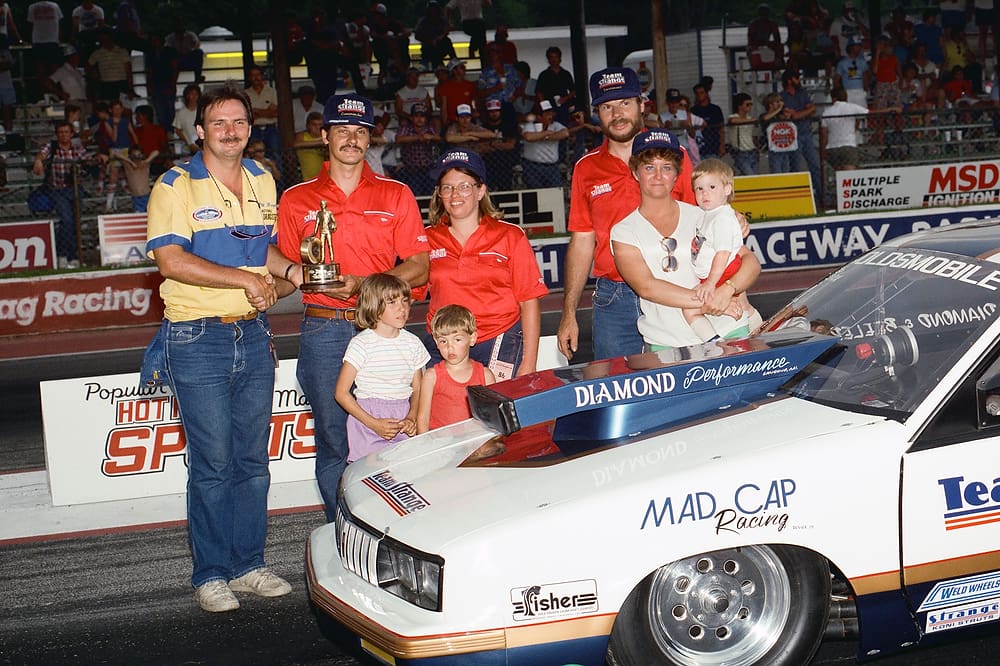
For 40 years Deb worked alongside Bill in every endeavor that called their name. In 1998, they purchased the IHRA. Deb initially remained at Norwalk Raceway (NRP) with Bill Jr. as he established ‘his’ team. Though acutely reluctant to leave NRP, Deb ultimately went back to work with Bill Sr. by joining Team IHRA. But in 2001, Deb experienced a career ending back injury, removing her from the work force. After 10 years of various treatments and demanding exercise, she at last turned the corner. Meanwhile Bill formally left IHRA. Bill and Deb were then able to retire to Idaho, where they could enjoy their beloved mountain with views that caress Heaven.
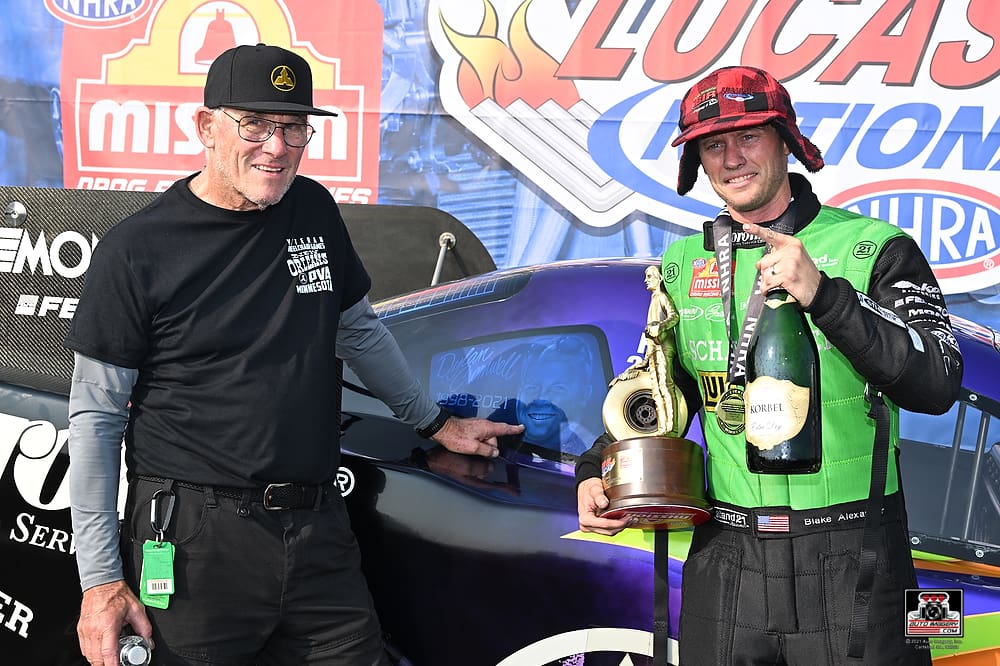
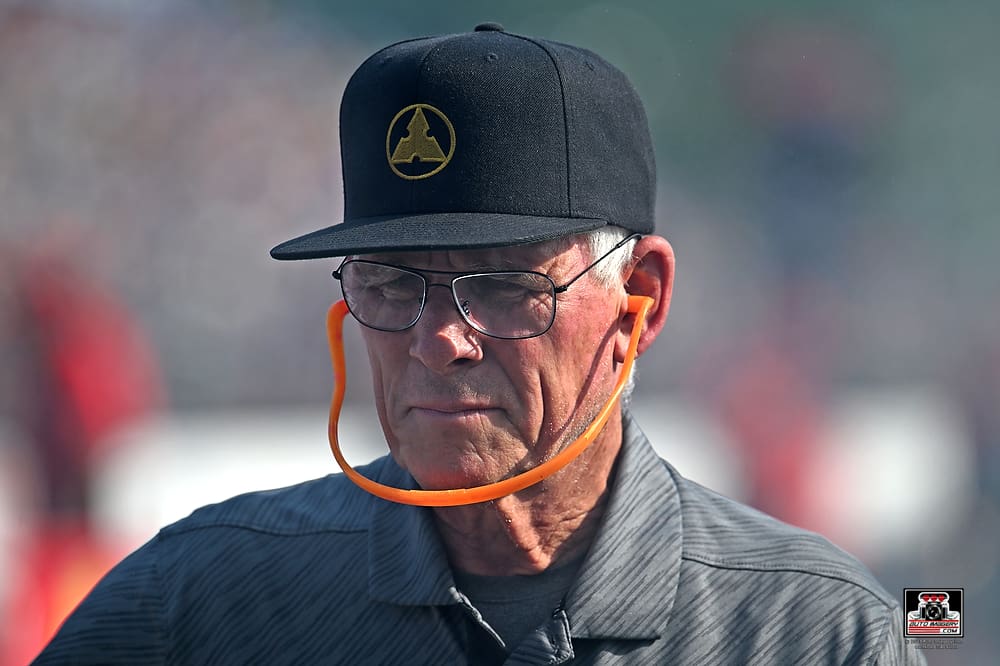
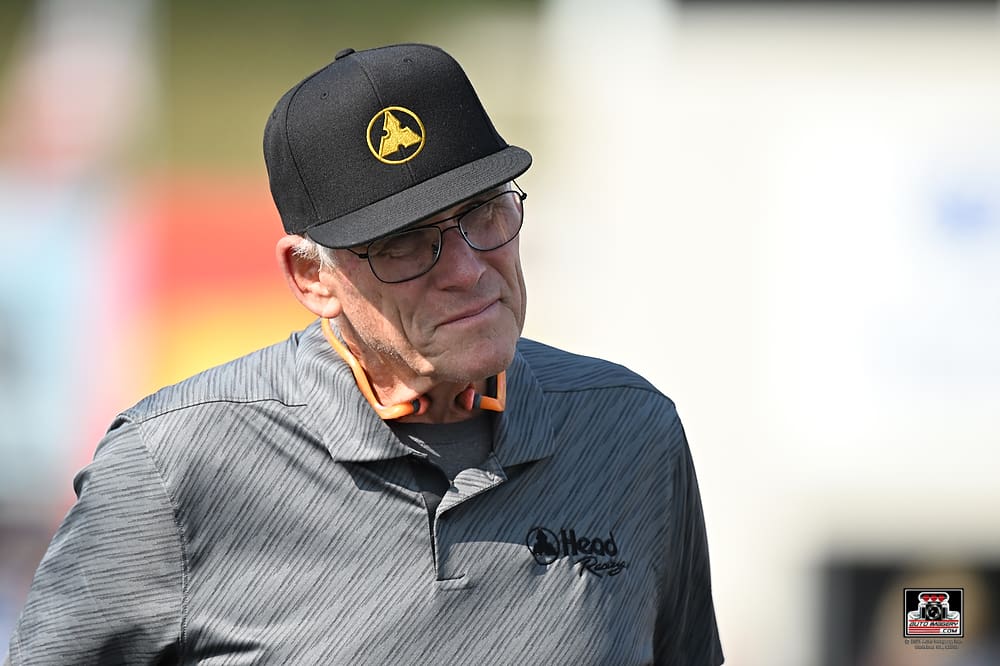
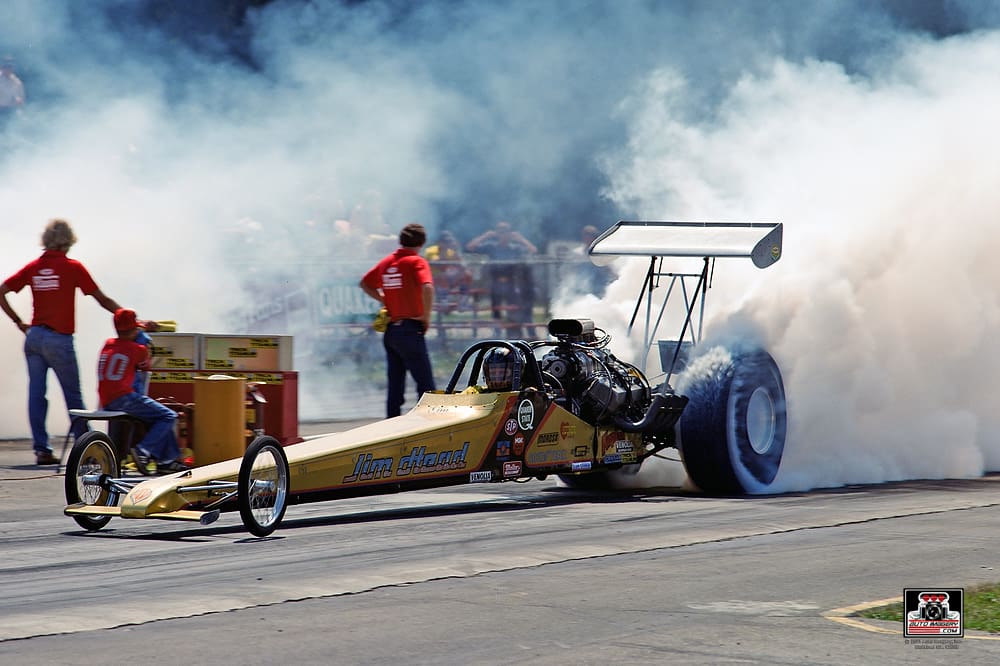
Class of 2024
11 inductees-
2024
Founders Award
 Bill Holland
 is not a typical drag racer; he has been involved in almost every aspect of the sport. His first involvement…
Read bio
Bill Holland
Bill Holland is not a typical drag racer; he has been involved in almost every aspect of the sport. His first involvement…
Read bio
 Class of 2024 · Founders AwardPresented by Wynn’s
Bill Holland
Bill Holland is not a typical drag racer; he has been involved in almost every aspect of the sport. His first involvement began as soon as he received his driver’s license. Bill worked several years as a crew member on a supercharged Chevy-powered MGTD running in Modified Sport class.
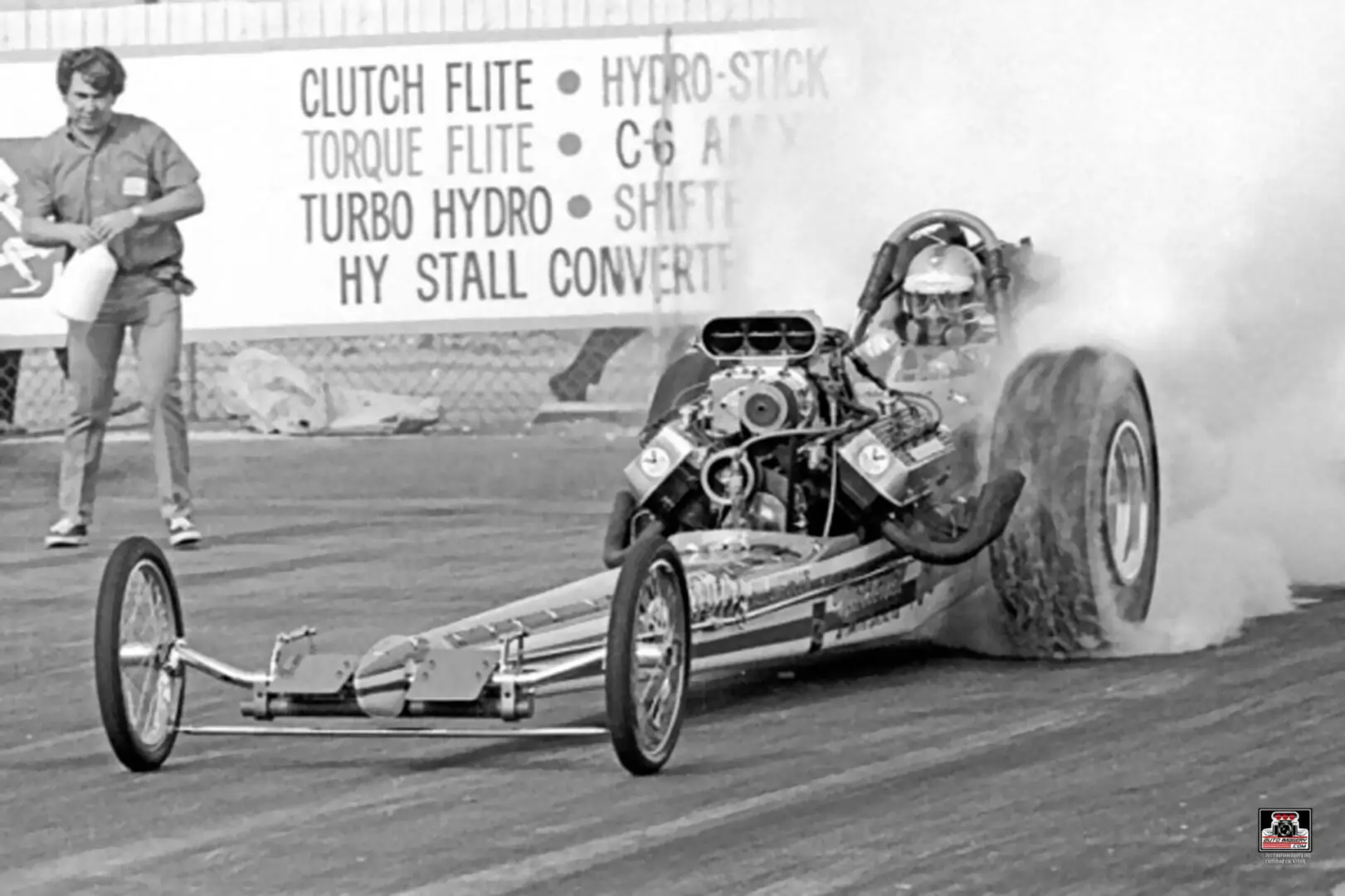
In 1966 Bill won his first trophy as a driver at the wheel of a Chevy powered 1953 Studebaker at the dry lakes. In 1967 Bill became partners in a AA/Fuel dragster with John Guedel, which Tom McEwen drove at the Grand Opening of Orange County Intl. Raceway where it set the track e,t, record and was Top Eliminator runner up. Later that year the car was featured in the fabled Hollywood Santa Claus Lane parade and appeared on worldwide TV. The car was revamped in 1968 and received more national exposure by obtaining sponsorship from Art Linkletter’s House Party TV show. Later on, he and Guedel also operated National Speed Shop in Canoga Park, CA
Bill joined the advertising staff of the Hollywood Citizen-News/Valley Times newspaper in 1968 where he also wrote an automotive column called the “World of Wheels”. In 1969 he moved to the editor’s position at NHRA’s National Dragster (ND) where he remained for the next five years. He left ND in 1974 to form his own advertising and public relations business, Holland Communications, where he created advertising material and logos for companies such as JEGS, Lunati Cams and other notable brands –plus did promotional work for racers including Tom McEwen, Don Prudhomme and “240 Gordie” Bonin. He formed the automotive industry’s first internet resource for disseminating press information to magazine editors, www.Electronic-PR.com, in 1990.
Bill was part of the original committee that created the NHRA California Hot Rod Reunion (CHRR) in 1997 and in 2017 he received the CHRR Lifetime Achievement award. Today Bill is still active, running his Holland Communications advertising/PR business, contributes tech stories to several publications and websites, and attends many racing /industry events.
-
2024
 Garth Hogan
 is a typical/atypical racer. He is typical in that he was interested in cars, speed and involvement at a very…
Read bio · 2 photos
Garth Hogan
Garth Hogan is a typical/atypical racer. He is typical in that he was interested in cars, speed and involvement at a very…
Read bio · 2 photos
 Class of 2024Presented by Wynn’s
Garth Hogan
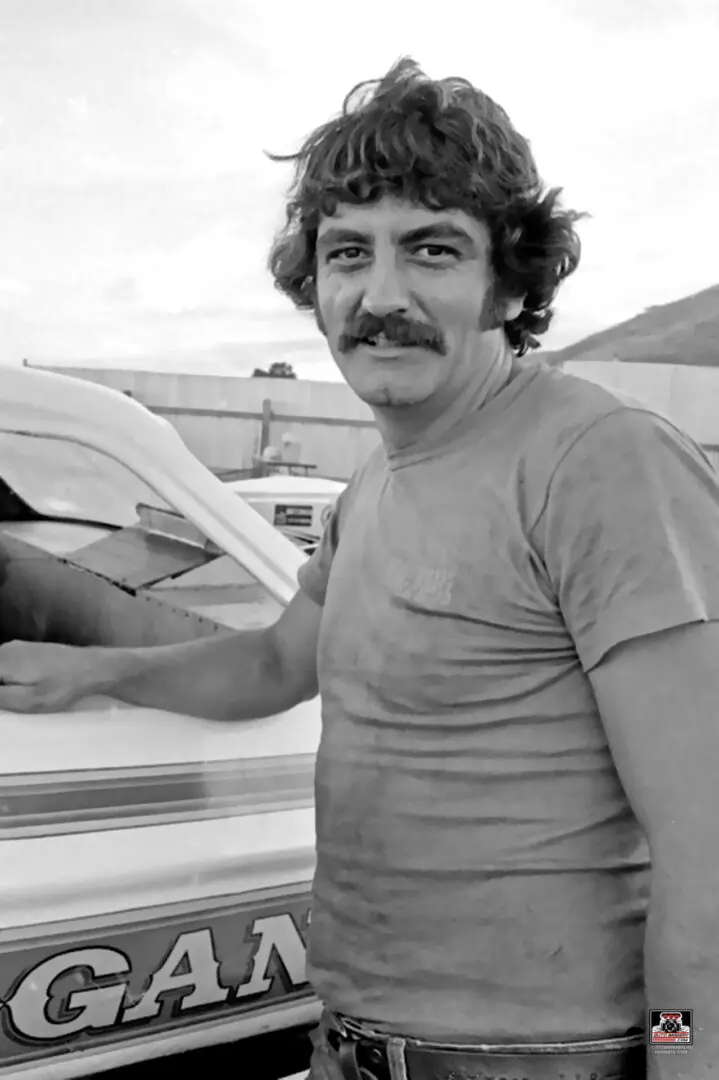
Garth Hogan is a typical/atypical racer. He is typical in that he was interested in cars, speed and involvement at a very young age and couldn’t wait to get his driver’s license when he turned 15. He is atypical in that he has been a drag racer, a dry lakes racer, an oval track racer, owner of a performance equipment wholesale/retail establishment, owner of a racetrack and he is an active airplane pilot (specializing in but not limited to, old Warbird aircraft).
Garth began his drag racing career in an injected, small block Chevrolet powered dragster in 1974. Finding good parts and reliable information in New Zealand has never been easy but when Garth entered the sport it was nearly impossible. Much of his performance information came from publications such as Hot Rod and Car Craft Magazines and a lot was simply trial and error. It was partly because of his efforts to find good, reliable parts that Garth founded his Pioneer Auto Parts business.
Always seeking to go quicker and faster, in 1976 Garth partnered with Grahame Berry in a Ford Capri bodied Fuel Funny car with firstly a 392 and then 426 power in which he became the first New Zealander to run 200mph. In 1982 he moved on to a KB powered Top Fuel dragster. Like all dedicated racers, over the years Garth continued to field new cars with improved and better parts and in 1987 he became one of the first racers outside the U.S. to post a sub-5 second E.T. with a 5.90 E.T. at 238.09 mph. Later that season he ran 5.68 at 242mph which at the time was the quickest time recorded outside America. While Garth worked with and listened to numerous people over the years, but he credits two American’s with providing him with his best and most lasting and helpful advice and friendships early on in his career. One was Venolia Piston Co. owner and top-notch racer, Joe Pisano and the other was Carl Olson, NHRA’s Vice President of International Relations, President of FIA and legendary drag racer.
In 1972 he began importing and selling VHT paints on a part time basis and was successful enough to begin adding other major performance parts brands to his import list as time passed. He took the big plunge of opening his performance parts company, Pioneer Auto Parts the following year and began traveling back and forth between New Zealand and the US buying parts for the store, better parts for his race car and learning more about how to make his equipment better and faster.
To add to his racing activities, in 1988 he purchased and revamped Thunderpark Raceway located near Hastings, New Zealand. To complement and help promote Thunderpark, that same year Garth opened the doors on a new drag racing newspaper, Strip Talk.
In 1994 he expanded his automotive activities to include airplanes, obtaining his pilot’s license and in 1996, his first airplane, a pre–WW2 Tiger Moth biplane followed by a Yak 52 and then a P40 Warhawk. In addition to owning and flying them, in 1998 he founded Pioneer Aero Restorations to restore old war bird planes.
Around the same time, he was also appointed as New Zealand’s representative on the FIA Drag Racing Commission, a position he held for 5 years working closely with Carl Olson who was the Commission’s President
Today, he is retired from racing, has sold his businesses and is enjoying some leisure time attending various automotive and airplane events but along the way he established some enviable records including but not limited to:
Apart from a brief period in 1979 held the outright New Zealand Drag Racing record, bettering it continuously over the years, from 1978 thru to 2007….29 years
Won NZ Top Fuel title 7 times.
Member of the Australian 5 second Club
His XF/BFR Ford Flathead HiBoy Roadster set a new record for the class at Bonneville of 170+mph in 1998 and then raised it during 3 more trips to Bonneville to over 189 mph with a best of 193+mph in 2008.Photo gallery · 2
-
-
2024
 Gary Southern
1938–2023 Gary Southern was one of the most versatile drivers in the sport. He competed in every type of nitro burning car from…
Read bio · 2 photos
Gary Southern
1938–2023 Gary Southern was one of the most versatile drivers in the sport. He competed in every type of nitro burning car from…
Read bio · 2 photos
 Class of 2024Presented by Wynn’s
Gary Southern
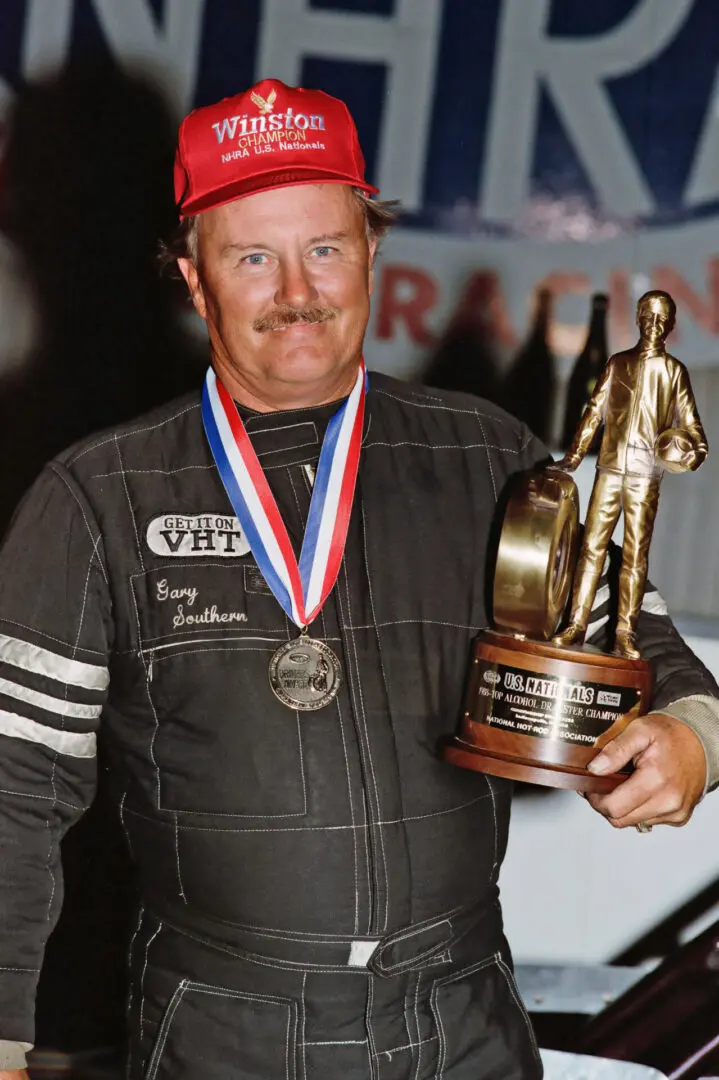
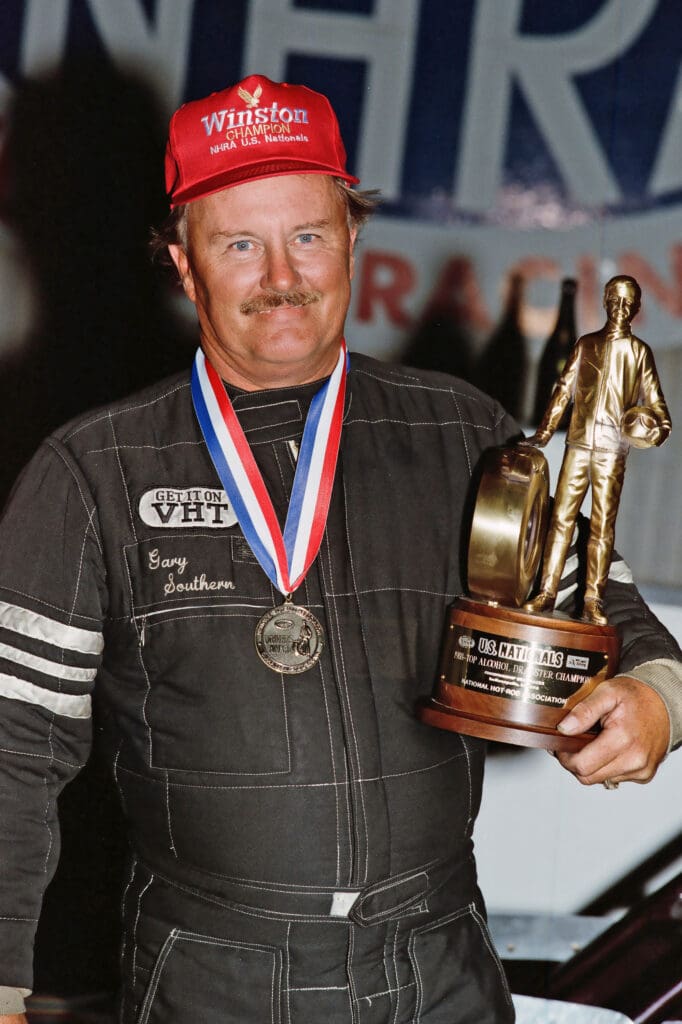
Gary Southern was one of the most versatile drivers in the sport. He competed in every type of nitro burning car from AA/Fuel Altered to AA/Fuel dragsters and included some Alcohol cars along the way. Gary didn’t limit himself to just drag racing either, he was also a stiff competitor in Go Carts often competing in both categories on the same night. During his driving career, he was actually at the controls of more than 75 nitro and alcohol cars which makes him, if not the top person, probably close to the top of having driven the most cars in the sport.
Gary began his driving career in drag racing in 1957 at the wheel of a flathead powered Altered Roadster owned by Will Tice and continued driving up to the late 1990’s. The next year he made his first appearance in a AA/Fuel Dragster and from that time on, he was the “have helmet will drive” person to go to for many teams. Interestingly enough, he started his career in a altered roadster and the last car he drove was a Fuel Altered roadster. Included in the list of people he drove AA/Fuel Dragsters for was Wilton & Doss, Hawkins & Akins, Bob Meyer, and Hippo Bremmer to list just a few. His list of AA/Fuel Funny Cars was just as extensive, just a couple included in this list was John Lindsey’s “Impulse” Vega and Ted Combas Capt. Crazy. He also drove the infamous Akins & Hardcastle Stinger 2 and when NHRA outlawed it because its body was not an American made car, Gary took it on an incredible nationwide tour.
While he was a super competitor, he didn’t limit his skill to just open competition, he a drove a dragster in the 1990 American Express Superbowl commercial featuring Paul Newman, he was the stunt driver at the wheel of the go cart and he also spun the dragster out in the movie Bikini Beach, and he drove the “Coffin” dragster that was featured in one of the Munster TV Shows.
His most prestigious win was at the 1988 NHRA U. S. Nationals in Indianapolis, IN at the wheel of Dale Smarts AA/Alcohol dragster and the pair won the final race at the original Irwindale Raceway track. Gary won Middle eliminator at the Bakersfield March Meet in 1967 in the Stinger 2 prior to its NHRA ban. At age 80+-, he was still competitively driving, this time in Go Karts. In 2019, 2020, 2021, 2022, racing at the Wheel2Wheel Raceway in Victorville CA., he posted 10 wins and came in second in the championships in 2021 and 2022 finishing second to his grandson.
Photo gallery · 2
-
-
2024
 Joe Gibbs
 has brought a lot to the sport, from the publicity he received with his first involvement announcement and scores of…
Read bio
Joe Gibbs
Joe Gibbs has brought a lot to the sport, from the publicity he received with his first involvement announcement and scores of…
Read bio
 Class of 2024Presented by Wynn’s
Joe Gibbs
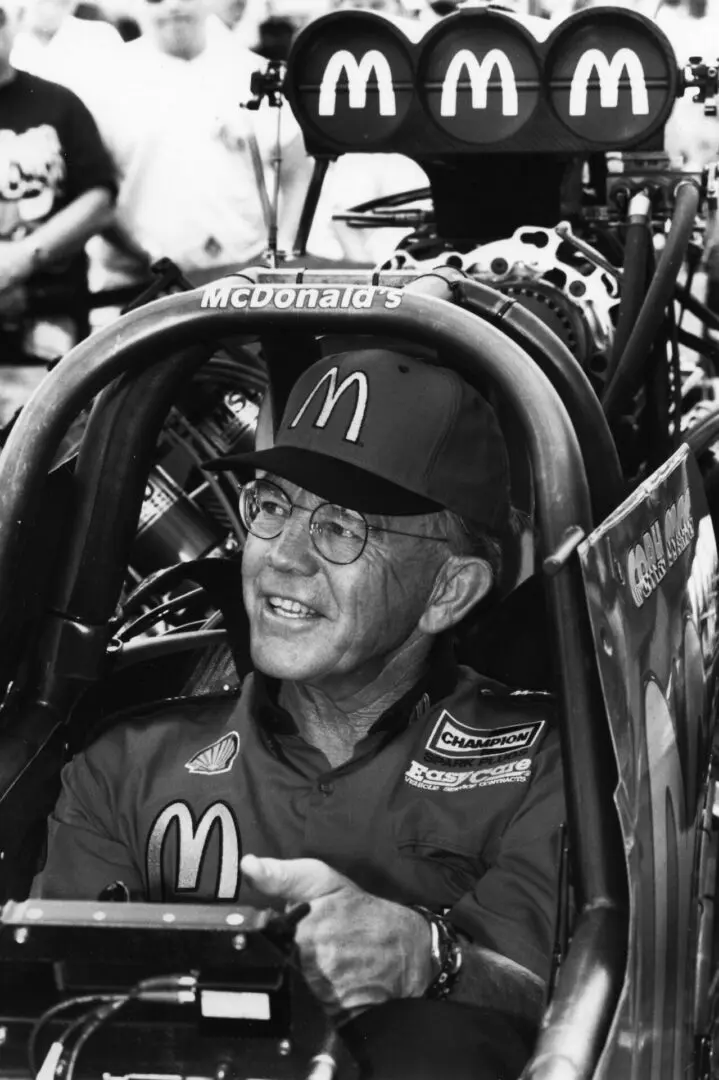
Joe Gibbs has brought a lot to the sport, from the publicity he received with his first involvement announcement and scores of new fans to assisting in bringing non-automotive sponsors into the sport. His first Funny Car with Cruz Pedregon at the wheel featured McDonalds as its sponsor, and notched twenty-one NHRA national event wins along with a NHRA National Funny Car Championship.
Gibbs has often compared a football team and a race car team as being alike, football has a general manager and racing a crew chief, but both outline the “game plan”, set the agenda and handle the day to day duties.
While still in high school and college in Southern California, Joe could also be found on one of the local drag strips, first in his gas coupe and later in a gas dragster. He has stated that the fastest he believes ever went was about 145 mph, he has always loved the sport.
In 1955 after he retired from Pro Football coaching the first time, he founded his Joe Gibbs Drag Racing team and fielded three cars in it, a AA/Funny Car driven by Cruz Pedregon, a AA/Fuel Dragster driven by Cory McClenathan and a Pro Stock Firebird driven by Jim Yates.
Pedregon won Gibbs first NHRA national event at the 1995 NHRA Winternationals in Pomona, CA and followed up later that year with a win at the NHRA U.S. Nationals in Indianapolis, IN. McClenathan posted Gibbs first Fuel Dragster win in 1997 at the NHRA Mile High Nationals in Denver, CO and followed that with a sweep of the famed Western Swing and a win at the NHRA U.S. Nationals in Indianapolis, IN. Yates brought the team 2 NHRA Pro Stock Championships in 1996 and 1997. Over the span of the next six years, the team posted a total of thirty-three NHRA National Event wins. In 2000, Joe withdrew from drag racing participation to concentrate on his NASCAR involvement. However, his past association with drag racing continues to draw new fan attention.
In addition to his involvement with Pro Football, Drag Racing and NASCAR, in 1992 Joe branched out into motorcycle racing forming the JGRMX team to compete in AMA motocross and supercross championships.
Adding to these accomplishments, in 1992, Gibbs co-authored Fourth and One, and in 2003 he co-authored Racing to Win, with both books resembling a business, life how-to and motivational guide based upon his own career.Joe Gibbs list of honors is also quite impressive and its range is one-of-a-kind:
NFL Superbowl champion 1992, 1987 and 1991
NFL Coach of the Year 1982 and 1983
NFL 100 All-Time Team
NASCAR Cup Series Championship five times
NASCAR Xfinity Series Championship four times
Pro Football Hall of Fame 1996
Washington Ring of Fame
NASCAR Hall of Fame 2020 -
2024
 Pamela (Pam) Hardly
 is better known as Jungle Pam from her years as Jungle Jim Leiberman’s “back up girl”. Pam is considered…
Read bio · 2 photos
Pamela (Pam) Hardly
Pamela (Pam) Hardly is better known as Jungle Pam from her years as Jungle Jim Leiberman’s “back up girl”. Pam is considered…
Read bio · 2 photos
 Class of 2024Presented by Wynn’s
Pamela (Pam) Hardly
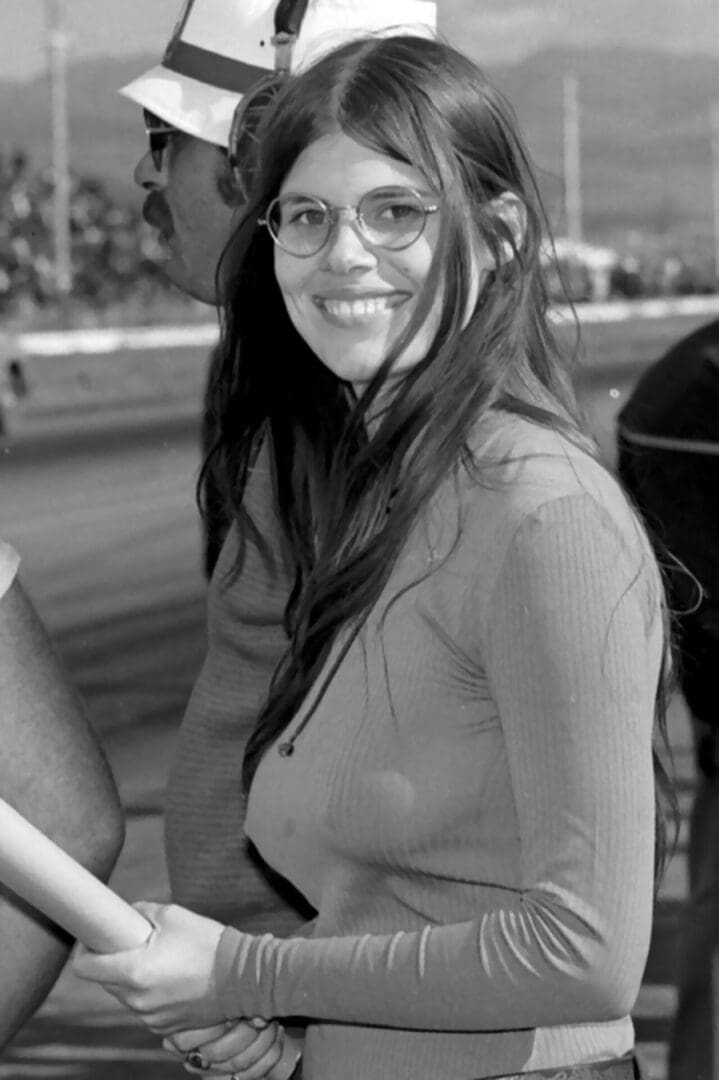
Pamela (Pam) Hardly is better known as Jungle Pam from her years as Jungle Jim Leiberman’s “back up girl”. Pam is considered by most racers and spectators to be the original back up girl and much like Linda Vaughn who set the standards for bringing lasting attention to the sport, she proved that great looking ladies in colorful costumes add greatly to the “on track” show.
When Jim first met Pam, he already had a reputation as a real showman, making fiery burn outs, 100 mph backups and even full-track wheel stands. Jim met Pam when he saw her walking down the sidewalk and stopped to talk to her and ultimately offered her an opportunity to join him on tour. The pair added greatly to Jim’s “showman” title when Pam accepted his offer and became his back up girl. Dressing in her “patented” short-cut off-jeans and braless halter top, Pam was also responsible for presenting the sport with a sexy but wholesome image and generated a lot of interest from new fans that still exists today.
Unlike many of the later “back up girls”, Pam was also part of the crew. She often packed the parachute, added the water and oil after each run and learned quickly how to check for oil and water leaks. Unfortunately, Jim died in a car crash in 1977 and Pam backed away from any active race participation.
Photo gallery · 2
-
-
2024
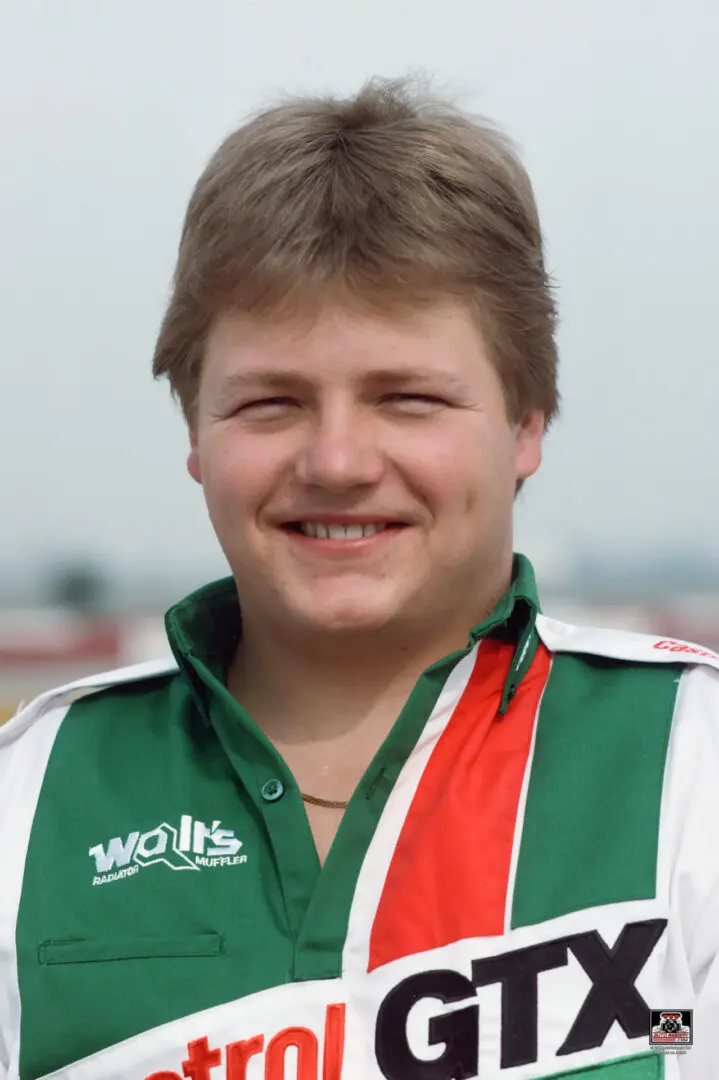 Pat Austin
’s dad Walt was a successful drag racer, so Pat came into this world under a strong influence to become involved…
Read bio · 2 photos
Pat Austin
Pat Austin’s dad Walt was a successful drag racer, so Pat came into this world under a strong influence to become involved…
Read bio · 2 photos
 Class of 2024Presented by Wynn’s
Pat Austin
Pat Austin’s dad Walt was a successful drag racer, so Pat came into this world under a strong influence to become involved in the sport. In 1971 at the age of seven, he and his brother Mike, age eight, were in the garage helping Walt wash parts and prepare his twin engine gas dragster for the next weekend. That year, Pat made his first photo appearance in the winner’s circle when the family won the NHRA FallNationals AA/Gas Dragster class.
In 1980, at the ripe old age of 16, Pat built and drove his first race car, a 1955 Chevy with a modified 350 Chevy for power. While he was satisfied with the car’s overall performance, it wasn’t quick and fast enough for him so in 1982 he installed the engine out of the ’55 into a rear engine econorail dragster and promptly won the first two races he entered it in.
Once again, while happy with the econorail’s performance, Pat was ready to move up to another class, so he sold it and began working with Walt who was racing a AA/Alcohol Funny car. By this time Pat had graduated from high school and was working for his dad who owned an automotive service company, learning how to operate a business and learning more about being a successful racer. He was also itching to drive his dad’s Funny Car and, since Walt had purchased a second funny that was in pieces, he told Pat he could drive it if he put it back together. It only took Pat four days to have it ready to run and two weeks later Pat was licensed in the “spare” AA/Alcohol Funny car. This was the beginning of team Walt Austin Racing (WAR) and the start of a new drag racing legacy.
WAR posted its first NHRA AA/Alcohol Funny Car class event win at the 1986 Baton Rouge, LA Cajun Nationals, followed by a win at the NHRA Springnationals in Houston, TX, and the beginning of a career total of 75 NHRA National events. The following year WAR became a member of the six-car, six-class Castrol GTX Superteam of, Gary Ormsby, John Force, Larry Morgan, Bill Barney, Pat Austin, and David Nickens and won its first of four NHRA World Championships.
In 1991, WAR purchased Gary Ormsby’s AA/Fuel Dragster and Pat took over the driving chores in it. The teams first win in this class came at the NHRA Nationals in Topeka, KS where he won both AA/Fuel dragster and AA/Alcohol Funny Car classes. Pat went on to post a total of five NHRA AA/Fuel Dragster class wins to join his 75 AA/Alcohol Funny Car class wins. Of all of these wins, Pat cherished his NHRA AA/Alcohol Allstar wins in 1987, 1988 and 1989 most because they were always on Father’s Day, and he could present the trophy to Walt to celebrate it.
Pat was also inducted into the Car Craft Magazine All Star Team for an unprecedented five consecutive years, 1987, 1988, 1989, 1990 and 1991.
Adding to the many WAR wins and honors, it is only one of two fathers and sons to be inducted into the International Drag Racing Hall of Fame honor. Walt and Pat Austin and Connie and Scott Kalitta now have that honor.
Photo gallery · 2
-
-
2024
 Rickey Smith
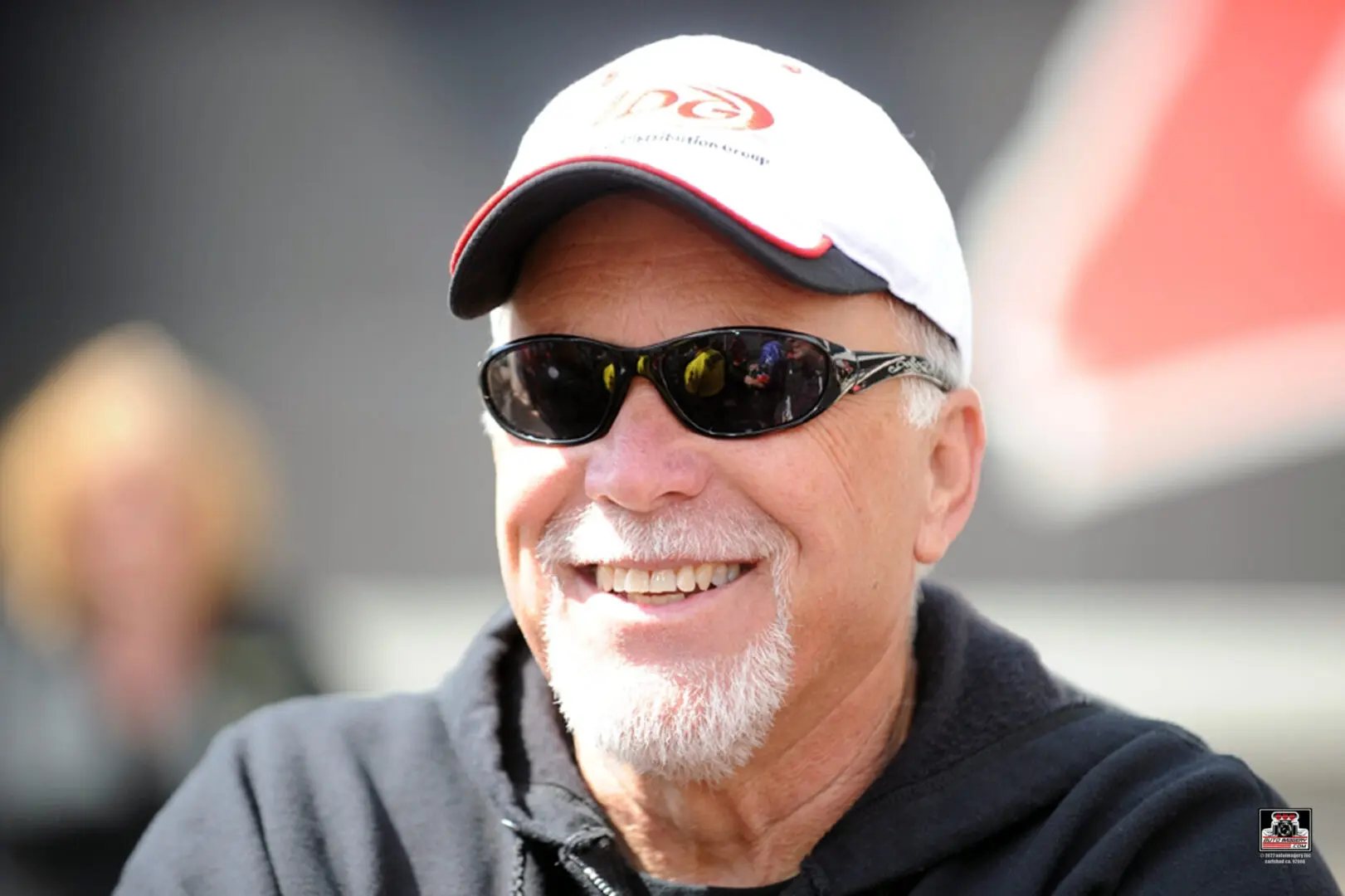
Rickie Smith was an all-star athlete in high school with college scholarship offers waiting for him upon graduation. However, his love and…
Read bio · 2 photos
Rickey Smith
Rickie Smith was an all-star athlete in high school with college scholarship offers waiting for him upon graduation. However, his love and…
Read bio · 2 photos
 Class of 2024Presented by Wynn’s
Rickey Smith
Rickie Smith was an all-star athlete in high school with college scholarship offers waiting for him upon graduation. However, his love and fascination with racing was stronger so in 1973 he began his drag racing career in a Chevy powered Nova. From that day on, he has been a winner in multiple classes and Associations.
Driving a Jack Roush powered Ford, Rickie notched his first IHRA Super Modified Championship in 1976 and his second one the following year. In 1979 he switched classes and in 1982 won his first of five IHRA Pro Stock World Championships. He also won consecutive IHRA Pro Stock World Championships in 1986, 1987, 1988 and 1989. He dabbled in the oval track world part time in 1988 at the wheel of a NASCAR Busch Grand National car while still racing in IHRA Pro Stock.
Rickie began competing in NHRA events in 1990, making his first NHRA Pro Stock winner circle appearance in 1993 at Sears Point Raceway in Sonoma, CA. In 1996 he teamed up with Troy Humphrey in a Pontiac Firebird Pro Stock car and finished the year fifth in the NHRA standings. Halfway through the 1997 season he moved back to his IHRA roots in its Pro Modified class where he would finish third in the Championship points race.
In 1999 he was able to claim another NHRA Pro Stock win at the NHRA Supernationals in Houston, TX. For the next three years Rickie moved back and forth between IHRA in a Pro Modified car and NHRA in a Pro Stock car but when NHRA announced it would be hosting a Pro Modified class beginning in 2001 he not only moved over into that class, he also won NHRA’s first ever Pro Modified event.
Smith competed in Pro Modified on a limited basis in 2002 and 2003 but was able to post wins both years at the prestigious NHRA U.S. Nationals in Indianapolis, IN. He returned to the IHRA circuit again in 2006, this time in a Pro Stock Cobalt. Proving he was still a force to be reckoned with, he won his first return visit to the class. Along with finishing tenth in the IHRA Pro Stock Championship Points race his first year back, in 2007 he was named IHRA’s No. 1 Mountain Motor Racer of All Time and he captured its Pro Stock Tuner Challenge Award. In 2009, Rickie was inducted into the Bristol Motorsports Hall of Fame and also into its 220 MPH Club.
In 2010 Rickie was inducted into the North Carolina Drag Racing Hall of Fame. That same year, he added an additional class to his competition list, IHRA’s Nitrous Pro Modified class and he added another Association to his list, the American Drag Racing League where led its Championship Points race most of the season. 2014 was another good year for him where he won three NHRA Pro Mod Series races and his second Pro Mod Championship.
The years leading up to 2023 have proven to be very successful for Rickie with him posting numerous wins in Pro Mod. In 2016 he won a third NHRA Championship in the class and was able to lead the points from start to finish that year. Adding to his various Association wins and honors, in 2015 he competed on the PDRA circuit and won its class Championship. In 2023, Smith cut back and only ran three NHRA National events but ran a full season in PDRA finishing fourth in the class.
Even after suffering through serious back surgery and having to step out of the driver’s seat for part of a couple of seasons, Rickie has maintained his winning ways both as a crew chief and back in the driver’s seat notching class wins every year.
Adding to his other firsts, in 2013 his son Matt became the NHRA Pro Stock Motorcycle Champion and Rickie won the NHRA Pro Mod Championship, making them the first father/son Class Championship winners.
Photo gallery · 2
-
-
2024
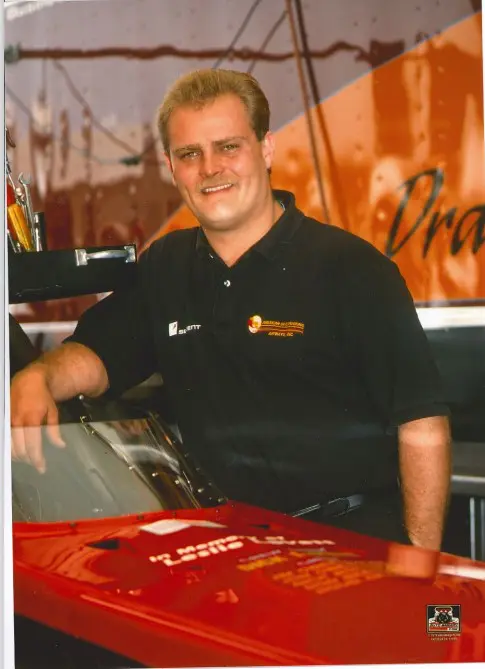 Scott Kalitta
1962–2008 “Scott was a larger-than-life character.” “He was a big brother, a mentor and a best friend rolled up in one.” “He had…
Read bio · 2 photos
Class of 2024Presented by Wynn’s
Scott Kalitta
1962–2008 “Scott was a larger-than-life character.” “He was a big brother, a mentor and a best friend rolled up in one.” “He had…
Read bio · 2 photos
Class of 2024Presented by Wynn’sScott Kalitta
“Scott was a larger-than-life character.”
“He was a big brother, a mentor and a best friend rolled up in one.”
“He had a big, big heart.”
“He was a practical joker; he messed with everyone.”
“If you were loyal to him, he was 10 times more loyal to you.”
“He’s the baddest-ass racer I’ve ever known.”Those are just a few of the ways some of the people who knew Scott Kalitta best describe him today. Whether it was fighting to win races and championships, giving friends from other teams a race car after they crashed their own or flying his team to California for a funeral in 1996, the son of NHRA legend Connie Kalitta was by all accounts, an amazing person.
Scott Kalitta won the NHRA Top Fuel championship in 1994 and ’95 and is one of only 18 drivers to win races in both Top Fuel and Funny Car. After Kalitta Motorsports resumed operation following a brief shutdown, the team hired Dick LaHaie in 1992 as Kalitta’s crew chief and brought back the core team members to run his Top Fuel car.
After finishing second in the final season standings in 1993, Kalitta became the first Top Fuel driver to win four-straight races in 1994 reaching the winner’s circle at Columbus, Ohio, Topeka, Kan., Denver and Sonoma, Calif. He won five races that season on the way to his first NHRA Top Fuel title. The next season, he won six races and his second-consecutive season championship and followed the championships with a runner-up finish in 1996. That was the first and second in four seasons. Not bad.
Although he made his mark in Top Fuel, his first win came in the Kalitta Flying Service Funny Car in 1989. It was a win for the ages that showed the kind of driver and competitor Scott Kalitta was.
“Scott was very competitive; he wanted to win races,” teammate Jim Oberhofer remembered. “Early on, you could see his struggle with that. In the old days, it was show up at the racetrack, and the thought mentality of the crew was like, ‘we hope we can qualify’, getting to the second round was like winning a race. Anything further than that was amazing. We always thought, ‘Scott will win a race when hell freezes over.’”
In Houston in 1989, it almost did. The race was snowed out. When they raced the next weekend, the Kalitta Flying Service Funny Car nearly hit the wall after dropping a cylinder in the final round, but Kalitta came from behind to defeat Bruce Larson and claim the first of his 11 race wins.
“Scott was an old-school racer,” Oberhofer continued. “He was an interesting mix because you have the guys who were the foundation of drag racing like Don Garlits and Connie, The Greek (Chris Karamesines) and all these guys. And then somewhere in the middle falls Scott. I think he was very under-appreciated as a legend of the sport.”
It wasn’t all about the competition, though; Kalitta was a practical joker and a generous soul. When a friend’s team wrecked its only car, Kalitta didn’t loan them a car, he gave them a car.When Scott met Kathy, whom he would later marry, family became his focus. Despite all the racing accolades, the fun, friends, and frivolity, being a good husband to Kathy and a good father for Corey and Colin was more important to Kalitta than anything else.
“As good a race car driver as he wanted to be, he wanted to be the best father ever, and he worked hard at that,” Oberhofer said. “I give him tremendous credit for how hard he worked at that. He was an awesome dad, an awesome husband, and an awesome son.”
Scott Kalitta – a two-time champion, a larger-than-life big brother, mentor, best friend, practical joker, and bad-ass racer with a big, big heart is now rightfully a member of the International Drag Racing Hall of Fame. Connie and Scott Kalitta join Walt and Pat Austin as the hall’s only two father-son inductee pairs.Photo gallery · 2
-
-
2024
Pat Garlits Memorial Award
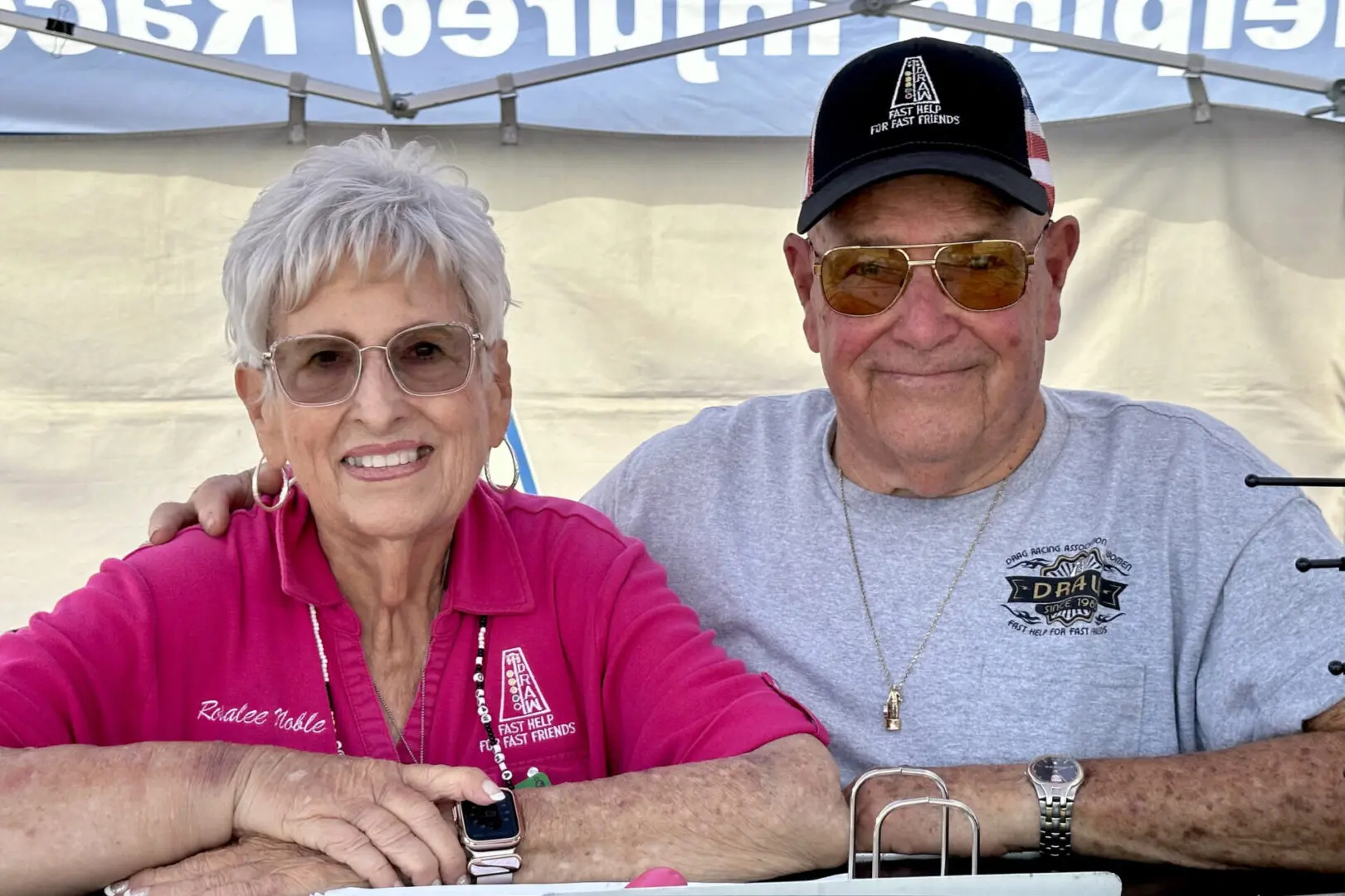 Terry and Rosalee Noble
 are typical of a lot of drag race families, just not quite as well known. They got started…
Read bio
Terry and Rosalee Noble
Terry and Rosalee Noble are typical of a lot of drag race families, just not quite as well known. They got started…
Read bio
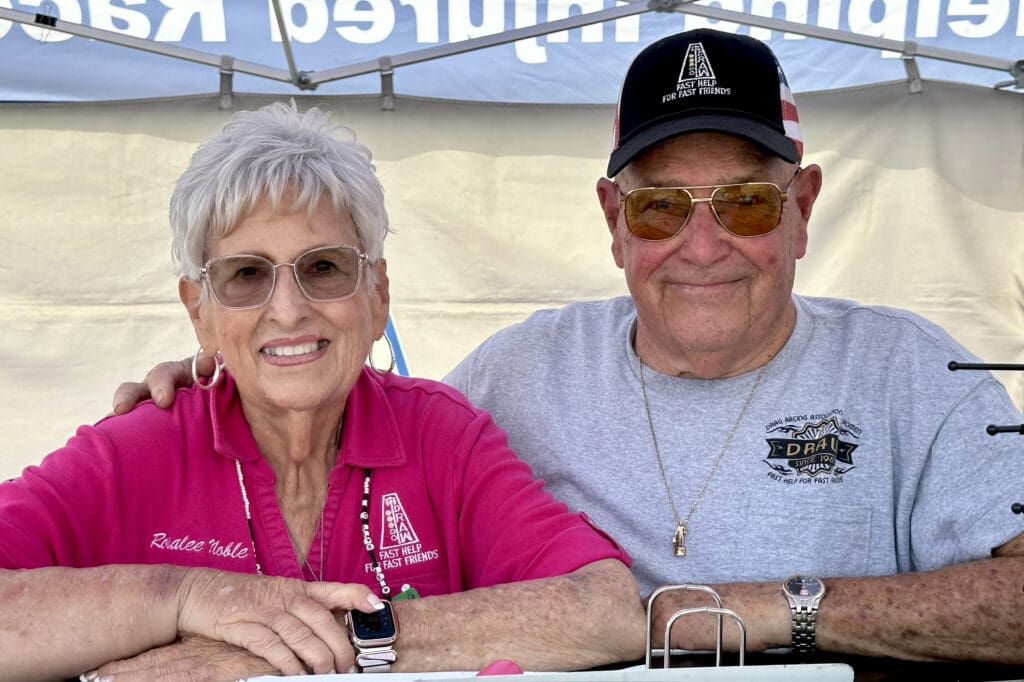 Class of 2024 · Pat Garlits Memorial AwardPresented by Wynn’s
Terry and Rosalee Noble
Terry and Rosalee Noble are typical of a lot of drag race families, just not quite as well known. They got started in the sport in 1966 when their local drag strip, Coles County Raceway opened its doors. The couple were a common sight at the track, helping both the track owners and the racers when and where they were needed. Unfortunately, the track closed its doors in 1968 so Terry and Rosalee stepped away from the sport and spent the next few years building a home and raising their two sons.
In 1985 they were looking at a way to become involved in drag racing again and at the same time contribute to help improve it. The result of their quest was to join on a part time basis, The Drag Racing Association of Women (DRAW) which had been formed the prior year. The mission of the non-profit association was/is to provide financial and emotional support to individuals involved in drag racing accidents at the track. DRAW’s members has included the wives of some of the sport’s most well-known competitors including Gere Amato, Holly Beadle, Etta Glidden, Lynn Prudhomme and Pat Garlits to name a few. In 1998 they were both retired so they became full time DRAW workers, working at the local tracks and traveling to national events to work the associations booth. Their duties at DRAW have had Rosalee serving as its secretary, working on its newsletter, serving as vice president and eventually as its president. In 1995 she assumed the position of fundraising chairman, a position she still holds today. Terry has stayed busy working the track booth at national events, selling DRAW “goodies” and maintaining all of the inventory, while attending as many as 25 events per year.
Not content to just spectate, in 1991 they debuted their 1982 Buick LeSabre station wagon, dubbed “Care Wagon” at Coles County Raceway. Since that initial outing, they have visited the winners’ stage many times and posted a couple of track championships along the way. In addition to competing with the Buick, as its name suggests, it is used to help bring attention to DRAW and its purpose.
In 2020 Rosalee was inducted into the Coles County Dragway Hall of Fame. In addition to their racing and DRAW involvement, Terry and Rosalee are also very involved in helping find homes and care for stray animals, especially dogs.
-
2024
 Walt Austin
1938–2023 For his 16th birthday, Walt’s dad got him first car, a 1937 Chevrolet Coupe which Walt promptly installed a 455 Oldsmobile in…
Read bio
Class of 2024Presented by Wynn’s
Walt Austin
1938–2023 For his 16th birthday, Walt’s dad got him first car, a 1937 Chevrolet Coupe which Walt promptly installed a 455 Oldsmobile in…
Read bio
Class of 2024Presented by Wynn’sWalt Austin
For his 16th birthday, Walt’s dad got him first car, a 1937 Chevrolet Coupe which Walt promptly installed a 455 Oldsmobile in for power and a Pontiac rear end to accept the power. From its distinctive sound, he garnered a bit of neighborhood fame but a year later, becoming more serious about racing, he swapped the ’37 for a 1936 Chevy Coupe but kept the Olds engine and installed it in the ’36. Before long he began modifying the Olds engine, his first one, the addition of six carburetors. At about this same time he also began racing in A/Gas class, winning his first couple of races.
In 1957, Walt teamed up with Bruce Cole who owned a rear engine chassis and swapped the Olds engine from the Chevy into the dragster and the pair never lost a single race. Living in Tacoma, WA with considerable technical knowledge, in 1960 at only age 22, Walt was appointed Technical Director of the Tacoma Timing Association.
Walt continued searching for better and faster equipment and in 1961 he teamed up with Gene Olson in a Ally-Opp 1928 Ford roadster with the Olds engine, now equipped with a front-mount supercharger, for power. Unfortunately, something in the front end of the roadster broke during a run and the car was totaled. In 1962 Walt had chassis builder, Dave Jeffers build him a front engine dragster chassis for which he built and installed his first 392 Chrysler Hemi engine on gas. With Walt building and tuning and Jeffers driving, the pair posted 50 straight round wins that year alone.
When his dad passed away in 1962, Walt, at age 24, put racing on hold to take over the job of successfully running and growing his dad’s automotive service business. His retirement ended in 1971 when he built a AA/Gas Dragster powered by twin supercharged Chrysler Hemi engines. This combination proved to be a real winner, posting 350 AA/Gas class wins along with setting and resetting the NHRA class record six times and winning the NHRA Division 6 class Championship.
Around 2000, Walt broke the popular Chrysler – Chevy engine mold and teamed with John Rodeck to produce a unique, Ford based Top Alcohol engine. Unfortunately, NHRA outlawed it before it even reached the racetrack, so he returned to the Chrysler Hemi for his Funny Car. However, Walt’s idea proved its merit 20 years later when his grandson, Drew, introduced it for power in the A/fuel dragster and then moving to nostalgia Funny Car (N/FC) Car he was competing in the NHRA Hot Rod Heritage Racing Series with.
Retirement from racing came again in 1972 when he stopped racing to focus on building his automotive service business and coaching his sons in football. Adding to his winning record, the football teams coached by Walt only lost one game over the next five years.
Walt un-retired again in 1985, to go racing with a AA/Alcohol Funny Car. With sons Pat and Mike now totally involved in racing, in 1986 he founded Walt Austin Racing (WAR) and concentrated on building and maintaining the teams AA/Alcohol Funny Car and wracking up a win record of 75 NHRA national class wins.
Included in Walt’s honor list is:
AM/Roadster 1320 record holder
2-time NHRA Division 6 Top Gas Champion
1969 Wynns Oil Top Mechanic award
1969 AA/Gas Champion NHRA WinterNationals, Dave Grassi, owner/driver, Walt Crew Chief/Tuner
World’s winningest Sportsman Crew Chief, 1987 and 1998
Northwest Funny Car 6 race series Championship 1984Walt and Pat are one of two fathers and sons to be inducted into the International Drag Racing Hall of Fame honor. Walt and Pat Austin and Connie and Scott Kalitta now have that honor.
-
2024
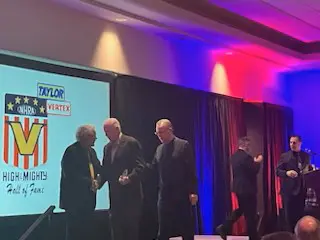 Walt Barbin
In his early teens, Walt was really into baseball but around his 13th birthday he started hanging around with some older guys…
Read bio
Class of 2024Presented by Wynn’s
Walt Barbin
In his early teens, Walt was really into baseball but around his 13th birthday he started hanging around with some older guys…
Read bio
Class of 2024Presented by Wynn’sWalt Barbin
In his early teens, Walt was really into baseball but around his 13th birthday he started hanging around with some older guys that were into hot rods and racing and he quickly became hooked along with them. His first car was a 1936 Ford convertible that he installed an Oldsmobile engine in. In 1954 a drag strip was opened on an abandoned airstrip not far from where he lived, and he was able to start getting serious about racing and building better equipment.
By 1958 he had added a supercharger for more power however, it used V Belts to drive it and the belts wouldn’t stay on during a run. Also, by this time Walt had purchased a Curry lathe and was doing machine work for a living. His lathe used a Gilmore type belt system and one day while he was changing its drive speed, he got the idea to try this belt system for the supercharger drive system. He made pulleys that matched the belt, installed them and it worked. Walt has always been into problem solving but he never became involved in marketing his inventions but, was okay with others copying them so before long his Gilmore System was on the market by other manufacturers.
Walt moved from the ’36 Ford to a Hemi Chrysler powered Fuel dragster in ______ and began applying his talent for developing new and improved parts for this class. At this time, a lot of effort was being made by the camshaft manufacturers that included roller tappet lifters. The lifters worked okay but the push rods started bending and other problems developed in the valve system. Always working to eliminate a problem, Walt redesigned the rocker arms being used and soon all the cam manufacturers were using his design for their units.
In 1963 Walt opened his own speed shop that was equipped with a complete machine shop. He was also still running his AA/Fuel dragster and learning more ways to improve its horsepower output. About this time, he realized the engines needed more air but the superchargers couldn’t put out more air without scuffing. One day while cooking with a Teflon coated frying pan he got the idea to try coating the impellers with Teflon to stop the scuffing which worked. However, the Teflon would not adhere to the impellers if there was any oil on them, so he tried inserting Teflon strips in them and more, he introduced an improvement that was soon being copied by the other manufacturers.
Each time he reassembled his dragster he would push start it on the street to fire it and “dial it in”. Unfortunately, the local cops didn’t believe that was a good idea, so they told him to stop it. This led to Walts’ next big contribution to improving the sport, a starter system. He had a friend that was involved in Indy Car racing and when Walt saw him use a crank starter to fire it, he immediately went to work designing one for drag cars. The Fuel Dragster guys and the racetracks liked having the cars push start in front of the spectators so it didn’t receive much acceptance there but the Funny Car racers liked the starter idea. His first customer was Jungle Jim Liberman who touted it, and the rest is history.

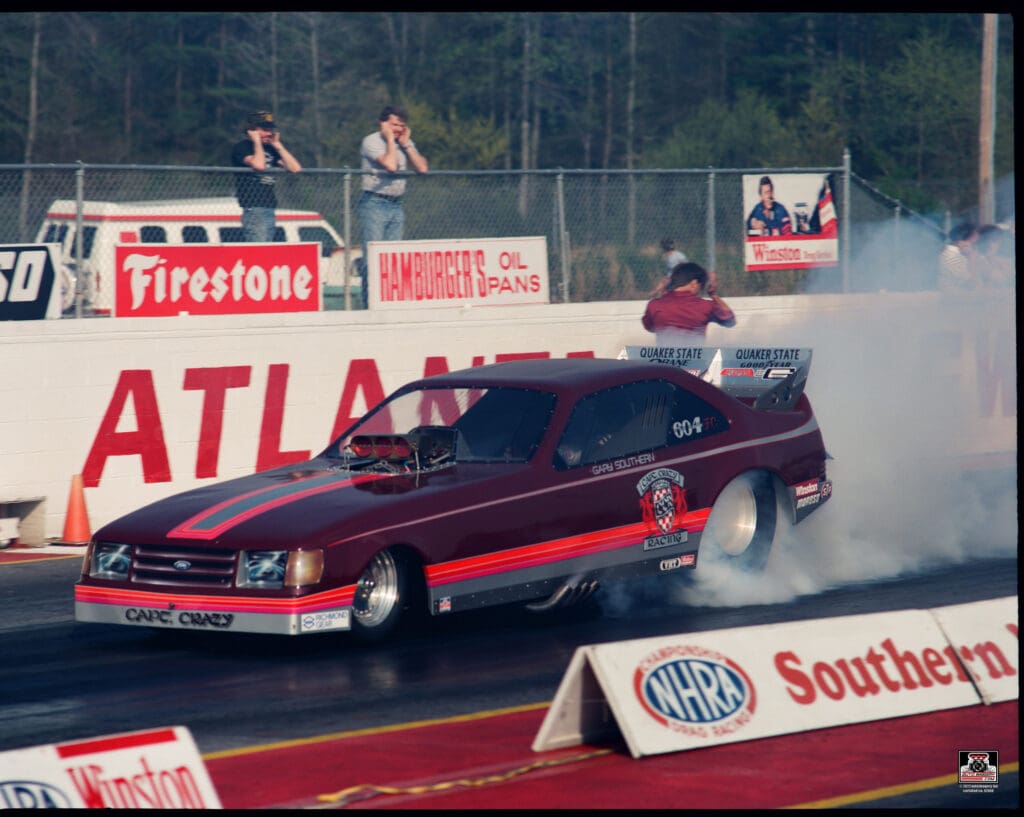
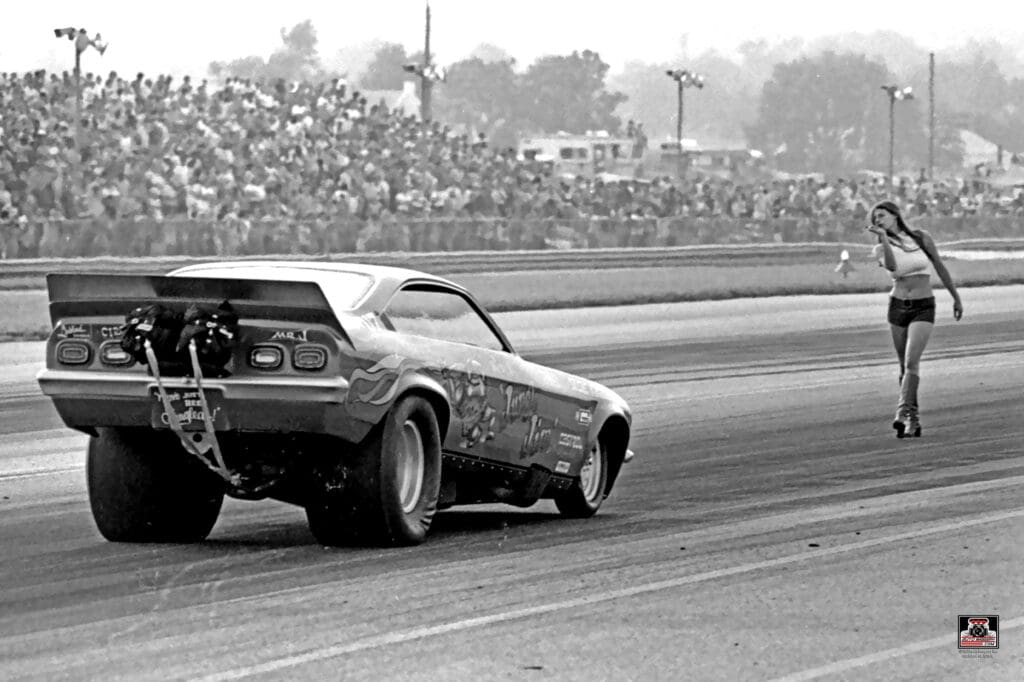
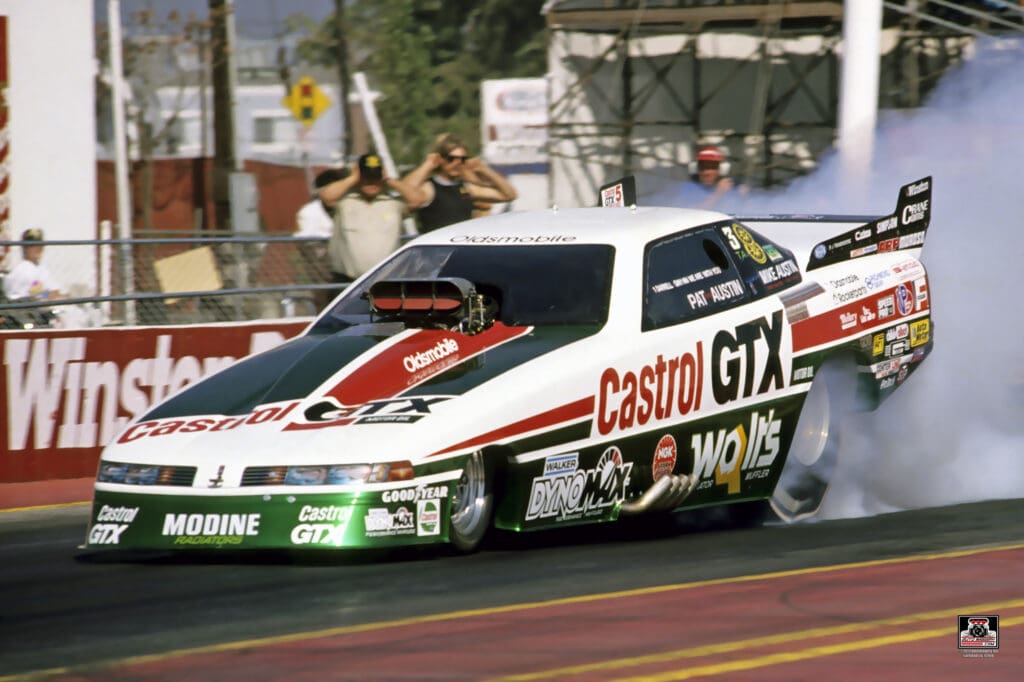
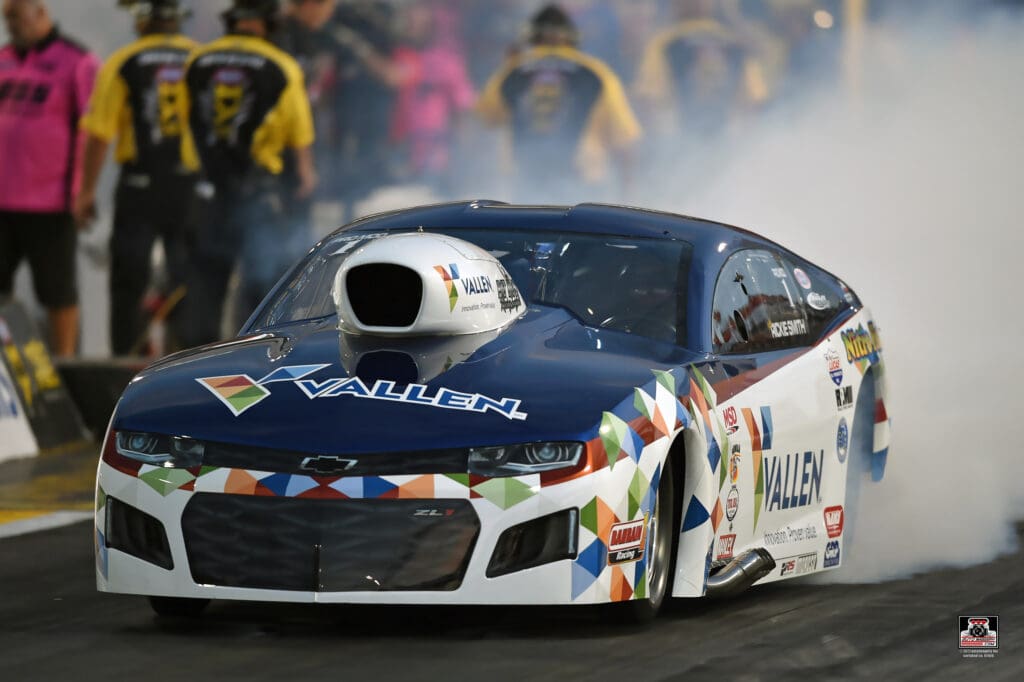
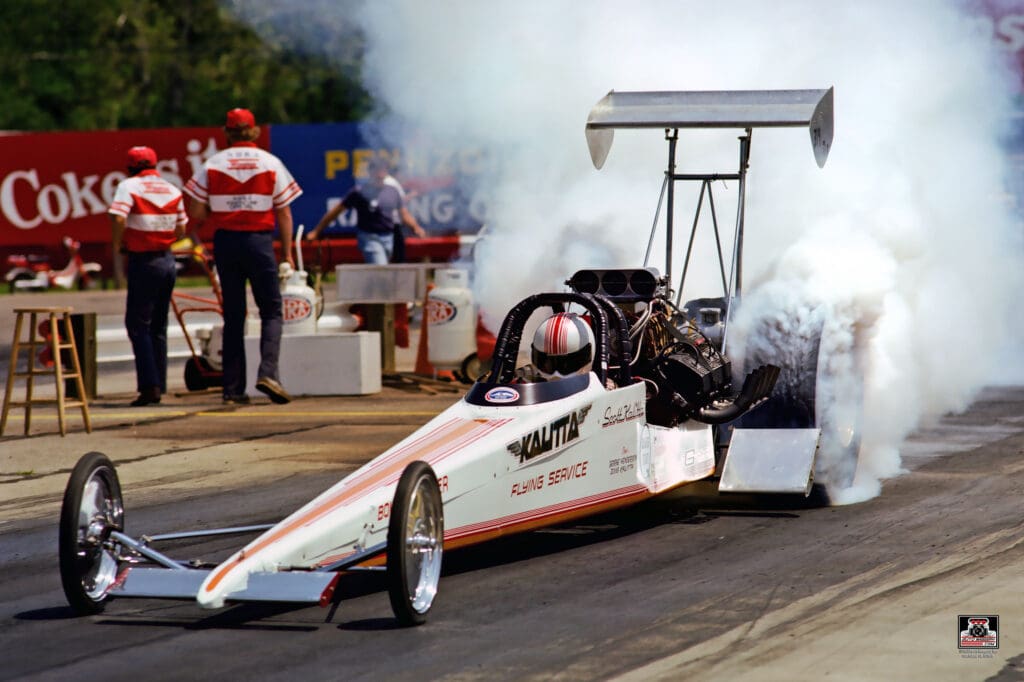
Class of 2023
8 inductees-
2023
Founders Award
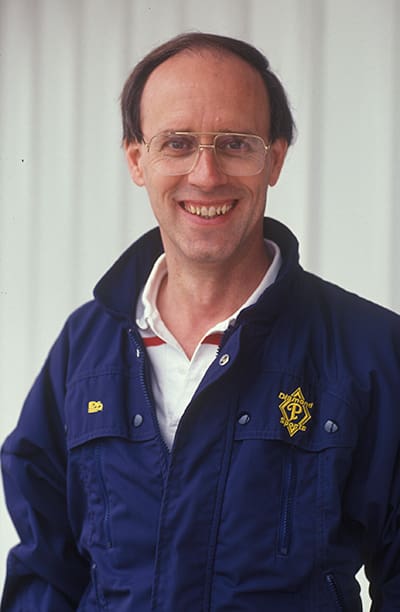 Bob Frey
 parlayed his enthusiasm for automobiles and drag racing into an outstanding career as a journalist, an event announcer and a…
Read bio
Class of 2023 · Founders Award
Bob Frey
Bob Frey parlayed his enthusiasm for automobiles and drag racing into an outstanding career as a journalist, an event announcer and a…
Read bio
Class of 2023 · Founders AwardBob Frey
Bob Frey parlayed his enthusiasm for automobiles and drag racing into an outstanding career as a journalist, an event announcer and a master of ceremonies. Bob was a member of the U.S.Air Force in 1965 but he didn’t let that keep him from his first job as a event announcer when he took the position at Atco Dragway in New Jersey in 1996. From that position, Bob began announcing NHRA divisional races in 1967 then moving over to IHRA in 1972 to announce its events through 1981.
In 1972 the first Pro National Challenge race, spearheaded by Don Garlits, was introduced, and Bob was the first announcer for this series, while also being the regular announcer for IHRA races from 1972 through 1981. Bob became NHRA’s national event announcer in 1985 and continued as such until 2012. Bob is one of very few people who has announced the rare NASCAR drag races.
Bob moved further into the TV world in 1991 as co-host for TNN’s NHRA Today show and continued his duties there until 1999. He was also the host for TNN’s live national event races from 1997 through 1999.
Bob’s multitude of honors include; Drag Racing Association of Women (DREW) 1997 Person of the Year, and Car Craft Magazine’s Special Award in 2001. Bob has been inducted into five Halls of Fame, Maple Grove Raceway Hall of Fame in 2009, the NHRA Northeast Division Hall of Fame in 2013, the Atco Dragway Hall of Fame in 2017 and, the Eastern Motorsports Press Association Hall of Fame in 2020. He is also the first ever recipient of the special NHRA Championship Ring (the only non-driver to receive this award) in 2011, the Don Prudhomme Award in 2012, and was the Grand Marshal for the 2014 NHRA New England Hot Rod Reunion.
Bob is still active in the sport as an NHRA Historian, a statistician and statistical provider for NHRA Fox Sports TV shows and special announcer at NHRA Hot Rod Reunions.
-
2023
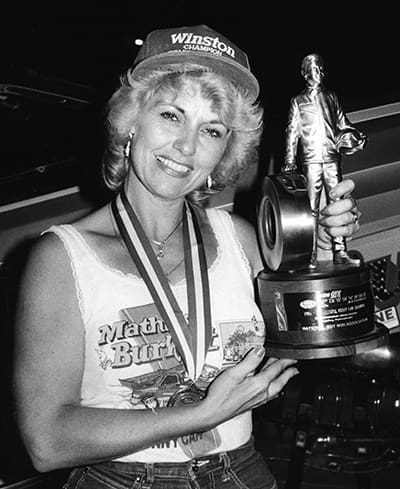 Carol “Bunny” Burkett
1945–2020 Carol “Bunny” Burkett married Marion Burkett when she was sixteen and one of the first gifts she received from him was a…
Read bio
Class of 2023
Carol “Bunny” Burkett
1945–2020 Carol “Bunny” Burkett married Marion Burkett when she was sixteen and one of the first gifts she received from him was a…
Read bio
Class of 2023Carol “Bunny” Burkett
Carol “Bunny” Burkett married Marion Burkett when she was sixteen and one of the first gifts she received from him was a 1964 ½ Mustang. Marion, Mo to most, taught Bunny to drive at a nearby airport and then they were off to Old Dominion Speedway in Manassas, VA where she quickly became a fan favorite. This car was destroyed by a drunk driver and the young couple recognized the need for additional income to follow the dream. Carol took a hostess job at the Playboy Bunny Club in Baltimore, MD where she earned her nickname, Bunny, and together with Mo they were able to purchase a new, poppy red 1967 Mustang that became Bunny’s first dedicated race car.
In 1973, Bunny purchased a Pro Stock Ford Pinto which afforded her an opportunity to book more match races at the local tracks. Within three years, she moved from Pro Stock to a Hemi powered Top Alcohol Funny Car. In years to follow, Bunny would drive cars in almost every class with a career highlight being driving Donny Holbrook’s Top Fuel Dragster in Germany.
In terms of success and longevity, there are few drag racers with a fan base like Bunny. She was a huge attraction for fans from her start in the mid-60s right up until she passed away. Among her major achievements was winning the 1986 IHRA Top Alcohol Funny Car World Championship along with the NHRA Division II Championship and finishing fourth overall in NHRA. When Bunny won the 1986 Keystone Nationals Top Alcohol Funny Car Championship, she became the first woman in history to win an NHRA Top Alcohol event. Her record held for 25 years until Alexis DeJoria accomplished her feat in 2011.
Besides being an excellent driver, Bunny was also an excellent promoter. Unlike many of her competitors, instead of just booking into major tracks and races, she booked herself into smaller tracks and built a large and loyal fan base. She took her time with fans and would often be the last racer to pack up because she would stay until she had talked to every fan. She also successfully leveraged her newfound fame and used ‘Bunny’ as part of her booking promotion and merchandise sales. Among Bunny’s other traits that added to her popularity was her willingness to work with the news media, take time to pose for photos with her fans and to promote her crew as well as herself. Many that crewed for Bunny have gone on to work for professional teams or have become drivers in their own right.
Bunny’s racing career almost ended on Sept 4, 1995 at Beaver Springs Dragway in Pennsylvania when the car she was racing crossed over into her lane and hit her resulting in a horrific crash where the car was totally destroyed and Bunny sustained life threatening injuries including a broken back, broken arms, a broken ankle and a head injury. Those injuries could only keep her down for a year though and she returned to racing at an NHRA event at Virginia Motorsports Park in 1997.
In addition to her other many awards, Bunny received the NHRA Lifetime Achievement Award post humus at the 2020 NHRA Hot Rod Reunion in Bowling Green, KY. She was also an active supporter of Godspeed Ministries, Racers for Christ, Drag Racing Association of Women, and breast cancer research and support organizations. She loved sharing her faith in God with everyone around her and proudly displayed ‘God is my pilot’ on her cars. Carol ‘Bunny’ Burkett passed away on April 4, 2020.
-
2023
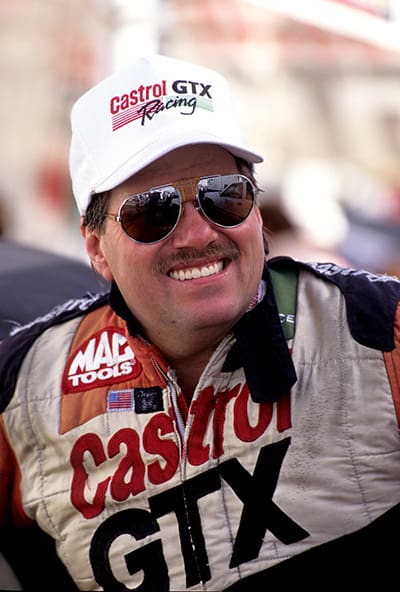 John Force
Few success stories are more compelling than those of John Harold Force, who overcame childhood polio to become the most prolific winner…
Read bio
Class of 2023
John Force
Few success stories are more compelling than those of John Harold Force, who overcame childhood polio to become the most prolific winner…
Read bio
Class of 2023John Force
Few success stories are more compelling than those of John Harold Force, who overcame childhood polio to become the most prolific winner in professional drag racing history. The youngest of five children, his youthful dream of a having a pro football career was dashed by the effects of having polio. He could pass the football like a pro, but with one leg markedly shorter than the other, running was a problem that ultimately drew him into drag racing “where the car does the running for you.” At the outset of his racing career, with mismatched equipment and part-time crew members, he and his “Brute Force” entries were little more than fodder for the Funny Car stars of the era.
That all changed in 1985 when Force hooked up with Austin Coil in one of the most unlikely and successful collaborations in motorsports history. However, success, even with Coil, who had won two NHRA series championships with his own “Chi-Town Hustler” Funny Car, was not immediate. It would be two years before the duo finally won its first NHRA tour event at Montreal, Canada, and it would be three more seasons before Force would win the first of his remarkable 16 individual NHRA championships, a record 10 of them in succession (1993-2002).
Prior to teaming up with Coil, John was runner-up at two NHRA national events in 1979 and finished eighth in season points. In 1983, he finished fourth after two more runner-up finishes and, just one year later, was crowned Funny Car Champion in the AHRA Grand National Series. Nevertheless, it was with Coil as his crew chief that he won the first 126 of his unprecedented 155 NHRA tour titles.
At the outset of the 2023 season, his 47th on the NHRA pro tour, Force is the drag racing record holder in almost every imaginable professional category including championships, final rounds (264), race wins, round wins (1421) and No. 1 qualifying performances (165). He has at least one tour victory in 34 of the last 35 seasons including a wire-to-wire triumph in last year’s 4Wide Nationals at Charlotte, a race in which he also prevailed when it debuted in 2010. He is a five-time U.S. Nationals Funny Car Champion and the winner of 13 NHRA All-Star events including the 1998 Winston Showdown at Bristol, Tenn., in which he won a record $210,000, five Big Bud Shootouts and a pair of Traxxas Shootouts. Notably, he was the first drag racer ever named Driver of the Year for all American motor sports after winning 13 of 19 races and the championship in 1996.
For the 1996 season he expanded his team to include a second car driven to a second-place finish by Tony Pedregon. Still part of John Force Racing, Pedregon won the NHRA World Championship title in 2003 before moving on. As a result of this, Force introduced a Next Generation initiative that ultimately would develop a host of young drivers including Eric Medlen, three-time series champ Robert Hight, Force’s daughters Ashley, Courtney and Brittany, Mike Neff and, most recently, Austin Prock.
It was during his daughters’ initial involvement in the family business that Force became a reality television phenomenon as the star of the A&E series “Driving Force.” Tragically, at the height of its popularity, production on the series was suspended when Medlen, who had been prominently featured in several episodes, was killed in a 2007 testing accident at Gainesville Raceway
Force responded to Medlen’s death by leading a movement that compelled design changes to Funny Cars and Top Fuel dragsters and the implementation of new safety guidelines that reversed what had become a disturbing trend. His greatest personal triumph, however, may have been his return from life threatening injuries in a crash at the Texas Motorplex in Dallas. Despite doctors’ belief that he never would race again after his injuries, Force endured four months of intense rehab and was back in a race car to start the 2008 season. Little more than three months later, he hoisted the trophy at Topeka, Kan. He would go on to add two more series championships 2010 and 2013.
The most decorated drag racer in history, his induction into the International Drag Racing Hall of Fame completes a unique Grand Slam for the grandfather of five who was inducted into the International Motor Sports Hall of Fame in Talladega, Ala., in 2008, the Motorsports Hall of Fame of America in 2012 and the California Sports Hall of Fame in 2017.
-
2023
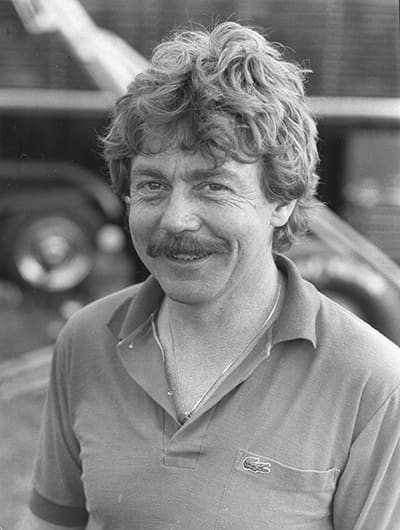 Graeme Cowin
 began his racing career in the early 1960’s with a 292 Ford Y Block powered Fiat Topolino. Before long the…
Read bio
Class of 2023
Graeme Cowin
Graeme Cowin began his racing career in the early 1960’s with a 292 Ford Y Block powered Fiat Topolino. Before long the…
Read bio
Class of 2023Graeme Cowin
Graeme Cowin began his racing career in the early 1960’s with a 292 Ford Y Block powered Fiat Topolino. Before long the need to go faster caused him to replace the Ford with a supercharged Chevrolet coupe. In 1973 he replaced the Chevrolet with a supercharged Chrysler powered altered roadster on nitro and began his “nitro” career.
Graeme’s first outing with a AA/Fuel Funny Car came in 1973 and was followed by a string of nitro fueled altered and funny cars all entered under the name Psycho. While he was based in Australia, Graeme competed in the Funny Car circuits of both IHRA and NHRA in 1985 and finished as runner up at the 1987 NHRA Winternationals in Pomona, CA.
In 1988, with Funny Cars losing some of their popularity in Australia, Graeme switched over to racing a supercharged Chrysler powered AA/Fuel Dragster and in 1993 became the first Australian to run under five seconds when he posted a time of 294.43 mph and 4.89 ET. After a string of wins at various racetracks, Graeme won the Australian Top Fuel Championship in 1995 and has continued to be a serious competitor over the years.
Using his involvement in the sport as a template, Graeme opened the doors to his first speed shop in 1980 under the title Rocket Industries and in 1993 he created the Outlaw Nitro Funny Car Series that became a huge success in Australia and the Rocket Allstar Series that gives non-professional category racers an opportunity to earn reward points for substantial prizes.
Graeme was inducted into the Australian National Drag Racing Association Hall of Fame in 2013 and the Australian Motorsports Hall of Fame in 2018. Graeme is not backing away from his involvement in racing and will be fielding another AA/Fuel Dragster with him as crew chief and his son Andrew doing the driving.
-
2023
Pat Garlits Memorial Award
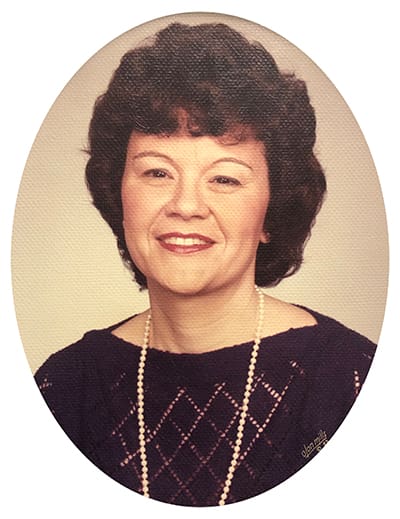 Linda Jones
1946–2024 Few success stories are more compelling than those of John Harold Force, who overcame childhood polio to become the most prolific winner…
Read bio
Class of 2023 · Pat Garlits Memorial Award
Linda Jones
1946–2024 Few success stories are more compelling than those of John Harold Force, who overcame childhood polio to become the most prolific winner…
Read bio
Class of 2023 · Pat Garlits Memorial AwardLinda Jones
Few success stories are more compelling than those of John Harold Force, who overcame childhood polio to become the most prolific winner in professional drag racing history. The youngest of five children, his youthful dream of a having a pro football career was dashed by the effects of having polio. He could pass the football like a pro, but with one leg markedly shorter than the other, running was a problem that ultimately drew him into drag racing “where the car does the running for you.” At the outset of his racing career, with mismatched equipment and part-time crew members, he and his “Brute Force” entries were little more than fodder for the Funny Car stars of the era.
That all changed in 1985 when Force hooked up with Austin Coil in one of the most unlikely and successful collaborations in motorsports history. However, success, even with Coil, who had won two NHRA series championships with his own “Chi-Town Hustler” Funny Car, was not immediate. It would be two years before the duo finally won its first NHRA tour event at Montreal, Canada, and it would be three more seasons before Force would win the first of his remarkable 16 individual NHRA championships, a record 10 of them in succession (1993-2002).
Prior to teaming up with Coil, John was runner-up at two NHRA national events in 1979 and finished eighth in season points. In 1983, he finished fourth after two more runner-up finishes and, just one year later, was crowned Funny Car Champion in the AHRA Grand National Series. Nevertheless, it was with Coil as his crew chief that he won the first 126 of his unprecedented 155 NHRA tour titles.
At the outset of the 2023 season, his 47th on the NHRA pro tour, Force is the drag racing record holder in almost every imaginable professional category including championships, final rounds (264), race wins, round wins (1421) and No. 1 qualifying performances (165). He has at least one tour victory in 34 of the last 35 seasons including a wire-to-wire triumph in last year’s 4Wide Nationals at Charlotte, a race in which he also prevailed when it debuted in 2010. He is a five-time U.S. Nationals Funny Car Champion and the winner of 13 NHRA All-Star events including the 1998 Winston Showdown at Bristol, Tenn., in which he won a record $210,000, five Big Bud Shootouts and a pair of Traxxas Shootouts. Notably, he was the first drag racer ever named Driver of the Year for all American motor sports after winning 13 of 19 races and the championship in 1996.
For the 1996 season he expanded his team to include a second car driven to a second-place finish by Tony Pedregon. Still part of John Force Racing, Pedregon won the NHRA World Championship title in 2003 before moving on. As a result of this, Force introduced a Next Generation initiative that ultimately would develop a host of young drivers including Eric Medlen, three-time series champ Robert Hight, Force’s daughters Ashley, Courtney and Brittany, Mike Neff and, most recently, Austin Prock.
It was during his daughters’ initial involvement in the family business that Force became a reality television phenomenon as the star of the A&E series “Driving Force.” Tragically, at the height of its popularity, production on the series was suspended when Medlen, who had been prominently featured in several episodes, was killed in a 2007 testing accident at Gainesville Raceway
Force responded to Medlen’s death by leading a movement that compelled design changes to Funny Cars and Top Fuel dragsters and the implementation of new safety guidelines that reversed what had become a disturbing trend. His greatest personal triumph, however, may have been his return from life threatening injuries in a crash at the Texas Motorplex in Dallas. Despite doctors’ belief that he never would race again after his injuries, Force endured four months of intense rehab and was back in a race car to start the 2008 season. Little more than three months later, he hoisted the trophy at Topeka, Kan. He would go on to add two more series championships 2010 and 2013.
The most decorated drag racer in history, his induction into the International Drag Racing Hall of Fame completes a unique Grand Slam for the grandfather of five who was inducted into the International Motor Sports Hall of Fame in Talladega, Ala., in 2008, the Motorsports Hall of Fame of America in 2012 and the California Sports Hall of Fame in 2017.
-
2023
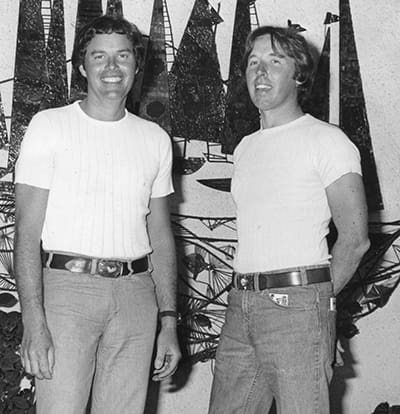 Vinny & Richard Napp
The Napp brothers, Vinny and Richard, began their involvement in drag racing as soon as they became owners of their first car…
Read bio
Class of 2023
Vinny & Richard Napp
The Napp brothers, Vinny and Richard, began their involvement in drag racing as soon as they became owners of their first car…
Read bio
Class of 2023Vinny & Richard Napp
The Napp brothers, Vinny and Richard, began their involvement in drag racing as soon as they became owners of their first car while still in their teens. The closest legal place for them to run was the front straightaway of the Old Bridge Speedway located in Englishtown, NJ. While they enjoyed their race participation, they soon became more interested in finding a place where racers could compete safely. In the early 1960’s the Napp brothers began looking for land to build a drag strip on that was affordable and located within a community that was open to such an operation. In 1962 they found 308 acres of wooded land just outside Old Bridge Township, NJ, that fit their needs and in 1965 they opened the gates at Raceway Park.
Like all new operations, opening day had its glitches but with the brother’s attention to detail and help from the racers, it soon found a workable groove. Before long racers from as far away as Pennsylvania and New England were racing there and the track was building a reputation as a “solid and fair” place to compete at. Raceway Park also caught the attention of NHRA and in 1968 it debuted its Summernationals there with an impressive spectator attendance of over 85,000. In 1971, NHRA awarded the Napp brothers the permanent placement of its Summernationals but its off-season nitro match racing really made it a complete success both with the racers and fans.
Vinny and Richard never rested on their success but constantly found new ways to upgrade and improve the facility. They were one of the first tracks to feature a 32 car Funny Car show, book a jet car shoot out and to bring in special match race events. They were also very good at promoting their events and finding ways to highlight unusual activities in their ads, such as Don Garlits famous “blow over” in 1986.
In 2018, after 53 years of superb racing events and shows, the brothers bowed to various pressures and closed the gates of Raceway Park. Sadly, Vinny passed away in October of 2019 and Richard passed away in December of 2021 but they will be long remembered by thousands of racers and race fans.
-
2023
 Ron Attebury
It has been reported that Ron began his car building business at the ripe old age of five when his parents gave…
Read bio
Class of 2023
Ron Attebury
It has been reported that Ron began his car building business at the ripe old age of five when his parents gave…
Read bio
Class of 2023Ron Attebury
It has been reported that Ron began his car building business at the ripe old age of five when his parents gave him a pedal tractor and he started taking body panels off it to make it lighter and faster. When he was 7, Ron started racing go karts after his father opened a go kart club in Los Gotos, CA. One of the true influencers in Ron’s life is his brother in law, Jack Castella, who is the holder of several Land Speed Records. In 1969 at the ripe old age of 20, Ron, along with his brother Raymond, built and raced his first real race car, a supercharged Chrysler powered AA/Gas Dragster. Ron drove this car to his first major class win at the WCS event at Bakersfield, CA in 1973.
In 1975 Ron built his first “for pay” car, a AA/Fuel Dragster for Frank Bradley that opened the door to Ron’s future as a chassis builder when Frank won the 1976 NHRA season opener Winternationals at Pomona, CA. Ron’s list of clientele after this reads like a Who’s who including Gary Beck, Warren and Coburn, Dennis Baca, Tommy Ivo and Shirley Muldowney to name just a few. One of the things that set Ron apart from some of his competitors was the fact he was also a racer so he knew first hand what other drivers and crews looked for in a car.
Ron and Jungle Jim Liberman soon became close friends and in 1977, Ron moved to Pennsylvania to become the only open wheel car to be part of the Jungle Jim racing team. 1978 found Ron back in California working out of his parents garage where he built Ivo’s first jet car. Later that year Ron changed careers by going to work at the U.S. Department of Energy’s Stanford Linear Accelerator Center. Before long Ron realized he liked building cars more than the government job so in 1983 he opened Atterbury’s Street Rods in Morgan Hill, CA and began producing some of the most outstanding street rods to grace the streets with some of them competing for the Most Beautiful Street Roadster award at the Grand National Roadster show over the years. Many of his street rods also found their way onto the pages of various magazines over the years and two of the race cars he built for Tommy Ivo were featured on the cover of Hot Rod Magazine. It needs to also be noted that one of his Jungle Jim Funny Cars became a Johnny Lightning die-cast model.
In 2001 the racing bug bit Ron again so he built himself an A/Fuel Dragster to compete in the GoodGuys Nostalgia circuit. In 2003 Ron won the coveted GoodGuys A/Fuel Dragster Championship title and retired from driving again. The “bug” bit Ron again in 2009 and he built his last race car, a gas powered, modified roadster he last raced at Bonneville in 2012. Ron retired in 2019 but he is still considered to be one of the premier dragster chassis and outstanding street rod builders ever.
In 1971 Ron was elected as one of Car Craft Magazines elite Hi Risers and in 2021 he was one of the NHRA Hot Rod Reunion Honorees. Today, Ron is still working out of his shop in Grass Valley, CA producing award winning street rods.
-
2023
 Shelly Anderson
-Payne is a second generation, award winning, enthusiast. Shelly followed in her father’s, Brad Anderson, footsteps as a crew member and…
Read bio
Class of 2023
Shelly Anderson
Shelly Anderson-Payne is a second generation, award winning, enthusiast. Shelly followed in her father’s, Brad Anderson, footsteps as a crew member and…
Read bio
Class of 2023Shelly Anderson
Shelly Anderson-Payne is a second generation, award winning, enthusiast. Shelly followed in her father’s, Brad Anderson, footsteps as a crew member and ultimately a top ranked driver. As a teenager, she could be found working with her father’s crew doing everything from cleaning parts to working on the car, learning the intricacies of the sport. Brad’s sponsor at that time was Jolly Rancher candies that liked the way the family worked together and offered Shelly a Top Fuel ride. At that time, Shelly was in her last year of college and Brad insisted she graduate before becoming a full time racer.
Shelly earned her NHRA dragster license in 1991 and began her driving career at the wheel of a supercharged Chrysler powered AA/Alcohol Dragster and notched her first national event win that same year at the NHRA Southern Nationals in Atlanta, GA. Shelly made the switch from Alcohol fueled cars to Nitro Fuel in 1992 at the wheel of a supercharged Chrysler powered AA/Fuel Dragster and posted her first national AA/Fuel Dragster win at the NHRA Keystone Nationals in Reading, PA.
In 1998 she experienced a ‘double tire explosion’ that sent her into the guardrail at over 300 mph and left her with third degree burns on both legs and her left arm and hand. Upon her release from the burn hospital, Shelly went to Indianapolis, IN to compete in the NHRA U.S. Nationals.
Shelly finished the 1998 season in the car but the next year she retired from driving and accepted a position at ESPN as a drag racing commentator where she was able to present a unique overview of the sport. After working on the NHRA shows for two and a half years, Shelly took time off to have her daughter, Madison.
She earned her Pro Mod license in 2004 and moved into the seat of a Dodge Stratus Pro Mod car until she briefly retired from driving to deliver son, Toby. While she was extremely competitive in this class, in 2005 she was involved in two terrible crashes. Between the two crashes, she suffered two broken vertebrae and multiple cuts and bruises for which she underwent corrective surgery. Upon her release from the hospital Shelly returned to compete at the AMS Pro Mod Challenge season opener at the NHRA Gatornationals in Gainesville, Fl in 2006. Her first national win in Pro Mod came later that year at the NHRA Pro Mod Challenge in Dallas, TX.
During her AA/Fuel Dragster days, Shelly won four NHRA National events, and the Budweiser Classic.
She is still totally involved in the sport working full time with husband Jay who competes with his AA/Alcohol dragster, and the husband-wife team both help their son Toby and daughter Madison who both compete in the Super Comp class and cheer Madison on when she is at the wheel of Duane Shields A/Fuel dragster.
Class of 2022
9 inductees-
2022
Founders Award
 Don Smith
 is a man driven by multiple interests but with one common denominator, to succeed in each of them. In High…
Read bio
Don Smith
Don Smith is a man driven by multiple interests but with one common denominator, to succeed in each of them. In High…
Read bio
 Class of 2022 · Founders Award
Don Smith
Don Smith is a man driven by multiple interests but with one common denominator, to succeed in each of them. In High School he was a Student Body Officer carried this honor into college as well. When he was 13 he waw member of the cast in the play, Johnny Appleseed playing at the famous Bohemian Grove in San Francisco. After graduating from college, Don played semi-pro baseball and was offered a contract from the Brooklyn Dodgers to play in its rookie league. Instead Don enlisted int the Navy Reserve where he was called into active duty and served his country for four years before receiving a honorable discharge.
However, in addition to these actives Don was also a car nut. Still in High School, when he was 17 he bought his first car, a 1938 flathead V-8 powered Ford Coupe that saw some street racing miles and two years later he bought a 1956 Chevrolet Bel Air sedan with its new V-8 powered engine which quickly found its way to the drag strip. Don was not content to just own and race these cars at the track, in 1958 Don became a partner in the famous Champion Speed Shop out of South San Francisco, California. Still not enough, another of his prime 1958 projects was a full partnership in the Half Moon Bay Drag Strip.
Not content to just be a spectator, in 1959 at the wheel of the Champion Speed Shop AA/Fuel dragster, Don was among the first Northern Californians to break the 180 MPH barrier. In addition to driving the Fuel dragster, in 1962 Don was one of the three members of the Chevrolet Sponsored 409 Super Stock team. With other team members, Don Nicolson and Hayden Profit, this was one of the most successful of Chevrolets drag racing efforts at that time.
In 1963, Don took over complete ownership of the Champion Speed Shop and built it into one of the more prominent speed shops in the nation. In 1970 he sold Champion Speed Shop but the year before closing the sale, he had already opened the doors of High Performance Distributors (HPD), a wholesale distribution center. In 2004 Don repositioned HPD into DCS Consulting & Export, a prime import/export network shop within the performance industry, which he still heads up today.
In addition to his participation as a total enthusiast, participant and promoter of racing and speed equipment, Don has also served on several Specialty Equipment Marketing Association (SEMA) committees and served 14 years as a member of the SEMA Board of Directors to help promote the total industry.
To add to these accomplishments, Don was also founder/owner of San Francisco areas famous award-winning Guido’s Restaurant and winner of the Baccarat World Championship in 1992.
-
2022
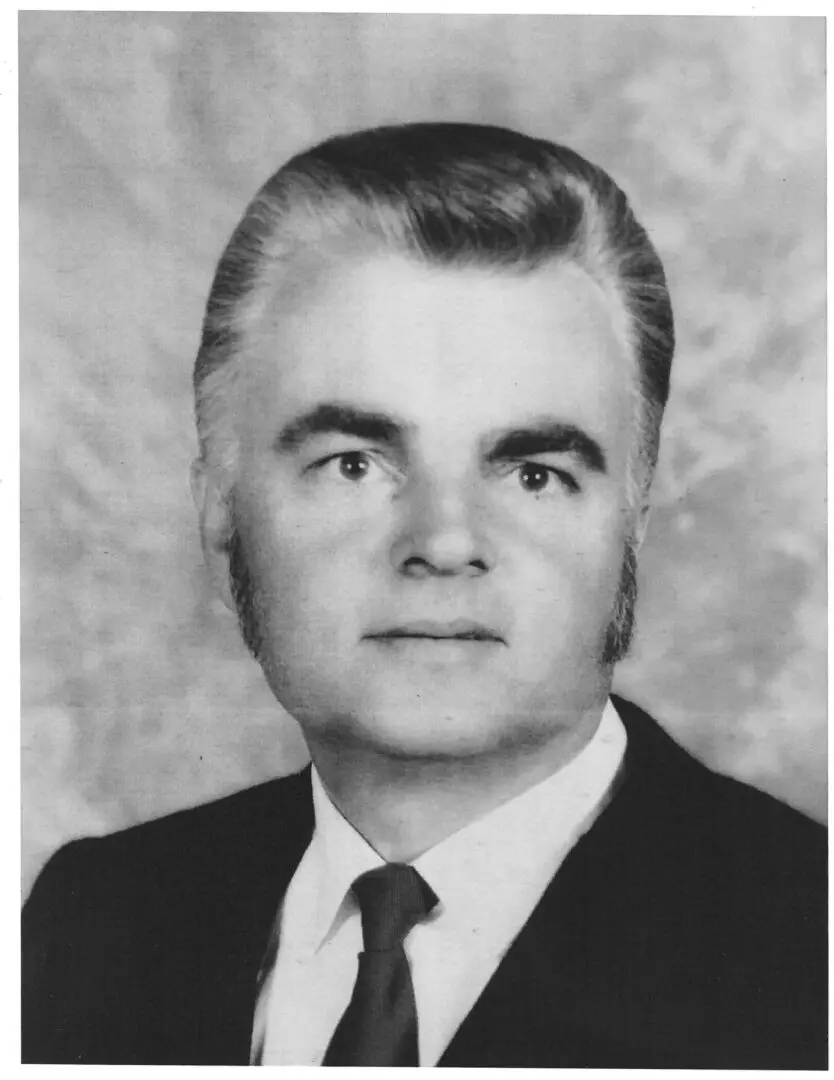 Jack Ewell
1928–1989 Jack Ewell, *The Silver Fox”, was a typical Southern California youngster, growing up in a world of car clubs, local drive-ins, street…
Read bio
Jack Ewell
1928–1989 Jack Ewell, *The Silver Fox”, was a typical Southern California youngster, growing up in a world of car clubs, local drive-ins, street…
Read bio
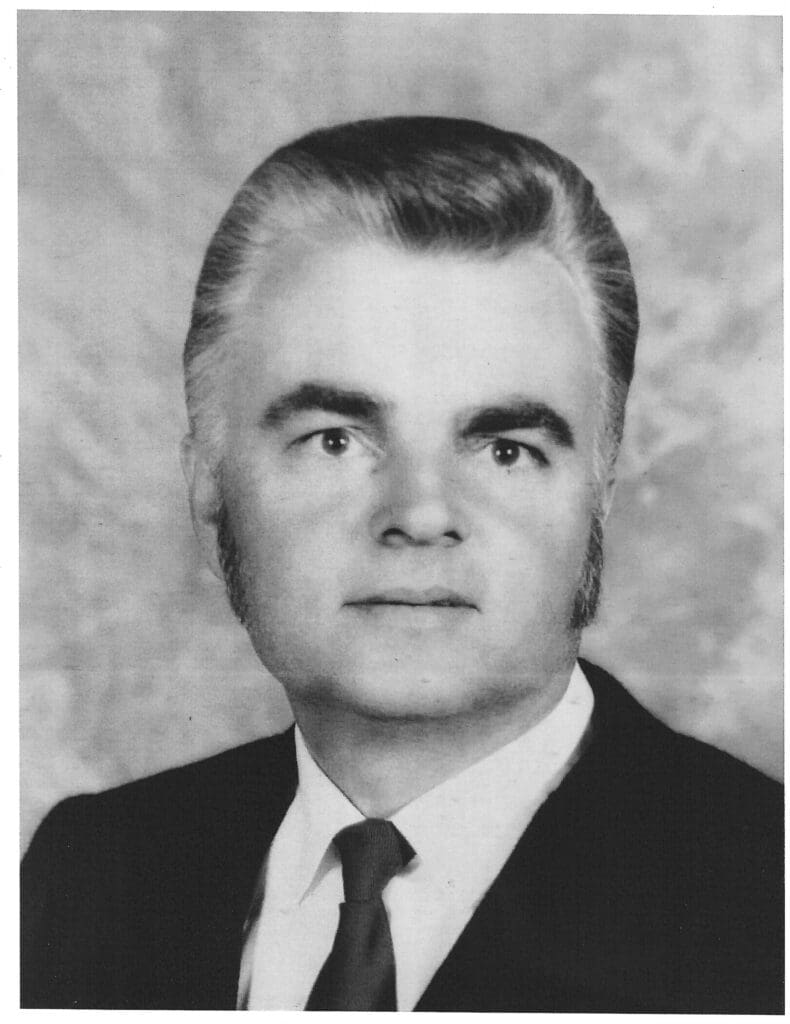 Class of 2022
Jack Ewell
Jack Ewell, *The Silver Fox”, was a typical Southern California youngster, growing up in a world of car clubs, local drive-ins, street racing, etc. as an avid enthusiast himself. He started his driving in a series of flathead Ford powered street roadsters. They weren’t always the fastest, but they provided him a map to learn a lot about how to improve performance by working on them. In 1948, Jack joined the famed Rod Riders car club out of San Pedro, CA and began competing at the Dry Lakes events where in 1949 he posted his first official speed of 105 MPH.
In 1961, at the age of 33 Jack became the first outside employee to work at Mickey Thompson Enterprises in sales and from there, moved up to become Sales Manager. This position had many lasting benefits for Jack, he was used to being exposed to the latest and best equipment available, he spoke with about every racer customer about what they were doing, he was able to trade information with both racers and manufacturers which helped him compete with good equipment.
Jack began his true driving/racing career in 1950 at the first legal drag strip opened in Santa Ana, CA. His ride was a 1928 Model A Ford Sedan with a fuel burning flathead for power in which he posted the first Top Eliminator win in organized drag racing. In 1953 he installed his Arden-Merc engine in a Bean Bandit built chassis and became the first member of the Drag Racing 140 mph club.
In 1957 Jack took over driving chores of the Ewell & Stecker AA/Fuel dragster moving to Jim Kamboor’s Jado Special AA/Fuel Dragster in 1958. By 1962 he was part of the Ewell-Cagle-Kamboor team as part owner and driver. A new team, Ewell-Bell & Stecker, was put together for the 1966 season with a completely new Woody Gilmore car.1961 also found Jack on the Bonneville Salt Flats where he gained admittance into the exclusive (at that time) Bonneville 200 MPH Club after posting a run of 217 MPH one way and a two-way average of 212 MPH in the Chrysler powered stock bodied 1953 Studebaker of Duncan and Allen. As part of his success that year, Jack took the Top Eliminator crown at the prestigious Bakersfield, CA, U.S. Fuel and Gas Championship meet.
Jack had the misfortune to break a leg in mid-1968 with the driver’s seat being turned over to Carl Olson. Bill Stecker had decided to quit racing at that time, so Carl put together a deal with Jack and Jim Bell to become a partner in the car as well as the driver. The team was so successful that in 1969 they fielded a new Woody Gilmore AA/Fuel Dragster with a late model, supercharged 426 Chrysler hemi for power. A tribute to the success of this team/car is on display the SEMA office in Diamond Bar, CA where the car actually hangs on the wall of the offices main entrance.
Jack was the first president of the original Drag, Racer, Inc. (DRI), a Southern California group that was among the first to offer cash awards to event winning racers. Jack’s hair prematurely turned silver in color early in his career prompting the then, “Voice of Drag Racing”, John Lindbergh, to dub him with the nickname *Silver Fox.
As involved with the sport as he was, one of Jack’s ongoing passions was for safety. He was one of the original Board of Directors for the United Drag Racers Association (UDRA) and received its first award for the “Most Contribution for Safety”. -
2022
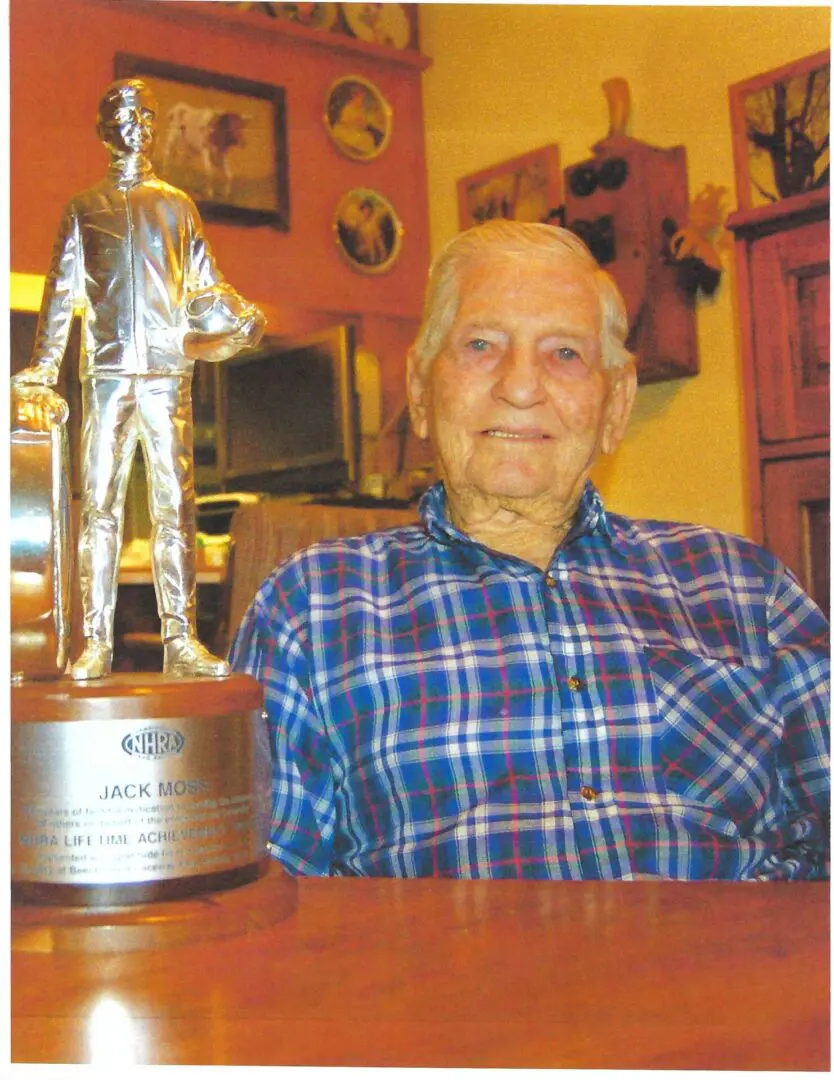 Jack Moss
1923–2016 The late Jack Moss from Amarillo, Texas enjoyed a lengthy racing career that began in the formative days of hot rodding prior…
Read bio
Jack Moss
1923–2016 The late Jack Moss from Amarillo, Texas enjoyed a lengthy racing career that began in the formative days of hot rodding prior…
Read bio
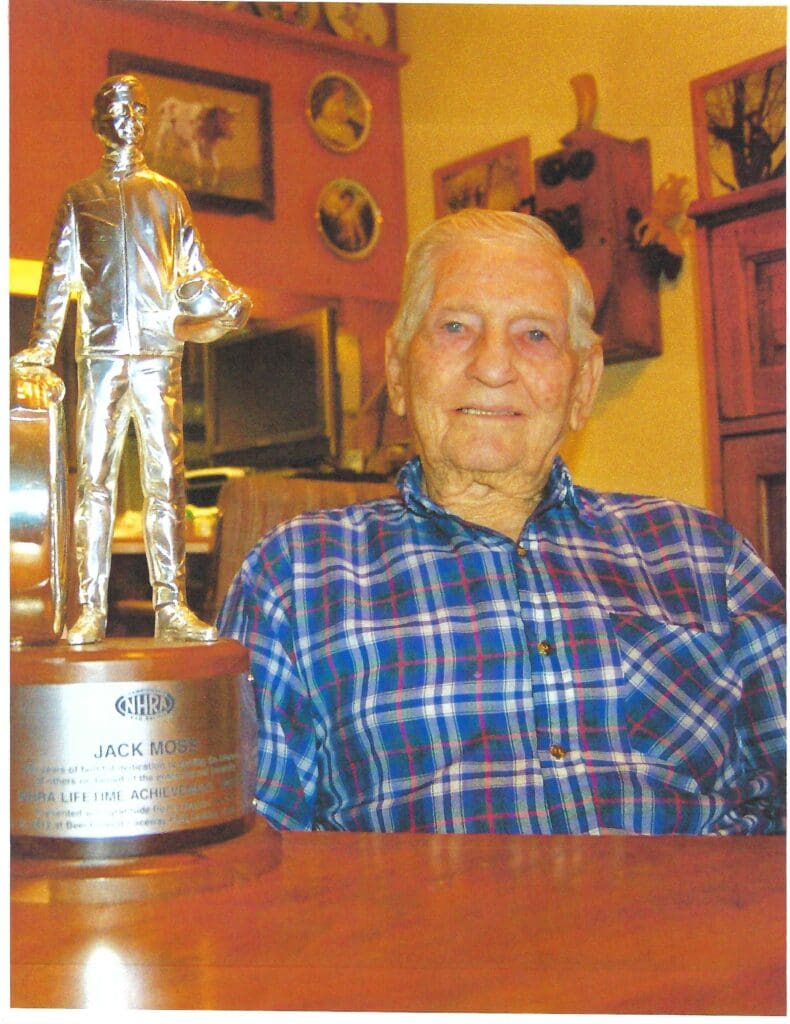 Class of 2022
Jack Moss
The late Jack Moss from Amarillo, Texas enjoyed a lengthy racing career that began in the formative days of hot rodding prior to World War II. In today’s world, Jack was a very unique person. Before he began the racing portion of his career, he had to endure the challenges of being a Japanese Prisoner of war for 3 ½ years. He joined the Texas National Guard in 1940 at the age of 16, was called to active duty after Pearl Harbor, and was taken prisoner by the Japanese on January 11, 1942, and was forced to work on the “Death Railway” on such projects as the Bridge over the River Kwai. During the 42-month period, 57% of his unit, known as the “Lost Battalion” were lost. When he was released at the end of the war in 1946, Jack vowed to live life to the fullest.
After his honorable discharge, Jack married his wife, Nellie, raised a family of two sons and a daughter and proceeded to do his best to live up to his vow.
He started his own business in 1948, Moss Automotive, applying his military training, his love of cars and motorcycles and began building a very successful business. When Jack made a casual comment to a friend that he should take his modified stocker to the drags to see what it would do, his friend told him not to even bother so Jack immediately prepared it, took it to the track and began winning racing trophies at Texas Speedway in Amarillo, TX and the surrounding area tracks.
Not content to be a local racer, Jack also applied his talents to the Bonneville Salt Flats, midgets, sprint cars and super modified stock cars. His first dragster effort was his famous “Ramblin Ram” streamliner dragster with a supercharged small block Chevrolet engine for power with which in 1950 he smashed the existing Nebraska state class record of 130 MPH with a speed of 149.5 MPH. Jack built over 30 cars in his lifetime including his own twin small block Chevrolet powered “Too Much” with which he managed to put most of his competition on the trailer.
Between 1970 and 1983, Jack also raced off-road Enduro motorcycles, winning his State of Texas class three years in a row and posting his final Enduro award in 1982 at the age of 60. In 1978, Jack closed the doors on Moss Automotive and retired.
In addition to running Moss Automotive, building and racing his many vehicles and helping raise a family, Jack helped organize and taught at the Auto Mechanics Department at Amarillo College. At the 2012 NHRA Hot Rod Reunion in Bowling Green, KY, Jack was presented with NHRA’s Lifetime Achievement Award (The Wally Trophy).
-
2022
Graeme Cowin
Graeme Cowin began his racing career in the early 1960’s with a 292 Ford Y Block powered Fiat Topolino. Before long the…
Read bio
Class of 2022
Graeme Cowin
Graeme Cowin began his racing career in the early 1960’s with a 292 Ford Y Block powered Fiat Topolino. Before long the need to go faster caused him to replace the Ford with a supercharged Chevrolet coupe. In 1973 he replaced the Chevrolet with a supercharged Chrysler powered altered roadster on nitro and began his “nitro” career.
Graeme’s first outing with a AA/Fuel Funny Car came in 1973 and was followed by a string of nitro fueled altered and funny cars all entered under the name Psycho. While he was based in Australia, Graeme competed in the Funny Car circuits of both IHRA and NHRA in 1985 and finished as runner up at the 1987 NHRA Winternationals in Pomona, CA.
In 1988, with Funny Cars losing some of their popularity in Australia, Graeme switched over to racing a supercharged Chrysler powered AA/Fuel Dragster and in 1993 became the first Australian to run under five seconds when he posted a time of 294.43 mph and 4.89 ET. After a string of wins at various racetracks, Graeme won the Australian Top Fuel Championship in 1995 and has continued to be a serious competitor over the years.
Using his involvement in the sport as a template, Graeme opened the doors to his first speed shop in 1980 under the title Rocket Industries and in 1993 he created the Outlaw Nitro Funny Car Series that became a huge success in Australia and the Rocket Allstar Series that gives non-professional category racers an opportunity to earn reward points for substantial prizes.
Graeme was inducted into the Australian National Drag Racing Association Hall of Fame in 2013 and the Australian Motorsports Hall of Fame in 2018. Graeme is not backing away from his involvement in racing and will be fielding another AA/Fuel Dragster with him as crew chief and his son Andrew doing the driving.
-
2022
Pat Garlits Memorial Award
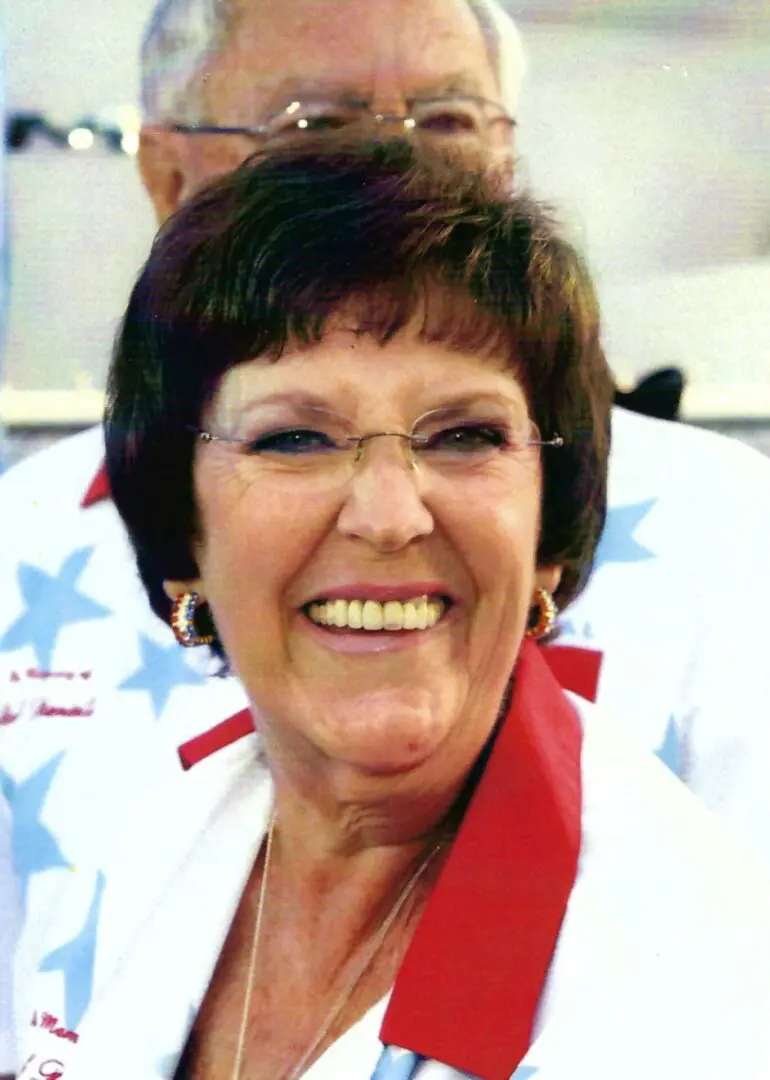 Pat Baltes
They continued to follow drag racing and attend as many events as they could. They were at the Gator Nationals in 1991…
Read bio
Pat Baltes
They continued to follow drag racing and attend as many events as they could. They were at the Gator Nationals in 1991…
Read bio
 Class of 2022 · Pat Garlits Memorial Award
Pat Baltes
They continued to follow drag racing and attend as many events as they could. They were at the Gator Nationals in 1991 when Don Garlits gave them two tickets to the Inaugural International Drag Racing Hall of Fame banquet. They have attended every one of these events since then and in 1992 became a table sponsor and in 2004 additionally became the trophy sponsor. This allowed them to give something back to the sport they both love.
After attending the first CHRR in Bakersfield they realized what a great event it was to catch up with old friends. They started a search for the original car and after a few years finally gave up. Then in 2003 the first NHRR in Bowling Green, Ky. took place. They ran into Rod Peppmuller at that event and since he had built the original asked if he would be interested in building a replica of the car. Theyfinally convinced him and debuted the car at the 2005 NHRR. It was at this event They caught up with Eileen Daniels and spent a lot of time talking with her. At the end of the event she asked if Pat would be interested in helping he·r at the ·next event.
Pat worked with Eileen at the reunions and the nostalgia displays at national events through 2018. Pat helped with the autograph sessions, and made sure all the “Old Guys” had whatever they needed to make sure they enjoyed the event. Pat said the best part of working at the reunions was getting to meet and get to know a lot of the racers she had only seen go down the track.
-
2022
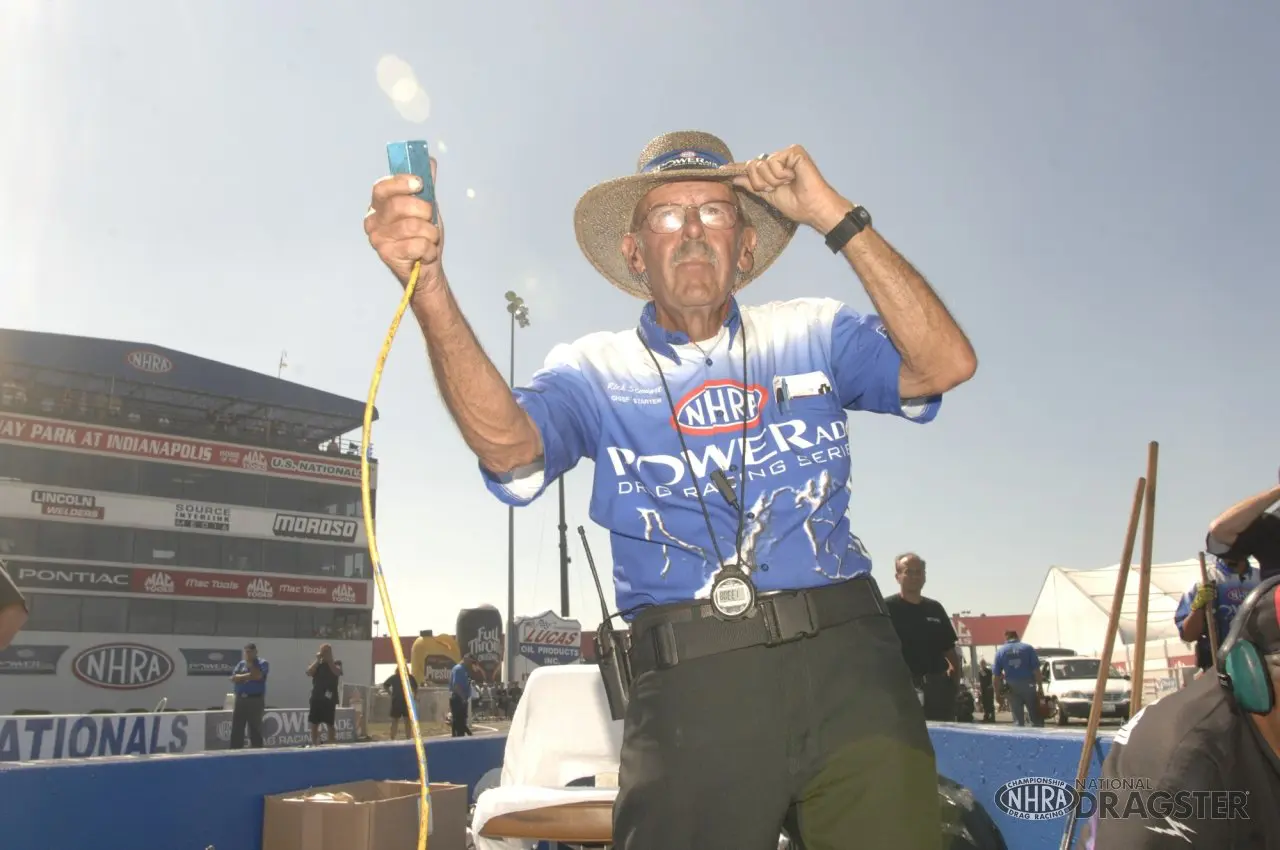 Rick Stewart
1941–2022 Rick Stewart was a typical young man growing up in the Bakersfield area of Southern California. His first car was a 1946…
Read bio
Rick Stewart
1941–2022 Rick Stewart was a typical young man growing up in the Bakersfield area of Southern California. His first car was a 1946…
Read bio
 Class of 2022
Rick Stewart
Rick Stewart was a typical young man growing up in the Bakersfield area of Southern California. His first car was a 1946 Ford Coupe with a flathead V-8 under the hood and like most of his peers, his first racing experience was on the streets of Bakersfield.
1958 was Rick’s change over year, going from street racing to his first trip down the infamous Formosa drag strip in his flathead V-8 powered ‘46 Ford Coupe. This experience soon led him to the ‘big time’ and in 1961 he slid into the seat of Gene Adams Supercharged Chrysler powered AA/Fuel dragster and an even greater love of the sport. However, this ride ended for Rick when a sever engine explosion led to the car leaving the racetrack and being destroyed.
In 1962 Rick took over driving chores for the Adams, Warner & Stewart in their supercharged Chrysler powered AA/Fuel dragster on nitro. Unfortunately, this ride experienced the same engine failure, but the resulting crash was so spectacular that it was recreated in the documentary movie, Seven Second Love Affair.
After recovering from his injuries suffered in that crash, in 1963 Rick joined forces with Gene Adams and John Rasmussen to successfully campaign another AA/Fuel Dragster. At one point in time, Rick was able to become part of the highly touted Dick Clark American Bandstand race “experience” with some impressive performances. Unfortunately, the past was repeated in this car when he made his last run down the track, and another sever engine explosion occurred. This time when Rick pulled the chute, the chassis came apart and he completed the run with just the seat staying with him for the rest of the run. In 1971 Rick announced his retirement from driving and went back to his regular job as an X-Ray technician.
Still loving the sport, in 1965 Rick became the backup starter for NHRA and in 1996, when Buster Couch retired, he accepted the job as NHRA’s official, full-time starter. This is a position he held until his own retirement at the end of the 2011 racing season.
Rick still enjoys the sport but now as a spectator. However, Rick notched a respectable success record posting wins at the various Southern California tracks.
Rich was named the Grand Marshal for the 2021 NHRA Hot Rod Reunion.
-
2022
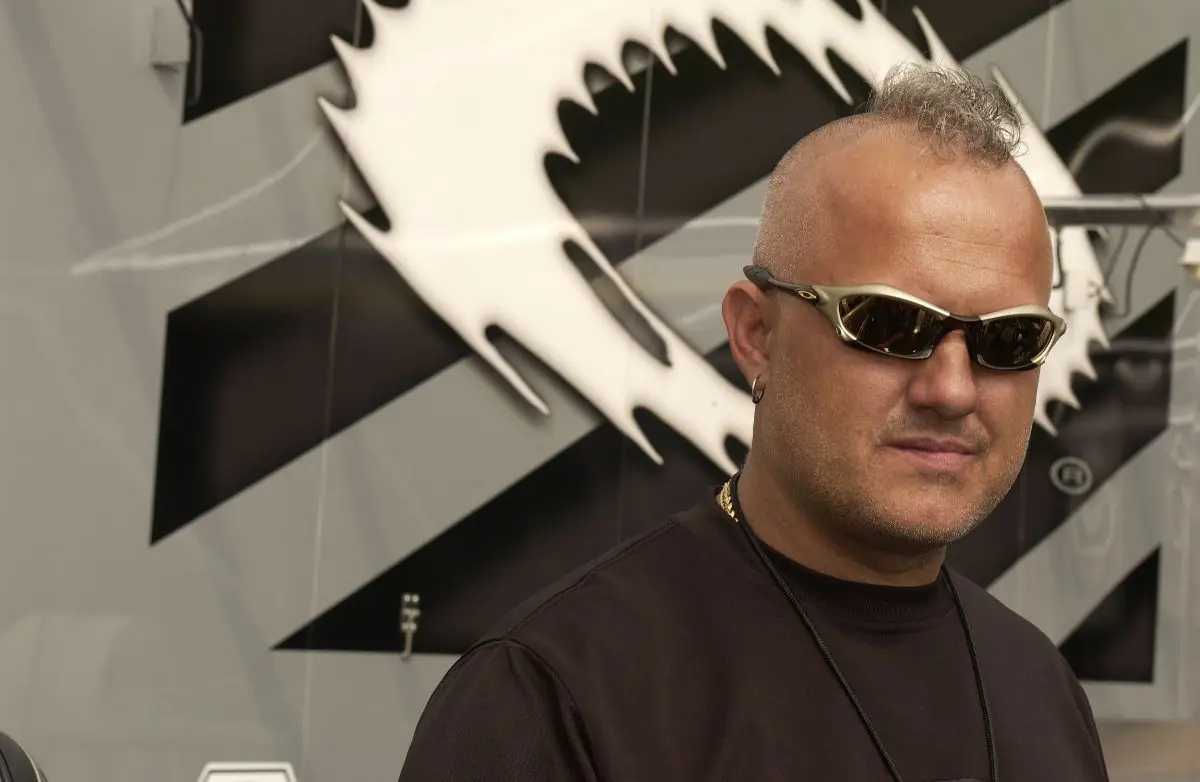 Scotty Cannon
 began his education into racing and performance enhancement before he even had a car. He was at the races every…
Read bio
Scotty Cannon
Scotty Cannon began his education into racing and performance enhancement before he even had a car. He was at the races every…
Read bio
 Class of 2022
Scotty Cannon
Scotty Cannon began his education into racing and performance enhancement before he even had a car. He was at the races every chance he had and paid attention to what was happening. One night he watched a particular Camaro try to run but that broke an axle every time it ran. When it broke again, he overheard another spectator say the owner needed to use aftermarket axles to stop this. That statement never left Scotty’s mind.
In 1979 when he was finally able to buy his first race car, a 1967 Pontiac Trans Am, one of the first things he did was install an aftermarket camshaft. The result was an instant increase in performance and a lesson learned.
By the 1985 season, Scotty was able to win enough to keep his dream of racing alive. In 1987, he replaced the Trans Am with a 1941 Willys Coupe that had a Top Fuel wing sticking out the back and a nitrous-injected 615-inch Chevy under the hood. During his career, Scotty has used every form of power adder available. He has fielded engines equipped with nitrous oxide and carburetors, supercharger, and even once a turbocharger.
A turning point in Scotty’s career came in 1989 when finally qualified for an IHRA Top Sportsman Quick 8, and then proceeded to win not only the heads-up race on Saturday night, but also the 32-car 200 mph bracket racing field on Sunday. Cannon supplemented his racing with a modest sponsorship from OnSat Satellit Magazine and over 75 match race dates a year.
IHRA introduced Pro Mod class in 1990 at its Darlington, SC Nationals and in 1991, Scotty posted his first IHRA Nationals win at Bristol Dragway in Bristol, TN. By the end of the 1991 season, Scotty took home his first IHRA World Championship title which he did again in ‘92 ’93 and ’94. He missed taking the title in ’95 but made it number 5 in ’96. He added his sixth and final one in 1998 before heading NHRA Funny car racing. Scotty returned to the Pro Mod wars in 2007 with his son, Scott doing the driving and the team captured its sixth IHRA World Championship title.
In 1998 Scotty received a sponsorship offer from Oakley Sunglasses to field a AA/Fuel Funny Car. He had always been fascinated by this class so in 1999 he entered the NHRA Funny Car world in a ’99 Pontiac Firebird bodied car and garnered the NHRA Rookie of the Year title.
During his IHRA Pro Mod reign, Cannon scored 28 victories, a mark that was never topped when the race series ceased running professional drag racing. In 2010, Competition Plus Magazine named him Pro Mod driver of all time, in 2019 he was inducted into the North Carolina Drag Racing Hall of Fame and in 2021 into the IHRA Hall of Fame. He even made a trip Down Under to Australia where he won the series title in a 1953 Studebaker, and then brought the car back to the USA to complete a championship sweep on two continents. No other Pro Modified driver had done this before.
When questioned about his success, he stated it was all about working harder than his competitors. There were years when he competed in as many as 75 races with no season limits.
-
2022
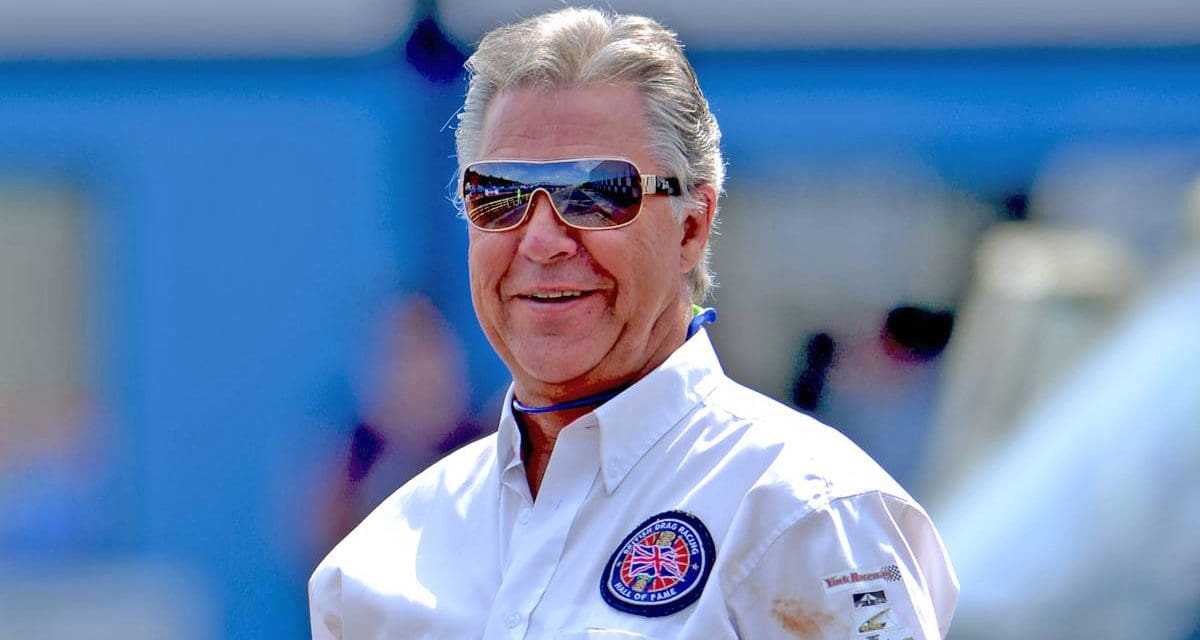 Stu Bradbury
1945–2020 Few personalities in British drag racing are as well-known and respected as Stu Bradbury. For years he served as Chief Starter at…
Read bio
Stu Bradbury
1945–2020 Few personalities in British drag racing are as well-known and respected as Stu Bradbury. For years he served as Chief Starter at…
Read bio
 Class of 2022
Stu Bradbury
Few personalities in British drag racing are as well-known and respected as Stu Bradbury. For years he served as Chief Starter at Santa Pod Raceway and subsequently became Founding Chairman of the British Drag Racing Hall of Fame, which has since achieved international acclaim. He discovered drag racing in 1964, not at one of Sydney Allard’s International Drag Festival events, but at a famous stately home, Woburn Abbey. Performing in a pop group at a function there, he stumbled across a display organized by the British Hot Rod Association (BHRA), then a sparse group of enthusiasts with a dream of organized drag racing in the UK. The hot rods and dragsters on display struck a cord with Stu and he joined the club a move that was the beginning of a love affair with drag racing that has lasted over fifty years.
In 1965, Stu and his parents provided accommodation to BHRA club chairman, John Bennett while a permanent drag strip was being developed at Podington aerodrome, a disused wartime base located near Stu’s Wellingborough home. Stu himself actually lent a physical hand in building Europe’s first permanent drag racing venue, Santa Pod Raceway.
Stu spent many non-race weekends digging, painting and other wise helping with its building and Santa Pod Raceway opened its doors in 1966. Stu’s first race day job was crowd control. The following year he was promoted to Deputy Starter and then Chief Starter in 1968. Stu encountered his first American racer when the American Commandos’ team visited Santa Pod in 1966 with Scandinavian, Dutch and even South African entrants following soon. Stu controlled the starting line when Don Schumacher and Paula Murphy brought over their Funny Cars in 1973 and when Don Garlits made his historic appearances in 1976 and 1977. He was also the main man when other American racers such as Tony Nancy, Raymond Beadle and Don Prudhomme made their appearances.
Stu also spent time in America learning more about how the sport was promoted here, even spending time on the starting line at some NHRA events with Buster Couch teaching him some tricks. Stu quit as Chief Starter in 1990 to join with John Woolfe Racing in an attempt to develop Long Marton Airfield into an NHRA sanctioned track. While local planners thwarted the full plans, the track is there today as Shakespeare County Raceway. Stu also joined UK parts supplier, US Automotive, on its launch and assisted Top Fuel Dragster star Andy Carter build his team.
In 2005, Stu and several colleagues founded the British Drag Racing Hall of Fame which has been his chief focus since its founding. He was also a prime mover behind the restoration of Sydney Allard’s 1961 Allard Chrysler, and he continued to lend support to Santa Pod’s Dragstalgia events, now Europe’s premier nostalgia drag racing eventIn 1971, Stu was inducted into the British Drag Racing Hall of Fame.
-
2022
 Tim Richards
As a young boy, Tim was working his paper route that took him past a barn that always had a lot of…
Read bio
Tim Richards
As a young boy, Tim was working his paper route that took him past a barn that always had a lot of…
Read bio
 Class of 2022
Tim Richards
As a young boy, Tim was working his paper route that took him past a barn that always had a lot of noise coming from it. One day he stopped in to see what it was about and found three guys working on their hot rods. After hanging around the barn for a while, he realized this was something he wanted to become more involved in. While he did very well in regular school, in 1959 he was able to pass the entrance exam for the Johnson School of Technology and spent the next three years learning everything from math to tool making.
When he was 19 he bought his first car, a 1963 Plymouth powered with a 426 CI RAM-inducted engine. Shortly after he purchased this vehicle, Pocono Drag Lodge opened its doors and Tim turned the Plymouth into a full-time race car. While he didn’t know much about increasing its performance, Tim turned to various books and magazines to learn as much as he could.
In 1969 he secured a ride in a 1969 Plymouth Roadrunner set up for racing with a 426 CI Chrysler hemi for power. The Roadrunner was replaced with a Chrysler hemi powered Superbird for a few months then followed with a Plymouth Barracuda also powered with the 426 CI Chrysler hemi. Tim was working at Ingersoll-Rand as a toolmaker but learning all he could about improving the performance of these engines.
What he learned driving, tuning and engine building these vehicles enabled him to open his own “after work” engine building business in 1971 specializing in both the 426 CI Wedge and 426 CI hemi engines.
In 1972 Tim Received a call from Joe Amato about working together on Joe’s next race car, a Chrysler hemi powered A/Fuel funny car. Beginning in 1982 they moved up the ranks to Top Fuel Dragster. During their time together, Joe and Tim won 31 NHRA national top fuel events and 4 NHRA World Championship’s.
In 1993 Kim joined Tim as assistant Crew Chief for the remainder of his racing career.
Tim took over the Crew Chief duties for Chuck Etchells AA/Fuel Funny car in Gainesville 1993 with the team posting a total of 9 NHRA national events and 1 win with Whit Bazemore driving.
1994 found Tim working as Crew Chief for Connie Kalitta’s Top Fuel Dragster winning 3 NHRA national events and the most memorable race for the team that year was winning the NHRA U S Nationals in Indy.
In 1995 went back to Chuck Etchells until 2000
Tim assumed the Crew Chief duties for Kenny Bernstein’s Budweiser King in 2001 and with Kenny at the wheel, helped guide the team to an impressive 16 NHRA AA/Fuel Dragster events and 1 NHRA World Championship. With Brandon Bernstein at the wheel of the Budweiser King, the team notched another 17 NHRA national event wins before Tim made the decision to retire from drag racing at the end of the 2008 season.
Tim came out of retirement for the 2011 race season and was crew chief for Ron Capps winning 2 more national events and then went back into retirement.
Tim’s win record as a Crew Chief is pretty impressive, 67 NHRA Fuel Dragster wins, 12 NHRA Funny Car wins, 5 NHRA World Championships with 5 wins coming at the U S Nationals in Indianapolis. He was also the tuner for Chuck Etchells AA/Funny Car when it posted the first ever 4 second run for a funny car in NHRA history.
Class of 2021
8 inductees-
2021
 Bret Kepner
Like most of the people participating in the sport of racing and especially drag racing, Bret became interested in cars and the…
Read bio
Class of 2021
Bret Kepner
Like most of the people participating in the sport of racing and especially drag racing, Bret became interested in cars and the…
Read bio
Class of 2021Bret Kepner
Like most of the people participating in the sport of racing and especially drag racing, Bret became interested in cars and the sport itself at an early stage of his life. However, unlike most of those involved, he has not believed it necessary to compete in a modified vehicle. His first race car was a stock 1966 Plymouth Barracuda entered into bracket racing. Since that start, he has competed in everything from roadsters, coupes, and dragsters to stock rental cars and has an impressive collection of trophies to show for it. One of his favorite forms of racing is to enter competition at a local track with rent a car and use driving skill to win the class.
While the racing itself is fun and interesting, Bret has not confined himself to that side of the sport. As a young enthusiast, he attended the University at St Louis majoring in Journalism and graduated with high honors. Since that beginning, Bret has had over 2,100 manuscripts published in magazines such as Super Stock Magazine and Super Stock & Drag Illustrated Magazine to name a couple. What is truly impressive is the fact that his works have appeared in a total of 57 major publications.
Next on his bucked list was to become a nationally recognized racing announcer where he has announced for NHRA, AHRA, IHRA, UDRA, NMCA, NMRA and ADRL at over 152 racetracks around the country. As if track announcing was not enough, Bret took on the job of TV host for IHRA in 1986 and continued with his TV participation, working for ESPN, FOX, NBC and CBS covering racing from the “inside” for 16 years.
In 1979 Bret continued to add to his expanding “job list” in racing by assuming the position of manager of Dragway 42 in West Salem, OH and in 1981 moving into the same position at St. Louis International Raceway. Still looking to add more ways to be involved, in 1989 he was named Director of the United States Super Circuit series and from 2003 through 2010 he promoted both the weekly Street Car Shootout Series and the monthly Outlaw All Star Series.Still more levels of participation to be noted, in 1995 Bret opened the doors to his Bret Kepner School of Drag Racing that has graduated over 750 students. He has also researched and chronicled every drag racing facility ever built in a document to be placed in the National Archives for future historians.
Bret is a member of the Society of Land Speed Historians, was inducted into the East Coast Drag Racing Hall of Fame in Henderson, NC in 2007 and the St. Louis International Raceway/Gateway International Raceway Hall of Fame in 2008. -
2021
 Frank Manzo
Frank spent his teenage years hanging out at a Sunoco station and whose owner campaigned a B/Modified Camaro at Old Bridge Township…
Read bio
Class of 2021
Frank Manzo
Frank spent his teenage years hanging out at a Sunoco station and whose owner campaigned a B/Modified Camaro at Old Bridge Township…
Read bio
Class of 2021Frank Manzo
Frank spent his teenage years hanging out at a Sunoco station and whose owner campaigned a B/Modified Camaro at Old Bridge Township Raceway Park and where Frank caught the drag racing bug. In 1970 Frank began his racing career in the seat of his own ’23 T-bucket roadster with a carbureted small block Chevy furnishing its power. In 1972 he replaced the T-bucket with a Firebird Funny Car and the small block Chevy with a Supercharged Chrysler Hemi on alcohol and has been competing in that class ever since.
Racing was a part time hobby done locally at first but in 1975 he began competing at NHRA National Events. In 1976 Frank took ownership of a Ken Cox Monza bodied Funny Car and installed a Supercharged Chrysler Hemi on alcohol for power and moved closer to victory circle. By 1980, Frank had replaced the small block Chevy in the roadster with a Supercharged Chrysler Hemi, moved up into AA/Altered with the roadster and was able to score his first major National Event victory, the NHRA Sportsnationals at Beech Bend International Raceway in Bowling Green, KY.
Frank replaced the Cox Monza Funny Car with a Murph McKinney Monza bodied Funny Car in 1981 and installed his reliable supercharged Chrysler Hemi in it for power, fueled it with alcohol and won his first NHRA Alcohol Funny Car Championship. Very happy with his McKinney, Chrysler Hemi, alcohol combination, Frank had Murph build every one of his new cars from that time up to and including his last Monte Carlo bodied car in 2013. His next NHRA Alcohol Funny Car Championship win came in 1986 and that Championship was followed by wins every year from 1997 through 2003 and again with wins every year from 2005 through 2013. To say that Frank was, and still is, a dominating force in Alcohol Funny Car is an understatement.Moving into the international arena of the sport, in 2009 Frank signed on with Qatar’s Sheikh Khalid Bin Hamad Al Thani’s Al-Anabi Racing program where he not only competed under the Al-Anabi banner with his Chevrolet Monte Carlo Alcohol Funny Car, he also helped develop the team’s overall strategy both in the US and Qatar.
During his career Frank has notched 17 NHRA Top Alcohol Funny Car Championships, 118 NHRA class Divisional wins and 105 NHRA National class wins. He was also able to be the number one class qualifier at NHRA National events 100 times, set and reset the Low Elapsed record 121 times and did the same for the top speed record 139 times. He is also ranked number 40 on the NHRA 50 Greatest drivers list.
While Frank is retired from driving, he is still in great demand as a tuner and engine builder for the Funny Car and Pro Mod classes and still actively mentors young people entering the sport every opportunity he gets.
-
2021
 John Austin
1942–2021 John ‘Tarzan’ Austin grew up as a typical Southern California boy in the 1950’s. He was interested in cars and speed long…
Read bio
John Austin
1942–2021 John ‘Tarzan’ Austin grew up as a typical Southern California boy in the 1950’s. He was interested in cars and speed long…
Read bio
 Class of 2021
John Austin
John ‘Tarzan’ Austin grew up as a typical Southern California boy in the 1950’s. He was interested in cars and speed long before he was able to obtain a driver’s license but when he did get his license, his first car was a 1937 Chevy four door sedan. At the age of 16 John was able to join one of the more recognized car clubs in So Cals San Fernando Valley, the Throttle Merchants. Most of the club’s members, including John, were to be found at the local drag strip every weekend, competing for trophies, and learning how to build and drive a modified car. John was no different and if you really wanted to find him, just show up at one of the racetracks on a Saturday or Sunday.
In 1960 John got his first ride in a true race car when Ted Worby, another Throttle Merchants member, let him drive his supercharged Chrysler Hemi powered AA/Gas dragster. However, unlike most of his fellow club members, John was not employed in the automotive arena but as a bouncer at a local Valley bar. This along with his physical appearance, strength and his unique voice earned him the nickname “Tarzan” that has stayed with him over the years.
Over the years, two of the major car clubs headquartered in Southern California’s San Fernando Valley were the Road Kings and the Throttle Merchants but John bridged the gap between the two when Road King member, Tommy Ivo sold his 4-engine powered dragster to another Road King member, Tom McCorry. At the beginning of the 1963 racing season, McCorry asked John to go on tour with him as his crew chief but Ivo learned about the arrangement and managed to talk John into going on tour with him instead. This was the start of a long time “touring team” arrangement between John and Ivo with both of them working on the car. Ivo was team owner and driver, but John took over responsibility for maintaining the car and sharing the driving chores of the tow rig.In 1971, John teamed up with Arnie Behling who was campaigning a AA/Fuel dragster known as ‘The Sprite Team’ as his crew chief. As crew chief and tuner, John helped tune the car into the winner’s circle at the NHRA Summernationals in Englishtown, NJ. In 1972 John moved to Greg Scheigert’s Hot Tuna AA/Fuel dragster camp and fulfilled his longtime dream of driving a nitro burning dragster as well as assuming the Crew Chief position for the team. John held that job until 1974 when the car’s engine exploded during a qualifying run and he crashed the dragster at the Gatornationals in Gainesville, FL and Scheigert retired from racing.
In 1975 John not only moved to another team, he also moved from the AA/Fuel dragster class to the controls of a AA/Fuel Funny Car, the supercharged Chrysler Hemi powered Vega that was being campaigned as the Bluegrass Shaker. The team was able to finish second in the NHRA Division 3 championship points that year but a massive engine explosion and fire near the end of the season left John with his hands burned and no ride and, which helped him decide to retire as a driver and stay involved as a crew member for various teams.After that, John went to work at Raymond Beadles Chaparral Trailers in Dallas, TX where he learned to build trailers for a lot of his racer friends. Over the years John has stayed in touch with most of his racer buddies and helped bring a lot of laughs to their “social gatherings” but he also helped bring a lot of new ideals and great publicity to the sport.
-
2021
 John Winterburn
1921–2020 John “Stomper” Winterburn was one of the pioneers of Australian drag racing. He was also the longest serving official in Australian drag…
Read bio
Class of 2021
John Winterburn
1921–2020 John “Stomper” Winterburn was one of the pioneers of Australian drag racing. He was also the longest serving official in Australian drag…
Read bio
Class of 2021John Winterburn
John “Stomper” Winterburn was one of the pioneers of Australian drag racing. He was also the longest serving official in Australian drag racing with over 47 years as a fulltime participant. John officially began his journey into drag racing in 1966 when he assisted at the opening event at Surfers Paradise International Raceway.
John joined the local Holden Car Club in his early teens which was more of a sports car arena but as fate would have it, there was a car show scheduled across the highway from Surfers Paradise on the same day of its grand opening and Stomper had entered his brother Bobs car in that show. The track officials asked if the club members would lend a hand for the opening and that was the beginning of Stompers drag racing involvement.
John readily admitted he was never interested in being an on-track competitor but he was fascinated by the skill and efforts it took to make a racetrack operate smoothly. He continued working at the track in various roles until 1972 when the director of Surfers Paradise resigned to become the director of Savannah Dragway in Townsville, Australia. John took over the reigns as the track’s meeting director at that time, a position he would fill for 15 years.
In 1981 it became obvious to all involved that Surfers Paradise could not survive as a racetrack so along with a group of like-minded enthusiasts, John formed a committee of seven to establish a new venue for the sport. The result of this effort was Willowbank Raceway in Queensland, Australia. As a show of their belief in this project, the seven committee members actually pledged their houses as collateral for the bank funding for the project.John was named Meeting Director of Willowbank Raceway from its opening in 1985 and remained in that position until his retirement in 1999. While he was involved with the racing world, John earned his living as a pastrycook at the nearby Websters Biscuit Factory where he was the assistant production manager. In addition to his participation at Willowbank Raceway and Webers Biscuit Factory, John was very involved in the Dragfest program that was instrumental in bringing U.S. racers to compete in Australia. John’s commitment to this project was so strong that in 1974 he took leave of his Webers job and moved to the States for six months.
During his first time living in the States, John moved in with Bill Shrewsberry and became a part of his crew for Bills wheelstander car. This gave him the opportunity to meet a lot of the racers and to become aware of their involvement in drag racing. After going home to Australia, John decided to quit his job at Webers and opened a snack bar in Bowen Hills, Australia. This provided John with the funds to continue his commitment to Willowbank and the Dragfest program and help build it into a regular annual feature for both the racetracks and the U.S. racers. John soon became the main source for bringing together the U.S. racers who wanted to compete in Australia and the tracks that wanted to book them.
John was also chairman of the Queensland Hot Rod Association and was responsible for producing hot rod shows at various venues including racetracks. In 197__, John’s lease on his snack bar ran out and because of his involvement with the Dragfest and the Hot Rod events and the amount of travel involved for them, he opened his own travel agency.
Over the years John was responsible for U.S. racers such as Leland Kolb, E.J. Potter, Bill Shrewsberry, Gary Densham and John Force to name a few making the trip to Australia. He was also responsible for several Street Rod folks making the ‘down under’ journey and, helped the entire sport of drag racing develop into a strong venue in Australia. One last note, John admitted that his nickname Stomper was because of his large size 13 shoes.
-
2021
Pat Garlits Memorial Award
 Laura South
Her passion, people skills and organizational expertise likely would have made Laura Earwood South a success at anything she attempted. Fortunately, it…
Read bio
Class of 2021 · Pat Garlits Memorial Award
Laura South
Her passion, people skills and organizational expertise likely would have made Laura Earwood South a success at anything she attempted. Fortunately, it…
Read bio
Class of 2021 · Pat Garlits Memorial AwardLaura South
Her passion, people skills and organizational expertise likely would have made Laura Earwood South a success at anything she attempted. Fortunately, it was the sport of drag racing that realized the greatest benefit over the course of an outrageously diverse career that began with the NHRA, included a 20-year stint as Executive Vice-President and General Manager of the former Moroso Motorsports Park in West Palm Beach and continues today through work with charitable and civic organizations in and around Palm Beach County.
A Texas native who admittedly knew nothing about auto racing when she moved to Atlanta in 1974, South got a crash course from Steve Earwood, the former National Media Relations Director for the NHRA to whom she once was married, with whom she briefly owned Atlanta Dragway, helped pen Teas Motorplex, and alongside whom she traveled the national event circuit for 13 years. During that time, she assisted in formulating and executing marketing, publicity and promotional campaigns at NHRA national events from Gainesville to Seattle, New York City to Los Angeles, while at the same time making a host of industry contacts that later would prove invaluable.
Laura was one of the founding members of DRAW (the Drag Racing Association of Women), an organization that today continues to provide assistance to injured racers and their families, she has worked enthusiastically in support of women in all forms of motor racing, including licensing and working on public relations and publicity with Elaine Larsen, the two-time IHRA jet car world champion.
Although she developed and honed her skills in drag racing, South’s success has been anything but one-dimensional. She has worked in the retail, public involvement, fundraising and insurance industries, was involved in the promotion of events in the IMSA road racing series, the SCCA Trans Am series and worked with the late Raymond Beadle’s Blue Max team when driver Rusty Wallace won his only NASCAR Cup championship.
After developing a friendship and working relationship with the late Dick Moroso, for whom she helped coordinate promotions and publicity in support of independent drag racing events (including the Citrus Nationals and the Five-Day Bracket Race) at both Moroso Motorsports Park and Miami-Hollywood Dragway, she was hired by the Hall of Fame racer, manufacturer and track owner as Executive V-P and GM of his racetracks in 1987.
In that capacity, she was directly involved in facility development and maintenance, the initiation of community outreach initiatives, sponsor development, creation of new events and oversight of the marketing, PR and publicity effort while at the same time managing a full-time staff that produced more than 500 diverse events each year. In 2006, MMP entertained more than 650,000 visitors and pumped an estimated $50 million into the local economy, earning the prestigious Providencia Award presented annually by the Palm Beach County Chamber of Commerce as a result.
When the family opted to sell the track after Dick Moroso lost his battle with cancer in 1998, South embarked on a new challenge as an independent event planner and advocate for a variety of causes and individuals, serving, among other things, as president of the John Paul Jr. Huntington’s Disease Foundation. She is a past member of the Palm Beach County Business Development Committee, the Palm Beach County Convention and Visitors Bureau, the South Florida Blood Banks, and the board of a Palm Beach County Attractions Association that she formerly chaired. She also is a member of three Chambers of Commerce and serves on the Board of the Palm Beach County Sports Commission and Hall of Fame.
As an event planner whose moto is “we take fun seriously,” she has produced concerts, air shows, seminars, conferences and trade shows. Among her favorite were the Wine & Dine on the Boardwalk, an auction, gala and golf tournament benefitting Grassy Waters Preserve, a Wine & Dine event for the Palm Beach Gardens Athletic Association, a College Game Day festival in downtown West Palm Beach and the All About You conference for women that in 2015 and 2016 benefitted Burckle Place (for single, homeless women) and Place of Hope (a haven for abused children and their families).
Married the last 26 years to Regional insurance executive Bill South, with whom she resides in Stuart, Fla., she is active in Peace Presbyterian Church, serving faithfully as both an elder and fellowship leader.
-
2021
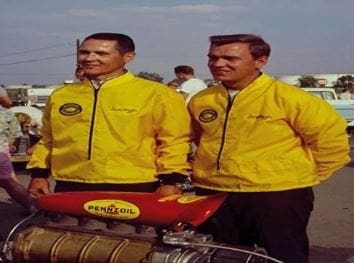 Ron & Gene Logghe
Gene and Ron Logghe were like most of their generation; they loved cars and racing. One thing Gene and Ron had over…
Read bio
Class of 2021
Ron & Gene Logghe
Gene and Ron Logghe were like most of their generation; they loved cars and racing. One thing Gene and Ron had over…
Read bio
Class of 2021Ron & Gene Logghe
Gene and Ron Logghe were like most of their generation; they loved cars and racing. One thing Gene and Ron had over most other car enthusiasts, their father, Morris Logghe, owned the Logghe Stamping Company. Both Gene and Ron worked at Logghe Stamping, a company that produced products for the auto industry. Since they worked at the stamping company, both Gene and Ron became skilled with their hands as well as their minds.
Both brothers wanted to start racing. Ron designed and built a sports car for road racing and they soon realized road racing was above their budget. But, in 1958 they attended their first drag race and were instantly captured by what it offered, and it was affordable.Soon, they revamped the sports car for Ron to drag race and built a tube chassis roadster for Gene. In 1961 a local racer named Connie Kalitta asked if the Logghe brothers would build him a dragster chassis. Since the Logghe’s had the equipment and the knowledge, they built thier first Logghe dragster chassis. Connie had great success with this car, and others began to ask if they could purchase one of these chassis. With the chassis business taking off, the Logghe’s expanded into clutch cans, steering components, and axles to go with their chassis. Ron had come up with a new chassis design, small and ultra-lightweight dragster. While testing the car, Gene got burned and their father forbid the brothers to drive a dragster anymore.
Jim Marsh and Roy Steffey, employees at the Logghe Stamping, were having great success in their nitro injected chevy Logghe dragster. The four paired up, forming the Logghe, Marsh & Steffey team with Jim Marsh as driver. In 1963 and 64, the four began to win events and set records wherever they showed up. They beat so many top contending AA fuel dragsters at the time, the car earned the name “the giant killer.” Orders for the Logghe dragsters began to pour in, and soon the Logghe Competiton Products division was formed for the sole purpose of building racing cars and race-related products. The Logghe’s started work on another new design, “the Streamliner,” a sleek streamline body covering a Logghe chassis to cut through the wind. The streamliner did not prove to work out, and in 1965 the Logghes return with “the Prussian,” a blown Chrysler dragster driven by Maynard Rupp and tuned by Roy Steffey. The team went on to win the first NHRA points championship.
This caught the attention of Fran Hernandez and Al Turner with Lincoln-Mercury, who approached the Logghes to build a series of cars to beat the Chrysler altered wheelbase funny cars in the factory experimental class for 1966 (aka the funny car). Logghes came up with a tube chassis with coil-over shocks and featured a one-piece flip top body. The new Ford 427 SOHC would power the cars. The flip-top funny cars had instant success. This led to a stampede of new customers wanting a logghe funny car.
By 1967 drag racing had become a big business for Logghes, and it was not uncommon for at least one newly built dragster and one completed funny car to leave the Logghe shop in a week. Racers at heart, Gene and Ron Logghe promoted both Dragsters and Funny Cars though out their carreers. Many Great names in drag racing won with Logghe race cars such as Tom Prock, Jay Howell, Chuck Kurzawa, Connie Kaliita, Gene Snow, Al Bergler, Shirley Muldowney, Poncho Rendon, Arnie Beswick, Bob Pasccito, Roland Relong, Willie Borsch,” Jungle Jim” Leiberman, and Jack Chrisman, to name a few.
The Logghe Stamping Company turned out over 600 race cars, including Pro Stocks, Altereds, Dragsters, Funny Cars, Motorcycles, Cars and Motorcyles for Bonneville, and even Go-Carts.With countless wins over the years for Logghe’s, The Logghe Stamping Company was named Car Craft Magazines Funny Car Chassis Builder of the Year in 1967, 68, 69, and 70. In 2006 the Brothers were Honored by the NHRA Hot Rod Reunion, and in 2010 they were inducted into the Michigan Motorsports Hall of Fame.
The doors closed the doors on the famous Logghe Stamping Company in 2013. Gene Logghe still resides in Michigan; Ron Logghe passed away on May 27, 2020. -
2021
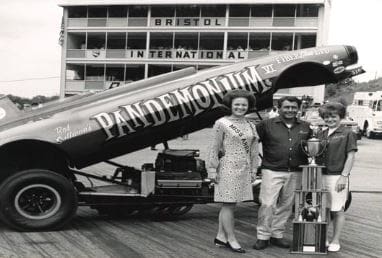 Bob & Shirley Sullivan
Bob and Shirley Sullivan were husband and wife but beyond that, they were a team in everything they did. In the early…
Read bio
Class of 2021
Bob & Shirley Sullivan
Bob and Shirley Sullivan were husband and wife but beyond that, they were a team in everything they did. In the early…
Read bio
Class of 2021Bob & Shirley Sullivan
Bob and Shirley Sullivan were husband and wife but beyond that, they were a team in everything they did. In the early days of drag racing, while most race teams are a group of guys who got together and pooled their resources, Bob and Shirley made up their famous Pandemonium race team. Bob was the chief mechanic, technical expert and driver and Shirley was the pit crew and business manager.
Both of them fell in love with high performance cars and speed in their teens so it was no surprise that after they got married, they began doing a bit of street racing. Their first car was a 1941 Plymouth with a mildly modified engine. This was followed by a series of Plymouths and Oldsmobile's, but they soon realized it was much better to take their racing off the street and into an organized event.
In 1951 they built their first competition roadster, a 1931 Ford roadster body on a channel 1932 frame with a carbureted Oldsmobile for power and began competing at the local drag strip. In 1953 they helped form “The Dragsters”, the first sanctioned car club in Kansas City, KS. In 1954 the Dragsters joined with another local car club to form the Kansas City Timing Association to help provide a safe, organized racing entity and to generate a greater interest in the sport locally.
Bob and Shirley moved up to the “fuel dragster” world in 1954 with a Rod Stuckey set of rails powered by a carbureted Oldsmobile engine and acquired their first major class win at the NHRA Midwest Regionals in Scribner, NE where they also set top time at 123.49 mph. Another major change for them at this time was they switched from the Oldsmobile engine for power to a Chrysler Hemi with great success.
In 1955 Rod Stuckey built their first all-aluminum full-bodied A/Fuel dragster with a carbureted Chrysler Hemi engine for power, the first in a series of beautiful and extremely competitive cars. This was the car that in 1958 Bob drove to new 1/4-mile World Record speed and ET records of 185.56 mph and an 8.39 ET.
In 1959, Bob and Shirley made the decision to become full time professional drag racers and competed in the entire Drag News Invitation Tour. In 1960 they posted their first National Event win, the AHRA Summer Nationals in Kansas City, MO. This is also the first car to be fielded under the Pandemonium name which came about according to Shirley because of the commotion generated by their original gas dragster. The car that provided this win was another Rod Stuckey chassis with a carbureted Chrysler Hemi for power and that moved them up to AA/Fuel Dragster class. At the 1961 AHRA Summer Nationals in Green Valley, TX they set new AHRA records in both ET and top speed with an 8.21 ET and a top speed of 184.04 mph.
They fielded AA/Fuel Dragsters under the Pandemonium name through the end of the 1964 season and became pioneers in the Funny Car arena in 1965 when they fielded a 1965 steel bodied Barracuda with a Supercharged Chrysler Hemi on nitro for power.
1967 saw a change in bodies from the Plymouths to a Camaro Roadster with their proven Supercharged Chrysler Hemi on nitro for power and it also saw them notch the first ever 190 mph speed for a Funny Car with a speed of 193.12 mph.Bob and Shirley campaigned a total of five Funny Cars from 1965 until they retired from the sport in 1974. Along the way they managed to set National & World speed and ET records for both the ¼ mile and 1/8th mile, win the AHRA 1/8th mile Championship twice, the AHRA Winter Nationals twice, in 1963 and 1964 and the NHRA Spring Nationals in 1968. It should also be noted that four young men, Glenn Leasure, Rod Stuckey, Jimmy Nix and Ron Goodsell, were able to gain driving experience when Bob took a break from driving at various times and put them in one of their cars.
-
2021
Founders Award
 Terry Cook
Terry started drawing cars when he was six years old and graduated to building models a few years later. As soon as…
Read bio
Class of 2021 · Founders Award
Terry Cook
Terry started drawing cars when he was six years old and graduated to building models a few years later. As soon as…
Read bio
Class of 2021 · Founders AwardTerry Cook
Terry started drawing cars when he was six years old and graduated to building models a few years later. As soon as he got his driver’s license, he joined the local hot rod club. His first car that ran was a Chevy powered C dragster but rather than become just another racer, his love of cars and speed got him a job as the flag starter at Island Drag Strip in Great Meadows, NJ. When the Christmas Tree took over his job as flagman, Terry became the track reporter and fell in love with the world of automotive journalism.
In 1964 Terry turned started producing a column New Jersey News (for $5/week) for Drag News under the byline “Broomfoot”. This gave him nationwide presence and established his name. In 1965 Terry hitched a ride to the West Coast with Chris Karmesines and wound up moving there to become the Associate Editor at the weekly newspaper, Drag World. Terry’s editorial talent was soon recognized by the folks at Car Craft Magazine and in 1966 he became a feature editor there. By the time Terry completed his reign at Car Craft Magazine, he had assumed the position of Editor. While Cook was there Car Craft doubled its circulation from 180,000 to 360,000. Petersen management tapped Terry for the Editor in Chief position at Hot Rod Magazine where again his talents contributed to a growth in readership. While part of Terry’s success came from finding outstanding journalists and hiring them, he also had a knack for “stirring the pot” with controversial subjects such as how the racers were treated by the Racing Associations, what was “hot” from Detroit.
Today, Terry is as well-known for the custom cars he has designed and had built, among them his 1939 Lincoln Zephyr Scrape. In 2019, Terry was named the featured designer at the prestigious Eyes on Design car event in Grosse Point Shores, MI. Terry is active in all arenas of the automotive world and is still willing and able to work to help every form of racer and racing activity receive a fair shake.
Class of 2020
8 inductees-
2020
 Billy Meyer
 began his racing career at the age of nine in go-karts and as a teen-ager burst onto the auto racing…
Read bio
Class of 2020
Billy Meyer
Billy Meyer began his racing career at the age of nine in go-karts and as a teen-ager burst onto the auto racing…
Read bio
Class of 2020Billy Meyer
Billy Meyer began his racing career at the age of nine in go-karts and as a teen-ager burst onto the auto racing scene making a name for himself as a Funny Car driver. Bill was the youngest person to earn their Funny Car license at the age of 16. According to those from that era, he drove like someone on a mission. He was young and wanted to win. Such status defined many of his driving decisions like leaving home in 1972, six weeks after high-school graduation, to pursue a full-time racing career. That fall, Meyer won the sport’s most prestigious independent Funny Car race, the 1972 Manufacturers Funny Car Championship at Irvine, Ca.
Meyer went to his first NHRA final round at age 20 and did so as the No. 1 qualifier in the biggest event in the sport at the Labor Day U.S. Nationals in Indianapolis, IN. That same year, he won his first IHRA Winston National event at Bristol, TN. Meyer won an NHRA event for the first time at age 23 and for the last time at age 33 when he retired to spend more time with family and devote more time to his diverse businesses.
Billy raced in 112 NHRA races, and went to the finals 22 times, for a final round appearance percentage of 20%. He earned 12 NHRA National Event victories, for a winning percentage of 55%. In his last competitive event, he won the NHRA Winston Finals, prior to his retirement.
He finished in the top 10 of the NHRA Winston Series Championship 10 out of 11 seasons in which he competed, in the top three six times, and was a three-time Winston series runner-up.
Billy raced in 52 IHRA events, and went to the finals 13 times, for a final round appearance percentage of 25%, and earned eight IHRA National Event victories, for a winning percentage of 61%. In 1980, he won the IHRA Winston Funny Car Championship.
Billy Meyer worked as his own crew chief for all but the last 6 months of his career and was the first Funny Car owner to win races with two different drivers in a single season.
Meyer partnered with Hal Needham and Burt Reynolds in the Budweiser Rocket Car which was the first land vehicle to break the sound barrier in October 1979; traveling 739.666 m.p.h. at Edwards Air Force Base.
In 1986, Meyer built The Texas Motorplex which was the first all-concrete stadium style drag racing facility constructed and was the first NHRA “super track”. Some of the fastest passes have been recorded at his Texas Motorplex and it continues to be a favorite of the fans and drivers for the all-concrete race surface. The AAA Texas NHRA Fall Nationals frequently yields national records.
Meyer won the Car Craft Magazine Person of the Year in 1987 and the Racers for Christ Person of the Year in 1988. In 1991, he authored the Boy Scouts of America Automotive Mechanics Merit badge.
Meyer was selected to be one of the top 50 drivers of all time in 1998. More recently, he received the 2017 Drag Racing Edge Magazine’s Peak Performer Award.
Today, Billy Meyer enjoys spending time with his wife of 40 years Deborah, their two adult children and their spouses, six grand-children, and his friends. He continues to work owning and managing the Texas Motorplex. His other businesses include aviation, technology, and real estate. In his personal time, he enjoys serving at his church, and striving to inspire the next generation. His personal drive to compete is now fulfilled on the golf course instead of the race track, as he enjoys playing with friends and family
Although a visionary Billy Meyer is three decades removed from the driver’s seat of a fuel Funny Car. His legacy remains as a driver, drag strip innovator, and one-time sanctioning body owner/president. He built the premier facility, changed the course of drag racing, enhancing spectator and sponsor amenities. Billy set the standard for which all other tracks have followed. All of these professional and personal accomplishments have cemented Billy Meyer’s legacy in Drag Racing history. Billy helped to make the sport bigger and better than anyone dreamed.
-
2020
 Don Enriquez
As with a lot of the members of the drag racing world, Don got his first experience as a driver in the…
Read bio
Class of 2020
Don Enriquez
As with a lot of the members of the drag racing world, Don got his first experience as a driver in the…
Read bio
Class of 2020Don Enriquez
As with a lot of the members of the drag racing world, Don got his first experience as a driver in the seat of Gary Densford’s C/Dragster at Lions Drag Strip in Long Beach, CA. In January 1962 he went to work for Stu Hilborn’s Fuel Injection Engineering as a machinist and where he worked with Hall of Famer Gene Adams.
At Hilborn, Don was exposed to a steady stream of racers and after a few trips to the local drag strip he decided he wanted to get serious about driving a dragster on a regular basis. He approached Gene about doing so; after a lot of discussion and planning, in 1968 he made his first run in Gene’s injected DeSoto powered Junior Fuel dragster. After that experience, Don was hooked and became one of the sports outstanding drivers of all time. That year, Don became the first driver of an unblown dragster to break the 200-mph barrier and in 1971 the first to dip into the six second ET’s.
In 1970 the pair posted wins in A/Fuel Dragster class at the NHRA Winter Nationals in Pomona, CA and the NHRA Super Nationals in Ontario, CA. In 1971 they won the NHRA Winter Nationals Comp Eliminators. Along the way they terrorized the entire class locally posting a steady stream of winner circle appearances.
While Don is mostly known for his Junior Fuel (A/Fuel) dragster driving chores, in 1970 he piloted the Adams and Enriquez fuel dragster with twin injected Chryslers for power to speeds of over 217 MPH and ET’s in the 6.70 range. In 1972 he drove the Adams and Wiencek injected Chrysler powered BB/Fuel Funny Car for the win at Firebird Raceway’s famous Nitefire 500. In 1973 the Adams and Enriquez team won the NHRA Super Nationals Pro Comp Eliminator in Ontario, CA. With thirty-three years as a team under their belt, Adams and Enriquez is one of the longest running teams in the sport.
In 1975 the team entered the season with a supercharged Chrysler powered rear engine dragster burning alcohol in Pro Comp class and won the NHRA Winter Nationals in Pomona, CA, the famous March Meet in Bakersfield, CA and the NHRA Super Nationals in Ontario, CA. Over the years Don has also driven a BB/Fuel Funny for the Millicoat twins, and their blown alcohol roadster.
After the demise of the Adams and Enriquez team in 1988 Don became very involved in the emerging nostalgia cars and in 1987 took on the driving chores for Pat Ganahl and Gene Adams in their A/Fuel Dragster. In 1996 Don moved into the driver’s seat of Bob McKray’s injected Chevrolet powered Junior Fuel dragster and has won the NHRA Heritage Junior Fuel Series Championship a total of four times: 2012, 2013, 2014 and 2017. Don took home the runner up for the spot in 2016.
In 2006, Don was named an Honoree at the NHRA California Hot Rod Reunion in Bakersfield, CA. He is also still part of the Hilborn Fuel Injection team and is still doing the driving chores in Bob McKray’s Junior Fueler.
-
2020
Founders Award
 Don Prieto
Don “The Wavemaker” Prieto is unique to the sport in that he is a racer (owner and driver), a journalist, a historian,…
Read bio
Class of 2020 · Founders Award
Don Prieto
Don “The Wavemaker” Prieto is unique to the sport in that he is a racer (owner and driver), a journalist, a historian,…
Read bio
Class of 2020 · Founders AwardDon Prieto
Don “The Wavemaker” Prieto is unique to the sport in that he is a racer (owner and driver), a journalist, a historian, and a catalyst between the sport and some of the OEM companies. Don started his journey into the world of cars in 1953 when he bought a 1933 Ford Cabriolet which he promptly began modifying. Next came a 1939 Ford coupe with a flathead for power that lasted through his Air Force days when it was replaced with a modified 1949 Olds convertible.
In 1960 he partnered up with a couple of local New Orleans buddies on a Chrysler powered dragster. In 1963 Don moved to California and went to work for Mickey Thompson as a machinist where he was exposed to an ongoing group of local drag racers. In 1963 he was partnered with Don Madden in an AA/Fuel Dragster followed by sharing ownership with other racers including Don Yates and Clark Cagle.
His first move into the world of journalism was in 1966 when he became the Managing Editor of Drag Racing Magazine. With this platform, Don was able to help push the racing facilities into providing better restrooms and food by generating a series of articles about how bad some of facilities were. He was also able to help expose some of the local Southern Californian racers to a much broader group of fans. In 1968 Don moved to Petersen Publishing as an editor on Hot Rod Industry News and continued to help expose the sport to larger readership and promote the manufacturer’s products better.
In 1971 the Chairman of SEMA, Vic Edelbrock, was impressed with Don’s activities enough to hire him as Director of Communications for the association. With his contacts at the magazines, the car builders, the power of Petersen Publishing, and SEMA Don was part of an elite team. This team put together a Show and Tell Car Show in Los Angeles, CA in 1973. This show helped change the image of hot rodding and drag racing in the eyes of the general public and a lot of public officials.
Today Don is still active in the sport, he can be found driving around in either his awesome Lexus engine powered ’32 Ford Roadster or his ’56 Chevy Nomad “tow car”. The need for the Nomad is because Don owns and cackles Frank Cannon’s Hustler VI AA/Fuel Dragster and Tommy Ivo’s original injected Buick powered dragster.
-
2020
Pat Garlits Memorial Award
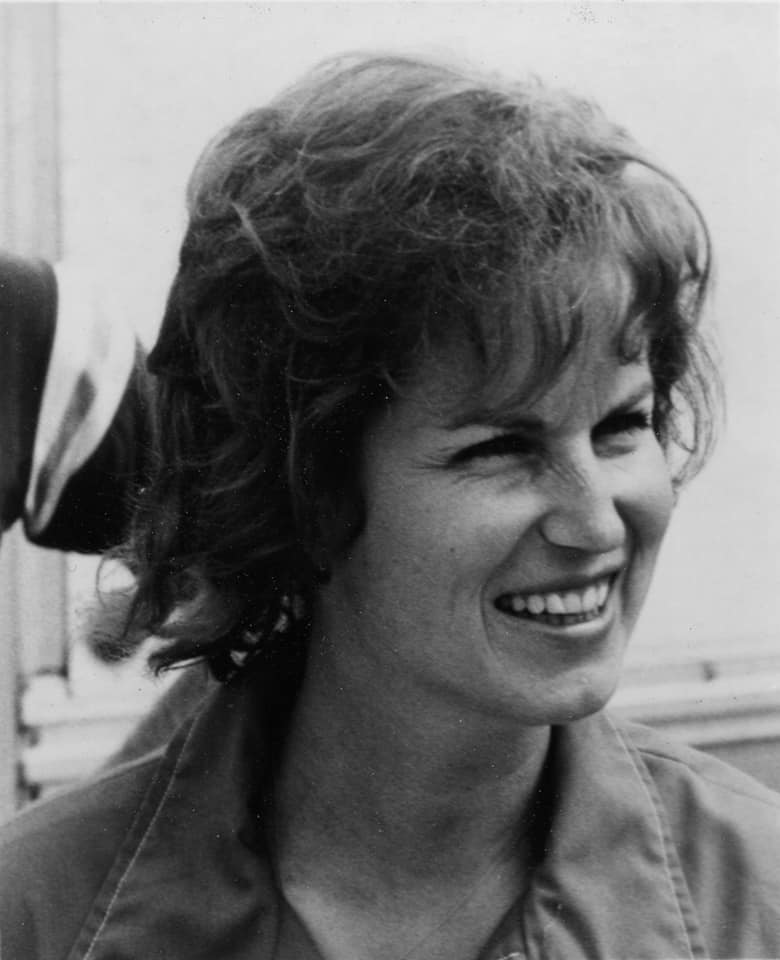 Etta Glidden
 was introduced to the sport of drag racing by her husband Bob at a time in the sport when most…
Read bio
Class of 2020 · Pat Garlits Memorial Award
Etta Glidden
Etta Glidden was introduced to the sport of drag racing by her husband Bob at a time in the sport when most…
Read bio
Class of 2020 · Pat Garlits Memorial AwardEtta Glidden
Etta Glidden was introduced to the sport of drag racing by her husband Bob at a time in the sport when most women involved in it were seen more than heard. True to the times, Etta stood by Bob as a significant member of the team while he was making a name for himself as one of the true leaders in whatever class he was competing in.
While they competited in several classes in the beginning of their involvement in the sport, their most significant impact in the sport was in Pro Stock. Throughout the team’s years of involvement in the sport, Etta was always beside her legendary husband, Pro Stock superstar and Hall of Fame driver Bob Glidden. By the time the team retired from racing, it had collected 85 NHRA class wins, and 10 NHRA Winston World Championships. Etta was always a fixture at the starting line and in the pits as the Glidden family raced their Ford Pintos, Fairlanes, Mustangs and Thunderbirds (as well as one year with a Plymouth Arrow) against some of the very toughest competitors in Pro Stock class history. As the Glidden Family’s race program developed, Etta served as Crew Chief, keeping the team organized and was there to assist in any way possible, working on the car with her sons-Billy and Rusty-, with Bob’s direction, yet being a mother at the track and at home. There were many of those iconic, leaping celebratory starting line moments with Billy and Rusty as Bob recorded another victory, but those were made possible with Etta’s total dedication to the hard work she did behind the scenes in the pits and at the shop in Whiteland, Ind.
There was also the humanitarian side of Etta that few have known about. She is one of the three ‘Founding Mothers’ of the Drag Racing Association of Women (DRAW) that brought together several of the wives of the leading drivers and personalities of the sport in 1984 following Shirley Muldowney’s life-threatening crash that pointed to the need for both financial and moral support of drag racing families following accidents. Her tenacity and ability to handle the business and family needs made Etta Glidden one of the sport’s most respected personalities. The Patricia Garlits Memorial Award is given out annually to a woman who has “contributed to the sport of drag racing through their professional activities- at the track-and/or their personal activities-off the track-which promotes the sport in a positive manner or to the success of the sport.”
-
2020
 Larry Minor
1940–2025 Larry Minor has often been called a “gearhead” but it is simply a fact of life for him. As a teenager, Larry…
Read bio
Class of 2020
Larry Minor
1940–2025 Larry Minor has often been called a “gearhead” but it is simply a fact of life for him. As a teenager, Larry…
Read bio
Class of 2020Larry Minor
Larry Minor has often been called a “gearhead” but it is simply a fact of life for him. As a teenager, Larry was very interested in cars of all kinds, how to make them faster, and quicker. His first car was a 1956 Ford which he liked but it wasn’t fast enough so before long it was being modified. Larry’s first true racing experience was in 1959 when he started racing a Jeep on the various sand dunes of Southern California. When the Jeep’s engine expired, he replaced it with a small block Chevy V8 that was quickly modified and his off-road racing career was born.
After attending the 1977 NHRA World Finals at Orange County International Raceway, Larry was hooked and promptly formed Larry Minor Racing which fielded an AA/Fuel Dragster for the 1978 season. With Larry Bowers at the wheel, LMR debuted the car in January 1978 however, the car was badly damaged on its maiden run delaying the team’s entry into open competition. By late 1978 Larry had the car rebuilt and with Larry Dixon at the wheel was runner up at the NHRA U.S. Nationals in Indianapolis, IN. In 1979 the team posted another runner up at the NHRA U.S. Nationals in Indianapolis and won the NHRA Division 7 Top Fuel Championship.
In 1980 Gary Beck took over the driver’s seat and the team won its first NHRA National event, the NHRA Cajun Nationals in Baton Rouge, LA. In 1981 they won the NHRA Spring Nationals in Columbus, OH, The Southern Nationals in Commerce, GA, the NHRA Cajun Nationals in Baton Rouge, LA and the U.S. Nationals in Indianapolis, IN. They finished number two in the NHRA Top Fuel Winston World Championship points race. They also, that year, notched a win at the IHRA Summer Nationals in Bristol, TN. In 1982 LMR won the IHRA Pro-Am Nationals in Rockingham, NC and finished number three in the IHRA World Championship points. LMR would also finish number four in the NHRA World Championship points race in 1982.
The team had a banner year in 1983, posting wins at the NHRA Gator Nationals in Gainesville, FL, the NHRA Southern Nationals in Commerce, GA, the Cajun Nationals in Baton Rouge, LA, the NHRA U.S. Nationals in Indianapolis, IN and the NHRA Golden Gate Nationals in Fremont, CA; this success earned the team the NHRA Winston World Championship. They also posted 17 of the 18 quickest runs ever made up to that time. Along the way they also won the IHRA Spring Nationals in Bristol, TN. In 1984 the LMR team posted wins at the NHRA Cajun Nationals in Baton Rouge, LA, the NHRA Spring Nationals in Columbus, OH, NJ and the NHRA Grandnationals in Molson, Canada finishing number two in the NHRA Winston World Championship points race. 1985 found LMR in the winner’s circle at the NHRA World Finals in Pomona, CA and in 1986 they won the NHRA Gator Nationals in Gainesville, FL, the NHRA Southern Nationals in Commerce, GA and the NHRA Mile High Nationals in Denver, CO.
In 1984 LMR received sponsorship from Miller Brewing and Oldsmobile for an AA/Fuel Funny Car team and entered the Funny Car wars with a blown Chrysler powered Oldsmobile with Ed McCulloch doing the driving. In 1990 LMR posted their first Funny Car NHRA U.S. Nationals win. The 1992 season opened with Cruz Pedregon at the wheel of the Funny Car and McDonalds as its prime sponsor. By the close of the 1992 season they had posted wins at the NHRA Spring Nationals in Columbus, OH, the NHRA Heartland Nationals in Topeka, KS, the NHRA North Star Nationals in Brainerd, MI, the NHRA U.S. Nationals in Indianapolis, IN earning them the Funny Car Winston World Championship. The LMR Funny Car Team would go on to post wins at eight more NHRA National Events.
It should also be noted that Larry is no slouch as a driver and has found his way behind the wheel of every type of race car he has fielded. In 1983 he was the record holder in AA/Fuel Dragster with a 5.25 ET. In addition to fielding some of the most visible race teams of the 1980’s and 1990’s, Larry also brought something to the table; that was nearly unheard of at the time. Larry brought some big time major non-automotive sponsors to the program. As already noted, in 1984 Larry brought Miller Brewing into the sponsorship role and in 1992 he enticed McDonalds to become a major sponsor on both the dragster and funny car.While he has retired from active participation in drag racing, Larry is still very involved in the world of sand drags and not only fields winning cars there today. He also has one of the most recognized car/chassis names in that world. With all of the accolades garnered in drag racing over the years, it would be unfair to not note that he has posted wins in the Mexican 1000 two times, the Baja 500, the Mint 400, and is a member of the Off-Road Racing Hall of Fame.
-
2020
 Lee Beard
 has been referred to as “a crew chief’s crew chief”. Beard, known for cleanliness, organization and preparation, was first introduced…
Read bio
Lee Beard
Lee Beard has been referred to as “a crew chief’s crew chief”. Beard, known for cleanliness, organization and preparation, was first introduced…
Read bio
 Class of 2020
Lee Beard
Lee Beard has been referred to as “a crew chief’s crew chief”. Beard, known for cleanliness, organization and preparation, was first introduced into the world of drag racing by his high school Industrial Arts teacher, Ed Renck, who also happened to have a front-engined Top Fuel Dragster. In 1969, Lee started hanging around Ed’s shop doing the grunt work and gradually graduated into helping maintain the car. By this time, he had fallen in love with the sport, all of its sounds, and smells. In 1972 he bought his own Blown Chrysler AA/Fuel Dragster which he competed with until 1977.
Winning many local events and several Division V events, Lee made the journey to the 1973 NHRA U.S. Nationals in Indianapolis where he made it to the third round of eliminations only to lose to eventual winner Gary Beck. In 1978 Lee began driving Jerry Ruth’s AA/Fuel Funny Car where the pair put together a successful campaign of match races along with local open events through the 1979 season.
In 1980 the team shelved the Funny Car and concentrated on running Ruth’s AA/Fuel Dragster, posting their first big win at the NHRA Mile High Nationals in Morrison, CO. That was the beginning of Lee’s outstanding career as a Crew Chief.
The list of teams and wins reads like a who’s who of drag racing. Gary Ormsby, Larry Minor, Joe Gibbs, Kenny Bernstein, David Powers, Don Schumacher, and Cruz Pedregon just to name a few. The same applies to Lee’s record of wins, championships, and awards. As a Crew Chief, Lee has visited the winner’s circle with 14 different drivers in the Top Fuel and Funny Car classes; for a total of 55 NHRA National event wins. Six of those drivers were first time winners. He also tuned cars to the number one qualifying spot 66 times and set the NHRA National Speed/ET record seven times.
He started his legacy of World Championships when he tuned Gary Ormsby to the NHRA Winston Top Fuel Championship in 1989. In 1992 he helped head up Cruz Pedregon’s efforts to take home the NHRA Fuel Funny Car Championship. As the team manager he Don Schumacher Racing to two more NHRA Championships; one in Top Fuel in 2009 and one in Funny Car in 2011. Beard has won the US Nationals, held in Indianapolis, three times with drivers Ed McCulloch, Cory McClenethan and Whit Bazmore. He was Whit’s Crew Chief from 2001 through 2004 with the team scoring 12 wins along with two second place finishes in the NHRA Funny Car Championship points standings.Lee wasn’t limited to just winning in the United States. Working for Rapisarda Autosport International in Australia; Lee guided 3 drivers, Larry Dixon, Cory McClenethan and Dom Lagana to six Australian National event wins. Highlighted with Cory McClenethan winning the Australian National Championship title in 2016. Along the way, Lee set the Australian quarter mile National Record, with Larry Dixon, at 4.50 at 335.48 mph
Beard’s awards “wall” also reflects his outstanding accomplishments. In 1984 Lee received Car Craft Magazine’s prestigious Hi Riser Award, in 1989 he was named both Car Craft Magazine’s Crew Chief of The Year and Person of The Year. In 2017 he was inducted into the Colorado Motorsports Hall of Fame and in 2018 into the Colorado Sports Hall of Fame. Lee also earned spots in the Cragar 4 Second Club, the Slick 50 300 MPH Club, and Venolia Piston’s 3 Second Funny Car Club; a feat no other Crew Chief has accomplished.
While he has retired from drag racing, Lee isn’t sitting on the porch in a rocking chair; currently he is a Technical Analyst for NHRA (Fox Sports) and an Angler Athlete for The Angling Channel. Now living near Breckenridge Colorado, Lee is an avid snow skier and fly fisherman.
-
2020
 Robert Balogh
Bob “Bones” Balogh was another of the early sports competitors who has always been a “car nut”. His first car was a…
Read bio
Class of 2020
Robert Balogh
Bob “Bones” Balogh was another of the early sports competitors who has always been a “car nut”. His first car was a…
Read bio
Class of 2020Robert Balogh
Bob “Bones” Balogh was another of the early sports competitors who has always been a “car nut”. His first car was a 1934 Buick Limited coupe he purchased as soon as he got his first California driver’s license at the ripe old age of 14. The Buick was replaced with a 1938 Chevy in 1955 that was to be his first race car which he introduced as such in 1955 at Lion’s drag strip. This car wasn’t quick or fast enough to be competitive so he didn’t waste much time replacing it with a 1949 Chevy fastback with a 283 CI Chevy V8 engine under the hood. Before long Bones bolted a supercharger on the small block engine and turned it into a real terror, posting over 250 wins at Lion’s drag strip with it.
In 1961 Bones installed the engine out of the ’49 Chevy into the Mallicoat brothers ‘41 Willlys Coupe which he drove for over a year. When the brothers built their own engine and started racing on their own, Bones installed the engine in a B/Modified Corvette and started appearing in the winner’s circle again and even notching a class win at the 1962 NHRA U.S. Nationals in Indianapolis, IN. His biggest competitor in this class was John Mazmanian and they soon became friends as well as competitors. In 1962 John bought the complete engine and transmission package and installed it in his 1961 Corvette and with Bones at the wheel, they continued their winning ways this time as partners.
Always wanting to go faster and be even more competitive, in 1963 the pair pulled the engine out of the Corvette and installed it in a ’41 Willys A/Gas coupe. The reliable Chevy engine was strong but the guys sporting Supercharged Chrysler engines were going quicker so in 1964 they dropped a blown Chrysler in the Willys and went back to their winning ways. In 1966 Bones moved from the driver’s seat for John into the driver’s seat of Gary Dubach’s blown Chevrolet small block powered ’33 Willys A/Gasser which was quick but not as competitive as the Chrysler A/Gassers so it wasn’t long before they teamed with Joe Pisano and installed his big Chrysler in the Willys but unfortunately a broken axel put the car into the wall as Lion’s drag strip and put a crimp into the teams efforts. They managed to have the car rebuilt in time for the 1967 NHRA U.S. Nationals in Indy where they finished runner-up to Ohio George Montgomery.
In 1968 Bones teamed with Tim Woods to field a supercharged Chrysler powered 1968 Shelby Mustang A/Gasser for a national match race tour. The tour was quite successful but by 1969 the new Funny Cars were taking the spotlight away from the A/Gas class and he was about to become a father so Bones made the decision to end his racing career. Not being a good spectator and loving to compete as a racer, in 2002 Bones once again found a home in the driver’s seat of his supercharged small block Chevy powered 1969 Camaro and is enjoying the sport again.
In 1960 Bones went to work for Ed Iskendarian, not just grinding cams but building motors as well and developing a lifelong friendship with Ed. While he quit working for Isky in 1966 to go full time racing, if you go looking for Bones today he could easily be at Isky’s just passing the time of day.
-
2020
 Roy Hill
Roy learned about cars as a young teenager acquiring his first car, a 1969 Plymouth Road Runner, at the age of 23…
Read bio
Class of 2020
Roy Hill
Roy learned about cars as a young teenager acquiring his first car, a 1969 Plymouth Road Runner, at the age of 23…
Read bio
Class of 2020Roy Hill
Roy learned about cars as a young teenager acquiring his first car, a 1969 Plymouth Road Runner, at the age of 23 years old. His first experience at organized racing came in 1969 at the wheel of a 1969 Road Runner, powered Super Stock G. Being a close neighbor of the Petty Family and sharing a mutual love of cars and racing, they became friends with Roy spending a lot of time hanging out at the Petty’s race shop.
Roy began to get really serious about a racing career in 1971 and fielded a 1971 Pro Sock Duster with a Sox and Martin Chrysler Hemi for power. In 1973 Roy moved up into the newly formed Pro Stock with a Petty Enterprises Chrysler Hemi powered Duster, a combination that proved to be a formidable competitor. Roy notched 100’s of races between his Super Stock and Pro Stock days and was always the car to beat.
In 1977 IHRA introduced the unlimited cubic inch displacement Mountain Motor rules for their Pro Stock class and Roy immediately embraced this new environment. His first entry into this new world was a 500 cubic inch Chrysler Hemi in a 1977 Plymouth Arrow which he competed with at both IHRA National events and countless match races.
Roy switched from Chrysler to Ford in 1982 and managed to compete in just about every body style the Blue Oval produced. From the start of the 1982 season until the end of the 1996 season, Roy notched 28 IHRA National Event wins and 31 runner up spots as a team owner/driver. In 1995 Roy put Mike Bell in the driver’s seat of an 800 cubic inch Ford powered Thunderbird and the pair visited the winners circle 7 times and picked up an IHRA World Championship trophy along the way.
While his prime focus in the very beginning was a competitor; in 1989 he embarked on another area of the sport, The Roy Hill Drag Racing School. Moving away from the normal driving school tradition, Roy made the decision to include all forms of race vehicles at his school. This included full bodied Super Stock cars, Bracket Dragsters, Junior Dragster, Pro Stock and Pro Mod classes.
Today Roy is still very active in both the running of his Driving School and Pro Stock Team. He can also be seen racing in Stock and Super Stock competition.
Class of 2019
7 inductees-
2019
Founder’s Award
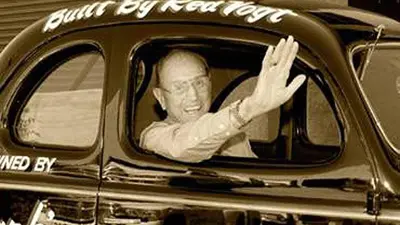 Edward Justice Sr.
1921–2008 Edward “Ed” Justice Sr. was one of the three brothers who established themselves as early leaders in the automotive lubricant and fuel…
Read bio
Class of 2019 · Founder’s Award
Edward Justice Sr.
1921–2008 Edward “Ed” Justice Sr. was one of the three brothers who established themselves as early leaders in the automotive lubricant and fuel…
Read bio
Class of 2019 · Founder’s AwardEdward Justice Sr.
Edward “Ed” Justice Sr. was one of the three brothers who established themselves as early leaders in the automotive lubricant and fuel additives market in the early 1950s. The brothers-Ed, Zeke, and Gus-were actively involved in business even as teenagers in their hometown of Paoli, Kansas before World War II.
Ed served in the U.S. Army Air Force in England and when he returned, he and Zeke went to work for Frank Kurtis at Kurtis-Kratt building sprint cars and midgets for oval tracks. They moonlighted on evenings and weekends with their own enterprise Justice Brothers Race Car Repair and Fabrication. All the while they experimented with lubricants and additives to increase performance and longevity. Using proceeds from selling a midget racer they built, the brothers started Justice Brothers Inc. to market the line of lubricants and additives. Ed ran sales, Gus was the accountant, while Zeke developed and tested new products. Ed’s ability as a salesman and name marketer propelled the company to success. Ed knew the world of motorsports would be a wonderful marketing tool. He aligned the company with the newly founded NASCAR, the Championship Car Circuit, the Indianapolis 500, and NHRA Drag Racing. Quickly race cars were caring Justice Brothers decals and Ed began to sign prominent drivers as company spokesmen.
In 1950, Johnny Parsons won the Indianapolis 500 in a Justice Brothers sponsored Kurtis-Kraft roadster and the first of the Justice Brothers’ shirts appeared at the Southern 500 NASCAR race at Darlington, South Carolina. Soon after, aspiring young drag racer named, Don Garlits was signed by Ed Justice Sr. and the Justice Brothers were Garlits first corporate sponsor. Over the years the three brothers grew their business thanks to their complementary strengths. Over the years the roster of products grew as did the famous racers who carry the company name to race wins and season championships. Today under the guidance of Ed Sr. son, Ed Jr., the company still thrives.
-
2019
Pat Garlits Memorial Award
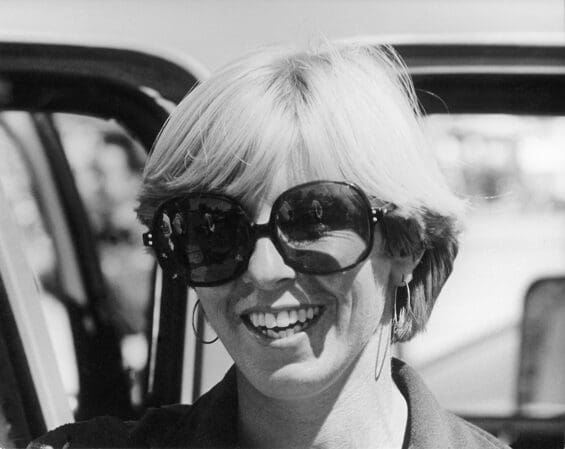 Lynn Prudhomme
 has been a part of her husband’s life since they met in a high school art class in a Los…
Read bio
Class of 2019 · Pat Garlits Memorial Award
Lynn Prudhomme
Lynn Prudhomme has been a part of her husband’s life since they met in a high school art class in a Los…
Read bio
Class of 2019 · Pat Garlits Memorial AwardLynn Prudhomme
Lynn Prudhomme has been a part of her husband’s life since they met in a high school art class in a Los Angeles area high school. First as a girlfriend, and then wife to the iconic drag racing superstar, Don Prudhomme. She found herself sharing some of the spotlight (some say reluctantly) of his fame over the decades of his career.
While she has always been a person who never sought notoriety connected to her husband’s fame, she has been a core for the family, raising daughter Donna Lynn in as normal environment as possible, while supporting her husband as she crisscrossed the country during his 35-year racing career as a driver and later as a team owner. Over many of those years, Lynn, like so many drag racing wives, served as the effective team manager.
Lynn was always aware of the danger of the sport and she’d seen, over the years, how a major crash could shatter a racer’s family in an instant. There was always a thought in her mind that there needed to be some method to provide emotional and financial support to the injured racers and their families.
It was the major, life-threatening, crash involving Shirley Muldowney at Sanair Dragway outside Montréal Québec Canada in 1984 which serve to galvanize the sport to act upon those concerns. Together with the wives of other drag racing stars and others close to the sport-Jerry Amato, Holly Beadle, Penny Beck, Laura Earwood, Pat Garlits, at Eglin, Diane Henrik, Linda McAuliffe, Jeannie Oswald-Lynn helped create what would become DRAW (Drag Racing Association of Women) which organized a campaign to help Shirley with her medical expenses and other needs. This quickly involved into DRAW becoming a charity organization which drew the support of the racers, sponsors, sanctioning bodies, promoters, manufacturers, and the fans. Today what started 35 years ago continues to assist racers and their families with financial and emotional support.
Lynn has also help preserve some of the history of the sport, by helping Don catalog and organize the extensive collection of important race cars that he drove and owned as a team owner. As well as, memorabilia such as trophies, awards, racing apparel, and collectibles. Today these items are preserved at Snake Racing’s shop in Vista, California.
In recognizing Lynn Prudhomme for this award Don Garlits stated, “Like my wife Pat, Lynn has always been there for others, often putting their needs ahead of her own.”
-
2019
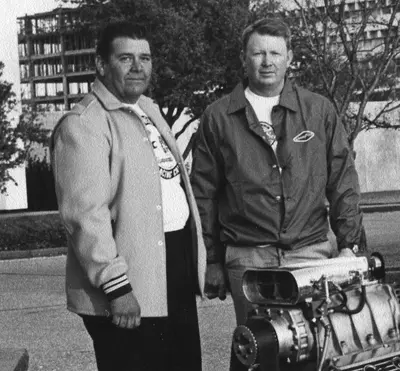 William “Bones” Carroll & Curt Carroll
Known as the “Texas Whips” William Carroll and Curt Carroll hailed from Irving, Texas. The Carroll brothers owned Carroll Brothers Erection Company…
Read bio
Class of 2019
William “Bones” Carroll & Curt Carroll
Known as the “Texas Whips” William Carroll and Curt Carroll hailed from Irving, Texas. The Carroll brothers owned Carroll Brothers Erection Company…
Read bio
Class of 2019William “Bones” Carroll & Curt Carroll
Known as the “Texas Whips” William Carroll and Curt Carroll hailed from Irving, Texas. The Carroll brothers owned Carroll Brothers Erection Company which built steel buildings. William and Curt had another deep passion for the sport of drag racing and were major players in the top fuel class during the 1960s and into the early 1980s. The brothers boasted some of the sports top racers of the time driving for them including: Gary Bailey, Kenny Bernstein, Buddy Cortines, Bob Gibson, Ben Griffin, Marshall Love, James Ludden, Murray Oxman, David Pace, Dave Settlers, and Richard Tharp.
The “Texas Whips” made a successful transition from the front engine dragster area to the rear engine dragster with David Pierce and Richard Tharp delivering some of the most memorable results. Tharp recorded the first sub six second run at the NHRA Summernationals in Englishtown New Jersey at 5.97 seconds in 1975. Pace recorded two runner-up finishes at Denver’s NHRA Mile High Nationals and prestigious NHRA US Nationals in 1981. Pace scored a ninth place points finish in 1981 despite running less than half of the NHRA events.
Over the years the Carroll Brothers did most of their racing in and around NHRA’s Division Four (South Central Division) winning a number of races and a season championship along the way.
-
2019
 Ted Dzus
1943–2024 Ted Dzus Jr. known affectionately as “The Quarter Turn Man” who took a product, typically known as a cam locking fastener, but…
Read bio
Class of 2019
Ted Dzus
1943–2024 Ted Dzus Jr. known affectionately as “The Quarter Turn Man” who took a product, typically known as a cam locking fastener, but…
Read bio
Class of 2019Ted Dzus
Ted Dzus Jr. known affectionately as “The Quarter Turn Man” who took a product, typically known as a cam locking fastener, but commonly known as the “Dzus Fastener” from the aircraft industry and into the motorsports and custom automotive arenas.
The Dzus Fastener was the brainchild of Ted’s grandfather, William an Ukrainian immigrant engineer who worked for a long island aircraft company in the 1930s. Developed to secure aircraft body panels which were loosening and rattling the fastener was deceptively simple, using a spring wire and a button shaft machine to accept the spring into an over center locking fastener, which required only a quarter of a turn to lock or unlock. Following World War II Army and Navy aircraft mechanics remembered this straightforward strong easy use fastener and adapted it to the race car market. The first recorded use in motorsports was by famed Justice Brothers (Ed and Zeke) in California on a Kurtis-Kraft midget oval track car.
Working for his grandfather and father at the company in the 1960s Ted Jr’s love for automotive performance help expand the company’s market horizons outside the aircraft industry. Ted Dzus Sr. became president of Dzus Fasteners in 1964 after his father’s death and Ted Junior assumed control in 1982.
The idea of using the Dzus Fastener spread into drag racing when drag racers like Don Garlits and others used the fastener was marketed by the Mr. Gasket and Moroso companies. They became “must use” items to quickly secure body panels which were often removed to access the engine and driveline for service in almost all forms of motorsports. He promoted the use of his “magic buttons” on his own drag race cars (a 1973 Vega, 1980 Chevette, and 1955 Chevy), plus a 1951 Mercury and a 1951 Kaiser Henry J cutting-edge street rods.
Ted Junior also developed variants for engine valve cover retainers, radiator hose clamps, battery clamps, and hood pins. Outside the automotive and aerospace industry Dzus Fasteners extended into the medical hardware market. Ted Jr created a version of the fastener that is used to repair complex long bone fractures.
-
2019
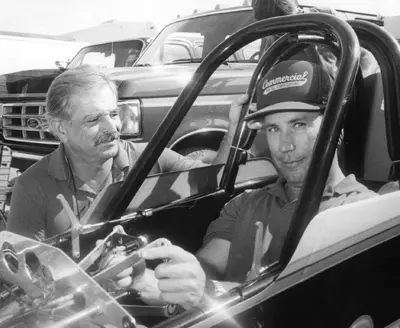 Gary Rupp & Pat Dakin
Gary Rupp and Pat Dakin raced as the “Rupp and Dakin” top fuel team and were strong competitors in the NHRA’s very…
Read bio
Class of 2019
Gary Rupp & Pat Dakin
Gary Rupp and Pat Dakin raced as the “Rupp and Dakin” top fuel team and were strong competitors in the NHRA’s very…
Read bio
Class of 2019Gary Rupp & Pat Dakin
Gary Rupp and Pat Dakin raced as the “Rupp and Dakin” top fuel team and were strong competitors in the NHRA’s very tough Division III (Midwest division). The pair started racing in the gas class. Rupp owned the car and served as crew chief, while Dakin handled the driving chores. They raced in the gas class in 1970 and moved to top fuel in 1971, racing a front engine dragster for one year. Seeing the rear engine dragster become a consistent winner the pair switched to a Hemi powered Woody Gilmore chassis the following year.
Rupp and Dakin cars were always sharp appearing and performed as well as they looked. When matched against the national touring teams the pair more than held their own. The pair raced heavily at divisional races because of their businesses, but would occasionally venture out to compete at select national events east of the Mississippi River. Within the Midwest Division the pair were always one of the teams to contend for a win. The pair won the NHRA’s LeGrand National Molson at Sanair Dragway outside of Montréal Québec Canada in 1971 and again in 1973.
Rupp and Dakin bought a new chassis for the 1975 season and ran it through the 1977 season when they retired from competition. In 1989 Rupp and Dakin returned to the sport and immediately were contenders. They won the IHRA Top Fuel Championship that year. The team disbanded in 1993 when Gary Rupp retire to move to Florida. Pat Dakin began his own business Commercial Metal Fabricators in Dayton Ohio. Dakin continues to race competitively at selected NHRA events.
-
2019
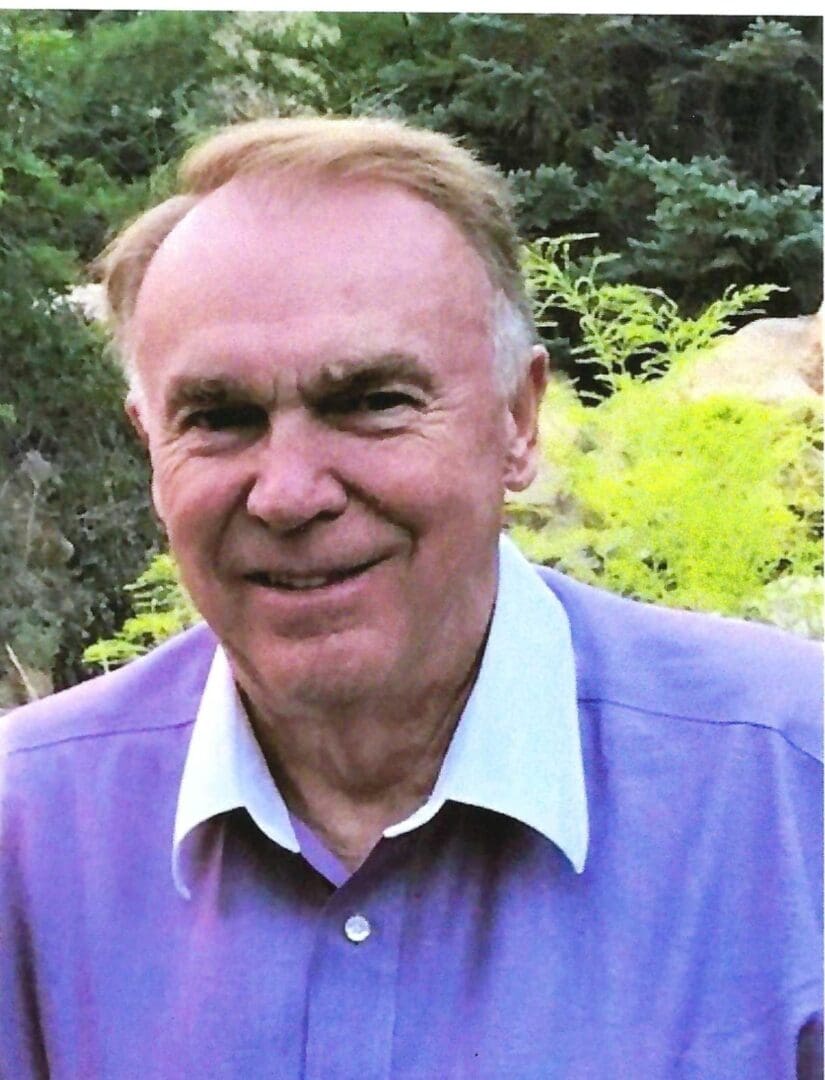 Dan Richins & Rex Pearmain
Dan Richins and Rex Pearmain, known as the “Iron Horse Team”, were not household names in the world of drag racing. The…
Read bio · 2 photos
Dan Richins & Rex Pearmain
Dan Richins and Rex Pearmain, known as the “Iron Horse Team”, were not household names in the world of drag racing. The…
Read bio · 2 photos
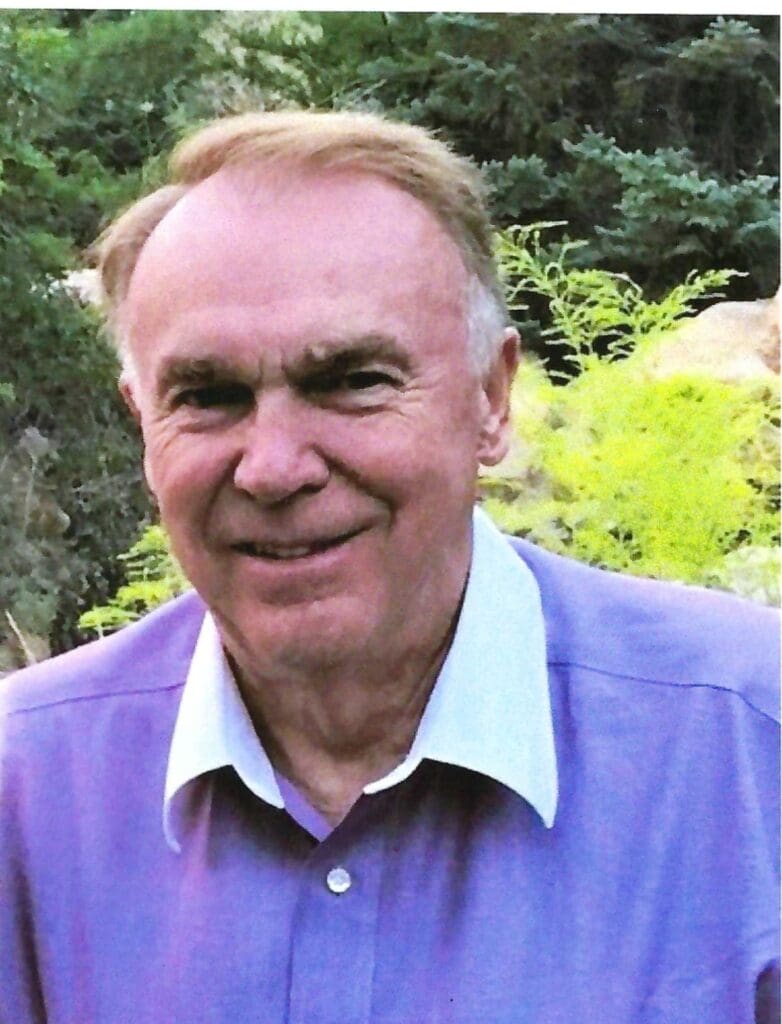 Class of 2019
Dan Richins & Rex Pearmain
Dan Richins and Rex Pearmain, known as the “Iron Horse Team”, were not household names in the world of drag racing. The fact is Salt Lake City Utah is a bit off the beaten path when it comes to significant drag racing teams. However, during the mid-1970s the “Iron Horse Team” were significant forces with which to be reckoned. This was particularly true at the high elevation drag strips found in the NHRA’s Division Five (West Central Division), Division Six (Northwest Division), and Division Seven (Pacific Division) events.
Between 1971 in 1976, Richins and Pearmain aggravated a number of top fuel racers who raced at divisional events. Pearmain had the knowledge of how to tune and engine to deliverable reliable repeatable performance in the thin air (low oxygen) of high altitudes. The Iron Horse Team was a low-budget operation and chose to race cautiously while at the same time being competitive. The team had several low qualifiers and track elapsed time records in their career.
When the Iron Horse Team went to low altitude tracks, a Pearmain tune-up to compensate for the oxygen-rich conditions coupled with Richins driving skills delivered significant results. The team’s career defining moment was the stunning 5.930 seconds elapsed time recorded at the NHRA’s Supernationals in Ontario California in 1973. This secured them the number eight spot in the prestigious Cragar Five Second Club. They were the first member of this club with a Donovan Hemi powered car. Richins and Pearmain’s knowledge also allowed them to achieve low qualifier positions at the AHRA Northern Nationals in Fremont California.
Photo gallery · 2
-
-
2019
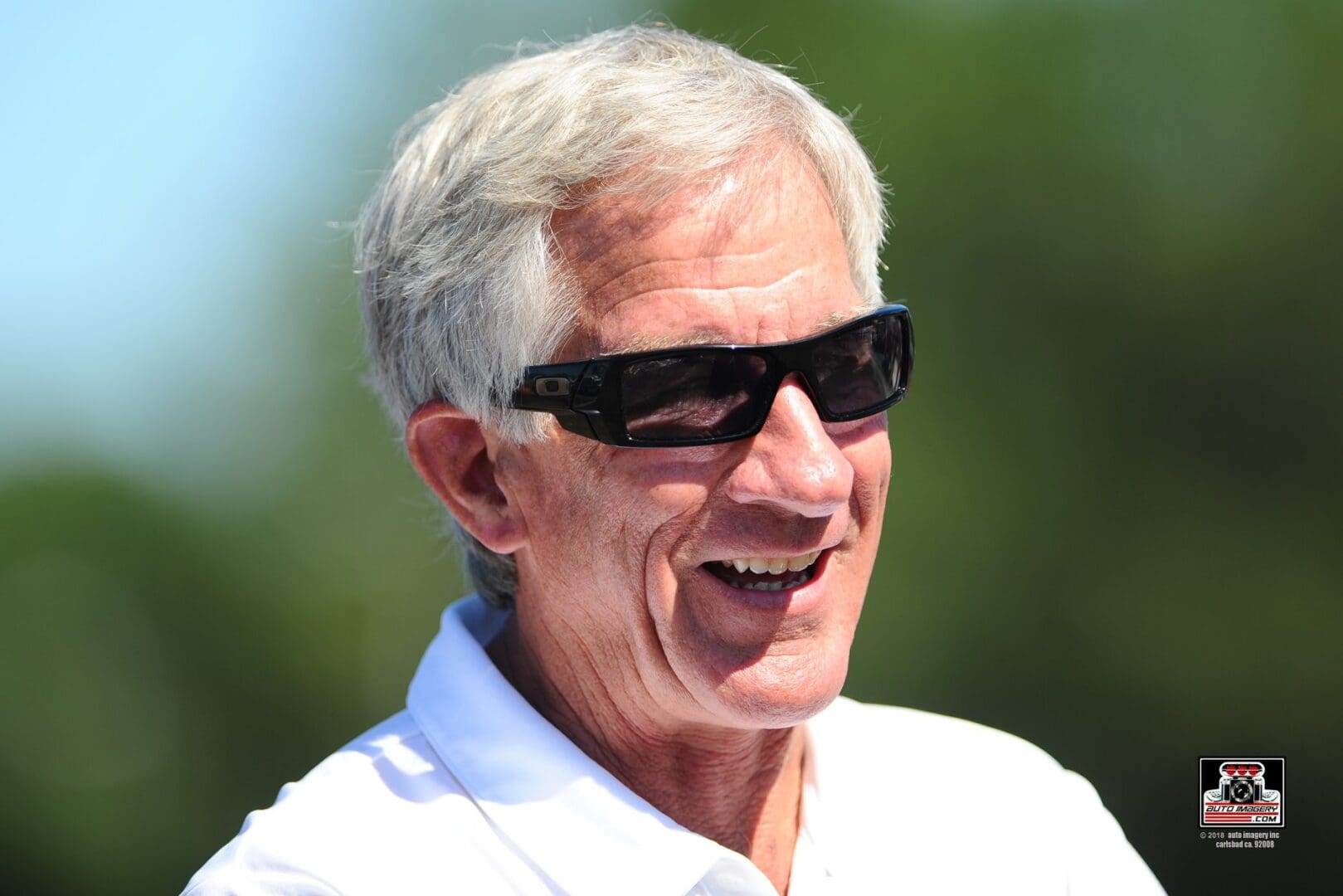 Mike Lewis
 could be described as a “man for all seasons”. Mike was almost born into the world of drag racing, when…
Read bio
Mike Lewis
Mike Lewis could be described as a “man for all seasons”. Mike was almost born into the world of drag racing, when…
Read bio
 Class of 2019
Mike Lewis
Mike Lewis could be described as a “man for all seasons”. Mike was almost born into the world of drag racing, when his grandfather, Alford Stauffer built the famed Maple Grove Raceway in Mohnton, Pennsylvania when Mike was 12 years old. Racing got to his blood even earlier when his father would take him to the famed Williams Grove, Pennsylvania, dirt track to watch the midgets and the USAC Champ cars battle. However, his loyalty changed when he first heard a nitromethane fuel dragster’s cackling and thundering exhaust. During his teen years he worked at the family’s dragstrip learning just about every facet of the track from the ground up. After attending Kutztown University, he returned to the track in a management role, including announcing.
Mike partnered with brother Kent in the “Sparkling Burgundy” top fuel dragster which the pair campaigned from 1970 to 1976. He stopped driving to become the Track Master at Maple Grove Raceway in 1971 and later assumed the role of President. He would leave Maple Grove in 1989 to join the National Hot Rod Association as Vice President of Field Operations overseeing NHRA’s seven divisions and member tracks. In 1995 he was named as vice president of NHRA and also General Manager of NHRA’s Indianapolis Raceway Park home of the crown jewel event the US Nationals. In 1998 drawing on his vast experience in track management and his relationship in the sport he formed Ace Ventures in Indianapolis a motorsports consulting organization.
He joined Don Schumacher racing as Vice President (a position he still holds today) and help develop the team’s position as a premier motorsports operation featuring three top fuel cars and four funny cars. Don Schumacher racing has won 17 world championships and over 330 national event titles.
As if that is not enough Lewis continues to race at select Nostalgia Drag Racing events winning the 2012 NHRA California Hot Rod Reunion Funny Car class in the Gutierrez and Smith “Brand X” Ford Mustang funny car.
Mike Lewis has created and collaborated in a number of special initiatives between the sport in several charities. Mike Lewis despite all of his significant contributions to the sport as a race track executive, race team executive, sanctioning body executive, and a pretty good race car driver remains humble and very approachable. He still loves the sport to which he has devoted his life.
Class of 2018
8 inductees-
2018
Pat Garlits Memorial Award
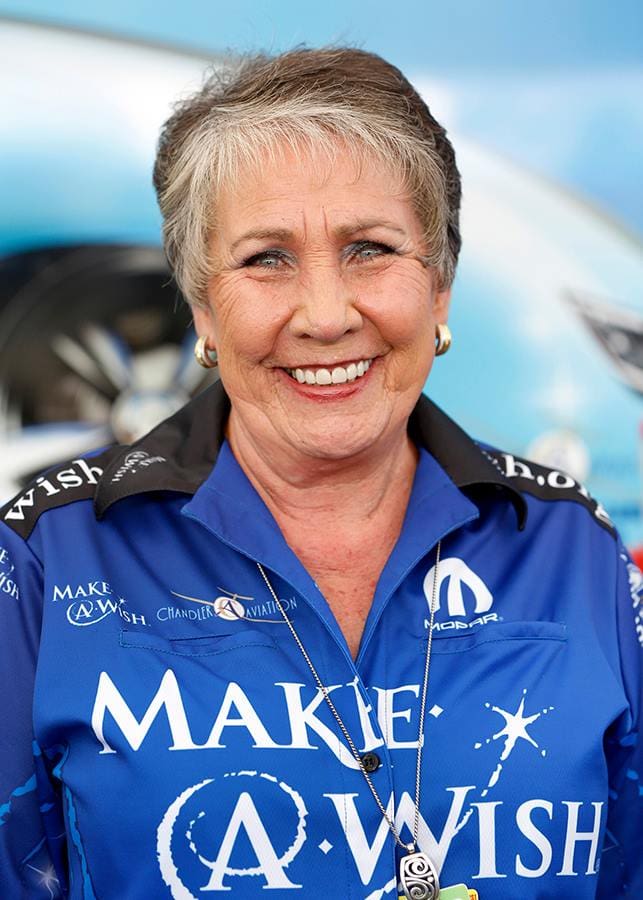 Terry Chandler
1951–2017 Terry Chandler grew up in an oil field family in southeastern New Mexico, since her late father, John R Gray owned Marbob…
Read bio
Class of 2018 · Pat Garlits Memorial AwardPresented by John Force Racing & Don Schumacher Racing
Terry Chandler
1951–2017 Terry Chandler grew up in an oil field family in southeastern New Mexico, since her late father, John R Gray owned Marbob…
Read bio
Class of 2018 · Pat Garlits Memorial AwardPresented by John Force Racing & Don Schumacher RacingTerry Chandler
Terry Chandler grew up in an oil field family in southeastern New Mexico, since her late father, John R Gray owned Marbob Energy. As a young adult one of her interest included watching her younger brother, Johnny Gray, race cars. As she grew older Terry developed a special interest for children in need and for our military veterans. Fortunately, Terry found a way to combine her love of racing and helping people while having a lot of fun doing it.
Terry’s interest in drag racing started early as a result of her younger brother, Johnny, being involved with racing. Johnny was involved in many forms of racing including NHRA pro stock and eventually funny car racing. In the early years Terry would go along with Johnny; you could find her selling T-shirts at the local tracks and helping prepare Johnny’s car for a run. These were the days of budget racing.
As Johnny moved up in the pro funny car ranks standings Terry continue to be her brother’s biggest fan attending most of his races. As they grew older and their financial status change from the early days of racing on a budget; Terry and Johnny decided to honor their late father by co-sponsoring the Pitch Energy funny car driven by Johnny. The car had the image of their father for Johnny’s last year of racing. With his retirement looming and recognizing his sisters love of NHRA racing Johnny suggested she consider sponsoring a funny car team herself.
While Terry could have chosen to do many different things with her resources Terry accepted her brother suggestion. She decided that if she were to sponsor a car it would be as she called it, “a giving car”. Teaming with Don Schumacher racing Terry began by backing the Make-A-Wish funny car driven by Tommy Johnson Jr. who assumed Johnny seat. A year later the opportunity arose to sponsor a second car driven by World Champion Jack Beckman; the Infinite Hero funny car. Both organizations are nonprofits and rely upon contributions for support. Terry provided both of these charities with a tremendous amount of exposure from the 330 MPH billboards. With Tommy Johnson in the driver seat the Make-A-Wish car has notched eight wins and Jack Beckman Infinite Hero Foundation team has appeared in the winner’s circle 11 times.
Through her sponsorship with Make-A-Wish and the Infinite Hero organizations Terry was able to make the dreams of children with terminal illnesses and wounded soldiers come true. Terry arranged for these individuals to not only come to the drag races but to be a part of the teams (giving them access not only to the pits but also the team areas including standing at the starting line). Terry also yearly- during the NHRA US Nationals in Indianapolis, Indiana- provided her time, funding, and support to the Riley Hospital for Children in Indiana.
Perhaps Terry’s greatest joy was standing at the starting line cheering on her teams (including the pro-stock cars of nephew Shane Gray and his son Tanner). Her passing in 2017 has left a very large vacancy at the starting line and emptiness in the hearts of both racers and spectators.
-
2018
Founders Award
 Herb Fishel
Growing up in Winston-Salem, North Carolina, Herb Fishel watched short track racing at Bowman Gray Stadium, read about Zora Arkus-Duntov in Hot…
Read bio
Herb Fishel
Growing up in Winston-Salem, North Carolina, Herb Fishel watched short track racing at Bowman Gray Stadium, read about Zora Arkus-Duntov in Hot…
Read bio
 Class of 2018 · Founders AwardPresented by John Force Racing & Don Schumacher Racing
Herb Fishel
Growing up in Winston-Salem, North Carolina, Herb Fishel watched short track racing at Bowman Gray Stadium, read about Zora Arkus-Duntov in Hot Rod Magazine and worked on cars with his uncle William. He consumed every scrap of information he could find in the local paper about the Indy 500, Daytona 500, the 24 hours of Le Mans, and the Mille Miglia.
He came up with an idea: racing could be, and should be, and accelerated test laboratory for an automotive manufacturer. However, to do it he had to be the first in his family to get a college education. Technically and scientifically he was initially ill-prepared to face the engineering challenges he encountered upon enrolling at North Carolina State. But he was determined to go racing, and that grit propelled him to earn a degree in Mechanical Engineering from NC State in 1963.
His first airplane trip was to Detroit to interview with General Motors. After the interview was done, he was asked if there was anything else, he would like to do while in Detroit. He didn’t hesitate, “I want to meet Zora Duntav”, he said. Before the day was over Fishel met his boyhood, idol and agreed to begin working as an engine draftsman.
He held onto his childhood belief that racing was essential to an automaker especially the major events: the Rolex 24, they Daytona 500, the Indy 500, and the 24 hours of Le Mans. Driven by the strong work ethic he learned from his father, Fishel made his dream a reality. In 2001 General Motors won the Rolex 24, the Daytona 500, the Indy 500, and had class win in the 24 hours of Le Mans. Fishel guided GM to many driver and manufacturer titles in NASCAR, Indy car, drag racing, sports cars, and off-road racing.
He retired as the Executive Director of General Motors Racing in 2003. Afterwards he completed the Mile Miglia route through Italy, driving a 1953 Ferrari 250 MM co-piloted by his wife Sandy.
Fishel feels his greatest achievement to be one that carries no trophy or award. In the early 1990s he pioneered the Motorsports Safety Initiative for General Motors. He assembled a research and development team that led to innovations that save thousands of lives. His team studied accidents on the race track with test dummies, pioneered black box recorders in Indy cars, roof flaps and restraints in NASCAR, and structural and impact absorption improvements used in almost every form of racing.
During the energy crisis in 2006 he foresaw the future motorsports is being defined by global concerns for energy supplies and climate change. His vision that the great race of the 21st century would be for economic, socially responsible, and sustainable transportation is now a reality.
Fishel has received many awards for his contributions to motorsports. He was named by Hot Rod Magazine as one of the “100 Most Important People in the First 50 years of Hot Rod” (1997), and Racer Magazine as one of the “Most Influential People in Racing from 1996 to 1999”. He was presented with the “Spirit of Le Mans” award by the race organizers (2003), and drove the pace car at the 2003 Indy 500. In 2005 Herb received the distinguished Engineering Alumnus Award from North Carolina State University, plus was inducted into the SEMA Hall of Fame. In 2015 he was inducted into the Corvette Hall of Fame. Automotive News Magazine honored the 100 years of Chevrolet in 2011 naming Fishel as one of the “100 Most Influential People” stating, “Fishel put Chevrolet in the winner’s circle”.
-
2018
 Greg Sharp
’s love affair with hot rodding and drag racing began as a highly curious “car crazy” 12-year-old who devoured the enthusiast…
Read bio
Greg Sharp
Greg Sharp’s love affair with hot rodding and drag racing began as a highly curious “car crazy” 12-year-old who devoured the enthusiast…
Read bio
 Class of 2018Presented by John Force Racing & Don Schumacher Racing
Greg Sharp
Greg Sharp’s love affair with hot rodding and drag racing began as a highly curious “car crazy” 12-year-old who devoured the enthusiast magazines of the 1950s. Absorbing their contents like a sponge he later became an expert on the history of hot rodding and virtually all forms of motorsports. His first drag race was at age 13 at Lions Dragstrip and he still remembers that Jack Chrisman in the “Sidewinder” was top eliminator with the stunning 9.05 second ET.
He has been described by several magazines as the “go to guy for data on the history of hot rodding and drag racing”. When it comes to knowing the history of our sport, having written documentation, and photos to back up his knowledge, Greg is the man.
Sharp grew up in San Pedro, California and went to school with such drag racing notables as Carl Olson and Mike thermos. A neighbor worked for Frank “Ike” Iacono and having Ike’s dragster pull up in front of his house on its trailer was experience he would never forget. Years later he drove a dragster at Orange County and was thrilled with its 150 MPH ride.
In 1967 Greg began his day job as a member of the Los Angeles Police Department retiring in 1995. However, that did not keep him away from his love of hot rods and motorsports.
More than a historian Greg Sharp is a participant. He joined the famed LA Roadsters Club with a 1929 roadster pickup he owned for over 30 years. Through the club he got the opportunity to drive on Bonneville salt; meeting and becoming friends with many of the legends of the land speed fraternity. He has served as an International Show Car Association official and Judging Supervisor for over 10 years. He helped select the prestigious “America’s Most Beautiful Roadster” at the Oakland Grand National Roadster Show. In 1989 Greg began acting as Master of Ceremonies and historian for the show.
In the early 1970s Greg began to use his storehouse of knowledge to write hundreds of magazine articles ranging from the history of “America’s Most Beautiful Roadster” to pieces on historic Indy cars plus personality profiles from AJ Foyt to George Barris. He has an extensive collection of historic hot rod and custom car photographs which have been invaluable to the restoration of numerous historical hot rods and race cars.
Falling retirement, he was named director NHRA Historical Services where he had a key role in the formation of the Wally Parks/NHRA Motorsports Museum. He has served as curator since its opening in 1998. Working closely with several drag racing Hall of Fame members he’s helped to locate vehicles and produce a wealth of information that makes visiting the museum educational and enjoyable. Many of his personal photos and artifacts are on display including rare race programs dating before the 1920s.
He served as event director of the California Hot Rod Reunion for several years and is credited with coining the term “cackle fast” after Steve Gibbs created the concept that has become such a major part of historic drag racing activity.
Greg is a member of the Oakland Grand National Roadster Show Hall of Fame and was named The Dry Lakes Racing Hall of Fame Historian of the Year. He received the Dean Batchelor Award from the Motor Press Guild for the “Best Article of 2012” for his story in “The Rodders Journal” on the history of the famed So-Cal streamliner, ironically a car driven by Batchelor.
-
2018
 Oliver “Ollie” Riley
1918–1992 Unlike most of the honorees of the sport, Ollie Riley didn’t grow up around high-performance cars but his interest in mechanics and…
Read bio
Oliver “Ollie” Riley
1918–1992 Unlike most of the honorees of the sport, Ollie Riley didn’t grow up around high-performance cars but his interest in mechanics and…
Read bio
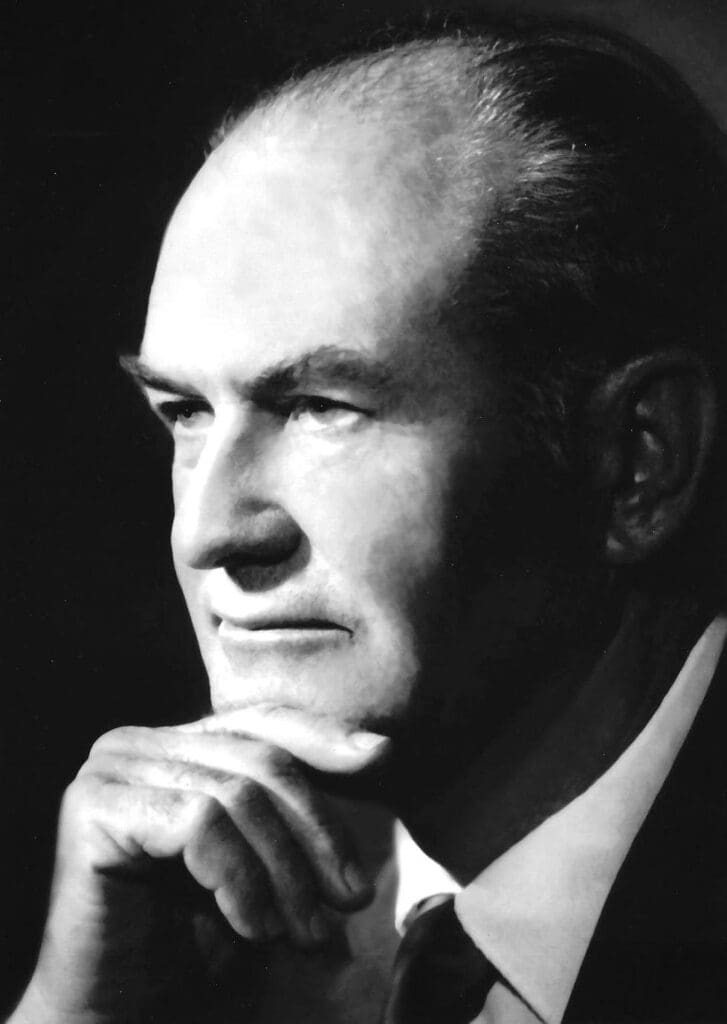 Class of 2018Presented by John Force Racing & Don Schumacher Racing
Oliver “Ollie” Riley
Unlike most of the honorees of the sport, Ollie Riley didn’t grow up around high-performance cars but his interest in mechanics and electricity were similar to those who wished to go quick and fast.
Born and raised on a farm in Stanford Kansas; when Ollie was old enough to start using tools his curiosity of things electrical guided him to make his own toys which foretold his future. Long before transistors were created Ollie created his own radio’s powered by batteries connected in series. In high school and college Ollie repaired radios for extra spending money. His devotion to the emerging science of electronics earned him a Bachelors and a Masters of Science degrees in Electrical Engineering at Kansas State University graduating with honors. He worked as an instructor at Kansas State University after graduation.
During World War II he worked at Massachusetts Institute of Technology’s radiation lab on a top-secret state-of-the-art radar bomb site; testing it in Florida onboard a B-24. After the war he worked for a short time at General Electric but moved to La Vern, California, where he joined General Dynamics Convair Division designing guided missile systems.
In 1954 while attending a Dale Carnegie class he met Bud Coons who was a Pomona, California, Police officer and the Field Director of the fledgling NHRA Safety Safari. Coons learned of Ollie’s electronics background and felt that Riley might be able to help develop an accurate timing system.
Ollie’s ingenuity and drive for perfection made him the ultimate problem solver; an attribute that was stimulated by Coons inquiry about developing an accurate timing system. Ollie built the first timing set on his kitchen table which was accurate to within 0.001 second. It had the advantage of also being modular which allowed for easy replacement of a defective components. Soon Ollie was mastering the challenge for other precision drag racing timing equipment that brought the sport to a new level.
After transforming drag racing’s timing system Ollie left the aerospace industry to open the doors of a new family owned and operated electronics business-Chrondek Electronics. It was a specialty electronics manufacturer that was dedicated to producing timing equipment for all types of sports.
During the late 1950s Ollie observed several starters were making moves that allowed a driver to predict when he would raise the flag to start the race. To correct this Ollie worked to develop the first step light starting system which debuted at the 1963 US Nationals in Indianapolis, Indiana. In addition to providing a starting system the device also had a built-in “foul light” that turn red if the driver left early. A year later pre-stage bulbs were added to assist the driver in staging correctly. Because of its overall appearance the new starting system was soon dubbed the “Christmas Tree”.
The “tree” was not initially accepted by the racers because they had become accustomed to reading the flagman’s body language and were able to jump them. Although it took some time to become accustomed to the new procedure racers soon recognized the advantage of consistent and fair starts the tree offered which led to its use at drag strips everywhere. Ollie spent nearly two decades perfecting his Chrondek timing systems and in 1972 he sold the business to Aero-Marine Electronics.
Ollie’s contributions and groundbreaking innovations have help make drag racing what it is today. While Ollie passed away in 1992; his family proudly carries on his life story as a family man and inventor who changed the sport dramatically. Today Ollie’s inventions can be seen at the NHRA Museum in Pomona, California.
-
2018
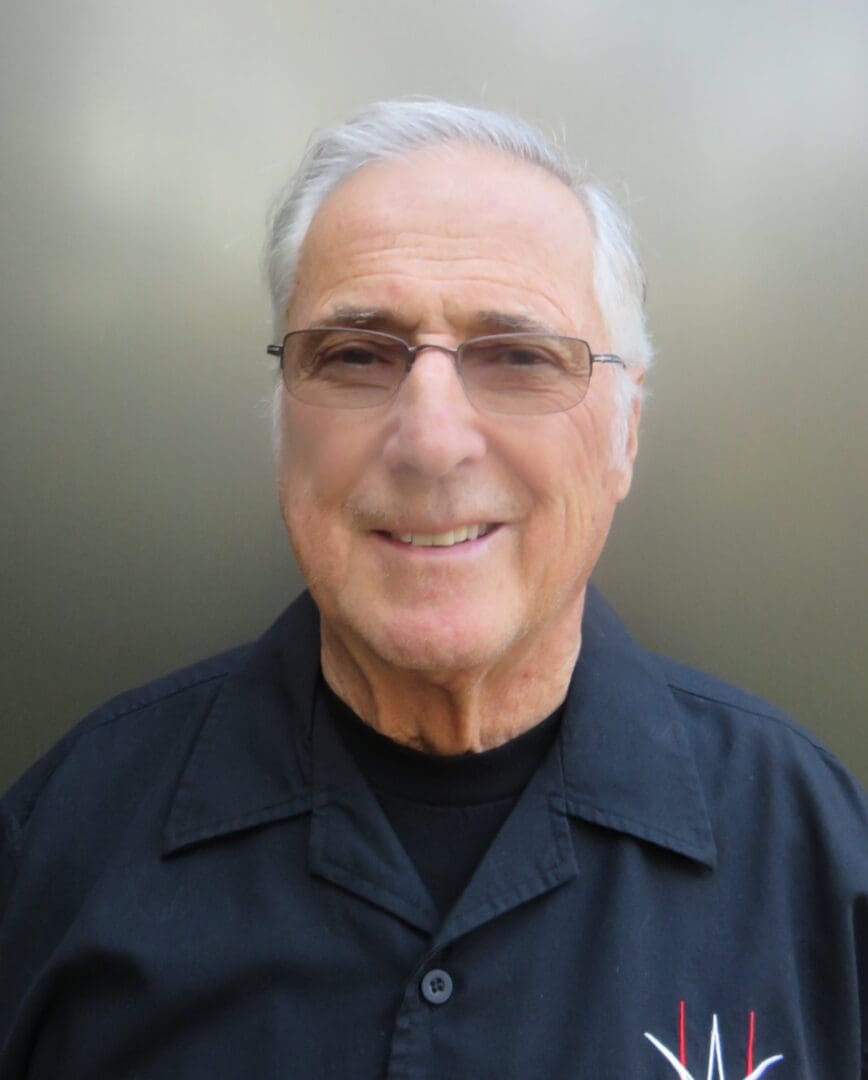 Jim Oddy
An early car enthusiast, at 16, Jim Oddy joined the Torrid Torkers a Buffalo, New York car club in 1957. Jim entered…
Read bio
Jim Oddy
An early car enthusiast, at 16, Jim Oddy joined the Torrid Torkers a Buffalo, New York car club in 1957. Jim entered…
Read bio
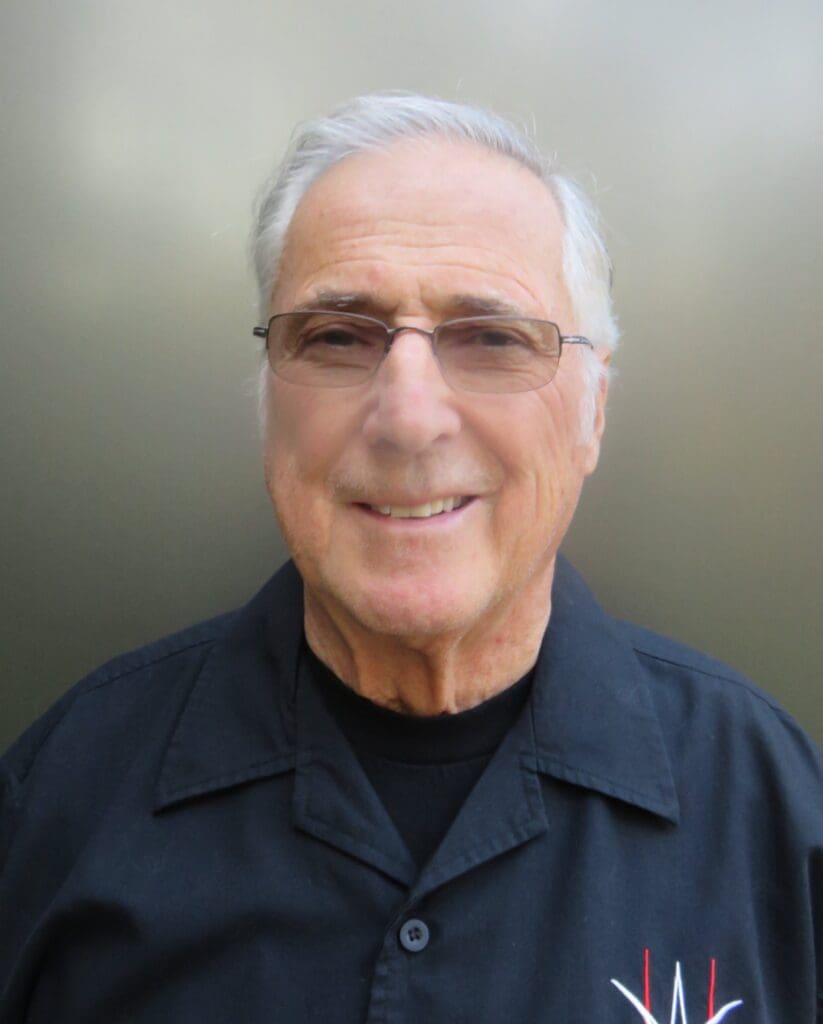 Class of 2018Presented by John Force Racing & Don Schumacher Racing
Jim Oddy
An early car enthusiast, at 16, Jim Oddy joined the Torrid Torkers a Buffalo, New York car club in 1957. Jim entered his inline six-cylinder 1936 Chevy Coupe into competition and, on his first time out, won his class. He was hooked leading to his lifelong career.
He became a fabricator and an engine builder and learned many of his skills from his father, Don Oddy, a shipyard welder and fabricator. These were lessons well learned for Jim was able to incorporate them into building his own cars. Over the years the Western New York native became a feared competitor and a highly respected builder.
Jim and his father built his first race car it 1960, C/Gas 1936 Chevy Coupe powered by a 302 Chevy. The car was an immediate success setting a new AHRA C/Gas class record at 12.20 seconds and 118 MPH. Jim attended the 1964 NHRA US Nationals as a spectator which inspired him to build a B/Gas Anglia coupe powered by a 302 Chevy. He returned to Indy the following year with the Anglia and one the class cementing Oddy’s reputation.
What followed from 1969 to 1974 were a succession of winning cars; a blown Chrysler powered 1948 BB/GS Austin sedan, and Opel GT body BB/GS coupe, and a BB/A Fiat blown altered. These cars carried Oddy to another US Nationals win plus two Division I titles.
Jim’s on-track successes with his creations led him to open the doors to Oddy’s Automotive in Elma, New York in 1975 specializing in supercharged engines of all makes and for a world-wide variety of applications. The demands of building quality engines cost him to scale back his racing.
In 1987 Jim again got the competition itch this time for the new IHRA Top Sportsmen class with a highly potent blown Chrysler powered Chevy Beretta coupe with the talented Fred Hahn at the wheel and Jim tuning the car. It was followed by the iconic flat black blown Corvette which set the top sportsmen class on its ear with a stunning 6.69 second pass at the IHRA race in Darlington, South Carolina. The car moved to the pro modified class in 1990 and won six consecutive Super Chevy events in 1996 and 10 more in 1997, plus the Pro Modified World Championship both years. The Hahn & Oddy magic continued, winning the 2000 IHRA Pro Modified World Championship and the 2003 NHRA AMS Pro Modified World Championship.
As time went on the pressure of the business and race travel started to take their toll on Jim. He retired to Mooresville, North Carolina but his love for building engines and race cars never diminished. Jim’s love for the Gasser’s cost him to build a 1934 Willie’s AA/G two-door sedan, “The Junkyard Dog”, to race at nostalgia Gasser meets with Junior Ward at the wheel.
Throughout the years Jim winning career and is considered one of the founding fathers of the pro modified class. His body of work has gained him many honors including: induction into the East Coast Drag Times Hall of Fame in 2004, the Lancaster Speedway inaugural class of the Wall of Fame 2015, and the NHRA lifetime achievement award.
-
2018
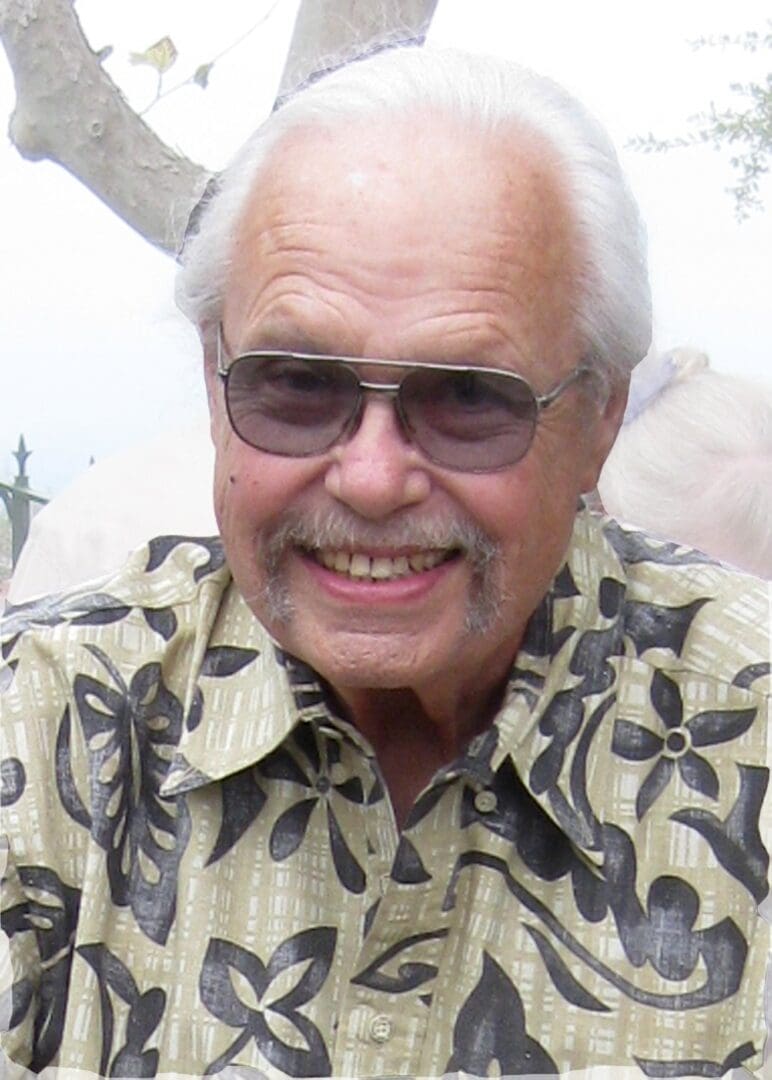 Roy Fjasted
1935–2018 Roy’s love for hot rodding began in his early teen years and has only grew with the passage of time. In 1951…
Read bio
Roy Fjasted
1935–2018 Roy’s love for hot rodding began in his early teen years and has only grew with the passage of time. In 1951…
Read bio
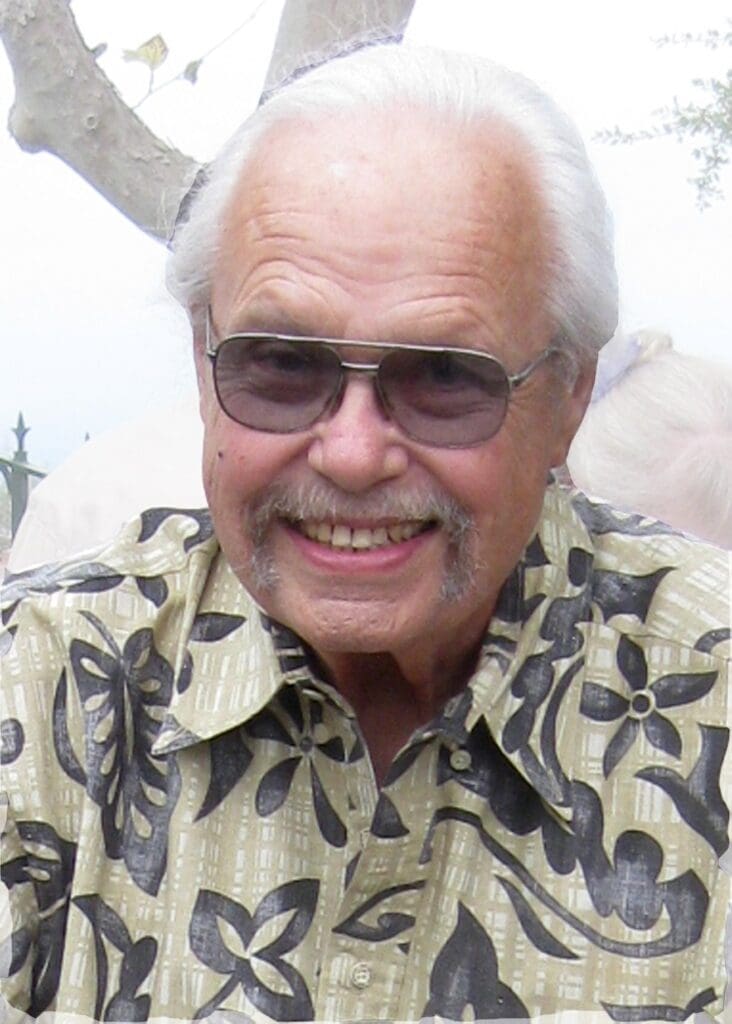 Class of 2018Presented by John Force Racing & Don Schumacher Racing
Roy Fjasted
Roy’s love for hot rodding began in his early teen years and has only grew with the passage of time. In 1951 he entered his first drag race, driving a 1950 Chevrolet, at Santa Ana Dragstrip; winning his first trophy the following year. Roy was a member of the Burbank California based “Road Kings Car Club” whose member roster included a “Who’s Who” of drag racing stars such as Tommy Ivo, Don Prudhomme, and Bob Muravez. For a young man the car club was a great place for learning new equipment, exchanging ideas, and gossip among the members.
Roy built his first dragster in his home garage in 1955 which incorporated new ideas and construction using a Chrysler engine for power and nitromethane for fuel. This established Roy on his fabrication career path for which he became well-known.
Four years later, in 1959, Roy went to work for Scotty Fenn at Chassis Research shop where he was able to learn even more about building safe and competitive cars from one of the leading builders of the time.
By 1965 Roy had set out on his own opening his own chassis shop Fjastad’s Speed Products Engineering. The name was later shortened to Speed Products Engineering, and more commonly known as SPE. Roy’s talents and passions didn’t just lie and building chassis. He also produced his own hydro-forms safety bell housing’s, two-piece couplers, disc brakes, front wheels, steering boxes, and torsion bar assemblies. This also included mass-producing the many little tabs for mounting various pieces of equipment.
It didn’t take long for competing chassis builders to realize they could save a great deal of time and money by purchasing the very uniform SPE parts. Soon these pieces began to be a staple in the chassis building market and helped cement the SPE brand.
As a competitor Roy began competing at the Bonneville Salt Flats in the early 1950s with a car based around a war surplus aircraft belly fuel tank. He raced the belly tank car in the A/GRMR class at Bonneville every year until 2012.
In 1974 Roy sold SPE. Two years later he opened the doors of the Deuce Factory and went from building race cars to building street rods. After he started building street rods Roy noticed there was a demand in the market for 1932 Ford frame rails and, as with SPE days, began building and marketing his own improved version of the Ford style rails. In Roy’s typical approach to a project not only did he began to produce frame rails but did extensive research and the market’s needs. Soon the Deuce Factory launched a complete line of street rod suspensions and other sought-after parts and pieces.
With retirement on the horizon Roy sold the Deuce Factory in 1992 but immediately discovered that this wasn’t his cup of tea. Roy’s soon established another company, Full Bore Race Products, and began manufacturing line of specialty tools and fasteners. Roy ran the company until he was 80 years old.
Roy has been recognized as one of the leading chassis builders by his peers and the drag racing community. One of Roy’s most rewarding accomplishment was becoming a lifetime member and serving for six years as President of the elite Bonneville 200 MPH Club. Taking pride in contributing to and supporting the club’s day-to-day affairs and endeavors.
Roy was elated when Don Garlits called him advising he had been inducted into the International Drag Racing Hall of Fame. Roy told everyone how much he looked forward to attending the event and receiving this proud recognition. Unfortunately, Roy passed away two weeks prior to the ceremony and banquet.
-
2018
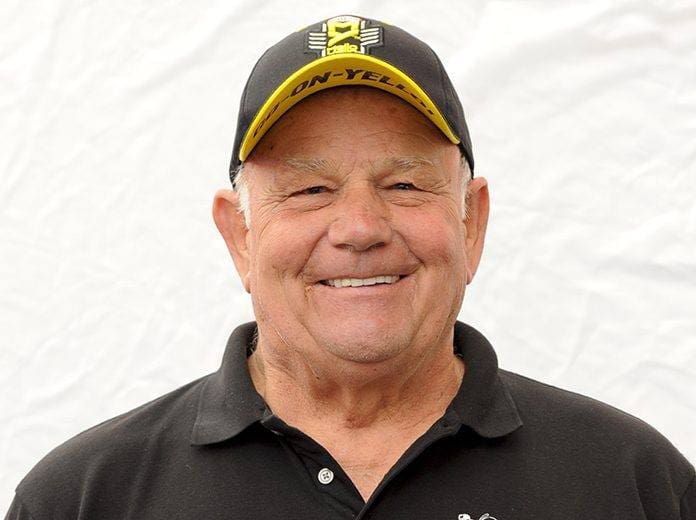 Gary Densham
One might consider Gary Densham of Menefee, California as the typical “grew up in Southern California” racer. Bellflower Boulevard was the place…
Read bio
Class of 2018Presented by John Force Racing & Don Schumacher Racing
Gary Densham
One might consider Gary Densham of Menefee, California as the typical “grew up in Southern California” racer. Bellflower Boulevard was the place…
Read bio
Class of 2018Presented by John Force Racing & Don Schumacher RacingGary Densham
One might consider Gary Densham of Menefee, California as the typical “grew up in Southern California” racer. Bellflower Boulevard was the place to go to show who had the fastest car. Lyons, Irwindale, and Orange County drag strips were close by. High school time was spent playing football Friday night and racing at the track on Saturday.
Densham’s career has been defined as a competitive, low-budget funny car driver. But he had a five year career in A/Gas Supercharged cars before beginning to race funny cars in 1971. Tight budgets forced him to wear many hats during the early part of his career serving as crew chief, owner, and driver. With the “little guy low-budget” profile Gary exemplifies many of the fuel class racers of the time. He made the most of his resources winning races in NHRA Pacific Division (division seven) and winning the 1982 Division 7 Funny Car Championship.
A high school auto technology teacher at Gahr High School (Cerritos California) his cars have always been called “Teacher’s Pet”. He has used his teaching expertise to mentor many students serving as crew members; a number who have gone on to work for other teams.
One of Gary’s proudest achievements has been his career in Australia. His first trip in 1974 with John Force was spent helping to keep John’s car running and teaching him some of the finer points of driving. Other tours “down under” in 1978, 1979, 1982, and 1986 saw Densham undefeated against him American and Australian racers. In 1995 he won the Australian National Championship.
His biggest success came in 2001 to 2004 while driving for John Force Racing. Finally, Gary had the funding and data needed to win an proved he could. He delivered eight wins, six number one qualifiers, set a national speed record (326.87 MPH), capped off by a US Nationals victory and the Skoal Showdown double up. Twice he finished fourth in the final point standing. Also, Gary and crew chief Jimmy Prock won Car Craft Magazine’s Person of the Year award.
Through his career Densham had three IHRA wins. Was the AHRA Funny Car National Champion in 1989, 1990, 1996, 1997, and 1998. As an independent racer Gary was the 13th member of the Castrol 4-Second the teenage phenom Club in 1998. He had to low qualify positions and finished in the top 10 of NHRA points on four occasions: 1995, 1996, 1997, in 2008.
As a crew chief he tuned his son Stephen, a former winning Junior Dragster driver, to the NHRA Heritage Series Championship in funny car in 2015.
As for the future Gary plans to keep racing as many races a year as funding allows and keep tuning Stevens nostalgia funny car. In fact, realizing he was going to be in Gainesville for the International Drag Racing Hall of Fame banquet and ceremony Gary told friends, “Hell let’s do the Gatornationals”.
If you see him at a race know he probably drove the rig there and set up the pit area. He will consult on the turning decisions, work on the car, and drive. Gary will have the most fun doing all of this because he just loves drag racing.
-
2018
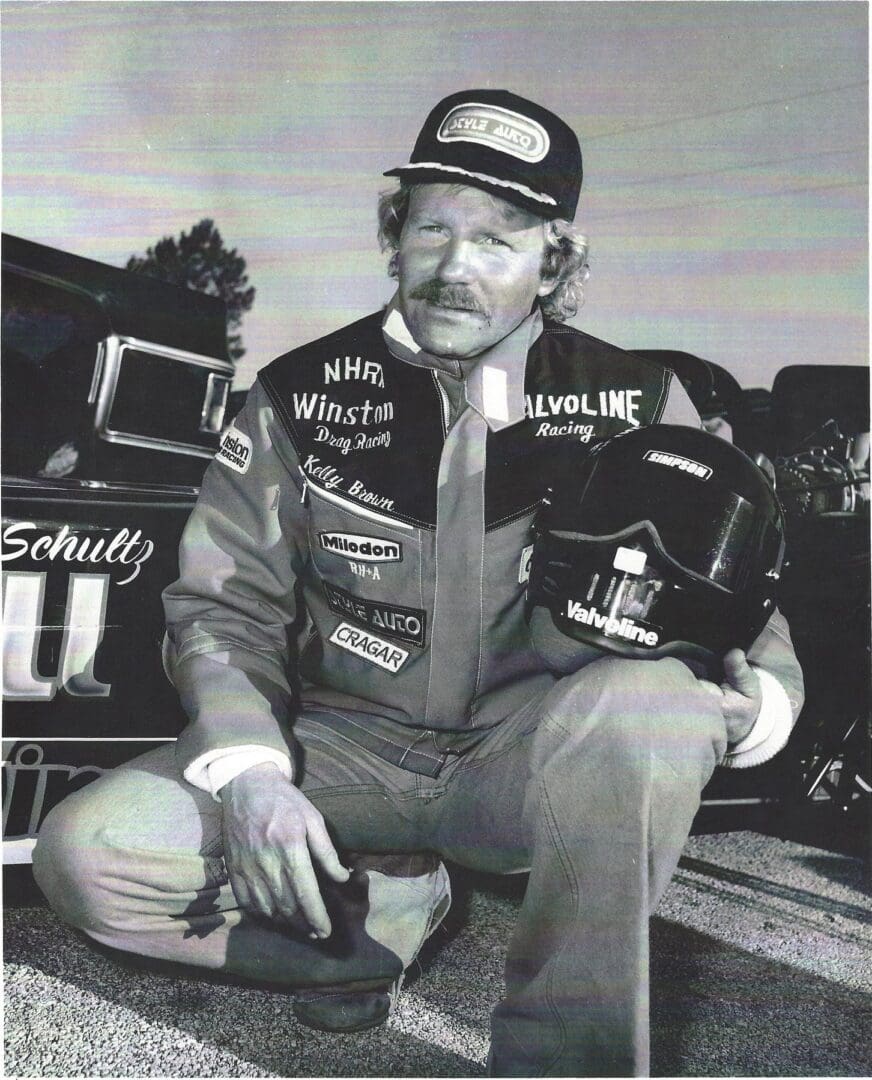 Kelly Brown
 was born in Hollywood, California and while he grew up in San Fernando Valley he retained his Hollywood roots by…
Read bio
Kelly Brown
Kelly Brown was born in Hollywood, California and while he grew up in San Fernando Valley he retained his Hollywood roots by…
Read bio
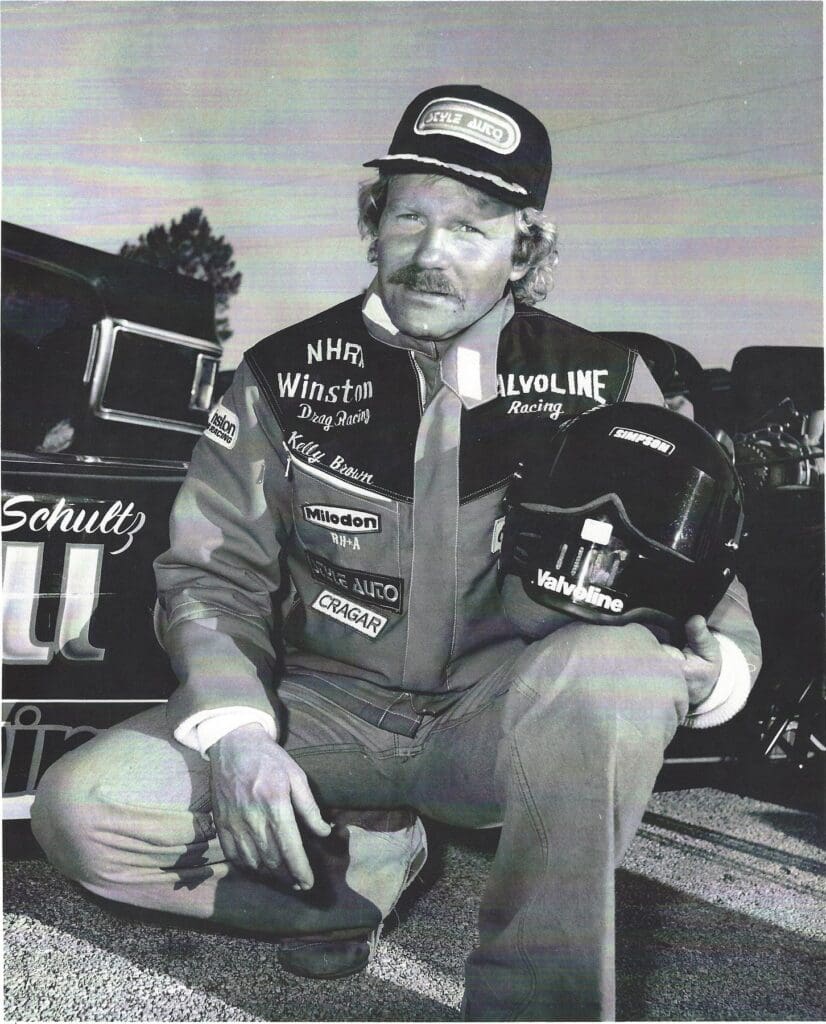 Class of 2018Presented by John Force Racing & Don Schumacher Racing
Kelly Brown
Kelly Brown was born in Hollywood, California and while he grew up in San Fernando Valley he retained his Hollywood roots by making his living in the movie and TV world as a producer, stunt driver, and technical advisor.
However, before he entered into the stunt driving world Kelly had already notched a very impressive record as a top race car shoe. Growing up one of Kelly’s best friends was Don Prudhomme’s brother, Manette Prudhomme, so he was exposed to drag racing and some of the early top competitors during his teens. One of his first efforts at drag racing was assisting Manette and Don run the Snakes Buick powered dragster at The Pond one Sunday. From that day forward Kelly was hooked.
In 1964 Brown had his first ride in the seat of Mel Cohen’s “L&M Special” injected Chevy junior fuel dragster. Not long after that followed another injected Chevy powered junior fueler owned by Vaughn Raviart. Kelly eventually moved into the driver seat of Art LeColst and Sonny Diaz’s blown Chrysler powered AA/Gas dragster.
Kelly secured his first top fuel win in 1966 in Vaughn Raviart and Art Tapper’s blown Chrysler AA/Fuel dragster at the legendary Lions Dragstrip. After his first trip to victory circle, Kelly soon became a frequent visitor at Lions driving for some of the sports legends including: Jim Bissett, Lou Baney, Leland Kolb, Barry Setzer, and Don Racherman.
In the 1971 season Kelly briefly drove Barry Setzer’s blown Chrysler powered Vega AA/Funny Car and notched a runner-up spot at the NHRA Springnationals. In 1973 he accepted the driving chores for Don Racherman’s Wonder Bread Vega wagon but in a noncompetitive car it was a less than fun season.
Making a living drag racing at the time was very difficult and while known as an outstanding driver Kelly was also involved in the film industry working in its production arena. Brown decided to spread out his career and join the Screen Actors Guild. Almost immediately he was working as a full-time stunt driver in movies, television, and advertising commercials taking a five-year vacation from racing.
In 1978 with his stunt driving career doing very well he returned to drag racing at the wheel of Jim Bissett and Mike Drake’s blown Chrysler AA/Fuel dragster. The team started this 1970 season with an off the trailer qualifying run of 5.87 seconds at the NHRA Winternationals in Pomona, California. They subsequently went on to win the event. Building on the outstanding debut the team went on to runner-up at the Gatornationals in Gainesville, Florida and won the Cajun Nationals in Baton Rouge, Louisiana, the Springnationals in Clovis, Ohio, and the Molson Grant Nationals in Sanair, Québec, Canada. Kelly ended the season by winning his first NHRA Winston World Championship title. He was named “Driver the Year” and “Person of the Year” by Car Craft Magazine. He was also named Car Craft Magazines All-Star Drag Racing Team.
The following year Kelly moved to the driver seat of Bill Schultz “Over the Hill Gang” AA/Fuel dragster. Winning the Gatornationals, the Cajun Nationals, the Mile-High Nationals in Denver, Colorado, and the US Nationals in Indianapolis, Indiana. That year Kelly claimed the number two spot in the NHRA World Championship title.
After driving Raymond Beadle’s Blue Max AA/Fuel dragster for part of the 1980 season Kelly made the difficult decision to permanently retired from racing to concentrate on his film career. Kelly built a similar reputation in the film industry as a stunt driver, producer, and technical advisor for various films including his involvement in the Shirley Muldowney movie “Heart Like A Wheel”. Kelly provided a lot of the equipment, technical advice, and driving time for the making of the movie.
Today Kelly enjoys complete retirement at his ranch in Northern California where he spends his time caring for his horses.
Class of 2017
9 inductees-
2017
Mopar Pat Garlits Memorial Award
 Eileen Daniels
1935–2022 Eileen Daniels a native of Marysville Ohio, has been an active participant in the growth of drag racing since she married her…
Read bio
Eileen Daniels
1935–2022 Eileen Daniels a native of Marysville Ohio, has been an active participant in the growth of drag racing since she married her…
Read bio
 Class of 2017 · Mopar Pat Garlits Memorial AwardPresented by Lucas Oil Products
Eileen Daniels
Eileen Daniels a native of Marysville Ohio, has been an active participant in the growth of drag racing since she married her late husband Bob, at the age of 18. She raced with Bob in a 1932 Ford and later a Fiat and was a pioneer female racer. Wally Parks, the founder of the national hot Rod Association, liked what he saw in Bob and hired him as one of the early employees of the NHRA serving as the first director of the NHRA’s Division 3. Eileen and Bob worked as a team setting up race tracks and operating events across the Division 3 territory which encompassed: Ohio, Michigan, Indiana, Illinois, Kentucky, Missouri, Minnesota, Wisconsin, and Eastern Canada (Ontario, Québec, and Maritime Provinces). While Bob was the visible face of the NHRA to racers, track operators, and promoters in the division Eileen was the solid backup support. She handled much of the administrative and clerical duties.
Later when the NHRA purchased the Indianapolis Raceway Park facility in 1979 the Daniels team took over the operation of the facility. They expanded their horizons to include working with United States Auto Club with the weekly open wheels sprint car and midget racing at the 5/8-mile oval. Plus working with NASCAR’s Kroger 200 Bush Grand National race held before the Brickyard 400 at the Speedway. They also worked with the Sports Club Car of America for road racing events. Again, Eileen’s office management skills made her husband’s job of overall facility management much more effective.
After retiring to Florida in 1997 the Daniels team was asked to help organize a premier event for the growing nostalgia drag racing market. Using the tools that had served them so well the past, the pair worked with the NHRA and the Wally Parks/NHRA Motorsports Museum to create what is now known as the NHRA Hot Rod Reunion events. Eileen worked on the NASCAR race’s hospitality programs until the race moved to the Speedway.
After Bob’s passing in 2007 Eileen continued her role in the reunion events and has become anointed with the unofficial title of “Den Mother” too many racers to participate in events across the country. Today she remains involved hosting the “Legends” tents at events; plus organizing historic drag car displays at the NHRA Gatornationals in Gainesville, Florida, and the US Nationals in Indianapolis Raceway Park.
NHRA awarded Eileen a “Wally” trophy upon her retirement after 40 years in 1997. She shared several other awards with Bob from the NHRA in honor of their support and dedication. In 2001 she and Bob were inducted into the International Drag Racing Hall of Fame. The Indianapolis Raceway Park named the hospitality center as the “Daniels Hospitality Center”. She was named a Kentucky Colonel in 2011, and has been inducted in several other Hall of Fames. In November 2016, Eileen was honored by the British Drag Racing Hall of Fame with the title of “International Ambassador” in honor of her long career on behalf of the sport. Eileen helped to promote the sport in North America plus Great Britain, Europe, Australia, and New Zealand.
-
2017
Founder’s Award
 Robert J McClurg
Bob McClurg grew up in 1950’s Southern California and was a car nut long before he became an accomplished writer and photographer.…
Read bio
Robert J McClurg
Bob McClurg grew up in 1950’s Southern California and was a car nut long before he became an accomplished writer and photographer.…
Read bio
 Class of 2017 · Founder’s AwardPresented by Lucas Oil Products
Robert J McClurg
Bob McClurg grew up in 1950’s Southern California and was a car nut long before he became an accomplished writer and photographer. As a youngster, McClurg lived around the corner from the late Jack Hart’s (heart would go on to become the first competition director for the newly formed national hot Rod Association) Orange, California based shop. Bob was working as a shoeshine boy at Town Barbershop, which was also located within walking distance from home, where he could find the latest hot Rod Magazine’s. Hart would often stop and answer questions posed by Bob.
Bob’s trial by fire happened in the summer of 1963 when Bob’s boss, slot car track operator and hobby shop owner Roger Clawson, took him to Lions Dragstrip one fine Saturday evening where Bob’s life was changed forever. Garlits was there match racing Kenny Safford, Don “Snake” Prudhomme and some other top fuel teams. The sites, smell, and incredible noise became music to his ears and he was hooked.
Bob’s very first car was a 1954 De Soto four-door sedan powered by a Fire Dome Hemi V-8 engine which he had fellow members from the “Eliminator’s Car Club of Orange” modify with multiple carburetors and a “hot cam” to make it perform better. It would have been extremely kind to have called it an actual race car.
In 1961 a Corvair 300 coupe with Bill Thompson equipped flat six for power replaced the De Soto. While it worked well as a SCCA seat of the pants, or “SOP” navigational champion for 1966 with Bob at the wheel. He wanted to become more involved in drag racing but after realizing he was never going to become a professional drag racer, he decided to try his hand as a journalist.
At age 10, Bob submitted his first newspaper article to the Orange Daily News and followed up by taking on the job of Editor at his junior high school newspaper. One night in 1964 he snuck the school camera out on the starting line at Lions and managed to fire off a roll of film before being escorted back to the bleachers by the strip photographer “Digger Ralph” Guldahl. Guildhal’s only advice, “Kid he get yourself a letter of assignment from a newspaper and I’ll let you out here!” Not long after that Bob caught up with the sports editor at the Orange Daily News and made a deal to supply the paper with regular Lions Dragstrip news and results.
While playing with cars was fun for Bob, he was soon drawn into the journalistic side of the performance world. Where he soon earned a reputation as a well-respected drag racing photographer and technical writer. After 50 years of automotive, entertainment, and industry related experience in the magazine publishing business as an editor, technical and feature writer and photographer Bob can also stake his claim as a book author; with 13 of them to his credit. In addition to his own journalistic work he has also worked as a photojournalism instructor, public relations, and advertising specialist.
Past accomplishments in the editorial realm include time spent working as a photographer and editor at Petersen Publishing’s magazines to include: Hot Rod Magazine, Custom Paint and Nody Work, Kit Car Magazine, Chevrolet Classics, Hot Rod Drag Racing, Hot Rod Mustang, and Camero Performers to name a few. Bob also served in the same capacity at McMullen/Argus Publishing Company as editor of both Mustang Illustrated and Ford High Performance magazines the latter of which he founded. Bob also contributed to the magazines including: Cars Magazine, Popular Hot Rodding, Car Craft, Super Chevy, Super Chevy Camaro, SCM Chevrolet Classics, Vans and Trucks, Street Vans, Rodder and Super Stock, Shelby Times, Cars Illustrated, Science and Mechanics. The list of magazines Bob contributed to could go on and on for several pages.
As a PR Director Bob his work for such noted companies as Lubri-Lon Inc. and the NT Yowell Pro-Stock Racing Team. It should also be noted that his contributions extended beyond the automotive arena. One such project of note was the Muscular Dystrophy Association fundraising drive held in conjunction with KENR-AM am country radio personality, the late, Hal McLean and co-founder of the Saleen Performance Parts/Leukemia Society of America “Cruising the Queen” Charity Car Show.
Still active today and living in Hilo, Hawaii, Bob is working on a couple of new books contributing muscle car and drag racing nostalgia pieces to the magazine editorial world. He also writes collector car vehicle descriptions for Mecum Auctions and most recently hosted the racer’s press conference at the 2016 British Drag Racing Association Hall of Fame.
-
2017
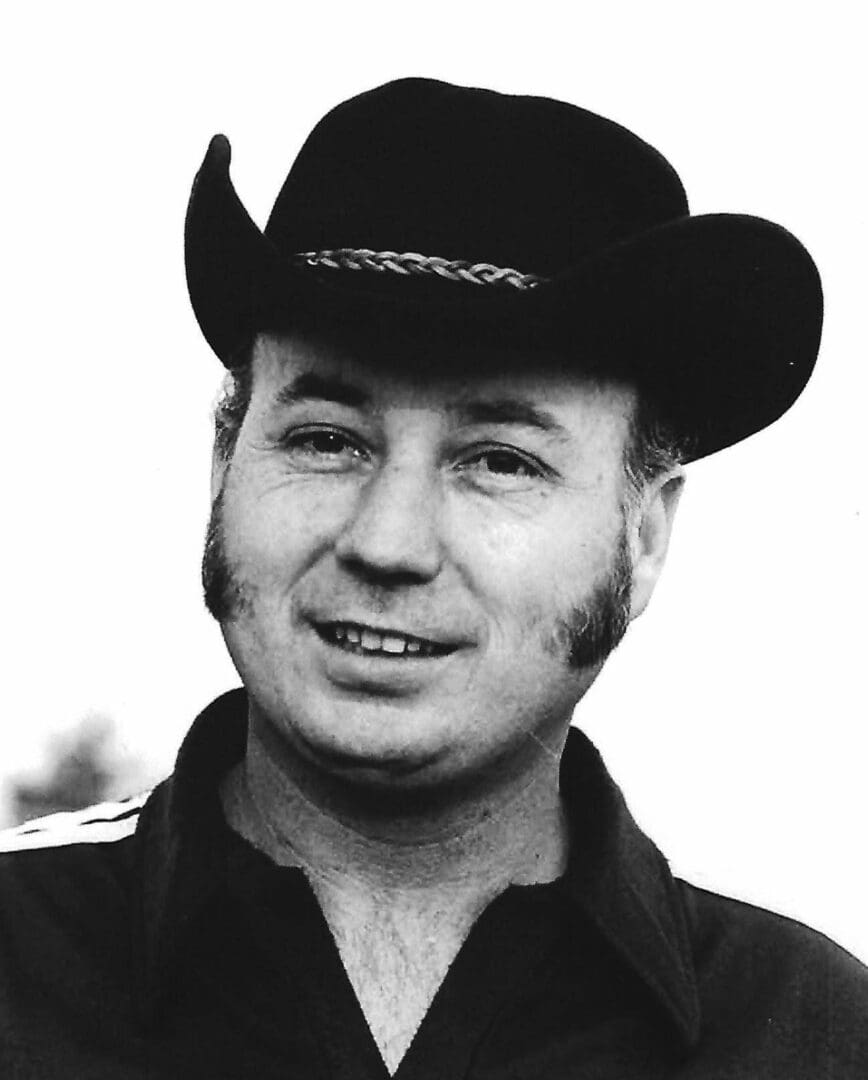 Larry Sutton
Larry loved cars and speed as long as he can remember. At age 13 Larry would ride his bike to Lions Dragstrip…
Read bio
Larry Sutton
Larry loved cars and speed as long as he can remember. At age 13 Larry would ride his bike to Lions Dragstrip…
Read bio
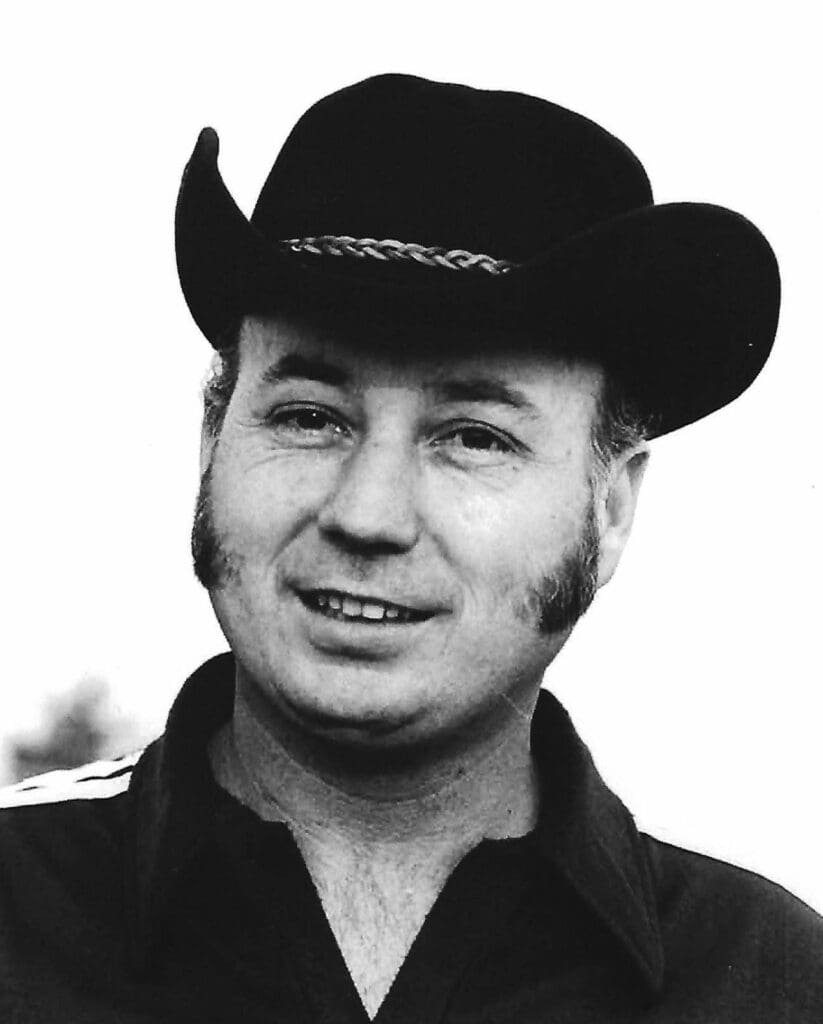 Class of 2017Presented by Lucas Oil Products
Larry Sutton
Larry loved cars and speed as long as he can remember. At age 13 Larry would ride his bike to Lions Dragstrip where he handed out time slips and where at the age of 16, he took over the job of track starter. At this same age of 16, Larry also took his first ride at the wheel of a blown Chrysler powered dragster. When it came time to close the gates at Lions forever Larry was the starter that sent the last two cars ever down the track. However, no one was anxious to leave and since it was late and just about everyone had a nip or two. When one of the locals tossed a rope around one of the outhouses and asked if anyone wanted a ride; Larry and his assistant, Bill Keys, actually became the last people to take a trip down the track.
Unlike most track officials who were either working or driving Larry would often hand over his starting duties to his assistant and make a pass and return to his starting chores when the next pair of cars lined up. Over the years he competed in almost every really hot class; driving everything from an AA/GS coupe to a blown fuel Corvette. Along the way front motor junior fuel dragsters, injected nitro funny car, the Joint Venture dragster in both Comp and Pro Comp in AA/Alcohol and AA/Fuel dragsters.
Larry’s greatest success as a driver came at the 1978 PDA meet at Orange County International Raceway when he won one of the last 32 car top fuel events ever; posting a speed of 239 MPH and an ET of 5.93 seconds. He closed 1978 out with a win at the Nitro Championships held at OCIR, in the same car, this time with the speed of 236 MPH at a 5.98 second ET. He continued competing on a part-time basis until 1990 when he posted wins at two Division 7 events in Jerry Darian and Ken Meadows blown Hemi Chrysler powered TA/Dragster.
Because of his love of the sport and experience on the starting line, after Lyons closed out in 1972, Larry continued to work the starting line at various other tracks including Irwindale, OCIR, Seattle, and Fremont.
Standing on the starting line wasn’t always easy and safe as Larry can vouch for after being struck by parts from exploding engines, hit by push cars, and even having to dodge a race car on occasion. Today Larry is retired from the racetrack world and does some camping, fishing, and traveling but from time to time he will pop up at one of the racer reunions swapping stories with his fellow retired racers.
-
2017
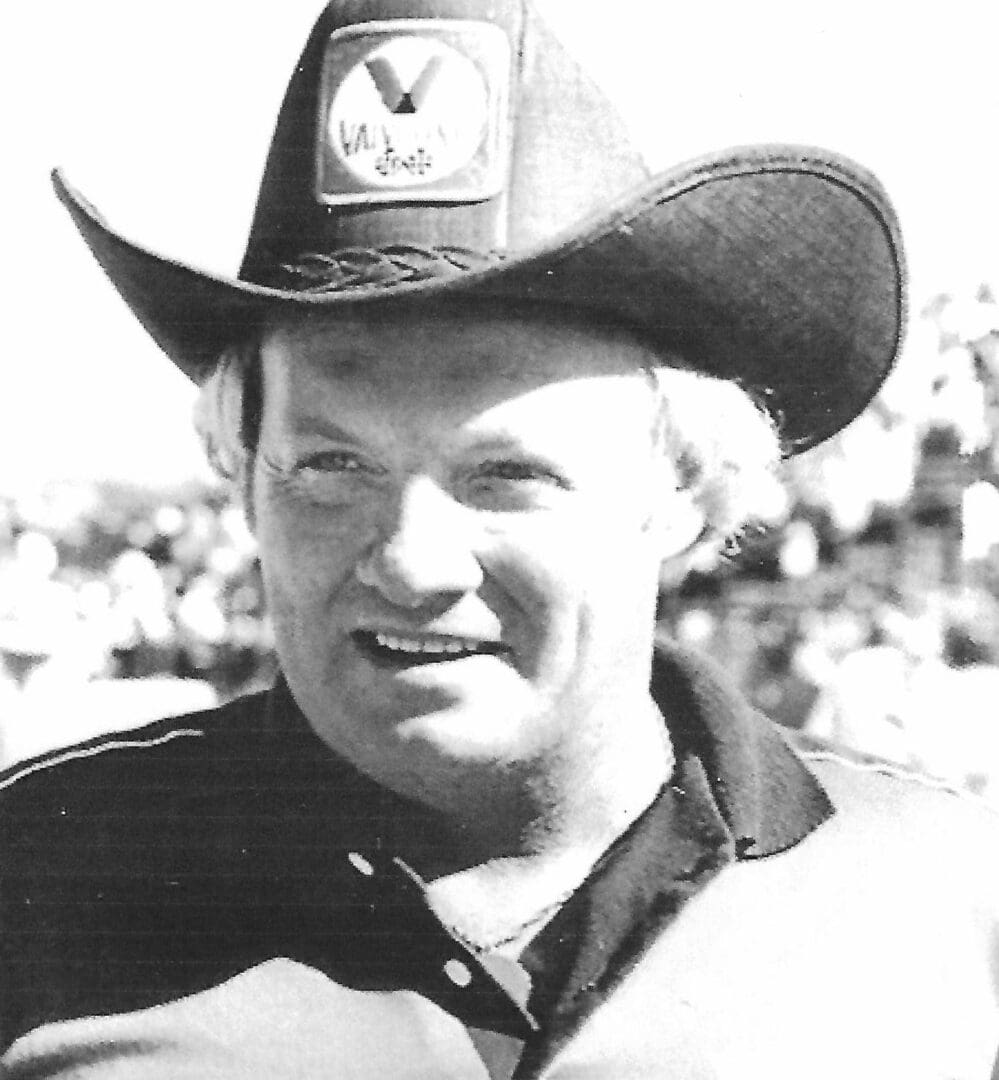 Bill Shrewsberry
 may be best remembered as “Wild Bill” driver of the LA Dart wheel standing Dodge Dart. But before stepping into…
Read bio
Bill Shrewsberry
Bill Shrewsberry may be best remembered as “Wild Bill” driver of the LA Dart wheel standing Dodge Dart. But before stepping into…
Read bio
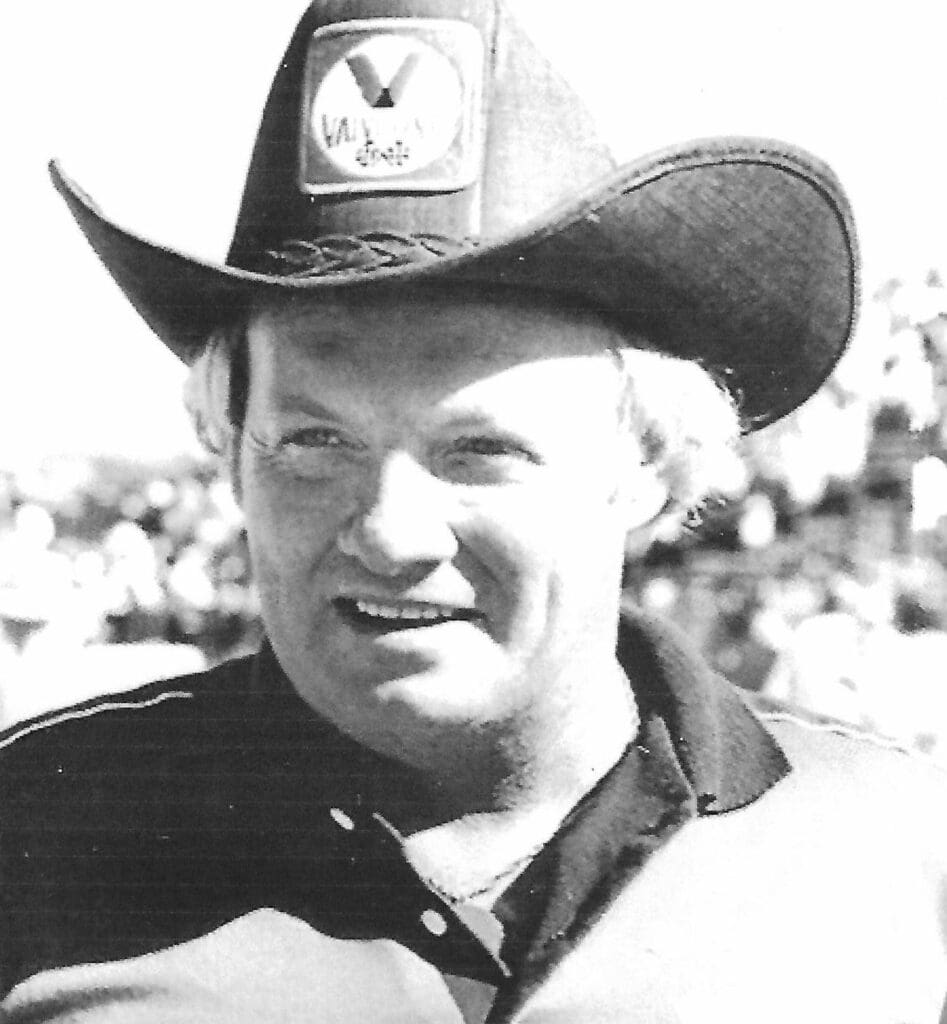 Class of 2017Presented by Lucas Oil Products
Bill Shrewsberry
Bill Shrewsberry may be best remembered as “Wild Bill” driver of the LA Dart wheel standing Dodge Dart. But before stepping into the seat he drove a series of funny cars for Mickey Thompson, Jack Chrisman, and other distinguished owners. Bill started his racing career in 1960 at Dragway 42 located in West Salem, Ohio. Shortly after that he moved to California to drive cars for Mickey Thompson. The first being one of the six factory built 421 Pontiac Tempest LeMans Coupes. His first major national win was in 1963 when he won the Winternationals at Pomona, California while driving Thompson’s Super Duty Pontiac. He was soon the dominating competitor in NHRA’s newly formed A/FX factory experimental class. In 1964 Bill one the Winternationals again but this time driving Jack Chrisman’s four-speed A/FX Mercury Comet. That same year he won a national speed record at Inoykern, California, with a 11.02 ET at 127 MPH in Thompson’s Super Duty Pontiac.
While he continued driving the factory “hot rods”, in 1965 Bill met George Hurst, inventor of Hurst Shifters, and they quickly became good friends. Hurst had designed and built what he designated to be an exhibition “rolling research laboratory” Plymouth Barracuda he named “The Hurst Hemi Under Glass”. The car was powered by an injected 426 Hemi coupled to a Hurst four-speed shifter with the engine resting over the rear end. George’s plan was to get the Hurst name in front of the racing world with the Barracuda with Bill as its driver. Bill accepted the driving assignment and the car was debuted for the very first time at the 1965 NHRA Springnationals in Bristol, Tennessee. While the plan was for “regular” exhibition runs, only after replacing the original 8-inch tires with new set of 10-inch tires, the car instantly became a wheel stander.
The car was not built as a wheel standard, but after a few runs Bill learned how easy it was to get it into a wheel stand and the decision was made to make it a real showstopper as such. With individual braking for each rear wheel; Bill was able to drive the car straight with the frontend in the air for the length of the track. Also, the original version of the car was powered by an injected aluminum Keith Black Hemi. Before long Keith convinced him to bolt a blower on top of the engine which added to it showmanship appeal and allowed the engine not to have to work so hard.
After the Hearst Hemi Under Glass, in 1966 Bill put together a program with the Los Angeles/Orange County, California Dodge Dealers Association to build a Dodge Dart which he debuted as the LA Dart. The Dart also had a 426 Hemi and body was painted with red and white stripes becoming an instant success. It was also during that time Bill met car builder George Barris. Barris was the builder of the famed Batmobile which he often displayed at various venues. George asked Bill to drive and exhibit the Batmobile at drag strips and circle tracks all over the United States; an arrangement Bill found to be both fun and rewarding when he saw how much the kids enjoyed it.
In 1970 Bill changed the LA Dart to a rear engine blown Keith Black aluminum supercharged Hemi with a Lenco two speed transmission. This added to the distance and speed the car could stay up on two wheels and the cars showmanship appeal. The LA Dart was always a showstopper and tremendously popular. Over the years there were four different LA Darts. Three were stock bodied and the fourth was a funny car body. Over the next 12 years Bill ran these cars all over the world from the United States to Canada, Mexico, Australia, New Zealand, France, Germany, and Monte Carlo.
Bill put together a program in 1980 with the Knotts Berry Farm theme park in Buena Park, California as a sponsor. He built a blown 426 Keith Black Hemi powered 1929 Ford panel delivery wagon which he exhibited throughout the Pacific Northwest, West Coast, New Zealand, and Australia until his retirement in 1988.
Always the showmen Bill never turned down a decent appearance opportunity nor the opportunity to sign autographs for the fans. Bill today remains as one of the legendary ambassadors of the sport; doing keynote speaking at club car meets, and maintaining an advisor relationship with the NHRA Museum in Pomona, California.
-
2017
 Joe Schubeck
“Gentlemen Joe Schubeck” is one of the ultimate representatives of the sport. His first introduction to cars and the sport was through…
Read bio
Joe Schubeck
“Gentlemen Joe Schubeck” is one of the ultimate representatives of the sport. His first introduction to cars and the sport was through…
Read bio
 Class of 2017Presented by Lucas Oil Products
Joe Schubeck
“Gentlemen Joe Schubeck” is one of the ultimate representatives of the sport. His first introduction to cars and the sport was through the pages of Hot Rod Magazine; reading articles by future NHRA founder Wally Parks and the rest of the staff. While still in high school, Joe met a fellow enthusiast Jack Harris. Jack had started a dragster but opened a speed shop and was too busy building the business to go racing. Harris passed the dragster along to Joe and just before his high school graduation Joe debuted the nitro burning flathead V-8 powered dragster at the local race track. His very first competitive race paired him against the Arfons Brothers dragster. It was there he learned how much fun the sport was. He also learned he needed a bigger engine if he was going to be competitive.
In 1957 Joe teamed up with a fellow racer, Joe Scarpelli, with a blown Hemi Chrysler powered AA/Gas dragster that hooked him even more. It was during his early dragster career that Ed Iskenderian bestowed the nickname Gentlemen Joe on him, after which, Jim Diest made him a custom fit tuxedo driving suit. Even the bowtie was fireproof. In 1958 the two Joe’s fielded a new car that Schubeck built himself and with enough success he launched a new chassis building business named Lakewood Chassis Company. Building the chassis itself wasn’t that much of a challenge, but building the aluminum bell housing for the cars was a real hassle. After doing some research on the bell housing Joe learned of a local company that was hydroforming various parts. He wound up designing and producing a steel unit that also worked as a safety shield to contain the flywheel and clutch in the event it exploded. Because the sports acceptance of the Lakewood High Tech Bell Housing, Joe changed the name of the business to Lakewood Industries. The business became so busy Joe had to retire from actively racing.
While the business was going great. Joe really missed actively racing; when George Hurst told him about a new car he was having built. The car was an Oldsmobile 442 with two blown nitro burning engines driving on all four wheels. George asked Joe if he would be interested in driving it; it took a bit of arm-twisting but Joe finally agreed to do so. The combination of the monster car dubbed “The Hurst Harry Oldsmobile” and Joe’s showmanship, including his tux driving suit, made the venture an instant success.
Today Joe is semi-retired from the manufacturing side of the sport, producing a limited number of various specialty parts. He tours the various car shows and special events across the nation with his restored front motor AA/Fuel dragster and is a regular participant in the cackle fast events. Among Joe’s many accomplishments and honors, he was recently inducted into the prestigious SEMA Hall of Fame and remains a true ambassador of the sport.
-
2017
 Joe Reath & Dellie Reath
Joe Reath was born in Alabama but grew up attending high school and San Pedro, California where he concentrated on his studies…
Read bio · 2 photos
Class of 2017Presented by Lucas Oil Products
Joe Reath & Dellie Reath
Joe Reath was born in Alabama but grew up attending high school and San Pedro, California where he concentrated on his studies…
Read bio · 2 photos
Class of 2017Presented by Lucas Oil ProductsJoe Reath & Dellie Reath
Joe Reath was born in Alabama but grew up attending high school and San Pedro, California where he concentrated on his studies and love of cars. Del was born in Oklahoma but finished her high school years in nearby Compton, California. The two first met in 1956, were married in October 1957, and opened the first speech shop in Long Beach California that same year.
After his discharge from the Army in 1945, Joe went to work for Earl Evans porting flathead engine’s and learning his way around operating various machines. In 1947 he changed jobs working at Douglas Aircraft in its punch press department during the day and building engines for friends at night. During this same time period, Joe was honing his racing skills at both the local drag races and the dry lakes. Like many earlier enthusiast Joe’s first car was one that he drove on the street during the week and raced on the weekends. In 1953 Joe teamed up with Harvey Haller to build a highly modified flathead V-8 powered “belly tank” for competing at the dry lakes. Harvey was killed in a crash at the dry lakes that same year and Joe purchased all of his machinery from the estate and began making plans to open a speech shop.
In 1947 Joe join the Road Runners Car Club where he rubbed elbows with fellow members that included Bob Peterson (Hot Rod Magazine founder), Wally Parks (NHRA founder), Vic Edelbrock Sr., Ray Brown, and Ak Miller to name just a few. He was also a member of the Arabs of Long Beach and the Lancers Car Club from Long Beach. It was from these men that he learned a lot about building engines, producing speed equipment, parts, and operating the speech shop.
While Joe was dating Del, he soon had her attending the local drag races with him and even got her to the dry lakes once to see what he did for fun. After Joe opened Reath Automotive, in January 1957, he and Del were married. Joe retired from racing and concentrated on building a strong reliable speed shop business. By 1965 they had outgrown the original shop and moveed to a new location at 33rd and Cherry in Long Beach. This new location gave Joe and Del an opportunity to build what Joe deemed to be the ultimate speech shop and this is where they conducted business until 1966 when they decided to downsize their operation. The move to downsize was driven by the changing times in the speed performance world, speed shops becoming large automotive parts stores, everything becoming computerized, and major corporations becoming involved.
Over the years Reath Automotive employed some of the best racers, machinist, and salespeople in the industry including: Jon Garrison, Gary Slusser, Henry Velasco, Neil Leffler, and Jerry Ballard to name a few. Reath Automotive also supplied sponsorship for a large number of outstanding racers that included: George Bolthoff, Ratican/Jackson & Sterrns, Tom McEwen, Jim Dunn, Vance Hunt, and Gordon Collette. However, Reath didn’t turn away many of the upstarts that had big dreams, but little money and gave them a lot of deep discounts for both parts and services. Joe and Del’s involvement and contribution to the sport and its many personalities has not gone unrecognized. Their honors include the following: Honoree for the Hot Rod Reunion in Bakersfield California in 1955, Honoree at the first Lions Dragstrip Reunion in 1996, and the Dry Lakes Racing Hall of Fame in 2015. Joe and Del’s contribution to the sport are second to none and will always be remembered by all involved.
Photo gallery · 2
-
-
2017
 Dean Moon
1927–1987 Dean Moon was bitten by the “car bug” at a very early age and began planning his future while still in high…
Read bio
Dean Moon
1927–1987 Dean Moon was bitten by the “car bug” at a very early age and began planning his future while still in high…
Read bio
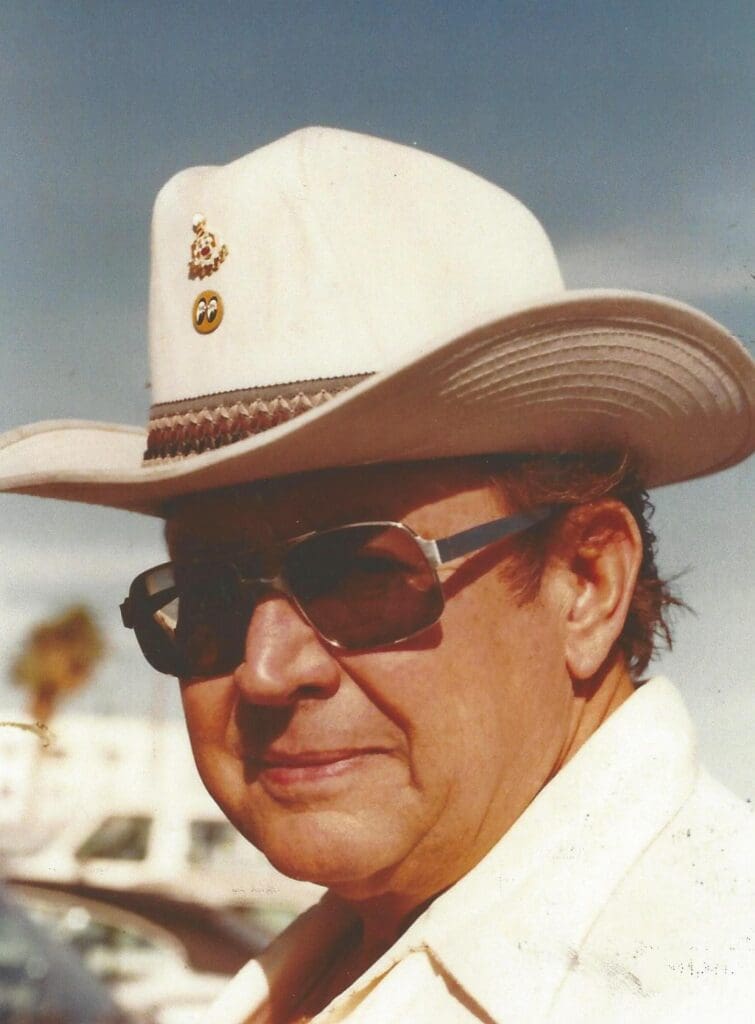 Class of 2017Presented by Lucas Oil Products
Dean Moon
Dean Moon was bitten by the “car bug” at a very early age and began planning his future while still in high school. Unlike a lot of young enthusiast of the era; Dean didn’t just want to go quick and fast he wanted to design, make and sell specially performance parts. Growing up in the Southern California community of Whittier during the 1940s put Dean in the very heart of the booming hot rod movement. Dean’s first race car was a 1932 Ford sedan which he soon began modifying for both improved performance and looks. That was followed by a 1927 T Roadster powered by a modified flathead V-8 engine and as the saying goes the rest is part of history.
Dean’s first introduction into the performance market as a manufacturer was a multiple outlet fuel block that made installing multiple carburetors much simpler. This was followed shortly by the introduction of the famous Moon Foot Pedal gas pedal. After that he seemed to be designing and producing one new product after another on a very regular basis. Still today one of the most well-known and popular products is the Moon Wheel Disc designed to not only add a sleek look to any car; it also added an aerodynamic effect helping to reduce air drag and adding top and speed.
In 1963 what is now known as Specialty Equipment Marketing Association was formed and was originally called the Speed Equipment Manufacturing Association. Dean was one of the original founders of SEMA and had a display of his products at the very first SEMA show at Dodger Stadium that same year. Dean continued to help lead the association for many years but also never stopped developing and producing new parts to help the performance minded hot rodders go quicker, faster, and safer. In addition to all these activities Dean was also a very accomplished photographer lending his talent to various publications and associations over the years.
Another of Dean’s icons are the world recognized “Moon Eyes” first introduced to the world in the mid-1950s. The lasting image was refined by artists working at the Disney Studios in 1957 and it is what is seen today.
While building the world-famous Moon Equipment Company occupied much of his time. Dean never left the racing side of the sport. In 1961 he commissioned Dragmaster to build a top gas dragster chassis that he installed a Chevy V-8 engine for power and named it Moon Eyes and proceeded to win the Indianapolis A/FD Top Fuel Championship that year. Dean was very instrumental in putting together the first United States Drag Team that toured England, parts of Europe, and even landed in Australia in 1963. His Devin bodied Moonbeam was a class record setter at the Bonneville Salt Flats in 1964 recording a speed of 206 MPH. To name a few of the cars included in the “Moon Collection” was a record-setting mini streamliner powered by a 90 cubic inch Harley Davidson motorcycle engine, an outstanding 1932 Ford coupe, and a ultra-sleek sports car.
-
2017
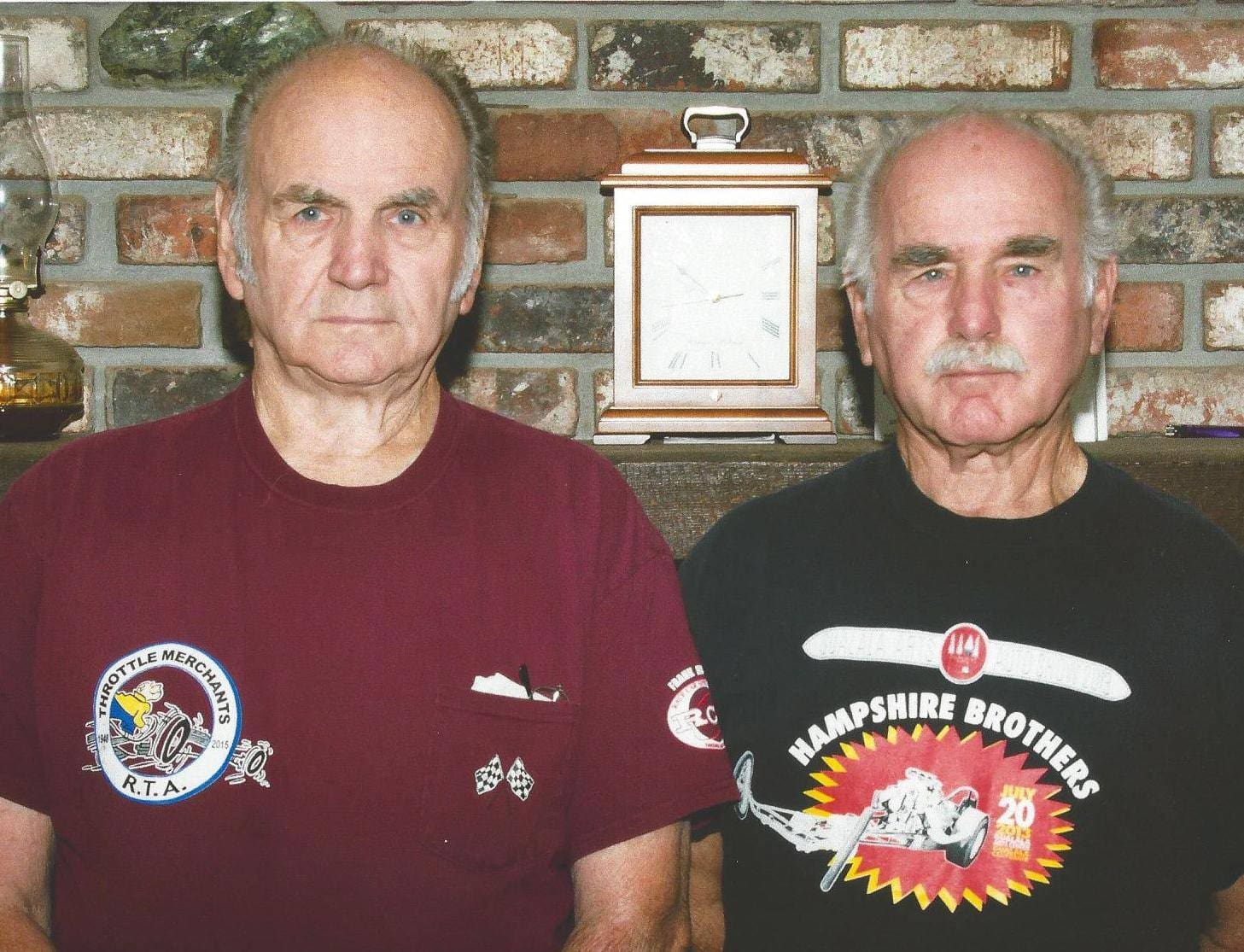 Jeep and Ronnie Hampshire
 brother separated by only 11 months in age, grew up sharing a love for cars and racing. Having…
Read bio
Jeep and Ronnie Hampshire
Jeep and Ronnie Hampshire brother separated by only 11 months in age, grew up sharing a love for cars and racing. Having…
Read bio
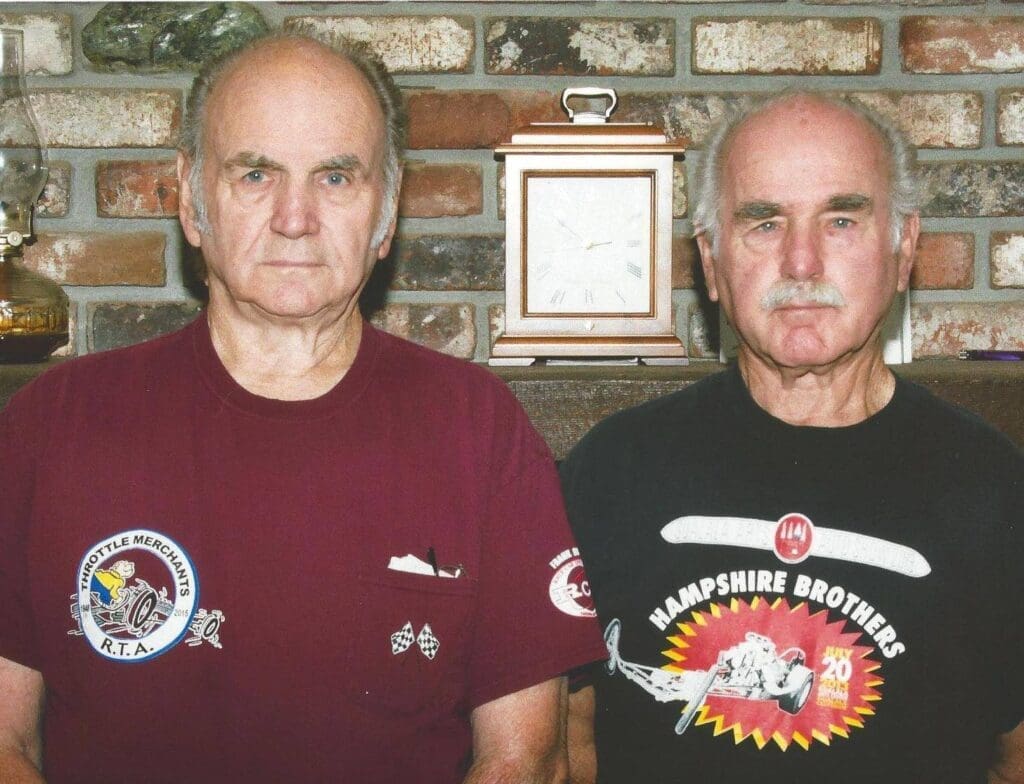 Class of 2017Presented by Lucas Oil Products
Jeep and Ronnie Hampshire
Jeep and Ronnie Hampshire brother separated by only 11 months in age, grew up sharing a love for cars and racing. Having been reared in Southern California in the 1940s and 1950s the pair was exposed to the hot rod culture at an early age and it became an integral part of their daily lives. Jeep bought his first car, a 1935 Ford, early into his high school years but finances being what they were it remained stock for as long as he owned it. Ronnie, as he recalls, drove the hand-me-downs. After their graduation from high school in 1946, the brothers went from being spectators to participants with Ronnie supplying a 1934 Ford sedan and Jeep providing a highly modified flathead V-8 for power. At the same time, they joined one of the premier car clubs of the area, the Throttle Merchants Car Club, of which they are still members some 60+ years later. In 1957 with the help of Frank Huszar and Arnie Roberts, Jeep started building his first “real” race car while the pair continued to race the 1930 Ford sedan. The brothers continued to share their common level racing and exchanged a lot of information. But as time went on, they gradually moved apart to compete on separate teams.
In 1957 Jeep started building his first dedicated race car a rear engine fully streamlined body, modified roadster with an injected Chrysler on gasoline. It was dubbed the “Platypus” due to its unusual body shape. It took him almost two years to complete this car but the first time it hit the race track it posted an incredible speed of 135 mph. After its initial appearance, Jeep teamed with Roy Steen and swapped out the unblown gas engine for a blown fuel-burning Chrysler and headed for Bakersfield California to run it. Unfortunately, on the way a drunk driver crashed into them destroying the race car.
After the “Platypus” Jeep and Roy (who is still in high school) but already an experienced welder built and drag raced a more conventional front motored blown and injected AA/FD. The Hampshire-Steen top fuel dragster experienced moderate success winning top eliminator at San Fernando and Fontana. In 1962 Chet Herbert’s had plans to build a top fuel dragster that would feature two injected F-85 Olds engines in line for power. Chet offered Jeep and Roy the opportunity to build and run the car with Chet picking up the tab for the project. In late 1962 they were able to successfully debut the car but the Hampshire-Herbert-Steen team disbanded at the end of the year over disagreements on how to run the dragster.
Not content to just sit around and spectate in 1960 Ronnie bought the original rear engine sidewinder dragster that had been built for Chuck Jones. He teamed up with George Bolthoff who was a well-known engine builder. The pair install a blown 340 CID gas burning Chevrolet engine for power. While the car looked great it was a real handful to drive. After managing to squeeze out a speed of 162 MPH and a 9.30 second ET, yet not able to correct its evil handling, the pair retired the sidewinder and teamed up with Jack Bynum to race a front engine B/Gas dragster. The next year Ronnie and George moved the blown Chevrolet into a chassis owned by Accessories LTD. and notched a few local wins with it. In 1962 the pair ordered a new Kent Fuller car but, before the new car arrived, Ronnie was dealt a big lifestyle change when he was drafted into the Army. Nonetheless he was lucky enough to be stationed at Fort Ord in Monterey, California. This allowed him to go home on the weekends. Ronnie and George would divide up the driving chores with George driving on Saturday nights and Ronnie driving on Sunday. The Army moved Ronnie to Fort Lewis near Tacoma, Washington in 1963. It was here made friends with several of the local enthusiast and managed to drive for several of them. By the time he was discharged in 1964 he and George were running a blown Chrysler in their dragster and doing so with some serious success including a stint touring around the country with it. It was at that time Ronnie got his first taste of driving and AA/Fuel dragster when he took a turn in the Ansen-Pink blown Chrysler powered nitro burner and was instantly hooked.
In 1963 Jeep briefly drove Bill Martin’s 400 Jr before securing a ride in Stellings-Graffio-Schiefer blown KB hemi powered AA/FD. Bad news came when Jeep crashed this car at Fresno when the throttle stuck wide-open and the chute failed to deploy. But the good news was Stellings would have Kent Fuller build a new car which they debuted at Lions two months later. The Stellings-Hampshire “Red Stamp Special” went out and promptly set both ends of the class record with a 7.97 second ET and a speed of 191.08 MPH. Shortly thereafter Jeep set a new ET record of 7.81 seconds at the 1964 NHRA Winternationals in Pomona, California and a Standard 1320 speed record later at Fremont with a run of 204.54 MPH.
At the end of the 1964 season the Ansen-Pink car was retired but Ronnie was able to move up to drive for Sid Waterman and Bill Brady with their unique blown Chrysler powered AA/Fuel dragster a stint that would last through 1967. This car was very unique and that the driver’s legs went under the rear end instead over it. On January 24, 1965 the team set a new Standard 1320 world record at 7.51 second ET at Fontana backing that up a week later with a 7.57 second ET at Lions. In 1968 the team replaced the durable RSC car with one of Ronnie’s own design. It featured a longer wheelbase, with a shorter front end, and with “legs over” the rear and foot controls. While building the new car Ronnie climbed into Randy Scoville’s top fuel dragster at Irwindale. Where he experienced the worst crash of his career when the steering wheel came off its shaft. He wound up bouncing off several large boulders at the top end. Ronnie was able to complete the new car and debuted it in January 1968. Because of problems that arose with Sid building engines for their competitors, and those customers not happy about him competing against them the car was sold in early 1969. While he did find a couple part-time rides after that including a short stint with Ted Gotelli. His last quality ride was the Caspary-Hampshire-Robinson top fuel dragster which was successfully campaigned from September 1969 until the end of the 1970 season when the car was sold.
In 1965 Jeep took over the driving duties of the now famous “Magic Car” of Kent Fuller, Ronnie Winkle, and Kaye Trapp. Jeep was soon posting near record times and winning several top eliminators at local tracks. But he could not come out on top at any of the big prestigious meets. In late 1965 he left the “Magic Car” to drive Glenn Stokey and Dee Caspary’s fuel dragster. But Caspary was drafted into the Army in early 1966 and the car put in mothballs. Subsequently he moved into the driver seat of the “Rainbows End” AA/FD owned by Don Kunda and Romaine Dauphine. This was a top dollar car with a Fuller chassis, Zeuschel engine, and a Tom Hanna body. Unfortunately, the owner soon ran out of money to continue racing and Jeep returned to driving for Stokey and Caspary. Dee Caspary had a new Fuller car built in 1967 and they ran it very successfully until April 1969. It was at a meet at OCIR that Jeep, on a strong pass, had a steering failure that put him into the guard rail pretty much destroyed the car and leaving Jeep with severe life-threatening injuries that ultimately forced him to retire from driving.
While the brothers are retired as drivers, they both still attend many of the California Hot Rod Reunion’s and similar events. Jeep can usually be found cackling the “Magic Car” or other cackle cars and Ronnie behind the wheel of the original Waterman-Hampshire top fuel dragster.
-
2017
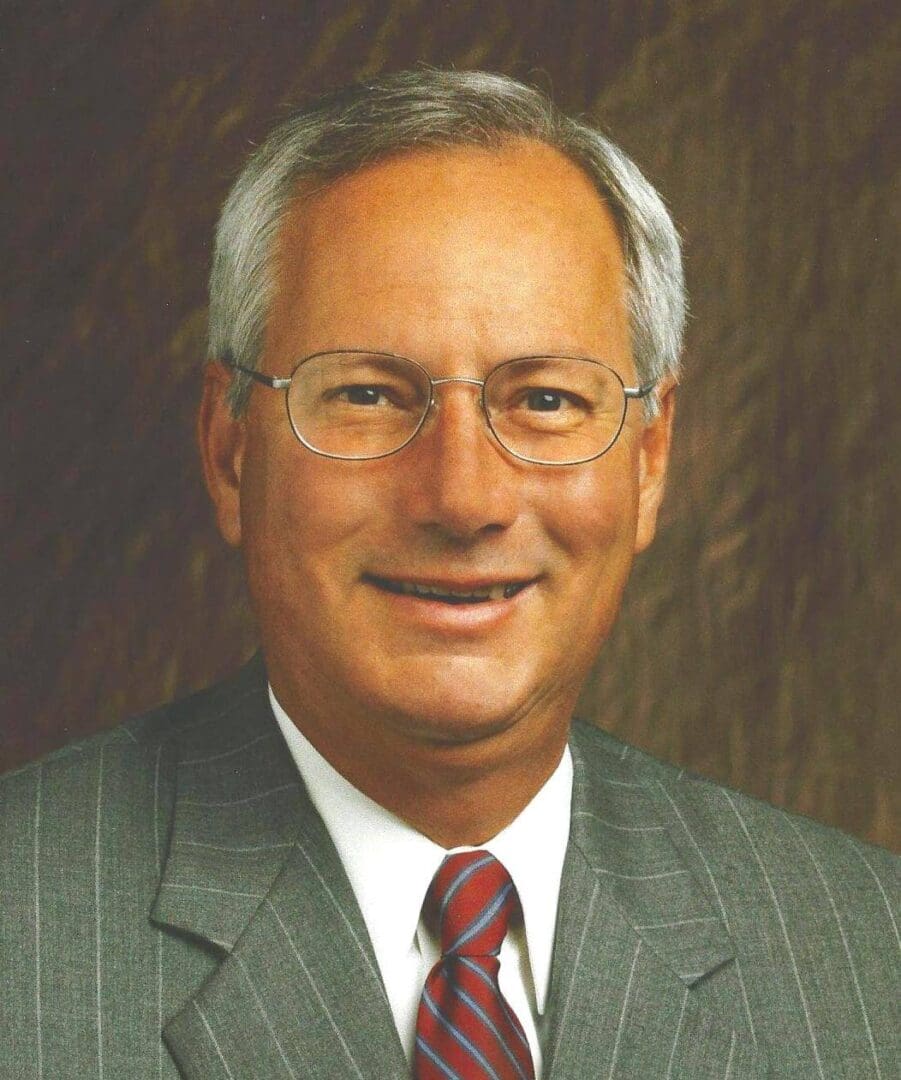 Jeff Byrd
1949–2010 Jeff Byrd was regarded by both his peers and the general racing enthusiast as one of the most influential track operators and…
Read bio
Jeff Byrd
1949–2010 Jeff Byrd was regarded by both his peers and the general racing enthusiast as one of the most influential track operators and…
Read bio
 Class of 2017Presented by Lucas Oil Products
Jeff Byrd
Jeff Byrd was regarded by both his peers and the general racing enthusiast as one of the most influential track operators and promoters in all of motorsports. Growing up in Winston-Salem, North Carolina, Jeff was like most of his fellow teenagers in his interest of “really neat” fast cars. But he was more interested in the world of marketing and promotional products including high-performance cars. After graduating from Wake Forrest Universtiy Jeff went to work as a sportswriter at the Winston-Salem Journal covering the local sports world. Before long however he became involved in developing and implementing a multitude of sports that included the world of automobile racing.
In 1973 Jeff left the newspaper and went to work at R.J. Reynolds Tobacco Company as one of its marketing experts where he soon was made its Vice President of Business Development. His knowledge of both of drag racing and NASCAR enabled Jeff to propose and secure for Reynolds one of the most visible sponsorship titles ever at the nation’s leading NHRA, IHRA, and NASCAR race tracks. The sports marketing group at R.J. Reynolds was the gold standard of sponsorship activation in professional sports.
As much as he enjoyed his tenure at R.J. Reynolds in 1996 Jeff was hired by Speedway Motors Chairman Burton Smith to oversee Smith’s interest at Bristol Motor Speedway and Bristol Dragway. In this position Jeff was able to guide the facility through a total rebuild of the drag strip and a major facelift of the oval track that’s still to this day holds the record for consecutive sellouts of one of the largest venues in motorsports. Prior to this time the drags trip had operated for some time under the wing of IHRA but as the track was being renovated Jeff also returned the track to NHRA sanction.
With Jeff at the helm, the drag strip hosted two successful all-star events before joining the NHRA touring circuit as host of a national event soon dubbed the Thunder Valley Nationals. In addition to this event Jeff established and promoted several other very successful special events throughout the year at the drag strip including car shows, concerts, etc. On the oval tracks Jeff didn’t limit the use of the big stadium to just racing but made it into one that also hosts football games, concerts, and many other captivating events.
One of Jeff’s most endearing traits was his passion and friendship to the entire hot rodding/racing community. He was always available with a bit of sage advice whether it was for a racer seeking sponsorship or to help one of the sponsors get more bang for its buck. He made a lasting impact with literally every person he encountered. A major part of his success was his ability to build meaningful relationships with all of the drivers, team owners, crewmembers, sanctioning body officials, and fans within the entire racing arena. He led and lived by the mantra of “exceed expectations” which he carried through everything he did at the track and in the communities, he resided in.
In addition to receiving the International Drag Racing Hall of Fame award, Jeff has also collected a number of other honors over the years including induction into the Tennessee Sports Hall of Fame, and the Junior Achievement Business Hall of Fame. It should be noted that in 2011 the sponsor of the major NASCAR race at Bristol Motor Speedway, Food City, named the race in Jeff’s honor. Prior to his death one of Jeff’s major goals was to open BMS to a major nonautomotive event specifically the big football annual rivalry game between the University of Tennessee and Virginia Tech that would bring new customers to the venue. As testimony to his popularity with the BMS crew and local fans the game played there in 2016 set a record for spectator attendance.
Class of 2016
7 inductees-
2016
Founder’s Award
 Steve Earwood
’s reputation, as one of drag racing’s most innovative promoters, as reflected in the fact that while he twice was honored…
Read bio
Steve Earwood
Steve Earwood’s reputation, as one of drag racing’s most innovative promoters, as reflected in the fact that while he twice was honored…
Read bio
 Class of 2016 · Founder’s AwardPresented by Lucas Oil Products
Steve Earwood
Steve Earwood’s reputation, as one of drag racing’s most innovative promoters, as reflected in the fact that while he twice was honored as the IHRA’s national promoter of the year (2001 and 2008). He also is a member of the NHRA Southeast division Hall of Fame and in 2015 was named promoter of the year by the ADRA.
No matter the acronym, few individuals have had a bigger impact on the straight-line landscape, then has the NHRA’s former National Media Relations Director. A founding member of the North Carolina Motorsports Association, Earwood also serves on North Carolina’s Governors Motorsports Advisory Council. Is a voting board member of the National Fire Protection Association, which drafted document 610, that serves as a fire safety guideline for all forms of motor racing.
Being a former member of the board on the Richmond County Chamber of Commerce, Racers for Christ International, and Godspeed Ministries; Earwood settled in the Carolinas in 1992 following his purchase of Rockingham Dragway.
Prior to that, he directed NHRA’s National Media Program for 10 seasons, was Marketing Vice President of Billy Myers Texas Multiplex, Vice President/General Manager/Co-Owner of Atlanta Dragway, and PR Consultant to Raymond Beadle’s Blue Max team. Which won NASCAR’s Winston Cup Championship in 1989.
Over the last quarter-century, his creativity and tireless effort in keeping “The Rock” viable in and ever-changing marketplace have not gone unnoticed. Steve was recognized in 1994 as the “Man of the Year”, in NHRA’s Southeast Division and in 2010 as Richmond Counties “Citizen of the Year”.
Although he never raced competitively, Earwood grew up in a motor racing family. His late father, Charles Earwood, served as Chief Steward for the SCCA’s Trans Am series, among many others. His brother Terry, is a former US Nationals Champion (1973); who went on to success in road racing and as a professional driving instructor.
It is while he was attending West Georgia College, the Earwood first began to utilize his public relations skills in the organization and operation of the Southern Pro-Stock Circuit. A one-off opportunity to promote the Gatornationals in 1975, was so successful that it resulted in a full-time gig at the NHRA. In 1976 Steve was recognized as one of Car Craft Magazine’s “Hi-Risers”.
Earwood transformed “The Rock” from the track that once contested just to events year, to one that today, is among the nation’s most active. It continues to offer one of the most diverse schedules in the nation. Hosting races in the American Motorcycle Racing Association all Harley Aeries. It also hosts manufacturer specific events including: The Super Chevy Show, Mopar’s at the Rock, and the Fun Ford Weekend. There are premier bracket races like the Big John Memorial Day Weekend Championships, Powerfest. Also, outlaw street races like the Rausch Yates Spring and Fall Sportsman Wars. Then there is the specialty event Rugged Maniac Series, which features people power on an obstacle course, instead of horsepower on the drag strip.
In addition to his success in track operation, Earwood also successfully promoted IMSA Camel GT races, SCCA Trans Am events, and the SCCA National Runoffs. He also has represented individual race teams in drag racing, NASCAR, Trans Am, IMSA, and the World of Outlaws.
-
2016
 Gas Rhonda
1926–2017 Gas Rhonda was just old enough when World War II broke out, that he was able to join the Navy. He left…
Read bio
Gas Rhonda
1926–2017 Gas Rhonda was just old enough when World War II broke out, that he was able to join the Navy. He left…
Read bio
 Class of 2016Presented by Lucas Oil Products
Gas Rhonda
Gas Rhonda was just old enough when World War II broke out, that he was able to join the Navy. He left the military service with a lot of practical “how-to” wisdom and with two Service Stars for his part in the action.
His first car was a 1929 Ford coupe powered by flathead V-8 engine. While he was a car enthusiast, it wasn’t until 1950 that he began racing as a hobby. His first act upon leaving the military was to become the owner and operator of a successful group of dance studios, which provided him with the financial ability to begin drag racing. Because he wanted to compete in something different than what everyone else was driving, his first “hobby” race car was a 1950 Hudson Hornet with a straight six-cylinder engine for power; that provided a good starting point for him. Not nearly as quick and fast as he wanted to go in 1954, he switched to a Buick Century. In 1960 he acquired a Corvette, with its highly competitive V-8 engine. But still wanting to go quicker and faster, in late 1960s he fielded a hardtop Ford Galaxy with a high-performance 360 hp V-8 under the hood.
Soon after obtaining the Galaxy, Gas met and became friends with Les Ritchey, who owned and operated Performance Associates, who was more than happy to help Gas squeeze more power out of the Fords he was involved with. In 1952, Gas moved to Southern California and went to work for Downtown Ford, which not only provided him with a job, it also was his first sponsor. On the weekends he raced under the Downtown Ford banner and during the week he sold cars for them.
With Ritchey’s help, Gas was able to be competitive with the Galaxy that was handicapped by its weight when compared to the lighter Chevy 409’s. However, in 1964 Ford gave him an original factory Ford Thunderbolt, which was based upon the lighter Fairlane and powered by the new 427 CID high-riser wedge engine. That same year Gas also moved from Downtown Ford to Russ Davis Ford and their long-lasting relationship was formed.
In 1966, Ford provided Gas with a stretched wheelbase Mustang funny car that was powered by supercharged Ford V-8 on nitro and was an immediate success. He began 1967 with a new tilt front end Mustang with an unblown injected Ford V-8 on nitro. By the end of the season the V-8 was sporting a supercharger as well. Four 1969 Gas went all out with a Mach 1 Mustang bodied, Logghe Brothers tube chassis car; that he drove to victory at the years Orange county Raceway Manufacture Championship event. Unfortunately, Gas suffered a disastrous engine explosion and fire in early 1970. He received severe burns and ended his driving career.
Among the many accolades’ Gas received over the years, the most memorable was his 1964 winning of the NHRA Top Stock World Championship, the 1969 Manufacture Championship, and in 1993 received the NHRA Lifetime Achievement Award.
-
2016
 Dennis Priddle
1945–2021 Dennis Priddle is one of the most well-known drag racers in Great Britain and in continental Europe today. However, he didn’t begin…
Read bio
Dennis Priddle
1945–2021 Dennis Priddle is one of the most well-known drag racers in Great Britain and in continental Europe today. However, he didn’t begin…
Read bio
 Class of 2016Presented by Lucas Oil Products
Dennis Priddle
Dennis Priddle is one of the most well-known drag racers in Great Britain and in continental Europe today. However, he didn’t begin his drag racing career in a car, but rather his first entry into the sport was astride a Rudge powered motorcycle at the 1965 Drag Fest. The event was produced by Sidney Allard who with a lot of assistance from NHRA was able to have eight of the top US dragsters perfor for the first time on British soil. After his first exposure to this group, Dennis has stated, “Perhaps a life-changing moment for me was seeing Buddy Cortines smoke the tires for the full quarter mile and run 200 MPH in the finals against Danny Ongais”.
After completing a five-year technical apprenticeship program at Westland Helicopters, Dennis became highly skilled in the art of designing and fabricating. This gave him the ability to create the numerous race cars he has fielded over the years.
The following winter, Tony Gagne, with Priddle’s help, constructed a diminutive dragster using the 500 cc Rudge engine from Tony’s bike. The car, “Wicked Lady” may have been small but it was potent and carried Tony to the National Championship at the newly opened Santa Pod Raceway in Podington, Bedfordshire. The next year Dennis joined forces with Rex Sluggett to build a front engine dragster named “Tudor Rose”. The dragster was equipped with a Keith Black blown/injected Chrysler fuel engine.
Originally the plan called for Rex to do the driving with Dennis crewing, but unfortunately during a trip to run the car in Sweden, in 1958, Rex broken ankle; so, Dennis replaced him as the driver. This outing resulted in the team setting the quickest Swedish quarter-mile run of that time with an 8.53 second ET. Later that year they set the FIA record for a 2-way standing start of 8.296 second’s followed by a record-breaking 8.20 seconds at Santa pod.
For the 1969 season Dennis teamed up with David Riswick and John Wolfe Racing to field a Reliant GTE, powered by an injected 427 cubic inch Chevrolet engine on alcohol. The car carried him to a pair of Top Competition Class Championships first in Anderstorp Sweden then at Santa Pod in the UK.
In 1970 Dennis acted on his long-term desire to compete in the AA/Fuel dragster arena with a front engine dragster designed and built by Dennis; powered by a Sid Waterman built supercharged Chrysler. This car, called the “Quartermaster”, upped the British corner mile speed record to 193 MPH.
Perhaps the crowning achievement for Dennis was, on May 28, 1972, at Santa Pod Raceway when he broke the European six second barrier at 6.995 seconds. He became the first racer, outside North America, to do this which earned him the nickname “Mr. six”.
During the 1973 season, Dennis added another element to his race enterprise by debuting a blown Chrysler Avenger bodied AA/Fuel funny car in addition to the dragsters. It came as no surprise that he continued producing the same record-breaking performance in the funny car arena as he had in the fuel dragster arena. As technology progressed so did Dennis moving over to rear engine dragsters in 1980 and continuing to just go faster.
Since that time Dennis Priddle continued to set the benchmark for not only the British and European drag racers, but for the US-based teams as well by breaking the world ET record for front engine dragsters with a 6.04 second run in April 1975.
The list of accolades, records, and associate honors that Dennis has established is very long and illustrious including: continuous record-setting speeds and ET’s in Great Britain, Europe, and Scandinavian countries, first European car to go into the six second ET bracket at Santa Pod, five season championships in a top fuel or funny car, two-time holder of the Federation International de Automobile/International Sprint Organization elapsed time records, Custom Car Magazines 1977 Funny Car Driver of the Year, the John Wolfe Racing 30th Anniversary Drag Racing Reunion Lifetime Achievement Award in 1998, and inducted into the British Drag Racing Hall of Fame in 2006.
-
2016
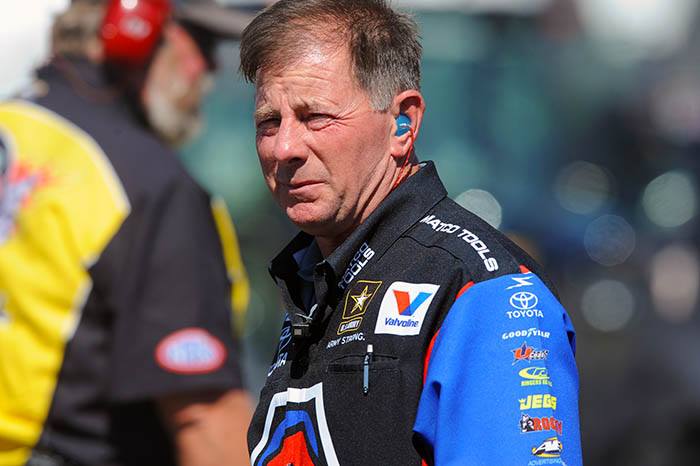 Mark Oswald
 is considered by many as one of the most versatile drag racers of the so-called modern era. The drag racing…
Read bio
Class of 2016Presented by Lucas Oil Products
Mark Oswald
Mark Oswald is considered by many as one of the most versatile drag racers of the so-called modern era. The drag racing…
Read bio
Class of 2016Presented by Lucas Oil ProductsMark Oswald
Mark Oswald is considered by many as one of the most versatile drag racers of the so-called modern era. The drag racing bug first bid him at the age of 12, when he saw a neighbor’s BB/Altered and fell in love. His actual racing career began in 1972, when he climbed behind the wheel of his B/Stock 1968 Camaro at Edgewater Raceway Park in Cleves, Ohio.
As soon as he was able, Mark, a machinist by trade went to work for Dick Weinle who owned D&J Racing Engines; one of the premier race engine building shops in the area. Weinle took Mark under his wing and taught him the subtleties of building and tuning race-winning engines. It was at D&J that Mark met and became friends with Tom Kattleman. In 1980 Kattleman and Mark teamed up with Ross Thomas and campaigned a blown Chrysler powered top alcohol dragster. Kattleman handled the driving chores for the first year, but by the second year Mark assumed the driving job.
1981 was a turning point in Mark’s career when the team after having success in the alcohol wars, in the early part of the season, switched to competing in top fuel. With Mark driving, they were runner-up at the NHRA Summernationals Englishtown, New Jersey, and runner-up to Candies and Hughes for the IHRA World Championship. Mark’s driving skills impressed Paul Candies and Leonard Hughes enough to hire him as the driver for the 1982 season.
Candies and Hughes provided Mark with first-rate equipment and support talent and the 1982 season proved just how talented a driver Mark was. That year the team won NHRA races in Baton Rouge and Englishtown. It was at the New Jersey event that they set a national record at 5.61 seconds breaking the old mark that had been set by Don Garlits back in 1975. In 1983 they switch to funny car and promptly won two more NHRA national events, four IHRA races, and the IHRA World Championship. That was followed by another banner year in 1984 when they won the NHRA World Championship.
Mark continue driving for Candies and Hughes through the 1988 season, with some ups and downs, finishing number two in the NHRA Funny Car World Championship points race for the third straight year. Candies and Hughes closedown the operation at the end of that year, so Mark assumed the driving chores in Bill Schultz’s, In-N-Out Burger, blown Chrysler powered funny car. This liaison lasted through the end of the 1996 season when Scholz dissolved his operation. Before hanging it up the team had appeared in the victory circle at three NHRA national events. This was also the year Mark decided to stop driving/racing and opened his own machine shop in Houma, Louisiana.
Temptation to return to racing struck in 2000 when John Lawson offered Mark the job of tuning his funny car and Mark excepted. The team was reasonably successful, but with the cost of competing with first-class equipment Lawson closed the doors on his operation in 2003.
2005 Mark excepted the position of crew chief for Mike Ashley fuel funny car team and also acted as Mike’s mentor as his driving instructor. Mark held this position even when Mike sold the operation to Don Schumacher Racing. In 2007 with Mark, Brian Corradi, and Steve Boggs building/tuning and Mike driving the team won the NHRA US Nationals in Indianapolis, Indiana.
The 2009 season found Mark sharing crew chief duties on the Don Schumacher Racing top fuel dragster with Antron Brown as its driver. The chemistry between the two co-crew chiefs and Antron began to gel quickly and they won 6 NHRA national events in 2009 and qualified in the number one position seven times. While the team posted dominant efforts over the ongoing years one of its crowning it accomplishments came in 2012 when it won the Top Fuel NHRA Mellow Yellow World Championship. The team returned to the world championship stage in 2015 in a dominating fashion pushing through the six race “Countdown to the Championship” winning the first three races and forging a lead that clinched the title in the next to the last race of the season at Las Vegas.
Throughout his career Mark remained humble and has often given credit to Dick Weinle, Tom Kattleman, Paul Candies, and Leonard Hughes for their help and guiding and preparing him for the success he was enjoying.
-
2016
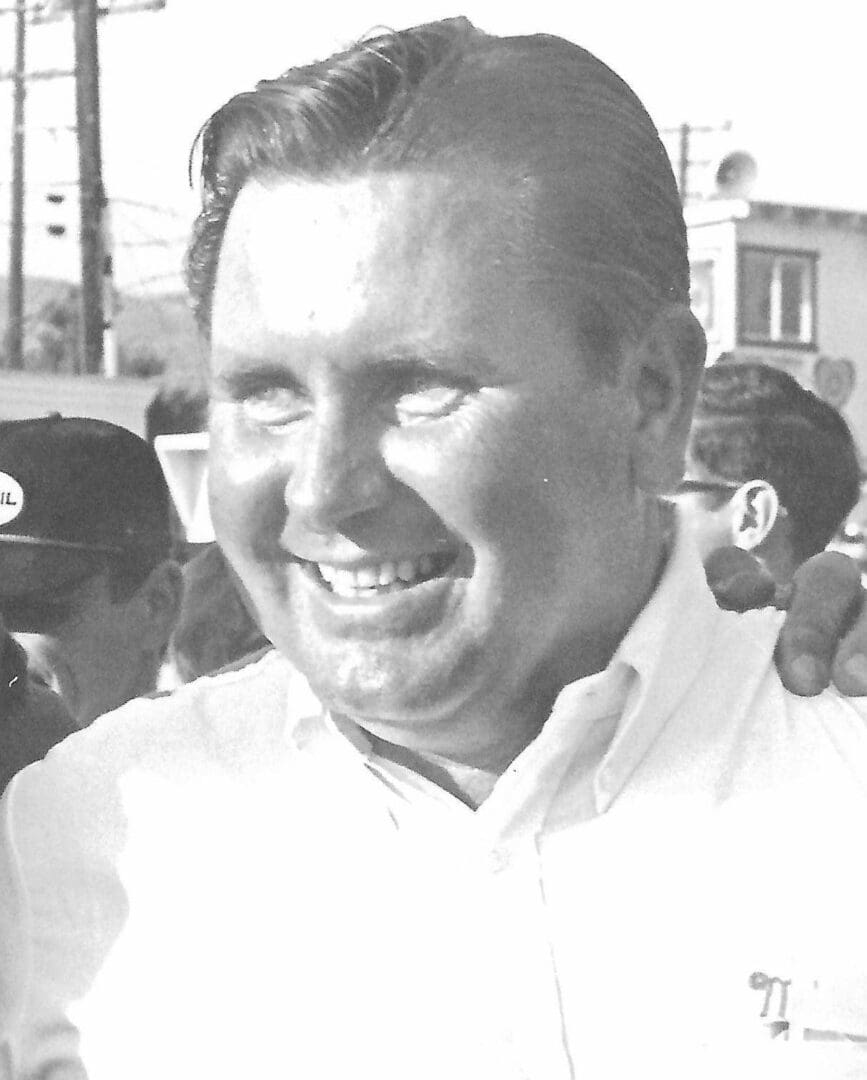 Marvin Miller
1927–1996 When Marvin first became involved in drag racing the racing facility now known worldwide as the Formosa Dragstrip was nothing more than…
Read bio
Marvin Miller
1927–1996 When Marvin first became involved in drag racing the racing facility now known worldwide as the Formosa Dragstrip was nothing more than…
Read bio
 Class of 2016Presented by Lucas Oil Products
Marvin Miller
When Marvin first became involved in drag racing the racing facility now known worldwide as the Formosa Dragstrip was nothing more than a landing strip for a local airport. His early exposure to the track came when he was working for a beer distributor in nearby Bakersfield, California and was responsible with making sure the local tracks were fully stocked. While not a racer himself at the time he did enjoy watching the action when it was possible. It was after his two boys had become teenagers that Marvin, his wife Barbara, and the entire family started attending the races on a regular basis. At this time Marvin was working for a company that supplied irrigation equipment for the local farmers, Rain for Rent, as part of its management team.
In 1966 while attending the famous March Meet at Famoso the family became interested in the team of James Warren and Roger Coburn. The interest level stepped up considerably when the boys had an opportunity to ride along in the push truck during a race in Southern California and experience first-hand the opportunity to be participants. Soon after they returned home the boy started asking Marvin if there was any way they could help James and Roger increase their competitive edge. Marvin contacted Roger with the same question and a long-lasting business and friendship relationship was born.
In the beginning of the relationship Marvin personally provided substantial financial assistance for the team to help them not only race more often but with better parts and on a more businesslike basis as the Warren-Coburn-Miller team. As the team expanded its racing efforts, its performance and exposure grew. In 1972 Marvin was finally able to structure a sponsorship program by Rain for Rent that lasted until the team disbanded.
To race in Southern California, they had to take travel over the San Gabriel Martin range on Highway 99 which was, referred to as “The Ridge Route” and as their notoriety grew, they acquired the nickname, “The Ridge Route Terrors” which their performance lived up to. On May 5, 1967 they pushed the speed record of 230 MPH at Fresno Dragway and the following week they ran 224 MPH at Lions Dragstrip in Long Beach, California.
The team won its first NHRA national event in 1968 at the Winternationals in Pomona, California. Over the next several years they dominated west coast racing, winning the NHRA Division 7 Top Fuel Championship title (1972, 1973, 1974, 1975, and 1976) and won the 1976 NHRA Gatornationals in Gainesville, Florida. When James decided to retire from driving in 1979 the team was disbanded but Marvin continued to participate in drag racing.
After his prior years of contribution to the support of the Famoso facility, in 1971, Marvin partnered up with Jack Williams to purchase the lease for it. The pair immediately began making improvements to the facility. In 1973 Marvin obtained total control by buying Williams out. The improvements continued with such items as new permanent bleachers, modern guardrails, a new timing tower, and etc. All of this attention and investment provided the racers a much better facility to race at and the spectators more comfortable surroundings. This resulted in improved race performance and increased crowds. However, all of the sports involvement took its toll on Marvin and in 1988 he sold the lease and, after 36 years at Rain for Rent, he retired to do some well-deserved traveling with his wife Barbara. On September 24, 1996 Marvin passed away.
-
2016
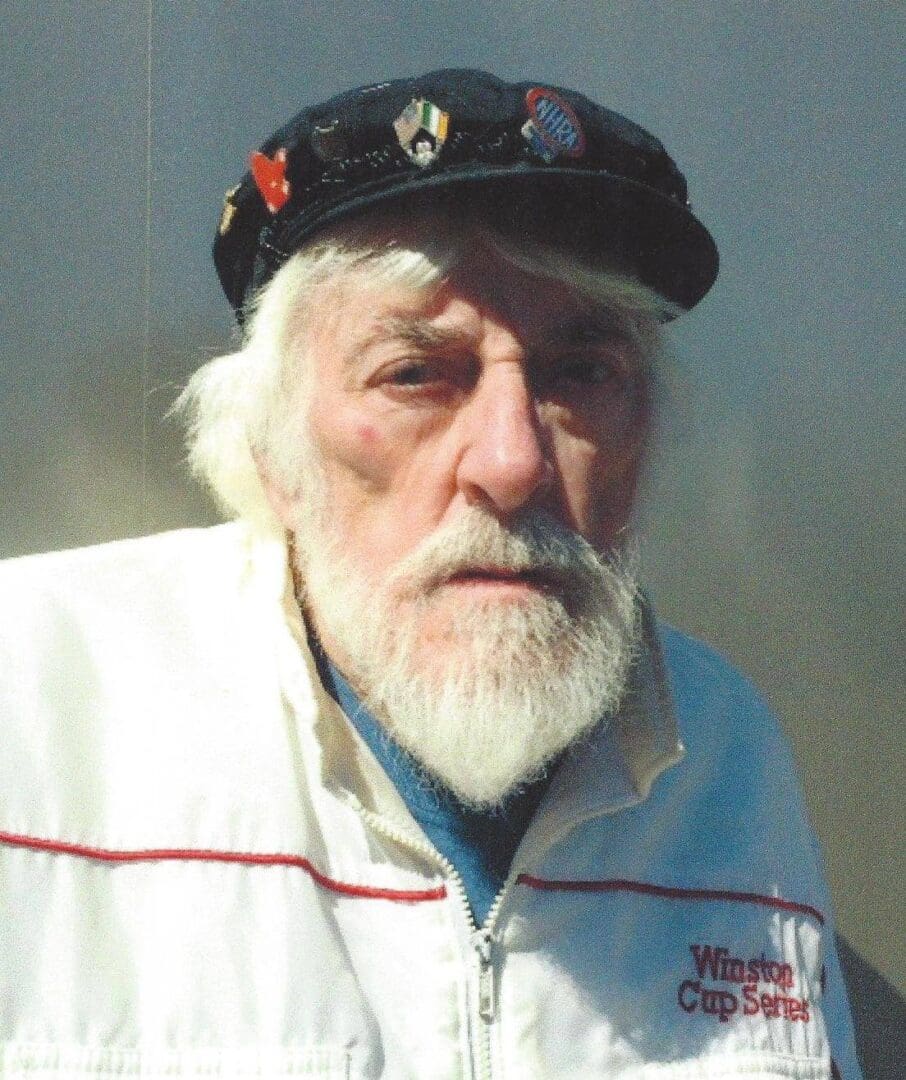 Jack Doyle
 was born in 1935 and like a lot of fellow racers, became interested in cars and racing at an early…
Read bio
Jack Doyle
Jack Doyle was born in 1935 and like a lot of fellow racers, became interested in cars and racing at an early…
Read bio
 Class of 2016Presented by Lucas Oil Products
Jack Doyle
Jack Doyle was born in 1935 and like a lot of fellow racers, became interested in cars and racing at an early age. Jack was involved with the sport since the early 1950s as a driver, a team owner, and the longtime General Manger of Epping, New Hampshire’s New England Dragway.
After graduating from high school, Jack entered an apprenticeship program to become an electrician. It was during his school years that he became intrigued by the automobile and began to follow the short track racing at the local tracks. At the same time, the drag racing and car club craze was entering New England. Jack joined two local car clubs, the Road Aces and the High Winders, a move that helped shape his future. His involvement in the car clubs gave him an understanding of not only building hot rods. It also helped him understand the need for channeling enthusiasm into an arena where it could be done safely. He and some of his fellow enthusiast formed the New England Hot Rod Council to add support for the growing sport within the region.
In 1953 Jack built his first drag racing car, 1942 Plymouth sedan powered by Oldsmobile “Rocket” V-8. While this car was very competitive and provided Jack with that “sweet feeling of victory” from its many victories, Jack was a strong competitor and soon built his first pure dragster. Classed as a “Competition Coupe” it used a tiny Vespa 400 car body shell grafted onto a dragster style tubular chassis with a supercharged 392 cubic inch Chrysler Hemi on gas. His longtime friend, Dick Pratt, said the car was “pretty homely” but it was very competitive. The Vespa coupe was followed with a Fiat body mounted on a tube frame and with another 392 cubic inch supercharged Chrysler Hemi on gas for power. After the entire class was eliminated in 1971, Jack moved on. This time with a dragster that had the same Chrysler Hemi configuration for power which was dubbed “The Slider”.
While Jack enjoyed both building and driving, he was also open to allow other drivers to become involved in testing their skills. In 1968, with his friend, Don Roberts, in the driver seat the pair won a number of races with the AHRA Nationals at Long Island Raceway in Westhampton, New York being their crowning win of the season. Between his drivers Don Roberts and Mark Connelly, Jack posted an enviable winning score at his home track New England Dragway of 80%.
While Jack was still very involved in the competition side of drag racing in 1965, he turned a major portion of his efforts to the development of New England Dragway. With Jack running the actual construction of the track that commenced in 1965 he and his crew were able to complete the construction phase in 1966. Upon completion of the track its Board of Directors made Jack the track manager. Due to the time required by his new position and the top gas dragster class was eventually eliminated Jack retired from active competition. Jack stated, “I was the track manager, I had a young family to take care of and I just could not justify being a racer, with the cost and uncertainties. Besides the race track kept me fully occupied and I like the job”.
The original goal of in NEHRC was to establish a permanent track in New England. So, with the completion of New England Dragway and the growth of drag racing in the region the organization was disbanded. Jack has said, “The participating clubs in the counsel became shareholders in the new track and that continues to this day. Although some of the clubs have disbanded their shares were absorbed by the individual members and one of the things that pleases me today is the fact that New England Dragway remains one of the few, if not the only, club-built tracks still in operation today”.
Jack was the track manager from 1975 until 1976, when then, General Manager Sy Sidebotham stepped down. Jack assumed the General Managers role until 1982. He stepped away to take a position as a licensed master electrician working on major construction projects such as high-rise buildings and electrical generating plants (conventional and nuclear).
Today Jack still continues his involvement with racing and was a member of the building committee for the new Northeast Motorsports Museum, which opened at the New Hampshire Motor Speedway in Loudon, New Hampshire at the end of 2016. There are many in the New England drag racing community who consider Jack Doyle to be the “Godfather of New England drag racing”.
Jack and his wife Mabel live in Wakefield, New Hampshire surrounded by his four children (with late wife Barbara) and five stepchildren. His three sons have all raced at New England Dragway on motorcycles. Jack states, “I really enjoy seeing them race and really enjoyed it when one of them one”.
-
2016
 Preston Davis
Like a large portion of the racers involved in the sport, Preston’s interest in cars and motorsports started very early in his…
Read bio
Preston Davis
Like a large portion of the racers involved in the sport, Preston’s interest in cars and motorsports started very early in his…
Read bio
 Class of 2016Presented by Lucas Oil Products
Preston Davis
Like a large portion of the racers involved in the sport, Preston’s interest in cars and motorsports started very early in his life. By the time he earned his driver’s license, he was pretty well hooked on becoming a competitor. In 1962 he built his first car for competition, a 1951 Mercury with a small block Chevy V-8 for power. Around this time, he joined the local car club, The Memphis Writers, which he is still a member.
In 1967 he built a Chevy 327 cubic inch powered C/Gas dragster and set a new national record with it. This was an important happening, since that open the door for him to take over the driver seat in Raymond Godman’s “Tennessee Bo Weevil” a blown Chrysler AA/Fuel dragster in late 1967. Preston didn’t only supply the driving talent for the team, he also built their engines. Their first major outing and win was at the 1968 season opening divisional race at Phoenix Dragway in Phoenix City, Alabama. By the end of the 1968 season Preston and Ray were able to take home the NHRA Division 2 Championship after putting together a very impressive winning season. In 1970 they prove themselves again when they completed the season with another NHRA Division 2 Championship.
By this time funny cars were becoming very popular so in 1972 they added a blown Chrysler powered Plymouth Barracuda bodied AA/Fuel funny car to go with the dragster. While they made an impressive showing wherever they competed with both cars; the strain of maintaining two cars was not worth the effort. So, they chose to stick with just the funny car. There were two memorable events that took place that year. First, they were runner-up to Tom McEwen at the PRA National Challenge event in Tulsa, Oklahoma. Second, they won the NHRA Division 2 Funny Car Championship.
By 1974 they had replaced the Barracuda body car with a new chassis/engine combination that featured a blown Chrysler for power but sported a Mustang body. Unfortunately, 1974 proved to be a good year/bad year for the team. The bad news Preston had a major blower explosion and fire that destroyed the car. The good news he escaped with relatively minor injuries. After rebuilding the car and competing in a couple more events Preston decided it was time to hang it up for a while. However, 1979 at the Silver Anniversary of the US Nationals in Indianapolis, Indiana Preston once more took over the driving chores. After couple more events, Raymond elected to retire, so Preston decided once more it was time to quit driving.
Unable to simply be a spectator, in December 2014, Preston finish building a 225-inch front engine nostalgia dragster. The dragster was powered by a 417 Donovan with AJPE heads running on alcohol. Preston campaigned this dragster from 2003 through the 2015 season. Preston and Raymond went to the National Hot Rod Reunion at Bowling Green with several of the “Tennessee Bo Weevil” cars. Including the famous Bo-Weevil Modified Roadster.
Class of 2015
8 inductees-
2015
Founders Award
 Dave Densmore
Texan Dave Dinsmore is an ideal recipient of the Founder’s Award which is emblematic of one’s career long contributions to drag racing.…
Read bio
Dave Densmore
Texan Dave Dinsmore is an ideal recipient of the Founder’s Award which is emblematic of one’s career long contributions to drag racing.…
Read bio
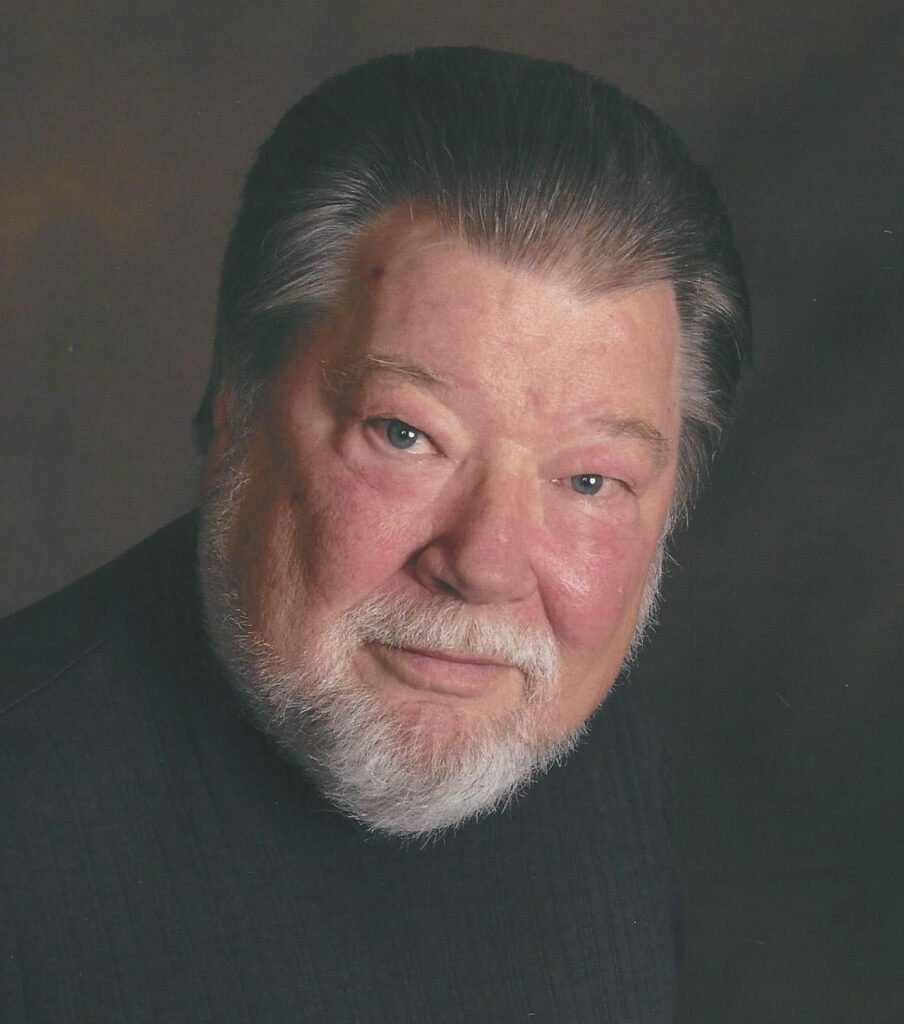 Class of 2015 · Founders AwardPresented by Lucas Oil Products
Dave Densmore
Texan Dave Dinsmore is an ideal recipient of the Founder’s Award which is emblematic of one’s career long contributions to drag racing. In many ways, some subtle, and some as obvious as a Mike Tyson delivered punch, Densmore has influenced the sport in a very positive manner. Decades after the tenure as NHRA’s advance team, Densmore and Steve Earwood are still revered for the professional manner in which they were to fill the grandstands and to provide local newspapers with stories about the races. They produced an astonishing amount of publicity and goodwill for the sport in the years before fax machines, email, and social media. They did it the hard way, by hand delivering results to every media outlet within 100 miles of a race site, working 18 hours a day to do so.
Years ago, when many writers seemed almost afraid of arousing the ire of drag racing’s management, or went off on mindless rants; Densmore’s well-written, thoughtful editorials forced racers, fans, sponsors and even management to sit back and seriously consider his options. Once a confidant of NHRA Founder Wally Parks, their relationship soured over Densmore’s use of the term “high sheriff’s” to describe the sports leaders, and they really came to detest the term when it was repeatedly used by other writers. Before his passing, Parks and Densmore buried the hatchet, but the biography that might have been never happened because they couldn’t agree on the books content.
As a public relations expert, for Jon Force Racing, Densmore’s work ethic and professionalism inspired dozens of others to try and emulate his success. He constantly demonstrated that hard work would pay off in positive publicity for his clients, but he was more than that for Force. His was the voice of reason that was sometimes successful in tempering Force’s proclivity for hasty speech. Despite his work obligations, Densmore never hesitated to offer assistance and advice to those coming up behind him. Just as he was always the first to volunteer his knowledge to the sports reporter covering his first drag race.
First and foremost, Dave Dinsmore represents the best of drag racing. Throughout his outstanding career he’s repeatedly proven to be an exceptional ambassador for the sport as he worked timelessly for its betterment.
-
2015
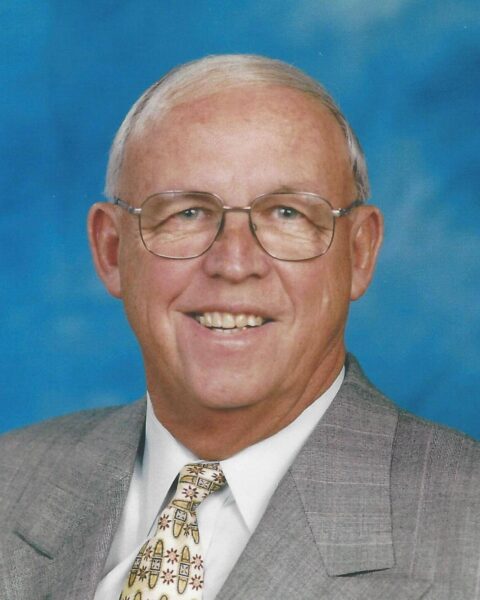 Jess Van Deventer
In his own words, Jess as always been an automotive enthusiast who followed in the steps of his engine building father. While…
Read bio
Jess Van Deventer
In his own words, Jess as always been an automotive enthusiast who followed in the steps of his engine building father. While…
Read bio
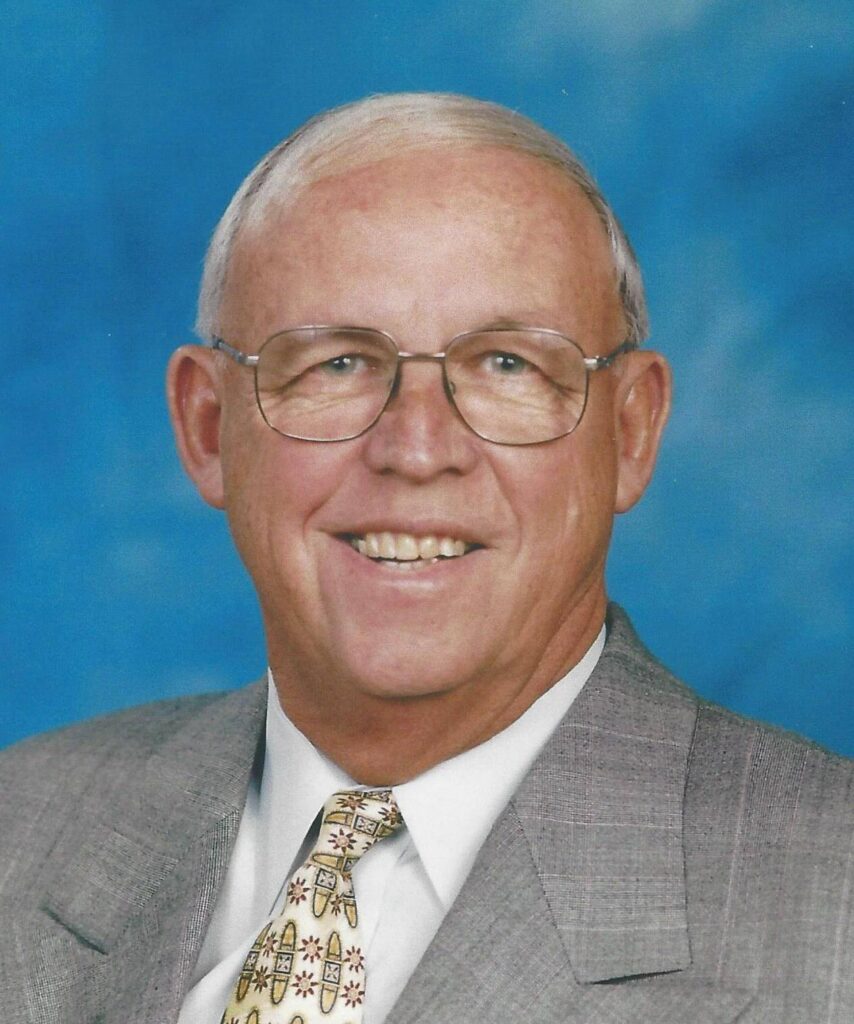 Class of 2015Presented by Lucas Oil Products
Jess Van Deventer
In his own words, Jess as always been an automotive enthusiast who followed in the steps of his engine building father. While in high school Jess was active in the local car club, and by the time he graduated he was competing at the local race tracks with a carbureted V-8 Buick powered 1934 Ford roadster. Even though this car carried Jess to a series of class wins throughout Southern California, it wasn’t long before he wanted to go faster, quicker, and be more competitive. In 1959 he personally built an injected small block Chevy powered “B” modified roadster. It was in this car that he won his first national event in 1960 and set a new class ET record at the NHRA Nationals held at Detroit Dragway.
Jess continued his winning ways in 1961 by winning his class at the Winternationals in Pomona, California and the US Nationals in Indianapolis, Indiana. While setting new class MPH and ET records along the way. In 1962 Jess won the coveted NHRA World Points Championship Title in the “Hot Car” class and reset the MPH and ET class records while doing so.
1963 started out much like the year before had finished with Jess winning his class at the NHRA Winternationals. Later that year he built and test drove a blown Chevy powered B/Gas dragster, owned by Phil Parker, and set a new national class ET record at 8.95 seconds.
While Jess had to cut short his racing career to take care of family matters, between his introduction of the Modified Roadster in 1960 until he retired in 1963, he was never beaten. Among his many awards were “Best Engineered Car” and NHRA Class Champion at the 1961 Nationals, NHRA Class Champion at the US Nationals in 1962, NHRA Class Champion at the Winternationals in 1961 in 1963, and the NHRA Points Champion in 1962. Jess was also featured in editorial coverage in Car Craft Magazine, Popular Hot-Rodding Magazine, Modern Rod Magazine, Rod & Custom Magazine, National Dragster, and Drag News.
Upon ending his active participation in drag racing, Jess began working at a National City, California auto-parts/machine shop as a machinist. After purchasing the business with a partner, Jess became President and expanded it into a chain of seven stores. He sold the business in 1985 and entered the world of real estate development and construction as a General Contractor specializing in commercial buildings. In order to satisfy his desire to give back to the community Jess pursued politics. He served on the National City City Council for over 18 years, the San Diego Port Commission for over 12 years (serving as chairman twice), the National City Chamber of Commerce (for over 30 years) serving as President, the U.S. Bank Advisory Board (for over four years), and the Board of Directors for Sweetwater Authority (for three years).
-
2015
 Bill Schultz
Unlike a lot of racers Bill didn’t dream about becoming a professional racer. In fact, early in his life he was exposed…
Read bio
Bill Schultz
Unlike a lot of racers Bill didn’t dream about becoming a professional racer. In fact, early in his life he was exposed…
Read bio
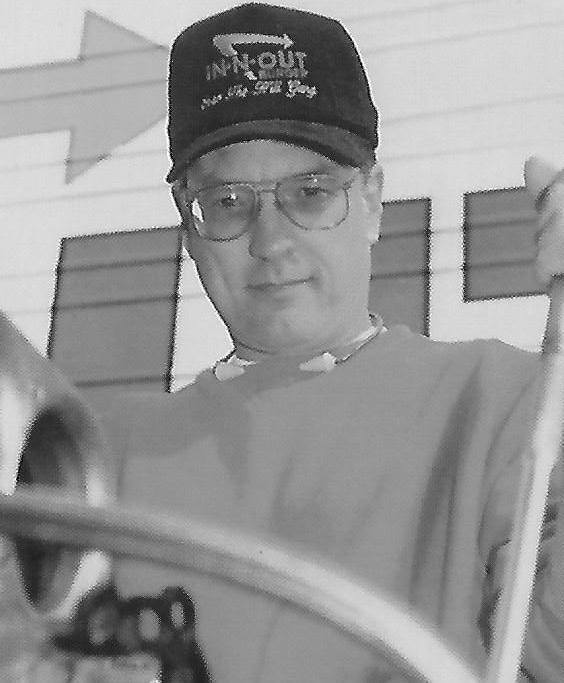 Class of 2015Presented by Lucas Oil Products
Bill Schultz
Unlike a lot of racers Bill didn’t dream about becoming a professional racer. In fact, early in his life he was exposed to another sport, baseball, by his father who was an avid baseball fan and his mother who competed in women’s softball. This led him to dreaming about becoming a pro baseball player, but around his mid high school years he was bitten by the fishing bug. He dreamed of someday spending his time by the lakes and streams near where he lived. Still like so many others who lived in Southern California, Bill loved working on cars and he had a 1939 Chevy that he used to take to the races, “just to see what it would do”. The fact that it just happened to win trophies at tracks like San Gabriel and Irwindale was simply, “Icing on the cake”.
After graduating from high school in 1955, Bill joined the Navy as a machinery repairman thinking that he would make that his career. With the thought being after retiring from the service he would have plenty of time to go fishing. His Navy training classes gave him an opportunity to learn how to make and repair machinery and after tours of duty in the far East in Australia Bill was assigned to the Mare Island Navy Yard in Vallejo, California, as a machinist. This allowed him more time to pursue other interests. With all of that going on he still had time to buy another 1939 Chevy and equip it with an Oldsmobile engine and that became his latest streetcar.
In 1959 Bill chose to leave the Navy and go to college where he first chose engineering as major. He soon switched to a math major, but his engineering interest and background paid off for him later on in his racing career. That same year he and good friend, Jerry Estep, built an Olds powered B/Roadster which was Bill’s first strictly competition car. The roadster was fun but shortly after fielding it successfully, Estep purchased a K-88 chassis and the pair promptly dropped the Olds engine into it and they were hooked on the dragster world. Later that year Bill was introduced to Donnie Johansen from Howard’s Rods and by mid-1968 they had formed the Schultz & Jones Racing Team; promptly winning the Top Gas Title at the 1968 NHRA Indy Nationals. To prove that wasn’t a fluke they repeated their Indy win in 1970.
After the 1970 Indy win Bill brought Jerry Glenn on as a driver, but Jerry had his own dragster and he wanted Bill to build a fuel engine for. Before long the pair hit the circuit with a blown Chrysler powered AA/Fuel dragster racing under the Glenn & Scholz banner. This combination worked very well for them but the car was heavy so Bill designed the “motor out” chassis. Billed as Scholz and Glenn Racing they successfully ended 1971 with the PDA and the NHRA world Championship trophies. Facing a lack of backing to continue racing Bill retired from racing and move to an automotive machine shop where he built street engines. While this was fun the street guys didn’t really want to spend the money to build a first-class engine so he moved on. In 1978 he teamed up with Gary Reed and Jim Polopolus to field a Chrysler powered rear engine AA/Fuel dragster. By 1979 the pair had added many members to the team including Sonny Diaz and driver Kelly Brown. This proved to be a great move as they won the NHRA Gatornationals, the NHRA Cajun Nationals, the NHRA Mile High Nationals, as well as the NHRA 25 th Silver Anniversary US Nationals in Indianapolis, Indiana.
Now known as the “Over the Hill Gang”, even with their winning season it was still hard to get adequate funding for a full-blown assault on the quarter-mile. With Sonny and Kelly retiring the group took a chance and built a fuel funny car with the hope of securing funding. Just before its debut race, “In-N-Out Burger” came on board with what was supposed to be a four-race sponsorship. This relationship grew into a full tour sponsorship which lasted through 1997. Once again Bill had the “best of the best” driving his cars including Dale Pulde and Mark Oswald. After the 1997 season without funding again Bill decided to permanently retired from active competition and finally go fishing. Actually, he has “Morphed back into the days of my second 1939 coupe where I just enjoyed building and cruising my street rods”.
As the history books will show during Bill’s career, he posts an impressive total of almost 40 major NHRA, IHRA, an independent event wins in top fuel, top gas, and funny cars. He is considered one of the best owners, engine builders, and crew chiefs in the history of the sport.
-
2015
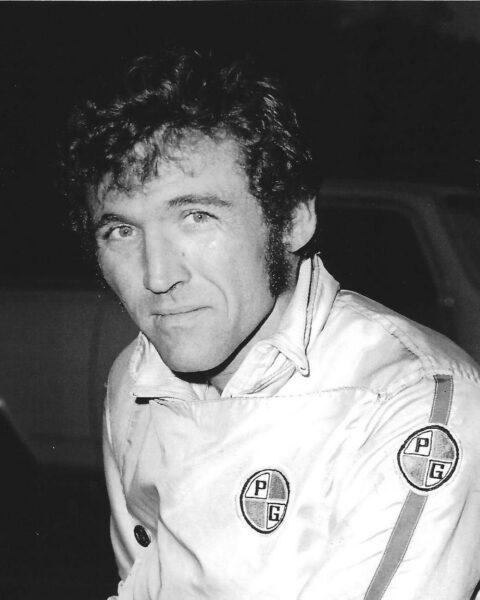 Bob Muravez
Bob’s love affair with cars began while he was in high school and in 1955, he became the proud owner of a…
Read bio
Bob Muravez
Bob’s love affair with cars began while he was in high school and in 1955, he became the proud owner of a…
Read bio
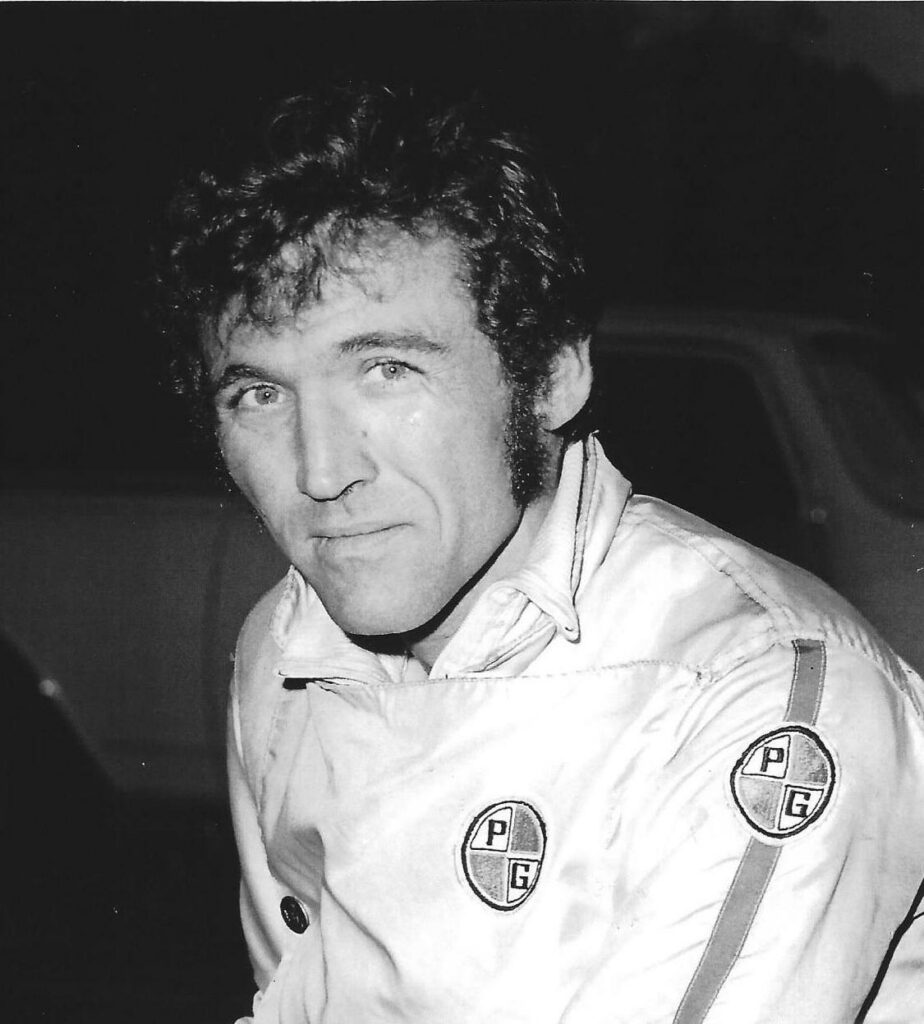 Class of 2015Presented by Lucas Oil Products
Bob Muravez
Bob’s love affair with cars began while he was in high school and in 1955, he became the proud owner of a 1953 Corvette which he purchased from movie star Betty Grable. While the Vette provided Bob with his first opportunity to compete as a driver in drag racing, it also taught him how impractical it was to race his only street transportation.
After retiring the Vette from competition in 1957, Bob joined the now famous Road Kings Car Club in Burbank, California. He partnered with his friend Don Gaide in a blown small block Chevrolet powered gas dragster. While Bob enjoyed competing in this class, like most other racers he wanted to go quicker, faster, and be more competitive.
In 1961 Bob started driving the John Peters and Nye Frank Quincy Automotive Special twin blown Chevrolet engine powered gas dragster that later became famous as the “Freight Train”. Bob was able to push the car to a record of 8.50 second ET at 185 MPH.
In 1962 Bob notched his first major championship by winning Top Gas at the Bakersfield California Fuel and Gas Championship. Due to pressure from his family, Bob retired from driving but continued as a crew member with the Freight Train working with several drivers who later became famous in their own right. After five months of the car not being able to qualify for race. Bob climbed back into the seat and promptly set a new NHRA top gas record of 8.45 seconds ET at over 187 MPH. In order to hide his driving activity from his family the team listed owner Jon peters as the driver. With Bob driving the Freight Train was back into the winning circle. Taking home, the Top Gas Eliminator trophy at the 1963 NHRA Winternationals in Pomona, California. This was followed with another win three months later when the team captured the Drag News “Mr. Eliminator” Number One Top Gas title at Lions Dragstrip in Long Beach, California.
Not long after this, track announcer’s Steve Gibbs and Mel Reck decided Bob needed a “real” alias to drive under and dubbed him Floyd Lippincotte Jr. In a very unusual move, NHRA actually issued Bob an unlimited driver’s license under the name of Floyd Lippincotte Jr. Starting in June 1963 using his new alias and driving the Freight Train, Bob/Floyd won two more NHRA national events, the NHRA Springationals in Bowling Green Kentucky in 1967 and Dallas Texas in 1969. Also, while at the wheel of the Freight Train, Bob/Floyd won the 1967 UDRA Championship race at Lions Dragstrip and at the same time became the first driver to break the 200 MPH barrier in a gas dragster setting and ET record of 7.31 seconds at a top speed of 200.44 MPH.
In 1965, Bob/Floyd drove Nye Frank’s nitro fueled, twin engine unblown Chevrolet powered, streamliner, AA/Fuel dragster “The Pulsator”. This car won the Best Engineered Car Award that year at the NHRA Winternationals in Pomona, California. In 1966 driving Don “The Beachcomber” Johnson’s AA/Fuel dragster he won victories at the NHRA Las Vegas Inventatrional event in Las Vegas, Nevada and the Mickey Thompson 200 MPH Championship at Lions Dragstrip. He competed against a field of over 110 top fuel dragsters.
In 1971 Bob retired from driving until Jon Peters restored the Freight Train in 1993. The team made some exhibition runs at four NHRA national events. In 2000 Bob took over driving Jon Halstead’s top fuel nostalgia dragster. Bob wheeled the car into the winner’s circle at the 2001 Good Guys event in Las Vegas, Nevada, the Good Guys event in Indianapolis, Indiana, and again at the NHRA 10 th Annual California Hot Rod Reunion in Formosa, California. Bob wrapped up his career by winning the B/Top Fuel Class at the Good Guys November event at Formosa. In 2003 Bob was named Grand Marshal at the California Hot Rod Reunion in Formosa, California.
-
2015
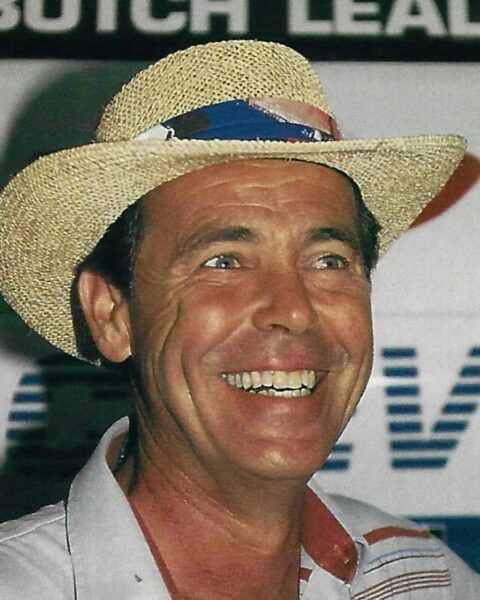 Butch Leal
Larry “Butch” Leal grew up in central California with a fascination for cars early in his life. With a subscription to Hot…
Read bio
Butch Leal
Larry “Butch” Leal grew up in central California with a fascination for cars early in his life. With a subscription to Hot…
Read bio
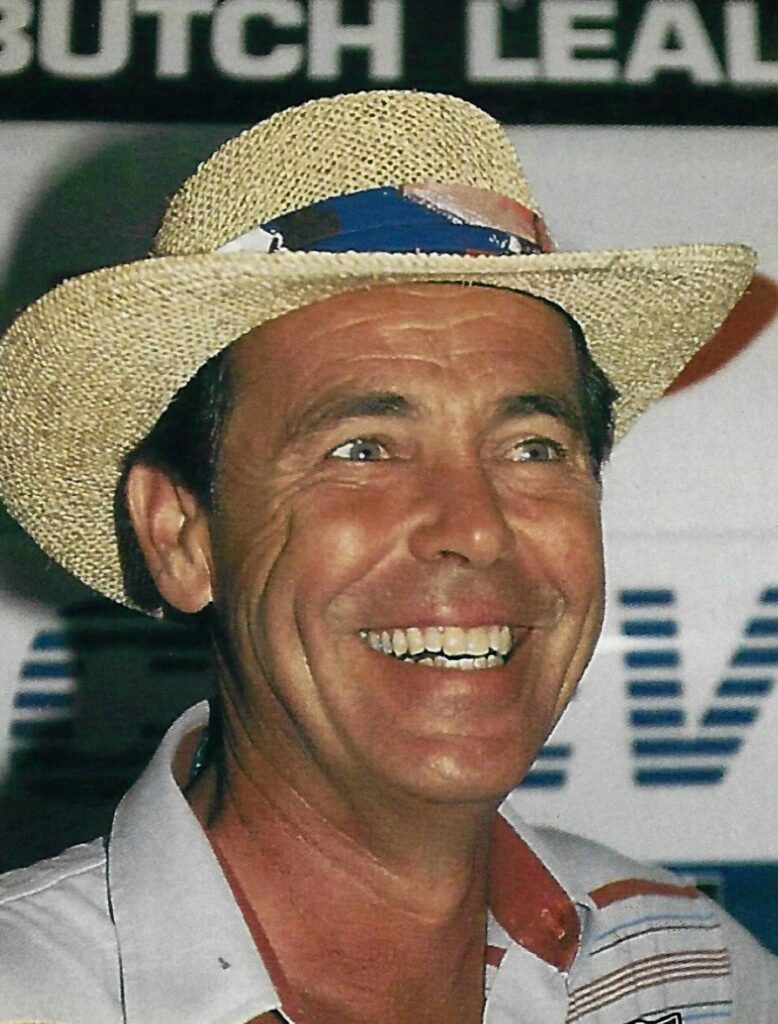 Class of 2015Presented by Lucas Oil Products
Butch Leal
Larry “Butch” Leal grew up in central California with a fascination for cars early in his life. With a subscription to Hot Rod Magazine at age 12 his love affair was kicked into high gear. He bought his first car, a 1946 Ford coupe, at age 14 but opted to trade it for a 1931 Ford Model A coupe. There were a lot of abandoned cars in the fields around his home so he talked the various farmers in the area into allowing him to use them as a “pick-a-part” lot and he soon had the “A” running.
At age 16 Butch talked his folks into trading his entire summer’s work for a new 1960, 348 cubic inch, tri- powered Chevrolet El Camino which he promptly took to the local dragstrip. His first outing netted him a trophy and it was the start of his racing career. Butch lived not far from engine builder HL Shahan’s shop before long he had HL modifying the El Camino’s engine.
By the time he graduated from high school Butch had racked up an impressive win streak at several tracks. So, it seemed natural for him to go racing full time. The El Camino was followed by a 409 powered Chevy Impala, and in 1963 he bought an Impala with the new 427 engine and an aluminum front end. He started getting a lot of help from Bill Thomas and how to run the car.
In mid-1963 GM pulled out of racing. About that same time Butch was introduced to Mickey Thompson who had just inked a deal with Ford, to campaign one of the new lightweight Galaxies, so the two teamed up on the project. It took a bit of experimenting and help from some of the Ford oriented folks but they soon had the Galaxy in the winner’s circle. It was also at this time Butch began doing a lot of his own machine work and engine building.
At 19 years of age Butch became a member of the Ford Factory Racing Team and found himself at the wheel of one of the new 427 powered Thunderbolts. This car took him to the winner’s circle in the highly competitive S/S class at the 1964 NHRA US Nationals in Indianapolis, Indiana. Shortly after this win Butch received his second nickname, “California Flash” which stayed with him the rest of his racing career.
After winning the US Nationals Butch received a call from the director of Chrysler’s factory racing program with an offer to drive one of the new Chrysler Hemi powered Plymouth sedans which he quickly excepted. The only problem with the program was that, in relationship to the regular cars, the front and rear wheels were move forward on the car so NHRA didn’t have a specific class for them to compete in. Without a class to compete in, the team cars instead campaigned throughout the states in match races which opened the doors for more competitors to become professional racers. Also, the introduction of those “altered wheelbases” cars was the beginning of what later became commonly known as funny cars.
In 1967 after watching the latest Mercury backed funny cars, which were based on to chassis, Butch contracted with the Logghe brothers to build him a similar car with a tube chassis and a barracuda flip top body that was powered with an injected 426 Hemi Chrysler on nitro. The next year Butch built a new Barracuda body funny car but this one was to use a blown 426 Hemi for power. While working with Jack Chrisman to learn the ins-and-outs of running a blown nitro fuel engine, Butch witnessed several severe explosions and decided he really didn’t want to go that route so he returned to his super stock roots.
1969 found Butch at the wheel of Mickey Thompson’s as new 429 shotgun hemi powered Ford Mustang. In 1970 he moved again this time successfully competing with his own big block powered Camaro. In 1971 Butch returned to the Chrysler camp which is where campaigned various configurations of Chrysler’s through the 1977 season. Butch finished his career campaigning the Chrysler brand.
During his career Butch was an 11-time NHRA Champion, recipient of Car Craft Magazines coveted “All- Star Driver of the Year” (four times), and one of the most successful drivers to compete in the sport over the years: 01960s, 1970s, 1980s, and 1990s.
-
2015
 Jerry Gwynn
 is another member of the “Drag Racing Club” who realized early in life that he had a true passion for…
Read bio
Jerry Gwynn
Jerry Gwynn is another member of the “Drag Racing Club” who realized early in life that he had a true passion for…
Read bio
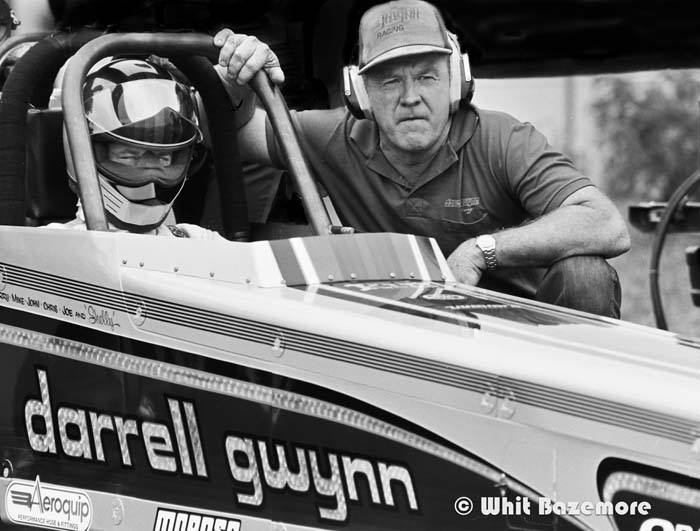 Class of 2015Presented by Lucas Oil Products
Jerry Gwynn
Jerry Gwynn is another member of the “Drag Racing Club” who realized early in life that he had a true passion for cars, speed, and competition. Jerry’s first vehicle was a 1934 Ford pickup, and that machine would start a lifetime love affair with the racing world. By 1955 Jerry was not only building his own cars but he also built the trailers to haul them. His first super competitive car was a blown Hemi powered 1923 Ford AA/Altered roadster. Christened “Baby Huey”, the car would carry him into the winner’s circle numerous times including a win at the 1969 NHRA World Finals where he won the Super Eliminator Title and was crowned the NHRA World Champion.
Jerry also won four NHRA Southeast Divisional Titles in Pro Comp, and Top Alcohol Funny Car along with winning the 1981 NHRA Cajun Nationals. As a crew chief, he one six NHRA Southeast Division “Wrench of the Year” awards for his gifted mechanical ability. In September 1999, Gwynn, his wife Joan, and son Darrell were awarded drag racing’s most prestigious honor by Car Craft Magazine the “Ollie Award” for citizenship in the sport of drag racing.
In addition to his own success as a driver and tuner Jerry also played a pivotal role in his son Darrell’s racing career. Darrell would follow his father’s footsteps by becoming the 1983 Top Alcohol Dragster NHRA World Champion. Making Jerry and Darrell the first father/son world champions. As Darrell’s racing career blossomed Jerry transitioned from racer to team manager in the full sense, building and overseeing Darrell Gwynn Racing. Jerry’s proficient skill as a mechanic, his racing experience, knack for clever solutions, and the ability to firmly manage his crew and demanding sport made him one of the most respected men on the NHRA circuit. In 1985 Darrell moved up to the prestigious top fuel dragster class and the team continued its winning ways until Darrell’s paralyzing accident in 1990 at Santa Pod Raceway. Following the accident Darrell, and his wife Lisa, started the Darrell Gwynn Foundation. The foundation provides support to people living with paralysis, and strives to prevent spinal cord injuries through awareness and education. Jerry has served on the Board of Directors since its inception. Jerry’s tireless work facilitating operations for the foundation to support its development, fundraising events, and program services has been critical to its success.
Prior to focusing on Darrell Gwynn Racing and the Darrell Gwynn Foundation, Jerry spent 32 years working for the Chevron Oil Corporation where he was a construction maintenance supervisor for all service stations in Southeast Florida.
After Darrell’s accident the Gwynn Team continue to compete in the top fuel ranks and they won races and set records with several drivers including: Frank Hawley, Michael Brotherton, and Mike Dunn. In 1993 Jerry became a major champion in the cause for improving race car safety and racetrack conditions by serving on the board as a key advisor and strategist for the Professional Race Owners which is an organization of owners of top NHRA professional racing teams.
For decades the Gwynn family, led by Jerry, toured the NHRA circuit competing for championships, renewing friendships, and serving as innovators and ambassadors of drag racing. To this day the Gwynn family name remains a staple of NHRA.
Jerry and Joan, his wife of 50 years, resided in Davie Florida. Darrell is their only child and they have one granddaughter Katie. They remain very active, mostly through their work with the Darrell Gwynn Foundation and continued involvement as emissaries of the NHRA.
-
2015
 Shirl Greer
1934–2010 Born in May 1934, Shirl Greer whose father was a test driver for Henry Ford on the first auto assembly line, developed…
Read bio
Shirl Greer
1934–2010 Born in May 1934, Shirl Greer whose father was a test driver for Henry Ford on the first auto assembly line, developed…
Read bio
 Class of 2015Presented by Lucas Oil Products
Shirl Greer
Born in May 1934, Shirl Greer whose father was a test driver for Henry Ford on the first auto assembly line, developed an early interest in automobiles. As a Tech Sgt. he served the Air Force during the Korean Conflict as an instrument man on P-51. During that time in 1951, he built his first race car, a flathead powered 1939 Ford coupe. Competing with this car gave Shirl the opportunity to further develop his skills both as a mechanic and as a driver.
In a career that spanned from 1950 to 1990. His first appearance in the winner’s circle, at a national event, came while he was competing in the NHRA/NASCAR Speedweek event in Daytona Beach, Florida, in a modified Oldsmobile powered 1932 Ford coupe. After winning his class every night of this event, Shirl was ready to take on bigger and faster competition. In 1960 he drove into the winner’s circle in two different classes at the NHRA/NASCAR Winternationals held in Daytona Beach, Florida. His first win was in a 1940 Willy’s coupe and the other was in a Cadillac powered AA/Gas dragster. He later replaced the 1932 with a 426 Plymouth Wedge powered 1962 Plymouth coupe called “Car 54”.
His next race car was a 426 hemi powered 1965 Dodge Coronet called “Tension”. Greer made the first ever pass down Bristol’s famed “Thunder Valley Dragway” and took home the honors in Top Stock at the track, and he was the first ever Division 2 Top Stock winner. In 1966 the car was radically modified and switch to fuel injection and nitro; it was a forerunner of today’s funny car class. The car was unique in that it was the first non-dragster type car to feature a center steer configuration. The car took Greer to the winner’s circle in the first AHRA Funny Car Championship in Detroit, Michigan, in 1966. Followed by win at the NHRA Spring Nationals in Bristol, Tennessee in 1967. Shirl then switch to a flip top style 1968 Barracuda which was loaned to him by fellow racer “Bunky” Bobo. Greer then obtained a former Ramchargers funny car and built a 1969 Dodge Charger, also named “Tension”; he campaigned that car for several years.
In 1972 Shirl switched over to a blown/injected fuel burning nitro hemi powered Mach 1 Mustang bodied AA/Fuel funny car called “Chain Lightning”. During qualifying, while competing at the 1974 NHRA World Finals in Ontario, California, Shirl suffered a catastrophic explosion and fire that sent him to the hospital with severe burns. Against doctor’s orders, Shirl signed himself out of the hospital the next day and found that while he was in the hospital several of his friends and competitors had rebuilt and repaired the Mustang. Greer won his first round of elimination over Leroy Chadderton giving him just enough points to edge out Paul Smith and Don “The Snake” Prudhomme to become the first ever NHRA points based Funny Car World Champion.
After his shop was struck by lightning and burned to the ground in 1980, Shirl gave up his role as owner/ builder/driver and took over the driving chores for several owners including: Larry Coogle’s AA/Fuel funny car, Frank Oglesby’s AA/Fuel funny car, Dusty Rhodes’s AA/Fuel funny car, Bissell & Parnell’s AA/Fuel funny car, and Carl Fumereelle’s injected and blown Hemi Chevy powered Batten B-4 Project AA/Fuel funny car.
Shirl also made many contributions to the sport including his unique first-time-center-steer configuration and development of the double wall header design with Doug Thorley to name a couple.
Shirl was the only independent, unsponsored, owner/builder/crew chief/driver in the nitro burning AA/funny car class. To top that off, he was very successful competitor in all of his cars.
-
2015
 “General” Lee Edwards
Lee Edwards, more commonly known as “The General”, started his racing career in the early 1950s with a 1939 Plymouth coupe that…
Read bio
“General” Lee Edwards
Lee Edwards, more commonly known as “The General”, started his racing career in the early 1950s with a 1939 Plymouth coupe that…
Read bio
 Class of 2015Presented by Lucas Oil Products
“General” Lee Edwards
Lee Edwards, more commonly known as “The General”, started his racing career in the early 1950s with a 1939 Plymouth coupe that was powered by a Chevrolet engine. It wasn’t long before he realized he wanted to go quicker and faster than he could with the coupe. When he saw Don Garlits make an appearance in his Chrysler powered dragster at a local track, Lee decided to build his own dragster. After competing in his own car for a few years he accepted a driving opportunity in Jim and Allison Lee’s blown Chrysler powered gas dragster, one of the top cars in the area at that time.
While he did enjoy the power and acceleration of the dragsters, in the early 1960s he built a Chevy powered 1948 A/Gas Anglia coupe. The car was a regular winner at the area tracks and it wasn’t long before it was considered the quickest and fastest A/Gas car in its class, often reaching speeds of 150 MPH with ET’s in the low nine second range.
Two racers who inspired Lee were Don Carlton and Ronnie Sox. They were not only his competitors but also his true friends. When he began racing in pro stock, he enjoyed competing against those guys the most. Lee soon became one of the most successful pro stock competitors on the IHRA circuit. His first pro-stock car was a 1970 Chevrolet Camaro with a big block Chevy motor. Lee’s first pro stock win came at the 1972 IHRA Winter Nationals in Lakeland, Florida when he beat Arlen Vanke. Lee went on to notch another 11 IHRA pro-stock national event wins and compete in 17 final rounds. In 1977 Lee won his first IHRA Pro-Stock World Championship. He followed that up in 1978 with his second IHRA World Championship trophy. In 1977 he also won the IHRA Professional Championship, accumulating more points than any top fuel dragster, funny car, or pro-stock driver that year.
As successful as Lee was in the pro-stock ranks, it was when IHRA instituted though wide-open “Mountain Motor” rules for its Pro Stock class that he really began to shine. He was one of the first competitors to build a 490 cubic inch “Mountain Motor”. Within two years he had increased the size of his engines two 570 cubic inch, and later he increased them even more to the upper 600 cubic inch range.
In 1980 Lee retired from driving, but continued to build some of the most competitive engines available for drag racing, as well as, the popular truck puller classes. He did it all from his shop, Lee Edwards Racing Engines, in Calverton, Virginia.
In addition to his two IHRA World Championships, Lee’s honors include being inducted into the North Carolina Drag Racing Hall of Fame in 2013.
Class of 2014
7 inductees-
2014
Founder’s Award
 Kenny Youngblood
 grew up in the “hot bed” of the hot rod/Street racing/automotive love affair, in Southern California, after the end of…
Read bio
Kenny Youngblood
Kenny Youngblood grew up in the “hot bed” of the hot rod/Street racing/automotive love affair, in Southern California, after the end of…
Read bio
 Class of 2014 · Founder’s AwardPresented by Lucas Oil Products
Kenny Youngblood
Kenny Youngblood grew up in the “hot bed” of the hot rod/Street racing/automotive love affair, in Southern California, after the end of World War II and was exposed to this element at a very early age. When he was 12, Kenny and his friend John Kaiser were treated to a day at the original San Gabriel Dragstrip and from that day forward he was hooked on the sport.
At this point in life, all the boys wanted to do was get behind the wheel of a car, any car. John’s dad really got them started by helping them build and maintain go carts to begin with then later assisting them in building a 354 cubic inch Chrysler powered B/Altered 1932 Ford coupe. From this point Kenny went on to build and drive to AA/Fuel dragsters over the years, along with either co-owning and or crewing on other various race vehicles.
While Kenny is known by some as a racer; most of his fans know him as a first-class artist. His first effort at artistry on a vehicle came when he did the graphics on his friend Gary Messengers dragster. Custom painter, Dick Olsen, saw the car and hired Kenny to handle the sign painting at his Bellflower, California shop. His stardom began a sharp climb within the racing community and it has continued to do so ever cents. Because of his last name, a lot of his pals called him “Blood” which is where his famous “Blood Did It” signature came from. Kenny enjoyed the steady work, painting signs and doing graphics for a lot of the top race cars of the day. It was promoter Bob Kachler who encouraged him to turn his skills to canvas and become a true artist.
As his reputation and popularity as an artist grew and he did more and more designs of race cars and paintings from major racing publications. The really big boost in visibility came when he designed the interlocking ZZ logo for the group ZZ Top. He applied it to Billy Gibbon’s Eliminator 1934 Ford coupe that was featured on the group’s famous Legs video and on millions of record albums.
It was around this time that Kenny really became serious about devoting his talents to painting “automotive portraits” that would find a place on some very prominent walls with more and more enthusiast buying and appreciating his paintings and prints. Kenny was able to extend his visionary talent into producing some of the most memorable one-of-a-kind works. This popularity also afforded Kenny the opportunity to open the Youngblood Motorsport Gallery in Orange, California in 1993. He not only displayed his own work, but also gave other artists the opportunity to show off their talent.
All of this success and time have not slowed Kenny down, nor has it dulled his love of the sport. He operates out of his studio in Las Vegas. But more often than not, he is on the road making personal appearances at car shows, trade shows, or NHRA events. Besides painting, making the appearances, and on occasion lending a hand to a needy race team, Kenny also has a website, “Fuel Coupe Magazine” that is dedicated to nostalgia funny cars
In addition to the awards and accolades Kenny has received, he is affectionately known as “The Father of Modern Race Car Designs” a title that is well-deserved.
-
2014
 Forrest Lucas
1942–2025 While Forrest always loved all forms racing, his first participation as a driver came in 1986, when he began shoeing his I-4…
Read bio
Forrest Lucas
1942–2025 While Forrest always loved all forms racing, his first participation as a driver came in 1986, when he began shoeing his I-4…
Read bio
 Class of 2014Presented by Lucas Oil Products
Forrest Lucas
While Forrest always loved all forms racing, his first participation as a driver came in 1986, when he began shoeing his I-4 modified stocker on the short tracks in Southern California. His love of racing was just one part of his reasoning behind participating as a competitor. By the time he first climbed into the cockpit of a race car, he had also found another passion when he and his wife Charlotte founded Lucas Oil Products. Short on promotion funding and needing to promote the company to the public he combined the two loves and put Lucas Oil Products in front of the buying public, with the company logo displayed on all sides of the race car.
After spending three years as an active competitor, the business had grown to a point that it required most of his time. So, he retired from driving and devoted his efforts to building the company and providing financial support to some of the racers. While the company was continuing to grow at a steady pace; Forrest knew he needed to provid stronger promotional support in order to keep it moving. At the same time, he was taking note of the growing number of major companies who were using racing as a prime way of promoting their products.
In 1994 Forrest took his son Morgan to his first drag race at the age of 11 and it was love of at first sight for them. This soon led to Forrest adding more drag racing teams to the companies sponsor list and race facilities sponsorships. Because of his love of all forms of racing, Lucas Oil was soon sponsoring race teams operating in all forms of automated racing as well as boats, planes, and motorcycles.
Because of the financial support provided by Lucas Oil dozens of race teams, a lot of racers who were thinking of closing down their operations, are still competing around the nation and providing entertainment for millions of fans each year. The same can be said for several race facilities that were facing closure for lack of adequate funding. Because of the additional support in this area from Lucas oil they continued to operate. In addition to supporting all of the race teams in race facilities, Forrest also made it a point to support the various sanctioning bodies involved in all forms of racing.
Both Forrest and Charlotte live and breathe everything they sponsor or sanction and don’t limit their appearances to just drag racing. They also attend events featuring other types of vehicles plus a few car shows and trade shows thrown in for good measure.
In 2006, Forrest expanded the family involvement in all forms of sports, but he keeping racing as a focal point when he opened a television production studio at the company’s headquarters. They now produce more than 350 hours of television for all of the major channels from this location. Still not content with his involvement in bringing all forms of entertainment to millions of viewers, in 2011, he purchased the cable network MAVTV and renamed it MAVTV American Real. In addition to the Lucas Oil logo appearing on racing vehicles around the country, the MAVTV logo, along with its sponsorship funds. Lucas Oil is starting to be found on more and more race vehicles and more facilities. Forrest has made a commitment to the sport that MAVTV will offer its viewers a large portion of its programming that revolves around racing and the automotive world in general.
-
2014
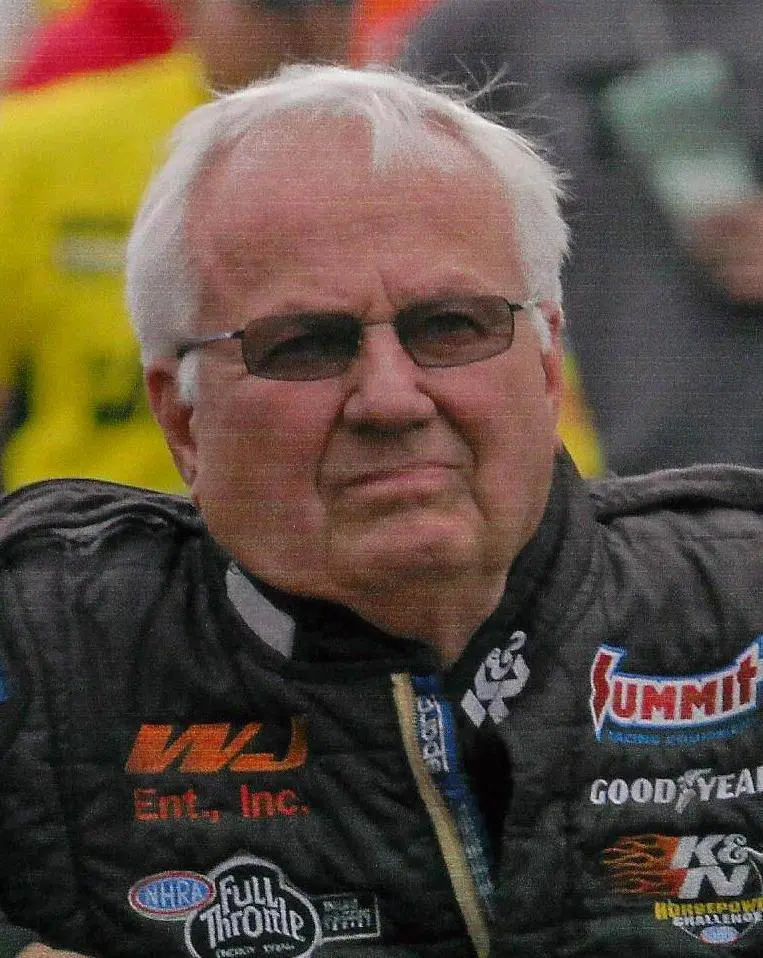 Warren Johnson
Warren “The Professor” Johnson was born in Virginia, Minnesota an area that wasn’t known as a hot bed of drag racing, but…
Read bio
Class of 2014Presented by Lucas Oil Products
Warren Johnson
Warren “The Professor” Johnson was born in Virginia, Minnesota an area that wasn’t known as a hot bed of drag racing, but…
Read bio
Class of 2014Presented by Lucas Oil ProductsWarren Johnson
Warren “The Professor” Johnson was born in Virginia, Minnesota an area that wasn’t known as a hot bed of drag racing, but the professor took advantage of the semi isolated conditions. While spending his days at work in a steel fabrication shop, he was enrolled in engineering classes at night. Warrens interest in cars and racing began around the age of 10 and he purchased his first car at 14, a 1949 Chevy.
By 1961 he had managed to put together a 1957 Chevy C/MP car in which he began his climb to fame and notoriety. In 1971 he was able to purchase a new Camaro, which he promptly stripped down and outfitted to meet the newest NHRA Pro Stock class. His first outing was a less than spectacular debuting at the 1971 NHRA US Nationals in Indianapolis. The experience made him more determined than ever to be in the winner’s circle. He and wife, Arlene, along with their son, Kurt, spent the next several years competing with the Camaro whenever and wherever they could. During this time, Warren was also building race engines for his competitors to finance his own drag racing endeavor and learning more about engine development as he went. In 1975 Warren added an “evil handling” Chevy Vega pro-stock car to his stable and it was the combination of the Vega, the backwoods track he competed on, and his desire to win that help make him into one of the greatest pro-stock builders and drivers ever.
1975 was the year that 32-year-old Warren made the decision to become a professional drag racer. With no sponsorship and very little available funds, he entered the NHRA Pro Stock arena. In 1976 Warren was able to finish in runner-up position for the NHRA Winston Pro Stock Championship, all while competing with his home built 1972 Camaro. From 1979 to 1981 Warren competed on the IHRA pro-stock circuit where he won back to back IHRA Pro-Stock Championships. To help with finances, he also barnstormed on the pro-stock match race circuit where he picked up additional knowledge about engines, suspension, and driving.
In 1982 NHRA replaced its old complex pro-stock roles with a straightforward formula of weight to inches. Warren again entered the NHRA Pro Stock war and notched his first national event when at the 1982 Summernationals in Englishtown, New Jersey. When Oldsmobile decided to launch a serious drag racing program in 1983, Warren was the person they contacted to develop the engine/program. It was Warren who reworked the big block Chevrolet V-8 to create one of the strongest and most durable power plants available. That engine, the drag racing competition engine, still remains the foundation of GM’s pro-stock engine program.
Warren won his first Winston Championship title in 1992 and literally dominated pro-stock in the 1990s winning championships in 1992, 1993, 1995, 1998, 1999, in 2001. The man who is affectionately known as “The Professor” has one a total of eight championships (six with NHRA and two with IHRA). In 1997 Warren became the first NHRA pro-stock competitor to exceed 200 MPH with a run of 200.13 MPH and the first with a sub 6.90 ET with a 6.89 second ET at Richmond Virginia. In 2006 he notched his 500th career race victory.
In 2007 Warren was inducted into the international Motorsports Hall of Fame. Later he was honored as one of drag racing’s 50 greatest drivers. In May 2010 he became the oldest professional national event winner in NHRA history by winning the Midwest Nationals in Madison, Illinois, at the age of 68. Along with these honors Warren was inducted into the NHRA Division 2 Hall of Fame in 2011, the Georgia Racing Hall of Fame in 2012, the Legends of Bristol Hall of Fame in 2013, and is the third winningest driver in NHRA competition. Warren has also contributed a lot toward the safety and reliability of pro-stock with his constant innovations which include: using a funny car cage, the seven point and nine-point seatbelts, and several engine/suspension modifications to name a few.
-
2014
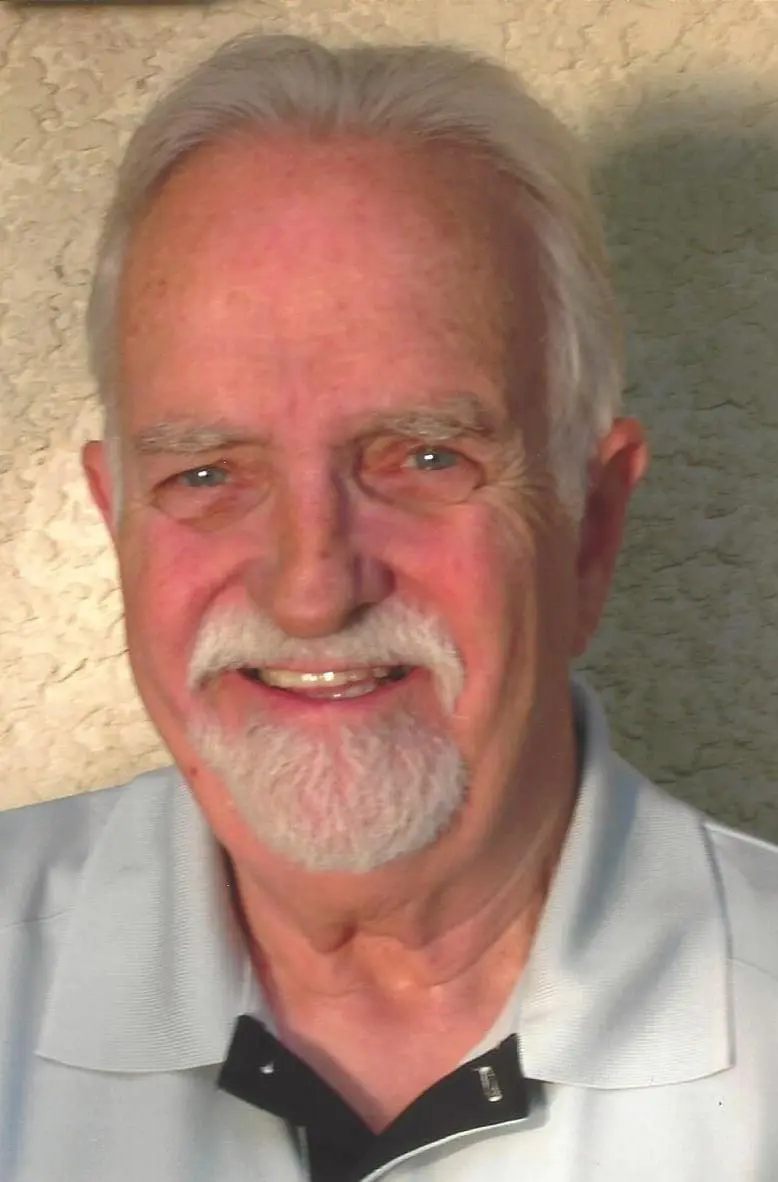 Tom Hoover
Even as a teenager, Tom Hoover wanted to compete in the drag racing arena. His first car was a 1959 Chevy that…
Read bio
Tom Hoover
Even as a teenager, Tom Hoover wanted to compete in the drag racing arena. His first car was a 1959 Chevy that…
Read bio
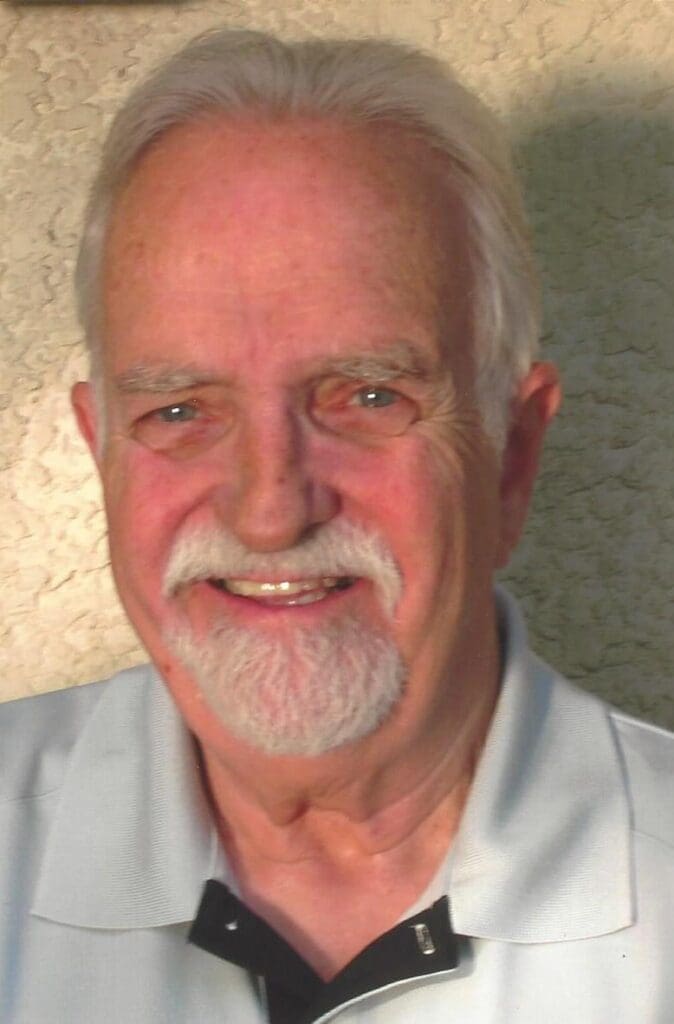 Class of 2014Presented by Lucas Oil Products
Tom Hoover
Even as a teenager, Tom Hoover wanted to compete in the drag racing arena. His first car was a 1959 Chevy that provided his daily transportation, but when he was 21, he purchased his first race car, a gas-powered chassis research dragster kit car. Before long his desire to be more competitive, to go quicker and faster took over, so he purchased Bruce Norman’s Big Wheel Chrysler powered AA/Fuel dragster. Tom’s enthusiasm and desire to go racing soon caught the attention of his mom and dad, George and Ruth Hoover, and before long the entire family was a team on a regular basis. Tom scored his first major top fuel when at the 1965 AHRA Winter Nationals in Phoenix Arizona; followed by his winning top fuel in NHRA’s West Central Division that year with Pa Hoover doing the mechanical chores and Ma Hoover taking care of the business side of the endeavor.
In 1965 and 1966 Tom suffered several severe engine explosions/fires with the Chrysler Hemi engines. He switched over to the newly released single overhead cam (SOHC) Ford engine and along with Connie Kalitta, Pete Robinson, and Don Prudhomme they were very instrumental in its racing development and success. In 1970 Tom decided to make the switch from competing in the AA/Fuel dragster wars to driving Bill Schifisky’s White Bear Dodge AA/Fuel funny car. While Tom was competing in the White Bear Dodges; his mom and dad continued competing with the dragster. In 1972 when it became apparent the dragster team was having better success with less breakage the family decided to rejoin forces again as a single team and concentrate on running funny cars. With this decision made, they purchased Ed Willis’s Plymouth Satellite and debuted the first of their now famous “Showtime” series of cars.
In 1974 Tom married his wife Betten. Betten has been involved in every element of Tom’s success; from staging of the car in the early days to doing all of his press coordination, the necessary bookwork, and financial manager of his racing endeavors.
Tom scored his first funny car NHRA national when in 1977 at the NHRA Grand National event in Montréal Canada, followed by the 1979 NHRA Winternationals in Pomona, California. In 1980 Tom crossed the ocean to compete in AA/FC meets in England while driving Raymond Beadle’s car. During the 80s he raced in England at several competitions per year where he co-owned and campaigned an AA/FC with noted English driver, Wild Bill Sherratt. Tom returned to the AA/Fuel dragster driving chores during the late 80s when he flew to numerous matches in both Sweden and Australia. In 1995 he drove Jim Reed’s number two AA/Fuel dragster to the winner’s circle at the Australian Top Fuel Nationals in Melbourne in what is equivalent to the US Nationals and consequently the World Championship here in the states.
In between his racing overseas Tom continued his NHRA funny car competition and was successful. In 1992 Tom won the NHRA Fall Nationals in Phoenix, Arizona, the 1993 NHRA Autolight Nationals in Sonoma, California, and the 1997 NHRA Pontiac Excitement Nationals in Columbus, Ohio.
Tom decided in 1998 it was time to retire as a driver and become a funny car team owner. So, when the 1999 season opened, the Hoover clan was at the track with a new Chrysler powered Dodge Avenger AA/Funny car. Tom and dad building and tuning and Corey Lee driving.
Sandwiched in between all the NHRA, AHRA, and IHRA national events over the years was a full complement of match races that sometimes include two or three such events per week. Keeping the family on the road much the time. Tom and Betten’s son and daughter, Leighe Paige and Landon, traveled with the team keeping the family together even when competing as in faraway countries. Tom’s two older boys, Trent and Troy, also accompanied them to as many events as possible thereby keeping the Hoover family legacy as a drag racing family intact.
Tom earned positions into to the prestigious Five Second Club and later into the Castrol Four Second Club. Was Car Craft Magazines 1979 All-Star Racing Team Funny Car Driver of the Year. In 1997 at the NHRA Winston Championships Award Ceremony he was honored by receiving the Blaine Johnson Award. In 2012 Tom was honored as the Grand Marshal at the 10th Annual NHRA Bowling Green Hot Rod Reunion.
-
2014
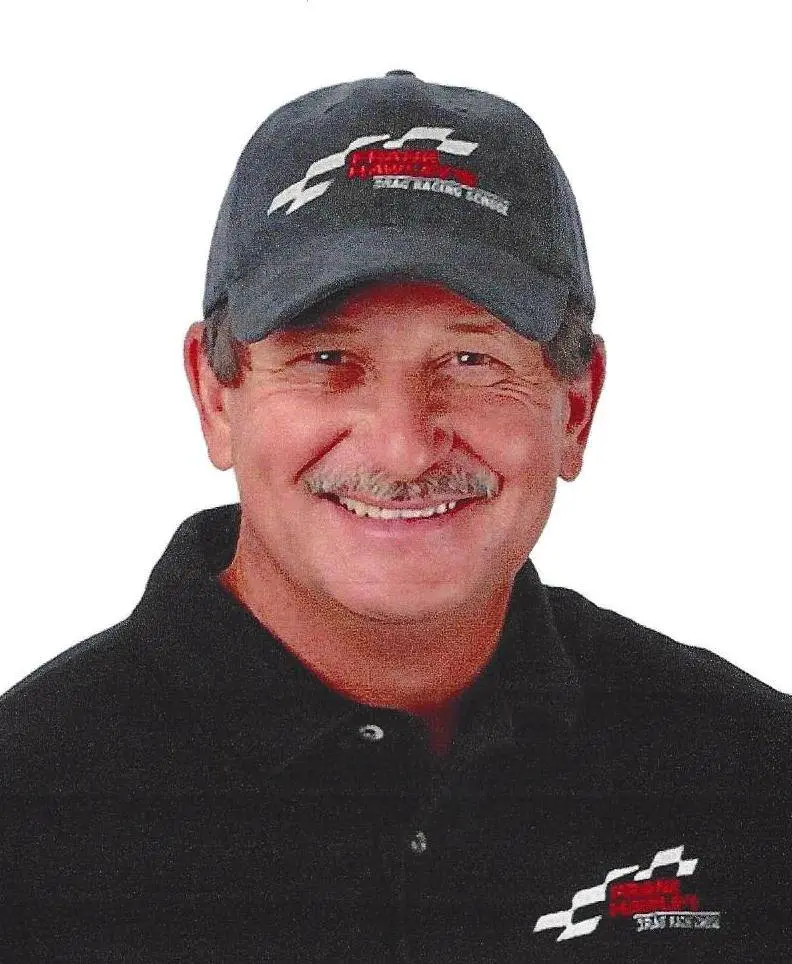 Frank Hawley
Growing up on a farm outside of Ontario Canada, where he had plenty of “open space” Frank Hawley started his driving career…
Read bio
Class of 2014Presented by Lucas Oil Products
Frank Hawley
Growing up on a farm outside of Ontario Canada, where he had plenty of “open space” Frank Hawley started his driving career…
Read bio
Class of 2014Presented by Lucas Oil ProductsFrank Hawley
Growing up on a farm outside of Ontario Canada, where he had plenty of “open space” Frank Hawley started his driving career at the ripe old age of four years old behind the wheel of his 5 hp powered go- cart. Since the go-cart was purchased as a “kit kart” he also got his first lessons as a mechanic at the same time by helping put it together. After hundreds of laps in a couple of years, the family moved to the city. When Frank was nine years old, one of his sister’s boyfriends took him to his first drag race at Thompson Dragway. Here he had his first exposure to the fire, sound, and smell of burning nitro watching a pair of AA/Fuel dragsters match race and he was immediately hooked. Frank says that was when he decided that driving one of these cars was what he wanted to do to make a living.
Shortly after that he bought his first automotive magazine, Car Craft Magazine, with the Frantic Four featured on the cover (which he still has today). This fanned his interest in drag racing as a career even more. Soon his dad joined him at more and more races as a spectator. After a few years, as just spectators, Frank heard about an opening as a photographer at the local dragstrip. With no equipment or experience, but with the desire to become more involved with the sport and the racers, Frank and his dad applied for the job and got it. After purchasing the camera equipment needed and teaching themselves how to use it the pair soon were taking the photos, writing the stories, and handling the PR for the track. Apparently, they were doing a great job because before long they were hired by the local circle track owner to do the same work for him.
While working at the race track, Frank learned that one of the local racers, Keith Riddler, was selling his ex-Garlits AA/Fuel dragster; after a lot of thought his dad bought it. At the age of 16 years old, Frank became his dad’s partner and the driver of an AA/Fuel dragster. They knew nothing about how to run it and were without a garage, tools, or even a tow vehicle. Frank’s first vehicle would be an old Dodge pickup truck that would be used to haul their race car. With the help of several friends, including Wayne Hartley, they were able to put together a functioning race team and campaign the car at every NHRA, IHRA, and local match race events they could. Overall, they owned three front engine top fuel dragsters, but eventually switch to alcohol funny cars in order to afford to race more often. In 1977 and 1978 he campaigned a BB/FC sponsored by “The Poppe Shop” and in 1979 he was at the wheel of a blown Hemi powered 1923-T roadster that carried him to the finals at the IHRA Nationals in St. Louis.
By winter of 1979 it was obvious Frank and his dad were not going to be able to continue racing as they had been, so they sold everything and Frank headed to California to look for work and started sending resumes to various race teams at the same time. After six months of no luck with finding a job Frank called home to tell his mom that he was about to give up on a career in racing. His mom told him to not give up and that he had received one response to his resumes from a gentleman looking for a driver, his name was Austin Coil.
In 1980 Frank Hawley became the official driver Austin Coil’s supercharged Chrysler power nitro funny car “The Chi-Town Hustler”. There were some who didn’t believe Frank could step from an alcohol car into a nitro burner and do a good job. He soon proved them wrong. In 1982 they were the number one qualifier at the NHRA Winternationals in Pomona, California. At the very next race, the NHRA Gatornationals in Gainesville, Florida he gave the team its first ever NHRA national event win. He closed out the year by winning the inaugural Big Bud Shootout at the US Nationals in Indianapolis, Indiana. They had enough points at the end of the NHRA World Finals in Pomona, California to lock up his first NHRA World Championship.
1983 proved to be an even better year when he drove to victory at the NHRA Winternationals in Pomona, the NHRA Gatornationals in Gainesville, the NHRA Southernnationals in Atlanta, Georgia, and the NHRA Mile High Nationals in Denver, Colorado. He also dominated the Super Stock Magazine Nationals in Reading, Pennsylvania, and the Popular Hot-Rodding Magazine Nationals in Martin, Michigan. The team finished the season with a second NHRA World Championship trophy.
Like a lot of the early pioneer racers, Coil ran the Chi-Town Hustler on a limited budget and at the end of the 1984 season, Austin made the decision to disband the team. Austin agreed to become crew chief for Jon Force. After much thought and preparation in 1985 Frank opened the doors on the first truly dedicated drag race driving school, Frank Hawley’s Drag Racing School, in Gainesville, Florida. The school stayed busy and a few years later opened a second school in Pomona, California. The curriculum of the school includes classroom instruction and on track instruction in alcohol dragsters, funny cars, super comp dragsters, super gas door slammers, and pro-stock motorcycles. In 2014 the school launched the “Dragster Adventure”. A program that gave customers, that are looking for an exciting drag racing experience, the chance to race a dragster in side-by-side competition without investing the time and resource it takes become an NHRA licensed driver. Since opening the doors for the first time, Frank has seen over 25,000 students graduate with some of today’s well-known drivers among them.
Not through with driving, in 1985 Frank climbed behind the wheel of Larry Minor’s AA/Fuel dragster, which he drove to runner-up spot that year at the NHRA Fall Nationals in Dallas, Texas, and the 1989 NHRA Cajun Nationals in Baton Rouge, Louisiana. In 1990 Frank took over as the driver of Darrell Gwynn’s top fuel dragster and promptly won the NHRA Springnationals in Columbus, Ohio, won the NHRA Fall Nationals in Dallas, and was runner-up at the NHRA Sonoma Nationals in Sonoma, California. Frank’s last year for the Gwynn family was in 1991.
Not finished with his career behind the wheel in 2007, Frank was offered a chance to drive in the big leagues again when he was named the driver of the “Rite-Aid Pharmacy” nitro funny car for team owner Roger Burgess. With crew chief Aaron Brooks, Frank picked up where he left off, setting records and winning rounds. Frank’s last race in the nitro funny car came in Charlotte North Carolina, and produced a number one qualifying spot and at that time, the fastest funny car speed ever in 1000 foot drag race.
-
2014
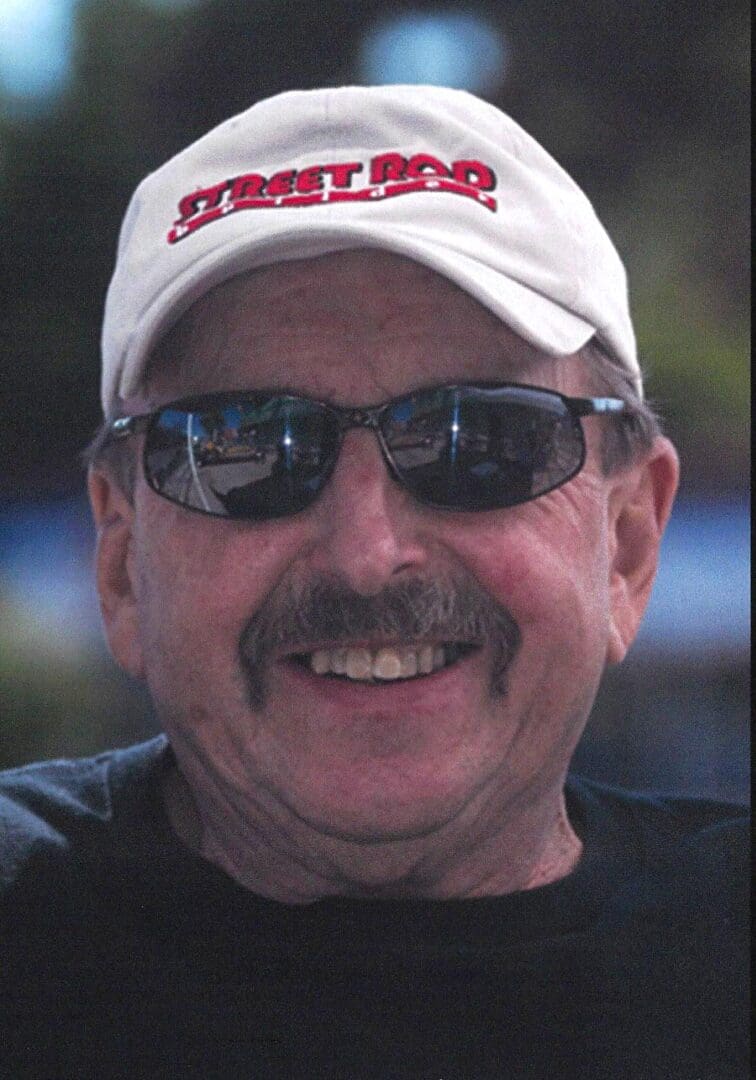 Al Bergler
Yes, Al Bergler is a racer but he is also much more. Al is a master craftsman who earned a reputation in…
Read bio
Al Bergler
Yes, Al Bergler is a racer but he is also much more. Al is a master craftsman who earned a reputation in…
Read bio
 Class of 2014Presented by Lucas Oil Products
Al Bergler
Yes, Al Bergler is a racer but he is also much more. Al is a master craftsman who earned a reputation in several areas within the hot-rodding arena. Al grew up in the automotive city of Detroit. In 1958 he started his participation in the performance arena by building his first hot rod in his parents’ garage. He chopped the top of a Model A Ford coupe, channeled the body over the chassis and installed a 392 cubic inch multi-carbureted Chrysler Hemi for power. His drag racing career began shortly after completing the coupe/roadster and continued with a Chrysler powered 1934 Ford coupe. Already bitten by the speed bug, in order to go quicker and faster in 1959, he built a sleek rear engine modified 1950 Crosley wagon powered by a blown 392 cubic inch Chrysler Hemi. Al’s next ride was the first in a series of Austin Bantam coupes. One a highly modified A-B body mounted on a Chassis Research Dragster chassis and was powered by his reliable blown Chrysler Hemi engine. 1964 saw the introduction of his newest Austin Bantam coupe. This time mounted on a purpose built Logghe chassis and featuring a blown 392 Chrysler on gas for power. With this car Al won Super Eliminator and Best Appearing Car at the 1966 NHRA Springnationals in Bristol, Tennessee and was Super Eliminator class runner-up at the 1966 NHRA World Nationals Finals in Tulsa, Oklahoma. This car also provided a very rare achievement for Al when it became one of the very few race cars to win the coveted Riddler Award in 1964.
From the beginning of the 1967 season Al produced another of his unusual AA/C cars. This time a 1923 T- roadster body mounted on a Logghe chassis with his blown 392 cubic inch Chrysler on gas for power. Al debuted this car at the 1967 NHRA Winternationals in Pomona, California and promptly took home the class winner trophy along with the Best Appearing Car Award. He later drove this car to runner-up in the Super Eliminator class at the 1967 NHRA Springnationals in Bristol, Tennessee and the 1968 NHRA World Finals in Tulsa, Oklahoma. He added Super Eliminator class wins at both the 1968 in 1969 NHRA US Nationals in Indianapolis, Indiana. For his appearance at the 1968 NHRA Winternationals Al added a full driver canopy that enhance the cars appearance. In 1970 Al switch classes to AA/GD and dropped his blown Chrysler into a full-bodied Logghe chassis and managed to race to the runner-up slot at the 1970 NHRA Summernationals in York, Pennsylvania.
With the upcoming demise of AA/GD class the nitro burning funny cars were able to produce a much greater income. In 1971 Al teamed up with Tom Prock, as the driver, and moved into the funny car ranks with a Vega body mounted on a Loghee chassis. Along with his changing car classes Al changed his powerplant to a supercharged injected late-model Ramchargers 426 Chrysler Hemi on nitro; that was billed as the “Motown Shaker”. Al and Tom competed at as many NHRA major events as time permitted, but the mainstay of the day was match racing and they competed in his many as three races per week.
Over the next few years the Motown Shaker handle appeared on a series of funny cars that Al campaigned. The 1972 Motown Shaker still featured a Loghee chassis with a new Vega body. But this time with a Keith Black 426 Chrysler for power and a new driver Butch Mass with Al substituting for Butch on occasion. In 1973 the Vega received a new paint scheme and Al returned to the driver seat full time. The 1973 NHRA Gatornationals was a good news bad news event for Al. The good news was he qualified well into the show and won the Best Appearing Car Award for the event. The bad news was the car was completed destroyed in a semifinal event fire. The 1974 Motown Shaker was simply an update of the 1973 car. The 1975 car had the Vega body replaced with a Mustang body. As a part of the regular match racing schedule Al was also one of the featured cars of the Coca-Cola Cavalcade of Funny Cars Tour.
In 1977 Al replaced the Mustang body by returning to the General Motors stable installing a Corvette body which lasted through 1980 when he replaced it with a Firebird Trans Am body. With the addition of more NHRA national events and fewer match race dates available, in 1982 Al sold the race operation to a fellow in Sweden and retired from active racing.
While he may have been retired from drag racing Al never stopped working in a shop. He still builds some of the most beautiful bodies and parts available. In 2002, Ed Golden bought the Probe AA/FD dragster and took it to Al for an update. In 2003, when NHRA introduced the cackle fast program at the Hot Rod Reunion in Bowling Green, Kentucky Ed offered the driver seat to Al; which he immediately jumped into. Today many of the restored cackle cars have made the journey to Al shop before going to the paint shop.
-
2014
 John Abbott
Jon Abbott grew up in Denver Colorado in the drag culture of the era. He highly respected the likes of Kenz &…
Read bio
John Abbott
Jon Abbott grew up in Denver Colorado in the drag culture of the era. He highly respected the likes of Kenz &…
Read bio
 Class of 2014Presented by Lucas Oil Products
John Abbott
Jon Abbott grew up in Denver Colorado in the drag culture of the era. He highly respected the likes of Kenz & Leslie and their Bonneville streamliner. Jon Bandimere Sr. famous for supercharged engines and Bandimere’s supercharged Cadillac powered GMC pickup. By the time he was 13 years old he was dreaming of being involved in the sport and following in the footsteps of the aforementioned prominent racers that called Colorado home. When he was 15 years old his uncle helped him purchase a 1942 Ford four-door Army staff car and install a 1951 Ford 8BA 239 cubic inch flathead in it. Like many youngsters starting out in the sport John’s powerplant grew in stages, milling the heads, then adding dual carbs and so on. The 1942 was followed by a 1947 Mercury convertible that wasn’t especially fast, but it was “cool”. However, living up to the “racer code” it wasn’t long before that was replaced with a 1940 Ford sedan with a bigger and more powerful Ford 276 cubic inch flathead V-8. In 1953 John joined a local car club, “The Drag-on’s”, and in 1955 he and several high school friends attended the Nationals in Great Bend, Kansas. John never questioned what he wanted to do for the rest of his life, he wanted to go racing.
After his discharge from the Navy in 1959, John bought a 1950 Chevy Coupe powered by the factory tri- powered 348 cubic inch engine that was very competitive around that era. Being a typical gearhead, it wasn’t long before that combination was too tame. So, John decided to design and build his own dragster chassis and install a highly modified 331 cubic inch Chrysler Hemi on gas with periodic attempts on nitromethane for power. John campaigned this car successfully locally during the 1961 and 1962 seasons. He was also following what was happening across the country as far as the speed and ET’s. So, in the winter of 1962 he had a couple buddies build him a new chassis while John was putting together a 400 cubic inch 6:71 blown nitro burning Pontiac engine for its power. This combination worked well for John and he was able to run as fast as 190 MPH in Denver’s rarified air and at the same time pickup his first major sponsor which helped him see an even greater future in the sport.
As much success as John had with the Pontiac powerplant he knew that to be competitive in this arena he would have to make the move to a Chrysler Hemi. So, in 1966 he teamed up with his friends Jerry Keating and Bobby Geer to field a new Woody car. Bobby built and painted the sleek full body and John built the blown 392 Chrysler Hemi engine. The trio unveiled the new car for its maiden run and were able to set a new Colorado state ET record of 7.42 seconds. Always looking to go quicker and faster to be more competitive in mid-1967 John dropped his Chrysler powerplant into Ernie Spickler’s RCS built chassis and immediately became the team everyone in the area wanted to beat. As successful as the team was, Ernie had a business to run, so John put together a program with Mark Williams whereby Mark would supply a completed new car and John would supply the rest of the items needed to go to racing. In 1968 John was one of two Colorado and two Texas cars that teamed up as the United States Drag Racing Caravan to tour Kansas, Oklahoma, and Texas putting on match races.
Over the next couple of years John continued to compete in a semi local arena (Kansas, Texas, Nebraska, Colorado, and Utah) and in 1973 he switched over to his first rear engine car. He really wanted to compete in the national arena so in 1976 he took on the driving chores for the team of Frazier and Williams in their rear engine, late-model Chrysler hemi powered, MW Enterprise top fuel dragster. John was able to post a win at the big UDRA race in Saginaw, Michigan.
1977 proved to be a better year for the team, which by this time consisted of just Larry Frazier and John. They were able to notch wins at the Popular Hot Rod Magazine Meet in Martin, Michigan, the IHRA US Open in Rockingham, North Carolina. They were runner-up at the IHRA World Nationals in Amarillo, Texas and the High-Altitude Nationals in Pueblo, Colorado. They also qualified number one at the NHRA World Finals at Ontario Motor Speedway at 5.88 seconds.
In 1978 the team had acquired major sponsorship from Jet/X and was able to continue racing on a national basis. That year they finish number five in both NHRA and IHRA point standings. They returned to defend their title at the Popular Hot-Rodding Championship at US 131 in Martin, Michigan only to lose to Don Garlits in the final round. They continued with wins at the IHRA Spring Nationals in Bristol, Tennessee and the NHRA Winston Championships series in Brainerd, Minnesota. Thet appeared in seven top fuel final rounds that season.
They kicked off the 1979 season with a win at the AHRA Winter Nationals in Tucson, Arizona. But their sponsor funding wasn’t coming on a regular basis, so Frazier opted to retire at this point leaving John without a ride. True to form this situation didn’t last long when John was able to buy Jake Coughlin’s retired top fuel dragster. John spent the rest of the season competing at NHRA and IHRA national events from coast to coast, finishing in the final round seven times and winning three. He ended up finishing number nine in NHRA, number eight in IHRA, and number eight in AHRA point standings.
1980 found John with a new sponsor, the Jolly Rancher Candy Company, that allowed him to continue to compete on a solid basis. This resulted in his winning the Crown Auto Parts race at Brainerd Minnesota and qualifying number three at the US Nationals with a 5.82 second ET at 246.45 MPH.
In 1981 John had greater success winning the NHRA Winston World Championship meet in Denver, Colorado. He competed in the final round of eliminations six times. Notched wins at WWCS in Denver, Colorado, WWCS in Brainerd, Minnesota, the Quaker State Oil Championships at Brainerd, Minnesota, and the NHRA US Nationals in Indianapolis, Indiana. He set low ET at the World Finals at Orange County international Raceway with a 5.63 second ET and became the eighth member of the Cragar 250 MPH Club during the US Nationals. John was runner-up at the WWCS event at Maple Grove, Pennsylvania and also the Nitro Knockout in Denver, Colorado. The NHRA points championship that year came down to the final race of the season with John finishing number three behind Jeb Allen and Gary Beck.
In 1982 John finished number five in the AHRA Grand American series, picked up a runner-up finish at the AHRA Summer Nationals in Kansas City, a runner-up finish at the AHRA World Finals in Spokane, Washington, and won the Fuel Nitro Knockout Championship in Denver.
After that John began winding down his participation, but still notched two wins, a number eight points finish in the 1983 AHRA Grand American Series, and number 13 in the 1983 NHRA Winston Championships series. After 23 straight years of top fuel racing, in 1984 John competed at Denver, Tucson, and Tulsa. John held onto the intension of ending his career as being an active team owner and driver. This finished over 31 years of total racing. The first eight years with performance street rods and the last 23 years and fuel dragsters.
In the July 1982 issue of Car Craft Magazine, John was featured in a rare top fuel car center spread article and was the featured car on the cover of National Dragster multiple times starting in 1964. John was inducted into the Colorado Motorsports Hall of Fame in 2006, received a Lifetime Achievement Award at the NHRA Hot Rod Reunion in Columbus, Ohio in 2007, and was inducted into the NHRA Division 5 Hall of Fame in Kansas City, Missouri in 2009. While John retired as an owner driver the rest of the Abbott clan is carrying on what John started. His son Jon Jr and his wife, Sondi, campaigning twin top dragster class cars. Grandson Christopher working as crew man in the top fuel ranks and granddaughter Caylynn driving a junior dragster winning the JD-2 Points Championship at Bandimere Speedway in 2013. John’s oldest daughter Carrie broke with family tradition and is a world acclaimed artist, however still supporting the families racing endeavors.
Class of 2013
9 inductees-
2013
Founder’s Award
 Dr. Robert Post
Bob Post grew up in Pasadena along with a lot of youngsters later famous in the annals of drag racing such as…
Read bio
Dr. Robert Post
Bob Post grew up in Pasadena along with a lot of youngsters later famous in the annals of drag racing such as…
Read bio
 Class of 2013 · Founder’s AwardPresented by NHRA, Summit Racing Equipment, Lucas Oil Products
Dr. Robert Post
Bob Post grew up in Pasadena along with a lot of youngsters later famous in the annals of drag racing such as Kent Enderle, Don Nicholson, and Chuck Grieth. His first competitive outing was at Santa Ana in 1952 in a 1932 coupe, his last at San Fernando Raceway five years later in a 1934 coupe which was flathead powered. He never went very fast, but he became a permanent fan, and he saw a lot of history made at places like The Pond, Pomona, Formosa, and The Beach.
After finishing his doctorate degree at UCLA, he moved “back” with his wife Dian. In 1973 he went to work as a curator for the Smithsonian Institution, and in 1986 he began planning and exhibition sponsored by DuPont called “A Material World”. Here was his chance to fulfill a lifetime ambition to spotlight a top fueler at The National Museum of American History, and Don Garlits agreed to donate his World Champion Swamp Rat XXX as the feature display. Before he came through the doors, Don lit Swamp Rat XXX one last time on the steps of the museum, and Jeff Tinsley took a photo that was turned into one of this Smithsonian’s best posters ever. In 1989, Bob arranged for the induction of Bruce Larson’s World Champion funny car. He had followed the drags all his life, he was a professional historian, and he had written several books about the history of technology. All this got him thinking, was it time for a book about drag racing? “Hi Performance”, which Garlits called “the bible of drag racing”, was published in 1993 and has gone through many reprintings along with a revised edition in 2001. It’s a book that has sold well, but numbers pale in comparison to the number of people who first had a chance to get closer at a top fuel or a fuel funny car at the Smithsonian. Swamp Rat XXX was featured for 18 years and the museum is visited by 6 million people annually.
Bob’s honors include prizes for his books and articles, awards for exceptional services from the Smithsonian (nine times), appointments at the MIT Think Tank, and the Leonardo Da Vinci Metal from the Society of the History of Technology. But, looking back to Santa Ana more than 60 years ago, he says receiving the Founders Award in the International Drag Racing Hall of Fame is the finest honor of all.
-
2013
 Lewis “Louie” Senter
1920–2016 Lewis Senter began his racing career by competing in the original Soap Box Derby at the age of 12 years old. Since…
Read bio
Lewis “Louie” Senter
1920–2016 Lewis Senter began his racing career by competing in the original Soap Box Derby at the age of 12 years old. Since…
Read bio
 Class of 2013Presented by NHRA, Summit Racing Equipment, Lucas Oil Products
Lewis “Louie” Senter
Lewis Senter began his racing career by competing in the original Soap Box Derby at the age of 12 years old. Since then he has been a lifelong racing enthusiast and participant in about every aspect of the high-performance industry. As an owner/driver he has been involved in drag racing, dry Lakes competition, open wheel oval track racing-including the Indy 500-, sprint and midget racing, sports car racing, and boat racing. As a manufacturer he founded Ansen Automotive and other similar companies, he was one of the original drag strip owners/promoters, opened one of the first true speech shops, started one of the first mail order companies, and was one of the original SEMA members.
In high school Louie took a vocational course in machine shop and when his parents saw his intense interest in this arena, they bought him a lathe, a drill press, and welding equipment. Upon graduation he worked as an apprentice machinist and a tool and die maker. During World War II he joined the Navy as a machinist mate and at the end of the war he went to work for Eddie Meyer Engineering. Louie’s first venture into manufacturing came when he and his brother purchased a tube bending machine and started producing suspension parts for shops like Frank Curtis and other car builders. Soon after that he and his brother took in another partner, Jack Andrews, who was one of the best engine builders of the time and also the creator of the first dual ignition system. After that the new parts and pieces began flowing on a regular basis, from steering wheels, conversion kits, change mechanical brakes, to hydraulic brakes, and from a line of flathead speed equipment to drop axles. Ansen Automotive developed the first aluminum wheels approved for use in the Indy 500 and soon it was producing one- and two-piece aluminum wheels for both racing and the street. After that it expanded into various internal engine components including pistons, rods, and crankshafts along with hundreds of other specialty items.
Louie fielded one of the first top fuel dragsters in the Southern California area which Rod Stuckey promptly drove into the winner’s circle at the NHRA Winternationals in Pomona, California, and later sold to Tom Greer. After being fitted with a full body it became the famous Greer-Black-Prudhomme AA/Fuel car. After that he teamed up with builder Ed Pink in another AA/Fuel dragster followed by various other such cars.
As active and committed as he was with Ansen Automotive and drag racing. Louie was also involved in fielding several vehicles ranging from dry Lake cars, two midgets and sprint cars, sports cars, and his first involvement with the Indy 500. An event he has never missed since his first trip there 60+ years ago.
Through Ansen Automotive and personally, Louie has sponsored and/or helped many different teams throughout the entire country supplying both funding and parts. He was also one of the first companies to feature a strong contingency program with several of the racing associations over the years. Louie was inducted into the SEMA Hall of Fame in 1978, the Hot Rod Magazine Hall of Fame in 1997, the Dry Lakes Hall of Fame in 1999, WRA Man of the Year in 1998, National Sprint Car Hall of Fame in 2009; along with recognition from various other racing associations over the years.
-
2013
 Dick Rosberg
1942–2011 Dick started his career as a street racer, moving on to the drag strip very quickly and in 1964 started racing the…
Read bio
Dick Rosberg
1942–2011 Dick started his career as a street racer, moving on to the drag strip very quickly and in 1964 started racing the…
Read bio
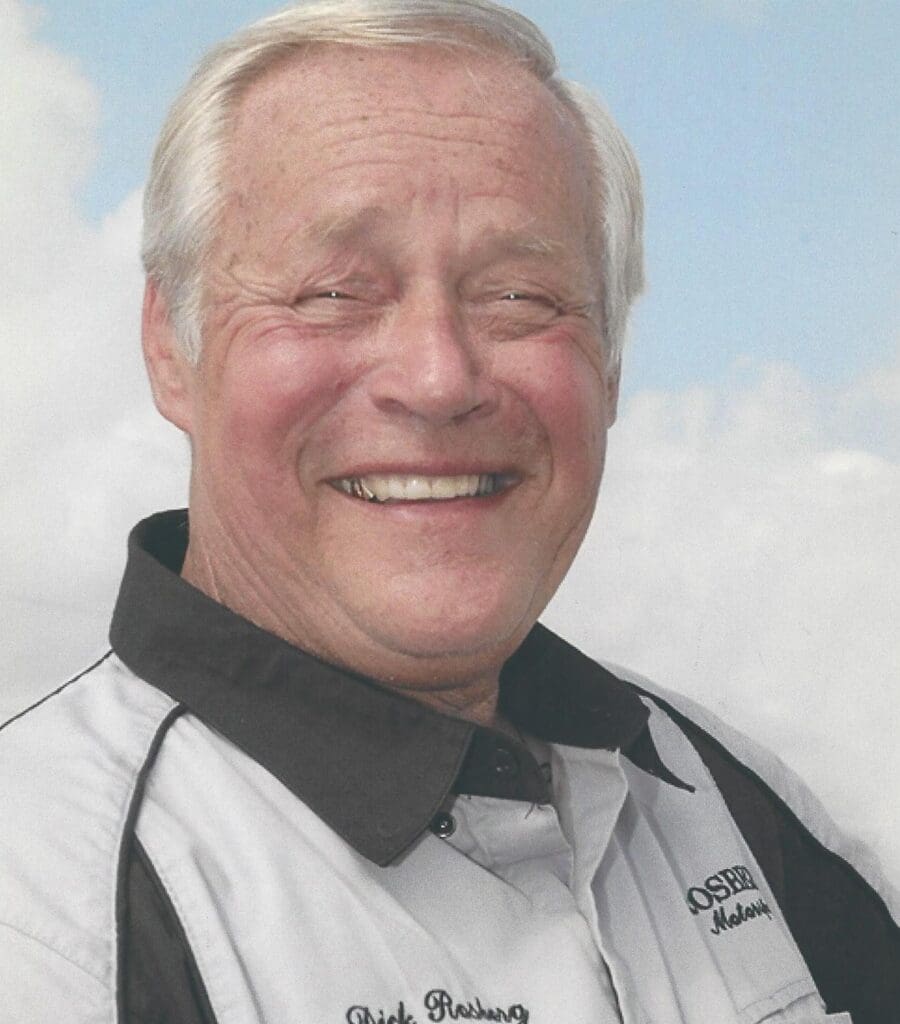 Class of 2013Presented by NHRA, Summit Racing Equipment, Lucas Oil Products
Dick Rosberg
Dick started his career as a street racer, moving on to the drag strip very quickly and in 1964 started racing the local track and a Chevy powered gas dragster. In 1970, Dick was driving Mike Kuhl’s blown Chrysler AA/Fuel dragster when he was offered the job of driving the Mr. Ed top fuel hydroplane owned by Ed Willis. Understanding the logistics of trying to compete in both categories, Dick chose to compete on land in Kuhl’s AA/Fuel dragster and later piloted various other fuel dragsters as circumstances permitted. In 1971 Dick teamed up with Tim Beebe to drive Tim’s “Fighting Irish” nitro burning funny car. Tim retired at the end of the 1973 season and Dick inherited the famous Fighting Irish name and in 1977 he partnered with Don Novak and Bill McDaniel to form Fighting Irish Racing Enterprises under which they campaigned a AA/Fuel funny car are until the cost of running this class made them decide to sell the car at the end of the 1981 season moving their efforts over to the jet car wars.
The team made their first appearance at the track with a jet powered funny car 1982 still under the Fighting Irish racing banner but with sponsorship from Stroh’s beer. The jet car proved to be so successful that they built another jet powered funny car 1984 and with McDaniel driving it and Dick the original car, they match raced each other at hundreds of tracks across the US. In 1989 Dick became the sole owner of the team and continue running the Fighting Irish car until 1991 when he sold the car to Pat Davidson. This didn’t mean Dick would give up driving Chet cars and for the next five years he drove Bob Van Sciver’s jet car.
Dick decided in 1997 to change from jet powered funny cars and dragsters to another unique form of vehicles, this time climbing behind the wheel of a jet powered pickup truck he and new partner, Noel Smith built. By the end of 2001 Dick decided it was time to start winding his career down a bit and sold his share of the team. Dick’s idea of “winding down” was to go back to just driving, this time for Al Hanna in the Eastern Rider jet powered funny car. For the 2003 season, Dick and his son Terry took control of Van Sciver’s “Warrior” jet funny car and toured it through 2004. Van Sciver talked Dick into driving his newest jet funny car through the end of the 2005 season at which time he talked to Dick into driving an all-new jet powered dragster which he did until the end of the 2010 season. Even after he discovered he had cancer he continued driving and putting on a great show but it all came to an end in May 2011 when the cancer won. In addition to his driving accomplishments, Dick was the IHRA’s Jet Inspector for many years and was inducted into the North Carolina Drag Racing Hall of Fame in 2009.
-
2013
 KS Pittman
1927–2010 KS Pittman was a native of Texas but when he was 17, he and his family moved to Southern California which was…
Read bio
KS Pittman
1927–2010 KS Pittman was a native of Texas but when he was 17, he and his family moved to Southern California which was…
Read bio
 Class of 2013Presented by NHRA, Summit Racing Equipment, Lucas Oil Products
KS Pittman
KS Pittman was a native of Texas but when he was 17, he and his family moved to Southern California which was a hot bed for young men and women who were interested in speed and competition especially in the drag racing category. KS started racing shortly after his move to California in a straight eight Buick powered 1937 Buick. His prowess as a driver soon caught the attention of other car owners and before long, he was driving the Stone and Wood blown Olds 1950 Oldsmobile coupe. After that he moved over into the seat of Jon Edwards 1950 Oldsmobile fastback coupe powered by a Dick Harryman built potent blown Olds engine. Realizing that these big sedans and coupes had a weight disadvantages, in late 1958 KS acquired a 1941 Willy’s coupe and shoehorned Edwards big Olds powerplant into it and was soon making headlights in the drag papers. In his quest to go even quicker and faster, KS and Kurt Hamilton from Cal Automotive pulled the first molds off the coupe and produce the very first fiberglass front ends, fenders, doors, and deck lids all of which replaced the steel pieces of the coupe producing speeds of 119+ MPH and 11.69 second ET’s. What also made these times more impressive is the fact that the class required the competitors to run all legal street equipment including windshield wipers, lights, etc.
At the 1961 NHRA Winternationals in Pomona, California, KS drove the Stone and Wood Willys coupe with John Edwards blown Oldsmobile engine for power to some impressive times; launching the beginning of a new nationally recognized team in the super gas wars when Doug Cook became the third member of the team after KS moved on. In 1964 KS teamed with Chuck Stolze in a steel body 1933 Willys that was powered by a David Zeuschel built 420 CID blown Chrysler. While the pair raced at their share of national events, the big money for them was the ongoing match races across the country. The 1933 Willys biggest claim to fame came when KS took it to England as a member of the US Drag Racing Team and made exhibition runs at the British Drag Festival in 1964. In 1965, while making a hard practice run at the track in his hometown of Mineral Wells, Texas, the chute failed to open; KS totaled the car which prompted him to bring the 1941 Willys out of the moth balls and complete the match race season in it.
In 1968 KS purchased John Mazmanian’s tube chassised Austin coupe and slipped the blown Chrysler into it for the 1968 and 1969 match race season. Unfortunately, the cars radical design made it illegal for NHRA’s AA/GS class but it was a real crowd pleaser on the match race circuit. In 1970 KS took the Austin body off, stretched the chassis to accommodate a legal two seat Opal GT body and proceeded to set the NHRA class record with an ET of 8.54 seconds and several top speeds of over 170 MPH. By the end of the 1972 season bookings for the match race circuit had pretty much become the venue for funny cars; so KS made the switch again this time campaigning a turbocharged Chrysler powered Vega, but decided to retire from the circuit and just build race engines for other teams. When he built a turbocharged Chrysler engine for a blown gas hydro drag boat and decided its driver wasn’t doing his job correctly; KS came out of retirement for one final season and won the NDBAs Rookie Driver of the Year Award in 1978.
Among his other accomplishments and awards, KS was named to the 1971 Car Craft Magazine All-Star Team and was well known for his participation in and crowd-pleasing contributions to the Supercharged Gas Coupe/Sedan class. KS always presented himself as a true ambassador of the sport and helped advance it in many ways.
-
2013
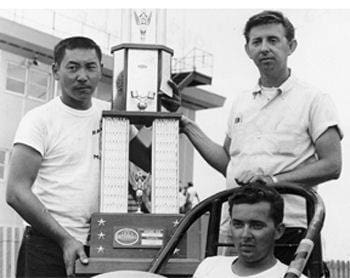 Kenny Hirata, Phil Hobbs & Bobby Vodnik
Kenny Hirata, Phil Hobbs, and Bobby Vodnik; while these three distinguished themselves as individual racers over the years, they are one of…
Read bio
Class of 2013Presented by NHRA, Summit Racing Equipment, Lucas Oil Products
Kenny Hirata, Phil Hobbs & Bobby Vodnik
Kenny Hirata, Phil Hobbs, and Bobby Vodnik; while these three distinguished themselves as individual racers over the years, they are one of…
Read bio
Class of 2013Presented by NHRA, Summit Racing Equipment, Lucas Oil ProductsKenny Hirata, Phil Hobbs & Bobby Vodnik
Kenny Hirata, Phil Hobbs, and Bobby Vodnik; while these three distinguished themselves as individual racers over the years, they are one of the groups that became more recognized as a team than as individuals. Kenny’s first car was a 1942 Mercury with a highly modified flathead V-8 that he used for street racing in the beginning. Phil entered the car ownership ranks with a flathead powered 1932 Ford five window coupe, followed by a long wheelbase modified roadster with 180-degree Nordin flathead, then his first dragster using the same engine on nitro. Bobby had to be different, he attended his first drag race in 1958 and immediately had the racing bug. His first ride was in a carbureted small block Chevy powered B/Gas dragster owned by his friend Dale Davies. In the meantime, Kenny had rid himself of the Mercury and built himself a 1932 Ford roadster into which he installed his Merc flathead V-8 and was racing when he entered the Army in 1950. Upon his discharge in 1952, Kenny purchased a 1932 three window Ford coupe, still using a Merc flathead for power. After a short stint with the flathead Kenny switch to an Oldsmobile engine for power backed by what is considered by most as the first successful adaption of an automatic transmission in the class range. Next came a much lighter Model A roadster with the Olds motor for power and with a modified two speed hydra-matic transmission and making the switch from gas to nitro. In 1958 Kenny stepped up to the dragster ranks and in 1961 he and Phil started their careers as a team competing with a 6-71 supercharged 458 cubic inch Hemi Chrysler on gas in a Chassis Research dragster. Meanwhile in 1960 after competing in the Davies B/Gas dragster, Bobby joined forces with his uncle Jim DeVos and Larry Reimer to campaign and unblown Chrysler powered B/Gas dragster they constructed themselves. By the end of the 1960 season the trio decided to switch their Chrysler into a Chassis Research chassis to start the 1961 season. In July 1961 Joe Bush of Speed Sport Automotive made a deal with them to install his blown fuel Chrysler Hemi in the car and promptly set a new track record at Oswego, Illinois at 8.82 second’s and 180 MPH. It mid 1962 Bobby had the opportunity to drive Lyle Fisher’s Speed Sport dragster followed by several other recognized top rank cars including Chris Karamesines “Chizler”, Dick Belfatti’s AA/Fuel dragster to name a couple.
Unfortunately, in 1963 Kenny, Phil, and Don Maynard, the Greeks partner, were on their way to Phoenix with plans to go on to Pomona to run the NHRA Winternationals; then go to the March Meet at Bakersfield with they were involved in an accident. Both Kenny and Phil were seriously injured in the accident (Don was fatally injured) leaving them both unable to drive in competition. So, after their release from the hospital Kenny and Phil rebuilt the car and brought Bobby into the team as the driver and returned to the gas dragster wars.
With Vodnik at the wheel, the team won its first national event when he captured the Top Eliminator Award at the 1963 NHRA US Nationals in Indianapolis by defeating Don Garlits in the final round. They continued their winning ways at the 1965 NHRA US Nationals and in 1966 by capturing the AA/Gas dragster class at the US Fuel and Gas Championships in Bakersfield, California with Phil driving. The Hirata & Hobbs team made the transition to a rear engine AA/Fuel dragster for the 1973 season and continued as strong competitors until they hung it up at the end of the 1973 season. Phil went on to attend to his business Crossfire V-8 Hot Rod Consulting. Kenny was more active in Lowell Body Shop which he founded in 1956. He also built and tuned the engines in his sons injected nitro dragster. Bobby stayed busy as a mold maker for Panduit Corporation.
In 1996 the “retired” Kenny purchased an AA/Fuel dragster chassis which he and his son, Dave, campaigned. He was named NHRA Division 3 Mechanic of the Year and was awarded NHRA’s Lifetime Achievement Award. Bobby continued to have a successful driving career through 1966 when he officially retired from competition.
-
2013
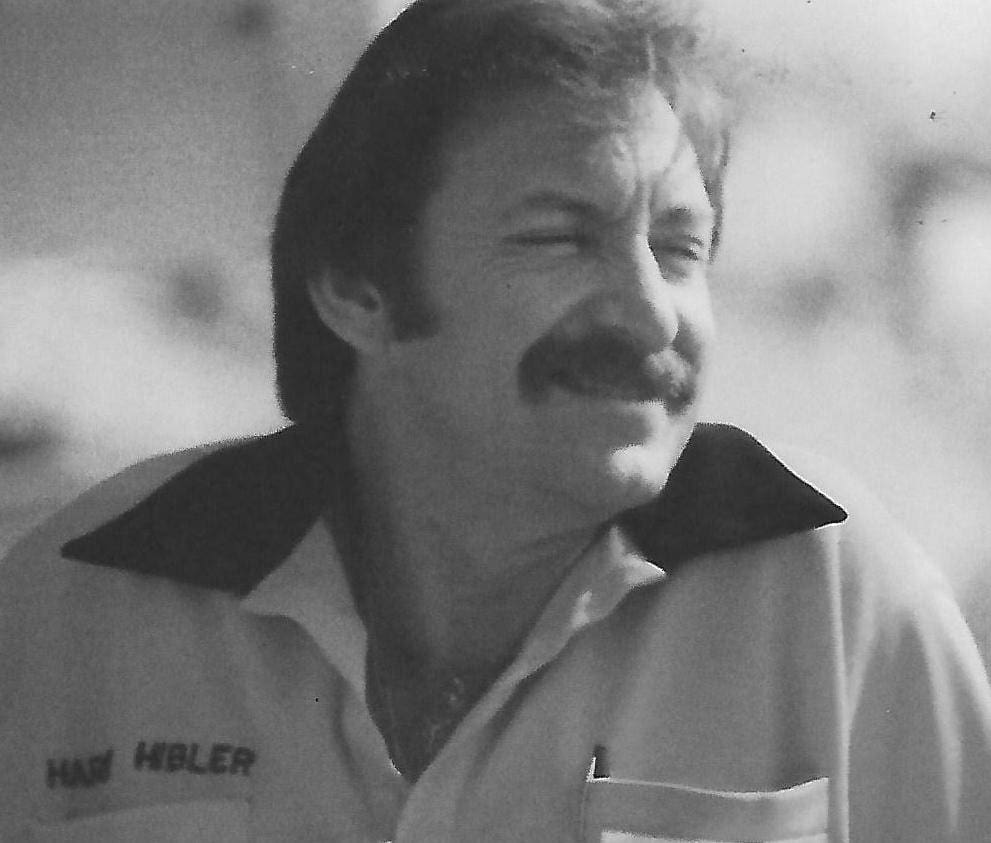 Harry Hibler
While he was interested in cars and all types of machinery at a very early age. Harry’s involvement in cars and racing…
Read bio
Class of 2013Presented by NHRA, Summit Racing Equipment, Lucas Oil Products
Harry Hibler
While he was interested in cars and all types of machinery at a very early age. Harry’s involvement in cars and racing…
Read bio
Class of 2013Presented by NHRA, Summit Racing Equipment, Lucas Oil ProductsHarry Hibler
While he was interested in cars and all types of machinery at a very early age. Harry’s involvement in cars and racing began shortly after his 16th birthday when he caught a bus to Los Angeles. Street racing was very popular; Harry soon became a participant after purchasing a 1941 Ford coupe. Shortly after that, he started adding speed parts as quickly as his budget would allow and at the same time one of his good friends talked him into going to the old Santa Ana Dragstrip and he was hooked. After 1941 he stepped up to an old’s gas coupe/sedan followed by a gas-powered AA/Coupe powered by a very large V-8 Merc flathead. At that time there were 12 to 14 drag strips within driving distance so he was able to find plenty of organized racing to keep him off the streets and learn more about building the cars and engines.
In 1955 he made his first trip to San Fernando Raceway, The Pond, and very shortly after that he signed on as the tracks tech official and became very involved in learning as much as he could about the rules and safety of the sport. After year so as the head tech person at the track he moved into the track manager slot where he stayed until the track closed its doors in 1969.
It was during his tenure as the track manager that Harry took his first ride in an A/Fuel dragster, an injected Dodge Wedge engine powered RSC dragster which he quickly became the proud owner of. Shortly after that he had the opportunity to drive John Smyser’s blown Hemi AA/F dragster and the hook was set even deeper. It wasn’t common for him to slide in someone else’s car at The Pond either because the driver was late, the owner wanted a second opinion, or simply because several of the participants wanted to give him a shot at driving. After driving regularly for Smyser for several years but not wanting to give up his track managers position for a full-time driving job. Harry drove for various other owners including Marc Danakus, Cliff Roa, and Mike Butler. He also managed to shoe Don Greens original “Rat Trap” AA/Fuel altered roadster for several races. He then took a turn at driving the “US-1” turbine powered dragster and later Jim Deist’s jet dragster.
In early 1969 he closed the doors on his construction business and went to work at Petersen Publishing Company as an advertising salesman for Car Craft Magazine Hot Rod Industry News. In 1977 he was promoted to Publisher of Car Craft Magazine where he was especially diligent and building a greater awareness and importance of the Car Craft Magazine All-Star program. He was also one of the founders of the Car Craft Magazine Street Machine Nationals which became one of the largest and most prestigious street car shows in the country. Harry was the first person to highlight a pro drag race vehicle at the street event when he had Raymond Beadle cackle his Blue Max funny car during the show. In 1982 he moved up the corporate ladder again, this time assuming the publisher’s position at Hot Rod Magazine. Harry held the publisher’s slot for several years, then moved into a corporate development position but after a year there he took over the reins of Hot Rod Magazine again to increased its circulation and advertising revenue. While the publisher of Hot Rod he worked at ways to include racing into the editorial mix of the magazine at the time when the reader’s interest was aimed more at street machines and street rods. One of the ways Harry was able to do this was when he arranged with the Navy for an article featuring Kenny Bernstein’s Budweiser King AA/Fuel dragster on an aircraft carrier with both the car and and F-18 fighter jet lighting up the sky. Another similar article he implemented was a comparison of Don Garlits Swamp Rat AA/Fuel dragster against a F-18 being catapulted off an aircraft carrier showing the similarity in safety equipment, acceleration, etc. One of the editorial pieces he is most proud of was the development and building of the famous streetcar, CadZZilla, a 1949 Cadillac sedan designed by Larry Erickson, built by Boyd Coddington, and owned by the ZZ Top bandleader Billy Gibbons. This is still one of the most widely recognized cars ever built.
In 1996 Harry resigned from Petersen Publishing to become one of the founders of a couple of companies that were involved in the nonperformance automotive world. His involvement in this arena led to his being named 2003 Small Businessmen of the Year in California. He has enjoyed the sport as a driver, track manager, media person, and member of SEMA working to advance it every way possible. In 1994 he was inducted into the Northwestern College, Lima Ohio, Hall of Fame for his efforts to help expand the school’s automotive education program. In 2002 he was inducted into the SEMA Hall of Fame, and in 2011 received NHRA’s Lifetime Achievement Wward at the California Hot Rod Reunion.
-
2013
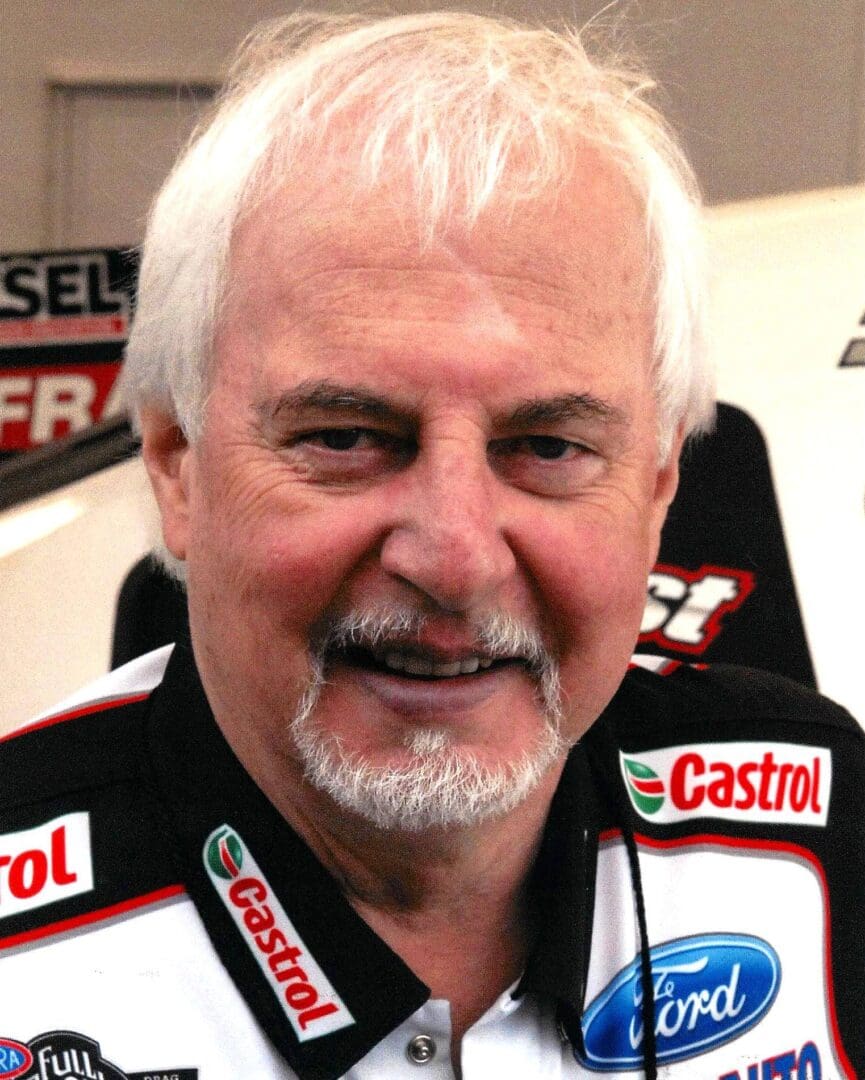 Bernie Fedderly
Bernie was born in Edmonton, Alberta, Canada and began pursuing an automotive oriented life by taking automotive classes while in high school…
Read bio
Bernie Fedderly
Bernie was born in Edmonton, Alberta, Canada and began pursuing an automotive oriented life by taking automotive classes while in high school…
Read bio
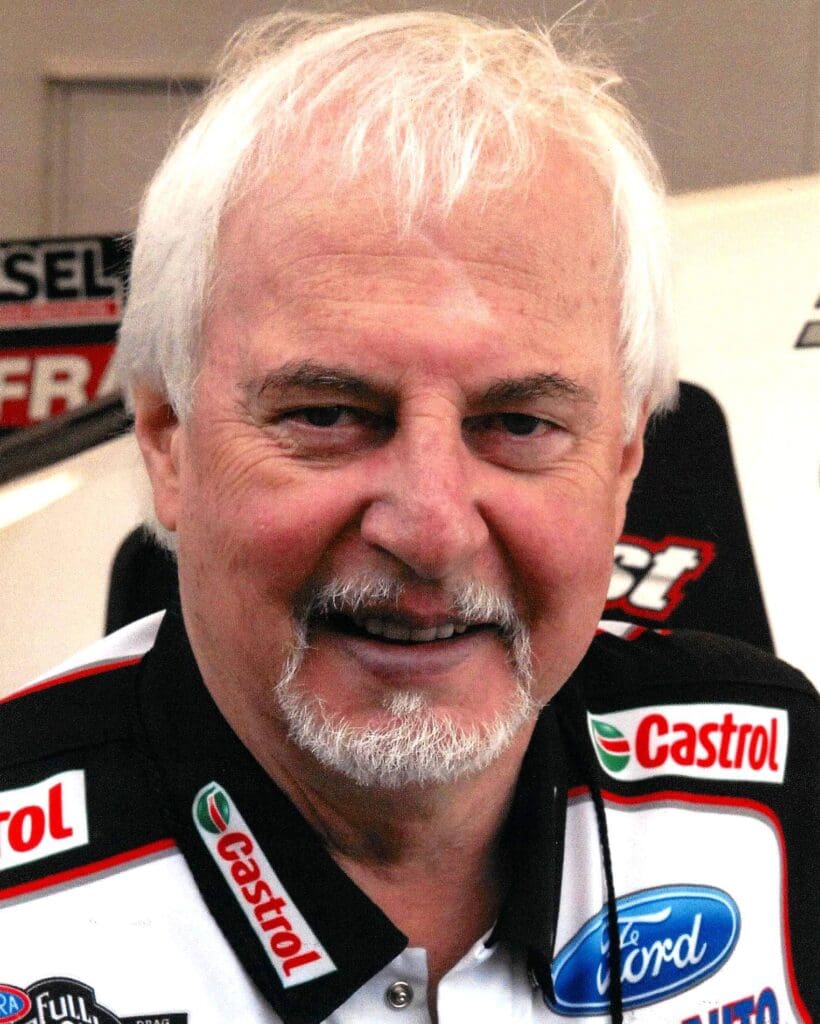 Class of 2013Presented by NHRA, Summit Racing Equipment, Lucas Oil Products
Bernie Fedderly
Bernie was born in Edmonton, Alberta, Canada and began pursuing an automotive oriented life by taking automotive classes while in high school and later earning certification as an automotive technician at Northern Alberta Institute of Technology. While still in high school Bernie was spending his weekends hanging out with the local Capital City Hot Rod Association guys.
It was while he was learning his trade at NAIT that he teamed up with another Canadian, Terry Capp the two of them began racing first gas coupes thing gas dragsters. In the early 1960s they joined yet another Canadian Wes Van Dusen in an AA/Fuel dragster venture. The trio raced mainly in the Western Canada area with an occasional trip across the border to the states and began to build a name for themselves within that arena. In 1980, the “Wheeler Dealer” team opened the door to the upper regions of the AA/Fuel dragster world by winning the NHRA US Nationals in Indianapolis, Indiana. Their past success along with the Indy win led them to make a decision to run the entire NHRA national event series in 1981. While the team notched a runner-up position at Baton Rouge, Louisiana that year and earned enough points to finish seventh in the race for the NHRA Championship; funding was tight and the team decided to park their operation with Bernie going to work for Larry Minor Racing as Gary Beck’s crew chief.
Over the next three years with Bernie as crew chief, Beck won seven NHRA national events, was runner-up at five more events, and became the first to break both of 5.50 and the 5.40 second ET barriers. Beside their impressive win streak, the team earned a place on the 1983 Car Craft Magazine All-Star Racing Team as its Person(s) of the year and in 1983 won the NHRA Top Fuel Championship.
In 1985, Bernie moved from the dragster team to Minor’s funny car team with Ed “Ace” McCulloch driving. The team had an impressive win record of 12 NHRA national events prior to parting ways in early 1992.
Bernie was immediately hired by John Force where he was made Co-Crew Chief on forces AA/Funny Car with Austin Coil. Bernie was a part of John Force Racing from 1992-2013 and participated in the teams outstanding success in various positions and titles. Through the 2010 seasons end, Bernie had been a part of 1336 NHRA national tour wins while John Force Racing marked its 16th funny car championship. Bernie was inducted into the Canadian Motorsports Hall of Fame in 1996.
-
2013
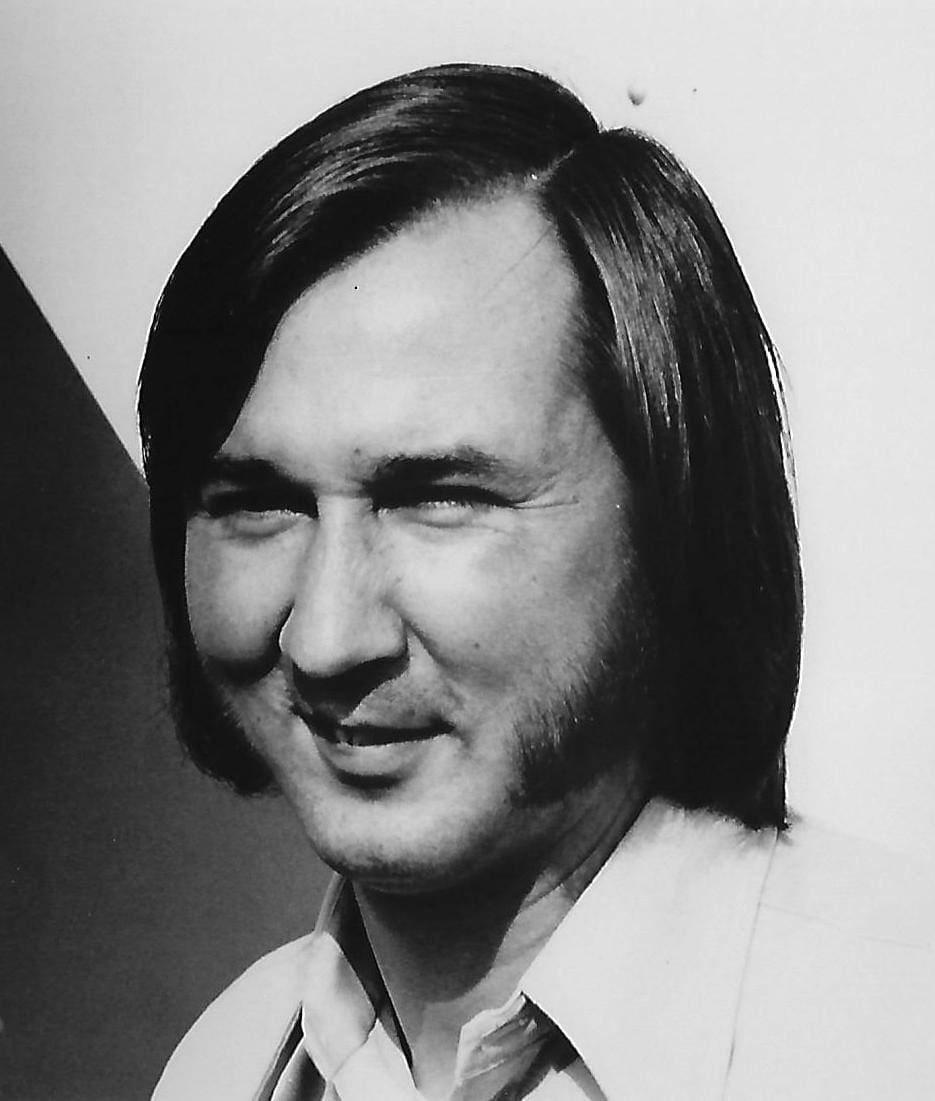 Wally Booth
1937–2024 Like most other competitors in the sport, Wally got his start in his teenage years but his most visible years were when…
Read bio
Wally Booth
1937–2024 Like most other competitors in the sport, Wally got his start in his teenage years but his most visible years were when…
Read bio
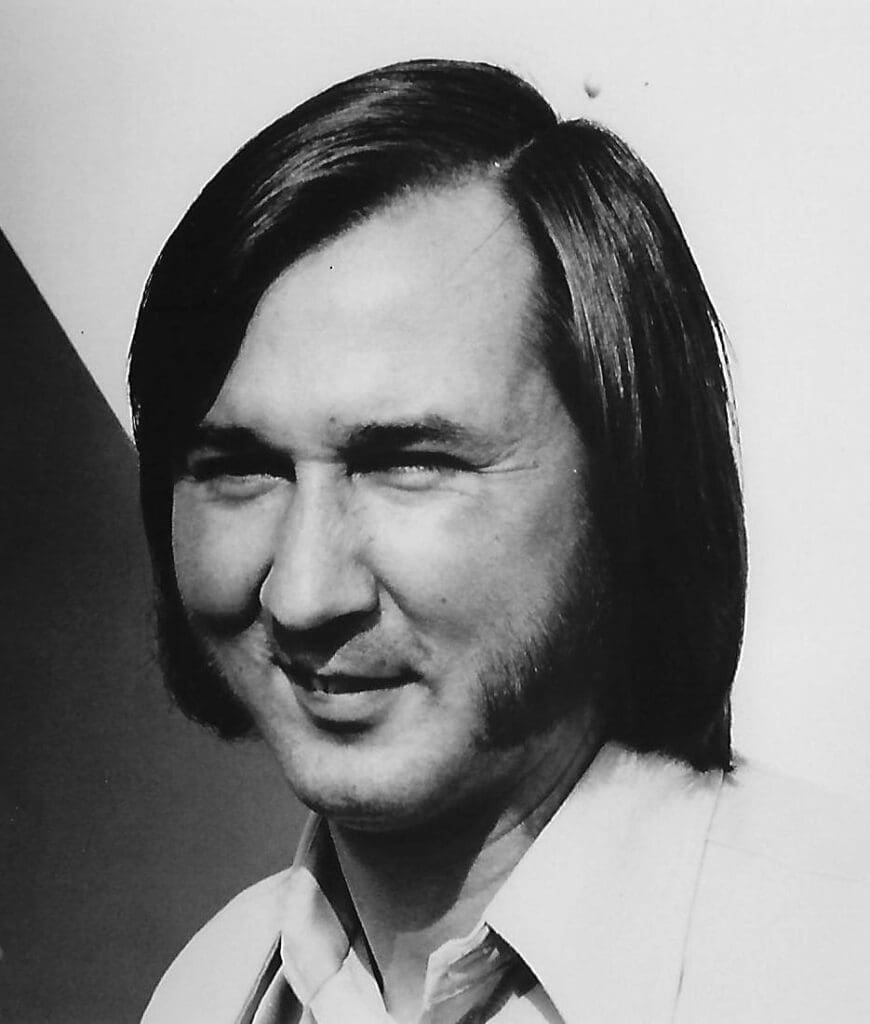 Class of 2013Presented by NHRA, Summit Racing Equipment, Lucas Oil Products
Wally Booth
Like most other competitors in the sport, Wally got his start in his teenage years but his most visible years were when he headed up the entrance into the sport by American Motors (AMC). He was making a name for himself with his Booth-Arons Chevrolet Camaro pro-stock car but when he got the call from AMC he saw the opportunity it offered for both factory backing and a highly visible effort.
When Wally began the project there was nothing in the way of performance parts available for the AMC’s, they were very boxy and un-aerodynamically designed. Fortunately, AMC did produce some very special blocks for their NASCAR and Trans-Am participation so Wally paired up with cylinder head guru, Dick Maskin, to produce their own reliable heads. AMC gave them part numbers and they went racing. Wally started the AMC program in a Tom Smith built Gremlin X but soon discovered that, while still a box, the Hornet was quicker and faster and in 1973 he debuted an all-new Hornet race car. Along with Maskin and Rich Lamont, the group also had to design their own cams, pistons, rods, and get the various manufacturers to produce them.
The Gainesville, Florida, Gatornationals in 1974 gave Wally his first national event win and actually saved the AMC drag racing program. After that Wally became a part of history when he qualified the AMC number one at the 1975 NHRA US Nationals in Indianapolis, Indiana, and followed up by defeating fellow AMC pro-stock competitor Dave Kanners in the final round of the 1976 NHRA World Finals in Ontario, California. In addition to his 1974 Gatornationals her and the 1976 work final wins, Wally’s overall performance net him a total of five NHRA national event wins that also included: the 1976 Springnationals in Columbus Ohio, the 1976 US Nationals in Indianapolis, Indiana, and the 1976 Fallnationals in Seattle, Washington. Other prominent wins included: the 1976 AHRA Drag Nationals in Kansas City, Kansas, the 1975 Popular Hot Rod Nationals in Martin, Michigan, the IHRA 1975 US Open Nationals in Rockingham, North Carolina, and the 1975 IHRA Winston All-American in Bristol, Tennessee. While he fielded the only AMC race car to ever win in NHRA’s Pro Stock class. In 1976, Super Stock and Drag News wrote, “In the finest drag racing tradition, Wally Booth transformed the unheralded AMC into pro-stock’s most formidable machine”.
While he continued to successfully campaigned the AMCs through 1979; he chose to retire from driving and devote all of his time to his engine building business.
-
2013
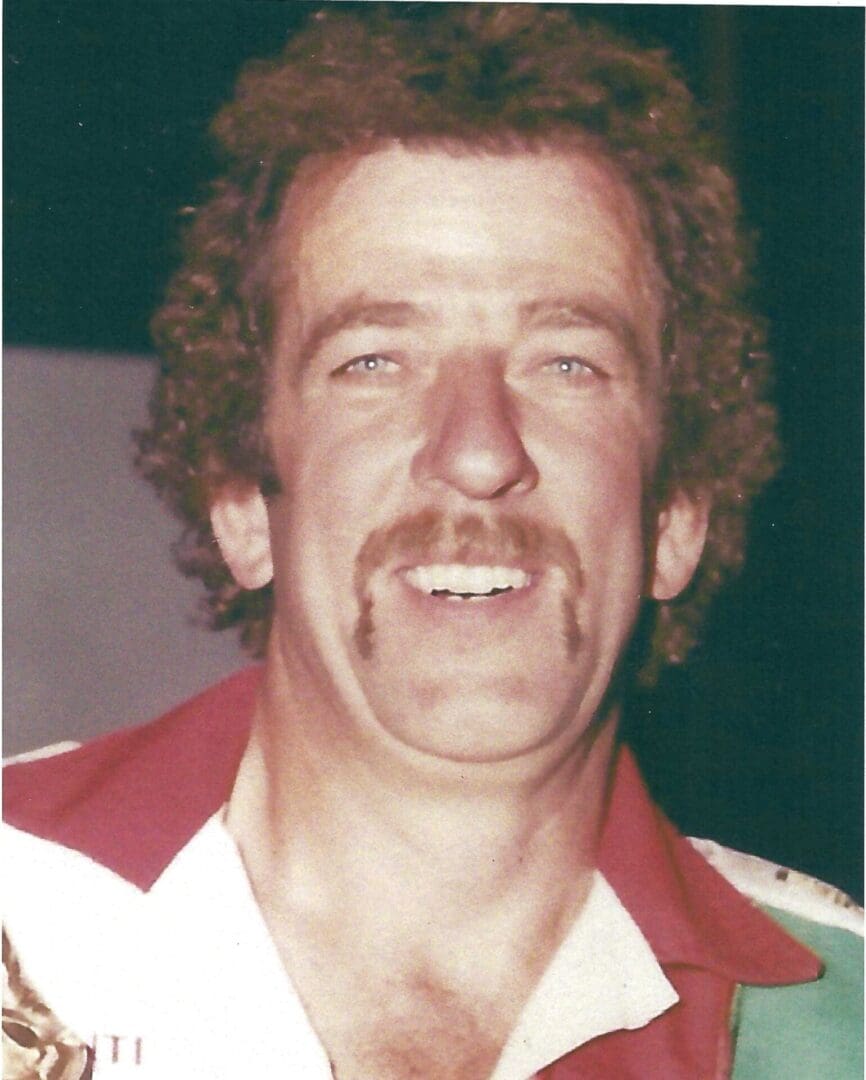 Dave Boertman
Dave has said he is loved racing since he was four years old when his dad would take him to the local…
Read bio
Dave Boertman
Dave has said he is loved racing since he was four years old when his dad would take him to the local…
Read bio
 Class of 2013Presented by NHRA, Summit Racing Equipment, Lucas Oil Products
Dave Boertman
Dave has said he is loved racing since he was four years old when his dad would take him to the local oval track races. However, his career in drag racing didn’t begin until he was 22 years old and attended a local track with some of his buddies. As the owner of a 1957 Ford with the police interceptor engine in it; Dave was constantly working to improve its performance and then tested it out at a local street race.
In 1962 Dave took home his first winner’s trophy and was totally hooked. Unlike a lot of racers at that time, Dave didn’t approach racing in a haphazard manner. He began looking at it as a business; working not only to improve on the car’s performance and his driving skills but putting together a solid business plan to follow. In reflecting back to that time, Dave says it was very unusual for him to leave the track without winning something.
For the 1968 NHRA World Finals in Tulsa, Oklahoma, Dave partnered up with Tom Elk who had a really strong engine. The pair won their first national event in Stock Eliminator, in a 1959 Chevrolet. From that point on Dave’s success record soared. In 1969 and 1970 Don won many races including divisional championships and two national events; the 1970 Summer Nationals at York, Pennsylvania, and the US Nationals, in Indianapolis, in Stock Eliminator driving a 1969 Chevrolet.
In the fall of 1970 Gil Kirk, owner of The Road Shop in Columbus, Ohio, was attempting to work a deal with Chrysler Corporation for sponsorship of a team using all Dodge drag racing cars for 1971 and beyond. Chrysler’s officials were impressed with Dave Boertman’s win record and wanted Dave on the team; letting Gil know if he could get Dave to sign on it would sweeten the deal. Gil contacted Dave, and they worked things out and the rest is history. Because all this happened so fast, when it came time to go to the Winternationals at Pomona, California, Dave had the only car ready to go. A new 1971 Dodge Coronet wagon for Stock Eliminator prepared in only two weeks. Dave started out for Pomona with an untried and untested race car. It was tested at Irwindale, California, and to make a long story short, in Dave Boertman fashion, won his first Stock Eliminator race for The Rod Shop and Dodge at Pomona.
1971 would turn out to be the best year ever for Dave, as he won more races than he lost that year including seven divisional points races out of eight. Losing one race in final run due to a broken rear end. Dave ended that year with more sportsman points than anyone had ever won before, the icing on the cake was winning his second world championship in Stock Eliminator at the final race.
Because Dave dominated the stock class so well, NHRA changed the rules for Stock Eliminator four 1972 racing for trophies only, and no prize or contingency money. This role forced Dave to change in 1972 to Super Stock so that he could afford to continue racing. It was a struggle at first but, in Dave Boertman style, he ended the year with many more wins, and his third world championship, this time in Super Stock.
In 1972 Dave started racing IHRA along with NHRA and raced five national events; winning for them and was runner-up in the fifth. He won the IHRA World Championship in Stock Eliminator for 1972. Was named Driver of the Year. In 1977 Dave won his fourth world championship at the NHRA World Finals in Ontario, California. In 1978 the Chrysler Corporation dropped out of racing and The Rod Shop lost its major sponsor and had to disband the team. Dave then retire to pursue other interests.
In 1984 Dave received a call from Gil Kirk at The Rod Shop in Columbus, Ohio, asking if he would be interested in being part of their new Pontiac racing program. Dave accepted the offer, came out of retirement, and raced for Pontiac for the next three years, winning his fifth world championship in 1985.
Dave enjoyed racing, building engines, and the camaraderie of longtime friends and fellow racers.
In the course of his career, Dave won 17 NHRA national event titles and 15 IHRA national event titles. Was named Car Craft Magazines Driver of the Year four times and won the IHRA Driver of the Year Award. Dave is also a five-time NHRA World Champion; doing so in Stock category in 1968 and 1971 and the Super Stock category in 1972, 1977, and 1985. Dave was inducted into Michigan Motorsports Hall of Fame in 1990 and became a member of West Michigan Sports Hall of Fame in 2000.
Class of 2012
8 inductees-
2012
Founder’s Award
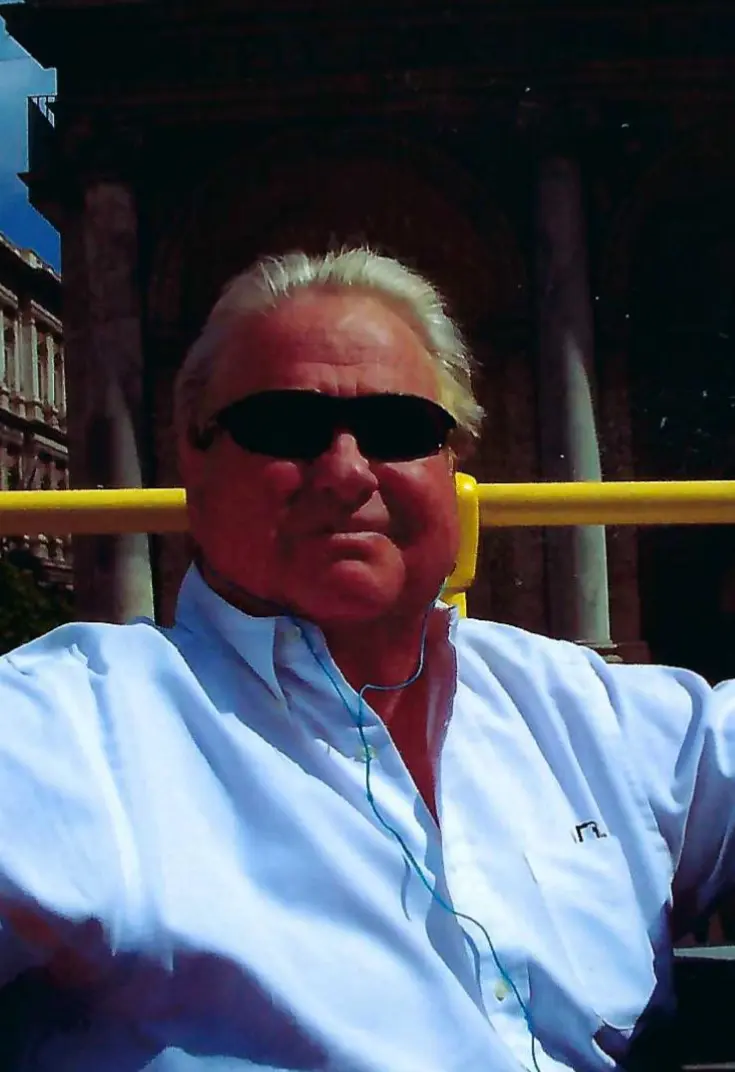 William L. (Bill) Doner
In today’s world, Bill Doner would be referred to as “Uber-Promoter”, but over 40 years ago when the charismatic dragstrip entrepreneur was…
Read bio
William L. (Bill) Doner
In today’s world, Bill Doner would be referred to as “Uber-Promoter”, but over 40 years ago when the charismatic dragstrip entrepreneur was…
Read bio
 Class of 2012 · Founder’s AwardPresented by Lucas Oil Products
William L. (Bill) Doner
In today’s world, Bill Doner would be referred to as “Uber-Promoter”, but over 40 years ago when the charismatic dragstrip entrepreneur was just getting started, he was just another racer promoter. Today, after’s staging as many as a thousand events a year at various tracks up and down the West Coast, he is considered by many as being the king of race promoters.
Bill Doner is a brash talking, big dealing kind of person who loved providing ground-poundin’ excitement for the race fans. When the veterans of the past drag race wars huddled together to chop old jackpots, it’s usually not long before talk turns back around to memories of “Fox Hunts”, “spectacular nighttime fire burnouts, “ (how many?) 64 funny cars!”, And the epic high-volume “Saturday Night!/Sunday Afternoon!” saturation commercials which trademark Donner’s innovative International Raceway Park’s promotion of the halcyon, pre-ESPN 1970s.
How long ago was all that? Fuel funny car driving legend Jon Force, 16-time funny car champion, was a rookie at Orange County in 1978 when Doner ran it and that was near the end of the Doner Decade. However, from the very beginning, he always had a knack for luring the big names. His first five figure crowd at then debt ridden Seattle International Raceway in 1970 saw Don Prudhomme set a new track record of 6.62 ET in route to the top fuel title in an unprecedented mid-March season opener. Doner defied the proverbial Pacific Northwest rainy season and won. With Evel Knievel jumping 18 and 19 cars, respectively, on his “comeback” tour, Doner’s first couple high dollar shows attracted a fleet a future Hall of Famers including race director Steve Evans-a long time Doner ally in the IRP saga. Not only Prudhomme, but Ed McAuliffe, Jerry Ruth, Gary Beck, Herm Petersen, Dick Landy, Shirley Strahan, Roland Leong’s Hawaiian, John Weibe, Mike Snively, and Dave Uyehara ignited imaginations at SIR, with Doner quickly installing lights to usher in night drags at the Northwest premier facility, which soon was solidly in the black ink.
Over his 10 years at the helm of IRP, fully five dozen of the Hall of Famers crowded into the Doner orbit and established an unforgettable brand of drag racing seen never before or since.
Doner has never been a stranger to icons. There are even those who argue the Harvey Wallbanger a cocktail was invented in his bathtub; for certain, when NHRA president Wally Parks was among the celebrities who went to Terlingua,Texas in 1967 for the inaugural International Chili Cookoff, Doner was there stirring the sauce along with one of his many compatriots, serving legend JJ Moon who could “hang 11” because he had six toes on his right foot.
Besides his prowess as a king of race promoters, in 1967 Carol Shelby put the one-time Newport Beach California’s sportswriter in charge of the introduction of the classic Ford Cammer powered Shelby/Benny/Prudhomme “Super Snake” AA/Fuel dragster which debuted by winning the 1968 Winternationals.
After an extraordinarily demanding 11 years, running as many as eight; Washington, Oregon, and California tracks Doner sold off at the end of 1979. He emerged in Baja California, for six years, skippering the seven boat Tortuga fishing fleet, and put himself into the headlines by catching a record 1234-pound black marlin. After this Caesars Palace Hotel/Casino succeeded in luring him back to Stateside Promotions as the casino’s Vice President of Marketing. As such, he shepherded world-class events such as the Sugar Ray Leonard-Marvin Hagler “Super Fight” and attended-rather flamboyantly-to the needs of thousands of Las Vegas high-rollers. This was followed by a four-year term as commissioner of the unlimited hydroplane circuit, which he grew from 6 to 11 races. Yes, there were even some of those ear popping commercials for thunder boat racing crowds across North America.
Also, he never actually quit voicing his distinctive radio ads, serving as many as 15 other drag strips, in addition to his own promotions. Not ready to totally relax, he also added stints as a collegiate play-by-play basketball announcer, television pitch man for new car dealerships, advertising executive, global football promoter (Gary Davidson offered him a World Football League franchise in 1974), pro tennis promoter, thoroughbred horse owner/breeder, major league sports consultant, and creator of the Rose Bowl’s first hospitality concourse at the 1989 1990 New Year’s classic.
Today, Donner lives with his wife Lori and two dogs, Rocky and Rusty, in the Southern California desert community of La Quinta however his links to drag racing have never really ceased; he teamed up with longtime racer promoter, Don Rackemann as the president of the Fuel Saver Group whose products paid contingency money at the Bakersfield California Hot Rod Reunion, and their MPG3 Fuel Enhancer sponsored Corey Lees top fuel funny car which participated at the NHRA World Finals at Pomona in 2011.
-
2012
 “Fast Eddie” Ed Schartman
Ed Schartman inherited his love of cars and speed from his father who built and wrenched several dirt track sprint cars. Ed…
Read bio
“Fast Eddie” Ed Schartman
Ed Schartman inherited his love of cars and speed from his father who built and wrenched several dirt track sprint cars. Ed…
Read bio
 Class of 2012Presented by Lucas Oil Products
“Fast Eddie” Ed Schartman
Ed Schartman inherited his love of cars and speed from his father who built and wrenched several dirt track sprint cars. Ed made his first trip to a race track with his dad when he was just six years old and his interest grew from that date on. At age 14 he built his first drag car, a 1940 Ford powered by a highly modified flathead engine. At the same time, he was enrolled in every shop, metalworking, and auto mechanics course offered by his local high school in an effort to become the best all-around racer he could be.
After graduating from high school in 1956, Ed began his drag racing career in earnest. His name was first posted in the NHRA record listings in 1958 when he was at the wheel of a B/Gas sedan. Ed’s main interest was in the stock classes and in 1954 he drove his first Mercury A/FX Comet wagon to the class champion spot at the NASCAR Winter nationals in Deland, Florida, and in 1965 he was named Super Stock Magazine’s Rookie of the Year. In the years 1964 through 1967 Ed won an average of 89% of the races he entered into. He was also successful enough to earn the nickname Fast Eddie along the way.
By this time the stock body cars were becoming more exotic and faster so Schartman made the move into the new “funny car” ranks. This was before the name funny car became a household term and the cars were today’s tube chassis, and glass bodied vehicles. The first of these funny cars wore steel bodies around their potent engines and even sported modified “stock” chassis. Ed was one of the very first to compete in a flip top super experimental 1966 Mercury Cyclone. This combination powered Ed to victory circle and at first NHRA Bationals in Tulsa, Oklahoma, in 1966 when he defeated Dyno Don Nicholson. This proved to be an even more successful move when in April 1967 he became the first person to break the eight second ET barrier in a stock bodied car at Detroit Dragway. His success in the popular S/XS class continued throughout 1957 when he won the Manufacturers Funny Car Championship at Orange County Dragway in Irvine, California, the Funny Car Grand Prix Championship at Irwindale Raceway in Irwindale, California, the Northern California Championship Meet at Fremont Dragway in Fremont, California, and set the class elapsed time record at the NHRA Winternationals in Pomona, California.
Fast Eddie competed at most of the major national events during his racing years but became more famous as a competitive match racer and showmen on the many race tracks located around the country. As the class evolved Eddie led the way, working with the Ford/Mercury racing liaison at the time, Al Turner, to make sure his cars incorporated both safety and speed. With this in mind, Turner commissioned the Logge Chassis Group to build the new car using to chassis, fiberglass bodies, and bigger engines. Another item that set Eddie apart from many of these early experimental builders/drivers was the fact that he was personally involved in the planning and building of most of his cars and continued to use various configurations of the Ford/Mercury engine both blown and unblown.
Once retired from active participation in racing Eddie went on to become an authorized NAPA parts dealer.
-
2012
 Carl Olson
Carl was introduced to and hooked on racing at the early age of three as a spectator at the local midget dirt…
Read bio
Carl Olson
Carl was introduced to and hooked on racing at the early age of three as a spectator at the local midget dirt…
Read bio
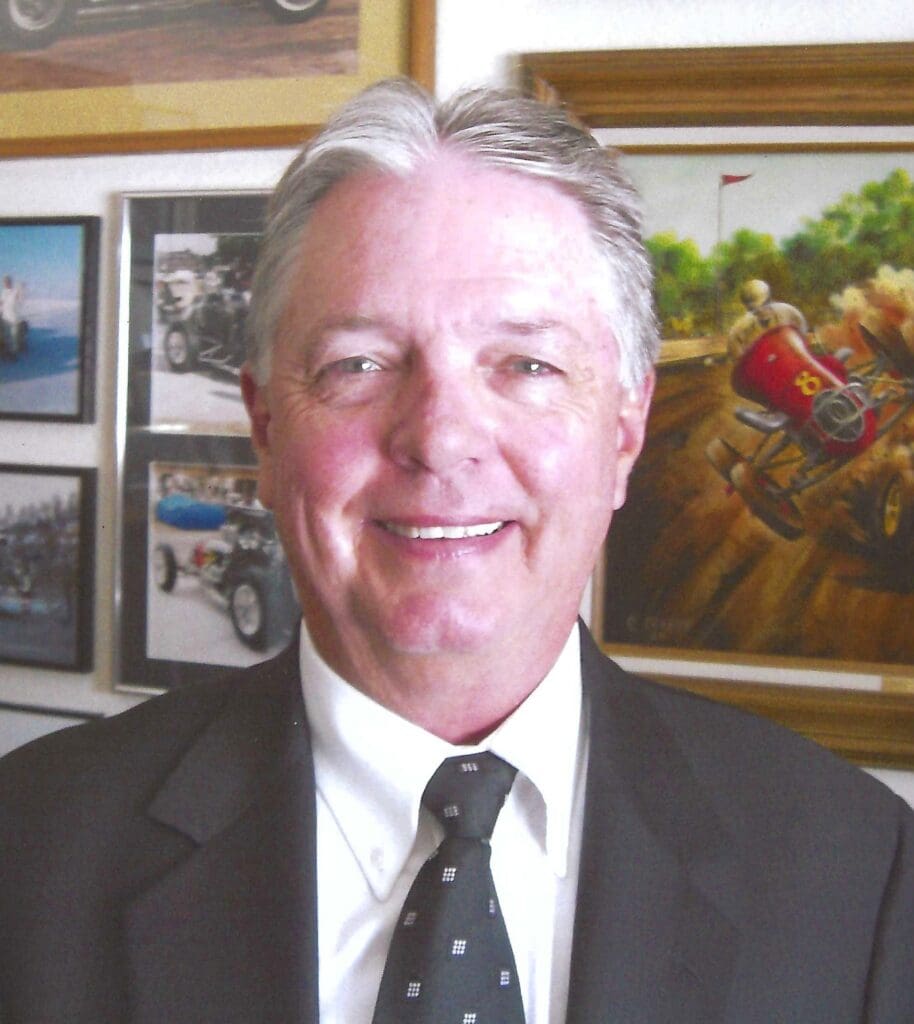 Class of 2012Presented by Lucas Oil Products
Carl Olson
Carl was introduced to and hooked on racing at the early age of three as a spectator at the local midget dirt race. His early exposure to racing was mostly in the oval track arena but in 1957 he went to the old Long Beach Lions Dragstrip and was immediately intrigued by the dragsters. After hanging around the Modern Muffler Shop in his hometown of San Pedro California, where the Stecker, Golden and Cobb team housed their fuel dragster for a while, the team invited Carl to go to the races with them and he became even more hooked on the sport. While serving in the US Coast Guard Carl was stationed in Alameda, California which was located a short hop from the Half Moon Bay and Fremont drag strips where Carl spent as much time as possible as a spectator. It was at Fremont that he met Nick Mura who was competing with the 426 Wedge Dodge powered AA/Fuel dragster and was able to work his way up to Mura’s crew chief.
When Mura decided to stop racing in 1965, Carl was able to buy his rig and was soon sitting in the driver seat. Upon receiving his discharge from the Coast Guard, Carl made his way back to Southern California and landed a job in the performance aftermarket arena and replaced the Dodge Wedge engine with a smaller Dodge Hemi that allowed him to compete in the popular junior fuel class. During this time, he also reconnected with Bill Stecker who was partnered with Jackie Ewell in a blown 392 Chrysler powered Race Car Engineering top fuel dragster. Soon Carl was crewing on this car and when he Ewell broke his leg racing minibikes, Carl moved into the driver seat as well. When the opportunity to become a partner in this operation was offered, Carl traded his junior fuel car to Stecker for his share of the team and became the team’s full-time driver. In 1969 the team really stepped into the big time, purchasing a “Woody Gilmore” car and dropping one of the new Chryslers Elephant Hemi engines into the rails and promptly winning the prestigious “Grand Prix of Drag Racing” event at Irwindale Raceway and later setting top time at the 1970 NHRA Winternationals at Pomona, California.
When the 1970 season closed out, Carl wanted to devote more time and effort to the sport so he purchased the Black Plague AA/Fuel dragster of Frank Rupert and Steve Peck, borrowed a couple blown early 354 Hemi engines and spare parts from a friend, Don Bowman, and entered the top fuel wars as an independent owner/driver. A blown engine followed by a fire in a crash at Fremont destroyed the car and put Carl out of business before he really came settled into it.
After firing his latest driver, Mike Kuhl heard about Carl’s accident and offered him the driver’s job in his top fuel dragster which Carl immediately took. Their five-year relationship started with them winning the first race they entered as a team and continue to win more than their share of races. When time allowed him to Carl drove several other cars including Jesse Perkins “Cow Palace Shell” fueler and TB Smawood’s AA/Fuel dragster but the Kuhl and Olson team car was his real delight. In 1971 they became partners in one of the first mid-engine cars to be built which they debuted that fall at the NHRA US Nationals in Indianapolis, Indiana. They were able to win several rounds of eliminations but lost in the semifinals however, they did manage to walk away with the Best Appearing Car Award from the event.
At the end of that season, they installed one of the new Donovan Engineering 417 aluminum Hemi engines for power; and promptly won the 1972 NHRA Winternationals with the new combination. As a result of this win and the potential it offered, the team of Kuhl and Olson joined the ranks of the professional racers living on the road and racing at every NHRA and IHRA national event plus as many match races as could be shoehorned into the schedule. At the end of the 1972 season they had won the IHRA World Championship and been recognized by the editors of Drag Racing Magazine as the Real-World Champions. A crash at the IHRA Nationals in Dallas, Texas destroyed the car but Carl emerged uninjured and the team was able to compete in the NHRA World Finals two weeks later. They ended the 1972 season by winning the “Last Drag Race” that heralded the end of racing at Lions Dragstrip. In 1973 they were runner-up to Gary Beck at the NHRA US Nationals in Indianapolis and in 1974 won the Bakersfield March Meet and ran top time and low ET for the event, also gaining membership in the exclusive Cragar Five Second Club. As difficult as the decision was for Carl, at the end of the 1974 season he decided to retire from racing. The team did campaign the car through 1976 with other drivers but elected to retire the entire operation at the end of the season.
While he was retired from active racing, Carl was still very active within the sport and the industry first as the General Manager of Waterman Racing Engines, then a stint with SEMA as its Technical and Legislative Director, then a move to several positions over 25 years at the NHRA, and in 2001 he became Motorsports Manager at the SF I Foundation Inc. a position in which he continues to serve.
In addition to his drag racing history, among Carl’s many accomplishments and honors are: member of the Bonneville 200 MPH Club, several positions within SEMA including a seat on its Board of Directors, President of Federation International de L Automotive drag racing Commission hand consultant to several foreign race facilities.
-
2012
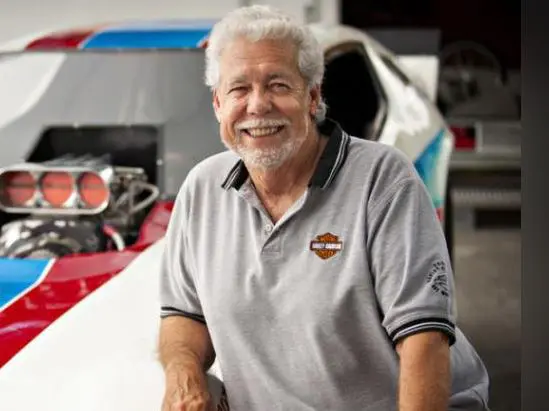 Ray Motes
 is another of the sport’s multi-faceted participants who became interested in the sport at very early age. At the ripe…
Read bio
Class of 2012Presented by Lucas Oil Products
Ray Motes
Ray Motes is another of the sport’s multi-faceted participants who became interested in the sport at very early age. At the ripe…
Read bio
Class of 2012Presented by Lucas Oil ProductsRay Motes
Ray Motes is another of the sport’s multi-faceted participants who became interested in the sport at very early age. At the ripe age of 11, his dad took him to a jalopy race and he was instantly bitten by the race bug. Later he saw a movie that had a couple shots of drag racing and decided that was where he wanted to begin. While still in junior high, Ray became the proud owner of a 1949 Ford that qualified for F/Stock in AHRA competition. Because there wasn’t an NHRA track in Kansas City where he lived, he had to sneak out of town to others surrounding locations to be able to race. In 1961 Ray moved up a few classes to compete and F/Gas with a 1940 Ford powered by a modified flathead but he wanted to go even faster so he built a Model T Bucket roadster still using a modified flathead for its power. This car set the AHRA speed and ET records and provided Ray with enough winnings to build his next and more serious car. This one was a glass T Bucket on a tube chassis with a 301 cubic inch Chevrolet for power in BB/Roadster class and with which he promptly set another pair of AHRA records. Still seeking to go faster, he bored and stroked the Chevy to 377 cubic inch and switched to nitro for fuel. This latest addition for power resulted in an extremely ill handling machine so his answer to the problem was to install a blown Chrysler Hemi which very quickly proved to be the wrong answer. Since he still had the engine but realized the roadster was not the answer, in 1967 Ray acquired a dragster chassis, installed the blown Hemi in it and switched back to gas. This combination proved to be more successful and he started winning at the local tracks. At this time there wasn’t an NHRA track in Ray’s area so he made another engine change, installing a blown late-model Chrysler “Elephant” Hemi in the dragster and ran well enough to encourage him to travel the distance necessary to compete with the NHRA Division V circuit.
In 1968 Ray met Dwane Smith while competing at his local Kansas City track and was promptly offered a job in Dwane’s automotive speed equipment business which he took without hesitation. Working together as a team the pair established a chain of speed shops across Kansas, Missouri, and Oklahoma under the name Grand Prix Speed Shops. They also organized and sponsored a top gas circuit called the Midwest All-Stars. While putting together the chain of stores and the circuit, Ray teamed up with RC Williams to continue with his driving efforts still with a Hemi powered gas dragster. When the single engine proved to be unable to compete with the twin engine gas dragsters the pair made the switch and built their own twin 454 cubic inch Hemi powered dragster which proved to be more successful and more fun to drive.
Like most racers, Ray wanted to go faster and experience a greater variety of cars so when NHRA eliminated Top Gas in 1972 he took over the controls of the “Hot Sauce” AA/Fuel funny car with some moderate success. In 1975 Ray moved into the driver’s seat of John Pusch’s AA/Fuel funny car competing mainly in division races and match races. In 1985 he teamed up with RC Williams again; this time campaigning the Cherokee Warrior AA/Alcohol funny car. The car provided the team with the 1985 AHRA World Championship, the 1988 ADRA World Championship, and the 1993 NHRA Shoot Out event. In 1994 Ray retired from driving to devote full time to his business endeavors.
After leaving the performance retail and wholesale business in 1985, Ray spent the next 23 years as Vice President and General Manager of Taylor Cable Products. In 1994 Taylor Cable Products purchase Vertex Magneto’s which Ray probably return to its prime standing within the industry. Ray retired from Taylor Cable in 2008 but still remained active within the industry partnering with his son in a Goodyear Automotive Care Center. Also, at Taylor Cable, Ray established a very racer friendly sponsor and contingency awards program that has benefited a number of competitors in various racing arenas.
During his driving career he won four national events including the NHRA World Finals and the last Top Gas dragster win ever at the NHRA US Nationals in Indianapolis, Indiana, and NHRA World Championship, an AHRA World Championship, and an ADRA World Championship to become the only person to win world championships in all three sanctioning bodies. He was also named NHRA Division V Man of the Year in 1971, received its 1970 Performance of the Year Award, it’s Driver of the Year in 1970, it’s 1993 Shootout Winner, and was inducted into its Hall of Fame in 2002. In 2004 at the Heartland Hot Rod Reunion he was awarded the “Outstanding Lifetime Achievement in Drag Racing” Award.
-
2012
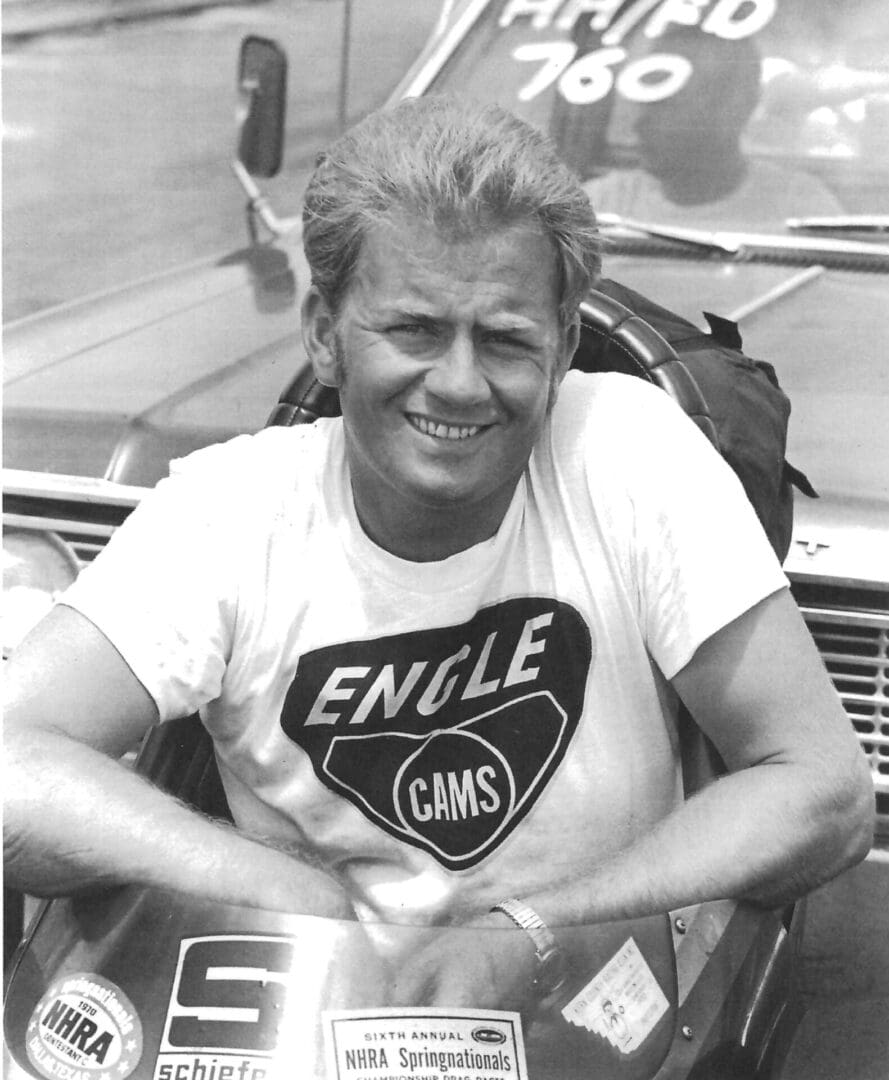 Don Moody
 began his colorful racing career at the age of 16 in his hometown of Tulsa, Oklahoma, in 1957, in a…
Read bio
Don Moody
Don Moody began his colorful racing career at the age of 16 in his hometown of Tulsa, Oklahoma, in 1957, in a…
Read bio
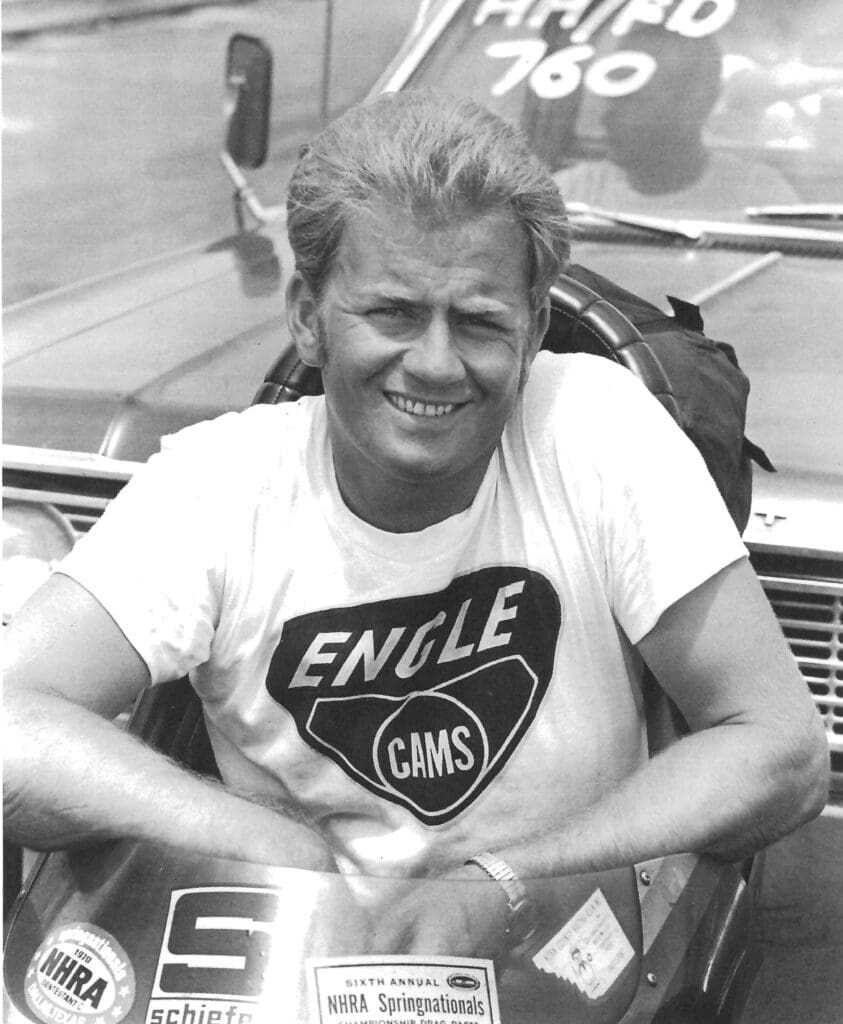 Class of 2012Presented by Lucas Oil Products
Don Moody
Don Moody began his colorful racing career at the age of 16 in his hometown of Tulsa, Oklahoma, in 1957, in a modified Chevrolet sedan. Later that year he took over the driving chores for Bob Creitz in Bob’s newly built unblown Chevy powered A/Modified fuel roadster. The new combination was an instant success with Moody clocking a 152 MPH and 9.90 ET for a new NHRA class record and running an unblown fuel car. They were allowed to compete in the local top gas events where they won their share of races. In 1959 Don bought an AA/Gas dragster and with Creitz doing the engine work and tuning, the duo set a new NHRA class ET record of 9.75 seconds and 159 MPH. With their local success, the duo decided to head west to compete at the Southern California race tracks. Liking what he saw, in 1960 Don moved to the Los Angeles area and after a brief stint working at a Chevrolet dealership in the area, he went to work at Engle Cams where he spent the rest of his working career.
His first dragster ride after the move to California was in an AA/Gas dragster built by Ron Scrima, owned by Don and Dave Davis, and powered by a Carroll Davis built blown 470 cubic inch Oldsmobile. The car was very competitive, winning top gas at Lions Dragstrip an impressive eight straight weeks but with nitro becoming more popular, the pair wanted to move up the ladder so they teamed with Doc Magan who had a successful record in drag boat racing and supplied the teams blown Keith Black Chrysler on nitro and in November 1962 they won top Eliminator at Pomona, California and set a new track ET record of 7.96 seconds at 187.50 MPH. 1972 was a dream year for the Walton-Cerny-Moody team. With Don handling the driving chores the team won more big meets than any other top name pro-racer/team that year, was the all-time money winner in the class at that time for one season, won the PRA race in Tulsa, Oklahoma, won the NHRA Supernationals in Ontario, California while setting an all-time low ET of 5.91 seconds.
In 1963 Don moved his driving skill to the seat of the Stellings, Graffio & Moody AA/F dragster and promptly won the first NHRA divisional race at Pomona, California they entered with an event low ET of 8.20 seconds. In July 1963, Don left Stellings and Graffio to become part of Zeuschel, Fuller & Moody. The team dominated the class at most of the Southern California race tracks the rest of the season and early 1964. On August 8, 1964 while on a strong run at Lions dragstrip, a heim joint in the steering on Don’s car broke sending him into the fence at the finish line and destroying the car. While Don wasn’t injured badly, with the team low on funds for a new ride, he took some time off from driving to enjoy other pastime hobbies and concentrate on his general managers position at Engle cams.
After an absence of six years, in 1970 Don once again climbed in the driver seat of the top fuel dragster, this time it was the front motor car of Wes Cerny. Don’s first weekend in the car he ran a top speed of 230 MPH with the low ET of 6.37 seconds. In addition to winning on a regular basis, the Cerny and Moody car also held the track speed and ET records at Lions Dragstrip, Orange County Raceway, Irwindale Raceway, and Carlsbad Raceway. Following the new trend, the team switched to a rear engine dragster in late 1971 and promptly turned in and unbelievable 6.35 ET. At the 1972 Winternationals in Pomona, California there was a horrific engine explosion that severely damaged the car and while they did put it back together, they decided to sell it and build a new car.
The new car was “all-new” including the switch to a late-model 426 Chrysler Hemi for power along with several other chassis improvements. The new combination proved to be as reliable as the old combination when they won the first PRA meet in Tulsa, Oklahoma with a 6.21 ET at a 229.00 MPH. Later that same year, Don became the third member of the Cragar Five Second Club when he recorded the low ET at the NHRA Supernationals in Ontario, California of 5.91 seconds while on his way to winning the event. In his own words Don said 1970 was a good year for him and drag racing, he went from 6.37 seconds ET using a 392 Chrysler at the years beginning to 5.91 seconds ET with a 426 Chrysler at the years end. One of the results of his success in 1972 was Don being named as a “Hi-Riser” by Car Craft Magazine in 1973. Don retired from driving for good at the end of 1972.
-
2012
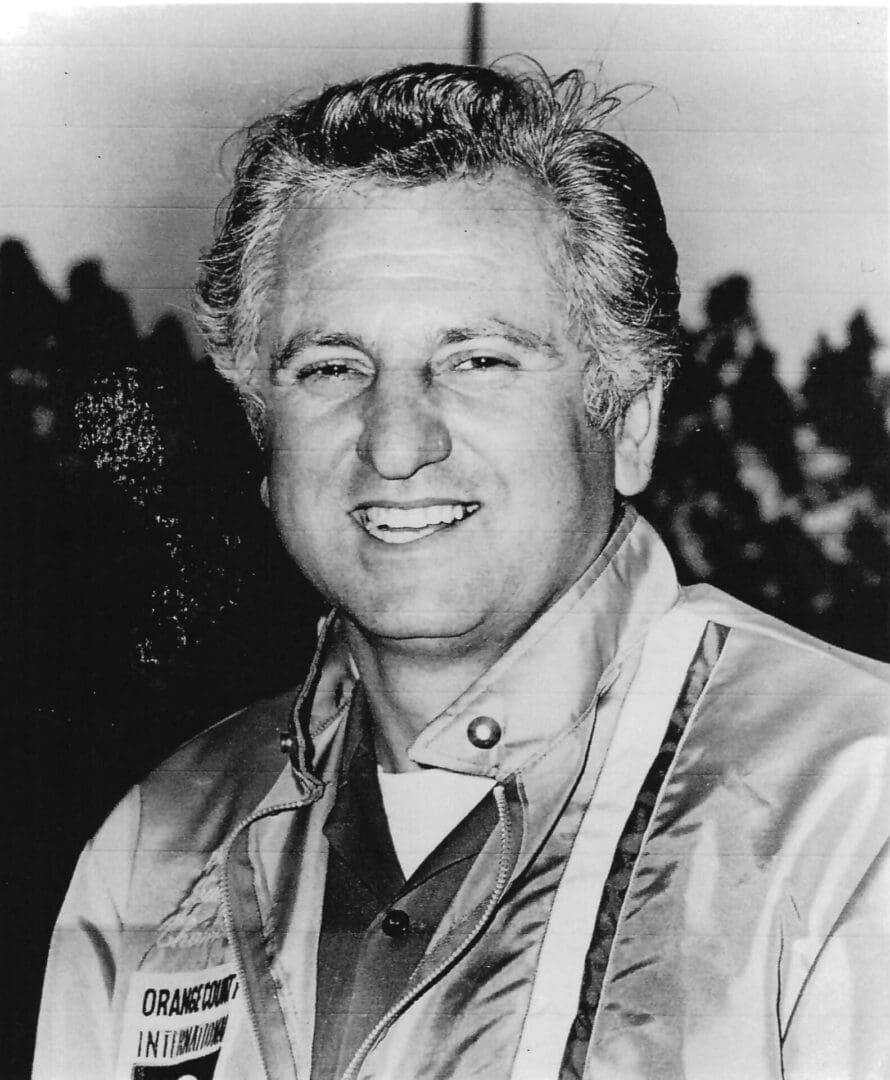 Jon Mazmanian
1926–2006 John began his racing career one way by accident, in 1960 when he purchased a new Corvette that was loaded with every…
Read bio
Jon Mazmanian
1926–2006 John began his racing career one way by accident, in 1960 when he purchased a new Corvette that was loaded with every…
Read bio
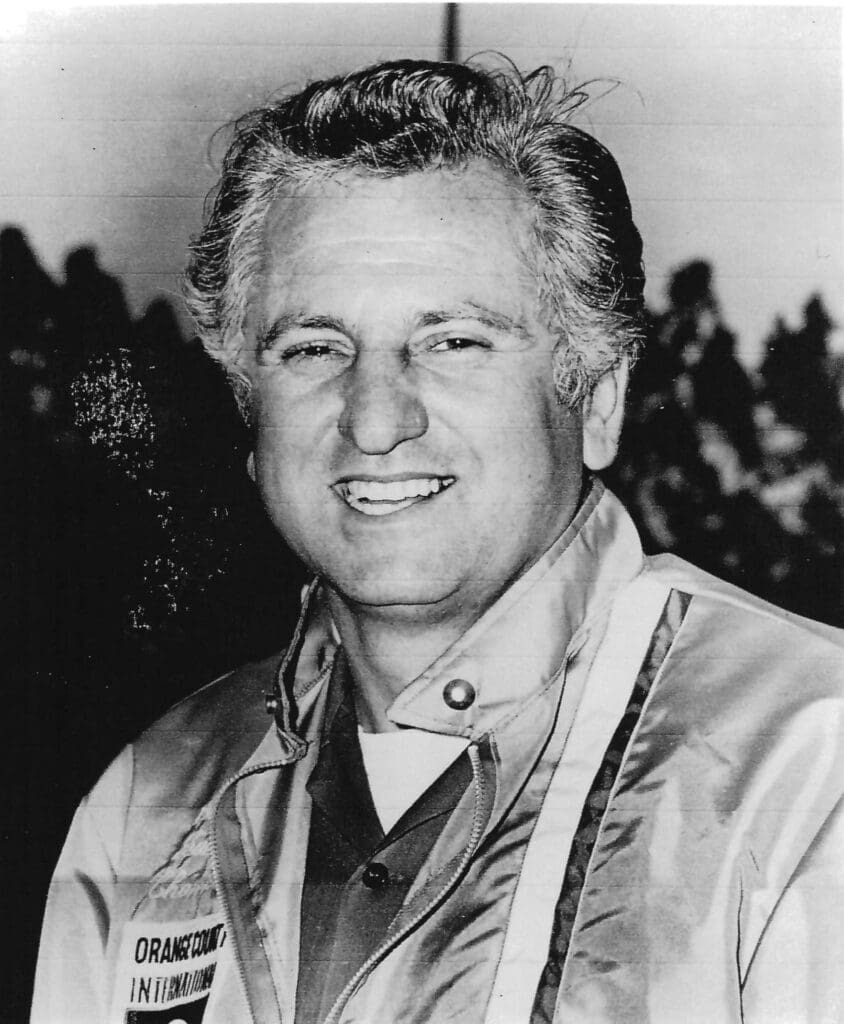 Class of 2012Presented by Lucas Oil Products
Jon Mazmanian
John began his racing career one way by accident, in 1960 when he purchased a new Corvette that was loaded with every option available but it wasn’t until he learned his nephew, Richard Siroonian, was borrowing it to do some street racing that John decided to become involved in organized racing instead with Richard doing the driving. Starting with the Corvette there was never a time in John’s racing career that he didn’t insist on having not just the very best performing car but also the best-looking car in the pits. After competing as a stock sports car in 1961, the car was modified to compete and CM/SP class at the 1962 Winternationals in Pomona, California where the team picked up its first national event win. By the mid-1962 season, John had added more performance pieces including a 6.71 blower and Hilborn injectors and installed a new driver, Robert “Bones” Balough and continued the teams winning ways. Another very visible addition to the Corvette was a candy persimmon red mixed with 24 karat gold leaf paint job that was to become John’s trademark for all of his cars that followed. There was also one other trait set him apart from the other competitors, in addition to the regular between round maintenance John’s crew also had to wash and clean the car between every round.
In 1963 John had a blown Chevy powered 1941 Willie’s B/GS coupe built that followed in the footsteps of the Corvette as both a winner on the track and in its outstanding looks; with one outside exception, the coupe was originally fire engine red. Always the competitor, and January 1964 John had “Bones” build and install a 467-CID blown Chrysler to replace the Chevy and immediately the car jumped into the 150 MPH area. This also marks the beginning of the now famous “Gasser Wars” with almost weekly match races being conducted among the top super gas coupes of the era. In keeping with his passion for having the best-looking cars in the pits, in mid-1964 John had the Willie’s painted with 35 coats of candy apple red.
After three years of racing the Willie’s, John introduced a blown Chrysler powered 1950 Austin coupe to race fans that featured the same candy apple red paint job as the previous cars and that perform even better. During the gasser wars era, John and the other competitors in the wars were among the first drag racers to participate in an ongoing “feud” campaign promoting their match races along with the parts produced by very speed equipment manufacturers. As the Gasser’s popularity began to wane in favor of the new funny car class, John made the switch with a blown Chrysler powered 1968 Barracuda AA/Fuel funny car.
In 1970 John proudly introduced another blown Chrysler powered AA/Fuel funny car, this one being a 1970 Barracuda. This car was the first funny car to run an official 220 mph with a record-setting 6.77 second ET. The last funny car John raced was a 1972 Barracuda that carried the John Mazmanian tradition of being one of the quickest, fastest, and most beautiful at the track.
-
2012
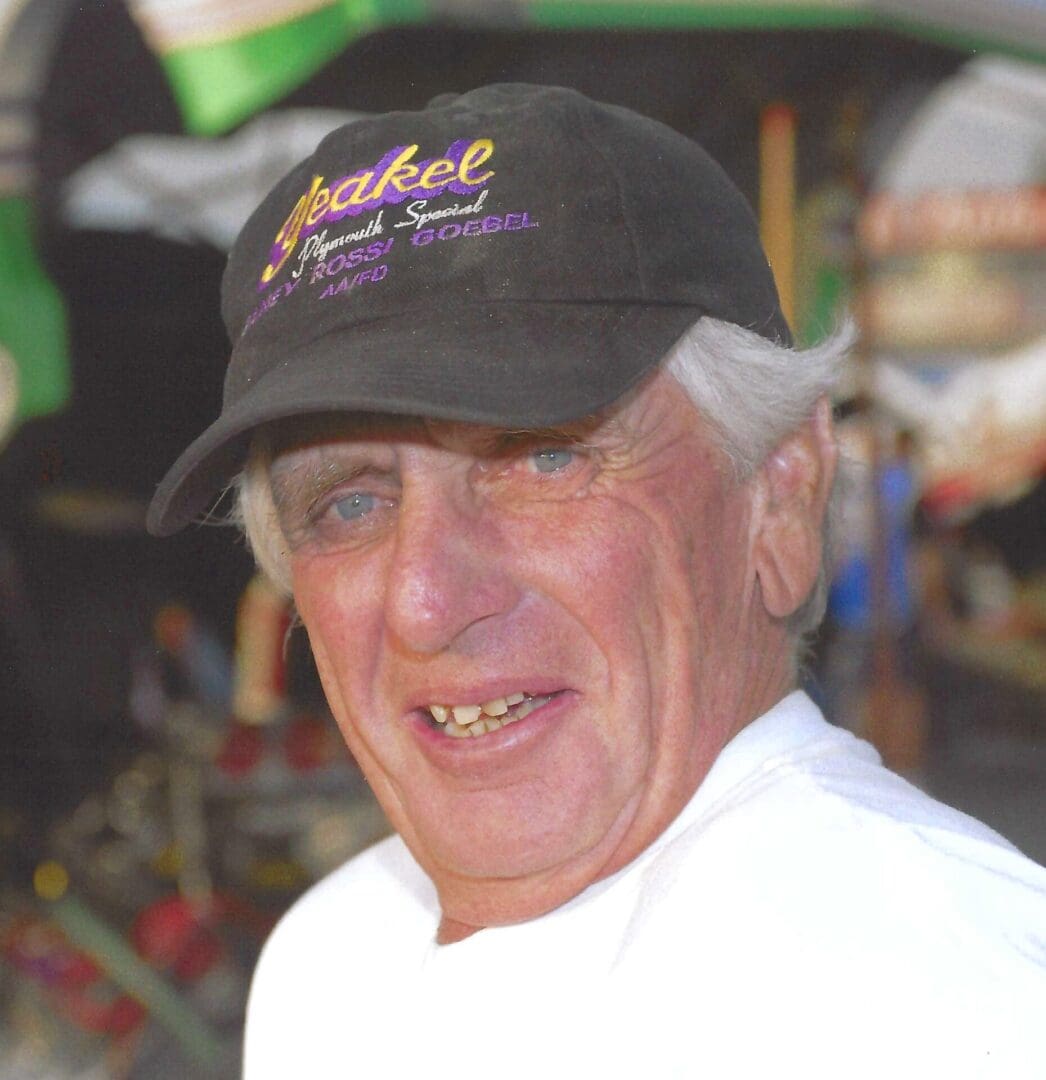 Mike Kuhl
1938–2020 Mike Kuhl was born in Dayton, Ohio but raised in St. Louis, Missouri where in 1955 he opened his first business venture,…
Read bio
Mike Kuhl
1938–2020 Mike Kuhl was born in Dayton, Ohio but raised in St. Louis, Missouri where in 1955 he opened his first business venture,…
Read bio
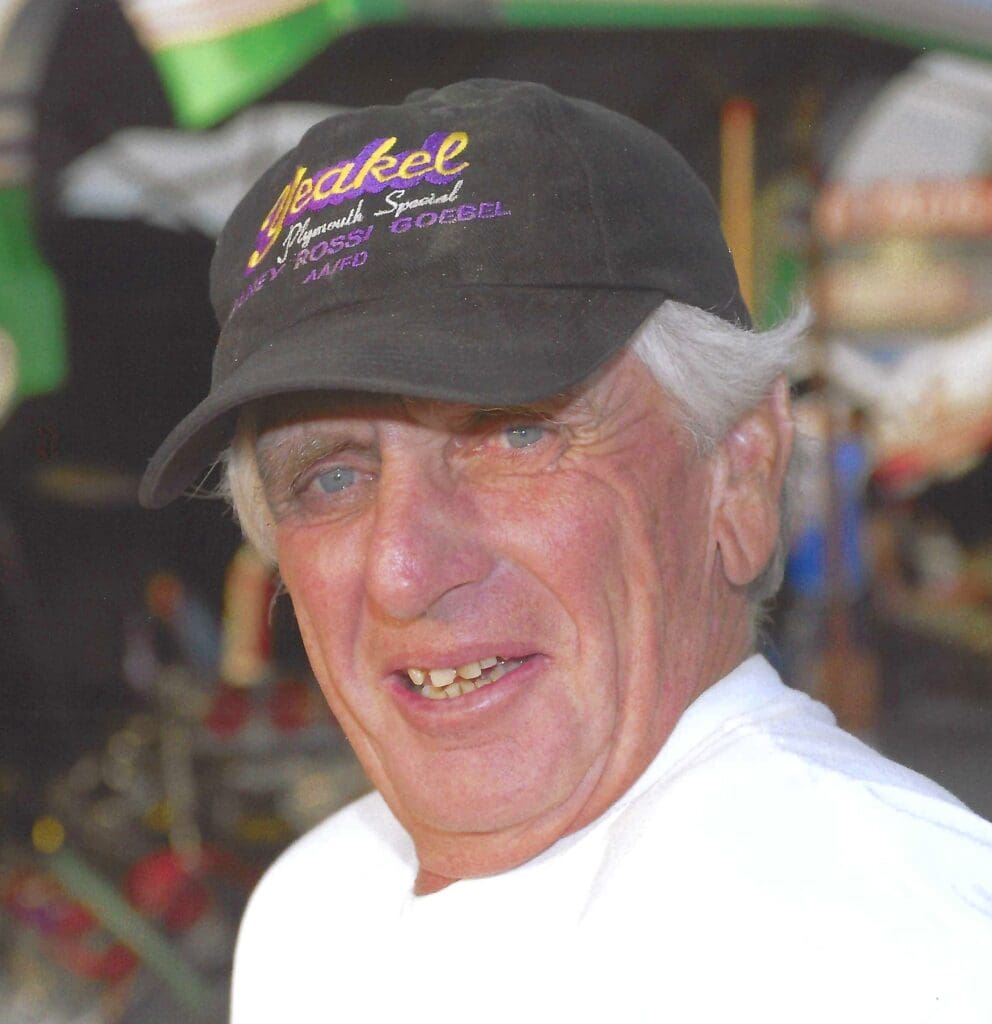 Class of 2012Presented by Lucas Oil Products
Mike Kuhl
Mike Kuhl was born in Dayton, Ohio but raised in St. Louis, Missouri where in 1955 he opened his first business venture, Mike’s Garage, and where he first began honing his knowledge of how to build top rank cars. His first exposure to sanctioned drag racing was in 1954 when he traveled to Parks Air College in Granite City, Illinois at the age of 16 unlike a lot of today’s racers, he was hooked. In 1960 at the wheel of a 1940 Willie’s AA/GS coupe, Mike set the class record at the AHRA Nationals in Kansas City, Missouri at 132.00 MPH.
In 1964 Mike closed the doors on his garage in St. Louis and moved to Long Beach, California. Shortly after arriving in California he went to work at Louie Unser’s Engine Shop in Santa Ana, California, where he continued to explore the many ways to build strong-reliable race engines and where he was employed until 1970. Also, in 1969, Mike was competing locally with a Chrysler powered, (Woody) Race Car Engineering built, 392 engine AA/Fuel dragster with Steve Carbone driving; they won the Professional Dragster Championship event at Orange County International Raceway in Irvine, California.
In 1970 Mike opened the doors to Mike Kuhl Racing Enterprises where he began designing and building blown River Rat Big Block Chevy engines for ski boats. With his engine building business growing steadily, in 1971 Mike teamed up with Carl Olson as co-owner and crew chief of a Donovan 417 powered (Woody) Race Car Engineering built, rear engine AA/Fuel dragster. The team success that season was good winning the 1972 NHRA Winternationals, season opener, at Pomona, California giving them the opportunity to go on the road as touring professional racers. They lived on the road and competed at every NHRA and IHRA national event as well as many divisional events plus a lot of match races that were squeezed in between the “big” events. 1972 was a banner year for the pair, in addition to winning the Winternationals in Pomona; they also won the All Pro Series Championship race at Orange County international Raceway in Irvine, California, the IHRA Pro-Am Nationals in Rockingham, North Carolina, the Top Fuel Eliminator at the IHRA Nationals in Dallas, Texas, the IHRA Top Fuel World Championship, and closed the season winning Top Fuel Eliminator at the famous “Last Drag Race” at Lions Dragstrip in Wilmington, California. Their success as touring professionals along with sponsorship from Revell Models kept the team on the road for the 1972 znd 1973 seasons but for the 1974 season they competed mainly in the NHRA national events as well as the local South California race tracks. They continued their winning ways by taking home the top fuel eliminator win at the Bakersfield, California March Meet. Mike also became one of the exclusive members of the Cragar Five Second Club in 1974 along with Carl. At the end of the 1974 season Carl chose to retire from driving to pursue other interests and while the pair did run the car with a few other drivers, they decided to both retire from racing in 1976 and sold the entire operation to Englishman Clive Skelton.
The engine business was still going strong in 1977 but Mike decided to expand and open Mike Kuhl Superchargers where he built some of the best superchargers and related parts available. In 2001 Mike sold the supercharger business with the thought in mind of retiring, but in 2002 he founded Kuhl Klassics Restoration where he presides over the restoration of vintage race cars and boats. Since opening the doors at the restoration shop, Mike has completed restoration of his original 1968 RCE AA/Fuel dragster along with one of the 1968 Mr. Ed fiberglass race car trailers, completed a frame off restoration of a 1966 Ford F 100 pickup, and completed restoration of the 1968 original (Woody) RCE Tom McEwen Tirend Activity Booster car. In 2007 Kuhl and Olson were awarded the NHRA California Hot Rod Reunion Lifetime Achievement Award. Mike also co-owner and crew chief of the Kuhl, Olson and Bowman A/Blown fuel rear engine modified roadster which competed for land speed records at the Bonneville salt Flats.
-
2012
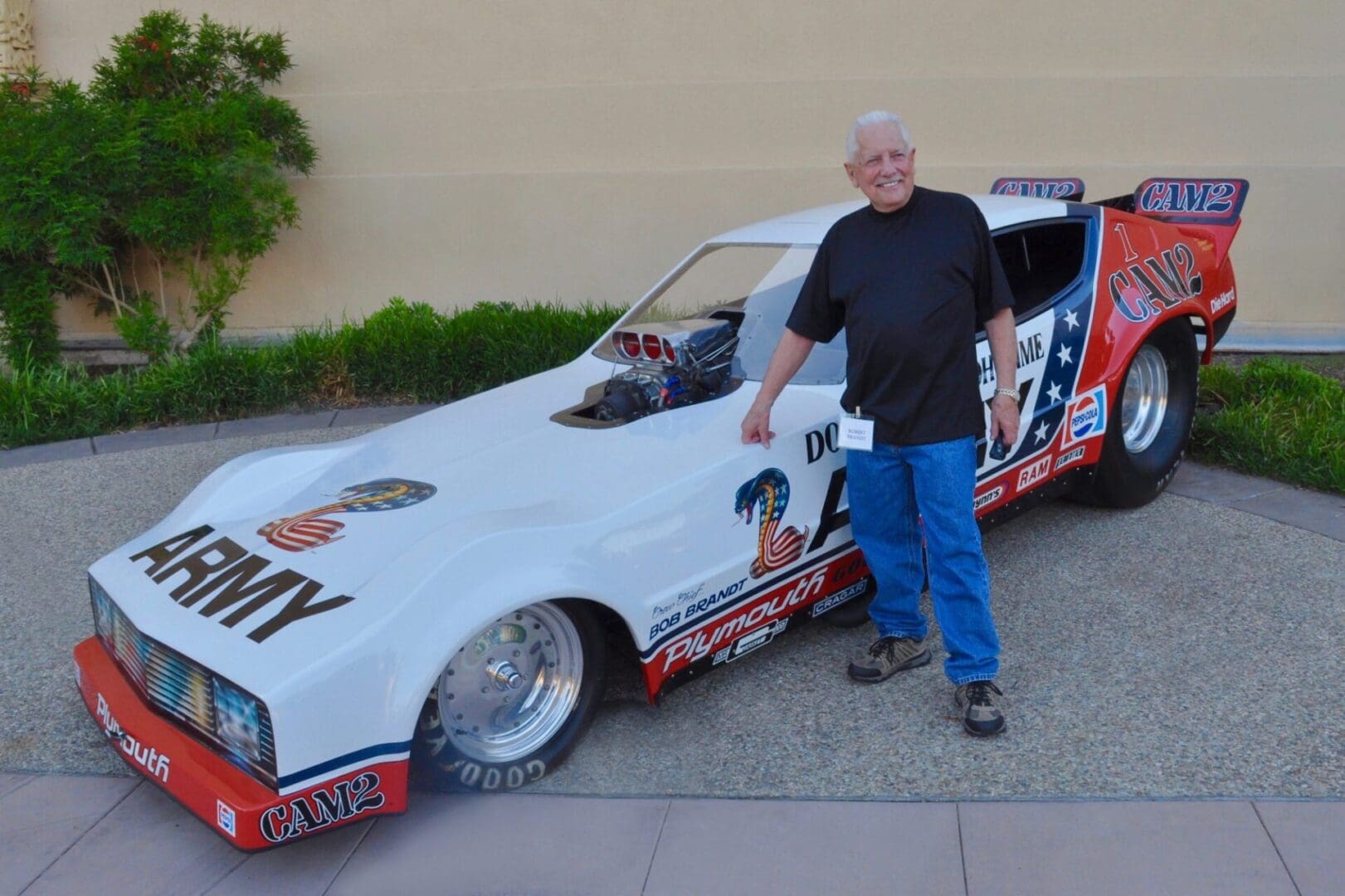 Bob Brandt
, born and raised in and around Cleveland, Ohio and has been involved with professional drag racing all of his adult…
Read bio
Bob Brandt
Bob Brandt, born and raised in and around Cleveland, Ohio and has been involved with professional drag racing all of his adult…
Read bio
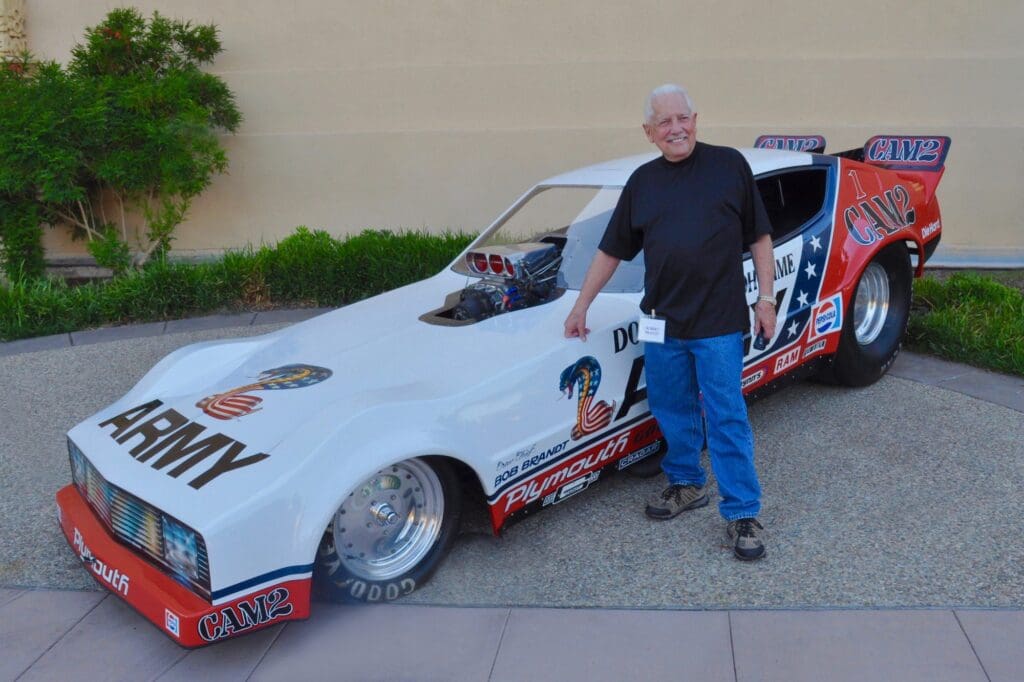 Class of 2012Presented by Lucas Oil Products
Bob Brandt
Bob Brandt, born and raised in and around Cleveland, Ohio and has been involved with professional drag racing all of his adult life, starting in the amateur ranks while he was still in high school in a 1939 Plymouth H/Gas car. From there he teamed with school buddies Bo Lyons and Dale Stocker in a high school drag racing team in Windham, Ohio later on competing with fellow tool and die maker Royal Langford with a BB/GS Anglia. When Stocker went into the Army, he “willed” his potent 1957 Chevy E/S national record holder, at the time, to Bob to compete in during the duration of his service. With which Bob was very successful. While he was a teenager in Cleveland Bob was also hanging around the race shops of David Meal, builder of Joe Hrudka’s Willie’s Pie Wagon, Sikora Brothers and Sam Gillner. The more time he spent at the shops the more experience he was gaining by working on many of the various race cars they were either building or repairing. Bob’s apprenticeship as a tool and die maker helped him a lot as he became more and more involved in building and tuning a wide variety of race cars. Bob also spent a lot of time at Dick Malone and Chuck Finders shop. Later working with Malone in the tool and die industry. Malone, later founded S&S Superchargers.
In 1960 Bob’s family moved Southern California and he was soon dividing his time between working with his dad in the heating and air-conditioning business by day and most of his spare time at Roland Leong’s race shop at Keith Black’s. It was at Roland’s that Bob met Don “The Snake” Prudhomme and shortly after their introduction, Snake asked Bob if he would like to help him with his AA/Fuel dragster at an upcoming PDA meet. Things went well for them at the event so Snake invited Bob to drive his rig and crew for him at the upcoming Englishtown, New Jersey Summernationals. After that event things just, sort of evolved and before long he was working for Don on a full-time basis, going between the dragster which at the time was the car they raced at the national events and the funny car that was mainly for match racing. The pair soon realized they work very well together and their commitment to making the team a complete success was so strong the Don and his wife Lynn let Bob move in with them while he was locating a place in the San Fernando Valley area to live. After a few successful seasons competing this way, the dragster was retired and the funny car became the prime race car with which the team amassed their impressive win streak Bob serving as crew chief on both
As the saying goes, “the rest is history”. Bob was Snake’s crew chief for 17 years during which time they were able to put together for World Championships along with numerous speed and ET records including the first recorded 250 MPH run by funny car. They also racked up 34 national event wins and even more match race victories. After retiring from his position with the Snake, Bob also served as crew chief for Gary Ormsby’s top fuel dragster during the 1986 and 1987 seasons, followed by Australian Rachelle Splatt’s and Daniel Deporter’s AA/TF car. Bob was crew chief for Cruz Pedregon driving Larry Minor’s McDonald’s sponsored AA/Funny Car winning three national events. When Joe Gibbs purchased the McDonald’s operation from Minor, Bob stayed on as crew chief and overall manager of the operation tuning Cruz to another five national event wins. In 1998 Don Schumacher contracted Bob to build the Excited Top Fuel Dragster Team, and reentered the drag race competition arena of which Bob was the crew chief, and then in 1999 the team won its first NHRA AA/Fuel dragster championship. With Dan Olson as crew chief and Bob as team manager.
Along the way, Bob is able to count among his accomplishments, seven consecutive Car Craft Magazine All-Star Team Crew Chief of the Year Awards, another eight-time finalist showing for the same award, was named recipient of the 1976 S-K Tools Hall of Fame Award, four fuel funny car world championships, and an impressive win total of 48 national event championships.
Bob feels his success in fuel racing was inspired by Keith black, Ed pink, and Don Prudhomme.
Class of 2011
7 inductees-
2011
Founder’s Award
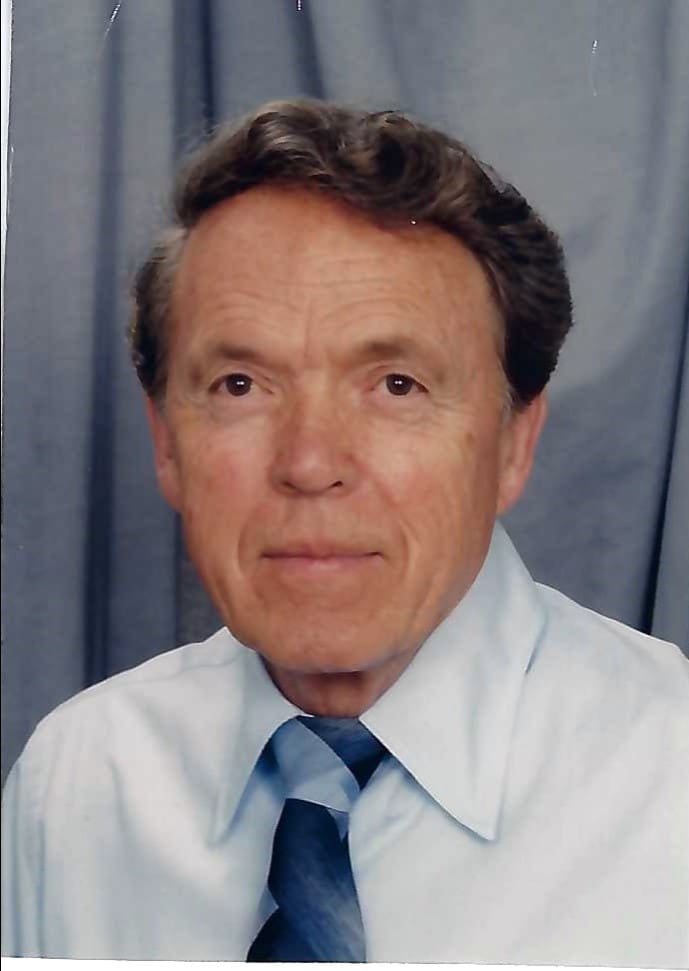 Ed Almquist
As a legendary motorsport pioneer, Ed Almquist has done it all-racer, inventor, manufacturer, merchant, and author. Many original and patented inventions for…
Read bio
Class of 2011 · Founder’s AwardPresented by Lucas Oil Products
Ed Almquist
As a legendary motorsport pioneer, Ed Almquist has done it all-racer, inventor, manufacturer, merchant, and author. Many original and patented inventions for…
Read bio
Class of 2011 · Founder’s AwardPresented by Lucas Oil ProductsEd Almquist
As a legendary motorsport pioneer, Ed Almquist has done it all-racer, inventor, manufacturer, merchant, and author. Many original and patented inventions for the giant racing and performance industry are a result of Ed’s innovative “Imagineering” over a span of 60+ years.
After writing the world’s first speed manual copyrighted in 1946 (which helped “kickoff” hot rodding as a new post-World War II motorsport), Ed founded Almquist Engineering. It was a bootstrap enterprise, started with a dream, that flourished and became the largest maker of hot rod and racing equipment east of California. Later, the Almquist manufacturing division became Sparkomatic Corporation (one of the first volume suppliers to the nation’s speech shops).
Once the nation’s premier motorsports mail order icon (disturbing millions of catalogs) in the 1940s to the 1970s, Ed Almquist introduced many industry first-including: popular hard core, race winning equipment, universal floor shifters, compound manifolds, tuned exhaust systems, lifetime spark plugs, style setting fiberglass bodies, and accessories. Long before the days of plastic credit cards, Almquist introduced the first and only retail credit plan for racers and rodders (a good idea before it’s time so it bombed).
Ed is one of the few industry car guys capable of taking a new idea all the way to a finished product and then peddling it successfully. Today, many of Ed’s inventions, such as Sparkomatic spark plugs, floor shifters, gas saving lubricants, and air ram cold air induction (introduced many years before GM “copied” the concept), are still in use nationally on street, drag strip, and circle track cars.
Often called one of the “Granddaddy’s” of American stock-car and drag racing, Ed has been a member of the Society of Automobile Engineering since 1961 as well as a charter member of the NHRA. Ed is the author of “Hot Rod Pioneers”, a 400-page book featuring famous personalities who created the fastest sport on wheels.
-
2011
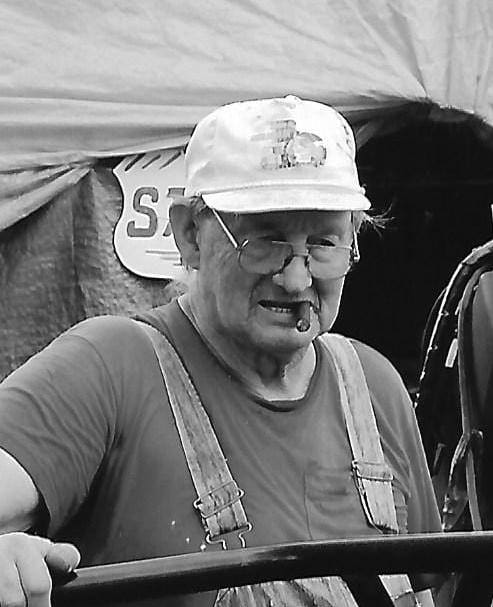 Fred Sibley Sr.
1932–2026 Fred Sibley senior started working on cars when he was around 14 years old, not to go racing but simply to repair…
Read bio
Class of 2011Presented by Lucas Oil Products
Fred Sibley Sr.
1932–2026 Fred Sibley senior started working on cars when he was around 14 years old, not to go racing but simply to repair…
Read bio
Class of 2011Presented by Lucas Oil ProductsFred Sibley Sr.
Fred Sibley senior started working on cars when he was around 14 years old, not to go racing but simply to repair them. He attended the local drag strip the first year the NHRA Safety Safari came to Indiana and was hooked on the sport. His first race car was a set of rails powered by a modified four-cylinder Model A Ford engine. His next move was to replace the four-banger with a stout GMC six-cylinder powerplant. That was okay but like every racer he believed he needed more power to go faster so in 1951 he built a new “slingshot” dragster that was powered by a 12-cylinder Ranger Aircraft engine. By this time Fred was working with Art and Walt Arfons at their shop so he was exposed to the jet powered vehicles they were racing. In 1951 he followed the Ranger powered dragster with his first jet car.
In 1964, Fred took over some of the driving chores for Arfons jet powered “Green Monster” dragster but preferred to build and drive his own cars. In fact, Fred debuted the first jet powered funny car which boasted a sleek Plymouth Barracuda body wrapped around a J-46 jet powerplant. After the Cuda Fred switched from funny cars back to dragsters when he built his famous “Quarter Horse” J-46 powered dragster. After the Quarter Horse, Fred introduce a string of jet powered dragsters that carried names that are still legends and this arena, names like: “The Hugger”, the J-33 powered “Fat Albert”, “Gypsy Moth”, and “US-1” a car that was formerly owned by Bill Fredrickson and rebuilt by Fred.
Always looking to introduce something different and unique, Fred introduced his first jet powered truck, the “Maxi Taxi” in 1980 which he still drives at exhibition and nostalgia events today. Fred hasn’t confined his driving to jet drag racing, in 1964 he said a class record of 353 MPH at Bonneville and later made a run in the “Goodyear Wingedfoot” streamliner of 421 MPH.
Fred’s contribution to the sport extends beyond just building and driving classy, exotic racecars, he and Jim Hollinger teamed up to design and build the first “roller starter”, a Chevy powered set of rollers that was installed at the starting line and eliminated the old push-starting process. Fred also worked with Jim Deist in developing different parachute designs and other pieces of safety equipment, many of which Fred still produces today.
At 76 years old Fred still actively participates at various events, driving his jet powered truck and the US-1 at nostalgia events. He also still has the original V-12 Ranger powered dragster that is in mint condition in which Fred will give a demonstration run with if asked to do so.
-
2011
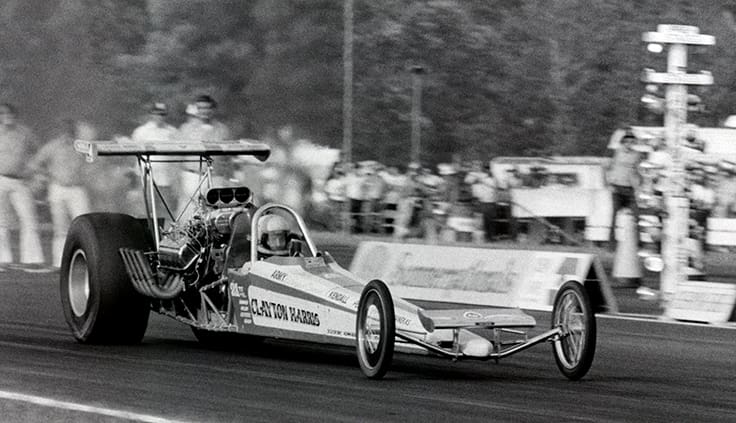 Clayton Harris
1939–2000 Clayton Harris was born in Columbus Mississippi and started his racing career in 1959 at the wheel of a blown Chevrolet powered…
Read bio
Class of 2011Presented by Lucas Oil Products
Clayton Harris
1939–2000 Clayton Harris was born in Columbus Mississippi and started his racing career in 1959 at the wheel of a blown Chevrolet powered…
Read bio
Class of 2011Presented by Lucas Oil ProductsClayton Harris
Clayton Harris was born in Columbus Mississippi and started his racing career in 1959 at the wheel of a blown Chevrolet powered top gas dragster; which was the same car he drove to win NHRA’s Division II Top Gas Championship in 1966. In 1968, he made the move from top gas to top fuel owning and driving a blown Chevy powered dragster. Most of his racing up to this time was on a local basis where he earned the reputation as a tough competitor but in 1971 Clayton teamed up with Jack McKay to drive McKay’s New Dimension Homes dragster. In 1972 Harris really moved into the national scene by being the first to record four consecutive 6.20 seconds ET and set low ET at the NHRA US Nationals in Indy. He followed this performance at the NHRA World Finals where he was runner-up and shortly after that capture the NHRA Eastern Conference Top Fuel Championship.
In 1973 Clayton decided to return to the status of owner/driver and fielded an all-new AA/Fuel Dragster. As an independent he managed to win the NHRA Summernationals in Englishtown, New Jersey, that season and repeated his 1972 feet of winning the NHRA Eastern Conference Championship again. In 1976 Harris one the IHRA US Open Nationals in Rockingham, North Carolina, in 1977 he won the IHRA Fall Nationals in Atco, New Jersey, in 1978 he topped the fuel ranks at Darlington, South Carolina, by winning the IHRA Winter Nationals and later that year he won the IHRA Dixie Nationals in Atlanta, Georgia. He finished the year as the 1978 IHRA Top Fuel Champion. In 1979 he finished second in the IHRA Championship race and decided to retire.
Harris return to drag racing in 1980 when he teamed up as crew chief with Richard Holcomb in a Harris designed and built radically different dragster that featured an extremely narrow rear end among its other offbeat innovations. The team’s efforts produce the third four second run ever at an IHRA national event in Ennis,Texas. In 1992 Harris returned to the driver seat as much to develop a revolutionary fingerless hydraulic pressure plate for the clutch as for the competition. In 1995 he was once again in the winner’s circle this time winning the IHRA Super Nationals in Steele, Alabama. Unlike today’s modern race teams where every job has a specialist along with a crew chief, Clayton was owner, driver, mechanic, crew chief, and tow truck driver.
Before the 1995 season’s end, Clayton again gave up the driver seat, this time to pair up with Paul Romine as the crew chief of Paul’s Carquest Auto Parts sponsored nostalgia top fuel dragster. The pair notched a victory at the prestigious Bakersfield California March Meet in 1996 and later at a race in Morocco, Indiana they became the first nostalgia top fuel dragster to move into the five second bracket. The team captured three more wins on the nostalgia circuit that year but decided they wanted to return to more conventional top fuel dragster class in 1997. In 1997 the team captured the IHRA Top Fuel Championship and returned in 1998 to make it back to back championships. After their 1997 debut in top fuel dragster on the IHRA circuit, the duo reset the associations elapsed time record five times, won seven IHRA national events, won three IHRA drag racing championships, and were the first car to top 320 MPH and set the IHRA ET record at 4.676 seconds.
Unfortunately, Clayton died in a private airplane crash in 2000 but along the way he made some serious waves in the top fuel dragster wars and is credited with three mechanical patents with several more still pending.
-
2011
 Rich Guasco
1937–2025 Rich Guasco started his love affair and racing career by building his first street roadster at the ripe age of 12. His…
Read bio
Rich Guasco
1937–2025 Rich Guasco started his love affair and racing career by building his first street roadster at the ripe age of 12. His…
Read bio
 Class of 2011Presented by Lucas Oil Products
Rich Guasco
Rich Guasco started his love affair and racing career by building his first street roadster at the ripe age of 12. His first actual race didn’t come until he was 14 and that was at the old Belmont California 1/8-mile track. By the time he was 15 he was involved in building and driving a flathead powered belly tank. Next came an A/Street Roadster that he entered for the first time in 1959 at Kingdom Raceway.
Shortly after that he went into the Army but upon receiving his discharge in 1961, he built his first Chevy powered gas dragster. One of the most memorable outings was the old Denver, Colorado track where he won top Eliminator in AA/Gas dragster then proceeded to add nitro and beat the top fuel dragster of Kenz & Lesli. After that event he sold the car and built a new AA/Fuel dragster. This car was very competitive from day one but on January 13, 1963 Rich had a terrible accident that nearly took his life. A year later, Rich completed the rebuilding of the dragster but traded it to his friend Pete Ogden for a nearly completed roadster Pete was building. Rich debuted the car, a Chevrolet powered 92-inch wheelbase Bantam bodied roadster designed by his friend Rich Railton. This was to become the first in a series of “Pure Hell” cars. Rich drove the roadster for its shakedown runs but shortly after that permanently retired from driving and focused on building and tuning the engines for the now famous series of roadsters. The original Pure Hell roadster was the first FF/FA to run over 180 MPH and under 8.50 seconds. In 1968 the Chevrolet engine was replaced with a Chrysler that made its first appearance at the Winternationals that year and set a new class record of 207 MPH. By this time there was a new driver at the wheel, Dale Emery. Dale set the fuel altered class on fire, eventually turning in a best speed of 218 MPH and a low ET of 7.27 seconds. The combination of one of the most beautiful cars ever raced, Dale’s unique and colorful driving style, and the speed and ET’s turned by the car made it into one of the most famous cars of the sport still today.
Rich is still the only hot rodder in the history of the sport to win the America’s Most Beautiful Roadster crown with his purple 1929 roadster in 1961 and his front engine top fuel dragster the next year.
After the unbelievable success of the first “Pure Hell” roadster and his success in the top fuel arena, Rich decided to switch to a Dodge Demon bodied AA/Fuel Funny Car in 1970 and in 1973 notched his first NHRA national event win when, with Dave Beebe at the wheel they won the Spring Nationals in Columbus, Ohio. While they were on the tour later that year, the Demon was destroyed in a highway accident. His next AA/Funny Car was a Lil John Buttera production that was successfully driven by some of the most noted drivers of that time including: Dave Beebe, Richard Tharp, Pat Foster, and Elwyn Carlson.
In 1992, Rich restored the original Pure Hell roadster and with Larry Huff driving debuted the car at the Goodguys vintage drag races that same year. With more horsepower than the original car ever had coupled with the original short 92-inch wheelbase, the car was plagued with handling problems. To solve this problem, Rich had his friend Dave Uyehara build a modern, longer wheelbase version of Pure Hell that, with Larry have driving, eventually went on to set a record time and ET of 238 MPH and 6.30 seconds.
While Rich Guasco retired from active racing in 2000, he hasn’t given up his love of cars and has spent his time since focusing on restoring some of his original cars and building some new ones. He also still attends selected events such as the Goodguys Nostalgia Nationals in Bowling Green, Kentucky, where he served as the official “Hot Rod Hero” for the event and most of the NHRA Hot Rod Reunion’s.
-
2011
 Jeg Coughlin Sr.
Like most of the people involved in the sport of drag racing, Jeg Coughlin Sr. began his involvement in the sport during…
Read bio
Class of 2011Presented by Lucas Oil Products
Jeg Coughlin Sr.
Like most of the people involved in the sport of drag racing, Jeg Coughlin Sr. began his involvement in the sport during…
Read bio
Class of 2011Presented by Lucas Oil ProductsJeg Coughlin Sr.
Like most of the people involved in the sport of drag racing, Jeg Coughlin Sr. began his involvement in the sport during his high school years. His first effort behind the wheel was in a 1936 Ford five window coupe which doubled as a daily driver and a weekend racer. In 1959 he entered a blown Chevrolet powered 1955 Chevy two-door sedan in D/Gas as his first participation in a national event and went home with the class trophy. From that humble beginning Jeg went on to become a dominant force in a variety of cars and as many different classes.
In 1960 he opened the doors to Jeg’s Automotive, Inc. in Columbus, Ohio. Over the past 50+ years the company has evolved into Jeg’s High Performance and has become one of the largest and most successful mail order speed equipment business is in the world. Nearly three decades after Jeg’s original speed shop was born, he helped his four sons John, Troy, Mike, and Jeg Jr purchase the operation and under their collective guidance the small family business continues to be a dominant force within the performance industry and the racing world.
While building his business into what it is today, Jeg was also busy on the race track. Over the years he has participated in top fuel dragsters, top alcohol dragsters, funny cars, pro-stock, A/Gas Supercharged C/S, D/Gas Supercharged C/S, C Stock, C Gas, modified eliminator, pro comp, and super eliminator. The results of all his participation reads like something out of a movie. He notched four NHRA North Central Division Championships, three in AA/Fuel dragster in 1977, 1978, in 1979. One in pro comp in 1976. He also accumulated a total of 30 NHRA di0visional wins that includes 11 consecutive victories in top alcohol dragster, six in pro comp, four in AA/Fuel dragster, one in super eliminator. The rest are spread out over the various remaining classes he participated in.
Jeg Sr’s career isn’t just highlighted with his on-track victories, he is a member of the Hot Rod Magazine Hall of Fame, the NHRA North Central Division Hall of Fame, the Olentangy Business Hall of Fame in Powell Ohio, and in 2002 received Car Craft Magazine’s highest award, the Ollie Award. On top of all these awards, Jake was named the Ernst & Young Master Entrepreneur of the Year recipient in 2002. He and his family also created the privately funded Jeg’s Foundation for Cancer Research and the “Racing for Research” program which has raised several million dollars for cancer research since its inception.
Jeg Sr’s off-track activities also include supporting his children and grandchildren and their many activities. His four boys each actively compete in drag racing. John in comp and top dragster, Troy in pro mod, Mike and top sportsmen, and five-time NHRA champion Jeg Jr. racing in a variety of different classes but most visible in pro stock. Now the third generation of Coughlin’s can be found competing in super comp, late-model, junior dragsters, and quarter midgets. As a side note, the Coughlin clan’s activities aren’t limited to racing, they are also into golf, ice-skating, horse riding, and stick and ball sports so Jeg Sr. has established a well-rounded legacy.
-
2011
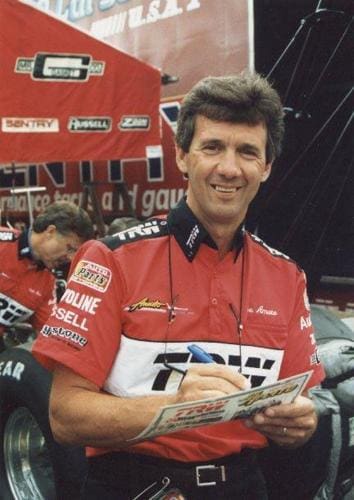 Joe Amato
When Joe Amato was 11 years old, his dad opened an auto parts store, A&A Auto Parts, where Joe went to work…
Read bio
Class of 2011Presented by Lucas Oil Products
Joe Amato
When Joe Amato was 11 years old, his dad opened an auto parts store, A&A Auto Parts, where Joe went to work…
Read bio
Class of 2011Presented by Lucas Oil ProductsJoe Amato
When Joe Amato was 11 years old, his dad opened an auto parts store, A&A Auto Parts, where Joe went to work and began learning what would ultimately become his prime career. Also, at that time, some of his dad’s employees were racing on weekends and started taking Joe with them and it wasn’t long before he was hooked. Joe’s first car was a 1953 Ford that he started modifying shortly after he got it. When Joe was 16, his father was forced to quit working after undergoing open-heart surgery and Joe made the decision to quit school and run the auto-parts store full time. Despite the workload of running an auto parts store, Joe found time to go racing on the weekends and soon learned that the more successful he was on the track, the more business he did. By the time Joe was 20, the auto-parts store had grown into five stores. Unfortunately, at the age of 32 Joe’s dad died leaving him the job of managing an expanding business specializing in speed accessories. Ultimately, A&A Auto Parts and Keystone Automotive Warehouse became one of the most well-known and largest suppliers of parts and accessories in the automotive business.
In his early racing days, Joe raced locally starting with a variety of cars including a 1958 Pontiac, a 1932 Chevy, a 1940 Chevy, and a 1948 to frame altered Fiat. Following this, Joe raced alcohol funny cars with moderate success but in 1979 he switched to an alcohol dragster and notched his first NHRA national event win in pro comp at the Gatornationals in Gainesville Florida. He followed that win with another NHRA national event when at the 1980 Le Grand Nationals-Molson in Canada and in 1981 took home three class Wally’s from NHRA national events.
1982 was Joe’s debut year in top fuel and while he did not win a Wally his first year, he did manage to place six in the championship points race. 1983 was a much better year with Joe winning three NHRA national events and challenging Gary Beck for the championship title. At the 1984 Gatornationals in Gainesville, Florida Joe and crew chief Tim Richards debuted a new chassis design that included a different rear wing that was mounted higher and further back than previous designs. This new design enabled Joe to become the first top fuel dragster to top the 260 MPH marke along with three NHRA national events and the Winston World Championship that same year.
Joe continued his winning ways the next couple of years and in 1987 he made the sports first 280 MPH run followed in 1988 with his second Winston World Championship. 1990 was to be considered Joe’s most successful year when he recorded six national event wins along with his third world championship. 1991 and 1992 didn’t see as much total event wins but he did compile an impressive total of eight more NHRA national event wins and won his fourth and fifth Winston World Championship.
The next couple of years didn’t give Joe the success he was used to but in 1996 he hired Jimmy Prock as the new crew chief and from then through 2000 they recorded 18 more national event titles and produce the sport’s first 4.5 second ET clocking with a 4.595 second run at the 1996 Western Auto Nationals in Topeka, Kansas. His final driving career victory in top fuel dragster came when he won the Keystone Nationals in Maple Grove, Pennsylvania for the second time in as many years. While Joe never experienced a serious crash, the stress of thousands of trips down the track took their toll on his eyes and he decided to retire from driving. Not wanting to leave the sport completely Joe hired Darrell Russell to drive his top fuel dragster the next year and they opened the 2001 season by winning the AutoZone Winternationals in Pomona, California. In 2005, Joe reluctantly made the decision to retire from the sport completely and pursue some of his other interests which included Joe Amato Properties, under which he owns two shopping centers, he is also involved in developing housing projects. He also owns Joe Amato’s Collectible Cars, a venue for buying and selling classic muscle cars.
Joe Amato’s list of accomplishments in the sport of drag racing read like a movie script but they came only with total dedication and uncompromising work ethic. While a couple of his compilations have been eclipsed since his retirement, at the time of his retirement the list of accomplishments included: 52 NHRA victories, five NHRA top fuel championships (three straight years), top 10 point standing finishes 18 consecutive seasons, named number nine on NHRA’s top 50 list, 56 number one qualifying spots in NHRA events, 99 top fuel final appearances in NHRA events, six wins in the Budweiser Shootout, a member of the Cragar four second club, member of the Slick 50 330 MPH club, and the first driver to exceed 260 MPH and 280 MPH.
-
2011
Leonard Abbott
1931–1984 Leonard moved to San Diego, California from Arkansas shortly after he graduated from high school and where he was joined shortly by…
Read bio
Class of 2011Presented by Lucas Oil Products
Leonard Abbott
Leonard moved to San Diego, California from Arkansas shortly after he graduated from high school and where he was joined shortly by his brother Norris. Upon his arrival in San Diego, Leonard went to work in a small machine shop where he learned to master the machines that would later allow him to bring his dreams to reality. Also, not long after his arrival in San Diego, he became the proud owner of his first dragster, powered by an injected Chevy engine and driven by his brother Norris. When Norris wasn’t able to drive, another San Diego local, Leroy Goldstein would take over the driving chores. The two brothers soon built their lives around the drag racing world and Leonard began designing and building parts for racing. In 1958, Norris was killed in a racing accident at Paradise Mesa Race Track which led Leonard to turn more and more to the business side of the sport. While he spent a lot of time working on improving the performance portion of the sport, he was particularly interested in improving the safety of the sport.
In 1966 Leonard, by now was working out of a rented space in the back of a small automotive engine building shop, B&L Auto Parts, founded Lenco Racing Transmissions and began designing his first product aimed strictly at the drag racing market, and overdrive transmission. Unlike some of the equipment available at the time, this was not a rebuilt factory unit but a purpose-built piece designed for dragsters, funny cars, and comp cars. In 1965 Leonard put together a top fuel dragster which he ran locally in which became the test car for his products. That same year Leonard built a Dodge Charger funny car that Joe Lee drove for him. Like the dragster, the funny car was also a combination test car and a very competitive race car. By 1969 he was producing and selling his overdrive unit and before long racers such as Gene Snow and Don Prudhomme were showing the racing world what a great product this was.
While he raced mostly at the local Southern California tracks, Leonard did attempt the touring circuit for a short time with both the AA/Fuel dragster and the AA/Fuel funny car but decided it interfered with the business end of Lenco and also his developing of new products and gave it up to concentrate on building the business.
In 1971 with the help of Jack Jones, Leonard developed and began marketing and under drive transmission that was well received but never became as popular as the overdrive unit. The next project Jack and Leonard developed was the “air shifter”, a pneumatically operated clutch unit that soon altered how the drive train of a great many race cars were set up. Leonard went on to develop many other products including and overdrive fitted fuel pump for the fuel-burning classes that was an instant success along with several variations of his clutch systems. Leonard was the first person to introduce port nozzles on his fuel dragster but a small miscalculation on the way he set them up pretty much destroyed his engine. Later on, Stu Hilborn asked Leonard if he was going to continue developing the system and when Leonard said no, he and Hilborn worked together to develop their use further and before long Hilborn was successfully marketing the units. In addition to the land-based racing products, Leonard also developed a number of products for the marine and oval track arenas of racing.
Leonard succumbed to cancer 1984 at the age of 53 but left his legacy in the form of his company, Lenco Racing Transmissions, that is still one of the most popular and reliable sources a product for both racing and street performance enthusiast.
Class of 2010
9 inductees-
2010
Founder’s Award
 Greg Sharp
 has been described by several magazines as the “go to guy for data on the history of street riding and…
Read bio
Class of 2010 · Founder’s AwardPresented by Lucas Oil Products
Greg Sharp
Greg Sharp has been described by several magazines as the “go to guy for data on the history of street riding and…
Read bio
Class of 2010 · Founder’s AwardPresented by Lucas Oil ProductsGreg Sharp
Greg Sharp has been described by several magazines as the “go to guy for data on the history of street riding and drag racing”. When it comes to knowing the history of our sport and having written documentation and photos to back up his knowledge, Greg is the man. Greg’s love affair with hot rodding began when he was a highly curious “car crazy” 12-year-old who devoured the pocket-size enthusiast magazines of the 1950s. Absorbing their contents like a sponge, he has since become an expert on the history of hot rodding and virtually all forms of motorsports.
Beginning in the early 1970s, Greg used his storehouse of knowledge to write hundreds of magazine articles ranging from the history of “America’s Most Beautiful Roadsters” to pieces on historic Indy cars, and personality profiles from AJ Foyt to George Barris. Over the years, Greg developed the ability to identify people, places, and cars in vintage photographs and even negatives. He possesses an extensive collection of historic hot rod and custom car photography and has thereby assisted in the restoration of numerous historical hot rods and racecars.
Greg isn’t just another historian either, he is a participant. In 1969 Greg joined the LA Roadsters driving a 1929 roadster pickup he had all owned for over three decades. In 1971 fellow Roadsters member Dick’s Scritchfield invited him to go to Bonneville. He was lucky enough to drive the roadster on his first visit to the salt and qualified it with record runs at 166.97 MPH. He had the privilege of being asked to announce the Bonneville Nationals in 1972 and 1973; and was there for the 25th anniversary meet, getting to know many of his idols. He was inducted into the Dry Lakes Racing Hall of Fame as Historian of the Year in 2006.
Greg displayed his roadster at the Grand National (Oakland) Roadster Show in 1971, and after showing four years was asked to become a judge. He became and ISCA Official and Judging Supervisor for over 10 years, and help select America’s Most Beautiful Roadster at Oakland. In 1989, Greg began acting as emcee and historian for the Grand National Roadster Show and was inducted into its Hall of Fame in 1993.
After serving for 28 years as a motorcycle officer with the LAPD, Greg retired in 1995 and became director of the NHRA Historical Services. There, he played a key role in the formation of the Wally Parks NHRA Motorsports Museum and has served as curator since it opened to the public in April, 1998. Working hand-in-hand with International Drag Racing Hall of Fame members, he helped to locate vehicles and produce the wealth of background information that makes visiting the museum and educational and enjoyable. Many of his personal photos and artifacts are on display including rare race programs dating before the 1920s.
He has served as event director of the California Hot Rod Reunion since the mid-1990s and is credited with the term “cackle fast” after Steve Gibbs created the concept that has become such a major part of historic drag racing activity. Greg particularly enjoys honoring racers who think they were forgotten as soon as they walked away from competing in the motorsport’s world. This is one of the reasons Greg was willing to become a selector for the International Drag Racing Hall of Fame when asked by Don Garlits to do so. Greg says, “It’s so easy to say nice things about someone after they’re gone, but they don’t get to hear it. At the Hall of Fame induction ceremonies and the reunions, most of them do get to hear it and realize how much of an impact they had on so many people. We’ve seen some pretty tough, old racers get emotional when they are reminded of their earlier contributions”. He’s also very proud of the fact that the museum and the reunions have led directly to the unearthing and restoration of so many historic vehicles, as well as reuniting drivers and crews connecting with them. When asked about the best part of his job, he simply says, “It’s great to be friends with your heroes”.
-
2010
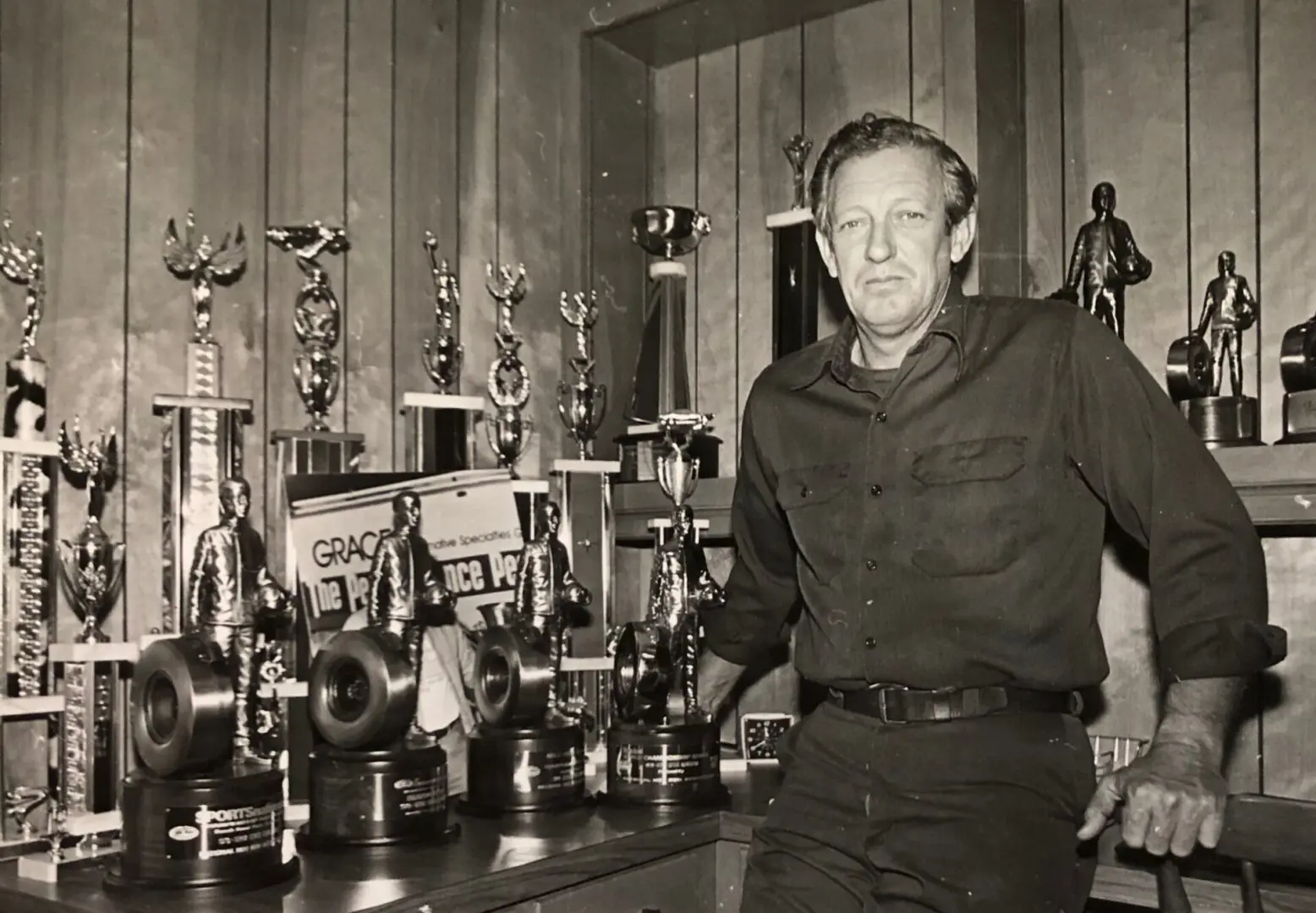 Bobby Warren
In the mid-1950s Bobby Warren was busy working on his tobacco farm in North Carolina and competing at some of the local…
Read bio
Bobby Warren
In the mid-1950s Bobby Warren was busy working on his tobacco farm in North Carolina and competing at some of the local…
Read bio
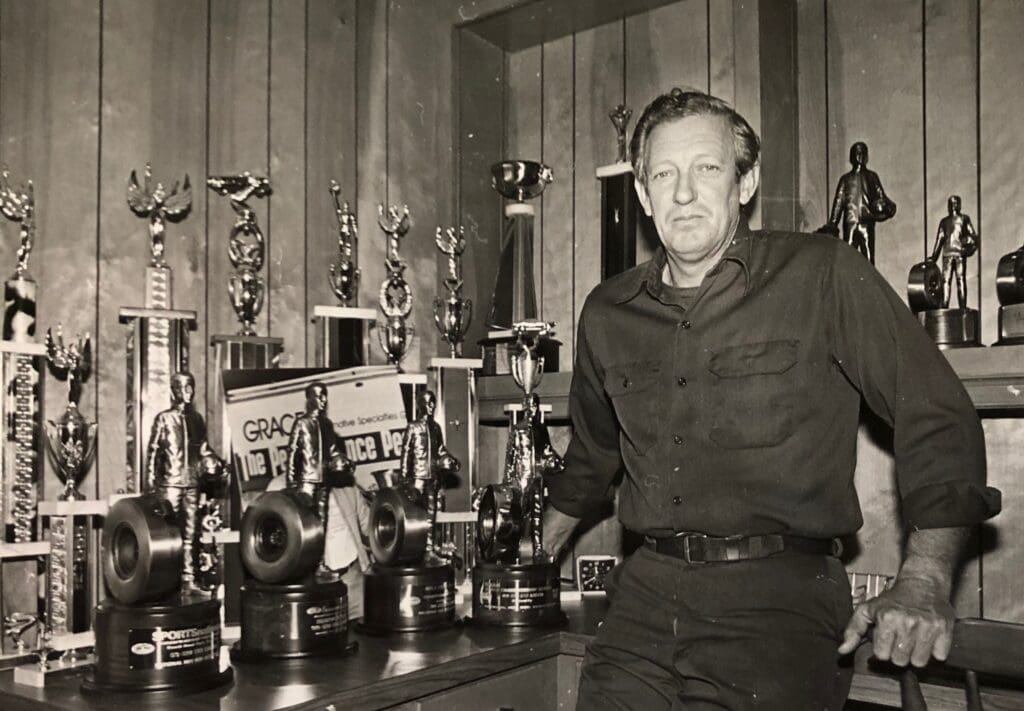 Class of 2010Presented by Lucas Oil Products
Bobby Warren
In the mid-1950s Bobby Warren was busy working on his tobacco farm in North Carolina and competing at some of the local race tracks that were beginning to pop up around his hometown. Bobby usually went out with his friend Earl Smith who did the driving Friday and Saturday nights them Bobby would take over the driver seat on Sunday. In those days they were competing in what was termed Junior Stock with Bobby later changing over to a Camaro as he pursued the national championship. However, by the late 1960s he decided that competing on the local tracks for trophies really wasn’t enough and he began pursuing his passion by following the NHRA’s Division II circuit in a quest for the regional championship. He also began attending select national events where he started appearing more and more in the winner’s circle. At his racing involvement grew, Bobby converted an old tobacco barn on the farm into a completely self-sufficient machine shop.
In the 1970s Bobby’s dream of greater things came true when he became NHRA’s Stock World Champion by winning the World Finals in Dallas Texas. In 1974 Bobby annexed his second national championship by winning the Super Stock Championship at the World Finals that was followed in 1978 by third Super Stock Championship crown. Bobby’s win record from the mid-1960s through the late 1970s was literally unbelievable. Probably his most successful season was in 1978 when he drove the “Krunchy Chicken” Camaro to victory at the Summernationals, Sportsnationals, Mile High Nationals, World Finals, and one the $15,000 Grace Sportsman Cup that signified the most successful sportsmen racer in the nation. As of 1983, Bobby had been in 13 NHRA final rounds and had won 12 of them. Odds are he would have taken the 13th one as well but he lost the final round at the US Nationals in Indy where it was later discovered someone had poured syrup in his gas tank prior to the final round.
By that time Bobby had given up on farming completely to open and operate a very successful race engine shop and parts store. After the syrup incident in Indy, Bobby decided it was time for an extended vacation so he turned the engine shop over to his sons, bought a motorhome and set out to see North America. Seeing North America through the windshield of a motorhome can only be fun for so long and after an enjoyable hiatus from the super stock wars, Bobby returned. Much to the sorrow of his competitors, Bobby’s winning ways were still intact and in 2004 he showed the “kids” how it is done by winning the NHRA Thunder Valley Nationals in Bristol Tennessee. That day his grandson, Joel, got to see two memorable things, it was his first time to see grandpa when a national event and the win that day made Bobby at 69 years old, the oldest competitor ever to win a national event.
-
2010
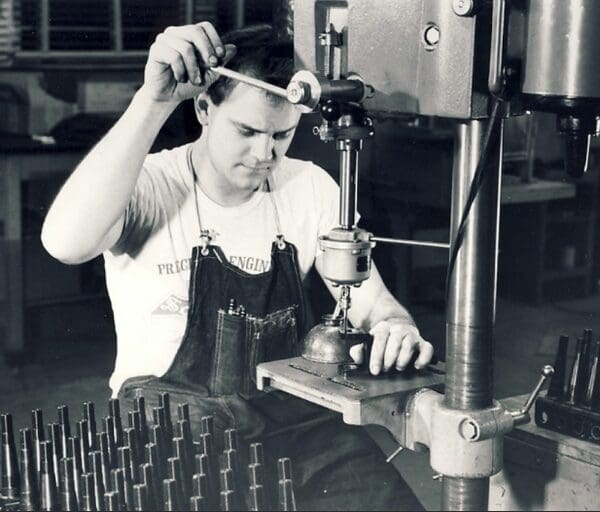 Robert (Bob) Stange
Robert Stange learned welding in high school and went to work as a professional welder upon graduating. While working as a welder…
Read bio
Class of 2010Presented by Lucas Oil Products
Robert (Bob) Stange
Robert Stange learned welding in high school and went to work as a professional welder upon graduating. While working as a welder…
Read bio
Class of 2010Presented by Lucas Oil ProductsRobert (Bob) Stange
Robert Stange learned welding in high school and went to work as a professional welder upon graduating. While working as a welder Bob began working with the company machinist and soon mastered the trade as well. At the same time, Bob began competing at nearby Union Grove Raceway in a 1950 Ford coupe gradually modifying it as time and money permitted. While he loved competing at the races it wasn’t long before the friends, he made at the racetrack had him working on their cars. While still working days at his welding job, Bob turned his home garage into a small welding/machine/repair shop. This was okay for short time but business was good so he soon moved into his first “official” business, Stange Machine and Engineering, located in a 2000 square-foot building close to home.
In the beginning, word of mouth was enough to keep him busy but he also realized that in order to grow he would have to expand his advertising efforts into the more traditional forms so he decided to put together a series of print ads. Thinking Stange Machine and Engineering was a spelling mistake; a copy editor at the printers changed the name to Strange Machine and Engineering (later shortened to Strange Engineering) which has stayed with the company throughout the years.
By the late 1960s Bob had pioneered such products as custom-built axles capable of delivering the power level of that day to the wheels without breaking. He also introduced the C-Clip Eliminator that eliminated the c-clips used to hold the axles of GM products in place. These were the beginning of a steady flow of new, unique, and superior products from Strange Engineering over the years. At the 1973 NHRA Winternationals, 14 of the 16 funny car qualifiers were equipped with Strange parts.
By the late 1970s, the power being produced by the fuel-burning cars were destroying the rear and assemblies of most of the cars so Bob developed his Top Loader Live Axle rear end assembly, which is the standard of the industry today. Bob has not confined his expertise to just fuel-burning race cars and drag racing but supplies equipment for sportsmen racers, circle track racers, LSR cars, off-road racers, and street vehicles.
Bob has also been very generous to the racers over the years providing free parts to some racers, sponsorship money to others, and contingency money for various classes over the years. He has also maintained a hospitality area at many of the races were competitors and others have the opportunity to grab a bite to eat or something to drink and relax for a while.
Bob and his company have also been recognized over the years by the news media for both its abilities and innovations and the outstanding products the company produces. The company has been selected as Manufacturer of the Year several times by various publications, Bob was the recipient of the Car Craft Magazine Ollie Award, given to the person who has contributed significantly to the sport of drag racing throughout their career, and was selected as Car Craft Magazine Hi-Riser in 1973. Bob is still very actively involved with his company and the sport, producing new parts and pieces, appearing at the races and shows with his hospitality bus and one of the contributors helping The Golden Greek, Chris Karamesines continue racing completely at 80+ years old.
-
2010
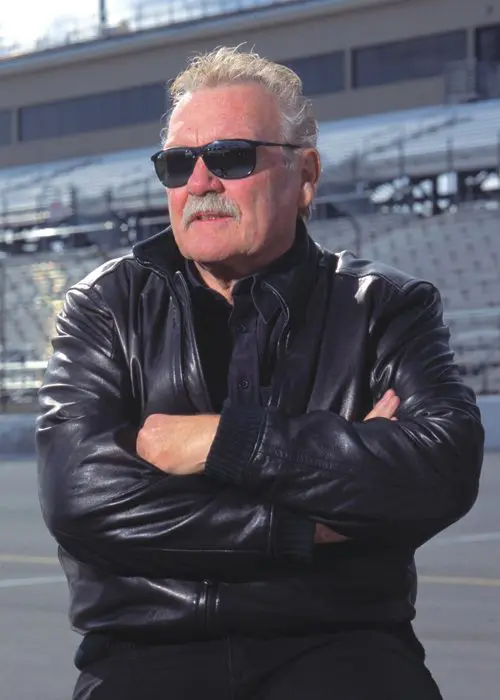 Bill Simpson
1940–2019 Bill is a native Southern Californian, growing up in the heart of the hot Rod world at that time. By 1955 at…
Read bio
Class of 2010Presented by Lucas Oil Products
Bill Simpson
1940–2019 Bill is a native Southern Californian, growing up in the heart of the hot Rod world at that time. By 1955 at…
Read bio
Class of 2010Presented by Lucas Oil ProductsBill Simpson
Bill is a native Southern Californian, growing up in the heart of the hot Rod world at that time. By 1955 at the age of 15, Bill was earning his way working in an upholstery factory looking for his next move. It was about this time that Bill’s good friend, Dennis Aphes, took him to his first drag race and he was hooked. Bill bought a 1940 Ford coupe and went street racing. From street racing in his coupe, Bill soon graduated into driving a dragster at the local drag strips. At that time the driver uniform of the day was jeans, leather jacket, and any kind of a helmet that fit; so safety wasn’t a priority. In 1958 the brake handle on Bill’s dragster broke off after a hard pass and he wound up crashing at the end of the strip breaking both arms. While he was healing Bill decided it was time to come up with a better way to stop these cars and started researching how to do this best. His uncle owned a war surplus store and knew some people he thought might be of help so he put Bill in touch with a parachute expert who suggested this might be the answer to the stopping problem. At that time, the chutes being sold at the surplus stores were bulky and unreliable for use on the race car so Bill proceeded to rent a sewing machine, learn how to use it correctly, and after studying a rigging manual he set about assembling his first cross formed drag chute. The chutes quickly became popular with the drivers and shortly after his humble beginning Bill started receiving so much business, he officially opened the doors of Simpson Drag Chutes. The success of the parachute business prompted Bill to set out to provide the drivers with the greatest amount of safety equipment possible. The next step was to design and produce driving gloves than seatbelts and shoes. By this time Bill had outgrown his two-car garage and moved into larger quarters where he began designing and producing fire suits from NASA’s latest temperature resistant material, Nomex. To prove the value of the Nomex material, in an unprecedented marketing move Bill proceeded set his Nomex covered arm on fire on the starting line of Indianapolis Motor Speedway in front of the gathering of news media people. His promotion worked and by opening day of the 1967 Indy 500, the majority of the starting field drivers were suited up in Bill’s Nomex fire suits. Nomex has proven to be the right material for the job. Even with the success he enjoyed over the years Bill has never lost his dream of producing even better driver safety equipment, including helmets, undergarments, etc.
As most people know, Bill has never limited his safety equipment to anyone form of racing. Drivers in every form of the sport, from NASCAR, drag racing, boat racing, off-road racing, Formula One, etc. are protected by bills equipment.
The same diversity has applied to Bill’s racing career. He has been very involved in the competition side of racing having owned and driven dragsters, owned and driven SCCA Road Race cars, and owned and driven Indy cars including a 13-place finish in the 1974 Indy 500. So, he truly has a firsthand knowledge of what the drivers needs are, safety, and just as important comfort. Bill retired from racing in the cars in the mid-1970s to focus his efforts on expanding his business and develop more new products. People worldwide acknowledges success as an owner/driver but it will always be his designing and production of safety equipment that will highlight his career.
Unfortunately, the 1980s saw a ration of frivolous lawsuits that took their toll on Bill and cost him a lot of time, money, and generated a lot of emotional stress. A few years later after rebuilding the business back into an even greater success he sold it and concentrated on developing real estate. Retirement from the safety equipment arena didn’t satisfy Bill’s desire to continue developing newer and better equipment so he started his newest effort, Impact Racing, and is busy finding ways to keep the drivers and crews even safer. What’s next, impact absorbing helmets and vests or more heat resistant materials? No one can answer that question but it sure the bet that Bill was going to find the answer before long and make racing even safer for its competitors.
-
2010
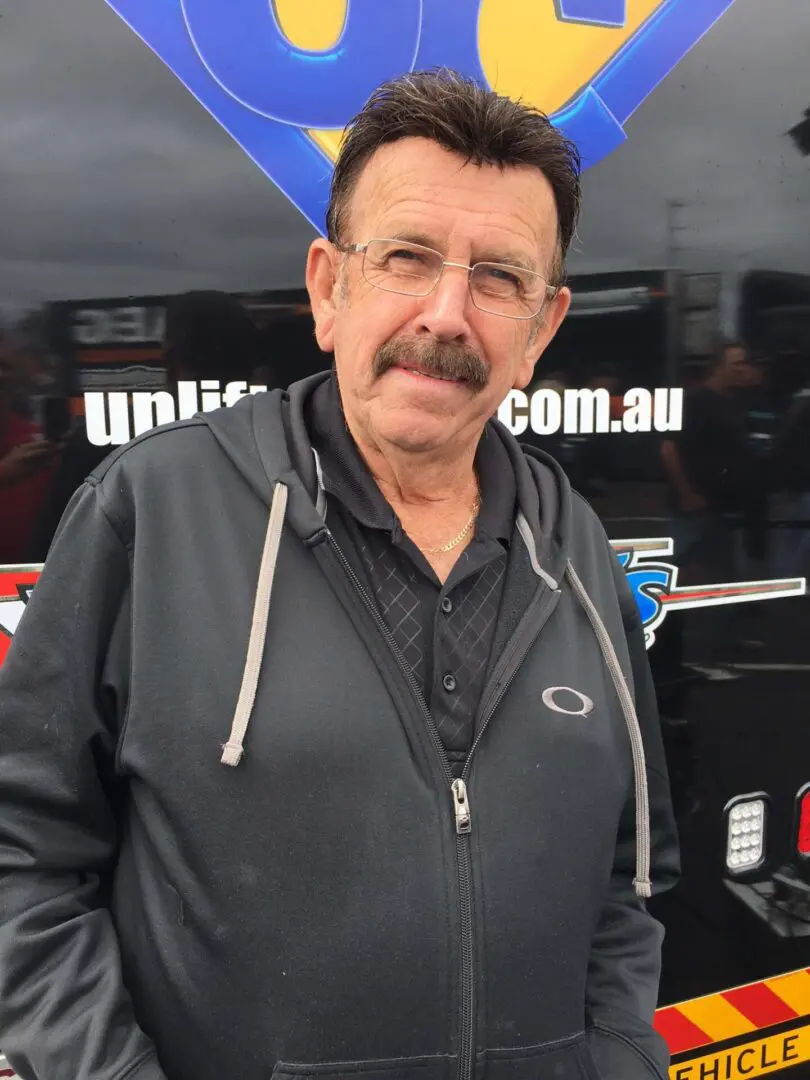 Jim Read
Early on Jim decided to become a plumber but he was also fascinated with racing, especially drag racing, and in 1966 he…
Read bio
Jim Read
Early on Jim decided to become a plumber but he was also fascinated with racing, especially drag racing, and in 1966 he…
Read bio
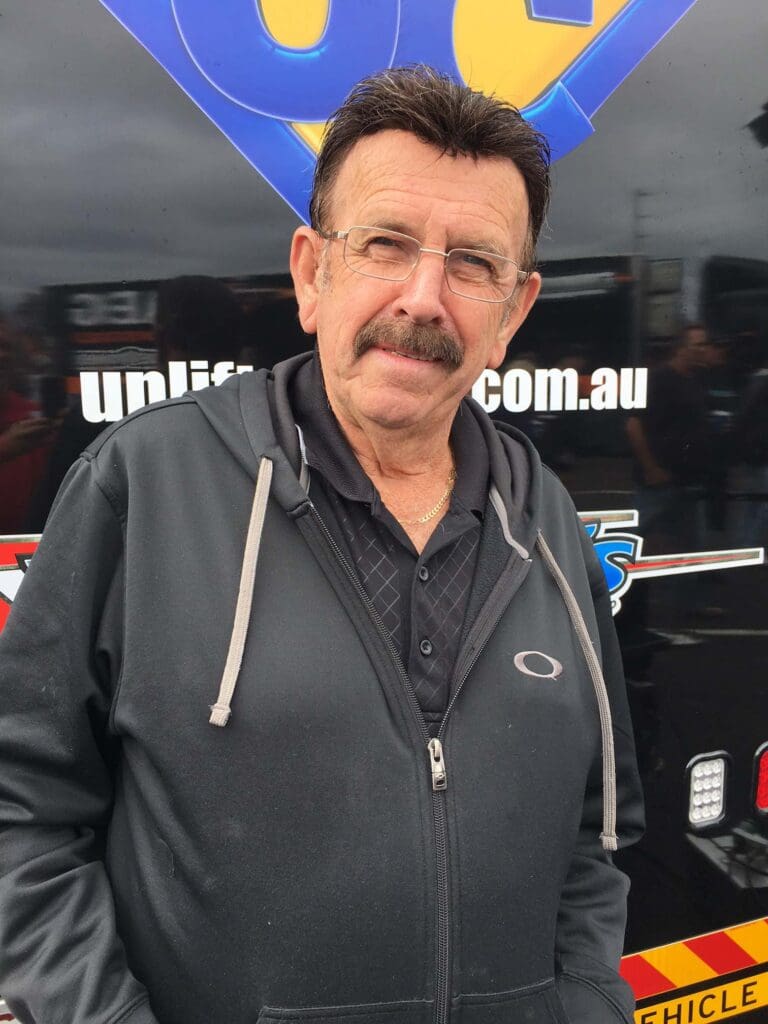 Class of 2010Presented by Lucas Oil Products
Jim Read
Early on Jim decided to become a plumber but he was also fascinated with racing, especially drag racing, and in 1966 he completed building a car to compete at Castlereagh Dragway in Sydney in the modified sedan class. Jim won the first race he entered and was hooked by the feeling that came with that win. Like most racers, it didn’t take long for Jim to want to go quicker and faster so he moved up from the modified sedan ranks into a junior fuel dragster followed by a top fuel dragster and a fuel funny car.
By 1974 Jim was competing as a full-time professional drag racer; that year he became the Aussie Top Fuel Champion. That same year Jim had the privilege of successfully competing against his hero from the states, Don Garlits. In the coming years Jim would continue to successfully compete against most of the touring USA racers including Gary Beck, Jeb Allen, Jon force, Marvin Graham to name a few along with New Zealand champion Garth Hogan.
At the Australian Nationals in 1976, Jim was the first drag racer to not only compete in both top fuel dragster and funny car classes, but to win them both at the event. Since then Jim has gone on to win over 300 titles including 17 Australian Championships. In 1974 Jim was able to put together a sponsorship package with Rothman’s of Pall Mall Tobacco Company under the Chesterfield banner (later changed to Winfield) that sponsorship lasted for 21 years until the Australian government passed legislation in 1995 banning tobacco sponsorships for automobile racing.
In 1979 Jim purchased the Good, Bad & Ugly top fuel dragster and began traveling to the USA more and more. These trips allowed him to build many long-lasting friendships, learn more about what the racers here were doing and benefit from a lot of the experience they were compiling. 1982 saw Jim fulfill a long-time dream, he entered the NHRA Winternationals in Pomona. Competing in a borrowed car and on a very limited budget he became the first Australian to qualify at an NHRA event in a top fuel dragster with a 5.69 ET. Jim won his final top fuel event as a driver at the June 2004 Australian Winternationals retiring from driving shortly after that.
In 1981 he was honored as the only motorsport competitor to receive an Advanced Australia Ambassador Award and in 2000 Jim was awarded an Order of Australia from the Australian Prime Minister for his dedication to his field of motor sport and received the Australian Sports Metal from her Majesty Queen Elisabeth II. Jim is currently awaiting his second entry into the Guinness Book of Records for the longest sponsorship firstly with Rothman’s of Pall Mall (Chesterfield and Winfield) and Wynn’s Australia for over 43 years of continuous sponsorship.
Jim’s love and involvement with the sport expanded even further when in 2004 he was able to return championship drag racing back to Sydney, after seven years, by negotiating with the New South Wales government to construct a purpose built drag racing venue in Sydney, Western Sydney International Dragway where he is still the chairman of the board. He is also still very active on the racing side as the owner of his family owned and operated Jim Read Racing Top Fuel 2 car team with his son Phil driving one car. Jim’s other son, Bruce, is the crew chief of the team. So far, this new team has produced three Australian Top Fuel Championships 2006, 2007, and 2008 missing out in 2009.
-
2010
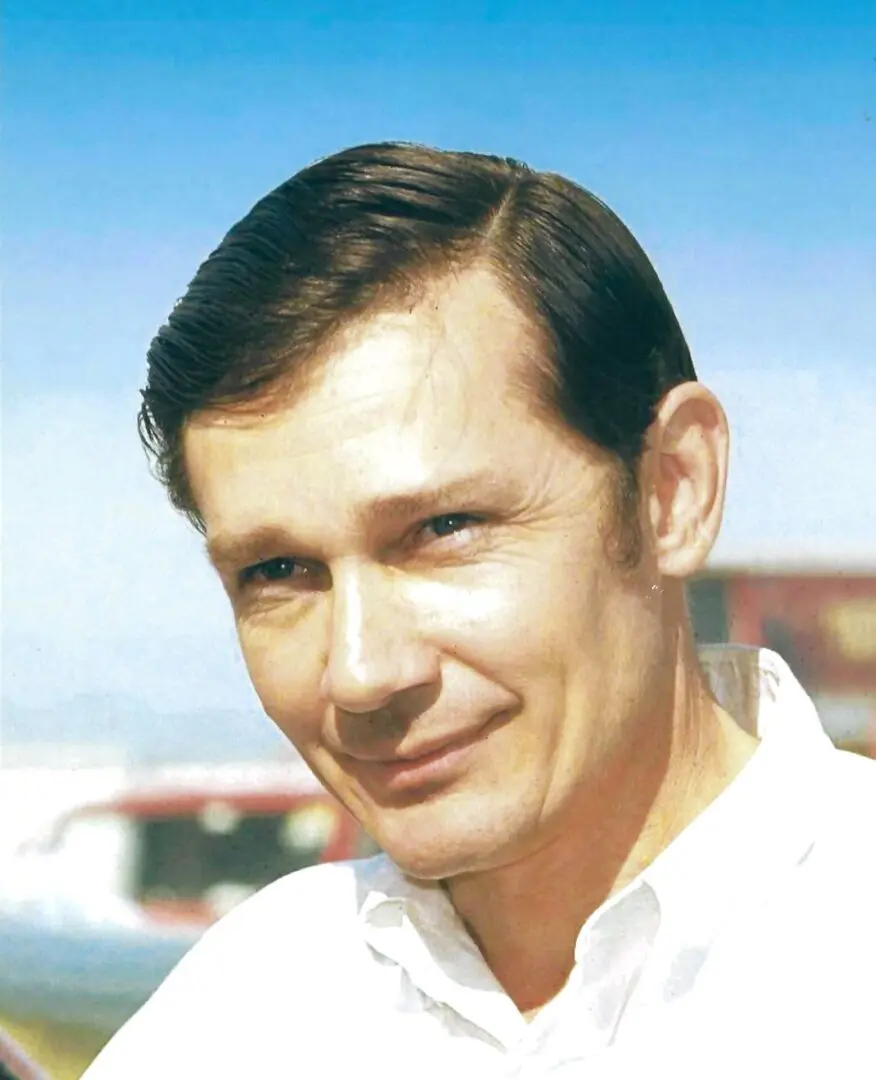 Dickie Harrell
1932–1971 Dickie Harrell was one of the early professional drag racers in the 1960s and early 1970s, who had enjoyed a lot of…
Read bio
Dickie Harrell
1932–1971 Dickie Harrell was one of the early professional drag racers in the 1960s and early 1970s, who had enjoyed a lot of…
Read bio
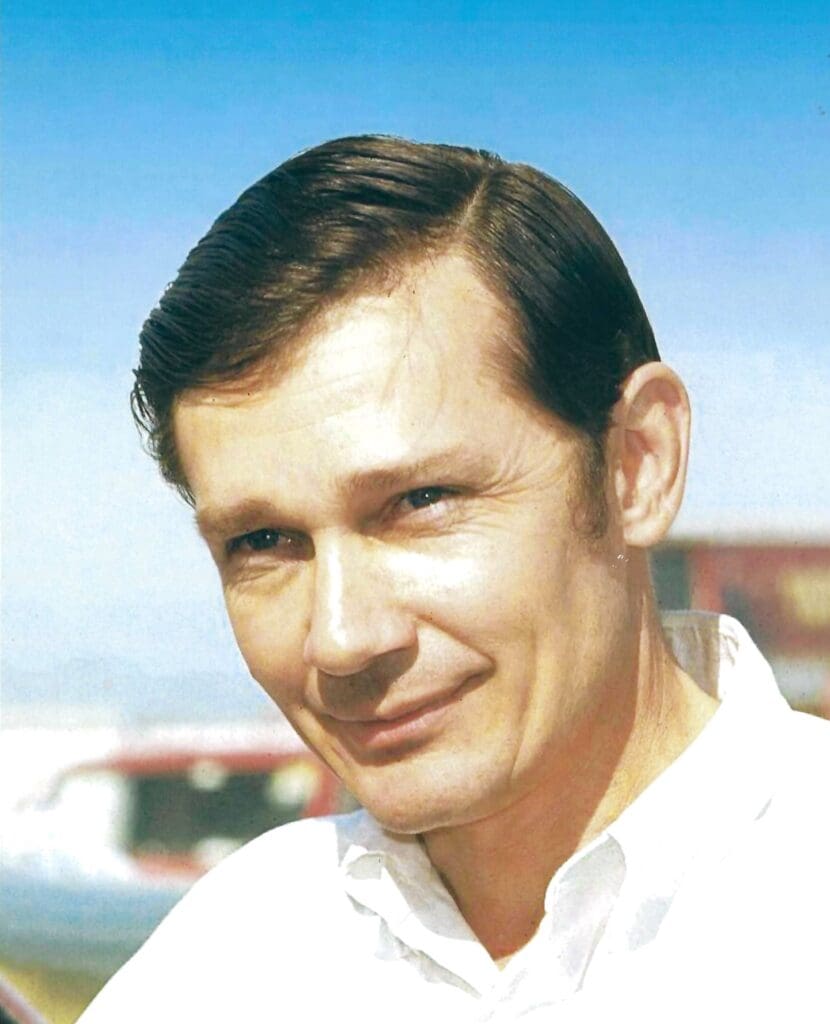 Class of 2010Presented by Lucas Oil Products
Dickie Harrell
Dickie Harrell was one of the early professional drag racers in the 1960s and early 1970s, who had enjoyed a lot of success as a mechanic, crew chief, and driver of Chevrolet race cars. Dick was born in Phoenix Arizona but his family moved to Carlsbad New Mexico when he was five years old and that was home until 1965. Cars were very big part of Dick’s world even in his early years and by the time he was 14 he was deeply involved with sprint cars. It was here he learned to work on cars and develop his tuning skills and by the age of 17 he was driving stock cars on the dirt circuit.
At age 18, Dick joined the U.S. Army for a three-year stint where he worked on aircraft engines and airframes for light aircraft. Dick was deployed to Korea for much of his service time and it was there he was awarded the National Defense Service Medal, Good Conduct Medal, United Nations Service Medal, and the Korean Service Medal. Upon receiving his discharge, Dick returned to his love of cars and racing and was soon competing on the local drag strips. Like most racers of the time, Dick worked at one job during the week and on the weekends campaigned his 1956 Chevy as far away as Texas.
In 1961, Dick began to travel across the Southwest, racing a factory backed Chevrolet, winning most of the events he entered in. This was his final amateur year as he won every regional race in a three-state area of the Southwest. In 1962, Dick began his first tour as a pro, competing against most of the “name drivers” at the national events and in match races. These were not only some of the best drivers, but many had backing of the Detroit automobile manufacturers. In 1962, still driving his Chevrolet, Dick Harrell became the NHRA point champion in the Super Stock Class.
Driving a 409-ZII super stock Chevrolet in 1963, Dick won the Super Stock Eliminator class at the AHRA Winternationals. Later that year he set the AHRA Sportsman Class speed record at 118.57 MPH. This was the first of many speed records Dick would set during his career. This was also the year the factories would begin introducing their exotic cars, using aluminum bodies, supra engines, and large amounts of factory backing. By this time, Dick success as a driver in both NHRA and AHRA drag racing events, his devotion to Chevrolet, even without factory backing, earned him the nickname “Mr. Chevrolet”.
In 1964, Ford was really bearing down on competition with the 427 Ford Fairlane “Thunderbolt”. And Chrysler introduced the 426 Hemi in the lightweight Savoy. To combat these cars, Dick installed a 427 Z-II Chevrolet engine in a Chevelle body and was soon back in the winner’s circle. By 1965, Ford and Chrysler were really into the super stock wars and about this same time, Chevrolet withdrew all factory backing for racing and Dick was one of the very few drivers to continue campaigning his Chevrolet.
By 1966, Dick was being hailed as one of the sport’s top attractions, and considered to be among the top stock-car drivers of that day. His driving style also earned him many nicknames such as “Quick Dick”, “Mr. Reflexes”, but “Mr. Chevrolet” was the one that stayed with him. Besides his actual racing, he began designing engines and cars for Nickey Chevrolet in Chicago. Dick was instrumental in designing and overseeing the production of a line of Nickey Chevrolet modified street cars including the installation of the first 427 engine into a Camaro to be sold as a dealer option. Later Dick would perform the same duties for the Yenko Chevrolet, becoming one of the pioneers in developing “special dealer option vehicles”.
Also, by this time the new funny car era was beginning to escalate with large engines being installed in small, but heavenly modified cars. These cars often had altered wheelbases to get better weight transfer, the use of injection and nitromethane for more power, and eventually the addition of superchargers. This fit Dick’s idea of always looking for greater performance and he soon was campaigning his own Camaro funny car. By 1960 Dick had moved his own shop to Kansas City where he would modify Camaros and Chevelle’s by installing modified big block engines and special suspension packages for both street and strip use. These vehicles were sold through authorized Chevrolet dealers across the nation. All of this activity took a toll on the time he could spend with his family; Dick was a true competitor and continued to pursue his love of racing and winning ways. Dick was named the AHRA Driver of the Year in 1969 tuning and driving a fuel funny car and later was named Driver of the Decade. In September 1971 Dick lost his life in a racing accident in Canada and while he may be physically gone, he will never be forgotten.
-
2010
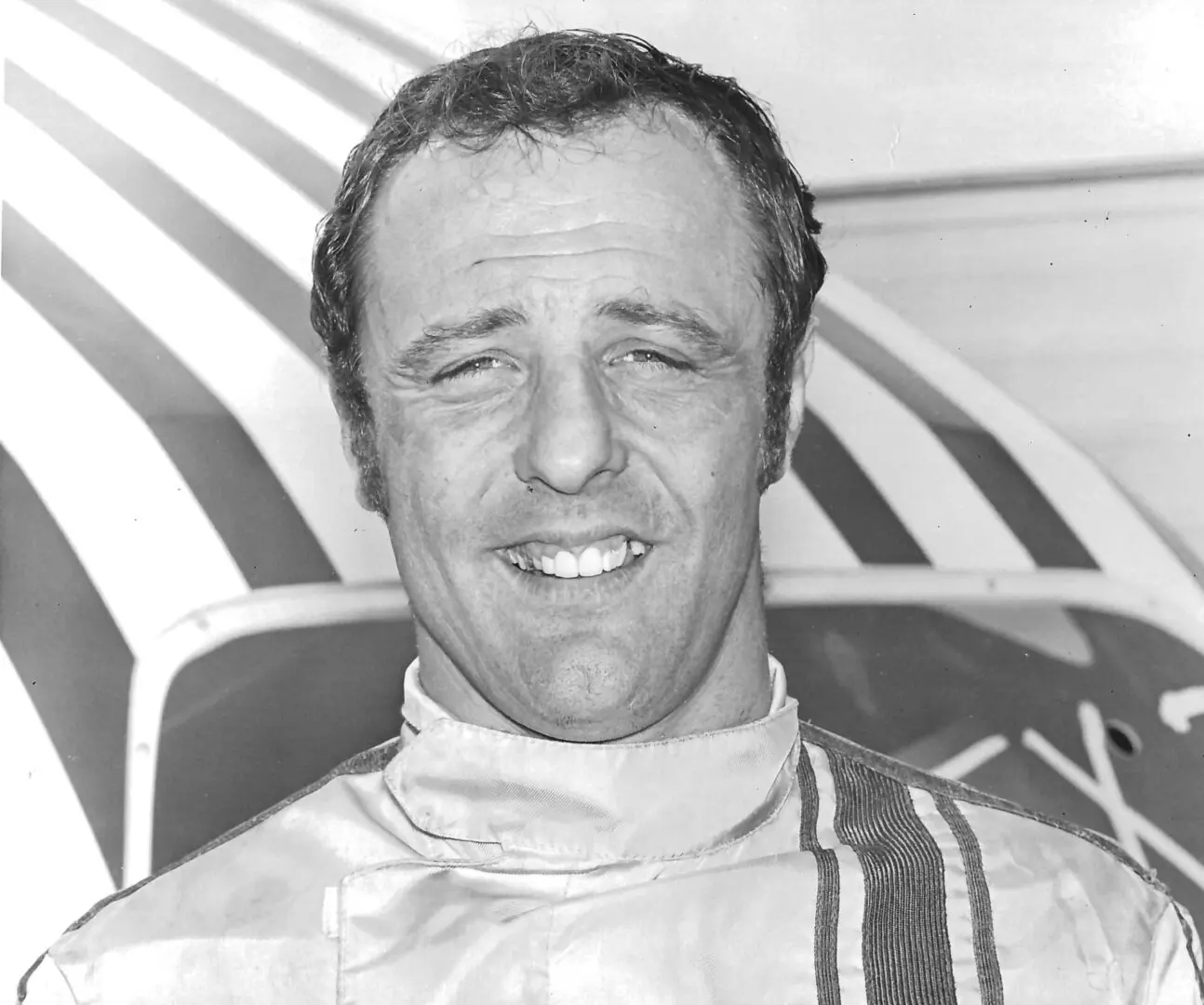 Leroy Goldstein
1940–2002 Leroy was typical of the early drag racer. He loved cars and speed so while still in his teens he bought his…
Read bio
Leroy Goldstein
1940–2002 Leroy was typical of the early drag racer. He loved cars and speed so while still in his teens he bought his…
Read bio
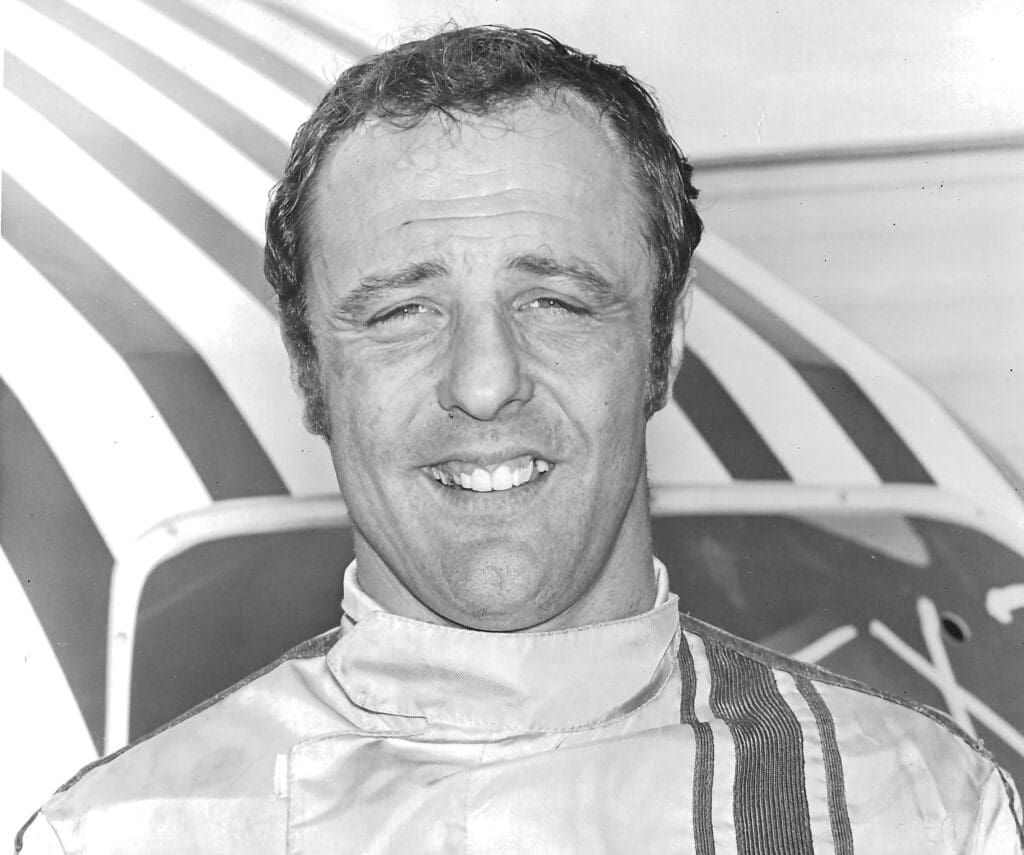 Class of 2010Presented by Lucas Oil Products
Leroy Goldstein
Leroy was typical of the early drag racer. He loved cars and speed so while still in his teens he bought his first car and started modifying and showing up at the local street races. Also typical of the times, Leroy soon moved his racing participation off the street onto the local drag strips. By the mid-1960s he was part of a San Diego California based two-car top fuel dragster team whose other driver was Jim Nicoll. At that time, it seemed that all of the drivers had to have a nickname and Leroy was soon dubbed the “Israeli Rocket”. Between his nickname and his driving ability, Leroy was soon getting a lot of national attention in the racing newspapers and magazines.
In 1969 Leroy got his really big break when the Michigan-based Ramchargers organization signed him to drive their top fuel dragster. The team was an immediate success winning the AHRA Winternationals and Springnationals followed by runner-up slot at the AHRA US Open and World Points Final that year. That same year Leroy posted a best time of 220.04 MPH and a 6.55 second ET while on his way to winning the prestigious Smokers Meet at New York National Speedway. The respect his fellow racers showed him was also reflected when he was initiated into the elite fraternity of fuel racers known as the “Greek Fleet” that was headed up by Chris Karamesines. Unfortunately, at the end of the season the Ramchargers chose to suspend their participation with top fuel dragsters and go funny car racing. Once again Leroy showed his driving talents by becoming one of the prime targets for the rest of the funny car competitors. Leroy and the Ramchargers were featured in all of the major open events and when time allowed followed the match race circuit. In 1970 Leroy recorded his first six second pass in a funny car with a 6.95 ET at New York National Speedway. By the end of his driving stint in the Ramchargers funny car he recorded several 6.80 ETs and drop the record at the time to a low of 6.71 ET. Leroy has also been given credit by many in the sport as being the first funny car driver to exceed the 220 MPH mark. The Ramchargers and Leroy parted company in 1972 and Leroy wound up driving for one of the other top-ranked teams at the time, Candies and Hughes.
His stint with Candies and Hughes really fit Leroy’s ideal of the perfect driving job since he drove both the team’s funny car and its top fuel dragster. Although they seldom ran both cars in competition at the same race, they did so at the IHRA Longhorn Nationals where Leroy drove the dragster to the winner’s circle and then rushed back to the starting line and drove the funny car to the runner-up position. Leroy continued to drive for Candies and Hughes through the 1972 season. 1972 was also successful for the team on the AHRA circuit where they one that years AHRA Championship crown. In 1973 they did a lot of match racing and competed successfully on the NHRA circuit with one of the more memorable races being the Summernationals in Englishtown, New Jersey. Besides winning the race what made it such a memorable event was the fact that it rained all day with the first round of eliminations starting at midnight and the final round just as the sun was coming up. After he left Candies and Hughes he drove as a fill-in driver for a couple of teams; but by the mid-1970s Leroy was experiencing some health issues and after driving the Mr. Ed/Whipple funny car a couple times he decided to retire completely.
-
2010
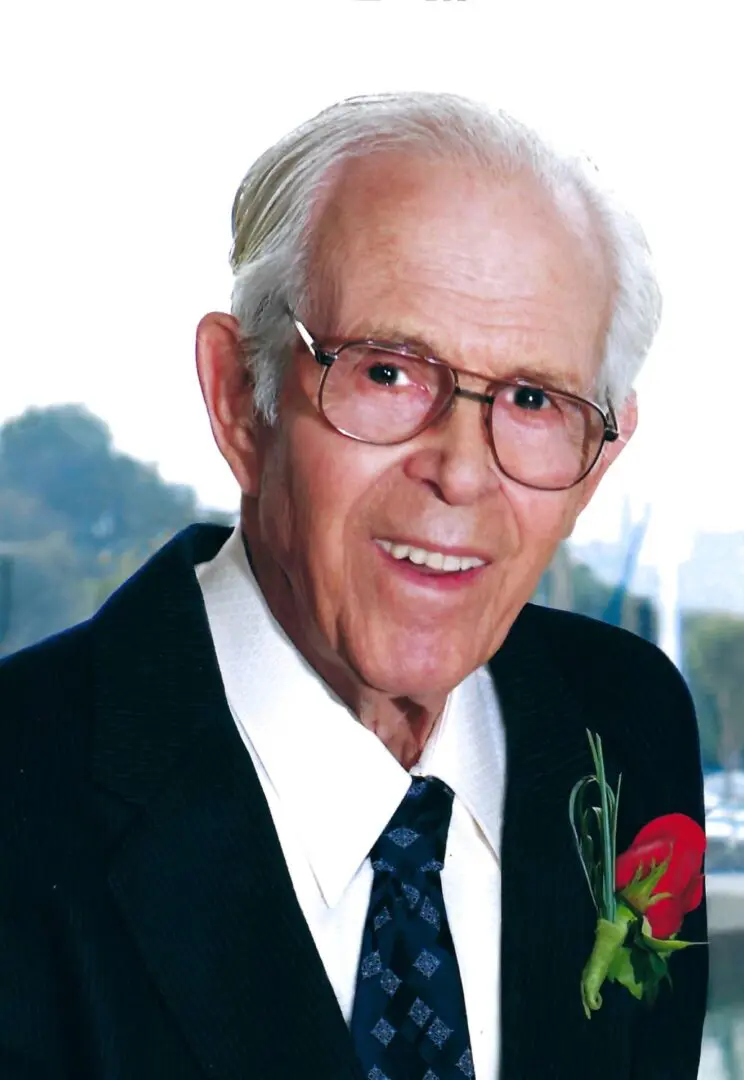 Jack Engle
1920–2008 Jon Harrison Engle, better known as Jack, was born in Canada but his family moved to Southern California very shortly after his…
Read bio
Jack Engle
1920–2008 Jon Harrison Engle, better known as Jack, was born in Canada but his family moved to Southern California very shortly after his…
Read bio
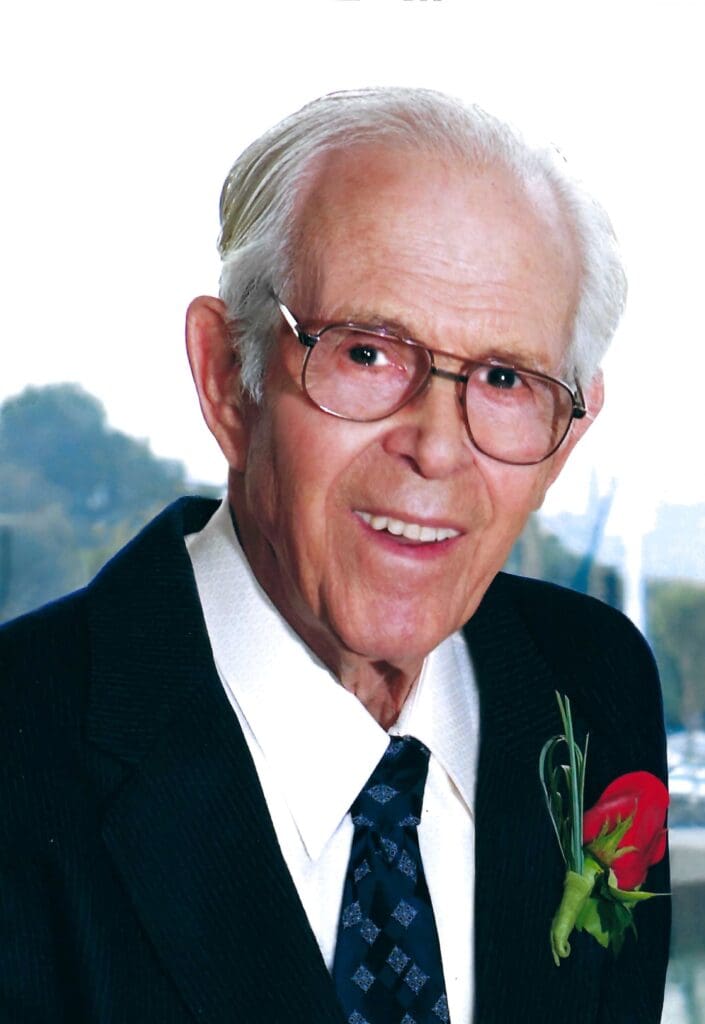 Class of 2010Presented by Lucas Oil Products
Jack Engle
Jon Harrison Engle, better known as Jack, was born in Canada but his family moved to Southern California very shortly after his birth so he could be considered a native Californian by most people. From a very early age Jack had an intense curiosity for all things mechanical leading him to build everything from go carts to motorized bicycles. For Christmas one year he received a drill press which suited him perfectly and a gift that was the basis for his future career in the performance business.
Jack purchased his first car while still in high school and was soon modifying it for greater performance. Growing up in the Santa Monica, California area, Jack was soon hanging out with people who would become real pioneers of the sport. His friends included such notables as Stuart Hilborn, Frank Coon, and Jim Travers. Around this time Jack joined a local car club, the Low Flyers, and began competing against his rivals at the various dry lake meets in the area. His first camshaft came from Edwin Winfield’s shop which was installed in a centrifugally supercharged, four-cylinder “B” Ford engine that was further enhanced with a Cragar had and shoehorned into a Model A Ford highboy roadster. This combination powered Jack’s roadster to a top speed of 113 MPH. Unfortunately, one week after this impressive run, World War II was launched.
Shortly after the beginning of the war, Jack got a job at North American Aviation where he worked in the prototype machine shop and where he learned to use blueprints and a mill to produce finished aircraft parts. While he enjoyed his job and what he was learning, like most young men at the time Jack wanted to be a part of the war effort so he joined the Navy. Before long, his mechanical skills were recognized and Jack was sent to the Packard Marine Engine tech school. After graduating from Packard, Jack became an engine man on a PT boat repair ship where he further honed his mechanical skills.
After the war Jack open and engine machine shop in the back of his dad’s service station where he rebuilt and modified engines for the locals. Before long he built his first cam grinding machine and began experimenting with the various combinations for greater performance. After the war and throughout the 1950s and 1960s the hot rod craze continued to grow as did Jack’s business and before long he moved into a larger facility with more equipment greater growth potential.
During the time of the infamous “cam wars” when all the cam grinders were promoting their latest victory in weekly ads, Jack’s clients were finding victory circle on a regular basis but a lot of the racers were being paid by other cam manufacturers to display their decal on their cars; so there was also a lot of confusion regarding whose cam was actually being used.
Jack Engle could have easily been the model for the “quiet man”. He did not waive his own flag, didn’t want to turn his business over someone to run and didn’t want his photo and every weekly newspaper. What he really wanted and accomplished was to produce quality parts that actually worked and be left alone to do this. The list of racers who won using his camshafts ranged from the Snake and the Mongoose to Don Moody, Tommy Ivo, Beebe and Mulligan, and most of the other legends of that time. Engle cams also provided the boost that triggered the VW powered entry into so many areas of racing from off-road to drag racing and from midgets to airplanes. Jack was a true pioneer of the sport in a major contributor to its growth by providing the necessary parts to make the cars run faster and more consistently.
-
2010
 John Buttera
1939–2008 Jon Buttera grew up in Kenosha Wisconsin which wasn’t exactly a hot bed for hot rodding but at a very early age…
Read bio
Class of 2010Presented by Lucas Oil Products
John Buttera
1939–2008 Jon Buttera grew up in Kenosha Wisconsin which wasn’t exactly a hot bed for hot rodding but at a very early age…
Read bio
Class of 2010Presented by Lucas Oil ProductsJohn Buttera
Jon Buttera grew up in Kenosha Wisconsin which wasn’t exactly a hot bed for hot rodding but at a very early age he started pouring through Hot Rod Magazine and Speed to learn what the rest of the world was building and driving. In high school John was probably best known to his fellow students for his hand-built Model A sedan. Even then Jon was becoming a self-taught craftsman, designing and building parts and pieces on a very limited budget. John worked his way through school as a bartender including the period while he was attending and graduating from KTI in 1963 with a degree in Mechanical Design and did a short stint at Outboard Marine and later Snap On Tools. Although they recognized his enormous talent, John didn’t have the patience for bureaucracy and couldn’t see himself spending his life in that type of situation and needed to move on.
John had first met Dennis Rollain in 1956 while Dennis was busy building street rods and racecars in his home garage. Dennis was aware of the Model A John had built and was impressed with the craftsmanship that had gone into it. During this time the pair completed a 1937 Ford fuel coupe in time to compete at the Kansas City Nationals where they finished as runner-up their first time out. While the pair was truly the “odd couple” Dennis being gentle and laid-back and John the innovator and fire starter, they continue to successfully raise the 1937. In 1963 John began building his first dragster in his mother’s garage at night but about halfway through the project he realized he needed help so he called Dennis and shortly thereafter R&B Automotive was born. During this time, they both continue to work at their regular day jobs but at night they were fabricating roll cages, traction bars, and various other parts. September 1964 was when they took a deposit for the first complete chassis and started their trip into drag racing history.
By 1965 they had completed a junior fuel dragster an AA/FD and to see how competitive their creations where they took the junior fuel car to California where the car proved to be very competitive. During the latter part of the 1965 in 1966 they work mainly on Angelina Gasser’s, T Bucket roadsters, and altered’s but by the close of 1966 they had teamed up with Ron Pellegrini of Fiberglass LTD. Who was supplying a lot of the bodies for funny cars and secured enough business to quit their day jobs and devote full time to the chassis shop. The pair-built cars for such notables as Don Schumacher, Mr. Norm, and Arnie Beswick their reputation continued to grow. They were also turning out AA/FD cars for the likes of Tom Hoover and Marvin Schwartz to round out their business.
Throughout this time John was also handling some of the driving chores but in 1966 he took the ride of his life when his funny car went airborne and was totaled. After healing from the experience John stayed with designing and building everything from wheels to “trick parts” to compete cars. During the summer of 1965 John worked on a Formula One crew for John Cannon. Cannon began referring to him as Little John so everyone would know which John was being referred to and the Little John handle became part of his name from that point on
After the success R&B was having during these years it was inevitable that John would move on to bigger things and in 1969, he met with one of his heroes, Mickey Thompson. Mickey offered John a job working on his land speed car and shortly after John left for California with his top fuel car hanging out of the back of his Chevy panel truck. At Mickey’s, John teamed up with Pat Foster to help complete and the land speed car, build several funny cars, and design and build several innovative new parts for better performance.
1970 was the year John decided to open the doors to a new chassis shop and, with John’s attention to detail, he first tried to name it “Little John’s Place” but didn’t think that looked right so it became “Li’l John’s Place” and after that he was always known and referred to by all as Lil Jon. As soon as the doors open, John began to immediately produce AA/FD dragsters and funny cars for such teams as Brasket & Burgin, Don Schumacher, Don Prudhomme, Tom McEwen, and Barry Setzer. During this time John also won the coveted Car Craft Magazine All-Star Drag Racing Team Funny Car Chassis Builder Award four years in a row and the All-Star Drag Racing All-Star Team Top Fuel Chassis Builder Award. Even during the time when John was building some of the top race cars, he never turned his back on building some of the top street rods and street machines to grace the pages of the enthusiast magazines. One of John’s best friends was the street rod guru at Hot Rod Magazine, Gary Baskerville, the two of them could talk about street rods forever. The results of many of their conversations found their way onto the magazine pages after John would take one of their ideas and make it into a real car.
In 1983 John realized his number one dream. With a lot of help and support from his many hot rod/drag racing friends, John built his own Chevy powered Indy car and with Dennis Firestone at the wheel they finished the race in 27th place. John returned to the Brickyard again in 1984 and took one last shot at it in 1987. They didn’t see the winner’s circle at the end of the 1987 race but did qualify 8th and John took the Clint Bronner Mechanics Award home with him. Competing at Indy was truly among John’s most treasured memories.
When John decided to retire from the chassis building business, he turned his talents to designing and prototyping various products for many of the industry’s top companies. He moved into Boyd Coddington’s facility for a while where he designed several new wheels and billet street rod parts. After that he worked on special projects for several speed equipment manufacturers and worked with Harley-Davidson to design and develop a new look within the motorcycle arena. John was so completely dedicated to his work and ideals that most people never really understood him but everyone who knew him agreed on three things: you always knew what he thought about any subject, he was totally honest, and he was the consummate craftsman. A little-known fact about John was that he didn’t just build cars, he built a few motorcycles and in between building cars, bikes and creating new parts. In 1978 he received his pilot’s license. Like everything else in his life, John learned everything possible about how an airplane worked, how it was built, and at one point was even considering attempting to build one. Lil John Buttera was a “one-of-a-kind” person even in our sport.
Class of 2009
7 inductees-
2009
Founder’s Award
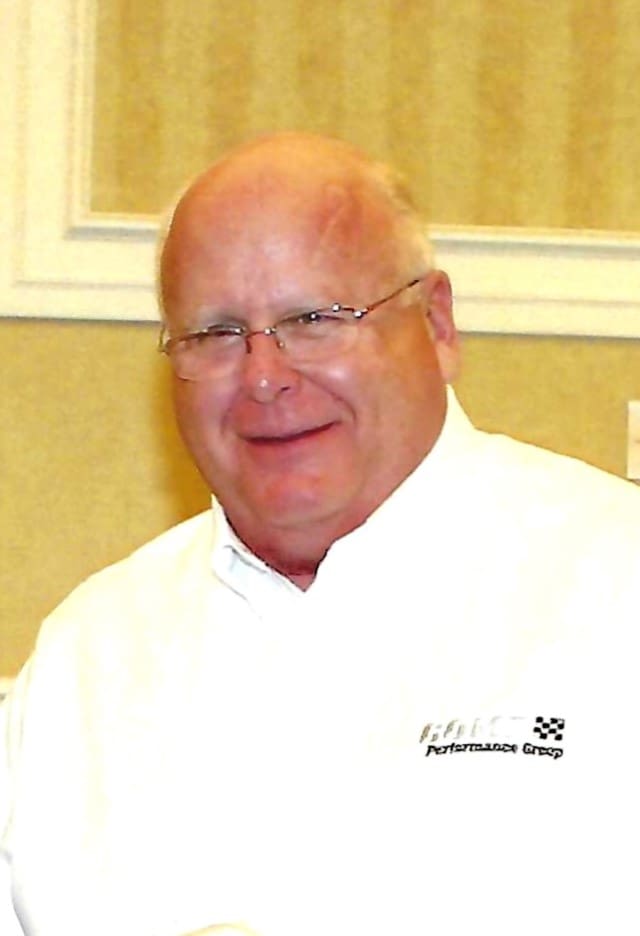 Paul “Scooter” Brothers
 started his career in the automotive world at the ripe age of 14 as a mechanic for a Rambler…
Read bio
Class of 2009 · Founder’s AwardPresented by ACES
Paul “Scooter” Brothers
Paul “Scooter” Brothers started his career in the automotive world at the ripe age of 14 as a mechanic for a Rambler…
Read bio
Class of 2009 · Founder’s AwardPresented by ACESPaul “Scooter” Brothers
Paul “Scooter” Brothers started his career in the automotive world at the ripe age of 14 as a mechanic for a Rambler dealership. After that he moved over to the same job at a Chevrolet dealership where he stayed until a stint in the military service. After his discharge, Scooter went to work for Memphis Tennessee based Racing Head Service. When RHS became part of Competition Cams and later Comp Performance Group, Scooter went with it.
While he hasn’t put together an impressive history as a racer. Without his efforts behind the scenes a lot of racers would not have been able to do what they have. As both a co-owner and Director of Research and Development for Comp Performance Group, Scooter is the person responsible for most of the performance parts produced and marketed by Comp Performance Group. Always on the lookout for new potential products Scooter stayed in touch with a large number of racing teams from drag racing to oval tracks and even boat racing to hear what they needed and/or want to improve the performance of their vehicles. Scooter spent countless hours designing these new products, then producing them and finally writing them on the dyno to make sure they really worked.
Scooter hasn’t limited his industry efforts to just the development and production of these performance parts, he served three terms on the SEMA Board of Directors and also its Technology Task Force where he had been instrumental in helping the association slow and even stop government-backed legislation that would adversely affect both the street performance and the racing world. In 2002, he was honored as the SEMA Person of the Year and in 2005 he was inducted into the SEMA Hall of Fame. He was a charter member of the SAE Motorsports Council, and was on the Board of Directors of the National Engine Parts Manufacturers Association. Scooter was very involved with NHRA, NASCAR, and several other sinking bodies to help keep the industry and sport strong and viable. In addition to all of his activities Scooter was very involved in several universities in helping to develop a curriculum that would properly educate their students regarding the performance industry.
-
2009
 Sid Waterman
????–2025 Sid launched his racing career on opening day in 1959 at the Fremont Dragstrip in Northern California. He drove his 1955 MG…
Read bio
Class of 2009Presented by ACES
Sid Waterman
????–2025 Sid launched his racing career on opening day in 1959 at the Fremont Dragstrip in Northern California. He drove his 1955 MG…
Read bio
Class of 2009Presented by ACESSid Waterman
Sid launched his racing career on opening day in 1959 at the Fremont Dragstrip in Northern California. He drove his 1955 MG powered by a small block Chevrolet. Shortly thereafter, Sid became a crewmember for the legendary Masters & Richter top fuel dragster. In 1960, Sid built and drove his own top fuel car. He quickly realized that he really preferred building and tuning the cars, and leaving the driving to others. After moving to Southern California in 1961, he turned the driving chores over to Ronnie Goodsell. Waterman and Goodsell considered themselves to be “West Coast” racers, and collected more than their fair share of wins. Sid’s next driver was Ronnie Martin who unfortunately crashed the car in 1964 and wound up with a broken leg. As soon as the car was rebuilt, Sid put Ronnie Hampshire in the driver seat, where he remained for the duration.
Sid was working with Mickey Thompson in 1967, and trying to campaign his dragster as often as possible. It was shortly after the 1967 Bakersfield Smokers March Meet that SId was offered, with Mickey’s blessing, the opportunity to buy out a complete engine shop that was sitting idle at the time. Sid jumped on the opportunity, immediately retiring from active competition, and Waterman Racing Engines opened its doors.
Over the next few years, Sid’s shop turned out engines and components for numerous champions such as Don Garlits, Shirley Muldowney, Bob Glidden, and a host of others. Sid ultimately developed his own brand of aluminum connecting rods, as well as his own line of superchargers for hard-core racers. It was during his engine building years that Sid realized the tremendous need the racing world had for really high-quality fuel pumps and fuel system components. In 1979, Sid in his always supportive wife, Judy, sold the engine building portion of the business, moved back to his native Northern California, and set up a new shop dedicated to development and production of state-of-the-art fuel pumps, and related fuel delivery systems products.
The first commercial fuel pumps design and built by Sid were delivered in September 1982; one to Billy Meyer and one to Gary back. Both cars set new elapsed time records at Baylands Raceway that very same weekend. Over the years, Sid has developed new port nozzle designs, fuel safety shutoff valves, improved fuel cells for NASCAR and a multitude of other products that have provided extra power and safety for racers. His efforts have not been confined to just drag racing either, as he earned a strong reputation in all forms of circle track racing including world of outlaw sprint cars, NASCAR stock cars, IRL Indy cars, USAC champ cars, sprint cars, midgets, and many other forms of racing. He’s readily acknowledged as being the leading fuel system manufacturer in the business.
Even while keeping a close eye on his fuel component business, for many years Sid found the time to work as a color commentator at NHRA national events, sharing many interesting insights with spectators and viewers. In 1975 Sid received the Car Craft Magazine All-Star Drag Racing Team Engine Builder of the Year Award, and in 1984 he received Car Craft Magazine’s first All-Star Drag Racing Team Special Manufacturers Award for fuel pump development. That was followed in 1986 with yet another special manufacturer’s award for his supercharger burst panel. In 2004 Sid was honored, this time by USAC, when he was presented with the prestigious CNA Jack O’Neill Award for his significant contributions to auto racing safety. Today Sid divides his work time between his shop in Gualala, California, and his satellite shops in Indianapolis, Indiana and Concorde, North Carolina. He continues develop products that provide racers increased power, while always keeping safety foremost in mind.
-
2009
Fritz Voigt
1924–2014 When you read the story of Fred “Fritz” Voigt’s involvement in racing, it sounds a lot like many of his competitors. Fritz…
Read bio
Class of 2009Presented by ACES
Fritz Voigt
When you read the story of Fred “Fritz” Voigt’s involvement in racing, it sounds a lot like many of his competitors. Fritz grew up in Vernon California with neighbors that would soon become household names, the Drake family Louis Meyer who developed the infamous Myron Drake engines and the Novi engine. Another big influence on his life was another business located not far from his home, Bell Auto Parts where he would hang out and learn about the sport. After the usual teenage street activities Fritz began participating at the dry Lakes and Bonneville, first in a 1932 Ford Roadster powered by a “big” flathead and later with a Chrysler powered Model T pickup. After these vehicles, he paired off with another well-known racer, Leland Kolb and the two of them campaigned a series of different cars.
As soon as drag racing became organized, he put together a gas dragster and started competing at Santa Ana and later Long Beach. At the first NHRA Nationals runoffs in Perryville, Arizona, Fritz was competing with the gas dragster but still managed to become a runner-up to Calvin Rice who was competing in a fuel dragster with both cars stopping the clocks with identical ET’s of 10.30.
Shortly after that he started working with Mickey Thompson where his first job was to help convert Manuel Coelho’s twin engine dragster into Mickey’s first twin Chrysler streamliner dragster. Upon completion of the twin engine dragster they headed to Oklahoma City for the 1958 NHRA Nationals but managed a side trip to Bonneville where they turned in a speed of 294 MPH. After that trip Fritz became the man who was responsible for building and tuning all of Mickey’s engines. Fritz built all of the two cylinder, four-cylinder, and eight-cylinder Pontiac engines Mickey used in his FIA and drag racing efforts along with the engines used in Challenger 1. He built and tuned the hemi Pontiac powered dragster that Jack Chrisman drove to the 1962 Nationals win and along the way even put together some powerplants for Ed Roth’s show cars.
In 1946 Fritz opened his own garage in Maywood California building and repairing just about anything that came through the door. Even during his stint with Mickey, Fritz kept the doors to his shop open. The doors remained open even after Fritz his retirement.
-
2009
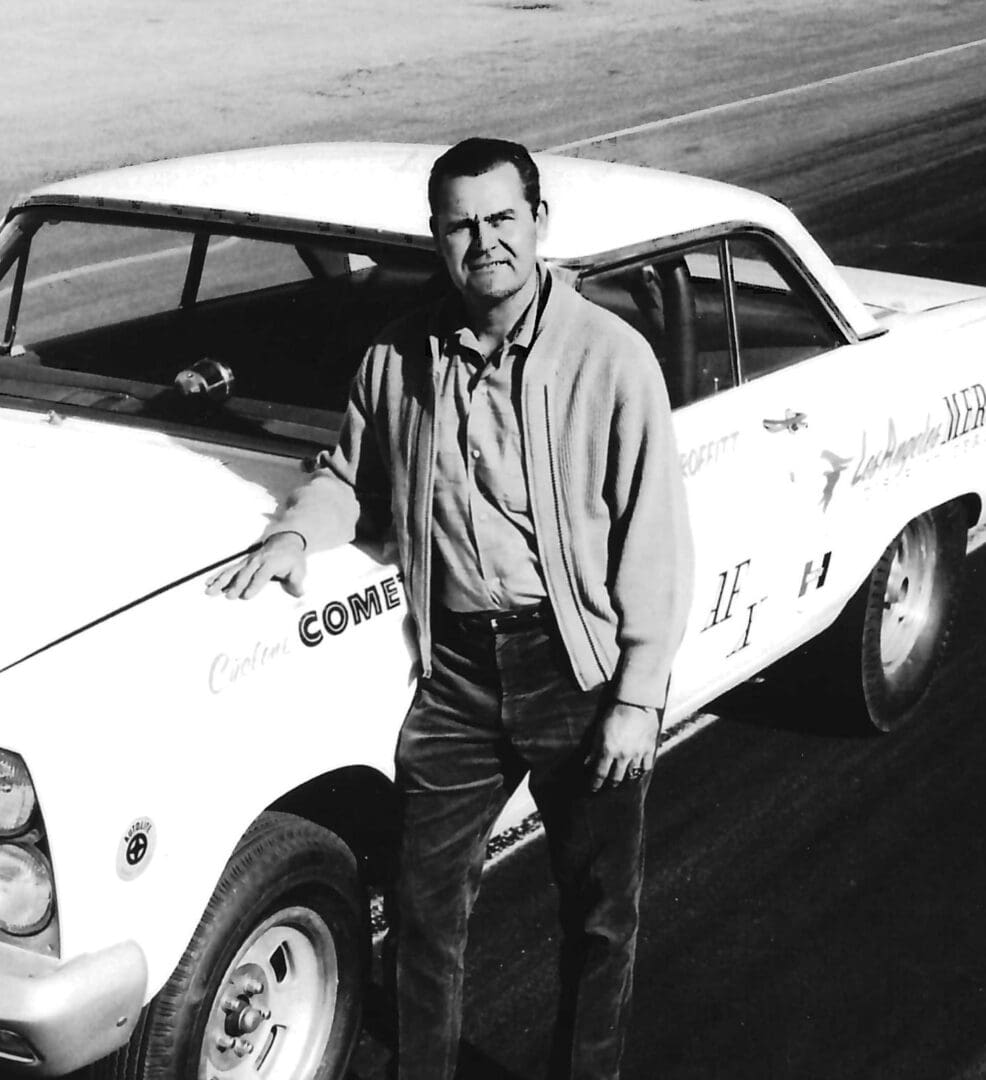 Hayden Proffitt
 started his racing career at the age of 20 by winning the Texas State Championship in oval track racing but…
Read bio
Hayden Proffitt
Hayden Proffitt started his racing career at the age of 20 by winning the Texas State Championship in oval track racing but…
Read bio
 Class of 2009Presented by ACES
Hayden Proffitt
Hayden Proffitt started his racing career at the age of 20 by winning the Texas State Championship in oval track racing but in 1952 he moved to California and into the drag racing world under the direction of CJ Hart at Santa Ana Dragstrip at the wheel of a stock Chevrolet. By 1958 he had won races and set records with a 1955 Delray and a Corvette and formed a group called the “Proffitteers” that competed with five Chevrolets. Not satisfied with the performance of the stock vehicles, he built a B/Gas, 1937 Chevy coupe powered by an injected McCullough blown Chevy that ran consistent 12 second ET’s.
In 1959 he moved into the dragster classes with a supercharged Chevy powered B/Dragster setting top speed records in both NHRA and AHRA competition and garnering the attention of Mickey Thompson. 1960 saw Hayden join the Mickey Thompson Pontiac racing team and in 1961 he won three different classes at the NHRA Winternationals in Pomona California. In 1962 he won an unprecedented four classes at the Pomona Winternationals after which he decided to go back to owning his own team and built a 409 Chevy Bel Air with which he captured that year’s National Stock Eliminator Championship. On his way to winning the stock eliminator championship, Hayden won the Detroit World Championship event, the Half Moon Bay Championship event, and the NHRA Indy Nationals where he outran the Ramchargers in the final race.
Heating continued his winning ways in a Chevy in 1963 until Chevrolet chose to drop out of racing so he raced a Plymouth for a couple of years and in 1965 he switched again, this time to a SOHC 427 Mercury Comet. Moving up in class again in 1966, Hayden competed in a Chevy powered Corvair funny car. With the Corvair, Hayden won an outstanding 90% of the races he ran and took home eight state championships. After the Corvair, Hayden took on the job of helping AMC carve a place in drag racing then in 1970 he turned his efforts to building engines for drag cars and boats.
Hidden returned to the dragstrip in 1977 in the USA 1 Rocket 1 dragster. Like his past efforts, Hayden wasted no time in pushing the USA Rocket 1 to new records accumulating a total of 15 state land speed records and 25 track records in the US and Canada while recording a best ET of 4.35 seconds and a top speed of 348 MPH. In 1980 Hayden added a second car to the team, this one a J-34 powered jet dragster and continued touring with his son, Brad, for several seasons before finally deciding after 35 years it was time to retire.
-
2009
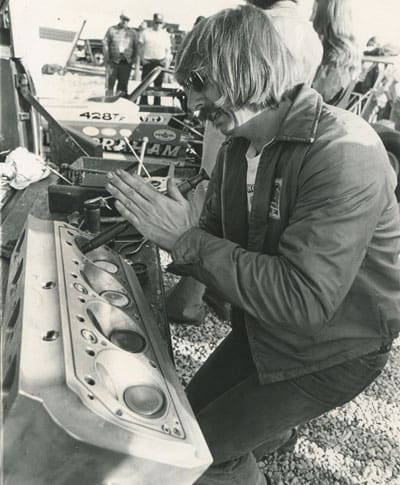 Marvin Graham
Marvin “Who” Graham started racing while in high school, competing against other high schools with cars built in their auto shops. Starting…
Read bio
Class of 2009Presented by ACES
Marvin Graham
Marvin “Who” Graham started racing while in high school, competing against other high schools with cars built in their auto shops. Starting…
Read bio
Class of 2009Presented by ACESMarvin Graham
Marvin “Who” Graham started racing while in high school, competing against other high schools with cars built in their auto shops. Starting with a 1950 Ford, Marvin soon moved into a 1953 Ford custom powered by a 1955 Buick engine followed next with another Ford, this time a 1958 with a 430 cubic inch Lincoln engine. His first dragster efforts were in a 289 Ford power chassis and a set of injectors he and his partner Leon Groom made themselves. The duo followed the injected car with a blown 392 Chrysler powered top gas dragster they successfully campaigned throughout Oklahoma, Kansas, and Texas. In a “dare to be different” mode the pair built a twin 289 Ford engine powered top fuel dragster but have admitted it broke as often as it ran.
In the early 1970s Marvin moved to a more conventional front motor dragster with a 392 Chrysler for power. Later he drove Bob Dumont’s front engine AA/FD followed by a new rear engine car. In 1973 Leon decided to sell Marvin his share of the team and Marvin set out on his own debuting the car at the IHRA All American event in Bristol Tennessee where he was runner-up. Due to his commitment of running his television repair business, he was participating on a strictly part-time basis and with his racing career limited to competing “locally” in Texas, Oklahoma, Kansas, and occasionally Louisiana he was virtually unknown when he entered the national scene in 1974. Marvin switch to a Donovan powerplant in 1973 and with the help of his pal Mike Kuhl, Marvin was able to start running very strong. His first NHRA national event was in 1973 at Englishtown New Jersey where he promptly qualified his car. Even though with Kuhl’s help the car was running strong, Marvin still had to be coaxed into participating at the NHRA US Nationals in Indy that year by his friends/competitors Carl Olsen and Mike Kuhl. The two went so far as to carry the engine parts Marvin needed from California to Tulsa on their way to Indy, made sure the engine was built in time for Marvin to get to Indy. As a result of this Marvin was able to notch his first-ever national event win. Later that year he won the AHRA World Finals and decided to go full-time racing. 1975 was a very good year for Marvin; he won the AHRA Winternationals in Phoenix, the NHRA Springnationals in Columbus, was runner-up at the Seattle NHRA Fallnationals, and was third in the championship driver standings.
Marvin was runner-up at the NHRA Cajun Nationals and defended his PDA title in 1976 but after making some serious engine changes, he ran into a dry spell. Marvin’s luck turned around in 1980 and he set a new ET record at 5.68 seconds, while on his way to winning the Brainerd Minnesota Championship event, the Grand Nationals Champion event, becoming the Division 6 Top Fuel Champion, and placing fourth and in NHRA drivers’ points race. 1981 was also very good year for Marvin during which he won the Grand Nationals Championship event, the IHRA Pro-Am Nationals, the IHRA season final race, the Bowling Green points race, the Medford Oregon points race, was the runner-up at the NHRA Pomona Winternationals, and finished fourth in the NHRA driver point standings.
-
2009
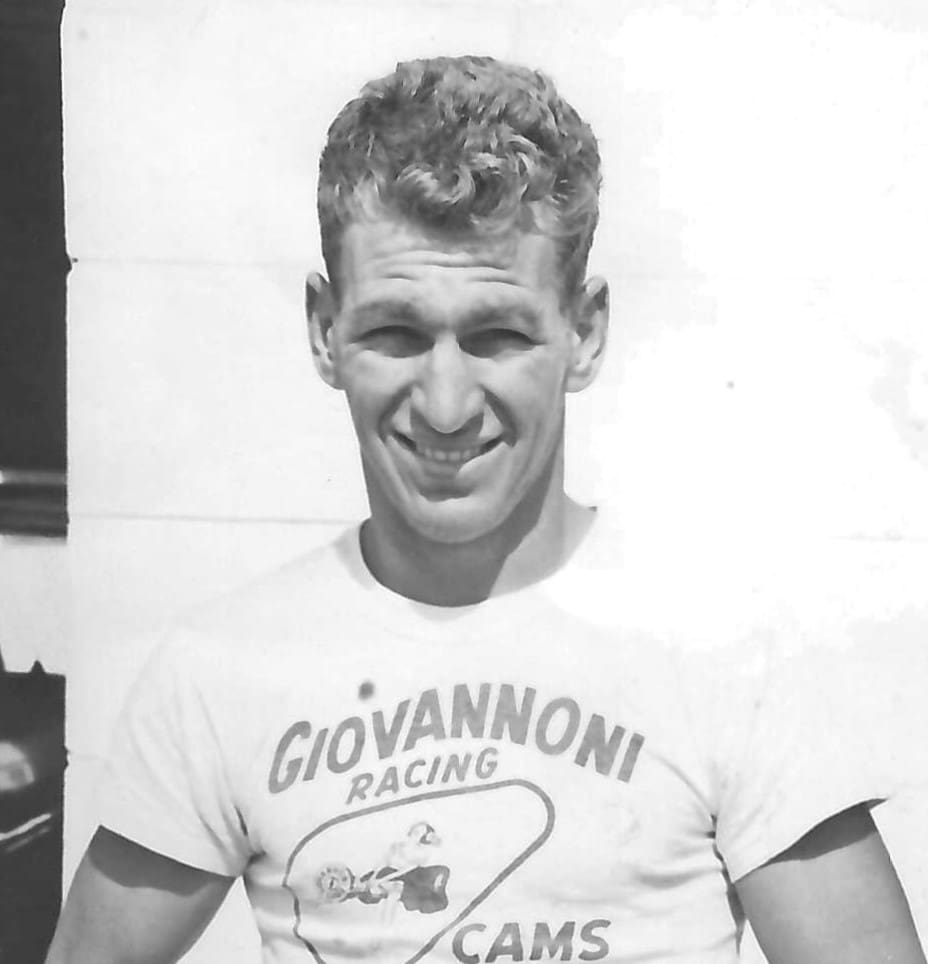 Ed Garlits
1933–2020 Ed Garlits entered the world as a “blue” baby which may be the reason he has been successful in the racing world…
Read bio
Class of 2009Presented by ACES
Ed Garlits
1933–2020 Ed Garlits entered the world as a “blue” baby which may be the reason he has been successful in the racing world…
Read bio
Class of 2009Presented by ACESEd Garlits
Ed Garlits entered the world as a “blue” baby which may be the reason he has been successful in the racing world because he learned to be a fighter early on. Ed didn’t get started racing until after he was discharged from the Marine Corps in 1952 but jumped into the competition world that year in a Buick nail head powered 1932 cutdown Ford roadster. That ride lasted for short time but wanted to go faster, Ed moved the Buick engine from the roadster and installed it in a C/gas dragster that he and his brother Don put together at Don’s garage in Tampa and Kristin the “Banana”. The Banana’s first outing was a little track outside Miami Florida where he promptly won the Florida State championship event.
Always looking to go quicker and faster, in 1957 the duo built a new stronger chassis that was dubbed Swamp Rat Too A that was powered at different times by the Buick, and unblown Chrysler, an unblown small block Chevy, and finally a blown Chrysler. This was the first of a long line of Swamp Rat dragsters the brothers competed with. The next chassis they put together was to become Swamp Rat Too B and while Ed drove it to another Florida State Championship, they believed it was too heavy so it was sold and replaced with a Swamp Rat Too C. In 1961, driving Swamp Rat ”C” Ed won the AHRA National Gas Championship and was just edged out of overall top eliminator at the AHRA Green Valley event by a top fuel dragster.
About this time Ed had to choose between driving race cars and being married so he chose to sell the car and retired. The man who purchased the car, Bob Hamilton, went on to win the Green Valley event the very next year. During his hiatus from racing in 1959 through 1964, Ed took over running the garage in Tampa so brother Don could continue racing on a full-time basis and not have to worry about the “shop back home”. Unfortunately, even after quitting his driving career, Ed wound up divorced and while he didn’t resume driving, he did jump back into racing as crew chief for the Garlits Team in 1974. Ed was crew chief for the team through 1978 and the results of their efforts is now a part of drag racing history. In 1992 Ed return to racing world again as the clutch man for brother Don’s Mono-Wing cars and continued his involvement with the team for another three years before retiring from racing again. Mostly as a hobby, Ed did repair work for a few of his friends and spent most of his time catching up on fishing.
-
2009
 Steve Carbone
1944–2005 Steve Carbone was typical of most racer; he had a lifelong love affair with cars and racing, particularly drag racing. As a…
Read bio
Steve Carbone
1944–2005 Steve Carbone was typical of most racer; he had a lifelong love affair with cars and racing, particularly drag racing. As a…
Read bio
 Class of 2009Presented by ACES
Steve Carbone
Steve Carbone was typical of most racer; he had a lifelong love affair with cars and racing, particularly drag racing. As a teenager in Downey California Steve started out as a spectator but before long was competing at the local track in his 1957 Corvette. Next, he competed in a C/Gas 1957 Chevrolet followed by him becoming a crew member on Dave McKenzie’s twin Chevy engine powered top gas dragster. In 1963 Steve accepted an offer from the Porsche Brothers to drive their top gas dragster making his first driving effort in a dragster at Lions Drag Strip.
In 1964 he teamed with chassis builder George Britting on what started out to be a JR fuel car but when the Porsche Brothers offered him there blown Chrysler it soon turned into a top fuel dragster. Steve estimated that between 1966 in 1967 he piloted around 26 different top fuel dragsters but it was in mid-1967 when he notched his first top fuel when driving Jon Bateman’s AA/FD at the Hot Rod Magazine meet at Riverside California. In 1968 Steve set a new track record on his way to winning the NHRA Pro Circuit Race in Amarillo Texas. In 1969 he won the NHRA World Finals in Larry Huff’s AA/FD and the same year one the AHRA World Finals and Bob Creitz AA/FD to become one of the few to win both events in the same year and probably the only one to do so in two different cars. In 1969 Steve also took home the NHRA World Championship crown, won the Popular Hot Rodding Magazine event at Martin Michigan, set top time at the AHRA Points Final in Tulsa and was runner-up to Larry Dixon at the Orange County International Raceway PDA event.
He toured Australia in Larry Huff’s AA/FD in 1970 posting an impressive win streak down under. It was at the 1971 US Nationals in Indianapolis that Steve, driving his own car, really entered his name into drag racing history books. This is the now famous race where he and Don Garlits entered into a staging dual that lasted for something like two minutes before leaving the starting line. Don spun the tires at the start and Steve crossed the finish line first recording what was his most memorable win. Steve continued to campaign his front motor AA/FD until 1972 when he won the AHRA Winternationals in Phoenix. Shortly after that, he debuted a new rear motor AA/FD but in 1973 he decided it was time to quit driving. Steve had moved to Tulsa in 1970 and in 1973 opened his Tulsa base Steve Carbone Racing Engines where he built engines for everything from hot rods to boats to sprint cars. In 2001 Zach Chappell was running engines built by Steve when he won that year’s American Sprint Car Series.
In 1968 Steve received the Faces in the Crowd award from Sports Illustrated Magazine, was director of the National Championship Racing Association in 1987, and in 1992 he purchased Port City Raceway. It should also be noted that Steve was the last person to win any NHRA national event in a front motor top fuel dragster when he won the 1969 World Championship and the last to do so at and AHRA national event when he won its 1972 Winternationals in Phoenix. Steve did return to the driver seat one more season when he entered the NHRA Cacklefest events in 2005 at both Bakersfield and Bowling Green in the restored Creitz & Donovan front motor dragster.
Class of 2008
5 inductees-
2008
Founders Award
 Jim McFarland
 is a man who has been a true ambassador for the world of drag racing and high performance. Like most…
Read bio
Jim McFarland
Jim McFarland is a man who has been a true ambassador for the world of drag racing and high performance. Like most…
Read bio
 Class of 2008 · Founders AwardPresented by Mopar
Jim McFarland
Jim McFarland is a man who has been a true ambassador for the world of drag racing and high performance. Like most drag racers and industry leaders, Jim began his career as a participating enthusiast, building and racing his own cars mainly in the various stock classes. Unlike a lot of the “seat of the pants” racers of the early days, Jim was also a graduate automotive engineer, and a lot of the early innovations for the stock classes came as a result of Jim’s engineering background. Also like a lot of the early pioneers of the sport, Jim did not confine his participation in racing to drag strips. Over the years he has participated in oval track racing, the dry lakes, and almost every type of motorsports available. One of the better-known race teams that Jim was involved with as a driver was Sox & Martin. He not only drove for them in competition, but he also did a lot of the testing they were involved in.
Fortunately for a great number of enthusiasts, Jim is more than a racer; he is also a writer, an engineer/inventor, and an ideal person. As an engineer, Jim has been instrumental in developing some of the best intake manifold and fuel injection systems available. He has helped develop various cam and valve train combinations that have not only increased performance but also provided the user with greater engine life and improved fuel economy. He also developed some very sophisticated ignition parts and was involved in developing computer chips for increased performance in the new generation vehicles. Not only has he been a part of developing so many parts and pieces for increasing performance, he has also been instrumental in generating acceptance for these parts by the federal and state authorities responsible for policing emissions.
As a writer, Jim was in in a position to explain in detail many of the parts and systems he was involved in developing through articles in nearly all the of the enthusiast publications. Jim’s editorial pieces have appeared in just about every major automotive enthusiast magazine on the newsstands from Hot Rod and Car Craft to Popular Hot Rod and Motor Trend. He is the person who was responsible for introducing much of the “performance iron” from Detroit to the budding racers throughout the US in the early muscle car days. Jim drove and tested these cars and then made them come to life on the pages of the magazines. He did the same for hundreds a new parts and pieces that were being produced by both the OEM’s and the performance aftermarket manufacturers. Jim was one of the best known and accepted editors of the time as the guy who took the parts, installed them keeping detailed photos, descriptions on how to properly use them, and then put the information on paper so the reader/enthusiast could know and understand what was new, what it did, how to install it and where to get it. There are a lot of racers, car builders, and show enthusiasts who would have found notoriety and success for the exposure Jim afforded them through his many articles in the magazines as well as from the information they obtained from his articles and their personal contact with him.
One of the best examples of how the fans and readers felt about Jim and his racing accomplishments is that in 1975 the readers of Car Craft Magazine voted him into the Car Craft All-Star Drag Racing Team. While he retired from driving some years back, Jim remained active writing for various publications, spreading the word that performance and racing are alive, well, and a lot of fun. He is also actively involved in SEMA in assisting its members to understand how to comply with many state and federal emissions regulations and to help educate the state and federal agency leaders on the performance industry and its efforts to conform to their rules.
-
2008
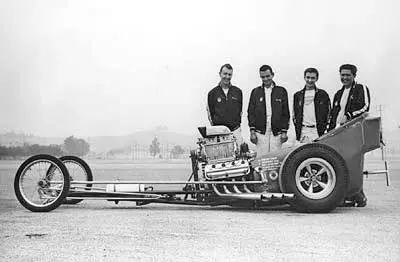 The Frantic Four
Chance meetings of dedicated enthusiasts that resulted in a successful team effort abound in the annuals of drag racing. The history of…
Read bio
Class of 2008Presented by Mopar
The Frantic Four
Chance meetings of dedicated enthusiasts that resulted in a successful team effort abound in the annuals of drag racing. The history of…
Read bio
Class of 2008Presented by MoparThe Frantic Four
Chance meetings of dedicated enthusiasts that resulted in a successful team effort abound in the annuals of drag racing. The history of the “Frantic Four” is no exception, but the group successes reflect virtually unmatched enthusiasm, perseverance, and commitment to what was then a fledgling sport. In this context the late 1950’s when each of the team members took an interest in quarter-mile competition. An overview reveals a shared eagerness to be a part of that which was destined to become a national automotive sport.
Dennis Holding attended his first drag race at Pomona in 1956. Soon after that fortuitous visit, Dennis joined the Pomona Valley Timing Association, operators of the now famous drag strip. Dennis served in a variety of ways and occasionally entered his 1951 Chevy sedan in competition. Jim Fox at the time was competing in a 1956 Ford pickup at the Pomona track; in 1958 he stepped up to a 364 cubic inch Cadillac powered gas dragster. About a year later Fox purchased a rear engine roadster, fitted it with a 331 cubic inch Chrysler, and campaigned the entry in 1959 and 1960.
It was in 1961 that Fox and Holding teamed up with Bill Adair to campaign the first of what was to be a series of dragsters. The ttio’s effort in the first year gained the number nine spot on the coveted Drag News “Top Ten” list; soon after Chuck Branham took the driver seat. A year later Branham suffered fatal burns driving another car. The shocking development resulted in Fox and Holding taking time off, and building engines for other competitors.
Meanwhile, Norma Weekly and Ron Rivero, in typical fashion of the era, were street racing, but they, too, discovered the Pomona drag strip; both competed with their Pontiac street cars. In 1960 Weekly and Rivero teamed up to campaign a Bantam coupe with Bob Sidebotham driving; the team eventually graduated into the nitro burning class. The coupe was an enjoyable and satisfying venture, but the newly formed team soon moved up to a 392 Chrysler powered K-88 nitro dragster, followed by a Rod Peppmuller dragster using the same 392 Chrysler. It was in 1963 Weekly and Rivero had their dragster book for a match race to attempt the Drag News number three position, but they needed help. Fox and Holding had a fresh engine (but no car), so the foursome put together a one-time deal. They lost the contest to Don Garlits, but the occassion turned into a three-year partnership. The team was aptly named the “frantic four”.
1963 was a banner period for the new team with Norm Weekly driving, resulting in impressive win/loss record: the “Four” one six of nine fuel races held at Pomona. Many wins were chalked up at Fontana including a rare defeat on Don Prudhomme in a challenging contest. The “Frantic Four” also campaigned the OCMP owned 392 Chrysler car and held spots on the Drag News “Standard 1320 Top Ten” list with both entries during 1963. Their victories from San Diego to Seattle resulted in widespread publicity, including magazine covers (Car Craft, Hot Rod, and Drag Racing), and appearance in the “Beach Blanket Bingo” movie and on a Dick Dale record album cover. Ron Rivero was drafted into military service in 1963, but the three remaining team members continued to race at every opportunity under the “Frantic Four” banner.
The publicity attracted the attention of Eastern track operators, resulting in the “Frantic Four” touring the US throughout 1964. They match raced the likes of Don Garlits, Tommy Ivo, Chris Karamesines, Connie Kalitta, and a host of local favorites. They set the track record and fastest speed recorded at an NHRA event in 1964: The Airline Auto sponsored entry in the Nationals achieved a speed of 202.24 MPH with second lowest elapsed time.
In 1965 the threesome again and toured nationally with a two-car operation, another first for the Pomona California based team. Backed by Chrysler, the “Frantic Four”, along with the “Ramchargers” and Don Garlits, campaigned the new 426 Hemi, driven by Norm Weekly. The second car was a Fox & Holding owned Woody Gilmore car powered by their 354 Chrysler and driven by Ron Goodsell on the East Coast.
At the end of the 1965 season, Eeekly and Holding left the team. From 1967 to 1971 Norm drove the “Beachcomber” dragster and Chicago based funny cars with John Hogan as tuner, driving a funny car owned by “the Greek”, Karamesines, and the Mr. Norm Dodge, as well as driving for Doug’s Headers and the “Frantic Ford”. Holding began his successful career as one of the first manufacturer’s rep for the emerging speed equipment industry.
In the spring of 1966, Rivero and Fox sold the dragster to K&G Speech Shop but remained a part of the new team: Ron driving, Jim wrenching. In 1964 K&G switch to the Frantic Ford Mustang funny car; Jim continued as the crew chief, and with Ron as the driver they were crowned Drag Racing Fuel Champion in 1967; won the 1968 US Fuel & Gas Championships at Bakersfield California; and Jim Fox was named P.A. Sturtevant Mechanic of the Year in 1967. It was in 1970 that Ron retired; Jim bought the entire operation and continued to racing with different drivers until he retired in 1977.
The “Frantic Four” team, both as a group and as individuals, achieved many first. Among the more notable they were the first two car team in 1964, and maintain the earliest two-car pro operation in 1965. The “Frantic Four” remain on the Drag News “Top Ten Fuel Dragster” list longer than any other team and in 1966 at the Hawaii land speed record at 226.55 MPH. The various achievements earned extensive publicity in magazines and newspapers nationwide.
-
2008
 Dave Wallace Jr.
 pretty much grew up with drag racing as a second home for him. His dad, David Sr., work at…
Read bio
Dave Wallace Jr.
Dave Wallace Jr. pretty much grew up with drag racing as a second home for him. His dad, David Sr., work at…
Read bio
 Class of 2008Presented by Mopar
Dave Wallace Jr.
Dave Wallace Jr. pretty much grew up with drag racing as a second home for him. His dad, David Sr., work at San Fernando Raceway, and Jr. followed him around wherever he went, learning what dad did. By the age of 11, Jr. was utilized by manager Harry Hibler to write and pass out time slips, tend the hot- car pit gate, and generally make himself useful.
From the very beginning of his association with the sport, Dave wanted to be a track reporter, like his dad. The big day arrived when at the age of 14, Dave Jr. was allowed to try his hand at writing the results of the day for the Drag News story-on Father’s Day 1964. Dave did such a good job that he was told to learn to type, and the job would be his, complete with a salary of five dollars per week. Before the end of the year, the weekly byline from San Fernando Raceway contain the immortal words “by Dave Wallace Jr”.
In the November 1965 issue of Modern Rod Magazine, Dave had his first magazine feature story appear in print. In 1968 Dave replaced his journalistic hero, “Digger” Ralph Guldahl, as the weekly feature writer for Lions Drag Strip. In 1969 Uncle Sam saw fit to draft young Dave, so his weekly byline disappeared until 1971, when his first feature appeared in Hot Rod Magazine. After a two-year stint as Publicity Director for Orange County International Raceway, Dave return to the newspaper field as Editor of Drag News from 1975 to 1977.
In the spring of 1977, Dave was able to fulfill a lifelong ambition by joining the staff of Hot Rod Magazine as Feature Editor. Over the next three years Dave put together a series of great editorial packages, including the industry’s first series devoted to governmental threats. In 1980 Dave took the plunge from full-time editor of Hot Rod to launch his career as a freelance writer/photographer. Dave’s words and photos have since been published by virtually every performance automotive title in the US, plus European and Australian magazines. Not limiting himself to just to the monthly titles, Dave also produced three drag racing history books for Petersen Publishing in the years 1981-1983. The success of these books led Petersen publishing to contract with Dave to produce Drag Racing Magazine, which evolved into a monthly title.
In 1988 Dave opened his own advertising agency for motor sports manufacturers, and in 1994 he added the division for retailing hot rod collectibles. Though officially semi-retired from photojournalism Dave remained devoted to telling the story of drag racing, and his byline continued to appear above historical articles in print and online productions.
-
2008
 Ken Veney
 didn’t begin seriously drag racing until he was in his early 30s, though he had been a “car guy” all…
Read bio
Class of 2008Presented by Mopar
Ken Veney
Ken Veney didn’t begin seriously drag racing until he was in his early 30s, though he had been a “car guy” all…
Read bio
Class of 2008Presented by MoparKen Veney
Ken Veney didn’t begin seriously drag racing until he was in his early 30s, though he had been a “car guy” all his life, beginning with a Model A coupe that he bought when he was 13 and immediately chopped off the top. His first “real” car was a 1954 Ford two-door that he bought at the age of 16, in 1956. He swapped in a 312 cubic inch Mercury flathead, replaced it with what would become his prized possession, a 1957 Pontiac, that he raced and street raced. Still a teenager, he left his native Ohio for Southern California and found work at Lee’s Speed Shop doing engine conversions. A few years later, Ken was in the business for himself with a Goodyear Tire and Muffler shop in Redondo Beach, California, where he became friends with another racer on his way up, Dale Armstrong.
In 1970, Ken began a driving career that would last for more than 15 years with an injected gas funny car called the “Smog-Town Hustler” that he campaigned with friend Bud Bailey. In 1971, Ken got his own car, a Firebird that he bought from Gordon Mineo been named “Dirty Bird”. The following year, he built his first car, a state of the art, solid amount rear in Vega dubbed “Veney’s Vega” that led to probably the best stretch of his career. Running at Orange County, Lions, and Irwindale, he won every round of every race in 1972, including the world-famous “Last Drag Race” at Lions.
In 1978, he was back with another funny car that he built almost entirely himself (including the Dodge Challenger body) at friend Kenny Cox’s shop. That summer, he launched the billet cylinder head industry with a pair that he put on his car and won with the first time out. The following year, he lowered the national record to 6.50 ET and qualified number one, more than all other drivers combined. Tired of getting beat by dragsters in the late rounds because he kept losing traction, he got a dragster for 1980 and won the NHRA World Championship.
When NHRA formed Pro Comp a new category that pitted injected nitro and blown alcohol funny cars and dragsters against one another, Ken was one of the early stars. He reset the national record 11 times from 1973 to 1979 and won Car Craft Magazine Pro Comp Driver of the Year award in 1974, the first of his six Car Craft awards over the next 25 years, including the prestigious Man of the Year award in 1976. Ken won his first NHRA national event, the Summernationals in Englishtown New Jersey, in 1975. In 1976, the finest year of his career, Ken won 16 national events-more than all other drivers combined. In 1977, the lifelong Pontiac fanatic built a 351 Cleveland Ford-powered dragster and won the Summernationals for the third year in a row and in a third different car. Ken won 13 national events in 23 final-round appearances as an alcohol funny car and dragster driver in the 1970s and 1980s, and another 13 in 23 final-round appearances as a top fuel crew chief in the 1980s, 1990s, and 2000s. He was the Pro Comp World Champion in 1980 and one national events in all three major drag racing sanctioning bodies-NHRA, AHRA, and IHRA.
When pro comp was split into alcohol funny cars and dragsters in 1981, can return to his first love, funny cars, and won the Gatornationals, Summernationals, and in what he thought was his last race on alcohol, the US Nationals. The next year, he ran his first fuel car a1982 Firebird, and set the NHRA national speed record his third timeout, at Indy. He made the Top 10 in 1983 but, racing without a major sponsor, again was forced to the sidelines. Ken came back one last time in late 1984 with an alcohol funny car and posted three runner-up’s including one at the US Nationals, and a semifinal finish in four outings. In 1985, his last year as a driver, he won the Gatornationals for the third of six times in his career and for the last time as a driver. When he retired from driving in 1985, Ken was tied as the winningest sportsman driver of all time and was the seventh winningest driver overall and had won an NHRA national event with almost every car he ever drove. He was also unique in today’s world of specialist and that he built his own chassis, made his own bodies, and of course built all of his own engines. Driven out of the sport 1985 by the skyrocketing expenses, he returned as a fuel tuner three years later and won his first race on the job, the 1988 Keystone Nationals, with driver Darrell Gwynn. “The Kid”, as Darrell then was known, won the US Nationals in 1989 and lowered the national record to 4.98 ET, and one the following race with a new record of 4.95 ET. The team won twice in four starts that year, including the World Finals, and had one of their best seasons ever in 1989, winning three times in five final-round appearances. Ken scored at least once with every top fuel driver for whom he served as crew chief-Darrell Gwynn (1988 to 1990), Frank Hawley (1990 to 1991), Michael Brotherton (1992), and Mike Dunn (1996 to 2001). The last years of Ken’s racing career was spent with Dunn, whose best season was 1999, when they made the three quickest runs in drag racing history, won four times, and led the points for most of the year. Dunn made the three fastest runs of 2000-all over 320 MPH-and Ken retired for good in 2001 after two more wins and five more finals.
-
2008
 Jon “Thunderlungs” Lundberg
Jon Lundberg was seeking his place in the world. His father was a biplane flying pioneer aviator. Jon’s grandfather, a Swedish immigrant,…
Read bio
Jon “Thunderlungs” Lundberg
Jon Lundberg was seeking his place in the world. His father was a biplane flying pioneer aviator. Jon’s grandfather, a Swedish immigrant,…
Read bio
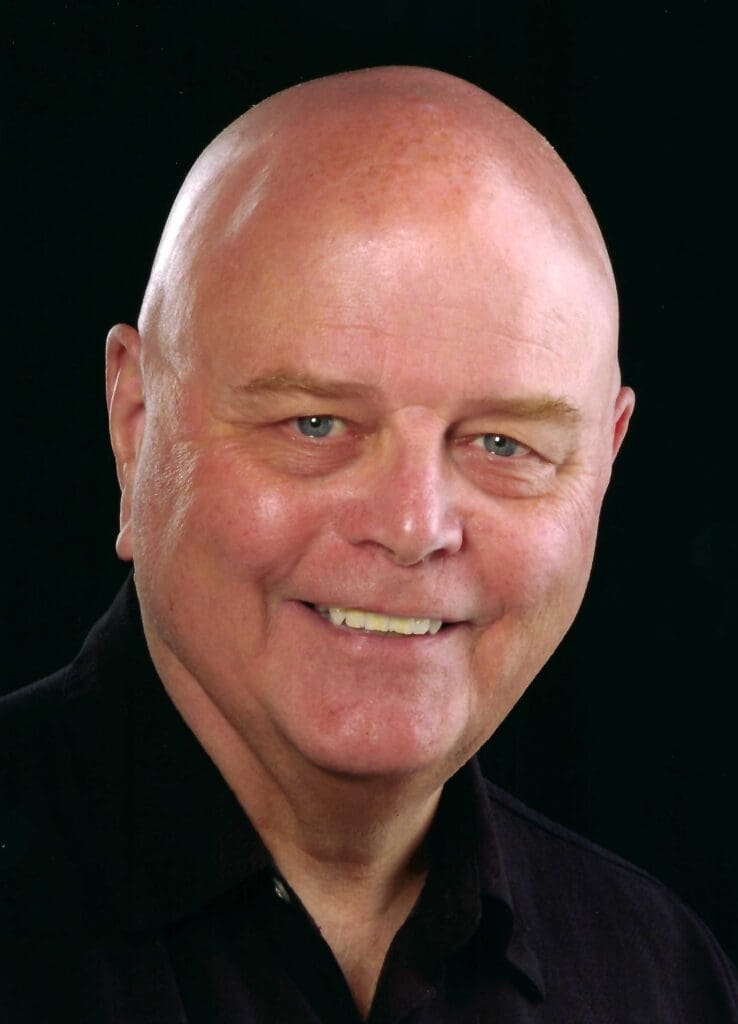 Class of 2008Presented by Mopar
Jon “Thunderlungs” Lundberg
Jon Lundberg was seeking his place in the world. His father was a biplane flying pioneer aviator. Jon’s grandfather, a Swedish immigrant, started the families manufacturing company and lived the American dream.
Lundberg first laid eyes on eight “Deuce Coupe” hot rod in 1949. He witnessed a primitive drag racing event one year later. Those occurrences transformed an impressionable teenager into a lifelong racing enthusiast and car guy.
Jon’s accomplishments include the following:
1951-1955- Built three cars and raced in early events (1929 A Roadster-pickup, 1934 Ford Victoria, 1950 Olds Coupe).
1955- Announced his first race at yet to be paved Central Michigan Dragway and completed the day standing on a hay wagon, announcing through a bullhorn.
1961- First on the album recognition as event announcer for 33-1/3 RPM “long play” vinyl record of drag racing.
1963- First national tour, announced AHRA Winternationals-and their complete event schedule-as well as the Smoker’s “March Meet” and eastern Drag News Invitational’s.
1964-1972- Successive national tours including as many as 42 separate weekend events of national, premier independent, and regional stature.
1965- First to voiceover the “pay-per-view” TV presentation of a drag race (AHRA Winternationals). First live event coverage presented simultaneously to attending fans, radio, and TV audiences. First magazine article featuring a drag racer announcer (Drag Racing Magazine-September). First weekly TV show on motorsports in the Midwest market (WK BB-TV, Detroit).
1966- First organized and prepared PA announcements for event sponsors.
1969- First to tour nationally with a package racing program (Coca-Cola Funny Car Cavalcade).
1972- First called “Thunderlungs” by Jeff Crowther (Candies & Hughes AA/FD) at Popular Hot Rodding Meet.
1972-1981- Awards banquet host for Car Craft Magazine, ISCA, NHRA Division III, UDRA, and SEMA.
1972-1973- Announced the first two PRO National Challenge events.
1988- First to announce under five second (4.99) ET top fuel dragster run by Eddie Hill at Texas Motorplex; also voiced first under seven ET and over 200 MPH pass for Pro Modified cars at Bristol Tennessee.
2001- Retired as event announcer having appeared at 130 N. American drag strips during a 46 to career.Among all these accomplishments Jon announced national and regional events for every sanctioning body to include: AHRA, ATAA, IHRA, NASCAR, NHRA, UDRA, and VRA. Some of these sanctioning bodies even gave Jon multi-year contracts to announce that major and independent events.
Jon resides in Arizona with his wife Sandra. He enjoys an extended family which includes seven children 13 grandchildren and great-grandchildren. Jon studied with the American Society of Appraisers to achieve certification as a Personal Property Appraiser for unique and exotic racing motor vehicles. Lundberg has written opinions of value for more than 200 such vehicles.
Class of 2007
11 inductees-
2007
 Kenny Bernstein
 started his fuel racing career in Texas and the southwest, first driving a number of front-motored Top Fuel dragsters for…
Read bio
Kenny Bernstein
Kenny Bernstein started his fuel racing career in Texas and the southwest, first driving a number of front-motored Top Fuel dragsters for…
Read bio
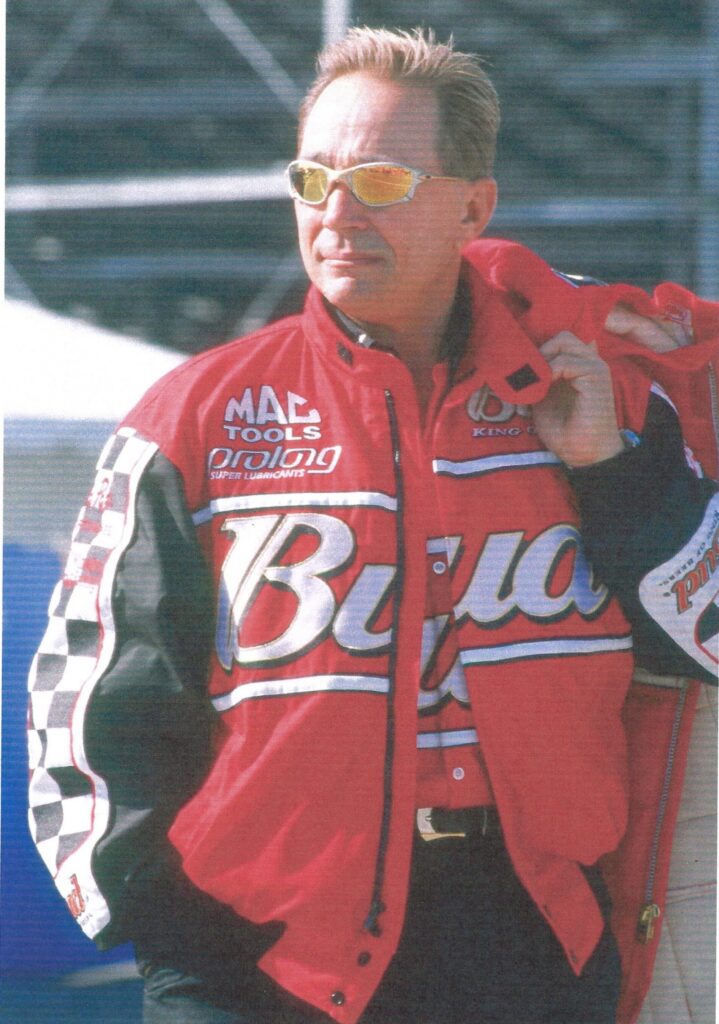 Class of 2007Presented by Mopar
Kenny Bernstein
Kenny Bernstein started his fuel racing career in Texas and the southwest, first driving a number of front-motored Top Fuel dragsters for other teams, including those owned by the Anderson brothers, Vance Hunt, the Carroll brothers, and Prentiss Cunningham. As an enthusiast and a businessman, Kenny soon realized that in order to accomplish what he wanted to accomplish, he needed to put together his own team, which he did, and set out a journey that led him to become one of drag racing's true legends.
Besides being well know for his performance on the track, Bernstein is admired for his business savvy. In the early days of his career, Kenny owned several restaurants and was working at overseeing them full time and at the same time trying to compete on the track with a pretty full schedule that included not only competing at the National Events but some match racing as well. It didn't take Bernstein very long to decide he couldn't achieve the goals he had in mind for his racing career if he continued with both ventures, so he sold the restaurants and concentrated on racing.
Since taking this initial step, he has successfully achieved his goal becoming one of the top racers in the world, accruing six NHRA world championships, four in Funny Car and two in Top Fuel, along with 69 national event victories. Most fans recognize Bernstein as the first NHRA driver to surpass the 300 miles-per-hour barrier, a feat he accomplished March 20, 1992, in Gainesville, Fla.
As a businessman, he is also known for his ability to provide his sponsors with the ongoing exposure they are looking for. Testimony to this is the fact that his contract with Budweiser, signed through 2009, will make the Bernstein/Budweiser 30-year sponsorship partnership the longest consecutive major team sponsorship in auto-sports history.
In the mid 1980s, Bernstein began to expand his motor sports portfolio. At one point he simultaneously preside over a NASCAR Winston Cup team, a sports marketing company, and an Indy Car team, and he partnered in King Racing Components, which marketed RacPak computers. He became the first and only team owner to field cars and win races in America's three largest motor sports series: NASCAR, NHRA and Indy Car. After years of crisscrossing the continent and traveling to races of every kind both here and overseas, Bernstein decided to scale back. In the mid 1990s, he sold his NASCAR and Indy Car teams to concentrate his first love, NHRA drag racing.
There's hardly a major NHRA award he hasn't won, and most he's won in multiples. He was named one of the top 10 drivers in NHRA's 50-year history, and was one of 12 nominees for the American Auto Racing Writers and Broadcaster Association for the Newsmaker of the Half-Century award. Other nominees included Mario Andretti, Dale Earnhardt, A.J. Foyt, Roger Penske, the France family, the Hulman-George family, John Force, Wally Parks, Jeff Gordan, Dan Gurney, and Richard Petty.
Bernstein retired at the end of the 2002 season, but climbed back into the cockpit of the Budweiser/Lucas Oil dragster when his son, Brandon, suffered season-ending back injuries in a first round accident in Englishtown, N.J. In 2003. Kenny won four of the last five races that season. After Brandon was healed enough to resume driving the dragster, Kenny again went into retirement. However, acknowledging that he was never comfortable at the racetrack outside the cockpit, Bernstein jumped at a Funny Car sponsorship opportunity that arose in the summer of 2006 with Monster Energy drinks. Bernstein surprised the motor sports community by announcing he would return in 2007 to campaign a Monster Energy/Lucas Oil Dodge Charge by Mopar. With his background, the new sponsor and his drive to win, he hopes to continue to add to his trophy collection and awards for years to come.
-
2007
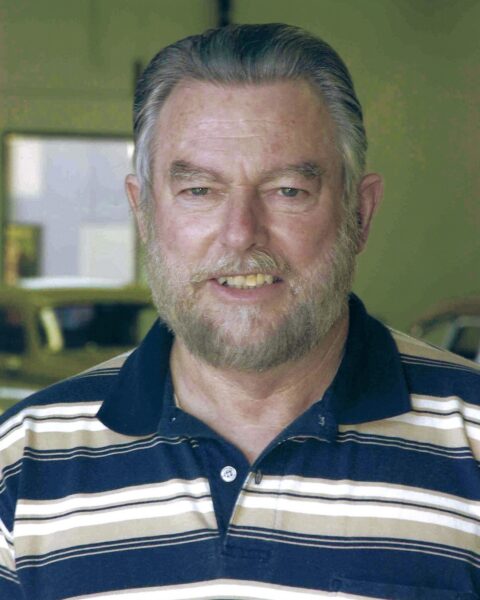 Frank Bradley
 is one of the first people to make a full-time living as a drag racer. His actual racing career spanned…
Read bio
Frank Bradley
Frank Bradley is one of the first people to make a full-time living as a drag racer. His actual racing career spanned…
Read bio
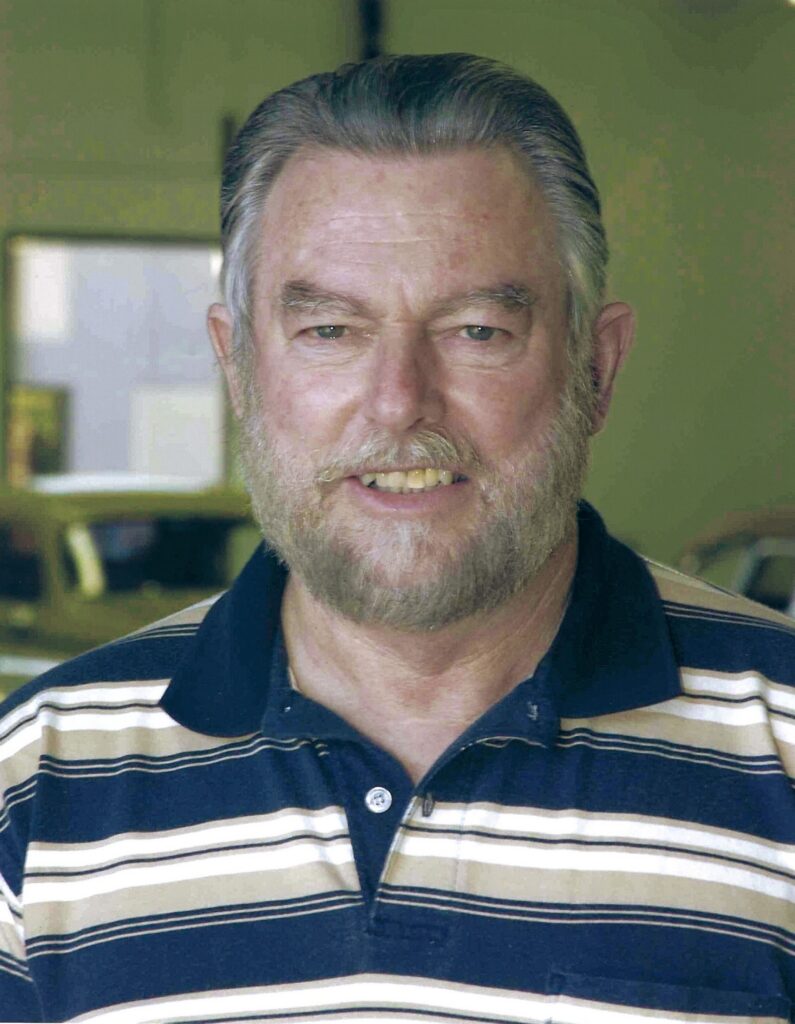 Class of 2007Presented by Mopar
Frank Bradley
Frank Bradley is one of the first people to make a full-time living as a drag racer. His actual racing career spanned 33 years and included being the guy turning the wrenches, driving the car and driving the hauler for himself to becoming one of the most sought after crew chiefs in the Top Fuel ranks. With one exception when he drove the Bailey Brothers Junior Fuel dragster, Frank's driving career was always at the wheel of Top Fuel dragster, his first ride coming in 1963 when he teamed up with his long-time friend Dennis Quinian to build their first car and continuing until the later part of 1991 when he decided to quit driving.
Frank's list of national event wins as a driver include his first time on the podium at the 1976 NHRA Winternationals at Pomona, wins at the 1984 NHRA Summernationals at Englishtown, the 1989 NHRAAutolite Nationals at Sonoma and 1991 NHRA Winternationals again. Mixed in with the NHRA event wins are three AHRA World Championship. Bradley is the only Top Fuel driver to win at least one NHRA race in the 1970s, '80s, '90s. He is also the only Top Fuel driver to earn membership in both Cragar 5-Second club and the Cragar 4-Second club. One of these things that make these accomplishments even more remarkable is they were done without any major sponsorship. One of the more memorable items from Frank's career other than his driving and tuning ability came in 1980 when he introduce his 18-wheel transporter complete with solar-heated hot tub on board.
As soon word got out that he was retiring as a driver, Bradley began receiving calls from teams all over the country to become their crew chief. Frank was crew chief for teams such as Brad and Shelly Anderson, Roger Primm, and several others, but one of his more rewarding stints came in when he joined Walt Austin Racing and quickly put Pat Austin in the NHRA record books and Slick 50 300 MPH club with a 303.64 run at Atlanta along with a string of impressive wins. With Del Worsham at the wheel of the Primm dragster, Frank was able to put another driver into the 300 MPH club, but probably the team he enjoyed being with the most was Jerry and Darrell Gwynn. Together they rang up and impressive string of event top speed and low ET runs along with a just-as-impressive string of event wins including three NHRA victories in 1995 alone.
In 1996 Frank retired from active drag racing completely, and has since becoming involved in simply enjoying life and playing his “toys”.
-
2007
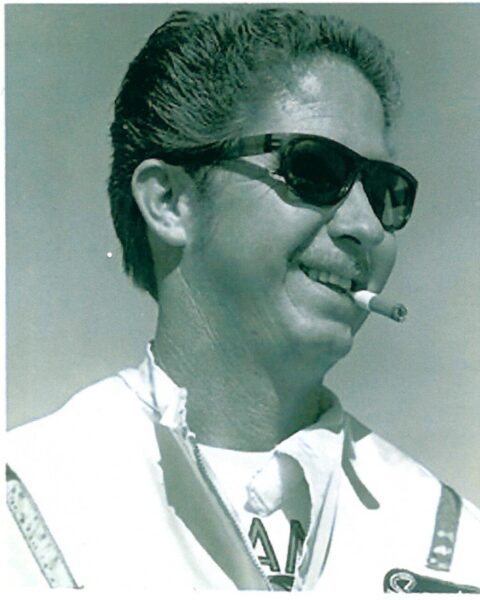 Don Hampton
Like most of the people involved in drag racing, Don Hampton started his involvement at an early age. Don began working in…
Read bio
Don Hampton
Like most of the people involved in drag racing, Don Hampton started his involvement at an early age. Don began working in…
Read bio
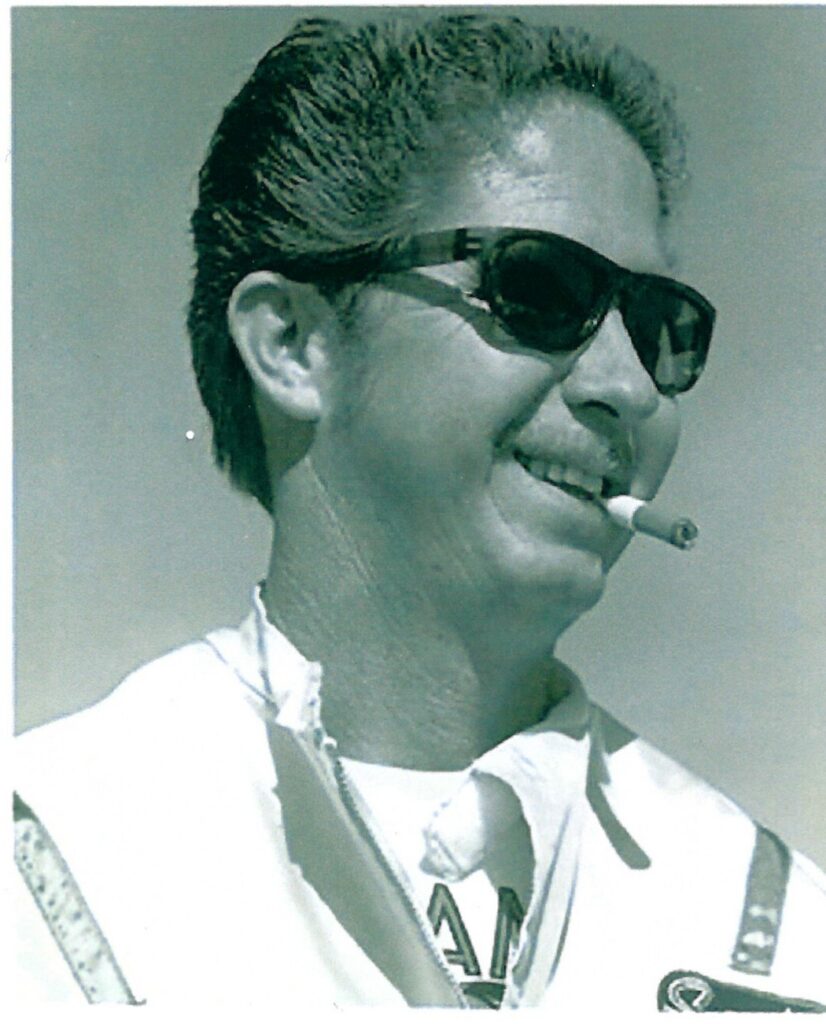 Class of 2007Presented by Mopar
Don Hampton
Like most of the people involved in drag racing, Don Hampton started his involvement at an early age. Don began working in his father's service station when he was 13 years old and immediately began saving his money to buy a car and the part it would need to make it go faster. By his sixteenth birthday he had purchased his first car, a '29 Ford Model A Roadster, and equipped it with a Cragar two-port cylinder- head-equipped for-banger. Shortly after his birthday he drove to the old Santa Ana Drag strip and began his racing career.
During the 1950s, Don gained recognition as a driver while competing in such vehicles as his '29 Roadster, a Ford flathead roadster, a rear engine Buick powered roadster, Chet Herbert's 354 Chrysler powered AA/Fuel dragster and Kenny Lindley's Miss Fire dragster, which he drove at the '59 NHRA Nationals in Detroit. Not limited to just being a driver, Don was also recognized as a designer and engineer, and 1957 he opened the doors on his current business, Hampton Blowers. Throughout the '50s, Don partnered with Eldon Dye and Kenny Lindley to build and compete in a variety of award-winning vehicles while designing and testing new mechanical innovations every opportunity he had.
During the '60s and '70s, Don continued to make a name for himself as a driver in various Top Fuel and Top Gas dragsters, but the two vehicles he is most remembered for at that time were the Bantam- bodied Competition coupe of Eldon Dye and the very unique and famous twin-engine Dye and Hampton “Too Bad' Fiat coupe. After successfully campaigning the coupe for a few years, Don made it even more unique by modifying it to fit a Corvette body and introduced racing fans to the only twin-engine Funny Car ever under the “American Band Stand” banner. It was also during this time period that he introduced the first after-marketing magnesium blower that was the forerunner of today's “super blowers”.
In 1970 Don won the NHRA Winternationals at Pomona in his own Top Gas dragster and later moved up to Top Fuel with his “Too Bad ll” dragster. Not content to just compete in drag racing, in 1973 Don built and drove a Mazda-powered coupe at Bonneville.
In 2006 Don was inducted into the California NHRA Hall of Fame with a Lifetime Achievement Award, and just to add to his excitement he drive Bucky Austin's restored “Eagle Electric' Top Fuel car in the Cacklefest.
Don retired from active drag racing in 1984, but he continues to produce his famous Hampton Blowers for everything from street machines and dragsters to drag boats, and will very soon celebrate his 50th year in business.
-
2007
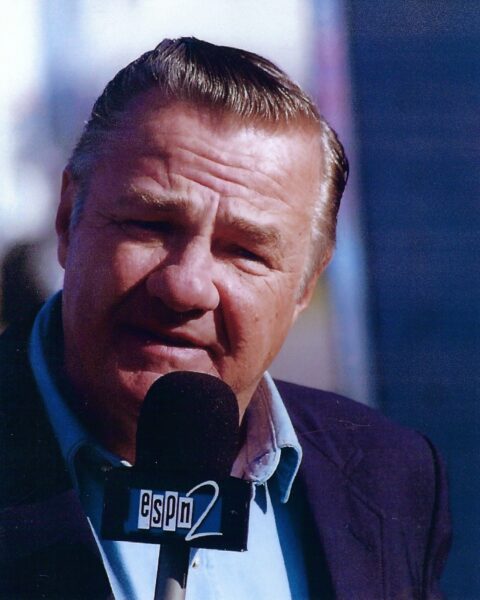 Ted Jones
When young 19-year-old drag racer Ted Jones bought his local drag strip in Kettlerville, Ohio, he had no idea his life as…
Read bio
Ted Jones
When young 19-year-old drag racer Ted Jones bought his local drag strip in Kettlerville, Ohio, he had no idea his life as…
Read bio
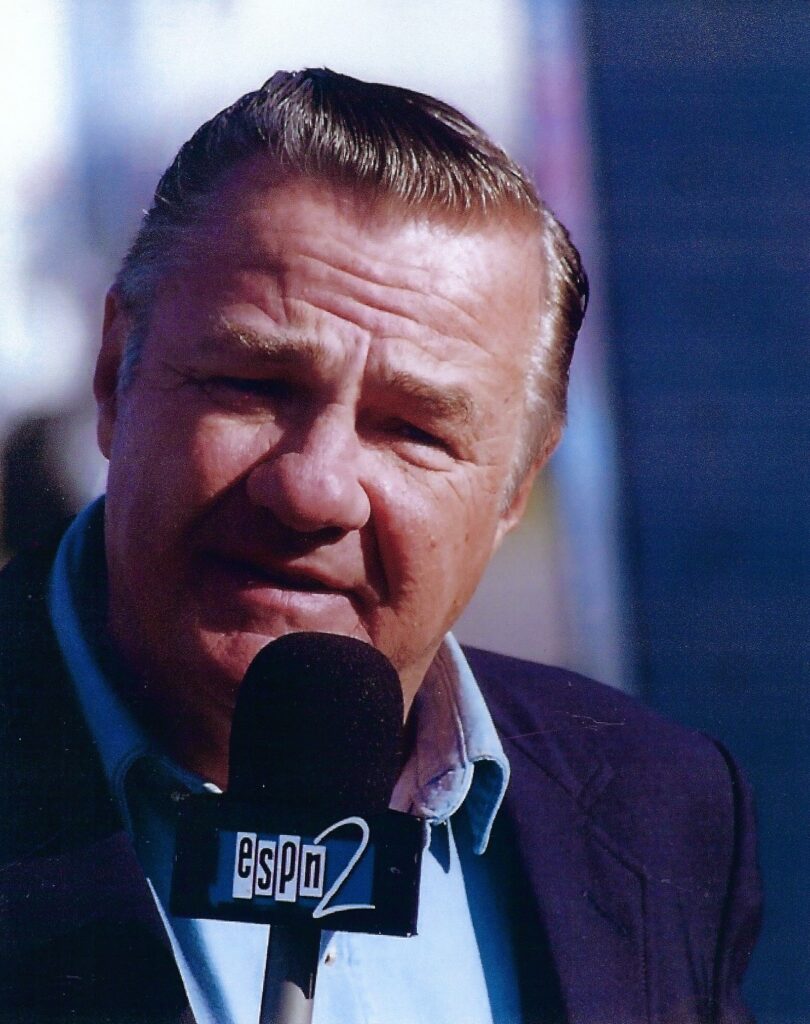 Class of 2007Presented by Mopar
Ted Jones
When young 19-year-old drag racer Ted Jones bought his local drag strip in Kettlerville, Ohio, he had no idea his life as a play-by-play sportscaster would change and thereafter revolve around the sport of drag racing until he retired. After giving up his chosen profession of play-by-play sports announcer, Jones, who had immediate success with the 1/8 mile Kettlersville Drag Strip, built a quarter mile track in Van Wert, Ohio, and then proceeded to purchase Muncie Indiana Dragway and Shelby Dragway near Sidney, Ohio. After completing two IHRA National events at the Muncie track, Larry Carrier was impressed with Jones' knowledge of the sport and his management abilities. He persuaded Jones to sell his drag strips and move to Bristol, Tennessee as IHRA Vice President and National Event Race Director. While at IHRA, Jones initiated many procedures that are still popular today, such as weighing the driver with the car, the pro ladders where 1 runs 16, alternating lanes during qualifying, the use of blower restraint devices, and the Mountain Motor Pro Stocks, and conceived the Pro Modified class. Jones also introduced drag racing to ESPN in 1982 and was retained by ESPN as a consulting producer and later a contracted ESPN announcer.
After 17 years with IHRA, Jones left when new IHRA owner Billy Meyer moved the sanctioning body to Texas. One year later he purchased the sanctioning body back drom Meyer and moved it back to Tennessee. After partner Jim Ruth died, Jones sold his shares of IHRA to a group headed by Pro Stock racers Carlton Phillips and Jim Yates.
Jones wanted to stay involved with drag racing, so using his ESPN connections, he founded the production company Masters Entertainment Group along with partner Butch McCall. The company proceeded to televise more 250 different drag racing and car-related programs per year including IHRA, NHRA, NMCA, NMRA, NOPI, NIRA, AMA, AHDRA, Super Chevy Show, Chrysler Classic and more. Jones hosted ESPN2 programs “Inside Drag Racing” for 12 years and the “Mother's Car Show Series” for 10 years, retiring at the end of 2006.
Ted Jones holds an FAA Pilot's License, USCG Captain's license and FCC Radio Telephone License, and now works part-time advising Butch McCall with the administration of the television production company. He has been married to wife Linda for 44 years and has two daughters, Lynda Faye, an attorney in Nashville, and Holly, who resides in Bristol. Jones, who also hosts a boating show on two TV networks, likes to spend his spare time on his yacht when he is not entertaining his three granddaughters.
-
2007
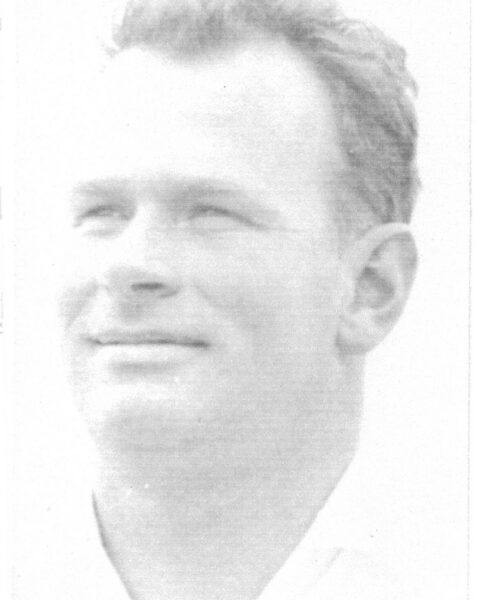 Jim McLennan
Probably no one can tell you when Jim's love affair with cars and racing began. As far as he can recall, it…
Read bio
Jim McLennan
Probably no one can tell you when Jim's love affair with cars and racing began. As far as he can recall, it…
Read bio
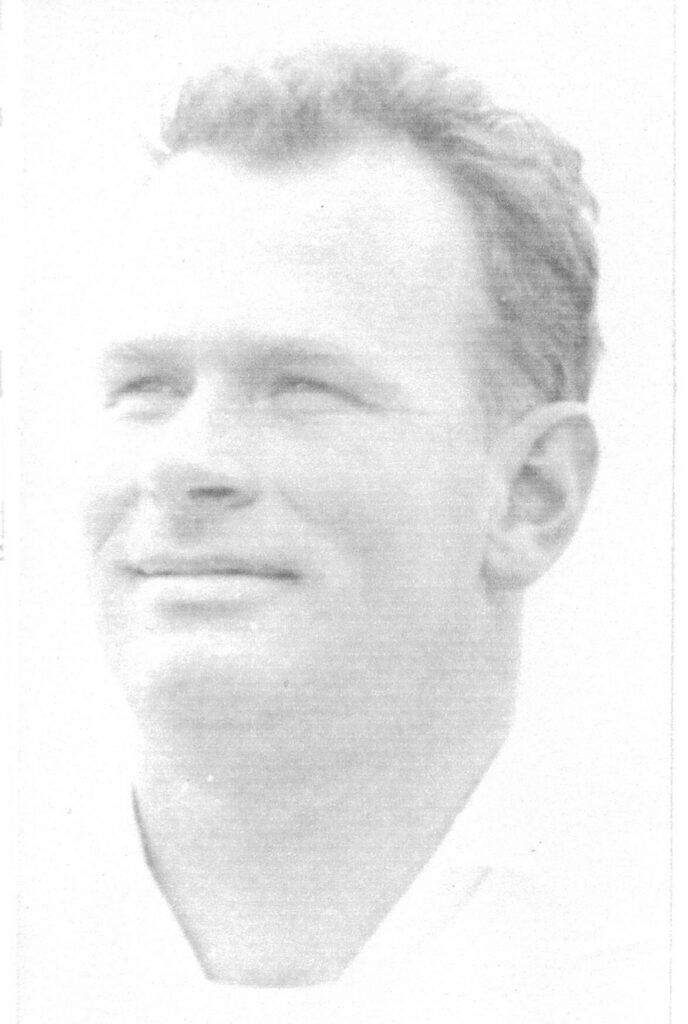 Class of 2007Presented by Mopar
Jim McLennan
Probably no one can tell you when Jim's love affair with cars and racing began. As far as he can recall, it was always a part of him. In 1957 Jim opened the doors on Champion Speed Shop in South San Francisco and introduced one of the very first speed equipment stores into the area. His goal was to help the local hot rodders get quality speed parts at fair prices, which he did.
In 1958 Jim built and began campaigning his Champion Speed Shop, blown small block Chevrolet-powered Top Fuel dragster, which he ran until 1963. 1961 was the car's best year for performance, during which time Jim captured the #2spot in the Drag News Top Ten list and narrowly missed out for the #1 spot held by Vance Hunt at the time. Jim and his dragster were also crowned the California State Champions in 1961. During the fuel ban NHRA and some of the local race tracks, Jim campaigned a twin engine Chevrolet powered dragster that was popular and successful at that time.
Jim was one of the very first drivers in any class to wear a fire suit, his first one being a proximity suit he borrowed from the nearby San Francisco airport fire department. After Rod Stuckey was burned so badly at Half Moon Bay, Jim required all of his drivers to wear this type of fire suit until the newer and improved ones were introduced into the sport.
Not content to just be a speed shop owner, a car builder and a driver, Jim opened Half Moon Bay Drag Strip in 1957 and not long afterward opened Cotati Drag Strip. Half Moon Bay ran on the 1st and 3rd Sunday of the month, and Cotati ran the 2nd and 4th Sunday of the month, which allowed Jim to personally oversee them. Jim's racetracks maintained some of the best safety records of any racetracks open at this time. However, he didn't stop with just safety; nearly every name driver/owner competed at his tracks over the years and managed to set a lot of speed and ET records along the way. The main reason Jim retired the Champion Speed Shop Fuel Dragster in 1963was because that was when he opened Champion Speedway, a 1⁄2 mile oval track near Candlestick Park in San Francisco. In 1967 Jim took over the ownership and operation of one of the nation's best-known racetracks, Fremont Drag Strip. Not content with just the oval track at Champion Speedway, in 1973 Jim added an NHRA sanctioned 1/8 mile drag strip. The opening event featured a match race between Don Prudhome and Don Garlits, both of whom were still competing in front engine fuel dragsters. Still the consummate racer, in November of 2006, Adam Sorokin drove Jim's Bryan Van Dyke/Champion Seed Shop nostalgia Top Fuel dragster to the quickest Nostalgia Drags ever run with 5.70 ET.
Not ready to completely retire from racing as a car owner, in 1985 Jim and his sons enlisted the help of Roy Brizio, recreating and updating both the single engine and twin engine Champion Speed Shop cars, which he now enters into all of the nostalgia drag races he can possibly make.
Jim was inducted into NHRA Hall of Fame along with a Lifetime Achievement Award at the Hot Rod Reunion in Bakersfield, California in 1993. Champion Speed Shop was chosen for the NHRA Hot Rod Reunion spotlight.
-
2007
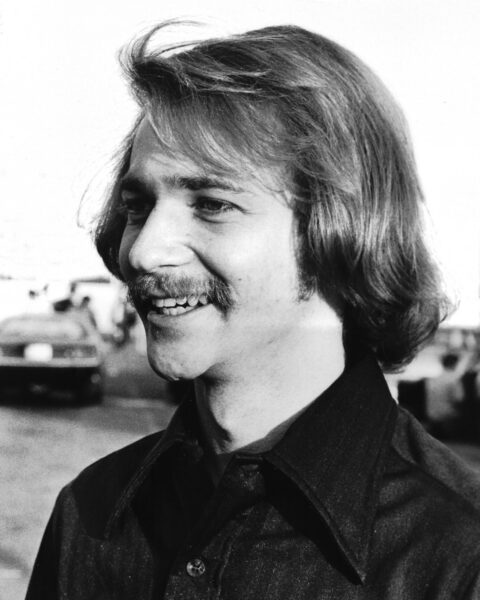 Dale Pulde
There are numerous members of the International Drag Racing Hall of Fame who can trace their competitive days back to high school.…
Read bio
Dale Pulde
There are numerous members of the International Drag Racing Hall of Fame who can trace their competitive days back to high school.…
Read bio
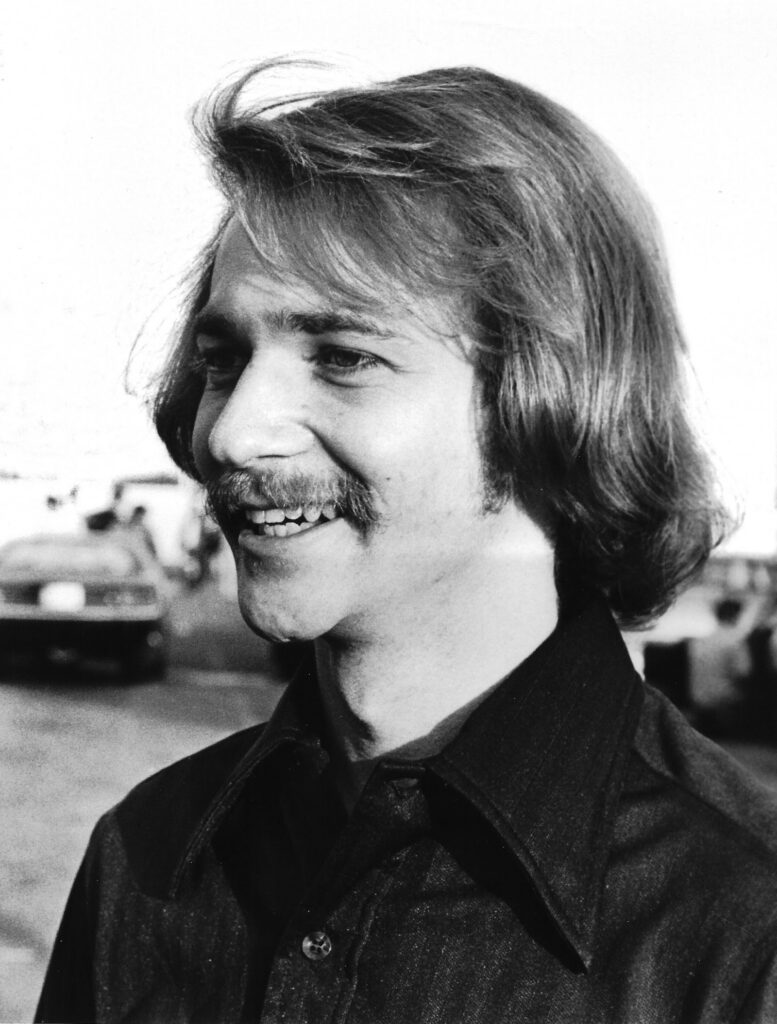 Class of 2007Presented by Mopar
Dale Pulde
There are numerous members of the International Drag Racing Hall of Fame who can trace their competitive days back to high school. But how many can say they were driving a Funny Car between classes in American history and algebra? Dale Pulde started driving a modified sports at the local drag strip before he actually was old enough to get a driver's license. He had to stretch the truth a bit, but he did it. It didn't take him long to move from the sports car into the seat of what at that time was considered a “Funny Car”.
While there have been a number of “firsts” associated with Pulde's career, beyond records, beyond victories and beyond World Championships, one thing stands out: Dale has the total respect of his fellow drivers and their crew chiefs.
As a mechanic with three decades of national event experience put it during one of Pulde's recent outings, “Any other driver would have crashed this car by now, it's so bad, but with Pulde at the wheel it goes right down the center of the groove every time.”
In 1988 Dale won the Winternationals at Pomona not with horsepower but with pure driver savvy. Dale has competed at the wheel of a Funny Car at about every form of drag racing offered, from weekend local tracks to nearly every major national event to the Match Race circuit that was so popular. He was successfully competed against every name driver in the category and was one of the selected group of racers included in the Coca-Cola Cavalcade of Stars circuit.
Pulde became one of the first “corporate” drivers when he wheeled the legendary Mickey Thompson's Peter Paul Candies-backed Pinto in the early '70s. Per Mickey, he wanted more than “just” a driver: he wanted someone who would go all out to win every time, be an excellent representative and spokesperson for the sponsor, represent Mickey and the sport properly at all times, and not totally abuse his equipment. Dale fit the requirement. As a result of this relationship, his personality and his unmatched skills behind the wheel, Pulde was able to bring Miller Brewing into drag racing with its first major sponsorship in the sport when it signed with him and partner Mike Hamby to sponsor their Funny Car, the first of the successful War Eagle cars.
Pulde and partner Mike Hamby put together three IHRA World Championships, and Dale is still the winningest Funny Car driver in IHRA history. Two their IHRA Championships came during their tenure with Miller.
While Dale isn't considered to be a mechanic, he also isn't just considered to be a driver. He understands what is taking place with the car during a race, and is able to communicate this knowledge to the crew chief and work with him to make adjustments each round. Dale also counsels other drivers, having signed off on several of today's drives and talking with them to help them improve their driving habits. Dale is also one of the few “go-to” drives when a team needs a substitute driver. In 1996 while subbing for the injured Whit Bazemore, Dale gave the team its first event win at Dallas.
One of the highest forms of testimony to Pulde's talent came during numerous telecasts of NHRA races when the late Steve Evans regularly referred to Pulde as “the finest driver to ever sit behind the wheel of a Funny Car.” Dale has also proven throughout the years to be a favorite of the fans because he always takes time to talk with them or sign an autograph and to always be a true ambassador of the sport.
-
2007
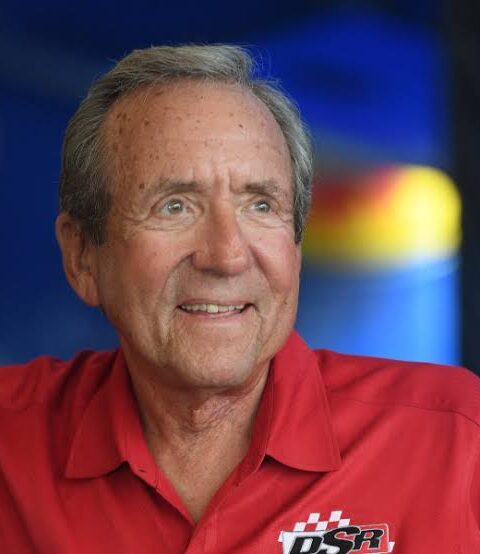 Don Schumacher
 began his drag racing adventure in the 1960s in one of the first AA/Funny Cars to be introduced. As a…
Read bio
Don Schumacher
Don Schumacher began his drag racing adventure in the 1960s in one of the first AA/Funny Cars to be introduced. As a…
Read bio
 Class of 2007Presented by Mopar
Don Schumacher
Don Schumacher began his drag racing adventure in the 1960s in one of the first AA/Funny Cars to be introduced. As a driver, Schumacher, who was known as the “The Shoe,” is remembered for his unequaled record in match races across the country and in the national event circuit. While the sport was in the early stage of organization, he won the 1972 Coca-Cola Cavalcade of Stars Championship, the 1973 AHRA World Championship, five NHRA national event titles and nine IHRA event titles. His Plymouth that he drive to a U.S. Nationals victory. As a car owner in the 1970s, Schumacher's record was even more impressive. His engine, clutch, and aerodynamic advancements made his Funny Cars the leading performer in the country. His safety innovations, such as roof-mounted escape hatches, reduced the threat of fire-related injuries at a time when many Funny Car drivers suffered serious burns.
In late 1974, Don announced his retirement from drag racing to devote his full efforts to his family and to his family business. Retirement may have taken Don away from active participation in the sport, but his love of it was always there, and in 1998, he returned to NHRA competition as a team owner. It was immediately apparent that Schumacher had not lost his zeal or knowledge of what it took to win in a highly competitive arena. In his first full season as an owner, Team Schumacher and driver Tony Schumacher captured the 1999 NHRA Top Fuel series championship. Tony collected a second Top Fuel championship in 2004 and a third in 2005.
In 2001, Don Schumacher added the Matco Tools Funny Car that qualified No.1 nine times, won three races in seven final rounds, and recorded the fastest speed in NHRA Funny Car history of 325.69 miles per hour. Later he added Scotty Cannon's Oakley Funny Car as the number 2 Funny car for the team. The team finished the 2001 campaign in second place in the final point standings. In 2002, Bazemore won twice, placing fifth in points, while Cannon came in eighth in the standings.
For 2003, Schumacher added a third Funny Car for Gary Scelzi, also sponsored by Oakley. The 2003 season saw a close battle for the Funny Car championship between Bazemore and Tony Pedregon with Bazemore closing the season with three victories and three No. 1 qualifying efforts.
In 2004, Cannon returned to Pro-Mod competition and Schumacher fielded two Funny Cars for most of the year, adding a research-and-development Funny Car, the Wonder Wagon, for Johnny Gray later in the season. Scelzi won three national events, became the first Funny Car driver to reach 330 mph, and ended the year third in points; Bazemore won two events, was No. 1 qualifier four times, and finished sixth in the point standings.
2005 saw Don Schumacher Racing add its first Funny Car championship to its three Top Fuel Championships with Gary Scelzi taking the crown. Overall, Schumacher has built a high-profile, multi- car NHRA program that consists of two Top Fuel teams, four Funny Car teams, two Pro Stock Motorcycle teams and one Pro Stock team. Schumacher is one of the few people involved in the sport who has enjoyed success as an owner/driver and a team owner and has seen his son capture three Top Fuel championships. While putting this winning combination together, he has continued to run his successful electronics manufacturing company.
-
2007
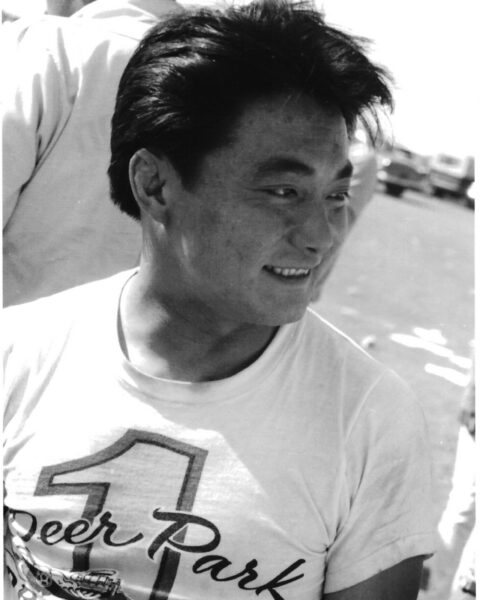 Dave Uyehara
 started life in Wyoming, but his family soon moved to Spokane, Washington, where his dad started a vegetable farm. However,…
Read bio
Dave Uyehara
Dave Uyehara started life in Wyoming, but his family soon moved to Spokane, Washington, where his dad started a vegetable farm. However,…
Read bio
 Class of 2007Presented by Mopar
Dave Uyehara
Dave Uyehara started life in Wyoming, but his family soon moved to Spokane, Washington, where his dad started a vegetable farm. However, Dave's dad had spent a portion of his life working as a mechanic and body man, plus he also owned a midget race car, so Dave inherited a strong interest in racing from him. Dave's first car was a '50 Oldsmobile, which also became the first he used to compete with. After high school, Dave moved to Southern California, where he went to work for Kragen Auto Supply and started hanging around at Goodies Speed Shop, where he began meeting a lot of the racers from the area. Between his dad's influence and that of the racers he met, it wasn't long before Dave was hooked on drag racing. For his first real race Dave teamed up with Frank Martinez on a super lightweight '29 Ford roadster powered by blown Cad engine. His experience with the roadster taught him the basics of how to build a strong, lightweight chassis along with welding and fabrication.
What Dave considers his first real break as a driver came when he offered the driving job for Dick Oswald's blown Hemi powered gas dragster. In 1966, shortly after he accepted the driving chores for Oswald's dragster, Dave, Oswald and Lee Cohn formed a team and began successfully campaigning a AA/Gas Dragster up and down the west coast. In 1969 the team decided to switch to a Top Fuel Dragster, but since they didn't have the funds to convert the gas car chassis to handle the additional power, Dave began his career as a chassis builder. As with the gas dragster, they were soon posting some very successful victories in their travels up and down the coast and wound up in the semi-final round at the World Finals in Amarillo, TX.
In 1972 Dave built his first rear engine car that was a radical three rail front frame design. The car was very quick and stable, but unfortunately it was destroyed in a crash at the old Las Vegas track. His next creation was another of his super lightweight Top Fuel dragsters, this one powered by a blown all- aluminum 427 Big Block Chevy engine, which turned out to be one of the quickest and fastest Chevy cars in the country.
Dave and Oswald entered the Fuel Funny Car wars in 1976 with their Uyehara designed and built Monza bodied “Kamikaze” funny car. 1978 Henry Velasco joined the team, changed its name to The Good, Bad and Ugly and finished the year as the NHRA Division 7 Champions. Even through sponsors were hard to find, Dave continued to race up until he was in a serious crash in 2002 at Boise, Idaho. At that point in his career, Dave decided it was time to concentrate on his chassis business, which he opened in 1984, and build the best cars available.
The list of Dave's customers reads like a Who's Who in drag racing and include racers in about every major class from Fuel Funny Cars to Fuel and Alcohol dragsters to street rods, and he has now begun producing some great nostalgia cars. Along with his many other awards, victories and honors, in 2005 Dave received special honors at the NHRA Hot Rod Reunion in Bakersfield, CA.
-
2007
 Dave Zeuschel
Unlike a lot of the people involved in this sport, Dave Zeuschel didn't have aspirations to be a race car driver, but…
Read bio
Dave Zeuschel
Unlike a lot of the people involved in this sport, Dave Zeuschel didn't have aspirations to be a race car driver, but…
Read bio
 Class of 2007Presented by Mopar
Dave Zeuschel
Unlike a lot of the people involved in this sport, Dave Zeuschel didn't have aspirations to be a race car driver, but he did love the mechanical side of the sport, especially building competitive engines. At the ripe old age of 15 he managed to get a job at the C&T Automotive shop, where he started out cutting motor mounts and header flanges. Not too long after he went to work at C&T, Dave built his first blown Chrysler engine with the help of the other guys at the shop. His success with this project soon led to his moving into the engine-building part at C&T and eventually moving out on his own. About the same time Dave finished his first engine , Don Prudhomme bought TV Tommy Ivo's Kent Fuller built dragster and needed an engine, so the team of Prudhomme, Fuller and Zeuschel was born. This particular combination proved to be pretty successful, so when Fuller built a new car for himself. He and Zeuschel stayed together as a team and continued their winning ways. One of Dave's next moves was to have Fuller build him his own car, and with Don Moody at the wheel, continued to spend a lot of time in the winner's circle. The only known instance of Dave driving a Top Fuel dragster was at San Fernando Raceway on a slow Sunday when he was strapped into the Zeuschel/Moddy car, and Ronnie Winkle, who was the crew chief for John Wenderski, was strapped in John's car, and they put on a very unusual on-of-on race. After that, Dave went back to building the machines and left the driving to others. Among Dave's more famous customers were Frank Cannon, Darrell Greenamyer (who was already a top name in the world of air plane racing) and Big John Mazmanian, to name a few. He also built the engine for the original “flip-flop” Hemi Cuda funny car and was the very first engine builder to experiment with using port nozzles. Dave's expertise didn't end with drag racing on land; he was also partner and the crew chief for Rene Andre's highly successful blown fuel-powered hydro drag boat.
Even as Dave continued to build his own performance shop business and move into larger quarters, his long-time love affair with flying and airplanes soon took over as his primary interest. His good friend Don Alderson of Milodon Engineering fame was also into flying, particularly old World War II planes, and with Don's urging, Dave decided to try his hand at building top performing aircraft egnines on a full-time basis. Dave moved into a new shop in Sylmar, California and was soon engrossed in his second career, building performance engines for these old planes and the air racing circuit. With help and encouragement from his friends in this arena, Dave soon earned a reputation as the premier builder for these power plants. Dave built engines for the top airplane racers such as The Red Baron, The Dago Red team and Darrell Greenamyer, to name a few. Unlike drag racing, Dave enjoyed flying the various aircraft he restored and was constantly buying, restoring and selling these planes. He was probably best known for his work on P-51s, but he was also one of the very few civilians to own, completely restore and fly his own F-86 jet. Dave Zeuschel was one of the most well-rounded personalities involved in the sport of drag racing and high performance.
-
2007
 Darrell G. Zimmerman
When Darrell wasn't chasing girls, he was terrorizing the streets in his '36 Ford Coupe. In 1955 Darrell attended the first national…
Read bio
Darrell G. Zimmerman
When Darrell wasn't chasing girls, he was terrorizing the streets in his '36 Ford Coupe. In 1955 Darrell attended the first national…
Read bio
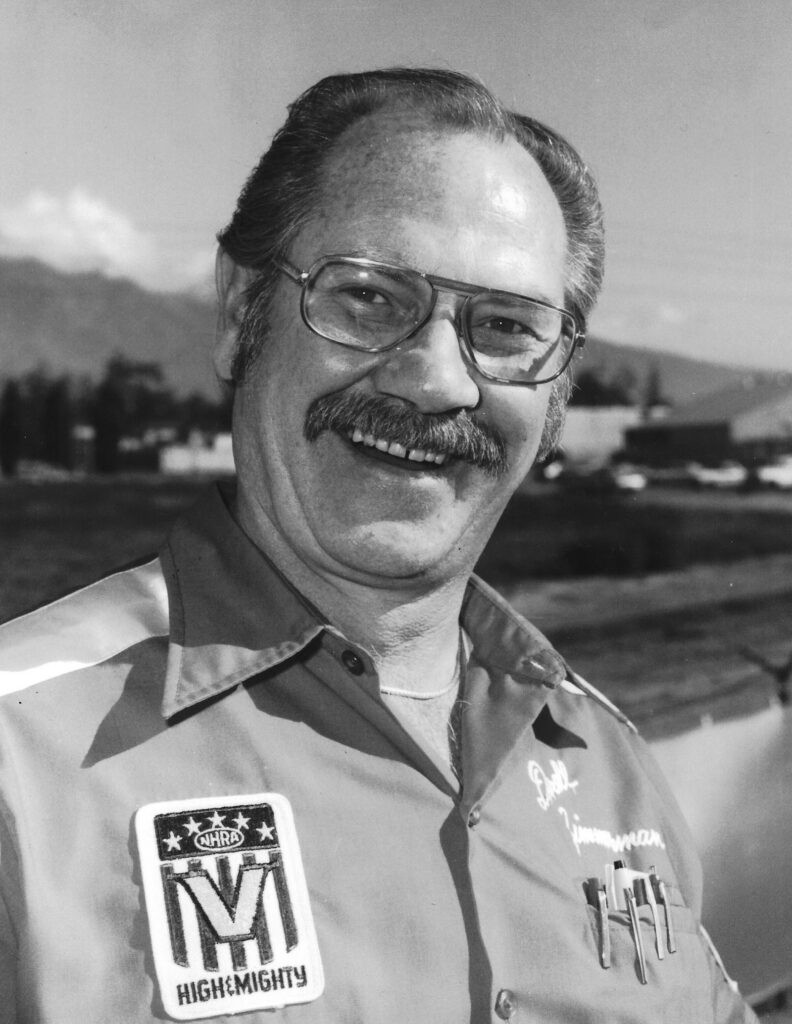 Class of 2007Presented by Mopar
Darrell G. Zimmerman
When Darrell wasn't chasing girls, he was terrorizing the streets in his '36 Ford Coupe. In 1955 Darrell attended the first national event in Great Bend, Kansas, and has attended all 52 U.S. Nationals. His first venture into the racing world was in a 1951 Ford. His first dragster was the Al & Zim's Special – a little D dragster that they built in their garage. The Hopper was another D dragster that he built with his dad in the garage on the family farm. His favorite endeavor would have been piloting the Dragmaster 1 Thing, an A dragster he purchased because of safety. In his 7-year racing career (1954-61) he won 178 trophies, including awards for class and top eliminator, as well as numerous car show honors. In Darrell's yearbook his classmates' prophecy was that he would set the racing world on fire by setting many records. He did – 27 track records. So, some predictions do come true. While still in high school, Darrelll organized the Ram Rodders, a club devoted to customizing vehicles. During the late '40s he helped from various car clubs to get racing off the streets and onto the drag strips. His career with the National Hot Rod Association began in 1957 when Barbara Parks appointed him the regional advisor for the Plains. In '58 he became the acting Division Director, and in '60 he became a full-time employee for NHRA. Since he couldn't be a racer and an official at the same time, his career as a drag racer ended in '61. Darrell was always safety-conscious, so one of his first assignments at national events was to direct the emergency crew. During his career as the Division 5 Director for the Land of the High and Mighty, Darrell help design and build 27 drag strips. He also served on the NHRA Rules Committee (1957-1995), seeing many changes as drag racing changed with the times. He was part of the group who wrote the first Rule Book. Darrell retired from NHRA in December 1995 after 35 years and continues to work at the national events as a consultant. He's the one in the tower with the headphones on and a cigar. And to use Darrell's closing, “Yours for a bigger, better, and safer sport.”
-
2007
Founders Award
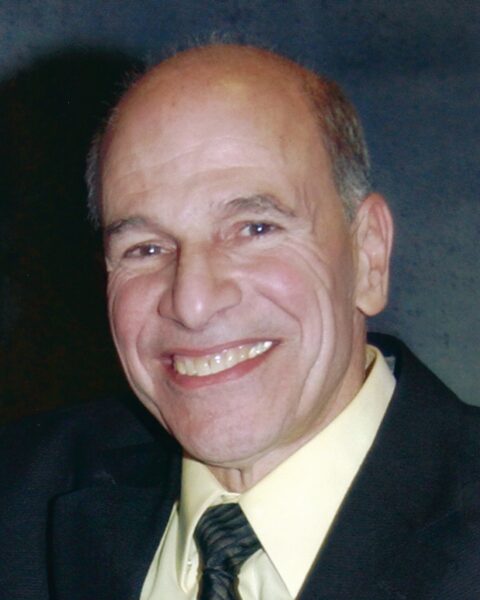 Bill Bader
Bill started his racing career in 1962 at the wheel of a Supermodified car on the local oval track circuit, winning the…
Read bio
Bill Bader
Bill started his racing career in 1962 at the wheel of a Supermodified car on the local oval track circuit, winning the…
Read bio
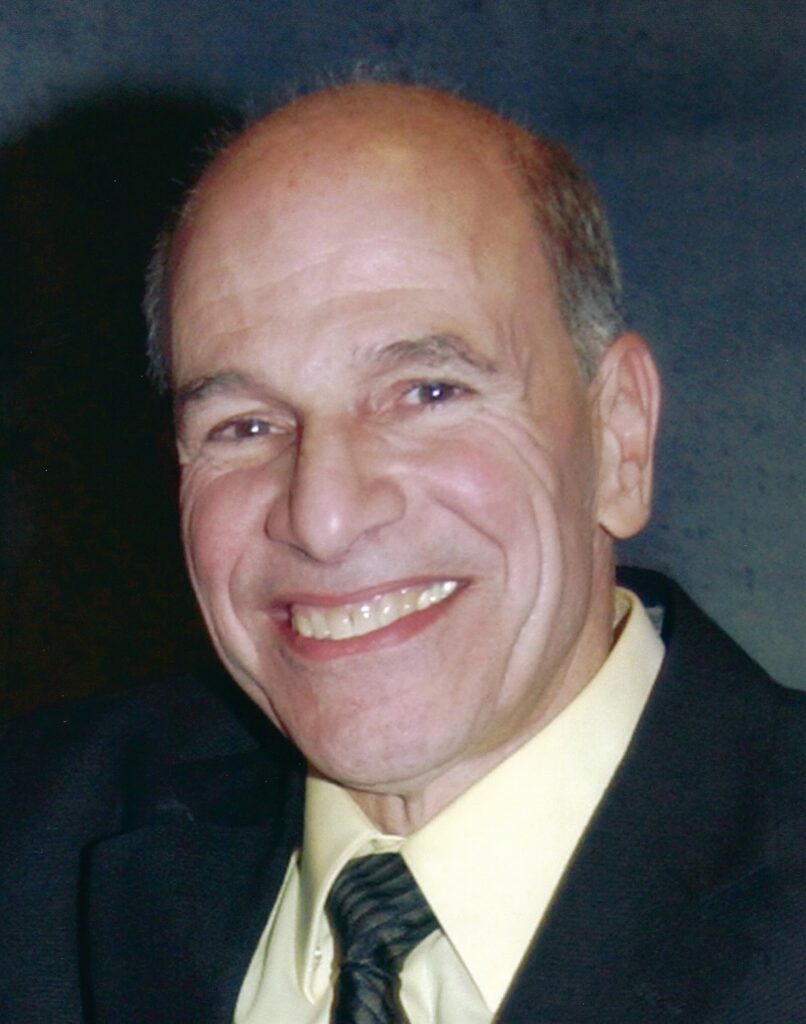 Class of 2007 · Founders AwardPresented by Mopar
Bill Bader
Bill started his racing career in 1962 at the wheel of a Supermodified car on the local oval track circuit, winning the 1970 championship at the nearby speedway. During the years Bill has been involved in racing, he has been a competitor, a team owner and a sponsor before turning his talen toward becoming a track owner. His driving career lasted until 1970, when he chose to move from competing on the racing side of the sport to competing as a racetrack operator, which at times proved more difficult than competing on the track.
In 1971 Bill took over the operation of Sandusky Speedway in Sandusky, Ohio. The 1⁄2 mile asphalt oval was dormant in '68, '69 and '70, but flourished under Bill's direction from 1971 through 1977 inclusive. During that time Bill was offered the opportunity to purchase Norwalk Raceway Park from it then-owner, Vince Shubert. Strange as it may seem, up until he purchased NRP, Bill had never attended a drag race. However, his experience in promoting in the oval track arena gave him the insight as to what was required to promote any racing event successfully. Give the fans a show!
Over the years Bill instituted a great number of “firsts” on the promotion side of racing, but three of the most recognized events today that were born at NRP are the Halloween Classic, the Night Under Fire, and the IHRA World Nationals. Unfortunately for IHRA fans, NRP has now signed a long-term contract to become an NHRA sanctioned track, but overall the race fans are the winners because they will exposed to even more great competition.
In 1998 Bill purchased IHRA and set out to make it into a racer-friendly establishment that would provide the best shows possible for its fans. Under Bill's ownership, the number of IHRA sanctioned tracks nearly tripled and the level of competition in all classes was raised. 1999 Car Craft Magazine recognized Bill as part of its All Star team and name him “Person of the Year.” Recognizing that the magic ingredient necessary funds for IHRA to continue to grow was working capital and attempting to continue setting aside the necessary funds from its weekly shows, Bill sold a majority ownership stake in the Association to Clear Channel. Under this new arrangement, IHRA continued to grow, but the long h ours and extensive demands eventually took their toll on Bill. In November of 2004, Bill resigned his position as president of IHRA. Bill continued to help other track promoters understand “customers” and “customer service”, but mostly spent time with his family. When Bill purchased IHRA in 1998 he turned the management of Norwalk Raceway over to his son, Bill Bader Jr., but Bill Senior is currently assisting as project manager on the huge expansion currently underway at the track.
From staging his now famous Night of Fire to bringing in every “name” racer to compete at NRP to staging some of the greatest Hot Rod car shows ever, Bill Bader has been a leader in how to successfully operate a racetrack and association for the benefit of all involved.
Class of 2006
6 inductees-
2006
Founders Award
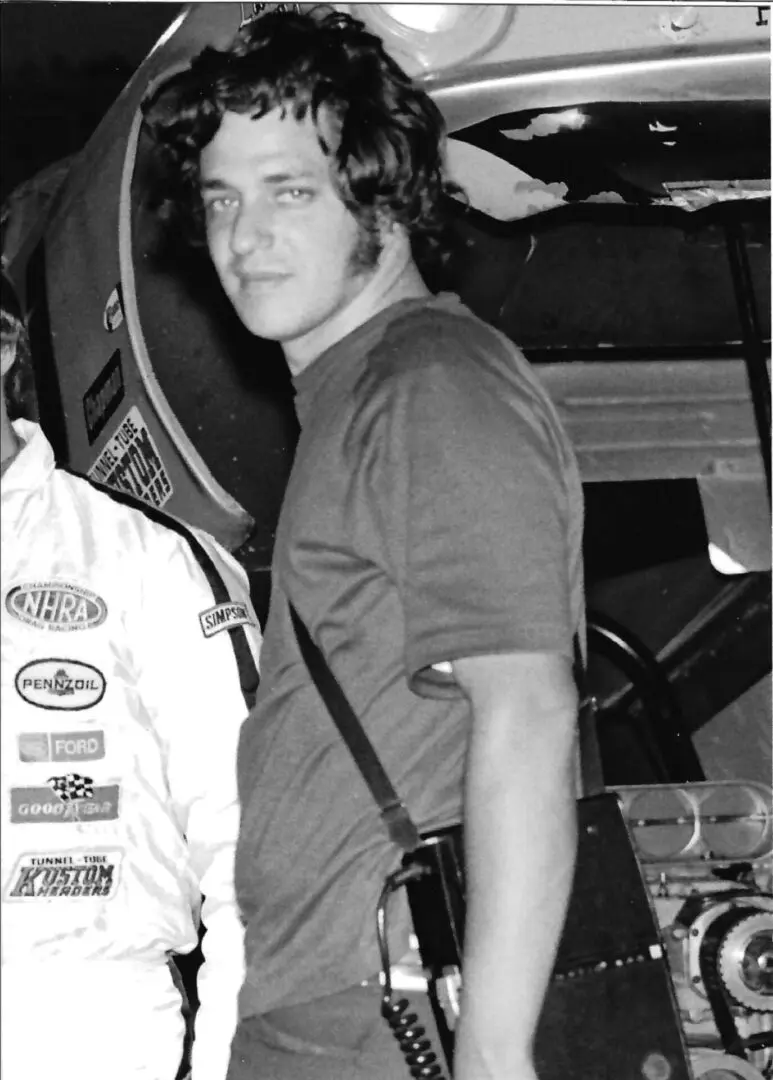 John Asher
 has been a motorsports photojournalist for many years. Typical of so many people who have turned their love affair of…
Read bio
John Asher
John Asher has been a motorsports photojournalist for many years. Typical of so many people who have turned their love affair of…
Read bio
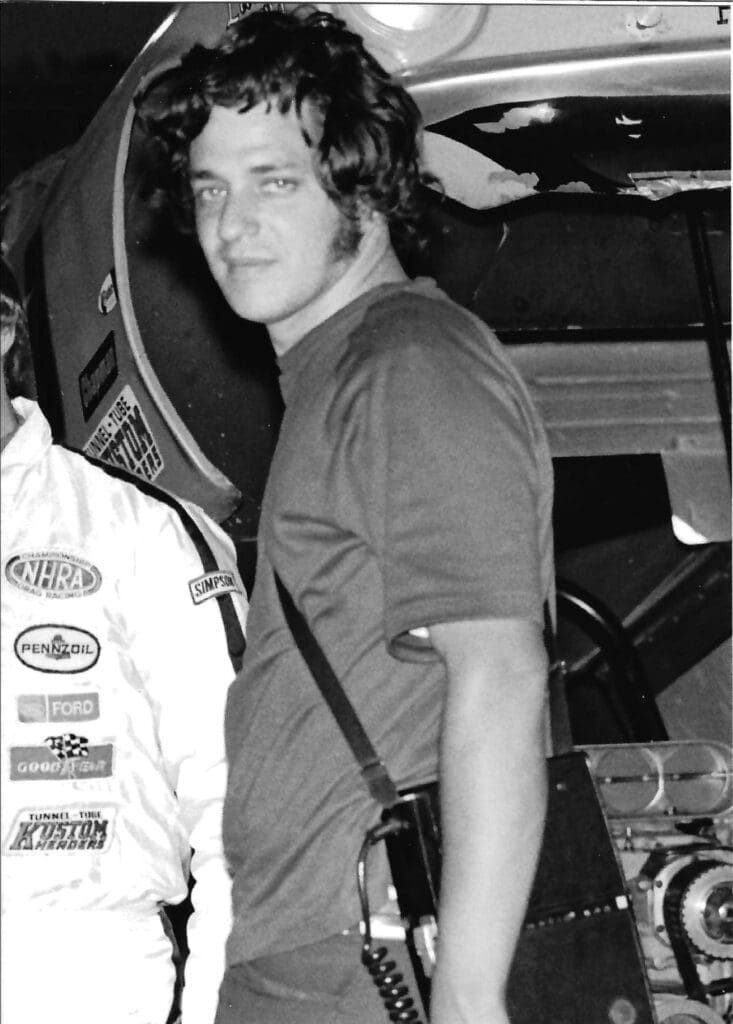 Class of 2006 · Founders AwardPresented by Mopar
John Asher
John Asher has been a motorsports photojournalist for many years. Typical of so many people who have turned their love affair of the automobile and the sport into their profession, John was an enthusiast who had the knack for capturing events with the camera and then adding words that brought the photos to life.
His first job as a photojournalist was as the editor of All-American Drag’s Magazine, where he quickly learned what he didn’t know about the business but was smart enough to ask the right people the right questions and soon began to perform in a professional manner. In 1968 John became a contract writer for NHRA, AHRA, and IHRA while performing freelance duties for several publications dedicated to drag racing. Even though he was very happy with this arrangement, in 1973 John accepted an editorial staff position with Car Craft Magazine and in 1979 moved into the editor’s position, a position he held until mid-1983. John was also the editor of Peterson’s Drag Racing Magazine for over 18 months in the late 80s and was later the founding editor of Drag Racing Action Magazine. In the mid-1990s John tried his hand at publishing his own magazine, American Drag Racing, but just after three issues decided to put it to rest.
Mixed in with his photo journalist activities, John also found time to be an active racing participant as one of the owners/crew members of the Jade Grenade top fuel dragster. Based out of the Midwest, the car was a top competitor wherever it appeared, but John soon made his decision to stick with his chosen profession of journalism and read designed from the active racing side.
John has also been very active in helping honor many of the outstanding contributors to the sport by being one of the Selectors for Honorees of the Car Craft Magazine All-Star Drag Racing Team program and in fact was the senior producer of these events from 1973 until the program ceased in the late 1990s. John went on to become senior editor of both Racer Magazine and Competitionplus.com and continued to contribute to both Hot Rod and Car Craft Magazines. He continued to keep his camera quite active supplying photography for more than a dozen motorsports calendars worldwide and other such requirements.
-
2006
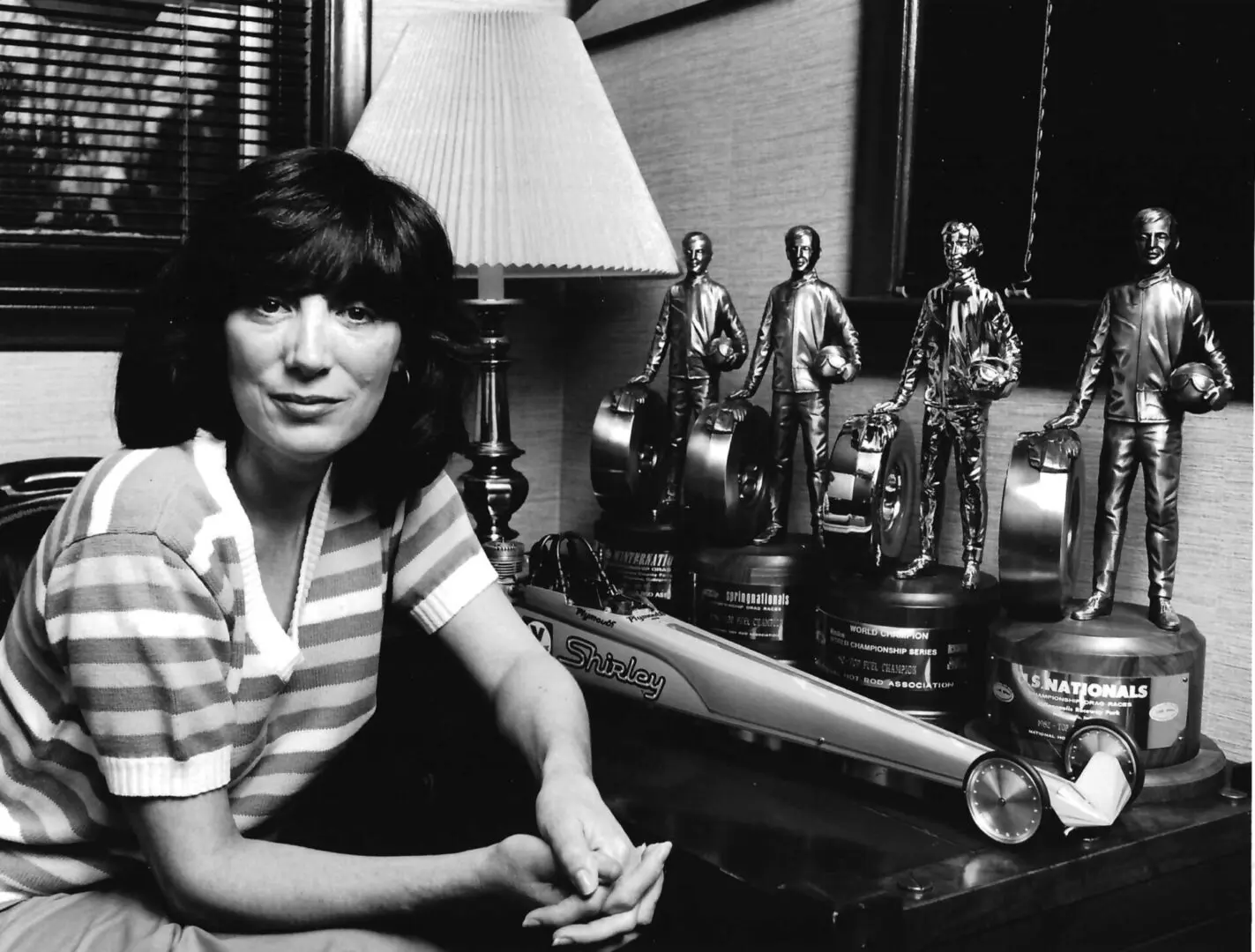 Shirley Muldowney
 is a name that today is known around the world, but some 50+ years ago she was just another enthusiast…
Read bio
Shirley Muldowney
Shirley Muldowney is a name that today is known around the world, but some 50+ years ago she was just another enthusiast…
Read bio
 Class of 2006Presented by Mopar
Shirley Muldowney
Shirley Muldowney is a name that today is known around the world, but some 50+ years ago she was just another enthusiast looking for a way to become a part of the sport of drag racing. Of course, there was one major exception: she was a female, and at the time it was considered proper for everyone involved for females to be spectators or at most, parts chasers. Shirley learned early in life that going fast was what she really enjoyed and that doing it on the streets wasn’t very practical. Her first efforts at the local dragstrip were not really pleasant ones, but she was determined to come Pete with the “guys” on an equal basis. After finally getting her top fuel license signed off and being allowed to compete on equal basis, Shirley quickly proved she was even better than she thought she was.
While Shirley competed in a funny car for a time, it is her accomplishments and top fuel dragsters that has made her a true legend. In fact, just listing most of her treatment covers a lot of space.
Just who is Shirley Muldowney and what she done? She is: the first woman to be licensed to drive a top fuel dragster, the first and only woman to be a member of the 250 MPH club and four second club, the first woman and only the second drag racer to be inducted into the Motorsports Hall of Fame, the first motorsports personality to be honored by the U.S. Congress with an “Outstanding Achievement Award”, the first drag racer and only woman to be honored with the Jerry Titus Memorial Award as part of the American Auto Racing Writers and Broadcasters Association All-American Team Program, the first woman to win an AHRA and NHRA professional national event, the first and only woman to win a professional NHRA Winston World Championship which she did three times, the first two-time NHRA Winston World Champion, the first woman to be named to the All-Star Drag Racing Team in a professional driving category, the first woman competitor to be honored with the “Ollie” Award as part of the All-Star Drag Racing Team, and inductee to the Hot Rod Magazine Hall of Fame.
Shirley Muldowney is a racing pioneer who exploits have transcended the automotive world to have produced a remarkable impact on the average American, many of whom view her as an icon for our times.
In addition to winning 18 national event titles a world championship in AHRA events as well as her NHRA championships, setting records at many of the major race tracks and events. Shirley has been a true spokesperson for the sport of drag racing appearing in newspaper and magazine feature articles in such titles as readers digest and Sports Illustrated to nearly every automotive magazine. Shirley has appeared on TV programs to include “The Tonight Show” which Johnny Carson. Shirley had her life story made into a movie “Heart Like a Wheel”. Shirley has done a lot for the sport and has paid a pretty high price in the physical pain and suffering department after a crash, in Canada, in 1984. But she never gave up the will to be a competitor, ambassador, and winner; as attributed to her successful return to racing in 1986.
Shirley retired from racing in 2003. She still is active in the sport and can be seen at reunions and various car shows throughout the country.
-
2006
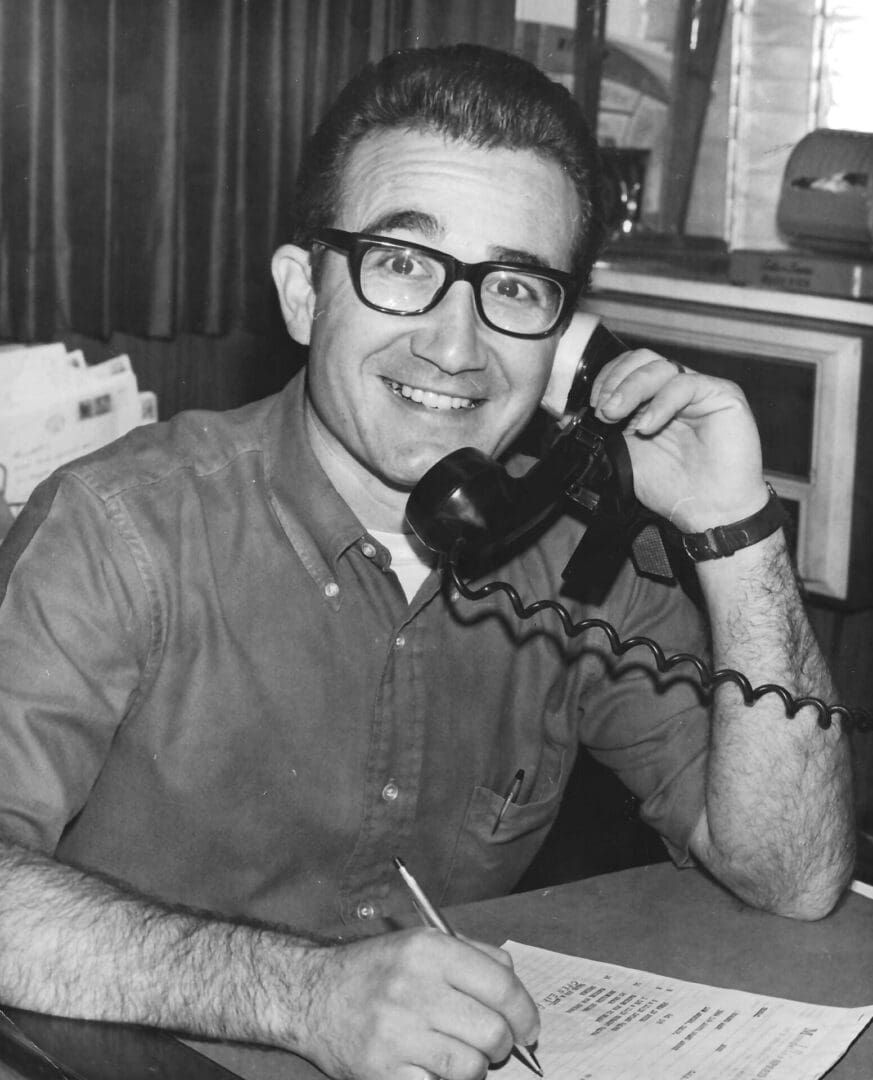 Joe Mondello
1936–2011 Joe Mondello participated in the sport of drag racing and all forms of racing as very few of his peers have done.…
Read bio
Joe Mondello
1936–2011 Joe Mondello participated in the sport of drag racing and all forms of racing as very few of his peers have done.…
Read bio
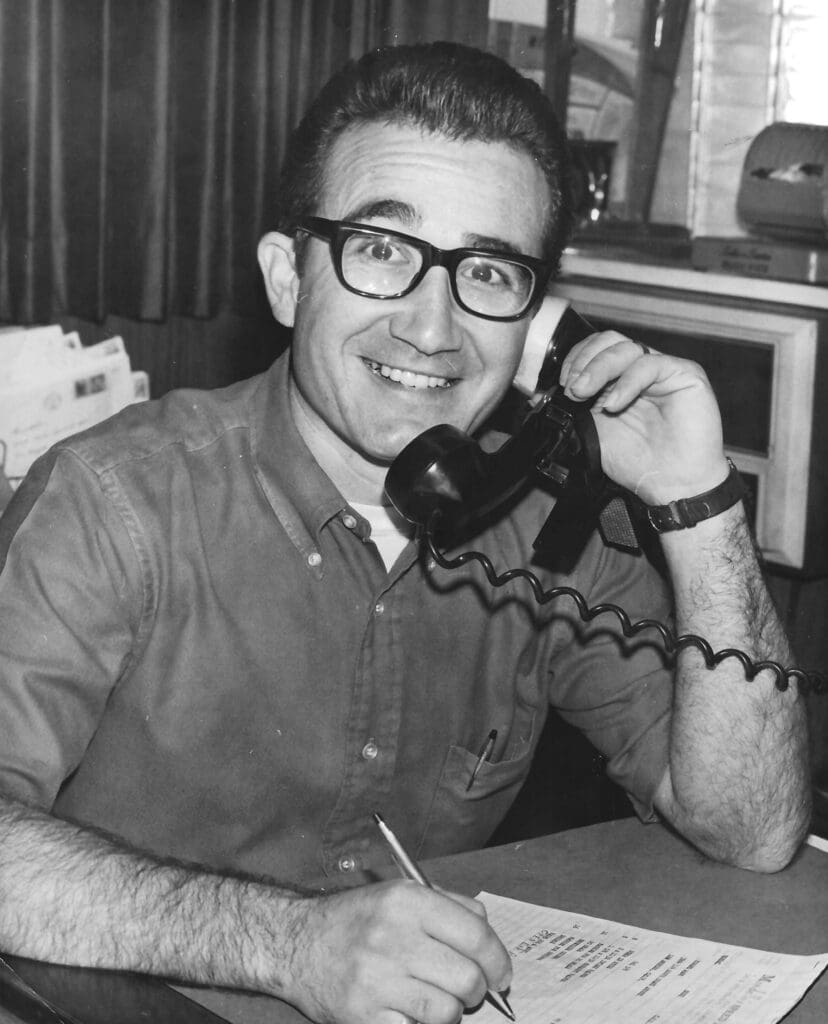 Class of 2006Presented by Mopar
Joe Mondello
Joe Mondello participated in the sport of drag racing and all forms of racing as very few of his peers have done. He was a driver, an engine builder, crew chief, manufacturer, inventor, designer, and professor during his involvement in the sport. In 1966 and 1967, Joe teamed up with Sush Matsubara in an injected gas and fuel A/Altered coupe and promptly won back to back IHRA Comp Eliminator titles. In 1968 through 1970, still teamed up with Matsubara, they switch to a blown AA/Fuel altered Fiat coupe, setting a new class record at the 1969 Indy Nationals with an ET of 7.25 seconds at 213 MPH. The record lasted until the class was drop by NHRA some 10 years later. In 1968 Joe was named Car Craft Magazine All-Star Team Engine Builder of the Year and in 1969 and won the All-Star team Crew Chief of the Year Award. In 1969 Joe also drove a factory backed Oldsmobile to two NHRA class records and in 1972 set a new SS/JA national record at 11.47 seconds and 119.53 MPH and won Super Stock class at the Pomona Winternationals.
In 1996 Joe was inducted into the Hot Rod Magazine Hall of Fame, and in 1997 he received Super Flow Corporations Lifetime Achievement Award. In 2002 Joe was inducted into the Bonneville Dry Lakes Hall of Fame and in 2004 he was inducted into the NHRA Hot Rod Reunion Hall of Fame.
As a manufacturer, Joe made the name Mondello synonymous with quality and performance. He opened the doors on his first head porting shop in 1959, and in 1969 he became the first head reporting service to offer his wares via mail order. Next, he created the open chamber big block Chevrolet combustion chamber and piston combination even before General Motors did. His positive flow combustion chamber design is now being used by everyone in the business from the OEM factories to all of the aftermarket cylinder head manufacturers. Joe designed, built, and delivered cylinder heads for countless record holding engines that have competed everywhere from the dry lakes, Bonneville, boat racing, circle track racing, drag racing, off-road racing, motorcycles and even go carts.
In 1996, Joe founded the Mondello Technical School that instructed students on everything from cylinder head design and porting techniques to engine blueprinting. These classes are not limited to “big automobile engines” either; there is even a special course of building smaller Harley Davidson and other four and five valve import motorcycle engines. The school grew rapidly in size and structure that Joe relocated to an expanded facility in Crossville, Tennessee. If this wasn’t enough Joe developed a line of new high-performance machining and lubricating products for the aftermarket. With this all going on Joe still found time to participate in the occasional nostalgia event at the wheel of a restored 1972 442 Oldsmobile or his fully restored 1903 Oldsmobile curve – horseless carriage.
-
2006
 Joe Lunati
1935–2023 Like nearly everyone involved in drag racing, Joe Leonardi got started in the sport as an enthusiast and a competitor. In fact,…
Read bio
Joe Lunati
1935–2023 Like nearly everyone involved in drag racing, Joe Leonardi got started in the sport as an enthusiast and a competitor. In fact,…
Read bio
 Class of 2006Presented by Mopar
Joe Lunati
Like nearly everyone involved in drag racing, Joe Leonardi got started in the sport as an enthusiast and a competitor. In fact, he enjoyed the sport so much, he became one of its leading manufacturers. Early in his race career, Joe became known as well for holding some of the ugliest cars ever raced, but soon won respect from his fellow competitors and fans by building and racing some of the quickest and fastest cars in their various classes. One of Joe’s most famous cars was his Chevrolet powered Devon bodied sports car that was as quick as it was ugly. Unlike a lot of the early drag racers who were located on the West Coast, Joe was from the Midwest, so he was geographically in a position to expose a lot of fans in that area of the country to some really exciting and unusual equipment.
In 1964 Joe won the division points championship for his area, set eight new records, and won Street Eliminator at the Indy Nationals. In 1967 Joe switch to funny cars, building a flip top Corvair that was considered by many to be the forerunner to today’s funny cars. The Corvair performed well, but Joe had much more success with a Camaro he later campaign. While the Camaro provided him with some great performance numbers, it was an accident in it that made Joe decide to retire from driving.
Because of his involvement as a builder and racer, as well as, his desire to make his equipment more competitive, it wasn’t long before Joe was building parts and pieces to make his cars go quicker and faster and soon after that again producing them for other racers. Joe was always concerned with the cost of quality pieces, and one of his goals as a manufacturer was to build the very best parts for the lowest cost possible so that the average competitor could afford to be more competitive.
Lunati Cams became one of the most recognized names in the performance parts industry. Not only is Lunati involved in drag racing, but it also provides parts for enthusiast in oval track racing, street performance, boating, motorcycles and just about every other motorsports there is. Joe always appreciated and acknowledged the contributions to drag racing made by the sportsman class cars, and as a result, Lunati was quick to give them recognition and support to the sportsman class racers as much as to the pro-category racers.
While Joe owned Lunati Cams it was a strong source of funding for racers through it sponsorships and more importantly it’s contingency program, both of which were aimed primarily at the sportsman classes. Joe always made sure the racer received visibility as well as financial support through the company’s advertising and promotions. Joel sold his company but was still a man who a large number of people involved in drag racing owe a lot to because of his unselfish support of the sport, something he did without seeking personal accolades.
-
2006
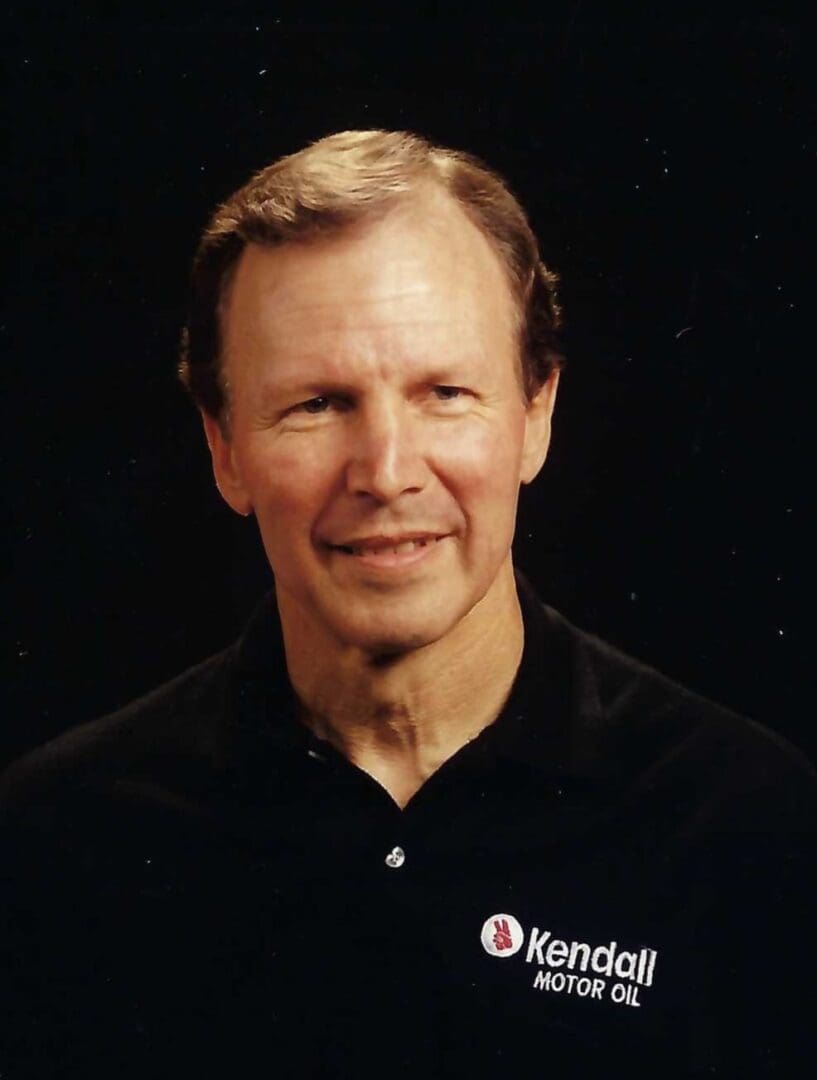 Bruce Larson
 started his drag racing career at the age of 16 in Linden, New Jersey driving a fenderless, chopped 1932 Ford…
Read bio
Bruce Larson
Bruce Larson started his drag racing career at the age of 16 in Linden, New Jersey driving a fenderless, chopped 1932 Ford…
Read bio
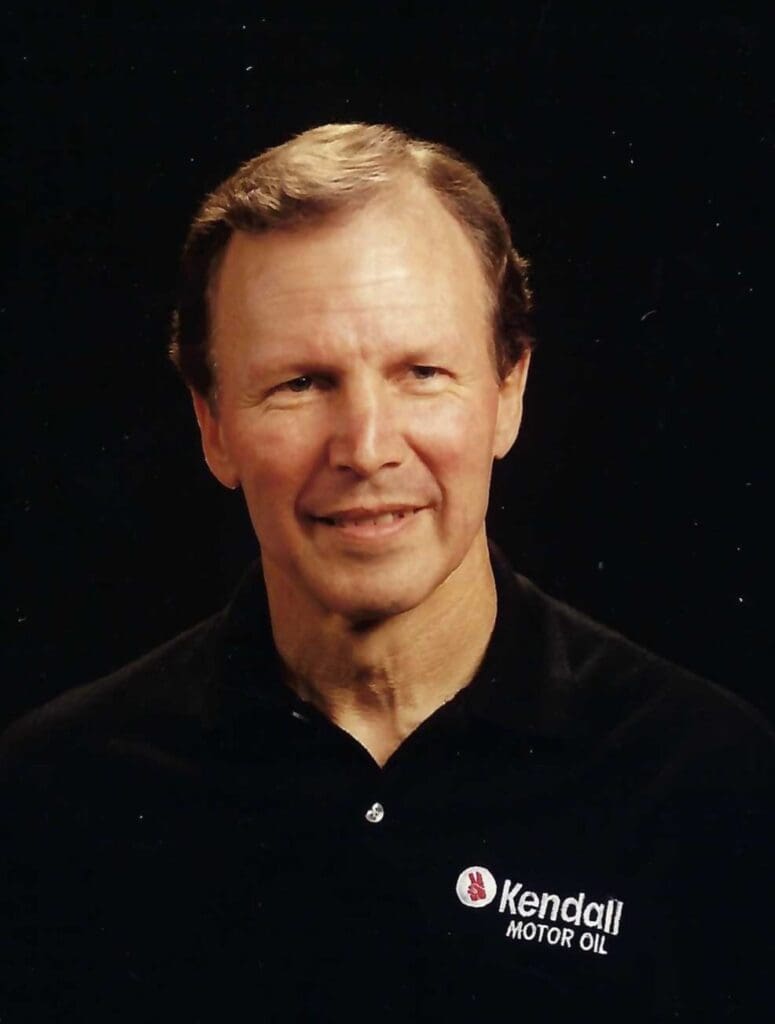 Class of 2006Presented by Mopar
Bruce Larson
Bruce Larson started his drag racing career at the age of 16 in Linden, New Jersey driving a fenderless, chopped 1932 Ford coupe. Over the next 10 years, Bruce was a consistent winner at the local tracks, first with the 1932 coupe and then with a 1954 Olds Gasser and finally with a 1932 Chevy A/Gas coupe. Not only were his cars fast and reliable, they were also some of the cleanest in the area, which earned him the nickname of Mr. clean.
In 1965, Bruce switched from the altered coupes to a 1964 Ford Cobra and promptly set both ends of the NHRA A/Sports and AA/Sports national records. He also drove the Cobra to win at the NHRA Winternationals, Springnationals, and the US Nationals.
Bruce was working as a mechanic in a Chevrolet dealership at this time, and because of his longtime winning record, the owner of the dealership, Greg Sutliff, decided Bruce had serious potential, so the two teamed up in a funny car operation. In late 1965, the team debuted the first ever all fiberglass Camaro bodied funny car, which was the first of a long line of Chevrolet bodied funny cars for Bruce.
For the next five years, Bruce toured the country as a match racer, successfully competing against most of the biggest names on the circuit. In 1968, Bruce captured national attention when he ran a 7.41 ET to become the quickest funny car ever at the time. In 1969, Bruce won the prestigious Super Stock Nationals in York, Pennsylvania giving him additional exposure to show to potential sponsors. While Bruce made his living at drag racing from 1966 the 1972, the 1973 through 1977 years were pretty lean for anyone touring with no major sponsorships, Bruce included. During these lean years Bruce never gave up either his love of the sport or his goal of becoming a world champion, and continued looking for a major sponsor.
In 1985, Bruce inked a deal with the Datcon/Sentry folks that gave him the financial backing needed to pursue the championship. With a sponsorship in hand, he switched from Chevrolet to Oldsmobile and at the same time teamed up with Joe Amato, who was already a NHRA Top Fuel World Champion and was able to share and a lot of the information Joe picked up with his top fuel dragster. In 1988 Bruce won the NHRA Cajun Nationals for his first-ever national funny car win, and by the end of that season he was ranked number six in the funny car wars. In 1989, Bruce’s ship really came in, first winning NHRA Winternationals, then the Springnationals, Mile high Nationals, Seafair Nationals, Fall Nationals, and the season ending NHRA Winston Finals. Adding to the impressive wins, he finished as runner-up at five other national events. Between his wins and runner-up appearances, Bruce led the points chase from beginning of the season to the end, locking up his dream, the NHRA World Championship. That same year, Bruce also was voted Car Craft Magazines Funny Car Driver of the Year, and the car he won the title with joined the only other drag racing car to ever be placed on display at the Smithsonian Institute Washington DC, Don Garlits Swamp Rat 30.
Over the years Bruce received too many awards to list here, but some of the ones that stand out above the others were the 1980 Jungle Jim Lieberman Memorial Award, the 1989 Car Craft Magazine Driver of the Year, 1989 Eastern Motorsports Press Association Driver of the Year, AL Holbert Memorial Award, 1989 NHRA Northeast Division NED of the Year Award, and the Pennsylvania Sports Hall of Fame inductee honor in 1993. A few other highlights were the Super Stock Magazine Drag Racing Hall of Fame inductee in 1995, East Coast Drag Times Hall of Fame inductee in 2003, and Eastern Motorsports Press Association Hall of Fame induction in 2004.
-
2006
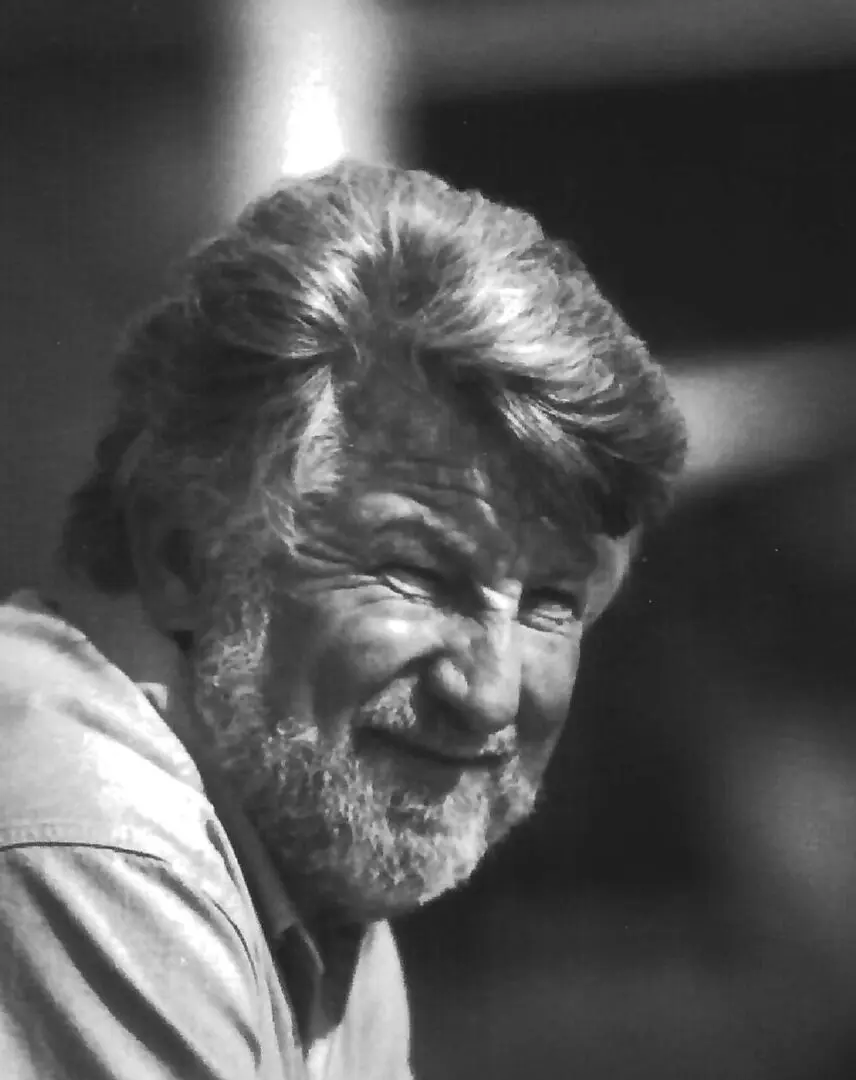 Steve Gibbs
Like so many before him, Steve Gibbs involvement with drag racing began from the ground up as an enthusiastic fan. In the…
Read bio
Steve Gibbs
Like so many before him, Steve Gibbs involvement with drag racing began from the ground up as an enthusiastic fan. In the…
Read bio
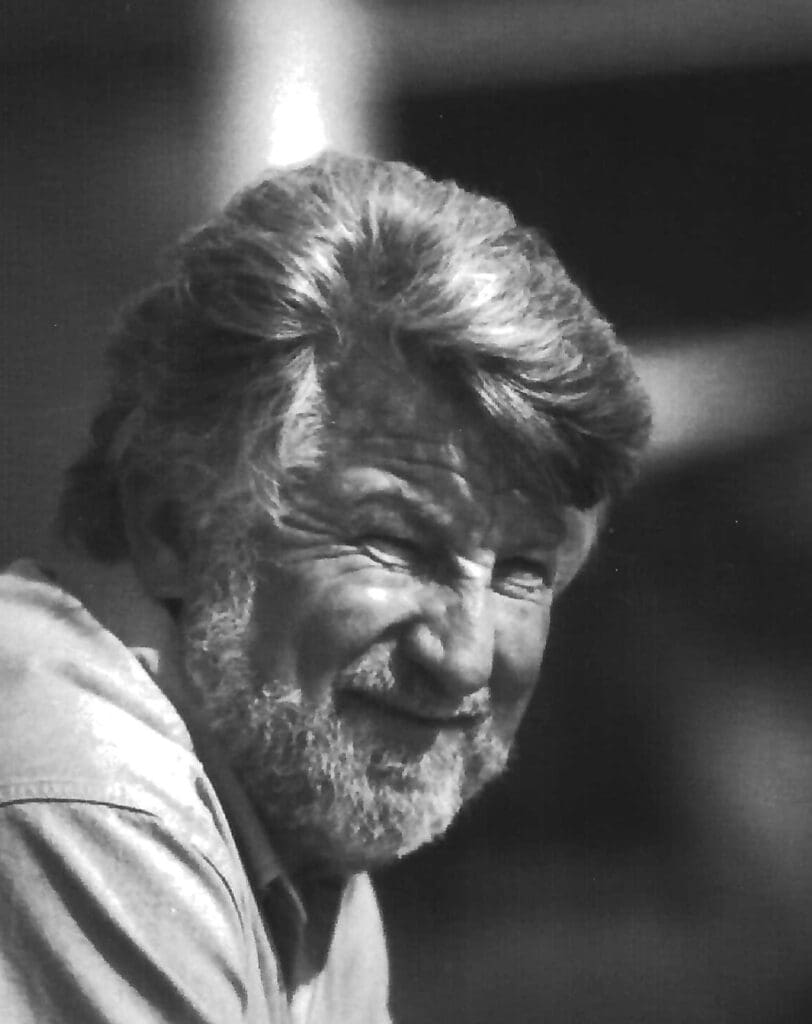 Class of 2006Presented by Mopar
Steve Gibbs
Like so many before him, Steve Gibbs involvement with drag racing began from the ground up as an enthusiastic fan. In the early 1960s he landed a job working part time at the San Gabriel and Fontana dragstrips numbering cars, part-time announcing, and submitting articles to drag News. He recalls just staring at his first striped “official” shirt and thinking that he had really arrived. It was when he became assistant manager of Irwindale Raceway in the mid-1960s that his former career plans in the art in journalism field were forgotten. He also briefly served in management positions at drag strips in Fremont, California and Corpus Christi, Texas. In 1969, he joined NHRA as Advertising Director of National Dragster, and a year later when it increased its national event schedule, Steve was appointed assistant to Event Director Jack Hart. Under Hart, Steve learned the delicate balancing act between quick decision-making and what is best for the sport.
Over the years Steve’s role grew and his creative innovations in safety, track preparation, and event scheduling all played a major role in the growth of NHRA drag racing. He was appointed NHRA’s Vice President of Competition in 1982 and served as liaison between the racers and the organization. His professionalism and concern for the competitors and their problems made him one of the most highly respected officials in any form of motorsports. Under his leadership the modern Safety Safari was born, and their work made the racetracks at NHRA national event sites the best groomed and maintained in all of drag racing. In 1991 he was presented the prestigious Car Craft Magazine All-Star “Ollie” Award for career long contributions to the sport of drag racing. He also played a major role in the creation of the first California Hot Rod Reunion in 1992 and was rewarded for his efforts when he received the Reunion Lifetime Achievement Award in 1995.
In the early 1990s, Steve formed NHRA Historical Services, which was created together display material and provide the genesis for an NHRA Museum. When the NHRA Motorsports Museum project started to take shape in 1997, Steve expressed the desire to cut back his longtime involvement as head of the competition department in order to take an active role in the museums planning and construction. Chairman Wally parts in the NHRA Board of Directors appointed him as the museums first Executive Director, where he was instrumental in all phases of the museum’s creation.
In 2003 Steve decided to retire and toured the country in a motorhome with his wife Gloria, but he still remains a vital part of the museum as a member of the Board of Directors and was a consultant to special projects like the 50th Anniversary US Nationals and the California and National Hot Rod Reunions. Steve also continues to serve on the Board of Selectors for the international Drag Racing Hall of Fame.
Class of 2005
7 inductees-
2005
Founders Award
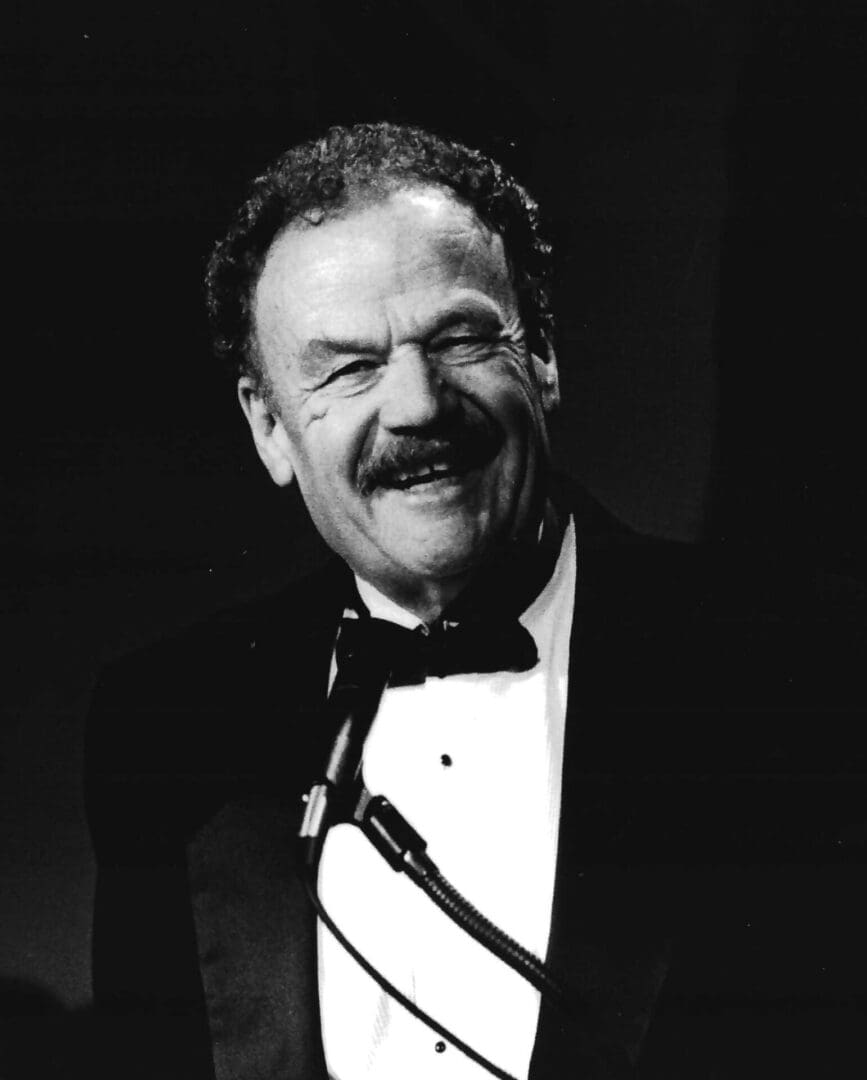 Dave McClelland
????–2022 One of the most recognized voices in drag racing belongs to Dave McClelland most commonly known as “the voice of NHRA”, who…
Read bio
Dave McClelland
????–2022 One of the most recognized voices in drag racing belongs to Dave McClelland most commonly known as “the voice of NHRA”, who…
Read bio
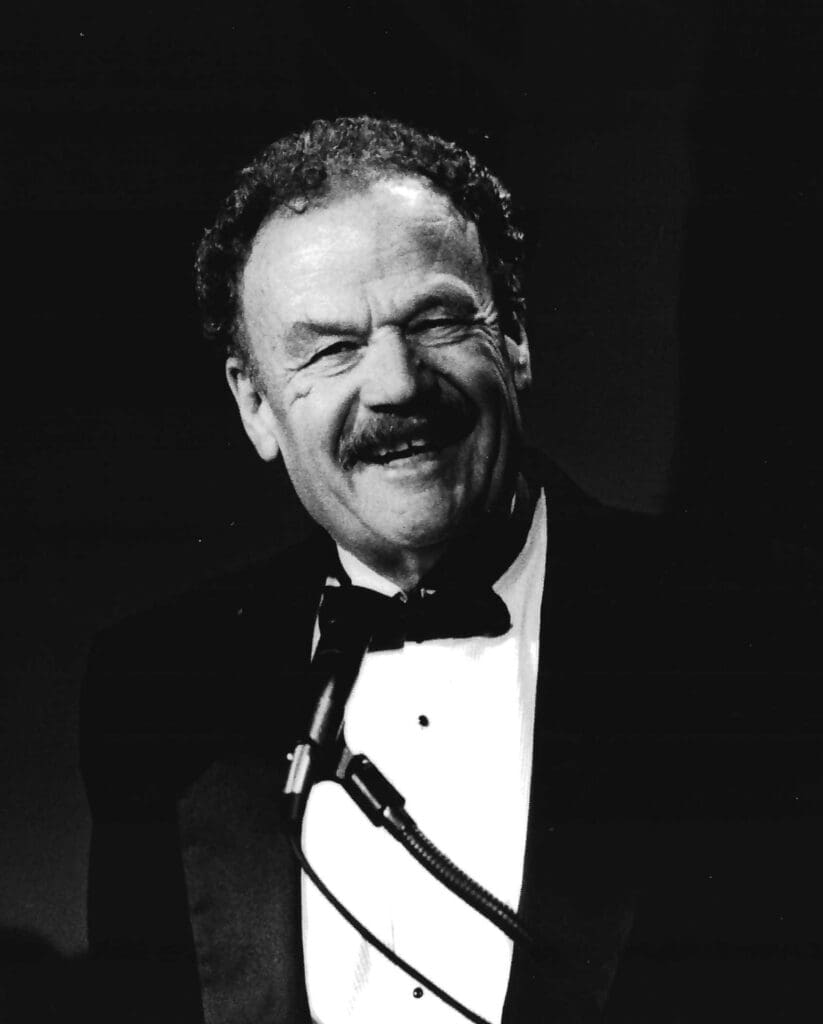 Class of 2005 · Founders AwardPresented by Mopar
Dave McClelland
One of the most recognized voices in drag racing belongs to Dave McClelland most commonly known as “the voice of NHRA”, who for over 40 years was one of the premier race announcers at the track, on radio, and on TV. However, Dave is not just announcer, he is also an enthusiast. Dave’s career in motorsports has paralleled his participation in the radio and television field, which began at Iowa State University in 1955. Dave announced his first drag race in 1959 and honed his skills as a race track announcer throughout the South and Southwest with a major portion of his early career experience coming from his work in Louisiana. Dave’s career received a major boost in 1961 when he was given the job of announcing the NHRA Nationals in Indianapolis.
In 1969, Dave resigned his post as program director of an NBC TV affiliate to begin a full-time career in racing, starting has the track manager in Houma, Louisiana in 1971 Dave joined the NHRA working in its promotions department. His tenure at NHRA lasted seven years, during which time he worked as Publicity Director, Public Relations Director, and Communications Director. In addition to these duties, Dave was also responsible for the production of NHRA’s radio and TV commercials and worked on the syndication of the Championship Drag Racing television series. Dave’s career as an announcer also includes working as masters of ceremonies and voiceover talent for a wide variety of clients including: NHRA, SEMA, NASCAR, ISCA, AARWBA, PWA, R.J. Reynolds, International Drag Racing Hall of Fame, Championship Auto Shows, Peterson Publishing, Emap, Primedia, Promedia, General Motors, Ford, Chrysler, Castrol, Mopar, Meguiar’s The California Highway Patrol 11-99 Foundation, Los Angeles Orthopedic Hospital, and other organizations too numerous to list.
Dave’s Master of ceremonies duties have also included work for the prestigious Meadowbrook Hall Concours D’ Elegance and the Cranbrook Concours D’ Elegance out of Detroit and as the Sport Class announcer for the National Air Races in Reno.
In 1978 Dave went to work at Argus publishing as an advertising account executive but didn’t confine his talents to just selling ads. While at Argus, he took on the responsibility of special projects which included the creation and development of the Super Chevy Sunday series of automotive events and the popular television series, Performance Plus from Popular Hot Rodding, a program that enjoyed an extended run on TNN. In 1984 Dave resigned from Argus to form his own company, Dave McClelland Enterprises, which serves a broad range of clients both in and out of the motorsports industry.
As a further indicator of the fact that Dave is and enthusiast he served on the announcing staff at NHRA Powerade Championship Drag Racing events and was the on-camera host for the Hot Rod Magazine television series seen on the Outdoor Channel. Dave served as the anchor play-by-play host of the NHRA Speed World coverage on ESPN and ESPN2 for over 27 consecutive years. He also served as co-host of the NHRA Today program that aired weekly on TNN and the voiceover host of the Hemmings Roadshow and The Classics Road Show both seen on Speed Channel. In addition to his work in the world of drag racing and car shows, Dave also did announcing for radio television coverage of other motorsports including Formula One Grand Prix, NASCAR, SCCA, IMSA, AMA motorcycles, sprint cars, midgets, short track stock cars, and even tractor pulls.
Ever the enthusiast, Dave successfully campaigned a Fiat altered coupe for over 10 years, with a high point win at the 1998 March Meet at Bakersfield California. Dave placed the completely restored car on display in the NHRA Motorsports Museum in Pomona California. He also owned numerous cars including: a big block powered 1955 Chevy Delray, a 1970 GS 455 Buick convertible with a factory four-speed, a 2005 C-6 Corvette, and even constructed a 1951 Chevy Sedan Delivery. Somehow during all of his activities, Dave managed to find time to marry his wife Louise, and they are the proud parents of three children who have expanded the McClelland plan with six grandchildren.
-
2005
 Jim Walther
Jim built his first hot rod, in 1950 Oldsmobile, when he was 17 years old. It started out stock, but it didn’t…
Read bio
Class of 2005Presented by Mopar
Jim Walther
Jim built his first hot rod, in 1950 Oldsmobile, when he was 17 years old. It started out stock, but it didn’t…
Read bio
Class of 2005Presented by MoparJim Walther
Jim built his first hot rod, in 1950 Oldsmobile, when he was 17 years old. It started out stock, but it didn’t take him long to modify it and enter it into the gas class wars. At age 18 he signed up for a two-year tour in the Army, but soon after talking with Connie Swingle Jim started looking at going top fuel racing. From 1960 through 1964, Jim divided his time between work, drag racing, and circle track midget car racing. During this time. Jim teamed up with two friends Dick Advey and Don Spangler, to campaign a 1956 Chevy first in C/MP and then in B/MP classes. The modified production classes were fun, but before long Jim was looking to go a lot quicker and faster.
In 1965, Jim and Advey purchased their first top fuel car, 134-inch Woody Gilmore car. Although this car was not the latest in design, Jim broke the 200 MPH barrier in it early on and went on to successfully campaigned for nearly two years. This is one of the original “low-budget” teams, and in 1966 Advey had to bow out of his share of the team. In 1967 Jim teamed up with Dave Metcalf, stretched the car to 165 inches and started to really build a solid reputation at the surrounding tracks. By the end of the 1968 season, it was assumed by everyone that when Walther pulled to the gates he would automatically qualify for the program.
In 1969, Jim procured some sponsorship funds to put together a new Woody car with a Hanna body and Ed Pink motor. With this car, Walther and Metcalf toured the country through 1971, consistently running in the mid-six second bracket and winning more than his share of races, such as the Turkey and CanAm Top Fuel finals in Windsor, Ontario, Canada. In 1970, Jim one top fuel at the Tri-City Fuel Show in Saginaw Michigan, the Turkey Trots in Gainesville Florida, the WCS Meet at Milan Michigan, the Professional Fuel Dragster Association meet in Orlando Florida, and the UDRA meet at Martin Michigan. He and the crew also finished second in the Division III WCS series and took several Best Appearing Crew awards, including the title at the US Nationals in Indy.
1971 was another great year for Jim, posting wins at the you UDRA meet at Saginaw Michigan and Milan Michigan, dominating the action in NHRA’s Division II and coming in second in the point standing in the division and placing fourth overall in the Top Fuel Eastern Conference series.
1972 was good to Jim also, with wins at the Turkey Trots in Gainesville Florida, the National Dragster Open in Columbus Ohio, the World Finals in Amarillo Texas, and a lot of local races in the NHRA’s Division II and Division III. Also, in 1972, Jim was named Division III Pro-Driver of the Year and Division III Man of the Year.
In 1973 Jim won the IHRA Winternationals in Lakeland Florida, the WCS Division II at Tri-City Saginaw Michigan, and the you UDRA meet at Martin Michigan. In addition to adding several other local top fuel show wins to his winning streak, Jim managed to match race most of the season from May to September. 1974 wasn’t the best year for Jim, and with the gas crunch, escalating cost of racing, and some engine problems he spent most the season match racing at local tracks. In 1975 the team sold out and disbanded, and while Jim drove for several top fuel teams in 1976, it wasn’t what he wanted to do so he decided to retire.
-
2005
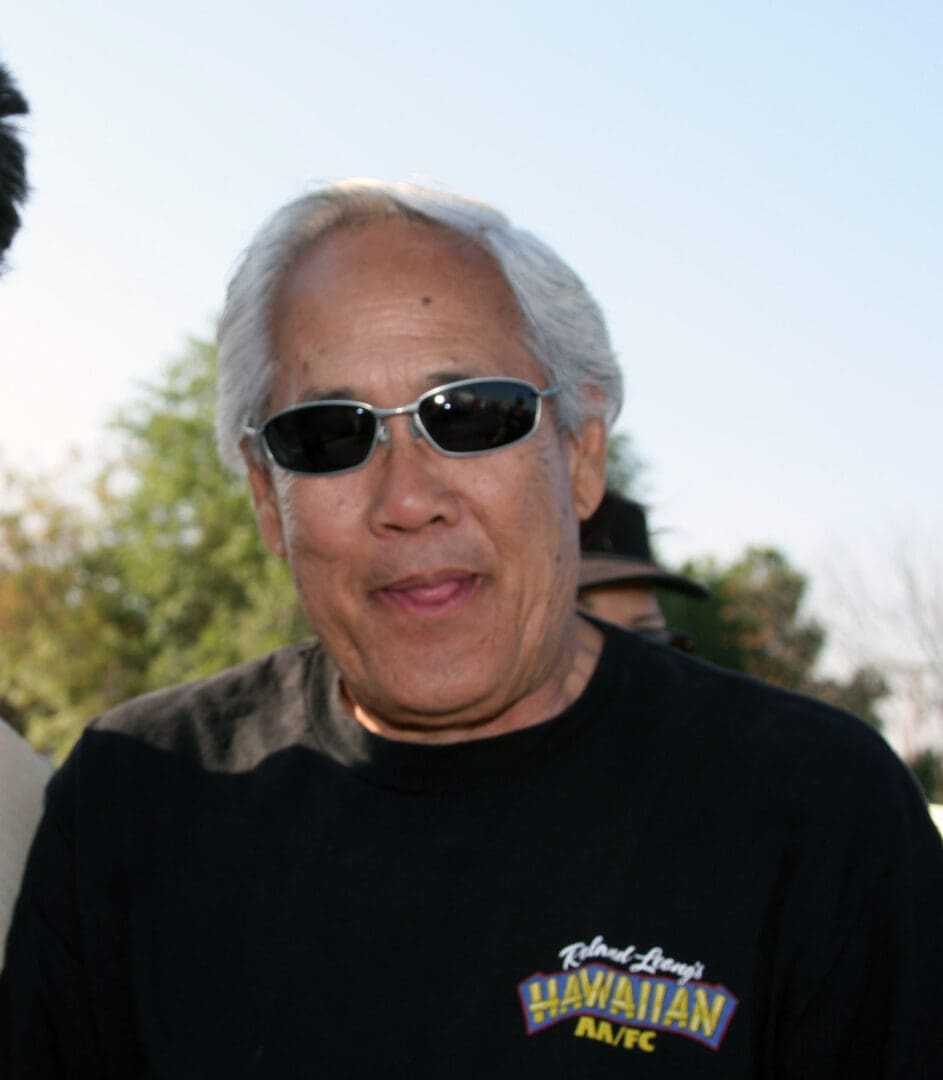 Roland Leong
1944–2023 Roland started his career drag racing while still living in Hawaii when he and a friend opened the speed shop and began…
Read bio
Roland Leong
1944–2023 Roland started his career drag racing while still living in Hawaii when he and a friend opened the speed shop and began…
Read bio
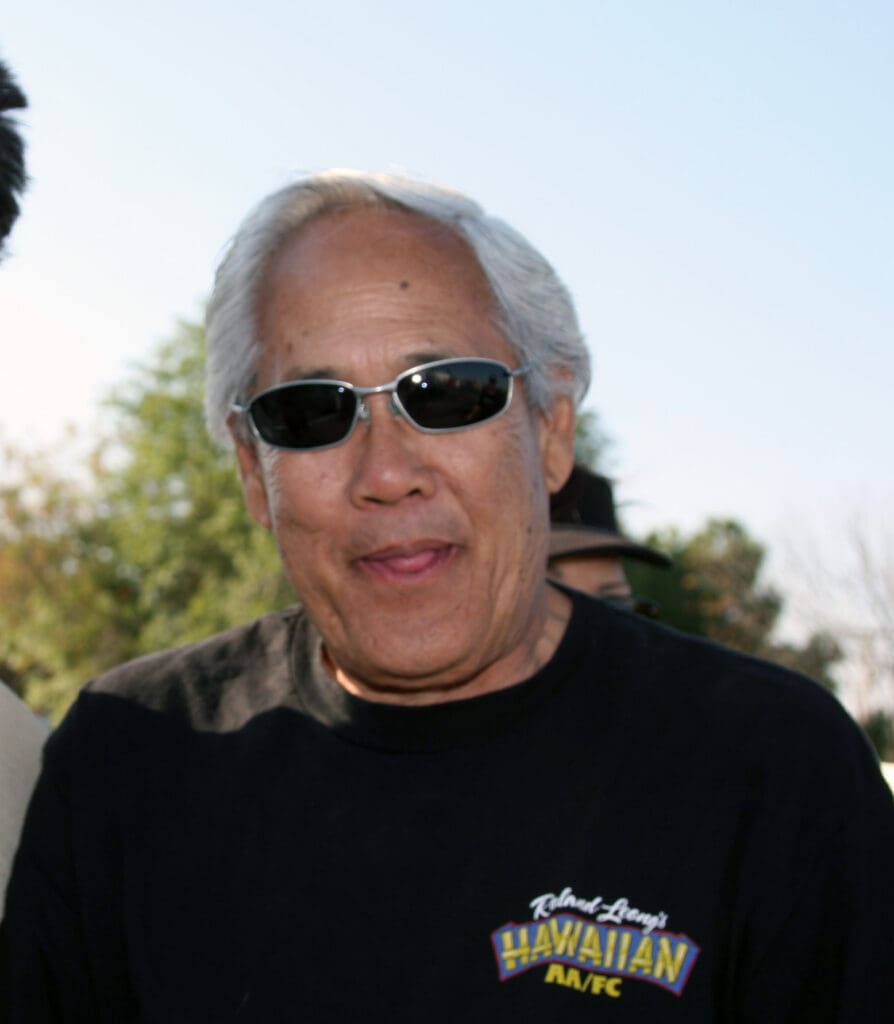 Class of 2005Presented by Mopar
Roland Leong
Roland started his career drag racing while still living in Hawaii when he and a friend opened the speed shop and began building a Dragmater chassis A/D. The partnership was very short-lived, and soon after it was dissolved, Roland headed for the main land with his race car and baggage. In 1961, at the ripe old age of 17 he went to work for Dragmaster chassis legend Jim Nelson and Dode Martin in Carlsbad California. In 1962 Roland drove his Dragmaster car at Pomona and Indy. In 1962 Roland teamed up with a fellow Hawaiian, Danny Ongais, and had a successful outing at the Winternationals in Pomona California. The pair managed to win the Hot Rod Magazine meet at Riversdale, California a few months later.
Still wanting to drive, Roland managed to get a ride in a blown Dodge powered AA/GD in 1963, and in 1964 he debuted as a driver of his first AA/FD car and the first of a long line of cars called “The Hawaiian”. The run itself was a pretty good run, but while trying to find the chute release at the end of the run, Roland veered off the strip and did a lot of damage to both the car and his pride. With the car rebuilt, Roland made a deal with Don Prudhomme to drive it, and at the 1965 Winternationals they captured their first major event win and followed up later in the year by winning the US Nationals in Indy. In 1966, Prudhomme went on his own with Mike Snively taking over the driving chores. For the first time ever, the team posted back to back wins for both the Pomona Winternationals and the US Nationals in Indy.
In 1969 Roland debuted his funny car at the Winternationals with Larry Reyes at the wheel while they won that round, Larry also wound up crashing the car. Roland and Larry’s appearance for the next year’s (1970) Winternationals was quite different when they went home with the Wally for winning the event. In 1971 with Butch Moss driving, Roland took home another Wally from the Winternationals to make it back to back wins. Roland continued to campaign the funny car, and in 1991 with Jim White at the wheel the team won the Big Bud Shootout and the US Nationals in Indy, and became the first funny car to run over 200 MPH. At the World Finals in Pomona that year they ran 291 MPH to capture the overall top speed of the event. While Roland was one of the first team owners to put together some strong sponsorship backing (his first coming from Hawaiian Punch and Kings Hawaiian Bakery), as the cost of racing escalated and finding sponsorship consumed more and more time and effort, Roland decided to hang it up as a team owner.
-
2005
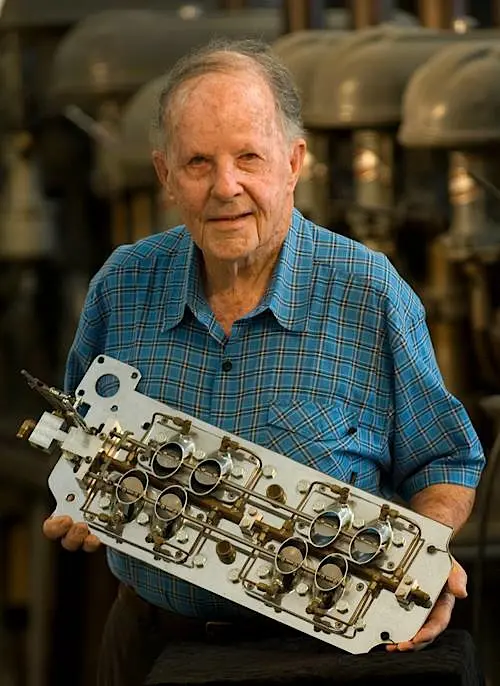 Stuart Hilborn
1917–2013 Stuart Hilborn, more commonly known as Stu Hilborn, started his career in racing in 1940 when he purchased a Model A roadster…
Read bio
Class of 2005Presented by Mopar
Stuart Hilborn
1917–2013 Stuart Hilborn, more commonly known as Stu Hilborn, started his career in racing in 1940 when he purchased a Model A roadster…
Read bio
Class of 2005Presented by MoparStuart Hilborn
Stuart Hilborn, more commonly known as Stu Hilborn, started his career in racing in 1940 when he purchased a Model A roadster with no engine in it from a used car lot. His next move was to buy a 239 cubic inch Ford flathead engine and start converting it into a real powerplant. It was about this time he met former Indy car driver Eddie Miller, and the two became longtime friends. It was Eddie who tutored Stu in the art of building a high-performance engine including grinding their own cams using a bench grinder. The roadster was okay, but wanted to go faster, Stu located the streamliner that was up for sale, and on December 7 (before he heard the news about Pearl Harbor), took possession of it. Stu was able to finish the car in time for the June event at Harper Dry Lake, and on his first run in the new car, he clocked 134.73 MPH, which was top speed at the event. With the war on and wanting to do his part, Stu stored the car and joined the Air Force. While STU was born in Canada and was not a US citizen, because of wartime regulations the normal citizenship process was greatly modified, so he was able to become an official US citizen in record time. Stu trained in the Air Force as an aerial gunner, but the closest to active duty he came was being one of the actors in a training film.
Stu designed his first fuel injector while in the Air Force but wasn’t able to start working on it until after he was discharged. Back home in Southern California, Stu immediately started working on the streamliner to get ready for the first race of the season. In order to compete that season he was forced to use carburetors; with work on his fuel injector being done in in his spare time. Since there were no dynamometers or fuel flow meters readily available at the time, he had to rely on his background as a chemist to try to formulate nozzles size, pressure, etc. necessary to make his injector work properly.
The first runs on the new injector system were during the 1946 dry lakes season, but it wasn’t until the 1947 season that Stu was able to really try them out. The injectors and engine work fine, but a wheel on the car dug into a soft spot in the salt and caused the car to flip end over, so it was 1948 before the car was rebuilt and the new system was able to be run and proven. At the first event of the 1948 season, Stu’s car became the first car to break the 150 MPH barrier and prove the superiority of the new injection system over carburetors. After the success of the injectors on the Ford flathead engine, Stu designed a system for the Offenhouser engine that was so popular with the midget crowd. The first test on the Offenhouser proved the value of the injection system on that engine as well, and before long it was a system ready for the 270 Offy engine. In 1951 of Stu’s fuel injectors was on the car driven by Mauri Rose in the Indy 500 that came in third. After that, Stu Hilborn and his fuel injectors became a very common sight around the Indy 500. Also, about this time, Stu began developing injector systems for the drag racers and other forms of racing that had previously use carburetors.
While Stu spent over 40 years of his life involved in racing at Indianapolis, and his injectors have been used on every engine configuration that has been used in the race, he was also instrumental in designing and rebuilding injectors for nearly all other forms of racing as well, including multiple designs for various drag race uses. Cars running Hilborn Injectors have set records in just about every class from un-blown gas and fuel cars to blown gas and fuel dragsters. While other many companies have developed fuel injection systems for use in racing and on the street, Stu Hilborn was the first person to make injection a “must-have” piece of equipment for the serious racer.
-
2005
Kent Enderle
????–2016 Like a lot of men his age, Kent Enderle developed a love affair with cars and high performance at an early age.…
Read bio
Class of 2005Presented by Mopar
Kent Enderle
Like a lot of men his age, Kent Enderle developed a love affair with cars and high performance at an early age. Kent built his first race car at the age of 15 with the help of two of his friends. The car had a modified coupe body and was powered by a four-cylinder Model A Ford engine that was modified by the trio. The car was built to be functional, and while it performed very well for that time, in the words of a magazine writer the car was “brutally functional”. From this humble beginning, Kent went on to build and compete with a variety of machines at the drag races, El Mirage and Bonneville. One of the teams Kent was most closely involved with was Brad Anderson during the period when the team was so successful in the top alcohol classes. Their alliance served as a dual purpose: one was simply to be part of the competition, and the other was to develop new products for the sport.
Also like a lot of the other founders of various forms of speed and performance equipment, Kent was not always satisfied with the performance he was getting from the available equipment, plus he had ideas that he believed would improve on the existing parts, so he soon modified and was building new parts that did improve on the performance of the existing equipment. At that time, one of the least understood forms of equipment for gaining additional performance from any engine was the fuel injection system available. As various problems arose from the systems he was using, Kent simply fix them by designing and building parts of his own. Before long, word of what Kent was doing and the additional amounts of horsepower his injectors squeezed out of the engine spread throughout the sport, and in 1960 he opened his original “manufacturing” facility in a 400 square feet building located in Eagle Rock, California. Today’s 18,000 square-foot facility in Simi Valley, California is a long way from the humble beginning in Eagle Rock, but it truly reflects Kent’s dedication to the sport.
One of Ken’s earliest and most famous designs was the Enderle Barndoor Injector that worked so well with supercharged engines. This unique unit was used by many of the top racers of that time, including George Bolthoff, Ted Cyr, the Frantic Four, and Tony Nancy to name a few. In 1962, Kent introduced his small block Chevrolet port injector that was aimed primarily at the junior fuel classes of that time. The system allowed the unblown, 300 cubic inch engines to use a 95% to 100% nitro mixture without destroying themselves and yet perform well enough to often win overall top eliminator at the local drag races.
In 1963, the even more famous and popular and Enderle Bugcatcher was introduce and was an instant success. In addition to providing more power the Bugcatcher was easier to set up and tune and allow the racer to make changes quicker. Over the years the Bugcatcher has seen a lot of modifications including the use of a hat nozzles in the nitro barrel valve, but the basic unit is still much like the original design. To the nitro-burning AA/FD and AA/FC teams the Bugcatcher provided the fuel system necessary to keep extracting more and more power from the engines. In an effort to satisfy the ever-increasing demand for more power, in 1985 Kent developed the Buzzardcatcher injector system that allows the racer to tailor the fuel curve to his specific needs and also provide an even greater volume of fuel.
Kent never lost his enthusiasm for drag racing, but in the mid-80s he discovered tractor pulling and became so interested in 1987 he initiated and sponsored an annual pull off for this division of motorsports.
In recognition of his involvement in the sport as a participant, a manufacturer, and a sponsor Kent was inducted into the dry Lakes racing Hall of Fame in 2003.
-
2005
 Nick Arias
1929–2017 Like a lot of young men coming out of world War II, Nick Arias Jr. was crazy about the fast, loud cars…
Read bio
Class of 2005Presented by Mopar
Nick Arias
1929–2017 Like a lot of young men coming out of world War II, Nick Arias Jr. was crazy about the fast, loud cars…
Read bio
Class of 2005Presented by MoparNick Arias
Like a lot of young men coming out of world War II, Nick Arias Jr. was crazy about the fast, loud cars that were part of hot rodding and liked how everyone involved was trying to make their cars out perform what the factories offered. In 1949 Nick attended the first organize drag race held at Goleta, California and was completely hooked. Nick went to work at Wayne Manufacturing, a company that built six-cylinder GMC engines and started learning just what was involved in building an engine. Located next to Wayne Manufacturing was a company owned by Frank Venolia (not the Venolia pistons known throughout the racing community) that manufactured pistons for Wayne Manufacturing engines. While learning about engines at Wayne’s, Nick also learned a lot about pistons, their makeup, and how different configurations and alloys work by hanging around Frank’s place. At the same time, he was learning from these people he was experimenting with various combinations of his own and learning a lot by trial and error. A lot of what the hot riders were trying out in their cars at the time simply wasn’t in any book, so he joined the ranks of guys looking for ways to go quicker and faster by experimenting with whatever it took, including making their own parts and pieces.
In the 1950s, Nick started attending meets at the dry Lakes and Bonneville where he ran a six-cylinder GMC powered coupe on alcohol. During this time Nick met Lou Baney, who was racing a Cadillac powered dragster, and before long he was working as part of Lou’s crew. This was the time when car clubs were big, and Nick became a member of the Screwdrivers Car Club and also join the Rosetta Timing Association, which was one of the big associations running races at the dry lakes.
Working at Wayne’s Manufacturing and playing with his hot rods was fun, but in 1969 Nick decided it was time to get serious about his life and at the same time turn his hobby into a way to earn a living, so he founded Arias Pistons. Nick’s goal was to provide the consumer with the very best pistons and other parts available so they could go quicker and faster but with more reliability.
In 1972, Nick introduced a Hemi head conversion for the big block Chevrolet engines. This gave the people who liked and wanted to run the Chevrolet engine the opportunity be more competitive against those using the more popular Hemi head Chrysler engine. In 1975 Nick followed the Hemi head conversion with a 10 leader “top fuel” design engine that was actually designed for use in offshore power boat racing. This “monster” engine was soon followed with an 8.3-liter engine designed to meet the rules of drag racing. Over the years, Arias Pistons designed and built engines and pistons for everything from street rod machines to all-out racing to competition aircraft.
Nick remained active in the sport designing and building various parts and pieces for the enthusiast and playing around with custom engine components such as a 12 port Chevy head introduced by Zeke Zacherson for the lake events. Nick also opened a new company, Nick Arias Jr Racing Components, with the purpose of offering the racers some great products.
Nick was recognized with awards from several organization as an innovator, a quality parts manufacturer, and a designer; but one of the awards he was the proudest of is the 2000 California Hot Rod Reunion Lifetime Achievement for Manufacturing Award. Also ranked as one of his proudest moments was being inducted into the Gold Coast Roadsters and Racers Hall of Fame at the 1996 annual GAS UP in Buellton, California. This honor placed Nick in the ranks of legends such as Ed Iskenderian, Clay Smith, Andy Granatelli, and a host of others.
-
2005
 Tim Beebe
 was first introduced to the world of racing by his father, Merrill Beebe, who was racing midgets and sprint cars…
Read bio
Class of 2005Presented by Mopar
Tim Beebe
Tim Beebe was first introduced to the world of racing by his father, Merrill Beebe, who was racing midgets and sprint cars…
Read bio
Class of 2005Presented by MoparTim Beebe
Tim Beebe was first introduced to the world of racing by his father, Merrill Beebe, who was racing midgets and sprint cars at the local circle tracks. Tim’s first car was a 1953 Olds that he started modifying and taking to local drag races. Even while he was drag racing the Olds, Tim felt a strong loyalty to circle track racing because of his dad, but it was easier for him to go drag racing, so that is where he stayed. The Olds was followed by a modified 1956 Chevy that Tim raced with some success.
Tim’s first step in becoming involved with the highly modified part of drag racing came when he teamed up with Frank Fedak on an altered Fiat powered by Tim’s blown and carbureted small block Chevy engine and driven by John Mulligan. The car was a class contender from the very beginning and pave the way for his future success. Next came in altered Bantam roadster powered by the Chevy engine out of the Fiat and driven by his brother, Dave Beebe. Like the Fiat, the Bantam was very competitive, but like all races, Tim wanted to go quicker and faster, so he made the move to AA/fuel dragsters.
In the mid-60s, Tim decided to become a full-time race car mechanic/crew chief/owner and teamed up with his brother Dave and Lee SIxt to on the highly successful Beebe brothers and Sixt top fuel dragster with Dave doing the driving.
In 1967, Dave Beebe decided he was just too busy to continue driving and suggested that their neighbor, John Mulligan, take over the driving chores. Tim and John both like the idea, and soon the now legendary Beebe and Mulligan AA/FD team was born. Tim and John were soon on tour with the car and are still counted among the original touring pros of drag racing. At the 1969 NHRA Winternationals in Pomona California the Beebe and Mulligan car beat Don Prudhomme in the final round to win the event. Later that year, Tim and John ran two-tenths of a second quicker than the rest of the entire field at the NHRA Nationals in Indy to set a new ET record at 6.43 seconds. Unfortunately, in the first round of eliminations there was a fiery crash in which John lost his life, and the car was destroyed. The following year Tim and Dave built the Beebe Brothers AA/FC and spent the entire season racing locally in Southern California. At the last points race at Orange County Raceway they set a new NHRA ET record and secured an invitation to the 1970 World Finals. In 1971 Tim built the “Fighting Irish” funny car, hired Dick Roseburg as the driver and again became a touring pro. 1973 saw Tim back in the AA/FD wars when he teamed up with Jim Murphy to run a rear engine top fuel dragster. The highlight of the 1974 season for the pair was winning the UDRA Championship. In 1975 Tim decided to retire from racing and move to Porterville, California where he went to work at B&J Transmissions, which at the time was building one of the more successful automatic transmissions used in drag racing. After a short time at B&J, Tim open B&B Transmissions “down the road a piece” but still in Porterville, and built it into a very successful business.
Tim came at a retirement 2001 when he rejoined Jim Murphy as crew chief for the Jim’s WWII Racing effort in nostalgic drag fuel wars. With Tim as the crew chief, the WWII Racing team has managed to chalk up a number of event wins, run a record top speed of 256 MPH and set the ET record at 5.71 seconds. It also won the VRA Fuel and Gas Championships in 2004. Among his other awards and records, Tim won the Car Craft Magazine Top Fuel Dragster Crew Chief of the Year award in both 1969 and 1970.
Class of 2004
6 inductees-
2004
Founders Award
 John Raffa
1935–2004 The Founders Award is designed to honor those individuals who have had a dramatic impact on the sport and what can be…
Read bio
Class of 2004 · Founders AwardPresented by Mopar
John Raffa
1935–2004 The Founders Award is designed to honor those individuals who have had a dramatic impact on the sport and what can be…
Read bio
Class of 2004 · Founders AwardPresented by MoparJohn Raffa
The Founders Award is designed to honor those individuals who have had a dramatic impact on the sport and what can be best described as” special ways”. John Raffa began his career as a journalist in earnest when he was hired to become managing editor of Super Stock and Drag Illustrated in the mid-1960s. Since that time, John occupied a unique position as a teacher and mentor to others. A gifted writer and editor Raffa was always eager to pass along the lessons he has learned about journalism and editing to the new generation, with the sport of drag racing being the ultimate beneficiary of his legacy.
In 1967 Raffa was ensconced in the offices of Car Craft Magazine, where he quickly climbed the ladder from Managing Editor, to Editor, and ultimately assume the position of Publisher. As he did while at Super Stock and Drag Illustrated during his tenure at the publication bring the credo “drag racing’s complete magazine” on its flag, Raffa champion the sport of drag racing for all classes. One of his pet projects was the Car Craft Magazine All-Star Drag Racing Team program, which today is still considered one of the top awards a drag racer can receive.
John was also always looking for new enthusiastic youth writer/photographers who he could introduce to an eager audience of drag racing fans. Among Raffa’s “finds” were the late Steve Collison and Ro McGonegal, who would also go on to edit Car Craft and number of other prime publications. As the Publisher, Raffa often had to be a buffer between the writers and company management to make sure the stories and information printed in the magazine maintain their editorial integrity.
Raffa returned to Super Stock and Drag Illustrated in 1971, where he served as the magazine’s publisher for about 12 months. While his tenure in this position wasn’t a long one, his influence would be felt for a long time afterwards. It was Raffa who helped guide Jim Kelly into becoming an effective magazine editor. “I didn’t know anything about doing that kind work” Kelly recalls “Raffa taught me how to effectively read copy and make it ready for publication. Without his willingness to teach me how to do it, I wouldn’t have held the job very long”. Raffa had this same positive influence on numerous other writers whose names are well known in the publishing world.
Through the late 70s and early 80s, Raffia served as editor for both Phil Engeldrum and Haynes Publications, where he inserted drag racing stories in those magazines as often as possible, but by 1985 he was back doing what he’s always done better than anyone else in the history of drag racing photojournalism; teaching others how to be better writers and editors. Working closely with National Dragster editor Phil Burgess, Raffa helped change the publication’s direction by teaching the younger staffers how to become not only better writers, but better reporters as well. Raffa didn’t stop with the young writers; he also worked with some of the staff’s most experienced journalists, and without changing their individualistic styles, he helped them become more professional. As National Dragsters editor Phil Burgess has said, “John Raffa taught our less experienced writers how to become professionals, while at the same time making the rest of us better as well. He helped make National Dragster a quality publication, one that we could all be proud of”.
John’s involvement with publishing Drag Racing Action Magazine help shape its editorial package into a very readable one. John when not actively working on any specific publication would spot an editing error or something in a magazine he thought could be improved, he was not bashful about picking up the phone and gently discussing it with the writer. The results mean that is an eager audience of fans and participants are going to read better and more comprehensive stories about the sport we all love so much.
John Raffa never developed a performance-enhancing product or won a national event from behind the wheel. Rather, what Raffa did throughout his career is generously provide advice and guidance to an untold number of photojournalists, helping provide the readers of various publications with exciting and informative stories and the sports participants better coverage of their accomplishments; all of which help the sport grow to what it is today.
-
2004
 Henry Velasco
Henry was born and raised in Bellflower, California. After graduating high school, he went on to work at Harold Miller’s engine rebuilding…
Read bio
Henry Velasco
Henry was born and raised in Bellflower, California. After graduating high school, he went on to work at Harold Miller’s engine rebuilding…
Read bio
 Class of 2004Presented by Mopar
Henry Velasco
Henry was born and raised in Bellflower, California. After graduating high school, he went on to work at Harold Miller’s engine rebuilding shop, where he learned to grind stock crankshafts. In 1959 he went to work at Reath Automotive in Long Beach, California. There he learned to make welded strokers for a number of drag racers running in Southern California at the time.
In 1971 he started Velasco Crankshaft Services in Downey, California building welded strokers and started manufacturing affordable billet crankshafts for racers. He has supplied crankshafts for over 30 years to racers, street rodders, and anybody else with the need to have a quality crankshaft for whatever type of automobile they were building.
Henry was a partner in tuner for a number of race cars through the years. Some of them included the Dounn, Merit & Velasco Race Team, and Zane Shubert’s The Good, Bad and Ugly Top Fuel Dragsters. He was also crew chief for John Force in the early 80s. Another noteworthy fact is that he has had a crankshaft on display at the Smithsonian Museum in Washington DC.
Henry Velasco has been involved in drag racing for over 50 years. He is shown his love for the sport through his dedication, the people he’s been involved with, and through the manufacturing of his crankshafts which he is supplied to a large portion of the top professional drag racers and hobby racers over the years.
-
2004
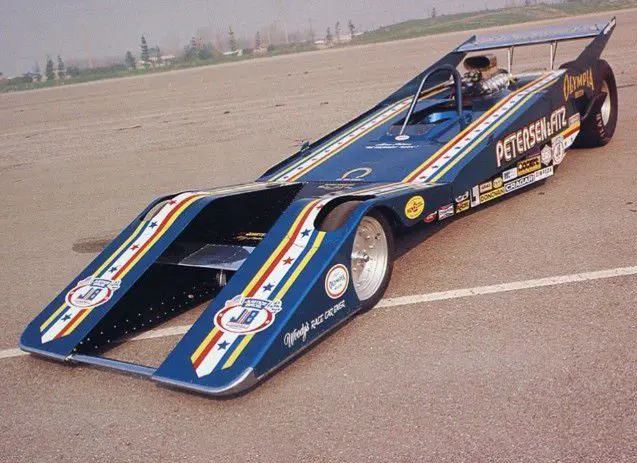 Sam Fitz & Herm Petersen
In 1960 Herm Petersen joined the Handlers Car Club, which was the beginning of his drag racing career. The Handlers Car Club…
Read bio
Class of 2004Presented by Mopar
Sam Fitz & Herm Petersen
In 1960 Herm Petersen joined the Handlers Car Club, which was the beginning of his drag racing career. The Handlers Car Club…
Read bio
Class of 2004Presented by MoparSam Fitz & Herm Petersen
In 1960 Herm Petersen joined the Handlers Car Club, which was the beginning of his drag racing career. The Handlers Car Club ran the local dragstrip in Bremerton, Washington, and in 1961 Herm took over the duty of track manager, a position he held until 1968. In 1965 he was elected to the position of club president and continued as president until 1968.
In 1968 he competed in his first top fuel car, the “Viking”. In 1970 Petersen and Fitz who was a Bremerton businessman, the owner of three local restaurants, became friends, and shortly thereafter the Petersen and Fitz Race Team was born. The team campaigned mainly up and down the West Coast and in NHRA’s Division VI for the next couple years, and was dubbed “The Northwest Terror”.
In 1973 the team experienced what was one of their career highlights when they won the NHRA Gatornationals. In July 1973 the teams luck turned upside down when the car flipped over at Orange County International Raceway and Herm received critical burns over 50% of his body and face. While Herm was spending the next four months in the hospital and more time at home recovering from the burns, Sam was busy securing a three-year sponsorship agreement with Olympia brewery and building a new streamliner.
The streamliner debuted at the 1974 NHRA Winternationals in Pomona. The cars design was beautiful, but unfortunately, it proved to be too heavy to be competitive and was very quickly retired. The streamliner is on display at the Don girls Museum of Drag Racing. In May 1974 the team debuted a conventional rear engine dragster and ended the season by taking home the division VI Championship. At the NHRA World Finals they became one of the elite teams to enter the five second arena with a blast of 5.87 ET at 241.96 MPH.
The team retired its operation in 1977, and Sam return to the restaurant business. Unfortunately, Sam Fitz died in April 2000, just a few much before he and Herm were inducted into the NHRA Division VI Hall of Fame.
-
2004
 Benny Osborn
 was typical of the racers from the 50s and 60s. He started racing because of his interesting cars and engines,…
Read bio
Class of 2004Presented by Mopar
Benny Osborn
Benny Osborn was typical of the racers from the 50s and 60s. He started racing because of his interesting cars and engines,…
Read bio
Class of 2004Presented by MoparBenny Osborn
Benny Osborn was typical of the racers from the 50s and 60s. He started racing because of his interesting cars and engines, and he liked the speed. While he was quiet and unassuming in his everyday life, when he was in a race car he was one of the strongest competitors around. Osborn began his career in 1958 in a Chevy powered B/Modified Roadster. While the roadster itself served as the basis for the next four years, it did undergo several modifications as Osborn periodically lengthened it to meet the increasing speeds and then the carburetors on the Chevy were set on top of a supercharger. Osborn’s final conversion to the modified roadster was to stretch it enough to accommodate a second blown Chevy engine and remove the roadster body so that was a legal top gas dragster.
While Osborn had a lot of success and wins in the modified roadster, the twin engine dragster really moved him into the national spotlight. In 1962 Bernie won the AHRA Nationals Top Gas title at Green Valley, Texas and campaigned the car throughout the Southwest, winning against the likes of Eddie Hill and Jimmy Nix. Always searching for greater performance and speed, in 1963 Osborn sold the twin-engine car and built a super lightweight Chevy powered top fuel dragster. While the car was very competitive, while racing at Mo-Kan Dragway in Kansas, Osborn crashed and was seriously injured. After recovered from his injuries he joined his friend Leon Fraser’s crew but decided he really wanted to drive again.
As soon as he made the decision to drive again, Osborn purchased Fred Swanda’s Woody Gilmore built top fuel car and put together a blown Chrysler for power. The car proved to be one that would give Bernie his greatest moments in racing. It was in this car he won back to back NHRA top fuel world championships. In 1967 he defeated Don Prudhomme in the final round of the NHRA World Finals in Tulsa Oklahoma to become the NHRA Top Fuel Champion (at this time, the winner of the world finals was declared the top fuel champion). By 1968, Osborn had added a full body to the dragster, making it not only one of the most feared cars on the circuit, but also one of the most beautiful ones as well. 1968 proved to be another stellar year for Osborn. He defeated Beebe and Mulligan to win the NHRA World Finals in Tulsa in and won the AHRA Top Fuel World Championship event in Kansas City. Earlier that year in what was billed as the “richest-per-second” sporting event, Osborn beat Tom “The Mongoose” McEwen in a one-shot match race for $14,000, which was a lot of prize money at that time.
Osborn continue campaign his front motor dragster through the 1970 season. In 1971 he fielded a rear engine powered dragster but midway through the year decided the cost of running the car both in time and money was too much, and he retired from the sport. Osborn went on to operates a garage that did all around service on street driven cars. Like most strong competitors, their times Benny does miss the sport, but he admits he also likes it much better when everyone was into making a lot of their own parts and it was a lot cheaper to run a car.
-
2004
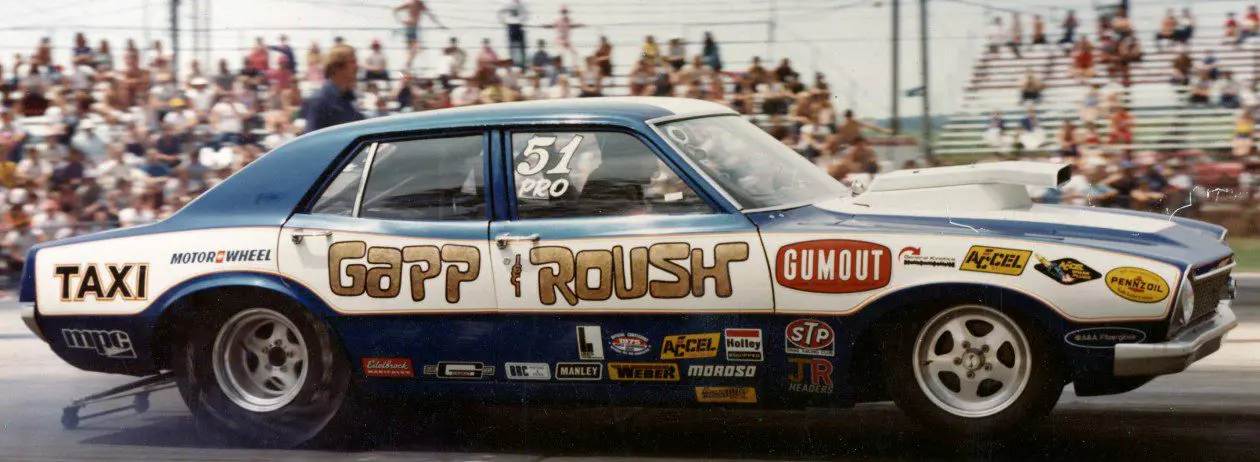 Wayne Gapp and Jack Roush
Wayne Gapp was introduced to the sport by his neighbor and well-known racer Arnie Beswick when he began hanging around Beswick’s garage.…
Read bio
Wayne Gapp and Jack Roush
Wayne Gapp was introduced to the sport by his neighbor and well-known racer Arnie Beswick when he began hanging around Beswick’s garage.…
Read bio
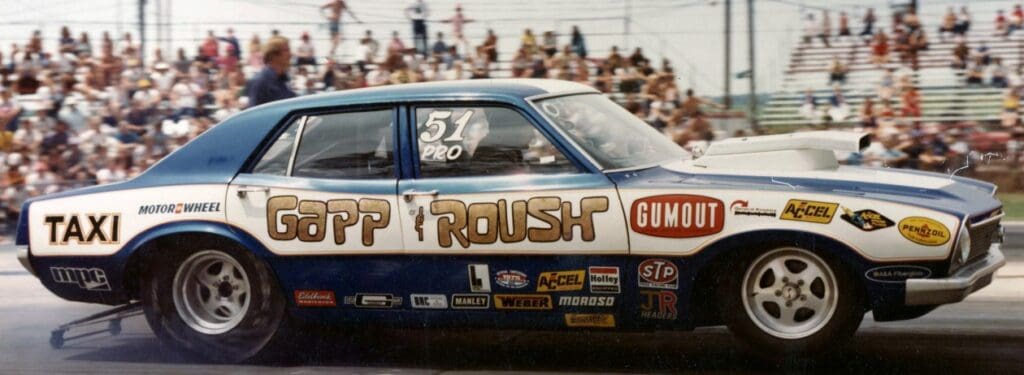 Class of 2004Presented by Mopar
Wayne Gapp and Jack Roush
Wayne Gapp was introduced to the sport by his neighbor and well-known racer Arnie Beswick when he began hanging around Beswick’s garage. After graduating from college, he soon found his way into Ford Motor Company. In 1964 a group of engineers formed the racing club, the “HiRisers”, with the thought in mind to counter the Ramchargers factory backed efforts. Ford Motor Company supplied them with a 1964 427 Thunderbolt, none of the group had much racing experience, and soon Wayne inherited the club assets. Wayne set out to build his own racing organization and was soon provided a 1965 427 SOHC A/FX Comet by Lincoln Mercury, which he campaigned very successfully, setting a new class NHRA ET record along the way. In 1969 Ford formed a new high-performance engine group and Wayne was put in charge of the 429-engine program, so he had to put his racing career on hold. About a year later, Ford withdrew its support from all racing, and Wayne left the company to pursue his drag racing career again.
Jack Rausch has always been more interested in why and how things work and how to improve them. In 1964 after receiving a degree in mathematics and a minor in physics, Ross was recruited by Ford Motor Company to work on the processing of car assembling and tooling, but his real interest was engines and how to improve them. As a Ford Motor Company employee, Jack was soon drawn into the company’s extensive motorsports activities. In 1966 Jack joined a group called “The Fastback’s”, which was composed of a group of performance minded Ford Motor Company engineers all interested in one common goal; going faster than anyone else at the racetrack. In 1969 track left Ford and began setting up his own performance/development shop. Typical of most Rausch efforts, he was soon doing development work for other teams as well as his own. In 1970, “The Fastback’s” disbanded, and Rausch began looking for a new venture. As a side note, in 1971 in 1972 while the Gapp and Rausch team was complaining their pro-stock Maverick, Jack was still doing development work and teaching mathematics, physics, and a variety of automotive subjects at Munroe Community College.
It was at this time that Wayne and Jack got together and entered the pro-stock wars. In 1971 in 1972 the team campaigned a 429 Maverick that was strong but had limited success against the Chrysler Hemi. In 1972 NHRA changed the rules to include small block engines, and the team built a small block “development” Pinto using a lot of the technology learned in the development of the 366 NASCAR engine. In 1973 the small block car set several track records and powered the team to the 1973 Pro Stock Championship. In 1974 the team campaigned two pro-stock cars. Gapp drove the infamous four-door Maverick named the “Taxi”, and Rausch drove a sleek Mustang II. The Mustang ran mainly on the East Coast match race circuit, but in the late summer of 1974, Rouch flipped it at Capital Raceway in Maryland. This was the event that was pretty much responsible for the end of his driving career in drag racing.
As opposed to the sleek Mustang and the “standard fare” two-door sedans used by other pro-stock competitors, the Maverick being a four-door sedan soon captured the imagination of the press and the spectators, and at the same time performed up to everyone’s expectations. They race the “Taxi” in Brazil and Puerto Rico as well as the states and by the end of the year had set numerous track records. The “Taxi” won the IHRA Pro Stock Championship, Le Grandnational-Molson Nationals, the NHRA US Nationals, and was runner-up for the NHRA Pro Stock Championship. One other title they one in 1974 was a very rare one, the IHRA Southern Nationals in Charlotte, North Carolina, a 1/8-mile event. At their win at the Le Grandnational event they also set a new NHRA ET record at 8.84 seconds. 1975 was another successful year with wins at the Le Grandnational-Molson Nationals, NHRA Summernationals in Englishtown, and a repeat at the NHRA US nationals.
By the end of the 1976 season, the team had no corporate sponsorship and had formed different personal goals, so the two decided to disband the program. In 1988 Gapp retired from doing prototype development and moved to Florida to pursue his hobby of fishing. Rausch, on the other hand has continued to pursue his interest in racing, moving first to the GTX and TTP cars, then to SCCA and IMSA. In 1988 Jack expanded into the NASCAR circuit, where he has been very successful.
-
2004
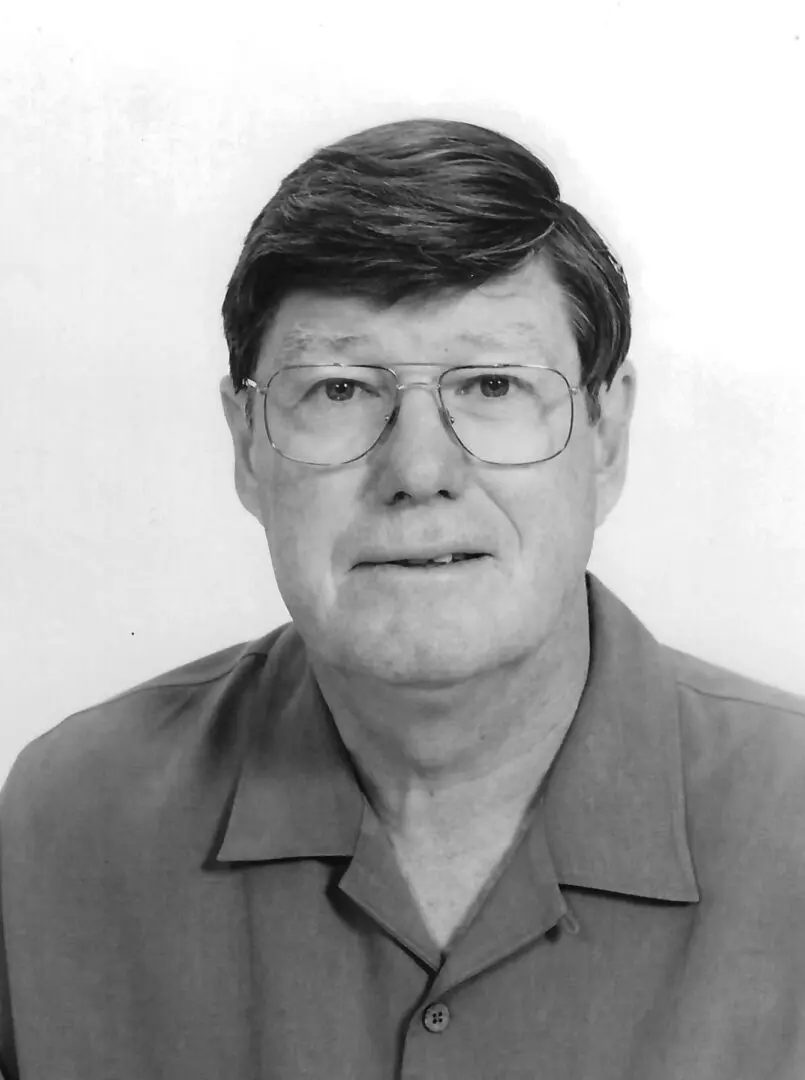 Brad Anderson
Before putting his driving suit in the closet for good at the end of the 1991 season, Anderson managed to collect 24…
Read bio
Brad Anderson
Before putting his driving suit in the closet for good at the end of the 1991 season, Anderson managed to collect 24…
Read bio
 Class of 2004Presented by Mopar
Brad Anderson
Before putting his driving suit in the closet for good at the end of the 1991 season, Anderson managed to collect 24 top alcohol funny car race victories, becoming the categories first three-time series champion (1984, 1985, 1989), and was among the first 16 alcohol funny car drivers to run in the five seconds ET. He also won 18 NHRA Division 7 Titles.
The first of Anderson’s wins came at the 1981 Winternationals in Pomona, not far from his home and shop. He added two more wins before the season’s end. He won at least one national event for 10 consecutive years. Most of the wins were collected when the NHRA National Event Schedule consisted of 12 to 19 races instead of the 24 of today.
Brad dominated en route to his first season title in 1984, winning six of the 12 national events, including the first of three US Nationals triumphs. His own winner’s circle photos came at Gainesville FL, Bowling Green KY, Denver CO, Brainerd MN, and Pomona CA.
He opened 1985 with a Winternationals win and took home title trophies at Baton Rouge and Indy for the second straight time to clinch another series crown. Brad added two more three-win seasons, including 1989, his final championship campaign. His last US Nationals win was in 1987.
Brad is married to Carol, and they have three children Leanne, Randy, and Shelley.
BAE cylinder heads remain the staple as Anderson supplies parts to a large percentage of the top fuel and funny car fields and 85% of the alcohol dragster teams.
Class of 2003
11 inductees-
2003
Founders Award
Angelo Giampetroni
Angelo Giampetroni is best known as the guy at Ford SVO who helped FMO keep its high profile with the racers and…
Read bio
Class of 2003 · Founders AwardPresented by Mopar
Angelo Giampetroni
Angelo Giampetroni is best known as the guy at Ford SVO who helped FMO keep its high profile with the racers and hot riders, but his history in the sport is long and varied. Angela’s first job was with Gratiot Auto Supply at the age of 12. While his duties at first were restricted to sweeping up and putting things in place, it wasn’t long before he was becoming more and more involved with the business side of Gratiot.
As soon as he could legally own a cart, Angelo purchased a 1932 Ford five window coupe with a 292 cubic inch flathead engine for power. This also became his first race car to complete with Grancor heads, Isky cam, and as many “goodies” as were available at the time. While the car was his daily transportation, it was also stout enough to clock over 120 mph at Motor City Dragway and Detroit Dragway. One of Angelo’s more famous race cars was a rear engine 1920 T Roadster powered by a 480 cubic inch Buick and affectionately known as “Li’l Billy”. Li’l Billy was one of the quickest and fastest cars at the time, turning 168+ MPH within an ET of 9.30 seconds.
Using the knowledge gained in his years at Gratiot Auto Supply, in 1969 Angelo founded Detroit Hi Performance and begin distributing performance parts on a nationwide basis. In 1970 the business became Gratiot Auto Mail Order and was soon shipping performance parts around the world. Gratiot Auto soon became one of the best known and recognized names in the hot rod world. Angela promoted the business through the weekly enthusiasts’ newspapers, in magazines such as Hot Rod Magazine, local newspapers, and was one of the first speed shops to incorporate the use of TV in its promotions. To add more zip to his TV promotions, Angelo brought Miss Hurst, Linda Vaughn, on board as one of Gratiot’s most visible spokesperson.
-
2003
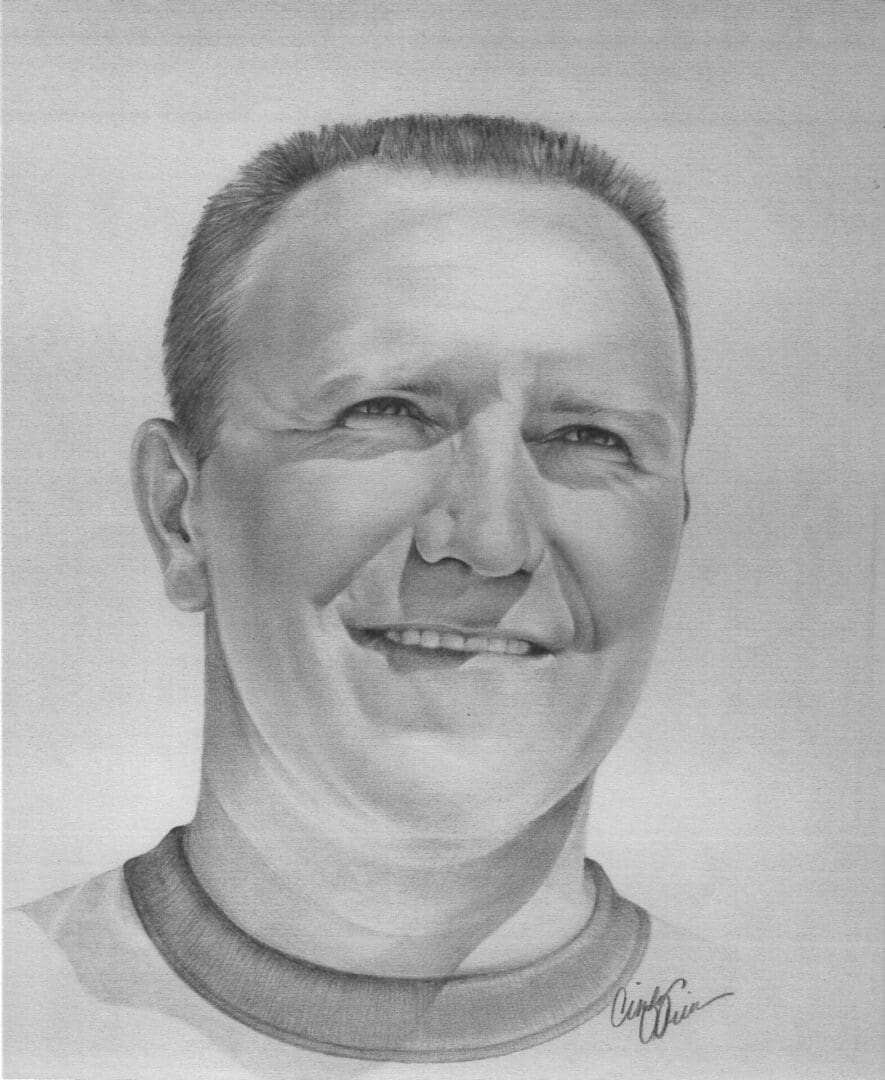 Tony Waters & Jim Sughrue
In the early days of drag racing, the team of Tony Waters and Jim Sughrue was known and feared by all who…
Read bio · 2 photos
Tony Waters & Jim Sughrue
In the early days of drag racing, the team of Tony Waters and Jim Sughrue was known and feared by all who…
Read bio · 2 photos
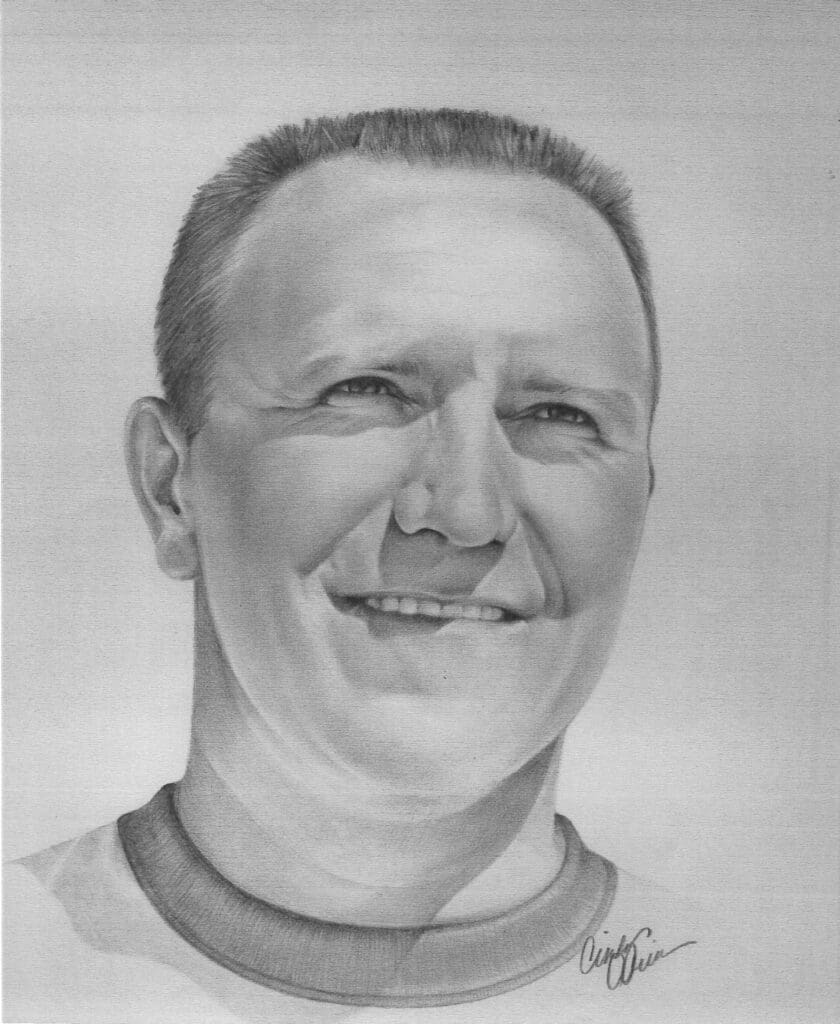 Class of 2003Presented by Mopar
Tony Waters & Jim Sughrue
In the early days of drag racing, the team of Tony Waters and Jim Sughrue was known and feared by all who had to compete against them. Both men were charter members of the legendary Bakersfield Smokers, and both were known for their fast and sanitary race cars. Tony got his start on the local street racing scene with a brand-new 1949 Chevy into which he quickly installed a 302 GMC engine. As soon as the strips at Saugus and Fresno opened in 1950, Tony was right there with the Chevy. Before long Tony equipped the GMC engine with a Howard log manifold and five Stromberg carbs converted to use alcohol. Although he was consistently breaking the 100 MPH barrier, it wasn’t long before the need to go faster took over, and he went to work on a new car. This new vehicle was a 1925 T Roadster known as “The Giant Killer” that used the same GMC engine that was so successful in the 1949 Chevy. The roadster immediately broke the 120 MPH mark, which made it among the fastest cars on the dragstrip at the time.
In 1955, Tony decided to introduce a totally new and novel combination, a fuel-burning 292 DeSoto engine with a front mounted 4-71 GMC supercharger. The combination was not new to Tony, as he already become one of the earliest members of the 200 MPH club driving a 1932 Ford Highboy roadster at Bonneville with the same powerplant. Not long after Tony fielded this new combination, he and his friend Jim Sughrue teamed up to form one of the strongest racing teams in the country. With the two people sharing the load, the team also turn the car into a real showpiece. At the inaugural US Fuel and Gas Championship meet, Waters lasted through two days of eliminations only to lose in the final round to Art Chrisman’s dragster when he lost traction in a patch of water.
In 1964 the team went on a very successful nationwide tour, but by the end of the tour it was obvious the pair would have to retire the roadster and switch to a dragster if they were to remain competitive. A couple of changes took place at this time. The team made the switch to a dragster and John Edmonds was installed as the driver. The new combination debuted at a 1964 car top fuel show at Lions Dragstrip and quickly proved it was the right move by taking home the top eliminator trophy and money. Not long after this they showed up at Carlsbad Raceway and set a new world record of 226.12 MPH. After the 1967 season, the partners retired from the racing for many years. But as they say once bitten you never forget, and Tony returned to the wars, this time with and involvement in the nostalgia fuel dragster class. Tony also built a new Highboy roadster with the hopes it would break the 300 mile-per-hour marked at Bonneville.
Photo gallery · 2
-
-
2003
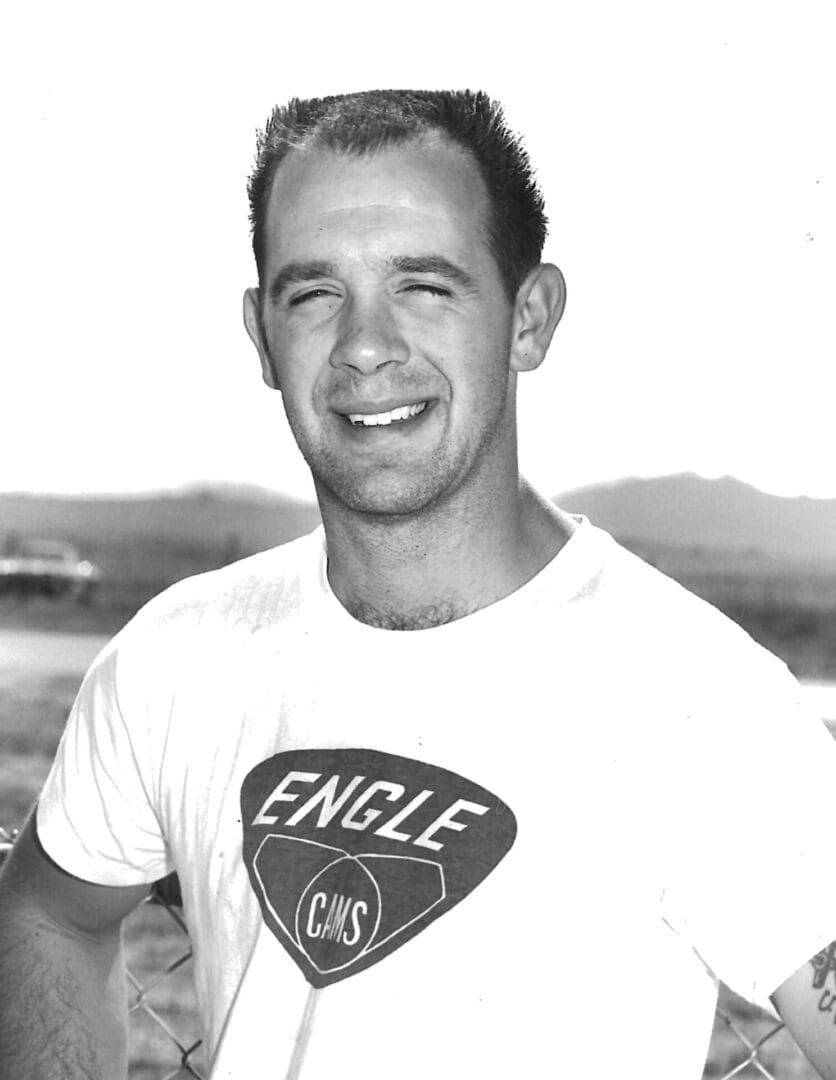 Jerry Ruth
1938–2025 Self-proclaimed “King of the Northwest”, Jerry Ruth has done his very best to live up to his title. Jerry was exposed to…
Read bio
Jerry Ruth
1938–2025 Self-proclaimed “King of the Northwest”, Jerry Ruth has done his very best to live up to his title. Jerry was exposed to…
Read bio
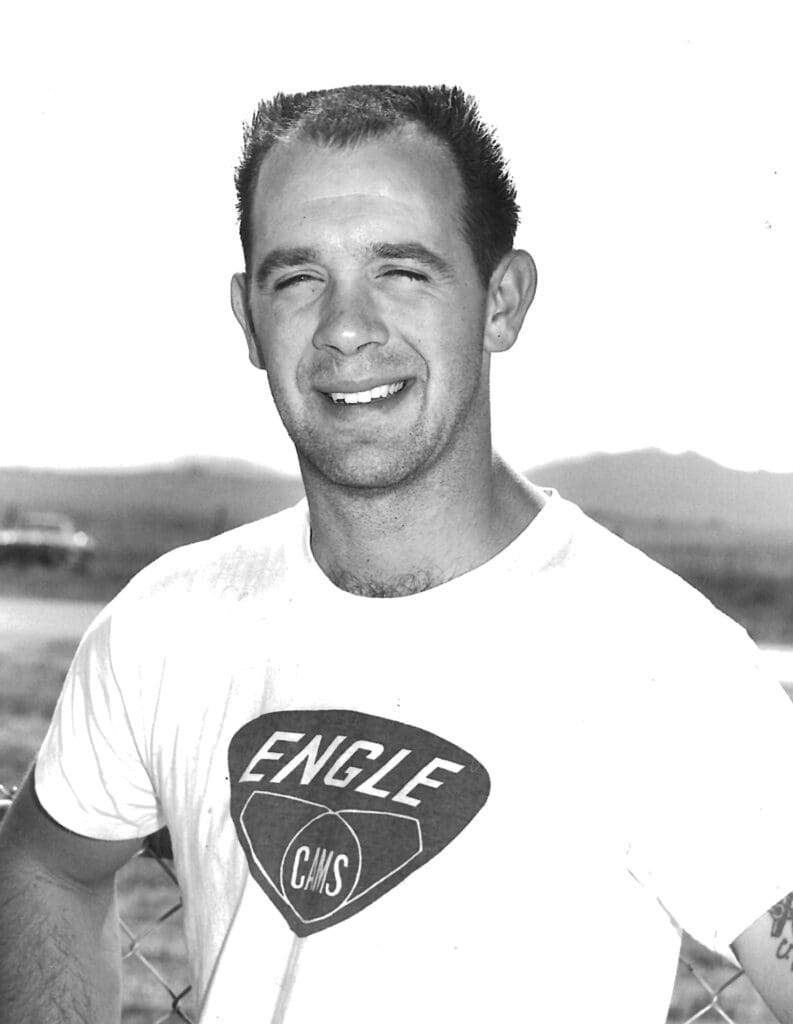 Class of 2003Presented by Mopar
Jerry Ruth
Self-proclaimed “King of the Northwest”, Jerry Ruth has done his very best to live up to his title. Jerry was exposed to drag racing at the age of 14 when he attended his first race at the only track in the Seattle, Washington area at the time Arlington Raceway. By the age of 16 he was the proud owner of a straight eight engine powered 1939 Chrysler New Yorker that’s all more street racing than it did race track use. After a tour of duty with the US Marine Corps, Jerry found himself hanging out in Southern California, where he found work at a couple of Chevrolet dealerships during the week and on the weekends hung out at the local dragstrips.
Jerry’s first race car was a small block powered 1955 Chevy that he competed in C/Gas class with. Not content with the speed the 1955 ran, he soon began racing a 1940 Studebaker sedan in C/Altered class, turning in speeds of over 121 MPH. Missing his hometown, Ruth moved back to Seattle and worked his way through a succession of full-bodied cars in the C/Gas then the C/Gas Supercharged, always striving to go quicker and faster. His first time behind the wheel of a dragster came after he did some swapping with Jim Green of Green Elephant Racing fame and wound up with greens old B/Gas dragster. The first time down the track in a dragster was enough to convince Ruth he would never be happy driving anything other than a dragster. While Jerry got the dragster itself in the swap deal, he didn’t get a trailer, so he had to borrow one from his friend Harold Gunderson. The only problem was, Harold was using the trailer for his own car at the time, so Jerry had to haul Harold’s car to the track, unload it and go home for his car. After the race he had to reverse the entire procedure, which made race day very long for Jerry. Jerry was finally able to buy trailer of his own, making his life less complicated and race day shorter. By 1962 Jerry had graduated to A/Gas dragster and was turning speeds 150 MPH, and life was great, but he wanted to go even quicker and faster.
By the end of 1962 Jerry decided to build and injected fuel-burning small block Chevy for the dragster, which he did and probably blew up. He then put together a blown small block Chevy on fuel and just as quickly destroyed it. According to Jerry that was when he decided it was time to make the move to AA/Fuel dragster with a blown 354 Chrysler hemi, on fuel, for power this proved to be the right combination for Jerry, who soon was turning speeds of over 200 MPH and mid seven second ET’s. In 1964 he set track records from Sheldon Washington to Half Moon Bay in California and most of the racetracks in between and earned the title of Washington State Champion.
After couple years with the 354 engine, Jerry switch to a 392 hemi, and from 1964 to 1969 he literally dominated AA/Fuel dragster class in NHRA’s Division Six, winning the division title five of six years and setting top speed records in 1966 and 1967. There was no doubt that during this period Jerry Ruth was the darling of the strip owners and operators in the Northwest territory. The more Jerry’s popularity grew and the more drag racing itself was promoted in the area, the more top fuel cars were built and raced in the area. Fortunately for him, Jerry’s winning streak was far from over, and in 1970. 1971, 1972, and 1973 he again won the divisional championships. By the early 70s Ruth had added a fuel funny car to his operation and soon had it in championship form. In 1971 Jerry became the first person to ever win a divisional championship in both top fuel and funny car classes. In 1973 he took home the Top Fuel World Championship trophy and joined the Crager Five Second Club with a 5.95 ET. Jerry’s list of victories and records continued to grow. In 1980 he won the AHRA World Finals. In 1981 he won the Mile-High Nationals in Denver, and in 1982 he won the IHRA Springnationals in Bristol.
Jerry is retired from drag racing but is still involved in cars. He built several street rods for his own use and continues to offer advice to anyone who is willing to listen. Jerry Ruth was truly king of the Northwest and still is today.
-
2003
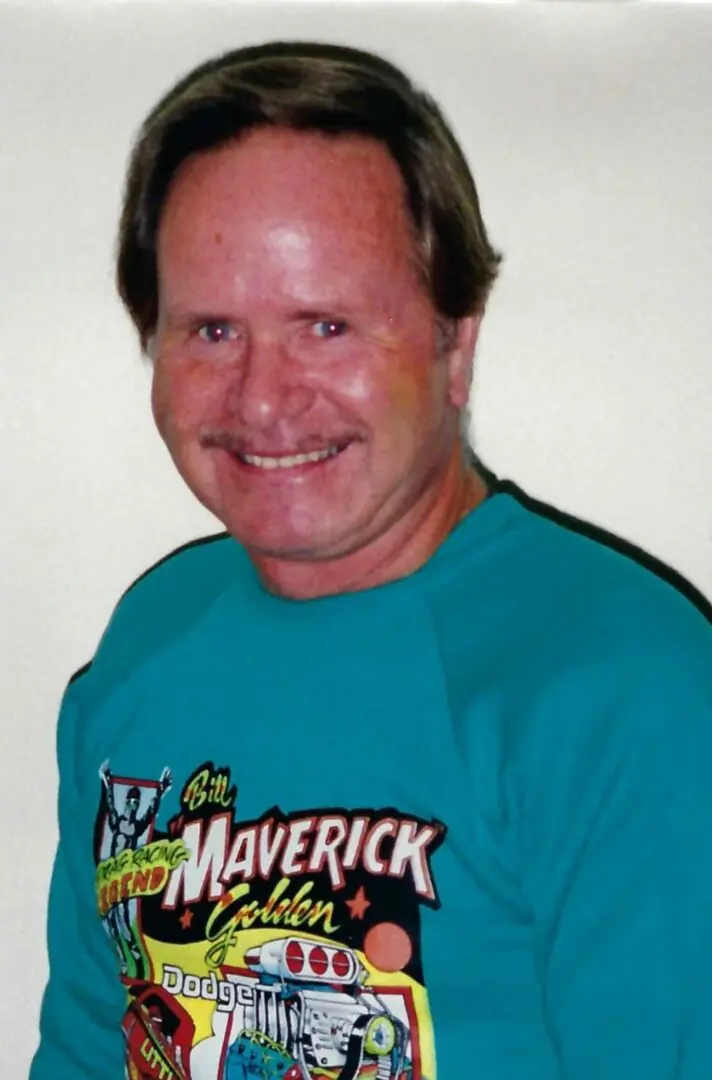 Bill “Maverick” Golden
1933–2015 One of the pioneer showmen of drag racing was Bill “Maverick” Golden and his Little Red Wagon wheel standing truck. However, before…
Read bio
Bill “Maverick” Golden
1933–2015 One of the pioneer showmen of drag racing was Bill “Maverick” Golden and his Little Red Wagon wheel standing truck. However, before…
Read bio
 Class of 2003Presented by Mopar
Bill “Maverick” Golden
One of the pioneer showmen of drag racing was Bill “Maverick” Golden and his Little Red Wagon wheel standing truck. However, before the “wagon”, Bill was one of the early pioneers in the super stock wars. Competing in a Chrysler sponsored S/S Dodge, Bill soon became a star in the 60s, racking up hundreds of wins and track records with an enviable 95% when record. It was also during the super stock years that Bill learned the value of showmanship as well as performance. Without showmanship especially in the stock classes, it was nearly impossible to get exposure in the print media.
Bill started life in the same way he has lived it; very uniquely. Born Billy Lawrence Golden to a fur trapper father and a Cherokee mother in the wilderness of the Wabash River bottoms of southern Illinois, he competed in and won his first race on his horse “Thunder” at the local county fair. Even with only one horsepower, Bill was hooked on the speed it provided. In 1953 Bill joined the US Marine Corps to see the world and do his duty for his country. While the Marine Corps exposed him to many foreign countries, it was during his tour in California that he decided this was the place to stay. The climate was great and the life was good, but above all there was an abundance of drag strips in the area.
After settling into the California lifestyle, Bill soon started showing up at the various strike strips within the local area. Before long he had earned the reputation of being a winner, and under the guidance of Gordon and Jerry Williams he soon became almost unbeatable. Up until sometime in 1968 he was simply known as Bill Golden, but one Sunday afternoon at Santa Ana dragstrip, CJ “Pappy” Hart called for Bill to “get that Maverick Dodge up here and let’s finish this race!” The name stuck, and from that time forward he was known to all as “the Maverick”.
Mavericks list of accomplishments during the 60s is still one of the most impressive ones in the history of the sport. In 1962 his super stock Dodge held both ends of the national records, and in 1964 his Dodge held both ends of the A-Modified production record and racked up a win record of 35 out of 36 races. In 1965, Car & Driver Magazine named him the “Golden Boy of Drag Racing” and placed the 1964 Dodge at number one. In 1969, Super Stock Magazine named Mavericks 1963 Dodge one of the top 10 stock cars of all time. With this record behind him, in 1995 Bill was in ducted into the Super Stock Magazine Hall of Fame. In 1964, Dodge Director of PR, Frank Wiley, came up with the idea of building a rear engine, hemi powered, A-Factory experimental wheel standing Dodge compact pickup for a Dodge truck commercial. Maverick was tapped to drive it, and shortly thereafter the Little Red Wagon began appearing at the local drag strips. While there has been a lot of publicity and notoriety for the “wagon”, it hasn’t come without its problems. The initial truck put Maverick in the hospital for a week from too many high wheelstands and coming down too hard. From 1964 through 1975, Maverick crashed seven times, destroying three trucks. The 1975 crash in Québec City, Canada almost cost him his life after he flipped nine times end over end and rolled another five times before coming to a stop. When wagon number four was built, Maverick asked his good friend Eddie Campbell who was also a priest to bless it and asked God to watch over him and his wheelie truck. Bill has been responsible for many of the safety measures incorporated into the wheel standing vehicles of today including the guidance system that allows the drivers to steer the vehicle with the front wheels in the air. Bill is also credited with coining the term “wheelie”. Bill was also one of the first wheelie drivers to start “racing” side-by-side with another wheel stander.
In January 1975 the man who gave Bill his Maverick nickname, Pappy Hart, was able to give him another giant boost by booking the Little Red Wagon at his season opening feature attraction. In 1977 Bill set a wheelie length record of 4230 feet which still stands today. Over the years the man known as Maverick has received countless awards such as the Car Craft Magazine All-Star Racing Team, Car of the Year award from HRA, King of the Wheel Stands, to name only a few. But the thing that stands out above all the others is that when anyone thinks or talks of wheel standing vehicles, the first name that comes to mind is Bill “Maverick” Golden and his Little Red Wagons.
-
2003
 Dick LaHaie
1942–2018 Dick LaHaie was another drag racer who got an early start in the sport. In 1955 at the age of 13, Dick…
Read bio
Class of 2003Presented by Mopar
Dick LaHaie
1942–2018 Dick LaHaie was another drag racer who got an early start in the sport. In 1955 at the age of 13, Dick…
Read bio
Class of 2003Presented by MoparDick LaHaie
Dick LaHaie was another drag racer who got an early start in the sport. In 1955 at the age of 13, Dick landed a job that allowed him to start saving for his dream. Just three years later Dick’s dream came true when he became the proud owner of his first car, a 1948 Mercury coupe. The car equipped with a standard flathead engine, but within three months it was replaced with an Old’s V8.
Dick wasn’t a person who had someone else doing his work for him, either. He built his own A-frames and did his own wiring and other modifications to make the car quicker and faster. At age 16, Dick was well on his way to learning how to make his cars more competitive and by doing his own work at a more affordable cost. After about a year, the Mercury was replaced with a 1950 Ford coupe that he was soon racing on the street. Wanting to go quicker and faster, he replaced the engine in the 1950 with a GrandCor 296 cubic inch flathead. Next came a 1953 Ford coupe into which he dropped a 270 HP Corvette engine and a four-speed gearbox. The car was very quick and fast and is the vehicle that took him from street racing to organize drag racing. In 1959, Central Michigan Dragway opened its doors, and in his first effort, the 17-year-old notched his first win in E/Gas class at a speed of 110 MPH and an ET of 14.35 seconds.
In 1960 Dick bought a 1955 Olds and promptly set a new national record in I/SA. Dick was what is considered by anyone’s standards a very active racer. He raced the Olds at Detroit Dragway on Tuesday, and Friday nights, US 131 on Saturdays, and on Sundays at Anondaga Dragway. During one stretch, Dick one at those tracks 14 weeks straight. His next ride was an Olds-powered 1951 Henry J that he competed with in 1961 in 1962. At about this time, LaHaie hooked up with two racers who would significantly change his life, Noah Canfield and Charlie Johnson. Canfield and Johnson campaigned the Glass Chariot AA/Modified fuel roadster throughout the Midwest, and when Johnson couldn’t be at the races, LaHaie filled in as the driver. When the Canfield and Johnson team moved up to top fuel in 1964, Dick was well aware of the car’s popularity, so he took over the operation on his own and had his first full time blown and injected nitro powered ride. It was with this car that LaHaie made his first bid for national recognition when he challenged Gabby Bleeker and his roadster for a spot on the Drag News Junior Eliminator list. Bleeker failed show for the race, so Dick owned the spot. Next, he challenged the holder of the number one spot, the Heidelberg team. This ended with mixed emotions for Dick; he easily beat them on the first round but broke the engine and was unable to make the other two required rounds. However later that same year Dick took the number one spot away from them and retain the title until the class was discontinued a year later.
In 1966 Dick again join forces with Canfield and Johnson, this time with a newly built top fuel dragster. The group had an outstanding season, winning 11 weeks in a row at different tracks, but at the end of the season Johnson elected to retire, leaving LaHaie on his own again. One of Dick’s first moves was to join the UDRA so he would be able to compete on the Midwest circuit against the best names in the sport. The move was a good one for Dick as he won circuit titles in 1970, 1973, in 1976. During this period Dick himself built all of the cars he raceed, starting with front motor dragsters, and in 1971 building his first rear engine car. In fact, Dick built all of his own cars up to and including his 1984 car. One of the reasons Dick built his own cars was simple matter of economics; he was a racer with a very small budget, and this was another way to make it go farther, plus his designs were very competitive.
Drag racing has not always been kind to Dick. In 1975 while debuting a new car at the Gatornationals in Gainesville Florida the throttle stuck open, and despite all his efforts to stop the car safely, he wound up crashing into some trees. Dick’s left hand torn off his right arm broken in two places but fortune did smile on him in the form of a group of medically trained Vietnam veterans who were in Gainesville teaching limb replacement, and they were able to surgically reattach his hand. Dick hired John Thomas to drive for him while he recovered, but he was back in the car at US 13 Dragstrip just a week before the US Nationals in Indy. On his third qualifying run at Indy, a combination of a front wing that was built wrong and the front wheels hitting the wheel bearings caused the car to crash just past finish line. This time Dick lost a toe and broke his right arm again. Just a month later, Dick decided he wanted to continue racing, and Marv Rifchin of M&H Tires cut him a check for the new car. By April 1976, the new car was completed, and Dick was again competing.
In 1980 at the Summernationals, Dick won his first national event by beating Jeb Allen in the final round, and the following year he was the NHRA Eastern Region Top Fuel Champion. In 1982 three significant things happened: he debuted a new car at the Winternationals and won, daughter Kim debuted as his crew chief at the US Nationals, and he sold his business to become a full-time professional racer.
Dick’s performance never let up. In 1985 he won the Gatornationals, and in 1986 he reached six finals, winning two of them. In 1987 Dick landed a sponsorship with Miller Brewing Company and teamed up with Larry Minor to win his first Winston top fuel crown, winning a total five national events along the way. In 1991 Dick retired from driving, and while he never believed he could become a crew chief, in 1993 Connie Kalitta changed that thought when he hired Dick to wrench son Scott’s car. The team became nearly unstoppable, finishing second to Eddie Hill for the Winston crown in 1993 and winning it in 1994 in 1995. Since then Dick has been instrumental in furthering the careers of Doug Kalitta, and Larry Dixon. 2002 Dick LaHaye won the Winston top fuel crown for the fourth time as either a driver-crew chief.
-
2003
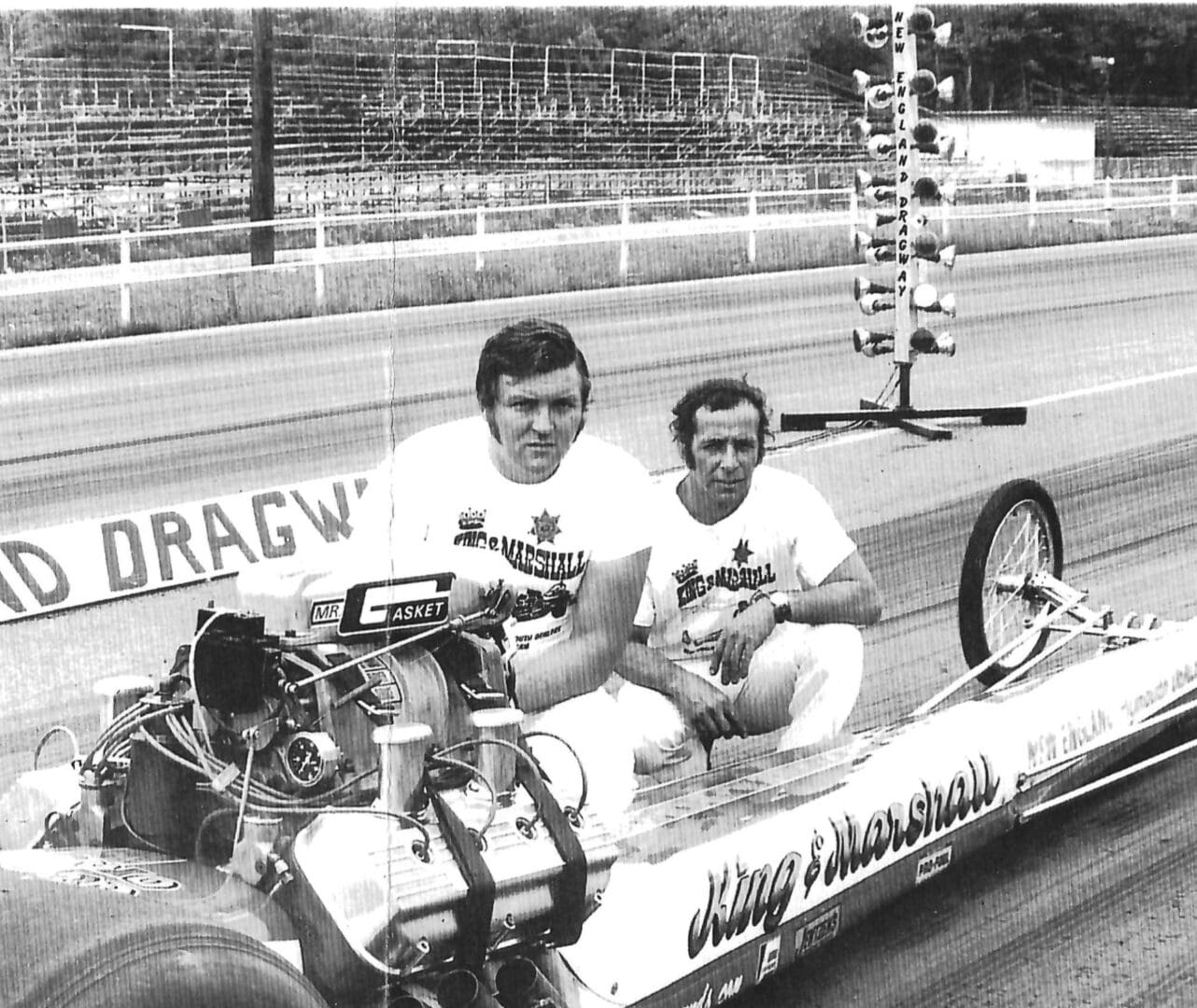 Jimmy King & Don Marshall
Back when they were a bit lighter and younger, Jimmy King and Don Marshall were friends, even fellow car club members with…
Read bio
Jimmy King & Don Marshall
Back when they were a bit lighter and younger, Jimmy King and Don Marshall were friends, even fellow car club members with…
Read bio
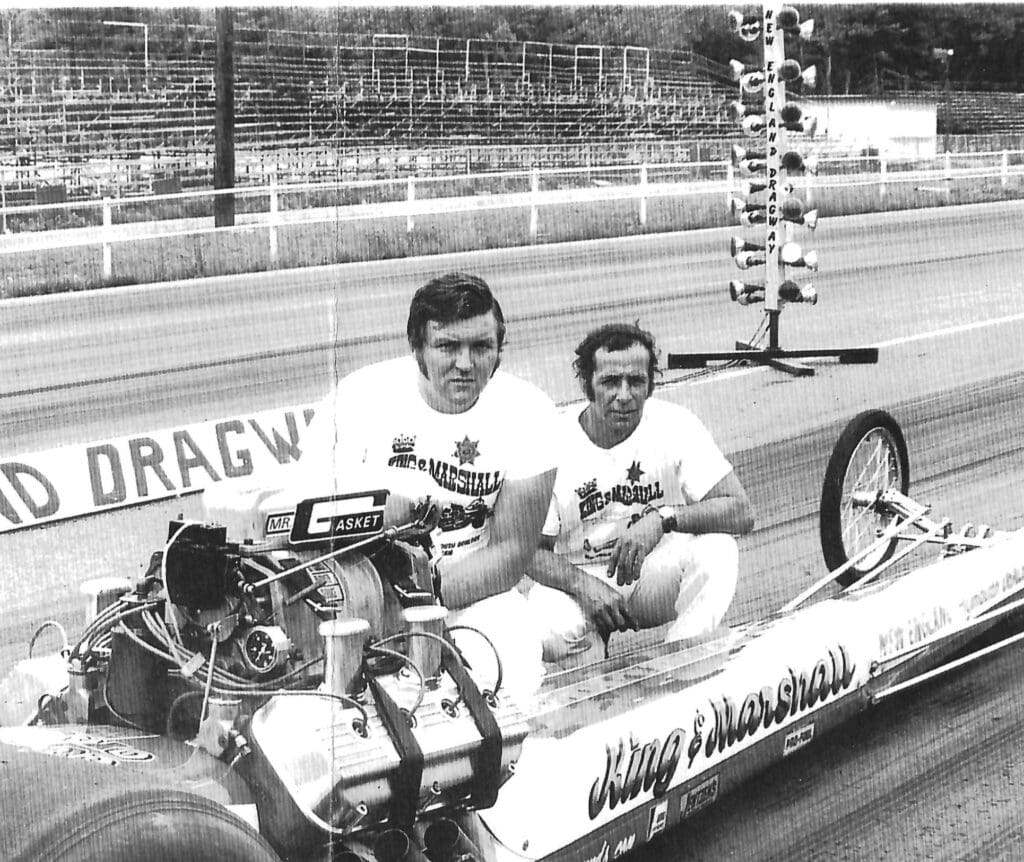 Class of 2003Presented by Mopar
Jimmy King & Don Marshall
Back when they were a bit lighter and younger, Jimmy King and Don Marshall were friends, even fellow car club members with five other guys (kids) in the King Pins and the Southern New England Timing Association during the mid-50s. Jimmy remembers having a cool 1941 Ford and being too young to drive it, so older buddy Don offered to handle the chore. Wanting a gearhead playground, they were instrumental in opening the Navy base in Charleston, Rhode Island to monthly drag racing, through SNETA. Other groups at Sanford, Maine and at Orange, Massachusetts meant that Jimmy and Don could drag race every Sunday somewhere in New England by 1957.
Jimmy landed a job at a Ford dealership name Tasca, working near Bill Lawton and John Healy. He was hitting the strips with his nailhead Buick powered 1946 Chevy. The car wasn’t fast enough so Jimmy found a Scotty Finn K88 chassis and stuck a gas burning small block Chevy in it, while Don decided to try again with two less wheels and six fewer cylinders. He went motorcycle racing with the gas burning Harley Davidson, then stepped up to a unique blown, reverse rotation Triumph. A local Harley Davidson dealer notice Don success and set him up with a deal on a new 1963 Harley. Don went on to set land speed records at Bonneville in the gas classes, hitting 136 and 142 MPH with no fairings. Then went to the quarter-mile with a load of nitro and clicked 150 MPH. Meanwhile, Jimmy’s desire to go faster got him into a Haulin chassis with a 392. Don, and other local friends, were usually around pitching in with parts and assistance. However even in the mid-60s, it was tough to field a competitive top fuel car by yourself, let alone find enough events for a nitro bike. That’s when the two longtime friends got together, and the King and Marshall team became official. It wasn’t long until they decided to make a leap. They sold most of their “toys”, purchased a new Don Long/Tom Hanna car in late 1967, and planned on some traveling.
The team fielded competitive top fuelers and funny cars until the mid-70s, followed by a few special appearances until 1980. Jimmy return to his garage in Rhode Island, while Don spent the winters in Florida and summers in Rhode Island. Jimmy and Don remained good friends and they often got together usually at major racing events and other drag race related occasions. King and Marshall was perhaps the most prolific and successful drag racing team ever from the New England area; like most fuel teams in their era, they campaigned mostly out of their own pockets because they were doing it for the fun and the challenge. Yet they were quick to acknowledge the assistance from New England Speed Equipment, the New England Plymouth Dealers Association, and Marvin Rifchin of M&H Tire. Like most easterners, they didn’t receive a lot of national publicity for the success but they generated huge fan appeal wherever they raced, and a good deal of local and regional media attention. Jimmy King was voted Most Popular Driver by the fans at the three New England tracks for four consecutive years.
-
2003
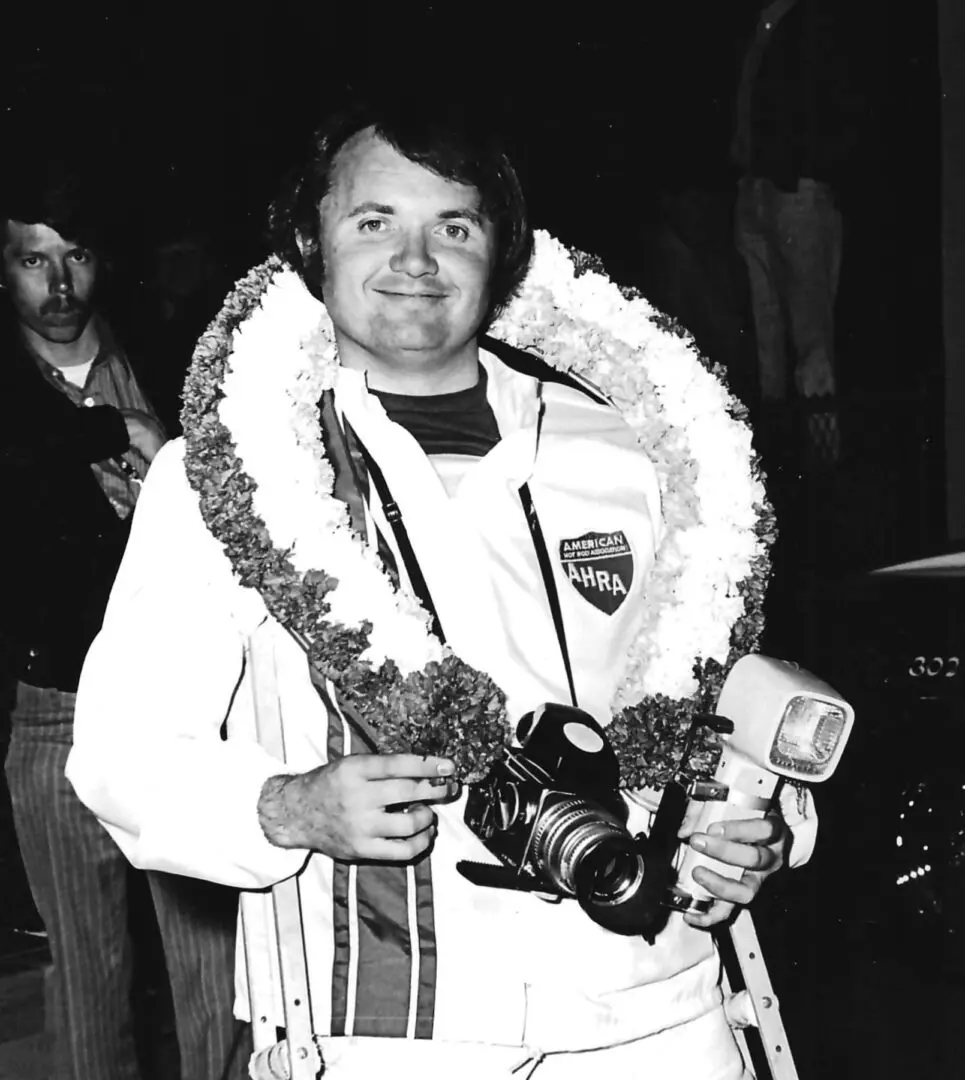 Jim Kelly
1938–2015 “Diamond” Jim Kelly was one of the sport’s first full-time photographers. Jim got his first taste of drag racing in 1958 as…
Read bio
Jim Kelly
1938–2015 “Diamond” Jim Kelly was one of the sport’s first full-time photographers. Jim got his first taste of drag racing in 1958 as…
Read bio
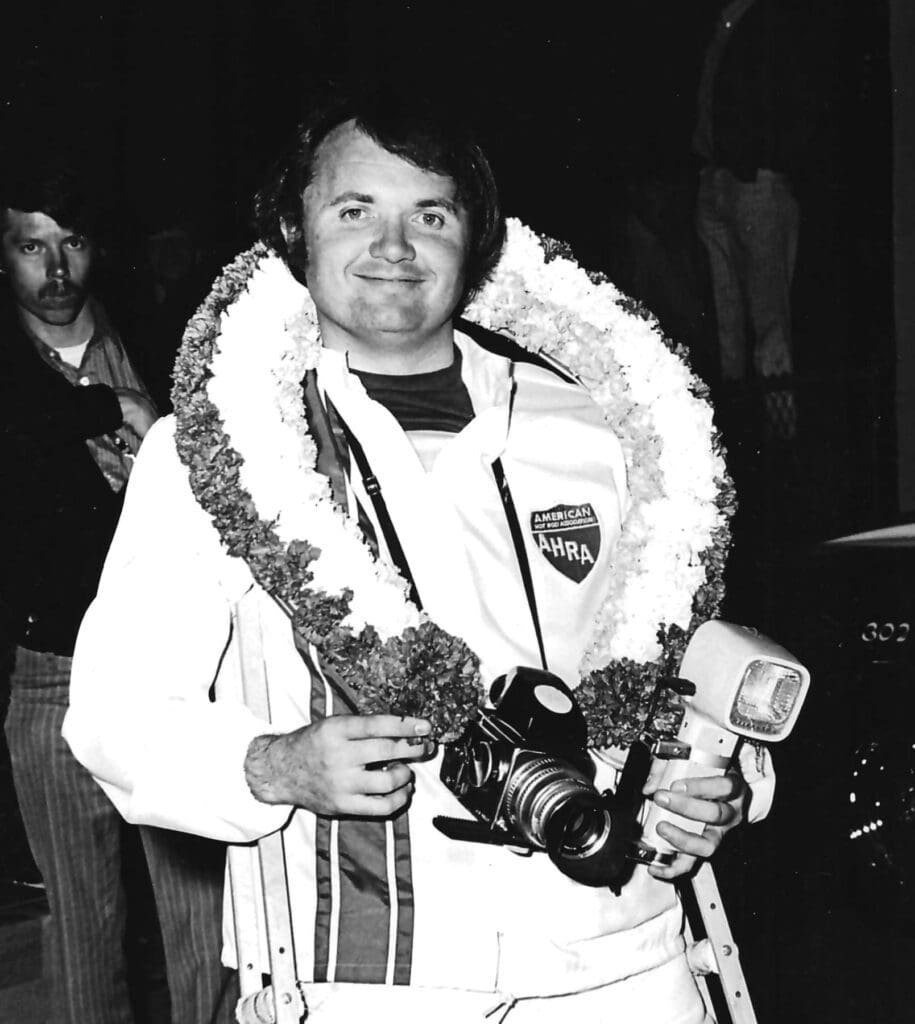 Class of 2003Presented by Mopar
Jim Kelly
“Diamond” Jim Kelly was one of the sport’s first full-time photographers. Jim got his first taste of drag racing in 1958 as a spectator at Lions Dragstrip after his good friend Don Gregory talked Jim into going with him to see what it was all about. Shortly after that, Don convinced Jim to become a competitor with his Austin Healey at Lions, where he promptly won his class the first time out. After that, he was hooked on drag racing forever, but a couple years after his first when, his car was destroyed by a drunk driver. Still wanting to be involved in the sport, Kelly started taking photos at the race tracks. Early in his career as a photographer, Jim had the good fortune to become friends with Al Johns, the track photographer for Lions. AI passed along some tips on what to do, and Kelly was soon excelling in his new hobby.
About this time, Al introduce Kelly to Doris Herbert, who owned Drag News, and shortly thereafter he was selling his photos to Doris for the paper. With the number of racetracks running every week in Southern California, it wasn’t unusual for Jim to cover over 100 races a year. Why Kelly was selling a lot of photos to Drag News, he had dozens more that were just piling up in his office, so he soon teamed up with Phil Bellamy and founded Drag Sport Illustrated. From this point on, his career as a professional race photographer skyrocketed. His photos started appearing in all the national magazines covering the sport in addition to the weekly papers.
In 1964 at the NHRA US Nationals, the publisher of Super Stock and Drag Illustrated approached Jim with the idea of accompanying the newly formed United States Drag Racing Team on its upcoming tour of England, and a few days later he was on his way across the pond. Later that year Jim moved from California to Virginia and took on the job as full-time photo editor of SS&DI. Not long after this move, the publishers of SS&DI started a new magazine, Stock-Car Racing, and Kelly was off to the stock car races. SS&DI was the magazine that gave the East Coast racers the best shot of national exposure during the beginning of their careers, and it was Jim’s coverage of such regular features as “Match Race Madness” and other such promotions that put them into the spotlight. It was Jim’s coverage of this type a special promotion that help popularize this form of showmanship, bringing the likes of “Grumpy” Jenkins, “Dyno” Don Nicholson, Sox and Martin, and Gapp & Rausch into thousands of homes each month.
Jim was one of the truly professional photographer was willing to attend the smaller backwater facilities that didn’t get a lot of publicity but were the early match races spent most of their early careers. This was one of Jim specialties, covering the racetracks that most people didn’t even know existed. Using gems photos of side-by-side funny car racing at the AHRA and outlaw tracks to demonstrate to NHRA the popularity of these cars, the funny car racers were able to convince NHRA of the value of a separate class just for them.
In 1969 Kelly was offered the chance to work for Peterson Publishing on Hot Rod Magazine. This is a dream come true, and soon Kelly was off to California again, where he went to work at PPC in their photo lab providing photos for all of its magazines. While it appeared to be a dream come true, it wasn’t long before Jim Tice, president of AHRA, made Kelly another offer that was too good to pass up. Shortly after Jim joined up with AHRA, the association launched its own weekly paper, Drag World, with Kelly as its editor.
As Kelly’s talents became even more renown, the job offers can you come in, and in 1976 the new publisher of Super Stock Magazine enticed Jim back to Virginia again, where he became the publisher of the magazine. 1979 brought another call from Jim Tice at AHRA, but this time it wasn’t just to edit the paper. Tice wanted Jim to learn the business of managing the association. Kelly stayed there until the early 1980s when Jim Tice passed away in the Association was sold. After 25 years on the circuit, Jim decided to retire from the sport. Not willing to watch the world from a rocking chair, Jim was involved with cars as the owner of a business that supplied new cars to electronic and print media automotive journalist for road test evaluation.
-
2003
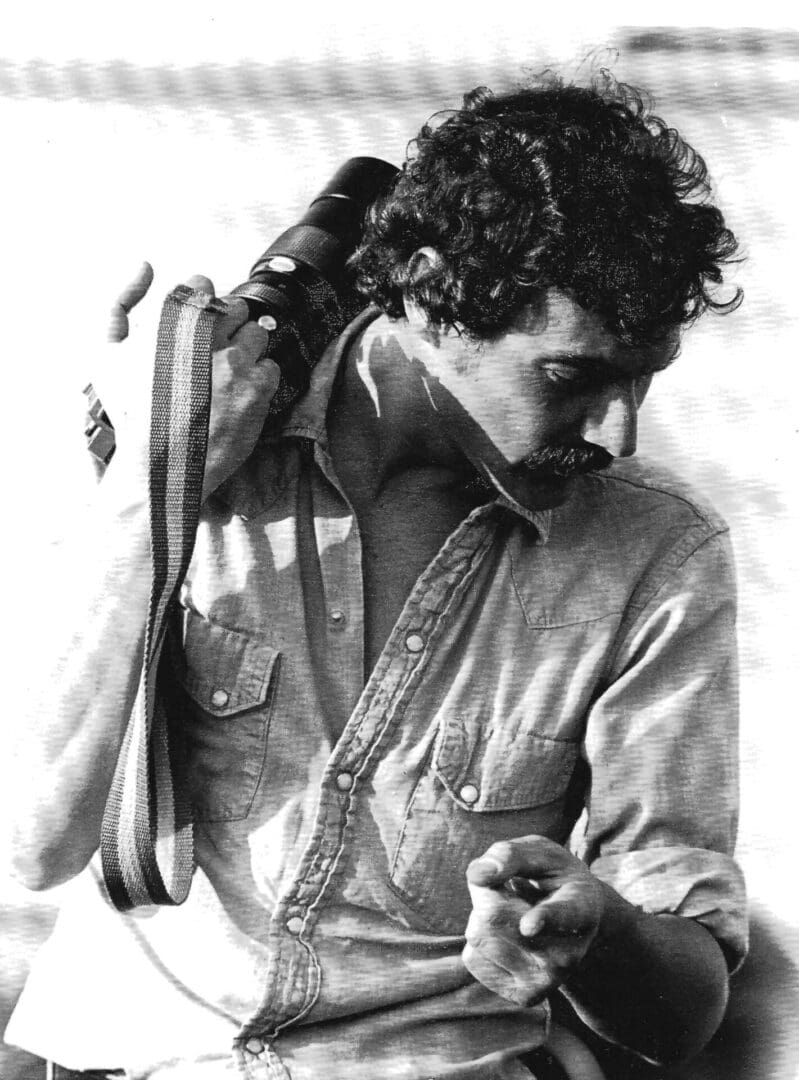 Steve Collision
1946–2000 Steve Collision was a diehard drag racer who became the most respected magazine editor of his time. Though “Stevie” new most of…
Read bio
Steve Collision
1946–2000 Steve Collision was a diehard drag racer who became the most respected magazine editor of his time. Though “Stevie” new most of…
Read bio
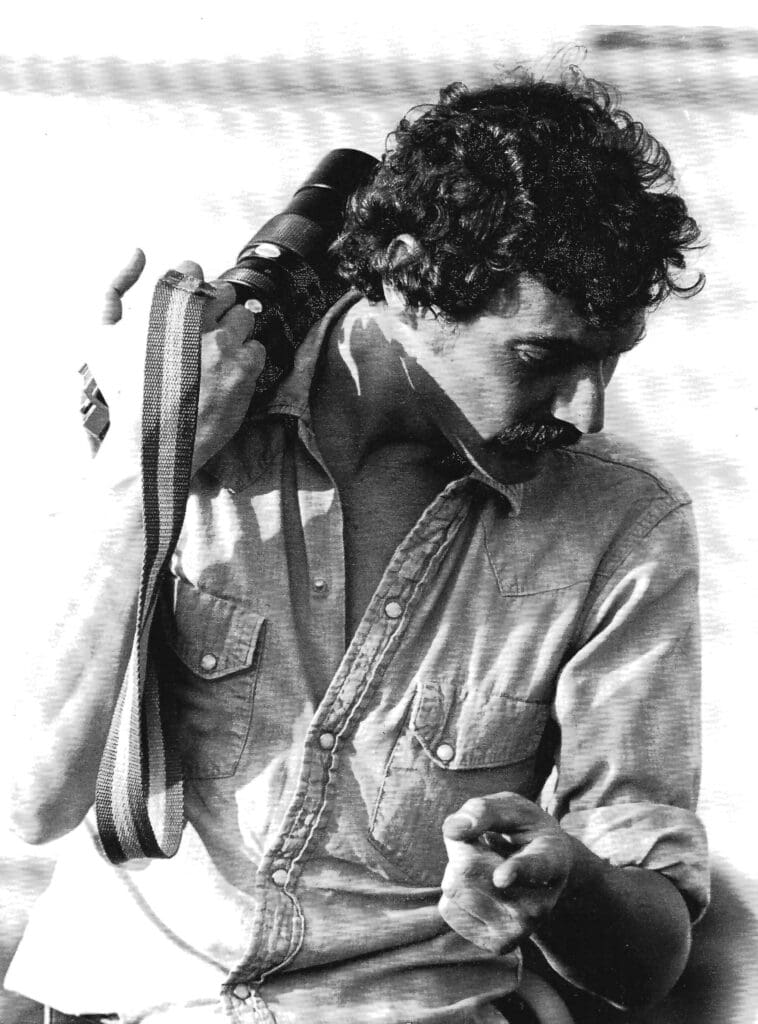 Class of 2003Presented by Mopar
Steve Collision
Steve Collision was a diehard drag racer who became the most respected magazine editor of his time. Though “Stevie” new most of the pro-racers and covered them knowledgeably for three decades, his true love was the “little guy”.
Prior to boldly answering a LA Times classified ad placed by Peterson Publishing in 1970, Steve’s life had paralleled that of other young gearheads growing up in Southern California. A series of street racing scares unfortunately redirected his energies towards Lions Dragstrip, where Collision set an AHRA National Record with his 1969 SS396 Chevelle and enjoyed his finest racing moment; a runner-up finish in one of the earliest $1000 to win bracket races at the wheel of his adoptive parent’s bone stocks Buick Riviera.
Steve was only 23 and without a single byline to his credit when his employment interview somehow persuaded Car Craft editor Terry Cook and publisher John raffia to appoint him the staff of the eras largest, most intellectual drag racing magazine. His clever, controversial writing style didn’t always win him fans with Car Craft’s advertising staff between 1970 and 1974, but it did earn him a strong following of loyal readers and racers (pros and sportsman alike). That outspoken style clearly didn’t translate well to National Dragster, where Steve briefly toiled as Associate Editor (for about 15 minutes, he’d like to say) before finding a new home, 3000 miles away from Los Angeles. In 1975, Collision became the editor of Super Stock and Drag Illustrated a position he would occupy three different times: 1975 to 1976, 1980 to 1988, and 1993 to 1998. Each time, Steve he was hired in response to popular demand from loyal readers, influential racers, and advertisers who respected his ability and incorruptibility.
Between hitches with SS&DI, this uniquely versatile editor produced some of the most memorable issues of cars magazine: Muscle Cars, High-Performance Mopar, Bracket Racing USA, and Muscle Mustangs and Fast Fords. He also took a shot at doing public relations for Hurst, but never felt comfortable in the role. It was during his historic stint at the helm of Muscle Mustangs that Collision turned the new car purchased from Ford (for one dollar) into the legendary “Mean Mr. Mustang” issue by issue.
It was the combination of the fledgling publication in this particular vehicle that single-handedly launched the late-model Mustang movement. Moreover, it was with this mustang that Stevie set one final national record, in IHRA’s Pure Stock category, in 1987. Later, he would earn NHRA competition Super Gas and Super Comp licenses, and seriously compete in both categories.
His friends remarked that no matter where in the world a new driving school open, it was only a matter of time before Steve would enroll and graduate with honors. Collisions final editorial challenge was rebuilding Racing USA into a wider ranging package entitled Drag Racing USA. It was during a working telephone conversation with one of his favorite contributors and best friends, Bill Wilson, that Stevie scum to a massive heart attack in his home office near Atco Raceway. He was 54. Like some of his fellow photojournalists, Steve he was known for living his life “wide-open”. Unlike most of his peers, Collision remain true to his first loves class and bracket racing; with particular affection for cars with carburetors, doors, and manual transmissions. He worked on them, he drove them, and he wrote about them. He defended their rightful place in drag racing right up to the day he died, on December 14, 2000.
-
2003
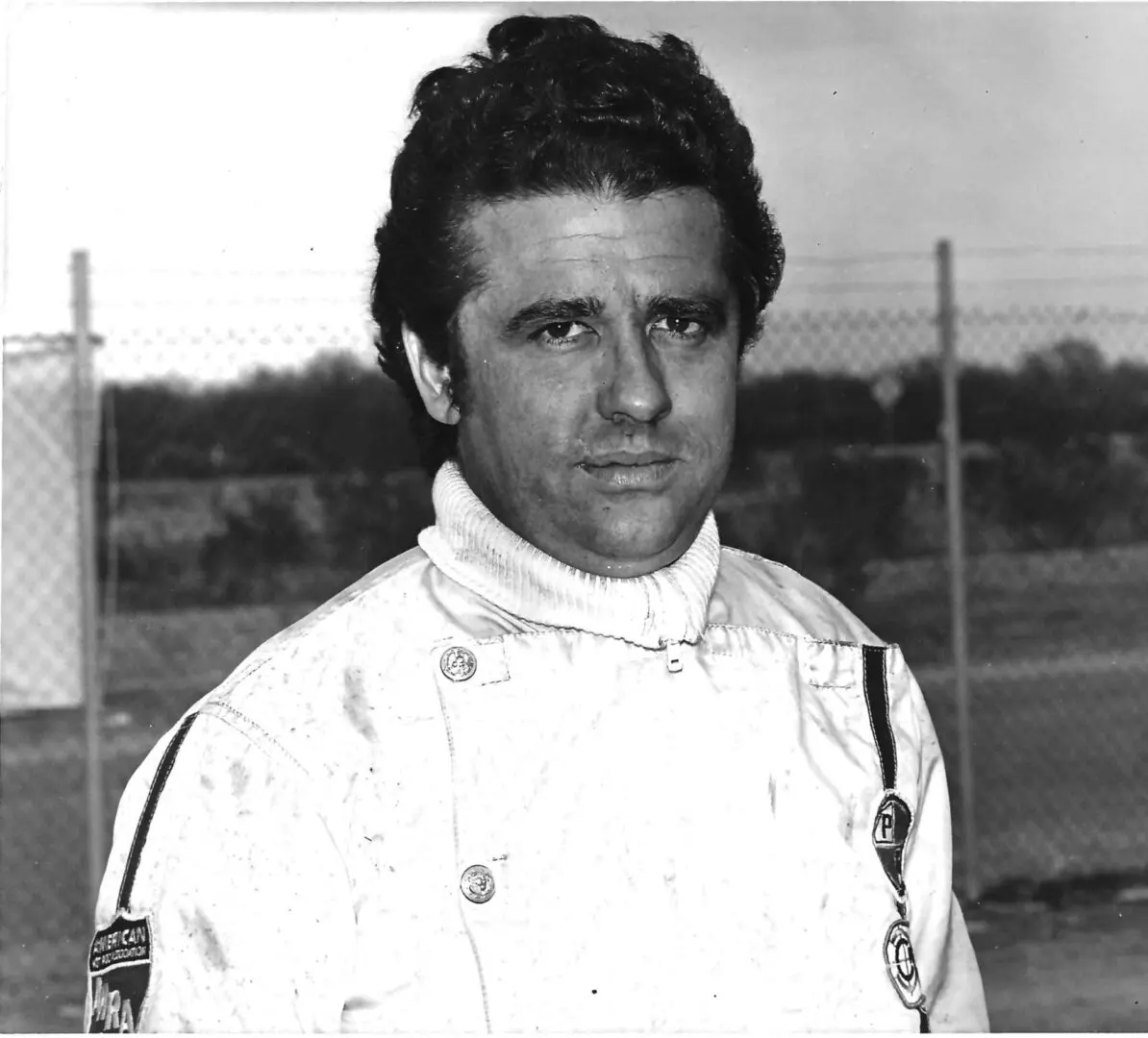 Don “Mad Dog” Cook
1937–2013 The best way to sum up who Don Cook was is to say that of all the characters who have been associated…
Read bio
Don “Mad Dog” Cook
1937–2013 The best way to sum up who Don Cook was is to say that of all the characters who have been associated…
Read bio
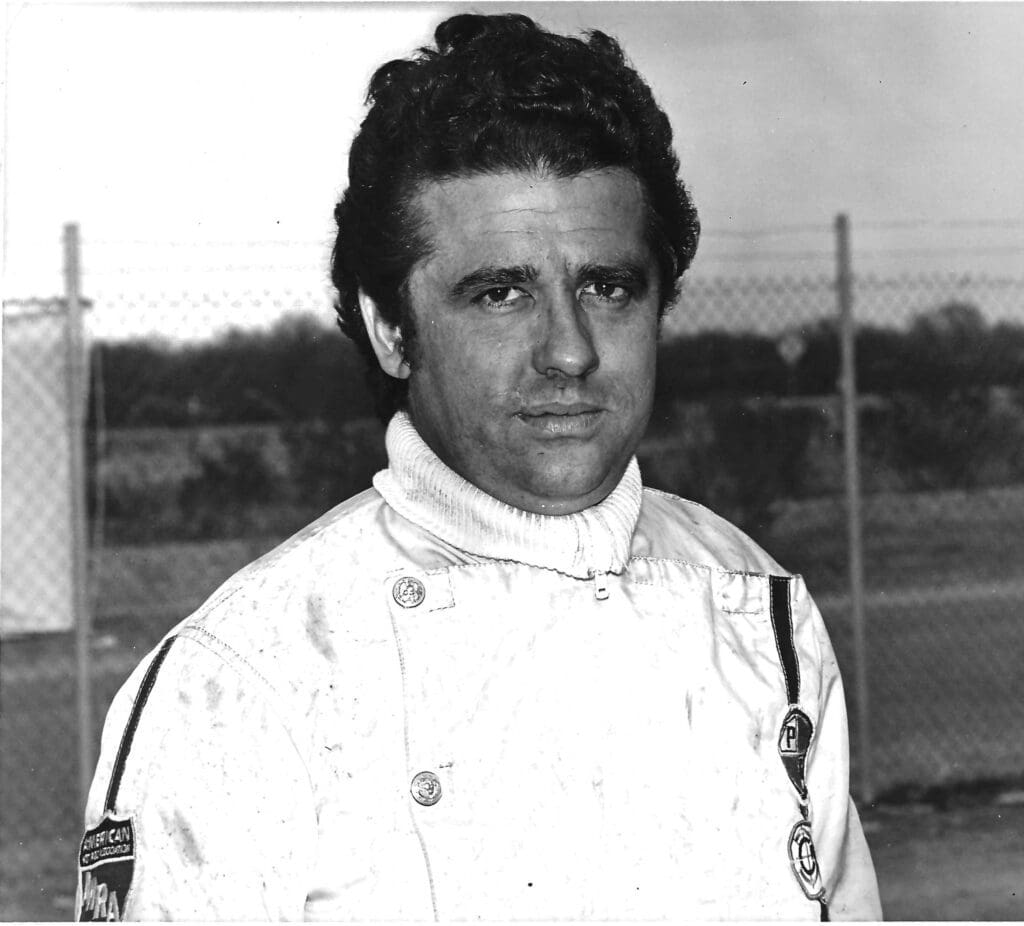 Class of 2003Presented by Mopar
Don “Mad Dog” Cook
The best way to sum up who Don Cook was is to say that of all the characters who have been associated with drag racing, Don stood out from them all. One example of what made Don different was that once while walking across the street, a driver failed to stop and hit him, breaking his leg. Typical of Cook, neither he nor the driver had any insurance so Cook silver taped his leg up and went back on the road with the funny car.
Don drove a variety of top fuel dragsters and funny cars over the years, compiling an impressive win record at race tracks all across the country. Don was also one of the most consistent match racers of his time. At one-point time, Cook had teamed up with Jim Nicoll on the “Top Dog I” fuel dragster in which he became the first person to break the 223 MPH barrier. Shortly after Cook made his 223 MPH run, Drag Magazine gave him the title “Mr. 223”. Like all racers, Don was happy with the 223 speed for the day, then he promptly set about breaking it. Before too long, Cook was able to stretch the record to 236 MPH.
With all the exposure Don received driving fuel dragsters, his antics in the funny car wars are what most fans and other races remember him four. Don’s “Southwind Too” funny car was the most memorable of the group. The fact that it had a 230-inch wheelbase made “Southwind Too” longer than any other funny cars of the day, and his choice of a 392 Hemi with a big stroker kit and a “trick” cam gave the car a unique sound, Don Cook was also the man to beat on the funny car match race circuit.
Another unique feature of Cook’s racing program was that he and his wife, Sharon, where the team, and their daughter Shelley was there private cheerleader. Don said ET and MPH strip records at half Moon Bay, Fremont, Wichita, and Kansas and many other tracks from coast to coast. He won Top Eliminator at the World Finals in New York in 1968 and one the Grand American at Marion, Ohio in 1971 in addition to his match race win record.
-
2003
Gary Cagle
1933–1994 Another one of the early pioneers in the sport of drag racing, Gary Cagle was a man of many moods. Must of…
Read bio
Class of 2003Presented by Mopar
Gary Cagle
Another one of the early pioneers in the sport of drag racing, Gary Cagle was a man of many moods. Must of the time he was a happy go lucky individual, but if he was pushed hard he could be about as tough as anyone around. He had a true love affair with racing and didn’t limit this love to just working on a car driving it. Gary started racing almost as soon as the old Santa Ana Dragstrip opened and in a variety of cars. One of his early rides was a four-banger powered rail job that he campaigned with partner Don Hampton.
While he was known as the driver of many early drag cars, Gary’s first real notoriety came while he was driving Chet Herbert’s slingshot dragster. This car was one of the very first to be fitted with a 392 Chrysler Hemi engine and a tip mounted blower. It was also one of the first cars to top the 180 MPH mark, which it did in 1959.
Driving for Herbert also gave Gary a tie-in with Chet sister, Doris Herbert, who owned and published Drag News. Gary was one of the first drag racers who decided he could make a living as a touring professional drag racer, and through Doris, Gary was able to arrange for a tour of midwestern and eastern drag strips in the summer of 1959. California hot shoe started the tour out on a high note, but a crash at great Bend after a 160 MPH run cut short the entire tour. Gary suffered a lot of physical damage, and it was a long time before he recovered enough to begin racing again. When Gary was able to reenter the drag racing wars, he did so in style. For his return entry, Gary built one of the most memorable machines ever, a canary yellow 1927 T-Roadster with a Chrysler Windsor engine driving through a torque converter. The Newhouse Auto sponsored roadster really shook up the competitors at Lions dragstrip in 1964 and 1965.
It was during the same period that Gary became one of the most outspoken leaders of the United Drag Racing Association and organization of immense political significance in the history of drag racing. Gary helped the you UDRA organization go to battle with many of the strip managers and operators over such things as safety, purses, and other issues he believed were not in the best interest of the racers. No one ever knew Gary to back away from fighting for his beliefs when it came to racing.
After Gary decided to retire the Newhouse Auto roadster, he continued to campaign a variety of other machines including the gorgeous Briggs-Cagle-Steen car that was best known for its unique trapdoor parachute arrangement. Even as he continued to be one of the toughest competitors on the race track, Gary was gradually shifting his interest in other directions. While at the UDRA, he had gained experience in producing successful events, and he also gained a lot of knowledge while working in the hot car staging at some of AHRA’s major meets. With this experience behind them, in the 1970s Gary decided to take a more active leadership role in the Southern California timing Association, where he served in many positions. Gary took the lead SCTA’s fight to retain access to its racing at El Mirage, and he was a leader in upgrading the timing equipment and eventually took charge of timing and internal communication at every Lakes and Bonneville event staged. This love affair with the SCTA was Gary’s passion until the end of his life in 1996. Drag racing never made Gary Cagle he super celebrity, and it certainly never made him monetarily rich, but it did give Gary something money couldn’t buy, the enjoyment of participating in a sport he loved and a man who was rich and friends.
-
2003
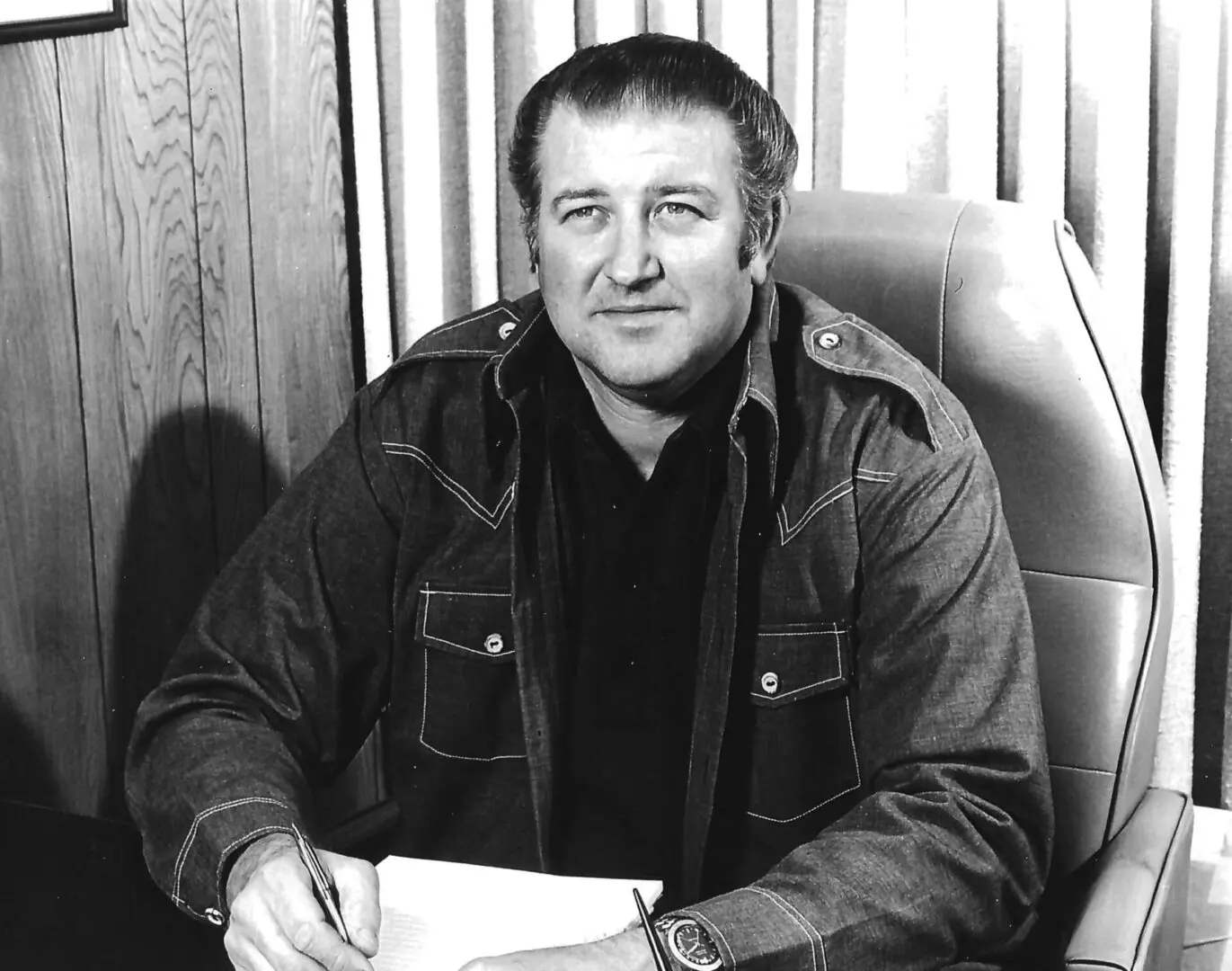 Don Alderson
1932–2001 Don Alderson, more commonly known as “Muldoon” or “Dooner”, was born in Hawaii, where he lived until shortly after Pearl Harbor, at…
Read bio
Don Alderson
1932–2001 Don Alderson, more commonly known as “Muldoon” or “Dooner”, was born in Hawaii, where he lived until shortly after Pearl Harbor, at…
Read bio
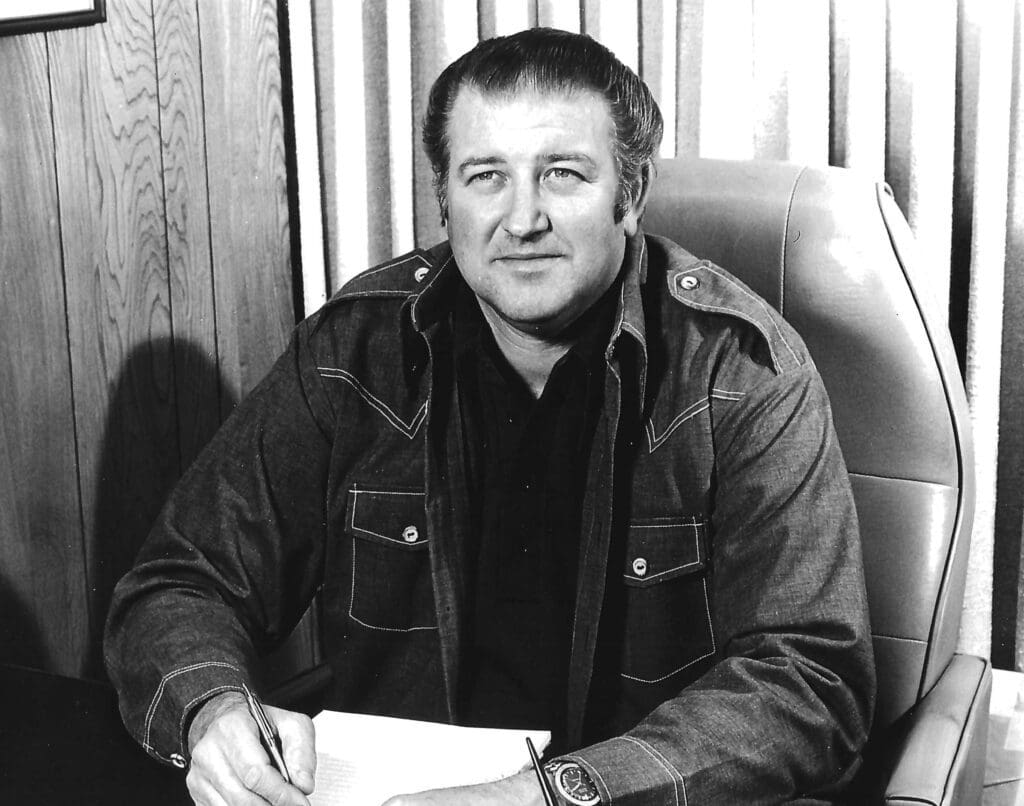 Class of 2003Presented by Mopar
Don Alderson
Don Alderson, more commonly known as “Muldoon” or “Dooner”, was born in Hawaii, where he lived until shortly after Pearl Harbor, at which time his family moved to Southern California. As a teenager, Don, like a lot of other young men around the country, earned his spending money working in a gas station. While waiting to reach the age in which he could get his learner’s permit, Don purchased a rebuild Model A roadster. After school, Don enrolled in college and shortly thereafter he and a friend competed a T-bucket roaster, which they competed with at the old Santa Anna Dragstrip. The top speed of 109 miles per hour they squeezed out of the car at Santa Anna isn’t very impressive by today’s standards, but it was great for that time.
After a tour in Korea, Don return to Los Angeles and went to work at an engineering company and was able to complete an apprenticeship in the design and manufacturing of aircraft components and assemblies, where he learned the fine art of producing precision parts and pieces. In 1957 Don and Milo Franklin formed Milodon Engineering Inc., which is primarily engaged in producing parts for aircraft and missiles. However, Don was still involved in racing and soon began to produce a lot of the parts that went into his own cars and engines.
By this time Dooner was fully involved with Bonneville racing, drag racing, and the dry lakes; plus, he was a member of the Gear Grinders Car Club, which was associated with the Southern California Timing Association. In 1946, Don drove his street roadster to a record speed of 131 MPH. Don was like several of his fellow racers in the early days of the sport who made parts for their own use that fit and/or performed better than what was available. As other competitors learn more about the level performance he was obtaining and the fact that his parts actually fit, more and more of them began to ask him to build the same parts for them.
In 1962, Don acquired sole ownership of the company which by this time had gone from producing a few special performance parts to producing hundreds of these parts. In fact, the demand was so great that Don had begun to steer the company from an aircraft component parts manufacturer to an automotive product development and manufacturing business. In addition to the increased number parts being produced, the variety of parts had also greatly increase, and soon Milodon engineering was a full-time race engine parts manufacturer. The product line grew from special main bearing supports, oil system, and oil pans to include complete 426 Chrysler and 350 Chevy style aluminum blocks and accessories. By 1985 the business listed over 900 parts in its catalog. The top names of the day, such as Don Garlits and Chris Karamasines, help make the Milodon engines a must-have item for the serious racer.
For Don, the 60s were the glory years of racing. In 1965, aerodynamics guru Bob Herda designed the body and Dooner built the engines for the Herda, Knapp and Milodon streamliner that Herda drove to a Bonneville record on its first outing. By building in running various size engines, the car was able to compete in both B and C classes. From 1965 through 1968, the car broke its own record 18 times, with eight of those times coming in one year. In 1967 the Autolight division of Ford contacted Don and asked him to build a special SOHC engine for the streamliner to go after the Daytona Beach record. In November of that year the car ran 357+ miles per hour to set a record that stood for incredible 28 years.
Like a lot of racers and enthusiasts, Don’s interests were not confined to just cars. His second love was the world of aviation. In 1953 Donner bought his first plane, a World War II era T-6 trainer. From there he moved up to a T-28 and ultimately wound up with a P-51 Mustang. Much like what resulted from his involvement in drag racing, Don was soon producing special performance parts for the major air races. Don owned several more normal planes during his life, but his ex-military ones were where his heart was.
Don gave the racing and enthusiast community a lot of leading-edge parts, but he also gave it a lot of advice and valuable information. He was a thinker, innovator, and a doer. With organizations such as NHRA and SEMA recognizing his contributions to the sport with special honors including induction into the SEMA Hall of Fame in 2001.
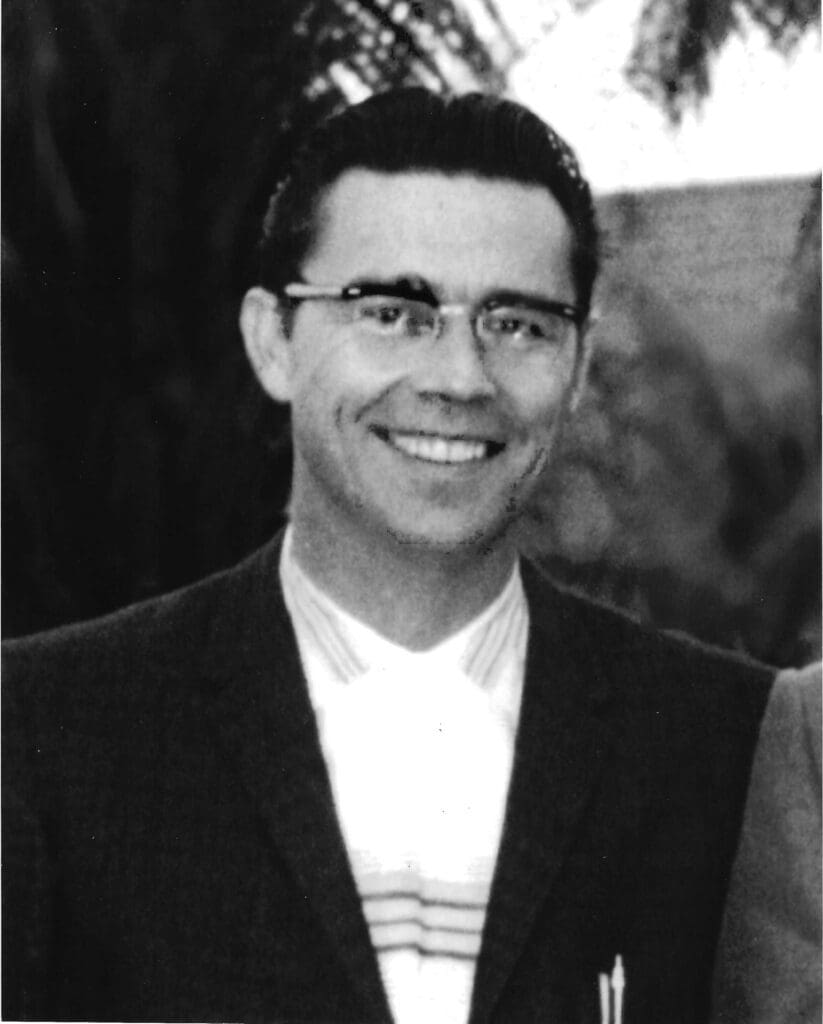
Class of 2002
11 inductees-
2002
Founders Award
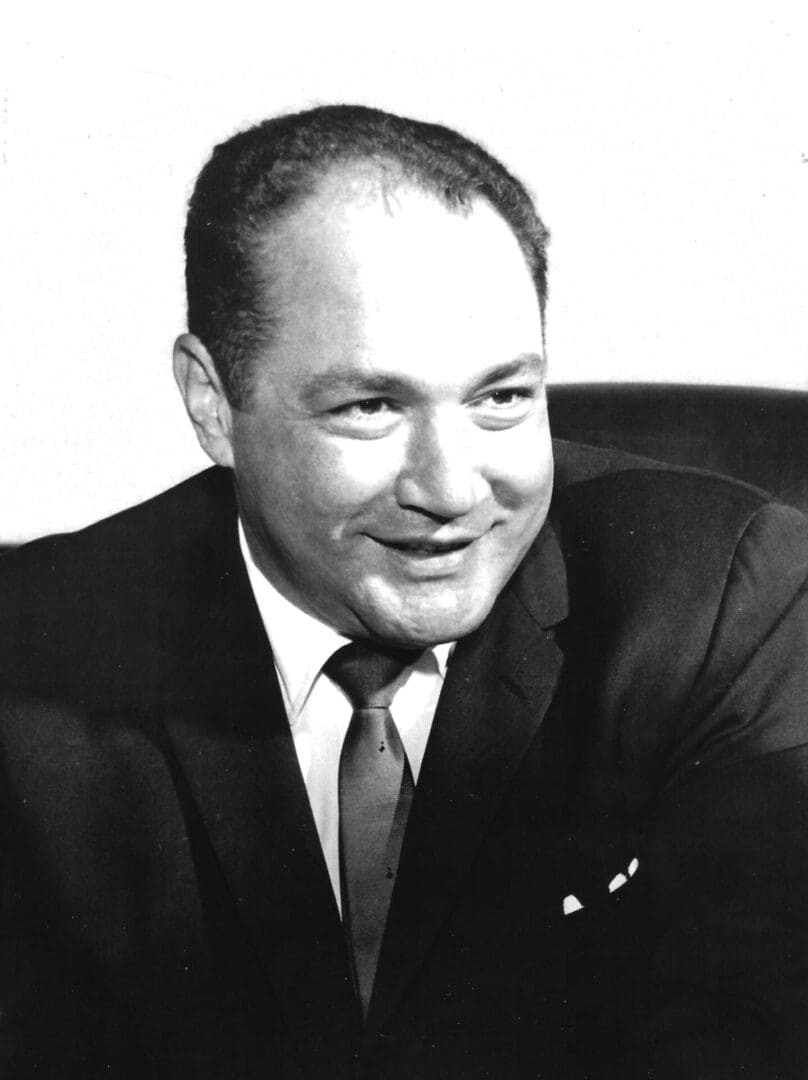 Andy Granatelli
1923–2013 Better known for his involvement in oval track racing, particularly the Indy 500, Andy Granatelli was also a pioneer in the drag…
Read bio
Andy Granatelli
1923–2013 Better known for his involvement in oval track racing, particularly the Indy 500, Andy Granatelli was also a pioneer in the drag…
Read bio
 Class of 2002 · Founders AwardPresented by Mopar
Andy Granatelli
Better known for his involvement in oval track racing, particularly the Indy 500, Andy Granatelli was also a pioneer in the drag racing arena. He opened the first speech shop in the Midwest, which was located in Chicago. In 1943, Andy was purchasing small amounts of speed equipment in Southern California and hauling it back to Chicago to sell to other hot rodders. In 1944, he and brothers Joe and Vince opened the first Midwest based full-blown speech shop. By 1957, Grancor was doing more total volume then all of the other speech shops combined. Pioneering the practice of using full-page newspaper advertising for the speed parts they carried. The success of this practice soon led him to begin a national regular automotive parts dealer/warehouse distributor network which made Grancor the first wholesale speed equipment business ever. Andy also pioneered the practice of discount pricing for multiple part purchasing and is credited with beginning the practice of purchasing product by the truckload, not by the piece. Andy is in a large part responsible for the nationwide success of many of the new familiar names in industry, including but not limited to Winfield, Belond, Weiand, Edelbrock, Herbert Cams, and others.
Andy’s pioneering spirit in drag racing didn’t stop with the speech shop business. In 1951 while attending one of CJ Hart’s now famous drag races at Santa Anna, California. Andy was so excited by what he saw that he actually purchased the clocks from CJ on the spot and return to Chicago, where he leased an abandoned airfield in Libertyville Illinois, (re-named Half Day Raceway) and in 1952 successfully promoted the first nationally advertised drag race ever with over 26,000 people in the bleachers.
Andy’s contributions to drag racing was the support he gave the sport when he became president/CEO of STP in 1963. Andy provided a total support package to the sport that included free product, contingency money, prize money, and vast amounts of sponsorship funds not only for the race teams but for race tracks and associations as well (STP was NHRA’s first major sponsor as well as supplying funding to AHRA and IHRA). He also used funds from STP’s budget to advertise and promote drag racing on radio, TV, in print, and for outdoor signage. In fact, STP was the first company to promote the new popular “Welcome Race Fans” banners and signs that appear at races worldwide.
Andy’s contributions to the industry and to racing of all types have been recognized by several organizations. In 1967, Andy was awarded the world’s largest trophy (over 10 feet tall) the “Outstanding Contribution to Motorsports Trophy” by AHRA President Jim Tice for his participation in and promotion of drag racing. -
2002
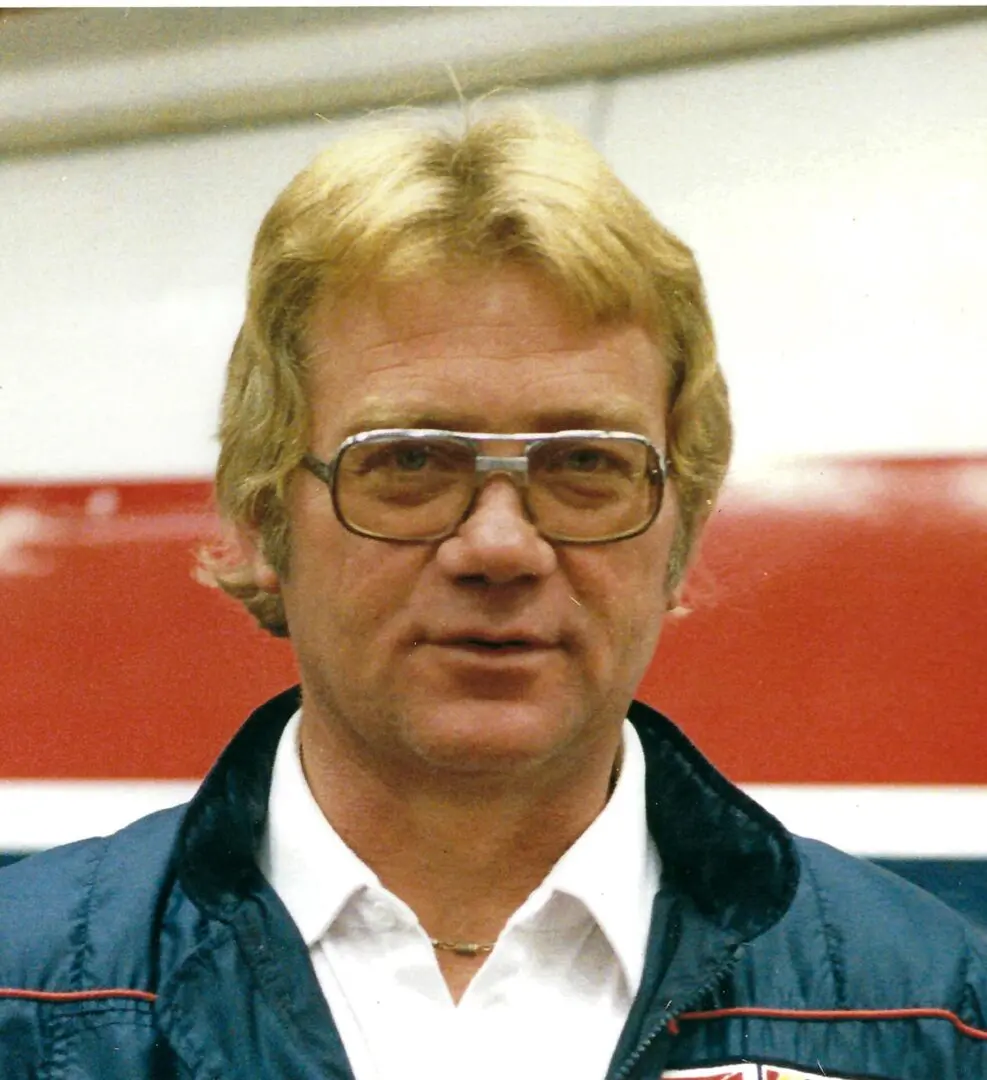 Jerry Verheul
1938–1988 Another multidimensional person within the sport, Jerry was involved in everything from drag racing cars to unlimited hydroplanes and was not limited…
Read bio
Jerry Verheul
1938–1988 Another multidimensional person within the sport, Jerry was involved in everything from drag racing cars to unlimited hydroplanes and was not limited…
Read bio
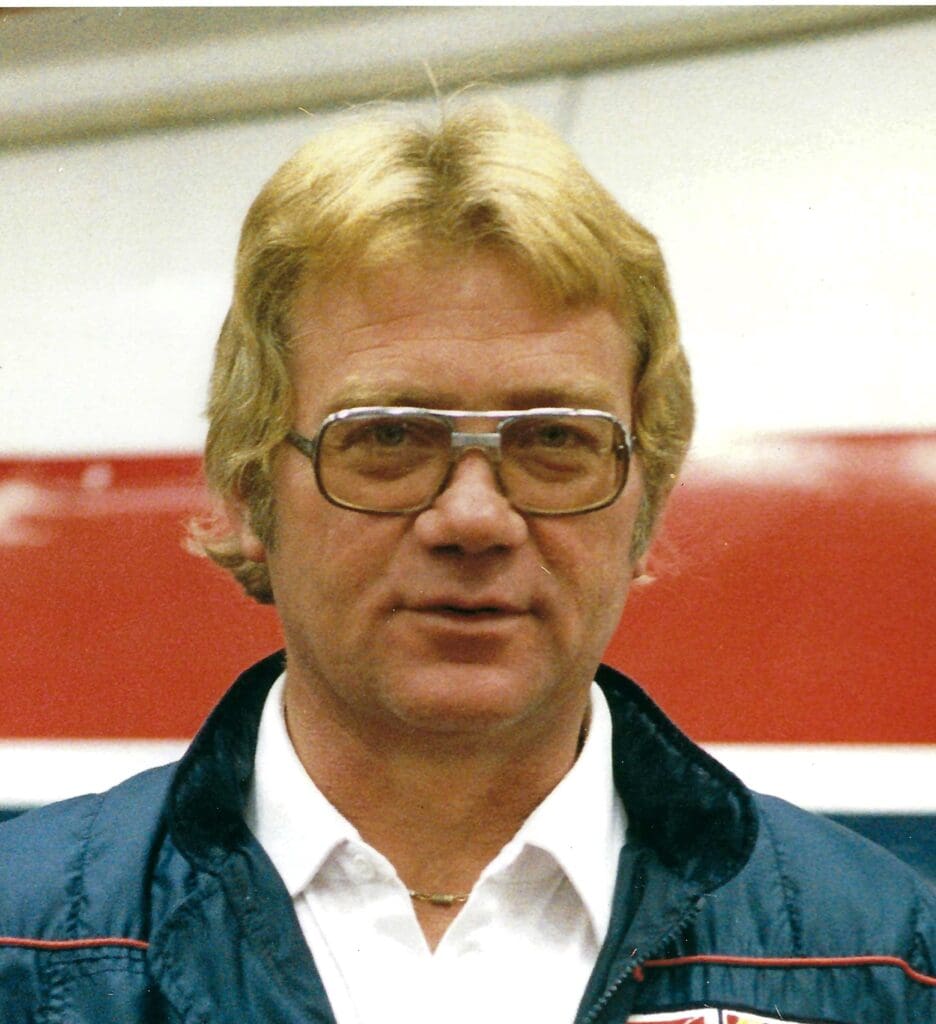 Class of 2002Presented by Mopar
Jerry Verheul
Another multidimensional person within the sport, Jerry was involved in everything from drag racing cars to unlimited hydroplanes and was not limited to internal combustion engines in doing so. Jerry started his career in the 1960’s when he teamed up with Dave Wiese in a conventional dragster that soon was replaced with a twin Chevy powered dragster. The Chevy car did well, but before long he made the move to Chrysler power when he took over the crew chief chores on Jerry Ruth’s top fuel dragster for the 1971 and 1972 seasons with Ruth picking up a world championship title in the process. Jerry moved from top fuel to funny cars in 1973 when he was crew chief for Frank Hall’s “Green Elephant”. This pairing lasted for the 1973 in 1974 seasons with Frank winning a world championship as a result of their efforts. Next, he became the driving force behind me “Pacemaker” car of 240 Gordie Bonin from 1975-1979. This team racked up one of the most impressive win streaks out of the northwest region ever assembled, finishing in the top ten every year, winning the Gatornationals in 1977, 1979, and 1981. The Winston Finals in 1977 and 1979 and the US Nationals in 1979. The 1979 US Nationals is also where the team solidified Gordie’s handle of 240 Gordie when they moved the funny car record to 246.90 MPH.
About this time, Jerry decided to move into the boat arena, and as usual started at the top by getting into the unlimited hydroplane class. His first experience in this world was with an Allison powered boat, but Jerry didn’t look at the engine as a fugitive from the aircraft world. He decided the big V 12 engine was nothing more than a Chevy with four too many pistons. At this point Jerry pretty much revised the build-up of the Allison, balancing the lower in, designing new camps, changing pushrod ratios, and in general making a hot rod engine out of it. Most important, it worked, providing a couple thousand additional RPM that translated into an absolute winning boat. Jerry’s next venture was to build a twin blown Hemi boat for the class. This soon turned into one of the fastest boats on the circuit, but the overall design of the boat was it undoing; it needed really rough water to perform best, and unless it was really rough at the beginning of the race, the other boats were able to get away out in front. Also, about this time the turbine powered boats began to really outperform the piston powered ones, so Jerry moved to Steve Wommer’s camp and once again began to design parts that not only made the boats faster, but it also made them safer. One of the items he developed in conjunction with Dave Benjamin is a machined forged stainless prop. This allowed the turbines to turn the high prop RPMs they needed to perform at maximum level without the prop flying apart, which was one of the major causes of accidents prior to its use. The other thing that was threatening this form of racing was the high mortality rate of drivers when there was a crash. Again, Jerry and Benjamin teamed up and did a lot of the early development of the “safe driver capsule” that has saved many drivers lives and help save both the unlimited hydroplanes and the drag boat classes.
As much as he enjoyed the boats, Jerry decided to return to his roots in drag racing. His last project was a turbocharged fuel hemi dragster for top fuel. While the car one best engineered at Pomona winter nationals, Jerry died before its potential was ever reached.
-
2002
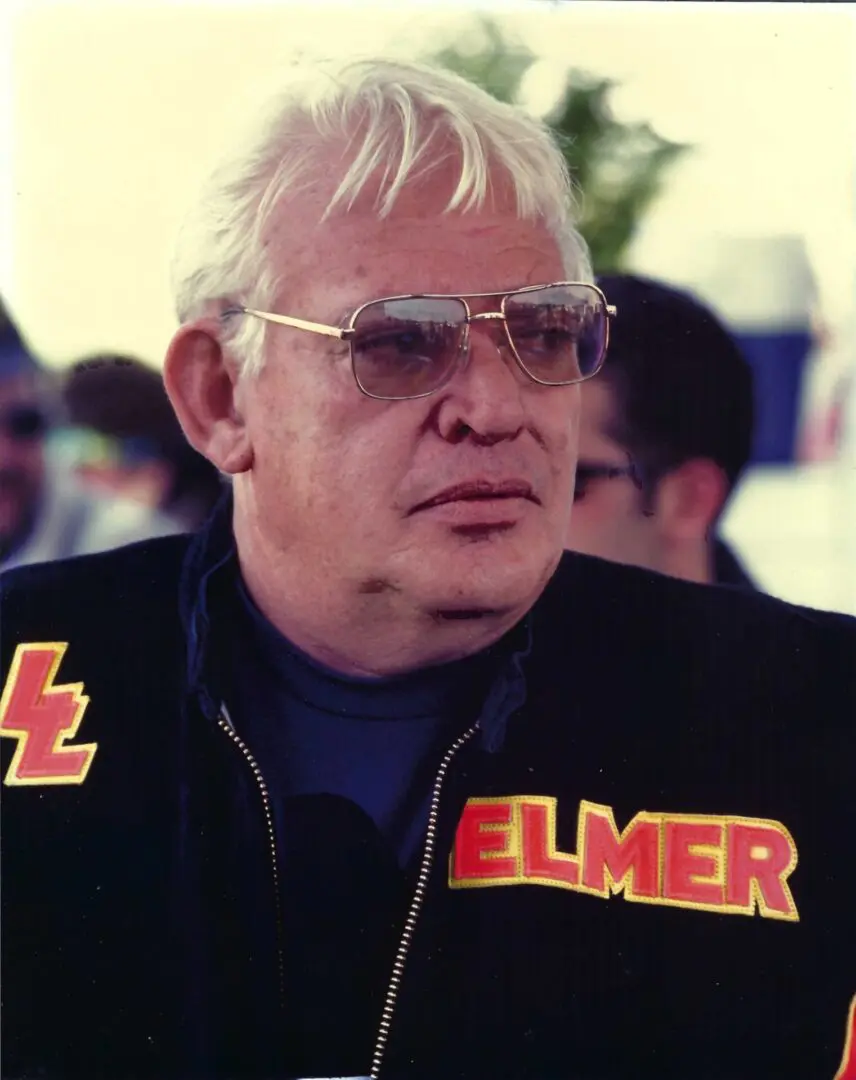 Elmer Trett
1943–1996 Elmer Trett began drag racing on a street Harley in the mid-1960s at Thorne Hill Dragway in Kentucky. In 1970 Elmer saw…
Read bio
Elmer Trett
1943–1996 Elmer Trett began drag racing on a street Harley in the mid-1960s at Thorne Hill Dragway in Kentucky. In 1970 Elmer saw…
Read bio
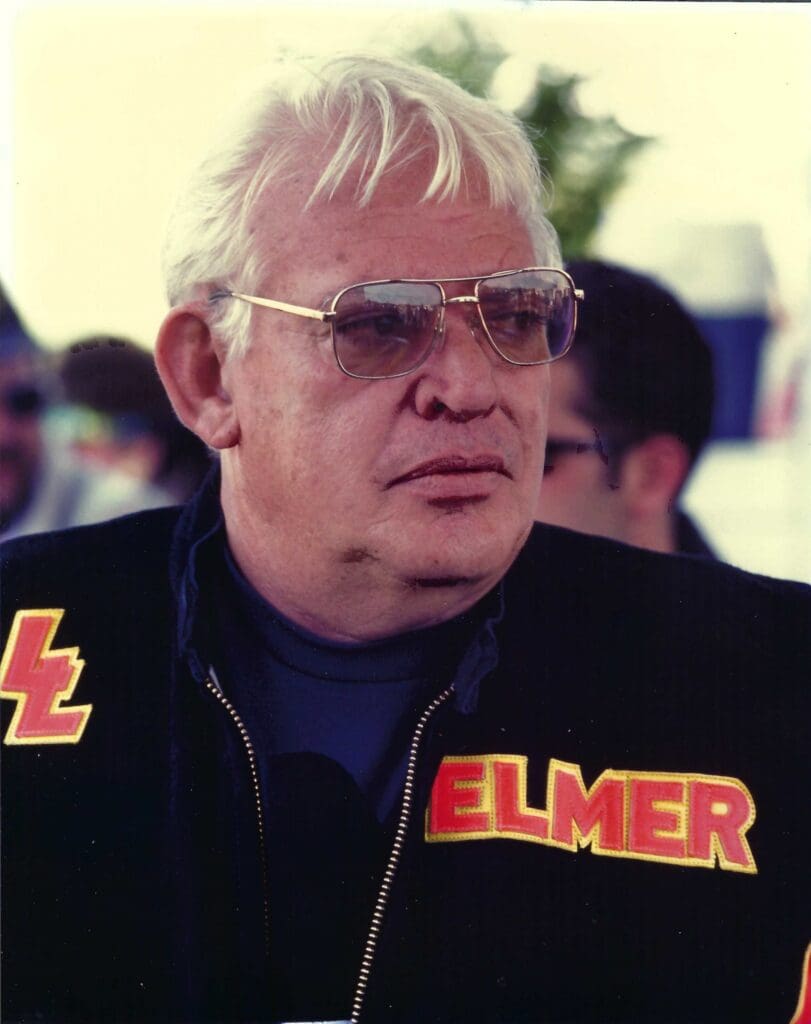 Class of 2002Presented by Mopar
Elmer Trett
Elmer Trett began drag racing on a street Harley in the mid-1960s at Thorne Hill Dragway in Kentucky. In 1970 Elmer saw a photo of Danny Johnson’s gas dragster bike and decided this was what he wanted. While this was his first all-out race bike and he was running it on gas, he was still able to defeat some of the best nitro burning motorcycles of the time. Elmer was a typical drag racer. Once he got what he believed was the maximum out of the gas bike, he moved up to top fuel bike. In 1976 he built his first top fuel bike, a twin-engine Harley Davidson. In a very short time, Elmer became the prominent Harley racer in the US, through the Harleys days as the top dog were coming to an end Elmer did push his way into the seven second range. Elmer was the quickest and fastest Harley rider ever, holding the ET record at 7.67, this was when he retired the Harley. In 1981 Elmer switch to what was listed as a Kawasaki engine but was really and Elmer Trett engine. He had the bottom in cast to his specs, custom made the crank, rods and pistons, reversed the head in order to hang a supercharger in front of the engine. As he became more familiar with this new combination, Elmer began to turn the top fuel class on its collective ear. On September 5, 1983 at the NHRA US Nationals in Indy, Elmer became the first man to cover the quarter-mile at over 200 MPH when he posted the speed of 201.34, a speed that earned admiration throughout the racing world and a spot in the Guinness book of world records.
Typical of all competitors, Elmer continued to look for ways to go quicker and faster by redesigning the engine parts to be stronger, lighter, and more powerful. He was the first top fuel bike rider to top to 210, 220, then 230 MPH and drop into the low six second ET’s. Elmer not only raced what he designed and built, but he also manufactured these parts and made them available to his competitors. Elmer did not confine his competition to just the US either. He took the championship title several times here and in Europe and held titles in many organizations such as Dragbike, IDBA, NMRA, and ProStar, to name a few. Elmer was also a typical racer and his time in that his family serviced as his pit crew. His wife, Jackie, was the first pit crew person, and as daughters Gina and Kelly grew up, they soon joined in as part of the crew. Elmer was also an unselfish person who always stood ready to loan parts or give advice to competitors and even helped form an association for the top Euler’s to race with the other associations drop the class. Just two weeks prior to the crash that killed him, Elmer came close to his last request to break the five second barrier when he ran a 6.06 ET at Indy.
-
2002
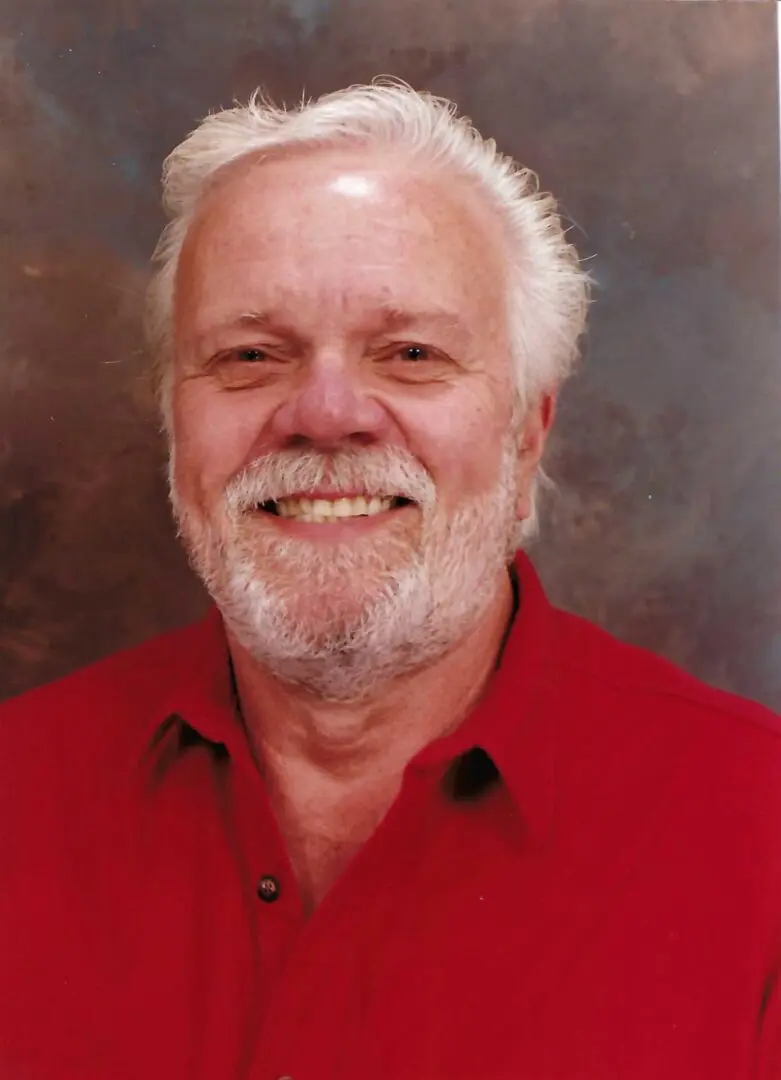 Kenny Safford
1940–2014 One of drag racing’s more likable drivers, Kenny didn’t make his mark in the sport because of his trait. He has been…
Read bio
Kenny Safford
1940–2014 One of drag racing’s more likable drivers, Kenny didn’t make his mark in the sport because of his trait. He has been…
Read bio
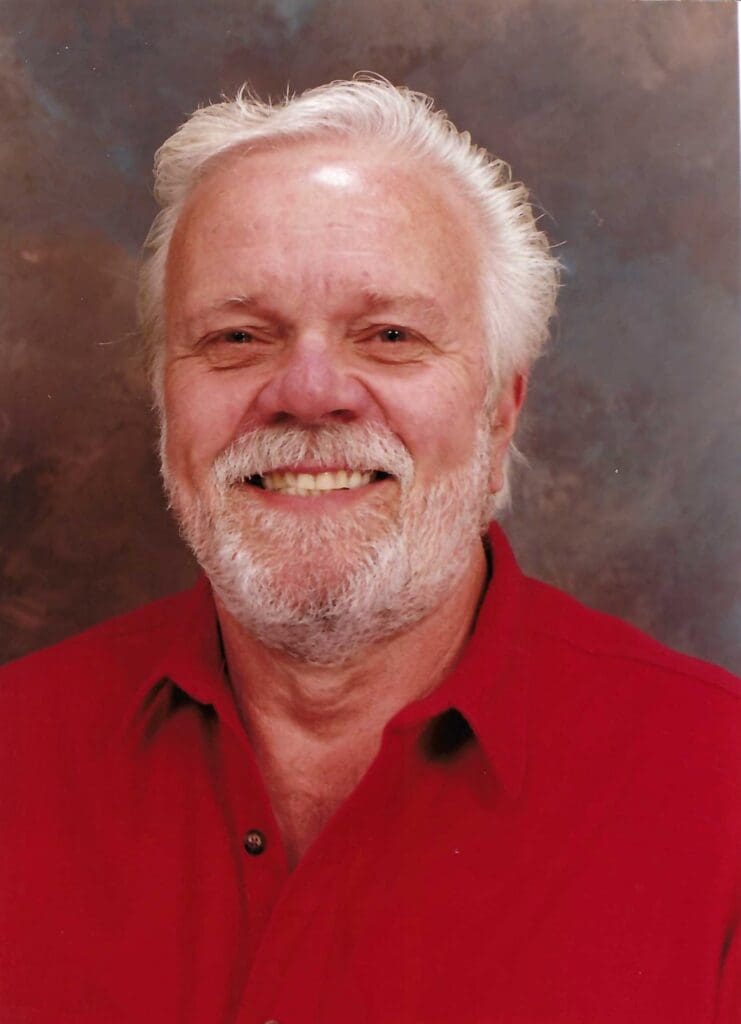 Class of 2002Presented by Mopar
Kenny Safford
One of drag racing’s more likable drivers, Kenny didn’t make his mark in the sport because of his trait. He has been one of the most professional and hard-working gentlemen to ever climb into the driver’s seat of any race car. Kenny was one of the original members of the Road Kings Car Club whose list of current and past members include such names as Don Prudhomme, Tommy Ivo, Don Johnson, Don Gaide, and Jimmy Miles to name a few. Kenny started his racing career in a 1944 Ford and quickly moved up to a 1957 Chevy street machine. Not content with the performance of this class of machinery, Kenny soon moved on to dragsters, where he experienced the thrill of their performance at the wheel of Don Johnson’s streamlined Daddy’s Auto Body top gas car. That first ride in 1958 hooked Kenny on driving, and in 1960 he joined with Don Gaide to build and run an Oldsmobile powered top gas dragster. Kenny drove this car into the winner’s circle in five of the first eight races he entered it in. When the gas engine in the car broke, Don Ratican joined the team with his nitro burning Olds engine. From 1961 through 1963, they became the most successful team to ever run the old engine. By 1963 the team had picked up a nickname, the Sour Sisters, and had also started looking at the advances being made in the sport by the more reliable Chrysler engine. Giving into the need for its reliability, in 1964 the team switch to a Dave Zeuschel built Chrysler in order to continue being competitive. The 1964 Chrysler car did have a very unique feature: it was equipped with a B&M Tork-Master torque converter and automatic transmission. Known as the B&M Tork-Master car, Kenny set track records at major race tracks up and down the West Coast. Kenny also stepped into the top fuel car owned by Frank Cannon in 1954 and became one of the first people to run over 200 MPH. In 1965 the Sour Sisters added a swoopy sharks tail body to the car and quickly establish itself as one of the best looking and most competitive dragsters of its time. From 1965 through 1968 Kenny took over the driving chores of one of the most feared cars in northern California, Ted Gotelli’s top fuel dragster. Looking to expand his reach and knowledge, in 1969 Kenny moved into the seat of his first funny car ride, the Stone, Woods and Cook Mustang that they campaigned in the Coca-Cola Cavalcade of Stars series. By 1970 Kenny was really enjoying the funny car and had moved over to drive the Mr. Norm’s Super Charger Dodge funny car. At the 1970 NHRA Springnationals, Kenny became the first funny car driver to record a seven second run when he ran a 7.04 ET. Not too long after that season, Kenny purchased the Mr. Norm operation and as the owner and driver of the team, he campaigned on the circuit until 1981 when he made the decision to retire. A couple things influenced the decision to retire, Kenny was involved in a serious crash in 1977 and another one in 1981 and by this time he was also part owner in Performance Auto Parts in Chicago. It was really time to devote full time to the business if it was to maintain a steady growth. While not ready to reenter the funny car wars, Kenny wasn’t ready to bow out of drag racing; he and the other Sour Sisters completed restoration of the “Shark” car with the intention on making exhibition runs with it.
-
2002
 Steve Reyes
 began shooting drag races in Northern California in the early 1960s when the sport was still in its formative stages…
Read bio
Steve Reyes
Steve Reyes began shooting drag races in Northern California in the early 1960s when the sport was still in its formative stages…
Read bio
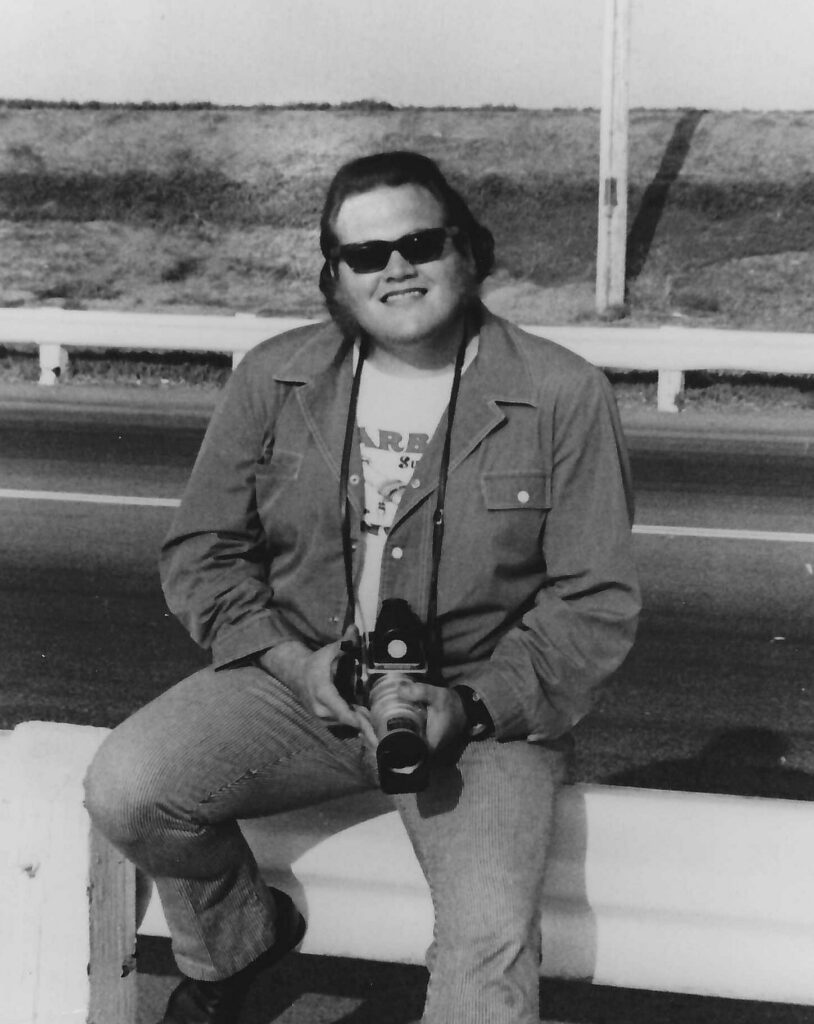 Class of 2002Presented by Mopar
Steve Reyes
Steve Reyes began shooting drag races in Northern California in the early 1960s when the sport was still in its formative stages and long before there were any photographers who were dedicated to the sport. Up until Steve became involved, most of the photos taken look pretty much alike, and frankly most of them were pretty boring. The standard photo was a side shot with the driver in the car and the crew around it, a side shot with the tires smoking, or an angle shot that left the viewer wondering whose car it was. Steve began shooting the cars and crews in off-track settings, restaurants, parks, airports, etc. He also proved that having a tree or a building in the background added to the overall effect. He also managed to put together a lot of photos that included great-looking ladies but more in the way the fashion photographer posed them then the usual “stiff” pose. Steve also had a way of anticipating where to be at the right time to capture some of the most outstanding action photos of the sport. When everyone else was at the starting line; Steve was either partway down the track or at the finish line. When everyone else moved down the track he was at the starting line, somehow knowing there would be some special action. Steve admitted part of this was luck, but he also studied the cars and drivers and was aware of their strengths and weaknesses, such as when they were experimenting with something new or there was a problem in the prior round that couldn’t be fixed. Steve also worked very hard at his job. At one time he attended 52 drag races a year plus several street rod events and sprint car races. In 1973 Steve went to work full-time for Argus Publishing, where he was photo director for 20 years, during which time he filled the pages of 6 to 10 magazines each month.
It was because of his spectacular and unusual photos, layouts, and contacts that a lot of formerly unknown racers began showing up on the pages of magazines such as Popular Hot Rodding, Super Stock, and Dragstrip Magazine, just to name a few. Steve was also responsible for a lot of the photos that found a place in the racing newspapers. Truly a pioneer in the world of drag racing photography, Steve set the benchmark for future photojournalists to aspire to. There’ve been a lot of photographers who have entered the sport since Steve started his version of photos, and there will be others to come, but none of them will ever be able to replace Steve Reyes and his knack for being where the action is and capturing it on film. Steve knows other sports as well, having photographed Major League baseball for the Hall of Fame in Cooperstown, New York from 1981 to 1985 and the National Hockey League from 1991 to 1995.
-
2002
Connie Kalitta
Connie Kalitta is one of the most durable participants in the sport of drag racing today. He is one of a very…
Read bio
Class of 2002Presented by Mopar
Connie Kalitta
Connie Kalitta is one of the most durable participants in the sport of drag racing today. He is one of a very small group of people who began participating in the sport when he was very young and is still active today as an owner, builder, and innovator. Connie’s driving career began at the wheel of a 1951 Willys that he raced abandoned Michigan airstrip when the reward for the winner was the other guy’s pink slip. His list of accomplishments not only prove what a true competitor he is, but they also stand head and shoulders above the majority of the sport’s other competitors. As a driver, Connie has 10 NHRA national event titles to his credit, and as an owner/crew chief has collected numerous NHRA national event titles. Connie also has five Winston championships to his credit. The first came in 1977 when he was crew chief for Shirley Muldowney, when she became the first and only female top fuel champion in NHRA history. His next to Winston championships came in 1979 and 1982 when he captured the IHRA championship honors. His last two Winston championships were back in NHRA competition and came as a team owner when his son Scott drove the Kalitta motorsports top fuel dragster into the spotlight in 1994 and 1995. Connie’s first appearance in a final round at an NHRA national event was in 1963 at the Pomona Winternationals where he was runner-up. He was finally able to make it to victory circle at the Winternationals in 1967 and was runner-up three more times. At the 1989 Winternationals Connie became the first person to officially break the 290 MPH barrier. His luck at the US Nationals in Indy reflected Pomona a bit when he reached runner-up positions in 1982 and 1984 before finally winning there in 1994. Connie was the first person to make a 200 MPH run at the US Nationals at the 1964 race. In 1994 he won the Gatornationals in Gainesville when he defeated son Scott in the first-ever father versus son top fuel final in NHRA history. Among his many other titles wins, etc., Connie was inducted into the Motorsports Hall of Fame of America in 1992.
While many know about Connie and his achievements as a racer, his off-track accomplishments are also very impressive. In the early 1960s he became involved in flying and by 1997 was the owner of a company with worldwide operations and over 100 aircraft in its inventory. During operation Desert Shield/Desert Storm in 1991, the company flew over 600 missions for the military, which was the second largest number of cargo-only flights during the effort. Connie appeared at the White House on behalf of his employees where he received its accolades from then-President George HW Bush. Connie has also been honored as Michigan Entrepreneur of the Year and Air Cargo Man of the Year. He also supplied aircraft for nearly a dozen motion pictures, and shortly after the incidents of September 11, 2001, Kalitta Air flew relief supplies from Los Angeles to Philadelphia and was one of the very few non-military aircraft that night. Connie Kalitta is truly a one-of-a-kind person
-
2002
 Darrell Gwynn
 pretty much grew up in drag racing. As a young boy he was at his father’s side every chance he…
Read bio
Darrell Gwynn
Darrell Gwynn pretty much grew up in drag racing. As a young boy he was at his father’s side every chance he…
Read bio
 Class of 2002Presented by Mopar
Darrell Gwynn
Darrell Gwynn pretty much grew up in drag racing. As a young boy he was at his father’s side every chance he got, watching and listening to everyone he came in contact with and absorbing as much knowledge as possible as a spectator. Darrell’s first time in competition came at the wheel of and alcohol dragster where he proved that the years of observing were not wasted. At the wheel of an alcohol dragster, Darrell put several national event trophies on the shelf at home and in doing so put together an impressive four NHRA Winston Top Alcohol Dragster Championships and several inductions to the Car Craft Magazine All-Star Drag Racing Team.
Unlike some competitors who have problems when they move from one category to another, Darrell was successful in maintaining his winning ways when he moved up to top fuel dragster. Regardless of what the event was or where it was, Darrell was never far from the winner’s circle. Then fate stepped in and threw a big curve at Darrell. After selling his dragster and shipping it to England, Darrell agreed to shake its down at Santa Pod Raceway, where he was involved in a horrendous crash that left him paralyzed from the chest down. A lot of people would have been discouraged and given up, but not Darrell. He accepted the challenge and not only become stronger for it, but also inspired a lot of those around him to become stronger as well. Darrell has become a tireless worker on behalf of The Miami Project, a group that is dedicated to helping victims of paralysis return to a more normal lifestyle.
Even while working to rebuild his own life and helping others do the same Darrell never lost his love of the sport and was soon back at the racetrack as a car owner. Everyone knows the major ingredient that keeps race cars performing his money, and Darrell was successful in not only putting together top performing teams, but also inspiring new blood into the sport in the form of the New York Yankees ball club. The team with Mike Dunn driving was consistently one of the quickest and fastest cars throughout season and exceeded the 330 MPH on more than one occasion. One of the more prestigious awards for Dell Gwynn came in 1999 when he was presented with the Car Craft Magazine Ollie Award, but his big reward comes from continuing to be part of drag racing and being able to share this with his wife and daughter.
-
2002
 Roger Gustin
1939–2015 Roger got started in drag racing in 1957 when he took his 1949 Chevy to the local race track. That was all…
Read bio
Roger Gustin
1939–2015 Roger got started in drag racing in 1957 when he took his 1949 Chevy to the local race track. That was all…
Read bio
 Class of 2002Presented by Mopar
Roger Gustin
Roger got started in drag racing in 1957 when he took his 1949 Chevy to the local race track. That was all it took to set the course for his life. Rogers first efforts in the 1949 Chevy were not very successful, but that changed when he purchased a 1955 Chevy and his brother Phil joined him as the mechanic. The brothers were very successful in the sportsman category for several years, but in 1965 Roger achieved his dream when he moved into the full-time professional racer ranks. One thing that set Roger apart from a lot of the other full-time racers at the time was his belief that to be successful at the sport he had to be a businessman first and a racer second. Roger really worked at polishing his PR skills vary early on by studying public relations, attending media training classes, and attending a commercial acting school in New York to perfect his on-screen presentation for commercials. In 1972 Roger moved into the arena that has propelled him to the position he enjoyed, the jet powered funny cars. As a businessman this made sense because he got paid every time the car ran, and it was not as crowded as the more conventional funny car class. However, it was also considered to be a very dangerous class with very little supervision from the sanctioning bodies. Looking for a way to make his “business” grow, Roger began crusading for stricter regulations from the chassis/body, to licensing the drivers, and for sanctioning by the associations. In 1974, Roger became the first driver to be licensed to race a jet car when NHRA issued such a license. As with many of the other Hall of Fame inductees, Roger proved to be a multidimensional person. In 1992, Roger experienced a near fatal top end crash in his jet car that left him in a recovery mode for over 14 months. During that time Roger accepted an offer from AutoStar Productions, Inc. to become a director for the company and build its profit to profitability as the producers of the Super Chevy Show Series. One of the main reasons Roger was successful with his race car was his ability to secure major sponsorships. In fact, he was among the first in drag racing to obtain sponsorship from such major widely recognized non-automotive companies as Smith Brothers Couch Drops, Lava Soap, and Black & Decker, to name a few. The first ever motorsports sponsorship with Procter & Gamble (Lava Soap) resulted in a high visibility national TV campaign with Roger featured prominently as the spokesperson. Roger brought this same thought process to the AutoStar program and be began securing profitable sponsorships for the events and soon turned them into very profitable events. Over the years, Roger received numerous honors for his contributions to the sport, including induction into the NHRA Hall of Fame, Car Craft Magazines Hi-Riser Club, IHRA’s 1979 Showman of the Year, the National Safety Council’s Spokesperson of the Year in 1985 & 1986, and the Projet Association Hall of Fame, to name just a few
In 1996, Roger went from director of AutoStar productions to owner when he purchased the company. Even after his retirement from the driver seat, the Team Gustin jet car program continued to race on the Project circuit.
-
2002
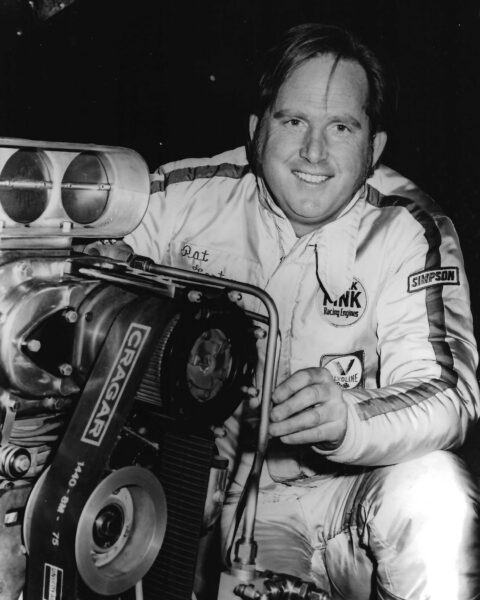 Pat Foster
1940–2008 Pat Foster made his lasting mark on drag racing both as a designer/fabricator and driver. As a designer/builder, Pat was instrumental in…
Read bio
Pat Foster
1940–2008 Pat Foster made his lasting mark on drag racing both as a designer/fabricator and driver. As a designer/builder, Pat was instrumental in…
Read bio
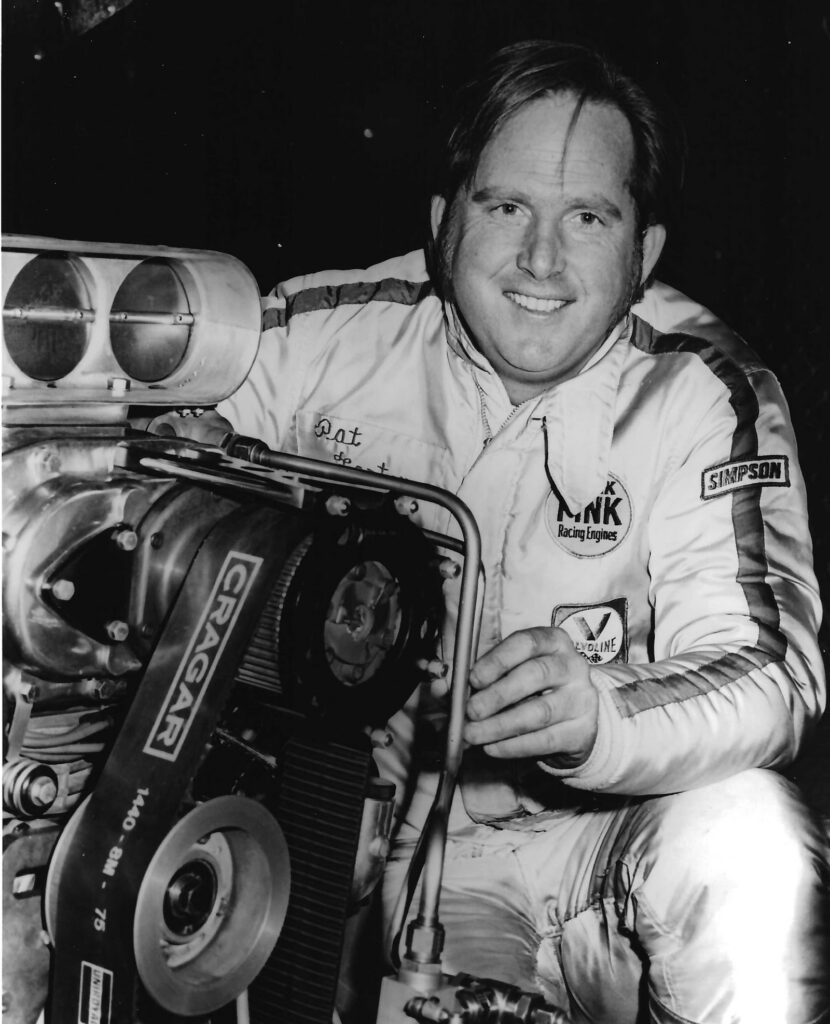 Class of 2002Presented by Mopar
Pat Foster
Pat Foster made his lasting mark on drag racing both as a designer/fabricator and driver. As a designer/builder, Pat was instrumental in creating and building cars for names such as Kenny Bernstein, Ed McColloch, Larry Minor, Joe Amato, Don Schumacher, and Don Prudhomme, to name a few. One of Pat’s first rides was in the “Addict” top fuel dragster owned by Rocky Childs and Jim Albert. Since that time, Pat lost count of the number and name of the dragsters he drove, but between top fuel dragsters and funny cars, he drove over 50 different drag racing cars. The list of funny car owners Pat shoed for reads like a who’s-who in drag racing, including but not limited to John Bateman’s “Atlas Oil Tool” cars (funny car and top fuel dragsters), Roland Leong’s “Hawaiian”, Don Cook’s “Damn Yankee”, Don Kirby’s “Beach City Corvette”, and the Super Shops Plymouth Arrows. Pat worked for and with some of the other great car builders in the sport, including John Butera, Woody Gilmore, and H&H Racecraft’s Jim Hume. Not exactly shy, Pat was very outspoken over the years regarding driver safety, innovative designs, and various other subjects. One of Pat’s big pushes was to redefine the early funny cars roll from exhibition machines to real race cars. In 1968, Pat went to work for Mickey Thompson as constructor-crew chief for Mickey’s Ford Land Speed Record program. When the program lost its funding the next year, Mickey asked Pat what they should do with all the parts they had accumulated. Pat’s answer was to design and build a pair of revolutionary SOHC-powered funny cars with dragster type chassis, narrow cages, zoom he’s, un-sprung rear-ends, and Mustang bodies fitted over all of this. The result was a pair of funny cars driven by Pat and Danny Ongais that were absolutely invincible at the time. Later Pat returned to Woody’s shop where among many others, he built the only rear engine funny car to ever win a major event for Jim Dunn. Pat didn’t confine his creativeness to just dragsters and funny cars. He was involved in the construction of John Mazmanian’s historic AA/GS 1941 Willys and Bob Pennell is BB/GS Anglia and other such creations. One of his wilder creations was Doug Thorley’s Corvair funny car, which Doug drove to the winner’s circle at the 1967 Nationals. While he retired from driving, Pat did not give up building cars he is just took a bit of a different direction. He re-created some of the more famous cars from the past. Pat completed the reproduction of Beebe and Mulligan 1969 top fuel dragster in such a masterful way that it became the envy of all who have seen it. Foster reproduced one of Jack Chrisman’s famous sidewinders.
-
2002
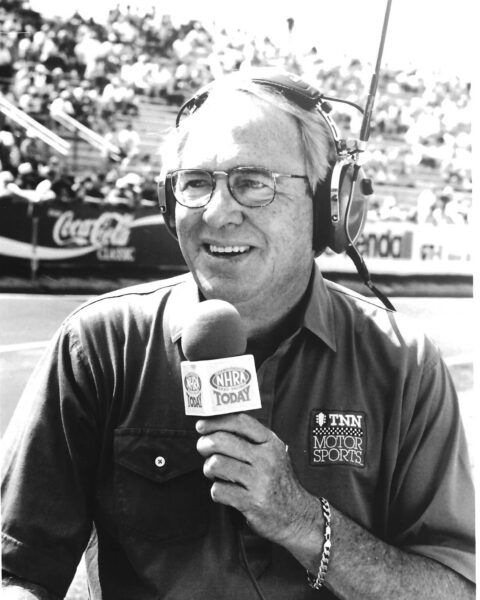 Steve Evans
1942–2000 Steve Evans grew up involved in the sport of performance vehicles, particularly drag racing. Steve grew up near the dry lakes of…
Read bio
Steve Evans
1942–2000 Steve Evans grew up involved in the sport of performance vehicles, particularly drag racing. Steve grew up near the dry lakes of…
Read bio
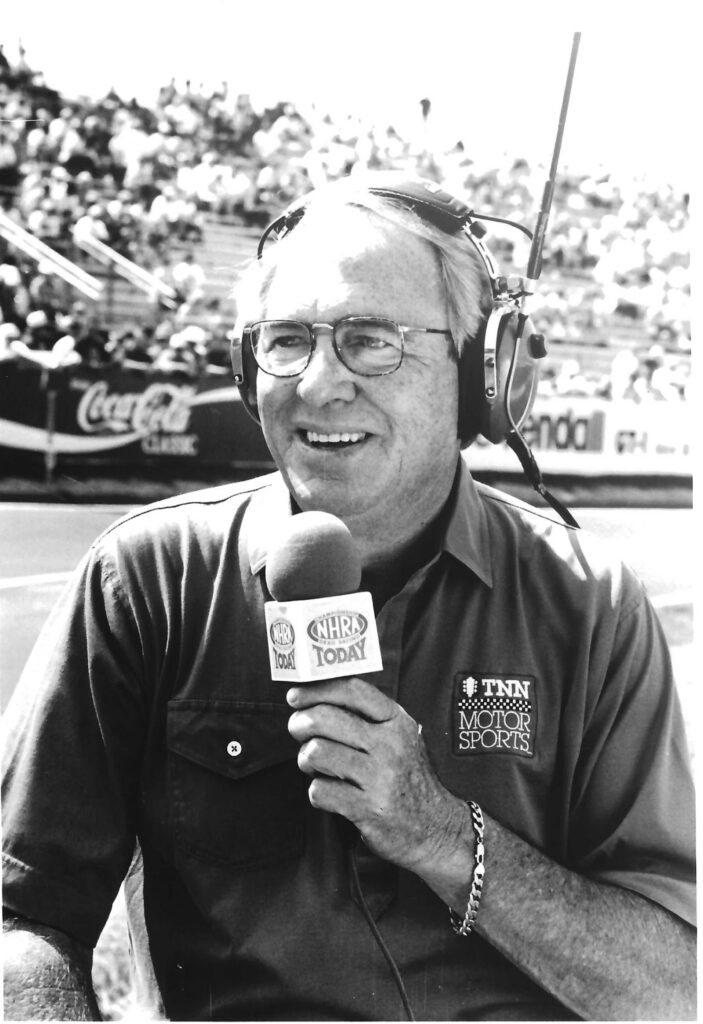 Class of 2002Presented by Mopar
Steve Evans
Steve Evans grew up involved in the sport of performance vehicles, particularly drag racing. Steve grew up near the dry lakes of Muroc where there was a lot of racing activity, but he really became interested in the sport at the ripe old age of 12 when he went to work at his father’s concession stand at the old San Gabriel Dragstrip. While he began driving at 13 and spent most of his working hours dreaming of becoming a winning competitor in the sport, things didn’t seem to go his way in this arena. After graduating from high school in 1958, Steve and some friends put together a DeSoto powered, injected fuel dragster nicknamed “The Goblin” that was fun but not competitive. Not willing to walkway from the sport, Steve gave up racing and turned his efforts to operating racetracks. His first effort came when he purchased Santa Maria Dragway, where he not only made sure the track function smoothly but he also took on the job as the announcer.
In 1961 at age 19, Steve began to branch out by honing his announcing talent at San Gabriel Raceway and Fontana Dragstrip. By 1966 Steve had moved up the announcer’s ladder and began entertaining spectators at some of NHRA’s national events. Shortly after he began announcing for NHRA, he took on the printed world for them as well by becoming the editor of National Dragster. This was a position he would hold several times over the years as he began to divide his time between announcing, national dragster, and managing a variety of racetracks up and down the West Coast. Steve managed the controls of racetracks like Fremont, Sacramento, Long Beach, Irwindale, and Orange county. Steve really enjoyed being involved in all aspects of the sport, and it showed. Steve took on the chores of PR Director for the NHRA for a time and while in that position he made his first national appearance as the co-host at the US Nationals for ABC’s Wide World of Sports with Keith Jackson.
In the 1970s, Steve took over management of Lions Dragstrip, and by putting in countless hours and using all of his talents, he soon turned it into a profitable race facility. He was also one of the very first promoters to expand the drag racing facility to include a dirt track for the moto-cross races. When the politicians closed Lions down, Steve teamed with another promoter Bill Donner, and leased Irwindale Raceway where they soon made the term “show business” a part of drag racing. The dynamic pair also took over Orange County and made it “the place to race”. Steve came up with the “fox Hunt” promotion were all girls got in free. He had the fans running back and forth from a heat race at the motocross track to the next round of funny cars on the dragstrip. Steve also booked many of the funny car shows into other tracks such as Puyallup and Orange county; and made sure the teams were treated fairly. During most of this time Steve had another side venture going. He owned every tent and sign that traveled on the NHRA tour.
Steve soon ran out of time to do everything and began concentrating on announcing. As much as he really enjoyed the job on the PA, TV soon took most of his time. Working with Diamond P Sports, TNN, and other major coverage teams, Steve helped bring drag racing into the homes of millions of fans. While drag racing was the number one love, Steve announced for car shows, sprint car races, and other aspects of the automotive world. And who can forget his famous commercials SUNDAY, SUNDAY SUNDAY!!!!
-
2002
Jerry Baltes
1932–2022 Jerry Baltes began his drag racing career in 1951 as the builder/driver of a 1942 two door Ford sedan. Two years later…
Read bio
Class of 2002Presented by Mopar
Jerry Baltes
Jerry Baltes began his drag racing career in 1951 as the builder/driver of a 1942 two door Ford sedan. Two years later he graduated to a more popular 1932 five window coupe that he raced in gas class but soon moved into the altered classes when he chopped the top on it. In 1955, Jerry took the altered coupe all the way to the historic NHRA championships in great Bend Kansas. The next year, with the assistance of Joaquin Arnett of Bean Bandit fame, Jerry was at the wheel of a flathead powered gas dragster. While still competing with the gas dragster, he was able to notch a spot for himself on the Drag News 1320 top 10 list. By 1962 it was time to step up to the top fuel dragsters, where he partnered up Red Lathrum and Bud DeBoer for a couple of banner years. During this period Jerry made it to the number three spot on the top 10 list for top fuel, set a NHRA speed record, set several new track records, won the 1964 World Series of Drag Racing at Cordova, and that same year finish number two in the NHRA World Points race.
In 1964 Jerry joined the world of automotive journalist when he became the PR Director for Drag News but didn’t give up his driving chores. In 1965 he drove Val LaPorte’s dragster and in 1967 was in the cockpit of the famous Guzzler. It was at the wheel of the Guzzler in 1967 in a race against Dick LaHaie in Indiana that Jerry was involved in a nasty crash and decided it was time to hang up his driving suit.
However, he wasn’t ready to quit competing in drag racing, so in 1972 he and his partner Tom Woodbridge, form the infamous Tom and Jerry funny car team. First, Bill Leavitt put together a Mustang that was driven by Harlan Thompson. They then purchased the Bob Banning Dodge and put Bob Mayer in the driver seat to complete the team. The team was very successful that year competing in match races in the US and Canada as a member of the Coca-Cola Cavalcade of Stars. Now a semi-retired successful businessman, Jerry has been one of the strong supporters of the International Drag Racing Hall of Fame. He continues to be the trophy sponsor for the Hall of Fame banquet each year.
Class of 2001
10 inductees-
2001
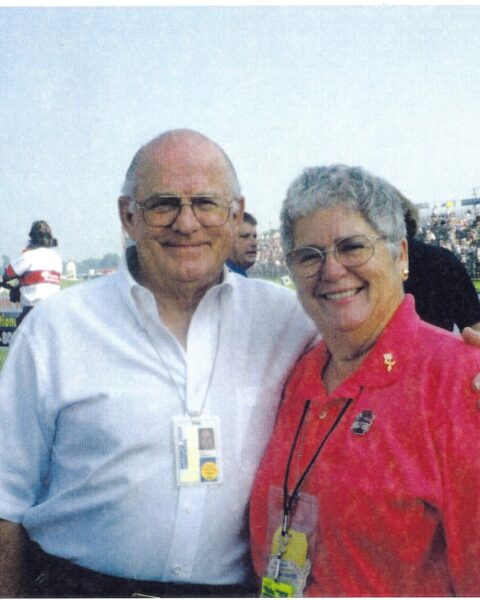 Bob and Eileen Daniels
 have been involved in all facets of hot rodding since the early '50s. Bob formed several car clubs…
Read bio
Bob and Eileen Daniels
Bob and Eileen Daniels have been involved in all facets of hot rodding since the early '50s. Bob formed several car clubs…
Read bio
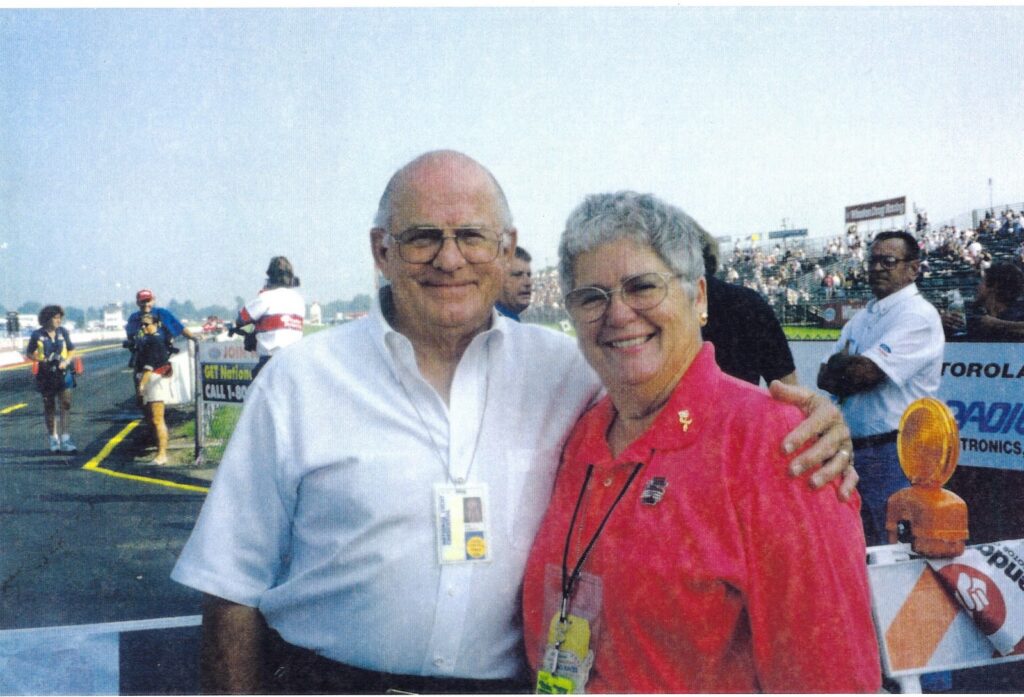 Class of 2001Presented by Mopar
Bob and Eileen Daniels
Bob and Eileen Daniels have been involved in all facets of hot rodding since the early '50s. Bob formed several car clubs over the years. Not to be outdone, Eileen served as President of an all-girl hot rod club, The Piper Puffs. The pair was also active in organized drag racing and alternated as drivers, first for their blown 1955 Ford T-Bird and then for their Altered Category cars. Bob set top time and won the class at the 1959 NHRA Nationals in Detroit.
Bob and Eileen also became active members of NHRA in its early beginnings. After serving time as a Regional Advisor, Bob was chosen by Wally Parks to be the first NHRA Division 3 Director in 1959, a position he held for 20 years. He was instrumental in the design and building of many new drag strips in NHRA's North Central Division. He was also responsible for supervising the racing events in Division 3 and Staging Control at the National Events. In 1979, Daniels was appointed General Manager of Indianapolis Raceway Park, where he applied his organizational and promotional talents to develop IRP into one of the most successful multi-use facilities in all motorsports. For his efforts, Bob has been name d Promoter of the Year on many occasions by various motorsports groups, and Eileen has been recognized for her achievements several times.
In 1982, they brought NSCAR to Indianapolis for the first time with the Kroger 200, a Busch Series stock car event at the IRP .686 mile paved oval, popular home of the ESPN's Thursday Night Thunder.
During their tenure at IRP, Eileen was a major force in developing the facility into one of the primary hospitality centers in America motorsports, with many national corporations becoming involved at the major events. In 1997, the hospitality area at IRP was officially designated “The Daniels Hospitality Village” in recognition of the couple's service and dedication.
Bob continues to be active in many aspects of the sport, serving as a consultant to NHRA reunion and museum projects. Eileen is also still active with the NHRA, where she supervises the VIP Corporate Suites at several of the national events.
Outside of motorsports, one of Bob's greatest accomplishments has been helping to save the heavy cruiser U.S.S. Salem, now the cornerstone of the United States Shipbuilding Museum in Quincy, Massachusetts. As a former crewman aboard the Salem, Bob was committed to saving the ship from being scrapped. In 1989 he established the U.S.S. Salem Association and has served as its President until this day.
As a commercial, instruments and multi-engine rated pilot, Bob is active in the Angel Flight Southeast, which transports patients in need to various medical facilities.
-
2001
 Dale Emery
 entered his first drag race in the early 1950s at Lodi, California, tuning and driving his own car, a C/Gas…
Read bio
Dale Emery
Dale Emery entered his first drag race in the early 1950s at Lodi, California, tuning and driving his own car, a C/Gas…
Read bio
 Class of 2001Presented by Mopar
Dale Emery
Dale Emery entered his first drag race in the early 1950s at Lodi, California, tuning and driving his own car, a C/Gas Coupe. Over the next several years, he continued racing in the gas classes, gaining in experience and knowledge through first-hand experience. By 1959, Dale had worked his way up to the Top Gas class and in 1961 made the move that escalated his driving career by stepping into the driver's seat of a Top Fuel car. He gained recognition as an excellent top fuel driver but accepting the job of driving Rich Guasco's AA/Fuel Roadster “Pure Hell” really put him in the spotlight. He and Rich campaigned “Pure Hell” from 1965 to 1970.
In 1973 Dale joined forces with the Jegs Racing Team, notching wins at the NHRA Grand Nationals in Montreal, Canada and the Winternationals in Pomona, California. In 1965, Dale had moved from California to Texas, so when fellow Texan Mike Burkhart offered him the job of driving his Funny Car in 1975, Dale made the move. Dale was never just a driver, he was also the tuner for most of the teams he competed with. He was also one of the original match-race competitors starting with the Pure Hell Roadster and continuing into his with Burkhart.
At the end of 1977, Dale teamed up with another fellow Texan, Raymond Beadle, as the tuner of the famed Blue Max Funny Car. It was in this job that Dale would earn the title of Supertuner “Crew of the Year” Award and be voted to the Car Craft Magazine's All Star Team, two years in a row. This team dominated the Funny Car class during the next few years. In 1978, the team ran its first 5 second run, which took place at the NHRA U.S. Nationals in Indianapolis. In both 1979 and 1980, the Blue Max teams won the NHRA Winston Championship title. In 1981, with Dale leading the team, they were the first Funny Car in history to win both the NHRA and the IRHA Championship titles. The winning wasn't over for the team yet as they stepped up to the plate in 1982 and took home another IHRA World Championship title.
Beadle sold the car in 1990, and the following year, Dale started his own business, where he produces fuel pumps and injector systems and still continues to offer a helping hand for just about any racer needing help, including several nostalgia race teams.
-
2001
 Bill English, Robert Frakes and Dale Funk
The team of Bill English, Robert Frakes and Dale Funk, more company known as the Kentucky Moonshiners, was one of the most…
Read bio
Bill English, Robert Frakes and Dale Funk
The team of Bill English, Robert Frakes and Dale Funk, more company known as the Kentucky Moonshiners, was one of the most…
Read bio
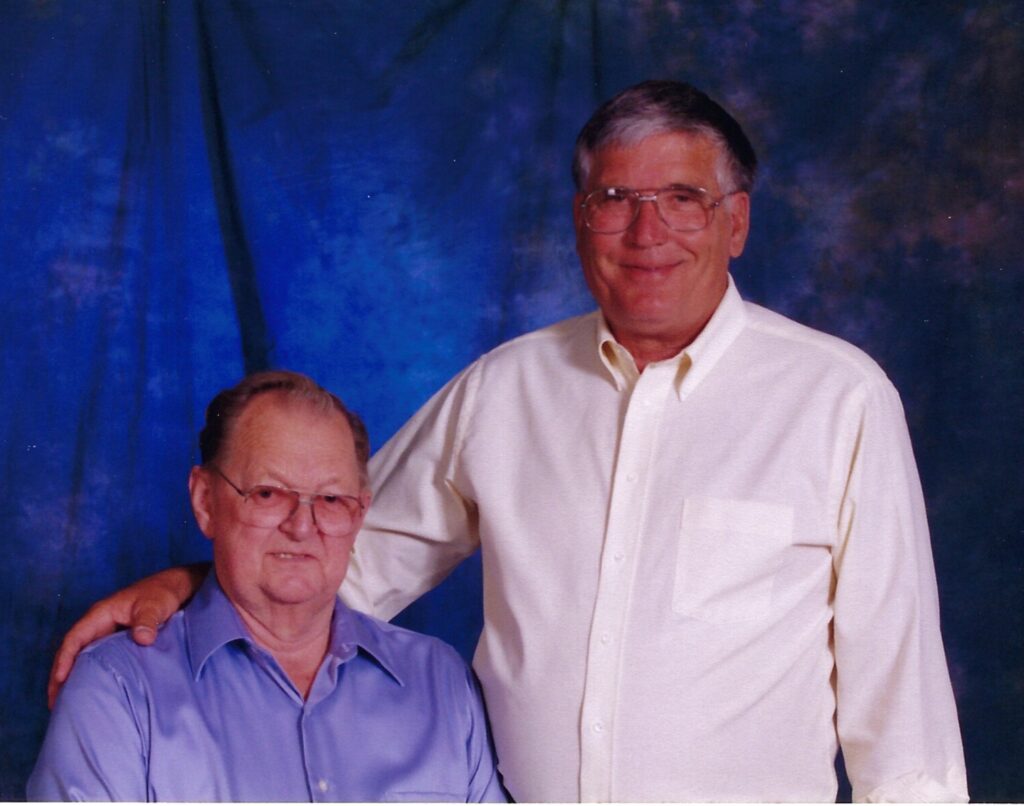 Class of 2001Presented by Mopar
Bill English, Robert Frakes and Dale Funk
The team of Bill English, Robert Frakes and Dale Funk, more company known as the Kentucky Moonshiners, was one of the most successful teams to get together in the mid 1960s. They were also one of the more colorful groups to compete in the sport. The group started racing together in the early 1960s and posted their major win in 1966 at the U.S. Nationals in Indianapolis in A/Comp class. Not long after that, they began competing with a Top Gas Dragster, and in 1969 they posted a Top Gas win at the National Dragster Open and followed with another similar win in 1970. In 1971 the team won the Division 3 Championship in Top Gas. They were also the first team to run twin Chrysler engines in Top Gas, which they did in 1967.
Shortly after the Division 3 win, they switched to Top Fuel and in 1973 won the NHRA Eastern Conference Championship. In 1974 they were really hot, winning the IHRA Southern Nationals Championship, the NHRA 1/8 Mile National Open Championship, the NHRA Summer Nationals, the IHRA Northern Nationals, the IHRA Spring Nationals and the IHRA World Championship. In 1975, they were the NHRA Gatornationals champions and won the Popular Hot Rodding event. Along the way, they set top time and low e.t. at many national events plus setting track records at every track in Kentucky and several surrounding states.
While the team was known as a very competitive group, it was as well known for the jokes it played on other teams and for the real moonshine they were known to deliver to selected friends. The sport lost one of its more competitive and colorful race teams when they retired from the spot following the U.S. Nationals in Indianapolis in 1976. It was also well known within the sport that if you needed help, parts or advice, if it were at all possible for them to o so, they would pitch in with all they could.
Today, Dale is businessman and spends a lot of his spar time restoring old airplanes. Robert did some racing on the dirt ovals of Kentucky and runs his auto store in Radcliff, Kentucky. After their retirement, Bill ran the family plumbing business and auto salvage business until his death in 1994.
-
2001
 Bob Glidden
's records are the yardstick by which NHRA drag racing success is measured. The Indiana native, a line mechanic at an…
Read bio
Bob Glidden
Bob Glidden's records are the yardstick by which NHRA drag racing success is measured. The Indiana native, a line mechanic at an…
Read bio
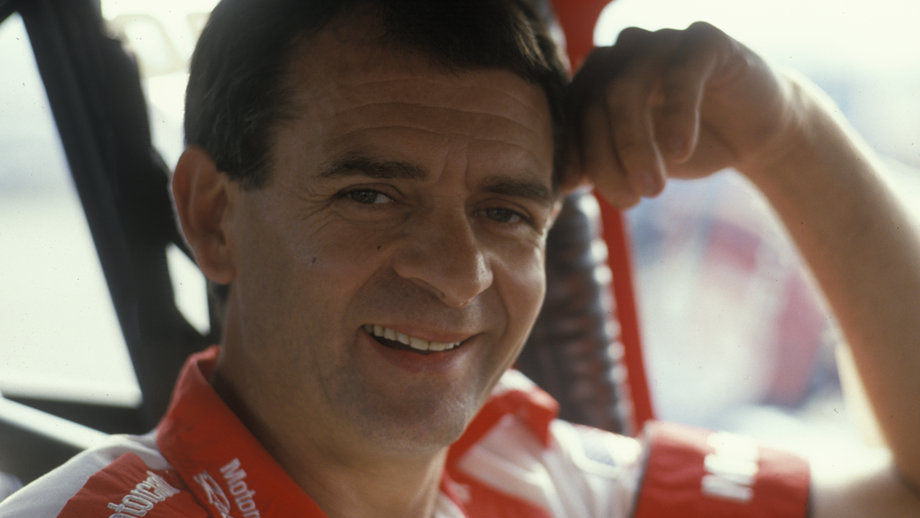 Class of 2001Presented by Mopar
Bob Glidden
Bob Glidden's records are the yardstick by which NHRA drag racing success is measured. The Indiana native, a line mechanic at an Indianapolis-area Ford dealership when NHRA created its Pro Stock class in 1970, brought world-wide attention to the sport through his accomplishments. In 1973, Glidden earned his first Pro Stock victory, starting one of the most remarkable winning streaks of his career, one in which he earned at least one NHRA national event victory in 21 consecutive seasons from 1973 through 1993.
Glidden has won more NHRA series championships (10) and more national events (85) than anyone else in the sport's history until this year. In 24 seasons of touring, Glidden raced in 120 final rounds, won 778 rounds, was the No. 1 qualifier 101 times and posted top speed of the meet 99 times.
Among his most remarkable accomplishments were back-to-back Winston Championships in 1978 and 1979, even though he switched from Ford to Plymouth between the two seasons. After racing Fords for his entire career, Glidden started the 1979 season in a Plymouth Arrow, in which he qualified No.1 at EVERY event during the 1979 season and in which he went to the final round in all but one race.
During that remarkable stretch in 1978 and 1979, Glidden reached the final round in 17 consecutive races and won nine straight times. With the exception of the aforementioned Plymouth Arrow, all of his wins came in Fords. Another of his incredible accomplishments was his streak of 23 consecutive No.1 qualifiers from 1986 through 1988 and the fact that he swept performance honors (No. 1 qualifier, low ET and top speed of the meet) 59 times in his career.
Finally, in the sport's biggest race each year, the Labor Day U.S. Nationals, Glidden always was at his best. His first career victory came at Indy in 1973, but his overall record there was incredible. He reached the finals 15 times, won nine times, and from 1977 through 1989 made it into the finals 13 straight times.
-
2001
 Tom Hanna
 is best known for the superb race-car bodywork that came out of his shop between 1962 and 1975. However Tom…
Read bio
Tom Hanna
Tom Hanna is best known for the superb race-car bodywork that came out of his shop between 1962 and 1975. However Tom…
Read bio
 Class of 2001Presented by Mopar
Tom Hanna
Tom Hanna is best known for the superb race-car bodywork that came out of his shop between 1962 and 1975. However Tom was also and adept chassis fabricator and all-around enthusiast. In the mid- 1950s, long before he started fabricating top-quality race car bodies, Tom was driving a Competition Coupe at such storied strips as Great Bend, Kansas, and other midwestern tracks. In addition to being a driver, Tom also crewed for Jim Meyer and Lloyd Davis on the classic machine they purchased from Cook and Bedwell and campaigned. In 1959 Hanna attended the inaugural U.S. Fuel & Gas Championship meet in Bakersfield, California, and not long afterward made his way to the west Coast with a newly completed full-bodied slingshot fueler. Tom campaigned this car under successive partnerships with Terry Galt, Bob Mayer and Byron Blair. During his racing years, he won a few meets and set a couple of records. However, Tom's future was not as a racer, but as a metal craftsman. Setting up shop in Byron Blair's shop in Chula Vista, California, Hanna was soon turning out full- bodied cars as fast as he could. The list of customers who came through his shop included nearly all of drag racing's stars of that day. Among those stars were Jerry Baltes, Connie Kalitta, Don Garlits, Don Prudhomme, Jimmy Nix, Bob Creitz and Marvin Shwartz, took Bill Tidwell and Danny Ongias to record speeds in a machine owned by Vince Rossi and Tom Lisa. And the wedge machine he built for Harry and Maxine Lehman, The American Way, is widely considered even today to be one of the most beautiful machines of its time.
In 1976, Tom sold his business to associate and innovator Nye Frank and returned to Kanasa to pursue other business ventured. In fact, today Tom is one of the leading manufactures of Horse Tack in the world. His success in this industry has allowed Tom to become involved again in drag racing, and he is presently building a new slingshot dragster, what would have been considered state-of-the-art in terms of aesthetics in the mid-1960s. You can also find Tom at a race or two during the year, including the Hot Rod Reunion in Bakersfield, California, every fall.
-
2001
 Don Long
 first became involved in the sport as a racer, teaming up on a Flat altered with Dave Vermilya. His early…
Read bio
Don Long
Don Long first became involved in the sport as a racer, teaming up on a Flat altered with Dave Vermilya. His early…
Read bio
 Class of 2001Presented by Mopar
Don Long
Don Long first became involved in the sport as a racer, teaming up on a Flat altered with Dave Vermilya. His early efforts in building race cars initially revolved around Altered Coupes & Sedans, Gas Coupes & Sedans, and, later on, Funny Car. While hr built many successful cars in these classes, Don gained his fame and recognition for his superbly designed and fabricated dragsters. In the late 1960s and '70s, his Southern California shop turned out cars for some of the top names of that day in the sport. Among some of Long's early customers were Joe Winter, Jess Sturgeon, Jim and Allison Lee, Doug Walton, Tony Nancy, and most notably Ed Pink, whose Old Master was one of the strongest West Coast Top Fuelers in the mid- 1960s. Along with the East Coast Top Fuel of Dave Vermilya and Nick Marshall, the success enjoyed by the Old Master was what led to establishing Long's Delong Mfg. shop as a leader in the chassis-building battle at that time.
Ultimately, Don delivered nearly 130 dragsters, the total of which was divided nearly equally between front-motor slingshot cars and rear-engine ones. One of the things that spoke so strongly for the quality of Don's cars was the number of teams who ordered several new cars from the shop, with some teams ordering 5 or more cars over the years. In addition to the teams listed above, several of the Hall of Fame Inductees campaigned Don Long cars, including Don Prudhomme, Gene Adams, Tommy Ivo, Candies and Hughes, Gary Ormsby, John Wiebe and Lou Baney. The list of winners goes on and on. Don was also selected to the Car Craft Magazine All-Star Racing Team in the Top Fuel/Funny Car Chassis Builder category.
Although Don scaled back his operations at the end of the 1970s and built only six Top Fuel cars after 1983, Pat Dakin campaigned his cars until the mid 1990s. Also, the car built for Frank Taylor in 1983 is the car Eddie Hill first broke into the four second e.t. bracket with in 1988. Many of the innovative featured in the Top Fuel category came from Don's shop, including some of the really trick throttle and clutch linkage along with all sorts of brackets and fixtures. With today's popularity for restoring many of the top, front-engine slingshot cars of the '60s and '70s, many of Don's creations are beginning to appear in museums.
-
2001
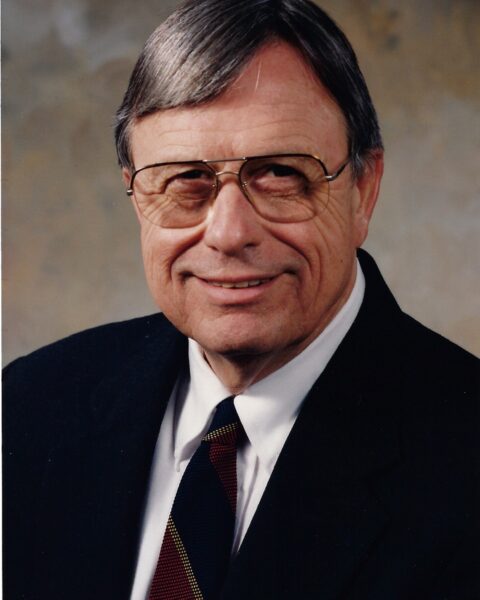 Leo Mehl
 is one of the most influential men in the world of motor-sports. That is a strong statement, but it is…
Read bio
Leo Mehl
Leo Mehl is one of the most influential men in the world of motor-sports. That is a strong statement, but it is…
Read bio
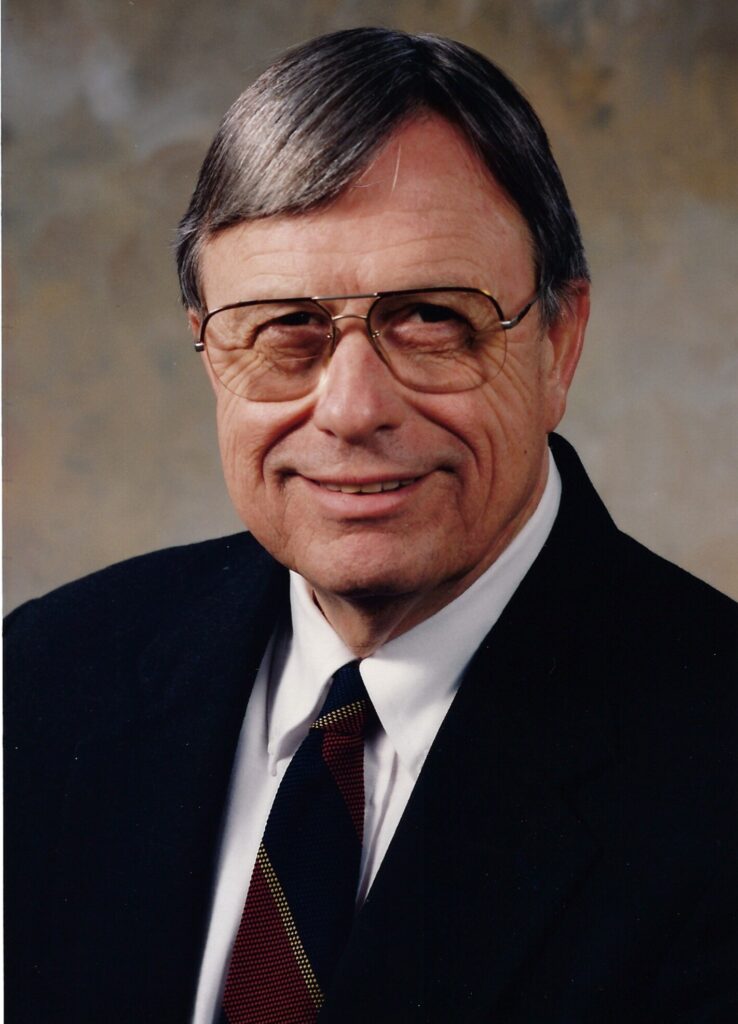 Class of 2001Presented by Mopar
Leo Mehl
Leo Mehl is one of the most influential men in the world of motor-sports. That is a strong statement, but it is true, and his circle of influence includes not only drag racing but all forms of oval track and road racing as well. Leo joined Goodyear as a chemical engineer in 1959, and in 1963 when Goodyear made a commitment to winning the Indianapolis 500, Leo started assisting in delevoping the tires needed to accomplish this feat. In 1967, Leo saw the Goodyear dream become a reality when A.J. Foyt drove to victory at the '500.
Over the years, Leo worked with racers from every form of the sport, including Formula One, NASCAR, Sprint Cars, Le Man's, CART, IRL, and drag racing. If a race car has Goodyear's on it, the man responsible for them being there is Leo Mehl.
There are several ingredients that make up the formula for the success Mehl has obtained in the sport. First of all, he truly loves racing and the competitiveness of the sport, regardless of what form of racing it is. In addition to his love of the sport, Leo blessed with a great wit, the ability to use laughter as a tool, and the ability to talk with the drivers, mechanics and crew chiefs and find out what their perception of the available product was. Simply put, did the tires work,what was coming down the road, and what was Goodyear going to need to do to continue as a successful part of everyone's program?
According to Mehl, one of the toughest technical task Goodyear undertook was building a tire for drag racing as the speeds climbed to 300 mph and more. It was his dedication to drag racing and his insistence to the company that better tires were necessary, especially for the safety factor, that resulted in Goodyear producing better tires for today's races.
After working for Goodyear over 36 years, 22 of them as the company's top racing person, Leo retired in 1996 to spend time with his family and enjoy his hobby of boating.
In addition to being responsible for much of the success Goodyear has enjoyed in the racing world, Leo has also been the recipient of a host of awards that include the Tony Hulman Award, Cavalina Contribution Award, United States Auto Club Special Recognition Award, Buddy Schuman Trophy, Autosports Magazine Award and the STP/Richard Petty Achievement Award, to name a few. In 1993 he was inducted into Motorsports Hall of Fame and now the Drag Racing Hall of Fame.
-
2001
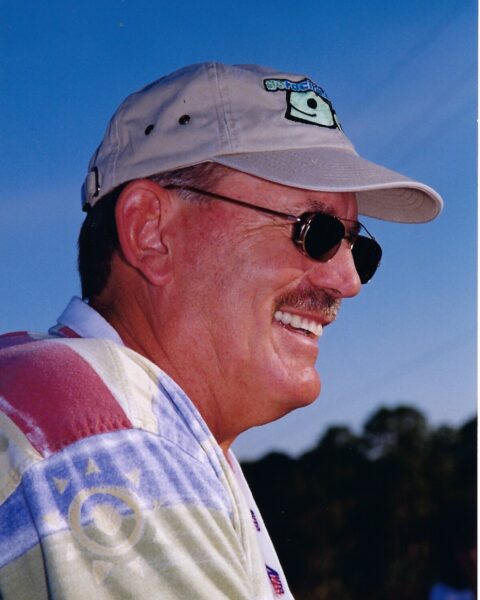 Fred Miller
, more commonly known as “Waterbed Fred,” started his career in drag racing in 1968 when he was racing a '68…
Read bio
Fred Miller
Fred Miller, more commonly known as “Waterbed Fred,” started his career in drag racing in 1968 when he was racing a '68…
Read bio
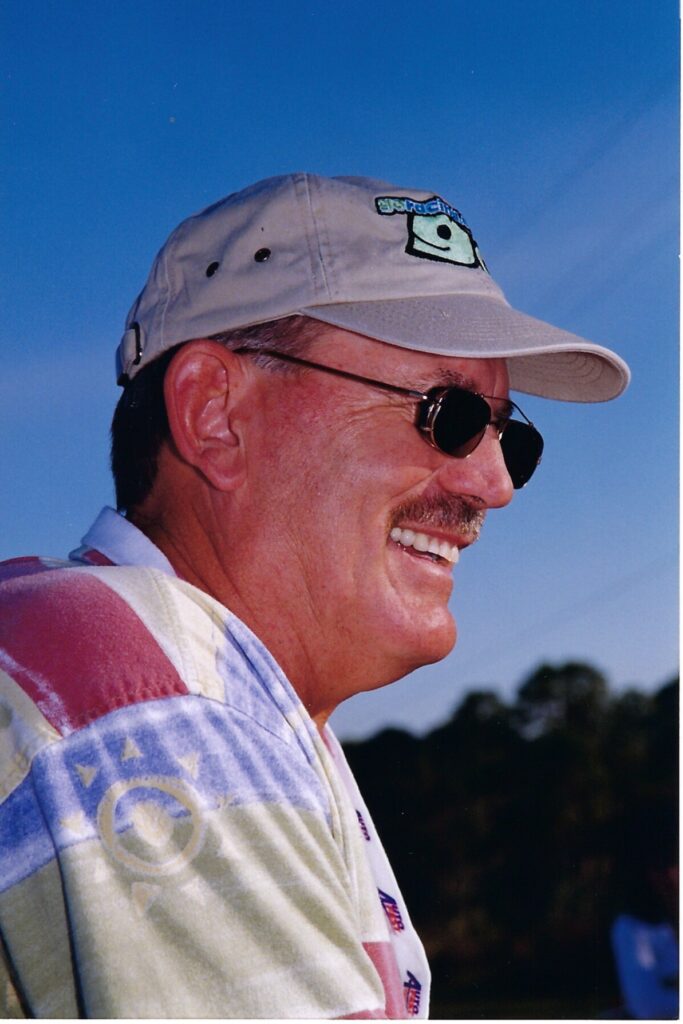 Class of 2001Presented by Mopar
Fred Miller
Fred Miller, more commonly known as “Waterbed Fred,” started his career in drag racing in 1968 when he was racing a '68 F/S Oldsmobile. In 1971 he accepted a position as one of the crew members of Bob Riggle's “Hemi Under Glass.” This set the pattern for Fred's continued involvement in the sport where he is recognized as one of the top crew members and authorities in drag racing.
In 1972, Fred left drag racing to compete in the motorcycle world as a part of the Maico Trans AM Moto Cross Team. This lasted only a year, and in 1973 Fred returned to drag racing, where he joined Dale Emery on the Jegs Racing Team. This proved to be a winning combination as the team won the 1973 NHRA Grand Nationals in Montreal, Canada, and the 1974 Winternationals in Pomona, California. He moved camps again 1974, joining Billy Meyer's Funny Car.
In 1975, Fred made the move that brought him the recognition he deserved when he joined the famed Blue Max Racing Team of Raymond Beadle and Harry Schmidt. This was home for Fred for twelve years. In 1977, working side by side with Dale Emery again, they earned the Supertuner “Crew of the Year” award and also a spot on the Car Craft Magazine All Star Team with a repeat of the All Star Team award again the next year.
Waterbed was a very integral part of the Blue Max team during its heyday, a period during which it won 36 National events and six World Championships between NHRA and IHRA. In 1987, Fred retired from his full-time involvement with racing, but he isn't afraid to get his hands dirty if someone needs and extra hand to make the next round.
While Fred has left the day-to-day thrashing to others, he is still a part of drag racing and as Asset Manager of drag racing for Action Performance Companies, Inc., Fred is now helping race team owners gain additional exposure for their cars by involving them in the die-cast model program at Action.
-
2001
 Gene Mooneyham
 has been the epitome of a drag racer for nearly 50 years. He began his career as a driver in…
Read bio
Gene Mooneyham
Gene Mooneyham has been the epitome of a drag racer for nearly 50 years. He began his career as a driver in…
Read bio
 Class of 2001Presented by Mopar
Gene Mooneyham
Gene Mooneyham has been the epitome of a drag racer for nearly 50 years. He began his career as a driver in the 1950s campaigning his fabled '34 Ford coupe at both drag strips and the dry lakes. Gene originally purchased the coupe for only $20, but through hard work, ingenuity and above-average know- how, he created a vehicle that achieved legendary status. The number 554 Fuel Coupe was not only an awesome race car for its time, clocking 172 mph in 8.90 seconds in 1962, but it was also one of the most detailed race cars of its time. As the Mooneyham & Sharp Special, driven by “Jungle Larry” Faust, there was no more popular or feared car on the circuit. In fact, many people involved in the sport over the years consider the 554 coupe as the forerunner of today's Funny Cars. In additio to the speed, quickness and outstanding looks of the coupe, there was one additional ingredient that it engraved in the memory of all who saw it run. It had a very distinct sound that was different from any other fuel burner being raced.
Mooneyham later moved into the Top Fuel ranks, and continued to be a top contender at any race he entered the car in. All of his cars were impeccable in appearance and detail, plus Gene also entered the car in. All of his cars were impeccable in appearance and detail, plus Gene also introduced many mechanical innovations that became standard equipment for the class. Gene's top fuel car, driven by Dave Chenevert, won the inaugural NHRA Gatornationals, and later, his son Larry successfully assumed the driving chores for the family's race cars. After a brief move to Louisiana, Mooneyham returned to southern California, where he began his career as a supercharger specialist, first working out of Hall of Famer Keith Black's shop and later opening his own place of business, where he has been continuously manufacturing the very finest supercharger products for nearly 30 years. In an activity where competitive egos are commonplace, Gene Mooneyham has maintained the same easygoing nature he brought to the sport when he first became involved in it. As an owner, builder, designer, driver and businessman, Gene Mooneyham has definitely added to the sport's popularity and acceptance.
-
2001
 Al Swindahl
 was one of a very elite group of individuals who could take pieces of tubing and assemble them into a…
Read bio
Al Swindahl
Al Swindahl was one of a very elite group of individuals who could take pieces of tubing and assemble them into a…
Read bio
 Class of 2001Presented by Mopar
Al Swindahl
Al Swindahl was one of a very elite group of individuals who could take pieces of tubing and assemble them into a form that became a quick, dependable and safe racecar. After he was knocked unconscious from tire shake during the 1979 U.S. Nationals in Indy, Top Fuel racer Jerry Ruth teamed up with Al to help design a safer car. The result was a car that featured a Dunny Car roll cage, A-arm front suspension in place of a tube axle and was more flexible. As the saying goes, the rest is history.
Born in Tacoma, Washington, Al built his first race car in 1953, a nitro-fueled flat head powered '40 Ford coupe. Next, Al moved into the seat of a front-motor Top Fuel dragster until 1964, when he turned the driving chores over to his brother Carl. At the same time he was building the '40, he earned an Airframe & Powerplant license and went to work for the Boeing Co. Al worked at Boeing for 5 years, followed by a stint in the Army, where he was a medic. After leaving the Army, Al started building race cars in his garage for the loacal racers, but he soon outgrew it and moved his operation into an old icehouse. With the success of Ruth's car along with another upcoming team of racers, Terry Capp and Bernie Fedderly with their “Wheeler Dealer” car that won the 1980 U.S. Nationals at Indy, the orders began to pour in so fast that Al had no choice but to move to an even larger shop.
Over the next few years, Swindahl-built cars won nine Winston Top Fuel Championship titles, more than any other chassis builder in the history of the sport. The list of Swindahl-built cars was a real who's-who of Top Fuel racing, including Shirley Muldowney, Gary Beck, Gary Ormsby and Eddie Hill. Joe Amato recorded the sport's first 4.5 second e.t. in a Swindahl-built car, and in fact, at one point in time, every car rated in the top ten of the class was a Swindahl-built chassis.
Al was also chairman of the board of SFI Foundation Inc., a non-profit independent organization that sets standards for safety-related high-performance automotive and marine equipment. He was named Top Fuel/Funny Car Chassis Builder of the Car Craft Magazine All-Star Drag Racing Team numerous times.
Al's love of cars did not end with race cars. He could often be seen driving his '32 Ford roadster just for pleasure. On November 24, 1996, Al lost his battle with liver cancer, but his contributions to record-setting cars, along with a uncompromising eye for safety, make him one of the sport's most unforgettable people.
Class of 2000
10 inductees-
2000
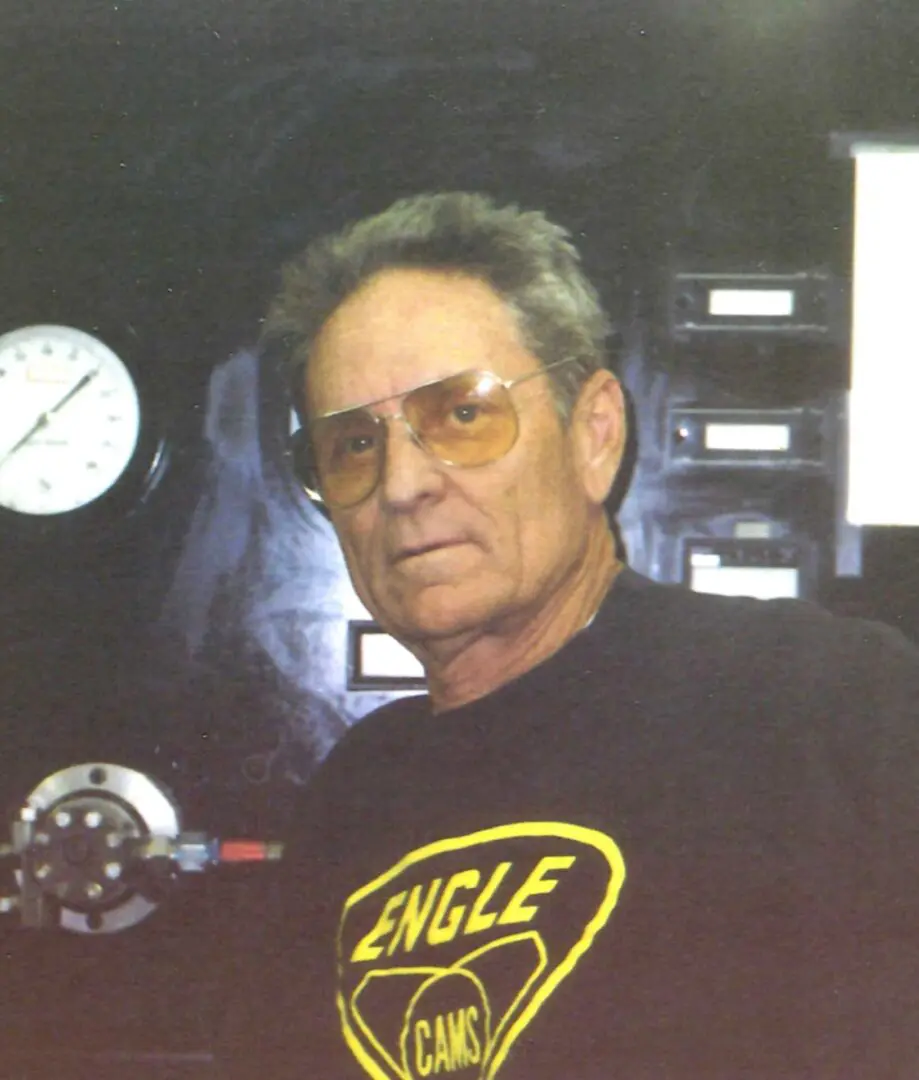 Gene Adams
, one of the most innovative thinkers in the sport, was involved in drag racing nearly as long as the sport's…
Read bio
Gene Adams
Gene Adams, one of the most innovative thinkers in the sport, was involved in drag racing nearly as long as the sport's…
Read bio
 Class of 2000Presented by Mopar
Gene Adams
Gene Adams, one of the most innovative thinkers in the sport, was involved in drag racing nearly as long as the sport's existence. His dad took him to Saugus Drag Strip in 1952 to race the families 1950 Oldsmobile against a friends Hudson Hornet. Young Gene was hooked. The addition of a LaSalle floor shift, 4-71 blower, Hilborn injectors, and a manhole cover bolted in the trunk made the dark blue fastback prototype for the tough supercharged Southern California gassers. The same gassers setting records at every local strip, as well as the NHRA national mark. After spending 1958-1959 in the Army, it was dragsters only for Adams from then on. Gene's engine went in Ronnie Scrima's modified Chassis Research frame, and with athletic Leonard Harris driving, the legendary Albertson Olds dragster was born. In barely six months they won 17 Top Eliminators. After Harris was tragically killed in another car, Adams joined Tom McEwen for two years, finishing runner-up at the 1961 Nationals and the 1962 Winternationals on gas and making the Bakersfield semis on fuel. A new Woody car in 1963 teamed Gene, his brother Gary, and John Rasmussen. Running both gas and fuel, the car literally paid for itself, winning numerous local Top Eliminator as well as back to back Top Gas wins at the 1965-66 Hot Rod Magazine meets with Rick Stewart and Billy Scott at the wheel. Late in 1966, Adams teamed with car dealer Jack Warye and driver John Mulligan on the first dragster in the 6's at more than 200 mph. After more than two decades at Hilborn's, Gene opened his own business in 1983, continuing to provide innovative engine building and fuel systems for customers with nearly any engine combination. In 1992 Adams tuned Roger Odell's unblown fueler to an unheard of 5.77 ET at 253 mph. In 1996 Keith Stark used an Adams designed fuel system to up the ante with an incredible 5.38 ET 270.51 mph blast.
-
2000
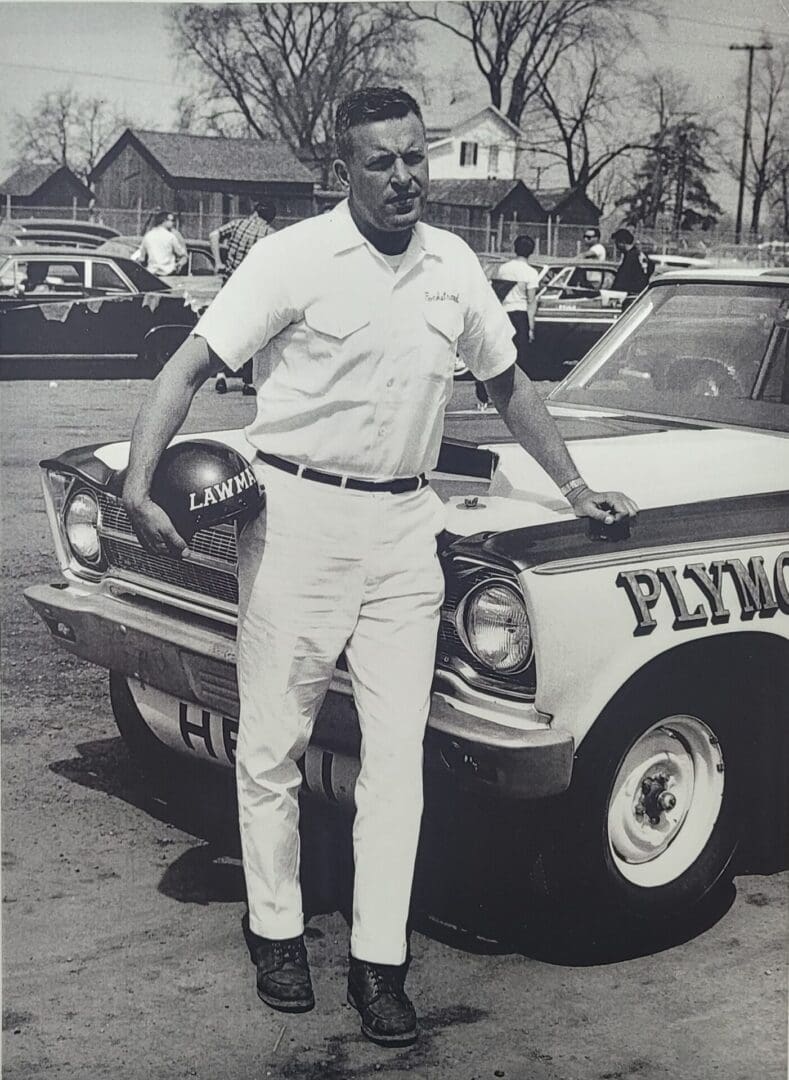 Al Eckstrand
1928–2008 Hired by Chrysler Corporation soon after his graduation from law school in 1955, Al Eckstrand quickly gravitated to a young group of…
Read bio
Al Eckstrand
1928–2008 Hired by Chrysler Corporation soon after his graduation from law school in 1955, Al Eckstrand quickly gravitated to a young group of…
Read bio
 Class of 2000Presented by Mopar
Al Eckstrand
Hired by Chrysler Corporation soon after his graduation from law school in 1955, Al Eckstrand quickly gravitated to a young group of performance-oriented engineers who drag raced every weekend. The group later became known as the RamChargers. His interest in promoting Chrysler products led to the personal endorsement of BJ Nichols, Chrysler VP of Corporate Sales,who sponsored Al's racing efforts from 1960 to 1962. After several class wins at the NHRA Nationals, Eckstrand drove the RamChargers' Dodge to a Top Stock win at the 1963 Winternationals, the first major eliminator victory by a Chrysler doorslamer in NHRA competition and the first one for Chrysler's MaxWedge and Torqueflite package. After finishing runner-up with his own "Loman", '63 Dodge at the 1963 Nationalsto the car he drove at Pomona, Eckstrand raced Plymouths in Super Stock and A/FX in 1964. The following year he joined forces with Plymouth's Golden Commandos team as co-driver of its injected altered wheelbase A/FX machine. After becoming aware that American servicemen returning home had little comprehension of the latest developments in high performance, he lobbied to perform exhibition runs for military personnel overseas. He took street Hemis to Europe and performed exhibitions, which the military billed as save driving promotions. Enlisting the assistance of Ford Motor Company in 1969, Al toured US Armed Forces basis around the world with a pair of supercharged Mustangs. Following his final tour in 1972, Eckstrand received numerous meritorious awards from the US Marines, Department of Defense, and US Department of Transportation for the promotion of safe driving to more than 250,000 US military personnel overseas.
-
2000
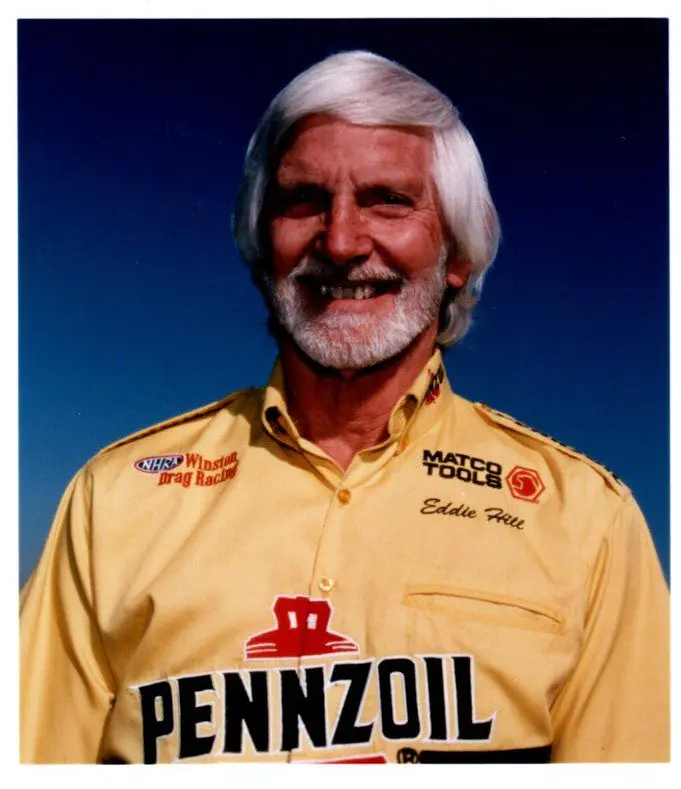 Eddie Hill
It could be said that Eddie Hill has had drag three racing careers. The first began in 1956 when he mounted a…
Read bio
Class of 2000Presented by Mopar
Eddie Hill
It could be said that Eddie Hill has had drag three racing careers. The first began in 1956 when he mounted a…
Read bio
Class of 2000Presented by MoparEddie Hill
It could be said that Eddie Hill has had drag three racing careers. The first began in 1956 when he mounted a stock Oldsmobile engine on a Model T frame to compete in the Open Gas class at a little drag strip, in East Texas, reaching 106 mph. In 1957, he built his innovative Pontiac gas dragster, which he modestly called "the hottest unblown gasser on earth"! With a blower, the car ran a best of 8.84 ET and won Top Gas honors at the 1959 AHRA Nationals. Eddie then built an awesome twin Pontiac for slick dragster that literally melted holes in the starting line at the 1961 Indy Nationals. A series of fuel dragsters followed and a severe engine fire in 1966 ended career number one. Hill would race motorcycles through 1974, when he attended his first drag boat race; 30 days later he owned a race boat. He became the most famous drag boat racer in the country, winning several season championships. On September 5, 1982, Hill turned 229 mph, placing him in the Guinness Book of World Records as the driver of the fastest propeller driven boat. In October 1984, a 217 mph crash seriously injured Hill and brought career number two to a close. The next spring, Eddie and his wife Ercie, bought a used dragster and installed their salvaged boat engine and went back to pavement. By the 1986 Gatornationals, the last boat motor was used up, and Hill was ready to quit. Ercie took a burned piston to Gene Snow and explain their plight. Snow sold them and engine and offered a baseline tune-up. At the next race, they beat Snow with his own used engine and were on their way. Eddie and Ercie struggled as privateers slowly working their way toward the front of the pack. On April 9, 1988, with a Super Shops sponsorship, they made their mark in drag racing history at the IHRA Texas Nationals when Eddie clocked a sizzling 4.990 ET. Proving the first under five second run was no fluke, Hill made more four second runs, than any other driver, that year with a best of 4.93 ET and a win at the NHRA Supernationals. It all came together in 1993 when the Pennzoil backed "Nuclear Banana" one a record-tying six national events. In 1993 at the age of 57 Eddie Hill became the oldest NHRA Top Fuel Champion history.
-
2000
 Frank Huszar
1908–1987 A veteran of the motion picture industry where he worked in every capacity from grip stuntman, Frank Huszar was always interested in…
Read bio
Frank Huszar
1908–1987 A veteran of the motion picture industry where he worked in every capacity from grip stuntman, Frank Huszar was always interested in…
Read bio
 Class of 2000Presented by Mopar
Frank Huszar
A veteran of the motion picture industry where he worked in every capacity from grip stuntman, Frank Huszar was always interested in fast cars and even hopped up a few for movie stars. At his five-acre ranch in LA's San Fernando Valley, he constantly tinkered with cars and word quickly spread among the youthful hot rodders of the area that the "Old Man" was building race cars. The group that hung around Frank's place evolved into the "Throttle Merchants" car club the early 50s. A place to legally race their creations was needed and Frank was instrumental in the founding of San Fernando Drag Strip, one of the first purpose-built facilities in the country. Opening day was August 14, 1955 with Huszar serving as strip manager by unanimous decision of the Valley Timing Association. In 1959, Frank retired from MGM Studios and spent hours building race cars in his garage. Demand for his products led to the formation of Race Car Specialties in 1962 in partnership with Roy Steen. From the beginning through his retirement in 1980, RCS built well over 100 dragsters, funny cars, exhibition cars, and jet/rocket cars. Frank insisted the company initial stood for Reliability, Confidence, and Safety. Among Frank's products were the legendary cars of: Tommy Ivo, The Surfers, The Freight Train, George Bolthoff, the Dead-End Kids, and Waterman & Hampshire. In 1977 at the age of 69, Frank made a pass at over 250 mph in a rocket powered funny car he built for Fred Goeske. Frank passed away in 1987.
-
2000
 Dick Maxwell
1935–2002 A veteran of the motion picture industry where he worked in every capacity from grip stuntman, Frank Huszar was always interested in…
Read bio
Dick Maxwell
1935–2002 A veteran of the motion picture industry where he worked in every capacity from grip stuntman, Frank Huszar was always interested in…
Read bio
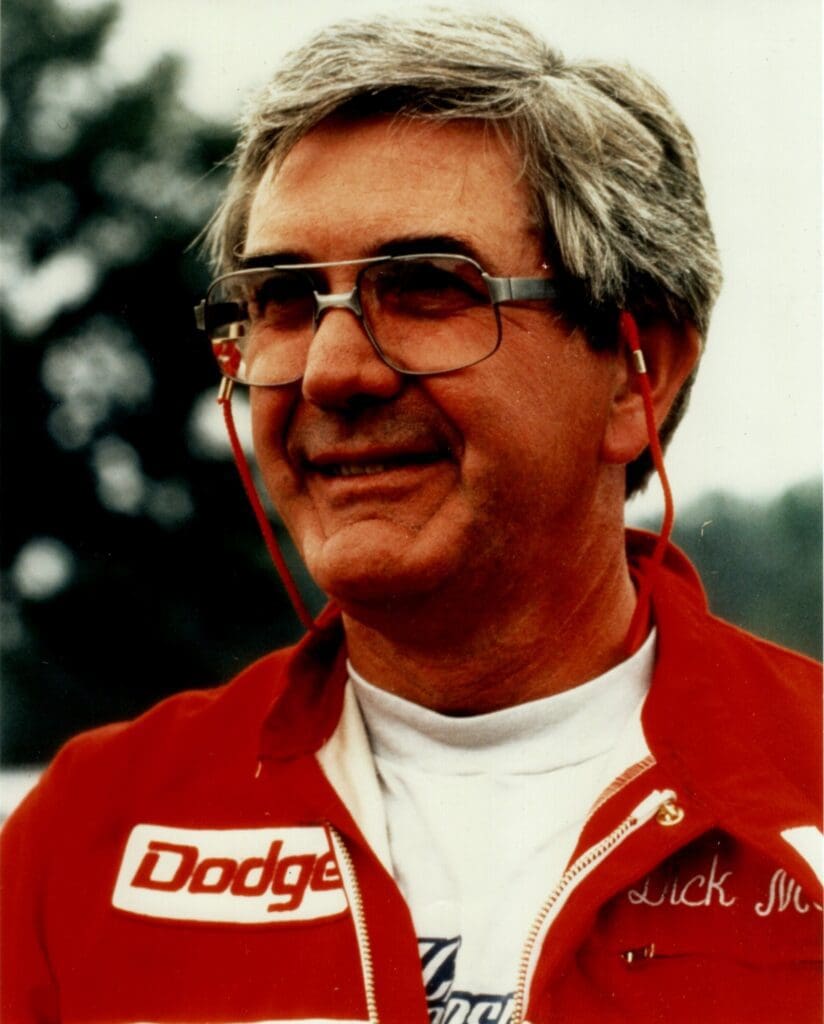 Class of 2000Presented by Mopar
Dick Maxwell
A veteran of the motion picture industry where he worked in every capacity from grip stuntman, Frank Huszar was always interested in fast cars and even hopped up a few for movie stars. At his five-acre ranch in LA's San Fernando Valley, he constantly tinkered with cars and word quickly spread among the youthful hot rodders of the area that the "Old Man" was building race cars. The group that hung around Frank's place evolved into the "Throttle Merchants" car club the early 50s. A place to legally race their creations was needed and Frank was instrumental in the founding of San Fernando Drag Strip, one of the first purpose-built facilities in the country. Opening day was August 14, 1955 with Huszar serving as strip manager by unanimous decision of the Valley Timing Association. In 1959, Frank retired from MGM Studios and spent hours building race cars in his garage. Demand for his products led to the formation of Race Car Specialties in 1962 in partnership with Roy Steen. From the beginning through his retirement in 1980, RCS built well over 100 dragsters, funny cars, exhibition cars, and jet/rocket cars. Frank insisted the company initial stood for Reliability, Confidence, and Safety. Among Frank's products were the legendary cars of: Tommy Ivo, The Surfers, The Freight Train, George Bolthoff, the Dead-End Kids, and Waterman & Hampshire. In 1977 at the age of 69, Frank made a pass at over 250 mph in a rocket powered funny car he built for Fred Goeske. Frank passed away in 1987.
-
2000
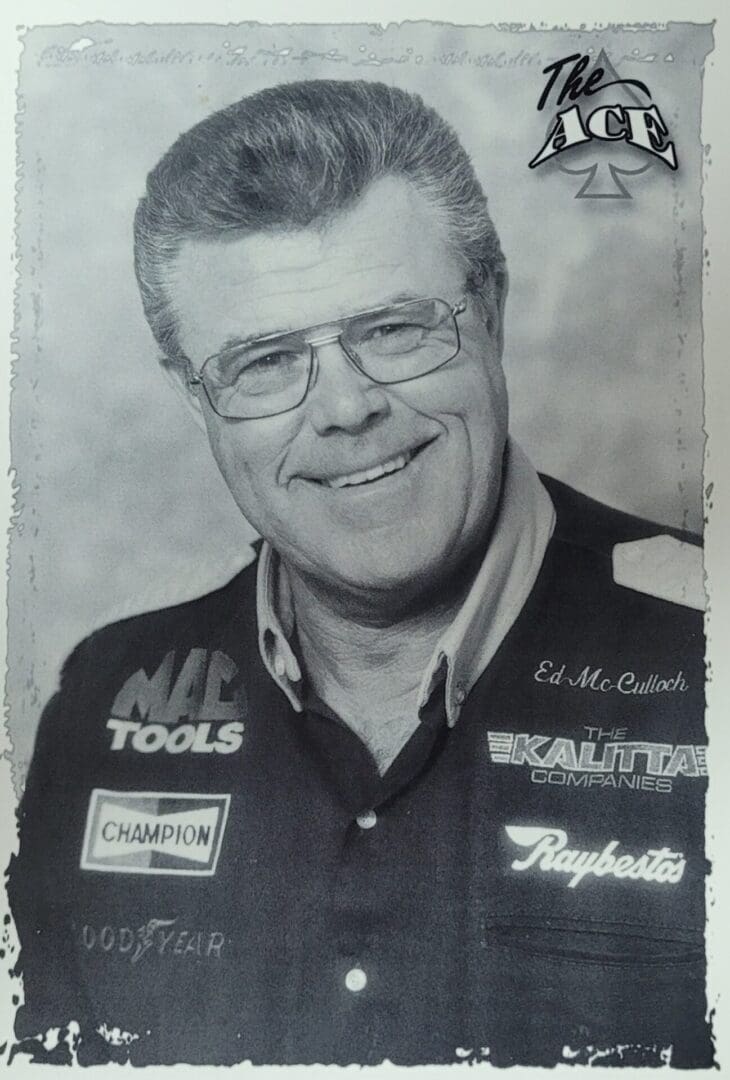 Ed McCulloch
 is a survivor. He's endured four decades of a drag racing career with more ups and downs than a roller…
Read bio
Ed McCulloch
Ed McCulloch is a survivor. He's endured four decades of a drag racing career with more ups and downs than a roller…
Read bio
 Class of 2000Presented by Mopar
Ed McCulloch
Ed McCulloch is a survivor. He's endured four decades of a drag racing career with more ups and downs than a roller coaster. Growing up Central California, he watched midget races with his dad. Perhaps he could have grown up to be an Indy driver, but fate took a different turn. In 1957, he dropped his dads boat engine in a dragster chassis borrowed from his neighbors HL and Shirley Shahan. Since that fateful day, he won 22 NHRA national events, including six US Nationals. After moving to Oregon, he teamed with Jim Albrich on the "Northwind" fuel dragster in the early 60s. Only an ace beats a king, and a win over Jerry "The King" Ruth earned McCulloch his "Ace" nickname. He reluctantly switched to funny cars in 1969, with partner Art Whipple. In May 1970, the little-known team set both ends of the national record at 7.19 ET and 211.76 mph. Ed won his first national event at the US Nationals in 1971. The following year Ace drove his Revolution Duster to three national event wins, including a second US Nationals and Car Craft All-Star honors. In 1980, he raced the Super Shops funny car and won his third US Nationals. He joined Larry Minor's team in 1983 and a year later Ed would run a 5.13 ET, in the Miller Oldsmobile, becoming the funny car benchmark. In 1988 Ace won a huge purse of more than $100,000 to cap his IHRA Championship. His last win as a driver came in a dragster at the 1992 US Nationals, making McCulloch one of the very elite group to win Indy in both Top Fuel and Funny Car categories.
-
2000
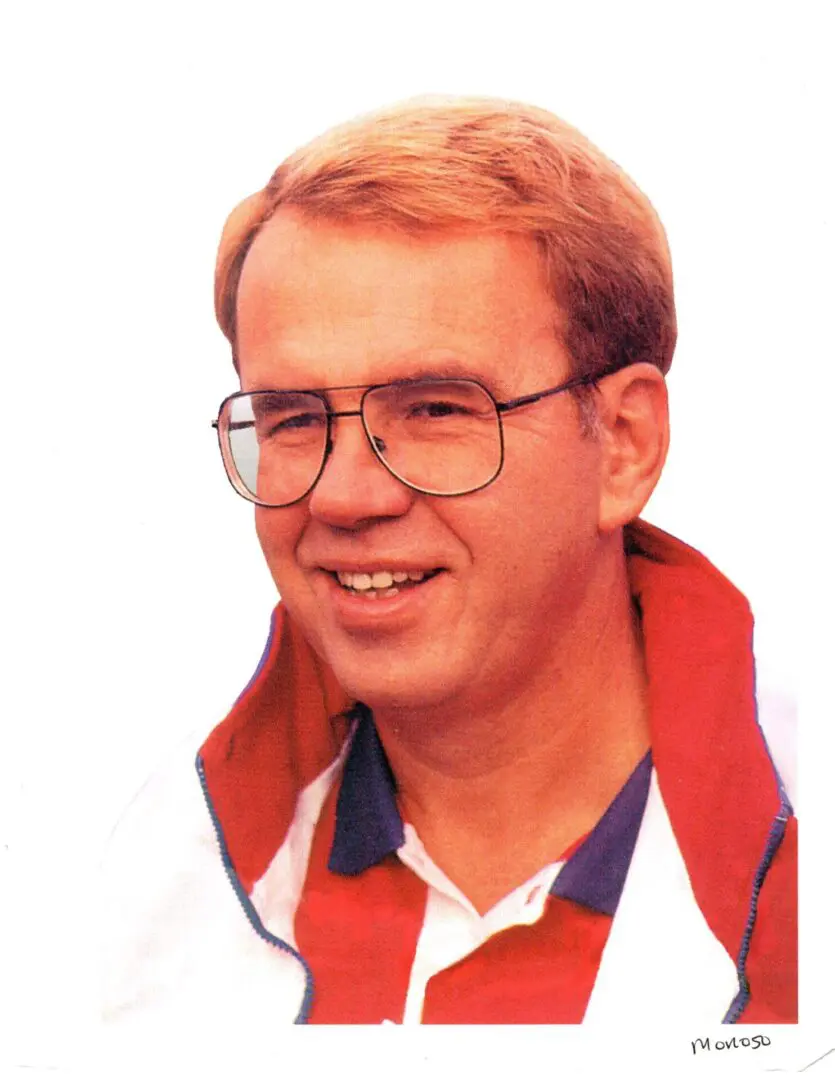 Dick Moroso
1939–1998 One of the most innovative figures in motorsports, Dick Moroso used foresite and imagination to become one of the most successful speed…
Read bio
Dick Moroso
1939–1998 One of the most innovative figures in motorsports, Dick Moroso used foresite and imagination to become one of the most successful speed…
Read bio
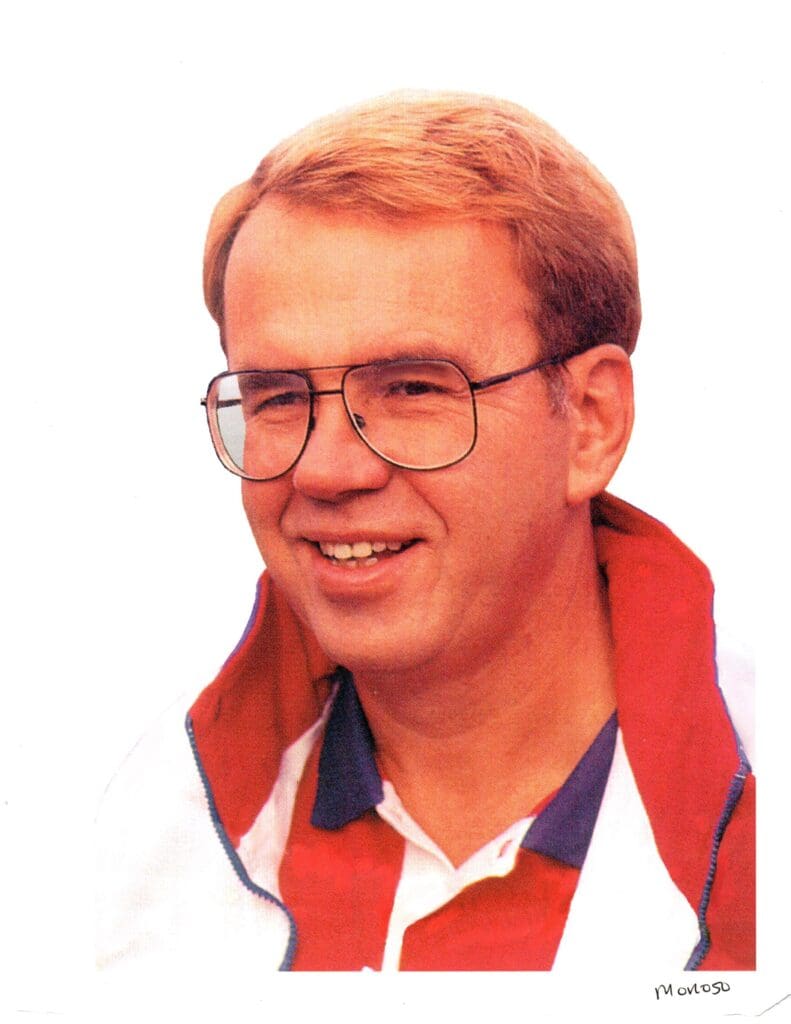 Class of 2000Presented by Mopar
Dick Moroso
One of the most innovative figures in motorsports, Dick Moroso used foresite and imagination to become one of the most successful speed equipment manufacturers in the modern era. He began his career in the mid-1960s racing is '61 Corvette in the Modified Sports and Modify Production categories. Much of his performance advantage came from hand-built pieces Dick design for his car. When other racers requested duplicates of his parts, he soon found that filling these requests took all the spare time he had from his Performance Automotive speed shop in Stanford Connecticut. He established Moroso Performance Products in 1968 where he developed and manufactured such innovative products as aluminum and steel valve covers, Blue Max spark plug wires, and extra capacity oil pans. After 10 years in his first 40,000 square-foot plant in Stanford, he moved to a larger facility in Guilford Connecticut, which needed even further expansion in the mid-80s. Dick bought a dragstrip in West Palm Beach Florida, developing it into Moroso Motorsports Park and annually held the sports highest paying bracket race. Dick passed on at the young age of 59 in November 1988, but the tradition of Moroso Performance Products lives on with his son Rick as company president and daughter Susan as president of Moroso Motorsports.
-
2000
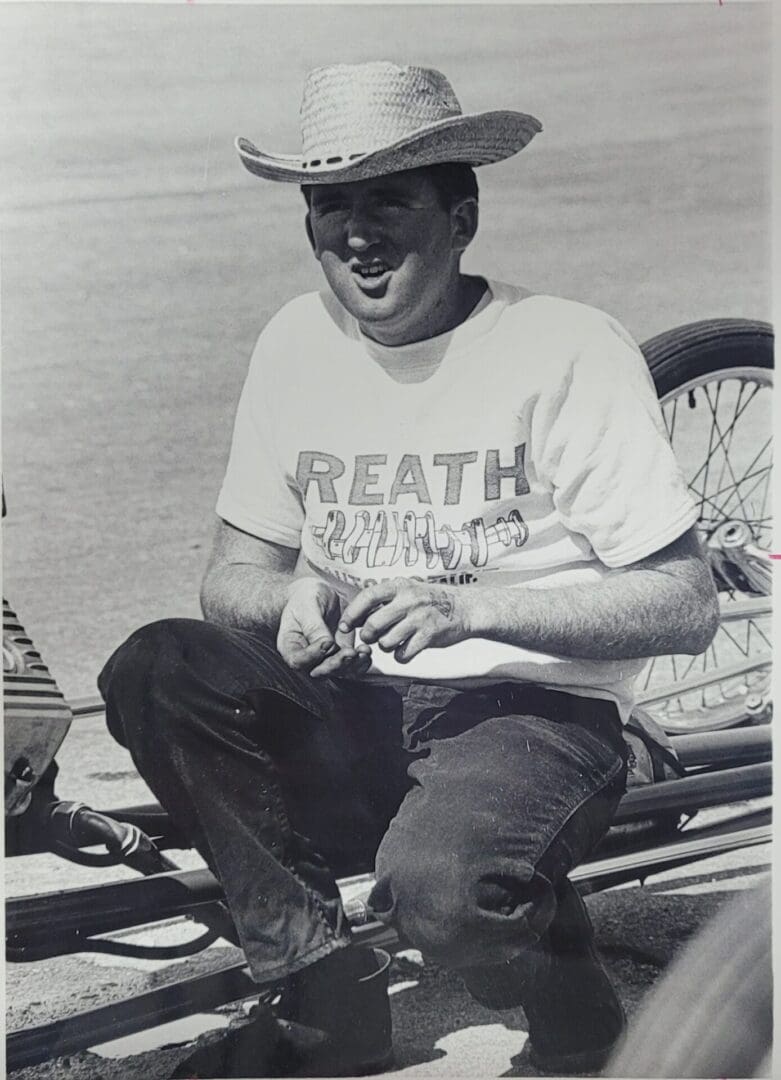 John Mulligan
1942–1969 In a career spanning less than a decade, John Mulligan left an indelible mark on drag racing history. In 1962 he began…
Read bio
John Mulligan
1942–1969 In a career spanning less than a decade, John Mulligan left an indelible mark on drag racing history. In 1962 he began…
Read bio
 Class of 2000Presented by Mopar
John Mulligan
In a career spanning less than a decade, John Mulligan left an indelible mark on drag racing history. In 1962 he began driving the Chevy powered Fiat will altered of the Beebe Brothers. In 1964 Garden Grove car dealer, Jack Warye built two stunning and nearly identical full-body dragsters. One ran a Chevy, the other a Chrysler and they were transported on a special tandem trailer for one of drag racing's first high profile efforts. Beginning his top fuel career, Mulligan drove both on occasion. In 1966 Warye formed a team with engine wizard Gene Adams and Mulligan driving. They broke the seven second barrier with a 6.95 ET blast at Carlsbad in October and consistently ran speeds around 220 mph. Meanwhile the Beebe Brothers had their own fuel dragster housed in a shop just yards from Waryes'. For months the mythical feud over the title "King of Garden Grove" filled the trade papers. In reality they were best of friends, and when Dave Beebe became too busy to drive, he suggested John take over. The "Fighting Irish" team of expert tuner Tim Beebe and ace driver John Mulligan was born. When drivers began using every animal nickname imaginable, John was simply "The Zookeeper". At the 1969 Winternationals he won his biggest Top Fuel title, claiming top speed honors at 225 mph and defeating Don Prudhomme to finally shed his bridesmaid image. At the US Nationals, Mulligan qualified at an outstanding 6.43 ET, the quickest in history. The first round of eliminations look like an identical pass until the clutch exploded at 1000 feet causing a horrific crash and fire. John Mulligan succumbed to his injuries two weeks later, at the very young age of 26.
-
2000
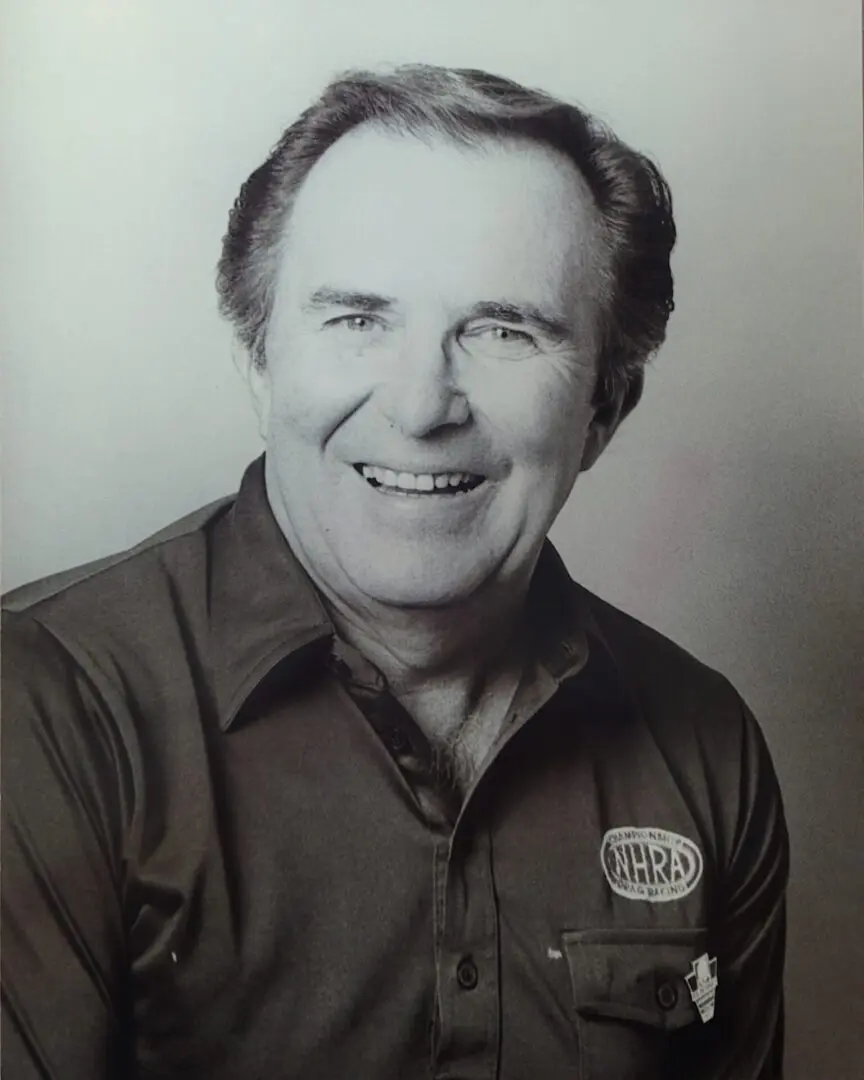 Bernie Partridge
1933–2012 One of the original groups of NHRA Division Directors, who with NHRA Founder Wally Parks supervised regional operation of the fledgling sanctioning…
Read bio
Bernie Partridge
1933–2012 One of the original groups of NHRA Division Directors, who with NHRA Founder Wally Parks supervised regional operation of the fledgling sanctioning…
Read bio
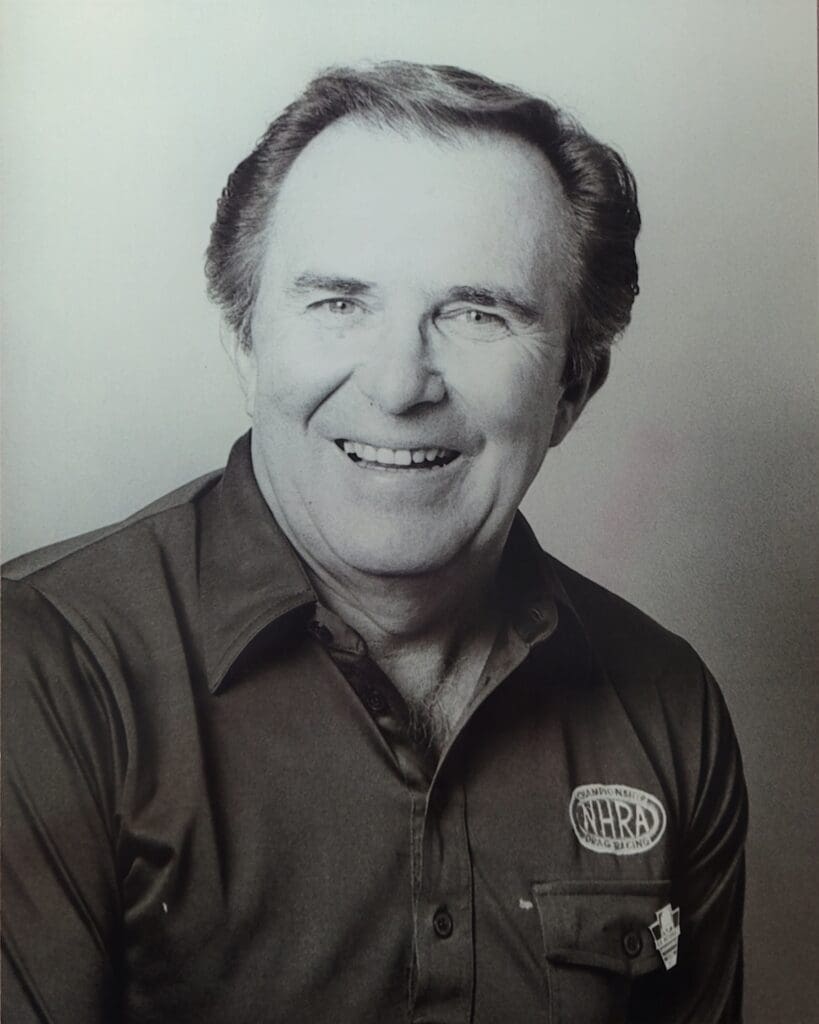 Class of 2000Presented by Mopar
Bernie Partridge
One of the original groups of NHRA Division Directors, who with NHRA Founder Wally Parks supervised regional operation of the fledgling sanctioning body in the early 60s. Bernie Partridge's multitalented skills were exceeded only by his passion for drag racing. As a member of the Dust Devils Car Club, he helped operate Inyokern Drag Strip from its opening in 1954. He often pulled double duty announcing a race, then competing in everything from stockers to his Desoto powered modified roadster. When Parks heard his voice, Bernie was invited to announce at the 1958 Nationals in Oklahoma City. Serving as NHRA's Chief Announcer for nearly 30 years, a milestone of Bernie's career came at the 1962 NHRA Nationals when he first used the nickname "Big Daddy", a title that has been part of the Garlits legend every sense. In late 1962, Partridge became the first Division Seven Director, a position he held for 17 years. Partridge was named Western Regional Director of NHRA, National Field Administrator in 1981, and finally Vice President of Field Operations in 1982. Retiring in 1989 Partridge was instrumental in the founding of NHRA's California Hot Rod Reunion and Street Legal programs. Partridge's dedication and willingness to accept and meet challenges have contributed greatly to the immense popularity enjoyed by drag racing today.
-
2000
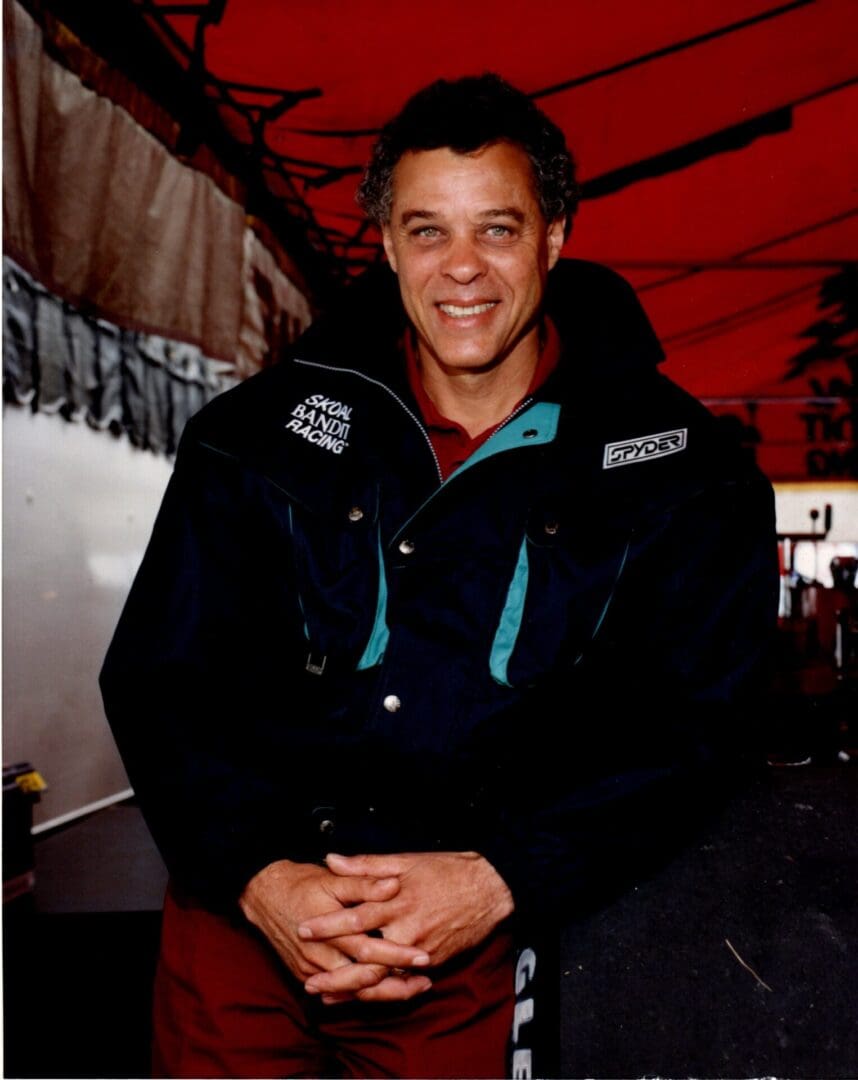 Don Prudhomme
One of the most famous drag racers of all time, Don Prudhomme got his start as a member of the famed Burbank…
Read bio
Don Prudhomme
One of the most famous drag racers of all time, Don Prudhomme got his start as a member of the famed Burbank…
Read bio
 Class of 2000Presented by Mopar
Don Prudhomme
One of the most famous drag racers of all time, Don Prudhomme got his start as a member of the famed Burbank "Road Kings". While building a Buick powered street roadster, fellow member Tommy Ivo convinced him that he could have more fun racing. Ivo's old single engine chassis soon housed the Buick from the roadster and Prudhomme was hooked on drag racing for life. Teamed with Kent Fuller and Dave Zeuscel to win the 1962 US Fuel and Gas Championships, his first major victory, at 20 years old. In the early 1962, Tom Greer convinced engine builder Keith Black to join him in a dragster and Fuller recommended Prudhomme to drive. From mid-1962 to 1964, the Greer, Black and Prudhomme entry ruled the West Coast. Prudhomme's lightning quick reflexes and slender frame earned his "Snake" nickname from a GBP crew member. Both Black and Prudhomme were on the road to super stardom. In 1965 Snake teamed with a Keith Black engine and Roland Leong's "Hawaiian" to win both the NHRA Winternationals and US Nationals. In the late 60s Prudhomme was top fuel racing on his own, scoring two more US Nationals wins. In 1970 and Tom McEwen Wildlife Racing and with Mattel Toy Company enjoyed the biggest sponsorship deal in drag racing history. For three years they raced top fuel and funny cars. The Snakes intensity was a perfect contrast to the wit and showmanship of the Mongoose, with the rivalry driving millions of sales of Hot Wheels toys. In 1975 Prudhomme became the first funny car driver in the five second ETs, won six national events, and the first of four consecutive NHRA Funny Car Winston Championships. From 1980 to 1982 Prudhomme won three AHRA titles and in 1982 became the first NHRA driver to win 34 national events. He finished his funny car career in the late 80s with three top five championship finishes. Returning to top fuel in 1990. Snake closed out his career with the" Final Strike Tour" in 1994, winning four races and finishing a close second in the Winston Championship.
Class of 1999
10 inductees-
1999
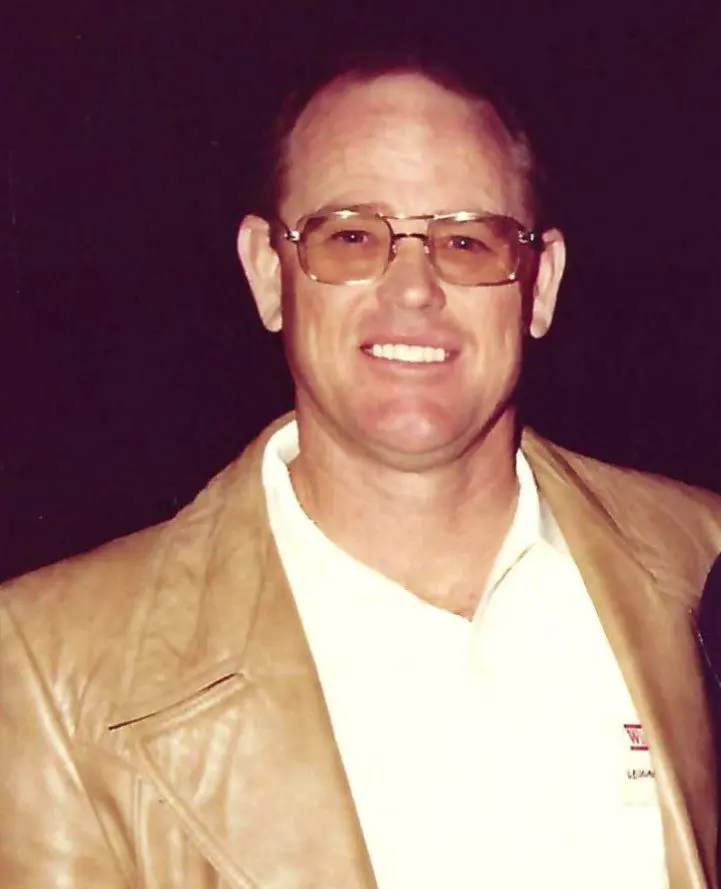 Paul Candies & Leonard Hughes
For over a quarter-century, the Louisiana based of Candies and Hughes raced both top fuel and funny cars, becoming the first team…
Read bio
Class of 1999Presented by Mopar
Paul Candies & Leonard Hughes
For over a quarter-century, the Louisiana based of Candies and Hughes raced both top fuel and funny cars, becoming the first team…
Read bio
Class of 1999Presented by MoparPaul Candies & Leonard Hughes
For over a quarter-century, the Louisiana based of Candies and Hughes raced both top fuel and funny cars, becoming the first team to win titles in both divisions. Their partnership included over two dozen race cars which combined to win over 45 major events. Although the first-class team was always able to attract major sponsors, they became known as" The Wrench" and the "The Wallet", with Hughes initially doing the driving and tuning, and Candies the financing. Their later drivers were the best of the sport had to offer, including: "Q-Ball" Wales, Larry Reyes, Leroy Goldstein, Dave Settles, Richard Tharp, and Mark Oswald. Beginning in 1964 Super Stock Plymouth, the pair moved up to the altered wheelbase ancestors of today's funny cars. By 1968, their full-fledged tube-framed race car, tuned and driven by Hughes, seemed able to earn top speed honors wherever it ran. The teams first national win came at the 1970 Gatornationals as part of another milestone. The first time two cars from the same team appeared in an NHRA national event file, it was Leonard in the team’s new '70 Cajun Cuda over Reyes in the '69 version. Not only were they beautiful, but fast as well. In 1971 and 1972, the two-car team featured one for Hughes at national events and the other for Goldstein to match raced. In 1973, Candies and Hughes team raced both funny car and a top fuelers. Hughes retired from the cockpit Goldstein reached the final round in both categories at the IHRA Longhorn Nationals in Dallas, scoring a win in top fuel. Like their funny cars, the team's dragsters,which served as test vehicles for the Keith Black Hemi, seemed able to set top speed almost at will. The team continued as a major force in fuel racing with Richard Tharp winning the NHRA Top Fuel Championship in 1976 and Mark Oswald the NHRA Funny Car Championship in 1984. Drag racing's version of the" Odd Couple" retired in the mid-90s after racking up and enviable record, including five IHRA Championships, to NHRA Championships, and nine top five seasons.
-
1999
 Bob Creitz
1930–2011 Known as the engine wizard, inventor of the burnout, and the most prominent top fuel racer in Oklahoma, Creitz was a member…
Read bio
Bob Creitz
1930–2011 Known as the engine wizard, inventor of the burnout, and the most prominent top fuel racer in Oklahoma, Creitz was a member…
Read bio
 Class of 1999Presented by Mopar
Bob Creitz
Known as the engine wizard, inventor of the burnout, and the most prominent top fuel racer in Oklahoma, Creitz was a member of the unofficial group of hard-core fuel racers known as the “Greek Fleet". Bob opened Creitz Automotive, the state's first speed shop, with his brother Jim in the mid-50s after moving from their native Topeka. As a hobby,Creitz and Ed Garrett built a gas dragster using a duplicate K88 chassied with a blown Oldsmobile for power. The Scrima chassied fuelerl which followed won several big meets and reached number nine on Drag News Mr. Eliminator list with Gene Goleman at the wheel. Creitz teamed with Ed Greer on a beautiful Hannah bodied Woody car which Vic Brown drove to an NHRA national record 7.26 et. Goleman returned to the Creitz and Greer seat, and runner-upped at the 1967 Winternationals. Later that year, Brown drove Creitz's car to the first six second pass in NHRA history. In 1968, Brown won the last 64-car top fuel show ever held, the PDA Meet, at Orange County. Creitz teamed with manufacturer Ed Donovan and driver Steve Carbone for his first event victory at the inaugural PHR Championships in 1969 at Martin Michigan. Creitz had his "elephant gun" 392 (designed to combat the late model 426) loaded for bear. When the car died after the burnout, Creitz and crew incredibly pulled the car backwards by hand fast enough to re-fire it, winning that race as well as AHRA World Finals in Tulsa. Richard Tharp replaced Carbone in 1970 and achieved a match race win record of over 80%. In the early '70s, Creitz joined Lloyd Dill with Vic Brown driving. At the '72 Supernationals, they were runner-ups after defeating Mike Snively on his historic 5.97 et pass. After 20 years of hard racing, Creitz, one of the sports great practical jokers and pyrotechnicians, retired to the shop in Tulsa, which would serve as a pit stop for area racers past and present.
-
1999
 Dale Ham
1931–2012 The headline of the Amarillo times in 1940 read, "Wolflin In Arms Over Hot Rods". The story concerned rampant street racing emanating…
Read bio
Dale Ham
1931–2012 The headline of the Amarillo times in 1940 read, "Wolflin In Arms Over Hot Rods". The story concerned rampant street racing emanating…
Read bio
 Class of 1999Presented by Mopar
Dale Ham
The headline of the Amarillo times in 1940 read, "Wolflin In Arms Over Hot Rods". The story concerned rampant street racing emanating from the drive-in on Wolflin Avenue. That was Dale Ham's introduction to the activity which would be his life's work for nearly three decades. Dale was part of America's post war love affair with the automobile and he built a series of hot rods, each a little nicer and faster than the last. He joined the Barons of Amarillo along with fellow drag racing pioneers such as Jack Moss. He was there in June 1954 when the NHRA Drag Safari put on a meet at Caddo Mills. When the first NHRA Nationals were held at Great Bend Kansas, in 1955, Ham was there. It was his chance to see all the heroes from California who he had only read about in Hot Rod Magazine. He won the C Street Roadster class and set a national record at a staggering speed of 94.24 mph. It's a tossup whether Ham was more thrilled by his own performance or the fact that Mickey Thompson cut in front of him in the tech line. In the early days, dedication was the important factor and Ham was one of those most dedicated to making the dream of organized drag racing a reality. He wanted to be a part of so badly created a job for himself at Custom Car Supply in Amarillo which allowed him to be paid part-time at NHRA as a Regional Advisor. When the divisional system was created by NHRA in 1960, Ham was named to lead the South-Central Division. Assisted by his lovely wife, Glynanna, who served as Trophy Queen at the the 1959 Nationals, he used his dedication and creativity to organize his division and occasionally defended its honor with an iron fist. When the national events schedule began to grow, Ham, one of the best liked officials in drag racing, was given the task of pit control, a job he handled with his normal dedication and enthusiasm. Ham retired from NHRA in 1987, he excelled in the second career as a Western artist. NHRA's South Central division was nicknamed "Land of the Good Guys", and Dale Ham will always be Good Guy #1.
-
1999
 Allen “Lefty” Mudersbach
1931–1966 Lefty Mudersbach's first drag racing experience came at Santa Ana in 1954 driving an 85 mile-per-hour '41 Ford. His name first became…
Read bio
Allen “Lefty” Mudersbach
1931–1966 Lefty Mudersbach's first drag racing experience came at Santa Ana in 1954 driving an 85 mile-per-hour '41 Ford. His name first became…
Read bio
 Class of 1999Presented by Mopar
Allen “Lefty” Mudersbach
Lefty Mudersbach's first drag racing experience came at Santa Ana in 1954 driving an 85 mile-per-hour '41 Ford. His name first became known to drag racing fans when the car he constructed in his native Phoenix, "The Money Oldsmobile Special", took Buddy Sampson to the Top Eliminator win at the 1957 NHRA Nationals in Oklahoma City. Soon thereafter, he moved to the Los Angeles area and from chassis of the Money Olds built a dragster of his own, powered by twin Chevy power plants mounted nose to tail in line. The cars unique torsion bar front suspension helped the car gain traction and predictable consistency. At the height of the "fuel ban", the Herbert and Mudersbach twin was a powerful factor on Southern California drag racing scene. At the 1961 US Fuel and Gas Championships in Bakersfield, Lefty took the Top Gas Eliminator honors at 8.50 seconds and 179 mph, then went on to defeat Ewell and Stecker unblown fueler for overall Top Eliminator honors. Later that year at the AHRA Nationals in Green Valley, Texas, lefty set top speed on gas and finished runner-up to Ed Garlits for Top Gas Eliminator. In 1962, turning to fuel, Lefty held both ends of the AHRA AA/Fuel record at 8.54 seconds and 185.18 mph. His car wored so well and was so consistent that he began manufacturing drag racing chassis by popular demand. Outstanding cars such as Manuel Gonzalez's Californian I and II machines, and the Warden and Cole fuel roadster used Lefty's Speed Shop Equipment. After retiring twin and splitting from Herbert, Lefty drove a lightweight single Chevy fueler. He loved to race so much that the 1964 Bakersfield March Meet program identified him as the driver "who has probably taken more rides down the quarter-mile than anyone else in the sport". Lefty lost his life in a crash at the AHRA Winternationals at Irwindale Raceway in 1966.
-
1999
Romeo Palamides & Bob Smith
Al “Romeo” Palamides and “Jet Car Bob” Smith both started as archetypal Caliornia hot rodders. Romeo began building his first hot rod…
Read bio
Class of 1999Presented by Mopar
Romeo Palamides & Bob Smith
Al “Romeo” Palamides and “Jet Car Bob” Smith both started as archetypal Caliornia hot rodders. Romeo began building his first hot rod at age 15 in his native Oakland and participated in all forms of the sport including: dry lakes, Bonneville, and even track roaster racing as a member of the Elmwood Auto Club. Always an innovator, Romeo constantly tried something new and despite their paramedical nature, his cars were always among the best appearing.He was among the first to use a tort converter in a dragster, as well as an on-board starter. His enclosed canopied, full-bodied dragster was named" America's Most Beautiful" at the Oakland Roadster Show in 1958. Romeo manufactured disc brakes and even a dual blower manifold under the Palamides Engineering banner. He was the first to manufacturer magnesium racing wheels principally for straightaway racing and founded the company which became American Racing. In 1962, Romeo moved his shop to Oakland Airport and built one of the first jet dragsters, called the "Untouchable". Smith joined the Rod and Wheelers of San Jose club with his customized '59 Chevy began driving career at the wheel of Sid Waterman's gas burning Chevrolet dragster. After three months, the money ran out and Bob moved to seat of Tom Prufer's Power King fueler. Waterman saved enough for a blown Chrysler and Smith returned to his old ride. A close explosion and lack of funds left Smith without a ride and did early 1963 to work for Romeo. The team toured the country as one of the most popular exhibition attractions, match racing fuel dragsters and other jet cars. Smith even made a pass down 6th Street in Cleveland for appearance on the Mike Douglas television show. Palamides built a long series of jets for drag racing and Bonneville including: a twin jet powered Falcon station wagon, Dodge charger funny car, and even a rocket car. Between bookings in the jet, Smith remained a journeyman dragster driver, behind the wheel of as many as three cars at a single meet. Although he made hundreds of flawless passes, Smith suffered a series of spectacular accidents which left him battered and broken. When asked why he got back in the cars after an especially nasty crash, he replied, "To pay the hospital bills from the last one"! In the early 70s, Romeo moved to Chicago to continue to build jets as well as compressional chassis, including innovative "Stardust" and "Mr. Norm" funny cars.
-
1999
John Peters & Nye Frank
Perhaps no car in the history of drag racing so completely dominated division as the "Freight Train" gas dragster of John peters…
Read bio
Class of 1999Presented by Mopar
John Peters & Nye Frank
Perhaps no car in the history of drag racing so completely dominated division as the "Freight Train" gas dragster of John peters and Nye Frank. Peters and Frank came out of the pool of the hot-rodding talent on the west side of Los Angeles which produce such stars as Jean Adams, Stu Hilborn, Jack Engle, and The Surfers. Their car began in 1960 as the Quincy Auto dragster utilizing a pair of unblown, bored out 283 Chevy's mounted nose to tail in a heavy home-built frame. The induction system evolved through several configurations until both engines featured top mounted blowers. It got its nickname in a Drag News story by Judy Thompson because it won a race by "a freight train length", weighed over 2100 pounds, and puffed black smoke on the starting line. The Freight Trains (there were three different chassis) raced for over a decade and made over 1700 runs in 24 different states at the hands of over a dozen different drivers including: Bob Brissette, Roy "Goober" Tuller, Walt Rhodes, and Bob Muravez (a.k.a. Floyd J Lippencott Jr). The first major win came at the 1962 March Meet, followed by the 1963 Winternationals, three more NHRA national events, two more March Meets, and countless independent races. In 1966, when a new lightweight frame was built, the Train almost immediately hit a 7.99 ET and the cries "ban the train" spread through the Top Gas pits. It was the first in the 7s, first in the 6s, and first over 180, 190, and 200 mph on gas. Muravez once won 28 straight rounds before losing to a red light. By the time Top Gas was discontinued after the 1971 season, the then twin Chrysler powered Freight Train often had as much as a half second advantage over the field. Frank, an outstanding fabricator and metal craftsman, left the crew to build his Pulsator twin engine, unblown top fuel streamliner and assist in several Land Speed Record attempts. Examples of his tremendous talent have appeared on everything from Land Speed Records and Indy cars to the latest state-of-the-art off-road racers. Peters retired after 25 years as a machinist at Engle Cams and would go on to operate Freight Train Racing Engines in Northern California.
-
1999
 Marvin Schwartz
1936–1980 Marvin Schwartz was introduced to drag racing astride a 90 mph Triumph motorcycle as a teenager in Zephyrhills, Florida in 1954. A…
Read bio
Class of 1999Presented by Mopar
Marvin Schwartz
1936–1980 Marvin Schwartz was introduced to drag racing astride a 90 mph Triumph motorcycle as a teenager in Zephyrhills, Florida in 1954. A…
Read bio
Class of 1999Presented by MoparMarvin Schwartz
Marvin Schwartz was introduced to drag racing astride a 90 mph Triumph motorcycle as a teenager in Zephyrhills, Florida in 1954. A move to Denver saw him construct a C/Gasser powered by his beloved Ford, but his interest gradually faded away from drag racing. Once again bitten by the racing bug in the early 60s, the onetime luggage salesman built his own 508 ci. Ford powered AA/FD. The car had plenty of power but was ill handling. He called on his old Florida buddy, Don Garlits, to build a chassis and before long that new car became known as "The World's Fastest Ford", turning a 7.70 ET and running over 190 mph regularly. "Starving Marvin" soon joined Garlits to work in his chassis shop, which provided Schwartz with a near twin of Garlits' own car to drive and maintain. That car afforded Schwartz the proudest moment of his career at the Bakersfield Fuel and Gas Championships when he defeated a field of 32 of the country's best fuelers to win Top Fuel Eliminator, only to fall to his mentor,Garlits, for the Overall title. Marvin parlayed this success with a series of his own cars on the match race circuit, and went from "starving" to a rigorous schedule of traveling 80,000 miles a year and racing in average of three days a week. Schwartz died at the 1980 AHRA Winternationals during qualifying.
-
1999
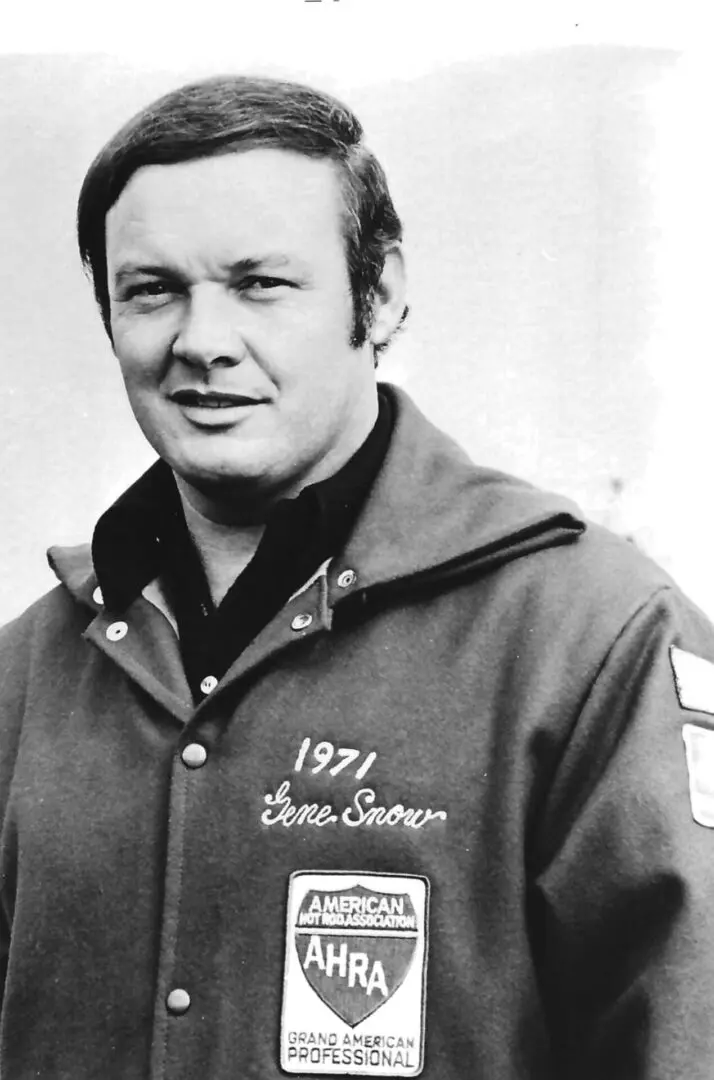 Gene Snow
 began his drag racing career with cars off his Fort Worth used car lot. In the 30 years that followed,…
Read bio
Gene Snow
Gene Snow began his drag racing career with cars off his Fort Worth used car lot. In the 30 years that followed,…
Read bio
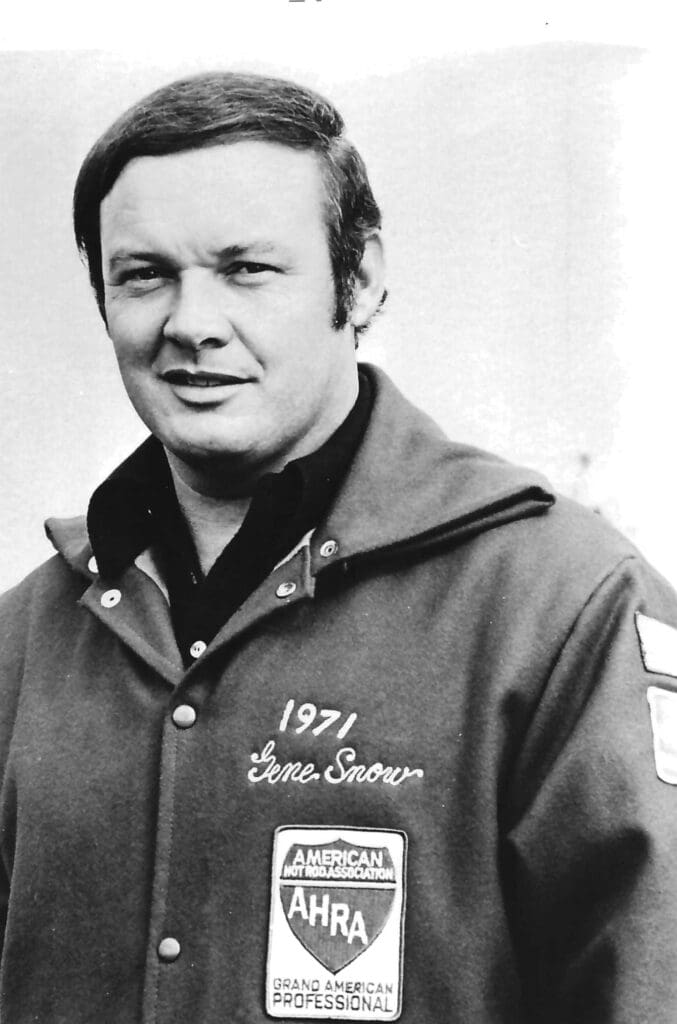 Class of 1999Presented by Mopar
Gene Snow
Gene Snow began his drag racing career with cars off his Fort Worth used car lot. In the 30 years that followed, he raced a long series of super stocks, match racers, and even a stable of both top fuel and funny cars. Snow always prided himself on innovation and race primarily for the pure enjoyment of it. He pioneered direct drive funny cars, rigid suspensions, and experimented with turbocharging and compressed air induction. In 1965, he built his first in a series of "Rambunctious" and "Snow Man" Dodges. Using an injected late model Hemi, his first Dart featured fiberglass doors and front end predating all plastic one-piece bodies. The car (then classified by NHRA as a fuel dragster) was equally impressive on gas or fuel, winning, Comp and Super Eliminator titles at NHRA national events from 1966 through 1968. In 1969, became the first NHRA funny car driver reach 200 mph. In 1970, Snow won seven major events and became the first to win both NHRA and AHRA season championships. His $130,000 in prize money was a record amount for any professional drag racer. The next year he retained the AHRA title and was NHRA's runner-up. He pioneered the car team concept in 1972 with a top fuel dragster, three funny cars, and three hired drivers. In 1980, Snow switched driving roles from funny cars to top fuel. A true sportsman, Snow helped Eddie Hill the first driver in the fours. Six months later, he ran the second four second time and the first in NHRA. Snow won his eighth NHRA title at the Cajun Nationals in 1989 and retired from top fuel racing in 1993. Nearly four decades after starting his career, he still occasionally spends a weekend at the wheel of his A/Fuel dragster. He says, "It makes you feel good to know that people still remember you". If that's the case, Gene snow feel good for a long time to come.
-
1999
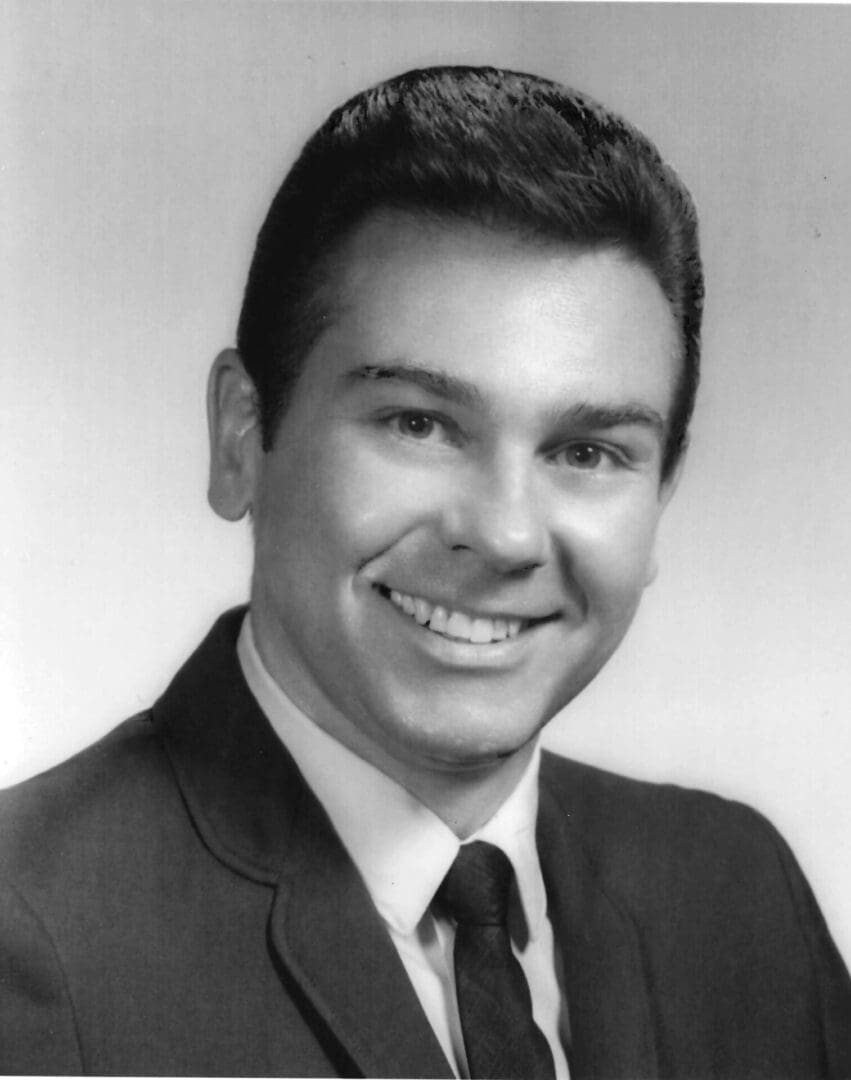 Bob and Don Spar
In the 1950s, the thought of an automatic transmission in a race car was ludicrous. That is until B&M Hydro Stick came…
Read bio · 2 photos
Bob and Don Spar
In the 1950s, the thought of an automatic transmission in a race car was ludicrous. That is until B&M Hydro Stick came…
Read bio · 2 photos
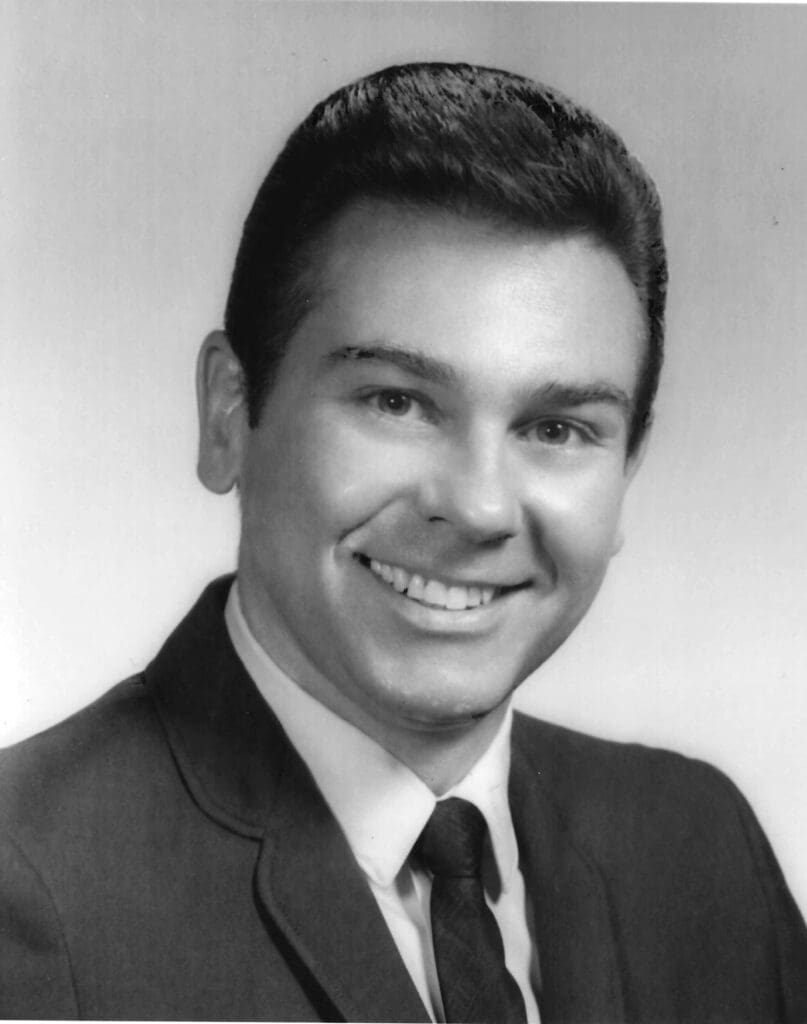 Class of 1999Presented by Mopar
Bob and Don Spar
In the 1950s, the thought of an automatic transmission in a race car was ludicrous. That is until B&M Hydro Stick came along. Bob Spar formed B&M Automotive with Mort Shuman in 1955 with the goal of doing automatic transmission repair work and a little racing as a sideline. Bob developed an idea about modifying the Hydramatic for high performance applications and in 1958 was granted a patent on his hydraulic control system. At nearly the same time, Bob's brother, Don joined him at the small shop in Van Nuys and they bought out their former partner, making the company family-owned. Soon gasser and altered racers across the country were swapping their ancient LaSalle and Cadillac transmissions for the strength and durability of the manually shifted B&M Hydro. The success of their transmissions forced numerous expansions until, by the late 60s, the firm occupied facilities eight times the size of the original time shop. The line began to expand as the team design and manufacture adapters, shifters, and other driveline components. In the mid-60s, as traction improved in racing's faster categories, B&M developed the Tork-Master which could be used in any car capable of pulling high gear only. It quickly became a success in Don Prudhomme and Kenny Safford's top fuelers, as well as the burgeoning funny car field. Other products, such as the Clutch Flite, were perfected on the first known transmission dynamometer designed and built by B&M. B&M Racing and Performance Products manufactured complete transmissions, torque converters, and even a full line of superchargers. Thanks to the Spar brothers, "I'm running a B&M", truly became part of the language of drag racing.
Photo gallery · 2
-
-
1999
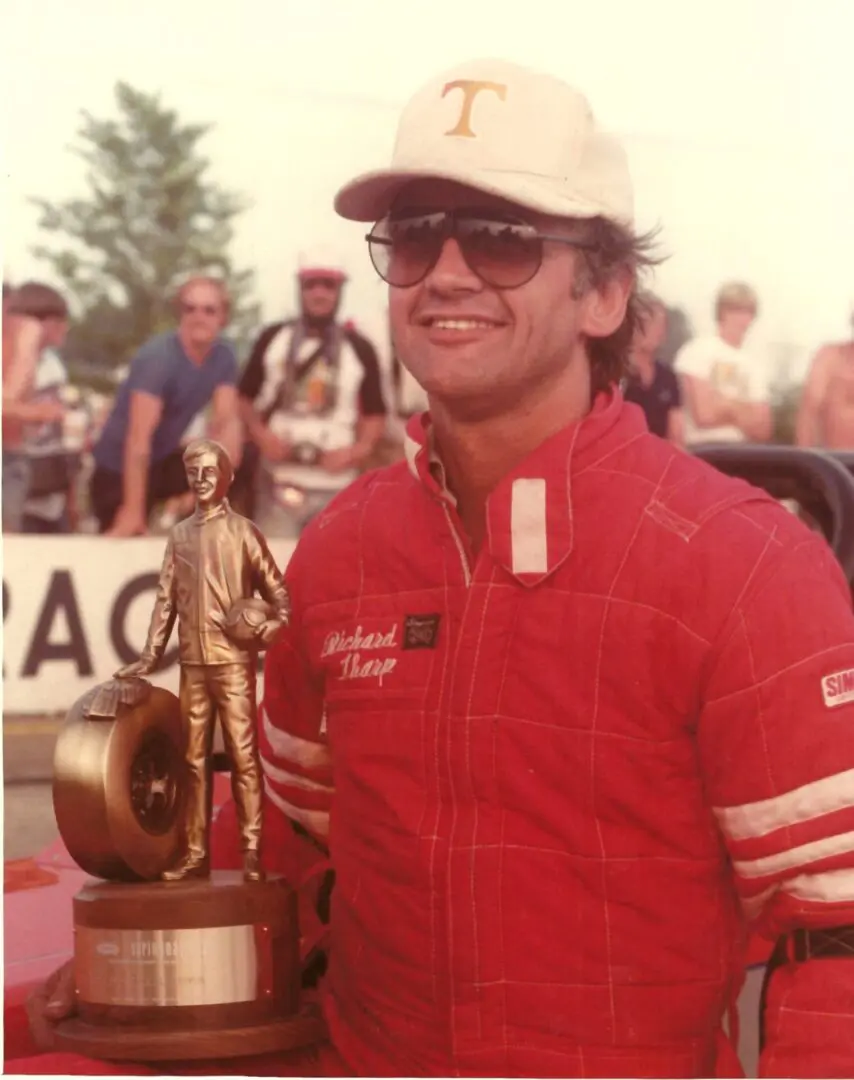 Richard Tharp
Colorful is the word used most often describing Richard Tharp's career, both on track and off. He was as comfortable behind the…
Read bio
Richard Tharp
Colorful is the word used most often describing Richard Tharp's career, both on track and off. He was as comfortable behind the…
Read bio
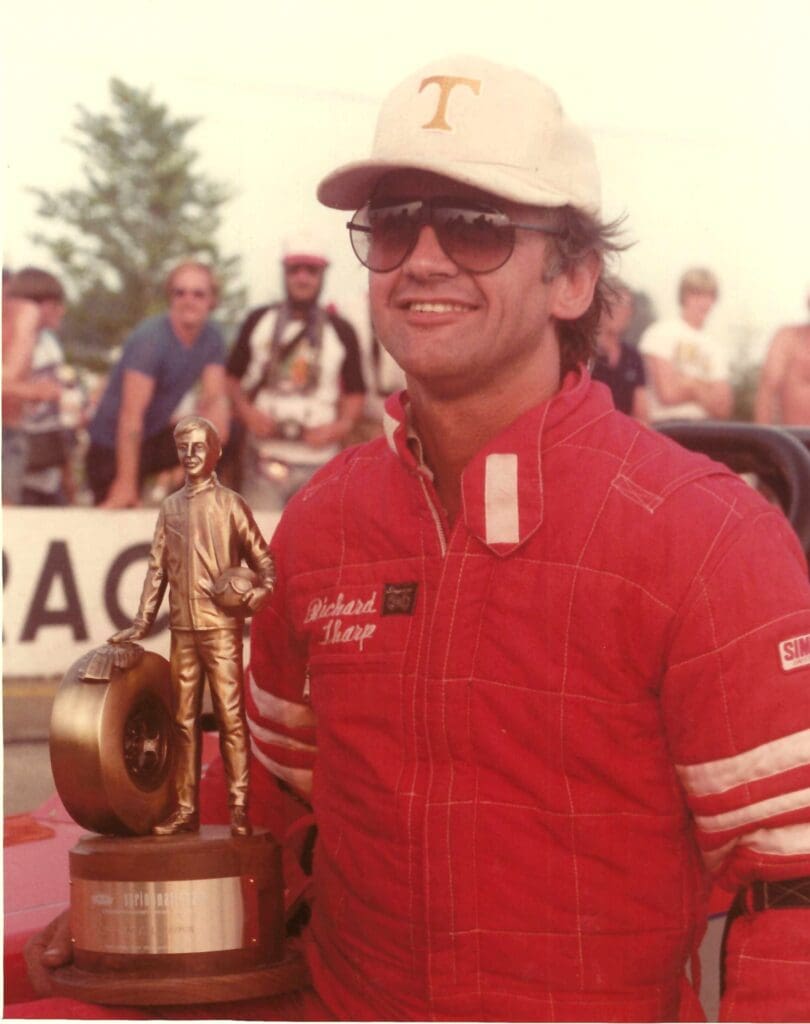 Class of 1999Presented by Mopar
Richard Tharp
Colorful is the word used most often describing Richard Tharp's career, both on track and off. He was as comfortable behind the wheel of a top fueler or funny car as he was Dallas Cowboys locker room or backstage at a Willie Nelson concert. He once said, "Racin might not be much, but workin is nothin". Tharp's drag racing career began as a teenager in 1960, driving a gas dragster in his native New Mexico. When he relocated to Dallas in 1963, he drove top fuel cars for such Texas legends as the Carrol Brothers, winning the South-Central Division title prior to his army hitch. In early 1970, he began driving for fellow Hall of Fame member Bob Creitz and was racing Don Garlits in the AHRA Grand American final at Lions Drag Strip when Garlits' transmission exploded, a large piece of which barely missed Tharp's head. He spent five years in the 70s behind the wheel of funny cars, winning several major events in AHRA and IHRA competitions along the way. A two-and-a-half-year period with Harry Schmidt helped build the legend of the Blue Max, including the 1971 IHRA Championship. During those golden days of match racing, Tharp ran 106 dates in a six-month period. Other notable rides included Don Schumacher's Stardust and Mike Burkart's Satellite. Returning to top fuel, Richard teamed with Hall of Famers Candies & Hughes in 1976, winning NHRA top fuel titles at the Summernationals, the US Nationals, and ultimately the seasons Winston Championship. He nearly repeated in 1977 including a runner-up finish at Indy. Known as a superb pure driver, Tharp's lightning reflexes made him a natural and, more than once, prevented a major accident at well over 200 mph. Tharp retired, from the the wheel of the 250 mph Kilpatrick and Carnell dragster, in 1983 after winning the IHRA Top Fuel Championship.
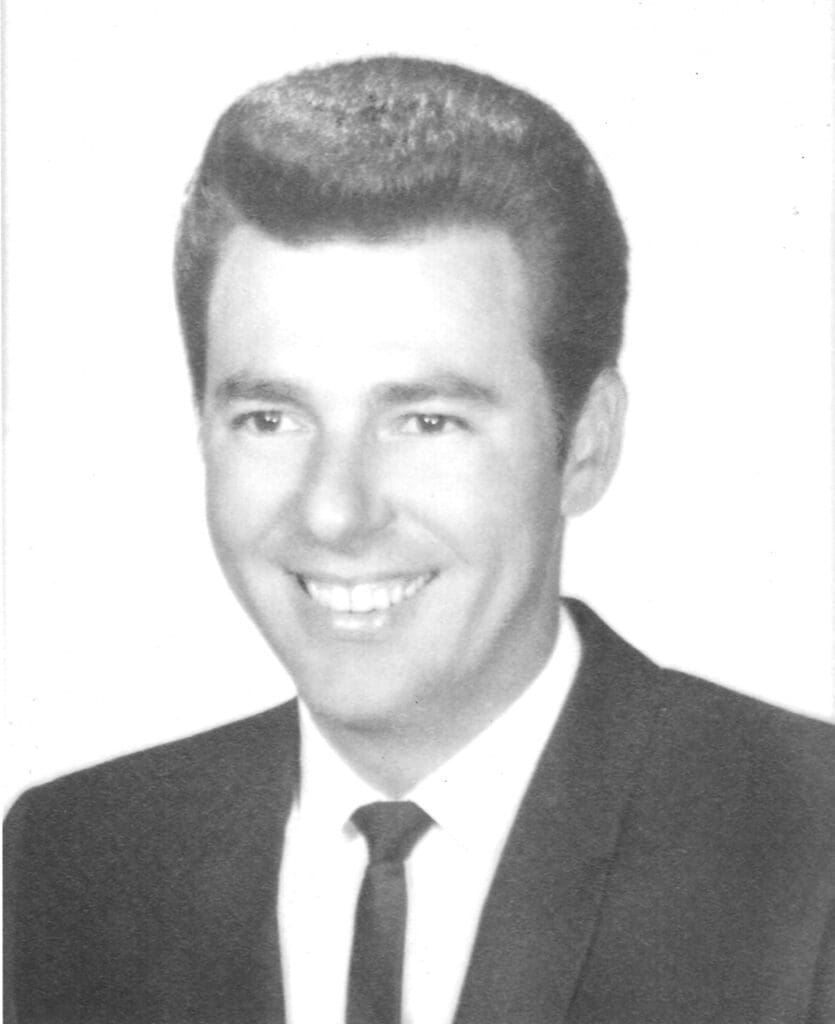
Class of 1998
10 inductees-
1998
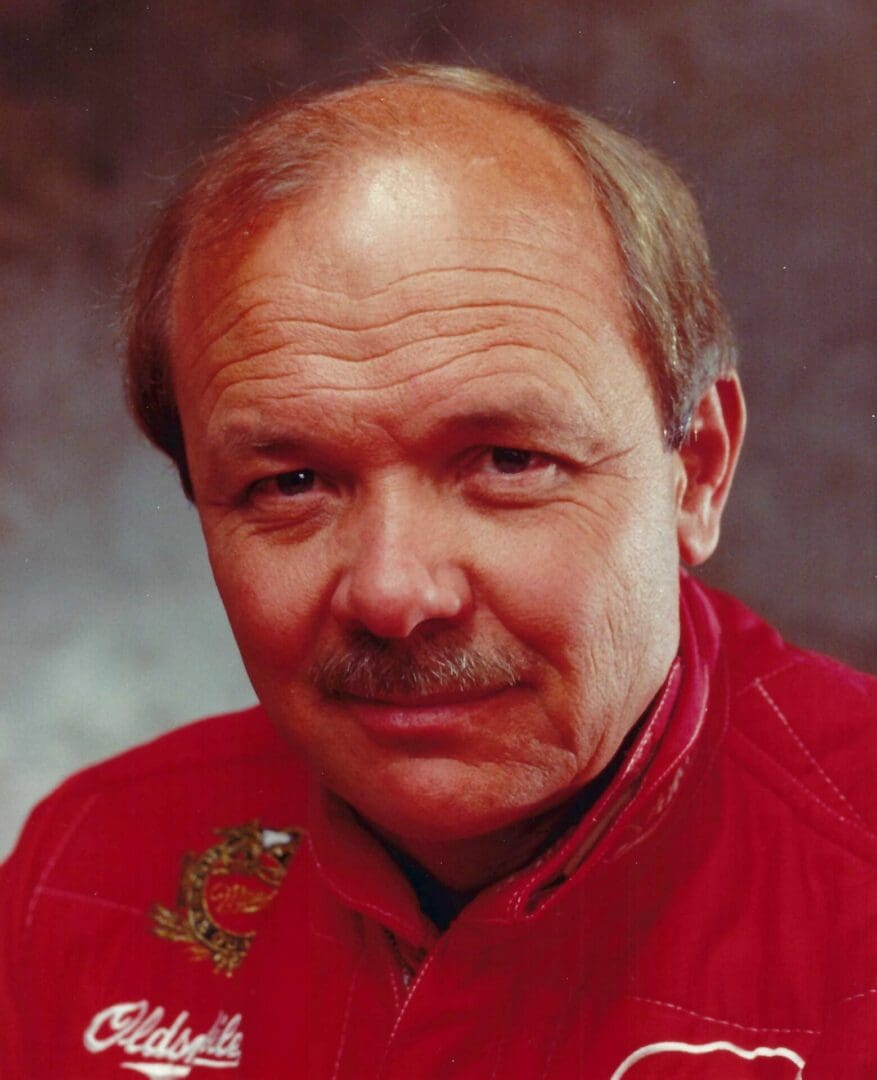 Gary Beck
In 1972, Gary Beck did the impossible. Just three weeks after earning his top fuel license and in only his second event…
Read bio
Gary Beck
In 1972, Gary Beck did the impossible. Just three weeks after earning his top fuel license and in only his second event…
Read bio
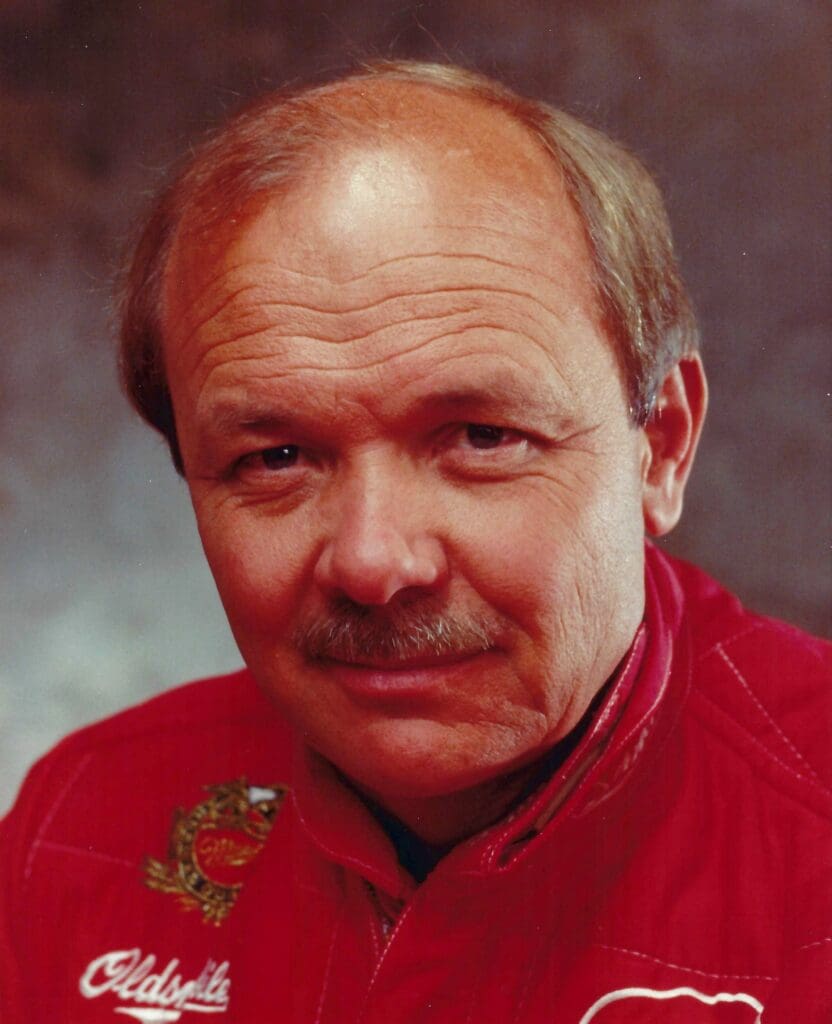 Class of 1998Presented by Mopar
Gary Beck
In 1972, Gary Beck did the impossible. Just three weeks after earning his top fuel license and in only his second event at the wheel, the rookie from Edmonton, Alberta, one NHRA US Nationals. The win was slightly cloudy because many of the top racers attended the PRO National Challenge, so to prove it was no fluke, Gary simply repeated his win at the 1973 US Nationals, the 1974 Winternationals, both AHRA and NHRA Springnationals, and the 1974 Grandnational. In addition, he was runer-up at the 1973 NHRA World Finals, set low ET, and was runner-up the 1974 Gatornationals in only his second full year top fuel racing, the Canadian with the long hair peeking out from under his leather "five second" hat won the NHRA World Championship winning 22 of 26 rounds he raced in 1974. In 1980, he teamed with car owner Larry Minor and became the first driver in the 5.60s, 5.50s, 5.40s, and 5.30s ET. In 1983, the team of Beck, Minor, and crew chief Bernie Fedderly totally dominated top fuel racing, winning four NHRA National events, setting low ET at 10 of the 12 events that season, winning the US Nationals yet again, as well as Gary's second NHRA World Championship. From September 1982 to October 1983, Beck recorded 17 quickest elapsed times in history, dominated the sport like no other driver before or since.
-
1998
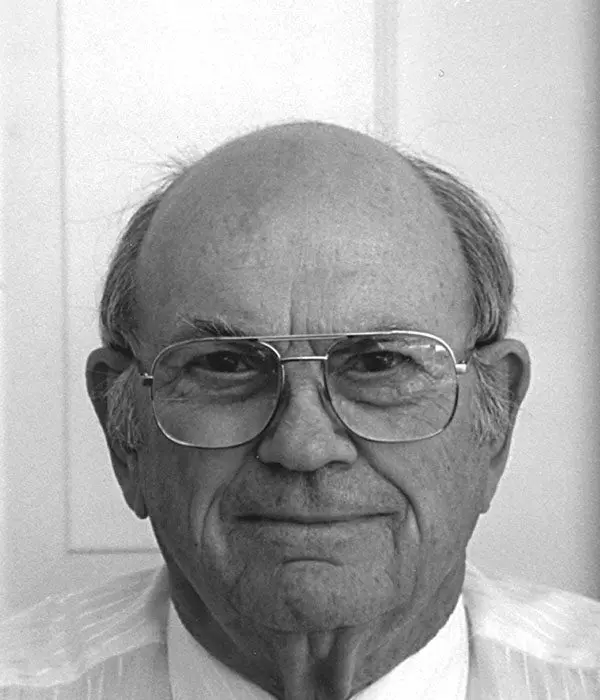 Bob Cahill
1944–2011 Bob Cahill's first experience with drag racing came when he made a personal appearance at Dodge-Plymouth dealership in Great Bend Kansas, to…
Read bio
Class of 1998Presented by Mopar
Bob Cahill
1944–2011 Bob Cahill's first experience with drag racing came when he made a personal appearance at Dodge-Plymouth dealership in Great Bend Kansas, to…
Read bio
Class of 1998Presented by MoparBob Cahill
Bob Cahill's first experience with drag racing came when he made a personal appearance at Dodge-Plymouth dealership in Great Bend Kansas, to introduce the revolutionary new Polyspherical V-8 during the first NHRA Nationals in 1955. Although a quiet guy who watched from the sidelines, he knew the value of racing and winning when it came to new car sales. After all, he grew up in the shadow of Indianapolis Motor Speedway. It was Bob's interest in motorsports that revived an old Chrysler trademark, Mopar, to become the performance arm of the corporation. While working in Product Planning in the mid-60s, Cahill created the Chrysler Performance and Safety Clinics which featured appearances by Sox and Martin for Plymouth and Dick Landy for Chrysler dealerships throughout the country. Between race dates, drivers gave tips and advice, to enthusiast on the merits of their respective brands cars, specifically performance equipment and drag racing in general. It was these clinics that help prove that drag racing had finally emerged from its greasy Levi's image to a true product of high-performance development.
-
1998
 Roger Coburn
1922–2010 Legend has it that in the early 60s members of several fuel dragster teams would post themselves on the highway between Bakersfield…
Read bio
Class of 1998Presented by Mopar
Roger Coburn
1922–2010 Legend has it that in the early 60s members of several fuel dragster teams would post themselves on the highway between Bakersfield…
Read bio
Class of 1998Presented by MoparRoger Coburn
Legend has it that in the early 60s members of several fuel dragster teams would post themselves on the highway between Bakersfield and LA on race dates to find out where the little blue Chevy powered Warren and Coburn dragster was headed so they could race elsewhere. Thus, was born the title "Ridge Route Terrors" proudly carried by Roger Coburn and his long-time driver/partner James Warren during their 23 seasons together. Coburn's 6'7" presence is punctuated by a few words, but his engines and unusual combinations did plenty of the talking for him. The team began racing in the late '50s with an unusual rear engine Chrysler dragster; went on to a twin-engine Chrysler and Chevy combination, the Chevy fuelerthat capitalized on every bit of available tire technology to terrorize the big Chrysler's. Coburn finally partner with Marvin Miller in a long series of "Rain for Rent Special's" that won their prestigious hometown event, the Bakersfield US Fuel and Gas Championships, four times including three in a row! They were the first to record back up speeds 230 mph, winning four NHRA Pacific Division titles and numerous NHRA and AHRA national events before or Warren retired from driving in 1981. Although they rarely venture from Southern California, Coburn tuned machines were always considered among the toughest country.
-
1998
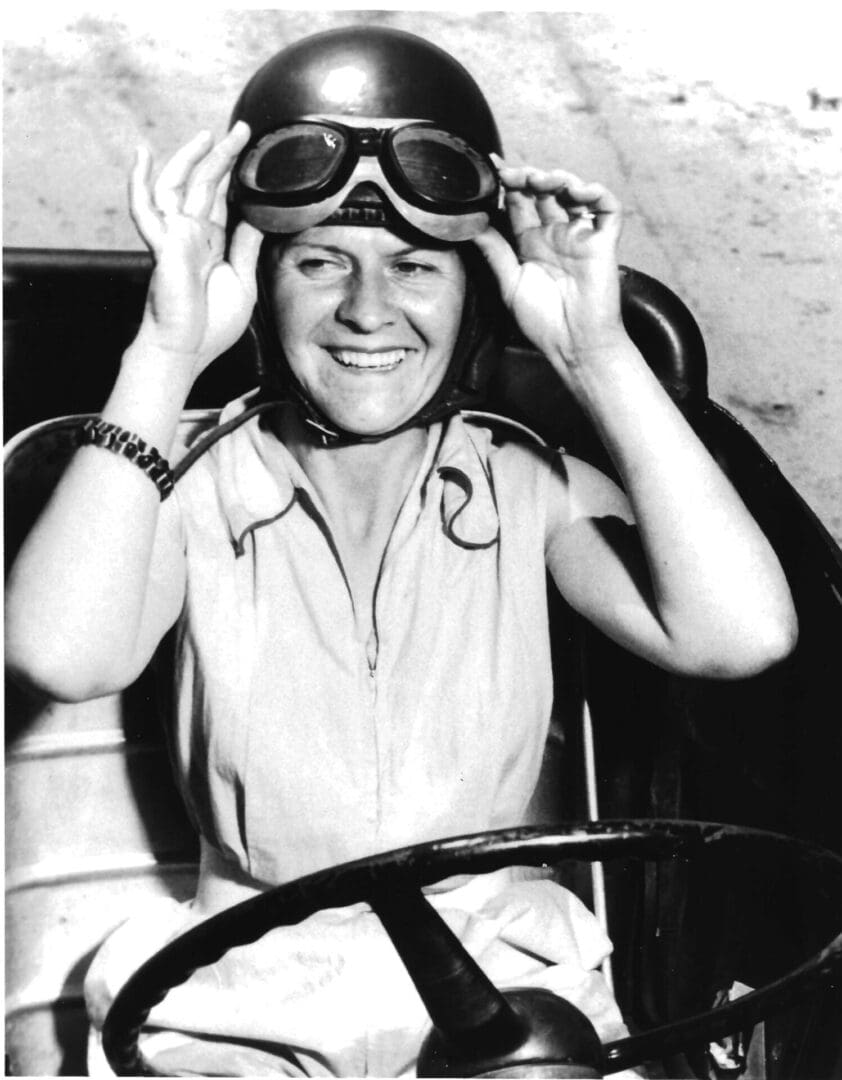 Peggy Hart
1914–1980 It's always difficult to say who was the very first to accomplish a feat of human endeavor, but it's certainly safe to…
Read bio
Peggy Hart
1914–1980 It's always difficult to say who was the very first to accomplish a feat of human endeavor, but it's certainly safe to…
Read bio
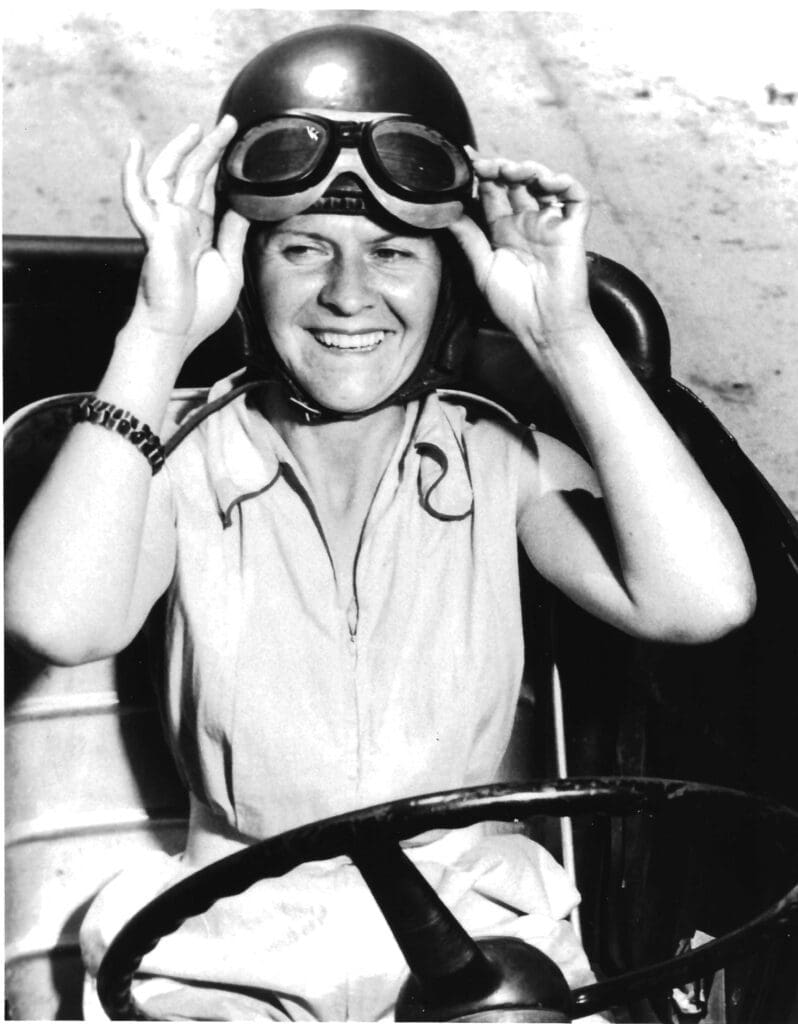 Class of 1998Presented by Mopar
Peggy Hart
It's always difficult to say who was the very first to accomplish a feat of human endeavor, but it's certainly safe to say Peggy Hart was one of the first women to drive a "hot" car in competition on an organized drag strip. Of course, it helped that her husband CJ was operator of Santa Ana, the first commercial drag strip in history. She not only helped operate the strip, but drove the family stocker in competition, then a Cadillac powered Model T roadster, a Willys gas coupe, and, finally, turned more than 130 mph in "Pappy's" Cad-powered gas dragster in 1954. She even drove at El Mirage dry lake and the Bonneville Salt Flats. Peggy was truly CJ's partner in life, and business, and is a pioneer in the development of organized drag racing.
-
1998
 Dick Landy
1938–2007 Mopar fans would be shocked to learn that Dick Landy's drag racing career began at the wheel of a 56 Ford pickup.…
Read bio
Dick Landy
1938–2007 Mopar fans would be shocked to learn that Dick Landy's drag racing career began at the wheel of a 56 Ford pickup.…
Read bio
 Class of 1998Presented by Mopar
Dick Landy
Mopar fans would be shocked to learn that Dick Landy's drag racing career began at the wheel of a 56 Ford pickup. More Fords followed with backing from his first sponsor, Andy Andrews, the man who gave him his first trademark cigar. HIs tune-up, driving prowess, and personal demeanor made him a natural for a factory deal. He was offered a 413 Plymouth in 1962, and it has been nothing but Chrysler ever since. Landy started the 1964 season with a wedge hardtop but, when the Hemi was introduced mid-year, things began to change rapidly. The factory performance wars were heating up and all kinds of tricks were tried to stay ahead of the competition, including solid axles and altered wheelbases. By 1965, the front and rear axles were moved so far forward that "Landy's Dodge" was one of the first prompt the name funny car. His bumper scraping wheelstands, resin burnthroughs, and ever-present giant cigar made him a big hit with the fans. He traveled nearly 100,000 miles match racing the big Coronet. In a very short time, Landy so-called stockers had gone from 130 mph on gasoline to 196 mph on fuel. When the flip top tube framed funnies were produced, Landy and Chrysler had enough. They both felt race car should still have doors and be within the reach of the average enthusiast. Chrysler's Product Planning Division decided to create a series of performance clinics at showrooms throughout the country, and Landy, back in a super stock, was selected as the Dodge representative. In 1967 alone, Landy conducted more than 70 clinics for 50,000 people in 29 states. Landy made a great many friends and customers for Chrysler and raced as many as seven different cars in a single season. In 1970, Landy was in on the ground floor of Pro Stock racing, winning AHRA Championships in 1973 and 1974.
-
1998
 Leslie Lovette
1942–1996 Although he never drove or turned a wrench on a race car, in an esteemed 30-year career, Leslie Lovette touched as many…
Read bio
Leslie Lovette
1942–1996 Although he never drove or turned a wrench on a race car, in an esteemed 30-year career, Leslie Lovette touched as many…
Read bio
 Class of 1998Presented by Mopar
Leslie Lovette
Although he never drove or turned a wrench on a race car, in an esteemed 30-year career, Leslie Lovette touched as many lives as anyone in the world of drag racing. As a drag racing photographer, he had no peer in skill or enthusiasm. Although he began his career photographing local circle track and drag racing events in Arkansas and Oklahoma, his obvious talent soon carried him to the staff of Super Stock and Drag Illustrated magazines where he attracted national attention with his innovative way of capturing the action-filled sport he loved on film. In 1968, he convinced Wally Parks that NHRA needed a full-time photographer and spent the last 28 years of his life as photo editor of National Dragster. Although he was considered the dean of drag racing photographers, he was always willing to share his skills with the novice. He treated every racer, whether the lowest ranked sportsman racer or the Top Fuel World Champion, as an important person, a friend, and someone he was proud to know. He constantly developed new ways of photographing drag racing, while always in search of his elusive greatest photo. Although he passed on well before he was finished, the great body of work he left behind will stand the test of time to record the history of drag racing and as a living monument to Leslie Lovette.
-
1998
 Dode Martin
1925–2018 The quarter half of the Dragmaster team, Dorrin "Dode" Martin did not find himself in the limelight as much as his partner,…
Read bio
Class of 1998Presented by Mopar
Dode Martin
1925–2018 The quarter half of the Dragmaster team, Dorrin "Dode" Martin did not find himself in the limelight as much as his partner,…
Read bio
Class of 1998Presented by MoparDode Martin
The quarter half of the Dragmaster team, Dorrin "Dode" Martin did not find himself in the limelight as much as his partner, Jim Nelson. Like Nelson, his hot-rodding career began on the dry lakes Southern California. When organized drag racing began, Martin was in on the ground floor with his own crude dragster and his duels with the "Bean Bandits" at Paradise Mesa were as good as any rivalry since. In the mid-50s, he and Nelson teamed up to build the "Dragliner", one of the first dragsters to feature an enclosed canopy and full-body. They won "Best Engineered" honors at the 1957 NHRA Nationals, as well as C/Dragster class win. The performance and high-quality workmanship lead others to seek their talents. They set up shop as the Dragmaster Company in 1958 with Martin working full time and Nelson initially helping on a part-time basis. The partnership of Nelson's engine building and machine skills combined with Martin's fabrication and welding expertise formed an ideal team. Dragmaster build everything from components to turnkey race cars. Approximately 300 Dragmaster chassis were built and the customer roster included the names of Hall of Famers like: Ted Cyr, Raymond Godman, Danny Ongais, Pete Robinson, and Mickey Thompson. Their own cars, like "Two Thing" and the "Dragmaster Dart", won numerous engineering, safest constructed, and top speed awards as well as top fuel Eliminator the 1962 NHRA Winternationals and Top Gas at the 1963 AHRA Winternationals. Not just partners in business, in the early years Dode and Jim traded off driving on every run, whether it was a qualifying pass or a top eliminator contest. In 1964, under contract from Chrysler, they built the supercharged Dodge Chargers exhibition vehicle which many consider the first funny cars.
-
1998
 Tom McEwen
1937–2018 There is probably no man in drag racing history who has driven more different cars than Tom McEwen. From his mother's Oldsmobile,…
Read bio
Tom McEwen
1937–2018 There is probably no man in drag racing history who has driven more different cars than Tom McEwen. From his mother's Oldsmobile,…
Read bio
 Class of 1998Presented by Mopar
Tom McEwen
There is probably no man in drag racing history who has driven more different cars than Tom McEwen. From his mother's Oldsmobile, which he snuck out to race at Santa Ana, to corporate sponsored top fuel dragsters and funny cars, McEwen saw it all in a driving career which spanned nearly four decades. One of the first to realize the value of non-automotive sponsorship, McEwen theorized that "a big following and good performance is better for the sponsor than big wins and no following". In 1964, the late Ed Donovan called him "Mongoose" after a match race win over rival Don "Snake" Prudhomme, and the nickname was to bring him fame and fortune the rest of his career. In 1969, together with Prudhomme, he formed Wildlife Racing and through a connection at the Mattel Toy Company he negotiated the biggest sponsorship deal of that time in drag racing history. The Hot Wheels team with both drivers racing top fuel and funny cars lasted three years. McEwen's wits and showmanship were the perfect contrast to the intense Prudhomme; thus millions of Hot Wheels toys were sold. When it ended, McEwen was already prepared with other corporate sponsors who supported his racing efforts into the 1990s. Despite his apparent carefree lifestyle, a little-known fact is that he spent countless hours visiting kids in hospitals and raised thousands of dollars for the Leukemia Society in memory of his son Jamie. He won dozens of big races but perhaps, he will best be remembered for bringing drag racing into thousands of homes which had never heard of it, helping make it the major sport it is today.
-
1998
 Connie Swingle
1935–2007 Connie Swingle came from Oklahoma in 1959 and went to Garlits' shop on Nebraska Avenue and made the announcement, "I'm ready to…
Read bio
Class of 1998Presented by Mopar
Connie Swingle
1935–2007 Connie Swingle came from Oklahoma in 1959 and went to Garlits' shop on Nebraska Avenue and made the announcement, "I'm ready to…
Read bio
Class of 1998Presented by MoparConnie Swingle
Connie Swingle came from Oklahoma in 1959 and went to Garlits' shop on Nebraska Avenue and made the announcement, "I'm ready to weld"! From that day on, some of the finest dragsters ever produce were welded by Swingle, containing some very trick innovations on cars. Garlits' Swamp Rat III driven by Swingle was the first dragster in sevens with a 7.99 ET at 198.88 mph in Blaney, South Carolina. Swingle’s other important cars were Swamp Rat VI the first dragster officially over 200 mph, Swamp Rat VIII the first 426 dragster to run 219 mph, and Swamp Rat 14 the first successful rear engine dragster and clearly the most important contribution drag racing. Though Garlits was given credit for the innovation that would change the sport forever, it was Swingle’s craftsmanship and perseverance that kept the team going back to the track over and over until the car handled correctly. Swingle was also a driver in his own right. He drove Swamp Rat III to over 25 track records. Driving for Ed Pink in 1966, he outran Garlits for the Mickey Thompson 200 MPH Meet at Fontana, California. He also tests drove the "Yellow Fang" for Ed Roth and the "Piranha" for AMT in the late 60s. Big Daddy has summarized Connie's career by adding, "I couldn't have done it without him".
-
1998
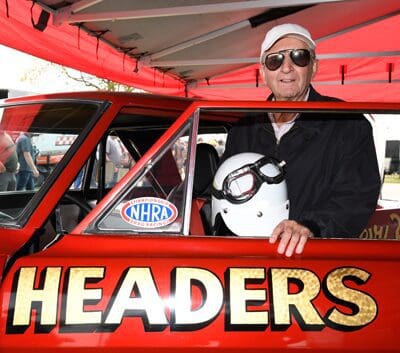 Doug Thorley
1928–2021 Doug Thorley's driving career ranged from a stock '38 Buick to an upset Funny Car Eliminator victory at the US Nationals. But…
Read bio
Class of 1998Presented by Mopar
Doug Thorley
1928–2021 Doug Thorley's driving career ranged from a stock '38 Buick to an upset Funny Car Eliminator victory at the US Nationals. But…
Read bio
Class of 1998Presented by MoparDoug Thorley
Doug Thorley's driving career ranged from a stock '38 Buick to an upset Funny Car Eliminator victory at the US Nationals. But perhaps, when all is said and done, it won't be his own race cars or his driving prowess he will remembered. Throughout the 60s the legend "Headers by Doug" was a true status symbol on the side of any full-bodied drag race car. When racing ended for the winter in the east, the early super stock and FX racers migrated to the west coast, and Thorley's shop on Whittler Boulevard in East LA was literally surrounded by ramp trucks. A few passes in customer cars led Doug to build his first altered wheelbase "Chevy 2 Much" injected four-speed funny car. Its performance and immaculate appearance made it one of the most steadily booked cars on the coast. When the tube-framed flip-top funnies were created, Doug stepped up to an extended nose Corvair entry built by Ronnie Scrima and Pat Forster and powered by a Gary Slusserbuilt blown big block Chevrolet. At the 1967 US Nationals, Doug's unlikely, unsponsored, non-flip top Corvair ran in high sevens consistently and beat several factory backed machines for the title. His 7.69 ET and 192 mph performance was largely responsible for the rapid switch to blowers in the funny car ranks. Doug later built an innovative pair of Javelin- bodied rear-engine funny cars with AMC backing, but when the factory asked him to participate in their Super Stock program he retired from driving. He just couldn't slow down.
Class of 1997
10 inductees-
1997
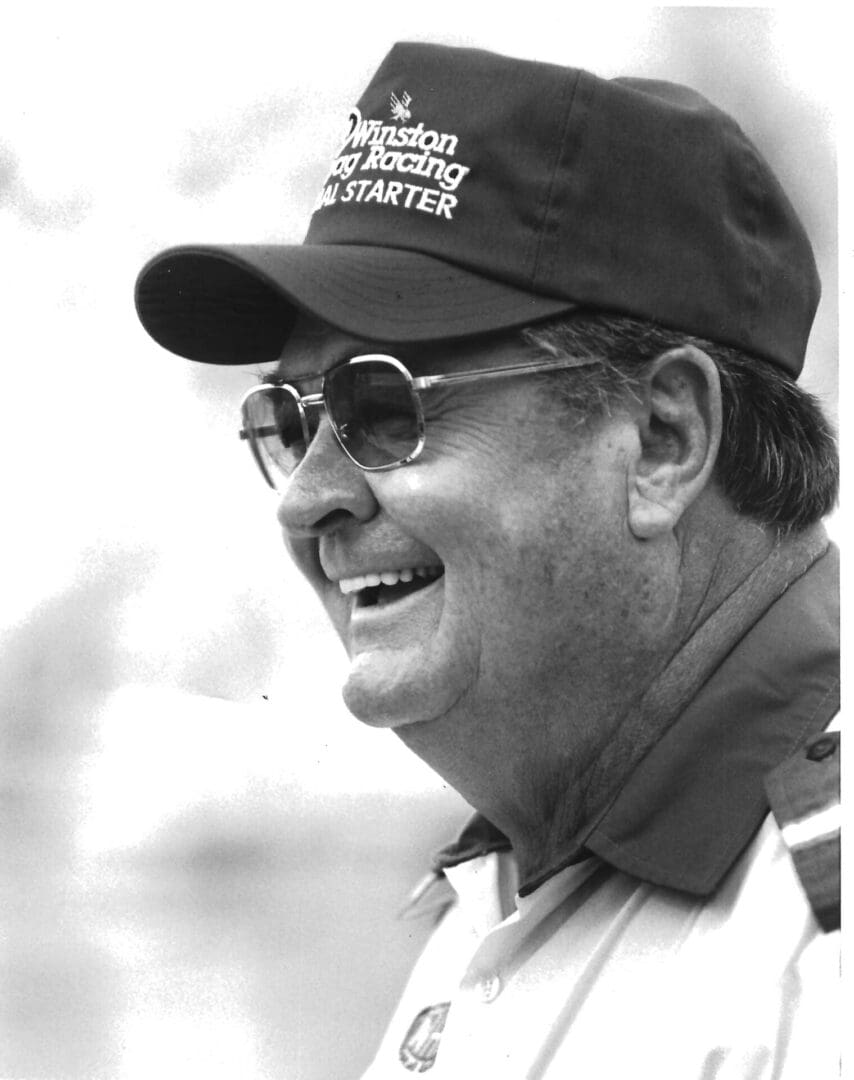 Buster Couch
1935–2002 In his role as official starter Buster was easily the most recognizable and often the most popular NHRA official. In his 32-year…
Read bio
Buster Couch
1935–2002 In his role as official starter Buster was easily the most recognizable and often the most popular NHRA official. In his 32-year…
Read bio
 Class of 1997Presented by Mopar
Buster Couch
In his role as official starter Buster was easily the most recognizable and often the most popular NHRA official. In his 32-year career, Eddie H "Buster" Couch ruled the starting line with an iron fist and a heart of gold. When Buster began his career, races were started with flags and a driver's edge was often maintain by intimidating the starter. With a pro football player's physique, and the demeanor of a Southern Sheriff, that didn't work with Buster. When the Christmas tree electronic starting system replaced the flags, many thought that a colorful part of drag racing was gone forever. But Buster's expressive hand gestures and finger-pointing at those who pushed the envelope of his authority quickly put the notion to rest. It's been estimated that Buster started nearly a million drag races. He ducked (and been hit by) flying parts, had his ear drums assaulted, been coated with tiny flecks of burned rubber, and inhaled enough nitro to float a battleship. He stood between the lanes when Don Garlits broke 250 and 270 mph, and when Kenny Bernstein broke 300 mph. Buster watched during countless battles between archrivals like Garlits versus Muldowney and McEwen versus Prudhomme. He was never afraid to shut off or red light the biggest star when necessary, yet he was nearly brought to tears when they crashed. For 15 years, Buster served as NHRA's Southeast Division Director, but from 1963 through 1995 he was as much a part of drag racing as the pavement itself.
-
1997
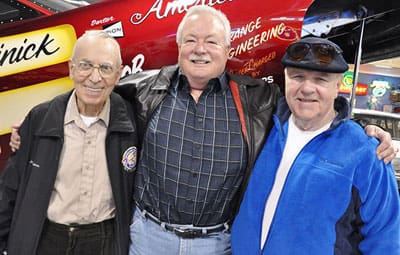 John Farkonas, Austin Coil & Pat Minick
“The Chi-Town Hustler” An ordinary garage on an ordinary alley,on the southwest side Chicago was the unlikely home most successful match raced funny car of…
Read bio
Class of 1997Presented by Mopar
John Farkonas, Austin Coil & Pat Minick
“The Chi-Town Hustler” An ordinary garage on an ordinary alley,on the southwest side Chicago was the unlikely home most successful match raced funny car of…
Read bio
Class of 1997Presented by MoparJohn Farkonas, Austin Coil & Pat Minick
An ordinary garage on an ordinary alley,on the southwest side Chicago was the unlikely home most successful match raced funny car of all time. Originally superstock racers, mechanical engineer John Farkonas and his driver Chicago area policeman Pat Minick were racing and altered wheelbase '65 Plymouth with fellow Mopar racer and line mechanic Austin Coil joinied them to build a tube chassied, fiber glass bodied '67 Barracuda, a car many consider the first, modern supercharged funny car. The unknown team called their car the "Chi-Town Hustler" and towed it to the York US 30 Funny Car Nationals where they set low ET of the meet and a new strip record. The combination of Farkonas' engineering knowledge applied to chassis and body, Coils development of the high compression "big boost" fuel motor, and Minick's prowess as both driver and promoter soon built a reputation. With nearly thirty drag strips within an eight-hour drive, the team could race as frequently as they wanted and still be home in time for work. Early in 1969, the old Barracuda was retired and replaced with a slick new Charger. In August at a marginal 1/8-mile strip in Springfield, Illinois, Coil theorized that softening of the slicks by spinning them through water might improve traction. Minick broke the tires loose and felt so good that he had them all away through the lights; nearly causing a spectator riot. The patented Hustler long, smoky burnout was born. The Charger clinched the UDRA and IHRA championships and dazzled the West Coast and its first appearance. In 1971, Minick left the driver seat, but remained active in the partnership as did Farkonas who had semi-retired. A succession of Hustlers and drivers including Claire Sanders and Ron Colson continued the tradition through the 70s. After 15 years on the match raced circuit, the Chi-Town Hustler, with Frank Hawlwyt at the wheel, won NHRA Winston Funny Car Championship in 1982 and 1983. In 1984 Hustler was retired and Austin coil joined John Force guiding him to several NHRA Funny Car Championship titles.
-
1997
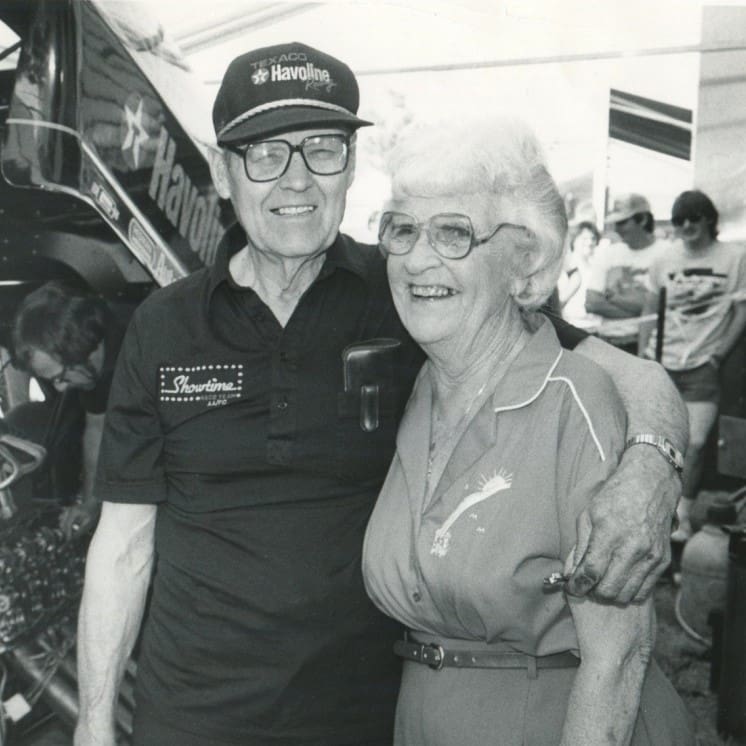 George & Ruth Hoover
All racers with love to have a supportive family, few have had the good fortune enjoyed by Tom Hoover. Tom has been…
Read bio
Class of 1997Presented by Mopar
George & Ruth Hoover
All racers with love to have a supportive family, few have had the good fortune enjoyed by Tom Hoover. Tom has been…
Read bio
Class of 1997Presented by MoparGeorge & Ruth Hoover
All racers with love to have a supportive family, few have had the good fortune enjoyed by Tom Hoover. Tom has been drag racing on a professional level for well over 30 years and his parents have been along for nearly the entire ride. When Tom began his infatuation with cars, his father George worked on them at his Hoover Wheel Alignment shop in Minneapolis, but really didn't pay that much attention. However, when Tom turned up with ex-"Big Wheel" dragster, it aroused the curiosity of this lifelong mechanic. Well into his 50s, the senior Hoover became hooked on drag racing. Tom's mother Ruth, decided that she wasn't going to be left behind and got completely involved in every part of the operation from washing uniforms, filming races, to acting as the team social director. "Ma and Pa Hoover", as they called themselves, pitched in and did whatever it took to get the job done. George established himself as a crew chief and in the late 60s along with Pete Robinson and Connie Kalitta help to develop the Single Overhead Cam Ford for drag racing. Driving the truck, seeing to the crew’s needs, and doing promotional chores were all the things done by "Ma and Pa" at an age when most folks are rocking on the front porch. Married in 1925 George and Ruth were into their 68th year together when Ruth passed away in January 1993. Of course, this was a tremendous blow to the entire Hoover family, but George has worked hard all his life and has simply carried on despite the loss and health problems. At 91 George was still a vital part of the Hoover/Pioneer Funny Car team continuing to travel to most NHRA national events and perform nearly all of Tom's cylinder head and piston/rod work. The Hoovers rate as Minnesota's-if it's not America's-first family of drag racing.
-
1997
 Vance Hunt
Although he had only a brief driving career, Vance Hunt's name became synonymous with Southwest top fuel racing. For years, his cars…
Read bio
Class of 1997Presented by Mopar
Vance Hunt
Although he had only a brief driving career, Vance Hunt's name became synonymous with Southwest top fuel racing. For years, his cars…
Read bio
Class of 1997Presented by MoparVance Hunt
Although he had only a brief driving career, Vance Hunt's name became synonymous with Southwest top fuel racing. For years, his cars bore the legend "Texas quickest and fastest". Beginning in the mid-50s with a stocker followed by a '41 Ford altered, Hunt put the Chrysler out of his coupe into a dragster owned by Ed Mabry which the team raced for several years. In 1960 fuel racing beckoned Hunt but not Maybry, so JL Payne was hired to drive. Together they defeated both Chris Karamesines and Don Garlits for the number one spot on the Drag News Mr. Eliminator list and won the 1962 AHRA Nationals at Green Valley Texas. It was at Green Valley that Hunt and Payne handed the nearly invincible Greer, Black and Prudhomme machine its first defeat. Although a top-notch fuel racer, Hunt never gave up his "real job" at the General Motors plant in Arlington and spent many weekend nights towing across the Southwest to make race dates, often getting home just in time to go to work on Monday morning. Payne left Hunt in 1963 and was replaced by several drivers including the late Ted Arnold, Jerry Ellis, a young Kenny Bernstein, and Watts Samson. In the mid-60s, Hunr once again regained ranking on the Mr. Eliminator list and later even ran both a fuel dragster and funny car for a time. In 1971 Hunts car made the semifinals at the Bakersfield US Fuel and Gas Championship shortly before his retirement from racing.
-
1997
Chris Karamesines
Call him the "Crazy Greek", the "Golden Greek", or simply "The Greek". For nearly forty years these nicknames symbolize one of the…
Read bio
Class of 1997Presented by Mopar
Chris Karamesines
Call him the "Crazy Greek", the "Golden Greek", or simply "The Greek". For nearly forty years these nicknames symbolize one of the most colorful and popular characters in drag racing history. In the days of the front engine tire smoking fuelers, there was no one more fun to watch. As early as 1960, he had established a reputation as a fearless driver. In the days before guardrails he could veer off the strip, get back in the groove and often still beat his opponent. Sideways at 180 or powering out of a wheelstand in one of his famous "Chizlers", it was all the same to the Greek. His first major victory came at the 1959 AHRA Nationals in Great Bend Kansas. Along with Don Garlits and Tommy Ivo, he pioneered the concept of the touring professional drag racer. On April 24, 1960, Chris stood the drag racing world on its ear when he was credited with a 204.54 mph pass at Alton, Illinois. Controversial to be sure, coming years before consistent 200 mph times, nonetheless it cemented the Greek's name in history. Drag racing rose to a new level of recognition when the 204 mph Chizler was enshrined in the Chicago Museum of Science and Industry for many years before moving to its permanent home at the Museum of Drag Racing. In the 1960s and 70s Karamesines was known as the Admiral of the "Greek Fleet", a loosely knit group of such colorful touring racers as John Weibe, Bob Creitz, Don Cook, and Jim Nicoll. After over 30 years of match racing and running IHRA and AHRA races, Karamesines actively pursued the 1990 NHRA Winston Point chase. Two runner-up finishes, that year, proved he still had the drive to win.
-
1997
Art Malone
1936–2013 When Art Malone visited his lifelong friend Don Garlits in the hospital in 1959, Art offered to drive his dragster, and his…
Read bio
Class of 1997Presented by Mopar
Art Malone
When Art Malone visited his lifelong friend Don Garlits in the hospital in 1959, Art offered to drive his dragster, and his life changed forever. Having only experience in circle track stock-car racing, Malone was immediately tagged "The Green Kid '' byKid" by Hall of Famer Setto Postoian (the same man who named Garlits the "Swap Rat"). Green or not, he quickly established that he had what it took, and spent the next two years learning drag racing from his old friend. But, Art Malone cannot be defined by drag racing alone. In 1961, became the first man to lap the Daytona International Speedway at over 180 mph. Driving a blown Chrysler powered wing equipped Indy roadster, he became the world's closed course record holder at 181.561 mph. By 1963, he had been dubbed "The Colonel'' by Ed Iskenderian, was number one on the Drag News Mr. Eliminator list, runner-upped to Garlits at the NHRA Winternationals, won the Bakersfield Fuel and Gas Championships, the AHRA Nationals, and drove one of the fabled NOVI V-8's in the Indianapolis 500. As he put it so simply to Garlits: "They've all got four wheels and an engine". Eventually, he finished eleventh at Indy, drove on the USAC Championship Trail, he owned a series of fuel dragsters, several oval track stockers, a gas dragster, a drag boat, a funny car, and a jet dragster before retiring from driving in 1975. In 1984, Garlits and Malone were reunited as a drag racing team, taking Swap Rat 26 out of the Garlits Museum to win the NHRA US Nationals and NHRA World Finals, launching one of the greatest comebacks in auto racing history.
-
1997
Frank Pedregon
1940–1981 Although he was almost exclusively a local Southern California racer, nearly every fan of drag racing in the 1960s helped the legend…
Read bio
Class of 1997Presented by Mopar
Frank Pedregon
Although he was almost exclusively a local Southern California racer, nearly every fan of drag racing in the 1960s helped the legend of "Flamin Frank" Pedregon. Frank's "Taco Taster" competition coupe (actually a fuel dragster thinly disguised with a radically chopped Fiat body) would often produce flames completely filling the rear wheel wells and surrounding the slicks in a ring of fire as the Chrysler powered coupe thundered down the strip at Lions or San Fernando. Showmanship was coming into the sport and eventually gas and other additives were used to produce spectacular "fire burnouts". Pedregon apparently used no chemicals and often produced fire nearly the entire length of the strip. Frank was not just a showman but a hard racer on a limited budget. He built his own engines, chassis, and even the trailers they were hauled on. Fiercely proud of his Mexican ancestry, he billed himself as "The World's Fastest Mexican" and wore t-shirts advertising "Genuine Mexican Parts". The flames, he claimed, were caused by "just good old Mexican horsepower". He later teamed up to drive Joe Winter's top fuel dragster, but with Winter's health began to fail and he eventually lost his battle with cancer, Frank lost his desire to race. Pedregon subsequently lost his life in a private plane crash but left the sport a tremendous legacy of three fine racers in their own right: Frank Jr, Cruz, and Tony Pedregon.
-
1997
Shirley Shahan
When Shirley Shahan won the Stock Eliminator title at the 1966 Winternationals, she became the first woman to ever win a NHRA…
Read bio
Class of 1997Presented by Mopar
Shirley Shahan
When Shirley Shahan won the Stock Eliminator title at the 1966 Winternationals, she became the first woman to ever win a NHRA National event. This pioneering effort made it possible for her to become the first professional drag racer. She had married HL Shahan at seventeen and accompanied him to race his '58 Chevy. She learned to handle stick shift well enough in her street racing days that she won the Super Stock class at the first Bakersfield US Fuel and Gas Championships in 1959. In 1963 "H" bought a Z-11 aluminum bodied 427 Chevy and Shirley became the regular driver. In 1965, with some backing from Chrysler, they bought the Plymouth Super Stocker which "H" maintained along with Butch Leal's altered wheelbase machine. Sam Petock, the Plymouth Public Relations Director, came up with the "Drag-On-Lady" title that stuck throughout her career. They did well enough racing the Plymouth that Shirley was able to quit her job and tour the country for four years, running in Super Stock. In 1969 she was offered a factory AMC Super Stock deal and eventually a Pro Stocker when that class was created. In late 1972, then husband, HL, put together a circle track program that was more profitable than the AMC deal, effectively ending Shirley's driving career.
-
1997
Bob Skinner, Tom Jobe and Mike Sorokin
“The Surfers” In early 1964, when a trio of young guys wearing shaggy hair, Pendleton shirts, and deck tennies unloaded their brand-new fuel dragster…
Read bio
Class of 1997Presented by Mopar
Bob Skinner, Tom Jobe and Mike Sorokin
In early 1964, when a trio of young guys wearing shaggy hair, Pendleton shirts, and deck tennies unloaded their brand-new fuel dragster at Lions Dragstrip, old-timer Don Madden immediately branded them "The Surfers". Looking like they just stepped off a Beach Boys album cover, using a yellow and white '55 Chevy tow car with a good luck twig on the hood ornament, that nickname was a natural. They didn't win much at first, but the cackle of their Chrysler made it obvious to anyone that someday this would be a team to reckon with. In just over two years, the trio of Bob Skinner, Tom Jobe, and driver Mike Sorokin (who lived on their race cars winnings while attending college) had established themselves as perhaps the greatest and most popular independent team in top fuel history. After winning top fuel purses at all the southern Californian tracks in 1964 and 1965, including Mickey Thompson's $2500 "200 MPH Club”, the Surfers were able to defeat a field of 102 fuelers at the 1966 Bakersfield March Meet. The team would bank $5560 to set a world record 7.34 second ET. They were short on money but long on talent, and their outlook on racing was definitely refreshing. They had apparently learned the secret to running straight nitro because, engineering student Jobe reasoned, "we were tired of replacing those expensive hydrometers". Their first engine lasted a year "because it had to". Their car had a 157" wheelbase because "that's what would fit in the garage". In the summer of 1966, they toured successfully from coast-to-coast and once even at two different match races at the same track on the same day. That fall, having had their day in the sun, Skinner and Jobe put everything up for sale. Sorokin lost his life in a top fuel clutch explosion and crash at Orange County in December 1967.
-
1997
Fred Stone, Tim Woods and Doug Cook
In the early 1960s, the supercharged gas coupes were a drag racing attraction as popular as funny cars are today. Anyone who…
Read bio
Class of 1997Presented by Mopar
Fred Stone, Tim Woods and Doug Cook
In the early 1960s, the supercharged gas coupes were a drag racing attraction as popular as funny cars are today. Anyone who ever saw and heard one of the little prewar coupes with the blower scoop sticking through the hood will never forget them. Arguably, the most famous of them all was the '41 Willys coupe campaign by the team of Fred Stone, Tim Woods, and Doug "Cookie" Cook. Tim Woods, a successful Los Angeles building contractor, raced a series of Oldsmobiles from the infancy of organized drag racing at Santa Ana. In 1960, when the trend to smaller and lighter cars began, Tim built his coupe in partnership with Fred Stone, another LA businessman with whom he often worked. When their driver, KS Pittman, chose to develop his time to his own Willys, Woods recruited Jesse Duglas Cook who had been driving his own gasser's. One of the most famous teams in drag racing history was formed in time for the 1961 US Nationals. Tim was the principal owner and acted as manager (although his son Leonard's name appeared on the car), and his Willys was the first to break into the ten and nine second brackets, and the first over 150 mph. The tough competition in the class led to a series of (sometimes) humorous ads in the trade papers which became known as the "Gasser Wars". Stone placed the ads and acted as publicity agent for the team. The ads were great promotional tools and led to the match races from coast-to-coast until funny cars began to steal the limelight. The car was so well promoted that most people were surprised to find that Stone and Woods were one of the few black teens in drag racing. To them it wasn't an issue; they were more interested in racing and winning. In 1967 the team built a Mustang funny car which Doug crashed at Alton, Illinois in September, ending his driving career. Funny cars continued to be raced under the Stone, Woods and Cook name until 1972. Fred Stone was in the import export business when he died in England in 1982. Tim Woods was retired when he died in October 1995. Doug Cook Would go on to build engines and wrench on son Mike's near 300 MPH Bonneville Thunderbird.
Class of 1996
10 inductees-
1996
Scotty Fenn
1920–1982 Fenn's Chassis Research was the first firm to manufacturer dragsters on a production line basis. While residing in Oklahoma in 1955, Scotty…
Read bio
Class of 1996Presented by Mopar
Scotty Fenn
Fenn's Chassis Research was the first firm to manufacturer dragsters on a production line basis. While residing in Oklahoma in 1955, Scotty fabricated two chassis, one of which was later sold to Cook and Bedwell. Fenn was a proponent of the short wheel base. Either complete or in kit form, he sold hundreds of chassis denominated as K-88, TE-440, and LW-106s. Leonard Harris won the 1960 NHRA Nationals in a Chassis Research machine and Fenn remain the leading commercial chassis fabricator until Superseded by fellow Hall Of Famer Kent Fuller.
-
1996
 Kent Fuller
1934–2023 Fenn's Chassis Research was the first firm to manufacturer dragsters on a production line basis. While residing in Oklahoma in 1955, Scotty…
Read bio
Class of 1996Presented by Mopar
Kent Fuller
1934–2023 Fenn's Chassis Research was the first firm to manufacturer dragsters on a production line basis. While residing in Oklahoma in 1955, Scotty…
Read bio
Class of 1996Presented by MoparKent Fuller
Fenn's Chassis Research was the first firm to manufacturer dragsters on a production line basis. While residing in Oklahoma in 1955, Scotty fabricated two chassis, one of which was later sold to Cook and Bedwell. Fenn was a proponent of the short wheel base. Either complete or in kit form, he sold hundreds of chassis denominated as K-88, TE-440, and LW-106s. Leonard Harris won the 1960 NHRA Nationals in a Chassis Research machine and Fenn remain the leading commercial chassis fabricator until Superseded by fellow Hall Of Famer Kent Fuller.
-
1996
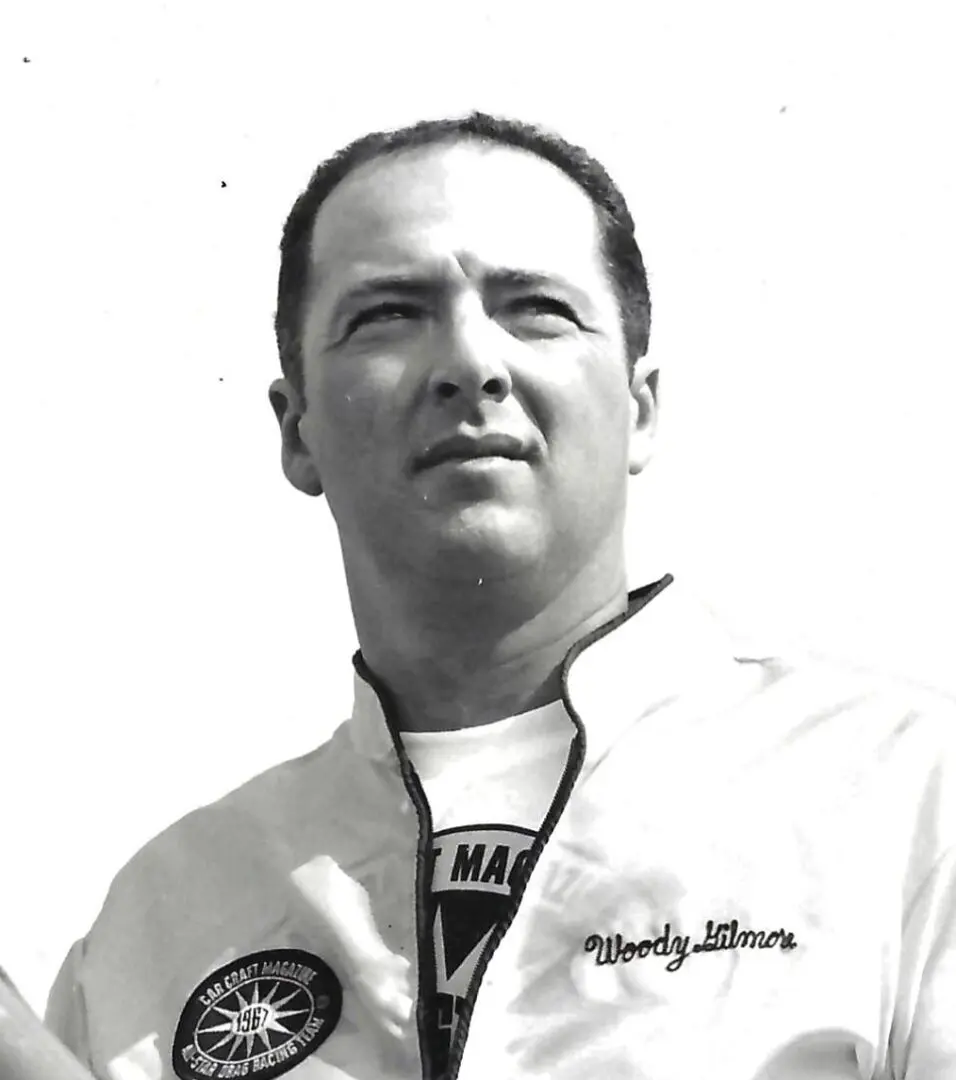 Woody Gilmore
1933–2020 Woody learned the art of chassis fabrication in the Southern California aircraft industry. Although his initial frames were rigid like Fullers, he…
Read bio
Woody Gilmore
1933–2020 Woody learned the art of chassis fabrication in the Southern California aircraft industry. Although his initial frames were rigid like Fullers, he…
Read bio
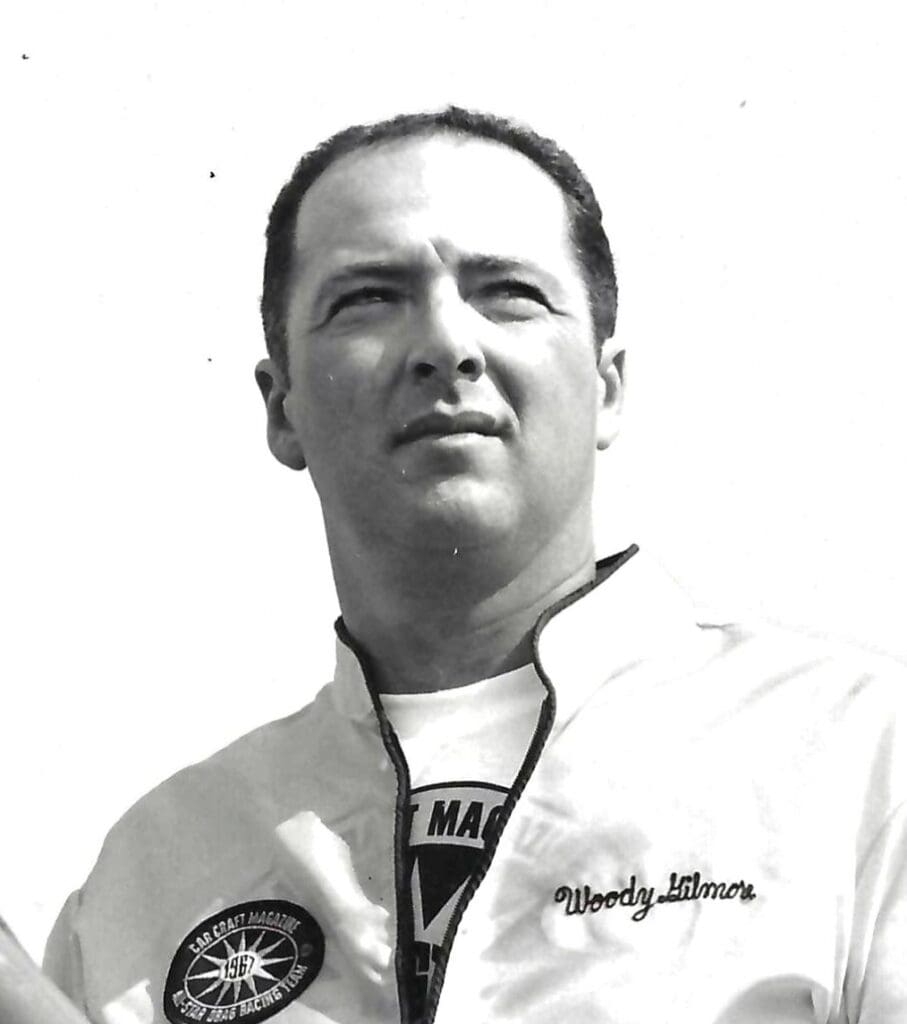 Class of 1996Presented by Mopar
Woody Gilmore
Woody learned the art of chassis fabrication in the Southern California aircraft industry. Although his initial frames were rigid like Fullers, he would become the foremost exponent on flexibility. His firm, Race Car Engineering, eventually built hundreds of "flexie flyers" for customers California and across the country. In the mid-60s, there were events in which virtually the entire field was made up of "Woody" chassis. Gilmore also collaborated with Jocko Johnson in the development of a fully streamlined slingshot dragster. Woody also built (for Jim Dunn) the only mid-engine funny car ever to win a major event.
-
1996
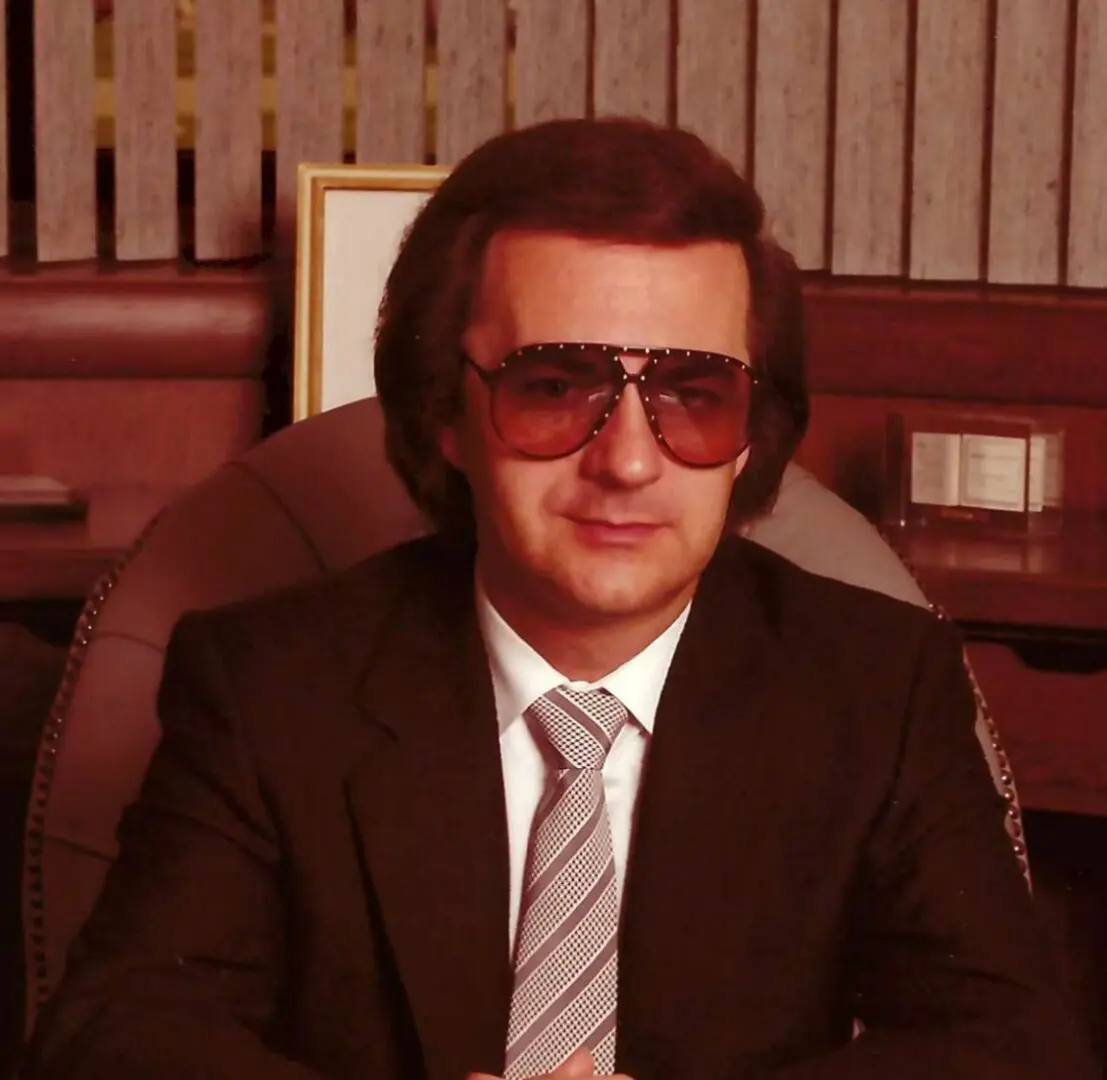 Joe Hrudka
Joe began racing in the 50s driving a coupe Midwest. After encountering the same gasket problem everyone else was facing, he had…
Read bio
Joe Hrudka
Joe began racing in the 50s driving a coupe Midwest. After encountering the same gasket problem everyone else was facing, he had…
Read bio
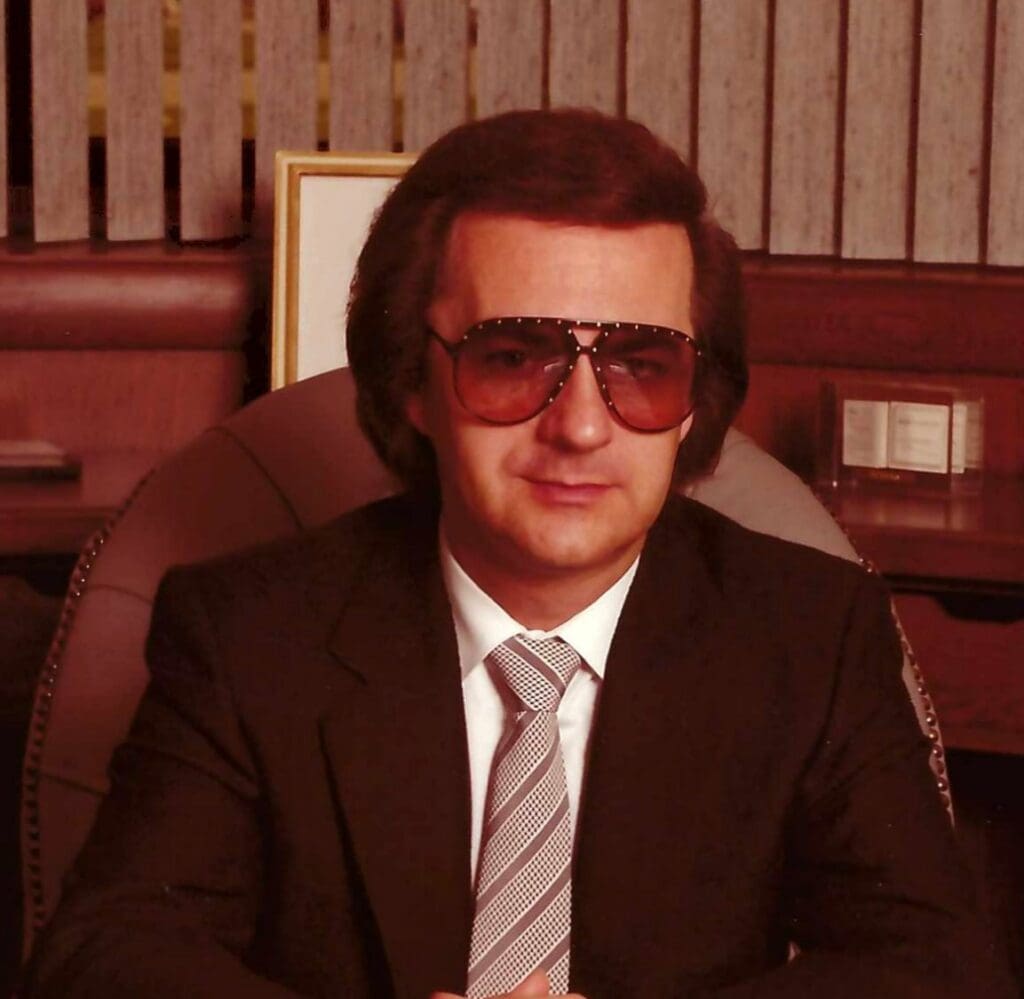 Class of 1996Presented by Mopar
Joe Hrudka
Joe began racing in the 50s driving a coupe Midwest. After encountering the same gasket problem everyone else was facing, he had a few special compound caskets made. Before long, other racers were having Joe get these gaskets made for them. He sold the gaskets out of his car at the races soon Mr. Gasket. Mr. Gasket was one of the first companies to have a support rig at the races, working on everything from clutches to suspension parts. Joe and his companies would continue to develop equipment that has provided greater performance and safety for all forms of racing.
-
1996
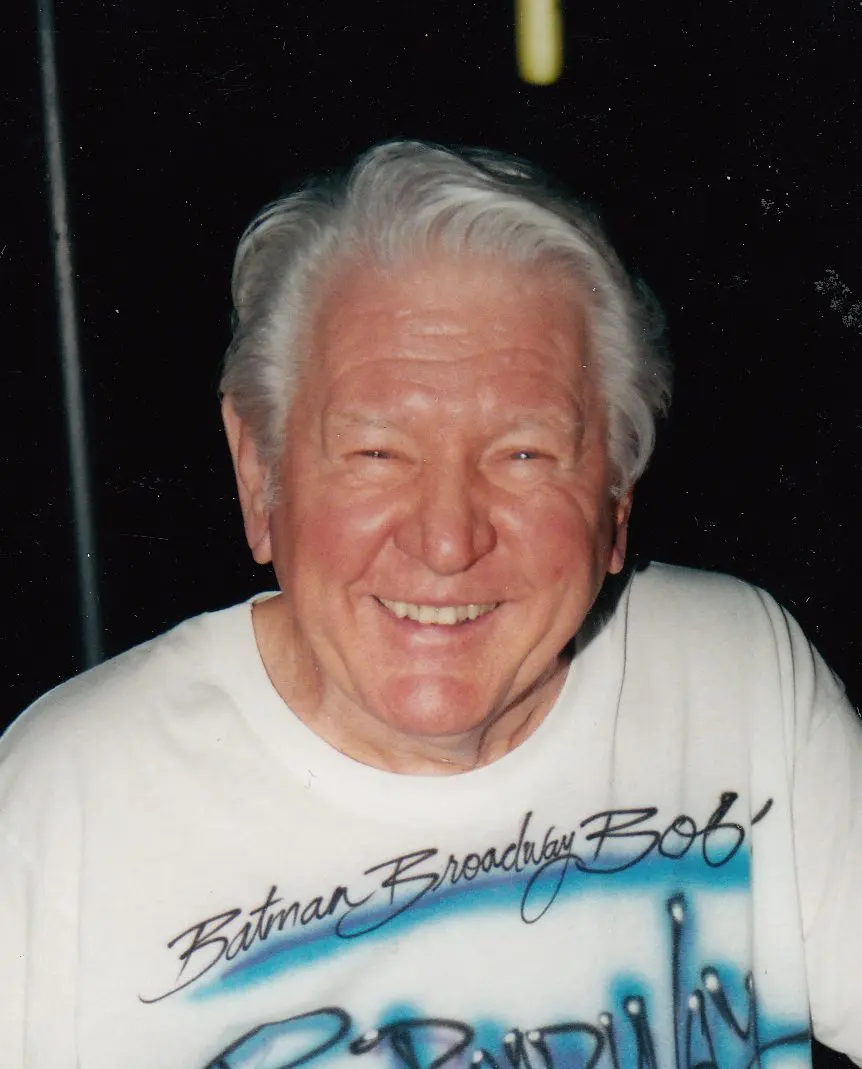 Bob Metzler
1928–2012 No single promoter in the history of the sport is better known for their outrageous and original drag shows. Every new exhibition…
Read bio
Bob Metzler
1928–2012 No single promoter in the history of the sport is better known for their outrageous and original drag shows. Every new exhibition…
Read bio
 Class of 1996Presented by Mopar
Bob Metzler
No single promoter in the history of the sport is better known for their outrageous and original drag shows. Every new exhibition vehicle as well as fuel, funny, and jet car owners knew that to get a good start and a sure booking, one call to Broadway Bob was the key. Bob is best known for his Olympics of Drag Racing show staged over the Memorial Day weekend each year. Ever the "fan's man", this colorful and innovative promoter made Great Lakes Dragway a Midwest racing mecca. Broadway Bob's shows at Union Grove are always ones to remember.
-
1996
 Jim Nelson
1927–2012 "Jazzy" was a dry lakes competitor before World War II, then for three years in the mid-50s campaigned a Fiat coupe that…
Read bio
Jim Nelson
1927–2012 "Jazzy" was a dry lakes competitor before World War II, then for three years in the mid-50s campaigned a Fiat coupe that…
Read bio
 Class of 1996Presented by Mopar
Jim Nelson
"Jazzy" was a dry lakes competitor before World War II, then for three years in the mid-50s campaigned a Fiat coupe that was among the most memorable drag machines of its era. Thanks to trick pieces, such as a billet stroker, he was able to remain competitive with the OHV machines longer than any other flathead. His Topolino was credited with being the first to the 10 seconds. At the first NHRA Nationals in 1955, Nelson's ET was eclipsed only by Lloyd Scott's Bustle Bomb. Before retiring, Jazzy campaigned a unique side-by-side twin flathead dragster.
-
1996
 Jimmy Nix
1938–1994 If there was ever a drag racer who never lost his passion for the sport, it was Jimmy Nix. Jimmy was doing…
Read bio
Jimmy Nix
1938–1994 If there was ever a drag racer who never lost his passion for the sport, it was Jimmy Nix. Jimmy was doing…
Read bio
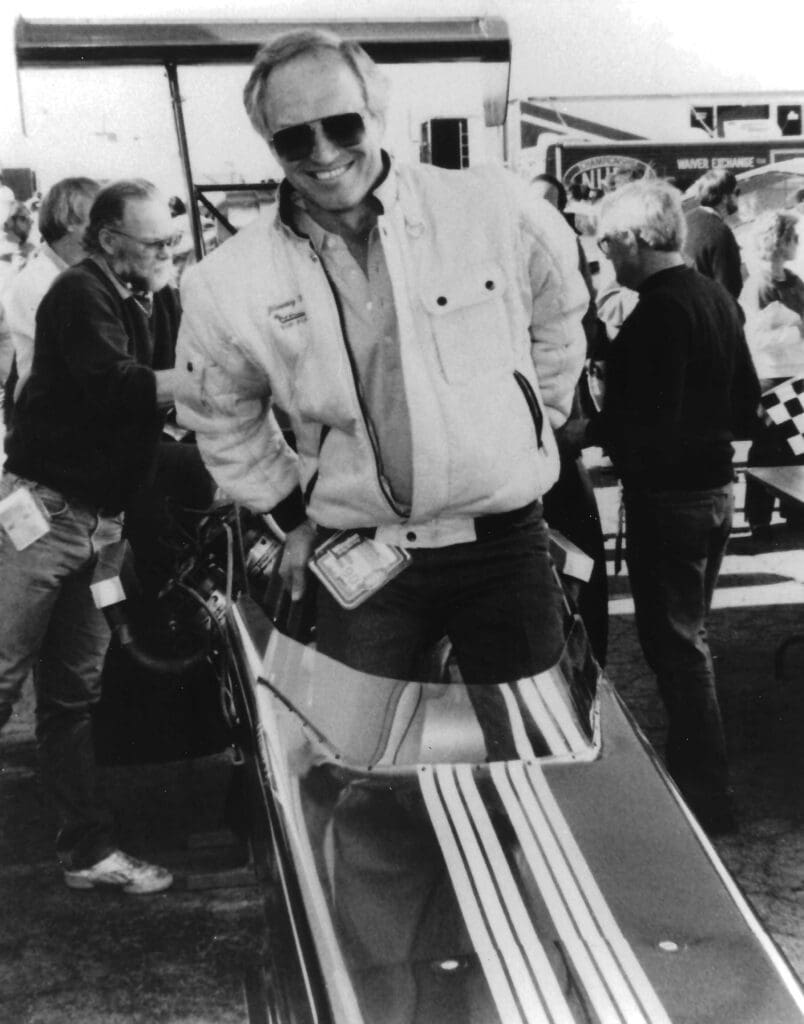 Class of 1996Presented by Mopar
Jimmy Nix
If there was ever a drag racer who never lost his passion for the sport, it was Jimmy Nix. Jimmy was doing what he loved to do most-race fast cars. He adapted to every transition the sport encountered. In his final seasons, he was always among the quickest and fastest top fuel contestants, without major corporate backing. During his career, Nix set records for different classes: top fuel, top gas, A/Gas dragster, and Super Factory Experimental. He won numerous individual events, including the 1965 NHRA Winternationals and the 1966 NHRA Springnationals. In 1965 he pushed the top fuel mph record to 208.32 and, 25 years later, became the 11th driver to join Top Fuel Four Second Club.
-
1996
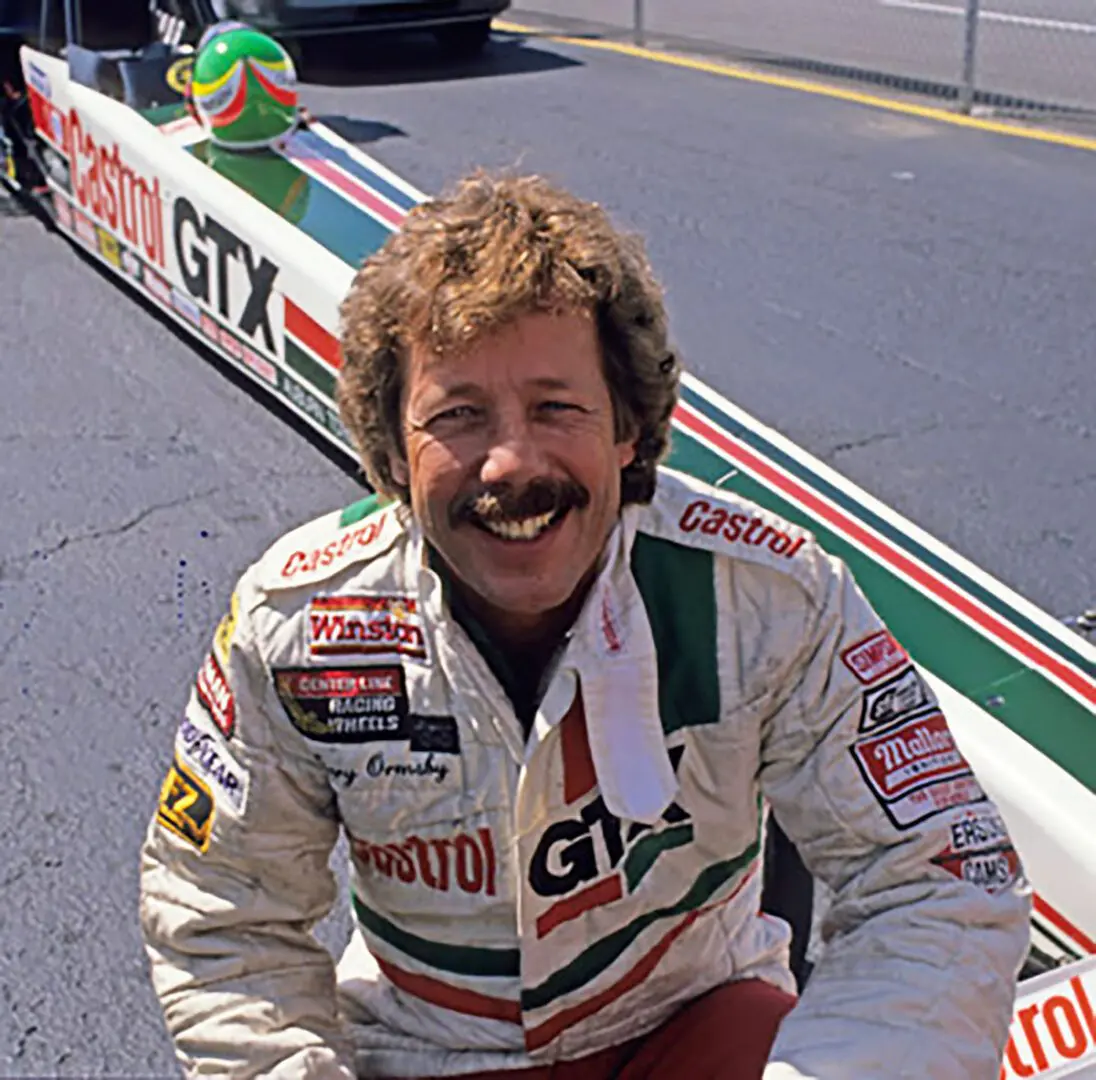 Gary Ormsby
1941–1991 Gary started racing top-fuel dragsters in the early 60s. After years of racing with the "Sacramento Bunch", Gary was able to set…
Read bio
Gary Ormsby
1941–1991 Gary started racing top-fuel dragsters in the early 60s. After years of racing with the "Sacramento Bunch", Gary was able to set…
Read bio
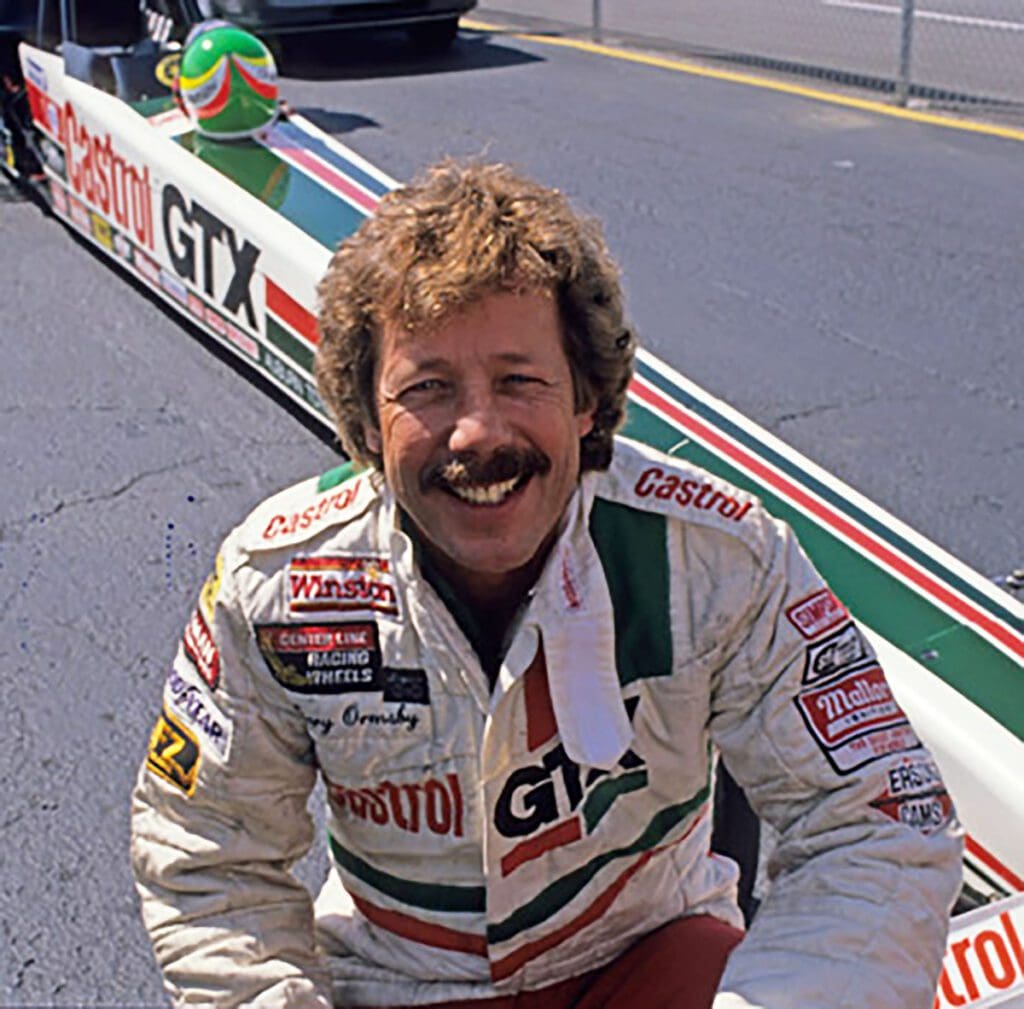 Class of 1996Presented by Mopar
Gary Ormsby
Gary started racing top-fuel dragsters in the early 60s. After years of racing with the "Sacramento Bunch", Gary was able to set up with some money from his own business interests and then added sponsorships that put into practice some of his ideas. Of all his ideas, he is probably best remembered for his streamlining concepts which came to reality in 1984. Though the Castrol streamliner did not perform to expectations, it generated tremendous exposure for his sponsors and the sport as a whole. In 1989, he ran history's quickest ET 4.91 seconds, fastest speed 294.88 mph, and a record-tying six NHRA events en route to the 1989 NHRA World Championship. Gary would win his last NHRA event on May 19, 1991. Sadly, he would lose the battle with cancer in August 1991.
-
1996
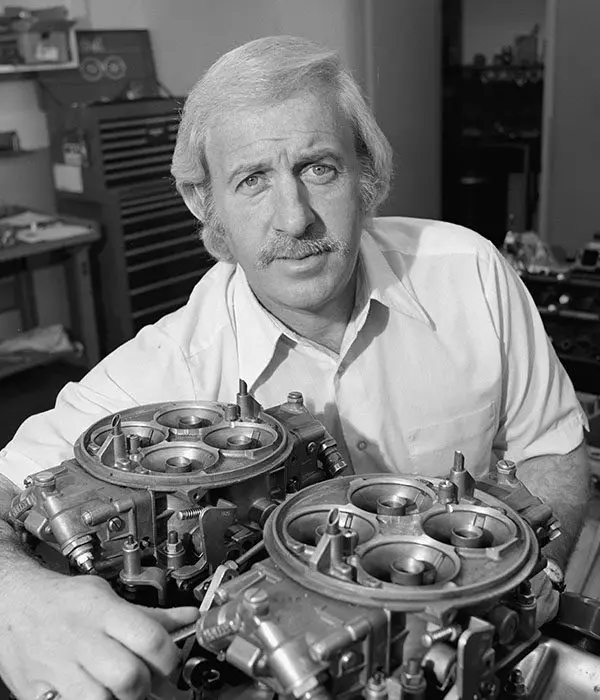 Ed Pink
1931–2025 Fellow Hall of Fame Lou Baney gets the credit for hooking the talented Ed Pink into drag racing. After running a dry…
Read bio
Class of 1996Presented by Mopar
Ed Pink
1931–2025 Fellow Hall of Fame Lou Baney gets the credit for hooking the talented Ed Pink into drag racing. After running a dry…
Read bio
Class of 1996Presented by MoparEd Pink
Fellow Hall of Fame Lou Baney gets the credit for hooking the talented Ed Pink into drag racing. After running a dry lakes car at El Mirage, became involved in drag racing in 1953. Ed has been responsible for many of the innovations in auto racing for over 30 years. One of his early successes was working with Ford on a new 427 CID/SOHC drag engine. It became the most powerful and winning engine in the top fuel dragster and funny car classes in the mid-60s. Prudhomme's six-second suite of the 1967 Springnationals and Barry Seltzer's 6.4 seconds funny car were the highlights of the project. Ed's engines and components dominated funny car for years, with legends Prudhomme, Schumacher, McCulloch, and Beadle as customers. Pink's Van Nuys shop is instrumental in developing power plants for in the indy/CART, USAC, and IMSA among others.
-
1996
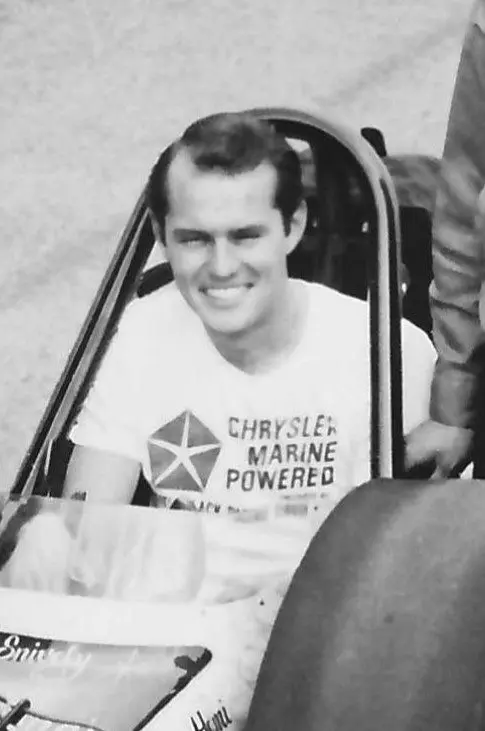 Mike Snively
1943–1974 Mike was one of the most naturally gifted drivers to pilot a fuel dragster or funny car. Starting at a somewhat modest…
Read bio
Class of 1996Presented by Mopar
Mike Snively
1943–1974 Mike was one of the most naturally gifted drivers to pilot a fuel dragster or funny car. Starting at a somewhat modest…
Read bio
Class of 1996Presented by MoparMike Snively
Mike was one of the most naturally gifted drivers to pilot a fuel dragster or funny car. Starting at a somewhat modest level in the early 60s, Snively drove the Scotty's Muffler Special small block entry to many local wins. A brief stint in the Sandoval Brothers top fuel machine led to the progression into Ed Pink's "Old Master", Roland Leong's "Hawaiian", and ultimately to "Diamond Jim" fuel and funny car machines of Jim Annin. His 5.97 in Annin's car at the NHRA Supernationals in Ontario is widely accepted as the first official five second run at an NHRA event. Mike was gifted fabricator and served as a key member of Black's operation until his premature passing in 1974.
Class of 1995
5 inductees-
1995
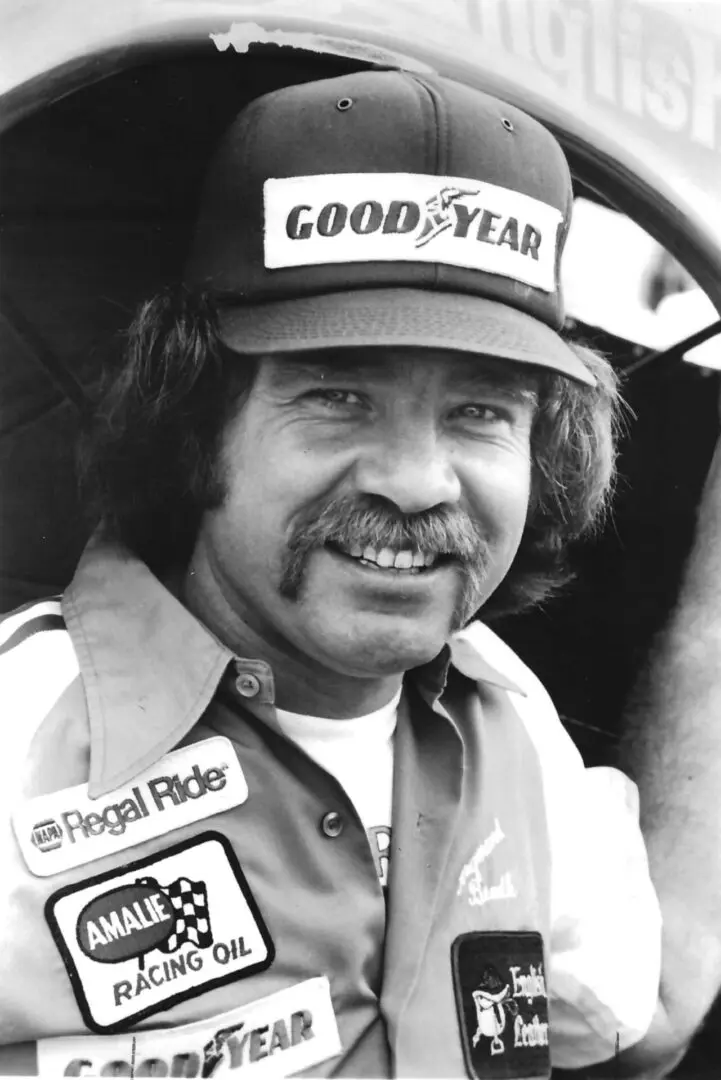 Raymond Beadle
1943–2014 Raymond, one of drag racing's most popular drivers, won three consecutive Winston world Championships from 1979-1981. A graduate of Texas Tech University,…
Read bio
Raymond Beadle
1943–2014 Raymond, one of drag racing's most popular drivers, won three consecutive Winston world Championships from 1979-1981. A graduate of Texas Tech University,…
Read bio
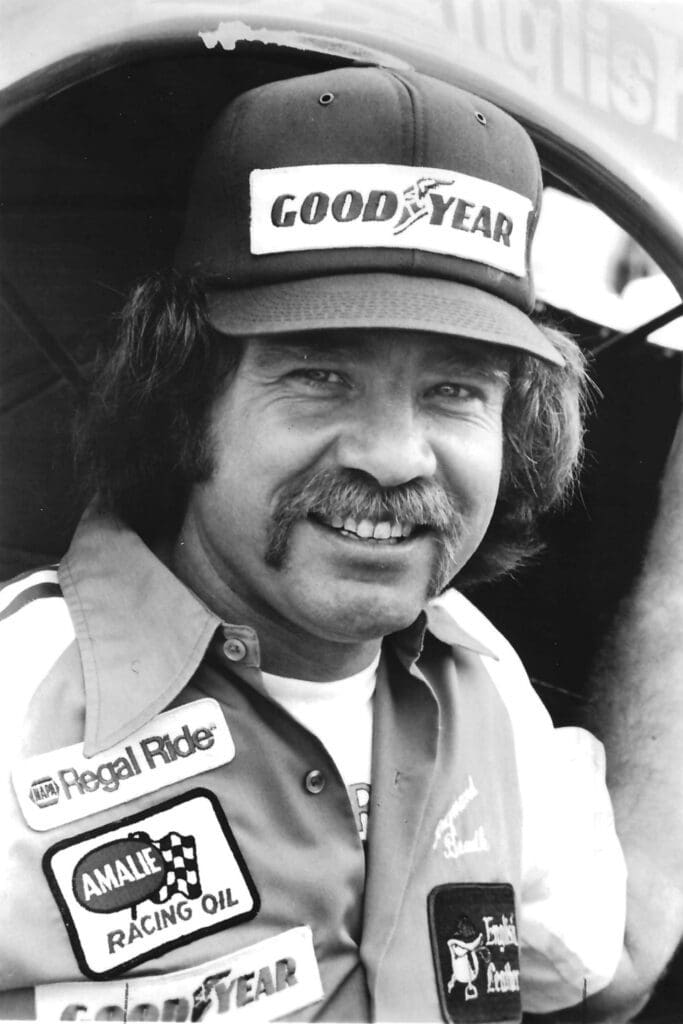 Class of 1995Presented by Mopar
Raymond Beadle
Raymond, one of drag racing's most popular drivers, won three consecutive Winston world Championships from 1979-1981. A graduate of Texas Tech University, Beadle started his drag racing career driving a top fuel dragster at weekend races in Texas. The lure of professional racing encouraged him to quit his job with the Texas Department of Agriculture in 1974 and devote his full-time energy to racing. He drove a car owned by Don Schumacher, who retired the following year. Beadle and fellow Texan Harry Schmitt then formed a partnership, with Raymond at the controls of Schmitt’s “Blue Max". In 1976, Beadle bought Schmitt's part of the business and set a goal of winning a world championship Beadle’s determination to win came to the limelight in 1978 , his worst season of racing, when his car destroyed more than $200,000 with the parts before a faulty ventilation system in the fuel tank was discovered. He won the Winston World Finals to end that season. The next three seasons Beadle won the world championship knocking Don Prudhomme from being the Funny Car Champion since 1975.
-
1995
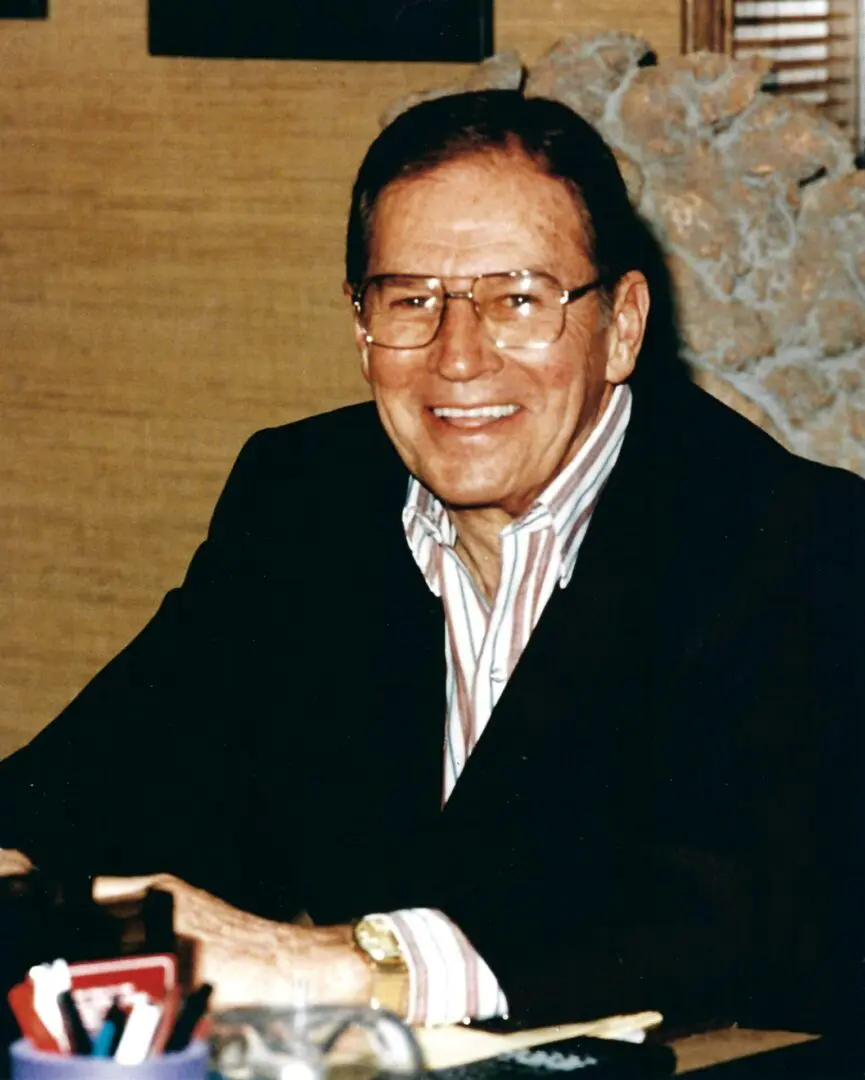 Larry Carrier
1922–2005 Carrier founded and served as President of the International Drag Racing Association from 1970 through 1987. He was responsible for influencing R.J.…
Read bio
Larry Carrier
1922–2005 Carrier founded and served as President of the International Drag Racing Association from 1970 through 1987. He was responsible for influencing R.J.…
Read bio
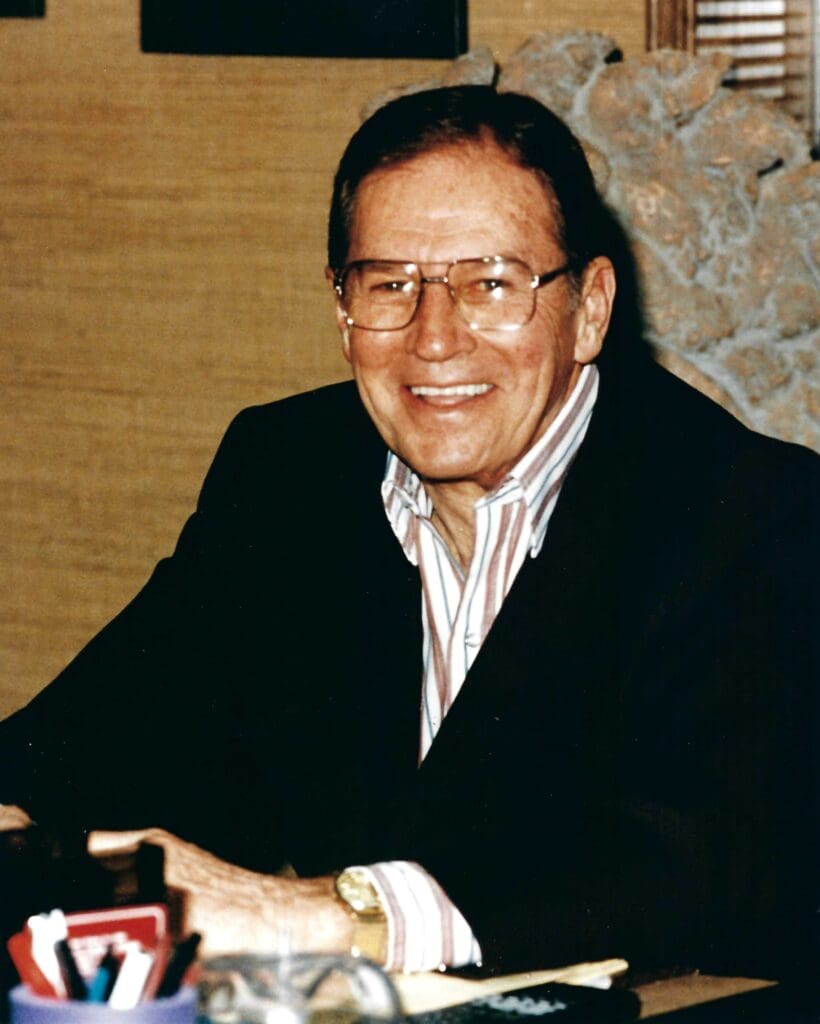 Class of 1995Presented by Mopar
Larry Carrier
Carrier founded and served as President of the International Drag Racing Association from 1970 through 1987. He was responsible for influencing R.J. Reynolds (Winston) to become heavily involved in professional drag racing because of his longtime friendship with Ralph Seagraves and his association with NASCAR. During his tenure as IHRA president, the IHRA introduced a multitude of original concepts that are still used today such as: preschedule pro qualifying sessions with alternating lanes, free admission for professional entries, cable television coverage of drag events (ESPN was introduced to the drag racing circuit), titanium bellhousings fuel cars, blower restraints for supercharged cars, and "Mountain Motor" pro stock engines. Larry was inducted into the Tennessee Sports Hall of Fame because of his outstanding contributions to both drag racing and NASCAR racing.
-
1995
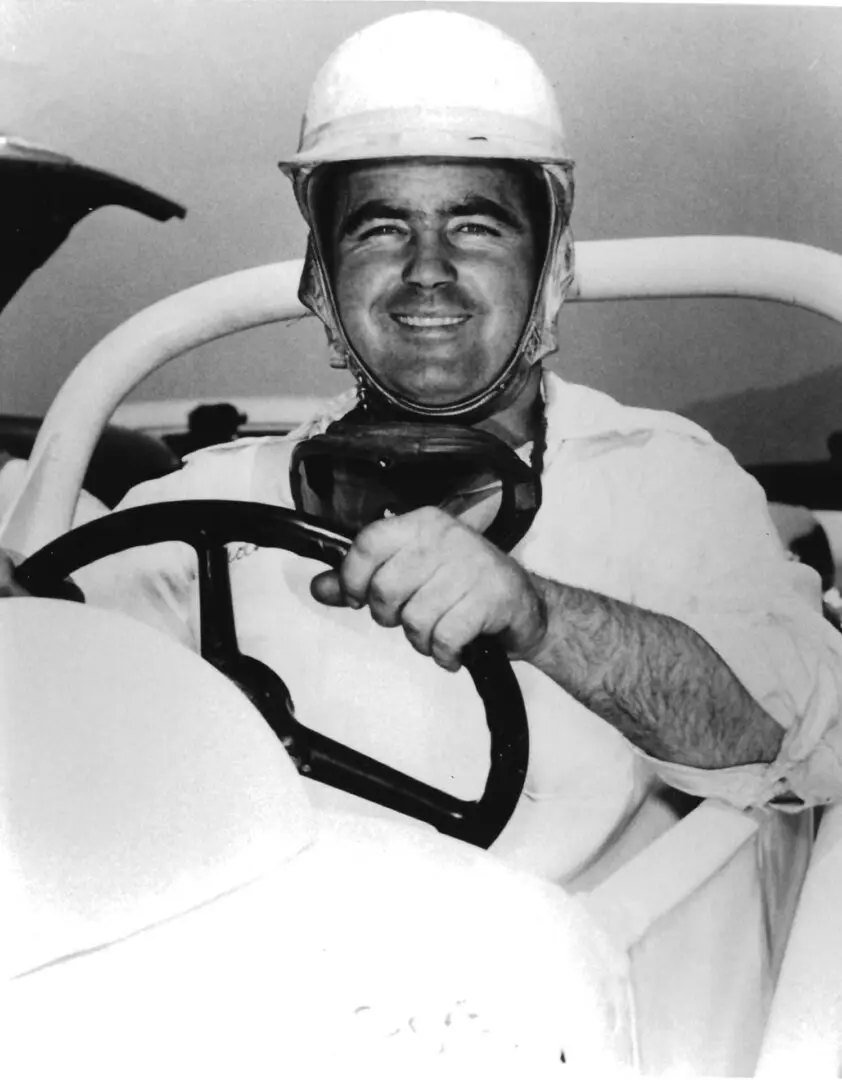 Ted Cyr
1929–2008 One of the true Southern California drag racing pioneers, Ted raced virtually every type of car of the 50s and 60s eras.…
Read bio
Ted Cyr
1929–2008 One of the true Southern California drag racing pioneers, Ted raced virtually every type of car of the 50s and 60s eras.…
Read bio
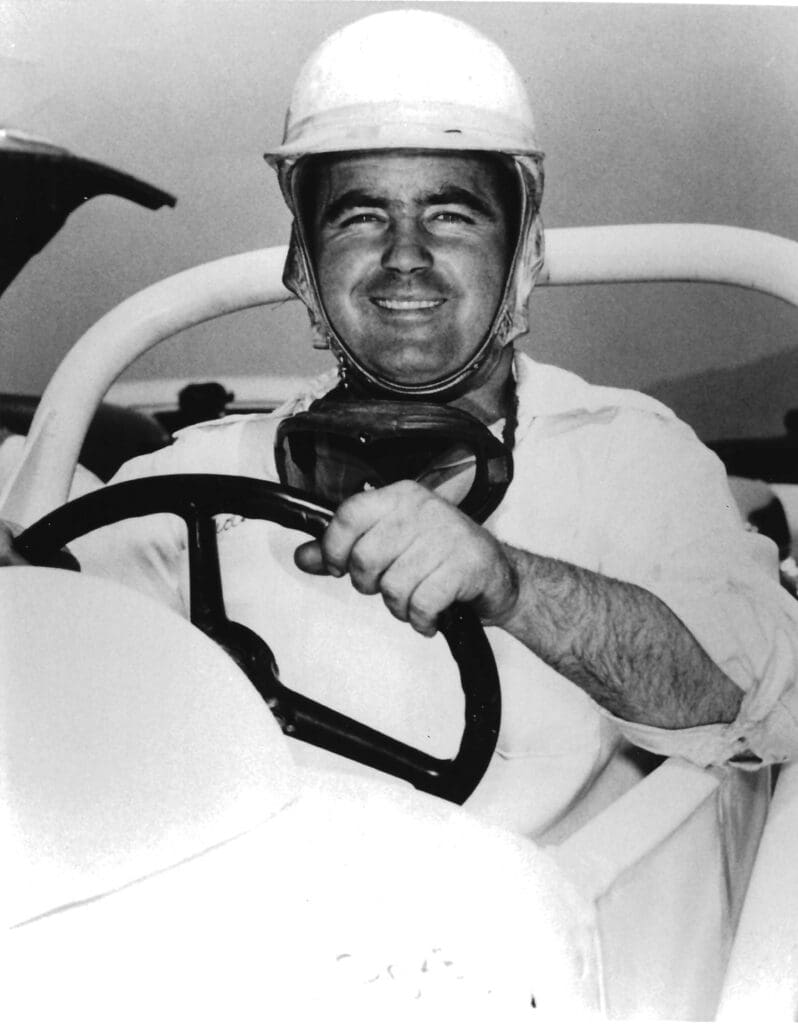 Class of 1995Presented by Mopar
Ted Cyr
One of the true Southern California drag racing pioneers, Ted raced virtually every type of car of the 50s and 60s eras. As much mechanic and driver,Cyr thrived on innovation and trying unusual approaches. He campaigned gas and fuel dragsters with Chevy, Olds, Chrysler, and Lincoln engines. Ted ran front-engine, rear-engine, and "Sidewinder" type cars with incredible success. In 1958, Ted went for on an amazing nine-month Undefeated streak, often racing to events per week. As part of the famed Cyr and Hopper team, his biggest individual victories came at the 1958 NHRA US Nationals and the 1960 US Fuel Gas Championship in Bakersfield. After retiring from the sport for approximately two years, he returned as a partner in the Cyr & Schofield top fuel team for four years.
-
1995
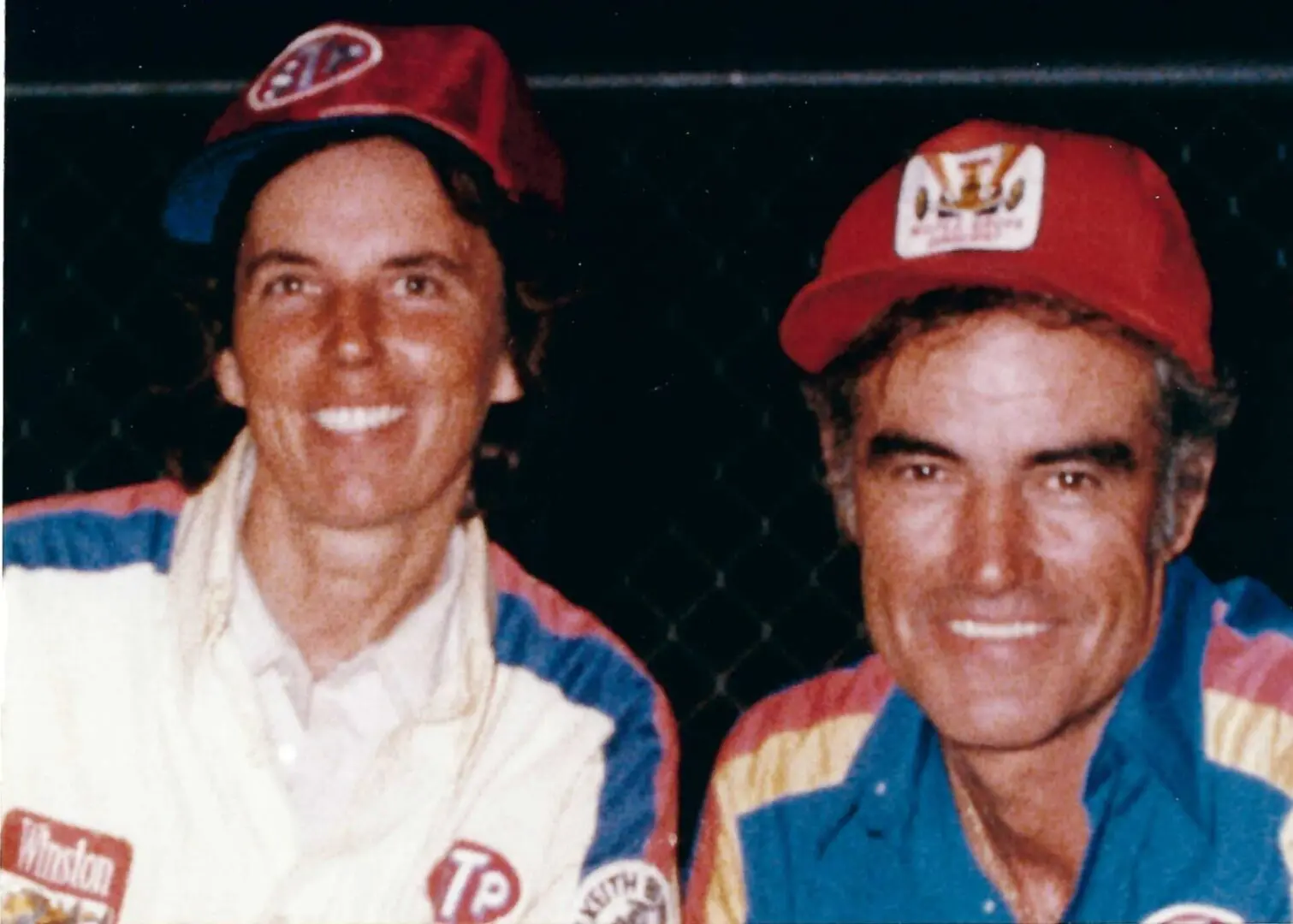 Jim & Alison Lee
Jim and Alison were the first husband-and-wife team to gain national recognition drag racing. Beginning in 1961, there career spanned 22 years,…
Read bio
Jim & Alison Lee
Jim and Alison were the first husband-and-wife team to gain national recognition drag racing. Beginning in 1961, there career spanned 22 years,…
Read bio
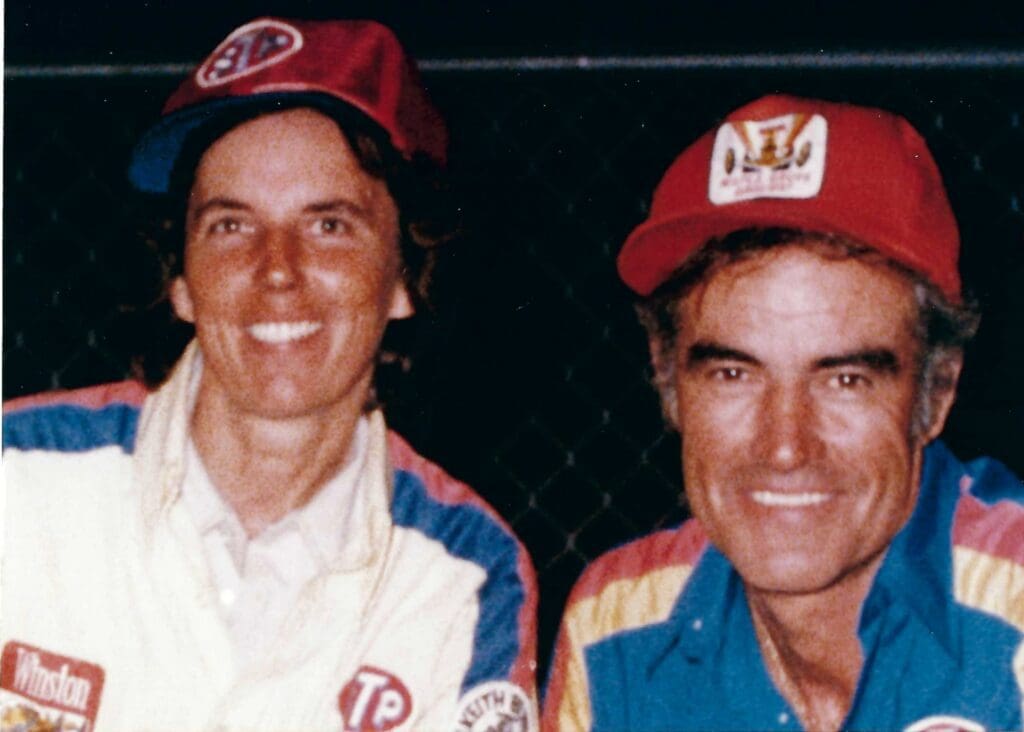 Class of 1995Presented by Mopar
Jim & Alison Lee
Jim and Alison were the first husband-and-wife team to gain national recognition drag racing. Beginning in 1961, there career spanned 22 years, during which time Jim and Alison set for national NHRA records between 1966 in 1970, winning five NHRA divisional titles and finishing in the top ten of both NHRA and IHRA for seven consecutive years (1975-1981). Jim was a driver for the first four years, then utilized seven different drivers during the ensuing 18 years, which make their accomplishments more amazing. Alison learned to become a master mechanic along with Jim as attested to by their winning the 1971 Car Craft Magazine" Dragster Crew Chief" award.
-
1995
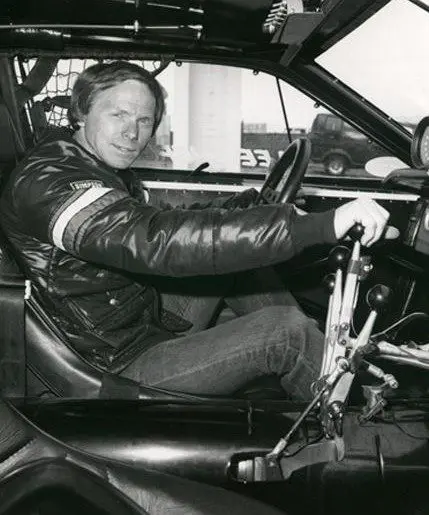 Lee Sheperd
1944–1985 Lee began racing successfully as a sportsman driver in the late 1960s. He won his first national event at the 1974 Winternationals…
Read bio
Class of 1995Presented by Mopar
Lee Sheperd
1944–1985 Lee began racing successfully as a sportsman driver in the late 1960s. He won his first national event at the 1974 Winternationals…
Read bio
Class of 1995Presented by MoparLee Sheperd
Lee began racing successfully as a sportsman driver in the late 1960s. He won his first national event at the 1974 Winternationals in Modified Eliminator. The dominant pro stcok driver in the early 1980s, Lee was a four-time NHRA Winston World Champion winning the title from 1981-1984. During that period, he had a win loss record of 158 wins and 29 losses for and 84% winning record. In 1982, he went to 11 of 12 final rounds and won the title by over 4000 points. Although he did not win the title in 1980, did beat eventual champion Bob Glidden six out of nine times that season. During his career, Shepard won an amazing 27 NHRA national events and, although considered a great driver, Lee was also a very gifted cylinder head specialist. Sadly, Lee Shepard was killed in a Pro Stock trading session in 1985.
Class of 1994
11 inductees-
1994
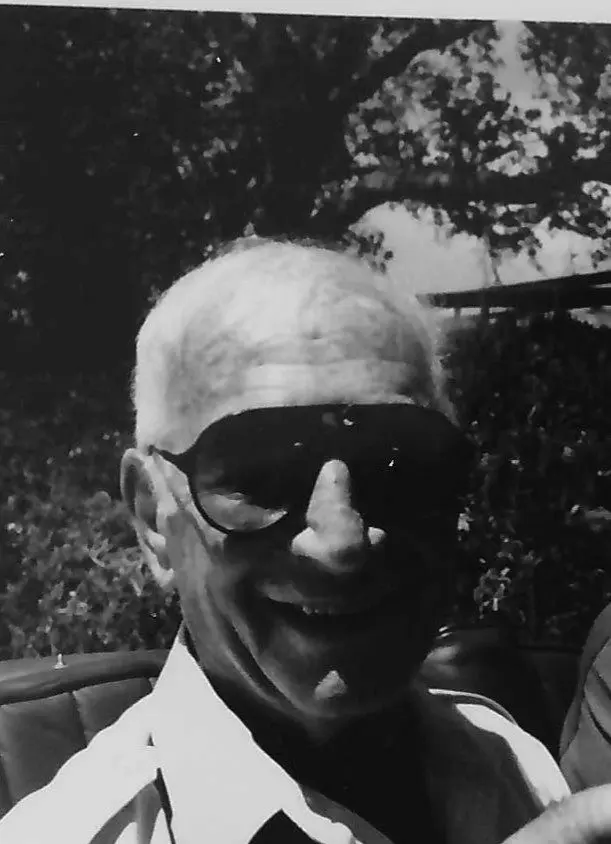 Zora Arkus-Duntov
1908–1996 Long synonymous, with drag racing, the "Hemi" cylinder head is among the contributions of Zora Arkus-Duntov. A Belgium-born engineer who helped Dr.…
Read bio
Class of 1994Presented by Mopar
Zora Arkus-Duntov
1908–1996 Long synonymous, with drag racing, the "Hemi" cylinder head is among the contributions of Zora Arkus-Duntov. A Belgium-born engineer who helped Dr.…
Read bio
Class of 1994Presented by MoparZora Arkus-Duntov
Long synonymous, with drag racing, the "Hemi" cylinder head is among the contributions of Zora Arkus-Duntov. A Belgium-born engineer who helped Dr. Ferdinand Porsche develop the Auto Union Grand Prix machines of the 1930s, Zora and his brother,Yura, design the Ardun head in 1925 as a conversion for underpowered, flathead-Ford trucks. When Ford began equipping its trucks with larger Lincoln engines, Ardun Mechanical Corporation switched its focus to auto racing. Their overhead-valve design enabled and dry lakes or oval racer to squeeze 300+ horsepower from a Ford V-8. Even after Chrysler's cast iron version appeared, early nitro racers continued to favor the Ardun, which offered cooling advantages of aluminum construction and a larger water jacket area around the spark plugs. Joining Chevrolet in 1953, Zora helped develop Corvette and a variety of performance parts during a 22-year General Motors career. Even in retirement, Zora Arkus-Duntov continues to provide performance consultation to Chevrolet in the specialty-equipment industry.
-
1994
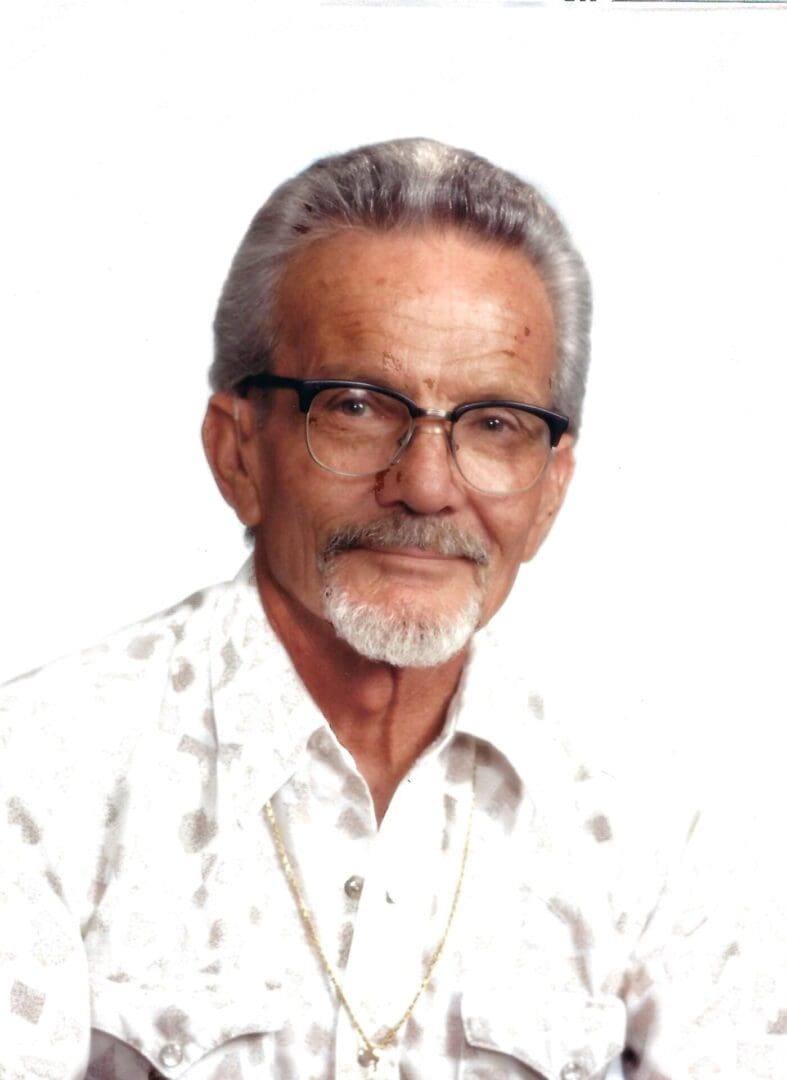 John Bradley
1925–2012 The man known as "Mr. Flathead" is responsible for keeping Ford's flathead V-8 viable as a Top Fuel powerplant through the end…
Read bio
John Bradley
1925–2012 The man known as "Mr. Flathead" is responsible for keeping Ford's flathead V-8 viable as a Top Fuel powerplant through the end…
Read bio
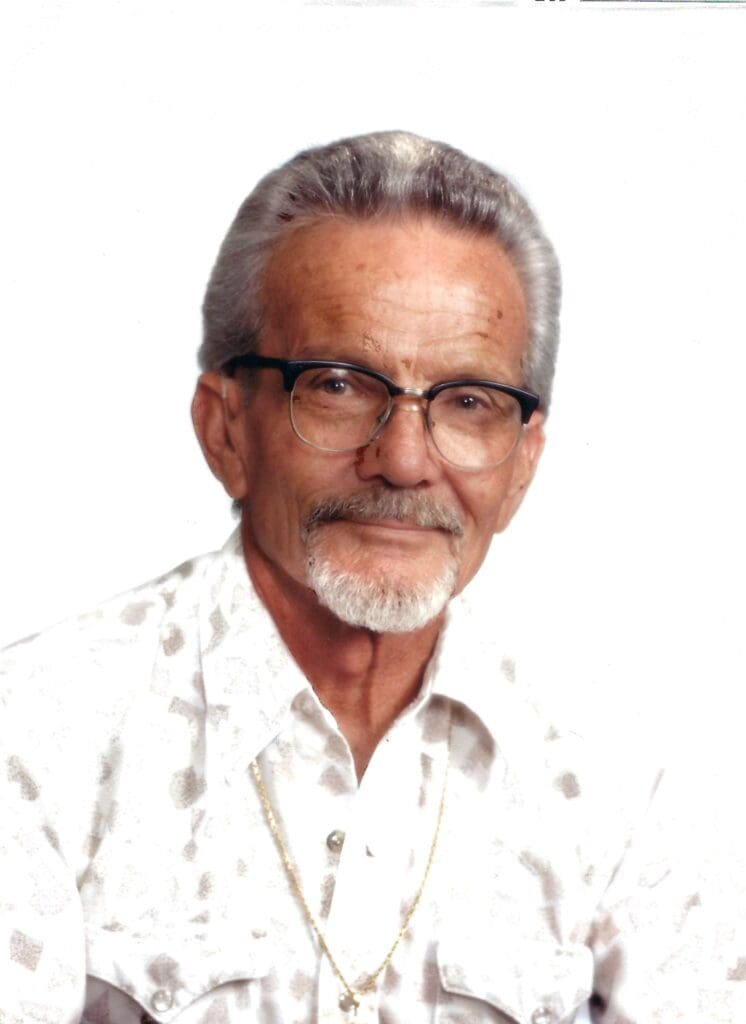 Class of 1994Presented by Mopar
John Bradley
The man known as "Mr. Flathead" is responsible for keeping Ford's flathead V-8 viable as a Top Fuel powerplant through the end of the 1950s. John Bradley began racing a '31 Ford roadster on Southern California streets and dirt tracks in 1946. In 1952, he built his first dragster out of Model T frame rails. By 1953, Bradley was burning nitromethane and hitting unbelievable speeds of 147+ mph. Next came the nitro-burning, tube chassisied "Gene's Brake Shop Special" that shocked the nation by reaching the final round of the 1957 World Series of Drag Racing at Cordova Illinois (where a broken shifter linkage gave Setto Postoian an easy victory). The famous fueler took more than 50 Top Eliminator titles and set countless track records in 1957 in 1958, becoming perhaps the most successful flathead dragster in history. His final challenge to the overheads was a dual-engined fueler that Bradley campaigned from 1958 to 1962. In 1994 at the age of 68 John Bradley continued to drive a nine-second flathead dragster on the Californian nostalgia circuit. It featured an eight-spark plug, billet-aluminum cylinder head of Bradley's own design.
-
1994
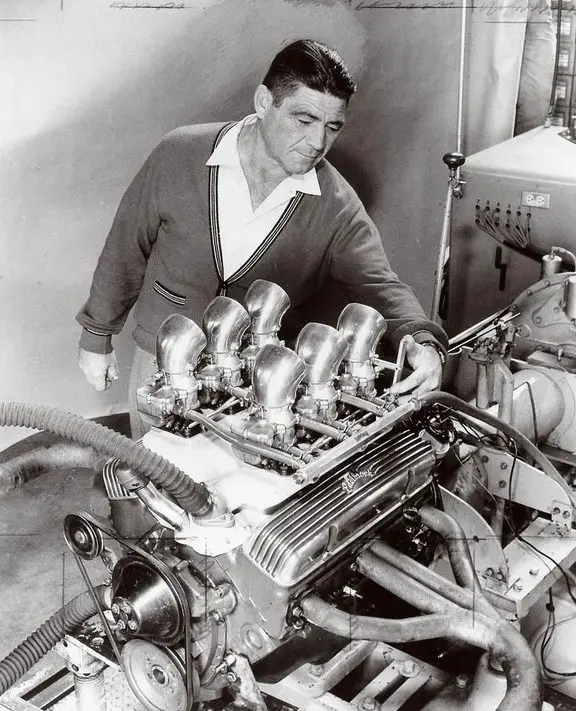 Vic Edelbrock Sr.
1912–1962 The Edelbrock name has been associated with high performance since the 1930s, when a young mechanic began setting records on the dry…
Read bio
Class of 1994Presented by Mopar
Vic Edelbrock Sr.
1912–1962 The Edelbrock name has been associated with high performance since the 1930s, when a young mechanic began setting records on the dry…
Read bio
Class of 1994Presented by MoparVic Edelbrock Sr.
The Edelbrock name has been associated with high performance since the 1930s, when a young mechanic began setting records on the dry lakes outside Los Angeles. Vic Edelbrock was already experimenting with dual-car intake manifolds of his own design and modifying cast-iron "Denver" heads. During World War II, government contract work gave Vic the foundry and machine shop experience that led to the production of his first high-compression, aluminum cylinder heads for Ford V8s. While Vic was enjoying postwar success as a midget car owner, Edelbrock-equipped flatheads dominated the dry lakes, salt flats, oval tracks, and early drag strips. Together with longtime sidekick Bobby Meeks and driver Fran Hernandez, Vic was among the first racers to experiment with nitromethane. A nitro-burning, 3/8" by 3/8" Edelbrock combination powered Fran's fenderless Deuce Coupe to victory in the October 1949 gathering at Goleta, California, that many regard as history's first organized drag race. Vic Edelbrock Sr. died at the age of 49 from cancer.
-
1994
 Don &
Record books reveal "only" the on-track accomplishments: 17 combined AHRA, IHRA, and NHRA World Championships; victories in more than 150 major events;…
Read bio
Don &
Record books reveal "only" the on-track accomplishments: 17 combined AHRA, IHRA, and NHRA World Championships; victories in more than 150 major events;…
Read bio
 Class of 1994Presented by Mopar
Don &
Record books reveal "only" the on-track accomplishments: 17 combined AHRA, IHRA, and NHRA World Championships; victories in more than 150 major events; national ET and speed records as far back as 1957 at 176 mph, including the first official 200 mph run by top fuel dragster; plus, countless technological innovations. Don successfully developed a rear engine dragster which halted the rash of driver injuries and fatalities that threatened top fuel's existence in the 1970s. Don formed the Professional Racers Association persuading establish sanctioning bodies to increase winners' purses by as much as 300%. Don Garlits would return to full time NHRA drag racing in 1984. He would take a four-year-old top fuel dragster, from display in the museum, go to US Nationals and win event. In 1986 Don debuted Swap Rat 30 a streamlined top fuel dragster. Swap Rat 30 was the first top fuel dragster to break 270 mph barrier at the NHRA Gatornationals in Gainesville Florida. Swamp Rat 30 would be the first top fuel dragster to do a complete blowover at the NHRA Summernationals in Englishtown New Jersey. Swamp Rat 30 was the first top fuel dragster enshrined in the Smithsonian Institute in Washington DC. During the 80's Don Garlits would become the first top fuel driver to win the NHRA US Nationals three years in a row (1984,1985,1986). Don would also be the first top fuel driver to win two consecutive NHRA World Championships (1985 and 1986). Despite all the records and achievements Don and Pat Garlits biggest accomplishment and contribution was the establishment two unique institutions to preserve and honor the sport of drag racing's rich history. In 1976 the Don Garlits Museum of Drag Racing was established finding a home in Ocala, Florida in 1984. At the time this was the first and only museum dedicated to the sport of drag racing. The museum originally 27,000 sqaure feet has grown to 54,500 sqaure feet since it opened. In 1991 the International Drag Racing Hall of Fame inducted its first twenty legends of the sport. To this date the International Drag Racing Hall of Fame has inducted hundreds of drag racing’s legends. These two institutions will serve to preserve the history of the sport for past, present, and future drag racers and drag racing fans.
-
1994
 Tom “TC” Lemons
1937–2012 While growing up in Bixby Oklahoma, Tommy Lemons became acquainted with Southwestern racers such as Connie Swingle, Don Cook, and Bob Creitz.…
Read bio
Class of 1994Presented by Mopar
Tom “TC” Lemons
1937–2012 While growing up in Bixby Oklahoma, Tommy Lemons became acquainted with Southwestern racers such as Connie Swingle, Don Cook, and Bob Creitz.…
Read bio
Class of 1994Presented by MoparTom “TC” Lemons
While growing up in Bixby Oklahoma, Tommy Lemons became acquainted with Southwestern racers such as Connie Swingle, Don Cook, and Bob Creitz. Swingle returned to Don Garlits shop following a 1968 vacation in Oklahoma, it was Connie riding in the passenger seat of Tommy's blue Ford pickup. Lemons joined Swingle on Garlits payroll, and for nearly two decades Tommy-nicknamed "Top Cat" -would be Don's right-hand man. Together, they opitomized the two-man top fuel team of the 1970s, when a touring top fuel operation consisted of just a driver and a crew chief. Among other things, Garlits credits TC for helping perfect the rear engine design that revolutionized sport in 1971. All told, Lemons was involved in construction of 19 different Swap Rat dragsters. He also restored many of the vintage race cars in the Garlits collection. Tommy played a key role in the relocation of the Don Garlits Museum of Drag Racing from Seffner to Ocala Florida. Many of the restored vehicles in the museum reflect TC's craftsmanship and tenacity.
-
1994
 Herb Parks
1949–1988 Following local success as an independent top fuel owner-driver on the United Drag Racing Association circuit, Herb Parks embarked upon a second…
Read bio
Class of 1994Presented by Mopar
Herb Parks
1949–1988 Following local success as an independent top fuel owner-driver on the United Drag Racing Association circuit, Herb Parks embarked upon a second…
Read bio
Class of 1994Presented by MoparHerb Parks
Following local success as an independent top fuel owner-driver on the United Drag Racing Association circuit, Herb Parks embarked upon a second career as a crew chief. In 1977, Parks left Clayton Harris team and finish out the season with Don Garlits. In his NHRA debut, Herb tuned Garlits "Donovan Charger" to a track record 5.77 ET at the 1978 Winternationals. In 1979, he helped design and construct Swap Rat 25 with early examples of ground effects technology. Garlits gives Parks much of the credit for 1984's incredible NHRA comeback campaign which netted three consecutive NHRA US Nationals titles and two consecutive NHRA Winston championships. Herb also made major design contributions to the revolutionary 1986 Swap Rat 30 streamliner, the first top fuel dragster over 270 mph, enshrined in the Smithsonian Institute in Washington DC. Herbs talents would be lost when he was struck and killed, by a top fuel car, in a freak accident, in Bradenton Florida, at the age of 39.
-
1994
 Wally and Barbara Parks
Like drag racing itself, Wally Parks is a product of the California dry lakes. In 1937, he helped form the Southern California…
Read bio
Wally and Barbara Parks
Like drag racing itself, Wally Parks is a product of the California dry lakes. In 1937, he helped form the Southern California…
Read bio
 Class of 1994Presented by Mopar
Wally and Barbara Parks
Like drag racing itself, Wally Parks is a product of the California dry lakes. In 1937, he helped form the Southern California Timing Association, becoming SCTA president in 1946. A year later, he teamed with Robert Petersen to present history's first hot rod show. It was during this LA Hot Rod Exposition that the two men discuss creating a magazine for hot rodders. In 1949, Parks quit SCTA to become the second editor of Hot Rod Magazine. In 1951, he cofounded the NHRA, which began sanctioning drag races in 1953. From 1954 through 1956, Wally dispatched NHRA's Safety Safari to all points of the United States educating hot rodders and nervous civic leaders about the benefits of organized drag racing. Wally remained with Peterson Publishing Company, where he met his future wife Barbara, until 1963. Wally simultaneously built Hot Rod next into the world's largest automotive publication and the NHRA into the world's biggest auto racing organization. He also edited the weekly National Dragster and authored a 1966 book, Drag Racing Yesterday and Today. More than four decades after founding NHRA, he continued to serve the organization as Chairman of the Board. Wally and Barber Parks are the best ambassadors that drag racing has ever had.
-
1994
 Robert E Petersen
1926–2007 The appearance of Hot Rod Magazine in January 1948 legitimized the men who were destined to become the founding fathers of drag…
Read bio
Robert E Petersen
1926–2007 The appearance of Hot Rod Magazine in January 1948 legitimized the men who were destined to become the founding fathers of drag…
Read bio
 Class of 1994Presented by Mopar
Robert E Petersen
The appearance of Hot Rod Magazine in January 1948 legitimized the men who were destined to become the founding fathers of drag racing. Motion picture publicist Robert Petersen's initial under-financed publishing venture also serves to organize and inspire performance enthusiasts throughout the world. It was a reader’s letter to Hot Rod Magazine that convinced editor Wally Parks to form the NHRA in 1951. As drag racing grew increasingly popular Pearsen Publishing Company launched Car Craft Magazine as drag racing's complete magazine. In the 1960s Petersen Publishing Company produced the nation's largest independent events, the Hot Rod Magazine Championships, and the Car Craft All-Star Drag Racing Team Aqwards, which were among sports most coveted honors. In the early 1980s Peterson Publishing Company published three drag racing history books, followed six years of Drag Racing Magazine. The sport of drag racing continues to receive valuable editorial exposure through Hot Rod Magazine. It should be noted the original 1948 copies of Hot Rod Magazine have a value of over $500.
-
1994
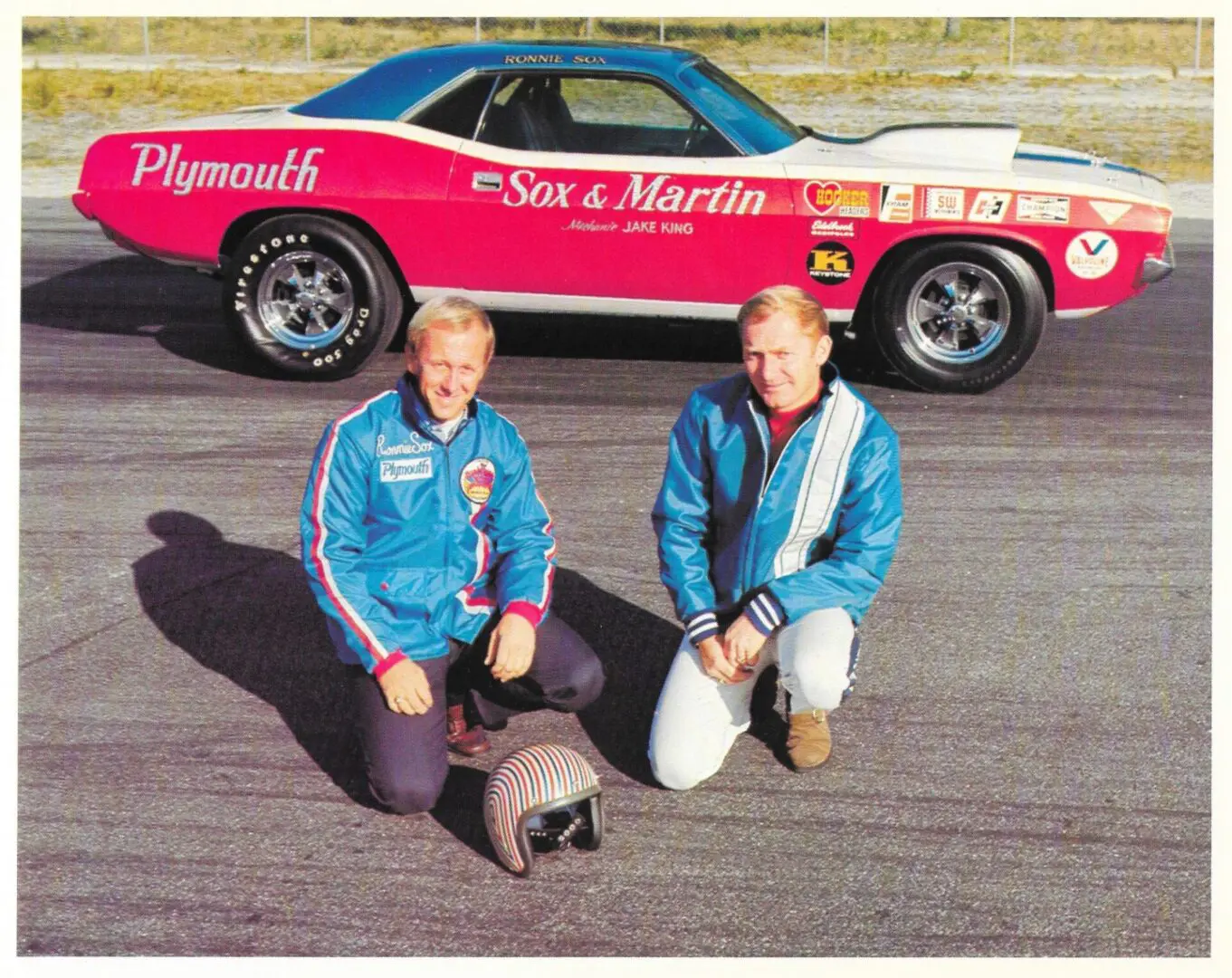 Ronnie Sox & Buddy Martin
Former stock rivals Ronnie Sox and Buddy Martin joined forces in late 1962. There 1963 Chevy won its first time out and…
Read bio
Ronnie Sox & Buddy Martin
Former stock rivals Ronnie Sox and Buddy Martin joined forces in late 1962. There 1963 Chevy won its first time out and…
Read bio
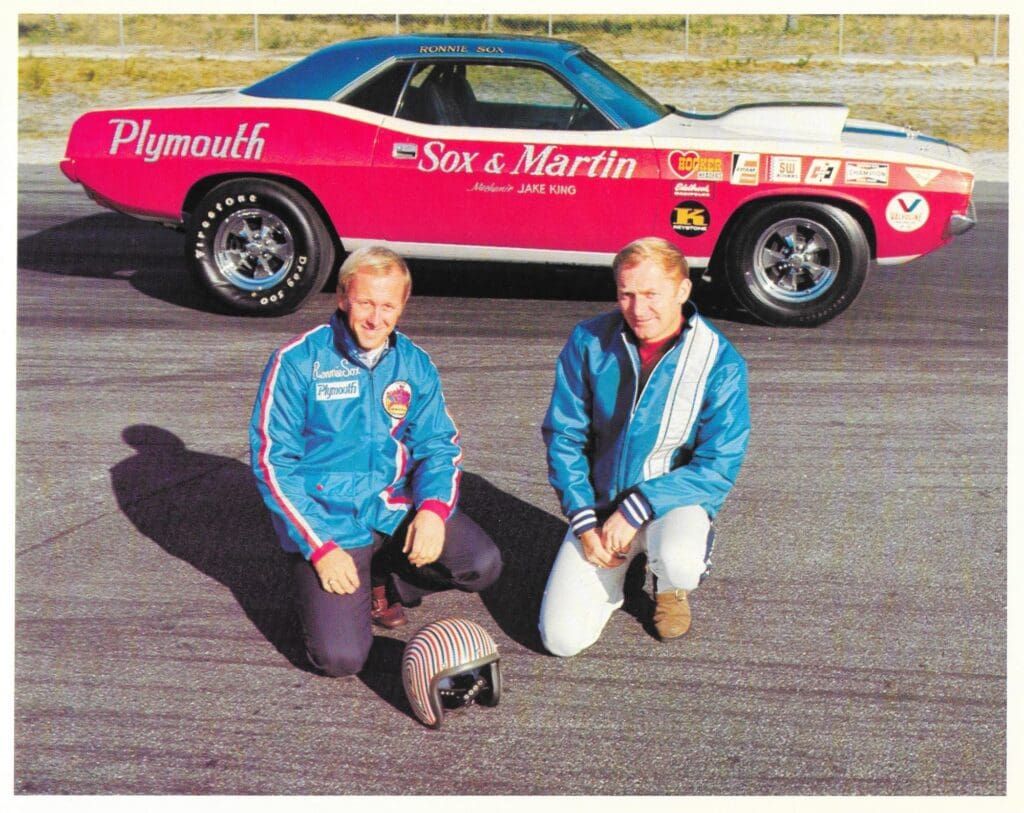 Class of 1994Presented by Mopar
Ronnie Sox & Buddy Martin
Former stock rivals Ronnie Sox and Buddy Martin joined forces in late 1962. There 1963 Chevy won its first time out and went on to upset the factory back cars of touring stars such as: Don Nicholson, Hayden Profitt, and Arnie Beswick. In 1963, a paid contract to race in Maryland led to an extended Northeastern tour and new careers as professional drag racers. Mercury provided Sox and Martin with the 427 Comet that won A/Factory Experimental honors at the NHRA Winternationals, grace the front cover of Super Stock Magazine, and toured Europe with the US Drag Racing Team in 1964. Through 1971, a series of Hemi powered Plymouth's helped Sox accumilate a record number of NHRA national event victories (15) and consecutive wins (5), plus numerous AHRA and IHRA titles. Indicative of their domination was an unprecedented streak of five straight NHRA Springnational victories (1967-1971). In late 1969, it was Martin who presented AHRA and NHRA officials proposed rules for a new, heads up class called Pro Stock. Sox subsequently proved so successful by winning six of eight NHRA Pro Stock shows in 1971, plus many AHRA and IHRA races. This caused NHRA to impose a 200-pound weight penalty on Hemi cars effectively ending Chrysler Corporation's participation. The team ran IHRA events and match races until Buddy Martins retirement in 1976. Ronnie Sox would go on to campaign a six second 200 mph replica of the original 1964 Comet.
-
1994
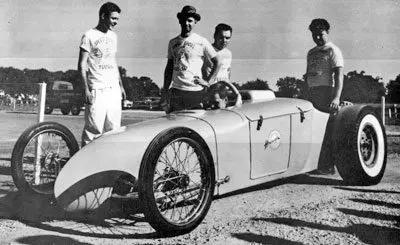 Gary “Red” Greth, Lyle Fisher, Joe Bush & Don Maynard
Arizona hot rodders Red Greth and Don Maynard formed the nucleus of this team while still in high school. With the addition…
Read bio
Class of 1994Presented by Mopar
Gary “Red” Greth, Lyle Fisher, Joe Bush & Don Maynard
Arizona hot rodders Red Greth and Don Maynard formed the nucleus of this team while still in high school. With the addition…
Read bio
Class of 1994Presented by MoparGary “Red” Greth, Lyle Fisher, Joe Bush & Don Maynard
Arizona hot rodders Red Greth and Don Maynard formed the nucleus of this team while still in high school. With the addition of Lyle Fisher came a fuel-burning highboy roadster and a fuel dragster, both flatheads powered. After borrowing Red Henslee's modified roadster, the trio began building a similar, mid-mounted Hemi combination. Backed by Joe Bush's Tucson Speed Sport Automotive, their 1525- pound, 101.5" wheelbase "Speed Sport Special" set the world speed record of 169.11 mph in 1957. The unique roar emanating from the carburetor 354's full length exhaust headers earned the nickname "Ol Noisy". Maynard went on to build motors for Chris Karamesines including the Hemi that broke 200mph barrier at Alton, Illinois in 1960. At the time of his death Maynard was ranked among the nation’s top engine builders. Bush contributed to sponsor a long series of "Speed Sport" roadsters, dragsters, and funny cars before passing the age of 51. In the 1980s the remains of "Ol Noisy" were located in Texas by Don Garlits and restored for display in the Museum of Drag Racing. Red Greth would build a replica roadster to compete in nostalgia racing.
-
1994
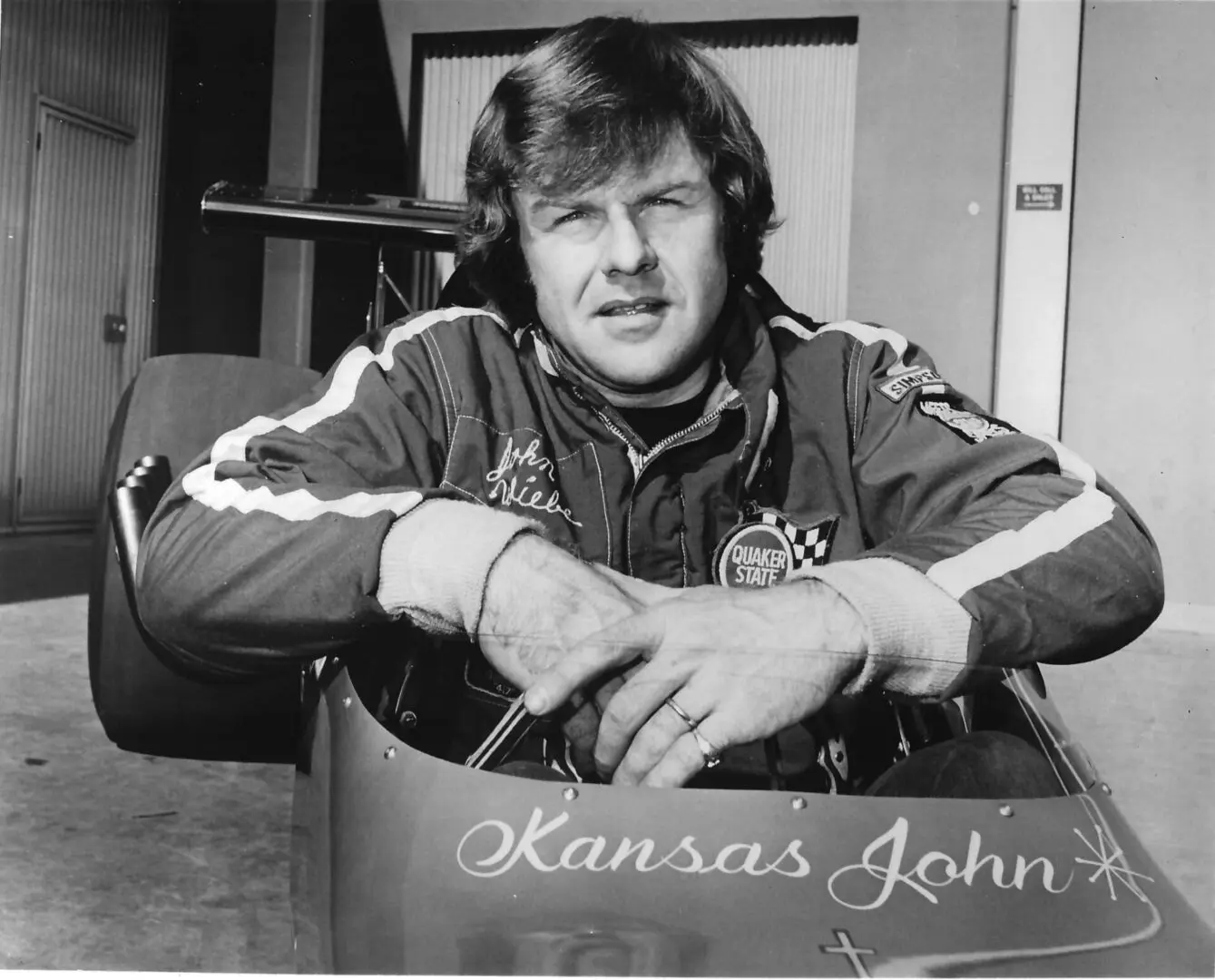 John Wiebe
Two-time AHRA Top Fuel World Champion John Wiebe was among the Midwest's most successful and most popular professional drag racers. Wiebe's relatively…
Read bio
John Wiebe
Two-time AHRA Top Fuel World Champion John Wiebe was among the Midwest's most successful and most popular professional drag racers. Wiebe's relatively…
Read bio
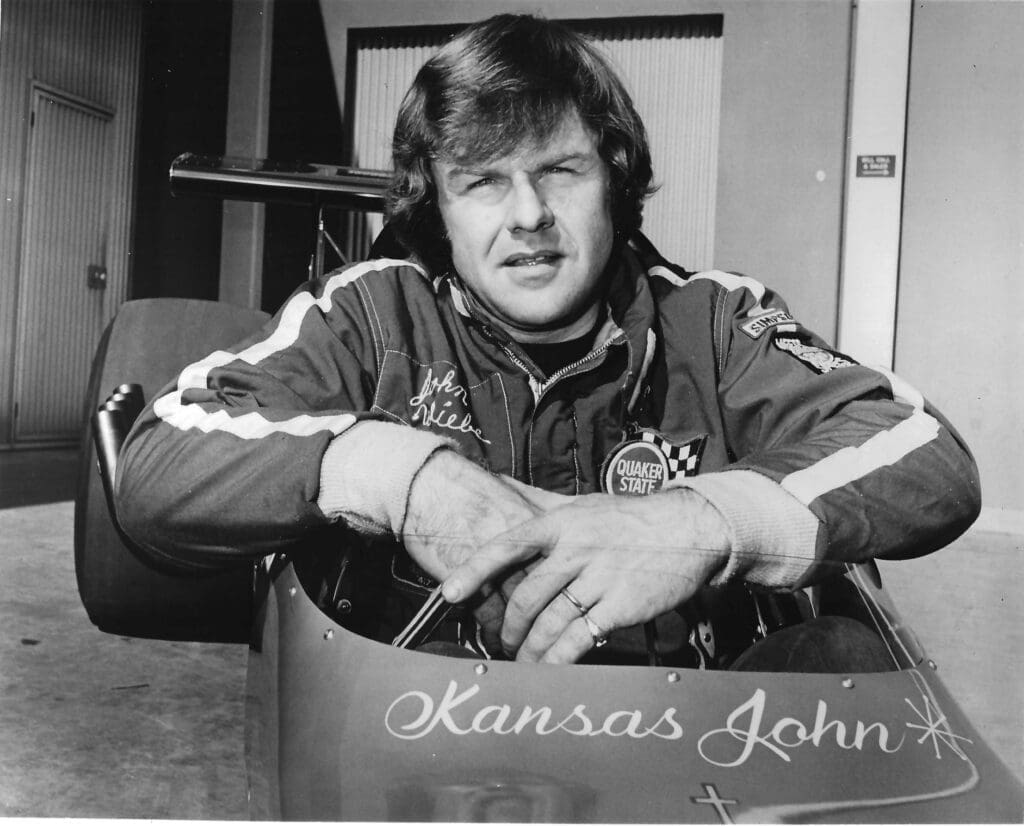 Class of 1994Presented by Mopar
John Wiebe
Two-time AHRA Top Fuel World Champion John Wiebe was among the Midwest's most successful and most popular professional drag racers. Wiebe's relatively brief career was born in 1963, at the wheel of a supercharged '34 Ford. A subsequent engine transplant inota "T" roadster and John's first AHRA record, but the youngster quickly soured on handicapped sportsman competition. Within months of making the leap to top fuel in 1964, this part-time racer lasted his way into Mikey Thompson's prestigious 200 Mile-Per-Hour Club. Two major AHRA victories in 1968 helped convince "Kansas John" to turn pro. In 1970, he earned the AHRA World Championship and the Mike Sorokin Award. in October 1971, he teamed with Ed Donovan to introduce drag racing's first all-aluminum powerplant. Though still campaigning and "obsolete" front engine chassis, Wiebe debuted the Donovan 417 by lowering Ontario Motorsport Speedways ET record to 6.53 seconds during the NHRA Supernationals. Donovan's engine and Wiebe's dragster, often remembered as the last competitive slingshot, are both on display today at the Don Garlits Museum of Drag Racing. John Wiebe went on to win the 1973 NHRA Springnationals, the 1974 PRA National Challenge, and the 1975 AHRA World Championship before retiring in 1978.
Class of 1993
9 inductees-
1993
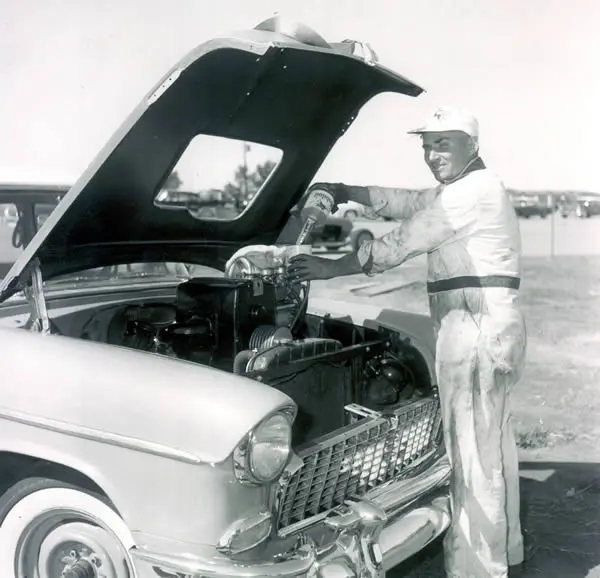 John Bandimere, Sr.
1908–1986 This Denver, Colorado, mechanic, and machinists burst into the national spotlight at the inaugural NHRA Nationals. In an error when most drag…
Read bio
Class of 1993Presented by Mopar
John Bandimere, Sr.
1908–1986 This Denver, Colorado, mechanic, and machinists burst into the national spotlight at the inaugural NHRA Nationals. In an error when most drag…
Read bio
Class of 1993Presented by MoparJohn Bandimere, Sr.
This Denver, Colorado, mechanic, and machinists burst into the national spotlight at the inaugural NHRA Nationals. In an error when most drag cars were either driven or flat towed to the strip; John Bandimere showed up at Great Bend, Kansas with the sport's first tractor-trailer rig. Equally impressive was the trailer contents: a modified GMC pickup and a new McCulloch supercharged 400 hp 1955 Chevy, arguably the prototype Pro Modified combination, some 30 years ahead of its time. Indeed, despite the 10th-grade education, Bandimere made a career out of being ahead of his time. In 1946, he opened one of the early speed shops. Later that decade, he began manufacturing and selling supercharger kits, including one for the first adaptations of a GMC truck blower to an automotive engine. In the 50's, he manufactured the first aluminum V8 valve covers in his own foundry, as well as experimental parts for General Motors engineering department, and various automotive tools of his own invention. He designed and built complete cars for drag racing and hill climbs. He built one of history's first four-wheel drive race cars that competed at Bonneville and Pike's Peak, entered the Mexican Road Race, raced midgets, and sports cars. He conceived and developed two drag strips from scratch; Bandimere Safety Park, outside Denver, and Bandimere Speedway, operated by his family. Of all his contributions and success, this born-again Christian, this tireless public speaker was the proudest of his lifelong work with young people. Through his youth-oriented race tracks, community service, and personal example John Bandimere left a lasting legacy.
-
1993
 Lou Baney
1920–1993 The story of Aloysius James Benedetto reads like several different careers, any one of which may have qualified Lou Baney for induction…
Read bio
Class of 1993Presented by Mopar
Lou Baney
1920–1993 The story of Aloysius James Benedetto reads like several different careers, any one of which may have qualified Lou Baney for induction…
Read bio
Class of 1993Presented by MoparLou Baney
The story of Aloysius James Benedetto reads like several different careers, any one of which may have qualified Lou Baney for induction into drag racing's Hall of Fame. As a driver, he cut his teeth in roadsters on Southern California ovals, then repeatedly broke every dry lake record for coupes. As a promoter, he teamed up with Lou Senter in 1950 to open Saugus Dragstrip, the first strip to offer night raceing. As a team owner and engine builder, Lou played prominent roles in the careers of people like Don Prudhomme, Tom McEwen, Ed Pink, and Kenny Arnold. As a politician, he was second to none. As far back as the 40's, Baney presided over both the Screwdrivers Club and the Russetta Timing Association. In the 50's, he was elected by his peers to run Drag Racers Inc, the first racers union. In the 60s, he directed history's most effective such union, the powerful United Drag Racers Association. In the 70's, he served SEMA as Technical Director and Executive Director; and spent one season managing McEwen's funny car team. Lou even gave the publishing business a try, briefly serving as General Manager for the group that purchased Drag News from Doris Herbert; before retiring in 1978.
-
1993
 Bruce Crower
1930–2019 His high school mates, and their parents, might best recall Bruce Crower for the 80ci Harley-Davidson that terrorized the streets of Phoenix…
Read bio
Class of 1993Presented by Mopar
Bruce Crower
1930–2019 His high school mates, and their parents, might best recall Bruce Crower for the 80ci Harley-Davidson that terrorized the streets of Phoenix…
Read bio
Class of 1993Presented by MoparBruce Crower
His high school mates, and their parents, might best recall Bruce Crower for the 80ci Harley-Davidson that terrorized the streets of Phoenix in the late 40's, or for the subsequent 1932 highboy that Bruce remembers as the first Arizona car to beat the bikes. Moving to California in 1950, he went to work machining flywheels for Paul Schiefer. Before long, he was moonlighting as a manufacturer of exhaust flanges for Detroit's new overhead V8s. In 1955, Bruce fabricated one of the first-ever top-mounted GMC blower setups for his Hemi-powered Hudson, which responded by setting a Bonneville record of 157 plus mph. Later that year, Bruce began producing what would prove to be one of the most significant pieces of speed equipment to date; the "U-Fab" manifold kit for Chrysler Hemis. Boosted by Emery Cook's unprecedented 166.97 mph speed at Lions in early 1957, Crower would sell thousands of these kits through 1961. Simultaneously, he worked behind the scenes at Schneider Cams, developing experimental profiles that other companies refused to grind. In the late 50's Bruce moved into the clutch business, successfully adapting an Italian design of dual disk and a floater for use on top fuel dragsters. The rapidly expanding Crower Cams and Equipment Company also added its own line of crankshafts, flywheels, fuel injectors, connecting rods, and camshafts. His equipment pushed Don Garlits top fuel dragster over the mystical 250 mph barrier. In the 70's, Bruce introduced the revolutionary CrowerGlide clutch assembly and a Flat-8 Indycar engine of his own design. Bruce Crower would continue to indulge a lifelong need for speed with an innovative Bonneville steamliner.
-
1993
Doris Herbert
The first journalists inducted into the International Drag Racing Hall of Fame was also the sport’s most influential female of the 1960's.…
Read bio
Class of 1993Presented by Mopar
Doris Herbert
The first journalists inducted into the International Drag Racing Hall of Fame was also the sport’s most influential female of the 1960's. In 1959, Doris Herbert assume control of the fledgling bi-weekly tabloid circulated primarily in California. Almost immediately, she transformed Drag News into a weekly newspaper with unrivaled national circulation and influence. Historic innovations included the all-important drag news Standard 1320 Records and Mr. Eliminator list which embraced all drag strips, sanctioned or otherwise, that met her Standard 1320 requirements. Her unprecedented, nationwide standardization of track measurement, elevation and timing procedures effectively countered the range of promoter-inflated, "popcorn" speeds that seriously threatened the credibility of the young sport in the early 60's. Moreover, the roots of major match racing and, indeed, professional drag racing itself can arguably be traced to the lucrative best-of-three-round battles between holders of the papers covenant Mr. Eliminator positions and hungry challengers. Equally significant was Herbert's uniquely unbiased editorial policy. Fearful of neither sanctioning organizations or advertisers, Doris encouraged constructive criticism- however controversial- from contributors, columnists, and letter writers. Many of the sport's best-known editors, journalists, and photographers credited Drag News with launching their publishing careers. In 1976 after 17 years at the helm, Doris Herbert sold "The Drag Racers Bible". She would go on to own a successful marketing company based in Huntington Beach, California
-
1993
 Ed Iskenderian
1921–2026 It's no coincidence that the rise of history's most famous cam grinder closely parallels the evolution of drag racing. The roots of…
Read bio
Class of 1993Presented by Mopar
Ed Iskenderian
1921–2026 It's no coincidence that the rise of history's most famous cam grinder closely parallels the evolution of drag racing. The roots of…
Read bio
Class of 1993Presented by MoparEd Iskenderian
It's no coincidence that the rise of history's most famous cam grinder closely parallels the evolution of drag racing. The roots of our sport were planted at the dry lakes, and young Ed hitched his first ride to Muroc in 1937, behind the wheel of a modified roadster being towed by a rope. In 1946, the postwar hot rod explosion had barely ignited when he grew impatient waiting for a back ordered Clay Smith cam and decided to grind his own. Within three years, that "Isky 404" was the most famous flathead cam of its time. Blessed with a promotional flair that matched his mechanical skills, Ed expertly used Hot Rod Magazine ad space to publicize his accomplishments. In 1949, when a customer asked for crew uniforms to wear at the inaugural Bonneville Nationals, Isky combined his logo with white undershirts to create history's first printed T-shirts. Later, he pioneered the payment of contingency cash to early drag racers. The controversial record runs of Cook & Bedwell (166.97 mph) and Chris Karamesines (204.54 mph) were glorified, and largely legitimized, by extensive Isky advertising. Combining humor with uncanny marketing, he waged the "Camgrinder Wars" in the pages of Drag News, and in the process, help make major stars of not only his own customers but also racers who ran rival camshafts such as Stone, Woods & Cook. When the speed equipment industry recognized the need to form its own trade association in 1963, Isky was elected the first President of SEMA. His sons would go on to operate Ed Iskenderian Racing Cams, but Isky remained intimately involved in the sport he helped create. The "Camfather" is regularly seen at NHRA Hot Rod Reunions yearly.
-
1993
 Bill Jenkins
1930–2012 While several of his fellow future Hall of Famers were boldly experimenting with exotic fuel measures and superchargers, Bill Jenkins was content…
Read bio
Bill Jenkins
1930–2012 While several of his fellow future Hall of Famers were boldly experimenting with exotic fuel measures and superchargers, Bill Jenkins was content…
Read bio
 Class of 1993Presented by Mopar
Bill Jenkins
While several of his fellow future Hall of Famers were boldly experimenting with exotic fuel measures and superchargers, Bill Jenkins was content to search for a hundredth of a second, in 100 different places. This patient, scientific approach to horse power and traction paid dividends as early as the mid-50's, when the engine builder became known in the Northeast for setting up winning six cylinder and V-8 Chevy Stockers. Wider acclaim followed in the early 60's, thanks to record-setting stints preparing Bill Spanakos' "Monster Mash" 1955 Chevy and Dave Strickler's "Old Reliable" 1963 Chevy. Climbing behind the wheel himself in 1965, the "rookie" was instantly rewarded with Top Stock honors at the NHRA Winternationals. In 1966, his unique, 327ci Nova -the original "Grumpy's Toy"- dared challenge the dominant Dodge and Plymouth Hemis in A/Stock, to the delight of Chevy lovers nationwide. His 427ci Camaro B/Gasser match raced during 1969 as a "heads up Super Stocker" and became the prototype for Pro Stock. When the third professional category debuted in 1970, Jenkins upset the Mopar's at both Pomona and Gainesville. He also pioneered small stock power plants, McPherson strut suspension, tube frames and dry-sump oiling for Pro Stockers. He became the only driver to win all three PRO-PRA events, then retired from driving. In 1976, hired hands Larry Lombardo and Ken Dondero drove twin Vegas to both the NHRA and AHRA points championships. Jenkins performance "shop cars" are credited with winning six such titles, plus 36 NHRA national events, and 20 Car Craft All-Star team selections.
-
1993
 Jim Liberman
1945–1977 Arguably the greatest showman and drag racing history, "Jungle Jim" was responsible for single-handedly converting untold thousands of young people into dedicated…
Read bio
Jim Liberman
1945–1977 Arguably the greatest showman and drag racing history, "Jungle Jim" was responsible for single-handedly converting untold thousands of young people into dedicated…
Read bio
 Class of 1993Presented by Mopar
Jim Liberman
Arguably the greatest showman and drag racing history, "Jungle Jim" was responsible for single-handedly converting untold thousands of young people into dedicated drag racing fans. Liberman's rise from the security of bracket racing a Chevy powered Studebaker at Fremont Raceway coincided not only with the funny car craze of the mid-60's, but also with the hippie movement flowering in nearby San Francisco. When this young long-haired, fearless driver stopped into Lew Arrington's equally unpredictable "Brutus" GTO, the resulting chemistry attracted a whole new audience of younger, less conservative spectators. So many of them, in fact, that Liberman was soon fielding his own two-car team, rapidly advancing from modified Nova door stammers two state-of-the-art Vega and Monzo floppers. His fans came to expect the unexpected, and he responded with spectacular burnouts, fire burnouts, 1320-foot smoky burnouts, wrong-way burnouts, and even return road burnouts. The addition of sidekick "Jungle Pam" (Pam Hardy) and a hot-selling Revell model further fueled demand. Ironically, his reputation as a showman somewhat overshadowed these professional drag racers' equal abilities as a skilled handler and a shrewd businessman. His unique combination of talent has not been seen since a fatal highway accident prematurely shortened a career that was still on the rise. Indeed "Jungle” Jim Liberman remains one-of-a-kind.
-
1993
 Joe Pisano
1927–1991 The epitome of a self-made man, the son of Italian immigrants taught himself the three "R"'s: reading, writing, and racing. Relocating from…
Read bio
Joe Pisano
1927–1991 The epitome of a self-made man, the son of Italian immigrants taught himself the three "R"'s: reading, writing, and racing. Relocating from…
Read bio
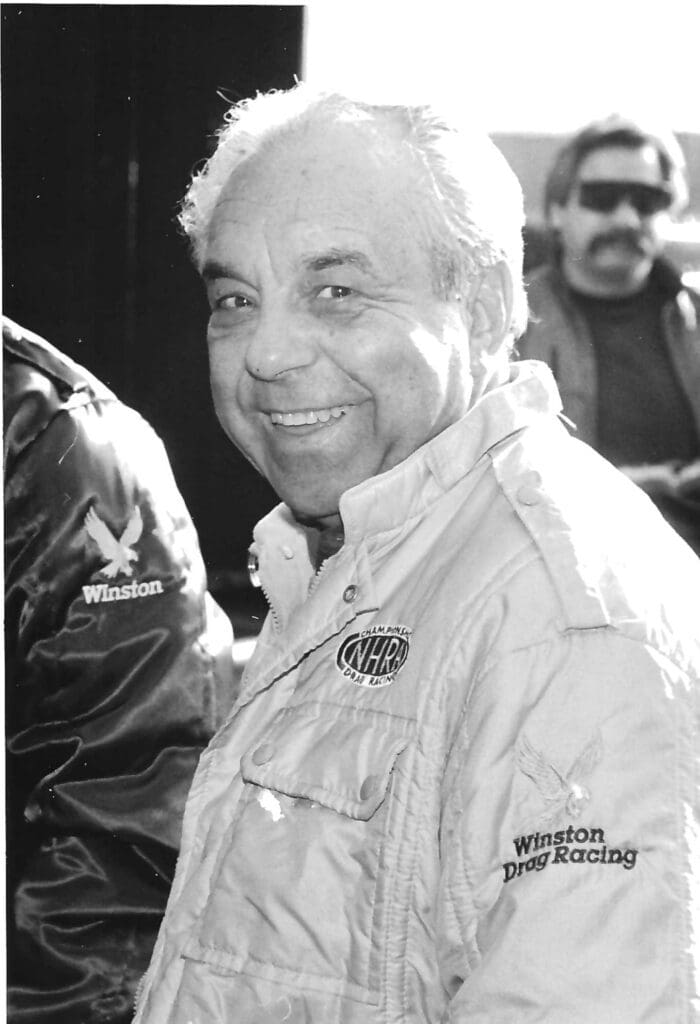 Class of 1993Presented by Mopar
Joe Pisano
The epitome of a self-made man, the son of Italian immigrants taught himself the three "R"'s: reading, writing, and racing. Relocating from Pennsylvania to California in 1945, the teenager was exposed to the harsh realities of a homeless family, sleeping in city parks. Pisano was also exposed to the booming Los Angeles hot rod scene and became hooked for life. He raced roasters at Ascot, entered a Hudson (with Dempsey Wilson) in the 1953 Mexican Road Race, ran the dry lakes, drag-raced supercharged gasser's, and entered Bonneville's 200 MPH Club. A natural salesman, Joe also sold enough new Chevrolets to buy into Venolla Pistons in 1961. By the late 60's, he was doubly successful as a manufacturer and funny car owner. In the 70's, he redesigned aluminum connecting rods for fuel racing, further increasing Venolla's fortunes. In 1984, he introduced the JP-1-cylinder block that would power his own car through both the 280 and 285 mph speed barriers. His block would also push Eddie Hill's top fuel dragster through the four-second barrier in 1988. Throughout his life "Pappa Joe" was also known as a kind, caring individual who dispensed more valuable advice and aluminum parts to needy racers than anyone outside of his brothers realized. At the 1991-Mile-High Nationals, Joe was returning a new driver, Dale Pulde, from a mandatory checkout pass when he suffered a fatal heart attack. Frank Carmen and Tony Pisano would keep their beloved brother's spirit alive and thundering in the form of his 5.11-second ET funny car two years later.
-
1993
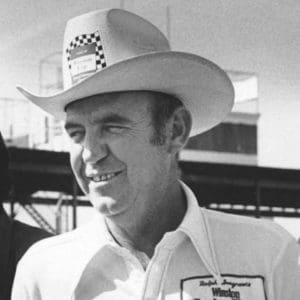 Ralph Seagraves
1929–1998 Drag racing's public acceptance is a legitimate motorsport was greatly accelerated by the sport’s "discovery", nearly two decades ago, by R.J. Reynolds…
Read bio
Class of 1993Presented by Mopar
Ralph Seagraves
1929–1998 Drag racing's public acceptance is a legitimate motorsport was greatly accelerated by the sport’s "discovery", nearly two decades ago, by R.J. Reynolds…
Read bio
Class of 1993Presented by MoparRalph Seagraves
Drag racing's public acceptance is a legitimate motorsport was greatly accelerated by the sport’s "discovery", nearly two decades ago, by R.J. Reynolds Tobacco Company. As the tobacco giant's Special Events Director, it was Ralph Seagraves who personally persuaded the president to bring the Winston brand into stock-car racing in 1971. Four years later, Winston and Seagraves similarly blessed NHRA and IHRA with respective $100,000 postseason points funds, creating the Winston Drag Racing Series. Less publicized, but no less important, where the "presence packages" of paint, materials, and money made to individual track operators for facility improvements. Ralph also worked tirelessly to establish drag racing's credibility with skeptical media leaders, elected officials, and corporate executives both inside and outside R.J. Reynolds. Indeed, during his tenure in the company's Special Events Department, Seagraves convinced no fewer than 13 different CEOs to continue funding his ambitious motorsports programs. All the while, he was personally escorting important business leaders to national and divisional events, introducing them to the cost-effectiveness of drag racing sponsorship. The net result has been untold millions of dollars in corporate investments since 1975, not the least of which was an NHRA Winston Drag Racing Series point fund valued at $1,041,600 per year in 1993. Though he never set a national record or won a single round, the contributions of Ralph Seagraves are second to none.
Class of 1992
19 inductees-
1992
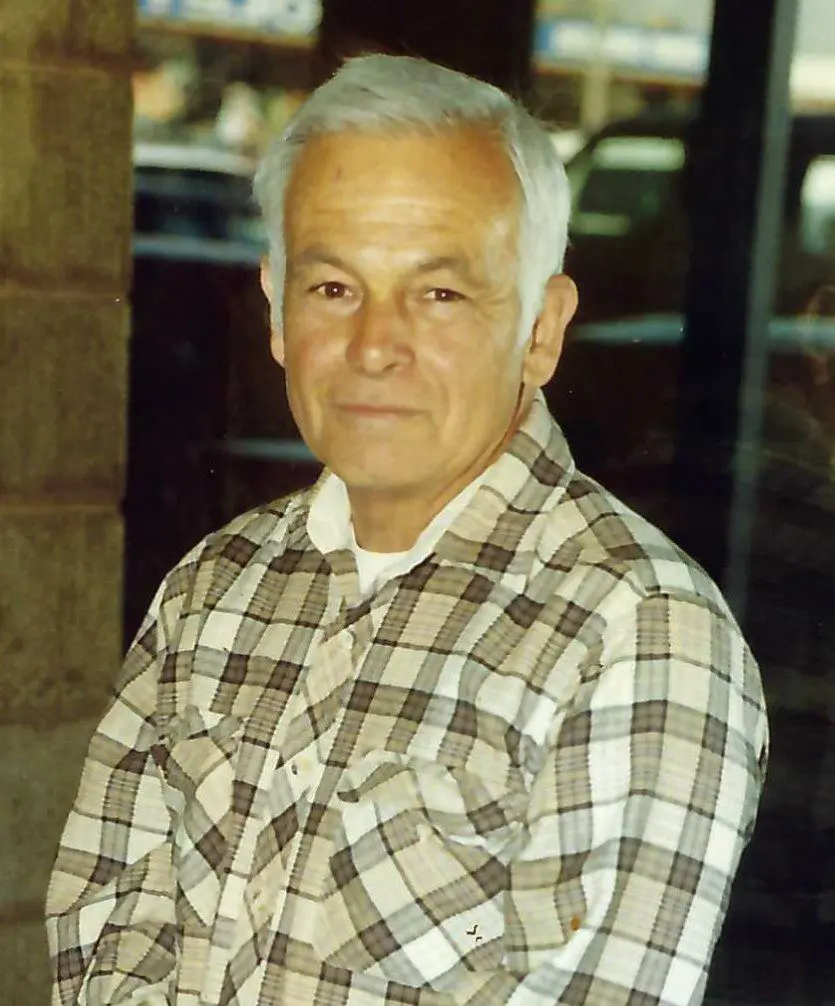 Joaquin Arnett
1926–2010 Rather than strip a production vehicle down to its frame rails, as was the fashion in drag racing's formative years, dry Lake…
Read bio
Class of 1992Presented by Mopar
Joaquin Arnett
1926–2010 Rather than strip a production vehicle down to its frame rails, as was the fashion in drag racing's formative years, dry Lake…
Read bio
Class of 1992Presented by MoparJoaquin Arnett
Rather than strip a production vehicle down to its frame rails, as was the fashion in drag racing's formative years, dry Lake racer Joaquin Arnett of the San Diego Bea Bandits decided to build his "rail job" from scratch. He also elected to feed its carburetor, 275 in.³ Mercury Flathead on nitromethane loads as potent as 80%. The result was the legendary "beam bandit" a 1325-pound, 134-mile-per-hour dragster that set speed records throughout California in 1952. A slightly longer more streamlined "Mark two" addition also made history by winning top eliminator at the first meat ever sanctioned by the National Hot Rod Association: The Southern California championship drags on April 11–12 1953. As usual, Arnett's entry also turned the top speed of the meat at 132.35 mph. This car was subsequently modified to accept a second flathead V-8, and either a dragster or sedan body. Alternating between single and dual engines the beam bandits continued setting records and drag strips and dry lakes throughout the 1950s. The original dragster, restored to racing condition, is on display at the Don Garlits Museum of Drag Racing.
-
1992
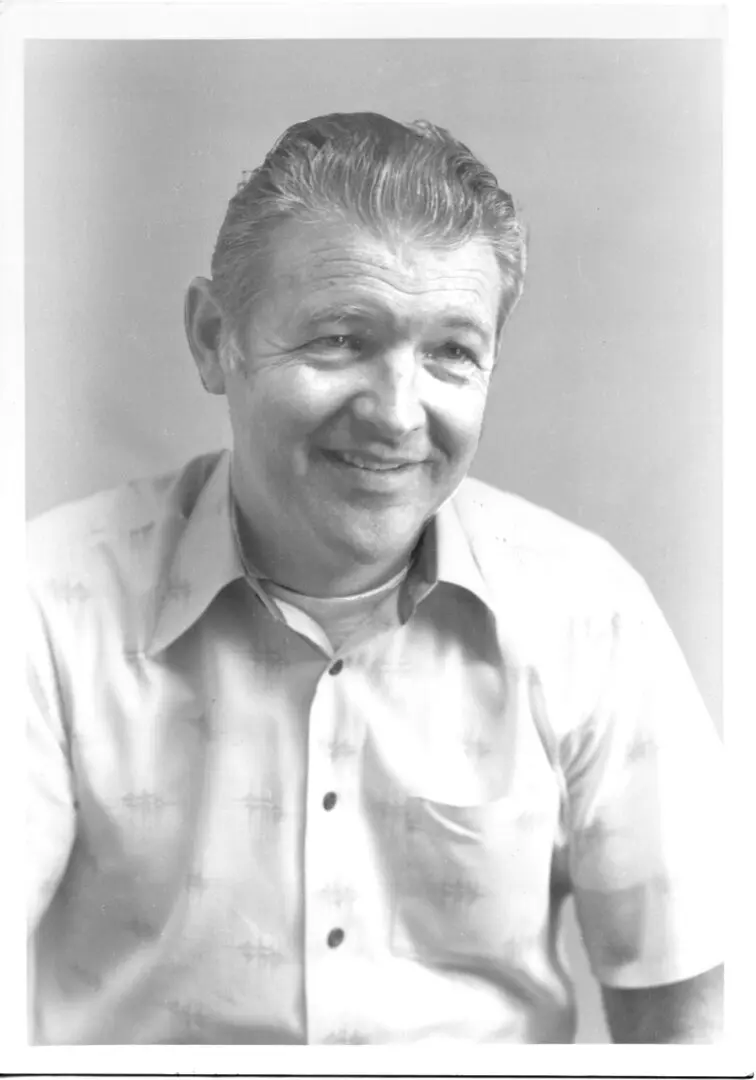 Keith Black
1926–1991 Keith Black was an engine builder and team leader of history's most successful single vehicle. Keith guided the Greer, Black & Prudhomme…
Read bio
Keith Black
1926–1991 Keith Black was an engine builder and team leader of history's most successful single vehicle. Keith guided the Greer, Black & Prudhomme…
Read bio
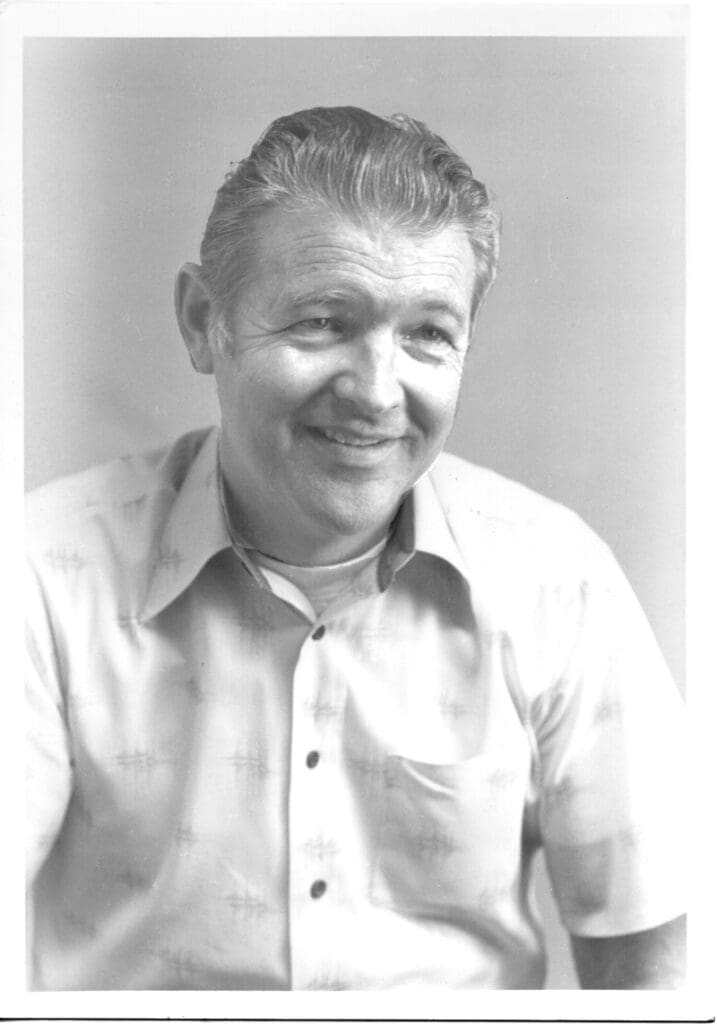 Class of 1992Presented by Mopar
Keith Black
Keith Black was an engine builder and team leader of history's most successful single vehicle. Keith guided the Greer, Black & Prudhomme fuel dragster to victory in some 95% of its approximately 250 races from 1962 through 1964. The subsequent season, Black turned his attention to customer Roland Leong whose "Hawaiian" consequently became the first car to win NHRA's Winternationals and US Nationals in the same year. But his greatest and most personally rewarding accomplishments were still to come. Among other things, Keith Black Racing Engines are credited with developing a safe "slipper" clutch and perfecting the aluminum 426 hemi block. "Reverend Black" also set a personal standard for professionalism and integrity that equaled the track record of Greer, Black & Prudhomme.
-
1992
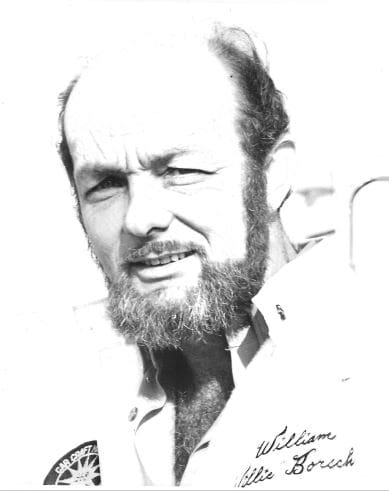 Willie Borsch
1930–1991 Drag racing fans of the 1960's and early 70's considered Willie a genuine superstar; the prototype "working man's hero". Moreover, the fearless…
Read bio
Class of 1992Presented by Mopar
Willie Borsch
1930–1991 Drag racing fans of the 1960's and early 70's considered Willie a genuine superstar; the prototype "working man's hero". Moreover, the fearless…
Read bio
Class of 1992Presented by MoparWillie Borsch
Drag racing fans of the 1960's and early 70's considered Willie a genuine superstar; the prototype "working man's hero". Moreover, the fearless pilot of the Marcellus & Borsch "Winged Express" AA/Fuel Altered was that rare individual who achieved international acclaim with a homebuilt, unsponsored, sportsman-classed vehicle that rarely ventured outside California. What "Wild" Willie and "Mousie" Marcellus lacked in financial resources, they made up for in brute horsepower, technical innovation, and driving skill. Their controversial, overhead airfoil was remarkably similar to contemporary dragster wings. And Willie's legendary one-handed handling will be remembered as long as "T" bodied roadsters blast away from starting lines.
-
1992
 Don Carlton
1940–1977 The career of the first Pro Stock driver inducted into the International Drag Racing Hall of Fame began at age 5 when…
Read bio
Don Carlton
1940–1977 The career of the first Pro Stock driver inducted into the International Drag Racing Hall of Fame began at age 5 when…
Read bio
 Class of 1992Presented by Mopar
Don Carlton
The career of the first Pro Stock driver inducted into the International Drag Racing Hall of Fame began at age 5 when Don Carlton's daddy built him a scaled-down midget racer. However straight-line competition was always the youngster’s preference. After achieving some local success in match racing in his native South, Carlton's big break finally arrived in the form of a highway accident, suffered while flat towing his 1968 Hemi Cuda. Local legend Buddy Martin arranged to purchase the car and gave Don a job. Besides driving his old car, Carlton did extensive testing for the Sox and Martin. That led to full-time work as a Chrysler test driver and pilot of the "Motown Missile" Dodge Challenger. His first timeout, Don was the Pro Stock runner-up to former boss Ronnie Sox at the 1971 Gator Nationals; exactly one year later, Carlton returned to win the event. Carlton continued to win with Mopar's in the 70s, despite the one-two-three punch of a reduced factory backing; weight handicaps for full-sized Hemi pro cars; and NHRA's pro-stock ban on Hemi engines in imported Chrysler bodies. Midway through the 1977 season, he led all NHRA Comp Eliminator racers with five national event victories. Two additional Pro Stock wins tied him for seventh in all-time NHRA Oscars. Don's 1977 Spring Nationals victory came just three weeks before the fatal crash of his B/Altered Dodge Colt during a Chrysler test session.
-
1992
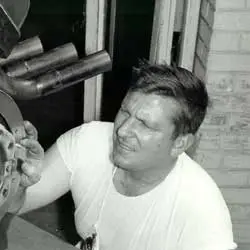 Ed Donovan
1928–1989 A lifelong interest in engines and early exposure to California's dry lakes made Ed Donovan a likely convert to drag racing. He…
Read bio
Class of 1992Presented by Mopar
Ed Donovan
1928–1989 A lifelong interest in engines and early exposure to California's dry lakes made Ed Donovan a likely convert to drag racing. He…
Read bio
Class of 1992Presented by MoparEd Donovan
A lifelong interest in engines and early exposure to California's dry lakes made Ed Donovan a likely convert to drag racing. He made the switch in 1953, dropping a radically reworked Model "B" Fod into a friend’s roadster. In their weekly visits to Santa Ana, Ed noticed a need for better valves. Working evenings at home, the youngster began manufacturing his own stainless-steel versions followed by the first two-disc "slipper" clutch, one-piece bell housings, and forged rocker arms for 392 Chryslers. Donovan Engineering became a top fuel force in the early 60's producing parts and complete engines for many of the era's brightest stars. Among the first to benefit was hired driver Tom McEwen who also received his "Mongoose" moniker from Ed. At the turn of the decade, it was Donovan and partner Bob Creitz who dominated the final years of the slingshot dragster. In 1971, Ed disbanded his own team to oversee the first production-type aluminum cylinder block. In its debut, the original Donovan 417 powered John Wiebe's obsolete front engine feeler to an ET of 6.53 seconds and a runner-up finish at the NHRA Supernationals. An aluminum small-block Chevy came in 1978, followed by the Donovan big block in 1985. Even after death, Ed's dreams continue to come true. In 1991, Donovan Engineering introduced its Model "D" block an aluminum replacement for the four-cylinder Ford powerplant that captured Ed Donovan's interest in the 1930's.
-
1992
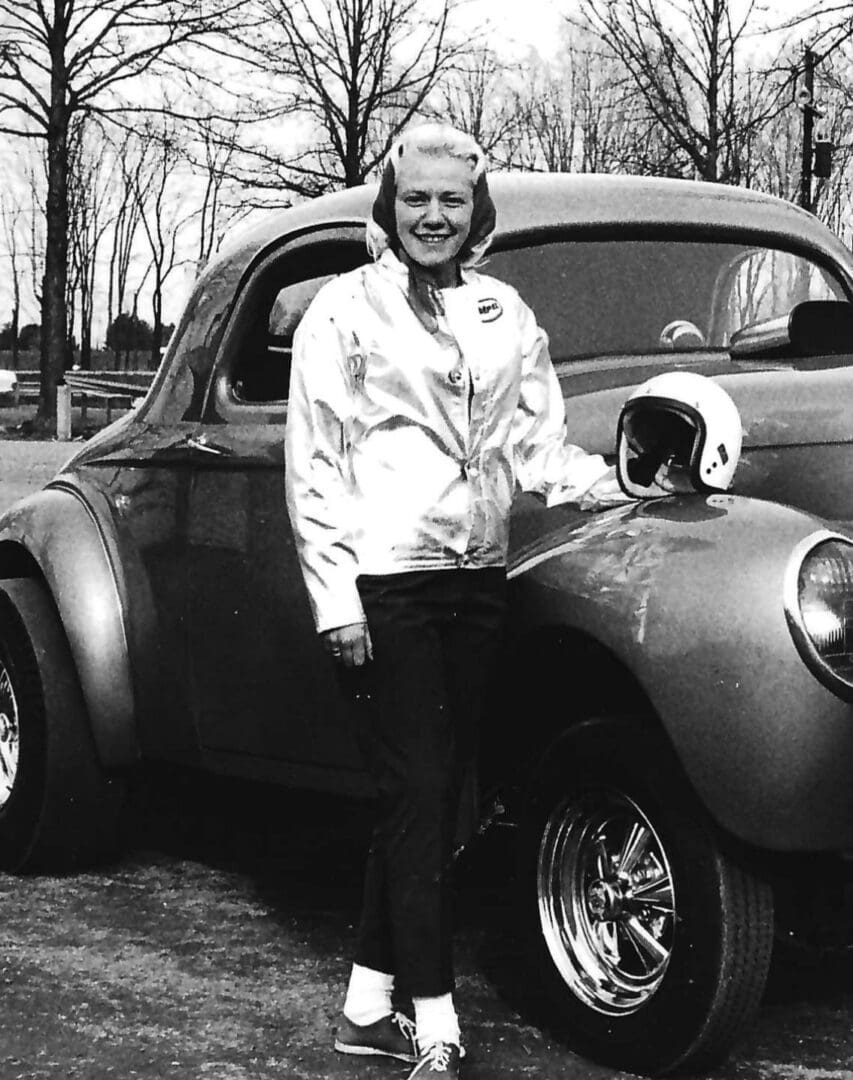 Barbara Hamilton
1941–2020 When she passed NHRA's licensing test in August 1964 young Barbara Hamilton wasn't interested in making history. Rather, she was determined to…
Read bio
Barbara Hamilton
1941–2020 When she passed NHRA's licensing test in August 1964 young Barbara Hamilton wasn't interested in making history. Rather, she was determined to…
Read bio
 Class of 1992Presented by Mopar
Barbara Hamilton
When she passed NHRA's licensing test in August 1964 young Barbara Hamilton wasn't interested in making history. Rather, she was determined to conclude two years of petitioning NHRA officials to let her drive the supercharged 1937 Willys Gasser that she and friend Nancy Leonello had built from scratch. Once licensed Hamilton went on to win C/GS class honors at the NHRA Springnationals and set a NASCAR national ET record. Nevertheless, the first female ever licensed to drive supercharged vehicles was among the four women whose licenses were subsequently revoked by NHRA just prior to the 1967 Nationals. Several months of pressure from Hamilton and fellow Hall of Fame inductee Paula Murphy helped persuade NHRA to reinstate the four existing licenses and grant a fifth to Shirley Muldowney. She subsequently moved up to B/GS before retiring in 1972. Barbara's 1937 Willy's was restored to its original racing condition and is now on display at the Don Garlits Museum of Drag Racing.
-
1992
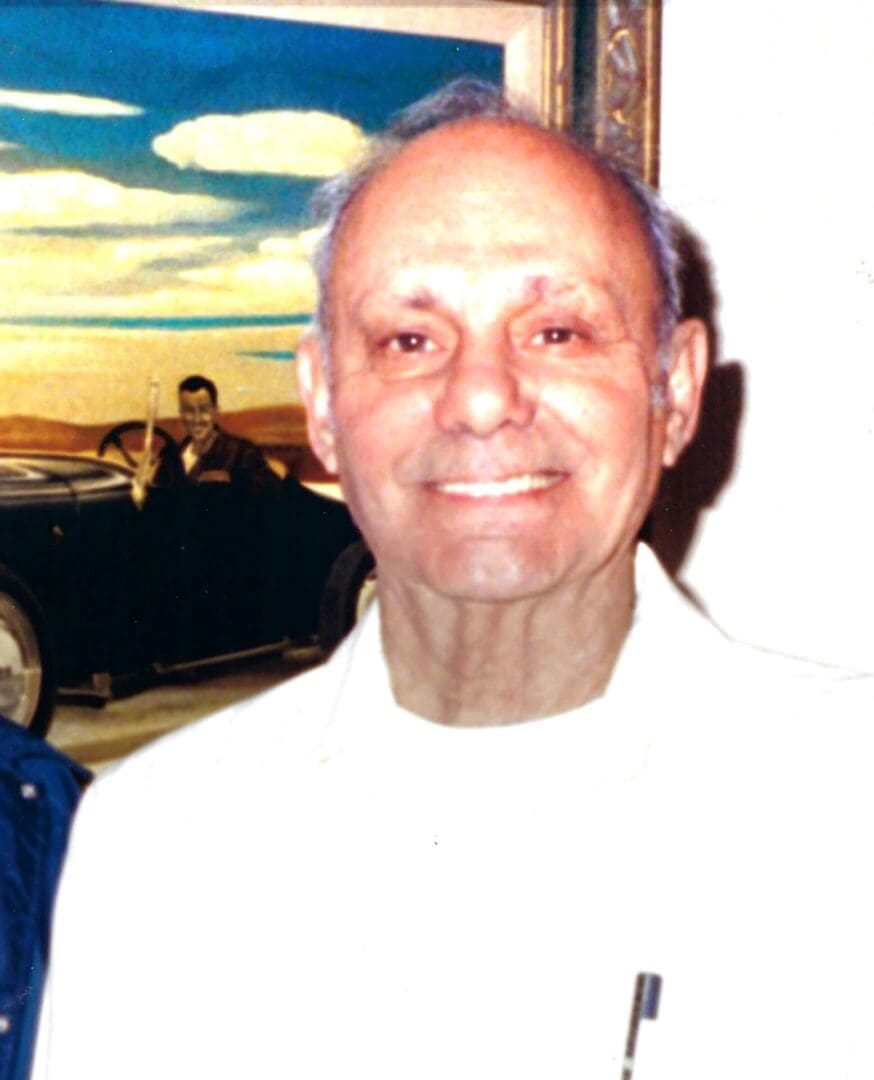 Ernie Hashim
1924–2003 Among many other accomplishments, Ernie Hashim is personally responsible for bringing GMC superchargers to drag racing. The pivotal point in Hashim's career…
Read bio
Ernie Hashim
1924–2003 Among many other accomplishments, Ernie Hashim is personally responsible for bringing GMC superchargers to drag racing. The pivotal point in Hashim's career…
Read bio
 Class of 1992Presented by Mopar
Ernie Hashim
Among many other accomplishments, Ernie Hashim is personally responsible for bringing GMC superchargers to drag racing. The pivotal point in Hashim's career was 1952, when he adapted a 4-71 GMC blower to his Flathead powered dragster and ran 122 mph right off the end of Saugus dragstrip, and into a telephone pole. Ernie never drove again, but continued as a car owner, engine builder, and speed shop operator. In 1955, he hand-built a complete induction system to mount a blower to the front of his Chrysler Hemi, creating the first successful supercharged dragster. With Bill Replogle driving, it set a world record of 153.91 mph at Lions, and subsequently became the first blown Chrysler combination to surpass 155 mph. Hashem effectively invented the wheelie bar, as well as, when he added a small fifth wheel to his top fueler in 1959. Ernie was active in Bakersfield California as the Western distributor. of M&H Racemasters for fellow Hall of Fame inductee Marvin Rifchin.
-
1992
 Bobby Langley
1932–2011 Of all the great dragster racers to come out of the Southwest in the 1950's, none was more colorful, popular, or professional…
Read bio
Class of 1992Presented by Mopar
Bobby Langley
1932–2011 Of all the great dragster racers to come out of the Southwest in the 1950's, none was more colorful, popular, or professional…
Read bio
Class of 1992Presented by MoparBobby Langley
Of all the great dragster racers to come out of the Southwest in the 1950's, none was more colorful, popular, or professional them Bobby Langley. His very first racecar was a full-bodied slingshot dragster built entirely at home. A gas-burning Cadillac powerplant took the unknown Texan to the final round of class eliminations at the 1958 NHRA Nationals in Kansas City. Hooked on big-time competition, Bobby and wife Ruth returned to Everman, Texas, and started building the beautiful, Chrysler-powered "Scorpion I" that runner-upped at the subsequent NHRA Nationals. Hitting the road in 1958, Bobby introduced M&H tires to California by racing in the Bakersfield Championship with a 9.07 ET and 166 mph. Bobby would take low ET and best appearing car honors at the NHRA Nationals, and totally dominated the International Drag Festival in Mexico. The fully uniformed Langley family also won best appearing crew honors at both the 1957 and 1958 Nationals. A 6-71 blower appeared in late 1958, followed by a fuel injector, and ultimately nitromethane. The highlight of Bobby's career was the 1964 AHRA Nationals where "Scorpion IV" won Top Eliminator, set low ET, and top speed. This earned Langley the Master Mechanics Trophy. He returned to the US Nationals final in 1966 and won five consecutive Texas State Championships before retiring in 1969.
-
1992
 George Montgomery
1933–2023 No one in history has created and perfected as many unconventional engine combinations as George Montgomery. Montgomery's name was synonymous with supercharging.…
Read bio
George Montgomery
1933–2023 No one in history has created and perfected as many unconventional engine combinations as George Montgomery. Montgomery's name was synonymous with supercharging.…
Read bio
 Class of 1992Presented by Mopar
George Montgomery
No one in history has created and perfected as many unconventional engine combinations as George Montgomery. Montgomery's name was synonymous with supercharging. He fabricated his own blower manifold for the Cadillac-powered Willys that one Little Eliminator at the 1959 NHRA Nationals; the first of four national titles. In 1964, George earned an international following as a member of the United States Drag Racing Team that toured Europe. In 1967, Montgomery revolutionized gas-supercharged racing by introducing the controversial, fiberglass-bodied, SOHC 427-equipped Mustang that dominated for three seasons. At the 1969 Nationals, it was finally replaced by a new, red Mustang which promptly won Super Eliminator and Best Engineered Car. When Ford's new Boss 429 became available, it was George who successfully developed both supercharged and twin-turbocharged versions. He won his seventh NHRA Oscar in 1974, then briefly campaigned an alcohol funny car before retiring.
-
1992
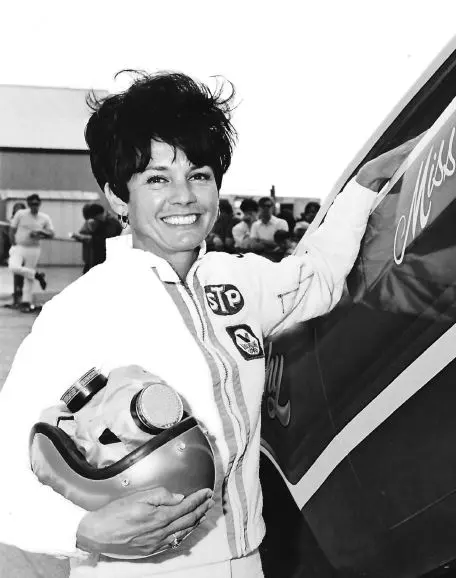 Paula Murphy
1928–2023 The first woman license to drive a supercharged fuel car was a seasoned motorsports veteran by the time she received her UDRA…
Read bio
Class of 1992Presented by Mopar
Paula Murphy
1928–2023 The first woman license to drive a supercharged fuel car was a seasoned motorsports veteran by the time she received her UDRA…
Read bio
Class of 1992Presented by MoparPaula Murphy
The first woman license to drive a supercharged fuel car was a seasoned motorsports veteran by the time she received her UDRA and NHRA Funny Car licenses. Under the guidance of Andy Granatelli, sport car racer Paula Murphy turned pro in 1963. She promptly set a women speed record at Bonneville, averaging 161 mph in an Avanti, and turned practice labs at Indy in the STP Novi. In 1964, she returned to Bonneville to boost her women's land speed record to 236.37 mph with Walt Arfon's jet car. Murphy went drag racing in 1965, rapidly advancing from stockers to gas and fuel dragsters. In 1966 she campaigned a fuel-burning funny car nationwide as "Miss STP" and received a UDRA license. NHRA followed suit, only to revoke the privileges of all four of its female pros midway through Murphy's lucrative 1967 tour. NHRA would reconsider under pressure from STP and reinstated the women's licenses. Paula went on to break the 200 mph barrier and win the Olympics of Drag Racing. She remained a red-hot funny car attraction through the end of 1972, when a rocket powered ride at Bonneville prompted a switch to rocket dragsters. However, her first full pass ended in disaster after the engine failed to shut off, excelling Murphy off the end of the Sears Point Raceway at 300 plus mph. This incident prematurely ended one of the sport’s most promising careers.
-
1992
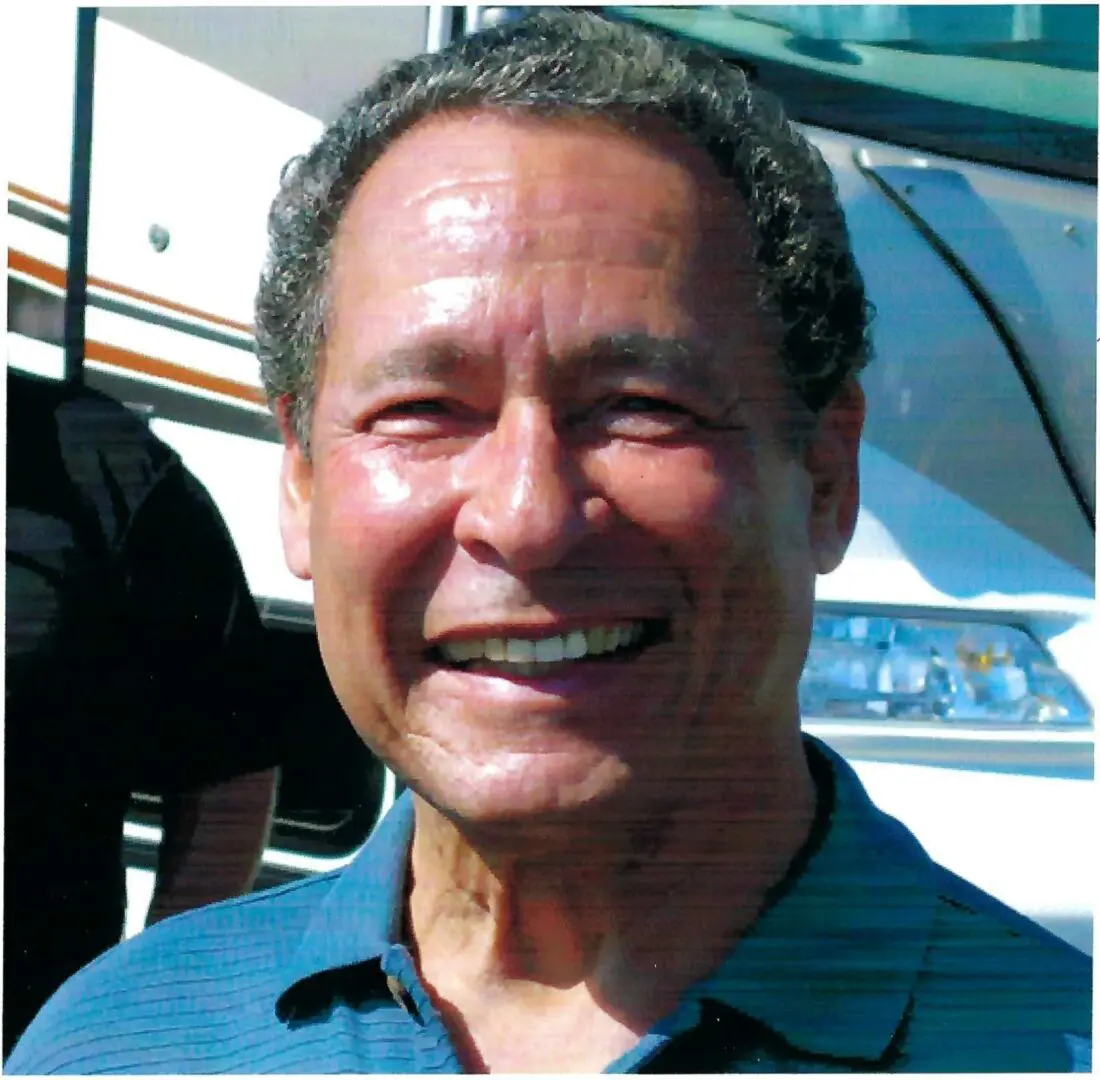 Danny Ongais
1942–2022 In 1957, at the tender age of 14, Danny was already racing dirt motorcycles in his native Hawaii. By 17, the expert-rated…
Read bio
Danny Ongais
1942–2022 In 1957, at the tender age of 14, Danny was already racing dirt motorcycles in his native Hawaii. By 17, the expert-rated…
Read bio
 Class of 1992Presented by Mopar
Danny Ongais
In 1957, at the tender age of 14, Danny was already racing dirt motorcycles in his native Hawaii. By 17, the expert-rated bike racer was winning with sports cars, as well. In 1962, Danny came to the mainland with another unknown Islander, Roland Leong, who flew his blown gas dragst over for the Winternationals. After the Pomona event, veteran racers predicted that the Best Appearing Car and Long-Distance awards collected by these newcomers would be the last drag racing trophy they'd ever win. Ongais prove them wrong the following season by winning an NHRA Top Gas title. In 1964, driving for Mickey Thompson, he prevailed at NHRA, AHRA, and UDRA events, plus the memorable Hot Rod Magazine Championships-in which he hand-pushed his dragster to a record ET of one minute thirty-five seconds. Next came a series of fast nitro burners. Danny is still remembered for his near-perfect US Nationals winning 1969 season at the wheel of Mickey Thompson's blue Mustang. Moving to the Vel's Parnelli Jones camp, he drove the team's top fueler and funny car often at the same event in the early 70s. In 1975 "Ongais left drag racing to start his successful IndyCar career.
-
1992
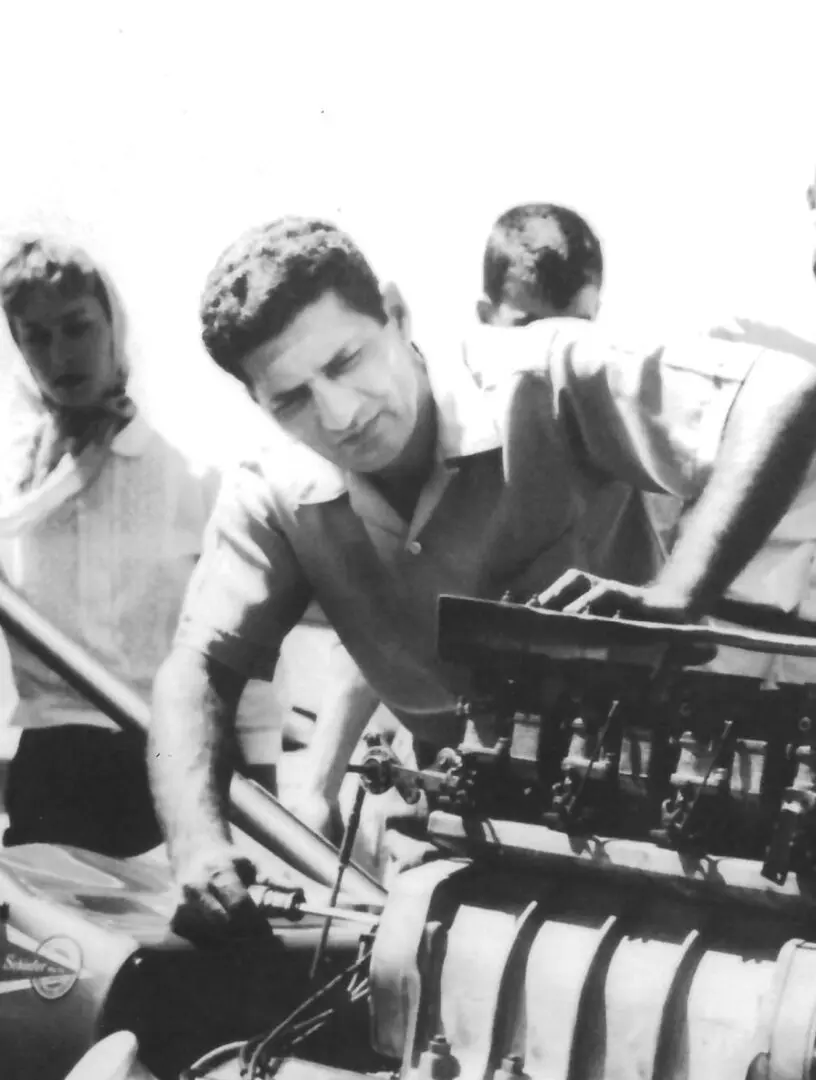 Setto Postoian
1922–1995 One of drag racing's first Eastern heroes, and early idle of the teenager Don Garlits, was Serop "Setto" Postoian. Before being drafted…
Read bio
Setto Postoian
1922–1995 One of drag racing's first Eastern heroes, and early idle of the teenager Don Garlits, was Serop "Setto" Postoian. Before being drafted…
Read bio
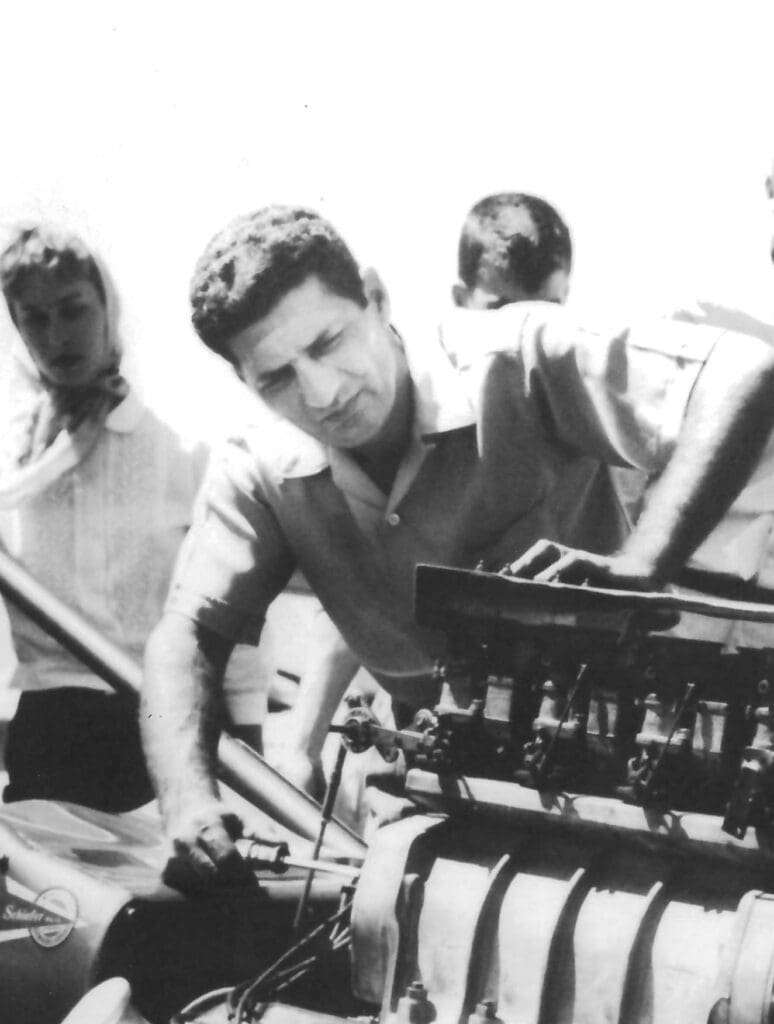 Class of 1992Presented by Mopar
Setto Postoian
One of drag racing's first Eastern heroes, and early idle of the teenager Don Garlits, was Serop "Setto" Postoian. Before being drafted into World War II, Setto worked in the engine rebuilding division of Ford Motor Company in Detroit. After serving three and a half years overseas, the young veteran learned frame and fronting repairs from a former instructor of the Bear Manufacturing Company. That relationship led to a pit crew stent at the Indianapolis 500, and his first ride in a real hot rod the “Full House" the 1932 Ford roadster of Jack McGraph a racing mechanic from Los Angeles. Setto stayed six weeks, absorbing everything he saw. Returning to Michigan, Postoian opened Farmington Speed Shop and built a flathead roadster for the drags. Next came and ublown dragster, powered by a Desoto Hemi the first overhead engine Setto had. After switching to a 392 Chrysler, Setto won back to back Top Fuel titles at the prestigious World Series of Drag Racing in 1957 and 1958. Turning pro, Setto received top appearance money to race as far away as Florida, California, and New England. In 1960 this rising star was seriously injured at Detroit Dragway, and never raced again. He would go on to work for and retire from General Motors Technical Center.
-
1992
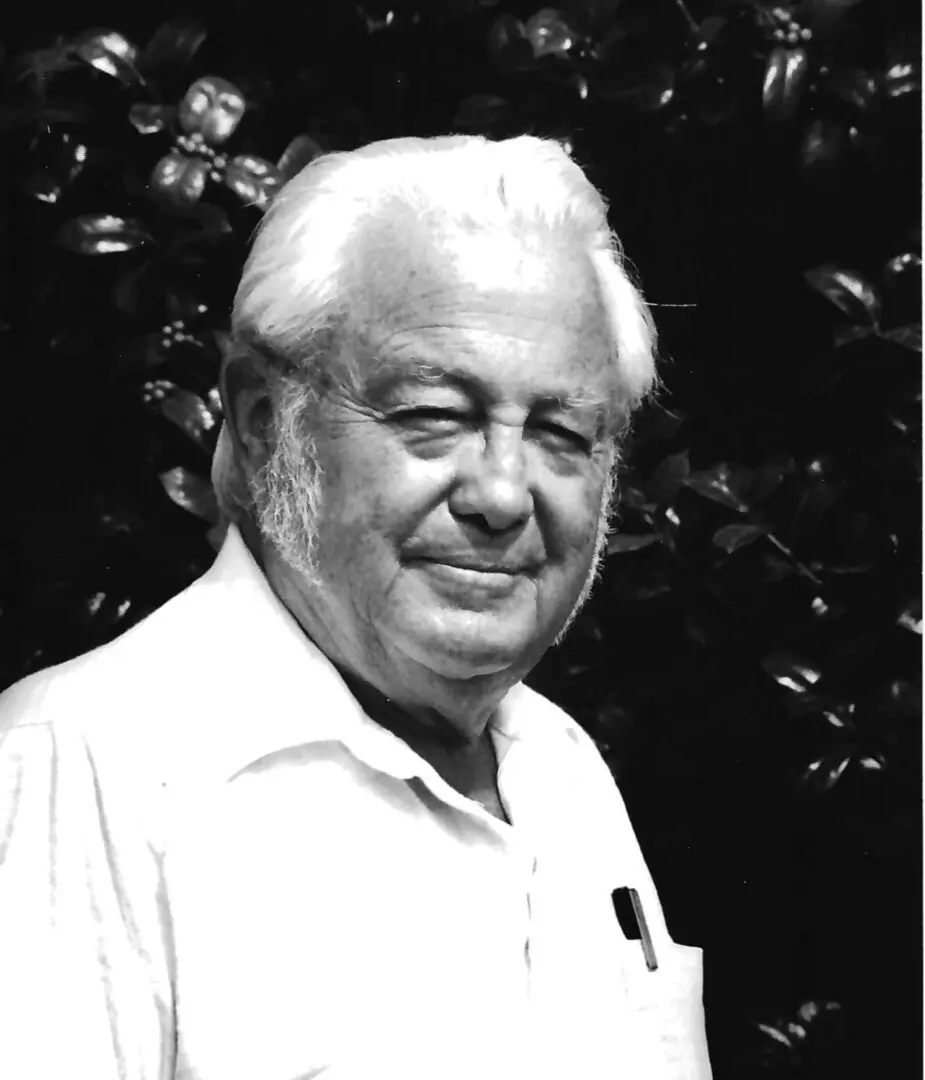 Eric Rickman
1918–2009 More than any other development drag racing's explosive growth in the 1950s might be credited to the infant sports exposure in Hot…
Read bio
Eric Rickman
1918–2009 More than any other development drag racing's explosive growth in the 1950s might be credited to the infant sports exposure in Hot…
Read bio
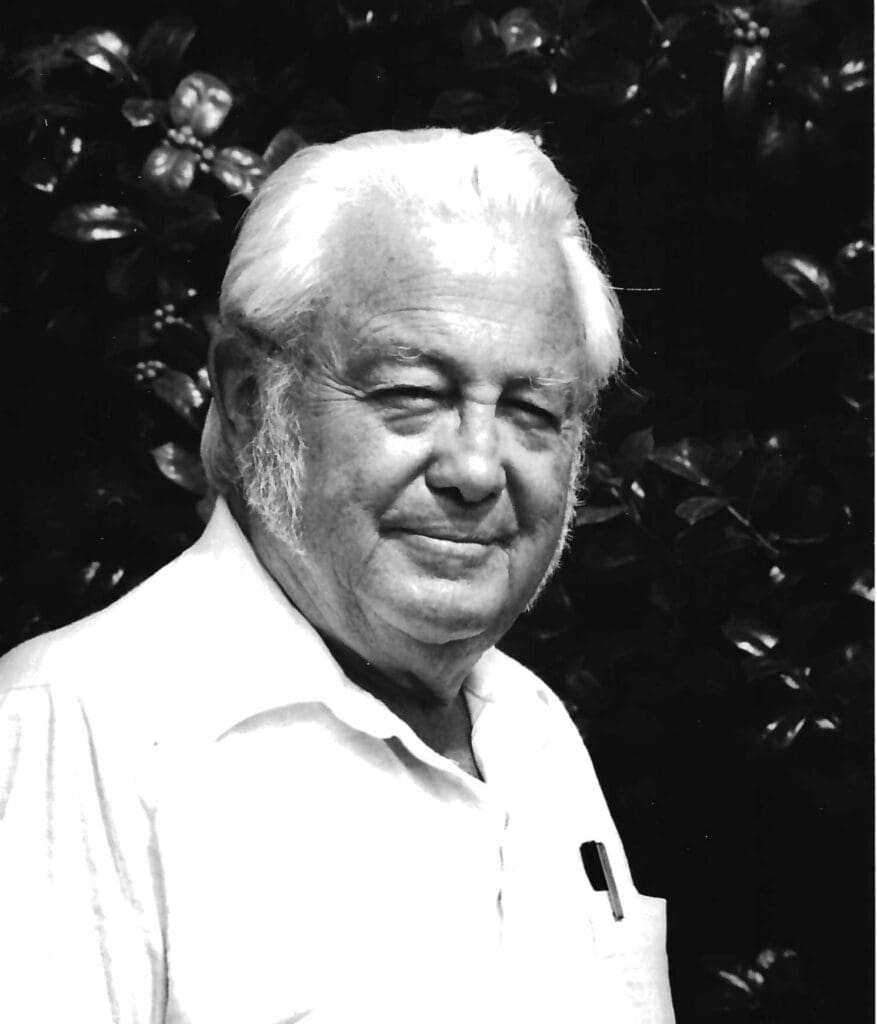 Class of 1992Presented by Mopar
Eric Rickman
More than any other development drag racing's explosive growth in the 1950s might be credited to the infant sports exposure in Hot Rod Magazine. More often than not, the black and white images that inspired imaginations across the country originated in the viewfinder of Eric Rickman's camera. Rickman's photographic career actually predates the 1948 introduction of Hot Rod; he started shooting San Francisco area midget and roadster races right after World War II. He was selling action photos at the 1950 Oakland Roadster Show when publisher Robert E Petersen happened by Eric's booth, liked what he saw, and offered him a job. Over the next 40 years, Rickman expertly documented the evolution of drag racing and hot rotting. Of special historical significance are Eric's photographs from two complete tours with the NHRA Drag Safari that crisscrossed America from 1954 to 1956, including his coverage of the inaugural NHRA Nationals at Great Bend, Kansas.
-
1992
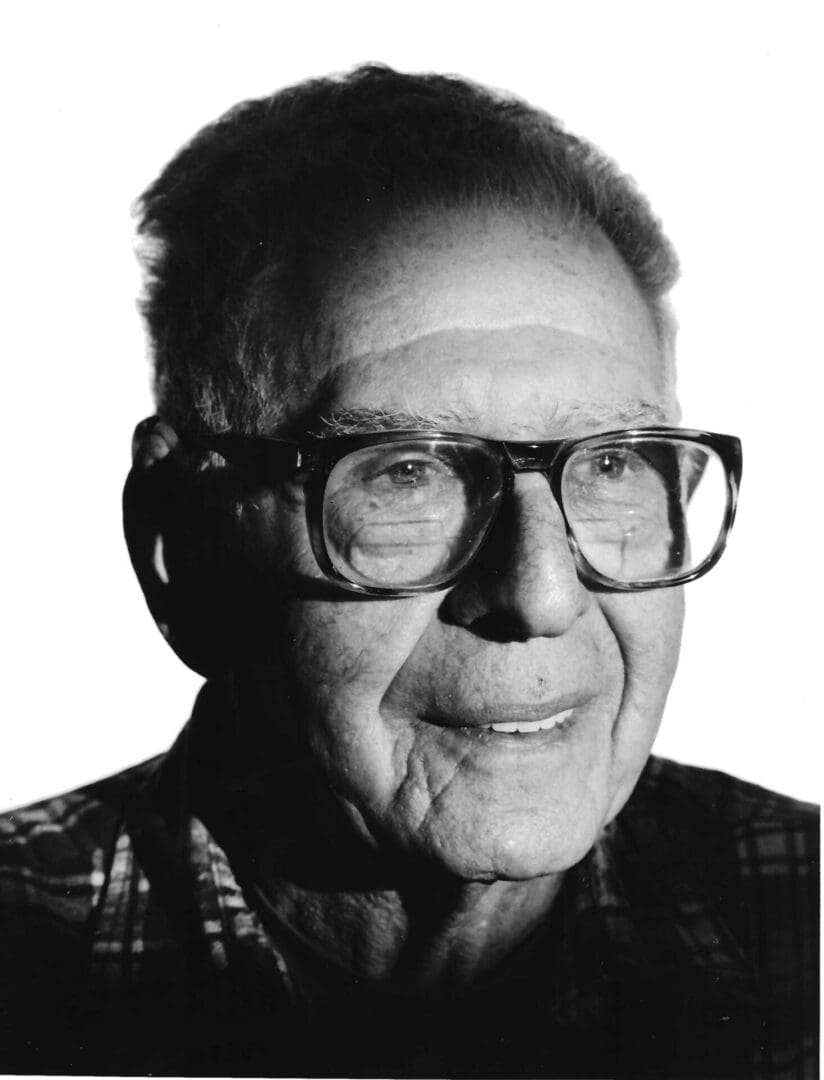 Marvin Rifchin
1915–2009 The man behind M&H Tire Company could never say no to a racer in need. It's been that way since the rubber…
Read bio
Marvin Rifchin
1915–2009 The man behind M&H Tire Company could never say no to a racer in need. It's been that way since the rubber…
Read bio
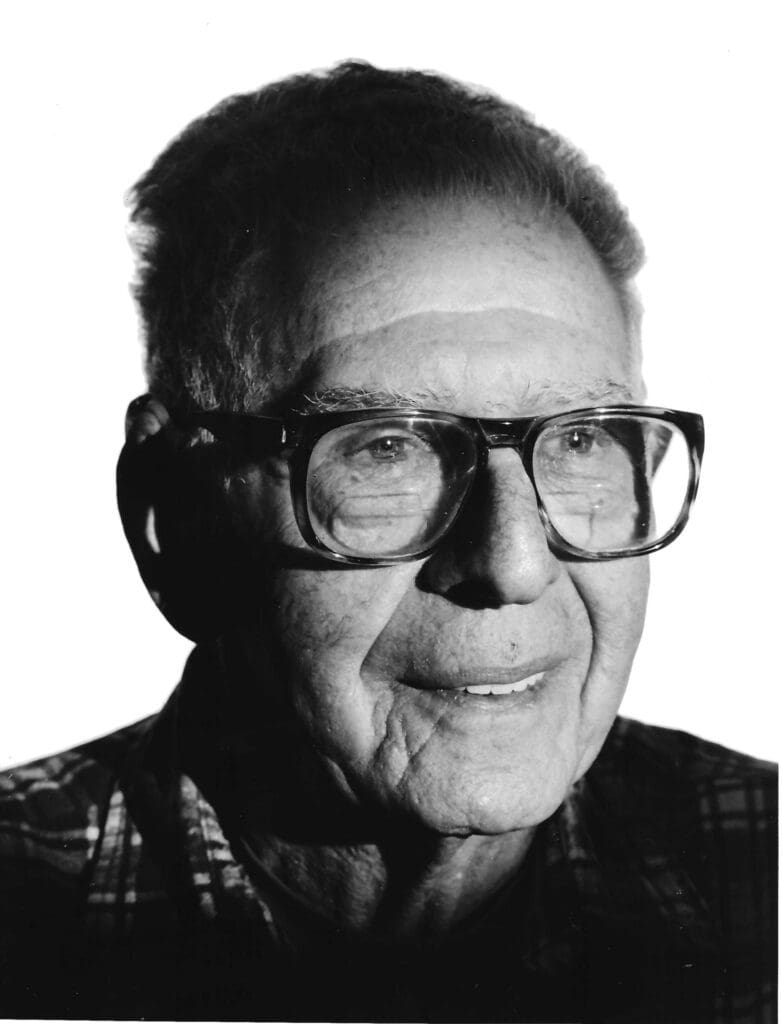 Class of 1992Presented by Mopar
Marvin Rifchin
The man behind M&H Tire Company could never say no to a racer in need. It's been that way since the rubber shortages of World War II when military priorities virtually halted production of the micro-size inner tubes used for northeastern midget racers. In desperation, they turn to a small tire company in Watertown Massachusetts. They pleaded with Marvin Rifchin and his father, Harry- respectively M and H of this family business- until Marvin finally relented, cutting and heat splicing 16-inch passenger tubes to fit the 12-inch midget wheels. Other types of oval track racers convinced M&H to build them tires too. Inadvertently, drag racer started pestering Marvin for an alternative to the recap slicks then in use. Rifchin again gave in, developing a dragster tire from scratch in 1957. Not coincidently, little-known Don Garlits began running unbelievable 170 mph speeds that very season. For the next two decades, despite heavy competition from major tire manufacturers, M&H Racemasters set the top fuel pace almost continuously.
-
1992
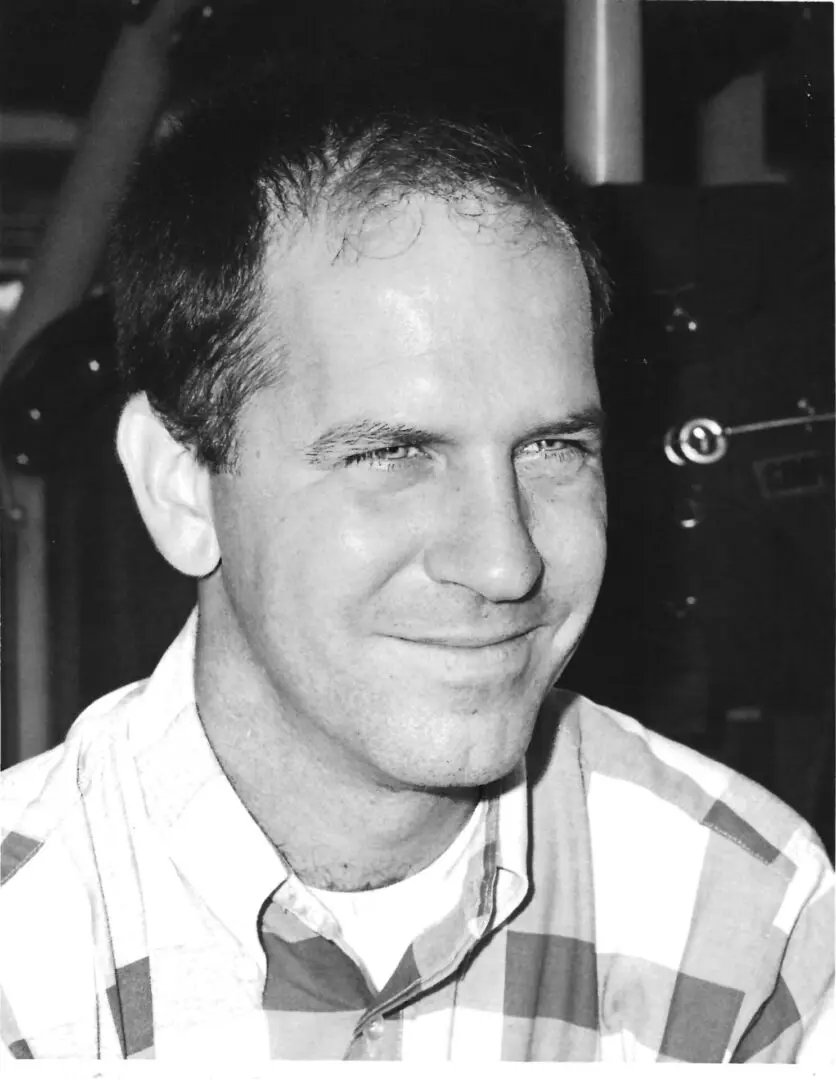 Pete Robinson
1933–1971 One of the greatest innovators in drag racing history, Pete Robinson did it all: designer, driver, engine builder, and manufacturer. He was…
Read bio
Pete Robinson
1933–1971 One of the greatest innovators in drag racing history, Pete Robinson did it all: designer, driver, engine builder, and manufacturer. He was…
Read bio
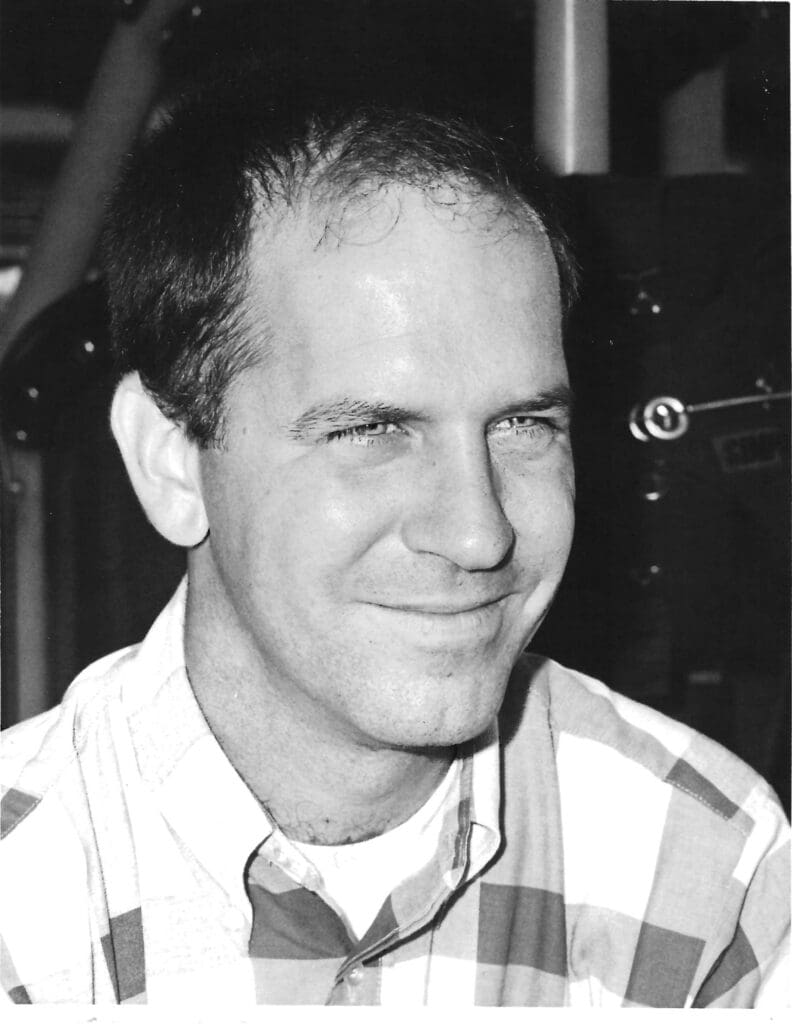 Class of 1992Presented by Mopar
Pete Robinson
One of the greatest innovators in drag racing history, Pete Robinson did it all: designer, driver, engine builder, and manufacturer. He was one of the few racers capable of taking a new idea all the way to the finished product all by himself; then hopping into a dragster and personally testing the device. An early advocate of weight reduction, Robinson and his small block, thin-tubed "Tinker Toy" came out of nowhere to win the 1961 US Nationals in the 1962 World Series of Drag Racing accelerating the demise of twin-engine dragsters. "Sneaky Pete" went on to develop rear-wheel jacks, magnesium blowers, and various aerodynamic devices. His combination of a redesigned SOHC Ford engine and a unique "vacuum wing" produced an unprecedented 6.50 seconds ET in early 1971. At the subsequent NHRA Winternationals Pete's ground effects fueler when airborne in the lights impacted the guardrail and exploded, mortally wounding the 37-year-old engineer. Appropriately his final pass was the quickest qualifying run of the day.
-
1992
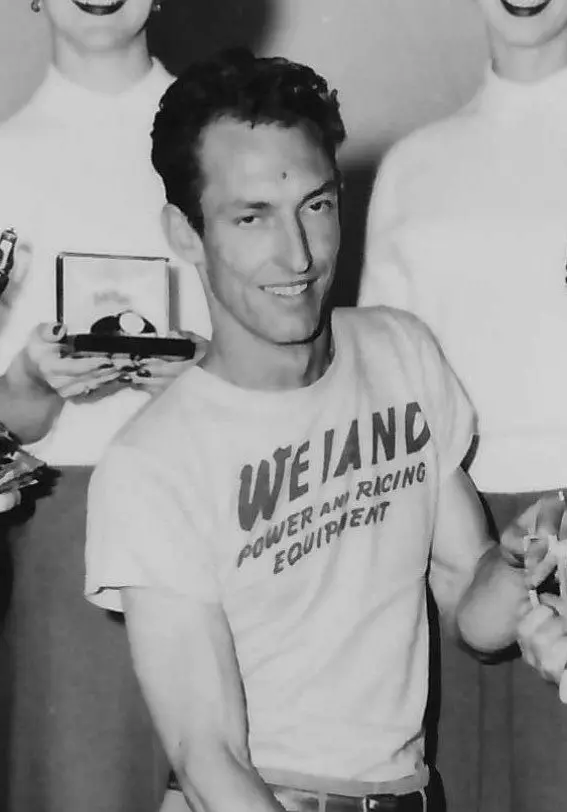 Lloyd Scott
1925–1965 A dry lakes racer and gifted innovator, Lloyd Scott's drag racing career got going at the same time and place as the…
Read bio
Class of 1992Presented by Mopar
Lloyd Scott
1925–1965 A dry lakes racer and gifted innovator, Lloyd Scott's drag racing career got going at the same time and place as the…
Read bio
Class of 1992Presented by MoparLloyd Scott
A dry lakes racer and gifted innovator, Lloyd Scott's drag racing career got going at the same time and place as the sport itself; in the early 1950s at Santa Ana dragstrip. Rapidly advancing through stockers and roadsters, "Scotty" and partner Noel Timney built a mid-engine dragster with one goal in mind breaking the 150-mph barrier. After installing a second engine in front, their gas-burning "Bustle Bomb" topped 151 mph at the Automobile Timing Association of America's 1955 World Series of Drag Racing in Carpentersville, Illinois. Returning to the Midwest in 1956, Lloyd won top eliminator honors at the inaugural AHRA Nationals in Great Bend, Kansas. Scott was an early member of the then-exclusive Bonneville 200 mph Club and also raced two-wheelers successfully. In 1965 at the age of 40 Lloyd died while tuning a motorcycle for a race.
-
1992
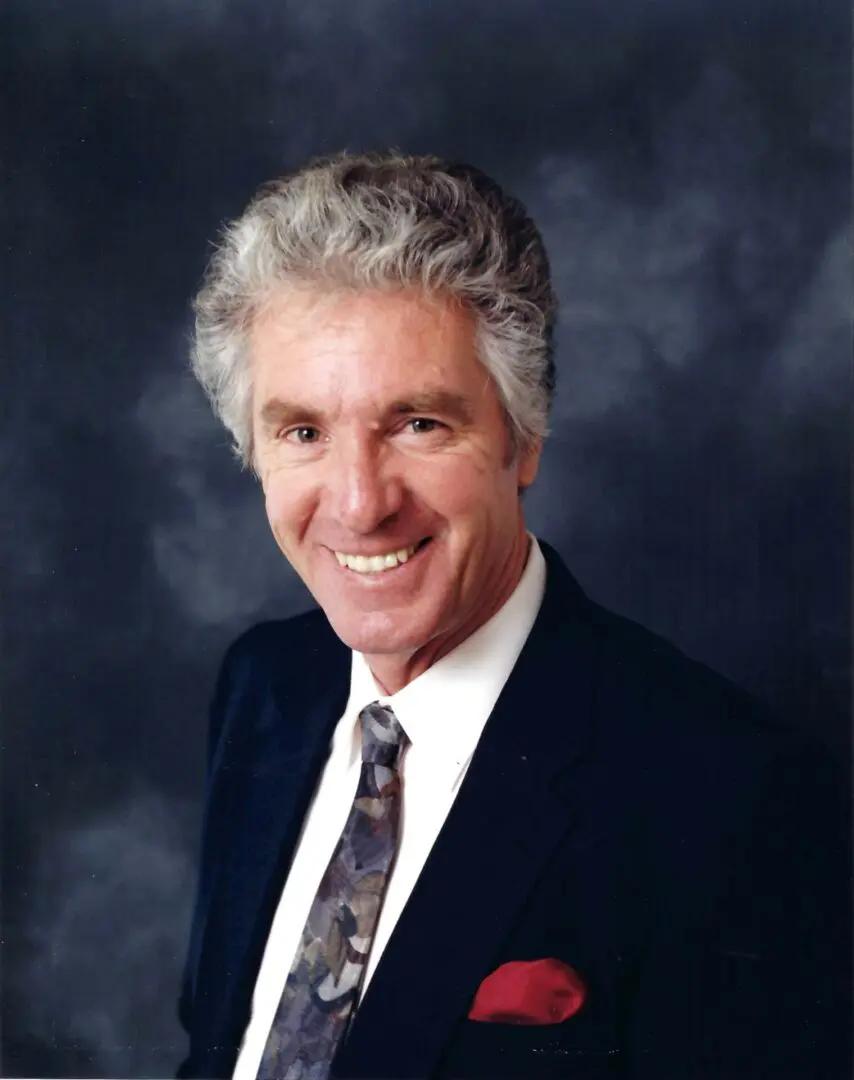 James Warren
1937–2011 When James Warren began dating his future wife in 1952, his life changed in more ways than one. Juanita's big brother, a…
Read bio
James Warren
1937–2011 When James Warren began dating his future wife in 1952, his life changed in more ways than one. Juanita's big brother, a…
Read bio
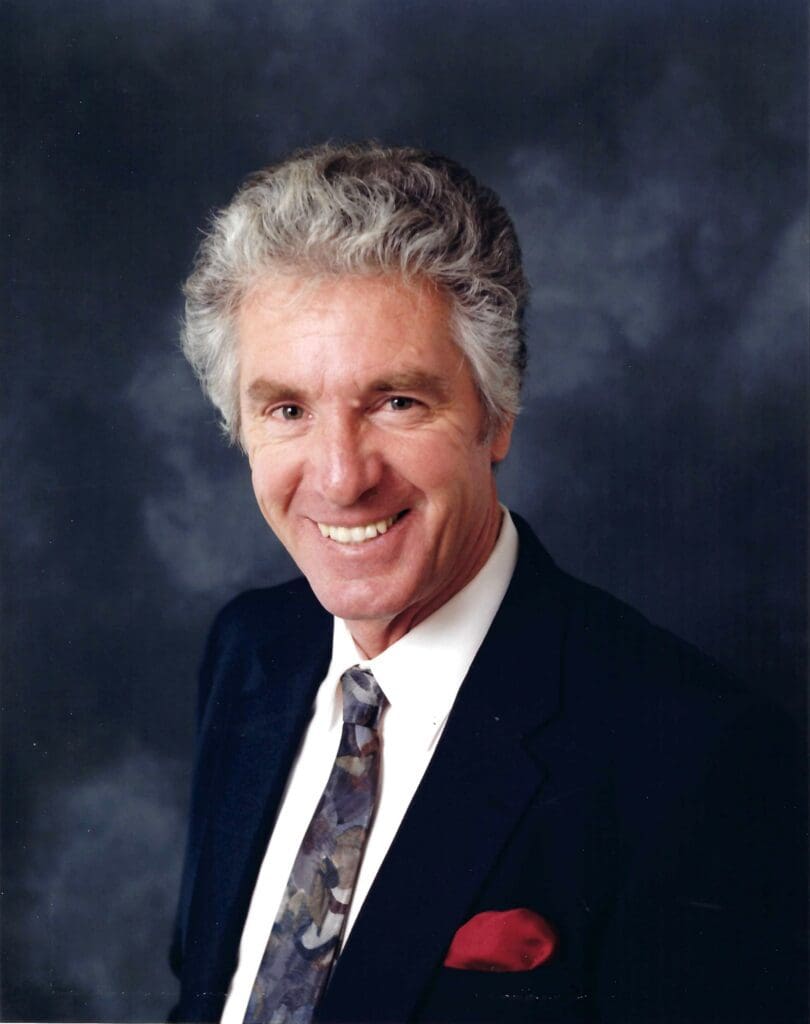 Class of 1992Presented by Mopar
James Warren
When James Warren began dating his future wife in 1952, his life changed in more ways than one. Juanita's big brother, a local dirt track racer, introduced James to motorsports. By 1958, they were competing at Bakersfield's oval track every Saturday night, and at Formosa Dragstrip on Sundays. When they decided to combine talents and concentrate on an injected Chrysler slingshot, Warren and Roger Coburn started a partnership that lasted until 1981, when James retired. Their 23 seasons together, always racing dragsters, were marked by Warrens expert driving in Coburn's unconventional combinations. The "Ridge Route Terrors" terrorized Los Angeles area tracks with a dual-engine Chrysler-Chevrolet dragster, a lightweight Chevy fueler, and ultimately the "Rain for Rent Special" that dominated West Coast racing in the mid-1970s. In the process, Warren & Coburn won the 1962 March Meet, became the first team to run 230 mph and officially back it up, won multiple NHRA and AHRA national events, when five NHRA Pacific Division championships, and were four-time winners of their hometown's most famous sporting event the US Fuel & Gas Championships.
-
1992
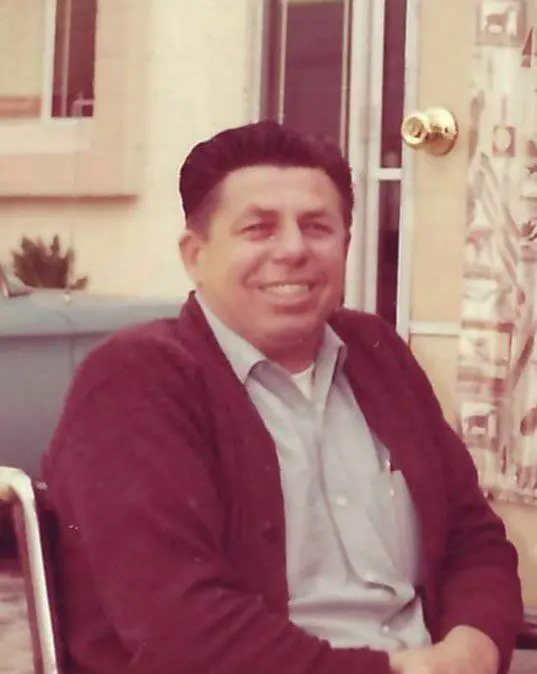 Phil Weiand
1913–1978 One of the true pioneers of the performance industry Phil Weiand was a familiar presence at hot rotting events in the 1930's.…
Read bio
Class of 1992Presented by Mopar
Phil Weiand
1913–1978 One of the true pioneers of the performance industry Phil Weiand was a familiar presence at hot rotting events in the 1930's.…
Read bio
Class of 1992Presented by MoparPhil Weiand
One of the true pioneers of the performance industry Phil Weiand was a familiar presence at hot rotting events in the 1930's. A racing accident left him a paraplegic, but confinement to a wheelchair only heightened his desire to make a meaningful impact on racing. In 1939 he introduced the "High Weiand" manifold, the forerunner of tunnel ram intake technology. When drag racing was in its infancy, Phil developed a multiple of manifolds for engines of the day, including the popular Weiand "Drag Star" used on Don Garlits trendsetting "Swap Rat I". Recognizing the potential of the performance industry, Weiand opened his own foundry in 1955 and charted a course of total in-house quality control a visible part of the Weiand Company. Phil was also a pioneer in the adaptation of superchargers to drag racing applications. His manifold and blower drives for 6-71 superchargers became a virtual industry standard and enjoyed tremendous popularity. Weiand's tunnel ram manifolds also became a mainstay of the Pro Stock class in its formative years, used by stars like Bill "Grumpy" Jenkins. Phil was instrumental in starting the industries Credit Managers Association and later very involved in the founding of SEMA. In fact, the original SEMA logo was done in-house at Weiand. Phil Weiand passed away in 1978, having left behind a legacy of innovation and dedication. His wife Joan took over the helm of the company Bill had founded 45 years prior. In 1992 when Automotive Industries Inc. approached its 60th year as a major cornerstone of the performance industry. Phil Weiand has left an indelible mark in racing to be sure.
-
1992
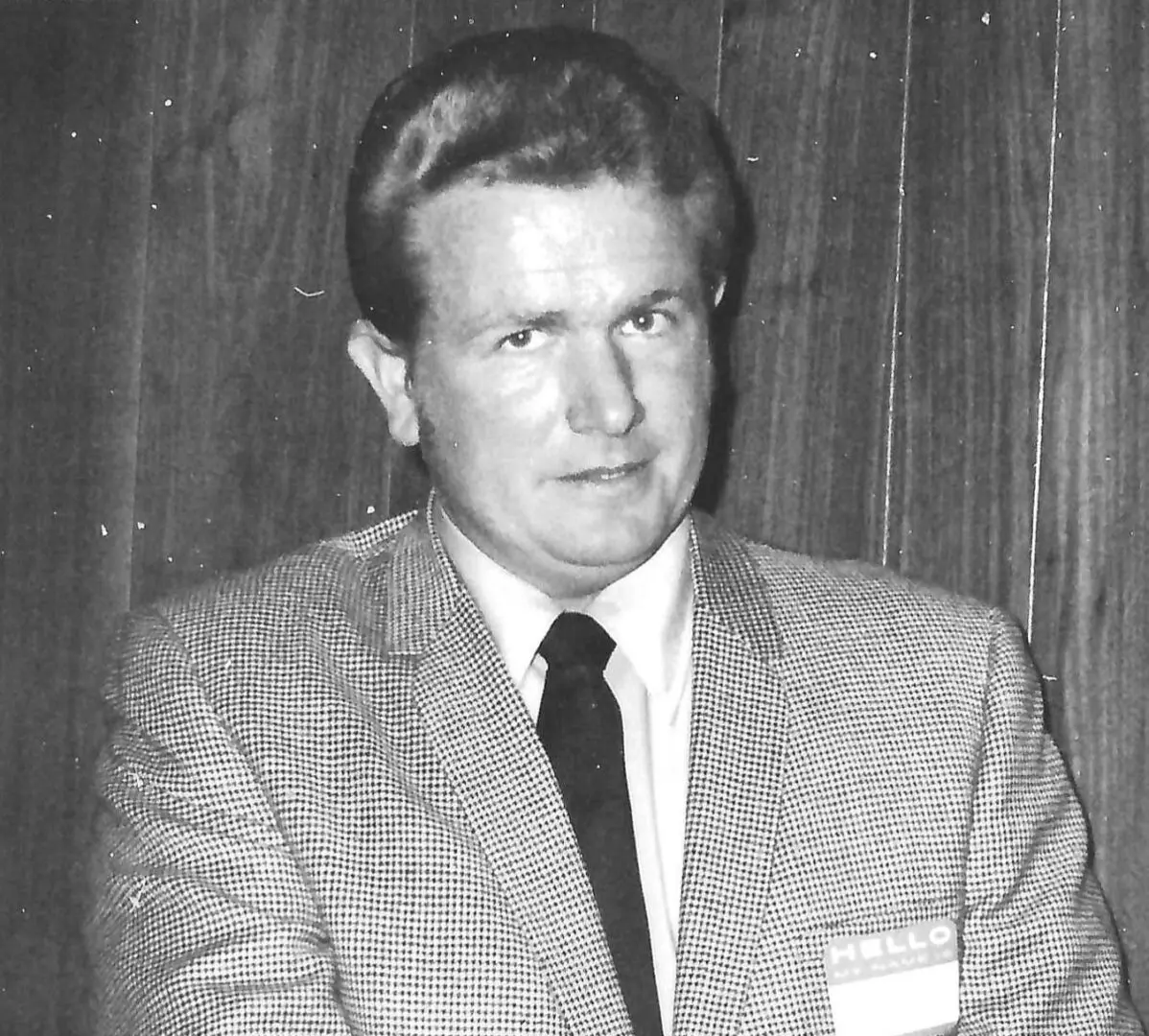 Jack Williams
1932–2006 When the National Hot Rod Association lifted its seven-year fuel band prior to the 1964 season, nitro veteran Jack Williams shot to…
Read bio
Jack Williams
1932–2006 When the National Hot Rod Association lifted its seven-year fuel band prior to the 1964 season, nitro veteran Jack Williams shot to…
Read bio
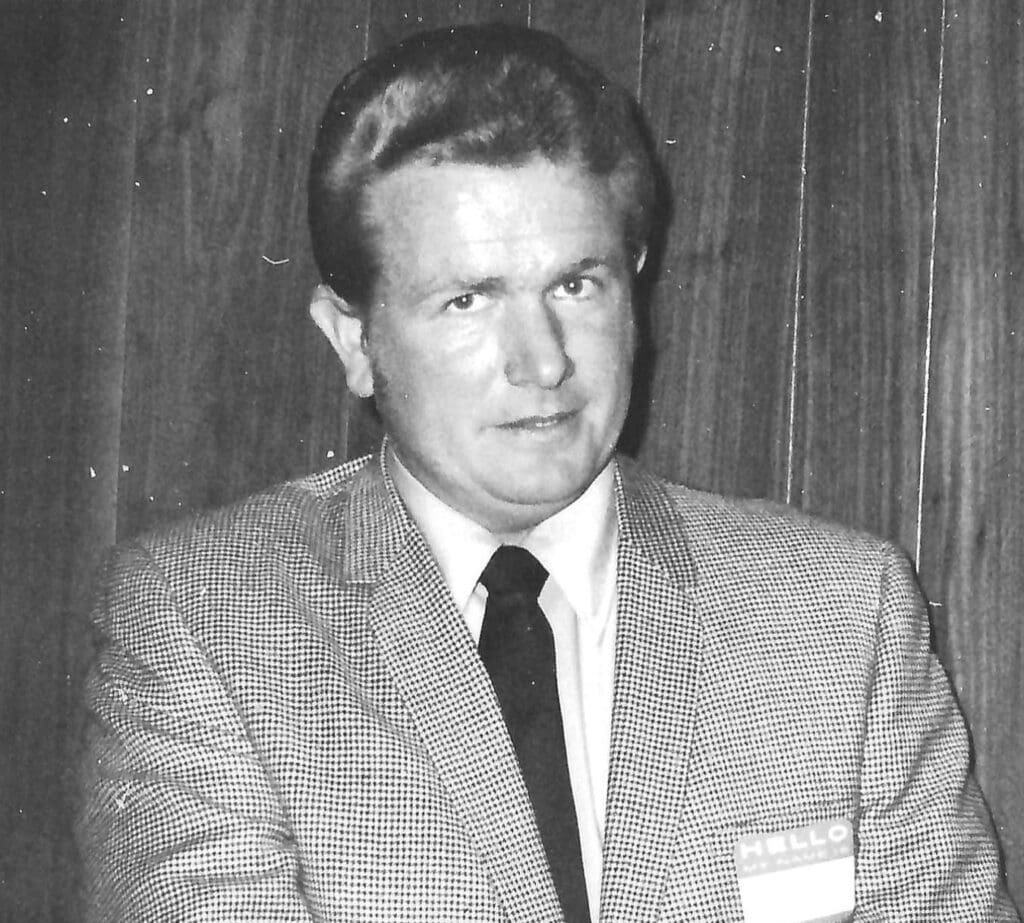 Class of 1992Presented by Mopar
Jack Williams
When the National Hot Rod Association lifted its seven-year fuel band prior to the 1964 season, nitro veteran Jack Williams shot to the forefront of top fuel racing. On the Saturday of the Winternationals, Williams won the tough AA/Fuel Dragster class earning him an automatic appearance in Sunday's Top Fuel Eliminator final, however he destroyed his 392 Chrysler in the process. A determined Crossley, Williams and Swan team gathered up their healthy parts; drove 130 miles back home to Bakersfield; thrashed all night to build a new motor, and race back to Pomona in time to swap engines. Their effort paid off when they defeated Tommy Ivo to win the first prize a Ford falcon Sprint. Later that year, Williams scored another huge win at the inaugural Hot Rod Magazine Championships, one more than 30 open events, and never relinquished his NHRA points lead. A runner-up finish at the US Nationals clinched their first NHRA Top Fuel World Championship. After hanging up his helmet in the late 60's, Williams remained successful as a manager and developer of race tracks.
Class of 1991
20 inductees-
1991
 Sydney Allard
1910–1966 Instrumental to the introduction of drag racing to the British Isles. Sydney owned, built, and drove his own blown fuel dragster in…
Read bio
Sydney Allard
1910–1966 Instrumental to the introduction of drag racing to the British Isles. Sydney owned, built, and drove his own blown fuel dragster in…
Read bio
 Class of 1991Presented by Mopar
Sydney Allard
Instrumental to the introduction of drag racing to the British Isles. Sydney owned, built, and drove his own blown fuel dragster in the 50’s. He won the Monte Carlo Rally in the famed Allard sports car of his manufacture. A Royal Auto Club Director, Sidney coordinated the corporate involvement for the First Annual International Dragster Challenge, known as the British Drag Festival, at which time United States Drag Team competed on British soil.
-
1991
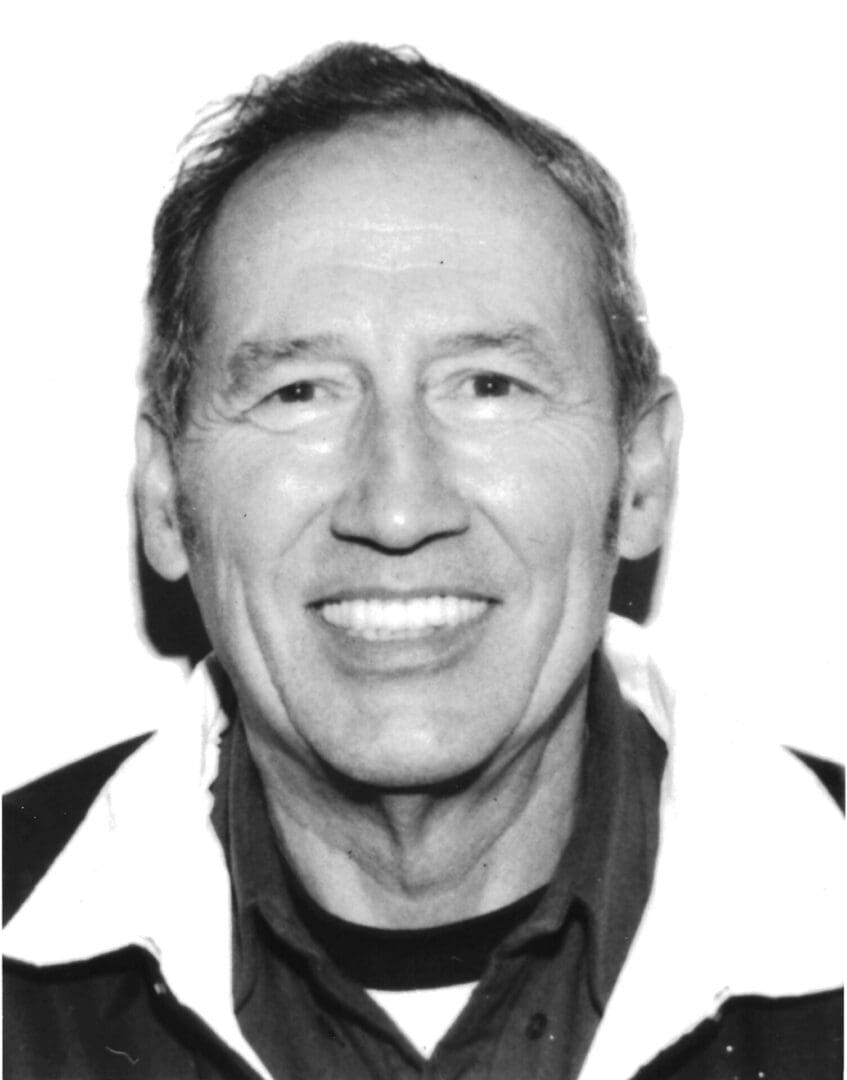 Art Arfons
1926–2007 Instrumental to the introduction of drag racing to the British Isles. Sydney owned, built, and drove his own blown fuel dragster in…
Read bio
Art Arfons
1926–2007 Instrumental to the introduction of drag racing to the British Isles. Sydney owned, built, and drove his own blown fuel dragster in…
Read bio
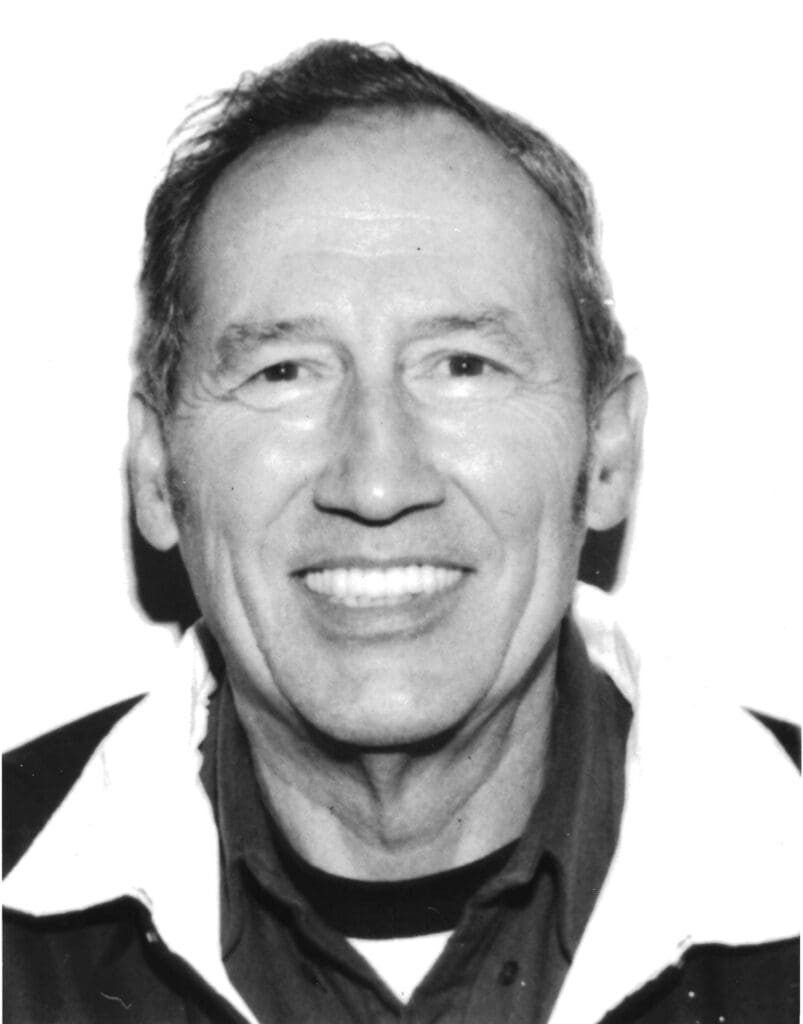 Class of 1991Presented by Mopar
Art Arfons
Instrumental to the introduction of drag racing to the British Isles. Sydney owned, built, and drove his own blown fuel dragster in the 50’s. He won the Monte Carlo Rally in the famed Allard sports car of his manufacture. A Royal Auto Club Director, Sidney coordinated the corporate involvement for the First Annual International Dragster Challenge, known as the British Drag Festival, at which time United States Drag Team competed on British soil.
-
1991
 Art Chrisman
1929–2016 Any high school student who starts off with three cars can best be described in the yearbook as the guy most likely…
Read bio
Art Chrisman
1929–2016 Any high school student who starts off with three cars can best be described in the yearbook as the guy most likely…
Read bio
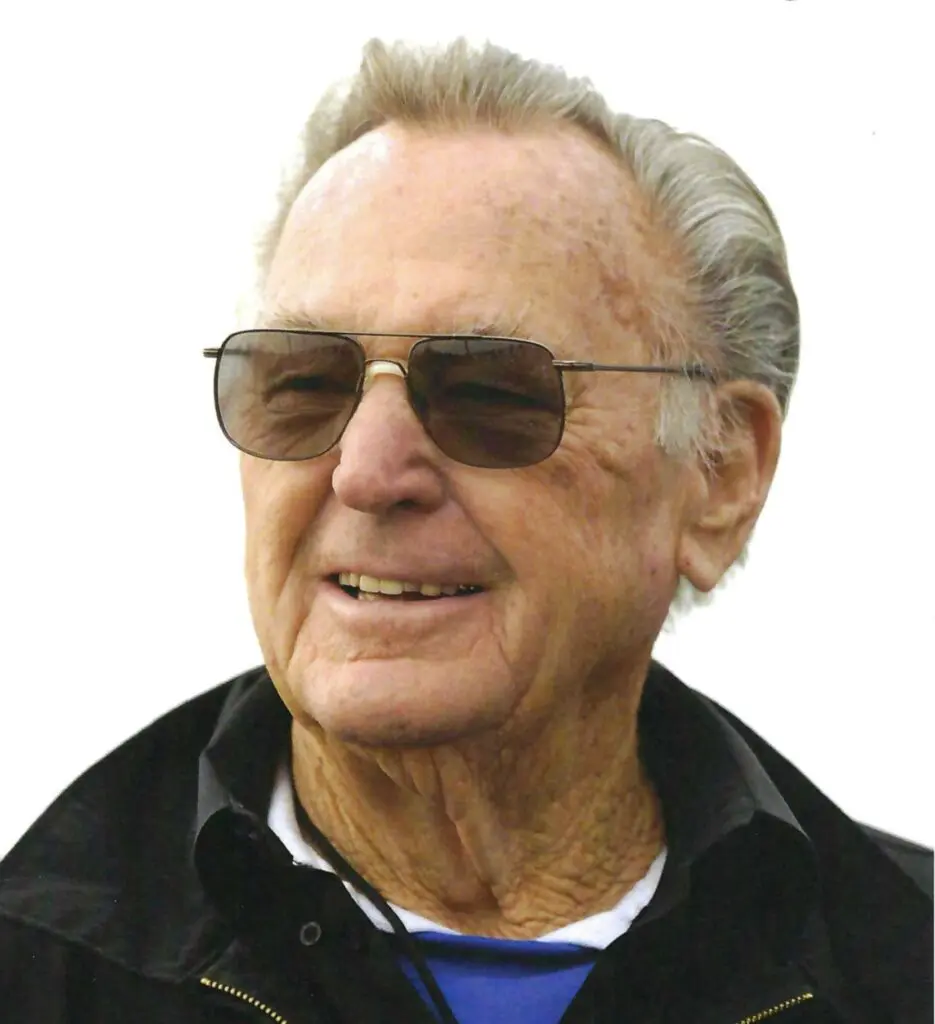 Class of 1991Presented by Mopar
Art Chrisman
Any high school student who starts off with three cars can best be described in the yearbook as the guy most likely to succeed in racing. This was the case for Art Chrisman a member of the Saints car club in Compton, California, and co-operator of the fabled Chrisman and Son’s Garage. Art made the first pass ever at the National Hot Rod Association Nationals in 1955 in Great Bend, Kansas. In 1959, Art’s Hustler won the first Bakersfield race, considered by many to be the birth of professional drag racing.
-
1991
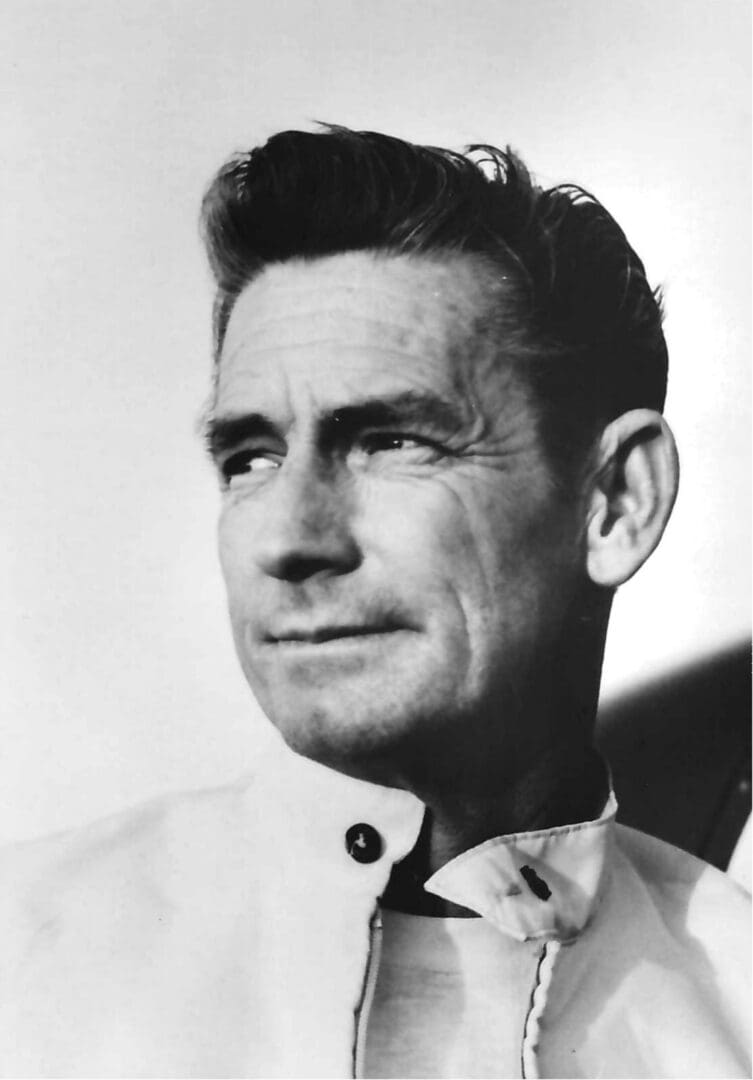 Jack Chrisman
1928–1989 One of the greatest natural drivers in drag racing history, Jack experimented with single and double-engine gas dragsters, fuel dragsters, rear-engine sidewinder…
Read bio
Jack Chrisman
1928–1989 One of the greatest natural drivers in drag racing history, Jack experimented with single and double-engine gas dragsters, fuel dragsters, rear-engine sidewinder…
Read bio
 Class of 1991Presented by Mopar
Jack Chrisman
One of the greatest natural drivers in drag racing history, Jack experimented with single and double-engine gas dragsters, fuel dragsters, rear-engine sidewinder dragsters, and eventually sidewinder funny cars. The twin-engine, small block Chevrolets of the Howard’s Cams Twin Bear, brought national attention to the sport and Jack. His contributions to organizing drag racing are many and meaningful; however, Jack’s single most significant contribution was the successful operation of the world’s first fuel funny car. The stock-bodied 1964 Mercury Comet, which became known simply as Chrisman’s Comet, changed the face of drag racing forever.
-
1991
 Emery Cook
1926–1983 Emery began his racing career in San Diego, closely associated with the Bean Bandits. He drove the Hensley & Cook rear-engine roadster,…
Read bio
Emery Cook
1926–1983 Emery began his racing career in San Diego, closely associated with the Bean Bandits. He drove the Hensley & Cook rear-engine roadster,…
Read bio
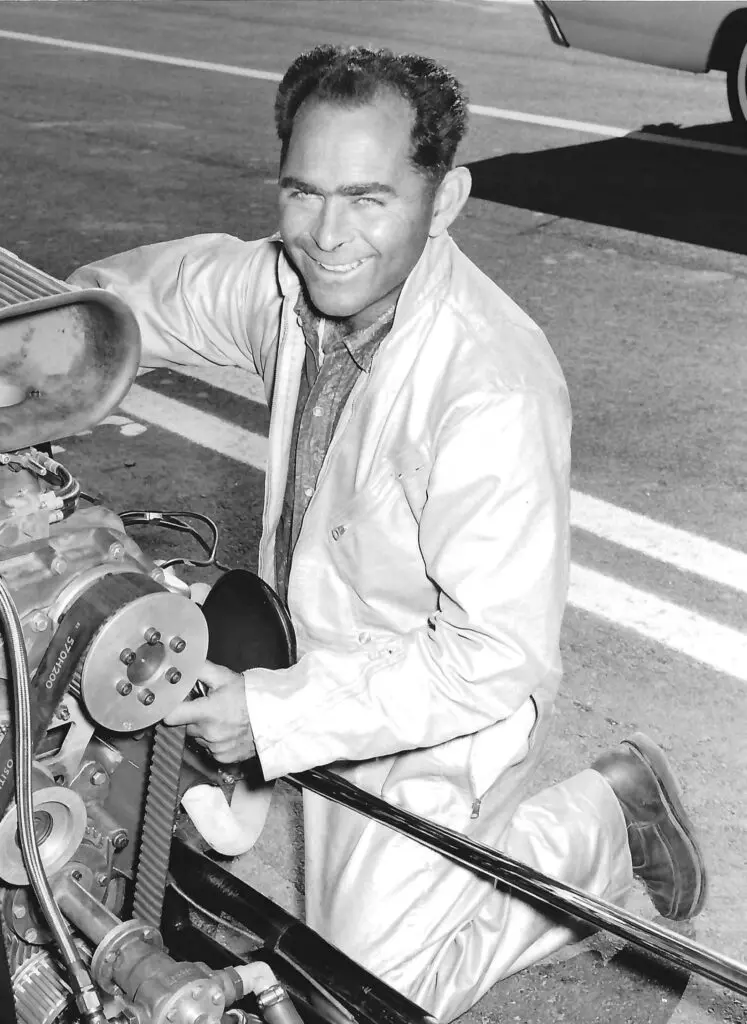 Class of 1991Presented by Mopar
Emery Cook
Emery began his racing career in San Diego, closely associated with the Bean Bandits. He drove the Hensley & Cook rear-engine roadster, the first twin disk, high gear-only drag vehicle. In 1956 Emery teamed up with Cliff Bedwell, purchasing the Yeakle Brothers car; installing a 354 ci Chrysler on 98% Nitro, and quickly blasting the car to 166.66 mph, becoming the first to break 160 mph and a quarter-mile. During his career, Emery held six world records and 46 individual track records.
-
1991
 Bud Coons
1924–2015 As a policeman in Pomona, California Bud started working with the local hot rodders clubs, implementing various programs that proved beneficial in…
Read bio
Bud Coons
1924–2015 As a policeman in Pomona, California Bud started working with the local hot rodders clubs, implementing various programs that proved beneficial in…
Read bio
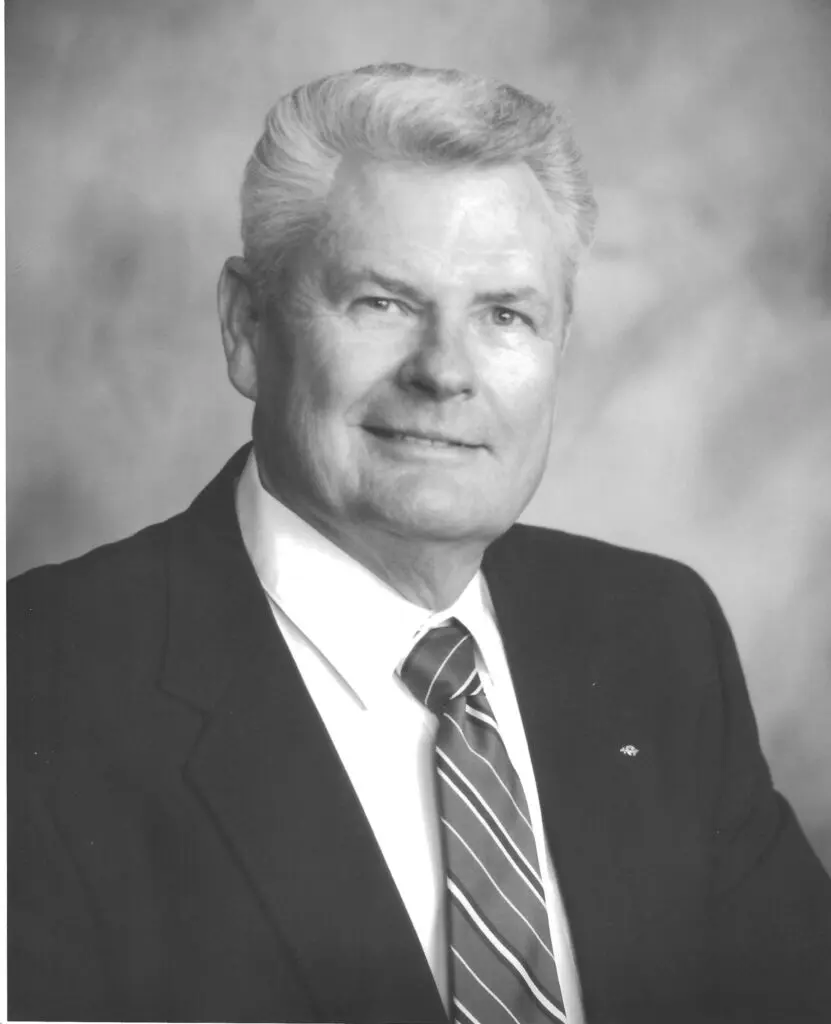 Class of 1991Presented by Mopar
Bud Coons
As a policeman in Pomona, California Bud started working with the local hot rodders clubs, implementing various programs that proved beneficial in reducing accidents and fatalities. He set up the first police-sponsored drag strip in Fontana, California in 1949, which resulted in a write-up in the FBI bulletin on how to work with hot rodders. The bulletin created a working relationship between rodders and police agencies nationwide. As NHRA Field Director in 1954, Bud led the NHRA Safety Safari tours that introduced sanctioned drag racing across the country and gave rise to regional and national championships, including the first “East meets West” drag race at Great Bend, Kansas in 1955.
-
1991
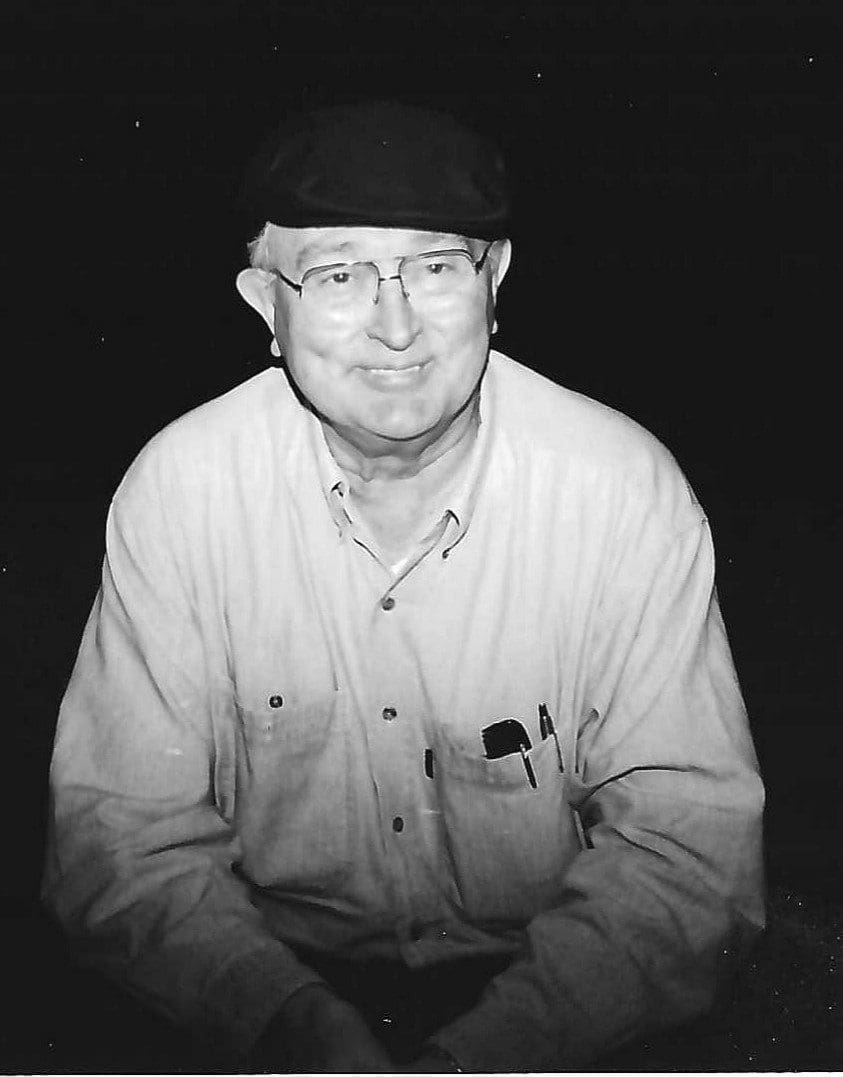 Raymond Godman
1928–2018 Ray’s 75-mile-per-hour 1932 Ford Roadster was a far cry from the 1800 horsepower ”Bo Weevils” that he fielded during the 70’s. His…
Read bio
Raymond Godman
1928–2018 Ray’s 75-mile-per-hour 1932 Ford Roadster was a far cry from the 1800 horsepower ”Bo Weevils” that he fielded during the 70’s. His…
Read bio
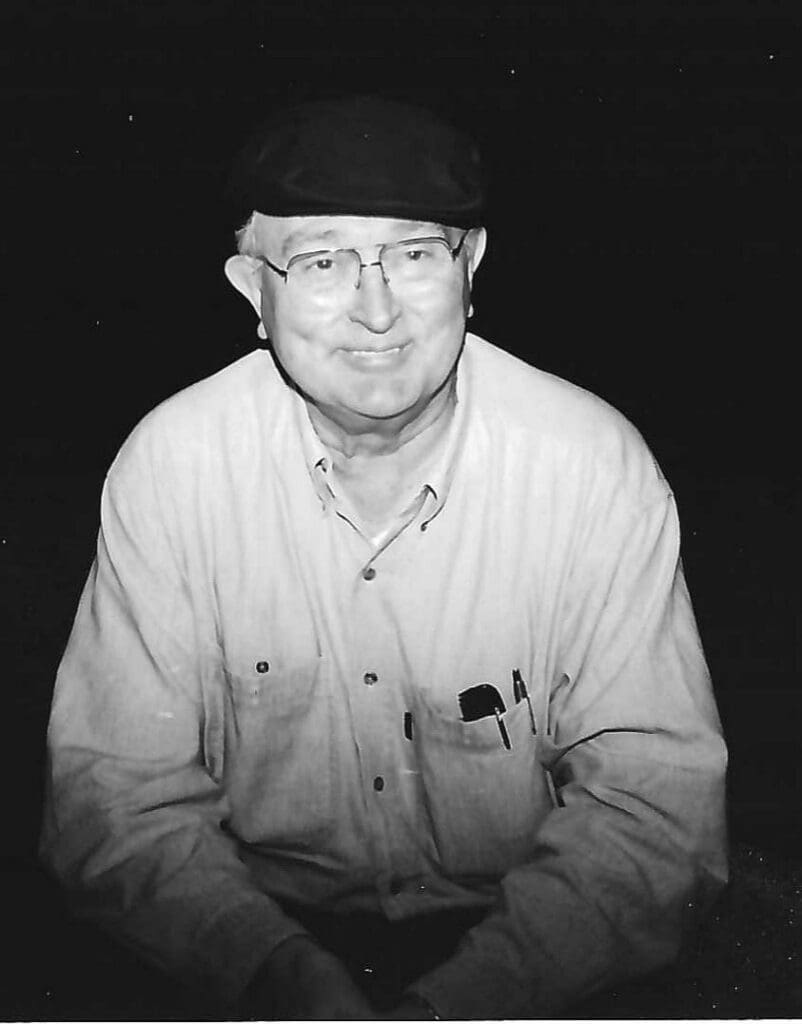 Class of 1991Presented by Mopar
Raymond Godman
Ray’s 75-mile-per-hour 1932 Ford Roadster was a far cry from the 1800 horsepower ”Bo Weevils” that he fielded during the 70’s. His cars, raced over a span of three decades, giving testimony to Ray’s love of drag racing. Ray is credited with bringing NHRA racing to the hills of Tennessee, by hosting the Safety Safari in 1955. Attending the First Nationals in Great Bend, Ray won his class with a speed of 92.68 mph and then raced at the next 24 Nationals with a roadster, then dragsters, and finally funny cars.
-
1991
 Charles E. “Jack” Hart
1922–1977 One of the pioneers at the old Santa Ana dragstrip, Jack was well-known for constructing and racing some of the more advanced…
Read bio
Charles E. “Jack” Hart
1922–1977 One of the pioneers at the old Santa Ana dragstrip, Jack was well-known for constructing and racing some of the more advanced…
Read bio
 Class of 1991Presented by Mopar
Charles E. “Jack” Hart
One of the pioneers at the old Santa Ana dragstrip, Jack was well-known for constructing and racing some of the more advanced cars of the 40’s. He drove everything from stock cars to supercharged dragsters, before joining the NHRA staff as Advertising Manager in 1960. A man of intelligent strong conviction and strength of character, Jack soon became NHRA Event Director, establishing safety guidelines, procedures, and specifications which have contributed to the success and safety of national events of today.
-
1991
 CJ Hart
1911–2004 Opening drag racing’s first commercial strip in 1950 at Santa Ana, he is credited with “inventing” the sport. Although it is not…
Read bio
CJ Hart
1911–2004 Opening drag racing’s first commercial strip in 1950 at Santa Ana, he is credited with “inventing” the sport. Although it is not…
Read bio
 Class of 1991Presented by Mopar
CJ Hart
Opening drag racing’s first commercial strip in 1950 at Santa Ana, he is credited with “inventing” the sport. Although it is not quite that simple; “Pappy” is the man who led the efforts to provide the facilities to race legally. Eventually becoming the manager of the Lions Association Drag Strip, he always kept an eye out for the “little guys”, the backbone of the sport. CJ spent most of his life trying to improve drag racing through improved facilities better prize money and a greater awareness of the sport to the general public.
-
1991
 “TV” Tommy Ivo
Winning only one solitary national event championship, Tommy Ivo is considered to be the father of drag racing showmanship and became one…
Read bio
“TV” Tommy Ivo
Winning only one solitary national event championship, Tommy Ivo is considered to be the father of drag racing showmanship and became one…
Read bio
 Class of 1991Presented by Mopar
“TV” Tommy Ivo
Winning only one solitary national event championship, Tommy Ivo is considered to be the father of drag racing showmanship and became one of the most popular match racers in the sport's history. His self-promotion led to acting jobs in several television series and films, and that same promotion placed his dragsters, funny cars, and later jet dragsters to the forefront of drag racing’s media regardless of their on-track performance. In that regard “TV” Tommy’s greatest single performance achievement came with the recording of the first unofficial five-second top fuel run, of 5.97 on October 12, 1972.
-
1991
 Howard Johansen
1910–1988 Howard started his involvement in drag racing on the dry lakes of Muroc and El Mirage. His mechanical genius led to many…
Read bio
Howard Johansen
1910–1988 Howard started his involvement in drag racing on the dry lakes of Muroc and El Mirage. His mechanical genius led to many…
Read bio
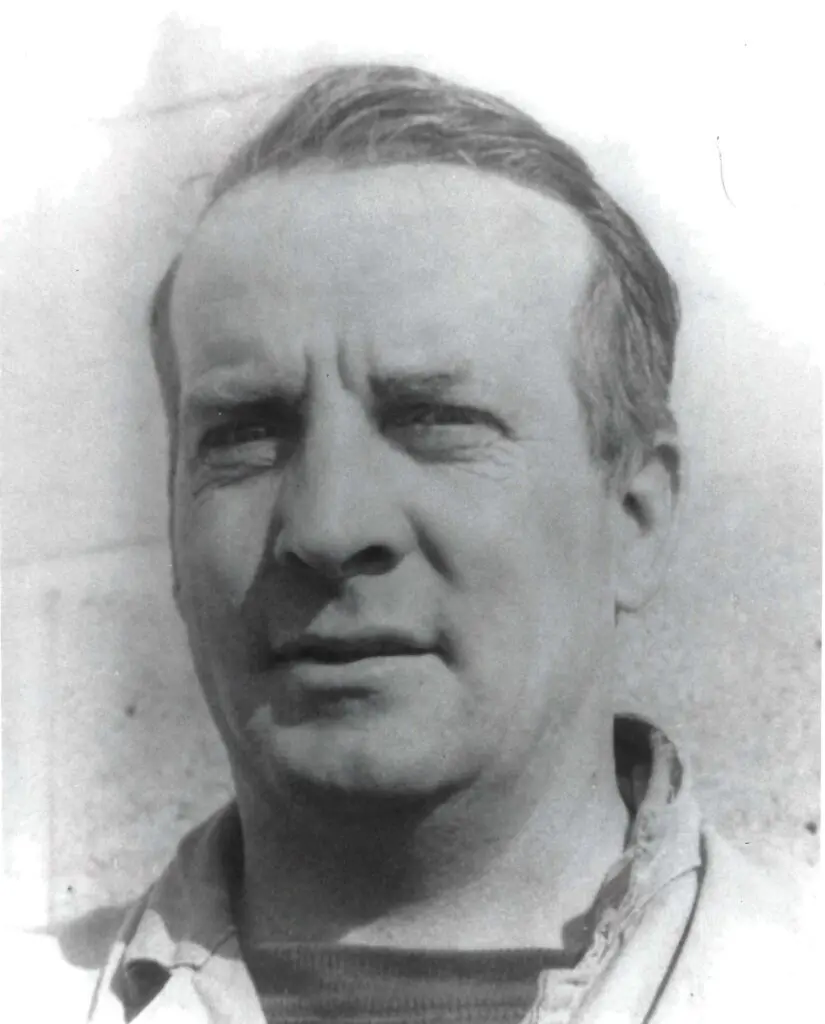 Class of 1991Presented by Mopar
Howard Johansen
Howard started his involvement in drag racing on the dry lakes of Muroc and El Mirage. His mechanical genius led to many of the parts we take for granted today, primarily the forged aluminum rod. Howard did whatever was necessary to get the job done, sometimes making “one-off” special parts for competitors. His most famous car, the “Howard’s Twin Bear” was quite successful and brought notoriety to the owner, driver, and the sport as a whole.
-
1991
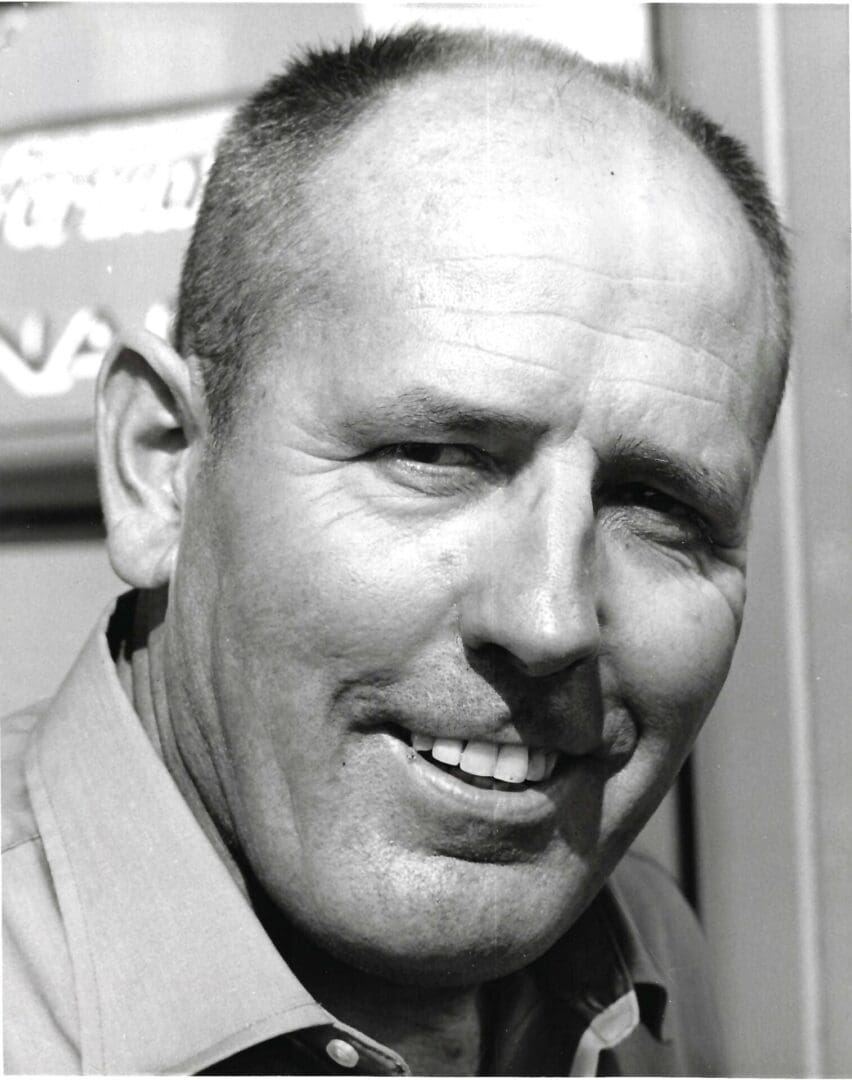 Ak Miller
1920–2005 Ak’s first accomplishment in hot rotting was in 1935, but at the age of 15, he recorded a speed of 92 mph…
Read bio
Ak Miller
1920–2005 Ak’s first accomplishment in hot rotting was in 1935, but at the age of 15, he recorded a speed of 92 mph…
Read bio
 Class of 1991Presented by Mopar
Ak Miller
Ak’s first accomplishment in hot rotting was in 1935, but at the age of 15, he recorded a speed of 92 mph at Muroc Dry Lake in Southern California. Twelve years later, as President of the Southern California Timing Association, Ak established the first hot rod show in Los Angeles and then followed with the Bonneville Speed Trials of 1948. One of the original founders of the National Hot Rod Association, he was also instrumental in the creation of the first legitimate dragstrip at the Santa Ana airbase.
-
1991
 Tony Nancy
1929–2004 A fervent hot rodder and a product of the dry lakes, at Muroc and El Mirage, Tony matured at the time of…
Read bio
Tony Nancy
1929–2004 A fervent hot rodder and a product of the dry lakes, at Muroc and El Mirage, Tony matured at the time of…
Read bio
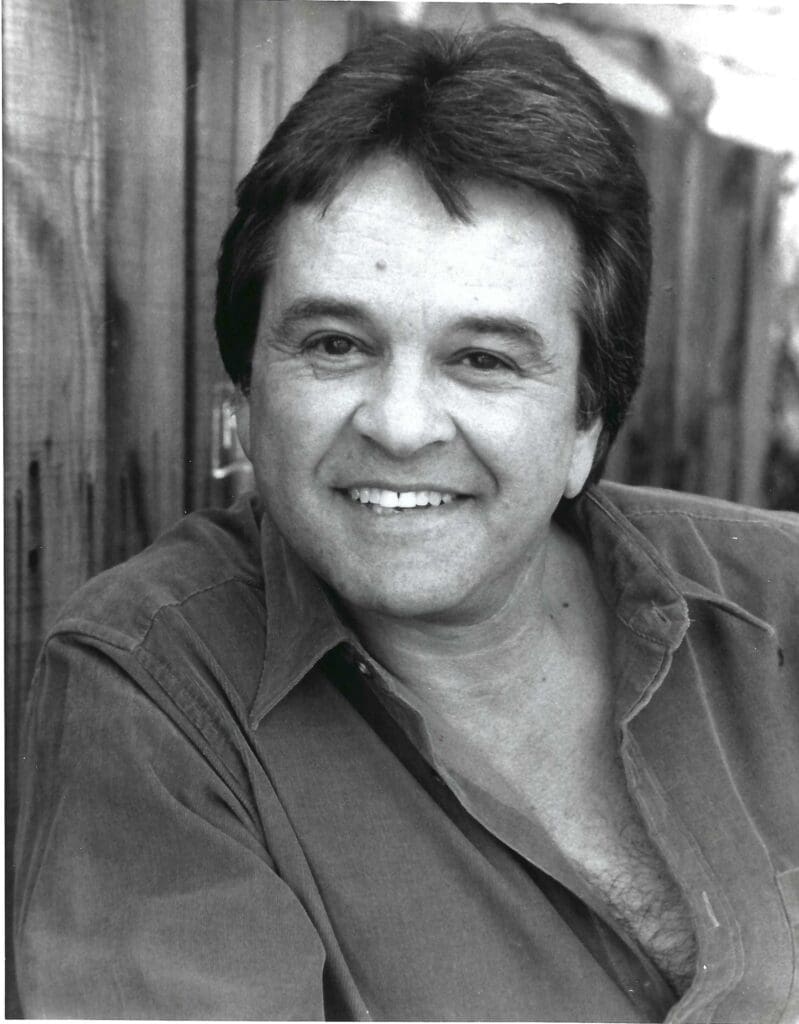 Class of 1991Presented by Mopar
Tony Nancy
A fervent hot rodder and a product of the dry lakes, at Muroc and El Mirage, Tony matured at the time of the drag racing explosion after World War II. Never comfortable with convention or customarily accepted methods, he designed, built, or supervised the construction of every car he ever ran. Most notable is the fact that each car Tony rolled to the starting line in was unique, impeccably finished, and stunning in performance. The traveling ambassador of drag racing, he traveled to England, Germany, Italy, Japan, and Australia representing this great American sport admirably.
-
1991
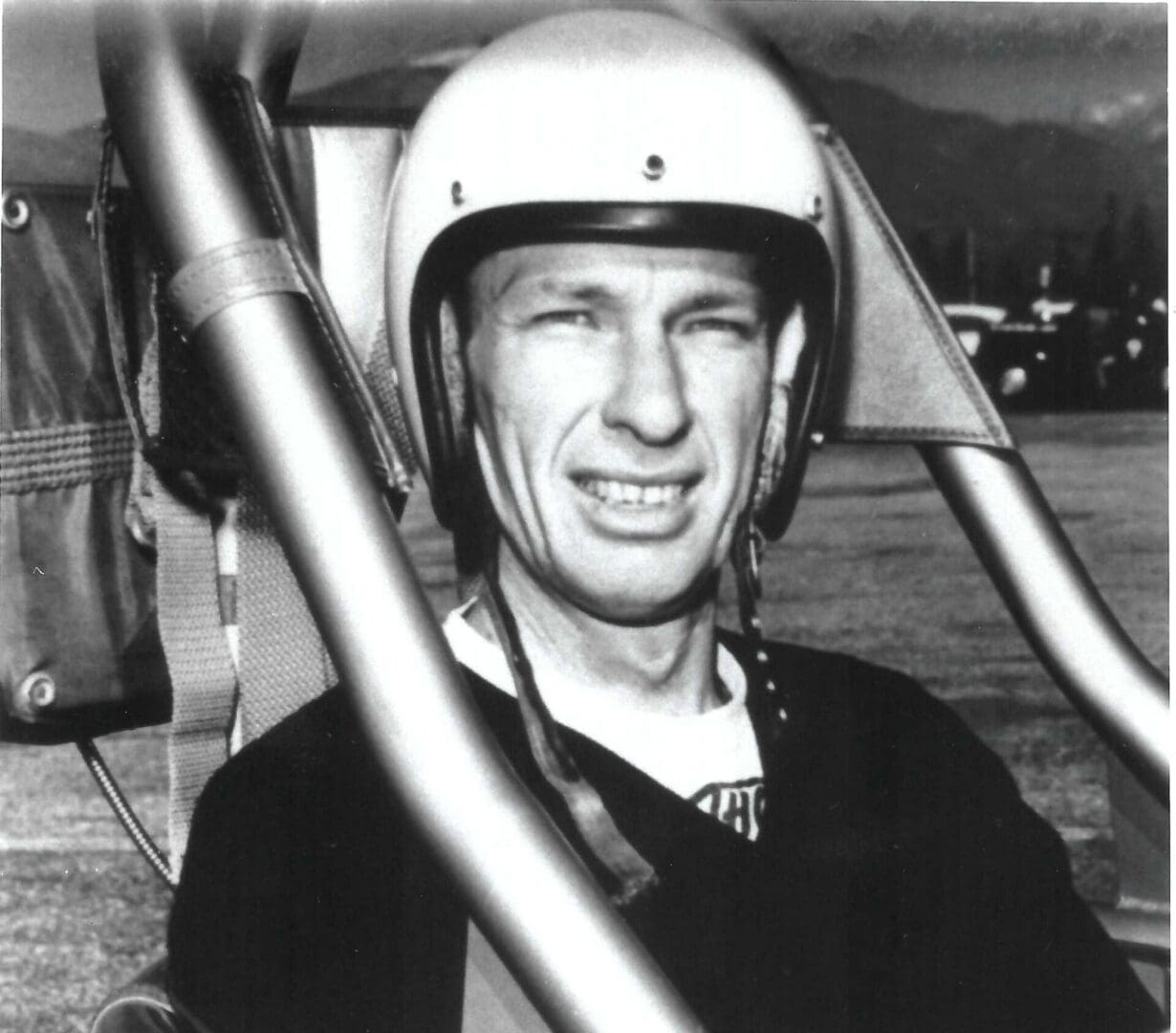 Jim Nelson
1927–2012 The original National Hot Rod Association Technical Director, Jim was turning the Southern California Timing Association clocks at El Mirage before the…
Read bio
Jim Nelson
1927–2012 The original National Hot Rod Association Technical Director, Jim was turning the Southern California Timing Association clocks at El Mirage before the…
Read bio
 Class of 1991Presented by Mopar
Jim Nelson
The original National Hot Rod Association Technical Director, Jim was turning the Southern California Timing Association clocks at El Mirage before the birth of NHRA. In fact, his 135-mile-per-hour pass in 1946 was made in a 1934 Ford pickup with a flathead engine. Record holder of several top speed and ET records in the early 60s, Jim was co-creator of the Drag Master Company which produced countless championship drag racing cars for many notable racers. His concern for the growth of the sport and the safety of its participants is documented in his nearly four decades of involvement with the NHRA Safety Safari.
-
1991
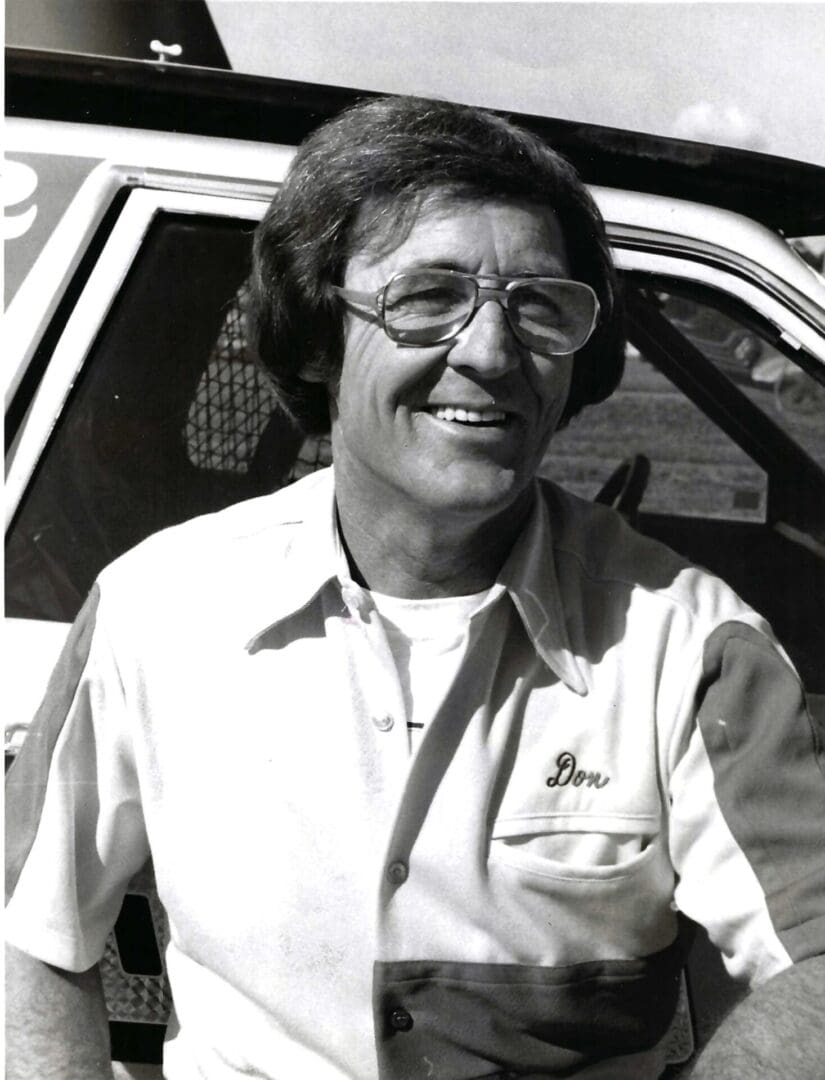 Don Nicholson
1927–2006 With the hottest Chevrolet in the 40s, “Nick” street raced his finderless 1934 Coupe from Santa Barbara to San Diego. When Santa…
Read bio
Don Nicholson
1927–2006 With the hottest Chevrolet in the 40s, “Nick” street raced his finderless 1934 Coupe from Santa Barbara to San Diego. When Santa…
Read bio
 Class of 1991Presented by Mopar
Don Nicholson
With the hottest Chevrolet in the 40s, “Nick” street raced his finderless 1934 Coupe from Santa Barbara to San Diego. When Santa Ana opened, Don was there. Soon his “dyno-tuned” cars were pummeling the competition, winning Super Stock at the first Pomona Winternationals and the Nationals at Indy in 1961. Next, Don and Mercury stood the funny car contingent on its ears with “Eliminator I” and ran the first “funny” into the sevens. In 1969 Don returned to his first love match racing stockers. The successful program led to what became known as Pro Stock, with Don ultimately winning the 1977 Pro Stock Championship.
-
1991
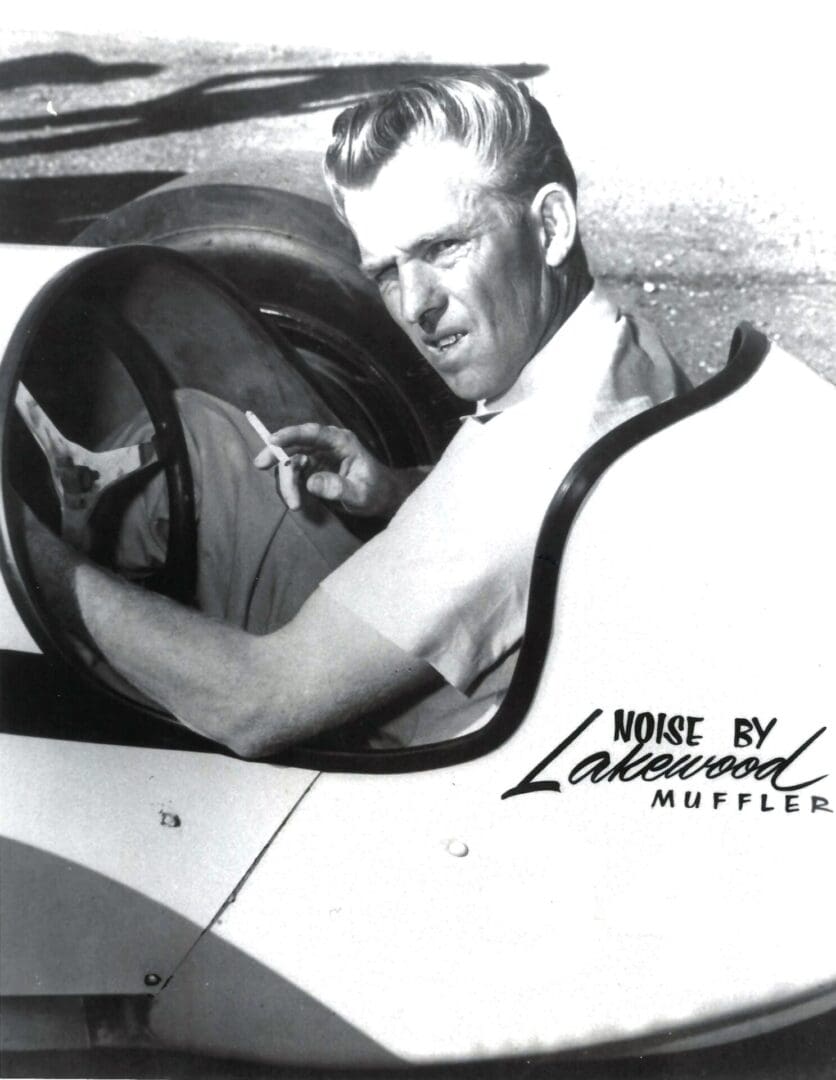 Calvin Rice
1928–1974 Drag racing’s first National Champion, Calvin is one of the sport’s earliest pioneers. He was instrumental in the design and development of…
Read bio
Calvin Rice
1928–1974 Drag racing’s first National Champion, Calvin is one of the sport’s earliest pioneers. He was instrumental in the design and development of…
Read bio
 Class of 1991Presented by Mopar
Calvin Rice
Drag racing’s first National Champion, Calvin is one of the sport’s earliest pioneers. He was instrumental in the design and development of the first dragster and with the help of many friends and fellow racers, Calvin designed the radical “slingshot” that one Top Eliminator at Great Bend, Kansas topping 144 miles per hour. Noted for being able to get the most out of the cars he raced, what Calvin may have lacked in horsepower he made up with his uncanny ability to be virtually unbeatable off the line. A true pioneer, a great champion, and a man who helped launch this great sport.
-
1991
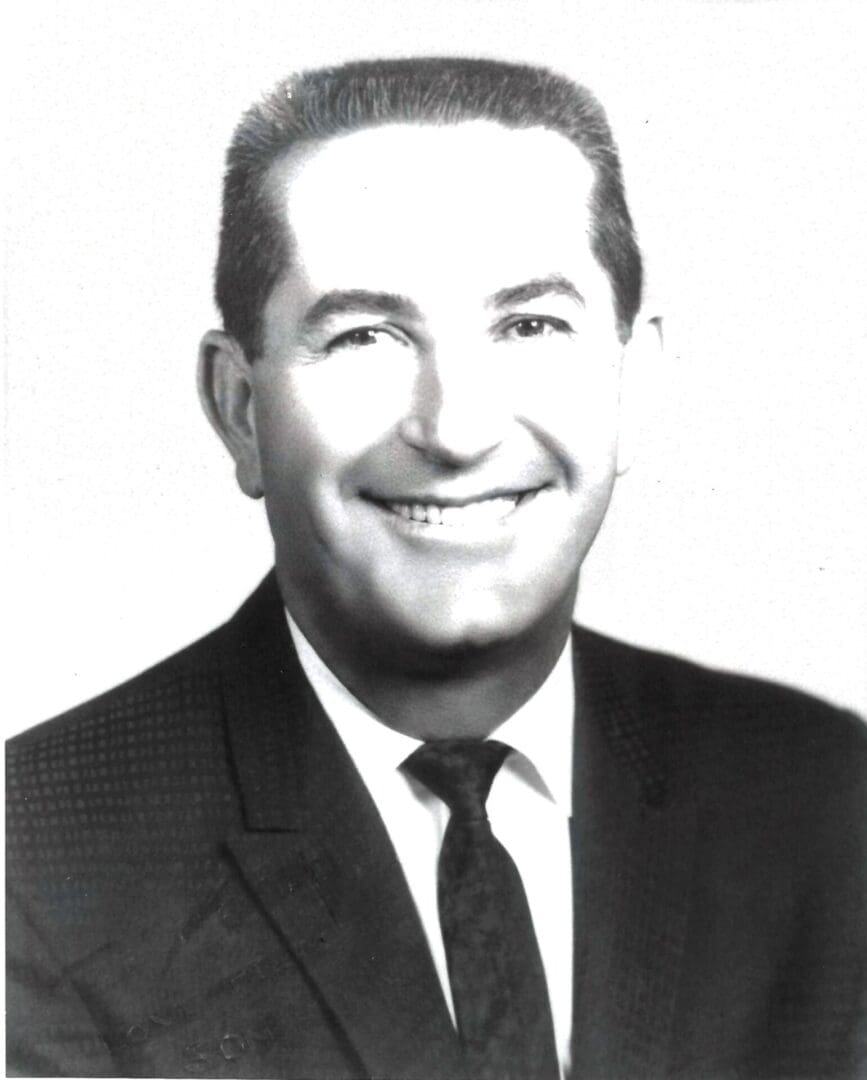 Paul Schiefer
1918–1970 The son of a major figure in the furniture showcase dynasty of Schiefer and Sons, Paul was no stranger to manufacturing, although…
Read bio
Paul Schiefer
1918–1970 The son of a major figure in the furniture showcase dynasty of Schiefer and Sons, Paul was no stranger to manufacturing, although…
Read bio
 Class of 1991Presented by Mopar
Paul Schiefer
The son of a major figure in the furniture showcase dynasty of Schiefer and Sons, Paul was no stranger to manufacturing, although his interests were in the automotive field and not in furniture. Paul loved cars and making them go fast. As a brilliant engineer and engine builder, he invented the all-aluminum flywheel clutch assembly. He wisely patented this invention that included a special metal-sprayed bronze friction surface. During the ’60s, Paul guided his company to become the largest specialty drive-train component manufacturing company in the world, with customers in virtually every racing field.
-
1991
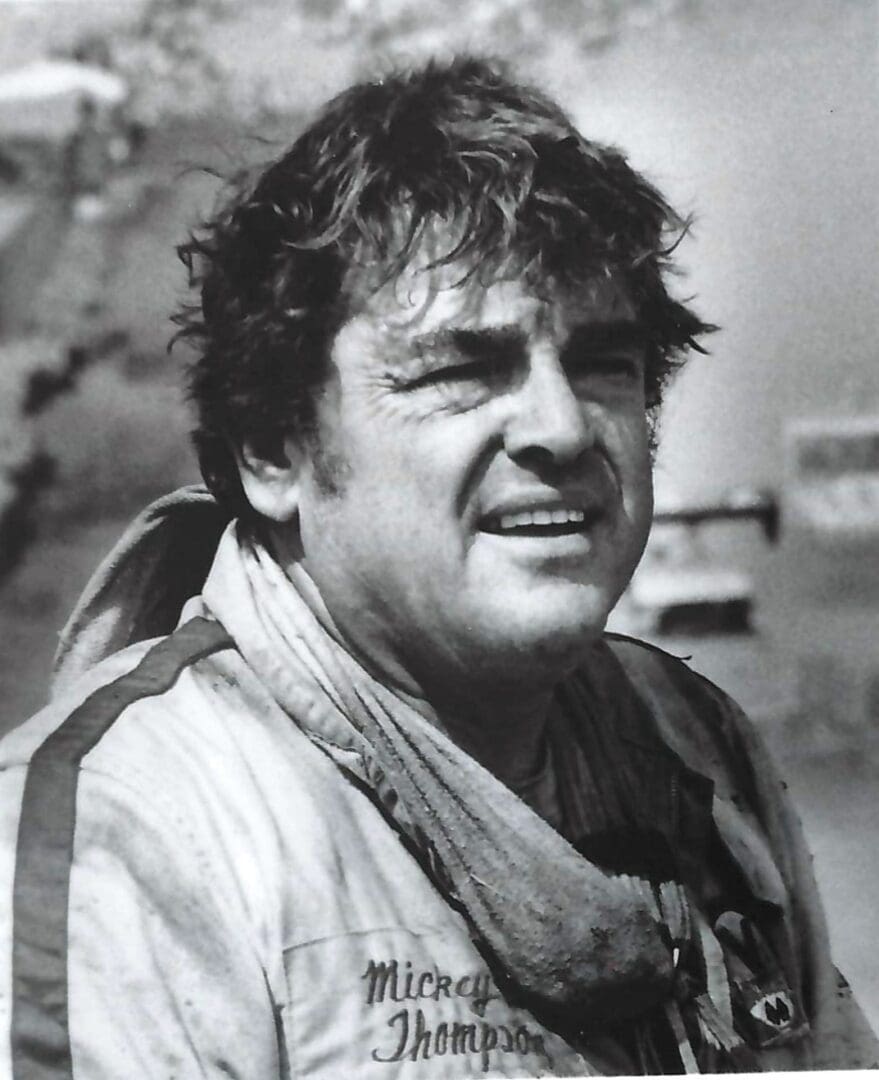 Mickey Thompson
1928–1988 Southern Californian Thompson began his tremendous career in motorsports in dry lake speed trials with the Russetta Timing Association in 1947. He…
Read bio
Mickey Thompson
1928–1988 Southern Californian Thompson began his tremendous career in motorsports in dry lake speed trials with the Russetta Timing Association in 1947. He…
Read bio
 Class of 1991Presented by Mopar
Mickey Thompson
Southern Californian Thompson began his tremendous career in motorsports in dry lake speed trials with the Russetta Timing Association in 1947. He advanced to the earliest organized drag races and became manager of Lions Drag Strip in Long Beach, California in 1956. Although his promotional expertise later led him into stadium racing, he was a champion in land speed record racing, boat racing, oval track racing, and off-road competition as well. His drag racing innovations include the incorporation of breaking parachutes in drag racing, the funny car chassis design still in use today, and streamlining science in both fuel and jet dragsters.
-
1991
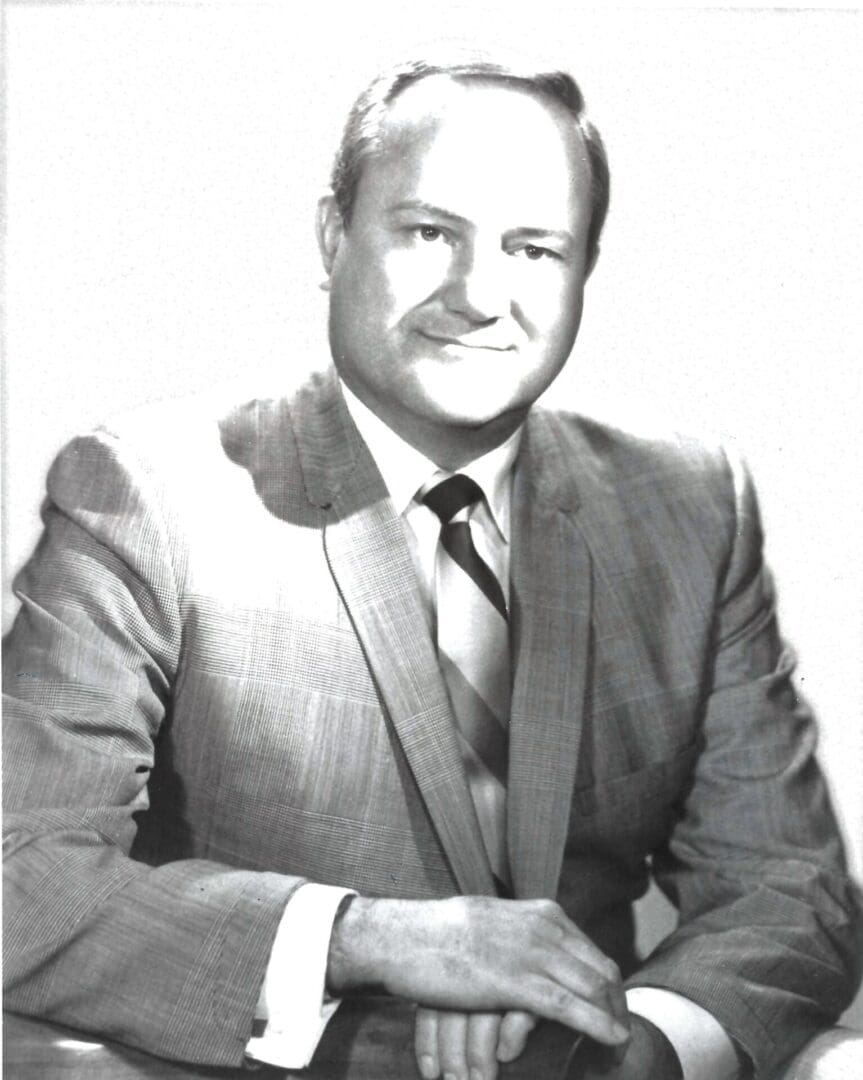 Jim Tice
1925–1982 A World War II bomber pilot and ex-drag racer, Jim formed the American Hot Rod Association in 1956. His marketing knowledge and…
Read bio
Jim Tice
1925–1982 A World War II bomber pilot and ex-drag racer, Jim formed the American Hot Rod Association in 1956. His marketing knowledge and…
Read bio
 Class of 1991Presented by Mopar
Jim Tice
A World War II bomber pilot and ex-drag racer, Jim formed the American Hot Rod Association in 1956. His marketing knowledge and understanding of drag racing were responsible for huge gains in the sport. Among the many innovations attributed to Tice were the use of the Christmas Tree starting system in both full and pro-styles, the addition of Funny Car Eliminator, the creation of Super Stock (later Pro Stock), the first points-based World Championship Series, and the pursuit of major sponsorship with larger more realistic purses for both racers and the AHRA series.
-
1991
 Ed Winfield
1910–1982 A pioneer in the pure sense of the word, Ed is considered by many to have been the most intelligent man in…
Read bio
Ed Winfield
1910–1982 A pioneer in the pure sense of the word, Ed is considered by many to have been the most intelligent man in…
Read bio
 Class of 1991Presented by Mopar
Ed Winfield
A pioneer in the pure sense of the word, Ed is considered by many to have been the most intelligent man in racing during the early years. With considerable knowledge and background in mathematics, Ed formulated and designed the most radical racing cams in history and was the creator of the Winfield carburetor. Much of his master cam work would be difficult, if not impossible to duplicate without the use of computers. Without these early cam designs, the phenomenal performance extracted from the little flathead engines would not have been possible.
No inductees match your search.